



Abstract
Inconspicuous consumption – whereby brand signals are subtle, or not easily visible, to most consumers and the overt display of social status is sidestepped – is on the rise, even in China, which has typically favoured conspicuous brand signalling. Research on luxury brands tends to focus on conspicuous consumption, and few studies have explored the ways in which Chinese consumers use Chinese luxury brands in inconspicuous ways. This study examines how Chinese luxury consumers are redefining their identity projects, as well as their conceptions of luxury, in relation to inconspicuous consumption. We suggest that inconspicuous consumption encompasses consuming luxury products without overtly displaying wealth and social status. Thus, certain luxury brands enable inconspicuous consumption. Turning to a group of Chinese luxury brands offers insights into how luxury brands may fill this role for newly emerging forms of inconspicuous consumption. We distinguish four forms of inconspicuous consumption, illustrated by consumers (1) with wished-for identities or fantasy lifestyles, (2) who appreciate aesthetics and function, (3) who are wealthy and prefer not to provoke envy and/or anger in times of economic austerity and (4) who desire to differentiate themselves and employ subtle signals that are only observable to people with the requisite knowledge to decode their meaning. These forms of inconspicuous consumption facilitate the construction and display of one’s reflective identities, including privately fantasized identity, privately held identity and partially public reflective identities. Thus, we contribute to identity construction theory by explicating aspects of reflective identity and linking them to forms of inconspicuous consumption. Finally, we expand upon recent research on inconspicuous consumption by demonstrating how inconspicuous consumption is manifested in China – the largest luxury market. The results help redefine constructs in the paradoxical situation of inconspicuous consumption of luxury brands, adding a layer of complexity to the inconspicuous consumption concept.
Introduction
Research on luxury brands tends to focus on conspicuous consumption, and few studies have explored the ways in which Chinese consumers use Chinese luxury brands in inconspicuous ways. Based on identity construction theory and the concept of inconspicuous consumption, this study reveals how Chinese luxury consumers are redefining their identity projects, as well as their conceptions of luxury, in relation to inconspicuous consumption. Chinese consumers continue to engage luxury brands but in inconspicuous ways. We suggest that inconspicuous consumption encompasses consuming luxury products without overtly displaying wealth and social status. Thus, certain luxury brands enable inconspicuous consumption. Turning to a group of Chinese luxury brands offers insights into how luxury brands may fill this role for newly emerging forms of inconspicuous consumption.
Recently, the term ‘luxury’ has evolved into ‘new luxury’ or luxury for the masses, which involves affordability, mass-market proliferation and emerging distinctions between social status and cultural capital (Eckhardt et al., 2015; Taylor et al., 2009; Thomas, 2007). In this new luxury world, there has been a surge in inconspicuous consumers who consume luxury products without publicly displaying their social status. For example, Berger and Ward (2010) investigated a particular type of inconspicuous consumption involving the consumption of subtly marketed luxury goods, which are misrecognized by most observers but are preferred by people with domain-specific cultural capital (Bourdieu, 1987; see also Allen and Anderson, 1994). Such inconspicuous luxuries offer differentiation from the mainstream and help facilitate interaction with others ‘in the know’.
In China, luxury consumption (excluding luxury automobiles, yachts and helicopters) reached 116 billion RMB Yuan (around $17 billion) in 2015, accounting for 30% of the global luxury market (Horton, 2016). A majority of this consumption involved famous Western luxury brands. Accordingly, much extant research focuses on conspicuous consumption of well-known Western luxury brands in China (e.g. Grier et al., 2016; Podoshen et al., 2011). For example, Podoshen et al. studied Chinese consumers consuming Western-style luxury goods to publicly show prestige and social status, more typically reflective of conspicuous consumption in China (2011).
However, some Chinese luxury consumers are becoming relatively more inconspicuous, and recent research has suggested that inconspicuous consumption is an overlooked yet important aspect of the contemporary market (Eckhardt et al., 2015). Postrel (2008) indicated that the conspicuous consumption of nouveau-rich consumers in emerging economies, such as the BRIC nations (Brazil, Russia, India and China), is shifting to inconspicuous consumption as these nations become wealthier. After exploring Western products, certain Chinese consumers appear to be returning to aspects of their own cultural origins and pursuing lifestyles inspired by those origins (Schroeder et al., 2015; Wu et al., 2013). In the process, they come to be interested in subtler brand signals, those that communicate traditional Chinese cultural aspects, in contrast to typical, well-known Western luxury brands. As Adrian Cheng, wealthy developer of K11, an innovative Shanghai venture that combines a 61 story skyscraper, shopping mall, art museum and gallery that attempts to blend retail with art remarked, ‘The Chinese love luxury. But the concept of luxury is evolving here on the mainland. It used to be fast cars and designer clothes. Now the focus is shifting to culture’ (in Fan, 2016: 33; see also Murphy and Burkit, 2013).
Furthermore, several Chinese luxury brands have emerged that embrace Chinese aesthetics, culture and history, including Shang Xia (上下), which references traditional Chinese design and craftsmanship in their branding, Shiatzy Chen (夏姿•陈), which draws on traditional Chinese aesthetics and design, and Shanghai Tang (上海滩), which builds upon aesthetic values that reflect Chinese culture from the 1920s to the 1940s. In addition, Chinese designer Guo Pei – whose designs reveal a deep influence from China’s Imperial Court – has enjoyed success as a haute couture designer for China’s elite and has begun to attract an international clientele (Thurman, 2016).
Granted, the brand awareness of these developing Chinese luxury brands is relatively low, compared to well-known Western counterparts, such as Armani, Burberry or Louis Vuitton. But an emerging segment of consumers favour Chinese luxury brands that are subtly marked and tend not to be recognized by most observers. These consumers exhibit domain-specific cultural capital – knowledge and expertise about the subtle signalling potential of these brands. As Benjamin Cavendar of China Marketing Research in Shanghai reported: There has been a real shift over the past two years in consumer perception about what the right product to buy should be. It used to be about making a safe big brand purchase to show off. That’s shifted towards making purchases depending on the individual’s interests and lifestyle. (
Financial Times, 2015: p.12)
Why would some Chinese consumers start to prefer emerging Chinese luxury brands that do not appear to publicly display their status and wealth? What are the mechanisms behind this trend? Might these shifts reveal something deeper about how these consumers form and communicate identity? To some, inconspicuous consumption may suggest a lessening of focus upon the values of contemporary consumer capitalism, a turning away from concerns of communicating wealth and displaying privilege.
In a recent article, Eckhardt et al. have argued that the rise in inconspicuous consumption can be traced to several factors: a loss of exclusivity among luxury brands, a shift in the meaning of luxury goods from class marker to consumer experience and the emergence of inconspicuous brands with ‘brand signals that are not readily apparent or visible to most consumers’ (Eckhardt et al., 2015: 811; see also Eckhardt and Bengtsson, 2015). Crucially, they point out that status and conspicuousness are separate constructs and propose that luxury be redefined without reference to conspicuousness (Eckhardt et al., 2015). This article builds upon these insights. Based on identity construction theory and the concept of inconspicuous consumption, this study examines how Chinese luxury consumers are redefining their identity projects, as well as their conceptions of luxury, in relation to inconspicuous consumption. Chinese consumers continue to engage luxury brands but in inconspicuous ways. We suggest that inconspicuous consumption encompasses consuming luxury products without overtly displaying wealth and social status. Thus, certain luxury brands enable inconspicuous consumption.
An ethnographically inspired study, including 33 interviews with Chinese consumers, was employed in this research to examine this phenomenon. The study makes a number of contributions. We argue that inconspicuous consumption can include consuming luxury products without overtly displaying wealth and social status. We distinguish four forms of inconspicuous consumption: (1) driven by wished-for identities or fantasy lifestyles, (2) focused on aesthetics and function, (3) that of wealthy consumers who prefer not to provoke envy and or even anger in times of economic austerity and (4) driven by consumers’ desire to differentiate themselves by deploying subtle signals that are only recognizable to people with domain-specific cultural capital. Our findings suggest that the four forms of inconspicuous consumption enable the construction and display of one’s reflective identities. Reflective identities involve three forms: (1) privately fantasized, (2) privately held and (3) partially public reflective identities. The former two correspond to Smith’s (2007) privately held reflective identity in the regime of identity constructed and perceived by the self; and the latter is constructed in the regime of identity perceived by both the self and others. Thus, we contribute to identity construction theory by explicating the three forms of identity and linking them to the four types of inconspicuous consumption. Further, we develop a more complex vision of inconspicuous consumption by expanding insights into inconspicuous consumption in China.
Conspicuous vs. inconspicuous luxury consumption
The notion of luxury derives from the Latin ‘luxuria’, which refers to ‘extras of life’ (Danziger, 2005). As dispensable goods or services, these objects contribute to luxurious living by offering indulgence or convenience that surpasses the nonessential minimums (Wiedman et al., 2007). Brand researchers generally classify ‘luxury’ as the top category of prestigious brands (Vigneron and Johnson, 2004). The term ‘luxury brand’ usually refers to high-quality, expensive or uncommon brands. Consumers generally perceive luxury as rare, exclusive and prestigious goods with highly symbolic and emotional value (e.g. Tynan et al., 2009). Luxury goods can be thought of as symbols of personal and social identity (Vickers and Renand, 2003) as well as cultural beliefs (Seo et al., 2015). In this sense, luxury consumption can be identified as both conspicuous and inconspicuous, depending upon motivation and context, which is discussed below.
Conspicuous consumption forms a key part of materialism and is often connected to luxury consumption. Veblen was the first to provide a narrow definition of ‘conspicuous consumption’ as the process by which wealthy people from the upper class publicly demonstrate their social power, status and prestige (1899). After more than a century of research on conspicuous consumption, recent sociological definitions include consuming luxury goods and services to publicly display economic power as a means either of attaining or maintaining a given social status (Eastman and Goldsmith, 1999; Mason, 1984; Shukla, 2010). However, because of the spread of luxury brands to the mass market, the conspicuous consumption of the nouveaux riches, and high-quality counterfeits, the meaning of traditional luxury goods has been diluted. Further, elite, upper class consumers have traditionally shied away from overt status symbols, preferring more inconspicuous brands that often use subtle signals in their design (Han et al., 2010).
Many researchers portray inconspicuous consumers as those who do not publicly display their social status (e.g. Berger and Ward, 2010; Shove and Warde, 2002; Sullivan and Gershuny, 2004). Indeed, the phrase ‘inconspicuous consumption’ has referred to the routine consumption of ‘ordinary’ goods and services (Shove and Warde, 2002; Smith, 2007); but inconspicuous consumption now often intersects with luxury consumption (Berger and Ward, 2010; Sullivan and Gershuny, 2004). In a keen distinguishing of terms, marketing researchers have suggested that the concept of luxury should be redefined and separated from conspicuousness: inconspicuousness is the new conspicuousness (Eckhardt et al., 2015).
Extant literature explores several types of inconspicuous consumption (Belk, 2011; Berger and Ward, 2010; Stacey, 2009; Sullivan and Gershuny, 2004). Berger and Ward (2010) identify a type of inconspicuous consumption that reflects consumers who avoid products with clear brand identifiers or employ subtle signals that are only observable to people with the requisite knowledge to decode their meaning. In this way, such inconspicuous consumers use subtle markers to distinguish themselves from the mainstream. These consumers generally reject ostentatious status symbols (Brooks, 2001; Davis, 1992; Weber, [1904]2001) or feel guilty about their conspicuous consumption (Seabrook, 2001). Belk (2011) and Stacey (2009) describe a group of inconspicuous consumers who are rich and prefer not to provoke envy and anger in times of economic austerity. Sullivan and Gershuny (2004) point to a type of inconspicuous consumer who perceives luxury goods and services through their imagined future use of purchases they have already made. This high-income group of consumers often purchases expensive goods or services that symbolize a wished-for identity or luxury lifestyle, although they have little leisure time to use (and display) the purchased products. Smith (2007) proposes that through inconspicuous consumption, consumers construct and display partially public identities, which are also reflective in that consumers project these identities to themselves.
In China, under Maoism, consumers have long been limited in terms of consumer choice and value – particularly during the Cultural Revolution. After China’s opening up policy, many Chinese consumers looked to the West as a way to ‘catch up’ with the rest of the world and embarked on a rapid increase in the purchase of Western goods. Such circumstances led to a significant growth in the Chinese market for Western-style luxury goods (e.g. Louis Vuitton, Gucci), which led to a focus on ostentatious luxury goods, with highly visible brand names and logos, contributing to the rise of conspicuous consumption in China (e.g. Chadha and Husband, 2010; Podoshen et al., 2011). With Western brands and the culture and values they carry with them flowing into China, this consumption boom often neglected Chinese traditional values and aesthetics (Croll, 2006; Schroeder et al., 2015).
As an alternative to Western luxury labels, a group of homegrown brands that focus on Chinese aesthetics, design and philosophy have emerged that offer new choices for Chinese luxury consumers (e.g. Wu et al., 2013). Furthermore, recent market studies indicate that Chinese consumers are increasingly avoiding obvious displays of wealth, to the extent of taking off prominent logos or labels from clothing in order to avoid appearing too ostentatious (e.g. CPP Luxury, 2013; Griffith, 2014). Thus, the stage is set for Chinese luxury brands that embody traditional Chinese aesthetics and values to develop, offering Chinese luxury consumers new forms of inconspicuous consumption.
Identity and inconspicuous consumption
Smith’s conception of reflective identity provides a useful tool to shed light on inconspicuous consumption, as she outlines how people construct and display self-awareness through the use of material culture (2007). Consuming brands both conspicuously and inconspicuously reflects and affirms one’s identity. Identity mainly refers to ‘an internal process by which one defines and integrates various aspects of the self’ (Deaux, 2000: 222). Personality psychologists have referred to public self-consciousness and private self-consciousness to reflect aspects of identity (e.g. Cheek and Briggs, 1982; Fenigstein et al., 1975). Kleine et al. (1993) highlight the difference between the public and private projections of the self. The distinction between public and private suggests that an identity publically projected can be considered more socially enacted, whereas an identity constructed in private is an internalized perception of individual capacities.
Smith (2007) further notes that a person might have an idealized identity that is developed privately and only selectively displayed. Smith defines reflective identity as identity that consumers project to themselves and that includes components of self-awareness or self-construction that are partially public. In this way, identities are understood as they are actualized in private and public realms with respect to three components: ‘that which is intended and projected by the individual; that which is intended and acted upon by others; and that which is developed by others independent of the individual’s volition’ (Smith, 2007: 415). Privately held reflective identity is counterbalanced by identity over which the individual has no control while an overlapping area maintains identity that is both self-projected and perceived by others.
Private identity formation has close relationships with inconspicuous consumption in the new luxury world. For example, a wished-for self-identity could be perceived when consumers inconspicuously ‘consume’ high-end luxury leisure goods without actually being able to use them (Sullivan and Gershuny, 2004). Berger and Ward (2010) suggest that self-identity projection can occur by inconspicuously consuming subtly marked luxury goods, which are misrecognized by most observers, but are preferred by people with domain-specific cultural capital. In sum, there are many aspects of identity that offer insight into inconspicuous consumption.
Cultural capital and inconspicuous consumption
Cultural capital refers to the nonfinancial social assets, or cultural knowledge, that people have in a particular domain or inside knowledge (e.g. Bourdieu, 1987; Thornton, 1996). Such inside knowledge enables group members to recognize in-group signals that outsiders might miss (e.g. McCracken, 1988). For instance, Hebdige (1979) explored how the dress style of the Mods, the 1960s British hipster subculture, ‘concealed as much as stated’. Individuals with domain-specific cultural capital may prefer subtle signals because they offer differentiation from the mainstream and assist in interacting with others ‘in the know’ (Berger and Ward, 2010). Because China experienced a revolt against traditional and historical culture in the age of Maoism and the Cultural Revolution, some subtle aspects of Chinese cultural origin disappeared from the market. In this sense, related cultural knowledge about the traditional and historical Chinese features within Chinese luxury goods constitutes cultural capital that insiders actually may prefer. In other words, expertise about Chinese aesthetics, history and design can fuel domain-specific cultural capital.
Moreover, consuming historical and traditional elements in products and branding campaigns can invoke nostalgia and feelings of being reconnected with an authentic past and promote sacred and mythic responses (e.g. Askegaard and Kjeldgaard, 2007; Belk et al., 1989; Stern, 1992; Zhou et al., 2013). The ‘commodified authentic’, a development of the later nineteenth century in which ‘[n]ew objects and places were packaged and sold as mini-representations of supposedly noncommercial values: for example, nostalgic evocations of [a] rural past; appeals to an original, genuine article; and images of a purified aesthetic free from any taint of the mass market’ (Outka, 2008: 4). The consumer’s search for authenticity, in particular, remains a central topic in contemporary marketing research (e.g. Beverland and Farrelly, 2010; Brown et al., 2003; Borgerson and Schroeder, 2003).
To carry this further, myths develop from consuming stories of tradition, history and heroes as well as cultural contradictions and conflicts (e.g. Holt, 2004; Schroeder, 2009). Mythic feelings, in particular, emerge from consuming networks of stories about legendary figures, heroic individuals and personified ideas that circulate and re-adapt to changing mores (e.g. Thompson, 2004). All of these traditional and historical stories, part fiction and part fact, offer raw material for the development of myth consumption (Cayla and Arnould, 2008). For example, individuals in the British royal family have served as material for myth consumption, exemplified by Elizabeth I as the ‘Virgin Queen’, and Diana as the ‘People’s Princess’ (e.g. Otnes and Maclaran, 2015). A sense of tradition and heritage remains not only inextricably linked with many luxury brands but can also contribute to domain-specific cultural capital as well.
Currently, Western brands, exemplified by European names such as Burberry, Gucci and Louis Vuitton, dominate the luxury world, and much research has demonstrated Chinese consumers’ desire for such brands. However, China has a long history of appreciating luxuries – for example, tea, jade and silk – and has, in recent years, given local luxury brands many opportunities to expand. A few Chinese luxury brands that employ traditional and historical Chinese culture have emerged, and these homegrown brands are gaining market share and attracting interest (see Heine and Gutsatz, 2015; Schroeder et al., 2015). Often, such brands collaborate in various ways with European companies. Notable examples include Hermès-backed Shang Xia (上下), Richemont-owned Shanghai Tang (上海滩) and the traditional Chinese jewellery company Qeelin (麒麟), which was recently acquired by French luxury house Kering. Other emerging Chinese luxury brands include NE•Tiger (东北虎, reflecting China’s clothing heritage), Mao Tai (茅台, Chinese culinary culture), Yunnan Pu-erh Tea (云南普洱, rooted in China’s tea heritage), Chow Tai Fook (周大福, Chinese jewelry) and Xiangyunsha Silk (香云纱, rooted in China’s silk heritage).
On the basis of a critical review of inconspicuous consumption literature, we developed a conceptual model to guide this research. We focus on inconspicuous consumption of luxury goods, rather than on luxury consumption, in an attempt to move beyond framing Chinese luxury consumption as conspicuous consumption. The model includes on the role of reflective identity formation (Smith, 2007) in categorizing Chinese inconspicuous consumption processes. Different aspects of reflective identity formation were anticipated to be relevant, along with cultural capital (e.g. traditional and historical Chinese culture) and demographics (such as age and education).
Method
This ethnographically inspired study draws from participant observation, interviews and photographs conducted over a 6-year period. It examines how Chinese luxury consumers redefine the constructs of luxury, and analyses identity projection within the complex situation of conspicuous and inconspicuous consumption. Using purposive and opportunistic sampling (Patton, 2014), potential participants were approached in Chinese luxury retail stores. A snowball sampling approach was then undertaken, which involved asking participants to introduce other potential participants (Patton, 2014). The data collection process included retail visits and participant observation and a set of interviews that took place from 2008 to 2014.
This article focuses on the interview data, informed by insights derived from the other elements of the study, including photographs. Interviews took place in homes, private offices and coffee shops in Wenzhou, Suzhou, Shanghai and Beijing and lasted from 60 to 150 minutes. In total, we interviewed 33 consumers, 11 males and 22 females, who ranged in age from 31 to 58 years (see Table 1). In 2008 and 2009, we met and interviewed three consumers – two of them contacted through friends’ introductions. Another participant was recruited from an observational visit – where we met consumers at Shanghai Tang’s (上海) retail stores in Shanghai and Beijing and asked if they would be willing to be interviewed. In 2013 and 2014, we interviewed 30 consumers – 10 of them from our observational visits where we met them at Shanghai Tang (上海滩), Shang Xia (上下), Shiatzy Chen (夏姿•陈) and Ne•Tiger (东北虎) retail stores in Shanghai, Suzhou, Beijing and Wenzhou. The rest were referred by participants.
Participants’ profiles.

For example, during an observational visit, we met a Shang Xia (上下) customer and asked if he would be willing to participate in an interview. He accepted our request and introduced us to some of his friends and relatives, and they introduced us to some of their relatives and friends. Among the potential participants, many love to consume Chinese luxury products, while a small number love to consume Western well-known luxury goods. We did not focus on Chinese consumers who buy well-known Western luxury goods. We conducted interviews with a group of participants who love to consume Chinese luxury goods but who are not primarily focused on showing their social status. We are not trying to link all conspicuous consumption to Western goods. Of course, there are conspicuous Chinese luxury brands. In addition, there are some Western luxury brands that use subtle markers (Berger and Ward, 2010). However, very few Chinese consumers have the cultural capital to appreciate those brands.
The informants varied in terms of gender, age, occupation, educational background and level of involvement with luxury consumption. They answered questions about their luxury product consumption, Chinese luxury goods in general, and their views of Chinese luxury consumers.
The analysis began the first year with summaries of findings organized by type of data – interviews and photographs. Based on the patterns in the data, we then established preliminary brand categories. Subsequently, because we had become familiar with Chinese luxury consumption elements and had noted repetition in the participants’ responses, we shifted our attention to producing and evaluating themes and cultural principles. We derived themes from the substantive content of the data across categories with respect to luxury consumption, identity construction and brand meaning. Our analysis entailed triangulation across data sources (interviews, participant observation and photographed artefacts), with particular attention to comparing what the consumers said the Chinese luxury brands meant to them, their understanding of the design motifs – and the signalling potential – of their chosen brands, and their descriptions of how they used the brands in their daily lives.
Findings
Differentiation
There is a type of inconspicuous consumer who desires to differentiate themselves from the aspirational consumption of lower status consumers who weaken brand images by consuming mass-market versions of luxury goods as well as knock-offs and counterfeits. Miss Lu offers a good example. She is the art director at a cultural communications company. Her grandparents were members of the Red Army.
We met at her home in Shanghai. She was wearing a jade pendant with a red agate in the shape of an ancient Chinese coin (Figure 1). This pendant was a Shang Xia (上下) product, although it did not have an obvious logo. Such subtle detailing often goes unnoticed or misrecognized by most observers (Berger and Ward, 2010; Twitchell, 2002). She said: The well-known Western luxury brands are consumed by too many Chinese people, whether they are rich or poor or whether their luxury goods are real or counterfeit or purchased by themselves or rented. In China, you can see the old women who sell vegetables in the dirty and noisy fresh market using LV [Louis Vuitton] bags as change bags. Poor LV!
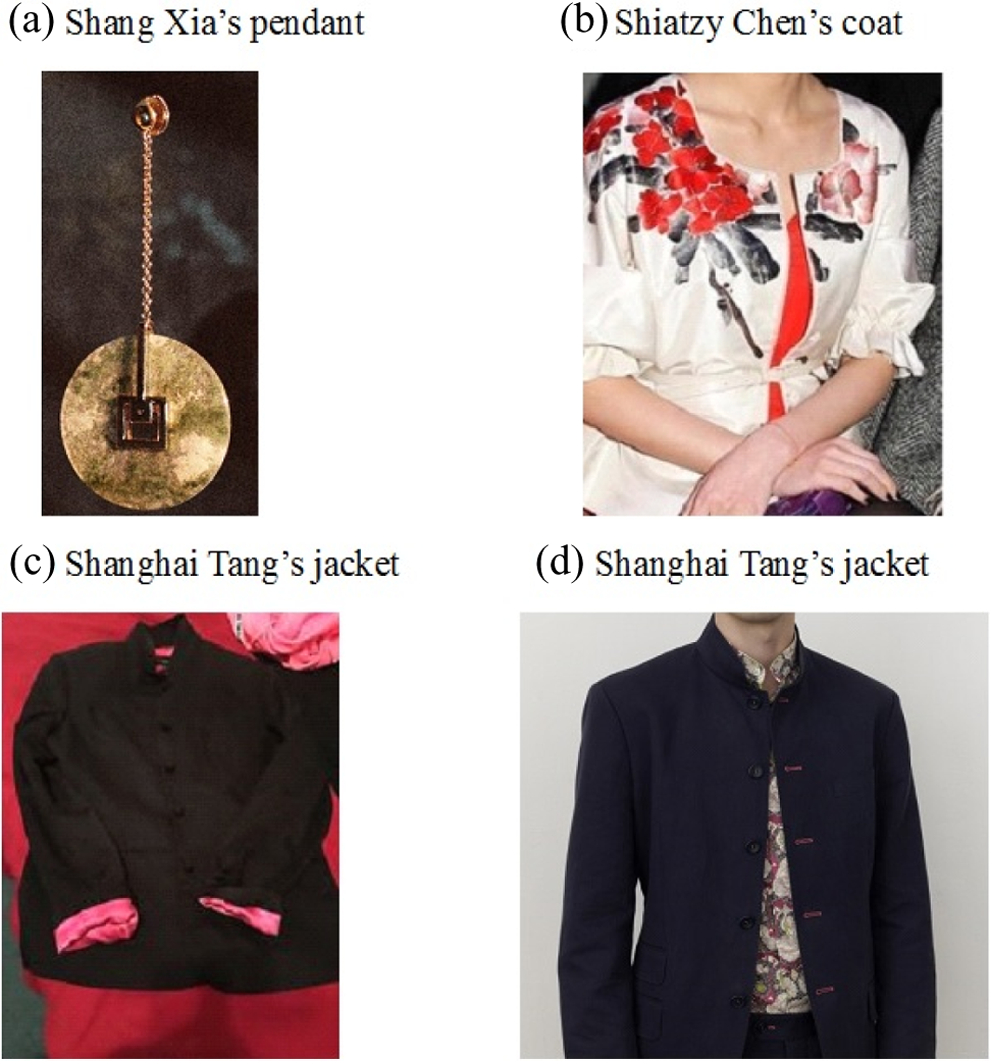
Examples of products for differentiation purpose.
Miss Lu’s statements expressed her disapproval of what she considered to be conspicuous consumption. Specifically, her phrase ‘whether they are rich or poor’ indicated that she wants to distinguish herself from both the conspicuous consumption of the nouveaux riches and the poor, lower status consumers. This sentiment is consistent with recent research that found consumers sometimes turn away from products associated with certain outgroups (Berger and Heath, 2008; White and Dahl, 2007). She further manifested her strong desire to differentiate herself from the consumers of counterfeit and rented luxury. She used the example of the female vegetable sellers at the fresh market who used LV bags to express her resistance to the tendency of lower status consumers to blindly imitate and show off their luxury goods, especially with her expression ‘Poor LV!’
Moreover, the Shang Xia pendant with the inconspicuous logo that Miss Lu wore revealed her interest in what she considered ‘inconspicuous’ brands; her red agate pendant in the shape of an ancient Chinese coin demonstrated her consumption of traditional Chinese elements. When the interviewer asked her, ‘What did you like about this [Shang Xia’s Shanshui (山水)] pendant]?’ she answered in a surprised voice: Oh – you know this product. It’s great! You know this is from the Shanshui collection of Shang Xia. Actually, the Chinese seldom know this brand because most of them do not like Chinese brands. Nevertheless, there are traditional features within Chinese luxury brands, and we love the Chinese luxury brands that most Chinese do not know about, their traditional Chinese features in particular. For example, the exact design method of this Shanshui pendant requires the agate to be spun, cut, and polished on a polishing wheel. This process is an almost spiritual exercise that recalls samsara, the Sanskrit word for the ever-turning wheel of life. Such deep meaning within Chinese traditional practices makes me revere them. Most Chinese people do not know the meanings and craftsmanship of the Chinese traditional elements within Chinese luxury brands, but we appreciate them!
Miss Lian, a young cartoonist, provides another example of this kind of consumer. She had lived in Japan for several years; her father was a coal miner in Jiang Xi Province. At her home in Shanghai, she was wearing a white Shiatzy Chen (夏姿•陈) coat with an inconspicuous plum flower ink painting on the chest, although with no visible logo, brand monogram or label (Figure 1). She offered strong attitudes about consumers who spend on luxuries at the sacrifice of necessities such as food, education and health care: In the morning or evening rush hours, for instance, we can see young girls who have shiny logo bags or necklaces in the crowded buses going to and from work. Under regular circumstances, you can guess how many of them can afford these well-recognized Western luxury brands. This group of girls is becoming a funny sight in large Chinese cities, such as Beijing and Shanghai [said in a sneering voice].
We interviewed Miss Jiang, a young lawyer, at her office in Shanghai. She was wearing a black Shanghai Tang (上海滩) jacket (Figure 1). Miss Jiang’s narrative indicated her convictions about her construction of an identity that is both self-projected and perceived by others. Her comments reveal how she distinguished her consumption from the over-the-top conspicuous consumption of the nouveaux riches. As Miss Jiang described: I don’t want to attract too much attention by dressing oddly, like a gallery line-up at the zoo! I only like to be noticed by people I like…hehe [here, she laughed slightly]. I think Shanghai Tang not only attracts the right people’s attention, it also makes me feel good about myself. For example, this black jacket, it never goes out of style, even with its bright pink lining and traditional Chinese patterns. It looks good even at parties.
Mr. Luo serves as another example. We met him at the Shanghai Tang store in the Grand Hyatt Hotel in Beijing. He was dressed in a black Tang jacket (Figure 1) and beige trousers. The interview was conducted in a teahouse next door to the Shanghai Tang store. His comments marked him as a Confucian business man (‘Ru shang’ (儒商) in Chinese) when he said: I think I feel confident when I wear [a Shanghai Tang] Tang suit or jacket. For instance, if someone looks elegant and has good taste, I think I would like to talk more with them – ha-ha [laughing]. I think they are healthy [positive], well educated and disciplined. They make new friends easily.
Due to acculturation in China –in other words, the meeting between Chinese culture and Western material culture – a group of consumers consumes Chinese luxury goods to differentiate themselves from too-Western, but also too-Chinese, consumers. Returning to Miss Lian as a good example; she said: However, I like some Chinese luxury brands, such as Shiatzy Chen (夏姿•陈) and Shang Xia (上下). For example, I like Shiatzy Chen because its products are not too Westernized but not too Chinese. You can see this white coat [pointing to the dress she was wearing], which appears very simple. However, you can find some subtle meanings and appreciate it if you have a better understanding of traditional Chinese codes. Shiatzy Chen’s products not only have high design standards but also often draw upon mythical details from the Chinese tradition in its products.
Miss Lian discussed the mythical meanings of the plum blossom and the ink paintings on her clothing (Figure 2). Plum blossoms are perceived as blooming most vibrantly amid the winter snow, exuding an ethereal elegance, while their fragrance remains, subtly pervading the air at even the coldest times of the year. Thus, a plum blossom symbolizes not only perseverance and hope but also beauty, purity and the transitory nature of life. In Confucianism, plum blossoms represent the principles and values of virtue. Chinese painting is one of the oldest continuous artistic traditions in the world, and ink painting is one of the main techniques in the traditional Chinese painting style. Ink painting is called Shui-mo (水墨), which loosely translates as ‘watercolor’ or ‘brush’ painting. (The Chinese character ‘mo’ (墨) means ink and ‘shui’ (水) means water.) This style is also referred to as ‘xie yi’ (写意) or freehand style.

Examples of products for aesthetics and function seeking.
Miss Lian’s characterization that Shiatzy Chen’s products are ‘not too Westernized but not too Chinese’ reveals her desire to differentiate herself from both too-Chinese and too-Western consumers. Because of acculturation in China, a group of consumers are now returning to aspects of their own cultural origins and pursuing a way of life based on those origins. However, at the same time, they do not want fully to forsake Western culture – Western-style design dominates the world and some traditional Chinese design appears out of date. In the process, they come to consume Chinese luxury goods with subtle Chinese elements to differentiate themselves.
Partially public reflective identities refer to the identity that is both self-projected and perceived by others. Consumers with domain-specific capital often prefer projecting their partially public identity with subtle elements as long as these markers can be perceived by insiders (Berger and Ward, 2010). These consumers intend to differentiate themselves from the mainstream in subtle ways and interact with others ‘in the know’.
Aesthetics and function seeking
Luxury consumption often embraces both aesthetic and functional appreciation (Wiedmann et al., 2009). Mr. Wu, a vice general manager at a consulting company who studied art history in college, expressed strong attitudes about conspicuous consumption. Our interview was conducted in his office in Shanghai’s finance centre – he was wearing a blue mandarin collar shirt (Figure 2). When asked, ‘what do you think of Shanghai Tang (上海滩)’, he stated: I buy Shanghai Tang products, but that does not mean that I like following so-called fashion and marketing. In my opinion, fashion and branding are like some bamboo pole someone set up in an open and vacant ground that has many monkeys around it. With the sound of the gong beating, the monkeys begin scrambling up the pole. I am not the kind of monkey that follows fashion trends and brand meanings. I just like beautiful things! Furthermore, the process of inconspicuous consumption involves privately held identity construction. Mr. Wu indicated, There are too many details! Too many! They look flimsy. Honestly, I do not like some of Shanghai Tang’s color combinations, especially on the jackets. They show a much-too-strong color contrast, between the bright pink and black or the bright green and black, which hurts my eyes. In the Chinese mind, we generally tend to appreciate harmonious color combinations. [Interviewer: So what do you like about Shanghai Tang?] I like some unique designs, such as the mandarin collar, and harmonious color combinations. The pattern of this [Shanghai Tang’s] collar is similar to the traditional mandarin collar, but the height is lower than the traditional one, which runs up nearly half the neck and feels clumsy and stiff. The slits in the two sides make this shirt more strikingly vivid and more wrinkle-proof than the general shirt without slits.
Professor Xi, an elegant and well-educated woman, offered a similar viewpoint. Our interview was conducted in the study of her house, a large villa with a beautiful garden in Shanghai. She said: ‘I like the Zitan wood series of Shang Xia’s furniture (Figure 2). Zitan wood, the Chinese traditional furniture material, is good for the health, and the line of this chair is very smooth.’ She refers to a very simple, minimal line of furniture with no visible brand or logo. She seems drawn to the traditional elements of Shang Xia, rather than any type of ‘bling’ brand recognition. Professor Xi’s reference to ‘Zitan wood, the Chinese traditional furniture material’ as being ‘good for the health’ and her comment that ‘the line of this chair is very smooth’ demonstrated her knowledge of Chinese traditional elements to express her cultured, artistic and health-seeking private identity (see Figure 2).
Mrs. Zhang is a project manager at a famous IT company; we met at her home in a high-end residential area of Shanghai. When asked about her interest in Shanghai Tang, she replied: I like Shanghai Tang because I am not merely fascinated by its citation of Chinese traditions but by its functionality as well. For example, the collar of Shanghai Tang’s qipao (cheongsam) is lower than that of the Chinese traditional one that makes it difficult to breathe; its hem is shorter than that of the traditional one that that makes it difficult to walk.
Mrs. Xiong, a 52-year-old art dealer, was interviewed in the living room of her home, a three-storey villa in northern Beijing. She said: When I buy goods, I think quality and functionality are the most important features to me. I bought this dress because the design is very simple, and the flower blossom in ink painting on the front looks traditional and vivid. [Interviewer: What is the brand name?] I really do not know the brand name of it. I bought it more than one year ago. Could you help me check the label of the brand name? [She had the interviewer check the label at the bottom of the collar] [Interviewer: ‘Shiatzy Chen’].
Avoidance
Previous research has identified a type of inconspicuous consumer who avoids products with clear brand identifiers because he or she rejects ostentatious status symbols or feels guilty about being a conspicuous consumer (Berger and Ward, 2010; Brooks, 2001; Davis, 1992; Weber, [1904]2001). Mr. Luo’s remarks about ‘a Shanxi mine boss’ (山西煤老板) reflect similar views. He stated, I do not want to be labeled ‘a Shanxi mine boss’. They really like to ‘burn money’ and show off. The Hummer jeep [they purchased] is powerful and safe. Maybe it protects their nerves, which must be weak from having made so much blood money so quickly!
The rich individual who prefers not to provoke envy and anger in times of economic austerity represents other type of inconspicuous consumer (Belk, 2011; Stacey, 2009). For example, Mr. Song is a 58-year-old manufacturer from Wenzhou City, Zhejiang Province. His factory produces educational resources and instruments. Our interview was conducted in the living room of his home in a high-end residential area in Wenzhou City. He told the interviewer: To be frank, I do not like to buy well-known luxury brands to show off. At my age [58], it is not necessary to show off. Furthermore, the old Chinese saying goes: ‘If people are arrogant and show off, it will bring about bad luck.’ So I do not want to evoke any envy from the persons around me. I think it would not be reasonable to be injured by a robber because I’m wearing well-known luxury goods. However, I really like high-quality products, so I love to buy inconspicuous and reserved luxury brands, such as Shang Xia.
Fantasy lifestyle
In contrast to views of conspicuous consumption based upon public display, Sullivan and Gershuny (2004) propose a form of inconspicuous consumption as an imagined future use of purchases that have already been made. In this section, we discuss a group of inconspicuous consumers who are high-income earners who often purchase expensive luxury goods or services that symbolize a wished-for self-identity or lifestyle but who have little time or opportunity to use them.
For example, Mr. Jiao is a 35-year-old associate professor at a famous hospital in Shanghai. We met in his hospital’s break room. (He was wearing his doctor’s uniform.) He stated: I purchased this Tang suit last November for attending my best friend’s wedding [showing the interviewer a picture of his Shanghai Tang suit, see Figure 3)]. I love its traditional Chinese collar. It looks artistic and cultured. However, I did not attend the wedding because I caught a bad cold. Until now, I have not had the chance to wear it because I spend all my time at work and often wear this uniform. Examples of products for fantasy lifestyle. I purchased a custom-tailored green Huafu [a line of dresses] from Ne•Tiger (东北虎) with my friends two years ago. I like the traditional Chinese dress. When I bought it, I thought I could wear it to parties or attend special ceremonial occasions. How can you have that many parties to which you can wear a custom-made, traditional Chinese dress in your thirties? So until now, I have not worn it, but I think I may wear it in my forties.
Conspicuous brands often utilize distinctive, easily recognizable brand signals like flashy logos, distinguishing motifs and patterns, or trademarked designs to facilitate communication of higher social status. For example, Ralph Lauren’s Polo brand with its big ‘polo pony’ icon has been popular in the Chinese market. However, both Mr. Jiao’s and Yangyang’s descriptions expressed their ideas about inconspicuous consumption as a way to reflect their privately fantasized reflective identities. They do not attempt to display high-value goods with ostentatious logos. Rather they reference Chinese tradition (e.g. traditional Chinese collar, traditional Chinese dress) to express the meaning of possessing products that symbolize an aspired-to, potential identity or lifestyle (‘it looks artistic and cultured’; ‘I may wear it in my forties’).
Both Mr. Jiao’s and Yangyang’s statements imply their formation of privately fantasized reflective identities in connection with inconspicuous consumption. Specifically, the conventional use of such goods can take place at particular times – attending a wedding ceremony or a formal-dress party – but is likely to be thwarted for those with little leisure time or opportunity. The purchased goods might therefore remain in storage as tangible symbols of an as-yet unrealized potential – an aspiration. Thus, in an interesting twist, inconspicuous consumption may involve a fantasy future use that represents a specific desired or fantasized social identity or lifestyle (although such a fantasy future might also include conspicuous items).
Demographic summary
Although the sample does not allow for large generalizations about demographic variables, we do offer a few indicative trends (see Table 1). All of the informants (except Mr. Song) have strong educational backgrounds. However, Mr. Song is a lover of historical Chinese culture, although his education background is low. Moreover, the incomes of the informants are very high, which indicates that this group of consumers has the financial means to consume luxury goods. Our sample of consumers are generally over 30 and seem to make deliberate consumption choices (Friedman, 2005).
There is a pattern that suggests that demographic differences in age have led to different forms of inconspicuous consumption, which resonates with a recent study of Chinese fashion that proposed three groups of women’s fashion consumers: survivors, aged 40–59; traditionalists, aged 30–39; and moderns, aged 20–29 – each defined by the socio-cultural events of their coming of age (Hughes et al., 2015). In our study, younger consumers in our study tend to seek fantasy lifestyles (Mr. Jiao, 35 years old; Yangyang, 34 years old), and differentiation (Miss Lu, 33 years old; Miss Lian, 35 years old; Miss Jiang, 34 years old), while older consumers seek avoidance (Mr. Luo, more than 40 years old; Mr. Song, 58 years old), aesthetics (Mr. Wu, 42 years old; Professor Xi, 52 years old) and function (Mrs. Zhang, 42 years old; Mrs. Xiong, 53 years old).
Discussion
For nearly a decade, marketers have witnessed the decoupling of conspicuousness and luxury, as the signalling ability of conspicuous luxury goods has been diluted. Many elite consumers are turning away from traditional logo-emblazoned luxury goods in favour of more discreet inconspicuous luxuries. This study explored the inconspicuous consumption of luxuries in China, defined as consuming luxury products without overtly displaying wealth and social status. The ethnographic approach provided rich textual data, which caused us to rethink our a priori conceptions. Gradually, a framework for understanding forms of inconspicuous consumption in the Chinese context emerged.
Our informants offer social psychological, and often idiosyncratic, reasons for their inconspicuous consumption. As shown in Figure 4, we identified four forms of inconspicuous consumption: differentiation, aesthetics and function seeking, envy avoidance and fantasy lifestyle. Based on Berger and Ward’s (2010) ‘subtle signal’ theory, this research identified a type of inconspicuous consumer who desires to distinguish themselves, using subtle signals that are only observable to people with particular knowledge necessary to decode their meaning and appreciate their significance. They differentiate themselves from those who buy knock-offs or counterfeits, ‘bling’ wearers, over-the-top conspicuous consumers and too-Chinese or too-Western consumers.

A model of inconspicuous consumption processes.
Furthermore, some inconspicuous consumers appreciate aesthetics and function within Chinese luxury brands. For example, Professor Xi’s reference to ‘Zitan wood, the Chinese traditional furniture material’ as being ‘good for the health’ and her comment that ‘the line of this chair is very smooth’ demonstrated her use of Chinese traditional elements to show her cultured, artistic and function-seeking private identity in her inconspicuous consumption. Moreover, prior research identified a group of inconspicuous consumers who are rich and prefer not to provoke envy and anger in times of economic austerity, or feel guilty about being conspicuous consumers (Belk, 2011; Seabrook, 2001; Stacey, 2009). Based on this insight, we identified a group of wealthy Chinese consumers who reflect these concerns. In addition, Sullivan and Gershuny (2004) state that some inconspicuous consumers may perceive luxury goods or services through the imagined future use of purchases they have already made. This group of consumers is high income with less leisure time. They often purchase expensive goods or services that symbolize a wished-for identity or luxury lifestyle, although they have little leisure time to use or display the purchased products. In this study, we find evidence of Chinese consumers with wished-for identities or fantasy lifestyles.
We also examined the relationship between inconspicuous consumption of luxury goods and identity. Based on Smith’s concept of reflective identity formation, we perceived three types of reflective identities that influence the purposes of inconspicuous consumption – partially public reflective identity, privately held identity and privately fantasized identity. Partially public reflective identities are constructed by a group of consumers who differentiate themselves from others who weaken brand image. In this instance, traditional Chinese features of brands being consumed function as subtle signals to distinguish these consumers from conspicuous consumers.
Privately held identities are realized by two groups: aesthetics and function-seeking consumers and avoidance consumers who feel guilty about conspicuous consumption or who want to avoid envy and anger. These are high-income earners, and they often purchase expensive luxury goods or services with no desire to overtly display them. They are driven mainly by guilt avoidance; thus, they project privately held identities. These consumers also use traditional codes to achieve perceived ‘utilitarian’ value. Privately fantasized identities are actualized in inconspicuous consumers who are high-income earners and who often buy expensive luxury goods or services that symbolize a wished-for identity or lifestyle but have little time or opportunity to use their purchases.
Cultural capital, in this context, knowledge about traditional and historical Chinese culture, plays an important role in inconspicuous consumption and may enable consumers to differentiate themselves from the mainstream and help facilitate communication with insiders ‘in the know’. For example, Miss Lu’s narrative expressed her partially public reflective identity, which distinguished her from what she sees as lower-status, conspicuous consumers. Adopting her form of inconspicuous consumption drove Miss Lu to appreciate the sacred meanings of various Chinese traditional elements. Their sacred status derives from components of the natural environment that are revered, feared, worshiped and treated with the utmost respect (Belk et al., 1989). Thus, the abstruse meanings of the traditional Chinese features exhibited in many Chinese luxury brands helped her to revere and admire these brands. In this sense, consuming traditional Chinese elements and motifs in Chinese luxury brands enables consumers’ sacred feelings and thus, their sacred consumption. For Miss Lu, cultural knowledge about both Western and Chinese aesthetics exerted a foundational influence upon inconspicuous consumption.
Many Chinese brands embody a process of acculturation that results from the interaction between Chinese culture and Western Culture. Chinese consumers who want clothing that is ‘not-too-Western, not-too-Chinese’ represent a typical example of this process. Shanghai Tang, with its bright colours and stereotyped, retro design motifs – which may make their garments visually striking – may appear conspicuous to Western observers. However, the brand, and its social status and luxury standing, is relatively unknown in the mainstream Chinese market. Thus, most Chinese consumers may fail to recognize Shanghai Tang products and so it may be considered an example of inconspicuous consumption in China for certain Chinese consumers. Along these lines, it may be useful for future research to investigate particular brands’ roles in inconspicuous consumption: Some brands may not appear conspicuous in certain contexts; others may seem visually conspicuous but not represent conspicuous consumption to certain consumers. An interesting angle might be to focus on tailoring, as Shanghai has many high end tailors who could replicate the types of clothes discussed here, thus avoiding these brands altogether.
Demographic factors also influence the construction of identity and the forms of inconspicuous consumption. We can make some tentative statements: Younger consumers tend to seek fantasy lifestyles and differentiation, while older consumers seek aesthetics, function and avoidance of guilt. However, further work will be necessary to explore these ideas. Income levels in China have increased in ways that allow even nonwealthy people to buy goods they could not have bought previously, including luxury brands. This contributes to a situation in which elite consumers with more cultural capital in particular domains may prefer luxury goods with subtle signals to differentiate themselves from the mainstream in an inconspicuous manner. What appears conspicuous may be deployed in inconspicuous ways.
Our findings help redefine constructs in the paradoxical situation of inconspicuous consumption of luxury brands, adding a layer of complexity to the inconspicuous consumption concept. Research on conspicuous consumption has shown that apparently conspicuous consumer behaviour such as wearing non-conforming clothing produces different signals depending upon context and the perceived autonomy of the wearer (e.g. Bellezza et al., 2014). Further work might focus on the context of inconspicuous consumption, and attempt to distinguish attraction to visual elements, such as bright colours or striking designs, from social psychological aspects, such as identity striving and group association.
From a managerial perspective, these insights into the forms of inconspicuous consumption may help brand managers better understand how to manage brands ‘inconspicuously’. Subtle signals drive these consumers’ thinking beyond social class and snobbery, mitigating the notion that brand strength and attractiveness come from the volume or strength of the brand message. On the contrary, very slight differences in design constitute subtle features that bring brands into different contexts and spaces by facilitating greater private pleasure, brand transcendence and manifestation of cultural capital. We have shown that inconspicuous consumption assumes several forms and as such needs to be understood as dynamic and multi-layered. Our findings present a paradox between private and public conceptions of conspicuous and inconspicuous consumption that challenges conventional branding theory.
Conclusion
In China, inconspicuous consumption is on the rise. Inconspicuous consumption in China may assume different forms given cultural, historical and political contexts. In sum, inconspicuous consumption can take local and temporal forms. Our findings suggest that inconspicuous luxury consumers develop particular reflective identity projects to differentiate themselves from conspicuous consumers. In this sense, Chinese inconspicuous consumption may signal not a remove from the deeper aspects and practices of global capitalist consumer and marketing practices, but rather the greater acculturation, appropriation and differentiation of global luxury consumers, including those in societies such as China not traditionally associated with an emphasis on the individual.
Inconspicuous consumption concatenates with identity work that spurs greater engagement with consumption objects, practices and ideologies. Building upon recent research on inconspicuous consumption, this study reveals how inconspicuous consumption is practised in China. We argue that inconspicuous consumption can encompass consuming luxury products without overtly displaying wealth and social status. We identified four forms of inconspicuous consumption: (1) based on fantasy lifestyles, (2) focused on aesthetic and function appreciation, (3) centred on avoiding guilt or provoking envy and (4) based on employing coded, or subtle, signals that allow differentiation from other consumers. These four forms of inconspicuous consumption may reflect a shift toward acculturation, and a growing sophistication of Chinese luxury consumers.
Furthermore, we build upon models of identity construction. As individual Chinese consumers turn away from mass-market luxury brand consumption, they work on and alter identity projects through inconspicuous consumption. We also contribute to luxury consumption research by linking identity construction theory with inconspicuous consumption. In other words, the study enhances our understanding of how the Chinese market is evolving, and how Chinese consumers are becoming more nuanced in their luxury consumption habits.
Footnotes
Acknowledgements
We thank the editor and the anonymous reviewers for constructive reviews and guidance.
Declaration of Conflicting Interests
The author(s) declared no potential conflicts of interest with respect to the research, authorship, and/or publication of this article.
Funding
The author(s) disclosed receipt of the following financial support for the research, authorship, and/or publication of this article: This research is partially supported by the National Natural Science Foundation of China (Project No. 71201101, 71601005, 71231002, 71421002) and “Shu Guang” project (Project No. 16SG11).