




Abstract
This paper explores the concept of Black Joy within the context of marketplace exclusion during the heightened racial capitalism of the COVID-19 pandemic. Using Lefebvre’s conceptualization of the production of space as an analytic framework and a netnographic methodology, it explores the role of the Verzuz platform, a pandemic-era livestreamed music battle series, in fostering Black Joy and radical marketplace inclusion through attentive exclusionary practices. Verzuz challenges traditional modes of marketplace inclusion, which approach space as abstract, by leveraging a social space schema, wherein the sociocultural and sociopoltical dimensions of space are acknowledged and addressed. The findings affirm and extend previous conceptualizations of Black Joy and demonstrate how locations of Black Joy can serve as heterotopian spaces that challenge hegemonic notions of blackness and empowers Black people to celebrate their cultural legacies. Verzuz’s radical form of marketplace inclusion can inform broader inclusion initiatives, emphasizing cultural specificity and attentive exclusionary practices.
Keywords
Introduction
The brutal killings of Breonna Taylor, George Floyd, and a host of other unarmed Black people at the hands of law enforcement in 2020 ignited a global reckoning with systemic racism and social injustice (Thomas et al., 2020). In the wake of widespread protests and heightened social consciousness, prominent brands responded with a surge of diversity and inclusion initiatives. A fundamental aspect of these efforts was the increased visibility of non-white models in advertisements and other forms of marketing communication. In their study of advertising diversity during the racial unrest of 2020, Hartmann et al. (2023) found that in the 6-month period following the murder of George Floyd, the representation of Black models in digital advertisements increased by 45%.
While such a dramatic increase in visual representations suggests a renewed commitment by marketers to marketplace inclusion, relevant market research signals differently. For instance, even with the 45% increase in Black model usage, overall representation of Black people in digital advertising remained woefully underrepresented with Black models featuring in only 7.5% of digital advertisements, although Black people comprise over 12% of the U.S. population (Hartmann et al., 2023). Furthermore, meaningful systemic and structural changes to the logic or functioning of markets remained elusive. Indeed, data shows levels of racial inequity and discrimination experienced in marketplace settings continued at a heightened rate (Furth-Matzkin, 2024; Su et al., 2022).
Concurrent with the racial reckoning of 2020 was the novel coronavirus pandemic, wherein the odds of a Black person contracting and dying from COVID-19 were more than double that of a white person, and their chance of hospitalization was nearly five times higher (CDC 2020). These health disparities underscore and are emblematic of racial capitalism, the hierarchical nature of capitalism based on racial identification (Robinson 2020). The subjugation of Black Americans to chattel slavery, sharecropping, Jim Crow and other segregationist policies, the prison industrial complex, and federally sanctioned modes of propagating racialized poverty such as redlining, illuminate how racial exclusion is elemental to the functioning of markets (Johnson et al., 2019). While there have long been critiques of capitalism as an innately exploitative and exclusionary system (Saren et al., 2019; Tadajewski, 2010; Vidal et al., 2019), the concept of racial capitalism elucidates how Black and other racialized populations too often sit at the bottom of the social hierarchy and come to serve as the sustenance that enables capitalist markets to flourish.
It is within this specific cultural milieu that we investigate marketplace inclusion and exclusion. Rather than focus on the despair that African Americans experienced resulting from the marketplace exclusion they endured during the pandemic, this study critically examines the spaces in which Black Joy materialized within the exclusionary confines of racial capitalism. We do so, because as Johnson (2015: 180) notes, “… [B]lack joy allows us the space to stretch our imaginations beyond what we previously thought possible and allows us to theorize a world in which white supremacy does not dictate our everyday lives.” Black Joy has also been characterized as a site of resistance and self-care (Brooks 2020; Lu and Steele 2019), cultivating strategies for a more inclusive and socially just marketplace.
The myriad manifestations of denied humanity Black people endure daily is often conceptualized as all-consuming—leaving zero space for joy to manifest. Critical scholarship suggests that joy and pain is situated as coexisting rather than contradictory constructs (Sharpe, 2016; West, 2010). Such a reframing may allow us to (re)conceptualize Black Joy as more than a momentary reprieve from racial oppression to an ongoing and conscious practice of self-care and embodied resistance that emerges in the company of Black pain.
In keeping with recent calls for consumer researchers to merge their contextualization of lived consumer experiences with the oft-unarticulated structural and systemic influences with which they are enmeshed, our examination takes a “context of context” view of inclusion, exclusion, and Black Joy (Galalae et al., 2023; Askegaard and Linnet’s 2011). Consumer research tends to overemphasize individuated consumer agency, while neglecting cultural and societal structuring agents that constrain and define individualized agentic endeavors. Much like relying on a fish to describe the water in which it swims, such forces are rarely recognized or understood by research participants and typically go uncommunicated during phenomenological inquiries (Askegaard and Linnet 2011). We address this over-dependence on emic analysis by connecting phenomenologically derived micro understandings of inclusion, exclusion, and Black Joy to explanatory trans-agentic social qualities, including sociocultural and sociopolitical aspects of life that exist at the meso and macro levels of society. More directly, we bracket our informants’ expressions of their lived experiences of inclusion, exclusion, and Black Joy with broader structural and systemic mechanisms that produce normalized instances of inequitable power dynamics.
Critique of traditional modes of market inclusion
Scholarly discussions of inclusion and exclusion typically situate the two concepts as diametrically opposed to one another (Kipnis et al., 2021). This zero-sum arrangement positions inclusion as just and exclusion as unjust. However, this conceptualization does not account for the possibility wherein practices of purposeful exclusion result in a deeper felt sense of inclusion. Nor does it address the ways in which carelessly engaging with inclusionary practices may exacerbate feelings of exclusion, specifically among historically marginalized populations. What if the development of inclusive spaces necessitates thoughtful and intentional forms of exclusion? Furthermore, when initiatives aimed at fostering inclusive environments fail to meticulously implement attentive exclusionary practices, which we define as the deliberate de-emphasis of dominant cultural norms to more adequately address the diverse needs of marginalized groups, are feelings of exclusion among historically marginalized communities exacerbated?
For instance, Ahmed (2012) critiqued how the diversity and inclusion efforts of universities often take on a performative nature, wherein diversity work takes on the contours of a public relations strategy. Signaling a commitment to inclusion without addressing racism or other issues of power and overburdening communities of color as diversity practitioners (Ahmed, 2012; Grier and Poole, 2020). Ahmed (2012) also critiques traditional modes of market inclusion employed by universities for their tendency to reinforce whiteness as the norm. Whereby “whiteness” is the default, neutral standard, and others are “included” into a pre-existing, unchanged white space, treating diversity as an additive or an aesthetic enhancement. These same dynamics exist in the broader marketplace, with research elucidating how whiteness is central to market logic and practices (Davis, 2018; Francis and Robertson, 2021; Rosa-Salas, 2019). The work of Lefebvre (1991), wherein the production of space is critically investigated, may provide a more instructive framework to explore how to effectively build inclusive spaces.
Soja (1989: 6) notes, we must be insistently aware of how space can be made to hide consequences from us, how relations of power and discipline are inscribed into the apparently innocent spatiality of social life, how human geographies become filled with politics and ideology. Yet, traditional conceptualizations of market inclusion do not account for these complexities, which conceptualizes market inclusion as adhering to the logic of abstract space. Saatcioglu and Ozanne (2013: 33) highlight how abstract space functions as an integral tool of (racial) capitalism by homogenizing difference and replacing the sociocultural meanings of space with exchange value. They explain that conversely, social spaces are awash in “the everyday lived experiences of the people who inhabit, consume, and produce spaces” (p. 33), and as such social space emphasizes use value over exchange value. Lefebvre (1991) makes a similar distinction when he states that abstract space is conceived rather than lived. While the role of abstract space is to aid (racial) capitalist projects through the proliferation of exchange value, social space opens the possibility to understanding dimensions of lived space—the world as it is experienced by people in the practice of their everyday life. Therefore, if we are to identify and operationalize the remedies that are required to make marketplaces more inclusive, examining social space, wherein use value takes precedence over exchange value, may prove to be more generative than continued focus on abstract space.
For Lefebvre, the complexities of social space are understood through the simultaneous investigation of three distinct but interconnected spatial dimensions: conceived space, perceived space, and lived space (Shields, 2001). Conceived space is the intellectual, abstract space created by planners, architects, engineers, urbanists, corporations, and governments (Lefebvre, 1991). It is a top-down vision of how space should be organized and used. Perceived space is the physical and sensory reality of space that materializes through daily habits and routines (Lefebvre, 1991). While conceived space is of the mind, perceived space is grounded in physicality. Lived space is space as it is felt and experienced subjectively. It is where the “official” conceived space and the “everyday” perceived space are filled with personal and cultural meanings, memories, and symbols (Lefebvre, 1991). Therefore, lived space is often the site of creativity, resistance, or counterculture. For Lefebvre, these three dimensions are always in a dynamic and often tense relationship. Lived space can resist and challenge the control of conceived space, and this constant tension is what drives the ongoing production of space (Lefebvre, 1991). As Batuman (2015: 890) astutely highlights, Lefebvre’s triadic conceptualization of space allows us to critically examine the tension between physical space, its mental representations, and the social life that occurs in it.
Next, we turn our attention to Black Joy spaces. When framed through the lens of Lefebvre’s conceptualization of the production of space, we posit that spaces of Black Joy are lived spaces. From a macro perspective, traditional geography has often rendered Black people placeless or confined them to spaces of suffering (McKittrick, 2006). Within a context of systemic racism, conceived space is produced to control, segregate, and police Black bodies (Shabazz, 2015). This is evident in practices like redlining, the creation of food deserts, and the intense surveillance of Black neighborhoods (Browne, 2015; Jones, 2019; Rothstein, 2017). This conceived landscape is one where Blackness is equated with blight, criminality, and disposability. The everyday navigation of conceived space (perceived space) is characterized by hypervigilance and the negotiation of physical and psychological threats (Villarosa, 2022). The resulting lived space is one where the weight of this systemic exclusion is felt as trauma, alienation, and premature death (McKittrick, 2006).
We posit that spaces of Black Joy actively reconfigure dominant understandings of space. As Quashie (2012) notes, Black expression is not solely defined by resistance to oppression but also by an inner world of emotion and humanity, and joy is an expression of this sovereignty. The act of claiming joy is a powerful method of reimaging the use and meaning of space. Black Joy spaces are spaces of sanctuary, filled with symbolic meaning, safety, and belonging (Love, 2019). They are “otherwise” geographies (McKittrick, 2006) where Black humanity is recognized and celebrated. In these spaces, a world free from oppression is not just imagined but is temporarily, and powerfully, brought into being. Often expressed in cultural practices, community gatherings, and artistic expressions, spaces of Black Joy challenge dominant narratives and create opportunities to affirm Black identity and experiences. By creating and inhabiting these spaces, Black people actively shape their own experiences and resist the oppressive forces of conceived space. Next, we provide a summary of how literature conceptualizes Black Joy spaces and its generative components.
Black Joy spaces and Black nostalgia
Black Joy is a multifaceted concept that serves as a form of resistance and affirmation for Black communities. It encompasses the celebration of Black life, culture, and identity, often in the face of systemic oppression and marginalization (Combs 2023). The concept of Black Joy challenges dominant narratives that focus solely on Black suffering, instead emphasizing the richness and complexity of Black experiences. Black Joy is expressed through music, dance, and language, highlighting the resilience and creativity of Black individuals in times of crisis (Hirsch 2021). By fostering community, solidarity, and a sense of belonging, Black Joy plays a crucial role in reshaping real and digital spaces, ultimately asserting the humanity and agency of Black people (Lu and Steele 2019).
Literature on Black Joy discusses the interplay between real-world and digital social spaces by highlighting how Black communities navigate and resist systemic oppression in both realms. Lu and Steele (2019) explore how Black oral culture and storytelling traditions are extended into digital spaces, such as Black Twitter, to create counternarratives that celebrate Black life and joy, challenging mainstream media’s negative portrayals and reasserting Black humanity and emotion. Digital spaces can equally subvert or reinforce racial codes by restructuring and repackaging “social groupings in a way that seem to celebrate difference” (Benjamin, 2019: 19; see also Brock, 2025). However, digital spaces being more amorphous and flexible, provide an ever-expanding set of possibilities for marginalized groups to build and inhabit spaces with a topology that is shaped for and by the community but always with the risk of cooptation (Benjamin, 2019; Eagar and L’Espoir Decosta, 2018).
To understand Black Joy as an inclusively Black experience, we adopt Adams (2022) framework, developed within the education context, to create space for joy among science learners of color. It represents the most comprehensive framework of how spaces can be constructed to foster Black Joy, allowing Black people to envision life beyond the constraints of white supremacy and to unapologetically be themselves. Adams’ conceptualization centers Black liberation and flourishing, countering deficit narratives and oppressions faced by Black and other racialized people.
The components of Black Joy within Adams framework include (1) Black Aesthetics, (2) Black Kinship, (3) Black Inventiveness, and (4) Black Excellence. Black Aesthetics refers to what Black people find beautiful and appreciate, and the ways it is expressed. It encompasses a range of artistic expressions, including visual art, dance, spoken word, storytelling, music, design, everyday dress, and body adornments. Black Aesthetics is integral to the ways that Black individuals express and demonstrate knowledge and make sense of the built and natural world. Black aesthetic practices are central to how Black people contest demeaning social scripts and assert their humanity (Campt, 2019; Taylor, 2016; Tulloch, 2016). For instance, Taylor (2016) argues that Black style is a performative act of self-definition, a way to visually articulate value and dignity in a world that often denies both, and as such, the everyday aesthetic choices made by Black people are inevitably linked to broader struggles for social and political visibility. However, the notion of a singular Black aesthetic can be problematic, as it may stifle creative freedom (English, 2010) and reflect a deeply patriarchal aesthetic, centering a masculine vision that excludes Black women and queer artists (Hooks, 1992).
Black Kinship centers language, as “vehicles of social interaction and badges of social identity” (Winford, 2005: p. 35), and collectivism, as a feeling of safety and trust that enables Black Joy to emerge and persist. This component involves the concept of fictive kin—the practice of embracing non-relatives into expansive family networks with the same rights, obligations, and intimacy as blood relatives (Cross, 2018; Taylor et al., 1997). These expansive kinship networks have been found to be relevant to digital fictive kin, which is the manifestation of chosen online families bound by shared identity, mutual support, and affection (Taylor et al., 2021), and distributed Blackness, diasporic bonds formed across vast distances (Brock, 2020). However, when Black Kinship is predicated on black respectability, strategies of upliftment dependent on conforming to dominant white, heteronormative, and middle-class standards of behavior to counter racist stereotypes (Harris, 2014; Higginbotham, 1994), it can become a site of conflict and violence. In the aftermath of slavery, the burden of racial uplift was placed on the formation of “respectable” patriarchal and heteronormative family structures, which created internal hierarchies that often discipline and constrain Black life particularly for Black women and LGBTQ communities (Hartman, 2016; Nash, 2018).
Black Inventiveness involves using creativity, innovation, and imagination to engage and connect members to their everyday experiences. Black Excellence refers to the achievement and success of Black individuals, highlighting their accomplishments and contributions. However, Black Excellence can also result in constraining effects due to its relationship to respectability politics. When framed through the lens of Black respectability, Black excellence places an immense burden on individuals to be flawless representatives of the race. This pressure can stifle creative and personal expression, as any behavior deemed “unrespectable” or falling short of “excellent” (which are often associated with Eurocentric paradigms) risks confirming anti-Black biases (Crockett, 2017; Sobande, 2019). Such a rigid and exceptionalist construction of Black Excellence has real potential to further marginalize Black working class and queer experiences, and reinforce classist and heteronormative ideologies (Cohen, 1999; Gaines, 1997). In contrast, a more inclusive and liberatory understanding of Black Excellence surfaces when the celebration of Black achievement and success rejects Black respectability and is grounded in the recognition of “everyday resistance,” the subtle, often covert, acts of defiance that Black people employ to challenge oppression and assert their agency, and “ordinary joy,” the simple, everyday pleasure and delight that Black people experience, often in the face of systemic hardship (Hartman, 2016). This latter framing of Black Excellence honors the myriad quotidian ways that Black people challenge oppression and reclaim their humanity. It is this latter framing that animates our understanding of Black Joy.
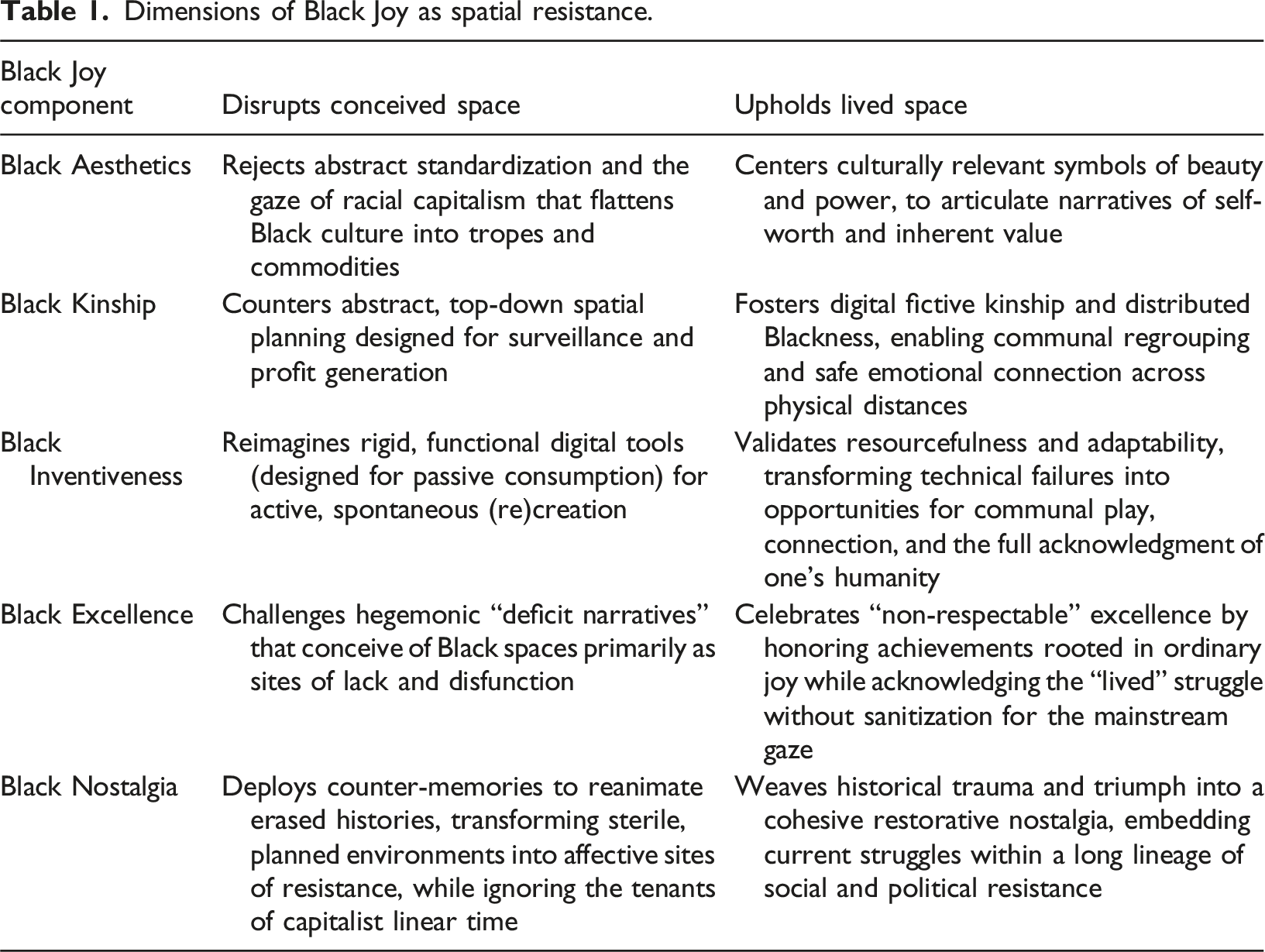
As the discussion above demonstrates, when filtered through a non-critical framing the liberatory scope of each component of Adam’s Black Joy framework has its limits. However, given their propensity to disrupt how aesthetics, kinship, inventiveness, and excellence are dominantly understood, they appear to provide the counter narratives and ideological grounding needed to enable spaces of Black Joy to challenge notions of conceived space and become lived space.
Beyond Adams’ framework, Miles and Roby (2022) identify the importance of reminiscing practices in Black Joy experiences. The artistic expressive aspects of Black Joy (Lu and Steele, 2019) facilitate Black nostalgia that “locates recollections of Black redemption, triumph over white supremacy, and resistance to state-sanctioned violence and repression” (Ahad-Legardy, 2021: 4). Based on the linking value of Black art, we suggest that nostalgia maybe a missing component to Adam’s (2022) conceptualization of Black Joy that connects other aspects of resistance through evoking “moments of joy and pleasure even while reckoning with a history mired and memorialized in the traumatic” (Ahad-Legardy, 2021: 5).
Dimensions of Black Joy as spatial resistance.
Our context
We focus our examination on Verzuz, a pandemic-era online live-music commercial enterprise. The global onset of COVID-19 in early 2020, and the extensive mitigation procedures that followed, led to a near-complete shutdown of the live music industry (Blistein and Millman, 2020). In response, Swizz Beatz and Timbaland, two veteran African American music producers, launched Verzuz live battle sessions on Instagram Live in late March 2020 (Leight, 2020). It quickly developed into a popular, spontaneous phenomenon due to its unique structure.
Rooted in Jamaican soundclash culture of the 1950s and 60s between dueling DJs, rap battles are in the DNA of Black music (Billboard, 2021; Cooper, 2004). Verzuz battles consisted of two comparable music artists, DJs, songwriters, or producers, who alternate playing songs from their respective music catalogs in livestreamed sessions. During sessions, artists extemporaneously share anecdotal stories about the origin and meaning of performed songs. Unlike the rap battle’s emphasis on aggression, dominance and mastery, Verzuz battles are more closely related to soundclash culture’s competitive spirit, community bonding, and an emphasis on style, originality, and technical prowess (Blake, 2012; Cooper, 2004). There is no officiating of Verzuz battles, with no formal winner announced, instead it is left to the audience to contemporaneously commentate and debate who “won.”
Livestreams occurred on Instagram Live, with simulcasts added to Apple Music/TV (August 2020–February 2021) and Triller (March 2021–July 2022). During the early stages of quarantine, the battles featured artists remotely from their residence due to COVID-19 lockdowns. As the pandemic progressed, battles moved to empty live venues, back to remotely from artists’ residence, with later battles conducted in front of live audiences. Battling artists were unpaid and responsible for production and live broadcasting via a cell phone, tablet device or a web-camera on their personal verified Instagram account.
At the height of its popularity, Verzuz drew a predominately Black viewership of well over one million people (Wikipedia, 2025). While functionally, anyone could consume Verzuz, due to its tailored musical content, which focused on historically Black music genres (e.g., R&B, soul, hip-hop, and rap) and visual aesthetics that closely aligned with cues from the Black Arts Movement (i.e., bold and vibrant colors, stylized rather than realist compositions, elements of pastiche art, etc.), it structurally took on the contours of an unapologetically Black (virtual) space—a space for Black people, by Black people (Lu an Steele, 2019). Thus, Verzuz represents an ideal context to explore how attentive acts of exclusion can produce shared feelings of inclusion among the target audience. Our examination of Verzuz also provides an opportunity to explore the social effects of inclusive spaces that may emerge through enacting intentional and attentive exclusionary practices. Namely, in the case of Verzuz, we see the cultivation of an unapologetic Black space led to the materialization of individual and collective expressions of Black Joy.
Method
In this study, we examine how the Verzuz series offers a virtual space wherein Black Joy is collectively constructed. We conduct a netnographic inquiry, an ethnographic approach to gaining consumer insights when studying social phenomena in digital contexts (Kozinets, 2010). Netnography involves systematic observation, analysis, and interpretation of online data. This approach was selected due to the specific social life that Verzuz as a livestreaming event afforded, where performers and audiences were physically separated, but were connected digitally across different and shifting platforms (Eagar et al., 2023).
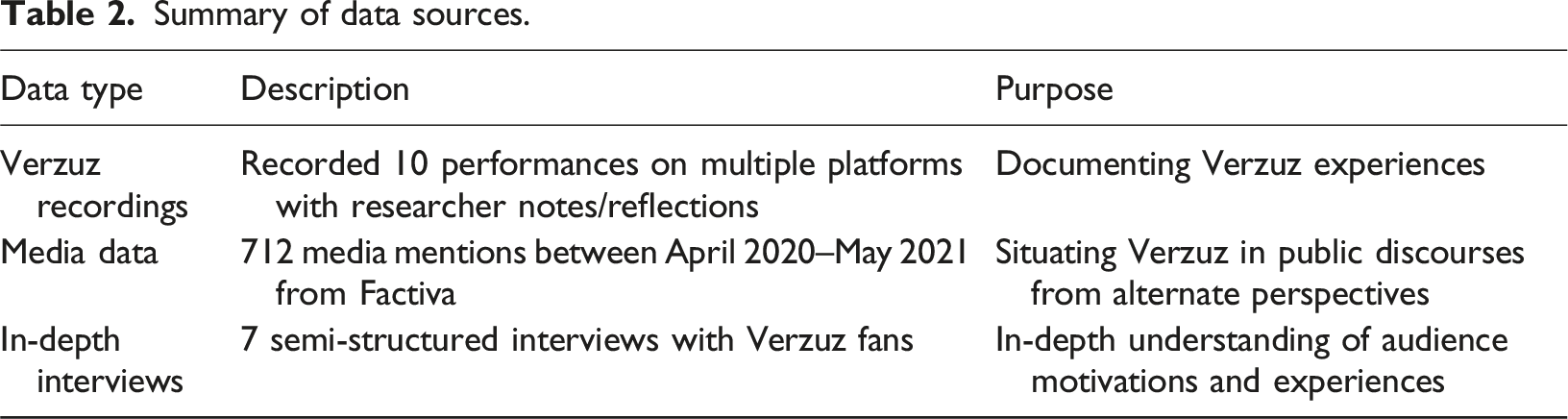
Data collection in livestreaming environments is particularly challenging given the multimedia nature of the data, with the audiovisual data of the livestreamed Verzuz performances and the textual data of the audience reactions directed towards performers and each other. See Table 1 for a summary of the data collected. To capture the audience experience of Verzuz, the research team watched and recorded 10 Verzuz battles on different platforms (Instagram, Apple TV and Triller), with the author team holding virtual viewing parties with each other and occasionally friends and family. We each journaled our reflections that were included in the data set (Kozinets, 2010). The author team undertook different roles in the data collection process, the third author was an active and overt participant, while the other two authors were undisclosed lurkers in the field (Björk and Kauppinen-Räisänen, 2012). These positions allowed for the negotiation between emic and etic positions in the interpretation of the data (Wang, 2019).
Summary of data sources.
The research team also reflects dynamic and complex positions of insider versus outsider status within the Verzuz context (Dwyer and Buckle, 2022). Two of the author team’s African American identities reflect insider positions, familiarity with the artists and different US geographies, Southern and West Coast locales, reflecting the Black experience as not monolithic (Goings et al., 2022). The second author’s identity reflects a cultural outsider position, as neither American nor a POC, but who was familiar with internet culture. In addition, the authors reflect different generations (Gen X and Y), gender, social class and musical preference positions, informing research reflexivity and interpretation of the data (Dwyer and Buckle, 2022). This mix allowed for different interpretations of data, where interpretations that contested insider versus outsider taken-for-granted knowledge, highlighting areas where the hermeneutic approach of collecting more data and embedding this in the literature was needed (Hackley, 2003).
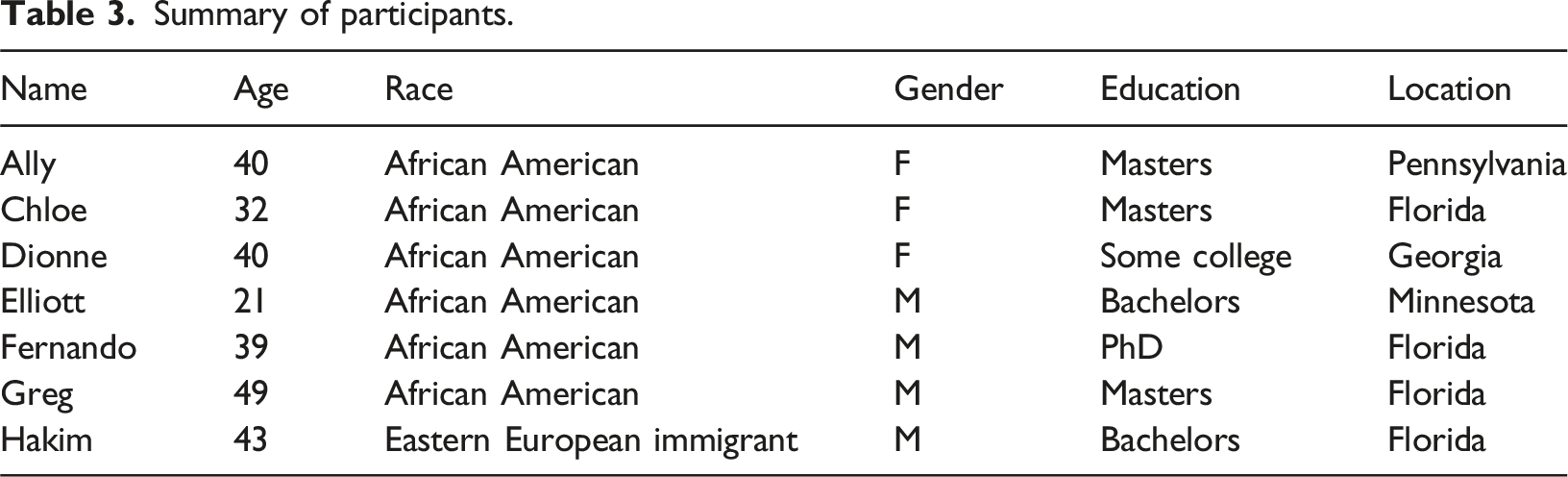
Summary of participants.
The analysis involved an iterative abductive process of understanding the components of Black Joy as they relate to the Verzuz experience (Barry, 1995). Data were then placed within wider themes through a hermeneutic process of reinterpretation and substantiation (Hackley, 2003). The literature was consulted to develop and theorize interpretations in a hermeneutic circle approach, iteratively moving between the data and literature to deepen our understanding of the individual elements and overall themes of emergent meaning (Thompson, 1997).
Findings
Our findings support notions of Black Joy as inclusive spaces that foster creativity, innovation, imagination, and the being of the authentic self (Adams, 2022). While our findings support Adams’ (2022) framework of Black Joy as moments of Black Aesthetics, Black Kinship, Black Innovativeness, and Black Excellence, we also identify the importance of Black Nostalgia’s restorative attributes in creating inclusively Black experiences, see Figure 1. The lived space of Black Joy.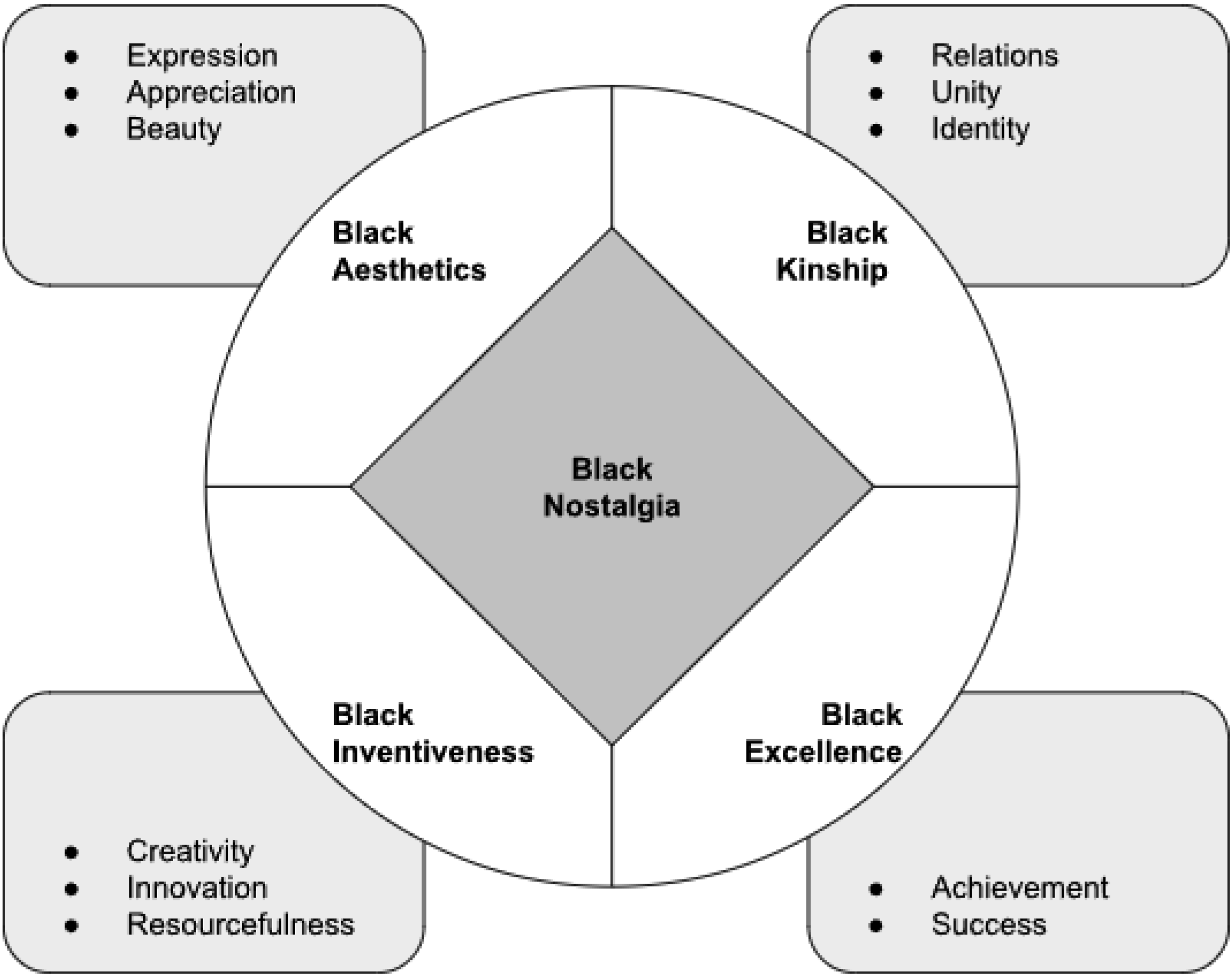
Black aesthetics
Aesthetics in the context of inclusion and exclusion studies refers to an emphasis on beauty, taste, and fashion (Sandicki and Ger, 2010). Our study highlights a range of aesthetic practices that are distinctly Black and are constructed and celebrated as such within the lived space of Verzuz. Verzuz as a vehicle for livestreaming and participation enabled Black Joy through being built around a Black aesthetic of soundclash culture (Cooper, 2004). Black Joy experiences both center the aesthetics of Blackness and are inherently Black experiences for participants as a lived Black space.
One of the most illustrative Verzuz battles that encapsulated the distinctiveness of Black Aesthetics was the Jeezy versus Gucci Mane battle, see Figure 2. The Black aesthetics of Jeezy (left) v Gucci Mane (right).
This battle was held at Magic City, a storied strip club in Atlanta, the first event after the contentious 2020 US elections. Both artists are considered pioneers of trap music, a musical genre that emerged in the early 1990s and was named after the Atlantan Black community’s nickname for a drug house (Setaro, 2018). The Verzuz battle between Jeezy and Gucci Mane was much anticipated as the two artists had a long-standing feud involving multiple diss tracks, the death of a person from Jeezy’s “crew,” and physical altercations (Alston et al., 2022).
The Black Aesthetics of the Jeezy versus Gucci Mane battle includes the trap music style, as both artists alternated their hit songs, including singing their diss tracks about each other. Jeezy’s dress stylings evoked both streetwear, with white-on-white sneakers, jeans and a sports shirt, and symbols of success of heavy gold chains that matched the gold/silver detailing of the shirt. While Gucci Mane wore more ornate stylings, including a fur coat, suede loafers and what may be a velour tracksuit. The staging also evoked “Black kings” with black and gold thrones provided for each artist with the stage acting as a pedestal to elevate them above the level of the camera, and the audience. Imagery of the Black king serves as a potent, dualistic symbol within discourses on Black masculinity. On one hand, the king archetype is a strategy of symbolic resistance, reclaiming a narrative of pre-colonial African nobility, strength, and heritage, offering an aspirational identity rooted in power and dignity. This imagery directly counters enduring racist caricatures of Black men as deviant, irresponsible, or absent (Boyd, 2007). However, an uncritical adoption of this archetype can reinforce patriarchal structures (Collins, 1990; Hooks, 2004), by defining ideal masculinity through dominance, stoicism, and control, the “king” trope can inadvertently devalue alternative expressions of Black manhood and perpetuate gender hierarchies within Black communities.
Regal aesthetics were also employed during the Ashanti versus Keyshia Cole battle. Both artists performed while perched upon lavish high-backed armchairs, reminiscent of thrones, and awash in a deep purple background, accentuating the royal motif, see Figure 3. The Black aesthetics of Ashanti (left) versus Keyshia Cole (right).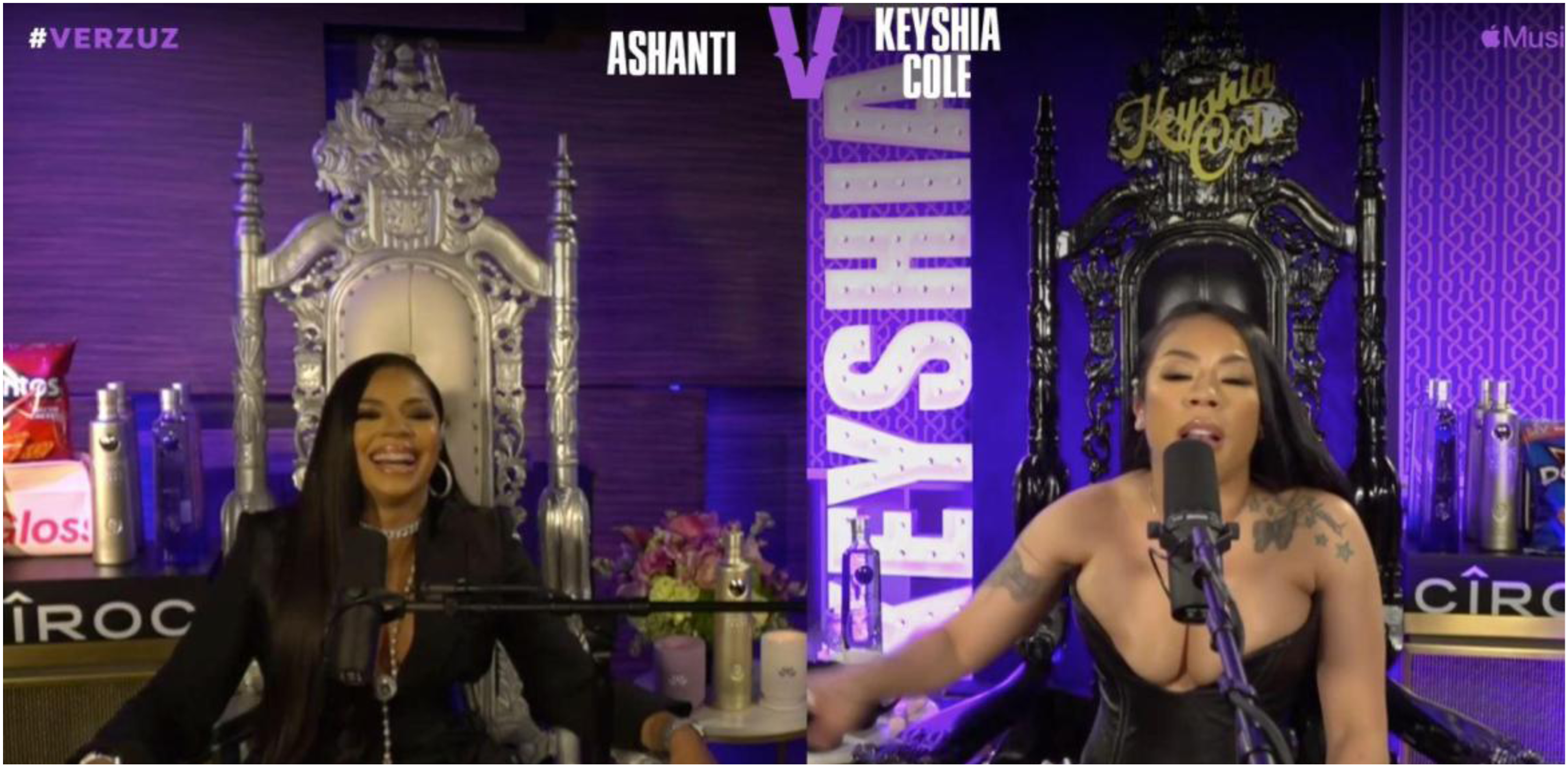
Historically, the throne has served as the ultimate emblem of sovereign power and divine right, elevating a ruler, both physically and metaphorically, above their subjects, signifying authority and connection to a lineage of power (Kuhlmann, 2011). Similarly, the color purple has long been linked with royalty and immense wealth (Jensen, 1963). For example, the scarcity and expense of Tyrian purple, a dye derived from the murex sea snail in the ancient world, meant its use was restricted to the highest echelons of society (Krafts et al., 2011). This historical reality cemented purple’s association with imperial power, luxury, and divinity in the collective consciousness.
Within Black culture, purple takes on extended meanings, largely influenced by Alice Walker's (1982) novel, The Color Purple. Walker’s use of purple becomes a symbol of the beauty and dignity found in the everyday lives of Black people, particularly Black women. In Walker’s novel, purple is reclaimed as a color of self-love, resilience in the face of oppression, and spiritual awakening. From a Black aesthetic perspective, the Verzuz use of thrones and the color purple can be interpreted as a reclamation, where the historical signifiers of monarchy are re-contextualized to articulate a powerful narrative of Black self-worth, resilience, and inherent royalty (Eshun, 2020; Whitley, 2023).
Black Kinship
Black Kinship refers to the connection that Black people experience through language and identity (Adams, 2022). Early Verzuz battles streamed from artists’ own home, encouraged digital fictive kinship, where stars welcomed viewers into their homes like family, with viewers getting a glimpse of their private living spaces (Taylor et al., 2021). For example, the Jill Scott versus Erykah Badu session saw viewers lighting incense and drinking tea in a cozy and intimate experience that was only interrupted when Badu’s tablet ran out of battery (Oyeniyi, 2020), while Snoop Dogg versus DMX battle was noted for the performers’ displays of brotherhood, such as shoulder touches, fist bumps and camaraderie (Skelton et al., 2020). The aesthetics of homeliness from early Verzuz battles changed as Covid restrictions eased the displays of kinship between artists persisted. The November 2021 battle between Chaka Khan and Stephanie Mills was performed in front of a large live audience. This battle was still described as “the beauty and strength of sisterhood” (Mitchell, 2021), where Mills supported Khan who struggled vocally throughout the performance. Suggesting that the format allowed artists and fans to connect across the distances imposed by Covid restrictions to a lived space of Black fictive kinship (Brock, 2020; Taylor et al., 2021).
In addition, Verzuz allowed audience members to connect with their existing Black community when social distancing isolated family and friends. For many respondents Verzuz represented distributed Blackness (Brock, 2020), where Verzuz enabled the virtual (re)connection of friends and family in a joyful experience through viewing parties. Ally (40, F, Pennsylvania) discussed how Verzuz formed the catalyst for her friends to go on a camping trip in 2021 so that they could share an in-person collective experience of watching Verzuz. As part of the description of the camping trip she discusses being Black in a white space: We were at a campsite that was predominantly white. Like a lot of Black people, when we were camping, like tent camping, so initially we were worried, like, ‘Oh God are [we] being too loud or drawing too much attention to ourselves’. But no, it was fun. It felt like a party, you know I mean like I'm with my girlfriends, we’re listening to music. (Ally, 40, F, Pennsylvania)
The above quote from Ally demonstrates the effect of the white gaze on curbing Black Joy in public spaces (Adams, 2022). Verzuz as an online space that is experienced virtually and physically allowing Ally to “look at people who are thinking similar to me in some of their little funny comments” and that rather than “pinning Black people against each other for an unhealthy narrative, I think it’s really an appreciation for music and celebrating the gifted artists out there.” The contrast between Ally’s experience of the white gaze versus the Black lived space of Verzuz is marked, allowing for the identification, connection and celebration of Blackness.
The centering of language in the Verzuz experience relied heavily on Internet language conventions associated with African American English (AAE), which is a distinct dialect of American English developed and spoken by many African Americans, characterized by unique grammatical structures, vocabulary, and pronunciation patterns to both include and exclude certain audiences (Lu and Steele, 2019). Audience appreciation for artists was expressed through replies on the streaming service, often with comments such as “fire” or with the equivalent emoji, such as  or
or  , which were easy to interpret for anyone with a basic knowledge of internet culture. However, some of the comments and emojis were impenetrable for the more outside researcher to understand because they appeared to align with the AAE practice of “signifyin,” a linguistic practice that deploys figurative language, indirectness, doubleness, and wordplay as a means of conveying multiple layers of meaning (Florini, 2014). This was particularly pronounced with the Jeezy and Gucci Mane battle as comments on the performance featured the ice cream
  and snowman
  emojis. Interpreting these symbols required the more insider perspective of the third author, suggesting the snowman represents Jeezy, due to his history of dealing cocaine (Tardio, 2016) and the ice cream represents Gucci Mane due to an ice cream tattooed on his right cheek. Speakers of AAE often code-switch to navigate different social contexts. Online, this is evident in how users may employ AAE in conversations with other in-group members (e.g., on “Black Twitter”), but switch to Mainstream American English (MAE) in more formal or racially diverse online spaces (Williams and Gonlin, 2017). The open display of “signifyin” practices that occurred during Verzuz battles further demonstrates its classification as a distinctly Black space.
Black inventiveness
Black inventiveness refers to Black Joy experiences that foster creativity, innovation and resourcefulness. Verzuz as a livestreaming experience in a unique, but distinctly Black format of rap battles, was both a platform to showcase musical creativity, and as a new way for experiencing “live” performances. The innovative way that Verzuz enabled access to live music entertainment during Covid resonated with our respondents as well: And then we're going to broadcast it to people, it's free, it's at a time that most of the watchers would be watching it and I, you know, it was pretty innovative to me, very creative and I like stuff like that. (Chloe, 32, F, African American, Florida)
Here, we see Chloe pointing to the innovative attributes of Verzuz of being free and at a convenient time. The innovation of Verzuz was not simply in its format and the livestreaming platforms used, it extended to the artists themselves trying new things as they grappled with a new performance platform, while also countering their rivals, such as Nelly’s “unexpected pop deviations and surprising remix choices” (Lipshutz, 2020). However, not all efforts at creativity worked. For instance, the first Teddy Riley v Babyface battle was canceled due to poor Wi-Fi signal, low-resolution video, volume, and service interruptions, see Figure 4. Other examples were Erika Badu’s device running low on battery and a malfunctioning camera causing a significant delay during the Ashanti versus Keyshia Cole battle. Technical failures during Teddy Riley versus Babyface’s first battle.
In the final example, the audience had to get resourceful while they waited for the event to start. In Figure 5, the blurry camera image for Keyshia is visible, and a member of Ashanti’s team was adjusting and rearranging the brand endorsement merchandise. This led to viewers calling out the zhuzhing of the Doritos bag, people discussing their preference for Ranch versus Original flavors, and generally finding ways to amuse themselves while they waited. The resourcefulness of both artists and the audience to create and adapt to this new performance space created opportunities for connection in a time of social distance and isolation. Ashanti versus Keyshia Cole and the Dorito Zhuzh.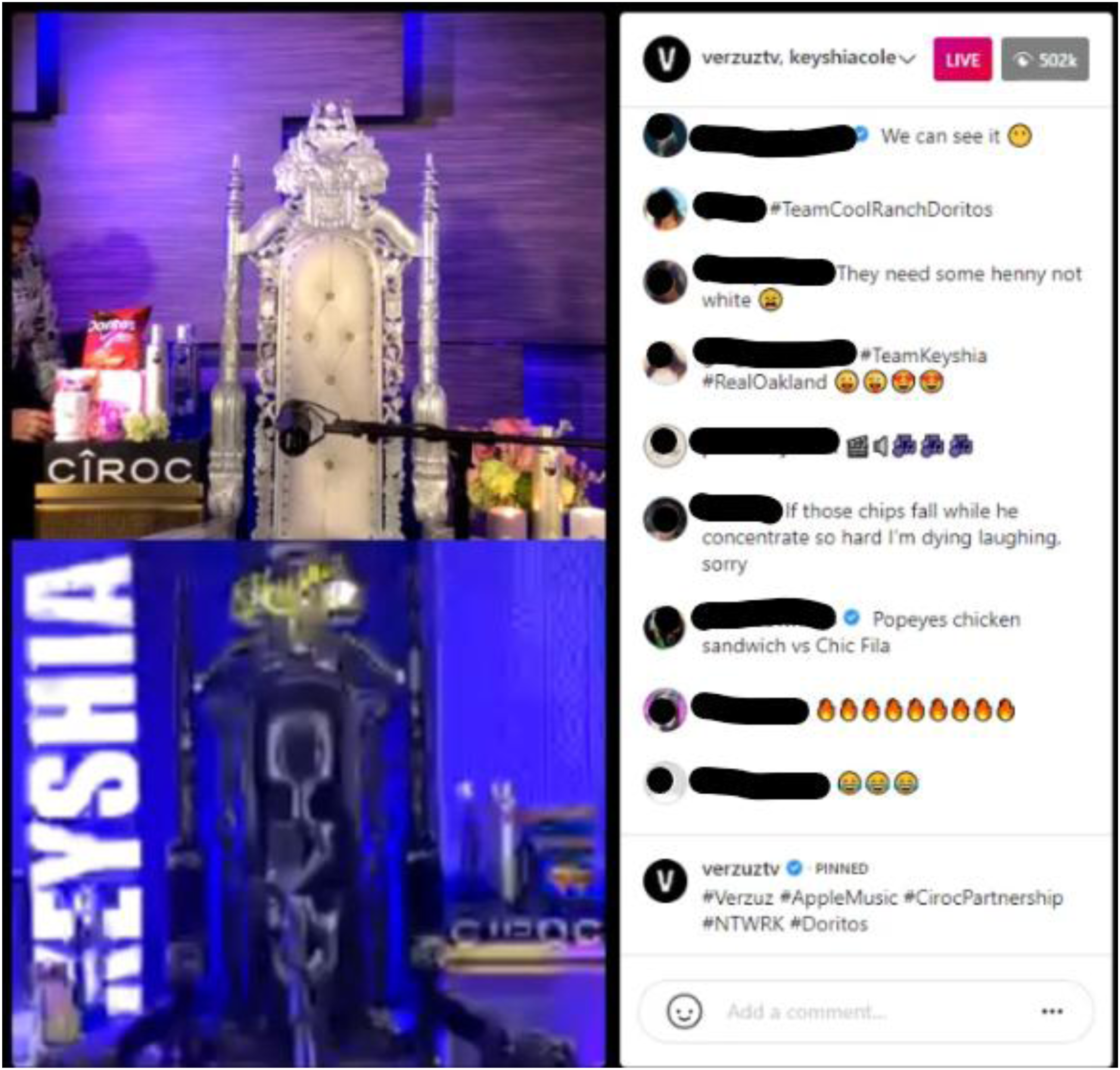
Black excellence
Verzuz itself has won many accolades including the Webby Award in 2020 (Kastrenakes and Peters 2020) and the NAACP Image Award in 2021 (Davis, 2021). In addition, the Verzuz founders—Timbaland and Swizz Beatz—were Honoree recipients of the “Shine the Light Award” at the BET Awards and were listed in Bloomberg’s Businessweek 50 Most Influential People in 2020 (Bloomberg, 2020; Shaw, 2020). Besides Verzuz earning these honorable recognitions, celebrity audience members—Michelle Obama and Rhianna shared informal kudos during events (Gill, 2020).
For artists appearing on Verzuz, the event offered the opportunity to highlight their “best” 20 songs, whether they were their biggest hits in terms of chart success or just their personal favorites. This showcase led to a “Verzuz-bounce” in music sales: Verzuz has proven to be a potent booster for participating artists’ catalogs. On average, artists’ streaming numbers jumped nearly 90 percent following a Verzuz show, Rolling Stone reported in September, with individual artists like Brandy and Monica getting 240 percent and 260 percent bumps, respectively. For comparison, the average artist coming on The Late Show with Stephen Colbert — TV’s highest-rated late-night show — saw an average of 5 percent boosts. (Millman, 2021)
Despite the evidence of the success of Verzuz as a fan and artist experience, nearly from the inception of Verzuz, marketized systems intruded onto the event. This is evidenced by the first article found about Verzuz: How this will all play out long-term is less clear. The beat battles capitalize on the fact that everyone – musicians and fans alike – is stuck indoors and bored stupid. Will the same be true when touring, club appearances and being able to see friends resume? DDot Omen is bullish, revealing talks are already ongoing with brands about monetizing the Verzuz battles. Moderation, however, is key. “You don’t want to oversaturate it and make it corny,” he says. “Otherwise, next thing you know, other people who are less appreciative of history will jump on it and it’ll get diluted.” (Renshaw 2020)
The above speculation on the monetization of Verzuz illustrates the intrusiveness of the capitalist narrative on Black digital spaces (Brock, 2025). Over time, the Verzuz experience increasingly reflected this marketization imperative with the placements of products and brands as part of the staging of events, as seen in Figures 2 and 5. While the audience largely ignored or played with these intrusions, it does indicate that digital Black Joy spaces are susceptible due to being built within the conceived spaces of capitalistic economic and technological structures.
Despite this, demonstrations of Black Excellence in the Verzuz context exposed the audience to achievement and success by people “who look like them” (Adams 2022). This builds positive experiences at the intersection of race and culture, where the audience is able to identify with successful others despite the personal and systemic challenges that both the artists and they face. Dionne addresses this referencing the Jeezy and Gucci Mane battle: Both of them have had so much success and growth in that time away… Jeezy to come back and talk about his blocking things like that. Their music evolved away from each other and really just took on a life of its own. Making it in, and not only that, but even their personal lives, you know here Jeezy is married, you know and so is Gucci you know they're both married to these powerhouse women who are successful, strong women. It just kind of puts it in a different perspective of okay, you know you’re not going to roll up in here to fight tonight cuz you really got some stuff to lose like you're gonna lose…More than just going to jail, like you got millions now. You ain't ‘corner boy blocking’ no more. You got investments and deals and negotiate. You like, the hood stuff it's always gonna be there, but they both have learned - hey, that hood stuff is in me, but I still gotta eat. Like I'm used to a certain lifestyle now. I don’t think I want to go stand ten toes down behind bars in a 10 × 10 [cell]. (Dionne, 40, F, African American, Georgia)
Dionne focuses on the success of Jeezy, both financial and personal, through marriage, overcoming the struggle of being a drug dealer (“corner boy”) from poor, Black neighborhoods (“the hood”) and spending time in jail (“10 × 10”). For Dionne, these artists appealed to her because they were able to straddle both worlds, the Black struggle and musical success. Black Excellence goes beyond just displays of achievement and success to include identification with and admiration of others continuously overcoming struggle.
Also embedded in Dionne’s comment are reactionary presumptions often associated with Black Excellence. Black Excellence, while intended to counter racist narratives, often reinforces capitalist, patriarchal and heteronormative ideals (Bailey, 2022; Quashie, 2012; Snorton, 2017). Much like Dionne’s focus on Black male success (while giving a nameless nod to “powerhouse” women), the discourse of Black excellence frequently centers the achievements of cisgender, heterosexual Black men, implicitly positioning them as the primary representatives of racial uplift. This model of success often relies on traditional, masculine archetypes of leadership and economic power, marginalizing the contributions of Black women, queer, and trans people (Cooper, 2018). Dionne’s framing of Jeezy’s and Gucci’s success as a rags to riches transition—physically escaping the “hood” and its informal economy for a more legitimate lifestyle, illustrates how the push for “excellence” can become a politics of respectability, demanding conformity to dominant social norms as a prerequisite for recognition and value. This pressure to conform sidelines those who do not or cannot fit into these narrow molds, undermining broader liberation efforts. While some of our interview participants reinforced the politics of respectability, Verzuz made attentive choices that embodied non-respectable excellence. For instance, holding the Jezzy versus Gucci Mane battle at Atlanta’s world-renown strip club (Magic City) serves as a definitive rejection of “respectability politics” by uplifting the social environment wherein trap music emerged, rather than sanitizing it via erasure of the musical genre’s historical context.
Black nostalgia
The findings for the previous themes align with Adams’ (2022) Black Joy framework, but we also find that Black Nostalgia plays an important role in weaving these different moments of blackness into a cohesive and emotional ex/inclusive experience. Our data indicates that the three types of white nostalgia, real, stimulated and collective, are relevant to the Verzuz experience, while also identifying Black restorative nostalgia. The Verzuz battle between Gladys Knight and Patti LaBelle illustrates the three types of white nostalgia, see Figure 6. Both artists in their 70s represented over 150 years of Black music history. The media described the event thusly: For more than two hours, the two women didn't just revisit their catalogs that have helped to define R&B (their hits include “Midnight Train to Georgia,” “Neither One of Us (Wants to Be the First to Say Goodbye),” “New Attitude,” and “If Only You Knew”). They reflected on how their careers have overlapped, gushed about their families, and showered praise on their “opponent’s” musical artistry. The show was a broadcast of Black love. (Tensley and Asmelash, 2020) Gladys Knight versus Patti LaBelle.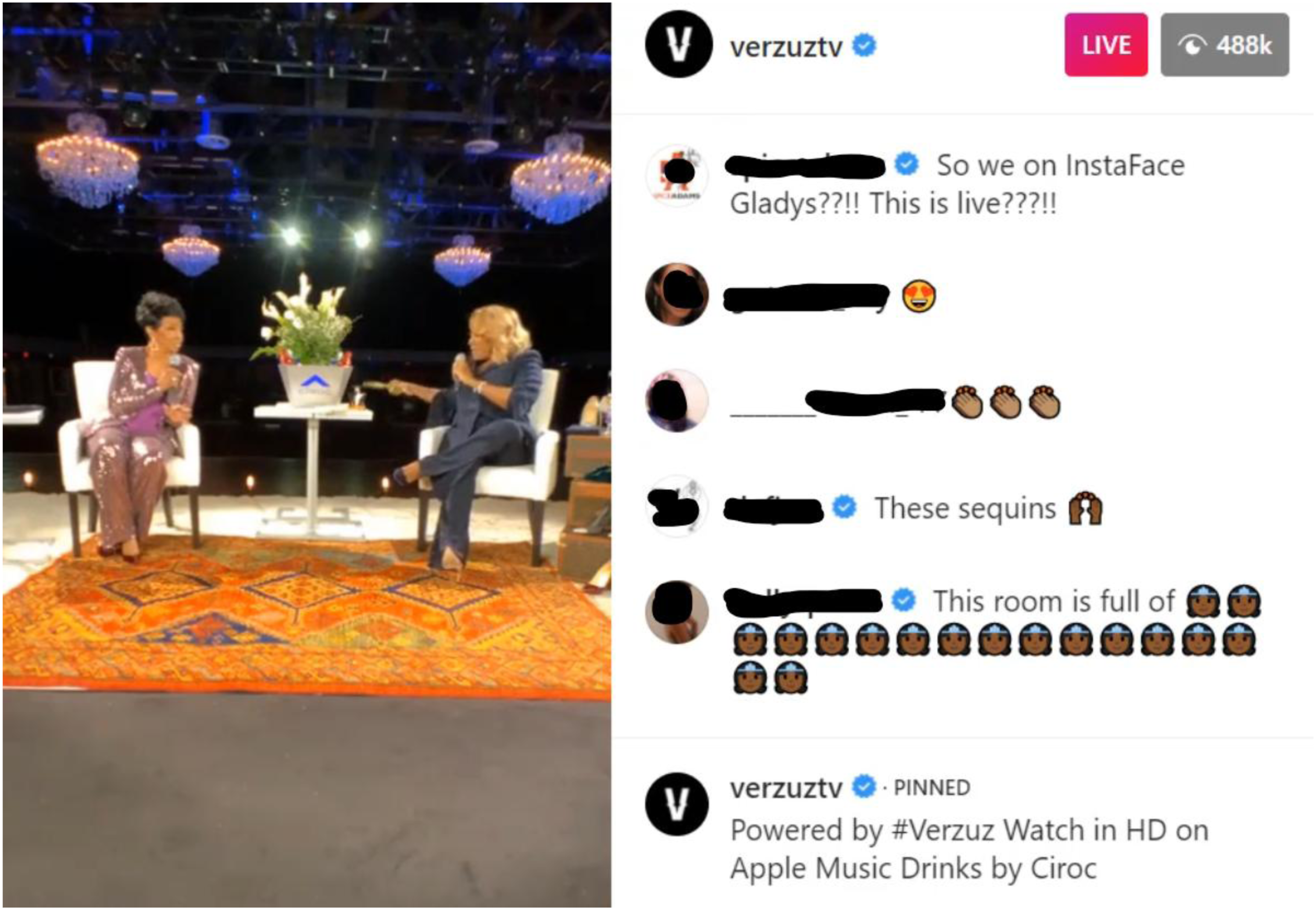
In this Verzuz, the singers experienced real nostalgia as they reminisced about the origins of songs, such as Patti LaBelle discussing how she did not know what the words to “Lady Marmalade” meant until after the songs release. These anecdotes alluded to the collective trauma of Black Americans, with references to the poor treatment of Black singers by venue owners, and the need to protect and nurture younger generations of singers. For many of the younger audience, this battle represents stimulated nostalgia as many of the stories related by the artists predated their birth, with one commenter noting: “this is when your grandma and her best friend link up and make you watch.” The event itself represents collective nostalgia as the songs of both artists are symbols of a past American and Black culture that “defined R&B” as a genre.
In our findings we identify that Black Nostalgia is not a totalizing ideological framework that homogenizes and harmonizes Black communities (Godreau, 2002). Rather we see tensions and contradictions in the real and stimulated nostalgia experienced between the different generations and regions represented by the diversity of Verzuz battles, for example the difference between the confrontational and gangster stylings of the Jeezy versus Gucci Mane battle, and the resurrection of the apparent 1990s beef of R&B artists Monica versus Brandy, versus the “Black Love” of Gladys Knight v Patti LaBelle and Erykah Badu versus Jill Scott, the last pair were accused of being “too nice” (Andrews-Dyer, 2020). However, the collective nostalgia celebrated by Verzuz embraces its paradoxes as representing the diversity of the Black community in an inclusive space that is unavailable through other non-Black outlets.
Our findings extend on the traditional white modes of nostalgia by identifying Black restorative nostalgia as a form of nostalgia that is deeply invested in redemptive returns to the historical past through the imaginative process of invention and restoration (Ahad-Legardy, 2021). It serves as a site and source of an activist aesthetic that actuates social and political resistance, particularly within Black cultural contexts, by embedding oneself within a historical lineage of Black social and political resistance. Verzuz as a site of resistance and restorative nostalgia is evident through frequent mentions of social and political issues: And in its regular celebration of Black excellence in the music business, gospel singers Kirk Franklin and Fred Hammond lifted fans' spirits following the death of George Floyd and the subsequent nationwide protests for a night of healing while piano maestros Alicia Keys and John Legend celebrated Juneteenth with their holiday face-off featuring their colorful instruments. (Billboard, 2020)
The above mentions of the Black Lives Matter protests in the aftermath of the death of George Floyd and Juneteenth, marking the end of the Civil War and slavery pointing to two social and political causes that Verzuz achieves restorative nostalgia by embedding itself within Black social and political resistance. This was also evident in more overt political activism that occurred during Verzuz events, such as the appearance of Black politicians in a get out the vote effort during the Gucci Mane versus Jeezy battle. Verzuz illustrates the success of Black artists over an extended period, while also demonstrating that the Black struggle continues, with social and political resistance in restorative nostalgia finding joy in times of current and collective traumas of the pandemic, police brutality, and political upheaval, while also acknowledging the suffering from a history of slavery.
Discussion
This study explored the multifaceted expression of Black Joy in the lived space of Verzuz, a digital platform that emerged as a powerful site for Black cultural affirmation during the amplified racial capitalism of the COVID-19 pandemic. Through a netnographic analysis of audience and artist interactions, we demonstrated how Black Joy is constructed, shared, and experienced collectively, challenging traditional narratives around market inclusion and exclusion. Our findings both affirm and extend Adams’ (2022) Black Joy framework, by adding Black nostalgia which overlays and binds the other four aspects of Black aesthetics, kinship, inventiveness, and excellence, into a cohesive whole. In essence, Black Nostalgia deepens one’s ability to feel and experience what the other components offer, which in turn enables Black Joy to materialize.
Traditional modes of marketplace inclusion generally utilize Lefebvre’s (1991) notion of abstract space, which undermines its sociocultural and sociopolitical dimensions. Our analysis demonstrates how a deeper felt sense of inclusion comes into being when space is approached as a social production and actively attends to the ways in which power, privilege, and oppression circulate within it. Operationalizing space in this manner may require the mindful deployment of exclusionary practices to generate a sense of inclusion among its inhabitants. The Verzuz space, as an instance of Lefebvre’s conceptualization of lived space, leverages elements of exclusion to create a sense of belonging, unity, and joy among its predominantly Black audience. As such, Verzuz offers critical insights into market inclusion, social space, and the significance of Black Joy as a form of resistance and resilience.
Traditional modes of marketplace inclusion often neglect to address the underlying structures that bring about social inequities (Grier and Perry, 2018; Sobande and Amponsah, 2024). Whereas Verzuz operates as a “For Us By Us” digital space that does not explicitly exclude non-Black participants but, through its culturally specific content, emphasizes Black cultural experiences and values. Traditional market inclusion practices tend to homogenize spaces, focusing on exchange value rather than the rich, lived experiences of participants, for example, the inadvertent loss of cohesiveness and institutional strength within Black communities due to the desegregation efforts of the Civil Rights Era (Du Bois, 1935; Ingham, 2003; Nelson, 1978), and the mainstreaming and globalization of hip-hop culture during the 1990s (McLeod, 1999). Prioritizing social space over abstract space (Lefebvre, 1991), where use value and cultural expression are central and suggests that deliberate cultural boundary-setting can foster a more meaningful sense of community and belonging. Thus, exclusion becomes a tool for deepening the inclusivity of the space for its target audience, illuminating a pathway toward what might be termed “radical market inclusion”—an approach that centers marginalized voices without diluting the authenticity of their expressions. Davis (1990) notes, the etymology of radical leads to the word root. Therefore, radical market inclusion should not be deemed as an extreme form of marketplace inclusion, but rather a form of inclusion that places rooting out the causes of market exclusion at its center of interest. Under Davis’s conceptualization, radicalism is transformed from a fringe or extreme position to a necessary and fundamental approach to social change, to refuse superficial solutions and instead identify and confront the underlying causes of societal problems. It is a commitment to a deep and thorough analysis of the structures of power and oppression.
Verzuz embodies many of the characteristics of Foucault’s (1986) theorization of heterotopia, which he describes as spaces that are “other” due to their tendency to simultaneously reflect and disrupt dominant outside spaces. Verzuz functions as a counter-site to mainstream, commercialized music industry practices. Traditionally, the music industry has been critiqued for its commodification of Black artistry and its often exploitative dynamics (Arditi, 2024). Verzuz, in contrast, empowers Black artists to curate and present their own legacies on their own terms, operating outside of conventional industry structures. The event also offers an alternative form of soundclash competition, fostering a celebration of the artists’ work, allowing viewers to appreciate the richness of each performer’s catalog. This subverts the typical capitalist logic of the music industry, where the focus is on profit and exclusivity rather than communal celebration (Greene, 1998).
In addition, Verzuz blurs the boundaries between different musical genres, eras, and generations, creating spaces where multiple timelines and cultural influences coexist. This offers a space of heterotopian multiplicity where different histories and sounds can be reimagined and appreciated in relation to one another. Finally, the participatory nature of Verzuz makes it a space of transition and transformation, where the sense of collective participation in the curation and celebration of Black cultural history transforms the event into a dynamic and radically inclusive space where both the artists and the audience become active contributors to the creation of meaning. Verzuz’s virtual architecture provides an alternative to the confines of physical spaces where Black people often feel surveilled or restricted by the external gaze. The success of Verzuz underscores the potential for digital spaces to serve as inclusive environments where marginalized communities can more freely express their identities and affirm their existence in ways that are sometimes less feasible in physical marketplaces. However, our findings also highlight the continuous intrusions of capitalist and technology systems, as well as how problematic forms of exclusion within the Black community are perpetuated. Reflecting arguments in Black geography where contemporary spaces are fundamentally shaped by colonialism, the transatlantic slave trade, and ongoing anti-Black racism (Hawthorne and Lewis, 2023). In a world where geography is often designed to inflict pain and exclusion on Black people, creating a space for joy is a radical act of placemaking. Black Joy spaces function as heterotopias because they are real, physical (or in the case of Verzuz, virtual) places that exist both within and outside of the dominant, often oppressive, social order. They operate under their own rules and logics (namely, Black aesthetics, kinship, innovativeness, excellence, and nostalgia), creating pockets of freedom and affirmation that critique and subvert the surrounding society. In essence, the space of Black Joy creates a tangible “world within a world” where survival is not the only goal but where new forms of life are imagined and actively lived (Lorde, 2020).
Our research highlights how sociopolitical constructs like racial capitalism, influence the production of market spaces, emphasizing the need for more nuanced inclusion initiatives (Grier et al., 2019). The Verzuz series serves as a key example of a “space of Black Joy,” a heterotopia that enables collective celebration and cultural reclamation in contrast to the mainstream music industry. By creating an environment where Black struggles and triumphs are acknowledged, Verzuz demonstrates how authentic marketplace inclusion can be reimagined through cultural specificity and intentional boundaries.
This model provides a foundation for several critical avenues of future research. First, its applicability across different contexts should be tested. Scholars could investigate whether Verzuz-style formats on platforms like YouTube, TikTok, and Twitch successfully emulate spaces of radical inclusion outside the original US music industry context. Second, researchers should explore the potential pitfalls of otherwise inclusive strategies. Unexamined “attentive exclusion” may inadvertently reinforce stereotypes or homogenize Black culture. The 1990s brand FUBU (“For Us, By Us”), for instance, became a symbol of Black pride, but risked essentializing Black identity by assuming a uniform consumer base. As Hall (1997) notes, identity is fluid; limiting its representation can stifle self-expression. Third, scholars should investigate alternative strategies for fostering radical inclusion. Warner’s (2002) concept of “counterpublics”—alternative social spaces created by subordinated groups—may offer a useful theoretical lens. Similarly, practices from Black queer and feminist scholarship, such as strategic boundary-setting (Lorde, 1988; Taylor, 2017) and cultural specificity (Hooks, 1992; Ladson-Billings, 1995), are vital for building such environments.
Footnotes

Ethical considerations
The Human Ethics Office at the Australian National University approved our interviews (approval: 2021/411) on June 24, 2021. This protocol was deemed to be IRB exempt (IRB#1741989-1).
Consent to participate
Respondents gave written consent for review and signature before starting interviews.
Funding
The authors received no financial support for the research, authorship, and/or publication of this article.
Declaration of conflicting interests
The authors declared no potential conflicts of interest with respect to the research, authorship, and/or publication of this article.
Author biographies
Pronouns: He/Him/His Email: