



Abstract
We consider why international business research comparing values, attitudes, and behaviors of managers from the United States and Canada shows conflicting results about cultural differences and similarities between these two nations. We argue that one reason behind these inconsistent findings is the presence of intranational subcultural regions in these nations. The second reason is that the variable(s) under scrutiny influence the generalizability of research findings. Employing Lenartowicz and Roth’s (1999) framework for culture assessment, theories of cultural evolution and maintenance, and data from the World Values Survey, we test the distinctiveness of subcultural regions in the United States and Canada, at both the individual level and the regional level of analysis. Results support our hypothesized arguments.
Keywords
Introduction
For decades, Canada and United States have been important partners in trade and foreign direct investment (FDI). Recent figures suggest that the two-way trade in goods and services between both countries totaled more than US$700 billion in 2013 (U.S. Department of Trade, 2013). A closer look indicates that the United States accounts for 19 percent of Canada’s gross domestic product; 25 percent of its oil imports and 85 percent of its natural gas imports come from Canada. Similarly, Canada is the leading export market for 38 of the 50 U.S. states (U.S. Department of Trade, 2013). Considering FDI, the bilateral investment stocks between both countries stand at a high of US$612 billion. Canada is the fourth largest foreign investor to the United States, while the United States is Canada’s largest foreign investor, with investment stocks totaling US$351 billion in 2012 (Embassy of the U.S., 2013).
This strong economic interdependence has prompted management scholars to analyze the factors that impact business relations between the United States and Canada. Important among these are cultural attributes of these nations, which have been the variable of interest in many studies. We reviewed several such studies and grouped them into four categories based on their results. The first category included studies that found these two nations to be culturally similar to each other (for instance, Hofstede, 1980; Inglehart, 1997; Selmer, 2007). The second category included studies that prompted significant cultural differences between these nations (for instance, Chen et al., 1995; Salter and Sharp, 2001). The third category included studies that found neither cultural similarities nor cultural differences between these nations (for instance, Elahee et al., 2002), while, studies in the fourth category suggested both cultural similarities and differences between these nations (for instance, Adler et al., 1987; Hornsby et al., 1999).
Since none of these studies provide a firm conclusion about the cultural distinctiveness of these two nations, there is a lacuna in cross-culture international management literature, which we intend to fill. We argue that two important factors may be responsible for the inconsistency in the aforementioned research findings. First is the ignorance of distinct subcultural regions, which exist within these nations. Second, the contradictory results of these studies may also be a function of the variable, which is used to analyze cultural similarities and differences between these nations. The current study addresses these two research issues.
This article is structured in four sections. In the second section, we review 37 studies that analyze the cultural framework of the United States and Canada, both at the national and individual levels of analysis. In the third section, we review eight studies that suggest the existence of regional subculture within the United States. and Canada. Following this, we use the cultural analysis framework proposed by Lenartowicz and Roth (1999) to identify distinct subcultural regions within the United States and Canada. This framework advocates the use of a two-step procedure to identify and validate the presence of subcultures within nations. In the first step, subcultural regions should be identified based on sound theoretical arguments. Then in the second step, data should be used to empirically validate these subcultural regions. Following this framework, we use functional, neoinstitutional, social identity, and self-categorization theories to explain the origin and maintenance of subcultures. We present an account and develop hypotheses to test the distinctiveness of nine subcultures within the United States and Canada. In the fourth section, we validate these subcultures using data about cultural values both at the individual and regional levels of analysis. We conclude the article by discussing our main findings and suggest implications for managers.
Studies comparing the culture of the United States and Canada
We reviewed 37 studies that analyzed cultural differences between the United States and Canada. Nine of these were national-level research projects that compared different nations, including the United States and Canada, along a range of cultural values, attitudes, and belief dimensions. The other 28 analyzed cultural differences and similarities between the United States and Canada at the individual level of analysis.
We present a brief synopsis of these studies below.
Country-level comparative research
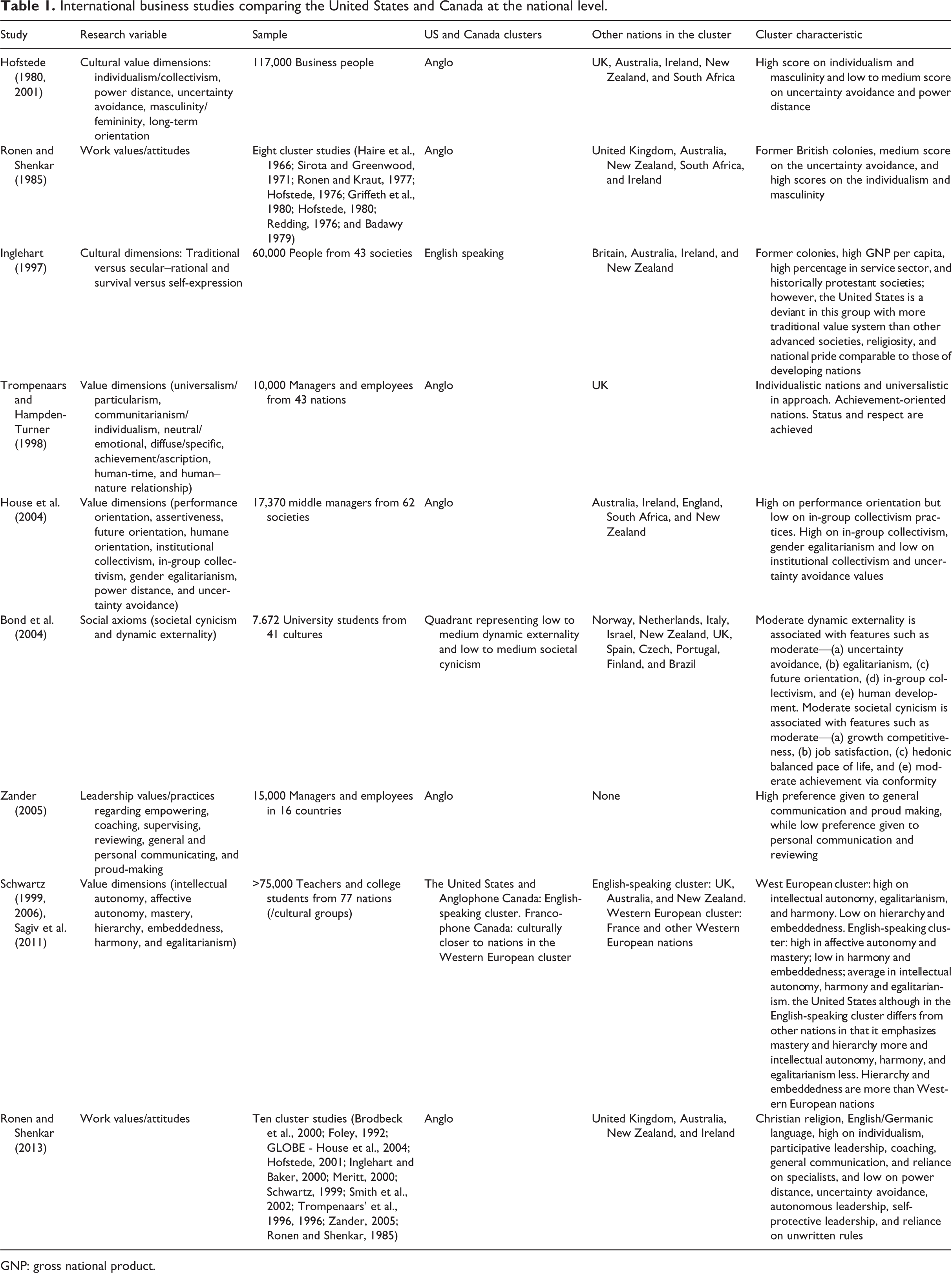
The nine studies included in this section are listed in Table 1.
International business studies comparing the United States and Canada at the national level.
GNP: gross national product.
Based on four cultural value dimensions derived from work value surveys, Hofstede (1980) categorized 66 nations into eight cultural clusters. The United States and Canada were placed close to each other in the Anglo cluster. Among the marked features of the Anglo nations is their high score on individualism and masculinity and low to medium score on uncertainty avoidance and power distance. Hofstede’s findings were subsequently validated by Ronen and Shenkar (1985), Inglehart (1997), Trompenaars and Hampden-Turner (1998), the Global Leadership and Organizational Behavior (GLOBE) project (House et al., 2004), and Zander (2005). Results of these studies suggest that members of the Anglo group of nations are linguistically, ethnically, economically, and religiously similarity to each other. It can be inferred from these studies that business theories and practices based on any one of the Anglo nations (for instance, the United States) could be transferred to another Anglo nation (for instance, Canada). Multinational corporations can thus generalize their business policies, such as those related to employee selection, training procedures, compensation, performance appraisals, organizational structure, hierarchical relations, ethical decision making, competitive versus cooperative strategies, and so on, across nations in the same cultural cluster.
Bond et al. (2004) expanded the conceptual tools used in cross-cultural research by introducing social axioms, which refer to generalized beliefs that people use to guide their behavior in daily lives. Based on the social axiom survey, these scholars classified 41 nations into four quadrants. The United States and Canada were placed in the same quadrant, supporting the notion of proximity between these two nations. Schwartz and colleagues (Sagiv et al., 2011; Schwartz, 1999, 2006) used seven cultural value dimensions to categorize 77 nations into seven cultural clusters. Interestingly, these scholars classified Canada into two sets: Anglophone and Francophone. The United States was found to be culturally close to Anglophone Canada, while Francophone Canada clustered with Western European nations such as France, Netherlands, Germany, and Austria. This provided evidence of cultural heterogeneity within Canada.
A common underlying theme of these multination research projects is the use of nations as their unit of analysis. In these studies, survey data are collected from individuals in various nations and responses are aggregated to the nation level. These then form the basis of testing hypothesis to determine significant differences or similarities between nations. However, results from these studies are limited in the sense that these do not identify regional differences or provide a real picture of the inherent cultural complexity within nations (Herman and Kempen, 1998). Scholars (Conway et al., 2001; Lenartowicz and Roth, 2001; O’Grady and Lane, 1996) have thus questioned whether these national-level projects provide useful and valid implications for managers.
Within the management literature, two alternative approaches have been devised to tap within-nation cultural intricacies. The first, debriefed in the next section, compares individuals from different nations. The second, which seems to be more relevant and is also adopted in this study, provides a descriptive account of the distinct subcultural regions within nations. It then analyzes intranational cultural heterogeneity and international cultural homogeneity between these regions.
Individual-level comparative research
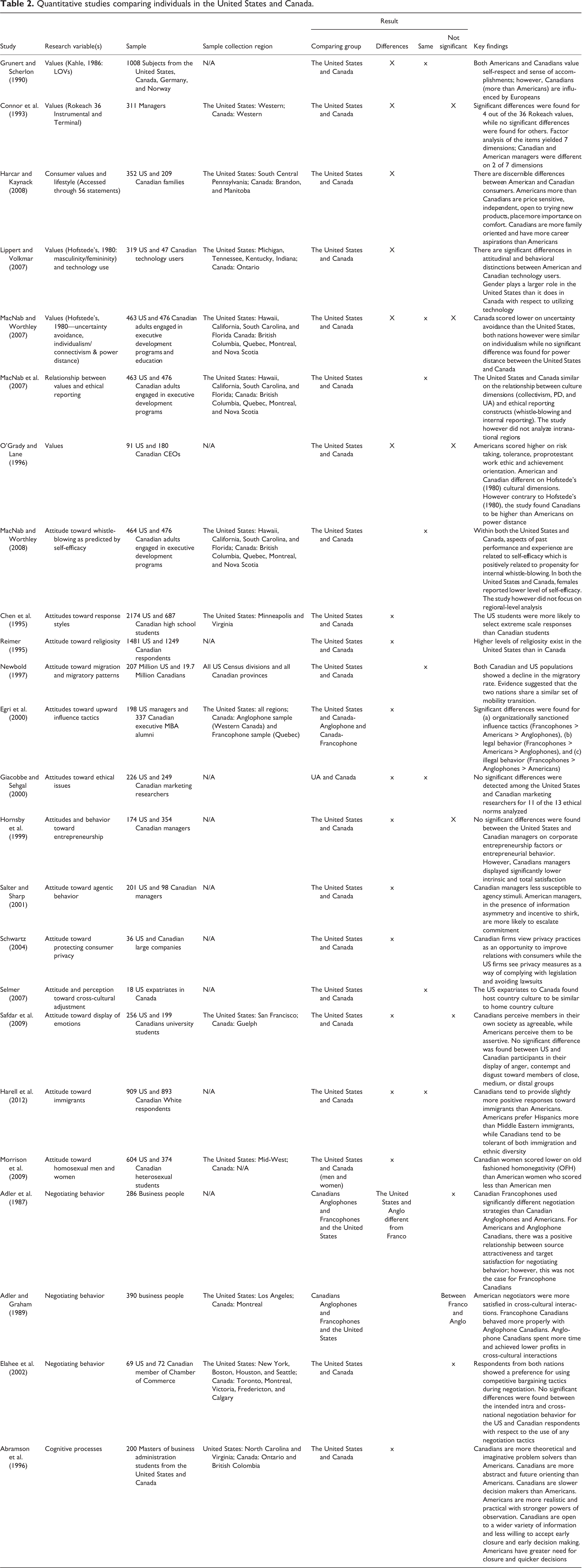
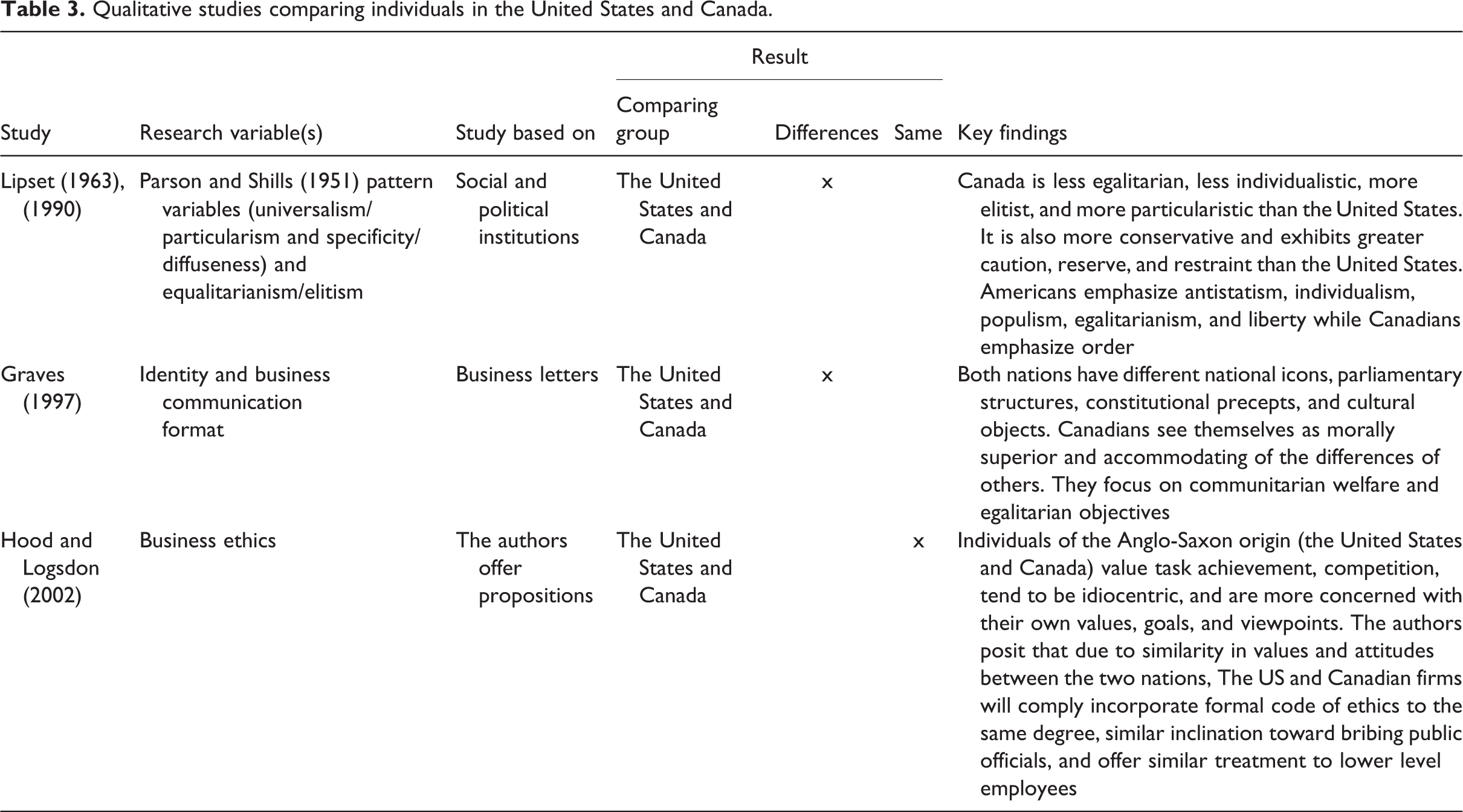
We reviewed a total of 28 studies that analyzed cultural differences and similarities between the United States and Canada at the individual level of analysis. Twenty-four of these studies (see Table 2) were empirical in nature, while the other four (see Table 3) were qualitative research projects.
Quantitative studies comparing individuals in the United States and Canada.
Qualitative studies comparing individuals in the United States and Canada.
In order to facilitate our analysis of the empirical studies, we categorized these into three sets based on their focal research question. The first set comprises of seven studies that compared cultural values of individuals in the United States and Canada. Since consciously or unconsciously internalized values form the basis of performing and justifying one’s own and other’s actions (Rokeach, 1973), differences in values across individuals have implications for how they behave and interact with others (DiMaggio, 1997). Scholars have used different value types to compare individuals within the United States and Canada. For instance, Connor et al. (1993) used Rokeach’s (1973) 36 value items and found that Americans and Canadians differed significantly on 4 of the 36 value items. Similarly, O’Grady and Lane (1996), Lippert and Volkmar (2007), and MacNab and Worthley (2007) found cultural differences between Canadians and Americans on the basis of Hofstede’s (2001) value dimensions. Grunert and Scherlon (1990) used Kahle’s (1986) list of values (LOVs) to compare individuals in Canada, the United States, Norway, and Germany. Their results indicated that Canadians are culturally closer to West Germans than to Americans. In another study, Harcar and Kaynack (2008) accessed consumer values in these two nations and found individuals from these two nations to be different on family orientation and price-sensitivity values.
In contrast to the studies listed above, which suggest value-based difference between Americans and Canadians, some studies have indicated value-based similarities between the two. For instance, MacNab and Worthley (2007) found Americans and Canadians to be similar on Hofstede’s (2001) value dimension of individualism but found no significant difference between them on the power distance dimension. However, O’Grady and Lane (1996) found Canadians to be significantly higher than Americans on the power distance dimension. We argue that this inconsistency in results may be because the survey data analyzed in these studies were collected from different regions within these nations.
The second set includes 13 studies that compared individuals within the United States and Canada on their attitude toward various business management and psychology constructs. Attitudes are a common component of various cross-cultural surveys and represent relatively enduring set of beliefs about an object or situation. These predispose individuals to respond in some preferential manner (Hofstede, 1998). Extant studies have compared individuals within the United States and Canada on their attitudes toward upward influence tactics (Egri et al., 2000), agency behavior (Salter and Sharp, 2001), cross-cultural adjustment (Selmer, 2007), ethical whistle-blowing (MacNab and Worthley, 2008), religiosity (Reimer, 1995), consumer privacy (Schwartz, 2004), immigrants (Harell et al., 2012), display of emotions (Safdar et al., 2009), and migration (Newbold, 1997). However, even here we noticed that the results of some studies indicated Americans and Canadians to be similar to each other while others pointed to differences between them.
The third set includes four studies that focused on analyzing variables that are significantly impacted by culture, such as behavior and cognition. Three studies analyzed the negotiating behavior of individuals within these two nations. Adler et al. (1987) compared the negotiation behavior of Francophone Canadians to Anglophone Canadians and Anglophone Americans and found the latter two groups to be similar to each other but different from Francophone Canadians. In another study, Adler and Graham (1989) compared the negotiation behavior of Francophone Canadians to Anglophone Canadians and Anglophone Americans and found significant differences between the three groups. Elahee et al. (2002) built on Adler and Graham’s (1989) study and surveyed 69 US and 72 Canadian businesspeople to access differences in intra and intercultural negotiation behavior. However, this study found no significant differences between the intended intra and cross-national negotiation behaviors of these two groups of respondents. Based on survey data collected from master of business administration (MBA) students in the United States and Canada, Abramson et al. (1996) found significant differences in cognitive preferences between Americans and Canadians. These authors asserted that “Canadian and American managers cannot be considered interchangeable in future studies of North American culture” (1996: 123).
Three of the four qualitative studies (see Table 3) that we reviewed (Graves, 1997; Hulse and Stone, 2007; Lipset, 1990) pointed to the differences between Americans and Canadians, while one (Hood and Logsdon, 2002) asserted their similarity. Graves (1997) drew on a sample of about 60 mail letters and stated that the distinct identity and culture of Canadians and Americans is evident through their different discourses. This study indicated that letters by Americans use many words (to signify the low-context American culture), are friendly in nature, and assert that the receiver is virtuous and deserves attention. On the other hand, letters by Canadians are less informal and indicate that the writer is less likely to establish a relationship with the receiver. In another study, Hulse and Stone (2007) discuss how differences in emphasis on social cohesion in the United States and Canada led to the formation of different social and political policies in these two nations. Lipset (1990) suggested differences in political ideology, religiosity, legal framework, and economic productivity of the United States and Canada.
Hood and Logsdon (2002) stated that because of similar Anglo-Saxon heritage, individuals in the United States and Canada display similarity in values and behavior. While analyzing ethical business practices, these scholars suggested that firms in these two nations will show a similar trend in complying and incorporating formal code of ethics, display similar attitude toward bribery, and support similar ethical standards in treating lower level employees.
Summarizing this review, four issues call for attention. First, despite the cultural proximity of the United States and Canada, as evident in many nation-level research projects, 18 (75 percent) out of 24 empirical individual-level studies and 3 (75 percent) out of 4 qualitative individual-level studies we reviewed signaled differences in culture and culture-driven variables between these two nations. Second, most of these studies either did not report the region(s) from where data were collected or did not include these in their analysis. Third, it seems that there was no concern that the samples represented potentially different subcultures, which raises questions about the external validity of these studies for comparing Americans and Canadians. Fourth, the variables used in these studies were different; however, none of these studies note that the variable under scrutiny might influence the generalizability of their findings.
This lack of concern about sampling frames and the ignorance of regional subcultures of the United States and Canada become more worrisome if we take into account that during the last few years, some studies have prompted the existence of regional cultural diversity within these two nations. These studies support our suspicion that ignoring the regional sampling frame might be a cause of the conflicting results discussed above. In the subsequent sections, we present an overview of eight such studies, following which we use Lenartowicz and Roth’s (1999) framework of cultural assessment to assess the subcultures of these two nations.
Assessing regional subcultures of the United States and Canada
Eight studies (Baer et al., 1993; DeBlij and Muller, 2004; Garreau, 1981; Kahle, 1986; MacNab et al., 2007b, 2010; Marston et al., 2002; and Zelinsky, 1994) provide some evidence of the presence of distinctive regional subcultures in the United States and Canada. Among the earliest to have advanced the theory of North American subcultures was Garreau (1981). Based on cultural anthropology, history, sociology as well as personal experience as a journalist, Garreau proposed regional cultures of North America and offered descriptions of the distinctive features of these regions. This study stimulated marketing efforts of many firms to focus on regional segmentation (Gentry et al., 1988). Even though Garreau indicated that differences in values underlie his conceptualization of the nine regions, he did not empirically test the extent of value-based differences between these regions. Moreover, attempts by other scholars (Gentry, 1986; Kahle, 1986) to empirically determine the validity of Garreau’s (1981) nine-nation model did not fare much support.
Kahle (1986) tested the differences in Beatty et al.’s (1985) LOV variables across North America using Garreau’s (1981) ‘nine-nation’ regional framework and the geographic divisional framework offered by the US Bureau of Census (BOC). His empirical results supported the assertion that value-based differences exist within North America; however, the study failed to draw support for Garreau’s nine divisions. Among the main weaknesses of Kahle’s study were that it did not include participants from Canada, and the sample size for some regions was considerably small.
Baer et al. (1993) empirically analyzed similarities and differences in values and attitudes across six regions of the United States and six regions of Canada and grouped these into ‘three nations’: Quebec, the US Old South, and the remaining regions. The main limitation of the study was that the results were not based on a comprehensive set of values and attitude dimensions. Moreover, the sample size of some of their regions was relatively small. In a later study, Grabb et al. (2000) compared the American and Canadian societies on several sociodemographic indicators and found the values, outlook, and general life experiences of the two societies to be strikingly similar to each other.
Lately, two studies provided further evidence of culture-based differences within Canada and the United States. MacNab et al. (2007a) accessed the difference in uncertainty avoidance and collectivism across four regions of Canada: Vancouver (British Colombia), Hamilton (Ontario), Quebec City and Montreal (Quebec), and Halifax (Nova Scotia). Results indicated that Quebec scored significantly higher on collectivism than others. However, no significant difference was found between the other three regions on collectivism. British Colombia scored significantly higher on uncertainty avoidance than the other three regions, which did not display any difference in this dimension. In another study, MacNab et al. (2010) accessed differences in individualism–collectivism, uncertainty avoidance, and power distance between Florida and Hawaii regions of the United States. Results revealed that these regions were different from each other on the first two dimensions. However, no difference was found between these regions on the power distance dimension. One limitation of both these studies is that these did not focus on other regions of the United States and Canada.
Studies in cultural geography (DeBlij and Muller, 2004; Marston et al., 2002; Zelinsky, 1994) also provide useful account of the intranation regions of North America, including an assessment of the distinguishing physical, historical, and economic underpinnings of these regions. DeBlij and Muller (2004) and Marston et al. (2002) even present regional maps of North America. Unfortunately, these studies do not discuss nor test the differences in cultural value orientation across these regions. Zelinsky (1994) measured the frequency of various cultural and locational terms in the directories of North American metropolitan enterprises, based on which it came up with 14 subnational regions. Even though the study indicated the salient social, cultural, and historical features of these regions, it did not empirically determine significant differences in cultural values and attributes between these regions.
Theoretical framework to account for the development and maintenance of subcultures
While regional classifications proposed in the eight studies mentioned above are useful, none sufficiently address the theoretical basis on which the distinctiveness of subcultures can be analyzed. Thus, the first challenge that we undertake is to identify a set of theories, which account for the evolution and maintenance of regional subcultures. We consider four theories—functional, neoinstitutional, social identity, and self-categorization—as useful for this purpose. The first two have been used by Lenartowicz and Roth (2001), Peterson and Fanimokun (2008), and Kara and Peterson (2012) in their discussion of how culture evolves as a result of society’s interaction with the physical and the social world, while the later two account for how individuals and groups come to see themselves as distinct and unique from others. We briefly discuss the use of these theories as a framework to identify subcultures of the United States and Canada.
Functional theory has long been used by anthropologists and cultural researchers (Huntington, 1924; Malinowski, 1922; Merton, 1968) to account for how societal structures and cultural values evolve in response to functional constraints posed by the physical environment (Kara and Peterson, 2012). These impact the type of activities individuals perform, beliefs they develop, norms they practice, and values they ascribe to within a geographic region (Van de Vliert, 2006). Lenartowicz and Roth (2001) present evidence of how the Cariocas subculture in Brazil developed relaxed and extroverted way of living because their homeland Rio de Janerio had pleasant climate and was also the capital of the country for many years. Similarly, Smith et al. (2012) describe how Jeitinho Brasileiro, a cultural practice of achieving one’s goal through creative ingenuity, developed in response to bureaucratic rules which prevented the attainment of goals in a strong hierarchical context. Functional explanations are relevant in the case of the United States and Canada, as cultural differences have evolved here from variances in climate and topography in its subcultural regions (Anderson, 1987; Plaut et al., 2002).
Neoinstitutional theory accounts for how regulative, normative, and cultural cognitive forces aid in the evolution, diffusion, modification, and persistence of societal cultural practices (Scott, 2001). Regulative elements impact the successful transmission of cultural practices, normative elements define how people act in particular situations, and cultural cognitive elements indicate the nature of social reality and how meanings are interpreted (DiMaggio and Powell, 1991). Often repeatedly performed actions or practices become ‘the legitimate way to perform tasks’. These are then passed on to next generations through socialization and become embedded as cultural elements (Berger and Luckman, 1967). For instance, during the imperialistic rule, European nations influenced and changed the cultural practices and values of many of their colonies (Tomlinson, 1991). These are also evident in the case of the United States and Canada, where for instance the political and legal protection given to French culture in Quebec has provided this region with a distinct cultural identity (Cook, 1993). Similarly, prevalence of traditional farming practice involving many people led to collectivism in the South (Vandello and Cohen, 1999).
Social identity and self-categorization theories (Tajfel and Turner, 1986; Oakes et al., 1994) provide another explanation of the formation of societal structural boundaries, value systems, and cognitive representations. These theories indicate that individuals’ identify with and feel attached to a specific group as well as the status and characteristics of that group relative to other groups. Since the salience of a social identity is context dependent (Oakes et al., 1994), when the context contains a comparable regional out-group, the salience of regional in-group increases. This is evident in the case of the United States and Canada as individuals belonging to different regions identify with these regions, emphasize its uniqueness, and take high pride in its cultural heritage (Bowman, 2000; Garreau, 1981; Vandello and Cohen, 2003).
A systematic analysis of the geophysical and sociocultural regional differences provided by the reviewed literature prompted us that there are nine distinctive subcultural regions within the United States and Canada (see Figure 1). We provide explanations offered by one or a combination of the functional, neoinstitutional, social identity, and self-categorization theories to account for the formation and maintenance of these subcultural regions. These explanations take into consideration differences in geography, institutional framework, historical traditions, technological developments, modernization, identity, and ideologies—factors that Lenartowicz and Roth (1999) suggested as meaningful for subcultural regional comparative analysis.
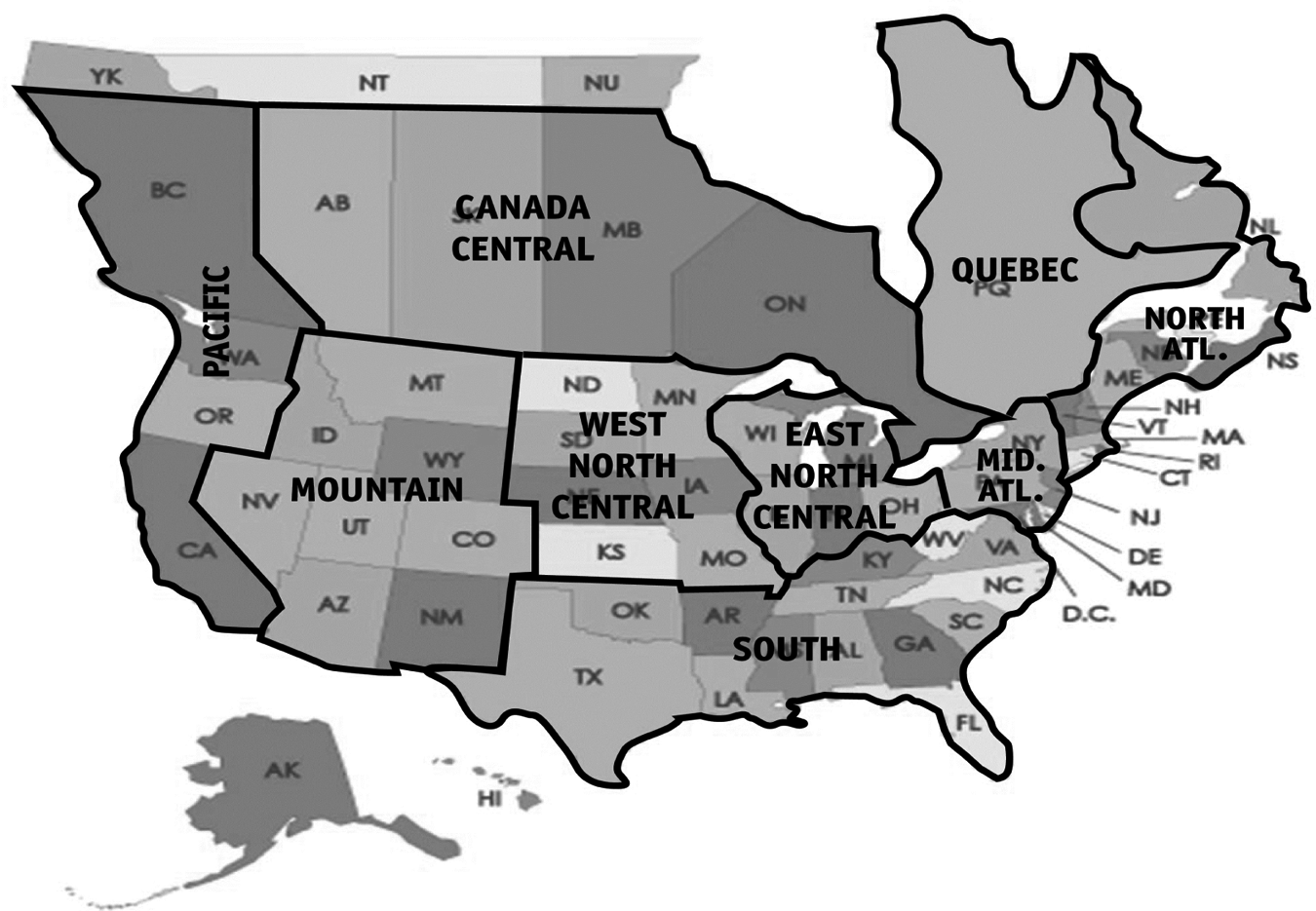
Map of proposed regional subcultures.
Proposed subcultures and hypothesis development
Region 1—Pacific
In line with Garreau (1981) and Marston et al. (2002), we place Canada’s British Columbia with US BOC Pacific region. Factors such as closeness to the Eastern Economic Corridor (Japan, China, and Hong Kong), delightful weather, exceptional ports (Paterson and Olmstead, 1984), and highly productive farmlands (DeBlij and Muller, 2004) contribute to the uniqueness of this region. In the past, these factors attracted many companies to the region and converted it into an active commercial center (Raco, 1999). This also led to an influx of migrants to this region. Establishment of advanced knowledge institutions further led to the economic prosperity of this region (DeBlij and Muller, 2004; Mendonca et al., 2000). Literature (Lieske, 2010; Marston et al., 2002; Wood and Fulton, 1996) suggests that people value diversity, freedom, and risk taking and exhibit an open attitude toward new technology. These features impart this region with its own cultural uniqueness. We thus hypothesize:
Region 2—Canada central
The Prairie region of Canada (Alberta, Saskatchewan, and Manitoba) seems to be culturally similar to Ontario. We classify these as the Canada Central region. A large portion of this region is covered by forests and has severe weather conditions (Robinson, 1981). Thus, one will find predominantly rural landscape and low population density in this region. The Arctic portion of this region is also home to aboriginal tribes such as the Inuits and Dene Nation who have preserved their cultural integrity. This region is also partially covered by the Prairie grassland belt, which extends through the Great Plains to Southern Texas and Mexico. Many economically booming urban centers, such as Calgary, Winnipeg, and Edmonton (DeBlij and Muller, 2004), are located here. The presence of natural resources such as minerals, oil, and natural gas has led to the economic growth of this region and has attracted immigrant population mainly to the cities of this region (Lipshitz, 1995), who settled here in search of better opportunities beyond the urbanizing areas of the east (Marston et al., 2002). The economy of this region is based mainly on the agricultural productivity of the Prairie grasslands and the mineral, timber, and hydroelectric resources of the forest zone (Friesen, 1987). These features impart this region with its own cultural uniqueness. We thus hypothesize:
Region 3—Mountain
To the east of the Pacific region and south of Central Canada lies the Mountain region (see Figure 1). In line with Kahle (1986), Marston et al. (2002), and Zelinsky (1994), we consider this region to be a distinct subcultural entity. Our classification of this region is similar to that provided by the US BOC. Among its distinct features are the predominantly dry climate marked by the presence of deserts, mountain ranges, deep canyons, and mining sites (DeBlij and Muller, 2004). Vandello and Cohen (1999) indicate that the wide open spaces, sparse population, tradition of cattle ranching, herding, and farming on small farmlands made people here self-reliant and independent. Plaut et al. (2002) found that individuals from this region display assertiveness, dominance, and self-confidence. In addition, the literature suggests that this region was also influenced by the Mexican and Spanish population before migrant settlement in the early to mid-19th century (Nostrand, 1970; Vandello and Cohen, 1999). As such values like parenting, housework, and satisfaction from marriage are also valued here (Kahle, 1986; Vandello and Cohen, 1999). The economy of this region was traditionally based on mining and ranching. However, with its stress-free clean environment and wide open spaces, the region offered many unique amenities to migrants who settled in the cities of this region and today practice occupations in industries ranging from tourism to technology (Marston et al., 2002). We thus identify the Mountain region as a distinct subcultural entity and hypothesize:
Region 4—West North Central
We concur with Kahle (1986) and consider the West North Central region as a distinct cultural entity. In accordance with the US BOC divisions, it lies to the east of Rocky Mountains and is covered by grassland ecosystem (Pieper, 2005). Among its distinctive features are central location in the North American subcontinent, high agricultural productivity, and predominantly rural settlement (Marston et al., 2002). Many people here are of European ancestry who migrated from the Eastern part of the subcontinent in the 18th and 19th centuries in search for better opportunities (DeBlij and Muller, 2004). They are known to endorse Anglo-Saxon Protestant values (Gastil and Glazer, 1975), display independent mind-set, and uphold values such as autonomy, freedom, self-determination, and self-initiative (Plaut et al., 2012). Kahle (1986) in line with Garreau (1981) indicated that people here are hardworking and friendly with others. Vandello and Cohen (1999) noted the presence of individualistic cultural values in this region as historically farming practices here did not require workers to work together. We thus consider the West North Central region to be a distinct subcultural entity and hypothesize:
Region 5—East North Central
This region lies to the east of the West North Central region and is demarcated in a manner similar to the US BOC division. Although some studies (Garreau, 1981; Marston et al., 2002) consider it to be similar to the West North Central region, we recognize it as a distinct subcultural unit. This is because even though the plains of the West North Central region extend eastward, the economy of this region has traditionally been based on large-scale manufacturing businesses (Krugman, 1991). The region has also seen a growth in industrial activities, with many major services and agricultural processing centers located here (Marston et al., 2002). To increase productivity, rapid adoption of technology has become the norm here (DeBlij and Muller, 2004). Studies suggest that during the 18th and 19th centuries, people here adopted practices displaying freedom and independence; however, they did not make these an integral part of their cultural value system (Kitayama et al., 2010). As compared to people in the West North Central region, those here display less individualistic values (Vandello and Cohen, 1999). We thus consider the East North Central region to be a distinct subcultural entity and hypothesize:
Region 6—South
We combine US BOC divisions of West South Central, East South Central, and South Atlantic and call it the South region. Almost all the reviewed studies suggested the cultural distinctiveness of this region. Many factors have been quoted for this. Marston et al. (2002) indicate that despite the presence of a long coastline, not many deep water ports exist here. This made the South less crucial for commercial activities. In addition, historically the presence of many inland rivers meant that agricultural goods and other products could simply be transported by means of rivers, further eliminating the need for coastal ports. This made economy of the South less diverse (Marston et al., 2002). Along with these, occurrences such as defeat in the Civil War, the institution of slavery and the prominence of religion resulted in the sociocultural isolation of this region (Vandello and Cohen, 1999; Zelinsky, 1994). These provided the southerners a strong regional identification of their own (Baer et al., 1993).
The region has also been influenced by the Hispanic culture (Garreau, 1981) and hosts a large population of people of Mexican and Latin American origin who prefer to retain their cultural distinctiveness as exhibited through the high use of Hispanic languages in this region (Lieske, 1993; Nostrand, 1970). Literature suggests that people here display a traditionalistic and collectivistic orientation and give importance to social and family ties (Cohen and Vandello, 1998; Nisbett and Cohen, 1996). This can largely be attributed to the traditional agricultural practices which require a large number of people to work together in hierarchical relationships (Marston et al., 2002; Vandello and Cohen, 1999). The presence of church and fundamentalist religion in everyday life also promoted collectivistic cultural orientation (Vandello and Cohen, 1999). Despite the relative poverty which long characterized this region (Marston et al., 2002), its economic landscape has recently witnessed a turnaround with many suburban centers developing around major cities of this region (DeBlij and Muller, 2004). These features make the South a distinctive subcultural entity. We thus hypothesize:
Region 7—Middle Atlantic
In line with Kahle (1986) and DeBlij and Muller (2004), we consider this region to be a distinct subcultural unit. It faces the East North Central region to its west and the Atlantic Ocean to the east. The presence of eastern shorefront and access to ports has increased the economic importance of this region. At the same time, this has also contributed to the influx of immigrants to this region. Popularly referred to as the “manufacturing belt” in the late 19th and early 20th centuries (Bensel, 1984), this region has seen many economic downturns since then; however, it has revived its economic machinery multiple times (DeBlij and Muller, 2004). Literature indicates that the culture and norms here place an emphasis on accomplishments (Kahle, 1986), venture capital investments, nonunionized workforce, and diversity (Marston et al., 2002). These values also contributed to the economic growth of this region. In addition, the ethnic heterogeneity of this region has also contributed to conferring it with its own distinct identity (Vandello and Cohen, 1999). Recent growth in information and service sector has contributed to making it one of the top economic zones in the subcontinent (Zelinsky, 1994). We thus consider the Mid-Atlantic region to be a distinct subcultural entity and hypothesize:
Region 8—North Atlantic
Following DeBlij and Muller (2004) and Garreau (1981), we combine the Atlantic Canadian region with the US BOC New England region. The distinct features of this region are the difficult environmental conditions, insufficient land resources (Foster, 2002), homogeneous British-based culture (Henderson, 2004), and persistent Francophone incursions from adjacent Quebec, all of which have imparted it a strong regional identity (Cook, 1993). Literature suggests that these features have given rise to a staunchly, self-sufficient, pragmatic, and conservative population in this region (DeBlij and Muller, 2004). Plaut et al. (2002) indicated that people here give importance to values such as freedom and independence. The rich offshore fishing grounds along with scenic coasts and mountains attract millions of tourists who contribute to the economy of this region. Vandello and Cohen (1999) indicated that increased commercialization after the industrial revolution motivated the people here to seek commercial opportunities, which decreased the predominant collectivistic spirit and social cohesion among the ethnically homogeneous populace. We thus consider the North Atlantic region to be a distinct subcultural entity and hypothesize:
Region 9—Quebec
There is a total agreement in all the reviewed studies that the culture of Quebec differs considerably from that of the remaining subcontinent. It is the only North American region to have French as its official language (DeBlij and Muller, 2004). Rules to protect the cultural integrity of the Francophone culture in Quebec were laid as early as 1774 with the enactment of Quebec Act, which provided official recognition to French language and protectionism to the French culture. Till date, the regulations and norms are such that they provide a distinct subcultural identity to this region (Henderson, 2004; MacNab et al., 2007a). Anderson (2010) found significant differences in political culture between Quebec and the rest of Canada. The study noted that Quebeckers exhibited differences in attitudes such as trust in political institutions, feeling of efficacy, and issues such as immigration and defense spending. Along with this, the ideological, cultural, and social isolation of Quebec from the rest of English-speaking Canada (Bowman, 2000) has also imparted Quebeckers with their own distinct identity (Hui et al., 1997). We thus consider this region to be a distinct subcultural entity and hypothesize:
Variable under scrutiny
Over the years, cross-cultural researchers have accessed differences between nations based on one or a couple of cultural or culturally oriented variables and have used their results as an evidence that the nations under consideration are in fact culturally distinct entities. Without undermining the contribution of these studies, we would like to state that one of our important goals as cultural researchers is to identify the level of analysis at which our results will have significant implications for managers. Since nations are culturally heterogeneous (Hofstede, 1980), we should aim to identify these intranational cultural differences and use these to formulate our recommendations for businesses.
With this in mind, our prime intent in this study is to identify the inconsistency in results of studies analyzing culture-based differences and similarities between the United States and Canada. We argue, as evident through our stated hypotheses, that this could be due to the noninclusion of intranational subcultural regions in the theoretical and empirical analysis of these studies. In addition, we argue that this inconsistency in results could also be a function of the variable or construct used to analyze the similarity and difference between the United States and Canada. Studies in the past have used one or a few variables to arrive at the conclusion that the United States and Canada are either culturally similar or different from each other. There is an implicit assumption in these studies that these conclusions, based on one or a few variable(s), could be successfully generalized to all and any variables or constructs. This by no means can be right! For instance, if we find Americans and Canadians to display similar attitude toward life satisfaction, this does not imply that they will also display a similar attitude toward trust. We thus argue that the variable under scrutiny is an important factor that can affect the study’s outcome. To test this, we hypothesize:
Quantitative validation
Following Lenartowicz and Roth (1999), after the qualitative identification of subcultural groups, we quantitatively validate these by using cultural measures. This can be done either by direct value inferences or by indirect value inferences (Lenartowicz and Roth, 1999). Direct value inferences measure cultural values through the use of surveys, while indirect value inferences use secondary data to ascribe cultural value characteristics. The later stands to be the common approach used in many studies that incorporate the use of cultural dimensions (Søndergaard, 1994) and is the one we adopt here.
An important aspect of our study is that we analyze the distinctiveness of our proposed subcultural regions at two levels—individual and regional. This is because of inherent differences in the meaning of culture at these two levels (Van de Vijver et al., 2008). At the individual level, it refers to goals that are considered important and are the cognitive representations of what is preferred or desirable in specific situations (Schwartz, 1992). At the group or regional level, it reflects the common underlying assumptions, meaning systems and preferences, which guide societal members to behave in a particular manner (Peterson and Sondelgaard, 2011). To incorporate this into our research design, in line with existing studies (Peterson and Sondergaard, 2011; Schwartz, 2006), we use measures specifically designed and recommended for use at these two levels.
Accessing regional subcultural distinctiveness at the individual level
Measures used
We employ three values and three attitude measures to test our hypothesis at the individual level. Use of various measures of values and attitudes will also enable us to analyze whether interregional cultural heterogeneity depends on the variable under scrutiny.
Value measures
We use the three value dimensions validated by Inglehart (1997) and Inglehart and Baker (2000)—traditional versus secular–rational, survival versus self-expression, and postmaterialism. Survival as opposed to self-expression values place less emphasis on freedom, diversity, participation in decision making, and sensitivity to human rights. Traditional as opposed to secular–rational values place more emphasis on social conformity, religion, family values, national pride, respect for authority, rejection of divorce, euthanasia, abortion, and suicide as personal choices (Inglehart and Baker, 2000). Postmaterialism values emphasize egalitarianism, nurturing, social equality, tolerance, and participation as opposed to economic and physical security (Gibson and Duch, 1994; Inglehart, 1997).
Inglehart and colleagues (Inglehart, 1997; Inglehart and Baker, 2000; Inglehart and Oyserman, 2004; Inglehart and Welzel, 2005) argue that with increase in economic growth and affluence, individuals tend to shift away from the traditional–survival–materialistic end of the value spectrum to the secular–rational–self-expression–postmaterialistic end. Inglehart and Baker (2000) classify the United States and Canada as culturally similar and include them in the English-speaking cluster, along with other protestant societies characterized by high gross national product (GNP) per capita. However, in line with our hypothesis, we suspect that individuals in the nine subcultural regions will display differences with respect to these three value dimensions.
Attitude measures
We use three attitude measures—attitudes toward ethically suspect behavior, attitude toward generalized trust, and attitude toward women’s role. These three attitude measures have attracted much attention in the field of international business and cross-cultural research (for instance, see Cullen et al., 2004; Fortin, 2005); however, studies have not analyzed regional differences in the attitudes of American and Canadians toward these variables. We briefly elaborate on these variables and their measures.
Attitude toward justifying ethically suspect behavior
The increasing emphasis on moralism in various realms of business (Brinkmann, 2002) has made it important to analyze differences in social laxity across societies (Scholtens and Dam, 2007). Literature indicates that culture plays an important role in determining the extent to which individuals justify or accept ethically incorrect behavior. This tendency in turn impacts various work-related phenomena such as job satisfaction, organizational commitment, performance, economic growth, and so on (Victor and Cullen, 1988; Okpara and Wynn, 2008). Following Bjørnskov (2006) and Cullen et al. (2004), we capture individual’s willingness to justify ethically suspect behavior through four questions, which ask respondents whether they justify claiming government benefits for which they are not entitled, justify avoiding fare on public transport, and justify cheating on taxes and accepting bribe.
Attitude toward generalized trust
Generalized trust refers to an individual’s propensity to trust strangers or people about whom he/she has no direct information (Rotter, 1967; Dietz et al., 2010). It stimulates a society’s economic growth (Knack and Keefer, 1997) and institutional development (Bjørnskov, 2007). It is also said to impact various work-related variables such as job commitment, employee engagement, collaborative relationships, performance, and so on (Humphries and Wilding, 2004). Fukuyama (1995) asserted that societal culture plays a key role in the development of generalized trust. We employ the commonly used measure of generalized trust (Delhey and Welzel, 2012), which is based on responses to three questions that ask respondents about trust in people they meet for the first time, trust in people of another religion, and trust in people of another nationality.
Attitude toward women’s role
Rapid industrialization since World War II acted as an impetus for increasing the participation of women in the labor force. Women have moved to occupy higher managerial and professional positions within organizations and have gained recognition in the social and political domains (Thornton et al., 1983). Despite this, scholars (Fortin, 2005; Inglehart and Norris, 2003) have found that deeply engrained cultural beliefs and traditions persist over time and slowdown the convergence in gender roles and recognition of women. This attitude is said to impact business performance, workforce diversity, employee motivation, productivity, political activism, and so on (Kalleberg and Leicht, 1991; Inglehart and Norris, 2000). We measure individual’s attitude toward women’s role by adopting the approach used in extant research (Fortin, 2005; Guiso et al., 2003; Inglehart et al., 2002), wherein we use two questions which ask respondents whether men make better political leaders than women and whether men make better executives than women.
Data
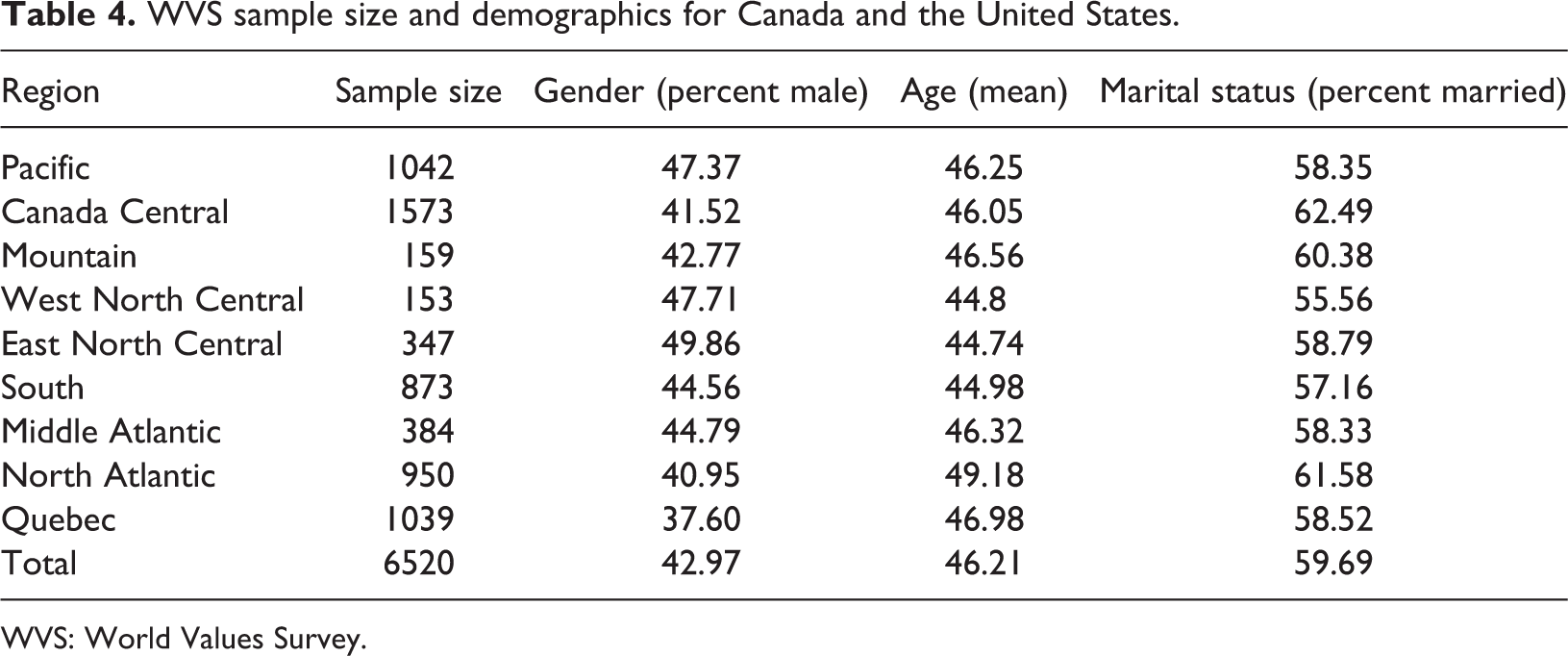
Data were taken from the World Values Survey (WVS) (Inglehart, 1997), which provides responses from individuals around the world on various questions related to values and attitudes. The survey follows scientific random sampling procedures in which questionnaires are administered to individuals via face-to-face interviewing techniques in the official language of each country (Inglehart, 1997). We used the data from the fourth and fifth wave of WVS, which provided responses from 6537 respondents from across 20 regions of the United States and Canada. Sample size and demographics for each region are shown in Table 4. To note is that WVS does not provide data for Nunavut, Northwestern Territory, and Yukon provinces of Canada nor for Hawaii and Alaska in the United States. However, this does not limit the scope of our study as these three Canadian provinces account for only 0.32 percent of the total population of Canada (Census Canada, 2011), while these two states in the United States account for only 0.67 percent of the total population of the United States (Census U.S., 2011).
WVS sample size and demographics for Canada and the United States.
WVS: World Values Survey.
Data for value measures
WVS provided scores on the three value dimensions of traditional versus secular–rational, survival versus self-expression, and postmaterialism. We used the 12-item postmaterialism scale instead of the 4-item scale because of the high reliability of the former (Inglehart, 1990; Vauclair et al., 2011).
Data for attitude measures
The four items measuring attitude toward ethically suspect behavior are on a 1–10 Likert-type scale, where 1 implies never justifiable and 10 implies always justifiable. A higher number implies that ethically suspect behavior is justifiable. The three items measuring attitude toward generalized trust are on a 1–5 Likert-type scale, where 1 implies trust completely and 5 implies no trust at all. We reversed this scale so that a higher number implies more generalized trust. The two items measuring attitude toward women’s role are on a 1–4 Likert-type scale, where 1 implies strongly agree and 4 implies strongly disagree. Thus, a higher score indicates being more gender role egalitarian. All items were standardized for the purpose of analysis.
Analysis
Differences in values
First, missing values were deleted, which reduced the sample size to 3345. Then, multivariate analysis of covariance (MANCOVA) was carried out to test the differences in the three value dimensions across the nine subcultural regions of the United States and Canada. In line with Lenartowicz and Roth (2001), we used age, gender, and marital status as covariates. The MANCOVA results were significant (p < 0.01), with the three analyses of covariance (ANCOVAs) significant at p < 0.01 (see Table 5). This indicates that difference exists in each of the three value dimensions across the nine subcultural regions.
Multivariate and univariate analysis for cultural value dimensions.

MANCOVA: multivariate analysis of covariance; ANCOVA: analysis of covariance.
*p < 0.01.
Differences in attitude
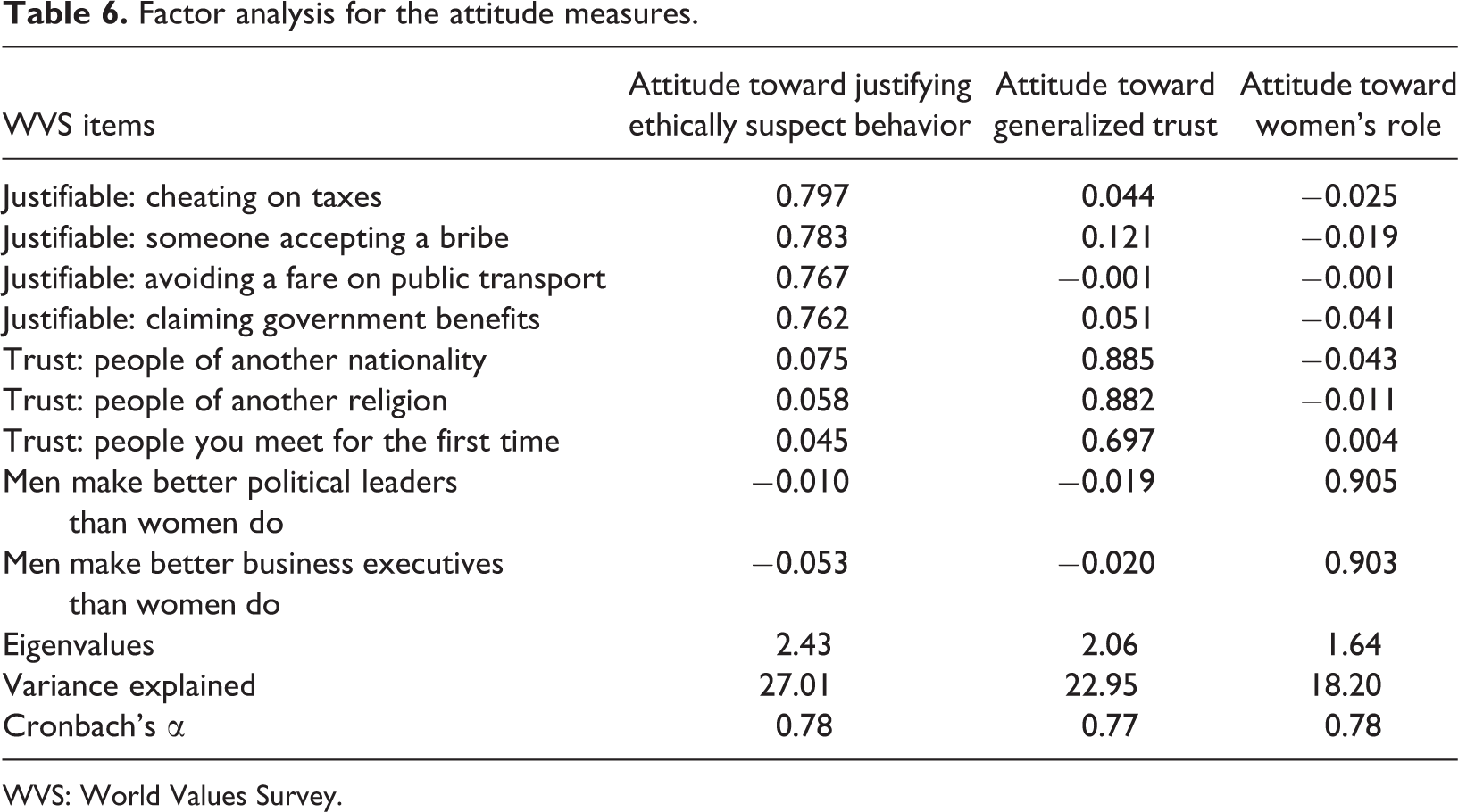
To come up with our four attitude dimensions, we selected the corresponding nine items from WVS. Missing values were deleted, which reduced the sample size to 3021. Factor analysis of the nine items resulted in a three-factor solution (see Table 6). The first factor, with a reliability coefficient of 0.78, denoted attitude toward ethically suspect behavior. The second factor, with a reliability coefficient of 0.76, denoted attitude toward generalized trust. The third factor, with a reliability coefficient of 0.77, denoted attitude toward women’s role. All factors had Eigenvalues greater than 1.0 (Nunnally and Bernstein, 1994) and cumulatively explained 68.2 percent of the variance.
Factor analysis for the attitude measures.
WVS: World Values Survey.
To check for construct equivalence across the nine subcultural regions, we factor analyzed the nine items separately for each region. The factor solutions obtained were consistent with that of the combined data. Further, to ensure the reliability of our measures across regions, we computed the α coefficients for each of the attitude dimensions across each region and found these to be greater than the suggested cutoff of 0.7 (Nunnally and Bernstein, 1994).
Next, in order to analyze differences in attitude measures across the nine subcultural regions, we performed a MANCOVA analysis with the three attitude dimensions as the dependent variables. In line with Lenartowicz and Roth (2001) and Lenartowicz et al. (2003), we included the sociodemographic variables of gender, age, and marital status as covariates in our analysis. The results were significant (p < 0.01), with the three univariate ANCOVAs significant at p < 0.01 (see Table 7). This indicated difference in each of the three attitude dimensions across the nine subcultural regions.
Multivariate and Univariate analysis for attitude measures.

MANCOVA: multivariate analysis of covariance; ANCOVA: analysis of covariance.
*p < 0.01.
Post hoc analysis
To further illustrate the issue of cultural discrepancies and analyze which region pairs were statistically different, we ran Tukey’s post hoc multiple comparison analysis for the three cultural values and the three attitude variables. From the 36 pairs of regions, 30 displayed a significant difference across one or more of the cultural values or attitude variables (see Table 8).
Tukey’s post hoc analysis results.

T: generalized trust, E: justifying ethically suspect behavior, W: attitude toward women’s role, P: postmaterialism, R: traditional versus secular–rational, U: survival versus self-expression; (+) row score > column score, (−) row score < column score.
*p < 0.1. **p < 0.05.
Among the value measures, postmaterialism differed across 21 regional pairs. Central Canada and Pacific scored high on this scale and were significantly different from Mountain, West North Central, and South and Middle Atlantic regions. However, both Central Canada and Pacific scored significantly lower on this value when compared to Quebec. Thus, Quebec lies toward the high end of this dimension, followed by Central Canada and Pacific, which implies that individuals from these regions emphasize self-expression values, place high priority on environmental protection, tolerate diversity, recognize gender equality, and are open to participation in economic and political decision making (Inglehart and Welzel, 2010; Vauclair et al., 2011).
Survival versus self-expression emerged as different across 15 regional pairs, which suggests that economic development does not lead to a total convergence of cultural values even within the boundaries of a single nation. Results indicate Pacific region to be significantly low on this dimension from all other regions (except Quebec and Middle Atlantic). This implies that individuals in the Pacific region emphasize order, economic security, materialist values, and hard work more than that expressed by people in other regions. Traditional versus secular–rational emerged as different across 12 regional pairs. The East North Central, South, and Middle Atlantic regions were significantly low on this dimension than the Pacific, Central Canada, North Atlantic, and Quebec regions. This implies that individuals in the former set of regions endorse traditional values, emphasize the importance of parent–child ties, tend to emphasize male dominance, and are less egalitarian than individuals in the later set of regions (Inglehart and Baker, 2000; Inglehart and Welzel, 2010).
Among the attitude measures, justifying ethically suspect behavior differed across only two regional pairs (North Atlantic differed with both the South and the Middle Atlantic). This is in line with Transparency International (an agency which ranks world nations on corruption perception index), which ranks the United States and Canada as high on sensitivity to corruption. Extant studies (Wood, 2000; MacNab et al., 2007) indicate that individuals in the United States and Canada have a similar attitude toward ethical norms and consider these to be important (Giacobbe and Segal, 2000).
Generalized trust emerged as different across 11 pairs of regions. Quebec emerged as different from all the remaining regions, which implies that individuals in Quebec displayed the least amount of generalized trust. This is in line with previous findings (Kazemipur, 2006; Kornberg, 1988; Uslaner, 2002) that Quebeckers display less trust toward strangers, which could be attributed to a high proportion of French population in Quebec (Laroche et al., 2004) and its alienation from the other Anglophone regions (Anderson, 2010; Henderson, 2004). Quebec is also a relatively collectivistic society different from the individualistic culture in many other regions of the United States and Canada (Major et al., 1994). Collectivistic societies as such are found to display less trust toward strangers (Watkins and Lui, 1996; Huff and Kelly, 2005). Further, Quebec is a predominantly Roman Catholic society, which also explains its low score on the generalized trust dimension (Inglehart and Baker, 2000).
Attitude toward women’s role was different across 18 regional pairs. South emerged as the most male dominant society and was significantly different from the Pacific, Central Canada, Mountain, North Atlantic, and Quebec. These findings are in line with Vandello and Cohen (2003), which indicated relatively high rates of violence against women in the Southern society. The region is influenced by the Hispanic and Latin American cultures, which are considered as traditionalistic in nature (Elazar, 1972). On the one hand, these give importance to family values, but on the other hand men in these societies are said to act as gatekeepers to various social and professional positions (Inglehart, Norris and Welzel, 2002). The North Atlantic region emerged as more egalitarian than the East North Central, South, and Middle Atlantic regions. Sugarman and Straus (1988) indicated that women in Northeast United States receive high political equality and social recognition, which can be attributed to the growth in industrial and professional activities in this region which increasingly call for women participation in labor force. We also found Quebec to exhibit significantly less male dominant attitude than almost all other regions (the only exception was Mountain region). These support Lipset’s (1985) and Baer, Grabb and Johnson’s (1990) assertion that Quebeckers in comparison to English-speaking Canadians and Americans give more credence to gender equality, which can be attributed to the struggle for autonomy and liberal stance on social issues adopted by individuals in this region (Lipset, 1986).
Overall, we found significant differences along one or more of the variables of values and attitudes for 30 of the 36 regional pairs, which offer supporting evidence to our hypothesis concerning the distinctiveness of proposed subcultural regions. At the same time, it is evident that the 30 regional pairs for which significant differences were found did not differ on all the six variables of values and attitudes we used in this study. This supports our hypothesized contention that difference between subcultural regions also depends on the variable under scrutiny.
Another point which we would like to make is that even though we did not find any differences between six regional pairs, (a) West North Central and East North Central, (b) West North Central and South, (c) West North Central and Middle Atlantic, (d) West North Central and North Atlantic, (e) East North Central and Middle Atlantic, and (f) South and Middle Atlantic, concluding that there are no cultural differences between them would be premature. This is because existing theoretical and empirical evidences point to the cultural distinctiveness of these regions. For instance, the East North Central region was based more on industrial and less on the agricultural activities than the West North Central region, which influenced the extent of individualism and collectivism ascribed by the people in these regions (Triandis et al., 1988). Indeed, Vandello and Cohen (1999) found the West North Central region to be more individualistic than the East North Central region. Other studies have found differences between the East North Central and the West North Central in terms of divorce rates (Glenn and Supancic, 1984), occupational patterns, income per capita (Easterlin, 1960), and suicide rates (Markush and Bartolucci, 1984).
Similarly, Vandello and Cohen (1999) indicated that while factors such as defeat in the civil war, the institution of slavery, relative poverty, and prominence of religion led to a collectivistic society in the South, society in the West North Central region is relatively individualistic. Lieske (2010) classified the South as more traditionalistic than the West North Central and Middle Atlantic regions. In the same line, Nisbett (1993) found that Southerners are more sensitive to insults and are more likely to display violence than Northerners, which he attributed to functional factors such as high temperature and institutional factors such as slavery and poverty. Vandello et al. (2008) attributed variation in aggressiveness to difference in historical occupational patterns (herding-based economy in the South while agricultural-based economy in the North) and lack of effective legal system in the South. Flynn (1998) found differences in attitudes toward corporal punishment between the North Atlantic and West North Central regions, which he attributed to deeply held cultural norms. Thus, results from these studies strengthen our assertion of the distinctiveness of our proposed subcultural regions. Additionally, our empirical analysis did not indicate a single subcultural region which was similar to all other proposed subcultural regions.
The case of Quebec
Literature indicates that despite being located within the English-speaking North American culture, Quebeckers have maintained their identity and preserved their regional, cultural, linguistic, and social integrity through various political and legal means (Laroche et al., 2004; Meadwell, 1993). This assertion finds support in various national- and individual-level studies. For instance, Schwartz (1999) separated Anglophone Canada from the Francophone Canada. Similarly Baer et al. (1993) separated Quebec from the other US and Canadian regions based on a set of value and attitude measures and recognized it as a distinct entity. Using a large data set from the Canadian election studies, Anderson (2010) analyzed regional variances in policy preferences within Canada and found that the largest source of variation in policy preferences between Quebec and the rest of Canada. Our individual level empirical analysis supported these earlier studies and revealed the cultural distinctiveness of Quebec from all other US and Canadian regions on a range of value and attitude variables.
Accessing subcultural distinctiveness at the regional level
We use three different value dimensions to test the distinctiveness of our hypothesized subcultures at the regional level. Through this, we also aim to analyze the convergent validity to our individual-level results.
Measures used
We use three cultural value measures developed by Minkov (2007) and validated by Minkov (2008) and Minkov and Hofstede (2012). Their use here is considered appropriate because of multiple reasons. First, studies in the past have overly relied on using Hofstede’s (2001) dimensions for analyzing cultural differences. Second, existing literature suggests that Minkov’s dimensions are able to account for cultural attributes caused due to functional, institutional, and identity constraints, which suit the theoretical framework of our study.
Out of the three measures, the first, exclusionism versus universalism, indicates the contrast between societies which treat people on the basis of their group affiliations and those that treat people regardless of their group affiliation. Individuals in exclusionist societies have fewer opportunities and often rely on preferential treatment by in-group members for personal advancement. However, with advancement in technology and modernization, it becomes easy for individuals to acquire resources. They depend less on others for personal advancement. Such societies tend to become universalistic in their cultural orientation (Minkov, 2007).
The second measure, indulgence versus restraint, represents the contrast between societies that allow free expression of desires connected with leisure, merrymaking, and spending and those that restrict such desires (Minkov, 2007). Traditionally, agrarian societies with labor-intensive practices require people to forego leisure and work hard to fulfill basic needs. The institutional framework in these societies maintains order through restrictive laws. Such societies tend to exhibit restraint cultural orientation. In contrast, societies which do not depend on labor-intensive tasks, have a strong service sector, and are technologically advanced tend to fall on the indulgence end of this dimension (Minkov, 2007).
The third measure, monumentalism versus flexumility, indicates the contrast between societies that display high pride, self-regard, generosity, interpersonal competition, and religiousness and those that do not display such features. The former are classified as monumentalist, while the later as societies with flexumility orientation. With economic development and education societies tend to display cooperativeness and humility and shift from the monumentalist to the flexumility end of this dimension (Minkov, 2007).
Data
Data were taken from the fourth and fifth wave of WVS, which provided responses from 6537 respondents from across 20 regions of the United States and Canada. Five items were used to create the exclusionism versus universalism scale. These were (a) respect and love for parents, (b) child needs a home with father and mother, (c) a women has to have children to be fulfilled, (d) neighbors—people of different race, and (e) important child qualities—tolerance and respect for others. Four items were used to create the indulgence versus restraint scale. These were (a) feeling of happiness, (b) how much feeling of choice and control, (c) important in life—leisure time, and (d) important child qualities—thrift saving money and things. Four items were used to create the monumentalism versus flexumility scale. These were (a) how proud of nationality, (b) one of my main goals in life is to make my parents proud, (c) important in life religion, and (d) service to others is important in life.
Analysis
First, missing values were deleted, which reduced the sample size to 2380. Next, following Minkov’s (2007) formulae, we calculated the scores for each dimension by aggregating the corresponding items from the individual level to the region level (please refer to Minkov, 2007, for details on the procedure). For doing so, we complied with the US BOC divisions, which categorize the United States into nine regions. In the case of Canada, item responses were aggregate at the level of five provinces or regions. Aggregated data for these 14 regions will be used for analysis at the regional level.
To analyze the structural relationships between these regions, we employed Smallest Space Analysis (SSA), which is based on multidimensional space (MDS) (Guttman, 1968; Lingoes, 1965) and is allied to Facet theory (Foa, 1965; Guttman and Greenbaum, 1998; Shye, 1998). Facet theory considers each facet as a way of classifying values according to some rule, wherein elements of the facet confirm to the rule (Fisher, 2013). SSA is an application of facet theory. It is a method of nonmetric analysis used to map relationship among values in a two-dimensional space or MDS (Littrell, 2012). Each value is mapped as a point in space and the distance between points is inversely related to the size of correlation between values (Guttman, 1982). SSA and Facet theory have been successfully used in many cross-cultural studies to analyze the structural relationships among either groups or cultural dimensions (Fisher, 2013; Ronen and Shenkar, 1985; Schwartz, 2007; Schwartz and Bilsky, 1987). Among the strengths of SSA is that it offers researchers a rigorous multivariate technique to test their hypothesis, under the constraints of no special assumptions (Bloombaum, 1970).
Before conducting SSA, we performed an outlier analysis with the three dimensions of exclusionism versus universalism, indulgence versus restraint, and monumentalism versus flexumility across the 14 regions. We employed the outlier labeling rule suggested by Hoaglin et al. (1986). Results of the analysis produced Quebec as an outlier region. This prevented us from including Quebec in the next analytic step. This was also considered appropriate as our individual-level analysis as well as existing literature identified Quebec to be completely distinct from the other US and Canadian regions.
Next, following the SSA procedure (Bloombaum, 1970), we first calculated correlations among the 13 regions across the three regional cultural value dimensions, then created the matrix of inverses of these coefficients. This matrix was the input for the MDS routine of SPSS (IBM SPSS Statistics 20). We obtained a satisfactory two-dimensional solution with a stress coefficient smaller than 0.15 (Kruskal and Wish, 1994). This solution was both interpretable and indicated that the convergence was complete. The output of this procedure provided a graphic representation (see Figure 2) of the points (regions). The final step of this procedure was to draw facets around the points representing regions in the graphical representation provided by MDS. Following Schwartz (1992), we tested the subcultural distinctiveness hypothesis by examining whether it was possible to partition the points (regions) on the two-dimensional space into prehypothesized subcultures based on theoretical evidence (Bloombaum, 1970). First, lines were drawn from a common center along the most external points (regions) of a subculture. These lines constitute borderlines between the subcultures and therefore there should not exist a region belonging to two different subcultures. The resulting graph is presented in Figure 2. We were able to draw facets that confirmed our predictions: the 13 regions fit into 8 subcultures, conferring further support to our hypothesis concerning the distinctiveness of these subcultural divisions.
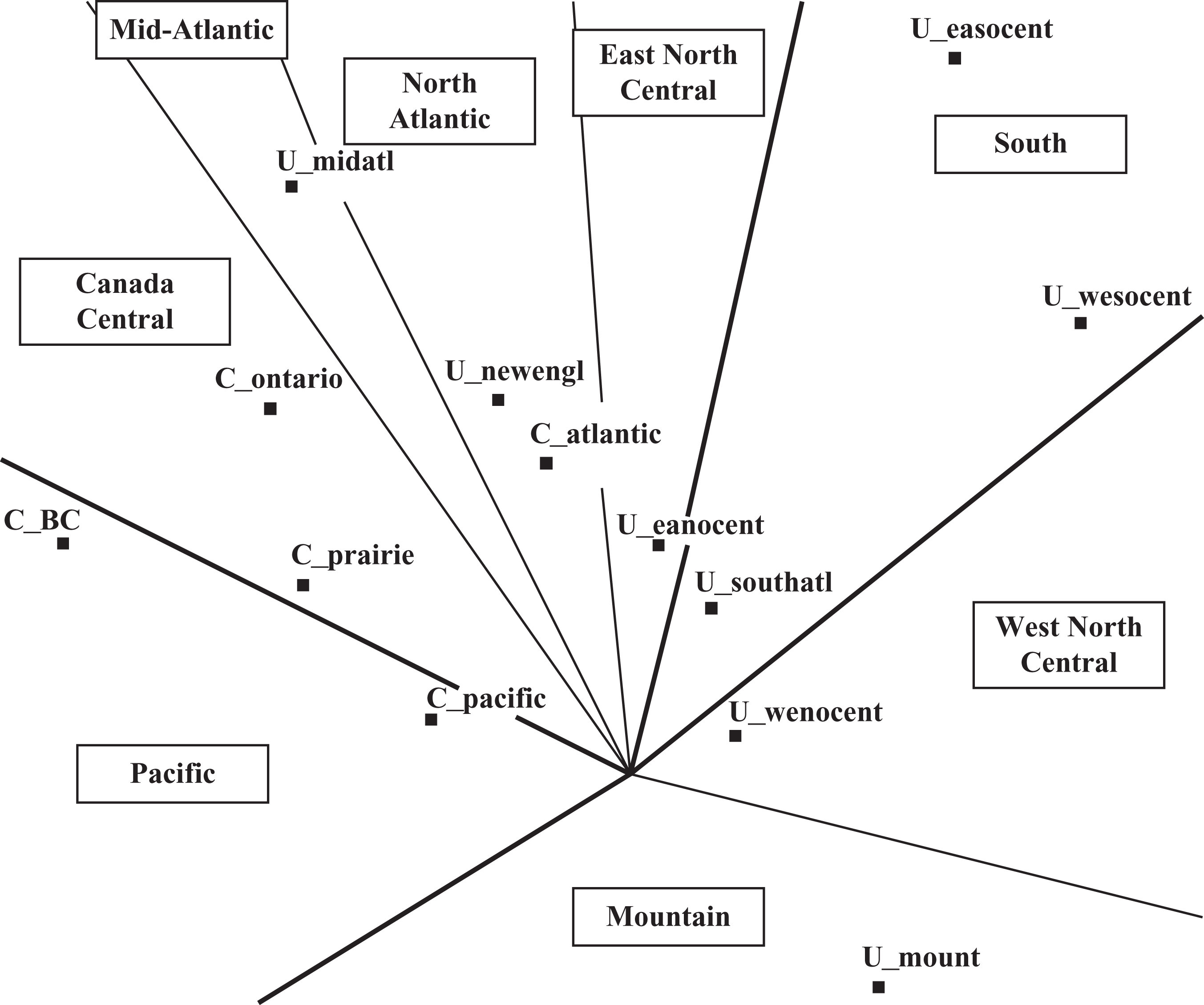
The SSA: The regional subcultures (*). SSA: smallest space analysis.
Discussion
The intensive economic interdependence between the United States and Canada makes understanding their cultural intricacies important both for scholars and for multinationals working in the North America. Our project makes contributions beyond those of current studies, by proposing nine subcultural regions of the United States and Canada and empirically validating these by analyzing cultural values and attitudes data at both the individual and regional levels. The results of this study indicate that despite the fact that the United States and Canada are among the economically and technologically advanced nations, factors which are said to bring about a convergence in cultural values, traditions, tastes, and preferences (Inglehart and Baker, 2000; Inglehart and Welzel, 2010), we find evidence of intraregional divergence in cultural values and attitudes, indicating that these are deep rooted and persist with time. Our results offer support to the assertion that regional subcultural diversity is present within the United States and Canada (Henderson, 2004; Lieske, 2010; MacNab et al., 2007; Vandello et al., 2008). These subcultures are maintained through a multitude of factors including but not limited to differences in geographic and climatic patterns, immigration and migration patterns, concentration of ethnic and foreign communities, differential rates of economic and technological development, institutional policies and features, and self-inflicted identification of individual with the regions in which they live.
Our results address both the scholarly and practitioner aspects of the potential cultural differences between various regions of these two countries. Theoretically, we contribute to the discussion on Crossvergence theory (Ralston et al., 2007) by indicating that along with the forces of modernization, economic growth, and technological advancement, there are sociocultural influences stemming from functional, institutional, and self-identity constraints which lead to the evolution of cultural values. In the case of the United States and Canada, functional constrains such as the presence of grassland ecosystem provided a basis for agricultural practices to persist in the West North Central region. Similarly closeness to the Eastern Economic Corridor had an influence on the cultural values and practices of the Pacific region. Institutional constraints such as regulative, normative, and cultural cognitive forces aid in the evolution and maintenance of divergent cultural practices in the nine subcultural regions. A relevant example is the case of Quebec which despite being a part of the Anglo group of nations has maintained its cultural integrity. Another example is the lack of strict legal infrastructure in South which somehow contributed to a subculture of violence in this region (Vandello et al., 2008). Our third theoretical pillar states that identity constraints based on individual’s social heritage play an important role in the formation of social networks and regional associations. Thus, individuals from different regions are strongly linked to and identify with the cultural heritage of their region.
This study also contributes to the theoretical discussion about the presence of subcultures in the United States and Canada (for instance, see Taras and Steel, 2006; Yamawaki, 2012). Schaffer and Riordan (2003) reviewed 210 cross-cultural studies published between 1995 and 2001 and found that a large proportion of them (approximately 79 percent) did not comprehend the presence of regional subcultural differences within nations. Extant studies have now successfully identified the presence of subcultures in Brazil (Lenartowicz and Roth, 2001), Cape Verde (García-Cabrera and García-Soto, 2008), Kenya (Gray et al., 2008), and Nigeria (Peterson and Fanimokum, 2008). As concerning the United States, even though studies in the past have indicated variation in cultural variables such as individualism–collectivism (Vandello and Cohen, 1999), violence and aggressive behavior (Nisbett, 1993), and religious orientation (Lieske, 2010), these do not identify or empirically validate the presence of subcultures in these nations. Similar is the case with Canada, where there was variation in factors such as political ideologies (Henderson, 2004); however, a comprehensive study of regional subcultures has not been carried out. Our theoretical and empirical analysis not only aids in identifying subcultures in the United States and Canada but also validates these through the use of various cultural value and attitude variables at both the individual and regional levels of analysis.
We also provide a new application of the cultural assessment framework proposed by Lenartowicz and Roth (1999) for studying the within-nation cultural differences. We reviewed 45 studies analyzing the culture of the United States and Canada at the national, individual and regional levels, both from the international business and from other social science literatures. Although we did not find total uniformity in these studies, we succeeded in defining the regional subcultures based on the societal cultural patterns provided by these studies. Our empirical results contribute to discussions about the cultural map of the United States and Canada. The results of individual-level analysis showed significant differences among the nine subcultural regions based on three cultural value dimensions and the three attitude dimensions. In addition the subcultural map based on Minkov’s (2007) cultural dimensions was compatible with our predicted grouping. Our analysis also indicated that differences between regions depend on the underlying values or attitudes being analyzed. For instance, we found the East North Central region to be different from the North Atlantic region on the value dimension of traditional versus secular–rational and attitude toward the role of women. However, there were no significant differences between these regions on other value or attitude dimensions. This indicates that concluding intranational cultural homogeneity based on one or a few dimensions might be erroneous.
Our analysis also adds to international business literature by drawing attention to cultural geography as an underutilized discipline that has the potential to provide relevant information to international business concerns. International business research about culture has been more strongly influenced by psychology, sociology, and economics than by other disciplines. This pattern of influence is understandable if culture is thought to correspond to national boundaries that often have been taken for granted in psychology and sociology and that are the basis for most international economics data. To the extent that within-nation regions matter, then fields like cultural geography and history become more significant for anticipating consequential boundaries around cultural groups.
Empirically, our analysis also draws attention to the use of WVS and some recently designed measures such as Minkov’s (2007) dimensions. National culture projects, particularly Culture’s Consequences (Hofstede, 1980) and GLOBE (House et al., 2004) have provided a useful basis for cultural research. The WVS overcomes at least two of the limitations of these projects. One is that the data collection is regularly repeated, hence overcoming the limitation of culture data collected at a single point in time. Another is that data are coded for geographic regions within nations, making it possible to consider within-nation cultural differences. The Minkov (2007) culture measures derived from this database appear to be particularly promising for further research (Smith, 2008).
Implications for managers
An important purpose of our project was to reconcile literature on large-scale nation-level projects, which emphasizes the similarity between Canada and the United States with an important subset of individual-level projects which emphasize differences. While these results do not directly contradict the argument that the English-speaking communities of the United States and Canada are more culturally similar to one another than to many other parts of the world, they do seem to indicate that these are not the same. The results thus suggest the need to carefully attend to differences between even the English-speaking parts of the United States and Canada and to be cautious about generalizing from comparisons between certain regions of these nations.
Differences in dimensions of cultural values and attitude that we analyzed have important implications for managers. According to Inglehart (1990) and Inglehart and Baker (2000), increasing levels of economic development are said to bring about a shift in emphasis on tradition, survival, and materialist values to an emphasis on secular–rational, self-expression, and postmaterialist values. As such, regions lying on the secular–rational, self-expression, and postmaterialist end of these cultural dimensions tend to focus on secularism, autonomy, rationality, well-being, individual judgment, and quality-of-life concerns (Inglehart and Welzel, 2010). Inglehart and Oyserman (2010) found secular–rational and self-expression dimensions to be correlated with the individualism dimension of Hofstede (2001). Based on this finding, it can be postulated that businesses and managerial values in such regions would enable freedom of choice and expression, focus on maintaining a positive sense of self (Diener and Diener, 1995), give importance to personal success and self-esteem (Hetts et al., 1999), make internal rather than situational attributions (Oyserman et al., 2002), and use confrontation rather than accommodation as a conflict-resolution style (Oetzel, 1998).
Similarly, differences in attitude toward ethically suspect behavior can impact the extent to which managers engage in practices such as nepotism, piracy, dishonesty, and so on (Christie et al., 2003). It can also impact their commitment and satisfaction from employment. Even though our results do not indicate differences in this dimension across many regional pairs, we find some evidence that individuals in the North Atlantic region are more ethically conscious than those in the Middle Atlantic and South regions. Thus, we can suspect managers and businesses in the former region to display more socially conscious behavior than those in the later regions.
Another variable which we tested is attitude toward generalized trust. The level of generalized trust in a society is said to impact economic growth (Fukuyama, 1995), corruption (Uslaner, 2002), social capital (Putnam, 1993), and subjective well-being (Bjørnskov, 2003) among others. As such businesses and managers from regions with a low level of generalized trust (for instance, Quebec) will show a decreased tendency to form social networks (Kong, 2013), maintain alliances with outsiders, participate in interorganizational learning (Huff and Kelly, 2003), coordinate social interactions (Williams, 2001), and will witness an increase in transaction costs, need for monitoring, and opportunistic behavior among actors (Stolle, 2002; Williams, 2001).
Similarly, attitude toward women was found to vary across many regional pairs. Based on existing literature (Sugarman and Straus, 1988; Inglehart, Noris and Welzel, 2002), we can argue that businesses in regions with positive attitude toward women (such as the North Atlantic region and Quebec) will show less gender-based discrimination. Women here will get justice, fairness, and equity in seeking employment opportunities, job evaluation, and performance appraisals. They will also be accepted as top executives and power bearers. As such organizations in these regions will benefit from increased diversity and can recruit employees from a wider pool of workers (Carli and Eagley, 2001).
Limitations
The project encountered some limitations. Although the WVS provides information for each province of Canada, it does not code responses for each state in the United States. Also, since the WVS has been designed for many social science purposes, it does not include an extensive set of questions specifically designed to cover general cultural values or business issues. Future researchers should continue to collect primary data dealing with cultural differences in North America that complements the strengths and overcomes the limitations of large international databases, including those of the WVS. As a final comment, it is intriguing to note that despite the presence of several studies in the IB literature advising about the importance of considering within-country cultural diversity in comparative studies, these warning have by and large been ignored in the reviewed literature.
Footnotes
Funding
This research received no specific grant from any funding agency in the public, commercial, or not-for-profit sectors.