




Abstract
Introduction
It is well-known that people with dementia living in residential care facilities spend most of their time not engaged in meaningful activities. Being involved in activities can improve their quality of life. Animal-assisted therapy is an activity that can evoke engagement and joy. Another way to create engagement and promote communication between people with dementia and caregivers is to use photos.
Methods
In this observational study, the researchers combined animal-assisted therapy and photobooks in order to explore whether photos of people with dementia who were engaged in animal-assisted therapy could be used as a tool for communication in dementia care. Ten persons (4 men and 6 women; aged 72–92) with dementia were video recorded during photo-elicited conversations with a dog handler/assistant nurse. The recordings were conducted in two residential care facilities in Sweden during 2017–2018. Each participant was video recorded 2–4 times. The recordings were analysed using The Observed Emotion Rating Scale and The Observational Measurement of Engagement-OME Modified. In addition, the video recordings were interpreted from a hermeneutic perspective.
Findings
The findings showed that the most frequently observed effects were pleasure and general alertness, and the participants were observed to be attentive most of the time. The most common attitude during the conversations was ‘somewhat positive’. The hermeneutic interpretations were grouped into four themes: Conveys a structure for the conversation with an inherent beginning and ending; An opportunity to recognise oneself and recall a sense of belonging; Awakens emotions and creates fellowship and Entails confirmation and revitalises their identity.
Conclusion
Photobooks can be used by caregivers as a tool for meaningful and joyful communication with people with dementia, even those with severe dementia.
Introduction
It is well-known that people with dementia can have unmet needs commonly relating to lack of social contacts and/or meaningful activities. In turn, this implies poor quality of life (Cohen-Mansfield, Dakheel-Ali, Marx, Thein, & Regier, 2015). It is therefore essential to find meaningful activities for people with dementia. Meaningful activities are enjoyable activities that relate to a person’s past values, interests or beliefs as well as their psychological needs (Cohen-Mansfield et al., 2015). Animal-assisted activity/therapy has been identified as being suitable for evoking engagement in people with dementia (Olsen, Pedersen, Bergland, Enders-Slegers, & Ihlebæk, 2019). Animal-assisted therapy is a meaningful activity which is gaining increasing popularity within the context of dementia care (Lai et al., 2019). If animal-assisted therapy is directed towards the recipients’ specific needs and interests, it can work as a positive and effective complementary treatment for people with dementia (Klimova, Toman, & Kuca, 2019; Wesenberg, Mueller, Nestmann, & Holthoff-Detto, 2019).
Animal-assisted therapy has been defined by The International Association of Human-Animal Interaction Organizations (IAHAIO) as “a goal-oriented, planned and structured therapeutic intervention directed and/or delivered by health, education, and human service professionals” (Jegatheesan, 2018, p. 5). The IAHAIO further states that the progress of intervention should be evaluated and documented. Animal-assisted therapy is delivered by a person with relevant formal professional training; both the animal and handler undergo a training course that leads to certification within the field. The focus of animal-assisted therapy is to improve the physical, cognitive, behavioural and/or socio-emotional functions of the specific human recipient (Jegatheesan, 2018). In turn, animal-assisted therapy can, to a limited extent, reduce depressive symptoms in people with dementia (Lai et al., 2019) as well as behavioural and psychological symptoms (Babka, Lane, & Johnson, 2021). Animal-assisted therapy in the form of a dog-assisted intervention has also been described as possibly contributing to the improved quality of life and wellbeing of people with dementia (Babka et al., 2021; Briones, Pardo-García, & Escribano-Sotos, 2021; Karefjard & Nordgren, 2019; Olsen et al., 2016). However, little evidence exists mainly due to a lack of research (Lai et al., 2019). Thus, more research about animal-assisted therapy is needed.
Qualitative research about animal-assisted therapy in dementia care is scarce. However, there are a few studies showing that animal-assisted therapy can have calming effects on people with dementia, can increase their autonomy and self-esteem and can be helpful as a communication link (Swall, Ebbeskog, Lundh Hagelin, & Fagerberg, 2017; Tribet, Boucharlat, & Myslinski, 2008). In addition, photos or photo diaries can be used as tools for communication between people with dementia and nursing staff or relatives. Recalling and communicating recent events with a therapy dog that are shown in a photo might, therefore, support the person’s ability to communicate. Photos can stimulate people with dementia to narrate and understand events in relation to themselves, thereby supporting their sense of self (Karlsson, Zingmark, Axelsson, & Savenstedt, 2017; Nordgren & Asp, 2019), and being able to communicate means being able to participate in daily life (Karlsson et al., 2017).
Due to lack of resources, the availability of animal-assisted therapy is limited, and there is a need for alternatives. Is it possible that photos taken in situations where people with dementia meet an appreciated therapy-dog can be used to create engagement as well as well-being? And if those photos are used in conversations with the person later on what feelings will be evoked and what will happen in the conversation situations? The aim of the present study was to explore photo-elicited conversations about meetings with a therapy dog as a tool for communication in dementia care.
Methods
Design and setting
In this observational study, repeated video recordings of photo-elicited conversations between a dog handler/assistant nurse and persons with dementia were used to collect data. In order to analyse and interpret the situations in depth both quantitatively and qualitatively, video recordings were chosen as method for data collection. To establish credibility repeated recordings were conducted. The video recordings were conducted over a period of 16 months in two different residential care facilities in Sweden during 2017–2018. Observational rating scales and qualitative hermeneutical observations were used to analyse the recordings.
Dog-assisted intervention preceded the study. Dog-assisted intervention is animal-assisted therapy conducted with a therapy dog team, that is, a dog and its handler. The dog handler has always received appropriate education for the assignment, that is, within the context of dementia care, and most commonly, the dog handler is a nurse. Indications for employing dog-assisted intervention in dementia care include increased anxiety or depression or that the nursing staff perceive that the intervention would improve a resident’s quality of life (Nordgren & Engstrom, 2014). The dog-assisted intervention is always prescribed by a licensed professional, for example, an occupational therapist or a registered nurse. The performance of this kind of dog-assisted intervention includes taking the dog for a walk, brushing the dog’s fur, playing different games with the dog, sitting or lying down having a moment of rest and closeness etc.
Dog-assisted intervention had been in use for several years in both nursing homes. The dog-assisted intervention was therefore part of the participants’ ordinary care, and no changes were made in relation to the study. The dog handler, who worked at both nursing homes and was also an experienced assistant nurse, conducted the dog-assisted intervention in accordance with the prescription. She also took photos of the participants and the dog during the intervention. Then she selected eight to 10 photos which she considered the participants would appreciate and put them into photobooks, thus, specially designed for each participant. Then the photobooks were used to elicit conversations between the dog handler and the participants.
Photo elicitation is a procedure by which photos are used in an interview situation (Harper, 2002; Pauwels, 2015). Photos can encourage discussions and stimulate the interviewee to deliver spontaneous, energetic, unpredictable or personally meaningful replies (Fleury, Keller, & Perez, 2009; Pauwels, 2015). They can also help them to recall memories or trigger further information that would not have been addressed in a traditional interview (Murray & Nash, 2016). Thus, photos may move an interview beyond the verbal (Fleury et al., 2009).
Participants
Description of participants and length of each video recording.
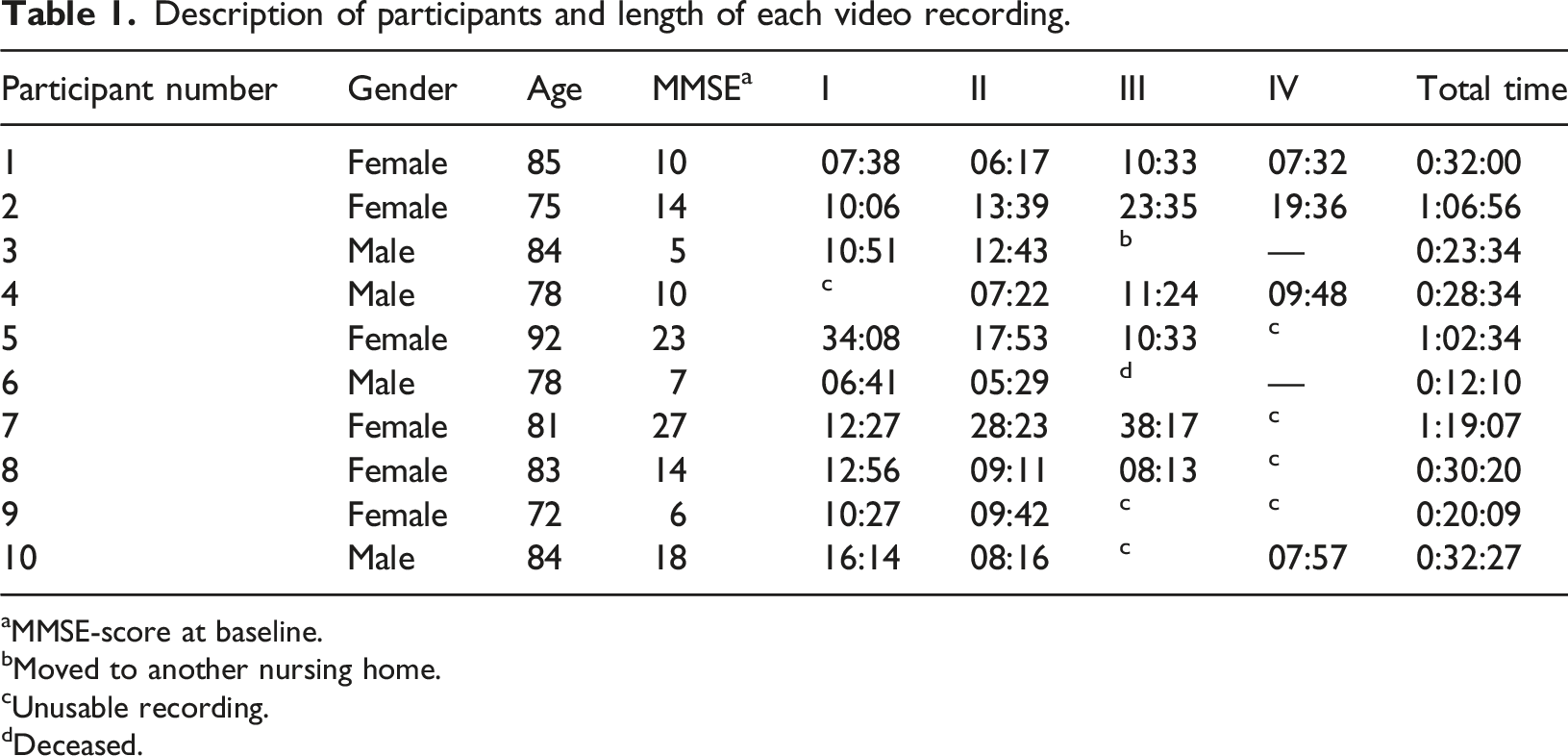
aMMSE-score at baseline.
bMoved to another nursing home.
cUnusable recording.
dDeceased.
Data collection
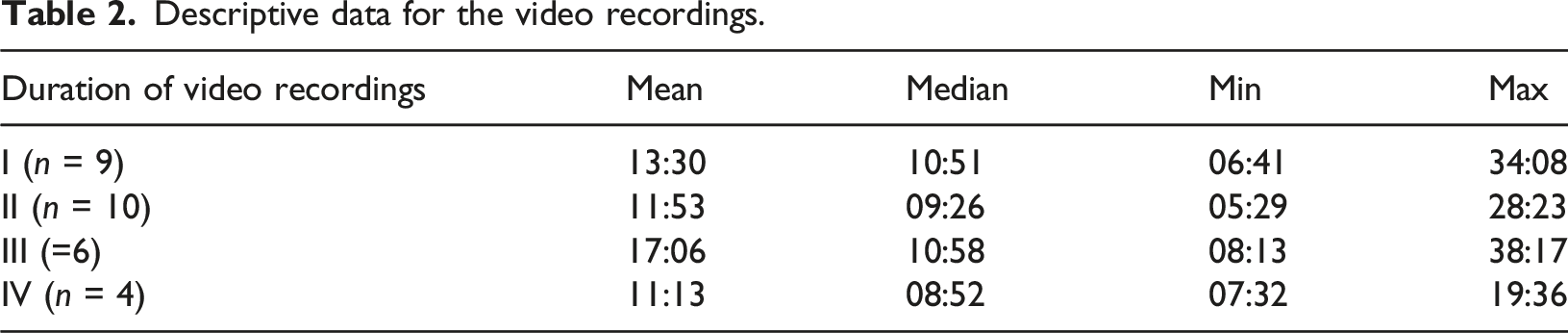
In order to establish credibility in the analyses (Lincoln & Guba, 1985), repeated video-recordings were conducted. The research plan included four video recordings with each participant; (1) 1–2 weeks after completed intervention, (2) 4 weeks after the first recording, (3) 3 months after the intervention and (4) 6 months after completed intervention.
Descriptive data for the video recordings.
Before each video recording, the dog handler and the researcher approached the participant and asked whether they felt like talking about the photos. All participants agreed. The dog handler and the participant sat down in the participant’s room while the researcher conducted the video recording a few metres away. All participants were aware of the researcher and the video camera. No other persons were present in the rooms during the recordings. The dog handler asked the participants if they could tell them what they saw in the photos and the participants were encouraged to talk about the photos, the dog, and whatever came into their mind. At times, the participants also approached the researcher behind the camera to comment on the pictures or ask questions.
Data analysis
Twenty-nine video recordings were included in the analysis. The video recordings were first analysed using quantitative observational rating scales. Next, the video recordings were interpreted from a qualitative perspective.
Quantitative observations and analysis
The video recordings were analysed using two different observational rating scales: the Observed Emotion Rating Scale (OERS) and the Observational Measurement of Engagement – OME Modified (OME).
The OERS was developed by Lawton, Van Haitsma, and Klapper (1999) in order to assess the affect state among older people with Alzheimer’s disease. The extent or duration of five different affects are rated over 10-minute periods during the observations. The affect states are signs of pleasure, anger, anxiety/fear, sadness and general alertness. The amount of time that signs of each affect state is exhibited is rated on a 5-point Likert scale ranging from 1 = never to 5 = more than 5 min. There is also one alternative that reads 7 = not in view. The scale has previously been used in relation to people with both mild and severe cognitive impairment by, for example, Wesenberg et al. (2019) and Cheong et al. (2016). 1
The Observational Measurement of Engagement – OME Modified (OME) was developed by Cohen-Mansfield, Dakheel-Ali, and Marx (2009) for direct observation of level of engagement in persons with dementia. The OME measures attention and attitude to a stimulus over 15-minute periods. The items are measured on a 7-point Likert scale ranging from 7 = very attentive/very positive to 1 = very disruptive/very negative. The researcher is also asked to rate the level that was observed most of the time and the highest observed level during each 15-minute period. In addition, the OME measures the duration of engagement and what activities the resident manifests. There are seven different activities (holding object; manipulating object; talking to object; talking about object; disruptive; distracted; other). The frequency of each activity is rated on a 4-point Likert scale ranging from 0 = none to 3 = most of all. The scale has previously been used by, for example, Perugia et al. (2018) and Cohen-Mansfield, Dakheel-Ali, Jensen, Marx, and Thein (2012). 2
In order to reach inter-rater agreement, all authors separately watched three of the video recordings and conducted preliminary analyses using both rating scales. Next, all authors met and discussed the preliminary analyses until agreement was reached concerning the ratings. The first and the second authors completed the analyses of all video recordings. Due to the small sample size, descriptive statistics were calculated for each measurement.
Qualitative interpretation
The video recordings were then interpreted using a qualitative hermeneutical approach inspired by Eriksson, Lindahl, Naden, and Bergbom (2021). Hermeneutical observational studies can be used to explore what actually happens in, for example, nurse-patient interactions (Eriksson et al., 2021). In the present study, the researchers aimed to explore what happened when people with dementia were encouraged to engage in photo-elicited conversations with a dog handler/assistant nurse. Out of respect for people with limited ability to communicate, for example, people with dementia, hermeneutical observations are likely to be more useful than interviews. In addition, there is a difference between observational rating scales and hermeneutic observations, that is, the distinction between ‘looking at’ and ‘seeing’ (Eriksson et al., 2021). ‘Seeing’ is more connected to understanding, with the aim of capturing a deeper meaning of what is happening (Eriksson et al., 2021). Thus, in the present study, the researchers aimed to deepen the understanding that evolved from ‘looking at’ the video recordings and using observational rating scales by employing ‘the act of seeing’ in a hermeneutical interpretation of the recordings.
Examples of the analysis stages in the interpretation.

Ethical considerations
The study was ethically approved by the Regional Ethical Review Board in Uppsala, Sweden (reference number 2017/081), implying that the Ethical Review Board assessed that the risks were lower than the benefits. In addition, Hedman, Hellström, Ternestedt, Hansebo, and Norberg (2018) found that people with mild and moderate Alzheimer’s disease express appreciation of the opportunity to participate in research projects as it is perceived as positive to be able to contribute and do something important for themselves and others. This indicates that people with dementia do not reject participation in research. However, involving vulnerable people with impaired cognitive ability in research obviously raises several ethical considerations. Each participant was asked for direct consent before each video recording. In addition, all participants received written study information in plain language before the first recording. However, due to the participants impaired cognitive ability the ethical review board stipulated that proxy informants also should consent to study participation. Ethical approval was also granted for the production of photos to be used as part of the research. In addition, the dog handler and the researcher(s) tried to achieve a relaxed atmosphere by talking about ordinary matters or about, for example, objects in the room. Nevertheless, at times one person became unsure of the person behind the camera, but no-one opposed the recordings.
Findings
The extent and duration of each affect over each ten-minute period.

a1 = Never, 2 = Less than 16 s, 3 = 16–59 s, 4 = 1–5 min, 5 = more than 5 min, 7 = not in view.
The extent and duration of each measurement of engagement over 15-minute periods.
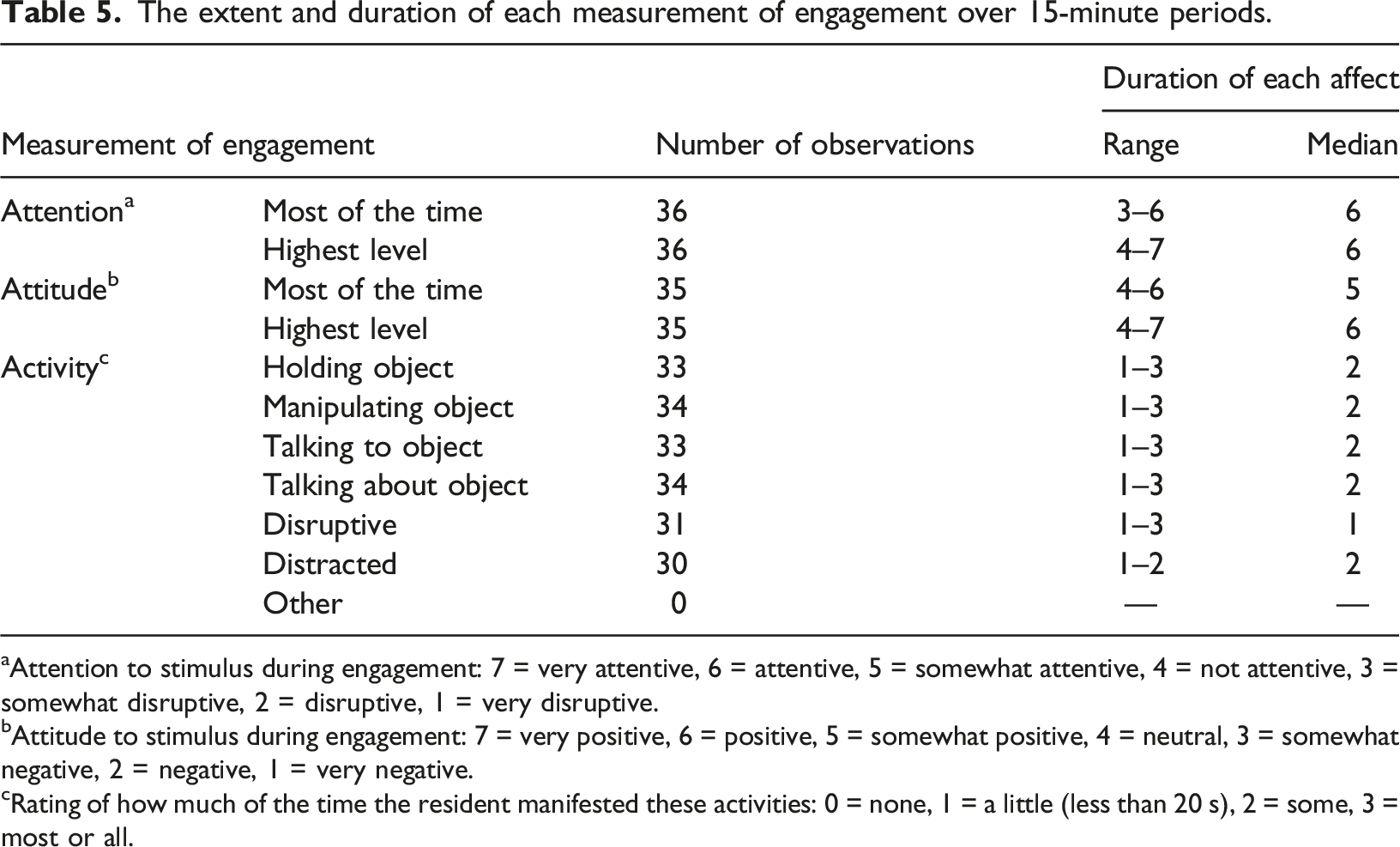
aAttention to stimulus during engagement: 7 = very attentive, 6 = attentive, 5 = somewhat attentive, 4 = not attentive, 3 = somewhat disruptive, 2 = disruptive, 1 = very disruptive.
bAttitude to stimulus during engagement: 7 = very positive, 6 = positive, 5 = somewhat positive, 4 = neutral, 3 = somewhat negative, 2 = negative, 1 = very negative.
cRating of how much of the time the resident manifested these activities: 0 = none, 1 = a little (less than 20 s), 2 = some, 3 = most or all.
Qualitative findings
The four themes that evolved from the qualitative analysis.

The first theme focuses on the structure of the conversations. The second theme shows how the person with dementia cognitively reflected on the context and where they belonged. The third theme focuses on emotional aspects of the conversations and, in the fourth theme, mutual confirmation and revitalisation is described. The interpretations are validated with texts from the observations, shown as quotes. A is the dog handler and B is the person with dementia. The letter B represents different persons with dementia.
Conveys a structure for the conversation with an inherent beginning and end
When the photobook was used, the conversation had a clear focus and, through using the photos, it was possible to hold a coherent conversation. The photobook provided a natural introduction for the conversations in which the persons with dementia had the possibility to perceive positive moments of being connected to another person. The photobook evoked interest and initiated engagement, albeit to different degrees on different occasions. When the persons with dementia had looked at all pictures, the conversation naturally came to an end. The following description shows how a conversation was structured: A and B are sitting on the bed, close to each other. Between them is the photobook. A starts the conversation and takes the initiative to open the book and asks what the first picture represents. A and B look at the pictures, one by one, and try to describe what unfolds. “Who are in the pictures? What is happening?” (Anne-Mary, session 1)
The photobook was also used unconditionally and opened up for talking about subjects associated with the pictures, such as the participants’ experiences of having had a pet, and thoughts about animals and nature.
An opportunity to recognise oneself and recall a sense of belonging
During the conversations, the persons with dementia compared and reflected over the persons shown in the pictures, and they related the photos to themselves and to the moment. It seemed to be a way of remembering the situation and for them to re-energise themself. Looking at the pictures and reflecting over them gave them the possibility to perceive a sense of themself. The following episode validates this interpretation: A gives the photobook to B and asks if s/he can recognise the picture. B can recognise her/himself and A says that the dog is called Charlie. A asks what they are doing in the picture, but B doesn’t remember. He asks if it happened a long time ago. B compares the clothes that B is wearing in the photos with today’s clothing. He also recognises and confirms that the pictures on the walls displayed in the photobook are the same as the pictures on the walls in the current room. (Henry, session 2)
The photobook contributed to recreating memories from situations in another time, which the following sequence is an example of: ‘B puts the book down and talks about their parents’ dog, about their love for animals and the importance animals have for B’.
Recollection of their own children and parents implied that the person with dementia could relocate him/herself in connection to others, recall liveliness and losses, and also try to identify themselves in relation to time and space. The pictures presented situations that the person with dementia had experienced, and the conversations enabled a deeper contact with the person’s life story when they had the possibility to reflect.
Awakens emotions and creates fellowship
The pictures of the dog evoked warm feelings, and contributed to conversations characterised by joy, closeness and warmth resulting in a moment of pleasure and wellbeing. The photo-elicited conversations enabled bonding between the dog handler and the persons with dementia because they shared an experience in which the person with dementia had not only been a passive recipient but also an active co-creator of a mutual memory. The persons with dementia showed joy and satisfaction when s/he recognised and remembered the relationship and interplay with the dog. The pictures also evoked a wish to meet the dog again. B expresses several times that she appreciated the meetings and the walks with the dog, and she longs to see him again. B gives the dog nicknames and says it was a nice dog and that s/he misses him. (Louise, session 2)
The photobooks could also evoke feelings of discomfort and anxiety when the person with dementia saw the pictures and reflected on her/his life and the skills that s/he had lost. Looking at the pictures could be demanding. The following situation was observed: A tells B that he is the person in the picture and that this situation took place six months ago. B says that he felt anxious because the nice dog in the picture does not belong to her/him. B feels confused and after a question from A he answers that he doesn’t long to see the dog. Instead, B says that he misses his previous life. A removes the book when B says that the book is bothersome to look at, it evokes discomfort. B wants to have the life he had before when he could do anything he wanted. (Ernest, session 1)
Entails confirmation and revitalises their identity
Using the photobook and its content as the subject for the conversations it was possible to have a metacommunication where the person with dementia received confirmation that strengthened her/his identity. It was also possible to evoke feelings of hope and caring. By talking about the pictures in which the person with dementia was feeding or playing with the dog, the dog handler could confirm that the person with dementia was a special person who was capable of doing things that contributed to the dog’s wellbeing. Memories about the good relationship with the dog were awakened by the dog handler’s positive reinforcement and narratives. By talking about what happened in the pictures, the persons with dementia received attention. This confirmation strengthened their personal self-esteem, which was observed in this situation: A says that B is looking good in the picture and B replies “then I’d better think the same”. (Mary, session 3).
The conversation climate was permissive and created mutual confirmation, where the dog handler also received confirmation from the persons with dementia. This confirmation was shown in words and, when the ability to talk was limited, was seen in smiles and glimpses.
Discussion
The aim of this study was to explore photo-elicited conversations about meetings with a therapy dog as a tool for communication in dementia care. The use of both quantitative and qualitative methodology means a deeper understanding could evolve. The results from the observational rating scales show that the photo-elicited conversations, in general, affected the participants positively. Typically, the participants were able to be attentive to the photobooks for the majority of the time and their attitudes towards the photobook varied between somewhat positive and positive. In turn, the qualitative analysis brought a deeper understanding of the participants’ attitudes and engagement in the form of four themes (see Table 6).
The results show that photobooks can be used as a tool in conversations with people with dementia in order to evoke memories of situations that the persons have participated in and to prompt recognition. Living with dementia may mean living with a broken identity and that the person gradually loses memories and the ability to relate to the world (Svanström, 2009). A person with dementia tries to create meaningfulness in this existence and photobooks could be one tool that could serve that purpose. For people with dementia, care that supports their sense of self and also promotes meaningfulness can contribute to their wellbeing.
In a previous study, Karlsson et al. (2017) explored how sense of self and identity of people with Alzheimer’s were manifested in narratives that were based on photo diaries. They found that photos could serve to ‘clear the mist’ enabling the participants to narrate recent or past events, which strengthens confidence in using photos as effective tools for communication in dementia care. In addition, Goodall, Taraldsen, and Serrano (2021) describe how technologies that are used for creating individualised, meaningful activities for people with dementia can be categorised depending on their main purpose. They identified four main purposes: reminiscence/memory support, behaviour management, stimulating engagement and conversation/communication support. Photos seemed to be the most prominent technology and can possibly be used in a variety of ways.
The results of the Observed Emotion Rating Scale showed that the photo-elicited conversations triggered pleasure and general alertness in the participants. According to Goodall et al. (2021) technologies such as photos can provide enjoyable experiences for people with dementia. However, they emphasise that the highly personal nature of such technologies also has the potential to trigger negative emotions. This was observed in the current study as signs of sadness occurred, although much less frequently than signs of positive emotions. Then again, Wesenberg et al. (2019) studied how dogs affected people with dementia living in nursing homes. The positive emotions that the participants expressed were suggested to be attributed to the presence of the dog and also to positive memories of previous pets. Wesenberg et al. (2019) reason that animals can bridge communication between humans as they serve as a reason for, and a topic of, communication. On the basis of our results, we would like to suggest that photos of pets can also aid communication between a person with dementia and a caregiver.
The results of the Observational Measurement of Engagement scale showed that the participants’ attitudes towards the photobooks varied between scores 4.0 (neutral) and 6.0 (positive) most of the time. In 2010, Marx et al. (2010) studied the engaging value of different dog-related stimuli in nursing home residents with dementia using the Observational Measurement of Engagement scale. They found that the residents’ attitudes towards the different stimuli varied between scores of 2.0 and 2.5. In addition, the refusal rates among the participants varied between 22% (large real dog) and 46% (small real dog). In the present study, there were no refusals.
According to the Comprehensive Process Model of Engagement (Cohen-Mansfield et al., 2009), engagement with a stimulus is affected by environmental attributes (e.g. the time of day or the manner of presentation), personal attributes (e.g. cognitive function or demographic characteristics, or general level of interest) and stimulus attributes (e.g. social qualities of the stimulus or if the stimulus is manipulative). In the present study, it can be hypothesised that environmental attributes affected the conversations since they were held by an assistant nurse who was well-known to the participants and who also conducted the conversations in a person-centred way, implying that the conversations focused on supporting the participants and their perspectives by confirming them and their skills and abilities.
According to Fredriksson (2003), a caring conversation is a mutual act where the caregiver is present in the moment and the patient invites the caregiver into her/his world. However, a caring relationship is never on equal terms, but through communication, the caregiver can create a space where the patient can re-establish his/her self-esteem, autonomy and responsibility, thus creating opportunities for a good life (Fredriksson, 2013). As described by Cohen-Mansfield et al. (2015), persons with dementia often lack social contacts. Therefore, and considering the above statement by Fredriksson (2003) about caring conversations, it is important that photo-elicited conversations are seen as a possibility to enable a caring communion. However, in order to be helpful for the patient, it is important to follow up the content of the meeting and also notice when to postpone or cancel the intervention.
The exposure of being in photo-elicited conversations can also provoke a powerful impact, physically as well as psychologically, when the person with dementia does not identify her/himself with the person in the pictures. In such quite emotionally divisive contexts, the person can experience grief or loss of cohesion (Eriksson, Peterson, Zetterlund, Olsson, & Peterson, 2006). In the photo-elicited conversations, the person with dementia should not be left alone or abandoned, but instead become part of a connection. The carer who affects the person in the photo-elicited conversations becomes a co-player by validating and recognising the person with dementia as a person who is able to actively participate in the conversation. This occurs by presence and touch, but also by listening to and respecting the person’s view of the conversation. In this, hope is mediated by joy and affinity (Eriksson et al., 2006). In the photo-elicited conversations, the conditions created in the connection allow reconciliation and meaningfulness.
Photo-elicited conversations should preferably be conducted by caregivers who use a lifeworld-led care instead of patient-led care (Dahlberg, Todres, & Galvin, 2009). Lifeworld-led care means a philosophical understanding of how well-being and illness is intimately bound up in the human condition. The current results show that photo-elicited conversations could cause feelings of both joy and distress. Therefore, caregivers need to have the competence that makes her/him aware of the person, and able to follow up and respond to the person’s reactions, both emotional and cognitive, that unfold during the conversation. Eriksson (1990) describes how caring is characterised by a caring communion. Some of the key characteristics in a caring communion are vitality, tolerance, closeness and honesty (Eriksson, 1990). This communion was noticeable in the video recordings since the dog handler was inviting, empathetic and enabling, thereby creating an atmosphere where the person with dementia could participate on her/his own terms. Photo-elicited conversations can therefore have a positive impact on fellowship and community as well as being a tool for communication.
Finally, on the basis of the present findings, it can be suggested that photobooks can be used by caregivers as a tool for meaningful and joyful communication with people with dementia, even those with severe dementia. Even if a person with dementia cannot relate to the actual event in the photo, the pictures still have the potential to stimulate a conversation (Karlsson et al., 2017). A photobook, similar to the one that was used in this study, is inexpensive and simple to use. Since the photobook is readily accessible, it is easy for families and nursing staff to pick up and use for distraction or for meaningful conversations with the person with dementia.
Limitations
In a study that aims to create knowledge about how people with dementia experience their life situation, there are obvious limitations. It seemed reasonable to assume that observations were appropriate as a method since there could be difficulties in collecting data via interviews. However, interpretations of observations must be carefully validated. To establish credibility of the results, we conducted repeated video recordings with each participant, thus certifying that our interpretations about the meanings of the photo-elicited conversations had credibility. At times, the participants approached the person behind the camera, but it did not appear to impact their response to the photo-elicited conversations. Rather, they tried to explain more about what they saw in the photos or their memories. After a short time, the participants full awareness was on the dog-handler and the photobook.
To establish authenticity, the research team considered that the dog handler, who were well acquainted with both the participants and the circumstances under which the photos were taken, were most appropriate to understand and guide the conversations than anyone else in the nursing homes. Moreover, trustworthiness was established since we were four authors who watched and analysed the video recordings. Together we could critically evaluate the interpretations. Some video recordings failed due to technical issues, which is a limitation, but despite this the total amount of data is large.
Conclusions
The results of the present study show that photos of persons with dementia in enjoyable situations with an appreciated therapy dog can serve as a tool for communication in dementia care, even for people with severe dementia. The photobooks provided a natural structure for the conversation, thus serving as a convenient basis for communication between the person with dementia and the caregiver. The results show that, in general, the participants seemed to perceive the photo-elicited conversations as joyful and meaningful. They were observed being both attentive and engaged during most of the conversations. The photos implied an opportunity to strengthen the person’s sense of self through confirmation as well as a sense of belonging, which in turn revitalised the persons’ self-identity.
We also conclude that video observations are effective when wanting to study what happens between persons who are interacting with each other. However, using video observations involves many challenges, not least ethical aspects that need to be considered.
Footnotes
Acknowledgements
The authors would like to thank all participants and their close family/friends for providing us with consent to conduct the study. We would also like to thank Susanna Markkanen and Ann Kårefjärd for their engagement, knowledge, humility and passion for people with dementia and dog-assisted therapy. Finally, we acknowledge the good will of Eskilstuna municipality and regret that the much-appreciated activity with dog-assisted intervention had to be withdrawn.
Declaration of conflicting interests
The author(s) declared no potential conflicts of interest with respect to the research, authorship, and/or publication of this article.
Funding
The author(s) disclose receipt of the following financial support for the research, authorship, and/or publication of this article: This work was supported by the Dementia Association in Sweden; the Centre for Clinical Research Sörmland/Uppsala University; and Mälardalen University
Ethical approval
This research study was conducted in accordance with the Swedish Ethical Review Act (2003:460) and was approved by the Regional Ethical Review Board in Uppsala, Sweden [registration number 2017/081].
