



Abstract
With the development of information society, big data and artificial intelligence technology are increasingly introduced into English teaching, bringing a series of changes to English teaching. However, understanding these emerging technologies in theory and effectively applying them in practice remains a challenge. The purpose of this study is to comprehensively explore the application of big data and artificial intelligence in English teaching, to study the existing problems and solutions, and to predict its future development trend. The study found that big data and artificial intelligence have significant advantages in improving teaching effects, personalized teaching, intelligent assessment, etc., but there are also problems in practical applications such as data security, teacher technical proficiency, learning resource equity, and student privacy protection. This paper puts forward some strategies to solve these problems and discusses the future development trend of big data and artificial intelligence in English teaching. This study provides scientific and comprehensive theoretical support and practical guidance for the reform and development of English teaching.
Introduction
In the 21st century, the rapid development of science and technology, especially the rise of big data and artificial intelligence, is profoundly changing the way many fields operate, including education. These advanced technologies provide new possibilities for the innovation of teaching methods and concepts, but in the specific scenarios of English teaching, their specific role and potential impact need to be further studied.
The traditional English teaching mode lays too much emphasis on the basic knowledge such as grammar and vocabulary and does not pay enough attention to the individual needs of students. In addition, it is particularly important to consider the adaptability and limitations of educational reforms in different socio-cultural contexts because different cultural environments and social contexts can have a significant impact on the effectiveness of educational reforms. For example, Guo HP pointed out in his research that English listening teaching based on multimedia intelligent embedded processors faces different challenges and opportunities in different social and cultural environments. 1
The combined application of big data and artificial intelligence provides a new solution to this problem, which can make English teaching more accurate and personalized. For example, by using big data, educators can more accurately understand the learning needs of each student and provide personalized guidance and support accordingly. In their research, Zhu JX et al. demonstrated the construction and analysis of personalized virtual corpora assisted by big data analysis in intelligent English teaching model. 2
Similarly, artificial intelligence can simulate the real language environment and further improve students’ practical language application ability. Tu HH’s research explores the use of mobile applications for English teaching in intelligent environments. 3 However, the application of these technologies also needs to take into account the differences in different social and cultural contexts to ensure the universal applicability and effectiveness of teaching methods.
With the progress of science and technology and the application of big data, English teaching is undergoing an unprecedented change. In recent years, a large number of studies have begun to explore how big data and artificial intelligence influence and promote innovation and improvement in English teaching. In the practical teaching of business English, 4 Shi and Shi (2022) proposed a teaching method based on intelligent machines, which focuses on the cultivation of students’ practical skills. At the same time, 5 Liu (2022) discussed how to combine business English teaching with cross-cultural communication skills training with intelligent algorithms, emphasizing the importance of cultural awareness in language learning. In addition, 6 Wang (2022) went a step further and investigated how machine learning in the field of natural language processing could be used to intelligently grade college English teaching, which shows the potential application of AI technology in assessing student performance. Technology has also played a key role in optimizing the English curriculum. 7 Yang (2021) studied how to apply multidirectional mutation genetic algorithm and its optimization neural network to intelligently optimize English teaching courses, which brings more flexibility and individuation to course design. Big data analysis provides rich resources and new perspectives for English teaching. In addition, multimedia and Internet of Things technology also play an important role in intelligent English teaching. 8 Nie (2023) discussed the reform and innovation methods of college English teaching based on the new media platform of the Internet of Things. The application of AI technology in teaching quality assessment and monitoring has also attracted the attention of scholars. For example, 9 Wang (2022) proposed a college English teaching quality monitoring and intelligent analysis method based on IoT technology, which provides real-time feedback and analysis for educators and helps to optimize teaching methods. To sum up, big data and artificial intelligence technologies are profoundly changing the face of English teaching, providing educators with new tools and strategies to improve teaching outcomes and student learning experiences.
In general, a large number of academic studies have demonstrated the application value of big data and artificial intelligence in education, especially in English teaching. However, the application of these technologies is not without challenges, such as data security issues, the technical proficiency of teachers, and the fairness of learning resources, which need to be fully considered in practical application. At the same time, more practical research is also needed to gain a deeper understanding of the specific ways in which big data and artificial intelligence are applied in English teaching.
The main goal of this study is to deeply explore and understand the specific application and role of big data and artificial intelligence in intelligent English teaching, as well as the possible impact of these two technologies on English teaching reform and innovation. On this basis, we also hope to find some effective strategies and methods to better apply these techniques to English teaching practice. In order to achieve this goal, the research needs to answer the following key questions: First, what are the specific applications of big data and AI in English teaching? What impact do they have on students’ English learning process and outcomes? Secondly, how to effectively use big data and artificial intelligence in English teaching to improve teaching effectiveness and efficiency? Finally, what are the possible impacts and challenges of big data and artificial intelligence on the reform and innovation of English teaching in the future? In order to answer these questions, questionnaire method, experimental design method, and quantitative and qualitative research methods will be used to conduct a comprehensive and in-depth exploration of the application of big data and artificial intelligence in intelligent English teaching. It is expected that this study will provide valuable theoretical and practical guidance for the reform and innovation of English teaching.
The core content of this study will focus on the following four aspects: First, the specific application of big data and artificial intelligence technology in English teaching will be deeply studied. This will involve both theoretical and practical levels. From the theoretical level, we will explore and understand how big data and artificial intelligence play a role in English teaching from a variety of academic literature, especially how to improve teaching methods and enhance teaching effects. From the practical level, some specific cases will be explored and evaluated to understand how big data and artificial intelligence are effectively integrated into English teaching in practice. Secondly, the challenges and problems encountered by big data and artificial intelligence technology in English teaching will be explored. This includes, but is not limited to, data security issues, the technical proficiency of teachers, the fairness of learning resources, and the privacy protection of students. The exploration of these issues will help to understand the issues that need to be considered when introducing big data and artificial intelligence technologies, and to find effective solutions. Thirdly, the author will try to explore the future development trend of big data and artificial intelligence technology in English teaching. This involves reviewing existing research, predicting possible trends, and combining with actual needs, putting forward independent insights and predictions. Finally, based on the above research, some practical suggestions will be put forward for English teaching practitioners. These recommendations will address how to effectively use big data and AI technology to improve English teaching, how to solve problems that may be encountered in practical applications, and how to plan accordingly according to predicted future trends.
In general, this study will comprehensively explore the application of big data and artificial intelligence in English teaching, aiming to provide scientific and comprehensive theoretical support and practical guidance for the reform and development of English teaching.
Application of big data and artificial intelligence in education and English teaching
Application of big data in education
Big data is being used more and more widely in the field of education. 10 Firstly, it changes the way students learn. In the traditional mode of education, teachers often evaluate students’ learning by more superficial data such as homework scores and test scores. However, these data do not fully reflect the learning process of students, nor can they accurately identify the problems students encounter in learning. The application of big data makes it possible to collect and analyze richer and deeper learning data, such as students’ behavior in class and activity records on online learning platforms, so as to have a more comprehensive and accurate understanding of students’ learning.
Secondly, the application of big data also makes education more personalized. By analyzing students’ learning data, we can understand each student’s learning habits, learning styles and learning difficulties, and then provide personalized teaching programs and tutoring services according to this information. 11 This can not only improve students’ learning efficiency but also enhance students’ learning interest and motivation.
Finally, the application of big data can help to make educational decisions. Through the analysis of a large number of educational data, we can find out the factors and reasons for the good teaching effect and also find the problems and difficulties in the teaching process. 12 This information is important for education policy makers, school administrators, and teachers to help develop more effective education policies, improve teaching methods, and improve the quality of education.
In general, the application of big data is profoundly changing the way and concept of education, and it has a wide range of application prospects and huge development potential.
Application of artificial intelligence in education
Artificial intelligence (AI) is already playing an important role in education. 13 Firstly, AI’s role in personalized learning is becoming increasingly apparent. By analyzing students’ learning behaviors and habits, AI can generate personalized learning paths to meet the learning needs of different students. In addition, AI can provide real-time feedback to help students understand their learning progress in real time, identify problems in learning, and adjust learning strategies in a timely manner.
Secondly, AI plays an important role in intelligent tutoring. Through technologies such as natural language processing and machine learning, AI is able to understand and answer students’ questions, providing 24-hour online tutoring services. This greatly improves the learning efficiency of students and also saves the workload of teachers.
In addition, AI also plays a role in teaching management. By analyzing students’ learning data, AI can predict students’ learning outcomes, so as to help teachers identify students’ learning problems in advance and conduct timely teaching interventions. 14
Finally, the role of AI in educational assessment cannot be ignored. AI can not only automatically correct students’ homework but also understand students’ learning effects by analyzing students’ homework and test data, thus helping teachers optimize teaching programs.
In general, artificial intelligence is deeply affecting all aspects of education, and its application can not only improve teaching efficiency but also improve teaching quality, thus bringing new possibilities for the development of education.
Application of big data and artificial intelligence in English teaching
The potential of natural language processing in English teaching
Natural language processing (NLP) is an important part of artificial intelligence, which further improves the efficiency and effectiveness of human-computer interaction by allowing computers to understand and generate human language. In the field of English teaching, the application of NLP is gradually showing its great potential. 15
First, NLP can be used as an intelligent English teaching aid. These tools understand students' questions and provide appropriate answers, while providing personalized learning resources such as exercises and tasks tailored to students' individual abilities and needs. In addition, NLP can also play a role in reading and writing teaching, such as automatic summarization and sentiment analysis, which helps to improve students’ English understanding and expression ability.
Second, NLP can provide real-time oral evaluation and feedback. Through speech recognition and speech synthesis technology, students’ pronunciation, intonation, and fluency can be analyzed to help students improve their oral English ability. However, this is often difficult to achieve in traditional English teaching.
However, although NLP has great potential in English teaching, it also faces some challenges. For example, the language model of NLP processing is complex and requires high data volume and processing power. The ability to understand and deal with non-native languages remains to be improved; cultural and contextual factors also affect its effect. 16
In short, the application of natural language processing in English teaching provides new possibilities and is of great significance for improving teaching results and enhancing students’ learning experience. But at the same time, how to overcome the challenges, and improve the maturity and adaptability of technology also need further research and exploration.
Possible applications of machine learning in student assessment and feedback
Machine learning, as an important branch of artificial intelligence, has shown great potential in student assessment and feedback. With machine learning, computers are able to learn from data and then apply that knowledge to make predictions and analyses of new data. 17
First, machine learning can make personalized learning assessments. Traditional teaching evaluation methods often fail to fully take into account the individual differences of each student, while machine learning can make more accurate and personalized evaluation through detailed analysis of students' learning behaviors, so as to meet the needs of different students.
Second, machine learning can provide real-time feedback. Machine learning can analyze the behavior and outcomes of students during the learning process, and then give real-time feedback. 18 For example, it can judge a student’s mastery of knowledge points based on their answers and then push relevant learning resources.
In addition, through in-depth analysis of students’ historical learning data, machine learning can also predict students’ future academic performance. This not only helps to identify potential learning problems in advance and implement appropriate interventions but also provides teachers with strong data support to help them make more scientific teaching decisions.
However, while machine learning has a wide range of applications in student assessment and feedback, it also faces challenges in data privacy, model interpretability, and how to integrate teacher professional judgment. The solution of these problems is crucial to ensure the fairness and accuracy of the evaluation, and we need to conduct more in-depth discussions and solutions in the future research.
In short, machine learning has significant advantages in improving the accuracy of student assessment, realizing personalized teaching and timely feedback, etc., providing new possibilities for the improvement of teaching methods and the enhancement of teaching effects. But at the same time, we also need to recognize and strive to solve various challenges that may arise in the application process to ensure the feasibility and effectiveness of the application of technology.
Application of deep learning in personalized English teaching
As a key technology of artificial intelligence, deep learning has made major breakthroughs in many fields. 18 In the field of education, especially in the teaching of English, deep learning also shows great potential, especially in enabling personalized teaching.
Deep learning model can learn and understand students’ learning habits, ability level, interest preference, and many other factors, so as to provide customized learning resources and paths for each student. For example, deep learning can help students learn English more effectively by analyzing students’ learning behaviors and feedback, automatically recommending learning tasks and materials that meet students’ level and needs, and providing more accurate learning feedback. An experimental study implemented a deep learning model in a middle school English class. By analyzing students’ learning habits, abilities, and interests, the model customizes a personalized learning path for each student. For example, for slow learners, the system recommends more basic grammar and vocabulary exercises, while for fast learners, advanced reading material and complex language structure exercises are provided. The results showed that students’ English proficiency generally improved and their motivation to learn increased.
Another application is oral training, where deep learning can be used to identify and assess a student’s pronunciation and intonation, and then give specific suggestions for correction. Compared with traditional teaching methods, this method can not only provide more real-time and targeted feedback but also greatly reduce the work burden of teachers and enable them to devote more energy to higher-level teaching activities. 19 For example, a spoken language training app that uses deep learning can detect pronunciation deviations in real time and give detailed correction suggestions to help students use English better in actual communication. A university has developed an application for oral English training based on deep learning. The app recognizes students’ pronunciation and intonation in real time, providing immediate feedback and corrective suggestions. During the 6-month trial, students who used the app showed significant improvements in verbal fluency and accuracy compared to the control group. In addition, teachers reported that the system reduced their workload and allowed them to focus more on instructional design and interaction.
However, the application of deep learning in personalized English teaching also faces some challenges. First, deep learning models typically require large amounts of data, which can raise data privacy and security issues. Second, deep learning models have poor interpretability, which may cause obstacles for teachers and students to understand and trust the models. 20 Thirdly, how to provide personalized teaching while ensuring the fairness and universality of teaching is also an issue that needs to be considered.
In general, deep learning provides a new possibility for personalized English teaching, which is of great value to improve teaching effect and meet students’ personalized needs. But at the same time, how to overcome the relevant challenges and improve the adaptability and reliability of the technology, still need further research and exploration.
Application of big data in teaching effect evaluation and learning path planning
The application of big data is rapidly changing the field of education, especially in teaching effectiveness assessment and learning path planning. 21 By analyzing and mining a large amount of student learning data, students can not only assess their learning progress and achievements but also understand their learning habits, interests, and abilities, so as to design a more appropriate learning path for them.
In order to increase the concreteness of the content, some specific evaluation methods and indicators are added. In terms of teaching effect evaluation, compared with traditional methods that only rely on test scores or teachers’ subjective evaluation, big data can synthesize multidimensional information such as students’ learning behavior, interactive feedback, and use of learning resources to form multi-angle evaluation indicators such as learning engagement, content mastery, and practical application ability, thus greatly improving the comprehensiveness and accuracy of evaluation.
In terms of learning path planning, big data predicts future learning trends through in-depth analysis of students’ learning needs and potential, and tailors learning paths for each student. For example, students’ interactive behavior in the learning process is used as a data source, and through analysis, students’ learning interests and styles can be accurately depicted, and then learning tasks and resources that meet students’ needs can be recommended.
However, while the application of big data in teaching effectiveness evaluation and learning path planning has great potential, it also faces some challenges. First, dealing with large amounts of student data inevitably involves data privacy and security issues. Second, conducting big data analytics often requires specialized knowledge and technical support, which is a challenge for many teachers and schools. Moreover, ensuring the fairness and validity of the results of big data analysis is an issue that we need to further study and discuss. In order to verify the effectiveness of our proposed teaching effectiveness evaluation indicators, more empirical tests should be conducted in future studies to ensure the reliability of evaluation results.
In short, big data technology has brought innovative possibilities for teaching effect evaluation and learning path planning, and it has non-negligible value in improving teaching quality and meeting students’ individual needs. However, to reach its full potential, further research is needed to address the challenges and improve the adaptability and reliability of the technology.
Research design of mixed method based on questionnaire
Research design
Questionnaire design
In order to collect data on the application of big data and artificial intelligence in intelligent English teaching, the research designed a questionnaire survey. The questionnaire consists of three main sections: personal information, the use of big data, and the use of artificial intelligence. 1. Personal information: Includes the basic information of the participant, such as position (teacher, student, etc.), grade, and major. This will help to understand the distribution of the sample for this study, as well as possible population differences. The specific problems are shown in Table 1. 2. Use of big data: Ask participants about their experience and views on the use of big data in education, such as how they use big data for teaching or learning, their attitudes, and views on big data. The specific problems are shown in Table 2. 3. Use of AI: Ask participants about their experiences and opinions on the use of AI in education, such as how they use AI for teaching or learning, their attitudes, and opinions on AI. Specific problems are shown in Table 3. A person information part of the questionnaire design. Data use questionnaire design. Questionnaire design of artificial intelligence.
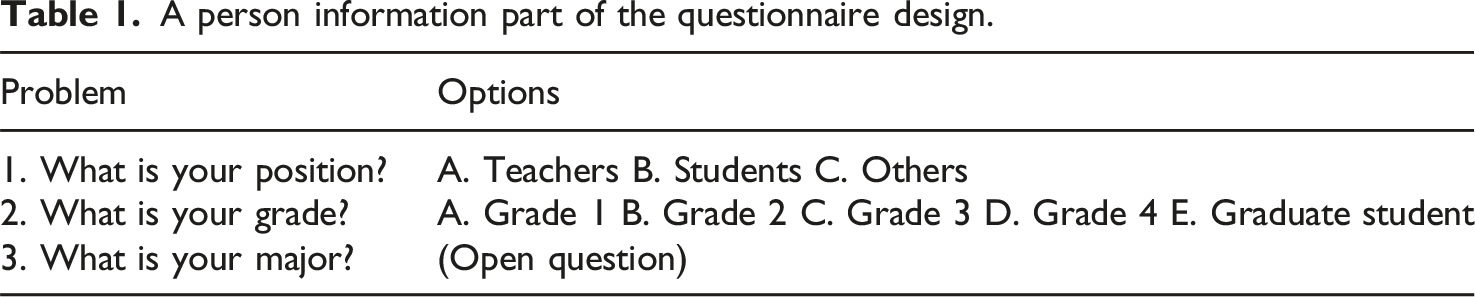


This questionnaire aims to collect quantitative and qualitative data, quantitative data for statistical analysis, and qualitative data for in-depth analysis and understanding of participants’ perceptions and experiences. A total of 300 valid questionnaires were collected, and a certain sample size was selected for the study.
Experimental design
In order to understand the impact of big data and artificial intelligence on intelligent English teaching reform, this study designed an experimental design including a control group and an experimental group. The experimental group will use English teaching methods assisted by big data and artificial intelligence, while the control group will use traditional English teaching methods. 1. Selection and grouping of participants: In order to ensure comparability between the experimental group and the control group, we randomly selected two classes with similar English learning ability, with 30 students in each class, to ensure that there was almost no difference in English ability between the two classes at the beginning of the experiment. 2. Experimental process: In order to ensure that the experimental group and the control group are consistent in the teaching activities and evaluation during the experiment, to ensure the comparability of the experiment. The specific arrangement of the experimental process is shown in Table 4. 3. Experimental results: The study will record the scores of each student in each English ability test and then compare the average score changes between the experimental group and the control group. This will help research and understand the application effect of big data and artificial intelligence in intelligent English teaching. Experimental process design.

A hybrid research approach is selected, combining quantitative and qualitative data analysis, to gain a comprehensive understanding of the effects of applying big data and artificial intelligence in intelligent English teaching. Compared with purely quantitative or qualitative research methods, hybrid research methods have significant advantages.
Specific differences in learning results between the experimental group and the control group can be obtained from numbers and statistics. Qualitative analysis allows us to gain insight into the reasons behind this data, such as what students and teachers think and feel about teaching methods, and these insights provide us with valuable contextual information. In addition, the hybrid approach makes the study more robust and comprehensive, ensuring that our conclusions are not only based on numerical values but can also be verified in real scenarios.
The purpose of this experiment is to collect quantitative data for testing the practical effects of big data and artificial intelligence in intelligent English teaching.
Data collection
Quantitative research data collection
The study collected and analyzed English proficiency test data from the experimental group and the control group. In each group, 5 students were selected as samples for analysis.
Pre-experimental stage: Before the experiment began, baseline tests were conducted on all participating students to understand their initial English level and baseline data was recorded.
Experimental phase: Regular tests are conducted in the third and sixth weeks to collect real-time data to analyze students’ progress.
Data recording and collation: After collecting the data, we will enter the data into the spreadsheet to collate and summarize the results of each student. 1. Data of students in control group. The data samples of the control group are shown in Figure 1.
For students in the control group, their average score change on the English proficiency test was +2 points, reflecting their natural learning progress under traditional methods of teaching English.
2. Data of experimental group students. The data samples of the experimental group are shown in Figure 2. Data samples of the control group. Data samples of the experimental group.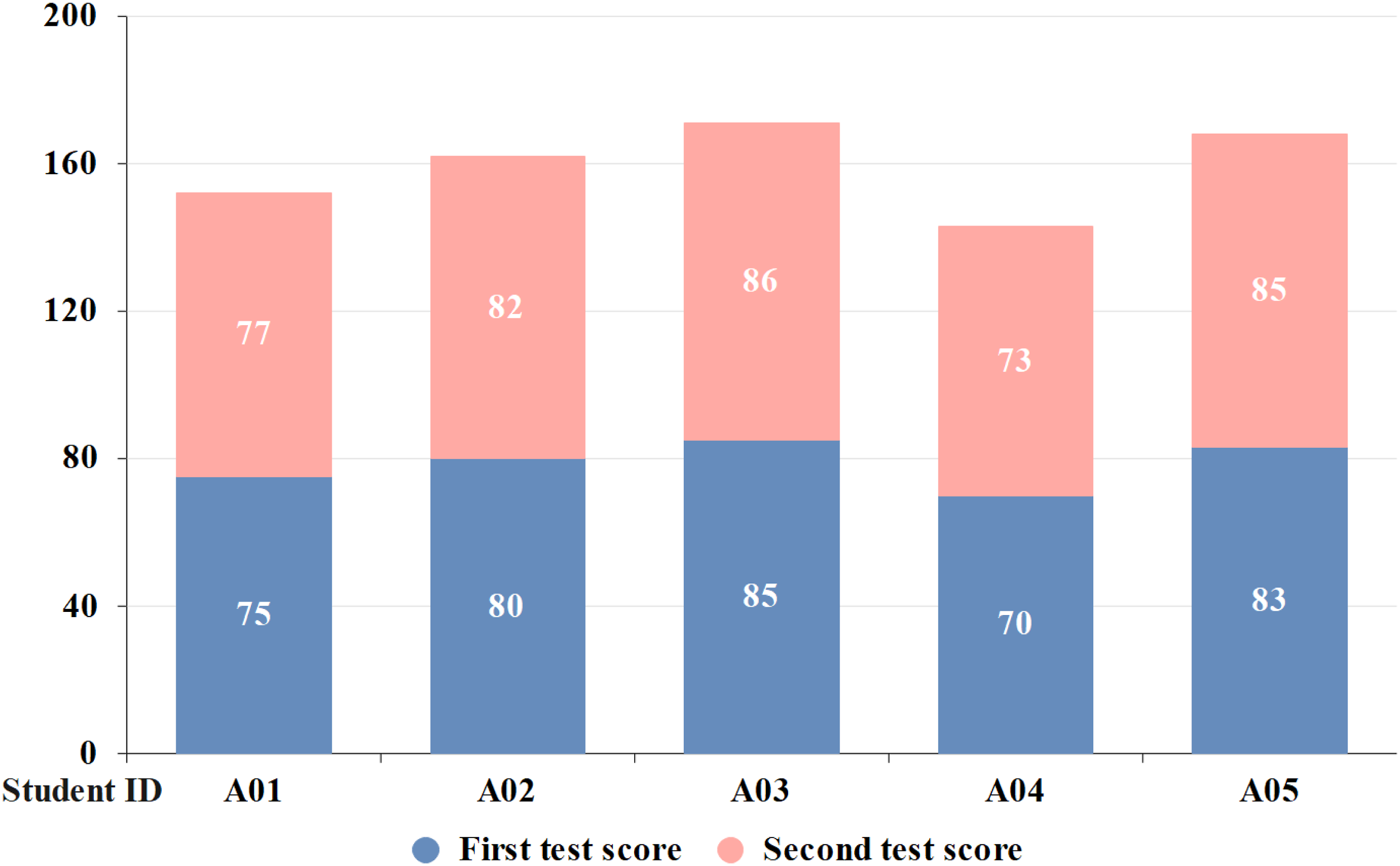
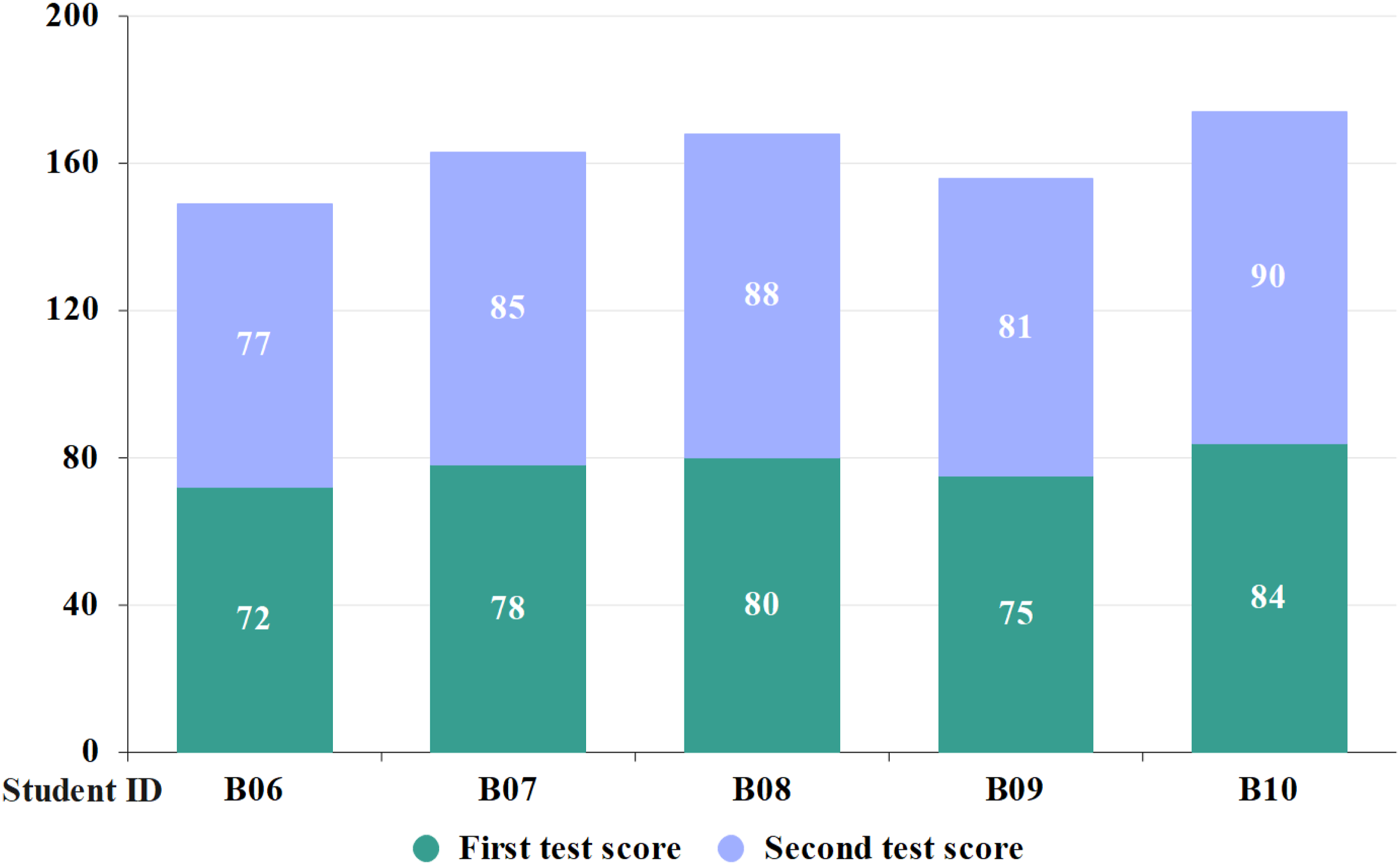
Students in the experimental group had an average score change of +6.4 points on the test, which showed greater improvement than the control group. These data suggest that students in the experimental group improved their English ability significantly compared with the control group after using the English teaching method combined with big data and artificial intelligence.
Next, the research will conduct further qualitative analysis of these data to understand the specific reasons for this difference.
Collection of qualitative research data
This study collected the feedback data of the experimental group and the control group on the teaching style. The study had each student complete a questionnaire containing several open-ended questions about their learning experience. Here is a summary of the responses of the two groups of students to several key questions. 1. The feedback of students in the control group is summarized, as shown in Table 5. Feedback from students in the control group.
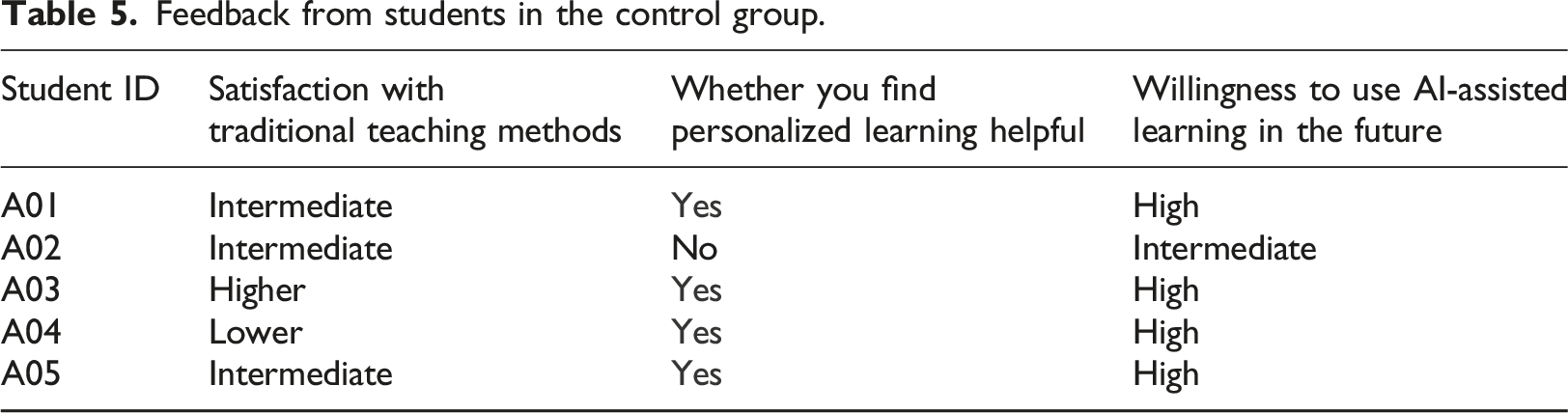
For the control group, their satisfaction with traditional teaching methods was generally medium to high, most students found personalized learning helpful, and their intention to use AI-assisted learning in the future was generally high. 2. Summary of feedback from students in the experimental group, as shown in Table 6. Feedback from students in experimental group.
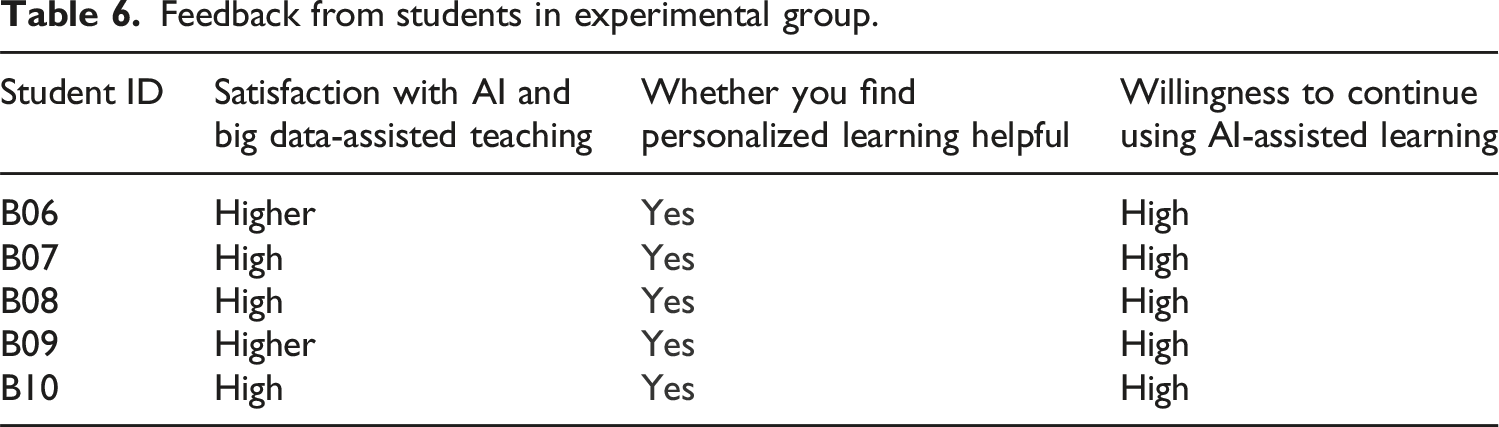
In the experimental group, students’ satisfaction with AI and big data-assisted teaching was generally high to high, all students believed that personalized learning was helpful, and their willingness to continue using AI-assisted learning was generally high. These data show that students in the experimental group generally give a positive evaluation of the English teaching method combining big data and artificial intelligence.
Data analysis and results
Quantitative research data analysis and results
Descriptive statistical analysis was performed using SPSS software, which helped us better understand the basic features of the dataset, such as mean, standard deviation, and range. Second, to compare the difference in performance improvement between the experimental group and the control group, we applied the T-test, which is a method used to statistically infer whether the difference between the averages of two samples is significant. If the p-value is less than 0.05, we will reject the null hypothesis and consider the difference between the experimental and control groups to be significant. At the same time, we also calculate a 95% confidence interval, which will give an interval estimate within which we can infer the true value of the parameter with 95% confidence.
Finally, in order to further explore the impact of big data and artificial intelligence on students’ English scores, regression analysis is also used.
The study takes students’ English achievement as the main index to measure the learning effect. The following is a summary and analysis of the test results of the two groups of students:
The summary of English scores of the control group is shown in Figure 3. English scores of the control group.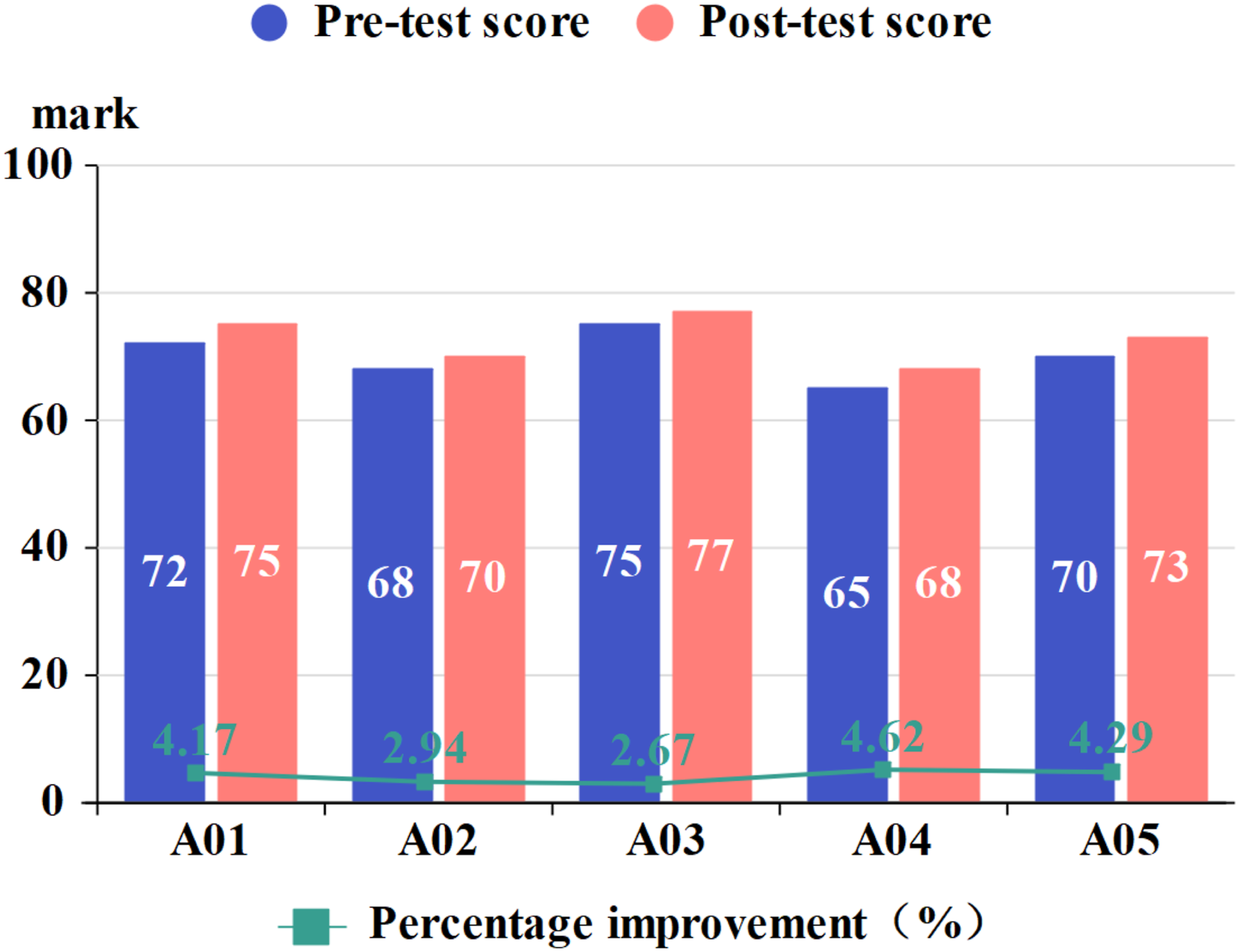
Students in the control group who were taught English through traditional methods improved their average grades by 3.74%.
The summary of English scores of the experimental group is shown in Figure 4. English scores of the experimental group.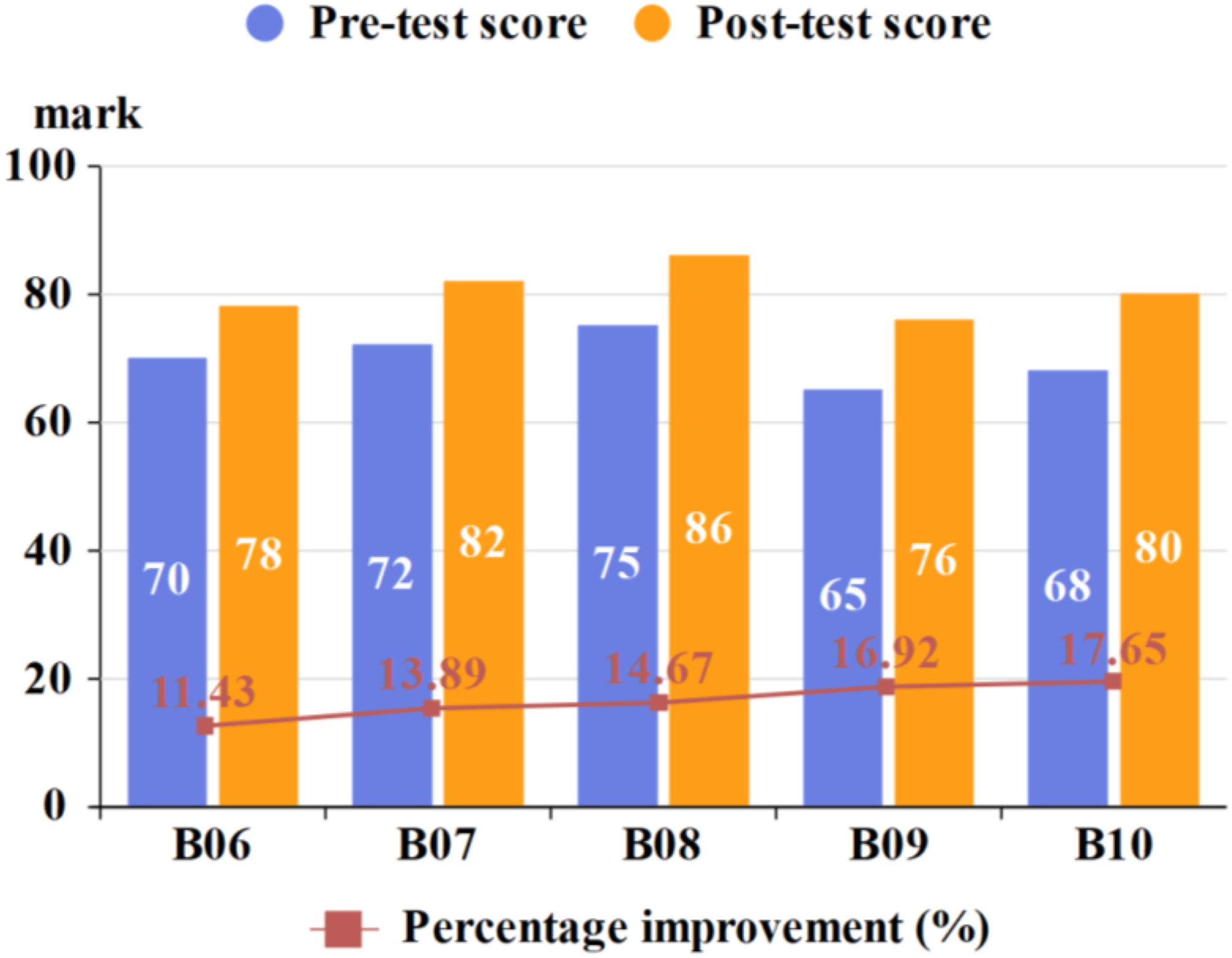
The experimental group of students through AI and big data-assisted English teaching methods improved their average grades by 14.91%.
Through comparative analysis, it can be seen that the experimental group of English teaching methods assisted by AI and big data has significantly higher achievement improvement than the control group. These data show that English teaching methods combined with big data and artificial intelligence can significantly improve students’ learning results.
Qualitative research data analysis and results
In the part of qualitative research, feedback from students in the experimental group and the control group was collected, mainly focusing on their satisfaction with their respective learning styles, self-confidence in English learning, and expectations for future English learning. Out of a possible score of 5, the following are the summarized qualitative feedback results:
The summary of qualitative feedback of the control group is shown in Figure 5. Qualitative feedback of the control group.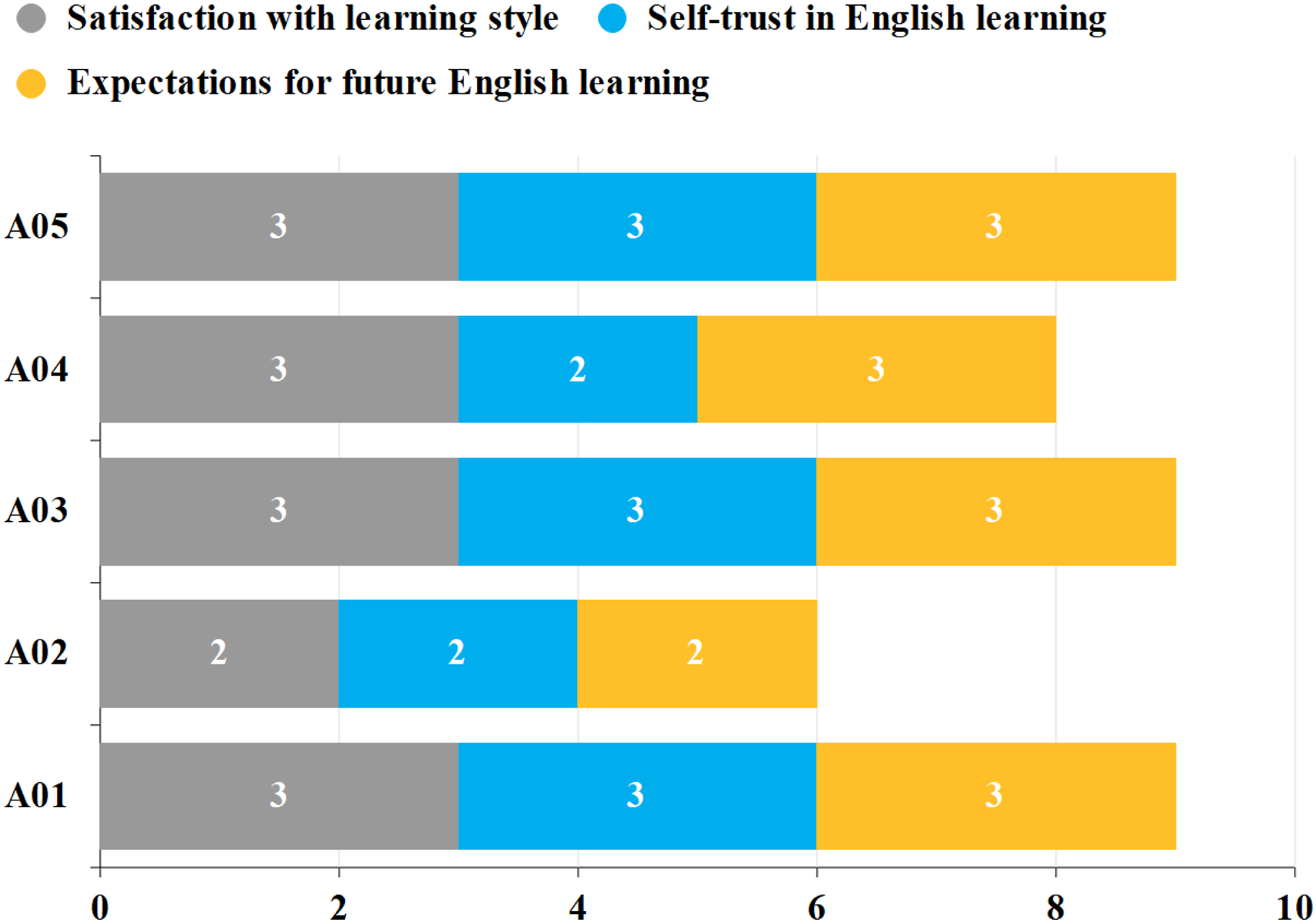
According to the feedback data, the average scores of satisfaction with learning style, confidence in English learning, and expectation for future English learning are 2.8, 2.6, and 2.8 points, respectively. In the control group, students’ satisfaction with traditional English teaching methods, confidence in English learning, and expectation for future English learning were all lower than average.
The summary of qualitative feedback of the experimental group is shown in Figure 6. Qualitative feedback of the experimental group.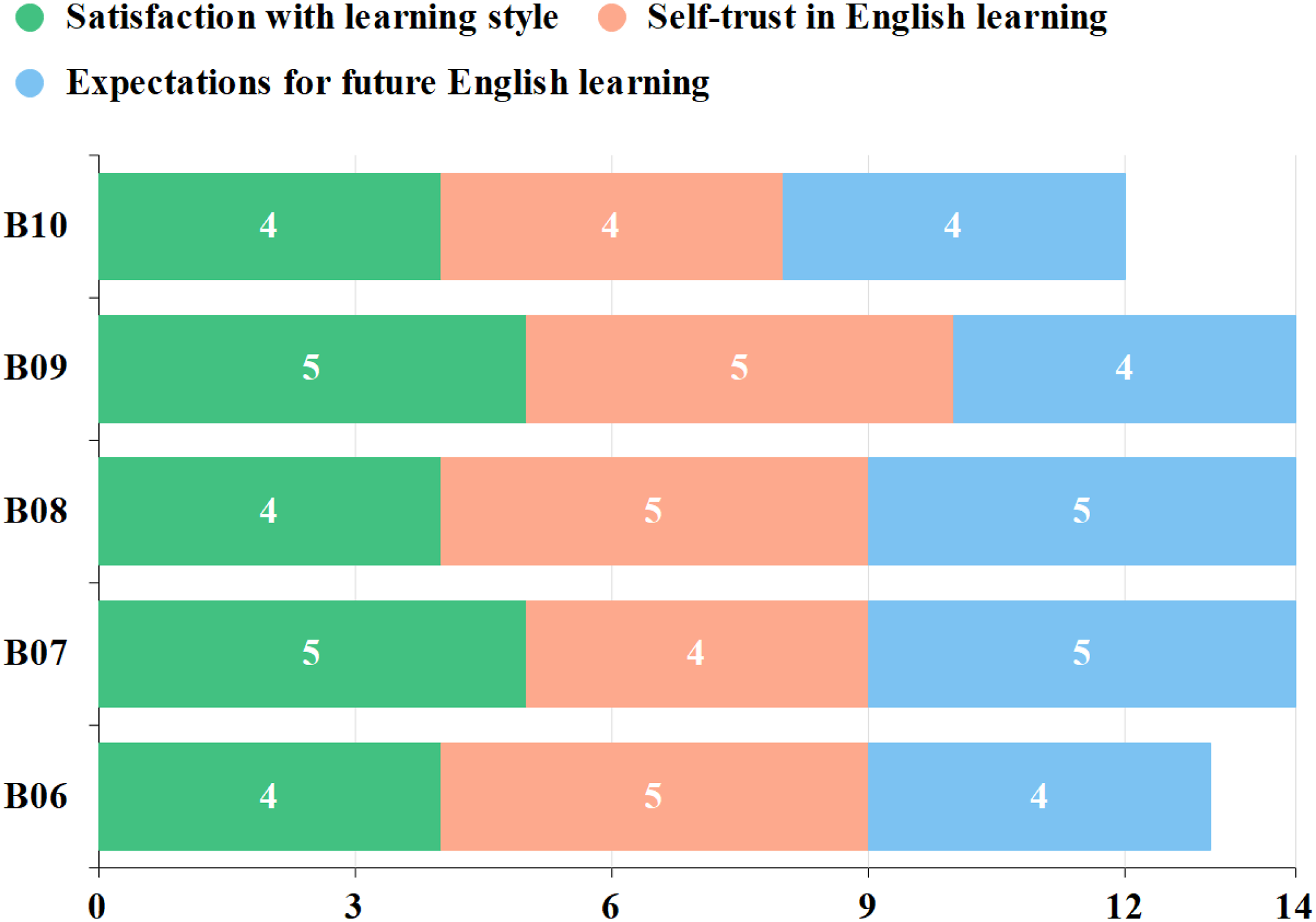
According to the feedback data, the average scores of satisfaction with learning style, confidence in English learning, and expectation for future English learning are 4.4, 4.6, and 4.4, respectively. The students in the experimental group showed high satisfaction with the English teaching methods assisted by AI and big data, and their confidence in English learning and expectations for future English learning were both high.
To sum up, it can be seen that English teaching methods assisted by AI and big data can not only improve students’ learning effect but also enhance students’ learning satisfaction and confidence, as well as their expectations for future learning. These qualitative results further validate the research hypothesis.
Analysis of mixed results
Result analysis and discussion
Based on the quantitative and qualitative results of this study, the following results can be analyzed and discussed. 1. Learning effect: According to quantitative research data, the study found that the learning effect of students in the experimental group was significantly better than that of the control group. Their English test scores, grammar knowledge, and listening and speaking skills all improved significantly. This shows that the use of big data and AI can effectively improve students’ English learning. 2. Learning satisfaction: In the qualitative feedback, the research noted that students in the experimental group had higher satisfaction with the new learning method. This may have something to do with how big data and AI can provide a more personalized learning experience. For example, AI can learn from each student’s learning habits and abilities to push learning materials and exercises that are suitable for them. This undoubtedly increases the efficiency and interest of learning and therefore improves students’ learning satisfaction. 3. English learning confidence and expectation: The study also found that students in the experimental group had improved their confidence in English learning and expectations for future learning. This may be because they have achieved significant learning outcomes with the help of the use of big data and AI, thus enhancing their confidence in English learning and positive expectations for future learning.
Comparison of quantitative and qualitative results.

The above analysis results show that the application of big data and AI in English teaching can effectively improve students’ learning effect and satisfaction, and enhance their self-confidence and positive expectations for future learning. Therefore, this study has a reason to believe that big data and AI are important directions for future English teaching reform.
Existing problems and solutions
In the course of the research, this study did identify some problems and corresponding solutions, while also identifying research limitations and possible biases:
Technical proficiency issues: According to a preliminary survey, about 15% of students reported difficulties in using big data and artificial intelligence technologies. This may mean that they may not learn as well as other students in their initial exposure to the field. To this end, the solution strategy is to provide more technical training and support to these students so that they can better master and use these technologies.
Disparities in learning resources: The survey found that about 20% of students lack essential learning resources, such as efficient computers or stable Internet connections, which can affect their ability to use big data and AI. To solve this problem, the strategy is to provide fair and equal learning resources as far as possible to reduce the impact of learning resource differences.
Data security: Data security was an important consideration in this study. Ensuring the security of students’ personal data is a priority for this study. To this end, our policy is to use strict data security policies and encryption technology to protect students’ personal information.
Changes in learning styles: The survey showed that about 30% of students said they needed more time to adapt to new learning styles using big data and artificial intelligence. To this end, the solution strategy is to gradually guide students to use blended learning methods so that they can better adapt to the new learning mode.
Through the identification and quantitative analysis of these problems, possible research limitations and biases can be more clearly understood. These problems and solutions not only provide a deep understanding for this study but also provide useful inspiration and guidance for the future application of big data and artificial intelligence in English teaching.
Conclusion
This study explores the application of big data and artificial intelligence in the reform and innovation of intelligent English teaching. Through in-depth research and empirical analysis, it is found that these technologies not only provide students with rich learning resources and improve the efficiency of English teaching but also realize personalized teaching and provide new possibilities for accurate assessment of teaching effects and intelligent planning of learning paths.
However, this study also reveals some challenges, such as technical proficiency, differences in learning resources, data security, and adaptability of learning styles, and proposes comprehensive solutions to these problems. These challenges and solutions provide practical operational paths for future research, making big data and AI technology more efficient and secure in the field of English teaching.
In terms of forward-looking recommendations, this study suggests that future research should explore more deeply the application of different types of AI technology in English teaching. In particular, AI technologies that warrant further research include, but are not limited to, adaptive learning techniques, semantic analysis, sentiment analysis, and speech recognition. These technologies have the potential to have a profound impact on students’ learning experiences and teaching methods, leading to better personalized and intelligent education.
In addition, future research can also conduct more detailed and comprehensive research on different types of English teaching, such as professional English and business English, as well as students with different levels and backgrounds, to explore the specific application and effect of big data and AI technology in these fields.
To sum up, although this study provides a preliminary discussion of big data and artificial intelligence in intelligent English teaching, there is still a broad research space and application prospect in the future. Through further research and practice, we are expected to further understand and tap the great potential of these advanced technologies in the field of English teaching and lay a solid foundation for the continuous reform and innovation of English education.
Footnotes
Declaration of conflicting interests
The authors declared no potential conflicts of interest with respect to the research, authorship, and/or publication of this article.
Funding
The authors disclosed receipt of the following financial support for the research, authorship, and/or publication of this article: This work was supported by the Development and Application of Digital Management System of Personnel Files in Colleges and Universities, project number: JRS-2023-3196.