



Abstract
From the standpoint of the supply side of prefabricated buildings, an evolutionary game model between the government and developers is constructed under the static and dynamic reward and punishment mechanisms in order to promote the development of prefabricated buildings and realize the transformation and upgrading of the construction industry. The simulation study of the example is conducted, and the impact of policy cost, subsidy upper limit, and tax upper limit on the system’s evolutionary stability strategy is examined. The findings demonstrate that when the government chooses static subsidy and static tax policies, there is no evolutionary stable strategy in the game system. The flaws of the static reward and punishment system can be adequately compensated for by the dynamic subsidy and dynamic tax policy, leading to an evolutionary stable state. The likelihood of developers producing prefabricated structures is negatively connected with policy cost and subsidy upper limits and favorably correlated with tax upper limits, according to the dynamic reward and punishment mechanism. The findings of the study have significant implications for government policy that will encourage the widespread use of prefabricated structures in China.
Keywords
Introduction
The building sector has steadily grown in importance to the national economy as urbanization has been accelerated. Prefabricated structures have emerged as the only option for modernizing and transforming China’s construction sector as a result of pressure from energy conservation, environmental protection, efficiency, and other factors. 1 The state has gradually developed support programs to promote the development of prefabricated structures in this environment. In 2016, the “Several Opinions of the CPC Central Committee and the State Council on Further Strengthening the Management of Urban Planning and Construction” clearly stated that “strive to use ten years or so to make prefabricated buildings account for 30% of new buildings.” At present, China’s prefabricated buildings have made great progress. By 2019, the scale of China’s prefabricated building market has climbed to 42.75% of the global proportion, but the proportion of prefabricated buildings in the new construction area is only about 10 %. The difference between the percentage of new construction and the 30% percentage is still very large. The “14th Five-Year Plan” objective still faces several obstacles. For instance, the low economic scale benefit, the high cost of construction, the poor construction technology, the low level of industrialization, and the low consumer perception of prefabricated buildings limit the developers’ excitement for the development of prefabricated structures. As a result, it is critical that the government set up a robust incentive system to encourage the orderly and seamless development of prefabricated buildings.
At present, domestic and foreign scholars have done a lot of research on how the government formulates policies to promote the development of prefabricated buildings. Fan and Wu 2 analyzed the impact of different incentive strategies on the level of high-rise green building development from a cost-benefit perspective using AHP and system dynamics model comparisons, and the results of the study showed that transaction costs are a determining factor in developing high-rise green buildings and that they should be included in the cost-benefit analysis in order to improve the design of the incentive mechanism. Based on the externality theory, Yu et al. 3 constructed a bargaining game model between the government, developers and consumers and studied its externality benefit distribution mechanism so as to promote the development of the assembly building industry. He et al. 4 constructed an evolutionary game model between the government and component producers, and analyzed the factors that weakened component producers’ production at different stages of the development of the assembly building market and the adjustment of the government’s incentive strategy. Jiang and Wang et al.5,6 analyzed the interaction and evolutionary stabilization strategies of the government and developers through evolutionary game theory, explored the influencing factors of developers’ behavioral choices, and proposed corresponding incentive strategies based on the findings. Wang et al. 7 used the policy tool perspective to establish an indicator evaluation system for assembly building incentive policies, constructed an evaluation model using gray correlation analysis, and proposed that governments at all levels should continuously improve incentive policies, pay attention to the balance of incentive policies at all levels of the industrial chain, and increase policy support for assembly building managers and operators.
Yang et al. 8 revealed the changes in the game strategies of government groups and investment groups in encouraging green retrofits and implementing green retrofits through evolutionary game analysis. Yang et al. 9 designed the government compensation mechanism for prefabricated buildings from two aspects of supervision and incentive. Adetayo et al. 10 established a hierarchical structure diagram based on ISM and found that preferential policies such as subsidies, rewards, and tax reductions are important driving forces for the supply of prefabricated housing. Chen 11 established a “government-developer” prefabricated building revenue loss allocation model from the perspective of revenue loss to provide developers with corresponding economic compensation policies. El-Abidi et al. 12 quantitatively analyzed the incentive policies of prefabricated buildings in various parts of China and formulated different incentive strategies for different development stages and different beneficiaries. Meng and Strobel et al.13,14 sorted out the government's fiscal and tax incentive policies in the housing industrialization and put forward the idea of formulating incentive policies from multiple perspectives. Wang et al. 15 used the Mitt-Horn policy implementation model to analyze the implementation of China’s current prefabricated building policy and put forward the corresponding policy improvement path. At the same time, evolutionary game theory has been widely used in the development of prefabricated buildings. Li et al. 16 constructed an evolutionary game among the three groups of design units, manufacturers, and construction enterprises under government intervention and provided policy incentive strategies for the coordinated development of the industrial chain. Fan and Hui 17 constructed an evolutionary game model of local government incentive policies and innovation strategies of prefabricated construction enterprises, and analyzed the effective incentive strategies of the government. Dou et al.18,19 pill took the interests of the government and developers as the starting point, used game theory to explore the behavior strategies of both parties in the development of prefabricated buildings, and elaborated on the mechanism of government incentive policies.
To sum up, from the perspective of existing research, most of them are government incentive policy research, and there are few studies on government punishment mechanism. There is a dearth of study on the mechanisms through which the government and construction units interact, and the majority of research subjects are construction units and construction units. Despite the literature 20 on evolutionary game analysis between the government and developers, there are still some limitations: most studies assume that the policy intensity is fixed, and there is little research on the government’s dynamic reward and punishment mechanism, which has been widely used in the development of green buildings, 21 enterprise carbon emission reduction, 22 promotion of electric vehicles, 23 lead battery production, 24 etc., to show that it is more effective. This paper establishes a supply-side evolutionary game model of the government and developers and discusses the system under the government’s static and dynamic reward and punishment mechanism on the basis of existing research, presuming that both the government and developers are limited rational persons and taking into account the interests of all parties. The evolutionary stability strategy and its mechanism of action on the choice of developer behavior, focusing on the analysis of the role of subsidy amount, tax punishment, and policy cost in the effective incentive of the government and the choice of developer strategy under the dynamic reward and punishment mechanism, and providing a theoretical basis for policy formulation and the development of prefabricated buildings.
Evolutionary game modeling
Model description
The development of prefabricated buildings involves multiple participants such as the government, consumers, developers, designers, construction parties, supervisors, and prefabricated parts manufacturers.25–27 The pre-investment of prefabricated buildings is high. As an important participant on the supply side, the financing ability and development decision of developers are the key factors for their development, which determines the development direction of the prefabricated building market. Due to the existence of the externality of prefabricated buildings, the spontaneous adjustment of the market is difficult to achieve the effective allocation of resources. It needs the intervention and regulation of the government to guide the participants through administrative means and policy formulation, and drive the steady development of the prefabricated building market. Evolutionary stabilization strategy refers to the fact that in the process of the game, due to the limited rationality of both parties, it is impossible to find the most optimal strategy and the optimal equilibrium point at the very beginning of the game. Therefore, the players need to keep learning in the process of the game, and they will gradually correct their mistakes and keep imitating and improving their own and other people’s most favorable strategies in the past. After a period of imitating and correcting mistakes, all the players will converge to a certain stable strategy. Therefore, this paper chooses the government and developers as the game subject, based on the limited rationality of the two subjects, the establishment of the government and the developers of the evolution of the game model, the two behaviors interact with each other and through repeated learning to achieve the evolution of a stable strategy.
Fundamental assumption
Assumption 1: The government and the developer are selected as the main players of the game, assuming that they are all limited rational persons and the rationality of the two sides of the game is not equal, and both of them repeatedly play the game under the condition of asymmetric information, and constantly seek for the optimal strategy.
Assumption 2: the government’s strategy set: {incentive and restraint policies, formal policies}, the probability of the government choosing incentive and restraint policies is x, and the probability of choosing formal policies is 1−x, xÎ[0,1]. The strategy set of developers is: {develop prefabricated buildings, develop traditional buildings}, in which prefabricated buildings are not distinguished by assembly rate, the probability of developers choosing to develop prefabricated buildings is y, and the probability of choosing to develop traditional buildings is 1−y, yÎ[0,1].
Profit and loss parameter setting
Parameterization and interpretation of gains and losses on both sides of the game.
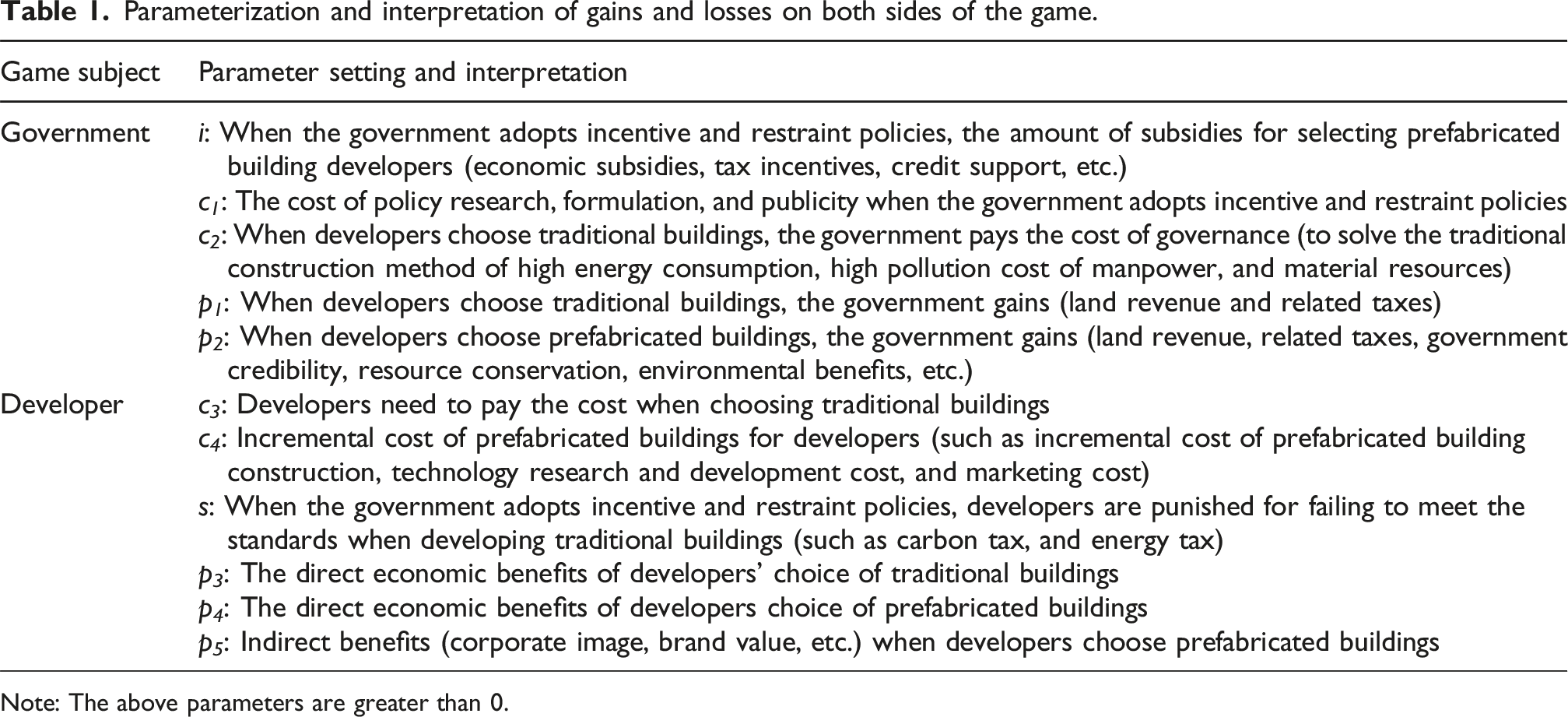
Note: The above parameters are greater than 0.
Game payoff matrix construction
Payment matrix for the government-developer game.
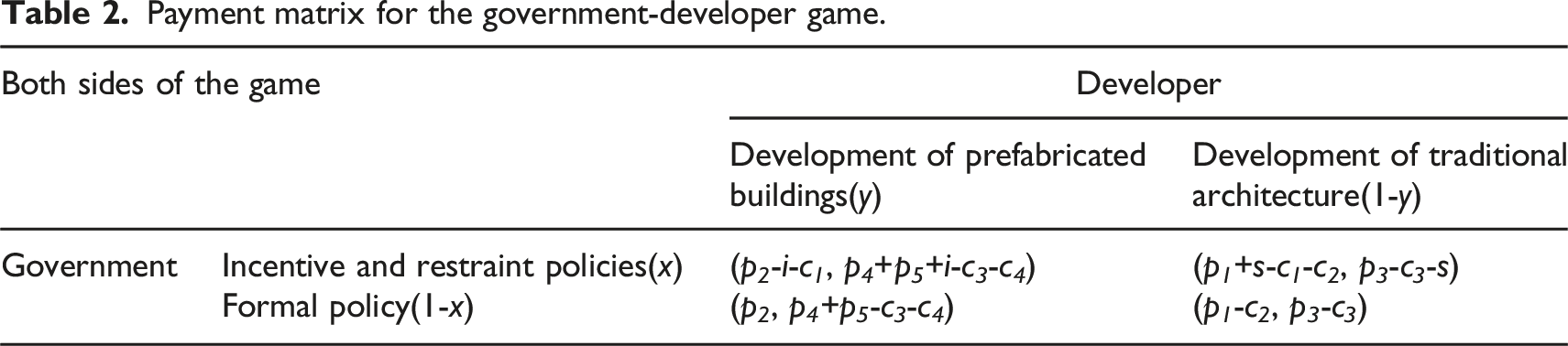
According to the principle of evolutionary game, the expected revenue and the average government revenue of the government’s choice of incentive and restraint policies and formal policies are UG1, UG2, and UG, respectively, and the following formula can be obtained:
The expected revenue and average revenue of developers to develop prefabricated buildings and traditional buildings are UD1, UD2, and U
D
, respectively, and the following formula can be obtained:
Game analysis of assembly building supply side evolution under static reward and punishment mechanisms
Static incentives and penalties refer to the fact that the incentives and penalties set by the government department are fixed regardless of the strategy chosen by the developer and do not change according to the developer’s choice of strategy.
Replication dynamic equation analysis
The replication dynamic equation of the government’s choice to implement incentive and restraint policies:
Developers choose to develop the replication dynamic equation of prefabricated buildings:
From the above formula, the two-dimensional dynamic system equation can be obtained:
If we want to ensure the government’s reward and punishment mechanism to play its due effect, we need to ensure that the total benefit after subsidies to prefabricated building developers is greater than the total benefit after taxation on the development of traditional buildings, and the government’s taxation should meet the governance needs, that is,
Let F(x) = 0, F(y) = 0, five evolution equilibrium points can be obtained: (0,0), (0,1), (1,1), (1,0), (
Equilibrium point stability analysis
According to the viewpoint proposed by Fredman, the stability of the equilibrium point of the evolutionary system can be analyzed by the local stability of the Jacobian matrix. When the determinant of the equilibrium point det(J) > 0 and tr(J) < 0, it indicates that the system tends to be locally asymptotically stable during the dynamic evolution process. This point is regarded as the local evolutionary stability strategy (ESS) of the system.
20
The system Jacobian matrix is as follows:
Evolutionary stabilization strategies for systems with static reward and punishment mechanisms.
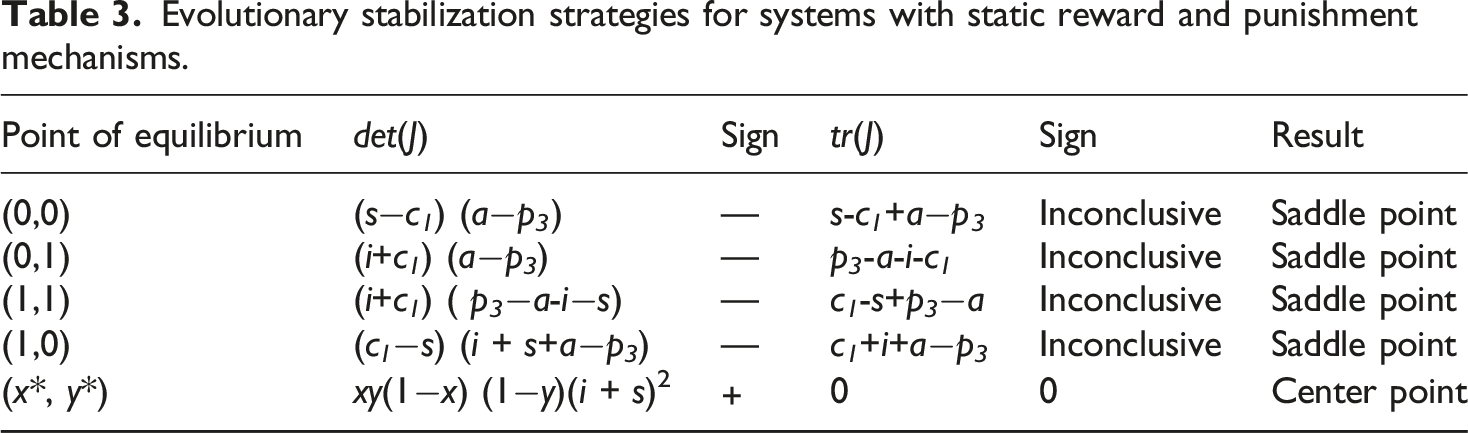
It can be seen from Table 3 that (0,0), (0,1), (1,0), and (1,1) are not stable. The characteristic root corresponding to the equilibrium point (
From the above analysis, it can be seen that the government and developers do not have evolutionary stable strategies under the static reward and punishment mechanism, and the change of any variable will have a greater impact on the strategic choice of both sides of the game. When the initial state changes, the system evolves to different equilibrium points to achieve the evolutionary stability strategy of each case. The following analyzes the evolutionary stability strategy of the system under different initial states: (1) When s-c
1
<0, and p
3
>a, the evolutionary stable strategy is (0,0); (2) when s-c
1
>0 and p3<a, the evolutionary stable strategy is (0,1); (3) when s-c
1
<0 and p
3
<a, the evolutionary stable strategy is (0,1); (4) when s-c
1
>0 and p
3
<a + i + s, there is no evolutionary stable strategy; (5) when s-c
1
>0 and p
3
>a + i + s(p
3
>a), the evolutionary stable strategy is (1,0).
It can be seen from (1) that when the government’s tax on the development of traditional building developers is less than the cost of policy research, formulation, and promotion when adopting incentive and restraint policies, and the income from the development of traditional buildings is greater than the net income obtained by prefabricated buildings, the evolution trend of the government and developers is {a mere formality policy, the development of traditional buildings}, which usually occurs in the early stage of the development of prefabricated buildings.
It can be seen from (2) and (3) that when the net income from the development of prefabricated buildings is greater than the income from the development of traditional buildings, no matter how the government’s tax on traditional buildings and the cost of promoting prefabricated buildings change, the evolution trend of the government and developers tends to {incentive and restraint policies, development of prefabricated buildings}. Developers are driven by interests to actively develop prefabricated buildings. At this time, the government can dilute the reward and punishment mechanism and gradually improve the supporting security policies.
It can be seen from (4) that when the government’s tax on the development of traditional building developers is greater than the cost of formulating and promoting incentive and restraint policies, and the profit of developing prefabricated buildings is gradually increasing but still less than the profit of developing traditional buildings, the two sides do not have an evolutionary stability strategy, and the two sides of the game try each other. This is a critical period for the development of prefabricated buildings, and the government must attach great importance to it.
It can be seen from (5) that when the government’s tax on the development of traditional building developers is greater than the cost of formulating and promoting incentive and restraint policies, and the benefits of developing traditional buildings are greater than the benefits of developing prefabricated buildings, the evolution trend of the government and developers is {incentive and restraint policies, developing traditional buildings}.This situation shows that although the government is improving the tax policy to encourage the development of prefabricated buildings, the profits of developing traditional buildings are still considerable, and developers still tend to develop traditional buildings. At this time, the government should actively adjust and increase subsidies to stimulate the enthusiasm of developers to develop prefabricated buildings.
Game analysis of assembly building supply side evolution under dynamic reward and punishment mechanisms
In the previous model, the government’s reward and punishment strength is a fixed value, which is called a static reward and punishment mechanism. Under the dynamic reward and punishment mechanism, the government’s reward and punishment to developers is related to the developer’s strategic choice. When the probability of developers choosing to develop traditional buildings is higher, the government’s tax upper limit can be appropriately raised, thus exerting a deterrent effect. On the contrary, the tax upper limit can be reduced, so as to avoid the failure of government regulation and unnecessary fiscal expenditure due to the inflexibility of the static reward and punishment mechanism. The government’s subsidy to prefabricated building developers is
The replication dynamic equation is as follows:
Let F(x) = 0, F(y) = 0, five evolution equilibrium points can be obtained: (0,0), (0,1), (1,1), (1,0), (
Evolutionary stabilization strategies for systems with dynamic reward and punishment mechanisms.
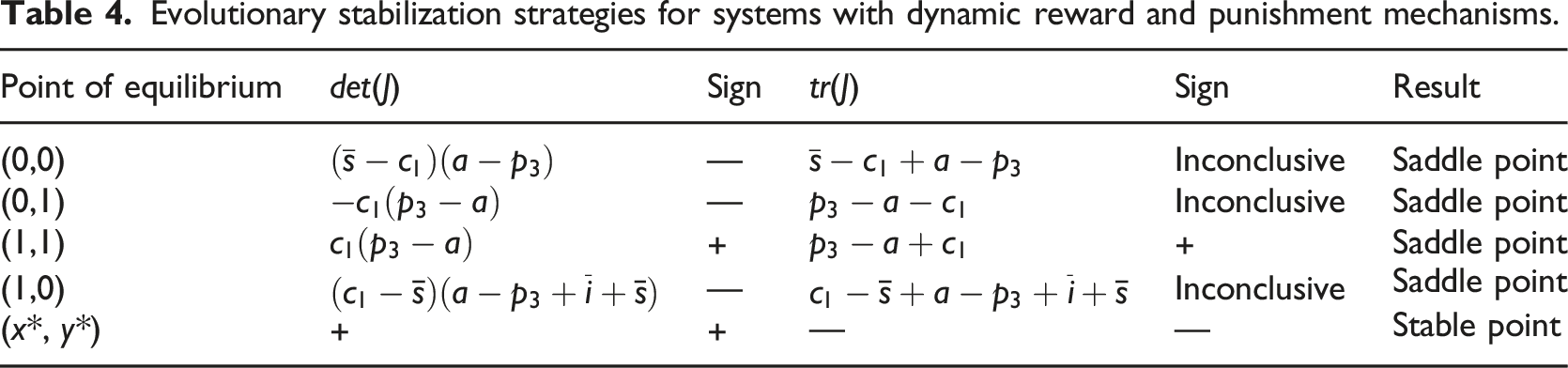
It can be seen from the above table that the system equilibrium points (0, 0), (0, 1), (1, 1), and (1, 0) are not stable. The characteristic root of the Jacobian matrix corresponding to the equilibrium point (
According to the asymptotic stability point ( (1) (2)
It can be seen from (1) that
It can be seen from (2) that
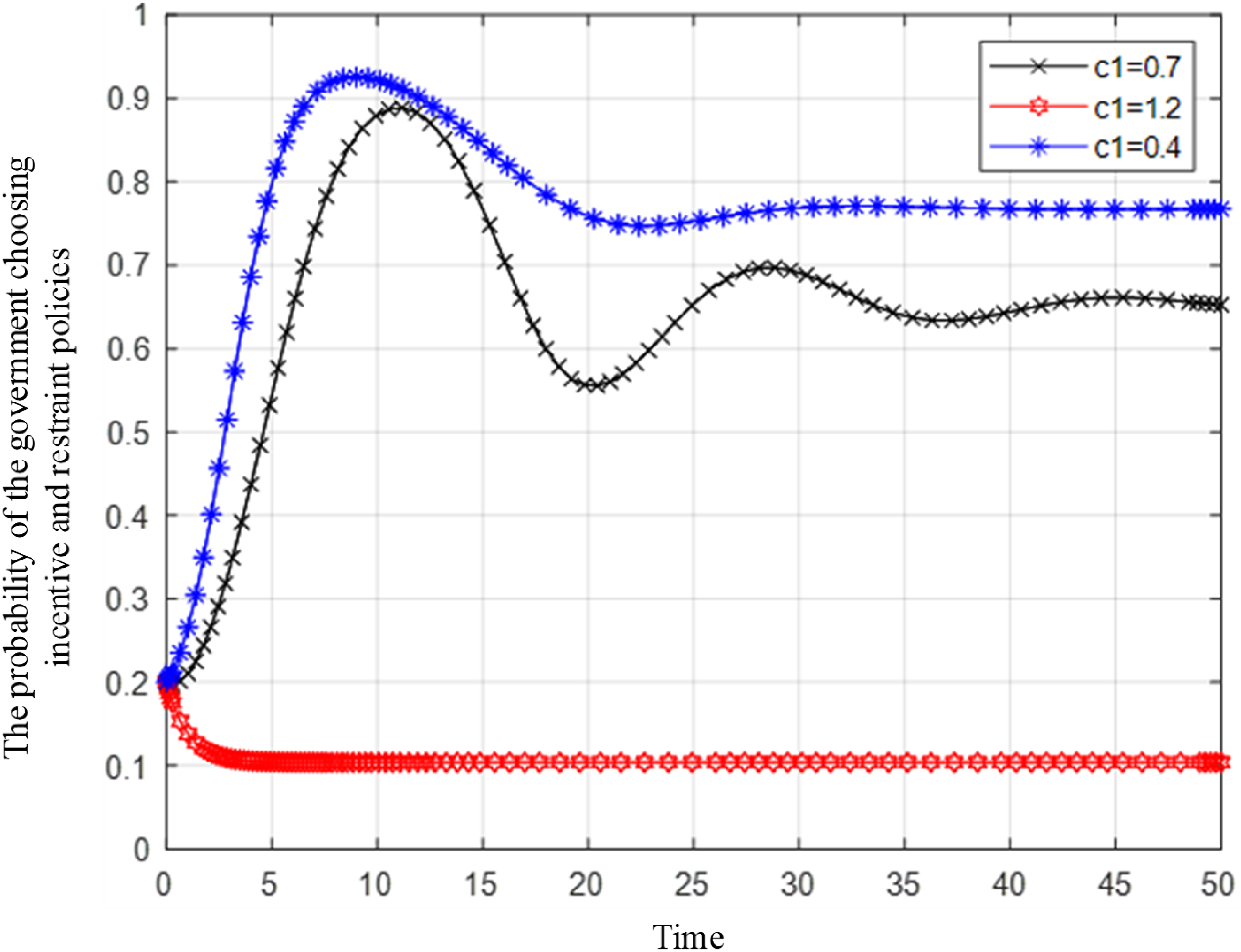
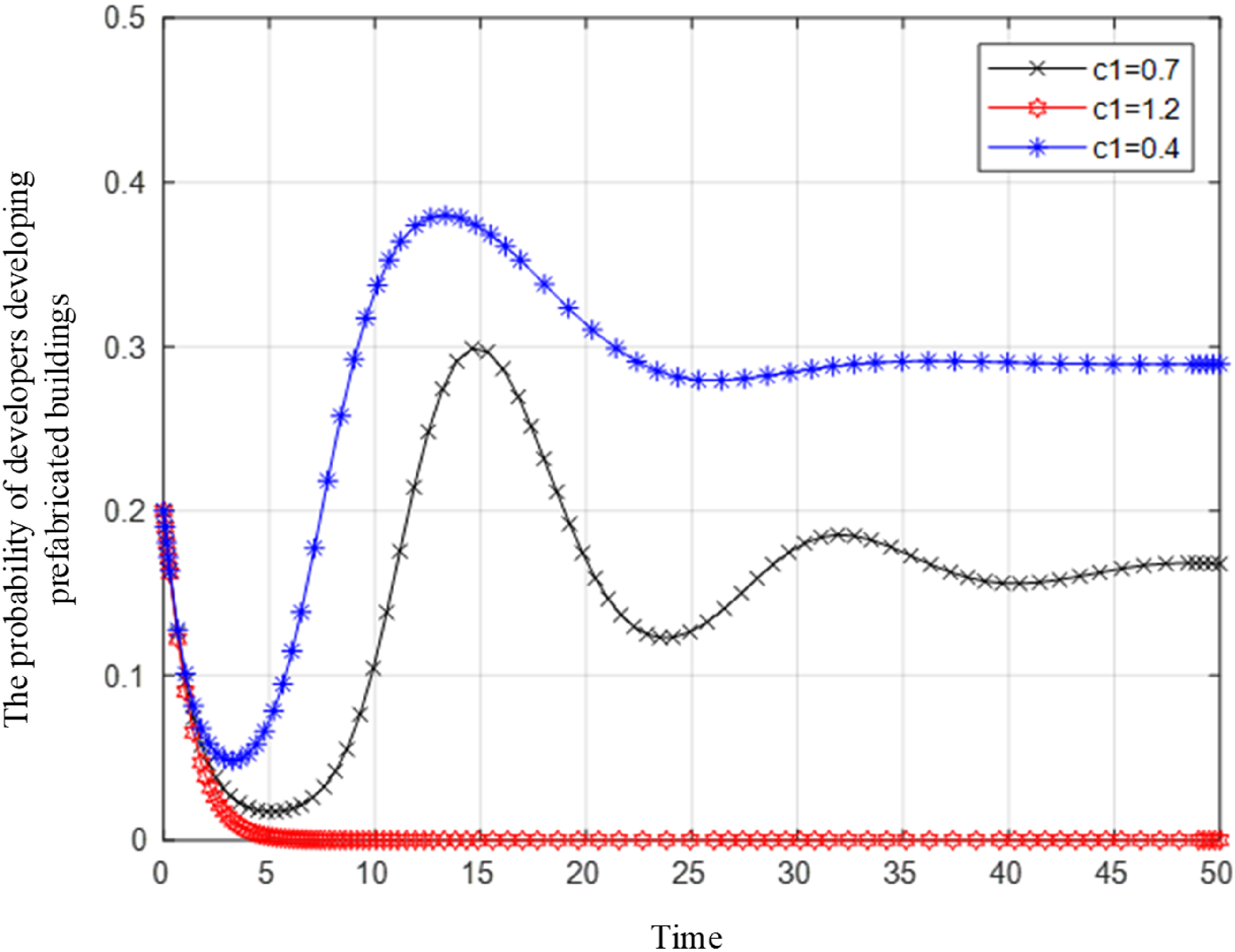
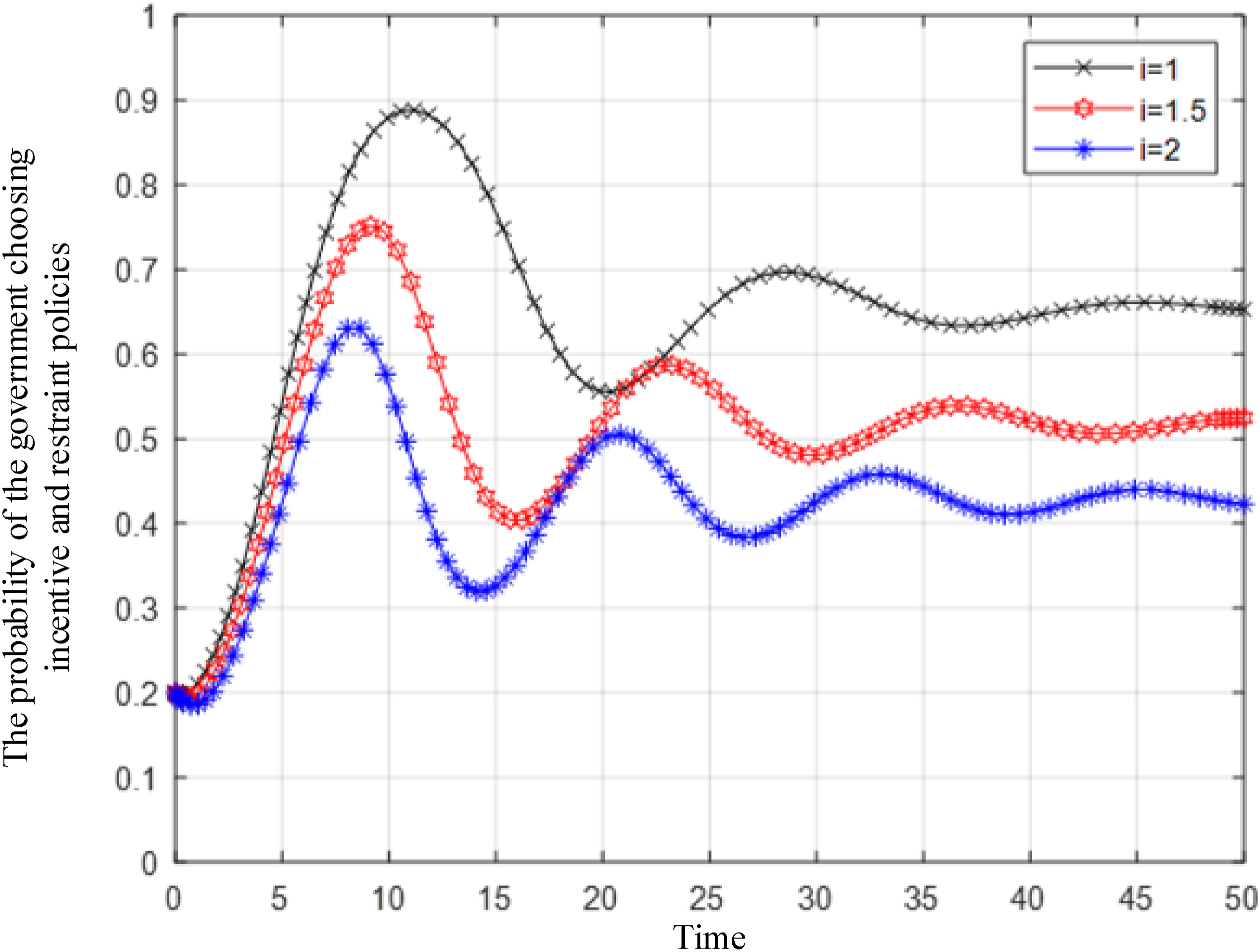
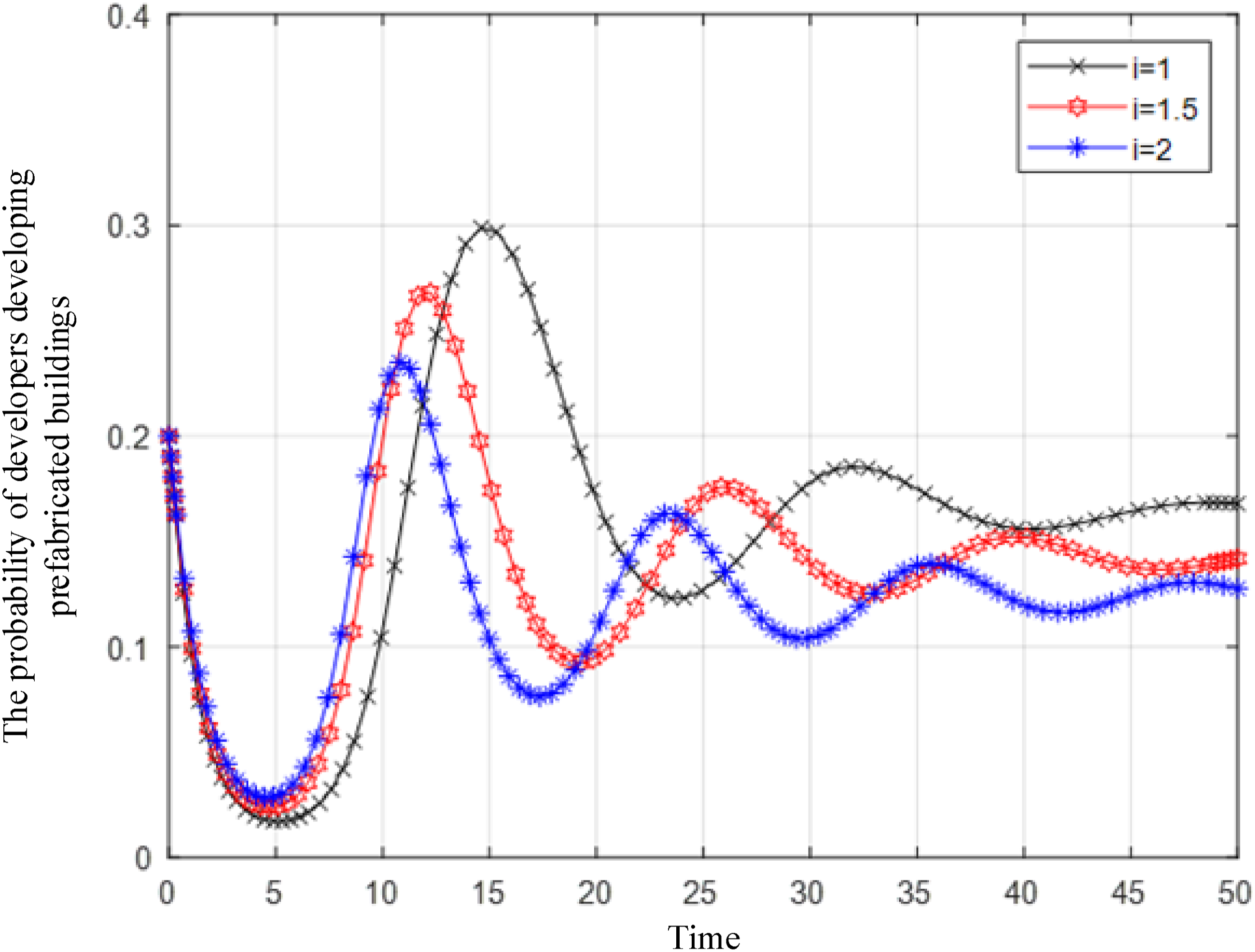
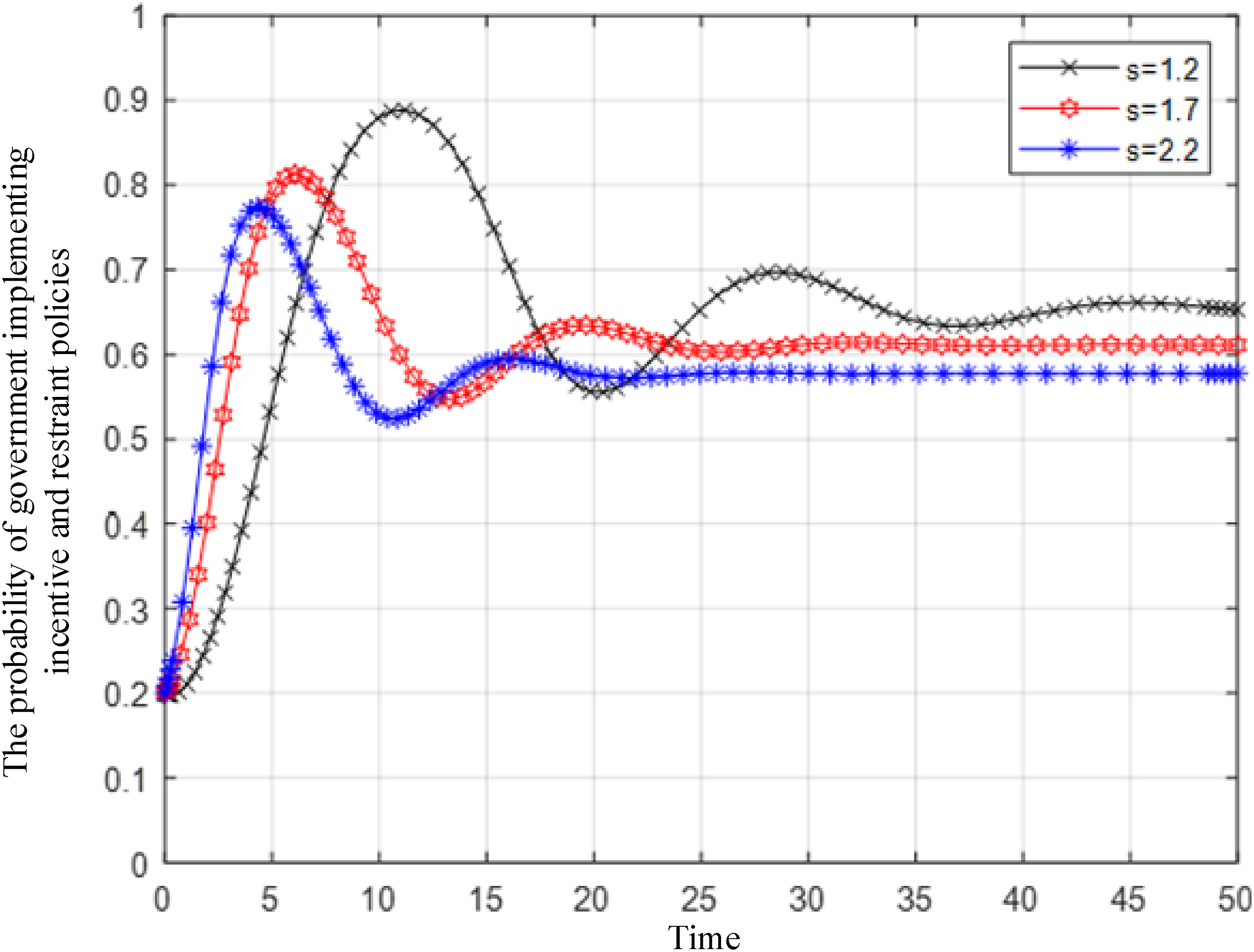
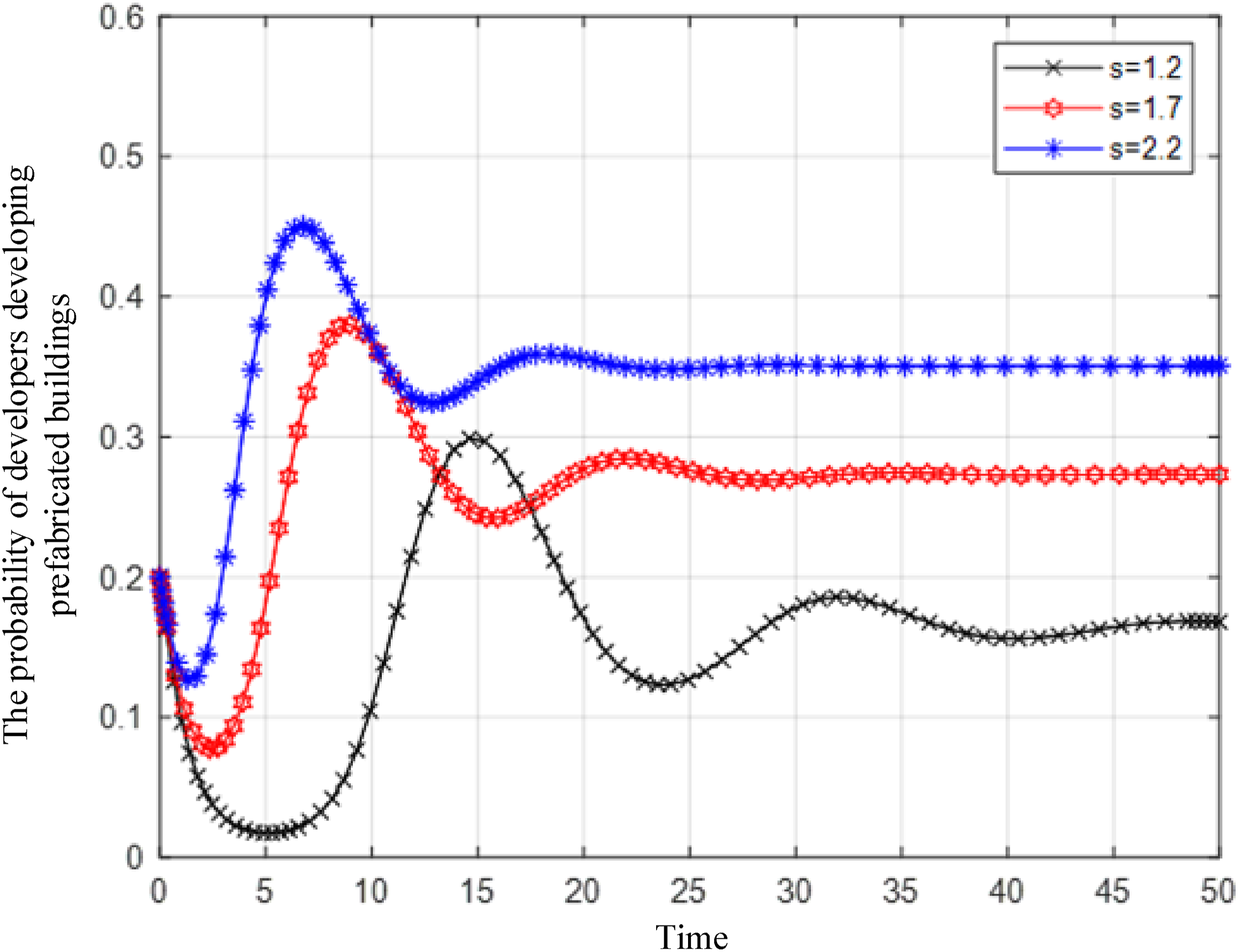
The above results show that the higher the cost of government investment in the formulation and promotion of incentive and restraint policies, the lower the probability of policy implementation, and the lower the willingness of developers to develop prefabricated buildings. When the government’s tax on developers of traditional buildings is increased, the probability of developers choosing to develop prefabricated buildings will increase, and the government will appropriately reduce the policy cost. When the government’s subsidy for developers who choose prefabricated buildings increases, in the short term, developers will rely too much on financial subsidies to choose to develop prefabricated buildings, resulting in increased financial burden, and the government will reduce the promotion cost of prefabricated buildings. Over time, the probability that developers choose to develop prefabricated buildings will decrease. Therefore, a reasonable amount of tax and subsidy is particularly important for the promotion of prefabricated buildings.
Calculus analysis
Under the premise of satisfying the model requirements
Firstly, based on the setting of the initial parameter values, the evolution process of the system under the government’s static reward and punishment mechanism and the dynamic reward and punishment mechanism is analyzed, respectively.
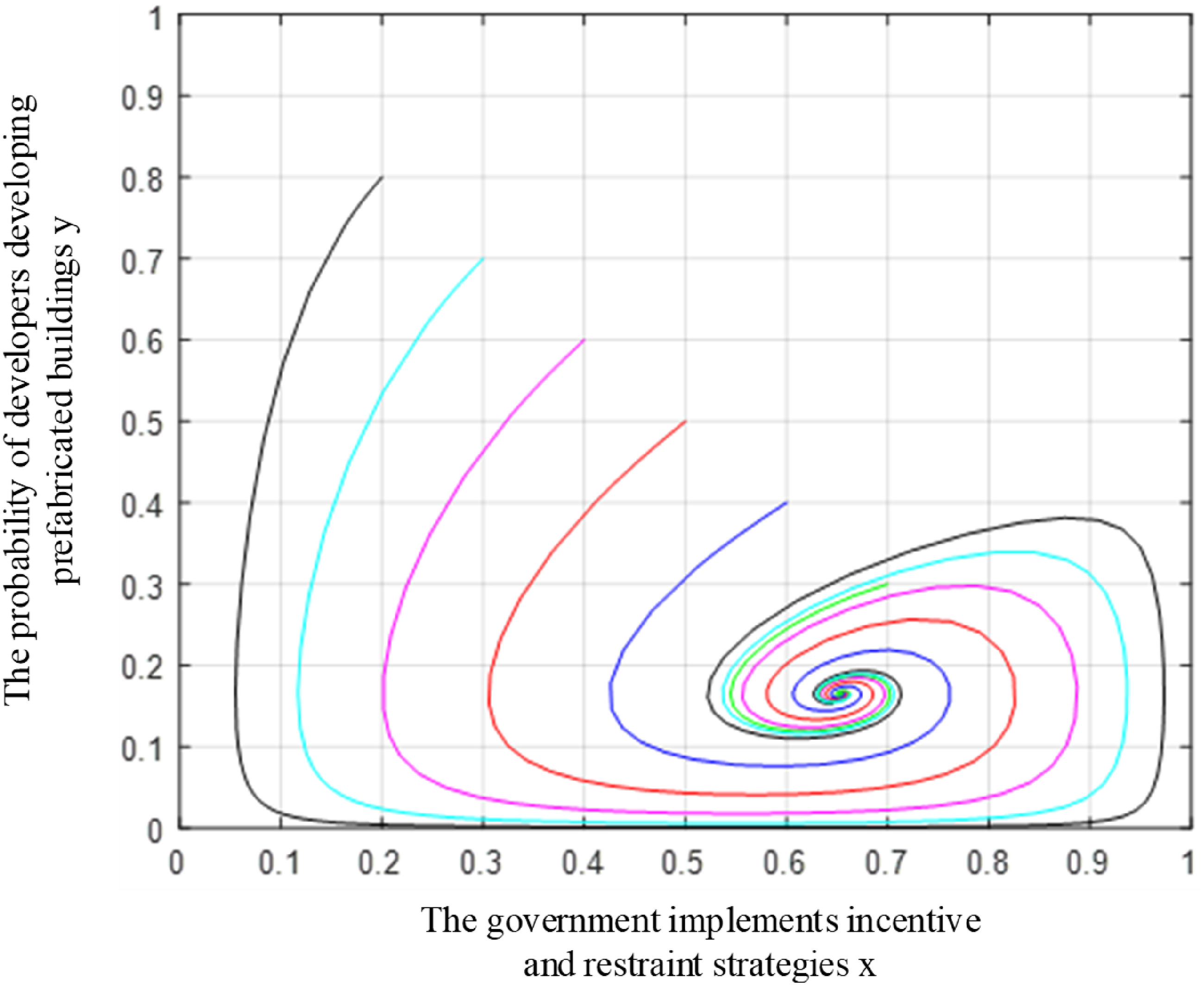
From Figure 1, it can be seen that under the static reward and punishment mechanism, the evolution path of the government and developers is a closed-loop curve around the equilibrium point, that is, under the static reward and punishment mechanism, the system does not have an evolutionary stability strategy. From Figure 2, it can be seen from that under the dynamic reward and punishment mechanism, the behavior evolution trajectory of the government and developers is constantly approaching around the equilibrium point, spiraling convergence, and finally stabilizing at the equilibrium point, indicating that the system has an evolutionary stability strategy under the dynamic reward and punishment mechanism. Consistent with the previous analysis, the appeal simulation results show that the government’s adoption of dynamic taxation and dynamic subsidy systems can effectively make up for the shortcomings of static taxation and static subsidy policies. Evolutionary path diagram under static reward and punishment mechanism. Evolutionary path diagram under dynamic reward and punishment mechanism.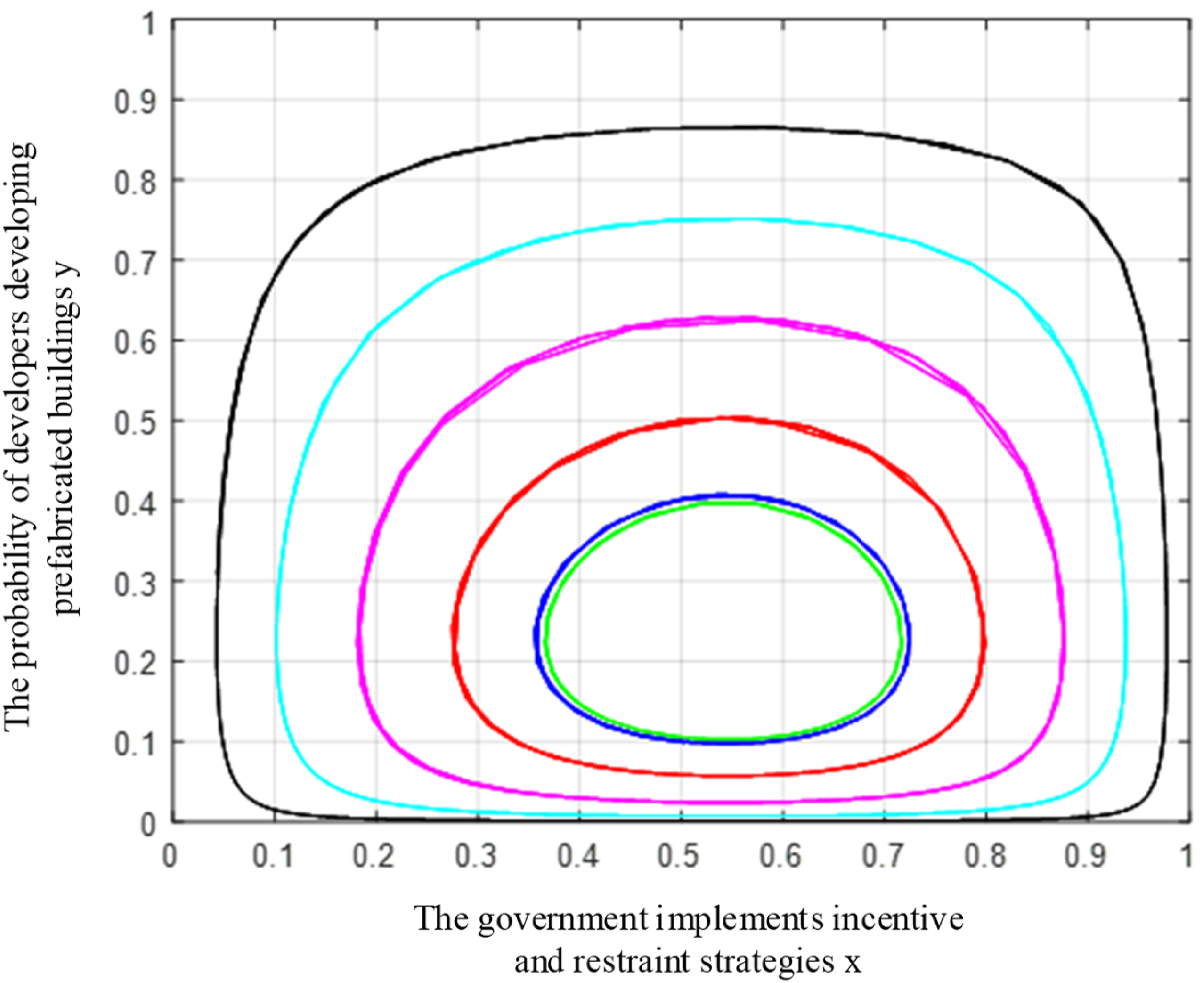
Secondly, under the dynamic reward and punishment mechanism, the influence of each parameter change on the decision probability of the government and the developer is further discussed. The initial decision probability is (0.2, 0.2): (1) The impact of the change of policy cost c1 on the probability of strategy selection of government and developers. Under the condition that other parameters remain unchanged and meet the conditions of (2) The influence of the change of the upper limit value (3) The influence of the change of the upper limit Impact of policy cost on government strategy choice. Impact of policy cost on developers’ strategy choice. Impact of subsidy amount on government strategy choice. Impact of subsidy amount on developers’ strategy choice. Impact of tax quota on government strategy choice. Impact of tax quota developers’ strategy selection.
Conclusion and suggestions
This paper mainly analyzes the evolution paths and equilibrium points of the government and developers under the condition of limited rationality under the static and dynamic reward and punishment mechanisms of assembled buildings, and discusses the impacts of the policy cost, the upper limit value of subsidy amount, and the upper limit value of tax amount on the evolutionary stabilization strategies of the two sides of the game. The following conclusions are drawn from the study: (1) When the government adopts a static reward and punishment mechanism, that is, the financial subsidies and taxes on developers are fixed. Under the condition of (2) When the government adopts a dynamic reward and punishment mechanism, that is, the government dynamically adjusts financial subsidies and tax quotas according to the probability of developers developing prefabricated buildings. Similarly, under the condition of (3) Under the dynamic reward and punishment mechanism, as an important starting point for economic and policy regulation, the government’s behavior strategy is affected by many factors. The probability of implementing incentive and restraint policies is inversely proportional to the policy cost, the upper limit of subsidy amount, and the upper limit of tax amount. As the main body of the supply side of prefabricated buildings, the behavior choice of developers is related to the implementation factors of the government. The probability of developing prefabricated buildings is inversely proportional to the policy cost and the upper limit of the subsidy amount, and is proportional to the upper limit of the tax amount.
Through the above conclusions, this paper puts forward the following suggestions for the formulation of government policies and the development of assembly: (1) Dynamic reward and punishment mechanisms are put in place. The government’s system of rewards and penalties has to be modified to reflect developers’ preferred conduct. Prefabricated structures now have a lower net income than traditional constructions. The government uses a fixed system of rewards and penalties, and the actions of developers are unpredictable. A steady evolution plan cannot be reached by the two parties. This combination of policies is counterproductive for the market and will surely raise the financial burden. In order to maximize the incentive for developers to create prefabricated buildings, the government should closely monitor the behavior of developers through supervision and other methods, and dynamically adjust the rewards and punishments according to the completion of the phased goals. When the net income of developing prefabricated buildings exceeds that of traditional buildings, developers will be driven by interests to actively develop prefabricated buildings. At that time, the government can weaken the incentive and restraint policies and give full play to the market vitality. (2) Reduce policy costs. The behavior approach of developers will be impacted by the change in policy cost. The expense of policy study, formulation, and advertising will be passed on to developers as a result of the rise in policy costs, which will decrease the likelihood that prefabricated structures will be developed. As a result, the government should increase the effectiveness of oversight, implement the use of policy costs precisely, cut back on wasteful spending, and lower policy costs. In addition, the government may streamline the approval process, save time and money, and perform its duties more effectively by opening a green channel for prefabricated building developers. (3) Rationalize the amount of subsidies. Blindly raising the upper limit value of financial subsidies will not enhance the probability of developers to develop assembled buildings, but on the contrary, it will reduce the enthusiasm of developers, increase the financial pressure of the government, and impede the development of construction industrialization. Therefore, the amount of subsidies must be scientifically measured, in response to changes in the market, according to the dynamic behavior of developers to choose to adjust the subsidy strategy in a timely manner. In addition to the need for certain subsidies to developers should also be in the administrative costs, urban construction support costs, approval process, quality assurance deposit, etc., to reduce the development cost of assembly building, forming a good policy dividend, and developers should also seize the policy dividend, the introduction of advanced technology, training professionals, take the initiative to develop the assembly building, and assume the corresponding social responsibility. (4) Improve the tax system. From the previous analysis, it can be seen that raising the upper limit value of the tax amount to develop traditional building developers can play an effective role in incentivizing the development and application of assembled buildings, so the government should strengthen the tax management system, starting from multiple perspectives, such as tax policy, land policy and fiscal policy, and use tax as a kind of auxiliary incentives to form a dynamic and effective disciplinary mechanism. (5) Increase publicity. The growth of the scale of prefabricated buildings will ultimately be paid by consumers. At this stage, consumers’ insufficient understanding of prefabricated buildings, coupled with their high prices, leads to insufficient demand for prefabricated buildings. The government should increase publicity to guide consumers to purchase prefabricated buildings. Specifically, it can increase the construction of pilot cities and pilot projects for prefabricated buildings, continuously open up the market, and enable consumers to have a better understanding of prefabricated buildings through publicity channels. Appropriately give consumers purchase subsidies, loan interest rate concessions, etc., increase their willingness to purchase, and increase the demand side of prefabricated buildings to drive the development of the supply side of prefabricated buildings.
However, this paper is mainly from the supply side perspective, respectively, explored the static and dynamic reward and punishment mechanism under the government and developers of the evolution of the stabilization strategy, while the assembly building development process also involves the design unit, the construction unit, and many other stakeholders, due to space limitations, this paper has not yet ventured into the study of other stakeholders. Therefore, in the subsequent research, the behavior of other subjects can be included in the scope of analysis, and the multi-party game model can be constructed to further deepen the research.
Statements and declarations
Footnotes
Declaration of conflicting interests
The author(s) declared no potential conflicts of interest with respect to the research, authorship, and/or publication of this article.
Funding
The author(s) received no financial support for the research, authorship, and/or publication of this article.