



Abstract
In the current landscape, artificial intelligence (AI) has found applications across numerous domains, achieving considerable maturity. The significance of this research lies in its exploration of the integration of big data and AI technologies into English language teaching and entrepreneurship education, areas that remain underexplored. This study outlines the fundamental concepts of big data and Back Propagation Neural Network (BPNN), emphasizing their relevance to entrepreneurship education within the AI context. By establishing a conceptual framework for assessing entrepreneurship education using BPNN, this research provides innovative methodologies and significant insights into the future application of AI in educational settings. It then proposes research hypotheses concerning students’ English writing skills, utilizing the big data platform pigai.org. Furthermore, it develops a conceptual framework for assessing entrepreneurship education, employing the BPNN approach. The evaluation methodology for entrepreneurship education, built around the Back Propagation Neural Network (BPNN), facilitates the creation of a questionnaire aimed at examining the entrepreneurial inclinations of students majoring in English-related disciplines. This research employs an experimental design to assess English writing proficiency via pigai.org and uses a BPNN model to analyze the questionnaire data, simulating inputs and expected outcomes within the BPNN framework. The findings indicate a significant improvement in English writing capabilities attributed to pigai.org’s big data analytics. The BPNN model demonstrated high accuracy and scientific validity, with a fit regression R-value of 0.97 in training, 0.92 in validation, and 0.94 overall. This investigation aims to inform the future application of AI in enhancing English teaching methodologies and entrepreneurship education, providing a novel perspective on integrating technology with pedagogy.
Keywords
Introduction
The advent of artificial intelligence (AI) has greatly expanded the unlimited potential of the human body and brain. The consecutive defeats of world Go champions Lee Sedol and Ke Jie to “AlphaGo” have set off a new wave of development in the global AI community. 1 In recent years, many well-known Chinese scholars have successively carried out explorations in related fields. Firstly, Wei (2021) has conducted research on the development and prospect of intelligent teaching technology. 2 Secondly, the theory of educational AI is proposed, and the connotation of educational AI is also divided. 3 In the same year, the development path of AI education application in China in the era of smart education was proposed. 4 As a brand-new technology, AI will usher in a new journey of “AI education” in education. The development of AI in Western countries is relatively earlier than in China, so its technology should be more stable and mature. 5 At present, AI technology has been widely used in various research fields. Then, education, as an indispensable part of society, has also been deeply guided by the convenience brought by AI technology. In fact, AI education has been put into practice at this stage. If educators in colleges and universities in the new era want to broaden their horizons and walk at the forefront of the times, they must pay close attention to any possible development of AI education. 6
Regarding the application of AI in education, scholars are far more than proposing theoretical concepts of education, but more about applying AI to real education. Firstly, the Substitution, Augmentation, Modification, Redefinition (SAMR) model, that is, the technology and teaching integration innovation model, is established for the first time. Subsequently, the Task-Dependent Model of rubric-based intelligent assessment is proposed. That is, based on rubrics, the student’s writing ability is evaluated using Pieces of Evidence. 7 Subsequently, machine learning and natural language understanding techniques are used to automatically detect the consistency of numerical ratings and textual feedback in peer-to-peer reviews to reduce teachers’ workload overseeing the entire process. 8 Later, an experimental system for blended learning courses is successfully constructed to help learners obtain timely feedback on whether homework is correct or not. That is, the system will timely determine the answers submitted by learners. 9 The Task-Dependent Model of rubric-based intelligent assessment evaluates students’ writing abilities using Pieces of Evidence, as described by Zhao et al. (2019). 10 Techniques in machine learning and natural language understanding have been employed to automatically detect the consistency of numerical ratings and textual feedback in peer-to-peer reviews, thereby reducing teachers’ workload. 11 An experimental system for blended learning courses was constructed to provide learners with timely feedback on homework accuracy. This system determines the correctness of submitted answers promptly. 12
To sum up, there is a lot of research on AI in education. However, AI is rarely applied in English teaching and entrepreneurship education. Therefore, firstly, the related theories are studied. Then, according to the content, hypotheses are proposed, and a conceptual model of entrepreneurial education evaluation is constructed through BP neural network (BPNN). Finally, the entrepreneurial situation of English-related majors is researched and analyzed by designing a questionnaire and using technical means to fit the data collected by the questionnaire. In this process, a controlled experiment is set up to evaluate students’ English writing ability under pigai.org based on big data. By setting up simulation experiments, input test data and expected data are studied and analyzed to verify the validity of the model. The innovation lies in the analysis of the questionnaire data using the BPNN model. This research aims to provide a reference for the application of AI in English teaching and entrepreneurship education.
Theoretical basis and experimental design
Big data
In the traditional sense, big data generally refers to numerical values or numbers, such as business volume, turnover, profit, customer volume, and so on. These data are relatively simple to analyze and can be easily dealt with by traditional data solutions.
13
Big data not only refers to numbers or numerical values but also includes various types of data such as pictures, text, audio, video, and geographic location information. Big data is defined as data that grows so fast that it is difficult to manage using existing database management tools, and difficulties exist in data acquisition, storage, search, sharing, analysis, and visualization.
14
The characteristics of big data are shown in Figure 1.
15
Characteristics of big data.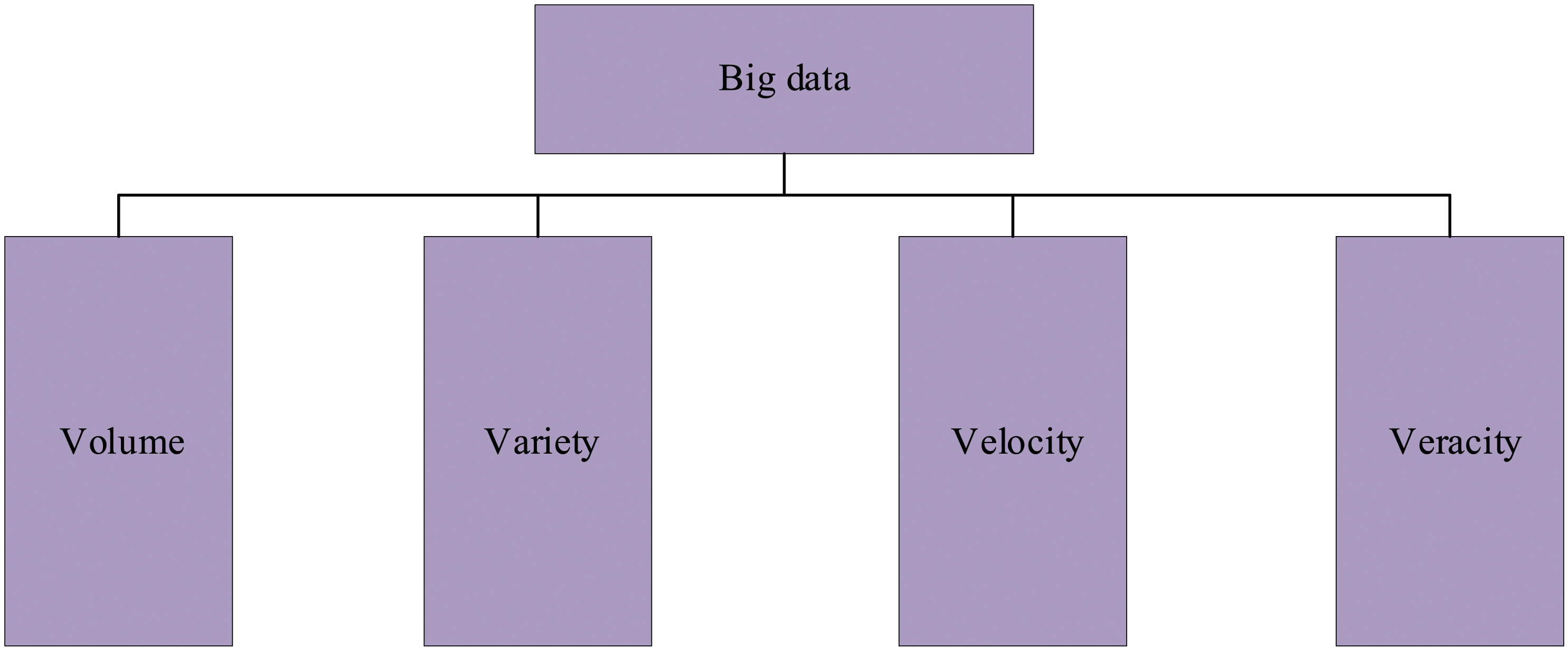
In Figure 1, the characteristics of big data include volume, variety, velocity, and veracity. Among them, variety means that big data is not only in the form of text and numerical values but also many types of data such as images, videos, voices, and geographic location information. Veracity means that big data technology can “purify” data more quickly through powerful algorithms, that is, to achieve “value-added” data through “processing.”
BP neural network
In 1986, the Error Back Propagation Algorithm was proposed. This learning algorithm is suitable for multi-layer networks and can be cleverly applied to neural networks.
16
The BP algorithm is a unique and attractive program, and the neural network is a challenging technological frontier technology. The combination of the two is the BPNN.
17
According to the properties and regularities of functions, neural networks can automatically learn experience from the provided complex data samples.
18
For complex functions, especially non-linear functions, the neural network can play its advantages. Neural networks have the characteristics of high self-adaptation, self-organization, and self-learning.
19
Neural networks can scientifically and rationally analyze complex problems according to the laws and characteristics of functions and find the most effective strategies and methods to solve them. The topology of the BPNN model is shown in Figure 2. The topological structure of the BPNN model.
Entrepreneurship education
Concept of entrepreneurship education
Entrepreneurship is a way of thinking and acting to achieve a dynamic balance of opportunities, methods, and leadership. 20 Entrepreneurship education is a pioneering education that regards spirit, ability, and talents as important supports. In 1947, a new course on entrepreneurship, New Venture Management, was opened. The course is offered to Harvard Business School economics students. 21 After more than 60 years, the education system of western developed countries has gradually improved. The development of entrepreneurship education in China is relatively late. In 2004, nine entrepreneurship pilot colleges were established, which gradually brought them into line with the world. 22 Chinese and foreign scholars have different views. At this stage, entrepreneurship education is to realize the improvement of self-worth, and the premise is to have the ability to survive. One is the Kauffman Foundation’s definition of entrepreneurship education, which is a process in which others are unaware of opportunities, but they are aware of and seize opportunities. 23 On this basis, some people propose to conduct research to improve the ability of college students to learn to start and run companies. Secondly, entrepreneurship education aims at cultivating personal comprehensive quality and ability and then forms a set of entrepreneurial ability systems belonging to the individual. Among them, qualities and abilities cover all the characteristics of individual entrepreneurship. 24 Thirdly, entrepreneurship education also has broad and narrow senses. Entrepreneurship education is narrowly defined as an educational process that is ability-oriented and ability-cultivating. Entrepreneurship education is broadly defined as the strengthening process of psychological quality, emphasizing the invisible ability of thought and consciousness, but it has the role of guiding the whole. Entrepreneurship education enables people to learn to be entrepreneurs with entrepreneurial qualities and abilities. 25 Entrepreneurship education can be considered as the parallel of thought and ability.
Analysis of influencing factors of entrepreneurship education
Based on the perspective of literature, case analysis, and in-depth interviews, elements with lower frequency are eliminated, and elements with the same phrase semantics are integrated. Finally, the evaluation index elements of innovation and entrepreneurship education for English majors are constructed. Evaluation is an important part of higher education teaching, and it is necessary to make a scientific and comprehensive evaluation. A multi-angle and scientific comprehensive evaluation index system of entrepreneurship education for English majors was established through research and analysis of relevant literature. 26
Proposition of research hypotheses and model methods
Research on pigai.org based on big data in English writing teaching
Research hypothesis
In recent years, big data technology has increasingly permeated various fields, revolutionizing traditional practices. In English teaching, advanced big data statistical techniques have progressively replaced manual correction methods. Currently, many schools in China utilize pigai.org, 27 an online system that automates the correction of English compositions by integrating cloud computing and extensive language databases. This system leverages cloud computing to compare student compositions against a standard language database, generating real-time scores and providing accurate feedback and analysis for each composition.
Through pigai.org, students can submit their English compositions and receive correction suggestions, allowing them to revise their work multiple times. With each revision, the accuracy of their compositions improves. This intelligent correction system offers a convenient and efficient way for students to test their learning progress, significantly boosting their interest in learning and enhancing their English writing skills. Additionally, it aids teachers by streamlining the correction process, enabling them to efficiently monitor each student’s English writing progress.
Based on this, some hypotheses are proposed:
H: Pigai.org, based on big data, has a significant positive impact on students’ English writing levels.
Research methods and operations
A study was conducted using a freshman class in the 19th grade as the research sample. One hundred students were randomly selected for an English writing teaching experiment, which lasted for one semester. These students were divided into two groups: an experimental group and a control group. The experimental group received instruction using pigai.org, a platform based on big data technology, while the control group was taught using traditional teaching methods. Before and after the experiment, the average English writing scores of both groups were recorded and compared. Additionally, both groups were tasked with writing practical English essays on the same topic to analyze the error rates. Statistical analysis was performed on the error rate data to assess the effectiveness of the teaching methods.
Design of entrepreneurial education evaluation model based on BPNN
Determine the number of neural network layers
In 1998, a complete three-layer neural network that can achieve full mapping was verified. The premise of verification is that any closed interval is a continuous function. Then, through a process of infinitely pinching the BP network in the hidden layer, the result realizes the mapping from n-dimensional to m-dimensional. 28 Kolmogorov’s theorem reveals that even a three-layer neural network has a wide range of applications and strong performance. A three-layer neural network can also approximate the set function with any error, provided that the number of hidden layer nodes is not limited. Increasing the number of hidden layers has advantages and disadvantages. So, the best choice is to create a three-layer neural network model to get low training error.
Determine the number of neurons in each layer
The relationship between the number of neurons in the hidden layer and the error.
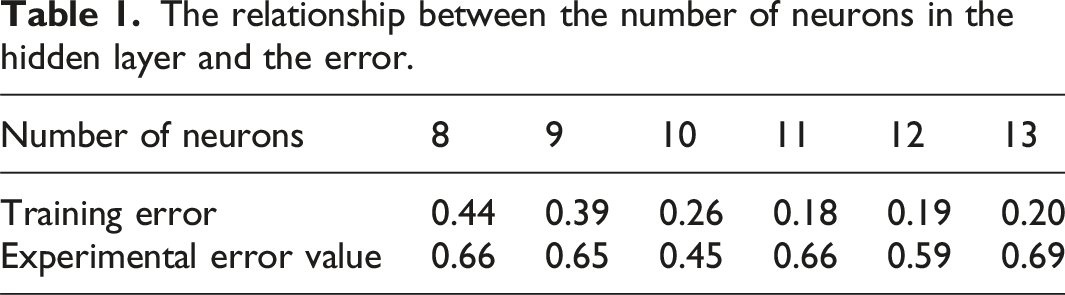
In Table 1, the number of neurons in the hidden layer is 8, 9, 10, 11, 12, and 13. At this time, the training error continues to decrease, and there is a connection. When the test error is 10, 11, and 12, there are fluctuations that first rise and then fall. Overall analysis, the number of hidden layer neurons is 11 is the best choice.
Determine the learning rate
The learning rate directly affects the efficiency of training and testing of neural networks.
29
The learning rate is equivalent to 
Training times and errors at different learning rates.

Combined with Table 2 and the analysis of the evaluation results, the learning rate is selected as 0.010.
Determine the training function
Six representative training functions are Levenberg–Marquardt, RpropScaled, Conjugate-Gradient, OnestepSecant-Algorithm, gradient descent with adaptive learning rate, and momentum factor. 30 Different training functions have different performance benefits. According to the performance of the six algorithms, Levenberg–Marquardt is chosen as the training function.
Determine the momentum factor α
The momentum factor plays an important role in the neural network, especially in the training process. It can effectively avoid the phenomenon of local minimum and local maximum in the network. According to the experimental trial-and-error method, the momentum factor is generally about 0.85. Therefore, the momentum factor is set to 0.9 according to the trial-and-error method. At this point, the neural network model achieves the best experimental results.
Data initialization
According to the established entrepreneurship education evaluation index system, the trained, verified, and tested BPNN becomes an effective prediction model. The corresponding entrepreneurial ability scores and the corresponding student categories are summarized according to the Delphi method.
Implementation of BPNN
The relevant evaluation data of the research object is used as the input vector of the BPNN model. The corresponding scores under the relevant indicators of the research object are used as output vectors, which are, respectively, imported into the neural network model for model training. Then, the accuracy of the model is verified. Finally, the model is tested and evaluated.
Implementation of BPNN
The MatLab R2012a software platform is selected to implement the BPNN model efficiently and accurately, expecting to achieve predictable results.
Questionnaire design and data processing
Scale selection and questionnaire design
Evaluation index system of entrepreneurship education for English majors.

Data collection
The undergraduate graduates of a university majoring in English are taken as the research object. The “wjx. cn” online platform for the distribution of questionnaires is taken the leading role. Mail and paper questionnaires are used as an aid. A total of 200 questionnaires are collected. After screening, a total of 183 valid questionnaires are obtained, accounting for 91.5%. Among the respondents, 116 are male, accounting for 63.4%; 67 are female, accounting for 36.6%.
Data processing and scale testing
The original data of this model is the questionnaire data. Valid questionnaires are coded and entered into Statistical Product and Service Solutions (SPSS) 26.0 software and archived. SPSS software is used to analyze the reliability and validity of the data.
Empirical analysis
Reliability and validity test of the scale
Reliability analysis of the internal consistency of the scale
Cronbach’s alpha test is used. The homogeneity test is a standard test with industry authority.
32
The internal consistency of the questionnaires is tested. It is assumed that the higher the reliability value of the questionnaire, the more stable the measurement results. The reliability value accepted by experts is 0.7.
33
The reliability analysis results are shown in Figure 3. Reliability analysis of each attribute of the questionnaire content.
In Figure 3, the reliability values of the questionnaires are all higher than 0.7. The consistency of the questionnaire is high, and it has certain reliability, indicating that the design of the questionnaire is reasonable and meets the relevant requirements.
Construct validity analysis
Results of the validity analysis of the questionnaire data.

In Table 4, the loading value of each factor and the results of each significance test are all less than 0.01, and the explanation degree of each variable is more than 60%, indicating that each option has a significant degree of discrimination, and the structure meets the relevant requirements.
Application analysis of pigai.org based on big data in English writing teaching
Figure 4 shows the distribution of the average English composition scores and the total scores of the English test papers in the control group and the experimental group before the experiment. The distribution of the average English composition scores and the total scores of the English test papers of the two groups of students before the experiment.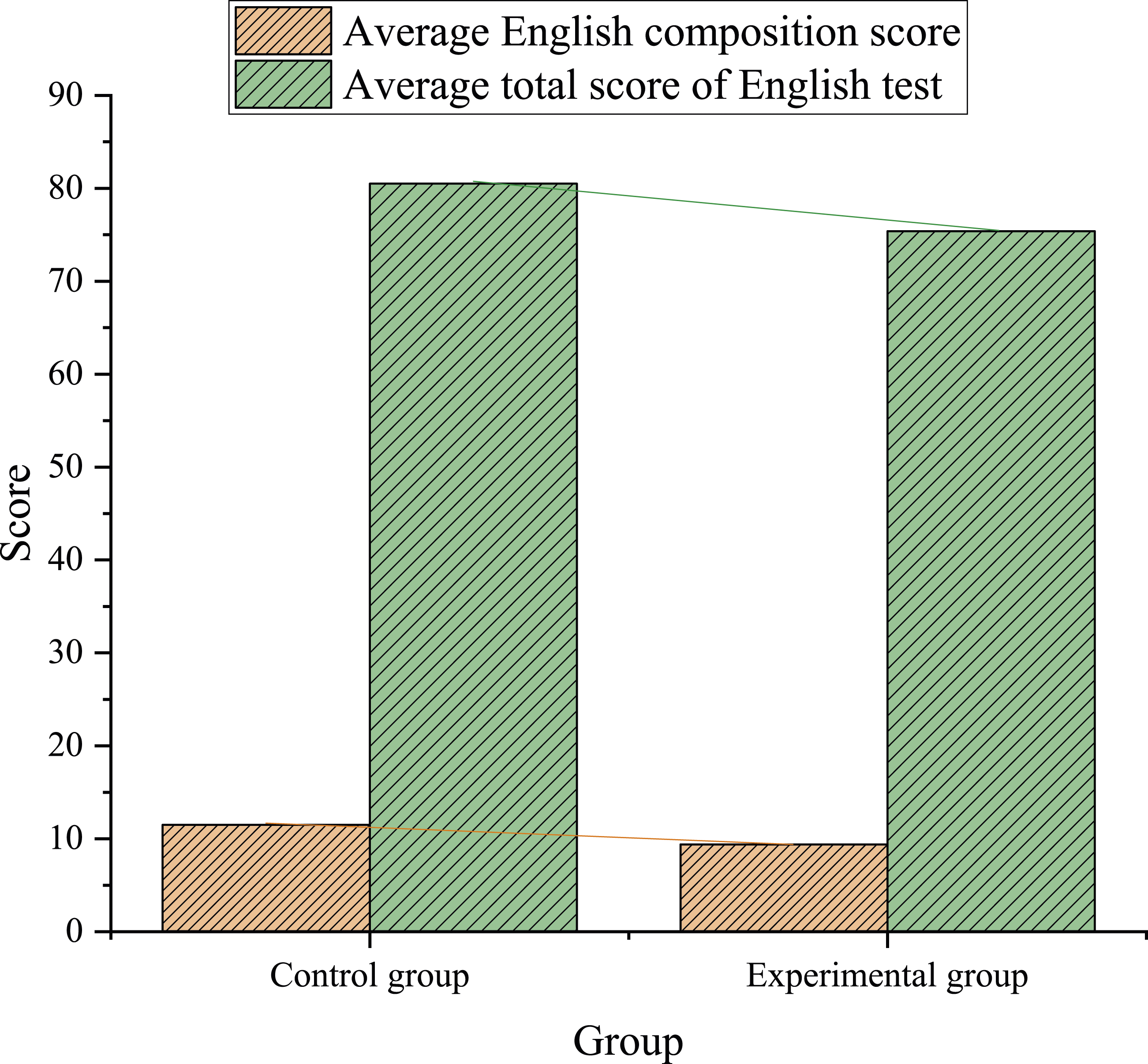
In Figure 4, the average English composition score of the students in the control group is 11.51, and the average score of the English test paper is 80.5. The average English composition score of the students in the experimental group is 9.26, and the average score of the English test paper is 76.5. There is no statistically significant difference between the two.
After the experiment, the errors of the control group and the experimental group are shown in Figure 5 for the English practical writing on the same topic. The distribution of errors in the control and experimental groups.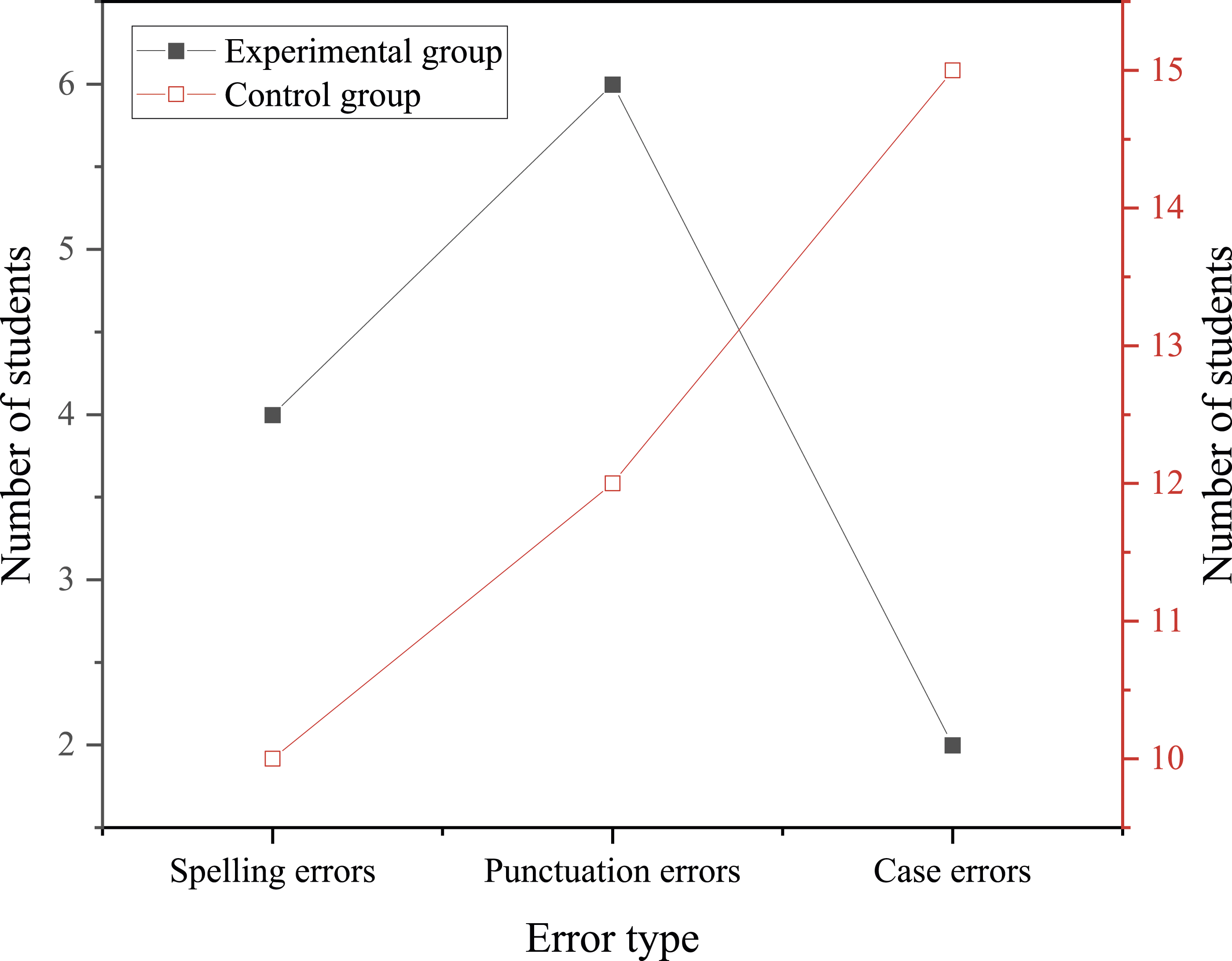
In Figure 5, the error rate in the English writing process of the students in the experimental group is significantly lower than that of the students in the control group. Pigai.org, based on big data, can effectively improve students’ English writing ability. That is, pigai.org based on big data, has a significant positive impact on students' English writing ability.
Application analysis of BP neural network in entrepreneurial education evaluation
Training results of BPNN
After analyzing the questionnaire data through BPNN constructed by MatLab R2012a software, the training results are shown in Figure 6. Fitting of each process in the BPNN.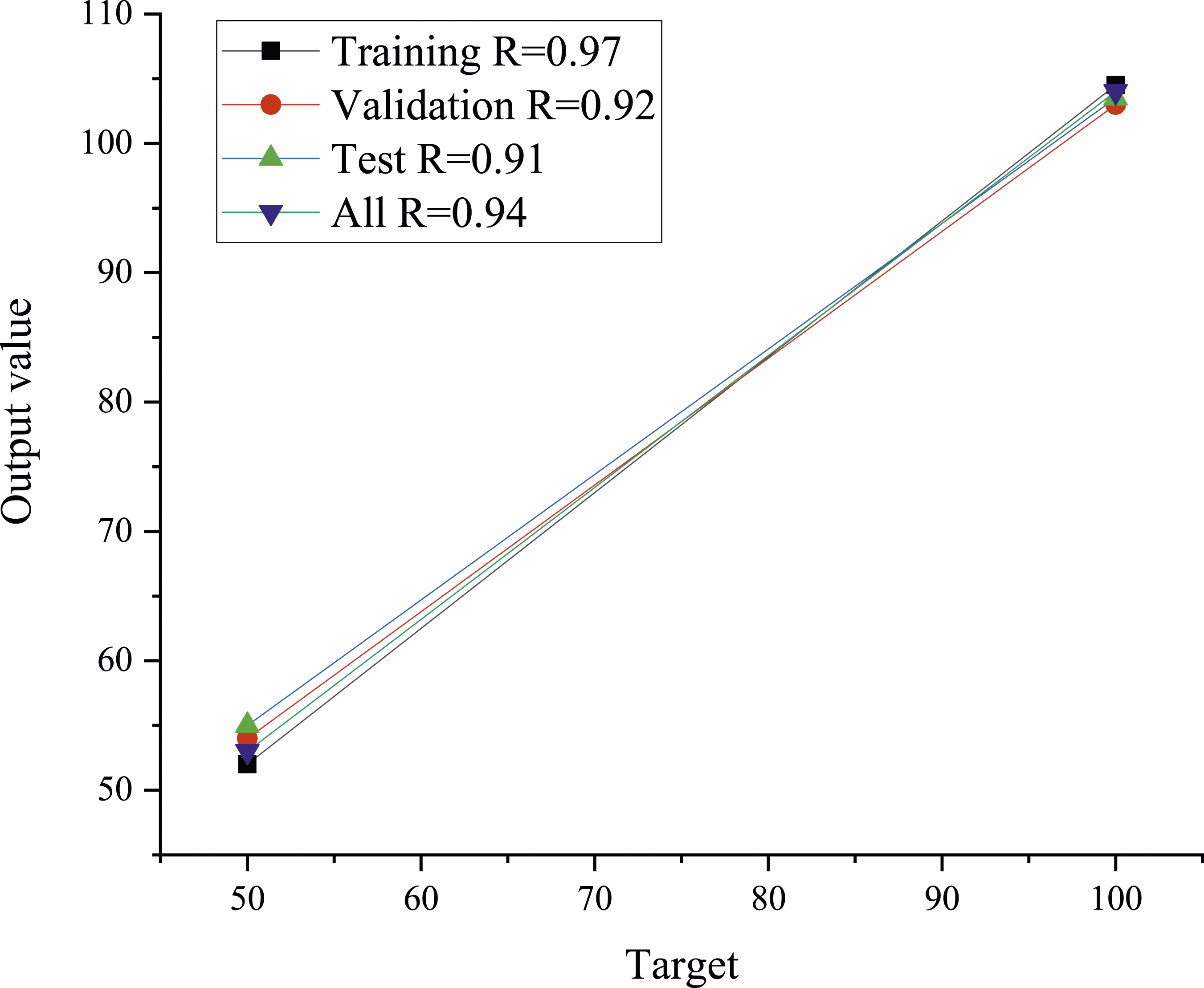
In Figure 6, the R-value is equal to 0.97 in the training process fitting regression. In the validation procedure fit regression, the R-value is equal to 0.92. In the overall process fit regression, the R-value is equal to 0.94. The closer R is to 1, the better the fitting effect of the BPNN model. This shows that the experimental data and models have a certain degree of discipline and rationality. The accuracy of the experiment is further verified by the neural network fitting regression comparison analysis graph. To sum up, the training process and verification process of BPNN and the overall test effect are ideal and have certain advantages.
Test of BPNN model
Part of the test data is randomly selected to test the BPNN model, and the corresponding evaluation value of students’ innovation and entrepreneurship education is obtained. The comparison result between the actual value and the expected value of its network output is shown in Figure 7. The variation of the error is shown in Figure 8. Test results of the BPNN model. Error results of the actual output of BP.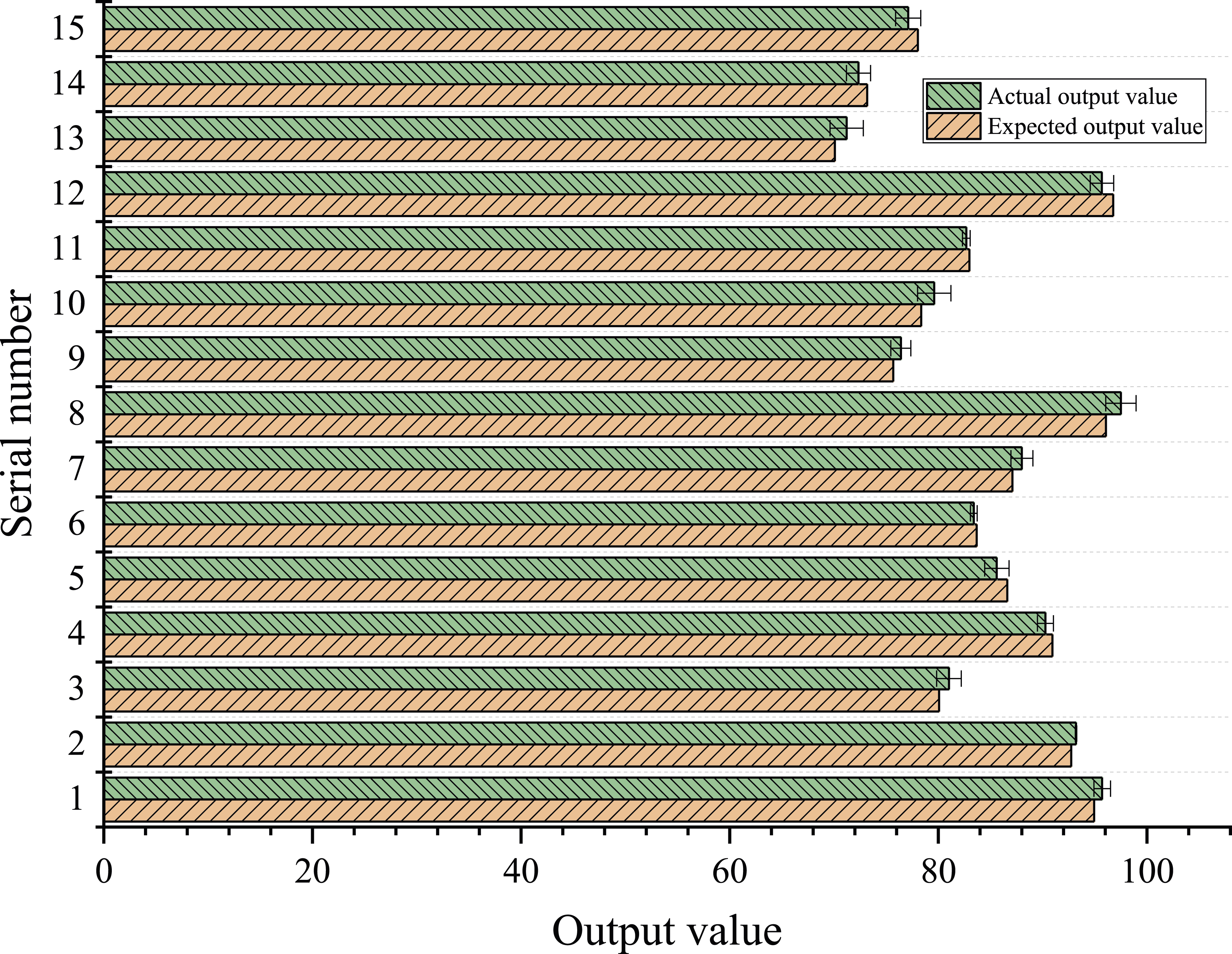
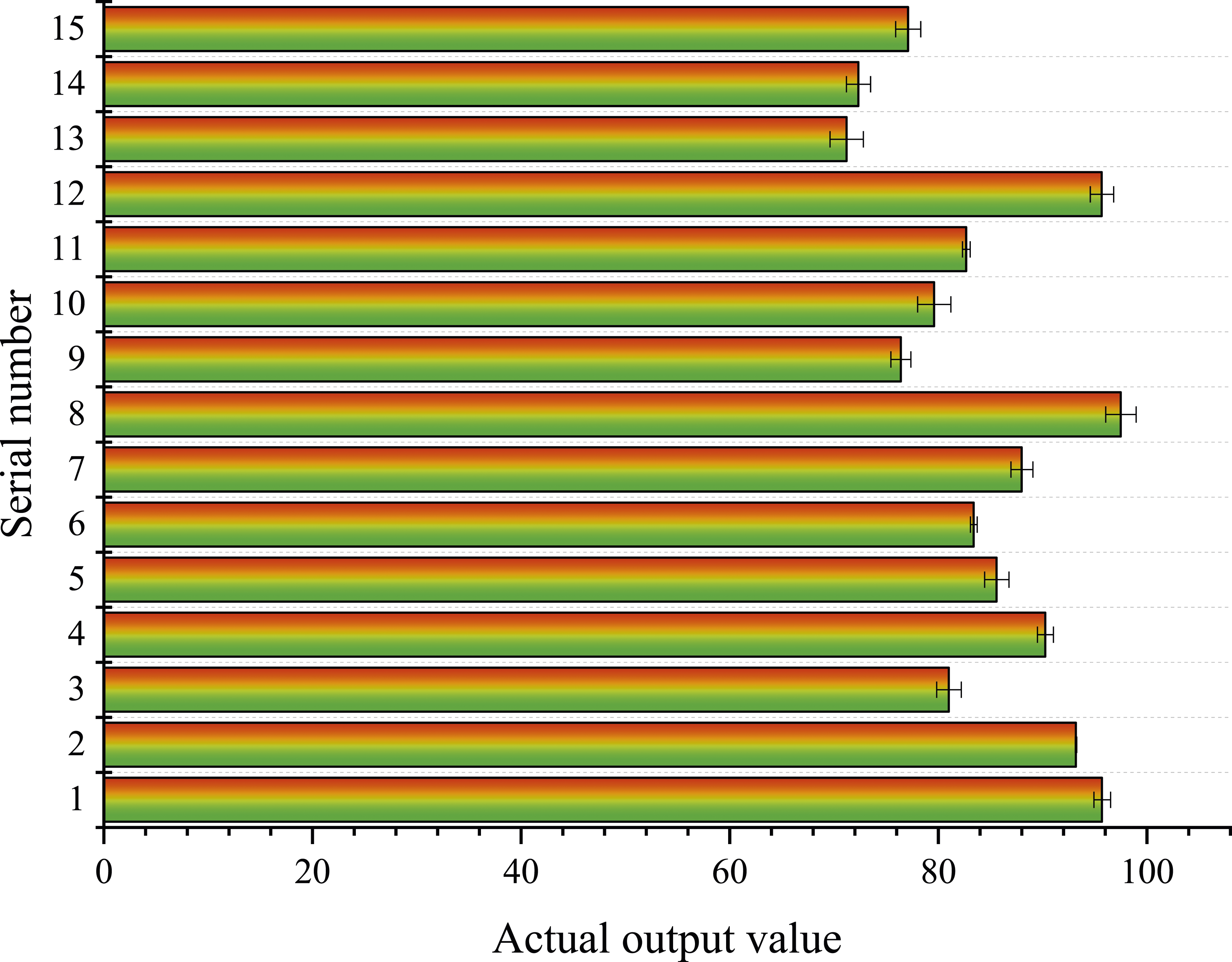
In Figures 7 and 8, the actual value of the overall analysis of the experiment is basically consistent with the expected value, and there is no significant change. This reflects the reliability of the neural network model, and the collected data is more reasonable. The actual value is valid, and the expected value is reasonable through the BPNN test and output of the actual value. The maximum relative error between the two is 1.64%, which basically tends to be the ideal state. After training, the actual value of the neural network is basically the same as the expected value, except that there are local fluctuations at the 9th, 10th, and 15th serial numbers, which are within the acceptable range.
Conclusions
This study begins by outlining the concepts of big data and entrepreneurship education within the context of AI. It then introduces research hypotheses concerning students’ English writing abilities using pigai.org, a big data-based platform. A conceptual model for evaluating entrepreneurship education is constructed, complemented by a questionnaire designed to assess the entrepreneurial status of students. Additionally, an experiment is conducted to evaluate students' English writing skills. By establishing a Back Propagation Neural Network (BPNN) model, the questionnaire data is fitted and simulated within the BPNN framework. The analysis reveals that pigai.org has a significant positive impact on students’ English writing abilities. The BPNN model achieved an R-value of 0.94 in the fitting regression during the training process, indicating high accuracy in the data fit, as the value is close to 1. However, the study’s limitations include the small sample size and the limited number of established indicators, which reduce the persuasiveness of the findings. Future research will expand the survey sample and supplement additional indicators to enhance the robustness of the results. The ongoing implementation and study of pigai.org in English writing instruction will provide valuable insights. This research aims to offer a crucial reference for applying big data technology in AI for English teaching and employing BPNN technology in entrepreneurship education.
Statements and declarations
Footnotes
Conflicting interest
The authors declared no potential conflicts of interest with respect to the research, authorship, and/or publication of this article.
Funding
This work was supported by following fundings: 1. Support Program of Innovative Talents of Philosophy and Social Sciences in Colleges and Universities in Henan Province (Project No.: 2025-CXRC-34); 2. Major Project of Research and Practice on Teaching Reform of Higher Education in Henan Province (Project No.: 2024SJGLX0101); 3. Major Project of Research and Practice on Teaching Reform of Undergraduate Education in Henan University of Technology (Project No.: JXYJ2023035).