



Abstract
Student engagement is a crucial predictor of learning outcomes. The study constructed measurement indicators primarily based on five dimensions: learning beliefs, behavioral tendencies, emotional attitudes, self-efficacy in learning ability, and self-efficacy in learning behavior. It collected questionnaire data from 347 students who had been promoted from junior college to undergraduate studies. The survey data were processed using correlation analysis, regression analysis, and the K-means clustering algorithm. The study found that learning attitudes and learning self-efficacy are significantly positively correlated with learning engagement and can predict student learning engagement at an 82% level; the student population is mainly divided into three types: proactive explorers, passive obstacles, and general passives, with proportions of 32.56%, 26.51%, and 40.92%, respectively; the three different types of student groups show significant differences in learning engagement (p < 0.05), with proactive explorers having the highest level of learning engagement, general passives in the middle, and passive obstacles at the lowest. To enhance student engagement, it is suggested that teachers should pay attention to fostering correct learning attitudes in students, take proactive measures to enhance students’ self-efficacy in learning, and adhere to the educational concept of personalized teaching throughout the teaching process, implementing differentiated teaching strategies such as layered instruction to more effectively meet individualized student needs.
Introduction
Currently, information technology is revolutionizing the learning methods of university students at an astonishing pace. The advent of a new generation of information technologies such as the Internet, cloud computing, and big data has accelerated their deep integration with education. The rise and broad application of blended learning, an organic combination of online self-study and face-to-face teaching,1,2 is gradually becoming the norm in higher education. The advantages of both traditional face-to-face learning methods and e-learning are emphasized in this model.
Blended learning has the potential to promote learner-centered, active, and constructive learning, 3 emphasizing student autonomy and self-regulation. 4 In this context, students are required to transition from passive learners to active learners. Online learning activities are no longer just for pre-class preparation and post-class extension but are essential independent learning activities. On the other hand, offline classroom teaching is no longer traditional instruction but is centered on student-centered cooperative inquiry and teacher-student interaction. 5 These changes demand higher learning standards from the students.
Students are the subjects of learning activities. Without student progress, teaching becomes meaningless. 6 It’s only when student learning is viewed as the basis of teaching that we can be targeted in implementing teaching. Therefore, how to evaluate the learning process and measure learning outcomes becomes crucial. Numerous studies have pointed out that student engagement is a key factor affecting students’ academic success.7–10 The higher the student’s engagement in learning, the better the outcomes. On the other hand, college students who exert little effort and do not actively participate in learning achieve little progress in their expected outcomes.
Previous studies have also confirmed a positive correlation between student engagement and their academic achievements and high-order ability development.11–13 Previous studies have provided valuable insights for this research, but they have primarily focused on the mechanisms of influence on the learning engagement variable. The research methods mainly revolve around regression analysis, structural equation modeling, and differential tests, neglecting the diversity and differences among different student groups, which is not conducive to the implementation of the “teaching students in accordance with their aptitude” philosophy. To address the aforementioned issues, this paper starts with two important psychological factors: students’ learning attitudes and learning self-efficacy. It employs the K-means clustering algorithm to scientifically categorize students, attempting to reveal the performance differences in learning engagement among different types of students, and to provide support for more targeted instructional design and the implementation of “precision” teaching.
Study design
Basis for the questionnaire design
Student Engagement refers to the intensity of students’ behavioral participation in learning activities, the quality of emotional experiences, and the cognitive strategies adopted, including cognitive, behavioral, and emotional dimensions of engagement. 14 Numerous empirical studies indicate that student engagement plays a positive role in improving student learning outcomes, increasing learning satisfaction, and fostering critical thinking.13,15,16 Past research has found that the level of student engagement is mainly determined by external environments and individual factors. A favorable external environment, such as teacher support, 17 family background, and 18 peer relationships, 19 can enhance engagement to a certain extent. However, individual factors are more important. Learning attitude and self-efficacy to be important non-intelligence factors affecting student engagement.20,21 Therefore, mobilizing students’ non-intelligence factors such as learning attitudes and self-efficacy to stimulate students’ intrinsic motivation to learn is an important means of improving engagement levels.
Learning attitude is a relatively stable internal psychological inclination students harbor towards learning consisting of cognitive, emotional, and behavioral orientations. 22 Studies have discovered that learning attitudes directly affect student engagement; positive learning attitudes inevitably lead to increased emotional engagement. The more positive the attitude, the more expectations students have towards course learning, and the more willing they are to invest more time and energy in course learning, accordingly, the higher the engagement level. Conversely, negative learning attitudes can lead to academic fatigue in students, even triggering aversions to study, resulting in poor learning outcomes. 23 Empirical studies confirm that learning attitudes can positively predict engagement 24 and a serious and correct learning attitude can promote learners’ engagement, 25 effectively improving student academic performance. 26 Thus, fostering the correct learning attitude in students is a precursor to increasing their engagement and academic performance.
Learning self-efficacy refers to an individual’s subjective judgment that they have the ability to successfully complete a specific learning task. 27 It is a significant factor affecting the level of engagement and has a positive predictive effect on engagement.28,29 The higher the self-efficacy, the more time and energy students put into learning. In addition, research has found that self-efficacy impacts not only directly on the level of engagement 30 but also serves as a “mediation agent” in the relationship between academic emotions and engagement, demonstrating its significant bridge role.31,32 Students with high self-efficacy tend to have more positive academic emotions and are more optimistic and confident when encountering setbacks, which can effectively increase the level of engagement. 33 Therefore, enhancing learning self-efficacy has practical value to improve students’ engagement level, enabling students to demonstrate greater learning vitality and allowing students to focus more on their learning tasks. 34
Questionnaire design process
Primary variable indicator dimensions.
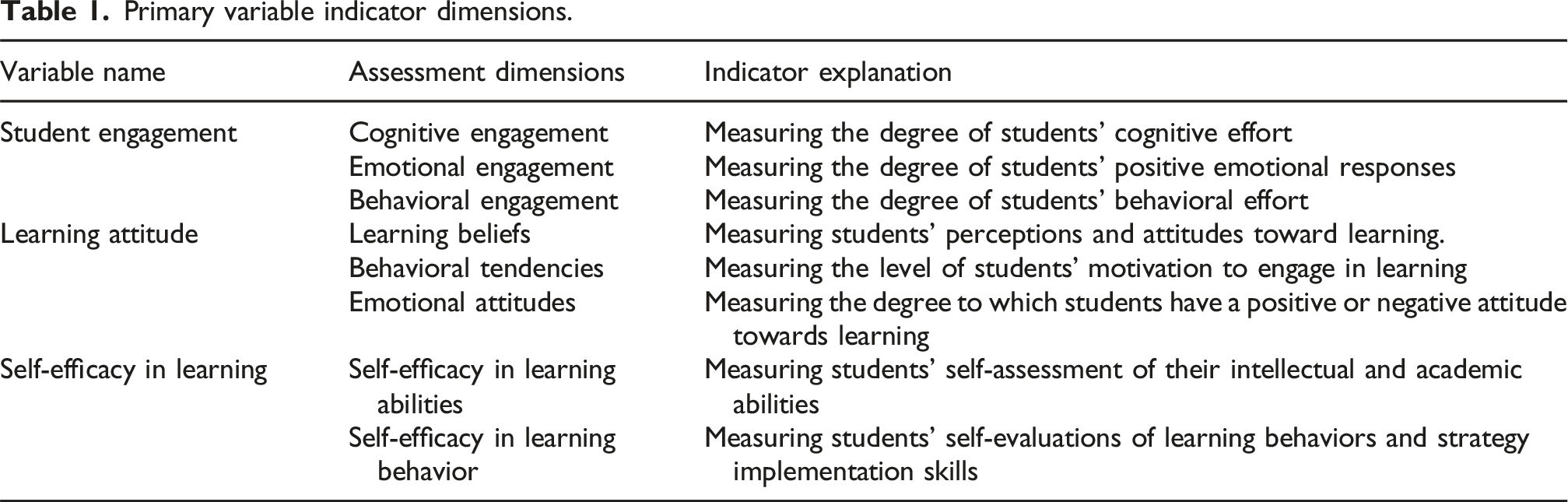
The Student Engagement Scale includes three dimensions: cognitive engagement, emotional engagement, and behavioral engagement, with a total of seven items. Specifically, cognitive engagement mainly measures the intensity of mental effort made by the students, such as whether they pay attention to the connections among knowledge or how capable they are of using existing knowledge to solve complex problems which need high-level engagement. Emotional engagement mainly measures the degree of students’ positive emotional responses, such as expectations for learning activities and feelings about respectful dialogues. Behavioral engagement is primarily used to measure the level of behavior effort, such as actively completing learning activities and tasks, or the degree of investment in teacher-student interaction and group study collaboration, etc.
The Learning Attitude Scale includes three dimensions: learning beliefs, behavioral tendencies, and emotional attitudes, with a total of nine items. Learning beliefs primarily measure students’ perspectives, feelings, and expectations towards learning; behavioral tendencies mainly measure the intensity of students’ willingness to engage in learning; and emotional attitudes primarily measure the extent to which students face learning with a positive or negative attitude.
The Self-efficacy Scale includes two dimensions: self-efficacy in learning abilities and behavior, with a total of seven items. Self-efficacy in learning ability primarily measures students’ evaluations of their own intelligence and academic capabilities, such as comprehension skills and logical reasoning abilities. Self-efficacy in learning behavior mainly measures students’ evaluations of their ability to implement learning behaviors and strategies, such as the selection of learning strategies and time management.
The three aforementioned scales are all self-assessment scales for students. They adopt a Likert five-grade scoring format. All questions are single choice, each scored based on the “degree of conformity,” ranging from “1 = completely inconsistent” to “5 = completely consistent or very consistent.” These are divided into five levels and assigned scores from 1–5, respectively. The higher the score, the higher the “level” in that item for the individual.
Questionnaire survey respondents
We selected first-year students who are upgrading from junior college to the university program at Beijing Union University as the survey respondents. The survey involves multiple majors, including accounting, finance, business administration, tourism management, computer technology, and science. “Upgrading from junior college to university” (UJCU) as an essential part of undergraduate education, this kind of education provides numerous outstanding junior college graduates with opportunities for continued learning and further education. It helps them break the “diploma barrier” and fulfills their multiple needs to improve their degree level, enhance overall quality, and broaden career development. First-year students in the junior college to undergraduate transition have played an active role. As a new cohort, they are in the midst of adapting from an associate to a bachelor’s degree, and their learning attitudes and behaviors exhibit a greater degree of dynamism. Studying this group of students as subjects of research is therefore representative.
The survey was implemented by randomly distributing the questionnaires on site. Before the survey, the purpose and points to note were explained to the students. They were asked to fill in the questionnaire truthfully and objectively. Students were assured that the survey was anonymous in order to alleviate their concerns. For the items in the three scales, students were instructed to choose one option most close to their actual situation from five different options.
In this survey, a total of 365 questionnaires were distributed. The questionnaires were collected uniformly after the students filled them out on site. After invalid or unqualified questionnaires were excluded, 347 valid questionnaires were obtained, with an effectiveness rate of 95.07%. Of these, 140 were from male students, accounting for 40.35%, and 207 were from female students, accounting for 59.65%.
Survey methods and approach
The study plans to use the K-means clustering algorithm to investigate the characteristics of student learning engagement. K-means is a simple and efficient unsupervised learning algorithm that has been widely used in different academic disciplines. This algorithm generally employs Euclidean distance as an indicator of similarity, and its core is to find the optimal cluster centers through continuous iteration, minimizing the Sum of Squared Error (SSE) within the clusters to achieve the final clustering results. 38 The algorithm requires the number of clusters, K, to be predetermined, and the choice of this value can affect the final clustering outcome. 39 Existing studies have utilized K-means clustering analysis to examine students’ social media usage and mental health levels, 40 predict students’ academic performance, 41 and investigate teachers’ capabilities in evaluating digital content, 42 among others.
The collected questionnaires were processed and entered into the computer. Subsequent data analysis was performed using software like SPSS27.0 and Amos26.0. The specific steps included the following: (1) Employing confirmatory factor analysis to check the reliability and validity of each scale. (2) Applying correlation analysis and linear regression equations to verify the influence of learning attitude and self-efficacy on engagement. (3) Using K-means algorithm to cluster students based on learning attitude and self-efficacy, and summarizing the learning behavior characteristics of different types of students. (4) Utilizing ANOVA to examine differences in engagement among different types of students.
Results
Reliability and validity test
Fit indices for each scale.

According to the results of the confirmatory factor analysis, the X2/df (ratio of chi-square to degrees of freedom) values are between 2.257 and 3.306, which is within an acceptable range. The values for GFI, TLI, and CFI are all greater than 0.9, indicating a good fit. The RMSEA values of both the Student Engagement Scale and the Self-efficacy Scale are less than 0.08, and the RMSEA value of the Learning Attitude Scale is 0.082, which is very close to the recommended value. Looking at the combined values of these indicators, the questionnaire structure fits the data well, indicating that the three scales have good construct validity.
Correlation analysis
Correlation analysis Matrix for each variable.

Note: ** At the 0.01 level (two-tailed), the correlation is statistically significant.
From Table 3, there are significant positive correlations between learning attitudes, self-efficacy, and student engagement and its factors (p < 0.01). Comparatively, the correlation between learning attitudes and student engagement is the strongest, with a correlation coefficient of 0.881 (p < 0.01). The correlation between self-efficacy and student engagement is 0.836 (p < 0.01), also indicating a strong correlation. The above results provide evidence for subsequent relationship verification.
The predictive role of learning attitudes and self-efficacy on student engagement
Regression analysis table (N = 347).
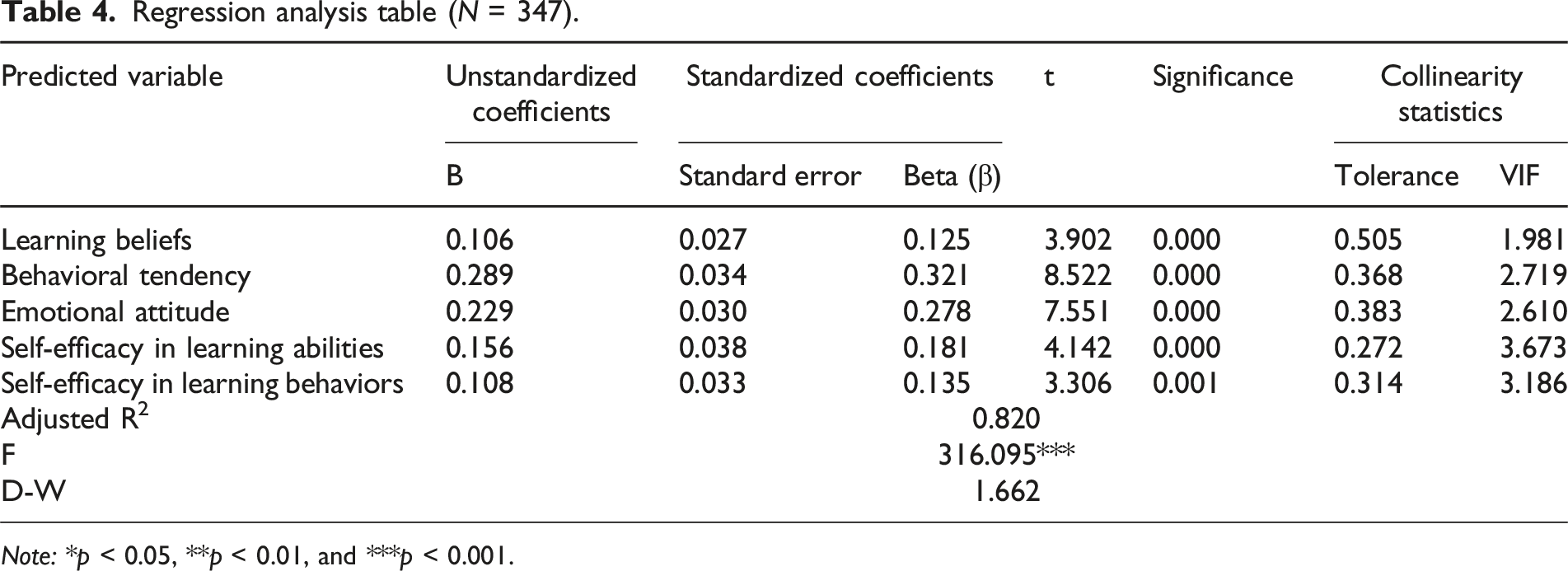
Note: *p < 0.05, **p < 0.01, and ***p < 0.001.
From Table 4, all five factor variables from the learning attitude scale and the learning self-efficacy scale enter the regression equation, with an adjusted R2 of 0.820, indicating the five variables can together predict 82% of the variance in learning engagement, and the regression equation is significant (F = 316.095, p < 0.001). Moreover, each variable’s VIF value in the model ranges from 1.981 to 3.673, all less than 5, indicating no issue of multicollinearity. From the perspective of the standardized regression coefficient, the larger the absolute value of β, the stronger the influence of the independent variable on the dependent variable. The coefficients of the five variables are 0.125, 0.321, 0.278, 0.181, and 0.135, respectively, indicating that learning attitude and self-efficacy can to some extent positively predict the level of learning engagement of students from UJCU.
Cluster analysis based on learning attitude and learning self-efficacy
Determination of optimum cluster number K
To further explore the influence of students’ learning attitude and learning self-efficacy on the learning engagement, K-means algorithm was employed for cluster analysis, which primarily includes five indicators: learning belief, behavioral tendency, emotional attitude, learning ability self-efficacy, and learning behavior self-efficacy.
The key to the K-means clustering algorithm lies in the determination of the K value, as it directly affects the final clustering results. Utilizing the “Elbow Method” and the “Silhouette Coefficient Method,” the optimal cluster number K was explored. The operations are as follows: firstly, the elbow method was employed to preliminarily determine the range of K value. When the number of “cluster” was 3 to 5, the decline of the curve slowed down; hence, the range of K value was determined as 3 to 5. Secondly, the changes of silhouette coefficient of various K values in the range were observed, and the maximum silhouette coefficient was identified as the optimal cluster number K.
Silhouette coefficient values based on learning attitude and self-efficacy.
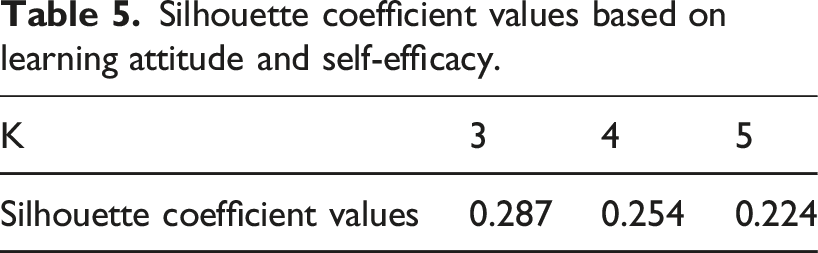
By comparison, when K = 3, the silhouette coefficient is the highest, at 0.287, therefore K = 3 is chosen (see Figure 1). Elbow method line graph based on learning attitude and learning self-efficacy.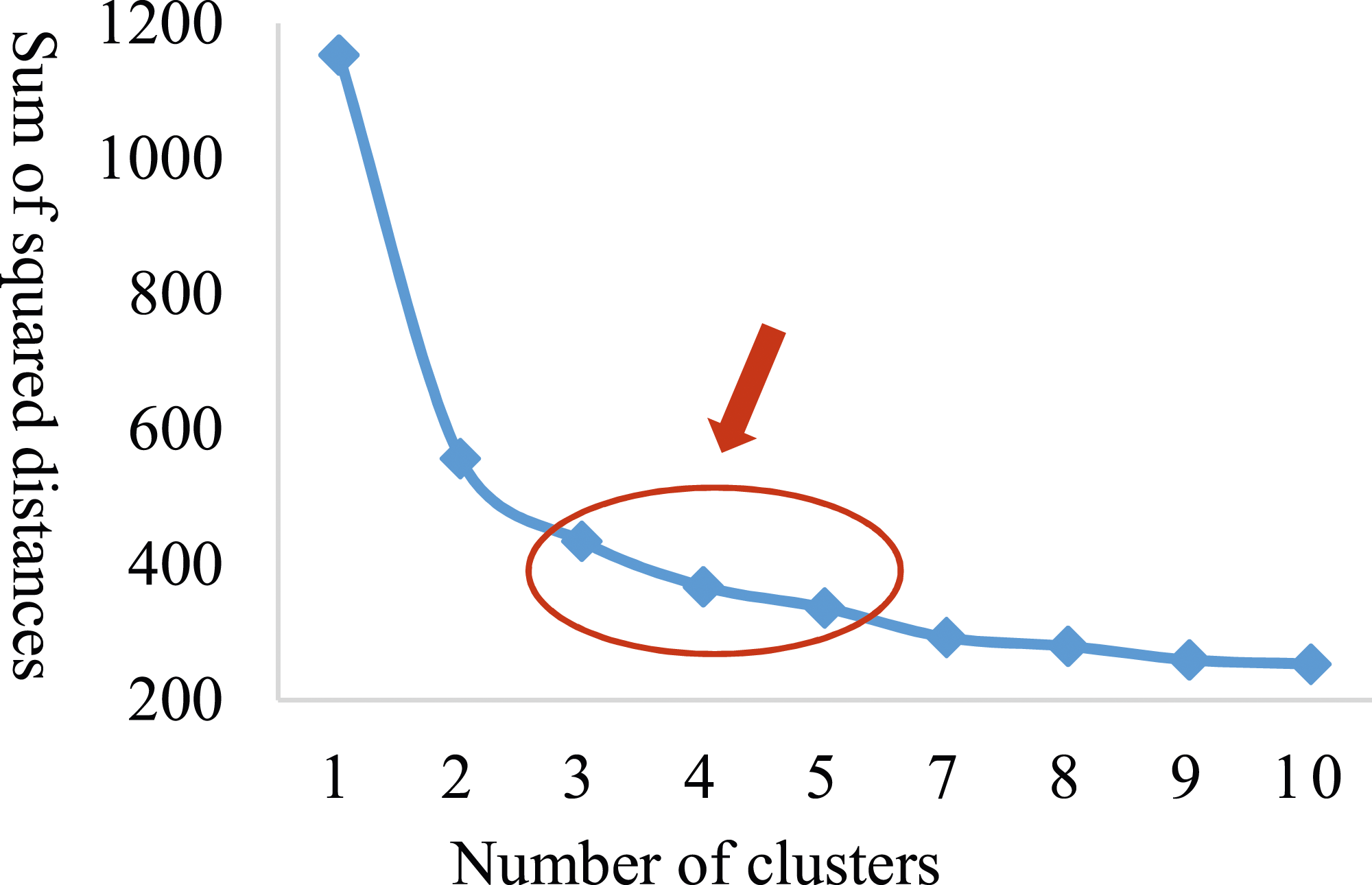
Cluster analysis results
Cluster analysis.
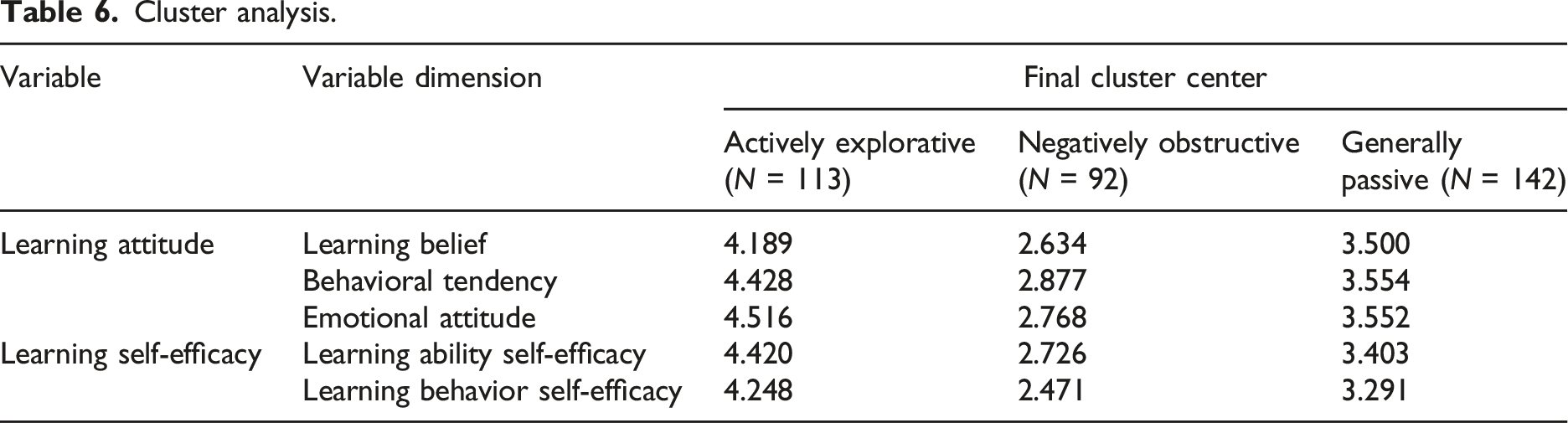
(1) Actively explorative. This type has 113 students, with a relatively high proportion of 32.56%. Their scores in the five dimensions of learning belief, behavioral tendency, emotional attitude, learning behavior self-efficacy, and learning ability self-efficacy are far higher than the average, demonstrating excellent performance. This indicates that students of this type have the highest degree of learning engagement. They have enough enthusiasm and confidence in learning, are good at using various learning strategies to solve difficulties and challenges in learning, and enjoy the happiness brought by learning. They serve as role models for the other two types of students.
(2) Negatively obstructive. This type consists of 92 students, the smallest proportion, accounting for 26.51%. The scores of all clustering indicators are significantly lower than the average and need further improvement. This shows that the learning engagement of this type of students is the lowest. They lack conviction in learning, exhibit low emotional attitude, lack efficient learning strategies, and seriously lack self-efficacy. To stimulate a positive transformation in this group of students, educators need to root out the “cause” and come up with targeted solutions.
(3) Generally passive. This type embodies 142 students, the largest proportion, accounting for 40.92%. Scores of all clustering indicators are slightly higher than the average, displaying a good performance. This shows that generally passive students have a higher degree of learning engagement, but there lasts a certain gap compared with actively explorative students. They have a serious studying attitude and average learning self-efficacy but lack self-study ability and tend to “learn passively.” Learning needs supervision and motivation from others. In practical teaching, teachers should pay more attention to these students and take effective measures in time, to prevent them from transforming into a negative obstructive type.
Differences in learning engagement between different types of students
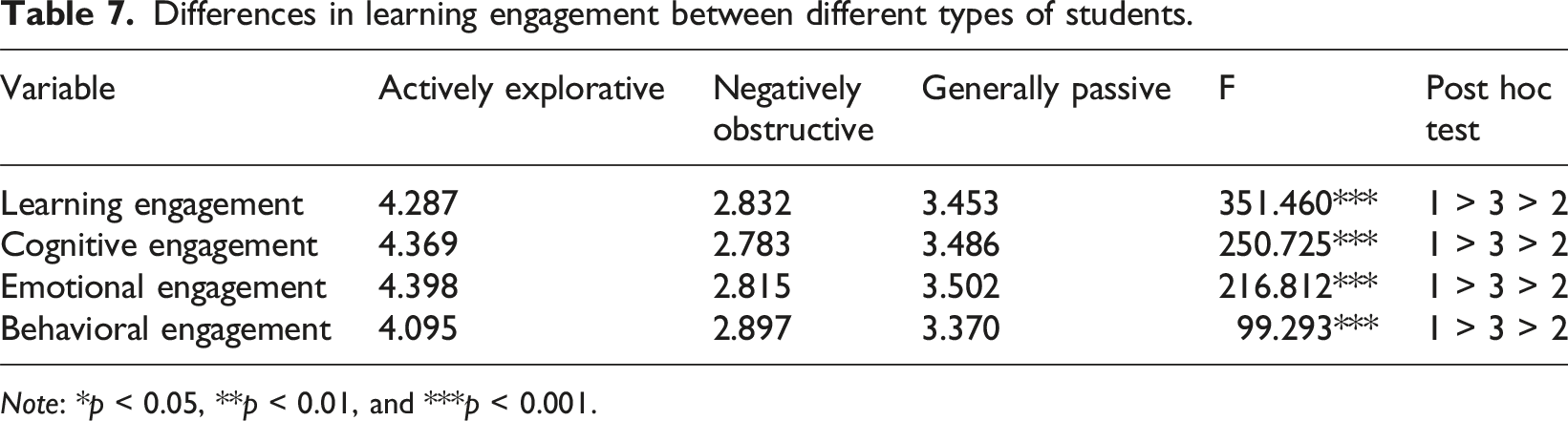
Differences in learning engagement between different types of students.
Note: *p < 0.05, **p < 0.01, and ***p < 0.001.
As shown in Table 7, there are significant differences in scores for learning engagement and its dimensions among the different types of student groups (p < 0.001). According to the LSD post hoc test, there are significant inter-group differences in learning engagement and its dimensions among the three types of student groups, with scores ranked from highest to lowest as follows: Actively explorative > generally passive > negatively obstructive.
Discussion
Analysis of the main influencing factors
The background information of students from UJCU is complex, and the differences in learning foundation and cognitive level are indisputable. If there are no effective solutions to address these objective “differences,” students with weaker foundations may struggle to adapt, resulting in a decline in learning self-efficacy, a negative learning attitude, and insufficient learning engagement.
The results of the cluster analysis also reveal that there are significant differences in learning attitudes, learning self-efficacy, and learning engagement among different types of students from UJCU; this is reflected in the high consistency between the scores for learning attitudes and learning self-efficacy, and the scores for learning engagement. This study is consistent with previous research findings. For example, Geremias and colleagues conducted a K-Means cluster analysis on data from 480 college students, categorizing them into four types: Empty PsyCap, fully PsyCap, optimism-based PsyCap, and hopeful-efficacy-based PsyCap. The study concluded that students with higher levels of self-efficacy, optimism, hope, and resilience scored higher in internal team learning than those with lower levels of these psychological capital dimensions. 43 Thus, learning attitudes and learning self-efficacy, as the internal driving forces of student learning, are significant intrinsic factors influencing learning engagement.21,44 Therefore, learning attitude and learning self-efficacy, as the internal drivers of student learning, are important intrinsic influencing factors on learning engagement. This conclusion also provides data support for teachers to take effective measures to improve students’ learning attitudes and enhance learning self-efficacy, and thereby increase students' learning engagement.
Stimulating the intrinsic motivation of students
Stimulating students’ intrinsic motivation is a prerequisite for effective teaching. 45 Therefore, it is vital to help students improve their learning attitudes and increase self-efficacy in learning. Educators should recognize the differences among students and not prejudice against a certain type of student, but guide and play to the students’ active role, 46 adopting several strategies to stimulate students’ intrinsic motivation and enhance their learning engagement. In everyday teaching, firstly, set reasonable teaching goals adopting student-needs-oriented approach, and design and carry out targeted teaching activities, providing multidimensional support for student learning, emotions, abilities, and learning strategies, catering to different types of student needs. Secondly, innovate and improve teaching methods, such as heuristic, inquiry-based, discussion-based, and project-based teaching to help students study more effectively, enhancing students’ sense of achievement and improving emotional attitudes towards course learning. Thirdly, enhance the effectiveness of feedback mechanisms, encouraging innovative ideas from students and rewarding them, guiding students promptly about their doubts and dilemmas, helping them understand their progress and ways to improve, fostering a positive expectation of self-behavior, and improving their learning self-efficacy.
Carrying out categorized teaching and layered instruction
Pay attention to the different characteristics and individual differences among students, deepen the individual needs-oriented teaching approach, implement categorized training and tiered teaching, align teaching content more closely with students’ actual needs, strive to tap every student’s potential, and increase their learning engagement, reducing the adverse impact of objective differences on teaching. The teaching recommendations for the three types of students are as follows: (1) Actively explorative. These students perform excellently in all areas. Teachers should provide them with more opportunities for autonomous learning and in-depth exploration, such as allowing them to participate in research projects or organize study group discussions, maintaining their good learning status. Moreover, encourage these students to share their learning experiences and strategies, becoming a model and promoter of class learning, leading all students to progress. (2) Generally passive. These students are often the easiest to overlook in teaching practice. Teachers should increase their attention to these students, give them more opportunities to show themselves, and help them find and play to their advantages in practical activities by setting specific learning objectives and narrowing down the task range, thereby building their confidence and actively moving towards becoming actively explorative students. (3) Negatively obstructive. These students have the lowest degree of learning engagement among all types. They often have negative attitudes towards learning, which may be due to a variety of reasons, such as lack of confidence and improper learning strategies. Teachers can discover their learning obstacles through in-depth interviews with students and jointly develop an improvement plan. In addition, teachers should also value the role of emotional support, meet their emotional needs, and stimulate their potential. For example, by designing a series of achievable short-term goals and simple tasks, encourage students to complete the tasks and gain successful experiences.
In response to the empirical research results, this paper believes that in the current blended learning environment, teachers face the differences among student types, deepen the orientation towards individual student needs, and carry out targeted teaching design, such as setting reasonable teaching objectives, innovating and improving teaching methods, enhancing the effectiveness of feedback mechanisms, and exploring the implementation of tiered teaching and categorized training. These strategies aim to stimulate students’ intrinsic motivation, tap into each student’s potential, and improve their learning engagement, thereby reducing the adverse effects of student differences on teaching and helping achieve the goal of student learning, growth, and development in their progress.
Limitations and future prospects
This study empirically tested the hypothesis that learning attitudes and learning self-efficacy affect college students’ learning engagement, and explored significant differences in learning engagement among different student types, providing certain value for educational practice. However, the study still has several limitations. Firstly, the research subjects only involved a portion of students in the junior college to undergraduate program at Beijing Union University; future studies may consider expanding the sample range to enhance the universality of the research findings. Secondly, the current study relies on cross-sectional data, and the deep-seated mechanisms influencing the learning engagement of students in the junior college to undergraduate program still need further exploration; future studies could attempt to use longitudinal data tracking to delve into the dynamic changes in learning engagement among different types of students and the long-term effects of targeted intervention measures. Lastly, the study only selected learning attitudes and learning self-efficacy as the main factors affecting the learning engagement of students in the junior college to undergraduate program; future research could explore the relationship between more factors and student learning engagement to further enrich the research outcomes on factors influencing learning engagement.
Conclusion
(1) The learning attitudes and self-efficacy of students from UJCU are significantly positively correlated with learning engagement. They have a significant positive predictive effect on learning engagement and serve as important predictive indicators of learning engagement level for these students. (2) It is effective to classify students into actively explorative, generally passive, and negatively obstructive types based on K-means algorithm clustering analysis. The results of ANOVA confirm that there are significant differences in learning engagement between the aforementioned three student groups.
Statements and declarations
Footnotes
Declaration of conflicting interests
The author(s) declared no potential conflicts of interest with respect to the research, authorship, and/or publication of this article.
Funding
The author(s) disclosed receipt of the following financial support for the research, authorship, and/or publication of this article: This study was supported by Collaboration and Integrated Educational Training (Project Number: 220604157281751).