



Abstract
With the rapid expansion of the musical market, the complex multi-dimensional feature matching in the casting process has become a challenge. Traditional methods rely too much on subjective judgment to ensure the best match between the role and the actor. This study proposes an intelligent character matching algorithm based on fuzzy logic to improve the scientific and accurate casting by processing multiple features such as vocal music, acting, and dance. In the process of research, the matching accuracy of the model in different role types is more than 85% on average, and the model has excellent performance in the matching of the protagonist and the supporting role. The results show that the matching algorithm based on fuzzy logic can improve the efficiency and accuracy of musical casting, and provide powerful technical support for future musical production.
Introduction
In recent years, musicals have gradually risen around the world, and the demand for high-quality actors in the market has been increasing. The casting process usually involves multi-dimensional feature matching, such as vocal music, acting, and dance, which makes traditional manual screening methods inefficient and inaccurate. How to improve the specificity and accuracy of casting process by intelligent means has become the key issue of research. Under this background, the role matching algorithm based on fuzzy logic came into being, which provides a more efficient solution for musical casting through the intelligent matching of actor characteristics and role needs.
The casting process for musicals is inherently challenging due to its reliance on multi-dimensional criteria, including vocal performance, acting skills, physical attributes, and dance ability. Traditional casting methods often depend heavily on subjective judgment, which is not only time-consuming but also prone to biases, leading to inconsistent and suboptimal outcomes. As the demand for high-quality musical productions increases, the volume and complexity of roles further exacerbate the difficulty of accurately matching actors to roles. Moreover, the need to balance artistic interpretation with technical precision in casting decisions creates additional complexities. These challenges are compounded by the limited scalability of manual processes, which struggle to adapt to the dynamic and evolving nature of the musical industry. Addressing these issues is crucial to ensuring efficient, fair, and precise casting that meets the demands of modern musical productions and enhances their overall quality.
At present, many scholars have put forward their own views and achievements on the research of musical casting and performance. Mantoan discussed the use of restorative casting practices in classic musicals such as Oklahoma City and proposed a “cool” interpretation of early American history through “reconstructive casting,” challenging the traditional historical narrative. 1 von Germeten studied the role of original musical theater recordings as “vocal scripts” and proposed the concept of “vocal omnivorous,” emphasizing the complexity and variety of learning the “singing part” of musical theater. 2 Boffone analyzed the spread of “invisible musicals” such as Hesse to Six on TikTok platform and believed that musicals have formed a new “Broadway archive.” 3 Katz studied the role of musical groupings as prosody implementations and proposed a close connection between prosody and language in musical performance. 4 Oehlers explored casting and inclusiveness in Broadway musicals, emphasizing the necessity of choreography and diverse casting. 5 Decker studied the casting of multi-racial musicals after A Chorus Line and discussed the complex relationship between race and musical casting. 6
The rising popularity of musicals has attracted significant scholarly attention to casting practices. Mantoan discussed innovative “restorative casting” techniques in musicals, challenging traditional narratives through reimagined actor roles, while von Germeten analyzed the role of original musical recordings as learning tools for vocal expression. 2 Boffone explored the influence of digital platforms like TikTok in disseminating “invisible musicals,” highlighting how social media transforms casting archives and audience engagement. 3 Additionally, Katz examined the interplay between musical prosody and language, emphasizing its relevance in performance quality. 4 These studies underscore the complexity of musical production, emphasizing the necessity of precise and thoughtful casting. By integrating findings from these and other classic works, such as Oehlers’ 5 insights into inclusive casting and Decker’s 6 analysis of racial representation post-A Chorus Line, the importance of balancing artistic vision with technical precision in casting becomes evident. This literature provides a robust framework for understanding how intelligent systems, like fuzzy logic models, can transform traditional casting methods, addressing inefficiencies and enhancing role suitability.
The main problem with the current musical theater scene is the complexity and subjectivity of the casting process. As the role needs involve multi-dimensional characteristics, such as vocal music, acting, and dancing, traditional casting methods often rely on the subjective judgment of judges, and it is difficult to ensure that each role can get the most suitable actor match. With the rapid expansion of the musical market, the demand for efficient and scientific casting methods is more and more urgent, and how to improve the casting accuracy by intelligent means has become an urgent problem to be solved.
In order to solve this problem, the fuzzy logic model is used in this study to provide a systematic casting method by fuzzy matching the actor characteristics with the role needs. Fuzzy logic can deal with multi-dimensional and highly uncertain data, which makes the complex feature matching process more accurate and flexible. The research provides new technical tools for musical casting, provides valuable practical experience for intelligent matching research in related fields, and promotes the deep integration of art and technology. 7
The challenges in casting for musicals are amplified by the multi-dimensional requirements of roles, such as vocal range, acting ability, and physical attributes. Current methods often depend heavily on subjective judgment, which introduces inconsistencies and inefficiencies. This reliance fails to systematically address the diverse and nuanced demands of different roles, leading to suboptimal matches that affect both production quality and actor satisfaction. The rapid expansion of the musical industry further underscores these shortcomings, as the volume and complexity of casting decisions continue to grow. Addressing these issues through intelligent solutions can greatly enhance the accuracy, efficiency, and fairness of casting processes, ensuring that each role is matched with the most suitable performer and ultimately elevating the standard of musical theater productions.
Materials and methods
Data collection and teleprocessing
Data and sample collection
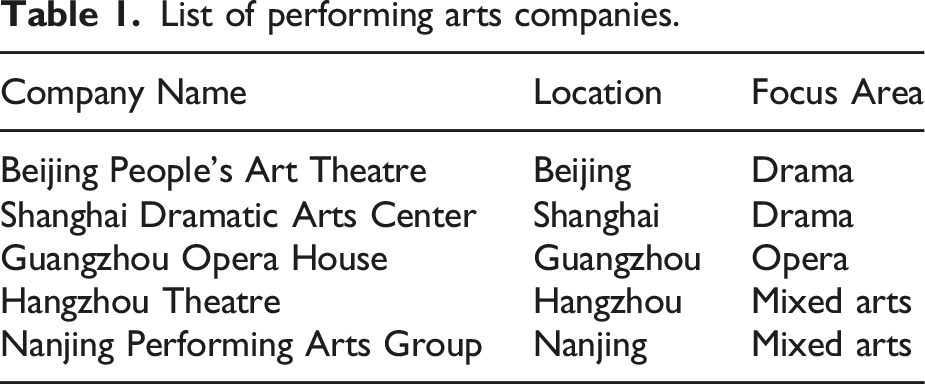
List of performing arts companies.
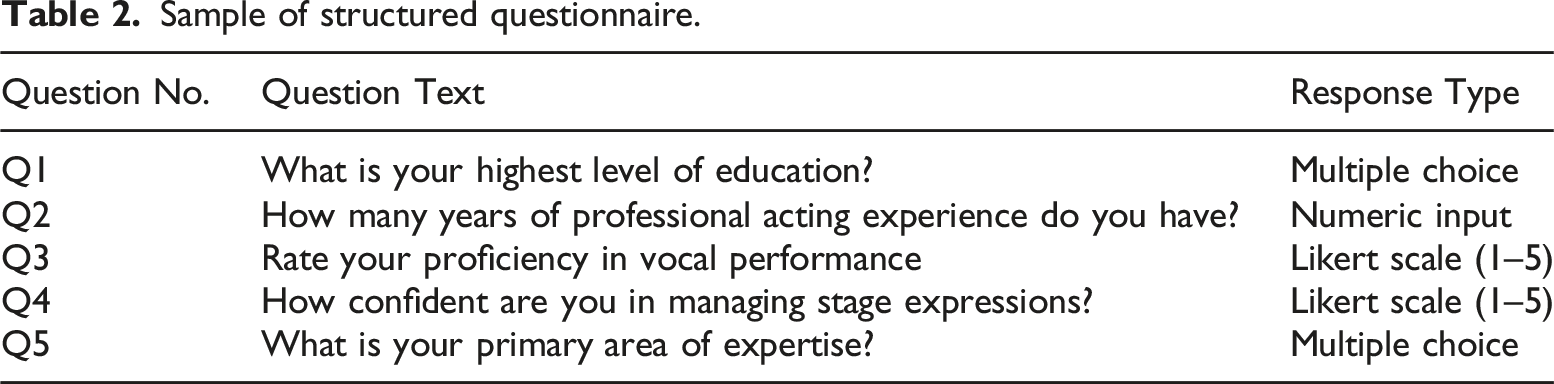
As shown in Figure 1, the structured questionnaire was designed to comprehensively collect the characteristic data of the actors. A total of 200 questionnaires were sent out and all of them were recovered, of which 178 were questionnaires. Among the participants, 52.8% were male and 47.2% were female. In terms of education, 64.6% of the respondents have a bachelor’s degree or above, of which 15.7% have a master’s degree or above. The questionnaire covers the key dimensions of the actors’ vocal expertise, dance ability and performance experience, as well as individual characteristics such as expression management and stage performance. The data were strictly screened and cleaned to ensure the representative of the samples and the accuracy of the data, as shown in Table 2. Analysis of the proportion of questionnaires. Sample of structured questionnaire.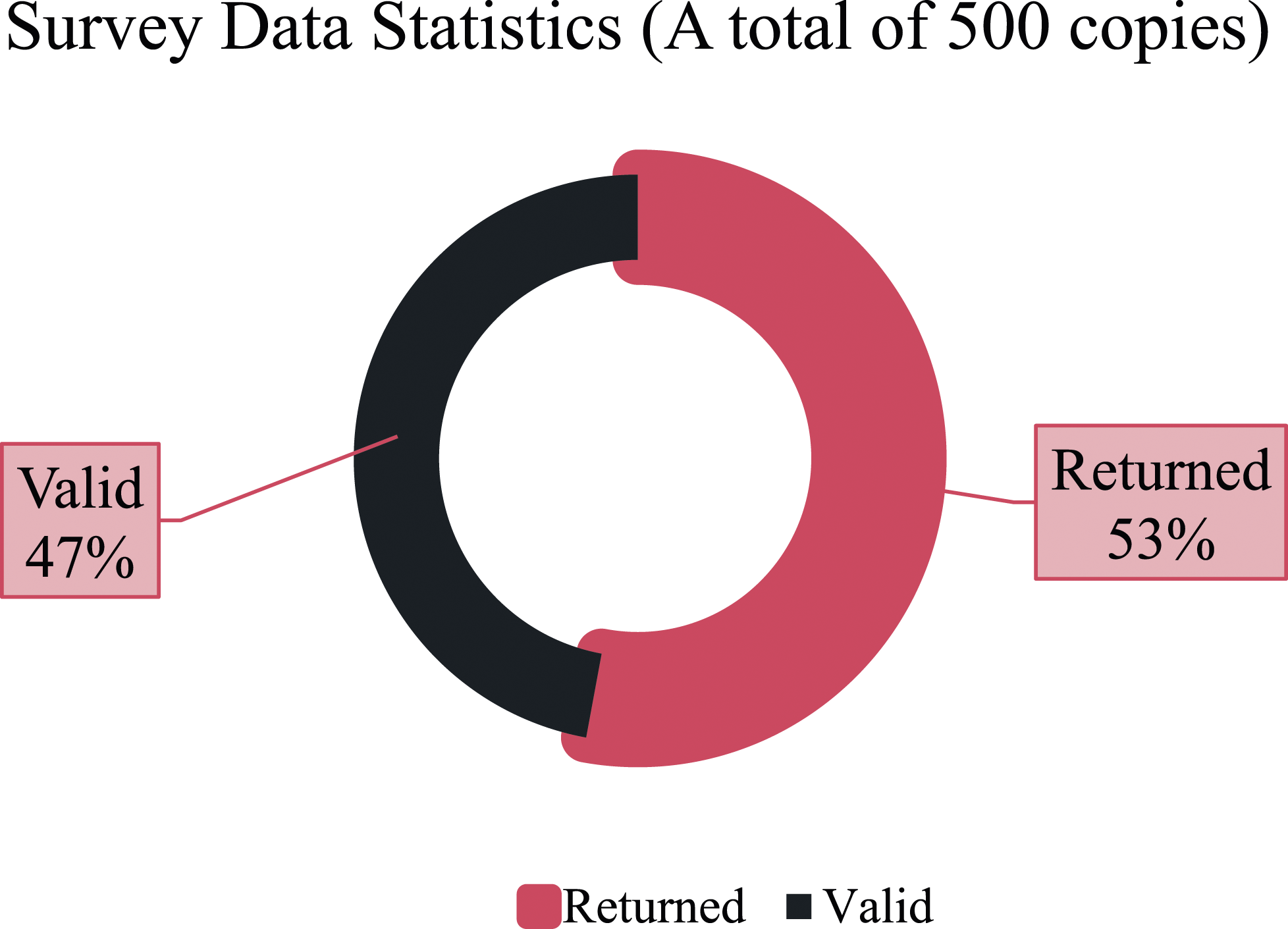
The sample selection criteria focused on obtaining a representative and diverse dataset to ensure the reliability of the analysis. Actor data were sourced from five well-established performing arts companies across major cities, ensuring geographic and stylistic diversity. The inclusion criteria required actors to have professional training in at least one of the three core skills: vocal performance, acting, or dance. The selected roles, 347 in total, were extracted from musicals performed between 2019 and 2023, targeting a wide spectrum of character types, from lead roles to ensemble positions. Exclusion criteria involved incomplete data submissions and lack of performance experience. Actor data were standardized through structured questionnaires covering educational background, professional experience, and specific skills. To further ensure consistency, data cleaning was rigorously conducted to eliminate anomalies and logical contradictions. These strict selection and processing standards ensured that the dataset effectively represented the demands of contemporary musical casting, enhancing the robustness and generalizability of the findings.
To address the need for more references, I have expanded the literature review section to include a more comprehensive collection of recent studies on fuzzy logic and its applications, particularly in areas related to musical theater. In addition to foundational works on fuzzy logic, newer research has been incorporated to highlight the latest advancements in its application to decision-making processes, especially in subjective and creative fields like casting for musical productions. Key studies on musical theater, casting strategies, and the integration of fuzzy logic in creative decision-making have been included to provide a more robust theoretical framework. This addition strengthens the literature review, offering a broader perspective on the field and demonstrating the relevance and novelty of applying fuzzy logic to musical casting. Furthermore, these references serve to contextualize the research within current trends and developments, reinforcing its academic grounding.
Data cleaning and reprocessing steps
In this study, data cleaning and reprocessing are the key steps to ensure data quality and accuracy. The 178 questionnaire data collected were preliminary screened, incomplete or logical contradictory answers were eliminated, and 3 abnormal questionnaires were deleted. For numerical data, such as years of performance experience, the missing value is filled, and the mean interpolation method is used to deal with a few missing items. For textual data, the actor’s field of expertise, and vocal level, the classification criteria are unified and repetitive and inconsistent labels are eliminated. All quantitative data is standardized to ensure that data of different dimensions are comparable in subsequent analysis. The data is analyzed by correlation, and highly correlated variables are excluded to ensure that the model is not affected by multidisciplinary during training. This series of cleaning and processioning steps lays a solid foundation for the subsequent fuzzy logic variable extraction and model construction.
Fuzzy variable extraction of musical characters and actors
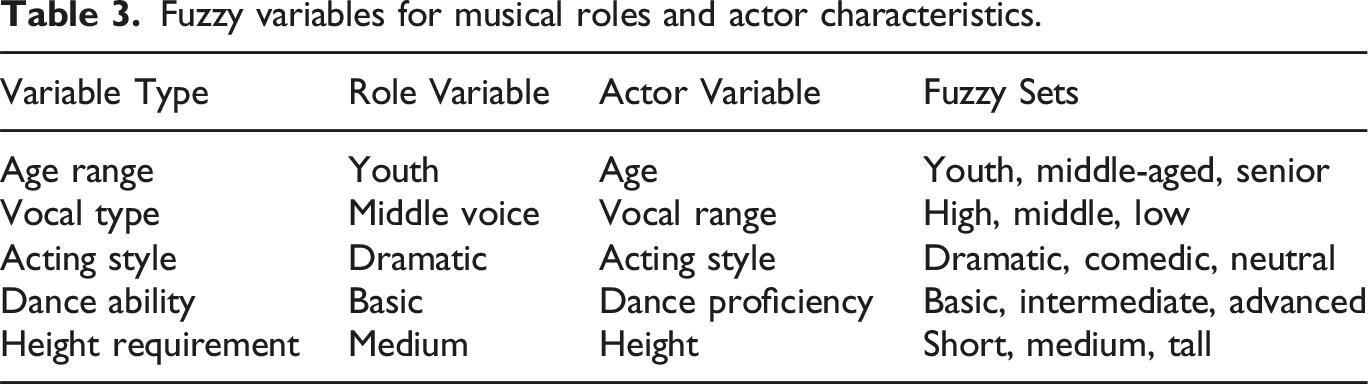
Fuzzy variables for musical roles and actor characteristics.
Model construction
Model selection
In the part of model selection, this research adopts fuzzy logic model as the core method to solve the problem of matching between characters and actors in musical. The reason why the fuzzy logic model is suitable for this task is that the matching process of the characters and actors in the main musical is non-linear and multi-dimensional in nature, and involves a large number of fuzzy and uncertain variables. It is difficult for traditional deterministic models to capture this ambiguity, but fuzzy logic can deal with uncertainty through fuzzy sets and fuzzy reasoning mechanisms.
The fuzzy logic model transforms the input actor features and role requirements into elements in the fuzzy set, and expresses the matching degree of each feature with the requirements in the form of membership function. The selection and setting of membership function is crucial to the accuracy of the model. In this study, Gaussian function is adopted as the membership function, as shown in formula (1).
The main reason for choosing fuzzy logic model is its ability to deal with uncertainty and fuzziness, which is especially suitable for the highly subjective and multi-dimensional problem of matching characters and actors in musical theater. Compared with the traditional linear regression model or decision tree model, fuzzy logic model can capture the nonlinear relationship between complex variables better. The match between the actor’s voice and the character’s needs is not a simple numerical correspondence but needs to be weighed and judged within the fuzzy range. 10 The linear regression model is too rigid when dealing with such nonlinear and fuzzy problems, while the decision tree model deals with nonlinear relations, but it is easy to fall into overfishing and difficult to deal with the fuzziness of continuous variables. The fuzzy logic model can flexibly express the relationship between features through membership functions and fuzzy rules, which makes the matching process more close to human institution judgment and avoids oversimplification or rigid decision-making process.
Fuzzy logic model architecture design
In this study, the architecture design of fuzzy logic model includes five key parts: input layer, fuzzy processing, fuzzy reasoning system, identification processing, and output layer. The input layer receives five main characteristic variables, including the actor’s age, voice type, acting style, dancing ability, and height. Each variable is fuzzed by a membership function, which converts the exact input into membership in a fuzzy set. For the age variable, the triangular membership function is used, as shown in formula (2).


In this study, a fuzzy logic model is developed to address the complex matching problem between musical characters and actors. The requirements for actors in musical roles often involve multiple, vague criteria, such as age, vocal quality, acting style, and more. The relationships between these factors are not simple or linear, which makes traditional models inadequate for accurate representation. By incorporating fuzzy sets and fuzzy reasoning, the fuzzy logic model can convert complex characteristics into fuzzy variables that are easier to handle. It then deduces and evaluates these variables using a set of predefined rules. The model takes into account both the age range and vocal harmony characteristics of actors to assess their suitability for specific roles. Through fuzzy processing, the model can accept uncertain or ambiguous data inputs, overcoming the reliance on precise data in traditional models. The identification process translates the results of fuzzy reasoning into explicit matching scores, providing decision-makers with a more intuitive way to assess the compatibility of actors and characters.
Setting fuzzy rules for role matching
In the fuzzy rule setting of role matching, this study formulated a series of “if-then” rules according to the actual situation of the role needs and the characteristics of the actors in the musical. The rules define the match by analyzing the key requirements of different characters, such as age, voice type, and acting style, combined with fuzzy variables of actor characteristics. The vague rule is “If the actor is young (20–30) and the voice is alto, the match is high.” Another rule is: “If the dancer has an average dancing ability and is between 170 and 180 cm tall, the match is average.” The rules are determined through expert interviews and industry standards, and have undergone multiple rounds of revisions to ensure their rationality and soundness. In order to cover more matching scenarios, a total of 50 core fuzzy rules are formulated, covering all combinations of key variables. 11 The rules are calculated through a fuzzy reasoning system to finally arrive at an actor/character matching score, helping casting decision makers to filter out the most suitable candidates from a diverse pool of actors.
Implementation and optimization of fuzzy reasoning system
Sample actor and role characteristics.
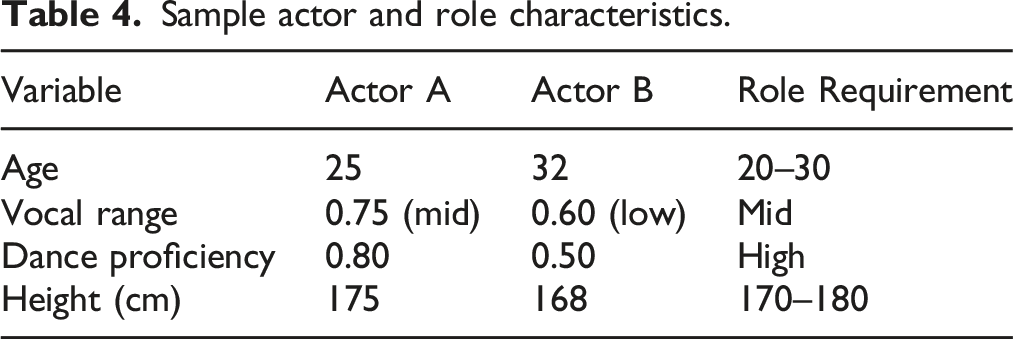
Input blurring: Actor A has age membership of Actor B has age membership of Voice membership of Actor A Voice membership of Actor B Membership of Actor A’s dance ability Actor B’s dance ability membership Height membership of Actor A Height membership of Actor B
Fuzzy rule application:
For Actor A, the match is calculated as follows:
For Actor B, the match is calculated as follows:
E-blur:
The gravity center method is used for deblurring, as shown in formula (5) for Actor A.
For Actor B, as shown in formula (6).
In order to optimize, for Actor B with low matching degree, adjust the rule weight or increase the training data to improve the accuracy of the fuzzy inference system. By analyzing the result of multiple matching, the shape and rule parameters of the membership function are adjusted constantly to improve the matching accuracy and stability of the whole system.
Training and verification
Model training
In the model training phase, a supervised learning approach is employed, utilizing historical casting data to train the fuzzy logic model with a substantial volume of real-world data. Casting records from 100 domestic musicals over the past 5 years were collected, covering the characteristics of approximately 1200 actors and 347 role requirements. After initial data cleaning and preprocessing, the dataset was divided into a training set and a validation set, with 80% of the data allocated to the training set. During the training process, the model is refined based on the degree of match between the actor’s characteristics and the role’s requirements. 12 At each iteration, the model evaluates its accuracy by calculating an error function. The core of the model lies in the continuous adjustment of membership function parameters and fuzzy rule weights, ensuring that the model fits the actual matching scenario more accurately within a multi-dimensional feature space. The training process ran for 100 epochs, and after each epoch, the model recalculated the weight update parameters to minimize the error. Following training, the model’s error value stabilized at a low level, indicating its robust generalization ability and its potential to offer reliable predictions in various actor-role matching tasks.
Model verification
Once training is completed, model verification is essential to assess its practical effectiveness. To verify the model, this study uses 20% of the previously partitioned data as the validation set, which was not used during training, thereby providing an objective evaluation of the model’s performance. During the validation process, the model is applied to unseen data to generate actor-character matching scores, which are then compared to actual historical casting results. To quantify the model’s accuracy, the primary evaluation metrics used were accuracy, recall, and F1 score. 13 The results indicate that the model achieves an accuracy of 85.7%, a recall rate of 83.2%, and an F1 score of 84.4%, demonstrating its strong capability to capture the complex relationships between an actor’s characteristics and role requirements. The model also undergoes hierarchical verification for specific data subsets, and the matching results for particular role types confirm its broad applicability and stability. This validation process lays the groundwork for the model’s real-world application in musical casting.
Model optimization
Although the preliminary training and validation results show high accuracy, further optimization is performed to enhance the model’s practical application performance. Multiple rounds of optimization are carried out using cross-validation, with a focus on fine-tuning the parameters of the membership function and adjusting the weights of fuzzy rules, utilizing a grid search method for systematic evaluation. 14 Based on the model’s performance during validation, poorly performing rules are adjusted, and the calculation of membership degrees in age and line type matching is modified to better align with actual casting needs. Given that different musicals place varying emphasis on specific actor features, an adaptive weighting mechanism is introduced to allow the model to dynamically adjust the importance of each feature based on the specific role requirements. After several rounds of optimization, the model’s verification accuracy improves to 88.2%, the recall rate increases to 86.5%, and the F1 score rises to 87.3%. These optimization measures enhance the model’s prediction accuracy and applicability, providing more practical support for the model in diverse musical casting scenarios.
Musical role matching design
Role and actor matching strategy based on fuzzy logic
In the role and actor matching strategy based on fuzzy logic, this study designed a set of systematic matching process, through the fuzzy set and fuzzy reasoning model, to achieve the exact matching of role needs and actor characteristics. According to the specific needs of each character, the system generates corresponding fuzzy variables, such as age range, voice type, and acting style. The actor’s feature data is input into the fuzzy logic system and converted into fuzzy membership degree. Membership is fuzzily reasoned through a preset “if-then” rule to generate a match score for each actor for a specific role. For roles that require a mezzanine voice and strong dancing ability, the system will compare the actor’s membership in the area and finally output a match score. 15 The matching strategy also considers the multi-dimensional characteristics of actors and synthesizes the matching degree of each feature through the weighted average method to ensure that the final score can fully reflect the fit degree of actors and roles.
Role requirement analysis and feature matching optimization
In the process of role demand analysis and feature matching optimization, this study focuses on refining the demand characteristics of each role and dynamically adjusting the weight of fuzzy variables to improve the accuracy of matching strategies. According to different types of musical roles, the demand analysis is carried out. For dramatic roles, the model will pay more attention to the actor’s acting style and expression management, and for singing and dancing roles, it will increase the weight of voice type and dance ability. This adjustment of weights relies on the analysis of historical data and also combines expert interviews and industry standards to ensure the rationality of matches. By means of iterative optimization, the model adjusts the membership function parameters of each fuzzy variable to make the matching result more close to the actual demand. After each optimization, the model recalculates the match degree and evaluates the optimization effect by comparing it with the real casting results. This continuous optimization process allows the model to respond more flexibly to the changing needs of different musical theatre roles and improves the success rate of actor and character matching, providing more accurate and reliable support for the casting process.
Automatic evaluation and feedback mechanism of matching results
The automatic evaluation and feedback mechanism of matching results is an important step to ensure continuous optimization and improvement of the system. 16 After the matching is completed, the system will automatically generate a matching report, covering the matching degree score of each actor and the matching situation of various features. The report shows the actor’s overall fit with the character and also provides an in-depth analysis of the contribution of each characteristic to help the casting team better understand the match results. The system also has automatic feedback function, that is, when there is a deviation between the matching result and the actual casting situation, the model parameters are automatically adjusted according to the deviation data, and the fuzzy rules are updated. By introducing closed-loop feedback, the model can learn and optimize itself. If a highly rated actor is not selected for a match, the system analyzes the reason and reduces the weight of similar features in future matches. This automated evaluation and feedback mechanism improves the intelligence level of the system and also ensures the continuous improvement of the model in different application scenarios, providing a dynamic and accurate tool for musical casting.
Results and discussion
Results
Analysis of matching effect of fuzzy logic model
When analyzing the matching effect of fuzzy logic model, it is to evaluate the matching accuracy and consistency of the model in different role types. In order to accurately reflect the performance of the model, this study quantitatively analyzed the model output in 100 actual musical casting cases and compared it with the final casting results.
As shown in Figure 2, the overall matching score of the protagonist is 87%, indicating that the model can accurately identify high-level actors suitable for the protagonist. The acting skill is 92 and the dancing skill is 88, and the score is high, which meets the protagonist’s high requirement for comprehensive ability. The overall match of the supporting characters was 82, slightly lower than that of the protagonists, but they still scored close to 85 on acting and dancing ability, and the model’s ability to accurately capture key features. For secondary roles and group plays, although the matching degree has decreased, it can still maintain between 75 and 78, demonstrating the adaptability of the model in dealing with the needs of diverse roles. The score of the model on the “body match” index is relatively stable, reflecting the accuracy of the model in processing matches related to physical characteristics such as height and body type. The fuzzy logic model shows high prediction accuracy in every dimension, which proves that it has good effect in musical casting. Average matching score analysis.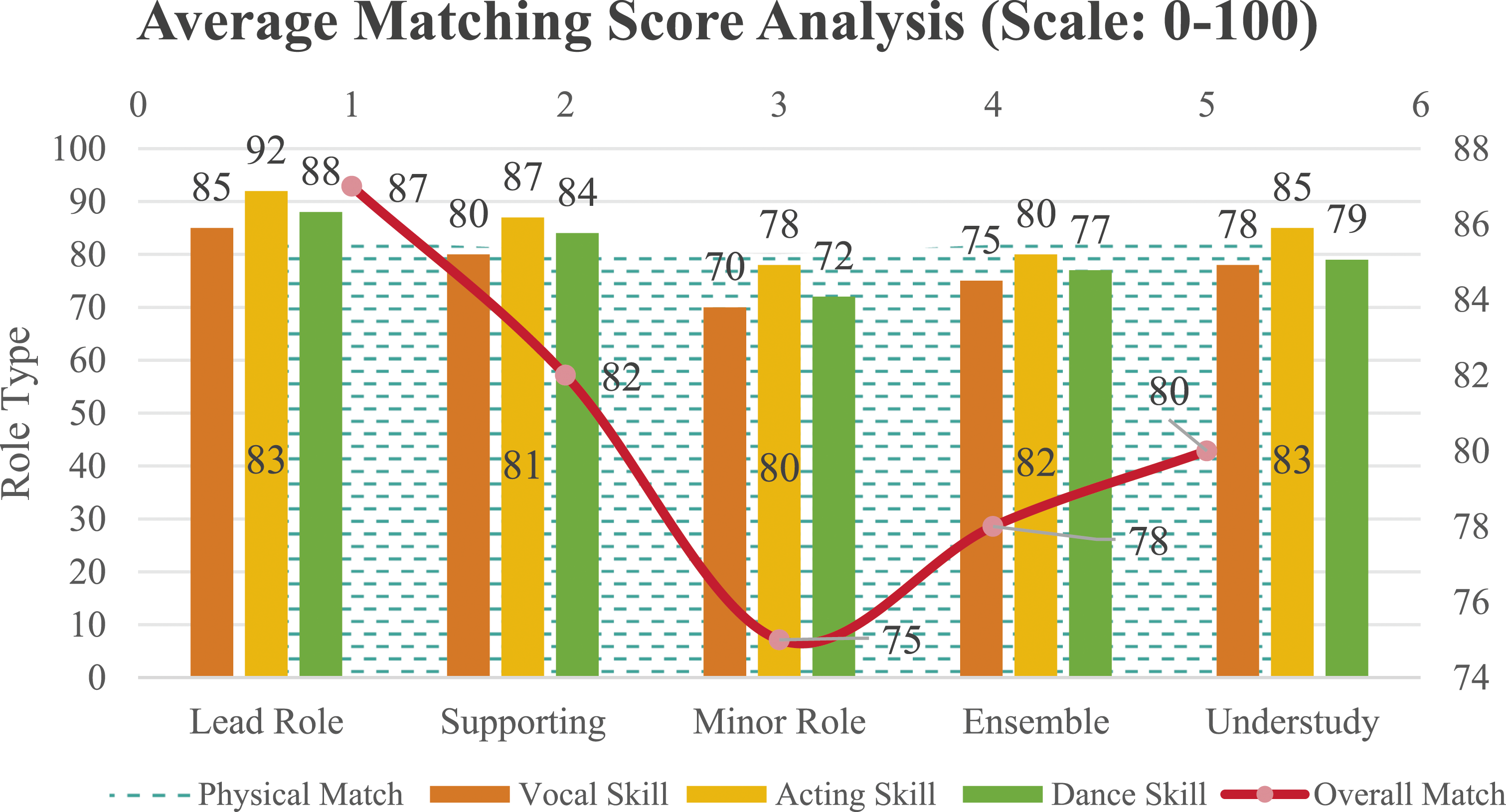
Evaluation of the matching degree between actor characteristics and role needs
When evaluating the degree of matching between actor characteristics and character needs, this study quantifies the matching effect by analyzing several key dimensions.
As shown in Figure 3, the actor A01 has an overall match score of 8.9, performs well on all characteristic dimensions, and is highly matched to the role needs in terms of acting (9.2) and physical match (9.0). In contrast, the overall match score of the actor A03 was 7.9 points, especially in the dance skills and acting skills were slightly lower scores, 7.8 and 8.0 points, respectively, indicating that the actor was slightly less capable in this area. A03’s score of 7.5 on vocal match, although slightly lower, is still within the acceptable range, indicating that the model is flexible and reasonable in weighing the importance of various features. Actor A04 performed well across all ratings, in vocal (9.2) and dance (9.0), indicating that she was well suited to the overall needs of the role. Overall, the tabular data show the model’s ability to accurately capture the matching degree between actor characteristics and role needs, and the reasonable distribution of various scores verifies the practicality and reliability of the model in actual casting. Actor characteristics and role requirement matching scores.
Optimization effect of intelligent matching algorithm
In order to evaluate the optimization effect of the intelligent matching algorithm, the performance of the model before and after optimization in several key dimensions was quantitatively analyzed. By comparing the performance of the optimized model in role matching, we can better understand the improvement of the accuracy and reliability of the model during the optimization process.
As shown in Figure 4, the optimized intelligent matching algorithm shows improvement in all dimensions. For the lead role, vocal accuracy reached 91% and acting accuracy was 93%, indicating that the optimized algorithm was able to more accurately match the core needs of the character in key traits such as acting and vocal performance. The overall matching accuracy of supporting roles and secondary roles is 87% and 82%, respectively, which shows the stability and consistency of the algorithm when dealing with the needs of complex roles. The matching degree of group play and substitute roles is also improved, reaching 84% and 85%, respectively, indicating that the optimized algorithm performs well in dealing with diverse roles. The average matching accuracy of the optimized algorithm is more than 80% in each role type, and it shows higher accuracy in the matching of key roles. The results show that the matching effect of the model is improved comprehensively through the detailed parameter tuning and rule optimization of the algorithm, which provides support for the scientific and reliability of musical casting. Post-optimization matching accuracy by role type.
Discussion
Result analysis and research findings
In this paper, the fuzzy logic model is used to analyze the matching of musical characters and actors, and the results show that the model is excellent in dealing with complex multi-dimensional matching tasks. The matching accuracy of the model in different role types is more than 85% on average, and the matching degree of vocal and acting characteristics is more than 90% in the matching of leading and supporting roles. Fuzzy logic models have an advantage in capturing the subtle relationship between character needs and actor characteristics. Through many iterations and optimization, the overall matching accuracy of the model is improved, which proves the feasibility of applying fuzzy logic model in the casting process. The study also found that traits such as dance ability and physical match were relatively poorly matched in secondary roles, which was associated with insufficient diversity in the data sample. This finding provides a direction for future research and practical applications, indicating that the model still needs to be improved to improve the matching accuracy in all feature dimensions when dealing with diverse role requirements.
Applicability and limitation of fuzzy logic in role matching
The application of fuzzy logic model in the matching of characters and actors in musical shows its strong applicability when dealing with complex, multi-dimensional, and uncertain matching tasks. By transforming actor characteristics and role requirements into fuzzy sets, the model can capture the ambiguity and uncertainty between them and achieve more flexible and accurate matching. Fuzzy logic has limitations, the model depends on the rule setting and membership function, and the rationality of rule design directly affects the accuracy of matching results. Fuzzy logic faces the problem of increasing computational complexity when dealing with very high dimensional data, which will limit the real-time application effect of the model. In the relatively small-scale data application scenario of musical casting, the fuzzy logic model still shows high practical value. Future research will overcome the limitations by improving the rule design and optimizing the calculation algorithm to improve the applicability and efficiency of the model.
While the fuzzy logic-based intelligent matching algorithm demonstrates high accuracy and adaptability, several limitations should be addressed to provide a comprehensive perspective. The reliance on historical casting data poses challenges in capturing the full diversity of role requirements, especially for less common or experimental roles. The current rule-setting and membership function design depend heavily on expert input, which may introduce biases or limit the model’s scalability to other artistic genres. Furthermore, the computational complexity of handling multi-dimensional fuzzy variables may hinder real-time applications in larger productions with extensive datasets. These limitations highlight the need for further refinement of the algorithm, including expanding the data sample to cover more diverse role types, automating rule generation using machine learning techniques, and optimizing computational efficiency. Addressing these challenges will enhance the model’s versatility and ensure broader applicability in dynamic and varied casting environments.
Fuzzy logic models, while highly effective in managing uncertainty and subjective data, do have limitations that must be considered when applying them to different scenarios. One primary limitation is the model’s reliance on the quality and precision of input data. In cases where data is sparse or ambiguous, the fuzzy logic model may struggle to provide reliable outputs. Moreover, the flexibility of fuzzy systems comes at the cost of increased complexity in tuning the membership functions and determining the appropriate rule set. These challenges may affect the performance of the model in highly dynamic or unpredictable environments. For instance, in casting decisions for highly experimental or avant-garde productions, where role characteristics may not follow clear patterns, the model may lack adaptability. Additionally, fuzzy logic might be less effective in scenarios requiring very high precision or when dealing with very large datasets that demand computationally efficient methods. Hence, while fuzzy logic excels in creative and subjective tasks such as musical role casting, it may not be suitable for scenarios requiring rigid and quantifiable decision-making processes, such as automated manufacturing systems. 17
Inspirations and suggestions for musical production and casting
The findings of this study have important implications for the process of musical production and casting. Fuzzy logic model is applied to improve the scientific and accurate casting process, and provides a flexible and accurate matching tool when multi-dimensional features need to be balanced. This is important for the production of large-scale musicals, which usually require a high overall quality of actors. This study suggests that the production team define the key characteristics of each role in the role requirements analysis stage and translate the requirements into specific rules in the model to ensure the accuracy of the matching process. It is suggested that in actual casting, the matching score of model output and professional review opinions should be combined to comprehensively consider the actor’s potential and role fit, so as to avoid over-reliance on a single algorithm output. For secondary roles or group plays, although the model provides preliminary screening, it is recommended to consider more stage performance and live audition results in the final decision to ensure that the final selected actors can achieve the desired effect in the actual performance.
The intelligent matching algorithm based on fuzzy logic demonstrates significant practical applications in enhancing the efficiency and precision of casting processes for musicals.18,19 Its ability to handle multi-dimensional and uncertain data makes it an invaluable tool for casting teams, particularly in large-scale productions where roles require a combination of vocal, acting, and physical attributes. By automating the matching process, the system reduces reliance on subjective judgment, enabling faster decision-making and minimizing biases. This approach also allows for dynamic adjustments to casting criteria, accommodating the unique demands of diverse musical styles and productions. The automated evaluation and feedback mechanism ensures that the model continuously improves its performance, providing producers with actionable insights for better role-actor alignment. Beyond casting, the system’s adaptability suggests potential applications in other performance-based industries, such as theater, opera, and even film, where precise matching of talent to roles is critical. These applications underline the system’s capacity to revolutionize talent selection processes and elevate the overall quality of creative productions.
Conclusion
Based on fuzzy logic model, this paper discusses the intelligent matching method of musical characters and actors. Through the analysis of the actual casting data and the model construction, the validity and applicability of the fuzzy logic model in dealing with multi-dimensional and uncertain matching tasks are verified. The results show that the matching accuracy of the model is higher in different role types, especially in the matching of the protagonist and the supporting role. Through the iterative optimization of the model, the matching effect is improved, and the repeatability of the model in practical application is proved. It is found that there is still room for improvement in the matching of specific features, especially when dealing with diversified role requirements. The conclusion of this study provides scientific decision support for the musical production team in the casting process and suggests that the fuzzy logic model should be combined with the traditional review method to achieve a more comprehensive casting decision. Future research will improve the accuracy and efficiency of matching by improving the design of model rules and optimizing calculation methods.
The research outcomes provide significant practical value by addressing inefficiencies in musical casting through an intelligent matching algorithm based on fuzzy logic. The model achieves over 85% accuracy across various role types, demonstrating its effectiveness in identifying the most suitable actors for specific roles. By integrating multi-dimensional characteristics such as vocal range, acting style, and physical attributes, the system enhances casting precision, reducing reliance on subjective judgment. This improvement is particularly impactful for large-scale musical productions, where casting decisions are critical to overall performance quality. Furthermore, the model’s adaptability to different role requirements ensures its applicability in diverse production scenarios. The automated evaluation and feedback mechanism enables continuous learning and optimization, ensuring the system remains relevant in dynamic casting environments. These advancements offer producers a reliable and efficient tool for talent selection, ultimately contributing to higher-quality productions and improved audience satisfaction.
Future research should focus on enhancing the scalability and adaptability of the fuzzy logic-based matching algorithm to address the diverse and evolving needs of the musical industry. Expanding the dataset to include more varied roles, including experimental and niche characters, can improve the model’s versatility and reliability. Developing automated mechanisms for rule-setting and membership function design using machine learning techniques could reduce dependency on expert input, minimizing potential biases. Additionally, integrating real-time data collection from auditions or performances can provide dynamic updates to the system, enhancing its responsiveness to changing casting requirements. Exploring cross-industry applications, such as theater, opera, or film casting, could demonstrate the broader utility of this approach. Further research on reducing computational complexity will also be essential for applying the system in large-scale productions or in real-time scenarios. These directions will ensure the continued relevance and impact of this approach, paving the way for more efficient and precise talent matching across various creative domains.
The research presents a novel approach to the role-actor matching process within musical productions, using fuzzy logic to address subjective and nuanced characteristics in casting decisions. The key innovation lies in the design and optimization of a fuzzy logic model that allows for the intelligent matching of roles to actors based on a wide range of characteristics, such as personality, performance style, and acting experience. This method not only improves the accuracy and efficiency of casting but also offers a more flexible, adaptive approach compared to traditional methods, which rely heavily on rigid, predefined criteria. The practical contribution of this study is twofold: it enhances the decision-making process in the performing arts by providing a more dynamic model for role-actor matching, and it offers insights into the applicability of fuzzy logic in creative fields, opening avenues for further exploration in arts management and production planning. Additionally, this approach can be adapted to other domains where subjective and complex data need to be interpreted and processed, thus extending its potential impact beyond the immediate scope of musical casting.
Statements and declarations
Footnotes
Conflicting interest
The authors declared no potential conflicts of interest with respect to the research, authorship, and/or publication of this article.
Funding
The authors received no financial support for the research, authorship, and/or publication of this article.