



Abstract
In order to promote the standardized, scientific and intelligent of listed companies needs to be optimized in combination with cloud computing. This requires us to conduct real-time and reasonable management of the big data involved in corporate human resources and build a suitable information platform for management and control. Therefore, using cloud computing, this study systematically explores big data management in the human resource management of rail transit enterprises. This study mainly analyzes the two main factors of big data management involved in rail transit human resources. This paper mainly introduces three typical cloud computing methods. In addition, the mathematical fitting results show that human resource management involves a good linear function relationship between the corresponding predicted values of two important indicators. This study highlights the significance of leveraging cloud computing and big data management to enhance the standardization, scientific precision, and intelligent optimization of human resource management in rail transit enterprises.
Keywords
Introduction
As we all know, big data drives innovative technology in a transformation of traditional information collection and processing methods,1,2 high speed, and variety, so it is difficult to be acquired, stored, and organized by general software tools. For enterprises, in order to extract information that. The use of this technology can not only help enterprises to grasp market changes and industry development trends in an all-round way, but also efficiently and accurately classify and analyze employee information internally. Therefore, big data drives innovative technology can be used in human resource planning, corporate recruitment and personnel allocation, salary performance management, talent development and training, etc., so as to help enterprises efficiently handle personnel management and human resource optimization and allocation.
In an increasingly competitive market environment, the essence of business competition for companies, especially for listed companies, is talent competition.3,4
The core competitiveness of an enterprise comes from an accurate grasp of market demand.5,6 Therefore, enterprises should grasp the development trend of human resource management, make full use of existing human resources, and carry out targeted innovations in enterprise management.
Enterprises need to use big data drives innovative technology7,8 to improve the ability of enterprises to collect, organize and analyze data. At the same time, each link requires human participation. Therefore, in the context of the era of big data, enterprises often need to improve the requirements for the professional quality of employees. Under this requirement, human resource management often uses information technology to continuously improve management efficiency and expand, so that gradually develops from traditional personnel management and administrative affairs management to information-based comprehensive management. There are individual differences among enterprise employees. Therefore, the selection, employment, and retention of people in enterprises are more complicated, and human resource managers need to have experience and judgment in this regard.
If big data analysis can be carried out in this process, the rules of enterprises in selecting, employing and retaining people can be found. Then, using data analysis and model building methods can help human resource managers to select suitable candidates for the first time. Obviously, this management method that relies on big data drives innovative technology will gradually change the working mode of human resource management, and make employee data. As shown in Figure 1, the current human resource management system consists of multiple parts. The composition of human resource management system.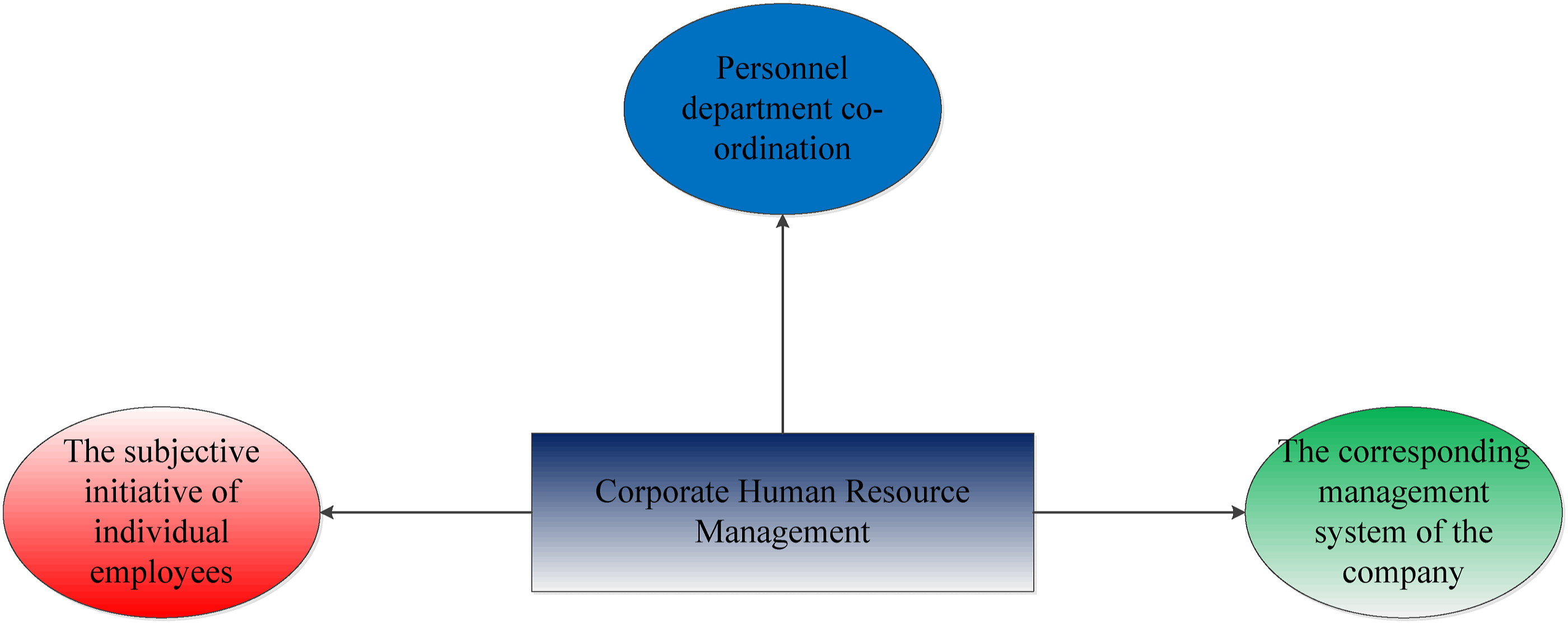
As we all know, the informatization of human resource management has gradually gained popularity in enterprises. With the help of human resource management information system, enterprises can grasp the relevant information of employees in a timely and accurate manner, such as basic information of employees, age composition of employees, education level of employees and related costs. For enterprise managers, they can master the human resource situation of the enterprise as a whole, so as to formulate human resource strategies.
The premise of applying big data drives innovative technology is to realize the informatization development of enterprise human resource management. Therefore, enterprises need to create a database and update it dynamically. First of all, enterprises need to establish an accurate human resource database to improve the reliability and accuracy of big data analysis. This requires enterprise managers to attach great importance to the development of the database. After the database is established, the human resources department should regularly manage and update the personal data of the employees. The latest data will be added to the database, which will pave the way for future data analysis.
For example, the human resources department should actively cooperate with other departments to collect the basic data of employees as much as possible, and use big data to effectively integrate the basic information of employees.9,10 Each of these factors should be considered when collecting basic data. It is necessary to collect not only the most basic information of employees’ work status, duration, business learning, education background, and length of service but also systematically collect information such as the results of each assessment, reward and punishment, and promotion experience. In the process of work, the human resources department should record the important behaviors of the technical backbone of the enterprise and the middle and senior management personnel. The data in the database will continue to grow as work continues. Faced with massive data, enterprise managers need to collect effective information accurately and timely and find reliable results through information analysis.
It is undeniable that it is very necessary to reform and optimize the management of human resources big data in listed companies. To accomplish this goal, we need to build the necessary management platform through massive databases. Among them, the combination of advanced artificial intelligence through cloud computing technology is the most effective measure to improve the human resource management system of enterprises. Based on the above analysis, this paper will explore new ideas for the establishment and reform of the big data management platform for human resource management in listed companies from the perspective of big data-driven, by introducing a variety of cloud computing aids. We focus on the improvement of the informatization model of big data management, in order to obtain solutions and strategies suitable for the innovative development of Chinese listed companies.
The organizational structure of this paper is as follows. First, the second part of the article introduces the current development model of Chinese listed companies and the defects of human resource management. The third part shows several typical cloud computing methods. Finally, through the description of a special case, the author provides some suggestions for the human resource management of listed companies using intelligent means. The purpose of this study is to explore innovative strategies for optimizing human resource management in listed companies by leveraging big data-driven technologies and cloud computing methods. It aims to address existing deficiencies in human resource management systems, enhance data collection, organization, and analysis capabilities, and propose informatization models to improve efficiency and effectiveness. Through a systematic approach, this research seeks to provide actionable solutions for advancing the integration of big data and intelligent technologies in corporate human resource practices, fostering the innovative development of Chinese listed enterprises.
Research on the reform of human resource management in listed companies under the background of big data at the current stage of China
Listed companies have significant advantages in financing channels. By publicly issuing stocks, listed companies can quickly raise a large amount of funds to support their business development, expand production scale, or engage in technological innovation. This financing channel is more efficient and convenient compared to general companies, providing strong support for the rapid development of the company.11,12 Furthermore, listed companies also have significant advantages in brand image and market influence. Listed companies typically have stronger brand awareness and market influence, which helps them attract more customers and partners, further expanding their market share. Therefore, we can see that listed companies have greater operating scale and economic benefits.
Human resource management occupies a very important position in the development of many fields. In order to better promote development, human resource management should be constantly innovated and improved. With big data as an important background, the development value can be fully highlighted. In the case of meeting the challenges, higher requirements are also put forward for human resource management. Under the guidance of key links, the role and operation can be more perfect.
Human resource management is carried out with big data as an important carrier and support, and its key value and significance are very obvious. It is necessary to better demonstrate the power. However, it is undeniable that there are still some problems in the human resources management of Chinese listed companies at this stage. As shown in Figure 2, these problems mainly focus on the following aspects. These problems mainly include unreasonable management mechanism, backward management thinking, lack of professional talents and lack of overall strategic planning. Construction and main components of sports training information platform.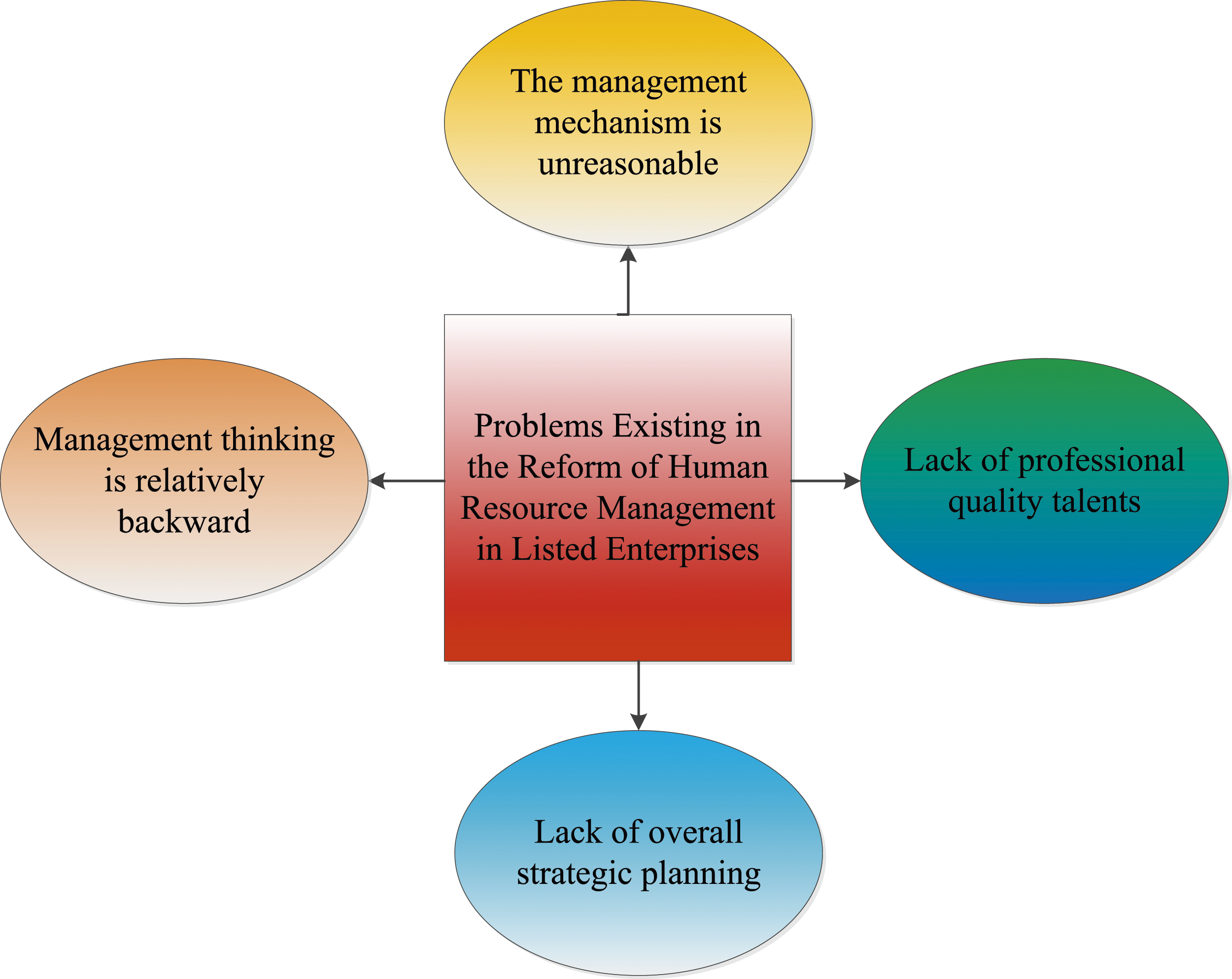
Among them, the unreasonable management mechanism is the core factor that affects the company’s human resource management. The backward management thinking will imprison the innovative thinking of managers with a high probability. The lack of management talents and strategic planning belongs to certain objective factors.
If human resource management wants to be implemented stably, it needs to be supported and premised by system construction. Through the stable establishment of the management mechanism, constraints will be imposed on human resource managers, and corresponding incentives and support will be given to them, which can make the work more stable and orderly. Starting from the analysis of the actual situation, many enterprises still have certain deficiencies in the process of establishing the management system, which greatly affects the specific value of the enterprise. The management system is mainly formulated, and many management systems are mainly in the form of punishment, lacking an incentive model. In this context, although the effect of human resource management can be greatly improved, it cannot rely on big data analysis methods and lack the foundation to grasp the actual situation of employees, which greatly affects the evaluation of employees’ work conditions.
Information technology has been extensively applied across various fields, demonstrating significant value in practice.13,14 However, when it comes to human resource management, outdated management mindsets remain a prevalent issue. This challenge is particularly common and often results in the absence of a well-structured employee data system. Such outdated thinking typically manifests in the following two key aspects.
First of all, the recruitment of personnel is based on the number of employees, and there is no reasonable recruitment and integration of actual data, and there is a lack of effective training. As a result, human resources work has been affected, and reasonable overall planning cannot be implemented, and manpower needs cannot be met and implemented.
Secondly, under the constraints of traditional thinking, employees cannot get certain attention. Moreover, in the case of ignoring the specific requirements of employees, it is easy for employees to fail to grasp the advantages and disadvantages, and they cannot deeply explore the actual personalized characteristics of employees. Such a method lacks effective training and improvement, which prevents employees from developing synchronously. In the end, employees lose their future development plans, and brain drain and other phenomena often occur.
In addition, talents are the key force in the process of human resource management innovation. Big data drives innovative technology is an important application foundation. If managers cannot demonstrate strong professional skills and grasp the advantages of big data drives innovative technology, it will seriously affect the efficiency and quality of work. Sometimes the human resource management department does not attract attention and attention, and focuses on other departments, which leads to the lack of good talent support for human resource management and low management efficiency. While using advanced technology, managers lack strong operational ability and awareness, and cannot effectively use advanced technology. Ultimately, this also makes it difficult to better implement sustainable development and progress.
Under the development of the era of big data, human resources management should be improved, and a key management model should be formed while implementing a reasonable development strategy.14,15 Therefore, in the process of effective reform of human resource management, we must pay attention to the stable construction of the management mechanism, improve the quality of staff, and create a reasonable big data operation model. At the same time, guided by the correct management thinking, the construction of the big data strategic development planning system can be more powerful.
Figure 3 shows the proportion of big data management platforms in several quarters of 2021. As shown in Figure 3, the application ratio of big data management platforms in the human resource management of listed companies in the four quarters is not much different. Among them, the first quarter corresponds to the largest proportion. The maximum value is 33%. Display of the results of a single physical training session.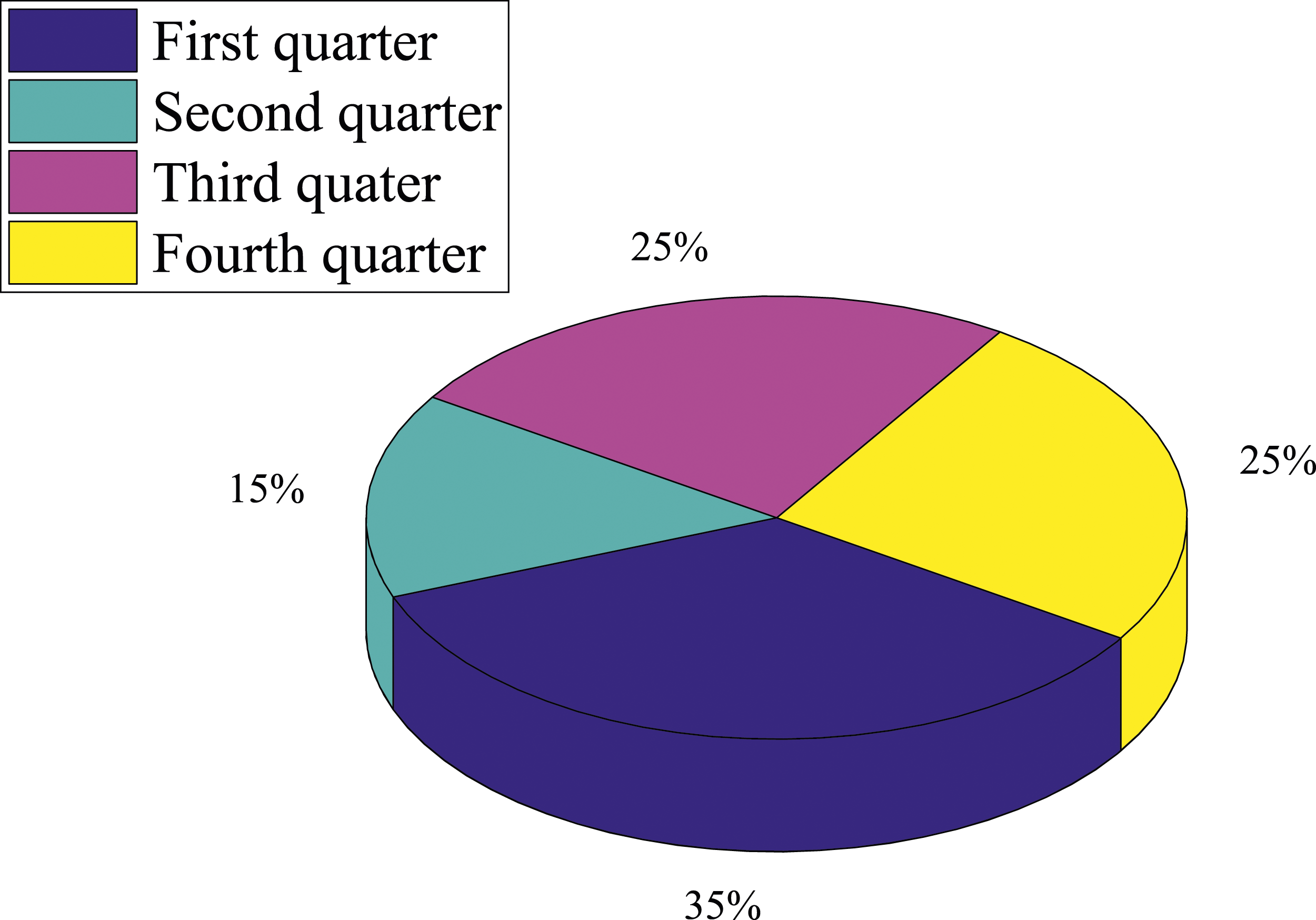
Moreover, effectively incorporating big data analysis concepts and technologies into human resource management has become a pivotal aspect of the modern data-driven era. This integration provides a solid foundation for enhancing the quality and effectiveness of human resource operations. By fully leveraging the value of information collection, a well-structured human resource management information system supports subsequent processes, offering valuable guidance and improving overall performance. Proper utilization of big data enables the human resource management department to receive the necessary data-driven support, facilitating more effective execution of its responsibilities. Through continuous data analysis, gaps in talent management and reserves can be systematically addressed.
In the context of informatization, establishing a comprehensive enterprise human resources management platform ensures fairness and transparency in employee engagement across different roles. This approach not only enhances employees’ sense of belonging and understanding of company growth but also contributes significantly to the enterprise’s market competitiveness. Supported by cloud computing technology, performance information management becomes more standardized, and evaluations such as performance appraisals and human resource assessments are conducted with greater accuracy and fairness. This fosters a healthy competitive environment among employees, motivating them to maintain high levels of enthusiasm and contribute to the company’s success. Thus, research in this area is both timely and essential for advancing enterprise development.
Figure 4 shows the process of establishing a human resource management platform for a listed company. The process of establishing the human resources management platform of a listed company.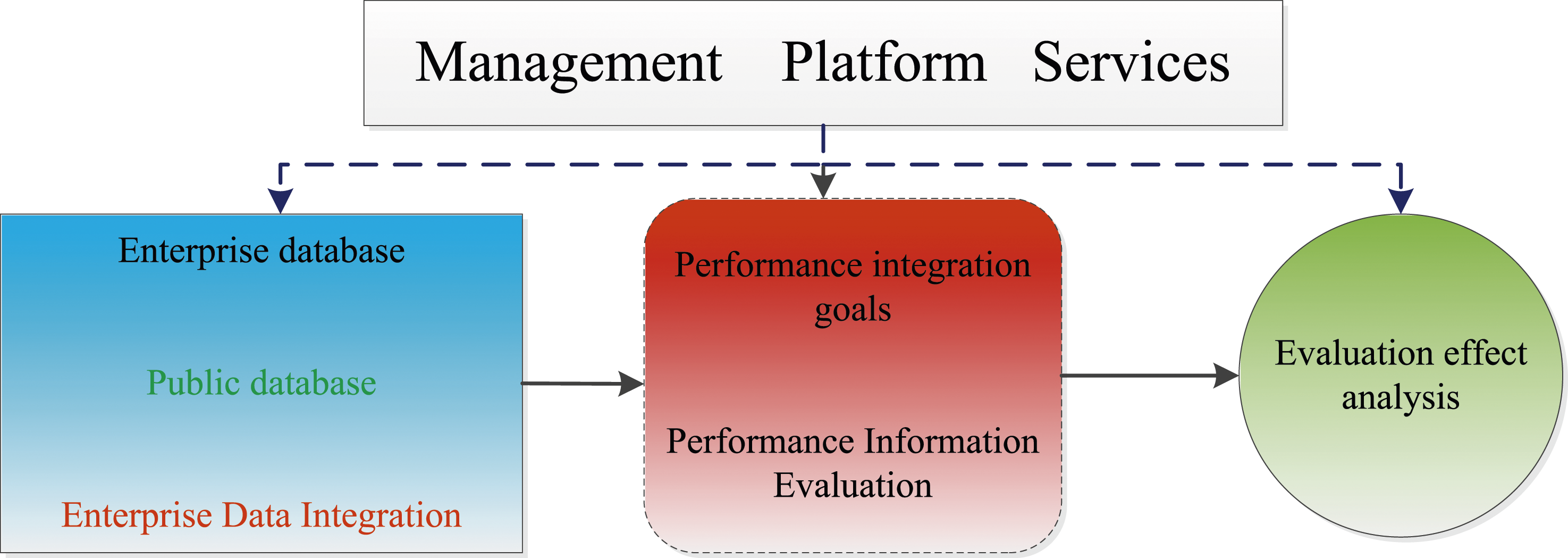
As can be seen from Figure 4, the platform constructed by the enterprise consists of four main modules, namely, the enterprise performance data integration module, the enterprise performance information management evaluation index module, the management result feedback module, and the comprehensive service module. In the management result feedback module, the role of big data drives innovative technology is to decide employee performance behavior, and to analyze employees’ work behavior according to preset indicators. And based on this, we can effectively evaluate the company’s outstanding employees, the best employees, or the outstanding employees in the group. In order to avoid excessive redundant data generated during the evaluation process and interfere with the operation of the platform, the result data can be stored in the cloud when the evaluation results and performance information management results are fed back. In addition, the docking and integration of management information and the platform database can be carried out by means of distributed management. Compared with other modules in the management platform, the integrated service module belongs to a relatively independent working module in the platform, mainly composed of the service layer and the data warehouse. This module is integrated into the performance information management platform to provide information transmission for other modules. It can also provide auxiliary services such as information query and information retrieval for employees in the enterprise. Therefore, we can also use this module as a transition module. This approach can serve both employees and businesses.
Cloud computing technology, as a representative of smart technology, has been widely applied in various fields of social research,16,17 with predictive studies using intelligent algorithms being among the most practical examples. Similarly, cloud computing technology holds significant potential for constructing big data management and information platforms for human resources in listed companies.
That said, the effective application of cloud computing requires clearly defined research objectives. This study focuses on the human resource performance management of an urban rail transit enterprise, leveraging cloud computing technology to develop a comprehensive performance management platform and broaden the range of data sources for performance evaluation. The primary data sources for enterprises are collected through human resource management systems and include a variety of employee information, such as basic details, professional skills, personal qualities, job requirements, and work standards.
Through the above analysis, this paper studies the related content of human resources data management and information platform of transportation rail enterprises. Specifically, this paper introduces several commonly used cloud computing methods, and uses the big data source of human resource performance of enterprises as evaluation indicators to carry out prediction research. In this way, it is expected to provide certain solutions and methods for the improvement and optimization of the big data platform of Chinese listed companies.
Introduction and improvement of cloud computing approach
PSO-LSSVM theory18,19
In the vast field of machine learning, support vector machine (SVM) has long been one of the favored algorithms by researchers. However, when we delve deeper into its performance in specific application scenarios, such as blasting engineering, we will find that this traditional algorithm demonstrates its unique and powerful optimization capabilities. Blasting engineering often faces challenges such as sample scarcity, complex nonlinear problems, and numerous influencing factors, and support vector machines have become powerful tools for solving these practical problems due to their excellent local and global optimization capabilities. The key to LSSVM model prediction lies in the selection of its parameters γ and σ. However, traditional support vector machine models usually use empirical values to set the values of the two parameters, resulting in poor prediction results.
Based on the above status quo, we can establish a blasting vibration effect prediction model based on PSO-LSSVM. Least squares is a new regression algorithm based on SVM proposed by Suykens et al. It also replaces the inequality constraints in SVM with linear equations. In this way, the complex quadratic programming problem is avoided, and the calculation accuracy and prediction speed are greatly improved. The core idea of SVM is to map the samples in the low-dimensional space to the linearly separable H-dimensional feature space by finding a nonlinear mapping function.
The final optimization function of LSSVM can be expressed as follows.

The optimization function of the traditional SVM for the optimal classification of the above sample set can be expressed as follows.



To solve the quadratic programming problem in SVM, LSSVM transforms the above inequality constraints into equality constraints according to regularization theory and least squares cost function. The optimization function solved at this time can be expressed as follows.


In order to find the optimal solution of the above formula, we introduce the Lagrangian function, namely:

The solution of these partial derivatives not only reveals the behavior of various parameters in the optimization process but also helps us construct the analytical expression of the partial derivative function of support vector machines. This analytical formula is the key to understanding the working principle of SVM and also the basis for subsequent parameter adjustment and optimization. Furthermore, when we turn our attention to LSSVM, we will find that this variant of SVM has its unique advantages in optimizing functions. LSSVM simplifies the solving process of optimization problems by introducing the least squares method to transform the inequality constraints in traditional SVM into equality constraints. The final optimization function can usually be expressed as a quadratic function with respect to parameters such as w, b, and e, and some linear constraints are attached.

In the formula, x represents the collected measured value, and xi represents the variance of the mean value of the measured value. H represents a surrogate function that the dependent variable is related to the independent variable.
Among them, the kernel function adopts the Gauss radial basis kernel function, and its formula can be expressed as:

In the formula,
Prediction method of multivariate adaptive regression19,20
It is not difficult to understand that the multivariate adaptive regression method is a gray-box computing scheme that can automatically map. This relationship is mapped into the functional relationship to be solved through the mapping of the matrix sequence and its corresponding polynomial function. This polynomial function is derived entirely from the original regression data and has nothing to do with artificial setup functions. At the same time, this method can automatically determine variable selection and functional form and is not affected by human prior experience. The calculation flow of the multivariate adaptive regression method can be expressed as follows.

In addition, in order to make the explanation of the article more convincing, the same prediction experiment is carried out on the same set of sample data by introducing the most commonly used BP neural network method. This kind of experiment can be seen as a kind of parallel experiment.
Application of cloud computing method in big data management of listed companies
The traditional human resource management model often forms a large amount of reference and storable data through written records.
However, such documents are only necessary processes for human resource management, and formalized documents not only have no extended use value, but also consume time in recording.
In the era of digital economy, driven by establish a complete enterprise human resource management system (eHR) and transmit data files to the cloud server through the Internet. This not only effectively changes the drawbacks of traditional human resource management but also enables data access and information sharing.
In addition, under the traditional human resource management mode, too much corporate data or too many borrowers will lead to data loss or damage, but the new data-based data management just makes up for this shortcoming. Figure 5 shows us the trend of the application effect of big data management over time. As shown in Figure 5, the application of big data management presents an oscillating change rule over time. This shows that there is no specific law in the time dimension of this change law. Big data management application effect display.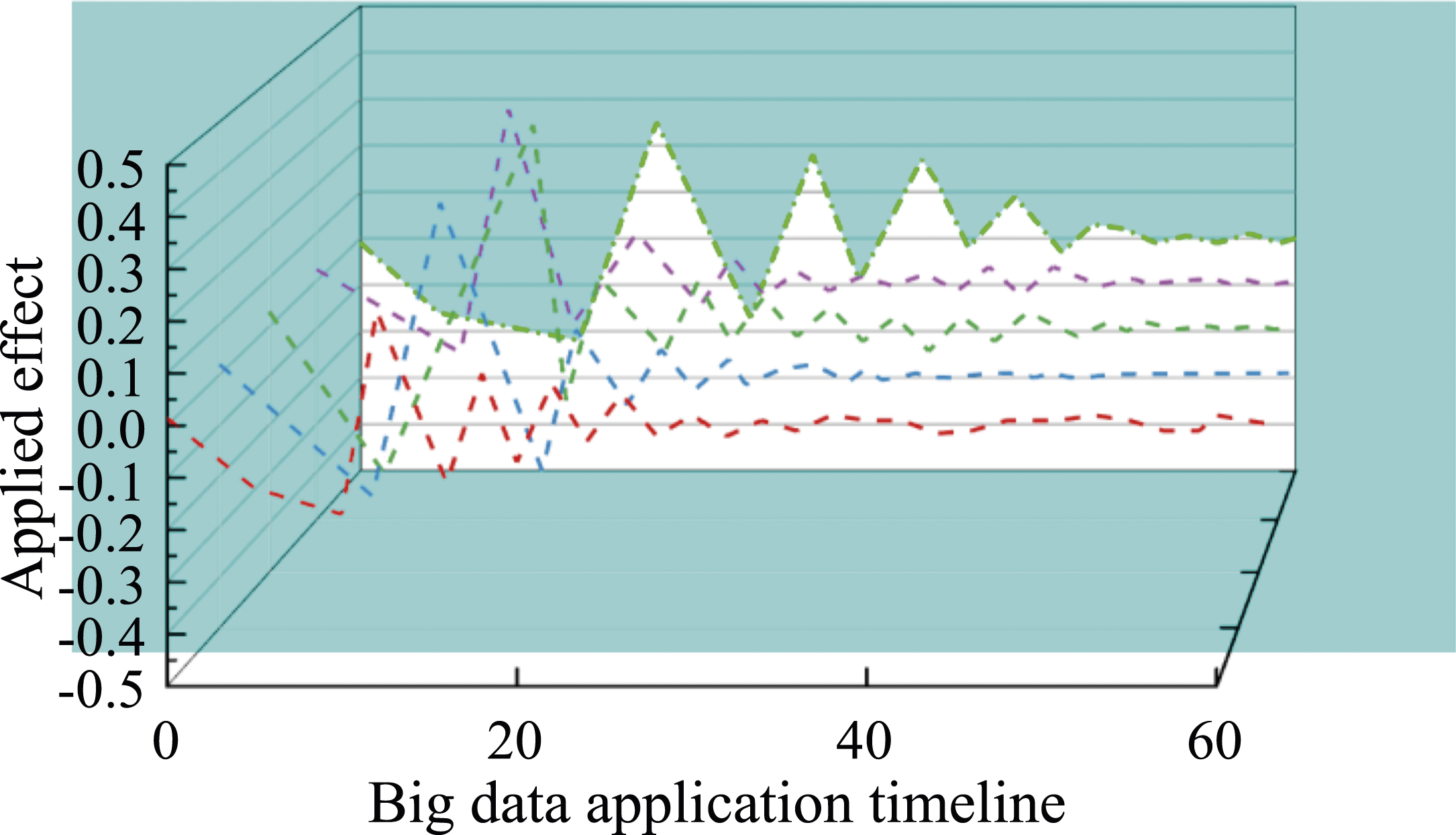
The application of big data to analyze employees can be more accurate and objective, avoiding the subjective tendency problem caused by managers’ emotions. This method can affect the rationality and fairness of performance management, talent selection and training, and can help companies build a better talent evaluation system. Enterprises find their potential connections through data and data analysis, summarization, and induction. The realization of this effect can be obtained by means of cloud computing.
Through the research on China’s urban rail transit enterprises, it is found that the rail transit industry is basically dominated by state-owned enterprises. The management method is more traditional, and performance management is often based on assessment, lacking effective and objective quantitative analysis and data analysis models. This human management model is not transparent and lacks the evaluation of employee behavior and work process. Such a system has a long feedback cycle and high implementation costs.
For this reason, this paper studies the related content of human resources data management and information platform of transportation rail enterprises. The human management data of rail transit enterprises mainly comes from various information platforms of the enterprise.
This type of data is mainly collected through the enterprise human resources management system (eHR) to collect various information of employees, including basic information, professional ability, professional quality, job requirements, and work standards.
Figure 6 shows the distribution of the above five types of research data in this forecasting study. Display of the satisfaction distribution of the survey results.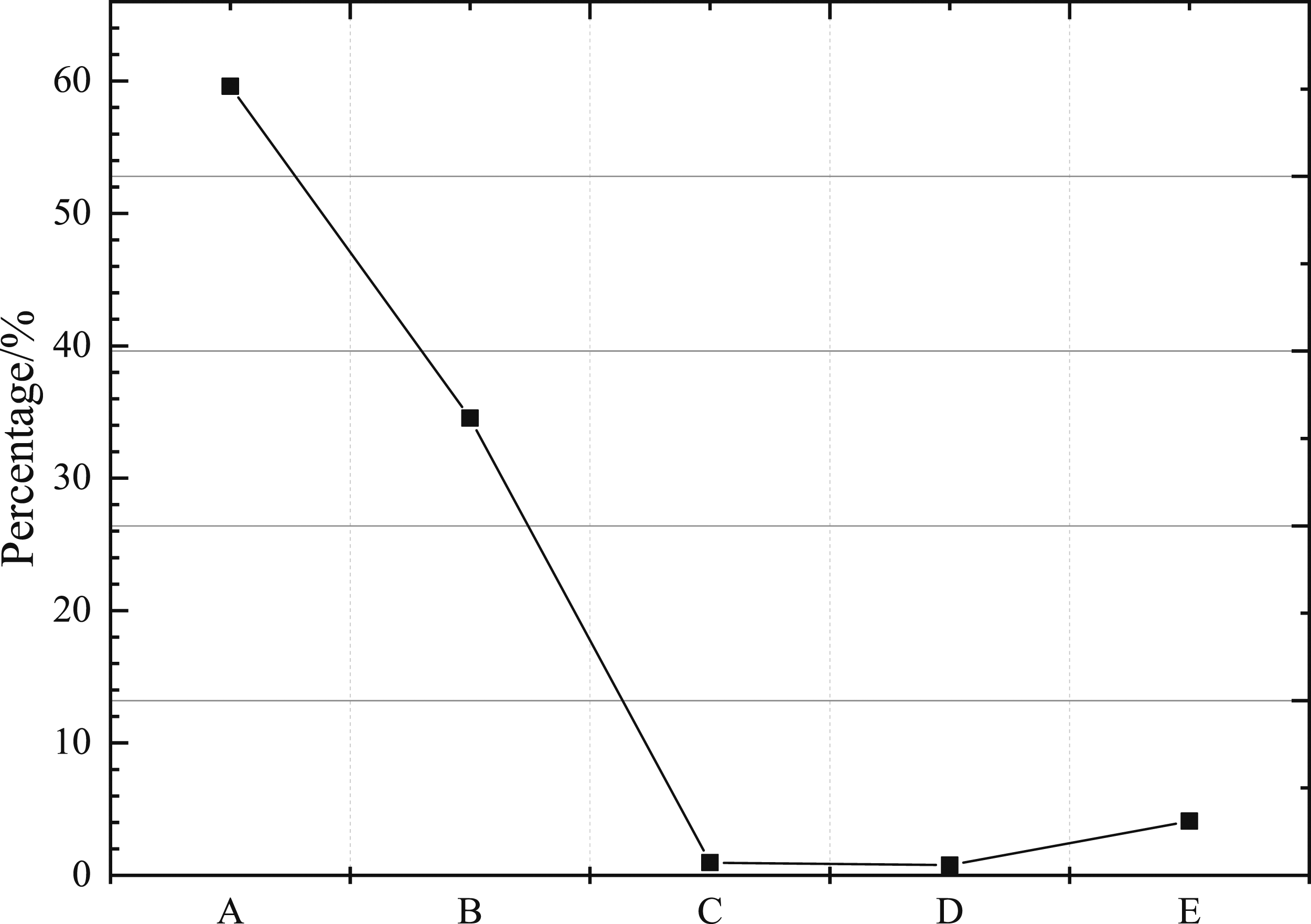
It should be pointed out that A stands for basic information, B stands for professional ability, C stands for professional quality, D stands for job requirements, and E stands for work standards.
As shown in Figure 6, basic information data accounts for the largest proportion, which is close to 60%.
As mentioned earlier, among the three main data of human resource management, the first two data account for the largest proportion. In order to simplify the research process, only two main aspects of basic information and professional ability will be predicted in the following paper. The relationship matrix of these two research aspects and the corresponding predicted effect values can be represented as shown in Figure 7. Demonstration of the estimated effect of cloud computing methods.
As shown in Figure 7, there is a certain mathematical relationship between the calculation results of cloud computing and two related independent variables. It can be seen from the mapping reflection in the figure that the matrix corresponding to the two independent variables exhibits an oscillating change law. However, for the green map, the data points are more concentrated.
Taking two important evaluation indicators in the big data management of human resources of rail transit enterprises as the research objects, this paper conducts prediction research on the big data management effects of human resources of listed companies in China through the three kinds of cloud computing introduced above, in order to complete the quantitative analysis.
Figure 8 shows the prediction effect of this prediction study. We judge the application effect of cloud computing method by comparing the coefficient of determination coefficient and root mean square difference of different indicators. As we all know, the closer the coefficient of determination is to 1.21,22 Among them, the three methods also include the prediction method of BP neural network.23,24 Predictive effects of three artificial intelligence techniques.
It should be pointed out that I represent s for PSO-LSSVM Theory, II represent s for Method of Multivariate Adaptive Regression, and III represent s for BP neural network.
In the results shown in Figure 8, we compared the performance of different algorithms in prediction. Firstly, it is noteworthy that the Multiple Adaptive Regression (MARS) method exhibits a very high squared correlation coefficient, which is as high as 0.976, ranking first among all comparison algorithms. The value of the squared correlation coefficient is close to 1, which strongly indicates that the MARS model has a very high correlation between its predicted value and the true value when predicting the target variable, almost reaching a perfect match. Next, when we turn to another important indicator of prediction accuracy - root mean square error (RMSE), the Extreme Learning Machine (ELM) algorithm shows significant superiority. The RMSE value of the ELM algorithm reached the lowest point among all comparison algorithms, only 0.015. This extremely low RMSE value means that the error generated by ELM during prediction is very small, ensuring the accuracy and reliability of its prediction results.
From the above analysis results, it can be found that the method of multiple regression prediction can be used as a representative of cloud computing methods and applied to the innovation research of human resources big data management of listed companies.
At the same time, the forecasting effect of cloud computing, we try to study the relationship between the important evaluation indicators of human resources big data management of listed companies under the multiple regression forecasting system. Figure 9 shows the functional relationship between basic information and professional ability. It can be seen from Figure 9 that there is a good linear functional relationship between the two. The functional relationship between two important human resource evaluation indicators of listed companies.
The study demonstrates that cloud computing methods, particularly the Multiple Adaptive Regression Splines (MARS) model, exhibit exceptional performance in predicting human resource management outcomes for listed companies, with a high correlation coefficient (0.976) indicating near-perfect accuracy. Additionally, the Extreme Learning Machine (ELM) algorithm achieves the lowest root mean square error (RMSE) of 0.015, highlighting its predictive precision. These findings underscore the effectiveness of advanced cloud computing techniques in optimizing big data management for human resources, providing accurate, reliable predictions and facilitating the development of innovative management systems tailored to the needs of listed companies.
Conclusion
Big data can help managers of listed companies to grasp the actual situation of the company and improve management effectiveness. Realizing the integration of big data and human resource management. This approach can provide an opportunity for human resource management reform. This development trend requires us to combine modern information technology and design different human resource management modules for different needs to achieve efficient integration. In order to evaluate the effect of human management of listed companies, this paper takes the big data management of Chinese rail transit enterprises as an example, and uses artificial intelligence technology to analyze the two main factors and indicators of human management of rail transit enterprises. Its error sum of squares is only 0.015. However, this decision has a value of 0.971. In addition, the forecast data also shows that there is a good linear function relationship between the two corresponding variables for the two important indicators involved in the human resources management of listed companies.
Future research should focus on further refining the integration of big data and human resource management systems by leveraging advanced artificial intelligence and cloud computing technologies. Building on the findings, which demonstrated a strong predictive accuracy (decision value of 0.971) and minimal error (sum of squares 0.015), future studies could explore the application of these models in diverse industries beyond rail transit to verify their generalizability and scalability. Additionally, research could aim to develop more dynamic and adaptive human resource management modules tailored to specific organizational needs, incorporating real-time data processing and predictive analytics. Investigating the relationship between other key variables in human resource management and their impact on organizational performance could provide deeper insights, ultimately advancing the effectiveness of big data-driven management strategies.
Statements and declarations
Footnotes
Declaration of conflicting interests
The author(s) declared no potential conflicts of interest with respect to the research, authorship, and/or publication of this article.
Funding
The author(s) received no financial support for the research, authorship, and/or publication of this article.