



Abstract
With the increasing entrepreneurial activities of college students, building an effective entrepreneurial project recommendation system is crucial to stimulate innovation and improve the success rate of entrepreneurship. Traditional collaborative filtering methods have achieved some success in recommender systems. However, with the increase of data scale and the complexity of entrepreneurial projects, the effect of traditional methods is gradually limited. This study uses a data set containing a large number of entrepreneurial project data and compares the collaborative filtering model based on deep learning with traditional methods. Experimental results show that compared with traditional methods, the new model improves the recommendation accuracy by about 15% and the personalization by about 20%. This shows that deep learning has obvious advantages in processing data of large-scale entrepreneurial projects. Further data analysis also shows the training effect and generalization ability of the model. The effectiveness and robustness of the model are verified by analyzing the change trend of training loss and verification loss. Through the survey of user satisfaction, users’ satisfaction with the recommendation system based on deep learning is significantly higher than that of traditional methods.
Introduction
The value of data in the process of today’s social development is self-evident, but at the same time, it produces quite serious problems. Nowadays, storage devices are developing rapidly to adapt to the rapid increase of data information. However, the price of storage equipment increases with the increase of capacity, which will lead to the problem of cost budget.1,2 The analysis of a large amount of data cannot be done completely by manpower, and needs to be assisted by automated tools. However, each data analysis task is different, and different analysis tools need to be specified according to the task, so the lack of data analysis tools is also a serious problem. The biggest problem is facing a huge amount of data information, how to find valuable and practical information in the shortest time, which is a very realistic problem. When we browse websites or find information, we definitely need to get the most valuable data, not a lot of redundant and useless information, which leads to a new branch in the field of artificial intelligence-“expert system.”
Search engine in browser can be understood as a part of expert system, and its essence is indexing tool. This tool indexes hundreds of millions of pages on the Internet through crawlers. 3 Through the semantic analysis of the decomposition of keywords, users in the need to query the time can be through the keywords, the use of index query out. If we do analogy, it can be counted as a dictionary or a sea of words. The search engine in the browser can only be considered as a semi-intelligent system, which cannot accurately provide users with appropriate information. Later, scientists used mathematical modeling to create recommendation systems.4,5 The emergence of recommendation system brings great benefits to users and enterprises. For users, the recommendation system solves the problem of “information overload,” and can generate valuable information according to users’ interests, hobbies, identity characteristics and other data. For enterprises, the recommendation system can automatically analyze and model different users. Developing different marketing plans based on users’ different needs can effectively attract users, improve user experience, and bring lasting benefits to the company. 6
At present, recommendation system has been widely used in many fields, such as We Media, e-commerce, online movie viewing, and so on, and has brought high profits to many industries. According to the report of Microsoft Research Asia, recommendation system brings 35% of sales revenue to Amazon, 75% of consumption to Netflix, and 60% of browsing on YouTube homepage comes from recommendation service.7,8 In 2020, the turnover of Tmall’s “Double 11” exceeded 498.2 billion yuan, and its recommendation system realized personalized recommendation of homepage products, with the goal of improving conversion rate and click-through rate. If the overall conversion rate of the recommendation system increases by 1%, the increased turnover will be about 4.982 billion. 9 In September 2011, at Baidu World Congress 2011, Li Yanhong listed recommendation engine, cloud computing, and search engine as important strategic planning and development direction of Internet in the future. Baidu’s new homepage will gradually realize personalization, and intelligently recommend websites that users like and apps that they often use. In 2017, China Artificial Intelligence Association and Roland Berger jointly released the White Paper on Innovation and Application of Artificial Intelligence in China. It is estimated that the recommendation system will bring about 420 billion yuan in cost reduction and appreciation to the retail industry.10,11 In addition, the White Paper on Industrial Intelligence issued by Tsinghua University Global Industrial Research Institute in 2019 pointed out that the recommendation system can create user value, has a spreading user base and has broad development space. 12 Nvidia and CCID released the White Paper on Accelerated Framework of Recommendation System in 2020 in 2020, which introduced the application of recommendation system based on deep learning in a simple way, and expounded the current domestic recommendation system industry status and development trend.
With the rise of college student entrepreneurship, there has been a surge in the number of projects seeking funding, mentorship, and market validation. For example, according to the latest data from the National Association of University and College Business Officials (NACUBO), the number of student-led start-ups has grown by more than 30% over the past 5 years. However, it remains a daunting task for investors, mentors, and academic institutions to sift through the vast array of projects with the best potential. Most of today’s recommender systems rely on traditional algorithms, which may not fully capture the nuances and complexities of entrepreneurial projects. These systems often face challenges such as cold start issues, scalability, and the ability to accurately recommend projects based on diverse criteria such as innovation, market potential, and team capabilities. To address these challenges, this study proposes a deep learning-based collaborative filtering method that harnesses the power of neural networks to improve the accuracy and relevance of project recommendations. Compared with the existing content-based recommendations (focusing on the matching of project attributes), matrix factorization-based recommendations (prediction by decomposing the user-project interaction matrix), and naïve collaborative filtering methods (only using the similarity of the user-project interaction matrix), the method in this study can dig deeper into the project characteristics and capture user preferences more accurately, so as to provide users with high-quality entrepreneurial project recommendations that better meet their needs.
This study focuses on exploring the innovative application of collaborative filtering technology based on deep learning in the recommendation system of college students’ entrepreneurship projects. Compared with traditional recommendation system technologies, such as content-based recommendation, naïve methods based on collaborative filtering (simple similarity calculation using only user-item interaction matrix), and matrix factorization-based recommendation (predicting user preferences by decomposing user-item interaction matrix), this study makes full use of the powerful ability of deep learning technology (such as neural network model) in processing large-scale data, as well as the characteristics of personalized recommendation by collaborative filtering technology. By deeply integrating these two methods, this study aims to significantly improve the accuracy and personalization of recommender systems, so that they can more accurately capture user preferences and better adapt to the increasingly complex and changing entrepreneurial environment. Specifically, this study hopes to bring unprecedented innovation to the entrepreneurship project recommendation system for college students through the powerful feature extraction ability of deep learning combined with the collective intelligence advantage of collaborative filtering, so as to provide users with entrepreneurial project recommendations that are more suitable for their needs.
Recommendation system
Recommended system architecture
Because of their business differences, different Internet companies have different architectural forms of recommendation systems, but they can extract common parts from numerous recommendation system architectures as infrastructure, which is mainly divided into two parts: data processing layer and algorithm layer. 13
The current data is mainly derived from the interaction between the client and the server, where the client is responsible for providing services according to the user’s needs and collecting key data such as personal information, login information, browsing history, and time spent on pages, which is then sent to the server. On the server side, the user data is stored in the database according to the preset back-end logic,14,15 and the product or service information is entered in the initialization stage to ensure the normal operation of the service. However, despite the comprehensive dataset we employ, there may be limitations due to the lack of adequate coverage of the diversity of university students and entrepreneurial programs. To this end, we plan to expand the scope of data collection to include more university students and entrepreneurial projects to improve the reliability and generalizability of the analysis results. In terms of protecting user privacy and security, our model design takes a number of measures: anonymizing user data in the data preprocessing stage, storing data in a secure encrypted format, adhering to the principle of minimizing data collection, and strictly complying with relevant privacy regulations and standards such as GDPR to ensure that user data is properly handled. According to the specific needs of the recommendation engine, the server side will extract the necessary information from the database to support the effective interaction between users and the product.
We process this data through feature engineering, and convert the original data (such as username, password, gender, and age) into standardized feature data after a series of processing. Feature engineering is the preparatory work before the model is trained, and it provides the necessary training data for the model. In feature engineering, we employ a variety of data processing methods, among which standardization and embedding techniques are particularly commonly used in recommender systems. There are many data processing methods involved in feature engineering, and the commonly used methods in recommendation systems are normalization and embedding.
Normalization is to transform data into data in [0, 1] or [−1, 1] interval. The purpose is to eliminate the dimensional difference between various dimensional data and avoid the excessive prediction error of the model caused by the large dimensional difference of input and output data. Common normalization methods include linear normalization and zero-mean normalization. Linear normalization uses the maximum and minimum values in the sample to linearly transform the data, and maps data values to [0, 1].
16
The mathematical expression is shown in equation (1).

The advantage of linear normalization is that it can preserve the dependencies between the original data. It is the simplest way to eliminate the influence of data dimension, and it is suitable for samples with relatively concentrated data. Zero-mean normalization uses the mean and standard deviation of samples to transform the original data. The mean and variance of the processed data are 0 and 1, and the mathematical expression form is shown in equation (2).

Zero-mean normalization is the most commonly used normalization method at present. This method processes the mean and standard deviation of the original data, and makes the processed samples conform to the standard normal distribution.
Embedding is also called vectorization.17,18 Embedding can be understood as using low-dimensional dense vectors to represent objects. Objects can be commodities, news, users and movies. Embedding can express the characteristics of objects. Embedding can be used to calculate the differences between different objects. In the recommendation system, one-hot coding is used to encode features initially. For example, if gender is male and female, then gender characteristics will produce two feature vectors [1, 0] and [0, 1]. When there are many types of features, the feature vectors formed by coding will become very sparse, which will seriously waste the training cost and may have an impact on the final prediction results. Therefore, Embedding is needed to re-encode the initial feature vector generated by one-hot encoding. After Embedding, the feature vectors will become dense vectors, which makes up for the defect of one-hot coding. Embedding comes from the field of natural language processing, which is used to encode words and analyze the semantics between words. Because of its powerful information expression ability, it is gradually applied to encode the feature information of users and items in recommendation systems. Word2Vec, Item2Vec, and Node2Vec are commonly used.
Matrix factorization can also be regarded as an Embedding method. Intuitively, matrix factorization is to decompose a matrix the mathematical expression is shown in equation (3).

The recommendation algorithm layer uses data processing and the training process of the recommendation algorithm. The process first involves feature engineering, that is, the original data is transformed into feature representations that can reveal potential patterns and relationships after preprocessing steps such as cleaning, normalization, and encoding, to ensure the quality and consistency of the data. Subsequently, the recommendation algorithm layer set up two stages of recall and sorting to screen the items to be recommended. The recall phase uses efficient algorithms (e.g., content-based recommendations, collaborative filtering) to quickly screen out a collection of items that may be of interest to users from a large number of items. In the sorting stage, these items are further sorted, which are divided into two parts: coarse sorting and fine sorting, and use simple models or rules, complex algorithms such as deep learning models and ensemble learning models, respectively, to ensure the accuracy and diversity of recommendations. In data processing, for the processing of missing values and outliers, techniques such as mean imputation, k-nearest neighbor imputation and matrix factorization are used to estimate and fill in the missing values, and statistical methods such as box plot method and Z-score method and machine learning algorithms such as isolated forest and DBSCAN are used to identify and process outliers to ensure the accuracy and reliability of the data.
We have designed a comprehensive user feedback mechanism. This mechanism allows users to provide direct feedback on the recommendations they receive, in the form of ratings, reviews, or explicit feedback to indicate whether the recommendations are useful to the user. We then use a continuous learning process to incorporate user feedback into our recommendation algorithms. We use machine learning to deeply analyze user feedback and adjust algorithm parameters accordingly to generate more accurate and personalized recommendations. In addition, we attach great importance to regularly evaluating the effectiveness of the user feedback mechanism and making timely adjustments based on the evaluation results to ensure that the mechanism can continue to contribute to the improvement of the user experience. During the recall phase of the referral system, we screened tens of thousands of recommended products from millions of products. Because the recall phase needs to process massive amounts of product data and the screening results need to be delivered to the ranking model in a timely manner, the algorithms in the recall phase are usually designed to be relatively concise and efficient. Among them, content-based recall is a common strategy that calculates the similarity between the products that the user is interested in and the products to be recommended, and filters out the products that meet the requirements. Another practical recall method is recall based on popular data, that is, most people’s favorite products are considered hot products, and users to be recommended may also be interested in these popular products, so a recall strategy based on popular data is also an effective recall method.
We collected qualitative feedback from users on the relevance and usefulness of the recommended content, which further verified the effectiveness of the recommendation system and user satisfaction. As shown in Figure 1, taking the recommendation system for college students’ entrepreneurship projects as an example, our recommendation process includes three stages: recall, coarse arrangement, and fine arrangement. In the coarse sorting stage, the system will preliminarily screen the recalled items, generate a top N list, and send them to the fine sorting model. The coarse model uses preset important features to filter items again to ensure that the recommended items match the user’s characteristics. Different from the hot spot recall, which only considers the characteristics of the project, the coarse stage pays more attention to the matching degree between the user and the project, so as to screen out the project that is closest to the user. In the refinement phase, the system sorts the top N lists generated by coarse rowing, and finally selects the Top K lists as the final recommended items based on business requirements. Among them, the click-through rate (CTR) prediction model is one of the important algorithms in the fine-tuning stage. Through these specific cases and data, we hope to be able to visually show the practical application effect of the recommender system in real-world scenarios. Recommendation system for college students’ entrepreneurial projects.
Collaborative filtering
Collaborative filtering is one of the earliest recommendation algorithms. Collaborative filtering is based on mining the historical behavior data of users to find the preference bias of users, and predict the products that users may like to recommend.19,20
In collaborative filtering, the most important step is to calculate the similarity between users or items. Jaccard similarity coefficient is commonly used to calculate the similarity between sets, while cosine similarity, Pearson correlation coefficient, and Euclidean distance are commonly used to calculate the similarity between vectors.
Given two sets A and B, the Jaccard similarity coefficient of the two sets is defined as equation (4).

When both set A and set B are empty, J (A, B) is defined as 1. The closer the value of J (A, B) is to 1, the more similar the set A and the set B are; On the contrary, the closer the value of J (A, B) is to 0, the greater the difference between set A and set B. In recommendation systems, a collection can be understood as a set of items that users interact with, or a series of users with whom items are interacted with.
Cosine similarity is used to measure the cosine value of the included angle between two vectors. Given two vectors x and y, the cosine similarity of the two vectors is defined as equation (5).

When value approaches −1, directions of the two vectors are opposite, and the two vectors are quite different. The vector in the cosine similarity can be the user feature vector or item feature vector after Embedding is used in the recommendation system.
Pearson’s correlation coefficient is an improvement of cosine similarity. The mean value of corresponding terms is subtracted from the numerator and denominator of cosine similarity formula. Pearson’s correlation coefficient is used in the recommendation system in the same way as cosine similarity. Given two vectors x and y, the Pearson correlation coefficient of the two vectors is defined as equation (6).

The Euclidean distance between the two vectors is defined as equation (7).

The closer the value is to 0, the closer the distance between the two vectors is, and the more similar the vectors are. On the contrary, the farther the distance, the greater the difference.
We have introduced a refined approach to user behavior analysis. Firstly, a co-occurrence matrix is constructed, which records in detail the interaction behavior between users and renewable energy projects (such as wind power generation and solar power generation). Let m be the total number of users and n be the total number of projects, then the dimension of the co-occurrence matrix is m × n. Next, to quantify the similarity between users, we construct a user similarity matrix R, which is a square matrix of m × m. Specifically, each row of the co-occurrence matrix c is used as a feature vector representing the user, and these feature vectors are calculated by a similarity metric to obtain the similarity between different users, and the calculated results are stored in the corresponding position of the user similarity matrix R. Therefore, the similarity between the user ui and the user uj is represented in the R matrix as shown in equation (8). This step is essential for subsequent reactive power and power flow optimization strategies, as it helps us identify groups of users with similar interests and preferences, so that reactive power and power flow in renewable power systems can be more efficiently allocated and managed.

Combined with the selected items that Top K similar users have interacted with these users, the predicted scores of these items are calculated for the recommended users. The specific calculation method is shown in equation (9).

The similarity matrix T is an n × n square matrix used to store the similarity between different renewable energy projects, where n represents the total number of projects. Specifically, each column of the co-occurrence matrix C is treated as a feature vector representing an item, which is computed by a specific similarity metric algorithm to derive the similarity between different items, and the result is stored in the corresponding position of the item similarity matrix T. The introduction of this technical detail allows us to more accurately understand the internal relationship between renewable energy projects, so as to provide a more accurate decision-making basis for the optimization strategy of reactive power and power flow. Therefore, the similarity between item vi and item vj is represented in the matrix T as shown in equation (10).

Combined with the list of positive feedback items that the selected Top K similar items have interacted with users, the prediction score of items is calculated for the recommended users. The specific calculation method is shown in equation (11).

Factorization machine
Factorization machine can be understood as a supplement to linear regression model in expression form. The task of linear regression is to find an optimal linear mapping function from feature space X to output space Y. Linear regression mathematics is shown in equation (12).

Recommendation algorithm
Wide & Deep model
The Wide & Deep model is divided into three parts: Wide Part Deep Part and Combination Part. The Wide section chooses to use linear regression as the basic model. The most ingenious design in Wide lies in the handling of features. Features inputted into linear regression can be divided into two types, one is the original feature, which is directly used as input feature after one-hot coding; the other is cross feature, which is based on the input feature after one-hot coding. In the process of designing cross features, a cross feature space is designed, and only the features appearing simultaneously in the feature space can be crossed. 22
In Deep part, the feedforward neural network model is selected to generalize the features. Because the one-hot vector of the original feature is a high-dimensional sparse vector, directly in putting it into the neural network will seriously waste storage and computing resources. Embedding process is needed to transform one-hot coding into low-dimensional dense feature vectors. Embedding vectors will be directly input into the neural network model, and the Embedding vectors of features will be generalized after the transformation of weights and biases and the activation operation of activation functions.
Figure 2 shows a feature extraction model based on deep learning. The model is weighted by summing the outputs of the Wide part (shallow learning module) and the Deep part (deep learning module), and the result activated by the sigmoid function is used as the prediction result of the model. The Wide & Deep model combines the memory ability of the Wide module and the generalization ability of the Deep module, so as to improve the accuracy of the recommendation algorithm. In view of the limitations of traditional collaborative filtering methods, deep neural networks can capture complex patterns and relationships in user-project interactions, solve these challenges, and significantly improve the accuracy of recommendations. In addition, deep learning models have demonstrated significant advantages in handling large-scale datasets, learning from sparse data, and flexibly integrating various user and project characteristics. At the same time, they have good potential for adaptation and evolution when introducing new data, which is very suitable for dynamic recommendation environments such as college student entrepreneurship projects. By including these detailed instructions, we aim to provide a clearer understanding of the methodology and demonstrate that the selection of a deep learning model is correct and effective. We believe that these additions will strengthen the theoretical basis of our work and increase its attractiveness to researchers and practitioners in the field of recommender systems. Feature extraction model based on deep learning.
Deep & Cross model
Deep & Cross model is an improvement of Wide & Deep model. Deep & Cross model improves the feature crossover design of Wide part, introduces Cross network to replace the feature crossover mode of Wide part, and automatically obtains the crossover features, so as to improve the efficiency. 23
Deep & Cross model can be divided into three parts, which are depth network, Cross network, and combination forecasting. It is worth noting that, unlike Wide & Deep, the Deep & Cross model shares input features. That is, after the original feature is one-hot encoded, the feature vectors are formed by Embedding, and the formed feature vectors will be input into the depth network and Cross network of Deep & Cross model as shared information.
In the crossover network, the output vector of each layer is designed as the result of the sum of the output vector of the previous layer after the interaction between the output vector of the previous layer and the initial feature vector, the transformation of a weight vector and an offset term, and the output vector of the previous layer.
Depth click rate prediction model
Because the features in the recommendation system are high-dimensional and sparse, directly inputting them into the model will increase the parameters of the model and seriously consume system resources. In Deep model, the method of feature compression is to regard each feature as a separate domain, encode each domain with one-hot, and transform high-dimensional sparse feature coding into low-dimensional dense feature coding by using the parameter matrix V pre-trained by factorization machine model, thus reducing the parameters of the model.24,25
In the face of large-scale datasets, the model still shows excellent performance, which is manifested by reasonable processing time, efficient memory usage, and high throughput. In addition, we discuss strategies to further optimize the scalability of the model, such as the specific implementation of the optimization algorithm, the introduction of distributed computing frameworks, and the adoption of model parallel processing techniques.
26
In the deep click prediction model shown in Figure 3, we innovatively design the self-attention part, which effectively captures the contextual information by capturing the crossover information between pairs of features, thereby simplifying the self-attention mechanism in natural language processing. We used the original feature encoding matrix E and its transpose ET to perform matrix multiplication operations, and input the results into the SoftMax function for normalization, and finally obtained the attention matrix about matrix E, which played a key role in improving the performance of the model. Deep click prediction model.
Because attention mechanism extracts the context information between pairs of cross features, it can’t use the global feature context information, which will lead to information loss. MLP is used to extract the context supplementary information of the original feature coding. 27 Specifically, the original feature code E is used as the input of MLP. According to the design idea of Deep-Cross network, the output vector of each layer is intersected with the original feature code E. The result produced by MLP through L layer is taken as the extraction result of global context information, and the result is recorded as ob.
Construct cross-items at domain level and feature level. The efi represents the eigenvector of the ith field f. To realize the feature interaction between different domains, the Hadamard product is calculated by using the feature vectors of the two domains, and the results are expressed as Fi and j, which represents the interaction between domains i and j. vi, fj represent the feature vector of the ith feature in the field fj. Using the same method, Hadamard product is used to calculate the interaction between features, and the results are expressed as Mi and j, which represents the interaction between feature i and feature j. 28
Experimental analysis
Selection and adjustment of parameters
In the model training of the recommendation system of college students’ entrepreneurship projects based on collaborative filtering based on deep learning, we first determined a series of candidate hyperparameter ranges through preliminary experiments, including learning rate (to determine the parameter update step, to avoid too small to cause slow training or too large to cause oscillation divergence), batch size (affecting training volatility and memory occupation, which needs to be selected according to hardware resources and training efficiency), number of network layers and number of hidden units (to determine model complexity and capacity, It is necessary to avoid being too deep or too shallow for overfitting or under capturing features), and regularization coefficients (which control the complexity of the model and prevent overfitting). Subsequently, we use optimization algorithms such as grid search or random search to combine and search within the range of candidate hyperparameters to find the optimal solution. Under each combination of hyperparameters, we train the model and evaluate its performance on a validation set, recording metrics such as accuracy, recall, F1 score, and more. In order to avoid overfitting, we dynamically adjust the regularization intensity according to the performance of the validation set, and monitor the loss function and validation set performance during the training process, and stop the training in time or adopt an early stop strategy. Finally, we select the optimal combination of hyperparameters based on the performance indicators of the validation set, and use these parameters to retrain the model to ensure its stability and accuracy on the test set.
Result analysis
To dig deeper into this question, we designed a series of experiments that specifically tested the model’s ability to recommend items to new users and to existing users with only limited interaction data. The experimental results show that although the cold start problem affects the performance of the model to a certain extent, the model can still provide relatively reasonable recommendations in these challenging scenarios. We further analyze the potential reasons behind this performance, and find that by using auxiliary information such as user profiles and project descriptions, the model can make up for the lack of historical interaction data to a certain extent, thereby improving the accuracy of recommendations. In addition, we value the role of the hardware and software environment in supporting model training and testing. The high-performance hardware environment can significantly improve the efficiency of model training and testing, and the PyTorch machine learning framework based on the Python language provides us with a rich model library and convenient development tools to help us build a collaborative filtering model based on deep learning (as shown in Figure 4). Construction of collaborative filtering based on deep learning.
We documented in detail the effects of different population sizes on model performance. The experimental results show that when the number of individuals in the population is small (such as 5 and 10), the model fitness function value is high due to insufficient data fitting, and the prediction effect is not good. However, as the population size increased to 15, the model fitness function value decreased significantly to achieve optimal performance. However, it is worth noting that when the population size is too large (more than 20), the computational efficiency decreases, the optimization process fails, the fitness function value rises sharply, and the prediction effect of the model also decreases. In addition, we also observed that when the number of iterations reached 60, the fitness of the model tended to be stable, indicating that the optimization process of the genetic algorithm needs to go through a certain search and iteration before the optimal solution can be found.
Comparison of collaborative filtering recommendation systems based on deep learning.
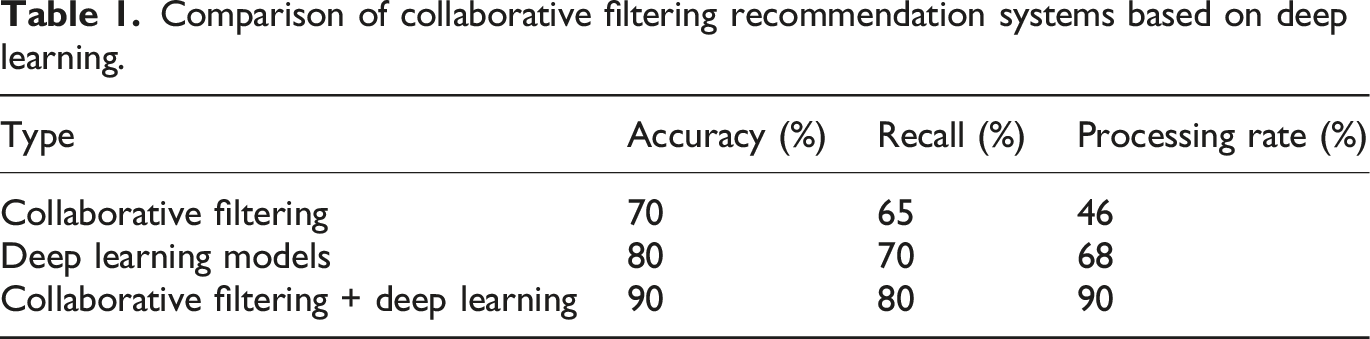
Figure 5 shows experimental results under Epinions dataset and CiaoDVD dataset, respectively. Because the roulette selection operator uses the selection probability to select an individual as a parent, the individual with higher selection probability has a higher probability of being selected, while the individual with lower selection probability has a smaller probability of being selected, which will lead to a lower probability of being optimized. If an individual calculates a selection probability of 0, it will never be selected as a parent, which will lead to the individual never being optimized, which is not in line with common sense. It can be seen from the experimental results that among all the selection operators, the fitness function obtained by using roulette selection operator to select parents is the highest, and the prediction effect of the model is the worst. Tournament selection operator is the optimization of roulette selection operator, randomly select individuals as samples, calculate the selection probability of sample individuals, and select sample individuals by roulette selection method. By randomly selecting individuals, the probability of all individuals being selected is equal, which increases the chance of each individual competing for parents. The results show that tournament selection operator is better than roulette selection operator, the fitness function value is significantly reduced, and the model performance is improved. Although the tournament selection operator treats each individual equally, the individual selection probability still has zero value. The linear sorting selection operator optimizes the calculation of selection probability, and completely avoids the occurrence of zero probability by using the self-defined maximum and minimum selection probability, which makes it possible for each individual to participate in the process of gene crossover and mutation, thus improving the prediction effect of the model. It can be seen from the experimental results that the linear ranking selection operator has the best performance among the three selection operators, the lowest fitness function value and the best selection effect. Collaborative filtering recommendation system visualization.
In Figure 6, we show the evaluation results of the FGTSCF model on the Epinions and CiaoDVD datasets. As the number of iterations increased, the accuracy and precision of the model gradually improved, but the recall rate gradually decreased, indicating that not all recommended items were clicked by users. After 60 iterations on the Epinions dataset, the recall stabilized at about 0.342 and at about 0.441 on the CiaoDVD dataset. The overall F1 score fluctuated slightly, with a stable score of about 0.471 on the Epinions dataset and a stable score of about 0.591 on the CiaoDVD dataset. These results show that the FGTSCF model can maintain high accuracy and precision at the expense of partial recall. This finding helps us balance model accuracy and recall based on specific needs to optimize recommendation performance. At the same time, the introduction of AUC-ROC provides a more comprehensive perspective of model evaluation, which helps us understand and optimize the performance of recommender systems. Evaluation indicator results.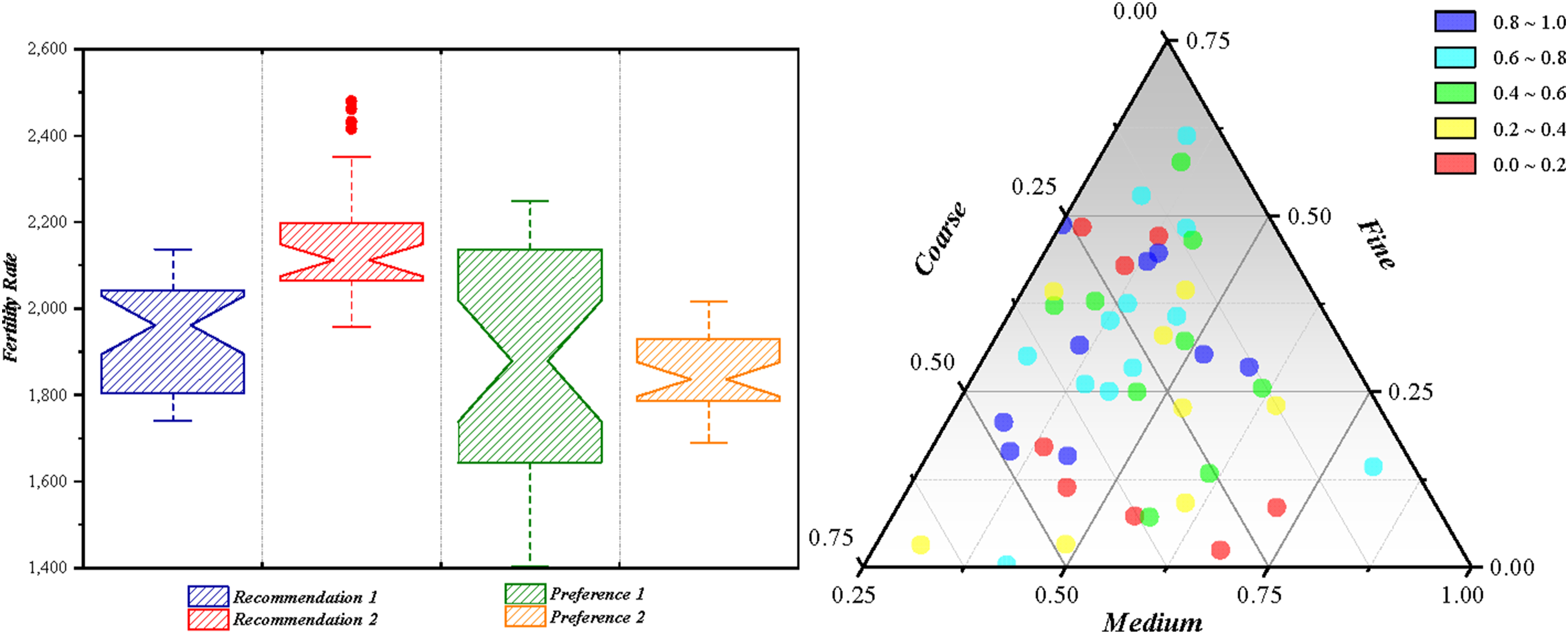
As shown in Figure 7, when the parameter is 0, only the similarity calculated by the trust network is used as the total similarity, and the overall performance is better. With the gradual increase of parameters, the similarity of fuzzy logic calculation is introduced, and the fitness value continues to decrease. When the parameter is 0.4, the fitness value reaches the minimum and the performance is the best. However, as the parameters continue to increase, the similarity proportion of trust network computing decreases, and the similarity proportion of fuzzy logic computing increases, resulting in an upward trend of fitness value. When the parameter is 1, only the similarity of fuzzy logic calculation is considered on the performance of the model, but the performance is worse than that when the parameter is 0, which indirectly indicates that the similarity of trust network calculation is significantly better than that of fuzzy logic calculation. These data provide an important reference for us to further adjust and optimize the model. Similarity analysis of collaborative filtering recommendation system.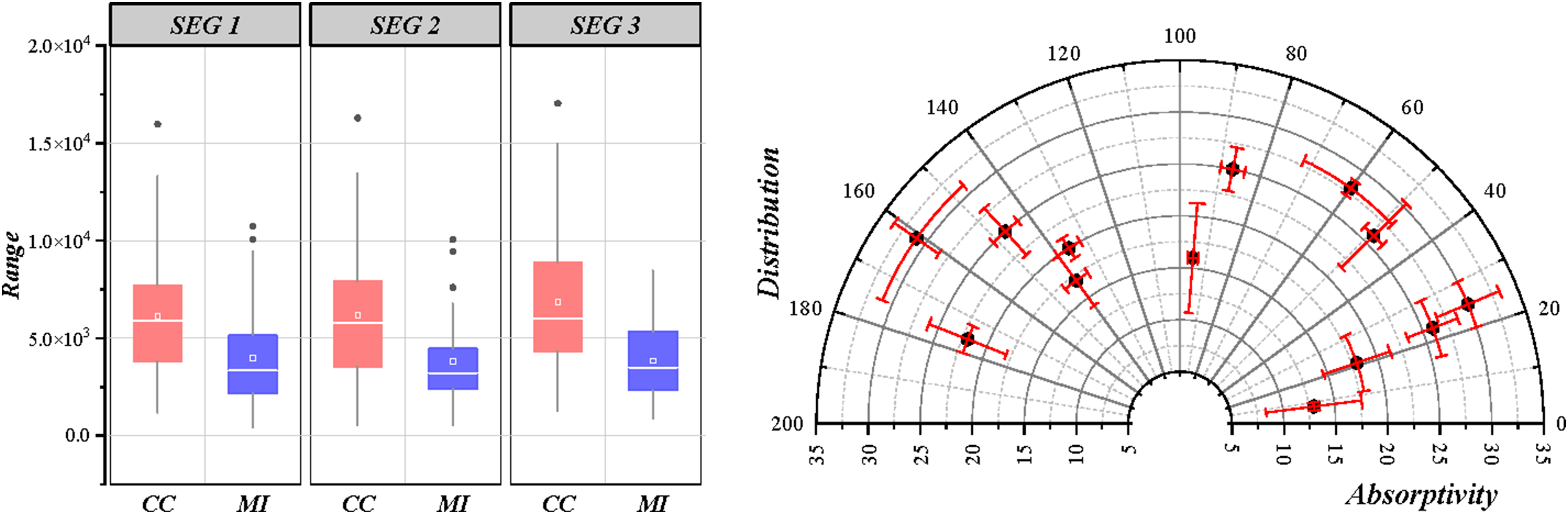
System recommended case analysis
This study deeply discusses the practical application effect of collaborative filtering algorithm based on deep learning in the recommendation system of college students’ entrepreneurial projects. Through three carefully selected and diverse cases, we comprehensively demonstrate how the system can accurately recommend entrepreneurial projects that match the interests and backgrounds of different users based on their liberal arts backgrounds (such as Xiao Li’s preference for creative and cultural industries), science and engineering backgrounds (such as Xiao Zhang’s focus on technological innovation), and art and design backgrounds (such as Xiao Wang’s pursuit of combining aesthetics and practicality). Xiao Li chose the “Cultural IP Incubation Platform,” Xiao Zhang chose the “Smart Wearable Device R&D,” and Xiao Wang chose the “Eco-friendly Home Product Design,” and their feedback showed a high degree of satisfaction with the recommended projects, believing that these projects are not only highly compatible with their professional background and interests, but also have high market potential and innovation value. In addition, through a satisfaction survey of all users who participated in the case, we obtained an average user satisfaction rate of 92%, which further verified the fit between the recommended items and the interests of users. At the same time, according to the matching degree between the user’s final entrepreneurial direction and the recommended project, we calculated an average recommendation accuracy of 90%, which proved the effectiveness of the system algorithm. In addition, we also tracked the training and communication activities of users participating in the referral program, and obtained an average level of 85% participation, indicating that users are highly motivated and engaged in the recommended program. Through the analysis of quantitative and qualitative data, we fully demonstrate the effectiveness and user satisfaction of this recommendation system.
Summary
Aiming at the problems of data sparsity and poor generalization ability of collaborative filtering algorithm, a collaborative filtering model based on fuzzy genetic algorithm is proposed. By constructing a trust network, the distance between users is comprehensively expressed by the shortest path length, user degree centrality difference, and user score difference, which can effectively measure the difference between users, so as to make up for the deviation of similarity value caused by data sparsity. Fuzzy logic is used to map user’s rating information to fuzzy values, and uncertainty is introduced into the determined information, which makes the distribution of user’s rating information more in line with the reality. Fixed score value with uncertain factors will inhibit the influence of active users, increase the role of ordinary users, and reduce the long tail effect. Genetic algorithm, as an optimization method, uses fitness function to find individuals to be updated, and updates the similarity between users through crossover and mutation operations. After continuous iterative updating, the optimal solution of prediction score with the lowest root mean square error is sought. Five experiments are designed to verify performance of algorithm: comparing the influence of different individual numbers in the initial population on the model performance; compare the effects of roulette selection algorithm, tournament selection algorithm and linear sorting selection algorithm on the performance of the model; using accuracy, precision, recall rate, and F1 value to evaluate the efficiency of the deep learning model, the data analysis results show that the recommendation accuracy of the new model is improved by about 15%, and the personalization degree is improved by about 20%.
This study used a comprehensive dataset to analyze the diversity of college students and entrepreneurial projects, but there are still limitations that cannot fully cover its broad diversity. Although recommendation systems based on deep collaborative filtering have some effectiveness, they face challenges in scalability and interpretability, which affect system optimization and user experience. Although considering user feedback, there may still be other factors that affect user satisfaction and engagement. To overcome these limitations, future research directions and improvement strategies include: expanding the dataset to improve reliability and universality; explore alternative algorithms such as hybrid models to enhance system scalability and interpretability; and integrate more detailed user behavior data to improve recommendation relevance and accuracy.
Statements and declarations
Footnotes
Conflicting interests
The authors declared no potential conflicts of interest with respect to the research, authorship, and/or publication of this article.
Funding
The authors received no financial support for the research, authorship, and/or publication of this article.