




Abstract
Property engineering project management is faced with increasingly complex risks and challenges. If these risks are not effectively controlled, it is easy to lead to cost overruns, time delays and even project failures. This study proposes a property engineering construction safety risk assessment method based on the IT2FS-MARCOS method to address the uncertainty of risk assessment caused by the subjectivity of expert decision-making and the problem of considering multiple risk factors under different risk parameter weights. A property engineering construction safety risk indicator evaluation system was constructed, and the combination of the G1 weighting method and the objective weighting method (CRITIC) was used to analyze the weights of each risk indicator. Interval type-2 fuzzy sets (IT2FS) were introduced to improve the compromise-based alternative ranking method (MARCOS) in multicriteria decision-making. The utility function values of each risk factor were calculated, and the construction safety risk factors of property engineering projects were analyzed and evaluated based on the utility function values. The findings reveal the dynamic process of construction risks in property engineering projects. The model not only considers the fuzziness of expert evaluation but also adopts a multicriteria decision-making method to avoid simple weighting of risk parameters. This method has a high degree of fit with engineering practice and provides a new approach of handling risk assessment in uncertain information of property engineering.
Keywords
Introduction
With the continuous acceleration of urbanization and the increase of population density, the living standards of urban residents are also constantly improving, and the demand for property management is getting higher and higher. As a new type of service industry, property management service has become an indispensable part of the life of modern city residents with its advantages of specialization, standardization and individuation. The term “property” originates from the English word estate or property, which originally refers to property, such as valuable land and its attachments. Although property management in China has undergone more than 40 years of development, it has developed relatively late when compared with that in foreign countries. 1 However, its development speed is high, and the market size is constantly increasing. Hence, property management in China can still be explored further. 2 At present, the growing demand for good life among people is closely related to the quality of property management in residential areas, which to some extent affects the happiness of people and the harmony and stability of the society. 3 Therefore, project construction risk control is important in property management. Property engineering projects are one of the many key business activities in property management. They generally have specific paid services, long construction periods, large capital occupation, complex interests, and professional trustworthiness. 4 They are a key focus to improve satisfaction with property services. In social reality, property management institutions often encounter problems, such as high construction risks in engineering projects, and have become a key focus of attention in the property industry. 5 According to incomplete statistics, among the construction safety accidents of property engineering projects that occurred in 2022, 96 were incidents of collapse in property engineering projects and accounted for more than half of the total. Twenty-four were incidents of collisions between construction items in property engineering projects and accounted for 12.8% of the total. 6 Nineteen were incidents of abnormal damage to buildings in property engineering projects and accounted for 10.7% of the total. Fourteen were incidents of equipment failure and accounted for 8.7% of the total, and 37 involved other types of accidents and accounted for 11.9% of the total. 7 Statistics show that the annual number of construction safety risk accidents in property engineering projects is high, and the number of deaths continues to rise. With the rapid development of the construction industry, many construction quality problems in property engineering projects are beginning to emerge. These problems cause property engineering projects to develop in an unhealthy direction and damage people’s lives and property safety.
Therefore, the construction risk management of similar institutional engineering projects, such as property management, must be optimized, and the construction risk management level of property engineering projects needs to be improved to achieve various expected goals. The construction of property engineering projects has the characteristics of long cycles, poor construction environment, and overlapping construction operations. The risk factors during the construction process are complex, resulting in frequent safety accidents. Risk factors are the source of accidents, and risk analysis, risk assessment, and risk control are important aspects of construction risk management in property engineering projects. Construction risk assessment in property engineering projects is the foundation of and key to risk control. Hence, research needs to be conducted on the methods of construction safety risk assessment for property engineering projects. In response to these issues, this study explores the construction safety risks of property engineering projects from the perspective of property engineering projects. This exploration is crucial for creating a social governance pattern of co-construction, co-governance, and sharing and for meeting the urgent needs of residents for an improved life. Therefore, building an effective safety risk assessment index system for property engineering projects at the level of risk control makes theoretical guidance targeted and yields a set of construction quality risk assessment systems that truly conform to the characteristics of construction projects. Such systems can serve as a reference for property engineering enterprises and help them effectively prevent safety risks at construction sites, thus ensuring construction safety.
Based on this, this paper constructs the construction safety risk assessment of property engineering projects by IT2FS-MARcos, and introduces Interval Type-2 Fuzzy Sets, IT2FS) improved the alternative scheme ranking method based on compromise scheme in multi-criteria decision-making, calculated the utility function values of each risk factor, and analyzed and evaluated the construction safety risk factors of property engineering projects based on the utility function values. This paper analyzes and comprehensively evaluates the construction safety risk of property engineering projects, and uses the interval 2 type fuzzy set to better solve the characteristics of data noise and language ambiguity, so as to obtain more accurate and comprehensive construction safety risk assessment results of property engineering projects.
The rest of this article is organized as follows. Section 2 is a literature review. Section 3 analyzes the construction risk assessment model of property engineering projects based on the IT2FS-MARCOS method with improved G1-CRITIC combination weighting. In section 4, an example is designed to verify the model. This paper is summarized in Section 5.
Literature review
The research on construction risk assessment of property engineering projects has focused on two aspects. First, the risk management system of property engineering projects is constructed based on certain theories for analysis. For example, Khan et al. 8 applied extension theory to the risk assessment and early warning system of property engineering construction for the first time to solve the problem of variable safety inspection data. Yang et al. 9 used ecosystem theory for the first time to build a property engineering safety risk management system. Second, the property engineering safety risk evaluation index system is constructed in a certain way to quantitatively evaluate the safety risk of construction projects. For example, Schultheiss et al. 10 used the modified unstructured fuzzy decision support system to assign weights to the indicators and completed a property engineering construction safety risk evaluation on the basis of decision indicators, such as cost, time, and resources. Some scholars have constructed the construction safety risk evaluation index system of property engineering by using hierarchical analysis, 11 network analysis, 12 structural equation modeling, 13 grey cluster evaluation, 14 fuzzy comprehensive evaluation, 15 and other methods. However, the first research aspect, which is only at the theoretical level of property engineering construction safety risk management model conception, lacks further quantitative analysis. In the second research aspect, during the extraction of key indicators, scholars often ignore the relationship between factors on the basis of the frequency of keywords in accident investigation reports 16 or expert experience, 17 so the accuracy of the extraction results is easily affected by data or subjectivity. In addition, in the assignment of index weights, existing literature usually adopted the expert scoring method, 17 the analytic hierarchy process (AHP), 18 the factor analysis method, 19 the G1 weighting method, 20 and other similar approaches, all of which cannot overcome the problem of accurate assignment of index weights, thus reducing the reliability and objectivity of the evaluation results.
In recent years, to scientifically manage the construction safety risk of property engineering projects, scholars have conducted extensive research on the construction safety risk assessment of property engineering projects by using various methods. In terms of index weighting, Jayakumar et al. 21 adopted improved AHP and the entropy weight method to combine weights and proposed a risk assessment method based on the 2D cloud model of combination weighting to solve problems, such as too strong subjectivity in the judgment of risk grade and fuzziness and the randomness of risk indicators in the construction risk assessment of property engineering projects. Celik et al. 22 proposed a combination model of the fuzzy optimal and worst method, entropy weight method, and range maximum method to obtain the optimal combination weight and identified and ranked the risk factors of property engineering projects. Deveci et al. 23 used AHP and the entropy weight method to calculate the combined weights of indicators, improved and merged gray cluster analysis and fuzzy comprehensive evaluation, and established a property engineering project risk assessment model. The abovementioned studies assigned weights to risk factors on the basis of expert experience and objective data. However, how to integrate subjective and objective data and how to assign weights during risk parameter weight analysis deserve further research. In terms of exploring the uncertainty of risk assessment, relevant scholars have introduced unknown measure, the grey system, and fuzzy theory to solve the problems of fuzziness and subjective uncertainty in expert evaluation. Stevic et al. 24 employed the orthogonal projection method to improve the TOPSIS method of multicriteria decision-making and established a property engineering project evaluation model. Wang et al. 25 established the TOPSIS method based on entropy weight, the coupled coordination degree model, and the grey relational degree model to conduct a comprehensive evaluation of the construction risk of engineering projects and ensure the comprehensiveness of the evaluation results. A new multicriterion decision-making method called MARCOS was proposed by Liu et al., 26 and it is suitable for solving the evaluation problem of the construction safety risk factors of engineering projects. The principle of the MARCOS method is similar to that of the TOPSIS method, but MARCOS is simpler, more stable, and more reliable in terms of operation compared with the TOPSIS method. Moreover, the risk degree of risk factors can be intuitively and scientifically expressed through the value of the utility function.
In summary, due to the numerous, complex factors involved in the construction safety risks of property engineering projects, current research methods fail to fully consider the effects of the probability of occurrence of risk factors and the weight distribution of accident severity on the evaluation of the risk factors, leading to certain limitations in the accuracy of the evaluation results. To address this issue, this study adopts a combined weighting method that integrates the improved G1 method and an objective weighting method (CRITIC) based on interlayer correlation to perform a weight analysis of each risk parameter. Then, the interval type-2 fuzzy set (IT2FS) is introduced to improve the MARCOS method, the utility function value of the risk factors is calculated, and an evaluation is conducted. A construction safety risk assessment model of property engineering projects based on the IT2FS-MARCOS method is proposed. With the objective of addressing the ambiguity and uncertainty of experts in the process of construction risk assessment of property engineering projects, the improved MARCOS method of the interval two-type fuzzy number is considered to eliminate the inherent ambiguity and uncertainty with the help of given language terms.
Based on the above analysis, the innovations of this study are as follows:
Firstly, based on the limitations of marcos model, this paper proposes a property engineering construction safety risk assessment method based on IT2FS-MARCOS method, aiming to solve the risk assessment uncertainty caused by the subjectivity of expert decision-making and to consider multiple risk factors under different risk parameter weights.
Secondly, the utility function values of each risk factor are calculated by using the combination weighting method of G1 and objective weighting method, and the interval 2 fuzzy set is introduced to improve the alternative scheme ranking method based on compromise in multi-criteria decision-making.
Third, the IT2FS-MARCOS risk assessment model constructed in this paper can rationalize the priority of construction safety risk factors for property engineering projects, and the evaluation results are scientific and reasonable.
Research methods
The importance of each influencing factor and the correlation between factors are considered comprehensively by combining the improved G1 method and the CRITIC method. On the basis of the IT2FS-MARCOS method, the system structure of the key factors of the construction risk of property engineering projects is analyzed to help risk managers in property engineering projects understand the key factors from the source of problems.
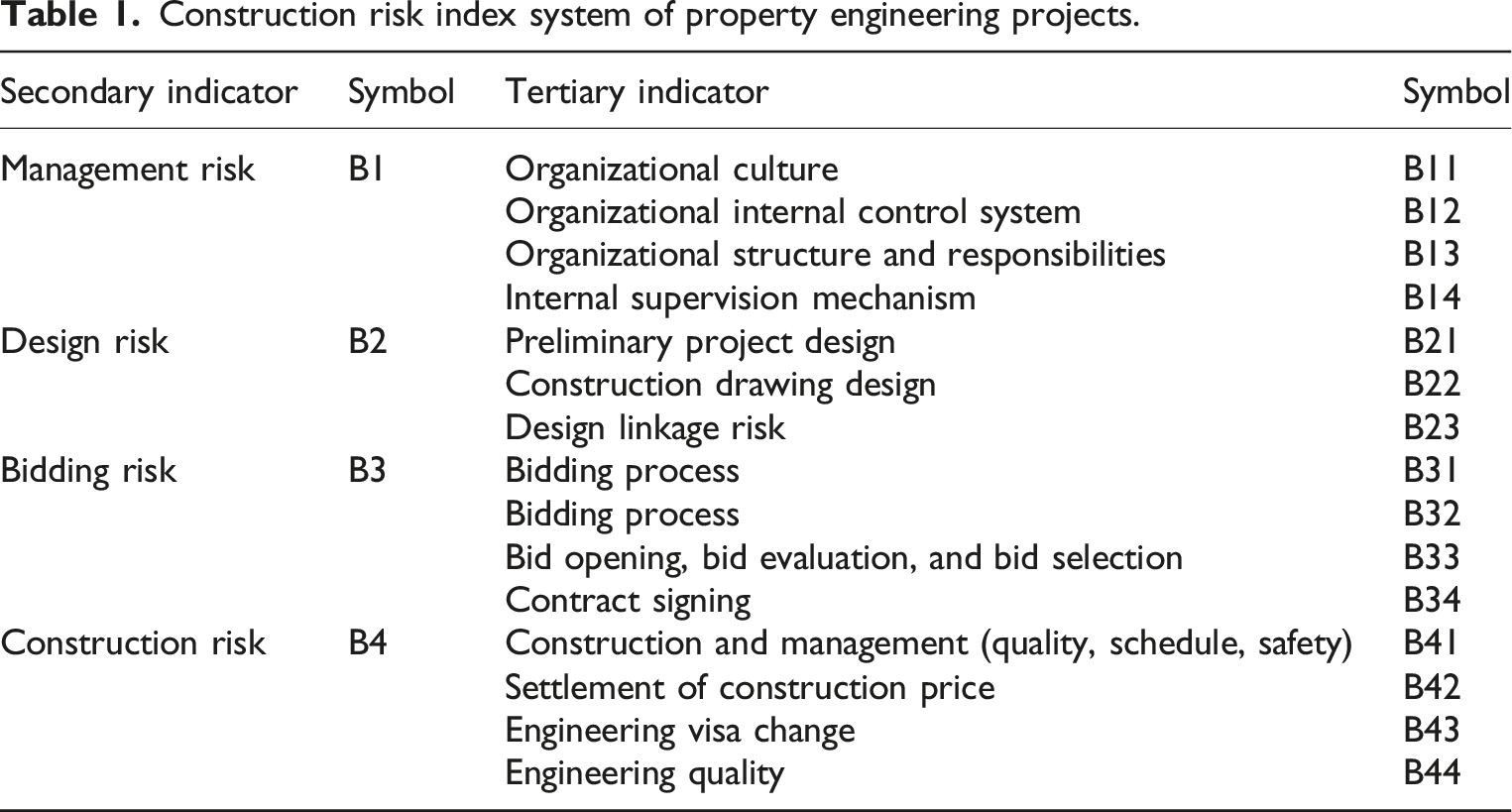
Property engineering project construction risk index system
Construction risk index system of property engineering projects.
Weight determination
The combination weighting method combines subjective experience data with objective data and overcomes the uncertainty and fuzziness of traditional single weighting. In this study, subjective and objective factors are fully considered, and the improved G1 method and the CRITIC method are merged to give weights to risk parameters. The improved G1 method is a hybrid cross-weighting approach based on the combination of the coefficient of variation and the traditional G1 method. The CRITIC method is an in-depth improvement of the entropy weight method; it considers the correlation and variability of quantitative indicators, fully mines the data information of quantitative indicators, and improves the objectivity and rationality of quantitative indicator weights.
Improved G1
The G1 method is an improvement of AHP. The G1 method is easy to calculate and does not need a consistency test. Given that the original order relation analysis method needs the order relation between indicators and must scale the relative importance between adjacent indicators, the value of the relative importance scale is difficult to determine in the process of practical application. Therefore, an improved G1 method based on the coefficient of variation is adopted in this study.
First, expert opinion is used as a reference to determine the order relationship between two indexes. Second, the coefficient of variation of each index is calculated. Last, a hybrid cross-weighting method is used to determine the importance degree of each index by employing the ratio of the coefficient of variation between adjacent indexes. The improved G1 method avoids the subjective and arbitrary problems in determining the relative importance degree and introduces the weight difference benchmark, which makes weight determination reasonable and objective. The specific calculation steps are as follows.
First, in accordance with expert opinions, the weight ranking of indicators is determined, and the order relationship between indicators is constructed and recorded as
Second, the coefficient of variation of the evaluation index is determined, and the standard deviation of the evaluation index is calculated as
Third, the coefficient of variation of the evaluation index is computed based on the standard deviation as follows:
Fourth, on the basis of the ratio of the coefficient of variation of the evaluation indicators, the importance degree between adjacent indicators is determined as follows:
Fifth, the final weights of each index are determined with the improved G1 method. The weight of the NTH index is solved in accordance with the relative importance scale obtained in the previous step as follows:
Last, in accordance with weight 
CRITIC
The CRITIC method not only measures the degree of difference within the same indicator by standard deviation, but also uses the correlation coefficient to reflect the correlation between indicators. The greater the standard deviation is, the greater the value difference is of each evaluation object under the same index and the greater the weight is. The greater the correlation coefficient is, the smaller the conflict is between the indicators and the smaller the weight is. The evaluation index of the construction risk of property engineering projects often has a certain correlation. In this study, the CRITIC method is used to calculate the objective weight. Assuming that m schemes are present and that each scheme has n indexes, evaluation matrix X can be represented, and the elements in the matrix evaluate the values of the schemes under the corresponding indexes. The calculation formula is
The steps of calculating the weight of the construction risk index of property engineering projects by using the CRITIC method are as follows.
First, the indicators are treated in the same direction. In the determination of the risk assessment indicators, some negative indicators may be present. The greater the value of such indicators is, the lower the risk is; the greater the value of positive indicators is, the higher the risk is. When the two kinds of indicators exist simultaneously, the difficulty of calculation increases. Therefore, co-directization of indicators must be performed when necessary to facilitate calculation. The conversion formula is
Second, the indicators are standardized. Given that the meaning and unit of each indicator in evaluation matrix 
Third, the objective weights of the indicators are calculated. Through standard matrix 


The higher the relative importance of the i-th indicator is and the more the information it contains, the greater the value of 
Determination of comprehensive weight
Subjective weight vector 
The comprehensive weight is obtained to solve this optimization model.
The comprehensive weight vector is expressed as
Risk assessment model based on the IT2FS-MARCOS method
In the subsequent risk assessment process, the key to the construction risk assessment of property engineering projects is to obtain the risk degree of risk factors by using the scientific evaluation method in accordance with existing information. Many different variables need to be considered to evaluate the risk level of property engineering construction safety. This study adopts the MARCOS method in multicriteria decision-making to solve this problem. The MARCOS method uses the relationship between positive and negative ideal alternatives to sort and select solutions. It is similar to the TOPSIS method in principle, but the MARCOS method integrates the reference point method and the ratio method and does not need to calculate the distance between alternative solutions and positive and negative ideal solutions; hence, its collaborative progress is simple, effective, and optimized. The MARCOS method calculates the utility function of alternative schemes and sorts the schemes based on the value of the utility function, thus avoiding the problem that simple linear weighting cannot guarantee the accuracy of the results. In addition, the subjective uncertainty of expert decision-making and fuzzy preference information cause the construction safety risk assessment information of property engineering to exhibit subjective deviation. To address the fuzzy and uncertain evaluation information of experts, this study introduces IT2FS to improve the MARCOS method and increase the objectivity and rationality of risk evaluation.
According to the literature Han et al.
28
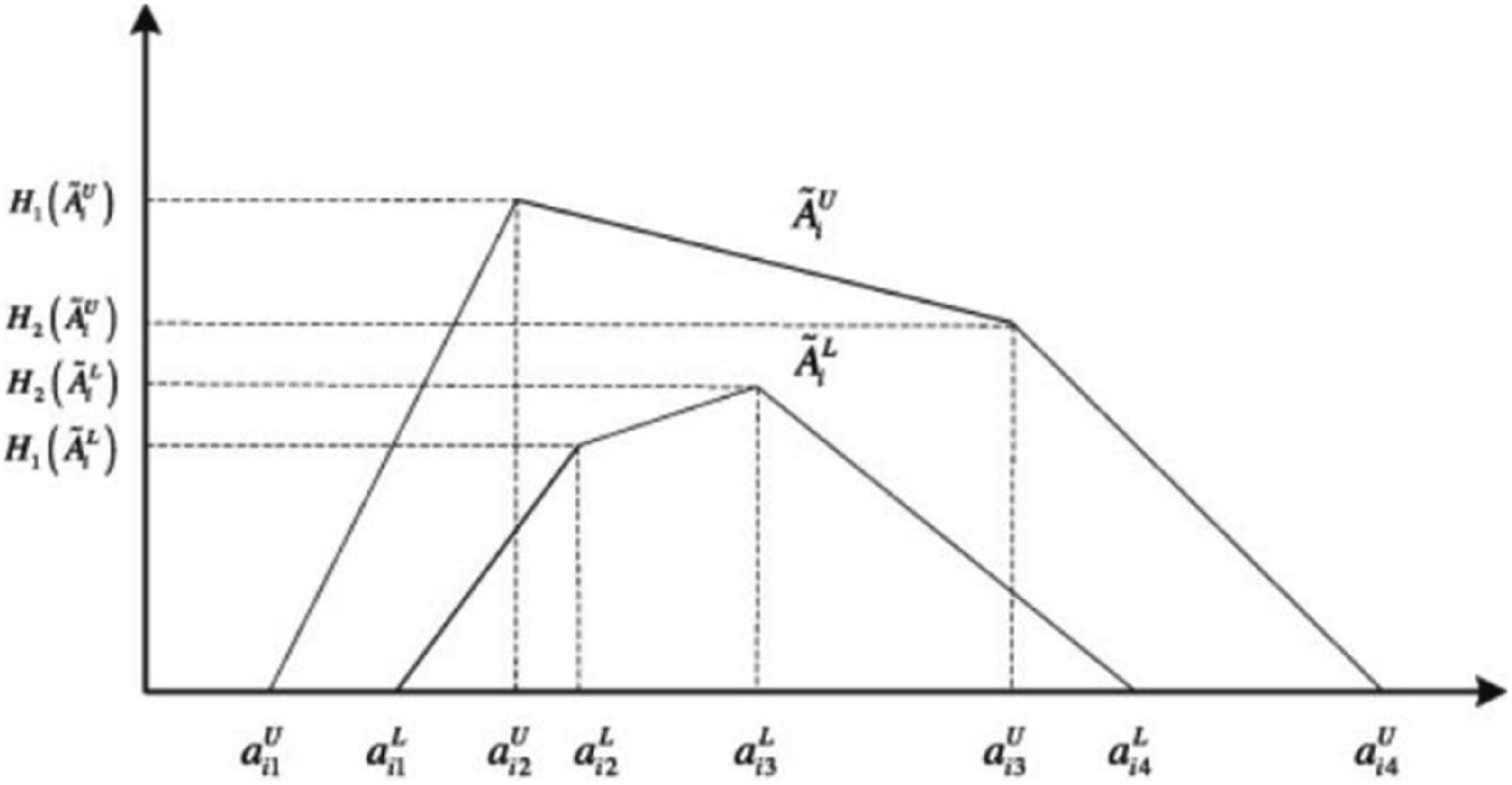
the double-membership structure of IT2FS can deal with intra- and inter-individual uncertainties, and the processing of uncertainty is efficient and simple. When the upper and lower membership functions of IT2FS are trapezoidal fuzzy numbers, the expression is as follows: Geometric diagram of interval type-2 fuzzy sets.
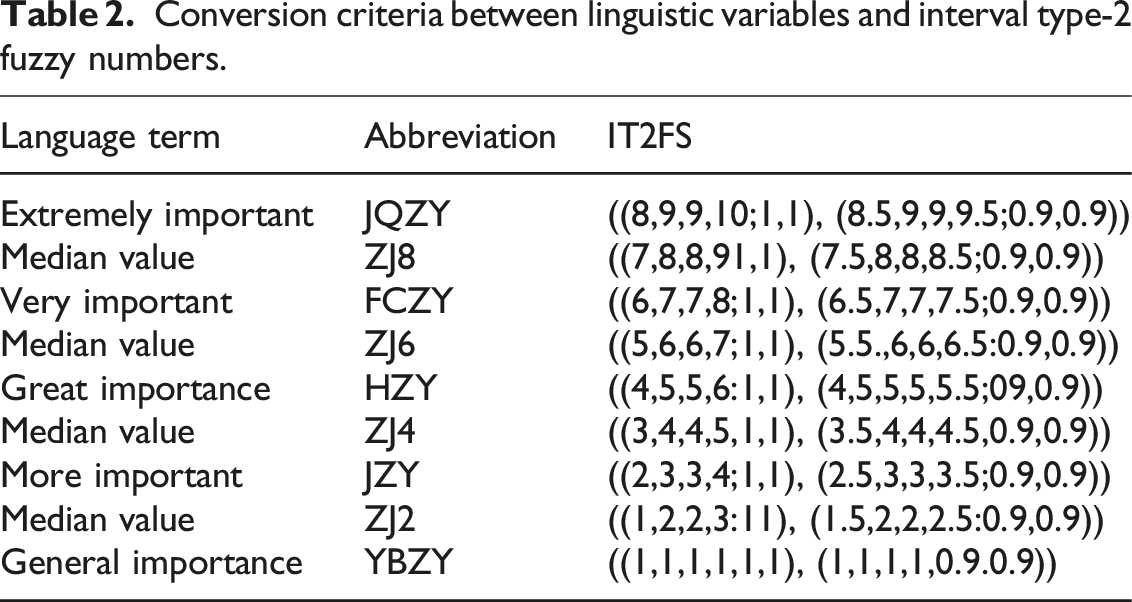
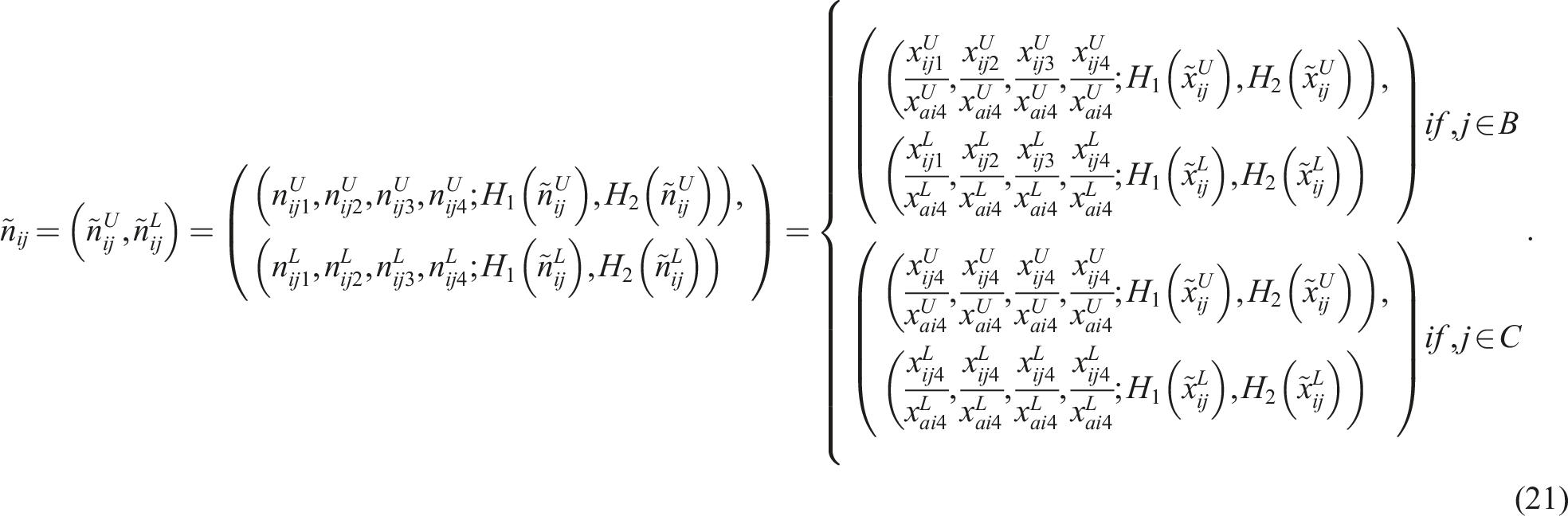
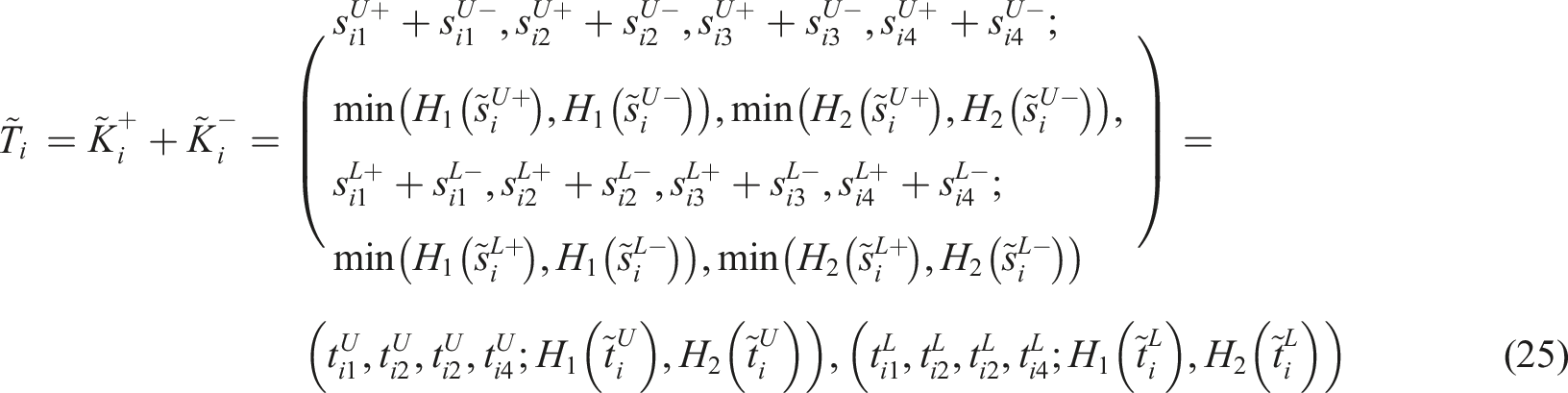
This study proposes the IT2FS-MARCOS model for property engineering construction risk assessment, and the specific implementation steps are as follows: Step 1: Create an initial IT2FS decision matrix and quantify expert language terms into interval type-2 fuzzy numbers, as shown in Table 2. Step 2: Create an extended initial fuzzy matrix. Extend initial fuzzy matrix Conversion criteria between linguistic variables and interval type-2 fuzzy numbers.
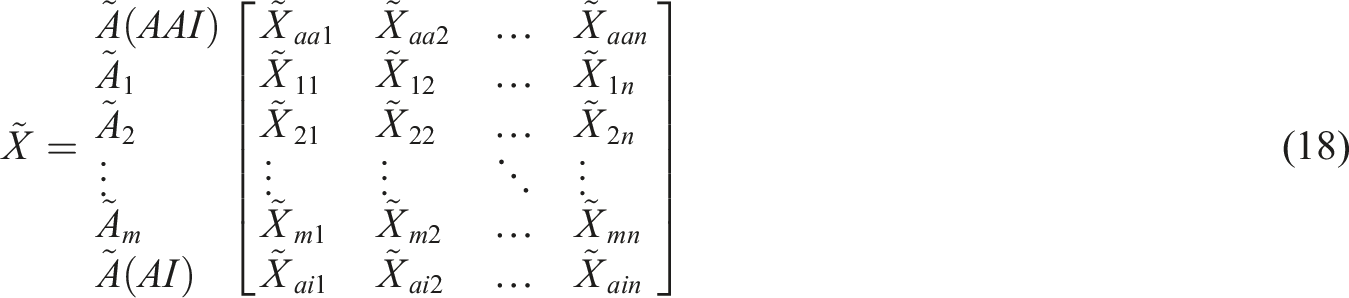
The fuzzy negative ideal solution Step 3: Normalize the IT2FS synthesis matrix and calculate normalized matrix Step 4: Determine weighting matrix Step 5: Calculate the utility of each alternative with respect to the positive and negative ideal solutions. The utility is calculated using Step 7: Use the region center deblurring method to deblur. Step 8: Calculate the utility function of the positive and negative ideal solutions of the alternatives. Step 9: Determine the utility function of the alternative. The utility function is a compromise between the alternative and the ideal and negative ideal solutions. The utility function of the alternative is defined by the formula Step 10: Sort the risk factor indicators in accordance with the value of the utility function. The one with the highest value of the utility function is ranked first.








Result analysis and discussion
This study adopts six property engineering projects of China WD Group (referred to as WY1, WY2, WY3, WY4, WY5, and WY6) as research objects and evaluates the construction safety risk of property engineering by using IT2FS-MARCOS. First, the improved G1 method and the CRITIC method are utilized to calculate the combined weights of the construction safety risk evaluation indicators of property engineering, and the construction safety risk of property engineering is assessed with the IT2FS-MARCOS method.
Solving the combined weights of the evaluation indicators
Weights of safety risk factors in property engineering construction.
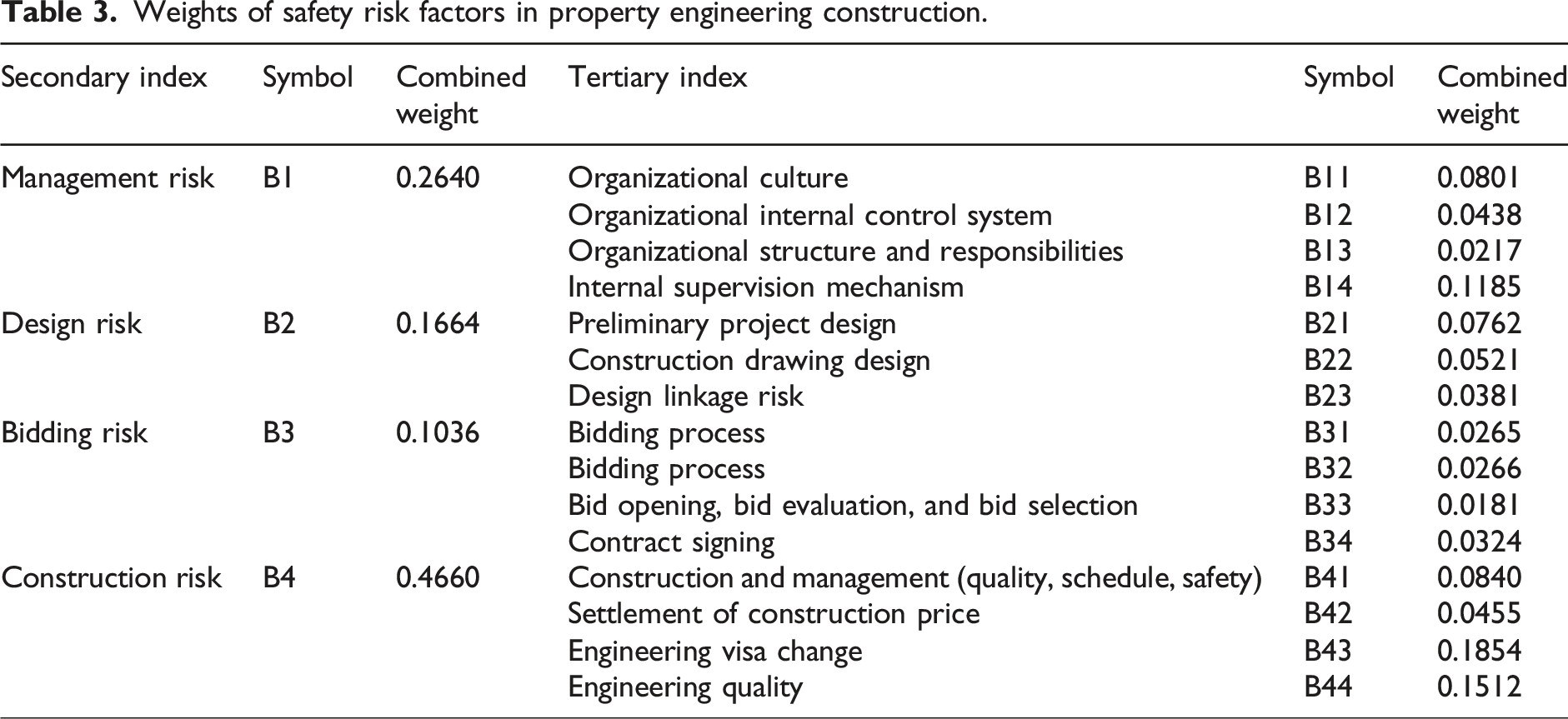
According to Table 3, among the construction risk factors of property engineering projects, engineering visa changes, engineering quality, internal supervision mechanisms, construction and management (quality, progress, safety), and unit culture have high weights. The effect of contract signing; bidding process; unit organizational structure and responsibilities; and bid opening, evaluation, and determination on the construction risk of property engineering projects is relatively small.
Risk factor evaluation based on the IT2FS-MARCOS method
Fuzzy evaluation matrix of an expert.
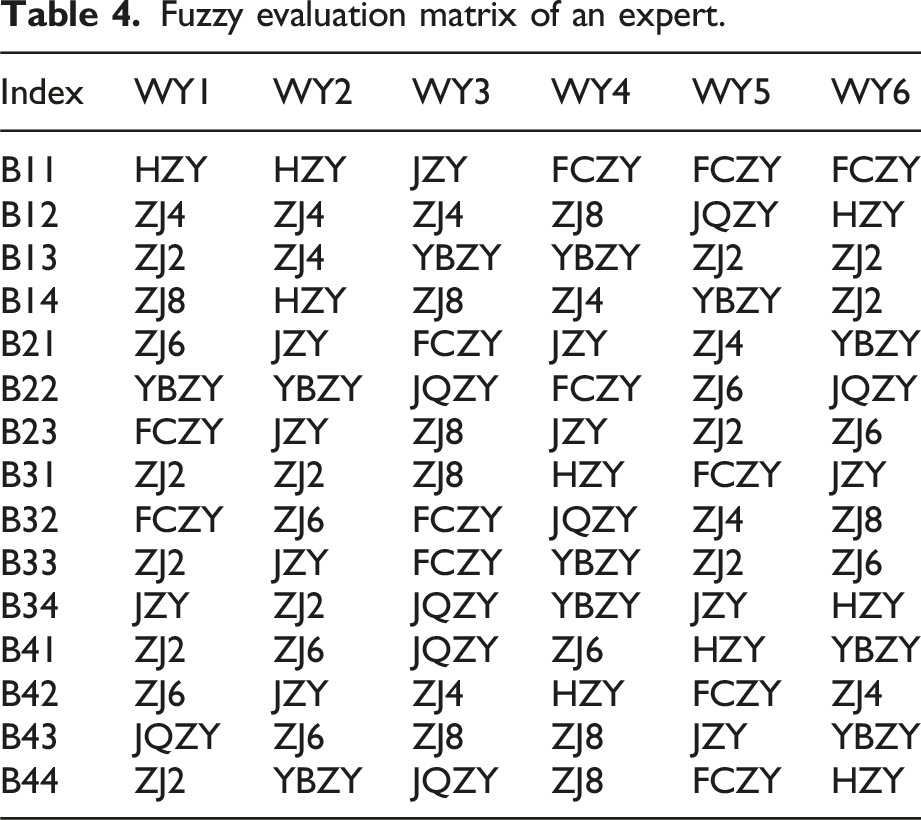
When multiple experts are consulted to obtain evaluation information, the weighted average objective weight allocation method is adopted and extended to the IT2FS calculation of expert weights to resolve the subjectivity problem of expert weight allocation. This method assigns weights to experts by measuring the average distance (PL) between the fuzzy evaluations given by some experts and those given by other experts. PL reflects the average similarity between the evaluation information of a certain expert and that of other experts. If the expert’s judgment is close to that of the majority of experts, the expert will be given a high weight; otherwise, a low weight will be assigned. The calculation formula is (1) The fuzzy evaluation distance between any two experts (a and b) is defined. (2) The average distance (3) The weight w
a
of expert a is defined as



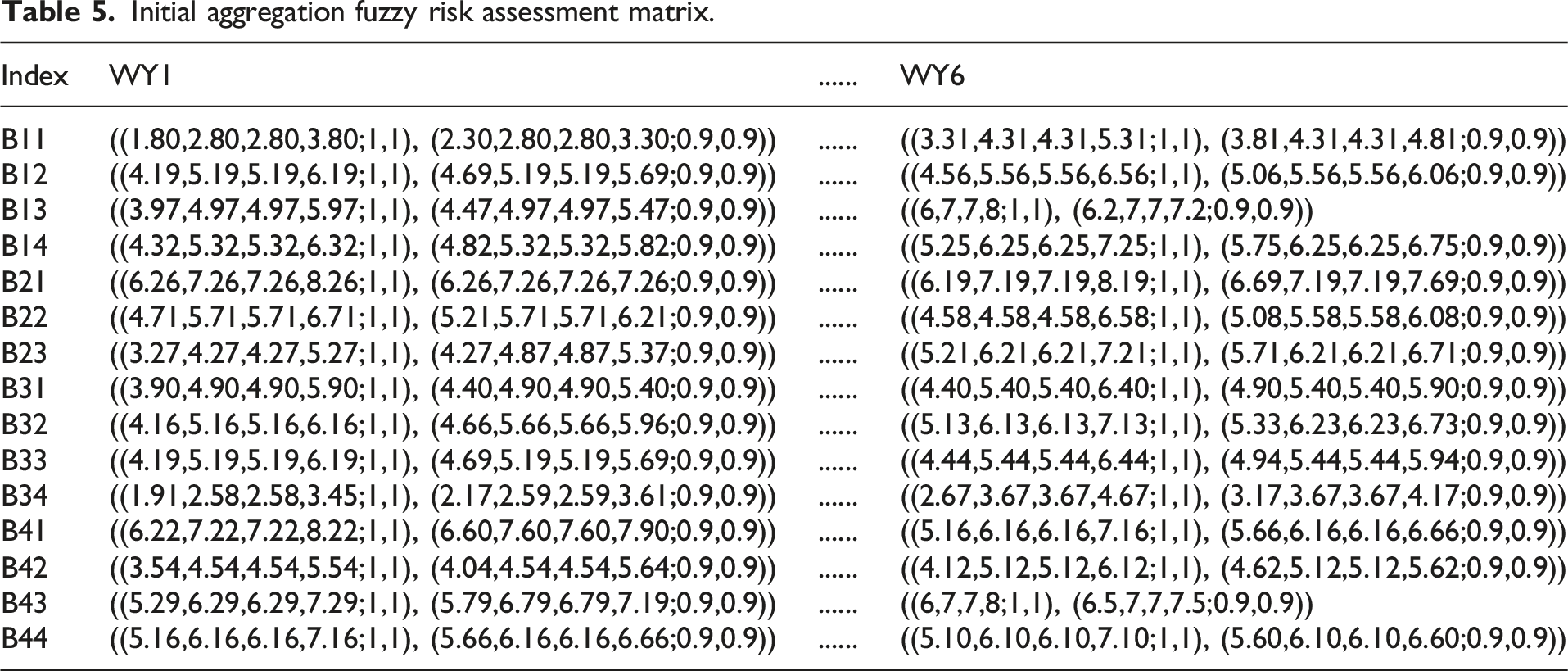
Initial aggregation fuzzy risk assessment matrix.
Determines proximity K+ and distance K−.
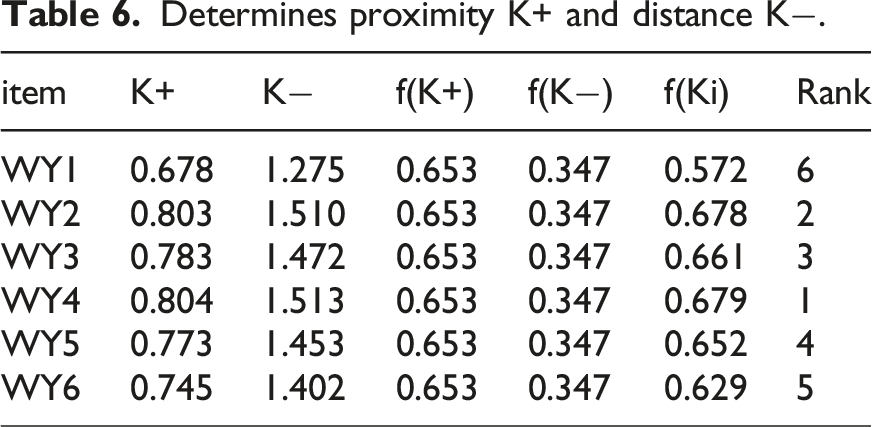
The results in Table 5 show that WY4 has the highest construction safety risk factor and the highest utility value (i.e., 0.679) among the six property engineering projects of China WD Group. The construction safety risk factor of WY2 ranks second, and its utility value is 0.678. The utility value of WY3 is 0.678, ranking third among the six projects in terms of construction safety risk factors. By analyzing the actual situation of the three projects, we find that this result is closely related to the number of project visa changes, project quality, internal supervision mechanism, and construction and management (quality, schedule, and safety) of the three projects and the culture of the unit. The risk factors and the construction safety of the property engineering projects pose serious threats because of the tight schedule of the three projects and the special geology and environment of the regions where the three projects are located. Construction scheme design and operation plan arrangement should be modified and optimized in time in accordance with the relevant information provided by the construction feedback during the construction process to ensure that construction operation standards are met and to guarantee the safety and quality of the project. The risk management maturity of WY4, WY2, and WY3 is between the repeatable and managed levels, and the risk management level can still be improved. Given that the IT2FS-MARCOS method does not need to calculate the distance between each index and the positive and negative ideal solutions and the co-placement progress, it can directly evaluate the priority of risk factors. Thus, the method is simple and accurate. The data comparison results also show that the proposed method is consistent with engineering practice and has high reliability and stability.
Conclusion
On the basis of the construction characteristics of property engineering projects, this study establishes a construction risk assessment system of property engineering projects, proposes a construction safety risk assessment model of property engineering projects on the basis of the IT2FS-MARCOS method, and applies this model to the risk assessment of property engineering projects. The main conclusions are as follows: (1) The evaluation results of the IT2FS-MARCOS method show that project visa change, project quality, internal supervision mechanism, construction and management (quality, schedule, and safety), and unit culture pose considerable threats to construction safety. Among them, project visa change is the most dangerous, and targeted risk control measures should be adopted. The proposed method uses IT2FS to express expert decision information and improve the MARCOS method in multicriteria decision-making. The utility function value of each project risk calculated by the MARCOS method not only considers the fuzziness and subjective uncertainty of expert decision-making in the construction safety risk evaluation of property engineering projects, but also avoids the simple weighting of risk parameter weights in the evaluation of many risk factors, thus making the evaluation reasonable. (2) This study uses the risk assessment method based on IT2FS-MARCOS to rationalize the construction safety risks of property engineering projects. The evaluation results are in good agreement with the actual feedback of the projects, so the method provides a new way of mathematical quantification for all kinds of construction safety risk assessment of property engineering projects. (3) The weight of risk assessment indicators for property engineering projects is solved with the G1-CRITIC combination weighting method. The G1-CRITIC method considers subjective and objective factors when calculating the nonequal weight of risk indicators. Only by identifying the types and nature of risks and assessing the effects of these risks on the realization of project objectives can improved management work be conducted. The case verification and sensitivity analysis indicate that the weight of the nonequal risk parameters is more accurate than that of the traditional equal risk parameters. (4) Given that the risk factors involved in different engineering construction projects may have differences, a differentiated risk index system should be used in the subsequent risk assessment of different property engineering projects, and the development of risk factors over time should be considered. Further research can be conducted on the dynamic evaluation of the risk degrees of risk factors in the future.
Footnotes
Funding
The authors received no financial support for the research, authorship, and/or publication of this article.
Declaration of conflicting interests
The authors declared no potential conflicts of interest with respect to the research, authorship, and/or publication of this article.