




Abstract
Aiming at the uncertain perturbation behaviors of collaborative innovation subjects under the influence of the external environment and internal organizational structure, which lead to abnormal operation of collaborative innovation network, this paper proposes a new collaborative innovation network vulnerability evaluation method based on the anti-entropy weight method and cloud model. Firstly, combining the attribute characteristics of collaborative innovation network, the method constructs collaborative innovation network vulnerability evaluation index from four dimensions, environmental vulnerability, network structure vulnerability, innovation subject collaborative vulnerability, and network governance vulnerability, and the anti-entropy weight method is then used to calculate the weights of evaluation indexes. Secondly, to effectively cope with the randomness, fuzzy, and uncertainty of the evaluation information in the process of comprehensive evaluation, and to enhance the accuracy of the evaluation results, this paper fully utilizes the advantages of the cloud model in transforming fuzzy qualitative information to quantitative information. It constructs a comprehensive evaluation model of the vulnerability of collaborative innovation network based on the cloud model. Finally, the proposed method’s rationality, validity, and scientific nature are verified through the specific enterprise case. The case study reveals that the key factors affecting the vulnerability of collaborative innovation network are partner selection, benefit distribution mechanism, and risk prevention mechanism. Based on the findings, corresponding management countermeasures and suggestions are put forward. The aim is to provide technical support for enterprises to carry out collaborative innovation.
Keywords
Introduction
With the accelerating process of economic globalization, the division of labor in society is becoming increasingly specialized, and the degree of organizational specialization is increasing, which makes it more challenging for enterprises to solely rely on their capabilities to achieve innovation and development. 1 In the face of fierce market competition, complex emerging digital technologies, diverse customer needs, and increasingly shorter product life cycles, enterprises are increasingly trying to improve their innovation efficiency by establishing cooperative relationships. This allows them to respond better to the diversified market demand. In response, various collaborative network organizations have emerged. 2 A collaborative innovation network is a complex, dynamic system comprising enterprises, universities, research institutions, government, and consumers. It aims to achieve effective innovation efficiency, reduce innovation risk, and improve market competitiveness. This is done through a series of behaviors such as cooperation, learning, and social relations to obtain complementary resources and exchange information elements for the benefit of all parties involved. 3 In the operation process of a collaborative innovation network, each collaborative subject may exhibit different behaviors under the influence of internal and external environments. For example, low degree of collaboration between subjects, insufficient coordination and integration of innovation resources, and differences in the efficiency of absorption and transformation of innovation resources.4–6 These behavioral differences have an operational impact on other subjects through the information transmission of the collaborative innovation network, leading to the operation of the collaborative innovation network in an unstable state. This unstable state will not only reduce the tightness of collaboration between collaborative innovation subjects, weaken the enthusiasm of collaborative innovation subjects, waste innovation resources, etc., but also lead to an increase in the vulnerability of the collaborative innovation network, undermine the normal operation of the network and bring about a huge loss of economic benefits. However, existing research on network vulnerability is mainly based on single-factor studies such as network structure, member relationship, and environment, and lacks comprehensive consideration of internal and external factors of enterprises in the construction of network vulnerability assessment index system. In this context, it is of great theoretical value and practical significance to systematically evaluate the vulnerability of collaborative innovation networks, identify the vulnerability factors in collaborative innovation networks, and improve the robustness of collaborative innovation networks.
In summary, this paper addresses the problem of abnormal operation of collaborative innovation network caused by uncertain perturbation behaviors of collaborative innovation subjects, under the influence of external environment and internal organizational structure. It constructs a vulnerability evaluation index system of collaborative innovation network based on the cloud model and proposes a comprehensive evaluation method based on the anti-entropy method and cloud model. The research results are expected to help enterprise managers identify the vulnerability influencing factors of collaborative innovation network, as well as its weak links. This can effectively improve innovation efficiency, reduce innovation risk, and provide theoretical and methodological support for the sustainable and stable operation of collaborative innovation network.
Literature review
Timmerman first proposed the concept of “vulnerability” in the 1980s. Nowadays, vulnerability has been widely used in many fields such as ecology, economics, natural science, and so on. In the field of collaboration, the vulnerability of collaborative network refers to the degree of risk conditions that can impact collaborative efficiency. This is an important aspect of risk evaluation in the field of collaboration, and scholars have carried out a wide range of research on it. 7 In the research on the influencing factors of collaborative innovation network, Najafi-Tavani et al. 8 discovered that product innovation capability, process innovation capability, and absorptive capacity are positively correlated with the innovation capability of collaborative innovation network, which has a significant impact on the vulnerability of collaborative innovation network. Akbari et al. 9 put people based on the social network structure, viewing users as network nodes, and the study pointed out that network strength and openness significantly impact network vulnerability. Karimi et al. 10 qualitatively assessed the existing literature on collaborative innovation network, and the study found that the cooperative structure and interaction among network members play a crucial role in collaborative innovation network. Wen et al. 11 investigated the diversity and structural vulnerability of firms’ collaborative network, noting that diverse and irrelevant knowledge is more conducive to firms’ collaborative innovation explorations. Hou et al. 12 pointed out that the willingness to participate, cost of participation, and establishment of default fees have significant implication for the evolution of collaborative innovation within agricultural innovation ecosystems.
In the research on the construction of evaluation index system of collaborative innovation network, Fang et al. 13 constructed collaborative innovation network evaluation index system from three dimensions of performance, drivers, and decision factors. The driving factors include the attribute factors, regional factors, and communication factors. Decision factors include the relationship governance mechanism, relationship strength, and core leadership. Li et al. 14 constructed an enterprise collaborative innovation performance evaluation index system from six dimensions of resources, technology, products, management, business value, and social value based on the characteristics of fund innovation and traditional innovation performance evaluation models. Tao et al. 15 constructed an evaluation index system from three dimensions of intelligence, collaborative capabilities, and innovation capabilities, on the basis of summarizing the evaluation indexes and methods of collaborative innovation capability in logistics systems. Lv and Qi 16 constructed a supply chain collaborative innovation partner selection index system, considering the capabilities of the alternative partners themselves, the conflicts between different partners, and the complementarity of the innovative resources.
In the research on complex network vulnerability evaluation, Wang et al. 17 proposed a risk and vulnerability analysis method by risk identification of the key vulnerabilities in collaborative network. Guan et al. 18 constructed a three-stage urban collaborative innovation network and explored the risk resistance of it, based on the complex network theory. Yang et al. 19 constructed a vulnerability analysis method of Manned/Unmanned Aerial Vehicle Collaborative Combat Networks (MUCNs), and the network contribution method is proposed to aggregate the vulnerability indicators of MUCNs. Zhang et al. 20 proposed a weighted mode contraction method for quantitative vulnerability analysis for the Supply Chain Network (SCN) to help managers to maintain the efficient and stable operating condition of SCN. In 1995, Academicians Li et al. proposed the cloud model to handle uncertainty between qualitative concepts and quantitative descriptions. This model can reflect the ambiguity and uncertainty of language while transforming between qualitative concepts and quantitative features. It has been applied in the field of risk evaluation and provides novel insights for network vulnerability research. Zhang et al. 21 utilized the cloud model theory to address the issue of uncertainty and introduced it into the vulnerability analysis of the ecological environment in the water source area, and proposed a hybrid evaluation method based on the cloud model and improved hierarchy method. Chen et al. 22 highlighted that the vulnerability evaluation of urban rail transit systems is a complex decision-making process that involves multiple factors, and proposed an evaluation method of urban rail transit vulnerability by combining the improved cloud model method with Bayesian network. Chen et al. 23 constructed an evaluation index system to evaluate water resources vulnerability for the Huai River and proposed a vulnerability evaluation method based on the rough set cloud model.
Through the analysis of existing research, it has been found that domestic and foreign scholars have rich research results on the influencing factors of collaborative innovation network, network vulnerability assessment model and other related aspects. However, the existing research methods are mainly based on complex network theory, from the perspective of network topology and numerical simulation. Moreover, the research on the vulnerability assessment of collaborative innovation network is still in its infancy, and is limited as it mostly focuses on single factors such as the network structure, member relationship, and environment, which lacks the comprehensive consideration of the vulnerability of collaborative innovation network of the enterprise’s internal and external factors for the comprehensive assessment of the network. Therefore, in response to the inadequacy and lack of research on the above issues, the systematic construction of collaborative innovation network vulnerability evaluation index system is carried out by considering the external environment of the enterprise and the network organization. The comprehensive evaluation method of collaborative innovation network vulnerability based on the anti-entropy weight method and cloud model is established. This method helps to identify the key factors influencing the vulnerability of collaborative innovation network and suggests countermeasures to improve the stability and robustness of the network operation.
The research framework for collaborative innovation network vulnerability evaluation based on the anti-entropy weight method and the cloud model
This paper proposes a method for evaluating the vulnerability of collaborative innovation network. The method is based on the anti-entropy weight method and cloud model aims to identify behaviors that could potentially lead to an abnormal or unstable collaborative innovation network. The evaluation takes into account both the external environment and the internal network structure. Firstly, collaborative innovation network vulnerability evaluation indexes are constructed from four dimensions, environmental vulnerability, network structure vulnerability, innovation subject collaborative vulnerability, and network governance vulnerability, by systematically combing existing research results. Secondly, based on determining the weights of evaluation indexes by adopting the anti-entropy weight method, to accurately reflect the opinions of experts, the expert language terminology is converted into quantitative values, and the comprehensive evaluation method based on the cloud model is utilized to calculate the parameters of the comprehensive cloud model of the indexes. The cloud diagram is then compared and analyzed with the standard cloud model to achieve a comprehensive evaluation and analysis of the vulnerability of this network. Finally, the proposed method’s rationality, validity, and scientific nature are verified through the specific enterprise case.
In this paper, a research model for vulnerability evaluation process of collaborative innovation network based on the anti-entropy weight method and cloud model is proposed, as shown in Figure 1. The research framework for collaborative innovation network vulnerability evaluation based on the anti-entropy weight method and the cloud model.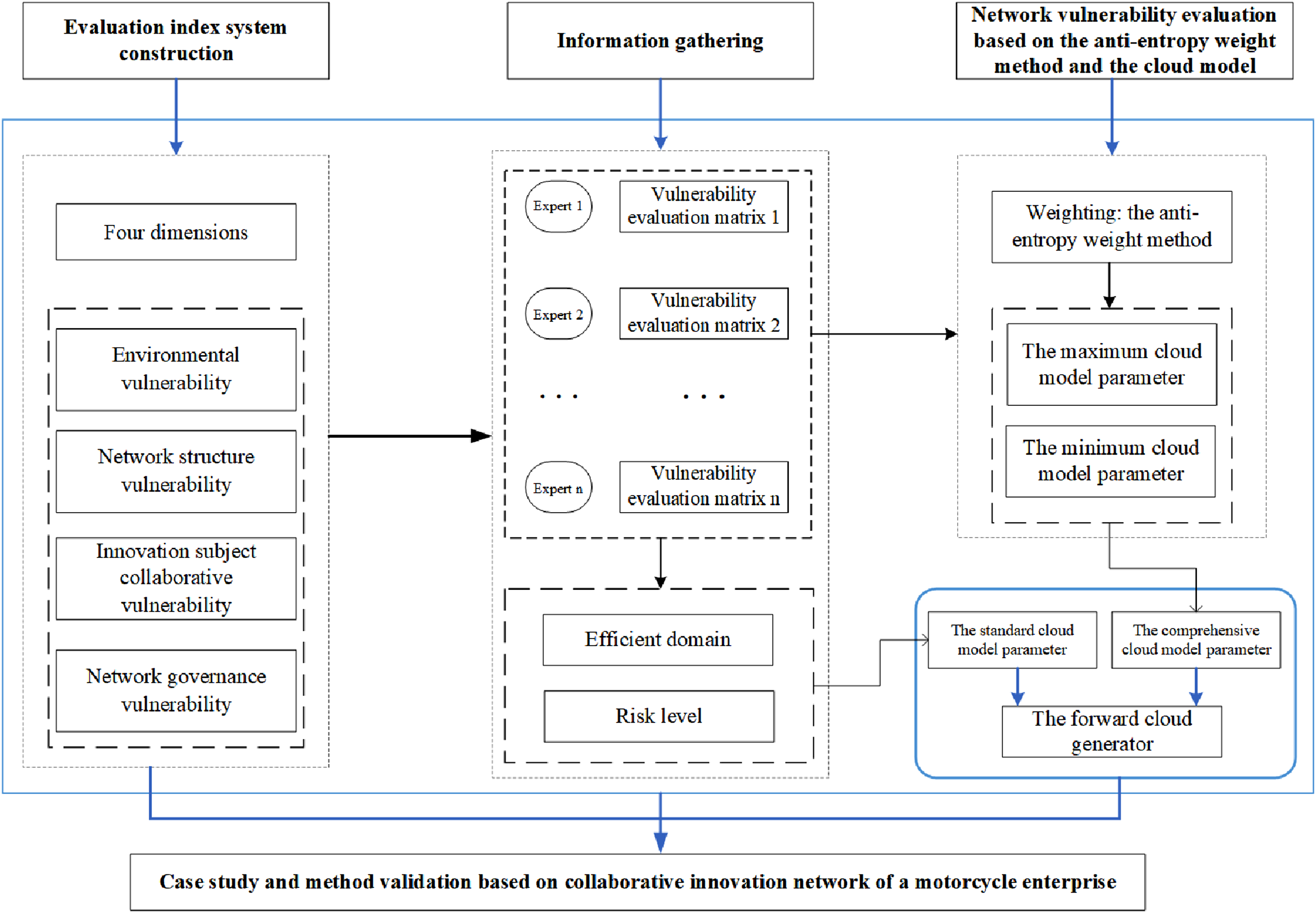
Construction of collaborative innovation network vulnerability evaluation index system
Collaborative innovation network has the characteristic of vulnerability, which is related to the factors that influence them. The subject involved in collaborative innovation network involve government, enterprises, universities, research institutions and other interested parties, of which enterprises, universities and research institutions are the main collaborative innovation activity subjects.
24
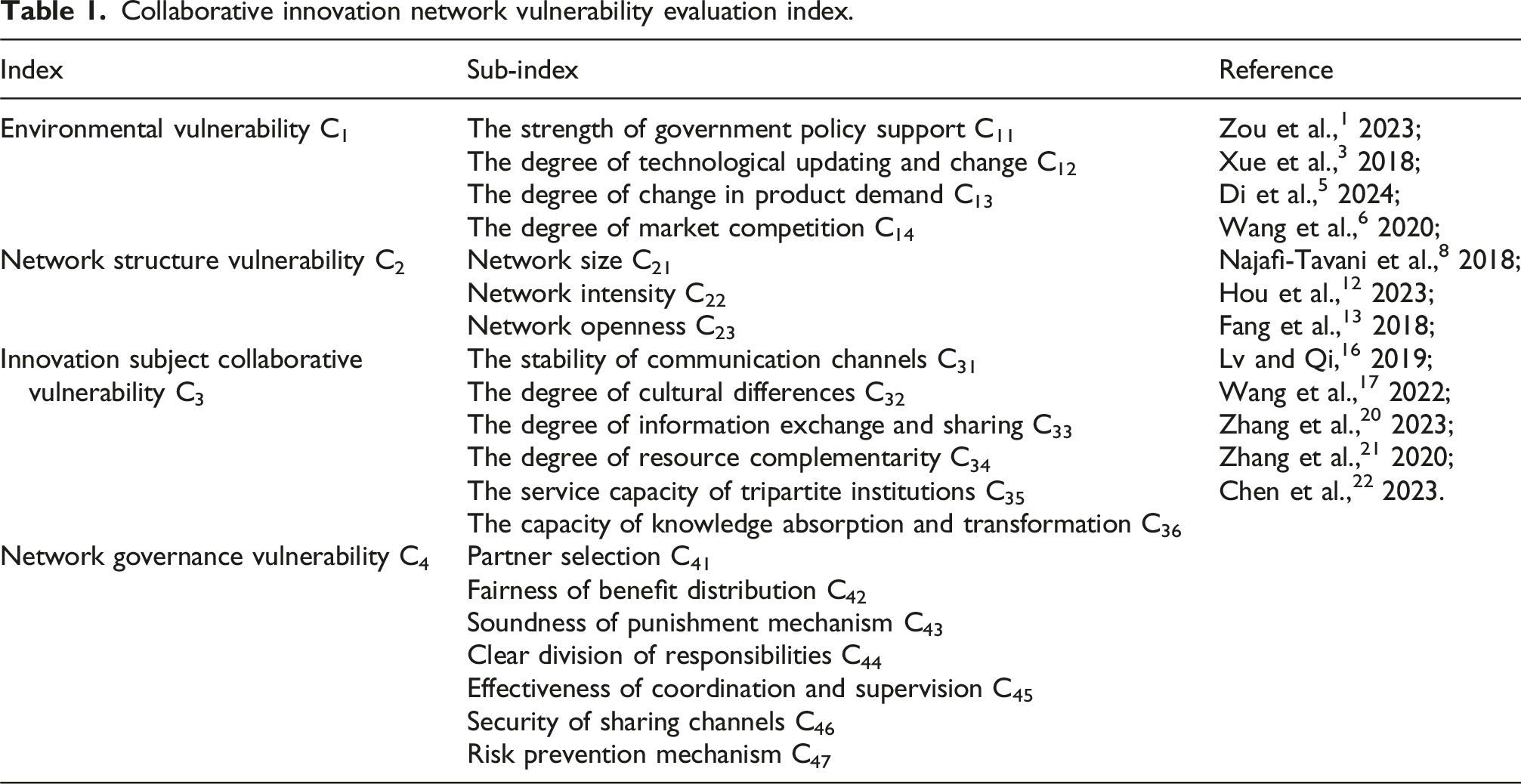
As these subjects are connected with other nodes in the network as the key nodes of network vulnerability risk, it makes the collaborative innovation network is not only affected by external environmental factors, but also constrained by the internal organizational structure (e.g., network structural characteristics, internal factors of the innovation subjects, and collaborative relationships of the innovation subjects). When there is a perturbation in the network, it can spread rapidly through the network connections, causing abnormal operation of other nodes, and then leading to damage of the overall network. Thus, based on literature combing and expert experience, this paper proposes to construct a collaborative innovation network vulnerability evaluation index system from four dimensions, including environmental vulnerability, network structure vulnerability, innovation subject collaborative vulnerability, and network governance vulnerability, as shown in Table 1. (1) Environmental vulnerability. Environmental vulnerability refers to the direct or indirect impact on collaborative innovation network due to changes in government policies, industry backgrounds, technological changes, and other influencing factors. Since the external environmental factors of the network affect the cognition and behavior of consumers and enterprises, it is crucial to understand how external environmental factors affect them. This understanding can help reduce consumer resistance to innovative behavior by enterprises and improve the efficiency and success of collaborative innovation.
25
Thus, this paper has selected four indexes to measure the vulnerability influencing factors of collaborative innovation network environment, including the strength of government policy support, the degree of technological updating and change, the degree of change in product demand, and the degree of market competition. The stronger the government policy support, the slower the technological change, the more stable the change of product demand, and the smaller the intensity of market competition, the more stable the collaborative innovation network is and the lower the vulnerability is. (2) Network structure vulnerability. From the perspective of social network theory, collaborative innovation network can be seen as a social network made up of nodes consisting of collaborative subjects and their relationships. The vulnerability of the network is closely linked to the characteristics of its structure. This paper selects three indexes to measure the structural vulnerability of collaborative innovation network, including network scale, network intensity, and network openness. Among them, network scale refers to the number and types of collaborative subjects cooperating with enterprises, network intensity refers to the degree of resources invested by network node enterprises for collaborative innovation, and network openness refers to the degree of external cooperation and exchange of enterprises’ innovation activities.
26
(3) Innovation subject collaborative vulnerability. Collaborative subjects may have varying corporate cultural concepts, which can shape the working environment and emotions of employees. These differences can affect the openness and reliability between collaborative organizations, which in turn can impact communication and information exchange.
27
In addition, collaborative innovation involves subjects from different industries and regions, who have access to different externally supportable resources, such as specialized knowledge and skills, communication platforms, and tripartite intermediaries, to improve the support for collaborative innovation network. However, the inefficiency of absorption and transformation brought by knowledge specialization, the instability of communication channels, and the service capability of tripartite institutions all affect the degree of synergy among network subjects. Therefore, this paper selects six indexes to measure the vulnerability of collaborative innovation subjects in terms of synergy, including the stability of communication channels, the degree of cultural differences, the degree of information exchange and sharing, the degree of resource complementarity, the service capacity of tripartite institutions, and the capacity of knowledge absorption and transformation. (4) Network governance vulnerability. In collaborative innovation network, each collaborative subject faces differences in economic strength, division of power and responsibility, benefit distribution, etc. On the one hand, some members may take advantage of their own interests or opportunistic mentality, leading to free-riding and leakage of information. On the other hand, some members with strong comprehensive strengths may take on too many tasks, which will lead to dissatisfaction among other collaborative subjects and ultimately destabilize the collaborative innovation network. Therefore, in the process of governing collaborative innovation network, it is necessary to restrain and regulate the behavior of collaborative subjects and establish effective coordination and supervision mechanisms. This helps to reduce conflicts between collaborative subjects and ensure the stable operation of collaborative innovation network. Additionally, under the perturbation of the external environment and the internal influence factors of the network, there may inevitably be competition and market risks among collaborative subjects, so we need a reasonable and scientific risk prevention mechanism. In this paper, seven indexes have been selected to measure the vulnerability of internal governance of collaborative innovation network. These indexes are partner selection, fairness of benefit distribution, soundness of punishment mechanism, clear division of responsibilities, effectiveness of coordination and supervision, security of sharing channels, and risk prevention mechanism. Collaborative innovation network vulnerability evaluation index.
Vulnerability evaluation of collaborative innovation network based on the anti-entropy weight method and the cloud model
Determination of evaluation index weights based on the anti-entropy
At present, commonly used methods for assigning weights include the hierarchical analysis method, entropy weight method, anti-entropy weight method, and so on. The hierarchical analysis method relies heavily on the judgment of experimental personnel to determine the importance of indexes, which introduces a high degree of subjectivity. The entropy weight method is a useful tool for reflecting changes in index data and weights, and can objectively carry out comprehensive evaluation. However, in the process of index assignment, it is common to encounter extreme weights caused by the indexes’ excessive sensitivity, without proper programming. Therefore, this paper adopts the anti-entropy weight method to objectively assign indexes, which can not only avoid over-sensitivity in evaluating index weights but also reduce the correlation between the indexes.
28
As a result, the index weights obtained are more practical and reliable. The anti-entropy weight method is opposite to the principle of the entropy weight method. This means that the higher the degree of disorder of an index, the higher the anti-entropy value and the greater the weight. It is defined as:
The steps for determining the weights of evaluation indexes based on the anti-entropy weight method are as follows.
Assuming that there are 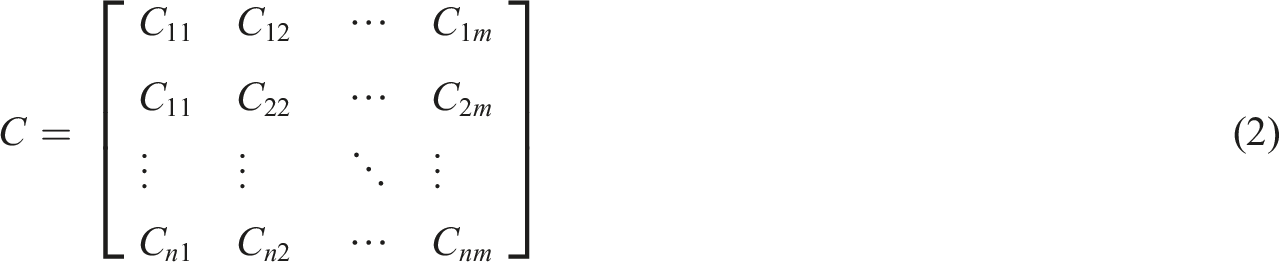
When the raw data are standardized, the bigger is better type indicators and smaller is better type indicators are normalized separately. In this paper, the formula of the larger is better type indicator is adopted as follows:

The above-mentioned evaluation indexes’ anti-entropy values are normalized using equation (4) to obtain their anti-entropy weights of each evaluation index, that is, the evaluation index weights:
Comprehensive vulnerability evaluation of collaborative innovation networks based on the cloud model
The cloud model used in this paper was proposed by Prof. Li et al. in 1995, which can efficiently transform qualitative concepts into quantitative descriptions, and can handle the stochastic and fuzzy nature of comprehensive evaluation.
29
It is also useful in dealing with uncertain decision-making problems. Compared to traditional evaluation methods, the cloud model provides more accurate and realistic evaluations. The method mainly converts qualitative information into quantitative through the numerical characteristics of the cloud The forward and inverse cloud generator.
The steps for a comprehensive vulnerability evaluation of collaborative innovation networks based on the anti-entropy weight method and cloud model are as follows.
In this paper, the improved golden section method proposed by Xu and Wu is used to generate the rubric conceptual cloud model. The collaborative innovation network’s vulnerability risk level and effective thesis can be determined by seeking expert opinion and professional knowledge. Assuming the existence of upper and lower boundaries 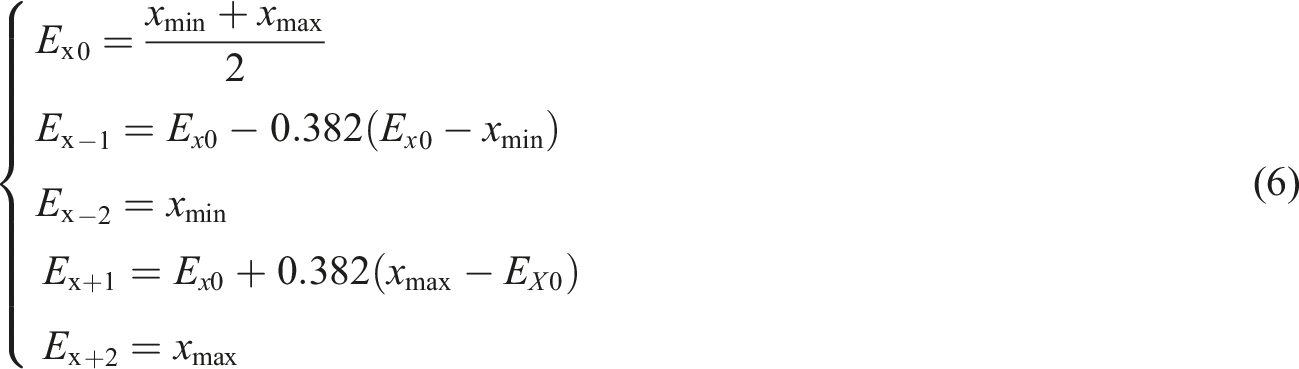
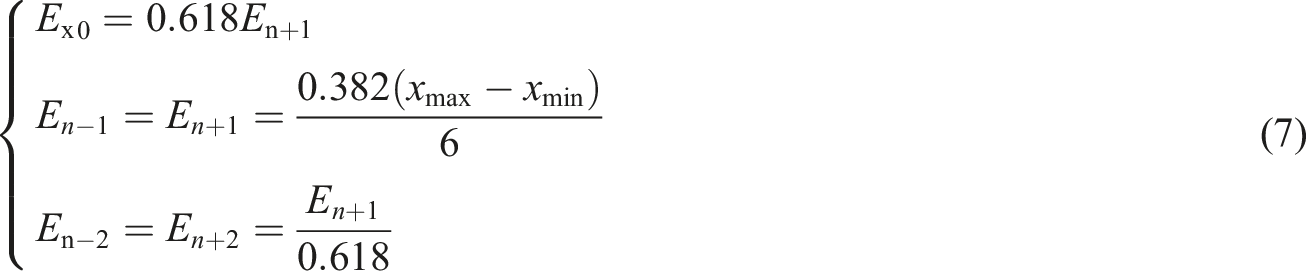
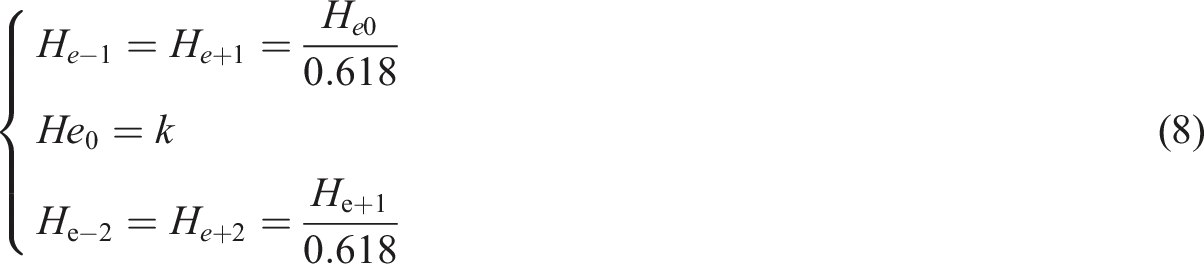
Based on the scores provided by the experts, we applied the inverse cloud generator to determine the mean, variance, maximum, and minimum cloud parameters of each index score using equation (9). Then use the integrated cloud algorithm in the virtual cloud to calculate the integrated cloud parameters of each index using equation (10).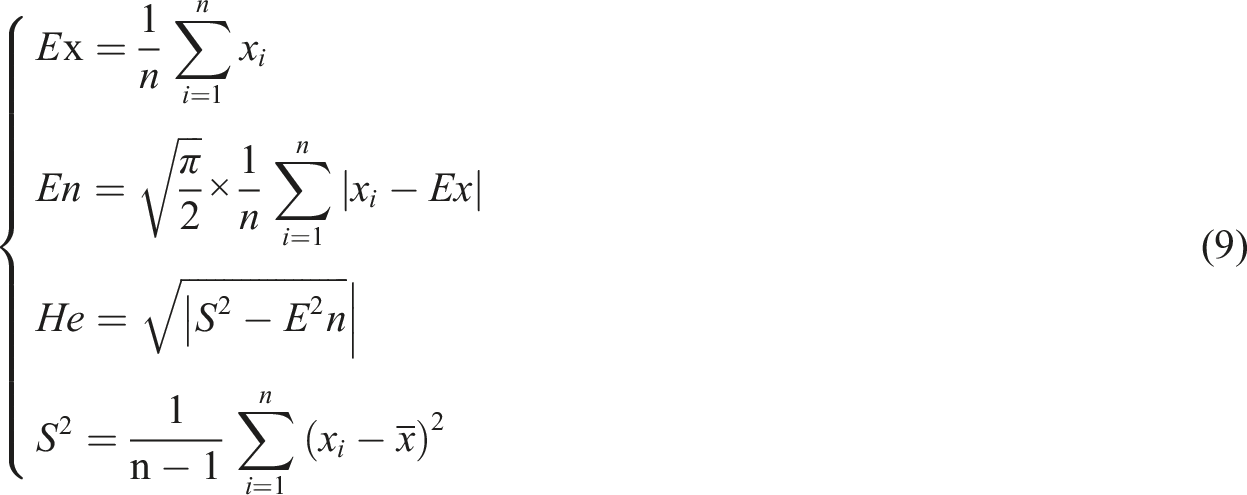
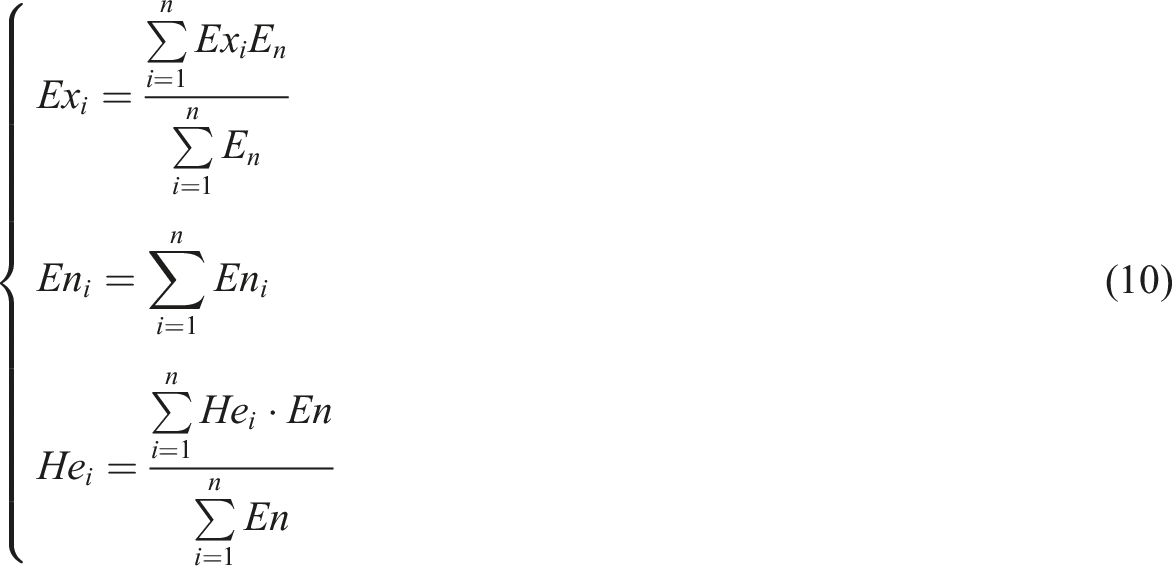
The floating cloud algorithm in the virtual cloud is applied to the digital features of the second-level indexes for virtual cloud computing. By combining it with the weights of each index based on the anti-entropy weight method in the previous section, the parameters of the evaluation cloud model for each first-level index are obtained. The same method is applied to obtain the parameters of the comprehensive cloud model. The formulas used are as follows: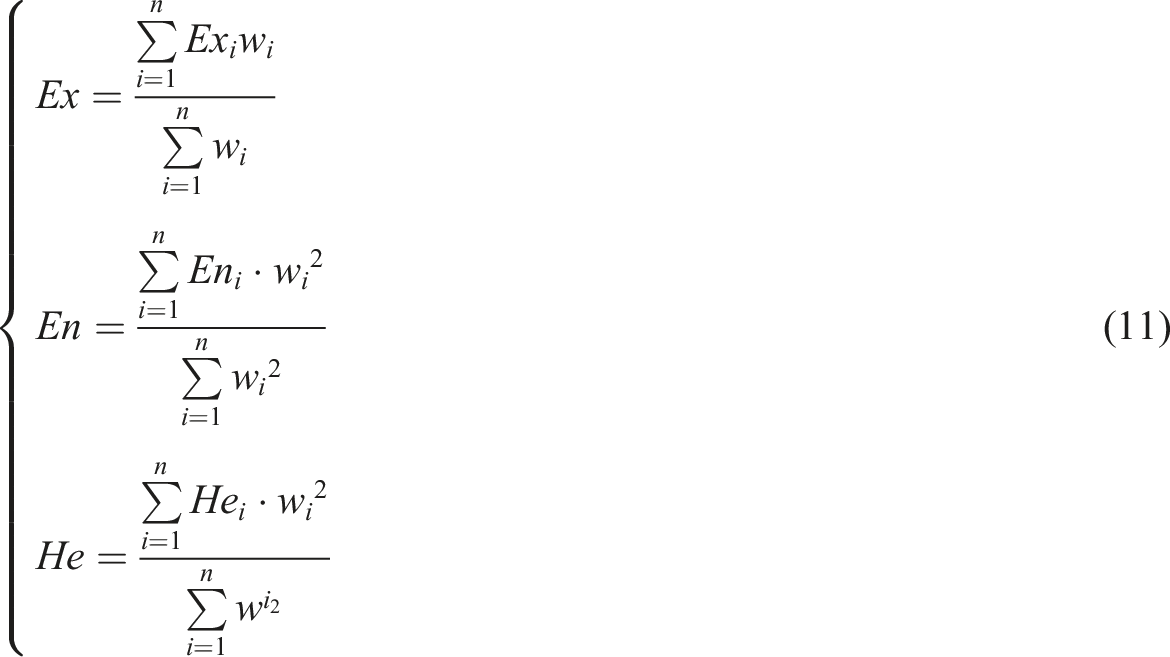
Based on the above formulae, the weights of the comprehensive evaluation index and the characteristic parameters of the cloud model
Case study
This paper takes the operation and management of the collaborative innovation network of a motorcycle manufacturing enterprise in Chongqing, China, as the case study. The enterprise occupies a large market share in the motorcycle market in southwest China. Then, due to the complex and changing market environment, intensified competition in the industry, and ambiguous customer needs. In recent years, the enterprise’s operation rate has declined, and problems such as mismatch between product innovation and customers, low innovation efficiency, and intensified market competition have been highlighted. Therefore, it is necessary to conduct a vulnerability evaluation of the collaborative innovation network of this manufacturing enterprise and identify the key vulnerability influencing factors.
Expert scoring of sub-indexes of environmental vulnerability.
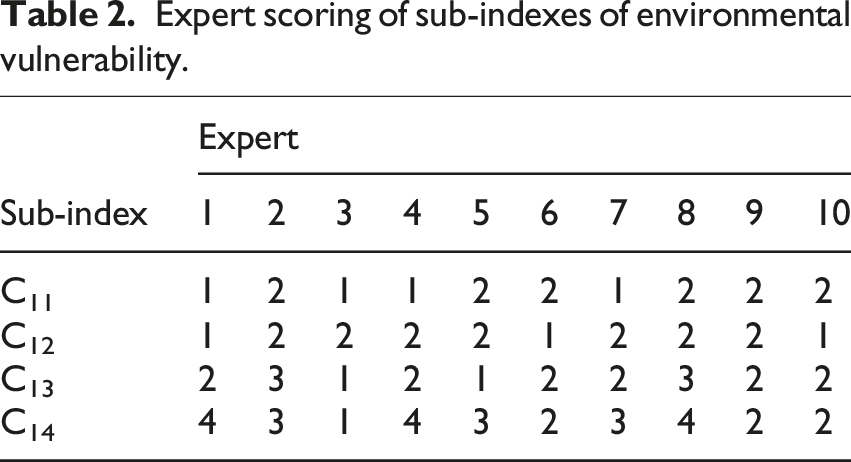
According to the data in Table 2, the value of the C11 evaluation index corresponding to expert 1 can be calculated, and the other corresponding 
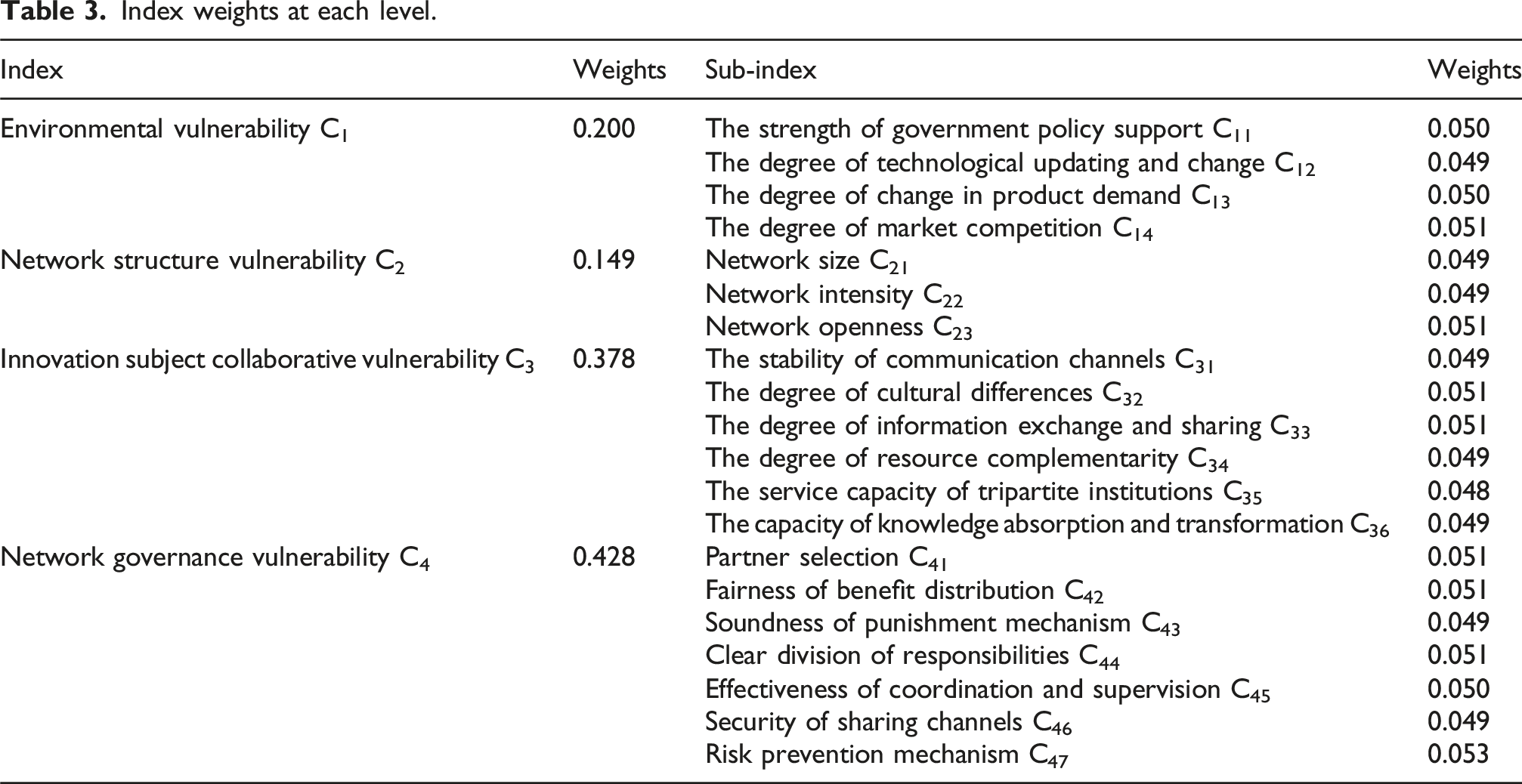
Index weights at each level.
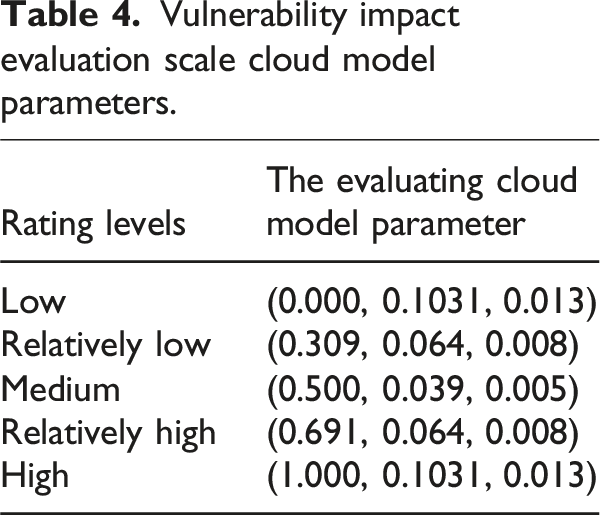
Vulnerability impact evaluation scale cloud model parameters.

The vulnerability rating criteria cloud model.
Evaluation cloud model parameters for each index.
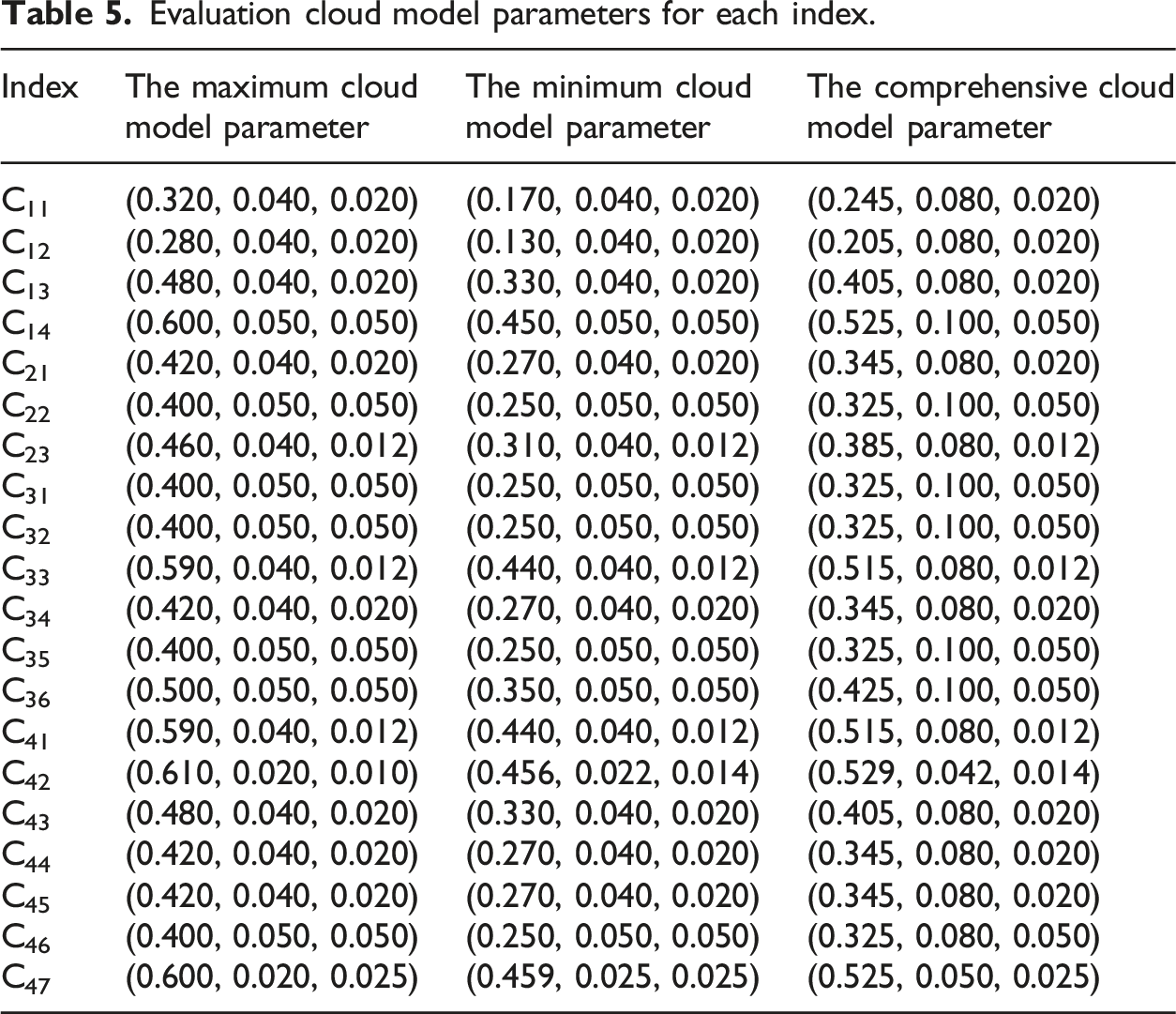
Based on the derived index cloud model parameters, the floating cloud algorithm in the virtual cloud is applied to the digital features of the three-level indexes, and combined with the weights of the three-level indexes, the evaluation cloud model parameters of each second-level index are obtained: C1(0.347, 0.085, 0.028), C2(0.352, 0.087, 0.027), C3(0.378, 0.093, 0.038), C4(0.428, 0.073, 0.022). According to the general steps of cloud model evaluation, after obtaining the evaluation cloud model parameters of the secondary indexes, the floating cloud algorithm is applied to combine the weight values of each secondary index to calculate the vulnerability of the manufacturing enterprise collaborative innovation network comprehensive cloud C (0.386, 0.082, 0.029), which is close to the evaluation standard cloud (0.309, 0.064, 0.008). Then, using the forward cloud generator to visualize the parameters of the comprehensive cloud model. The evaluation of the cloud diagram results is shown in Figure 4. Through observation, we can find that the vulnerability of the collaborative innovation network of the manufacturing enterprise comprehensive cloud is in the evaluation of the standard cloud “relatively low” and “medium” between. Therefore, it can be concluded that the vulnerability impact level of the collaborative innovation network of the manufacturing enterprise’s products is relatively low. Cloud diagram of the results of the vulnerability evaluation of collaborative innovation network.
After visualizing and analyzing the vulnerability of the collaborative innovation network, it can be found that its comprehensive cloud is between “relatively low” and “medium,” and the secondary indexes are all between “relatively low” and “medium.” The secondary indexes are all between “low” and “medium.” Compared with the second-level index cloud, the external environment vulnerability C1 and network structure vulnerability C2 are lower, indicating that the collaborative innovation network structure of this manufacturing enterprise is more reasonable, and the environment is relatively favorable. However, the degree of innovation subject synergy vulnerability C3 and network governance vulnerability C4 is average, the degree of risk is higher, and the vulnerability is larger, which increases the level of risk of the collaborative innovation network. Therefore, to gain a better understanding of the collaborative innovation network vulnerability of this manufacturing enterprise, some of the tertiary indexes under the indexes of innovation subject synergy vulnerability C3 and network governance vulnerability C4 are then evaluated in the cloud diagram visualization, as shown in Figures 5 and 6. Cloud diagram of evaluation of secondary indexes of innovation subject synergy vulnerability. Cloud diagram of evaluation of secondary indexes of network governance vulnerability.
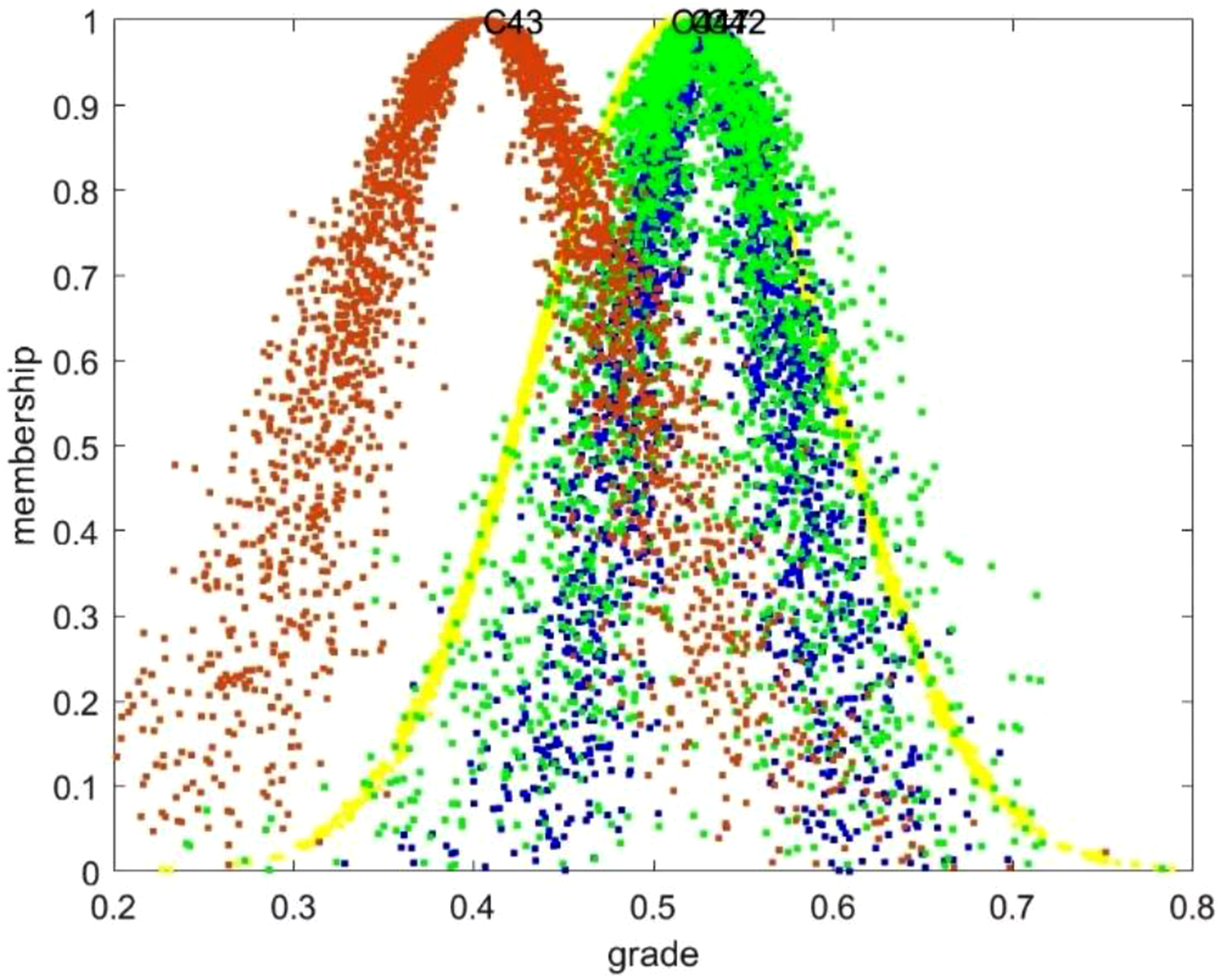
In the innovation subject synergistic vulnerability index C3, the highest score is the degree of information exchange and sharing C33, with a value of 0.515. This indicates that there is a low level of internal and external communication and exchange of information among the subjects involved in this synergistic collaboration and the synergistic subjects are unable to communicate effectively with each other. As a result, the efficiency of information conversion decreases and there is an asymmetry between the information. This may lead to mutual suspicion among the synergistic subjects, further decrease the degree of synergy among them, increase the risk of the collaborative innovation network, and ultimately destroy the stability of the collaborative innovation network. Moreover, in the network governance vulnerability index C4, the higher scores are partner selection C41, benefit distribution fairness C42, and risk prevention mechanism C47, with values of 0.515, 0.529, and 0.525, respectively. These scores indicate a “medium” risk, while the results of other indexes fall between “low” and “medium” levels of risk. Good partners can provide better resources and can even help partner enterprises accelerate the process of product innovation. Due to the complexity of each innovation subject, the mount of resources invested by each subject is difficult to measure. Additionally, there are many principles of benefit distribution, mostly according to the size of the contribution and risk, which can’t achieve the consistency or satisfaction of all the subjects in the distribution of internal network benefits. If the benefit distribution mechanism is reasonableness and fairness in general, which may increase the contradictory conflicts between the subjects, and then lead to the increase of the network’s vulnerability. This indicates that the collaborative innovation network of this manufacturing enterprise cannot effectively carry out strategic deployment and adapt to changes in external conditions in the face of changes in the market environment, and the risk prevention mechanism is not perfect enough to deal with emergencies and maintain a stable operation of the collaborative innovation network on time. Furthermore, in the environmental vulnerability index C1, the degree of market competition C14 has the highest score, with a value of 0.525, which is close to “medium” risk. However, the other indexes are between “relatively low” and “medium,” which shows that the degree of competition in the market environment where the manufacturing enterprise is located is very intense, and the pressure of product homogenization competition is high.
Management insights
In the current digitalized and networked era where everything is interconnected, it is of great significance for enterprises to build a synergistic development ecosystem through in-depth integration with partners to effectively respond to escalating consumer demand and changing development patterns. At the same time, it is also an important way for manufacturing enterprises to achieve innovative development. Based on the results of the above case study, the following management countermeasures and recommendations are proposed. (i) Emphasize partner selection. Based on internal driving factors such as cost attributes, resource complementarity, economies of scale, and risk sharing, collaborative subjects choose to join the collaborative innovation network. Then they form a multi-subject collaborative community with shared costs, risks and results. Therefore, in the process of realizing the development of multi-subject collaborative innovation, manufacturing enterprises should pay attention to the selection of partners, understand the corporate culture, market performance, financial status, and so on of the partners in an all-round way. Trying to avoid the misjudgment caused by asymmetric information. They should construct a partner evaluation index system, adopt scientific and reasonable evaluation and decision-making methods to strictly control the quality of partners and efficiently select the most suitable partners. Ensure the stable operation of the collaborative innovation network. (ii) Sound benefit distribution mechanism. Multi-subject collaborative innovation is an activity involving multiple stakeholders. How to satisfy the interests of each collaborative subject and rationally and effectively distribute the interests is an effective measure to prevent collaborative members from speculation and ensure that the goals of collaboration are realized as scheduled. Therefore, a sound benefit distribution mechanism should be established, and an effective reward and punishment mechanism and cost control mechanism should be set up. It helps to reach a consensus within the collaborative innovation network, constrains and regulates the behavior of collaborative subjects, actively promotes the development of multi-subject collaborative innovation, and then actively creates an atmosphere of collaborative innovation. (iii) Establishing a sound regulatory mechanism to improve the management efficiency and transparency of the collaborative innovations network. The Collaborative innovation network requires cooperation and coordination among different departments, enterprises and organizations, but the lack of effective collaborative mechanisms and communication platforms can easily lead to information asymmetry and resource waste. Therefore, a sound regulatory mechanism should be established to improve the regulatory laws and regulations on collaborative innovation. In addition, different levels of collaborative innovation supervisory organizations should be optimized to achieve complementarity of advantages in order to guarantee the effectiveness of the collaborative innovation network. (iv) Promote balanced supply of resource distribution. Participants in the collaborative innovation network often come from different areas and regions, and uneven distribution of resources may lead to insufficient supply of resources to sub-nodes, thus affecting the operational efficiency of the whole network. Therefore, the optimization method of resource distribution should be considered and a resource sharing mechanism should be established. Through the technical decision mechanism, incentive mechanism, supervision mechanism, property right formulation, security mechanism and performance evaluation mechanism of resource sharing, etc., so as to ensure a balanced supply of resources to each node and improve the stability and efficiency of the network.
Conclusions and future work
The dynamics of changes in the external network environment and the complexity of the internal network structure directly or indirectly affect the collaborative innovation subject itself, which may lead to an increase in the potential risks of the collaborative innovation network, thus undermining the stable operation and sustainable development of the collaborative innovation network. Therefore, the vulnerability influencing factors of collaborative innovation network is the key reason that prevent the network from playing a role of collaborative innovation.
Aiming at the problem that the subject of collaborative innovation network may increase the potential risk of collaborative innovation network under the influence of internal and external perturbation factors of the network. In this paper, an analytical model for evaluation the vulnerability of collaborative innovation network based on the cloud model is established. The proposed model helps to improve the product innovation efficiency of enterprises, reduce the risk of collaborative innovation, and maintain the sustainable operation and development of collaborative innovation network. At the same time, it also enriches the collaborative innovation network and risk management system, and provides theoretical and methodological support for promoting the sustainable development of collaborative innovation network. The contributions and conclusions of this paper are as follows. (i) A collaborative innovation network vulnerability evaluation index system is constructed. Combined with the attribute characteristics of collaborative innovation network, this paper constructs an evaluation index system that can reflect the vulnerability of collaborative innovation network from four dimensions, including environmental vulnerability, network structure vulnerability, innovation subject collaborative vulnerability, and network governance vulnerability, by taking into account the enterprise’s external environment and internal organizational structure perspectives. (ii) For the vulnerability assessment of collaborative innovation network, considering the information ambiguity and randomness in the assessment process, a comprehensive evaluation method based on the anti-entropy weight method and cloud model is established through the introduction of anti-entropy right method and the theory of cloud model. It can better convert the evaluation indexes between the qualitative concepts and the quantitative description of the uncertainty, which makes the evaluation results more accurate and closer to the actual situation. The proposed model provides methodological support for the vulnerability assessment of collaborative innovation network. (iii) Taking the operation and management of the collaborative innovation network of a motorcycle manufacturing enterprise as the case study. This paper identifies the key vulnerability influencing factors and evaluates the vulnerability level of the collaborative innovation network. It not only promotes theoretical development, but also provides targeted management recommendations for the stable operation and development of collaborative innovation networks, and reduces the vulnerability of multi-subject collaborative innovation networks.
However, there are still some shortcomings in this paper due to the focus of the research content. In terms of the composition of evaluation indexes, considering that in practical application, different subjects have different development situations and demands, which makes it difficult for the composition of indexes to fully reflect all aspects of collaborative innovation network. In the future research, we will continue to explore other vulnerability influencing factors in the process of production and cooperation of collaborative innovation network. Secondly, this paper focuses on how to measure the vulnerability level of collaborative innovation network, so as to achieve the assessment of the vulnerability of collaborative innovation network by combining the cloud model with the anti-entropy weight method. However, since the cloud model only considers
Footnotes
Funding
The authors disclosed receipt of the following financial support for the research, authorship, and/or publication of this article: This research was supported by the National Natural Science Foundation of China (Grant No. 71701027), Chongqing Technology and Business University, China (Grant No. 1751013).
Declaration of conflicting interests
The authors declared no potential conflicts of interest with respect to the research, authorship, and/or publication of this article.