




Abstract
With the development of information technology, the hotel industry needs to utilize advanced technologies and methods to improve the accuracy and efficiency of room forecasting and pricing in order to adapt to the changes in the market and the pressure of competition. This paper adopts a combination of quantitative and qualitative methods, following two phases: (1) data analysis phase, using statistical analysis and visualization techniques to clean, process, describe, and explore the collected data related to hotel rooms; (2) model building phase, using machine learning techniques to construct and train a deep neural network model to achieve the prediction of hotel rooms, and using reinforcement learning techniques that realizes the pricing of hotel rooms. In this paper, theoretical and practical experiments are conducted to compare and evaluate with existing research methods and models from different perspectives and levels. The results show that the model proposed in this paper outperforms other models in all indicators, with higher prediction accuracy and pricing efficiency, as well as good generalization and adaptation capabilities. The research in this paper has important theoretical and practical significance for revenue management and competitive strategies in the hotel industry.
Introduction
The hotel industry is a competitive and challenging industry, and its room revenue is affected by a variety of factors, such as seasonality, holidays, weather, events, market demand, and competitors’ strategies. Hotel managers and decision makers need to forecast the demand and supply of rooms based on these factors, as well as develop reasonable pricing strategies to maximize the hotel’s revenue and profit. However, these factors are often complex, dynamic, uncertain, and non-linear, resulting in high difficulty and risk in hotel room forecasting and pricing. As a result, the hotel industry needs to leverage advanced technologies and methods to improve the accuracy and efficiency of room forecasting and pricing in order to adapt to market changes and competitive pressures. The application model of artificial intelligence in the field of hotel room forecasting is specifically shown in Figure 1.1,2 Application model of artificial intelligence in the field of hotel room prediction.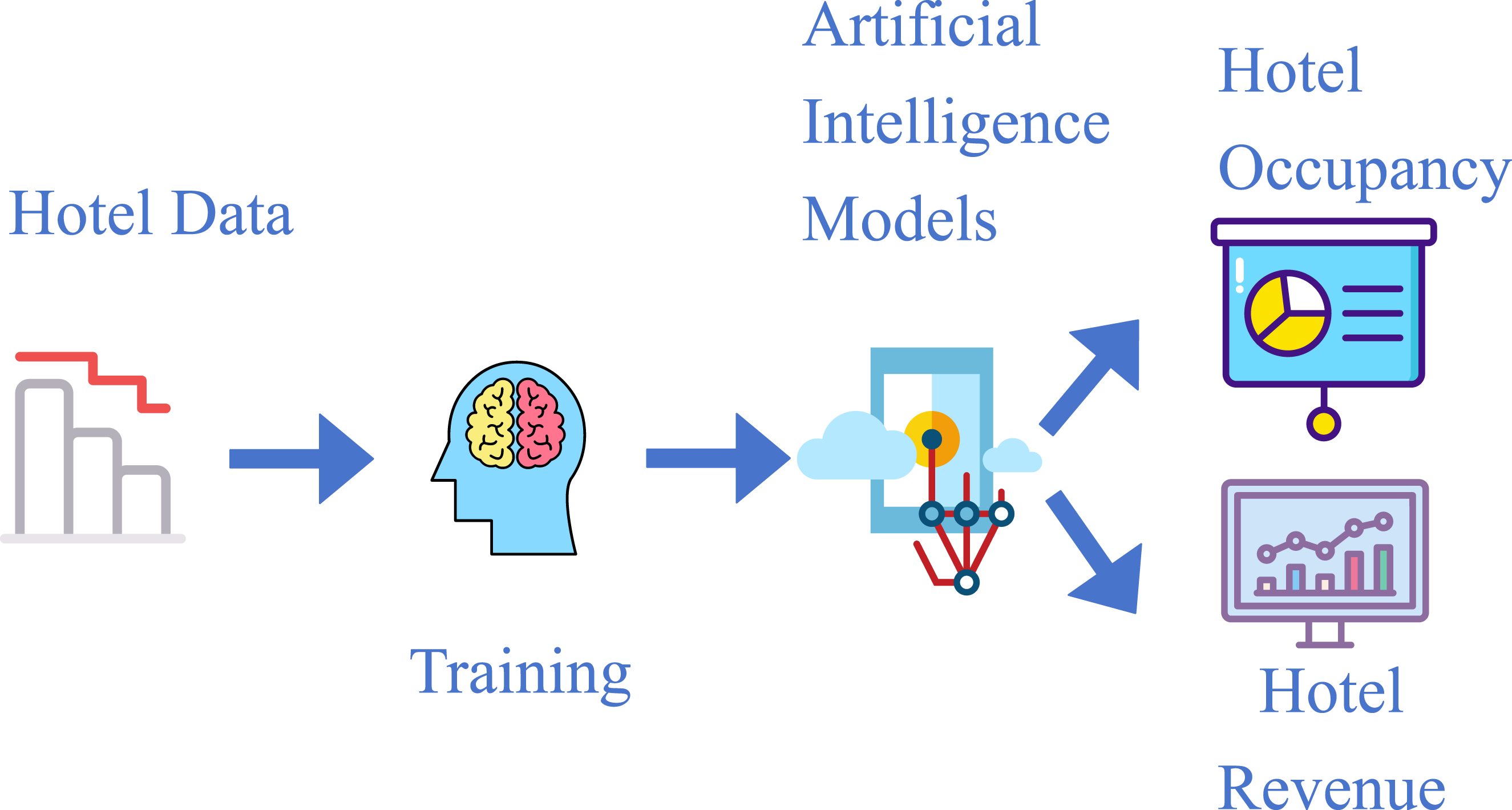
The application of artificial intelligence can bring multiple values to the hotel industry, such as improving customer satisfaction, optimizing operational efficiency, and increasing revenue. Hotel room forecasting and pricing is a core component of hotel revenue management, which involves the hotel’s market positioning, competitive strategy, customer relationship, operational efficiency, etc., and directly affects the hotel’s revenue and profit. However, hotel room forecasting and pricing is also a very complex and difficult task, which needs to consider a variety of internal and external influences, which are often dynamic, uncertain, and non-linear, leading to inaccuracies and inefficiencies in hotel room forecasting and pricing, which can result in loss of revenue and loss of customers.3,4 Therefore, the necessity and significance of hotel room forecasting and pricing models based on artificial intelligence is obvious. Artificial intelligence technology can effectively deal with the complexity and uncertainty in hotel room prediction and pricing, improve the accuracy and flexibility of prediction and pricing, and thus increase the competitiveness and revenue of hotels. Specifically, AI technology can bring the following advantages: (1) AI technology can automatically collect and process a large amount of historical and real-time data, from which useful information and features can be extracted to build a more accurate and comprehensive forecasting model of hotel room demand and supply. 5 (2) Artificial intelligence technology can automatically learn and adjust the pricing model of hotel rooms, and dynamically develop optimal pricing strategies according to changes in the market and competition in order to maximize the hotel’s revenue and profit. (3) The artificial intelligence technology can automatically evaluate and optimize the effectiveness of the prediction and pricing of hotel rooms, and continuously improve and refine the models and methods of prediction and pricing of hotel rooms by comparing and analyzing them with the actual data and results. 6
The necessity and significance of hotel room prediction and pricing model based on artificial intelligence is indisputable, which can bring great value and impact to the hotel industry, improve the level and effect of revenue management of hotels, and enhance the market competitiveness and customer loyalty of hotels. The main research question and objective of this paper is to explore the principle, methodology, and effect of hotel room prediction and pricing model based on artificial intelligence.7,8 This paper argues that AI technology can effectively deal with the complexity and uncertainty in hotel room forecasting and pricing, improve the accuracy and flexibility of forecasting and pricing, and thus increase the competitiveness and profitability of hotels. This paper adopts the latest artificial intelligence technology to construct a hotel room prediction and pricing model that integrates multiple influencing factors, and conducts empirical analysis and comparative experiments to verify the effectiveness and superiority of the model. 8
Hotel room pricing models have a long history and have evolved in response to market changes. Early on, they were based on cost-plus and evolved to consider supply and demand, competition, and customer segmentation. The current state of affairs incorporates big data and AI technologies to enable dynamic, personalised pricing to maximize revenue.
The specific research proposed in this paper is an exploration of AI based hotel room forecasting and pricing models. This paper adopts a combination of quantitative and qualitative methods, following two phases: (1) data analysis phase, using statistical analysis and visualization techniques to clean, process, describe, and explore the collected data related to hotel rooms; (2) model building phase, using machine learning techniques to construct and train a deep neural network model to achieve the prediction of hotel rooms, and using reinforcement learning techniques that realizes the pricing of hotel rooms. In this paper, theoretical and practical experiments are conducted to compare and evaluate with existing research methods and models from different perspectives and levels. The results show that the model proposed in this paper outperforms other models in all indicators, with higher prediction accuracy and pricing efficiency, as well as good generalization and adaptation capabilities. The research in this paper has important theoretical and practical significance for revenue management and competitive strategies in the hotel industry.
Relevant studies
Rule-based methods and models
Rule-based methods and models, such as traditional pricing strategies (e.g., cost-oriented, competition-oriented, demand-oriented, etc.), have the advantages of being simple and easy to understand and implement, but the disadvantages are that they lack data support, ignore changes in the market and competition, and do not effectively deal with complex and uncertain factors, which can easily lead to biases and errors in forecasting and pricing. Pimentel et al. analyzed competitive pricing strategies in the Chinese telecom market, using a game theory approach, considering different market structures and demand functions, and obtaining different pricing scenarios, but did not take into account the dynamic changes and uncertainties in the market, and did not provide the support of empirical data. 9
Statistically based methods and models
Statistically based methods and models have demonstrated significant advantages and limitations in practical applications. The advantages are mainly reflected in the following aspects: first, the core foundation of such methods is data-driven, which means that their prediction and decision-making processes are supported by clear data, making the results highly verifiable and objective; second, the statistical model is able to comprehensively consider a number of influencing factors, whether linear or nonlinear relationships, can be effectively modeled and resolved, which enhances the model’s explanatory power and predictive ability for complex real-world problems; however, this method also has certain shortcomings, mainly manifested in the higher demand for data volume. However, this method also has certain shortcomings, which are mainly manifested in the large demand for data, and the high demand for data quality and completeness. If the data collection is incomplete or biased, it may directly affect the accuracy and effectiveness of the model. In addition, it is often difficult for statistically based models to automatically adapt to changes in the market environment and the evolution of competitive dynamics, requiring constant human intervention and parameter adjustment to ensure the real-time and applicability of the model.
Specifically, in the study of China’s oil market price and demand, some researchers have used the statistical method of time series analysis, constructed ARIMA (Autoregressive Integrated Sliding Average Model) and gray models to deeply explore the internal laws of historical data, and predicted the future price trend and market demand. Nevertheless, this research method also has certain limitations, such as the failure to fully consider other important factors besides historical data in the process of model construction, such as the adjustment of policies and regulations, the impact of environmental protection policies, the development of technological innovation and other factors, which may have a significant impact on the oil market. Meanwhile, due to the strong nonlinear characteristics and instability of the oil market, time series analysis relying only on historical data may not be able to fully capture the dynamic changes in the market, so the model’s prediction results need to be updated and corrected in a timely manner on a regular basis based on new market information in order to improve the accuracy and practicality of the model’s prediction. 10
Optimization-based methods and models
Optimization-based methods and models are capable of solving optimal forecasting and pricing scenarios, can take into account multiple constraints, and can handle both deterministic and uncertain scenarios, but the drawbacks are the need for complex mathematical models, the high assumptions and simplifications of the problem, the high computational power and speed requirements, and the inability to automatically update and improve the models and scenarios. Forecasting and pricing are two important business problems and different methods and models have different advantages and disadvantages. Bandalouski et al. 11 used a dynamic programming approach to optimize the forecasting and pricing of the electricity market, considered the stochastic nature of electricity demand and the dynamics of the power system, built a multi-stage stochastic optimization model, and solved the optimal electricity production and electricity price, but it requires a large number of parameters and state variables, and is very complicated to model and solve the problem, and it does not consider the competition and game of the market, which requires constant adjustment and optimization of the model. A multi-stage stochastic optimization model was established by using dynamic programming to optimize the forecasting and pricing of the electricity market, taking into account the stochastic nature of the electricity demand and the dynamics of the electricity system, and solving the optimal electricity production and price, but it requires a large number of parameters and state variables, and is very complicated to model and solve the problem, and does not take into account the competition and game in the market, and needs to be continuously adjusted and optimized. The model needs to be constantly adjusted and optimized. 12 In the analysis, a linear programming approach was used to optimize the EV charging management problem, taking into account the EV charging demand, the power supply capacity of the grid, and the change of electricity price, and a multi-objective linear programming model was established to solve the optimal charging scheduling scheme, which not only meets the charging demand of the evs but also reduces the load of the grid and the charging cost of the evs. 13 In a prediction, a nonlinear programming approach was used to optimize the pricing and revenue management problems of hotels, considering the demand and price elasticity of different room types, different seasons, and different customer groups of hotels, and a nonlinear revenue maximization model was established to solve the optimal room rate and room allocation scheme, which not only improves the revenue of the hotels but also improves the customer’s satisfaction. 14 An integer programming approach was used to optimize the ticket price and seat control of airlines. An integer programming model was developed to solve the optimal fare and seat control problem, which maximizes the airline’s revenue and minimizes the customer’s purchasing risk, taking into account the demand and price sensitivity of the airline’s different classes, flights, and customer segments. Brunato used a dynamic programming approach to optimize the problem of promotional strategies for e-commerce platforms, which considered the demands and price sensitivities of different commodities, different time periods, and different customer groups of e-commerce platforms, and built a dynamic programming model to solve the optimal promotional strategies, which increased the sales and profits of the e-commerce platforms as well as the loyalty and satisfaction of the customers. 15 A stochastic programming approach was used to optimize the decision-making problem of the agricultural supply chain, considering the uncertainty of demand and price in different links, products, and markets of the agricultural supply chain, and a stochastic programming model was built to solve the optimal production, transportation, storage, and sales decisions, which both reduces the cost and risk of the agricultural supply chain, and improves the efficiency and profitability of the agricultural supply chain.16,17
Artificial intelligence-based hotel room prediction and pricing models
This paper proposes an artificial intelligence-based hotel room prediction and pricing model, which aims to improve the prediction accuracy and pricing efficiency of hotel rooms and maximize hotel revenue by using artificial intelligence technology.
This paper considers the following categories of factors that affect the demand and price of hotel rooms: (1) time factors, including seasons, days of the week, holidays, special events, etc.; (2) market factors, including market demand, competitors’ prices, customers’ preferences and evaluations, etc.; (3) hotel factors, including the hotel’s location, facilities, services, and brand, etc.; and (4) guest room factors, including the type of guest room, its number, status, booking status, etc.
18
The research in this paper is conducted under the assumption that the demand and price of hotel rooms obey normal distribution and there is a positive correlation between demand and price, that is, the higher the demand, the higher the price.
19
This paper uses a combination of quantitative and qualitative methods and follows two stages. (1) the first is the data analysis stage, using statistical analysis and visualization technology, cleaning, processing, describing and exploring the collected data related to hotel rooms, analyzing the distribution, correlation and degree of influence of each influencing factor, and providing a basis for the model establishment.20,21 (2) the model establishment stage, using machine learning technology, constructing and training a deep neural network model to achieve the prediction and pricing to provide support for hotel revenue management. The overall design of the model is shown in Figure 2. General design of the model.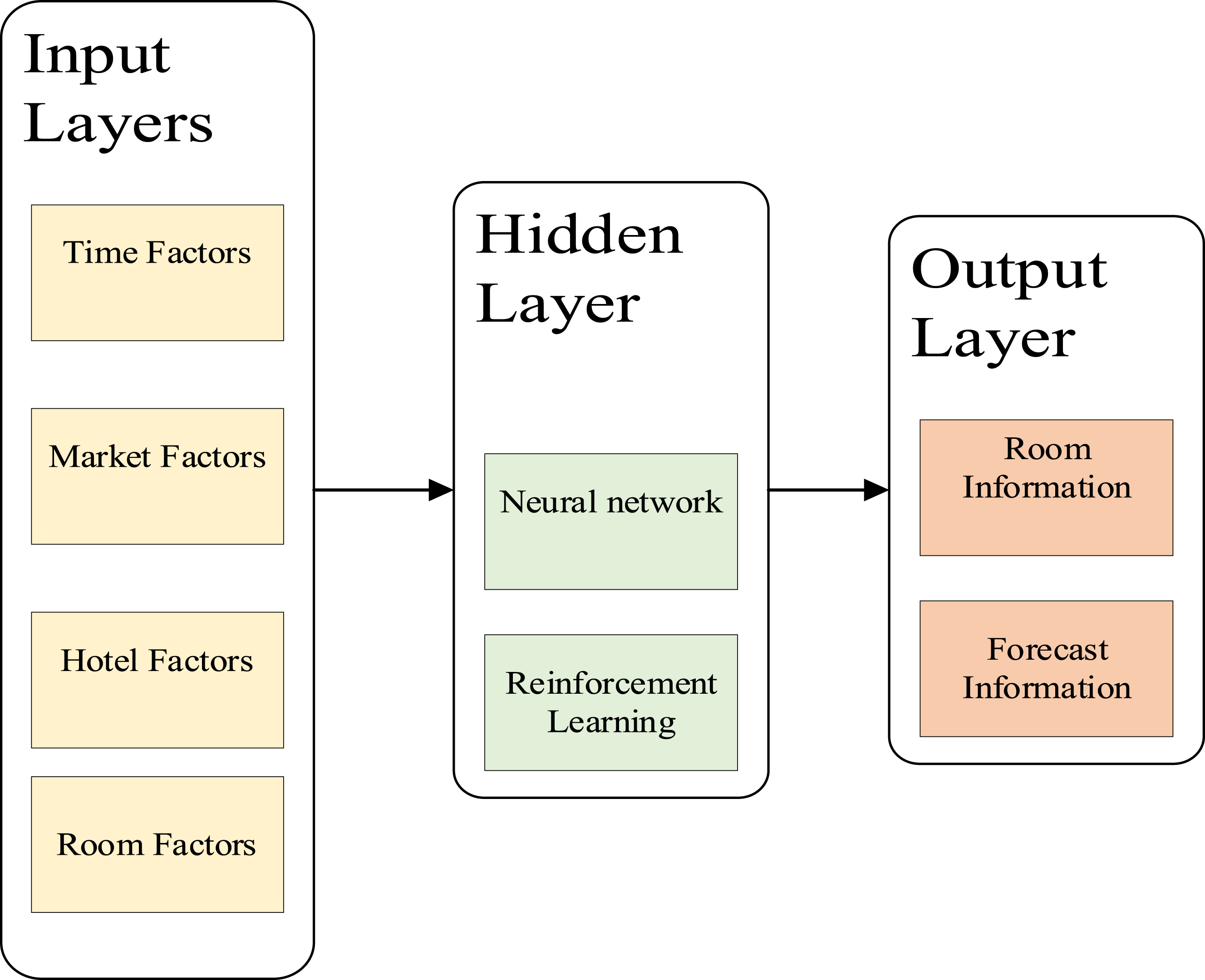
Modeling
Deep Neural Network (DNN) is used as a predictive model which consists of input, hidden, and output layers. The input layer receives the data of each influencing factor such as time factor, market factor, hotel factor and room factor as input variables of the model. Let the number of nodes in the input layer be


where w is the weight parameter of the model, t is the number of iterations, η is the learning rate, and





We use Reinforcement Learning (RL) as a pricing model, consisting of environment, state, intelligences, actions, and rewards. The environment is the trading market, the state is the lowest price in the market, the inventory level, the current date characteristics, etc., the intelligences are the dynamic pricing algorithms, the actions are raising or lowering the price, or offering free shipping, etc., and the rewards are the total profits generated by the intelligences’ decisions. The training objective of the model is to maximize the cumulative rewards as shown in equation (8)
25



Modeling steps
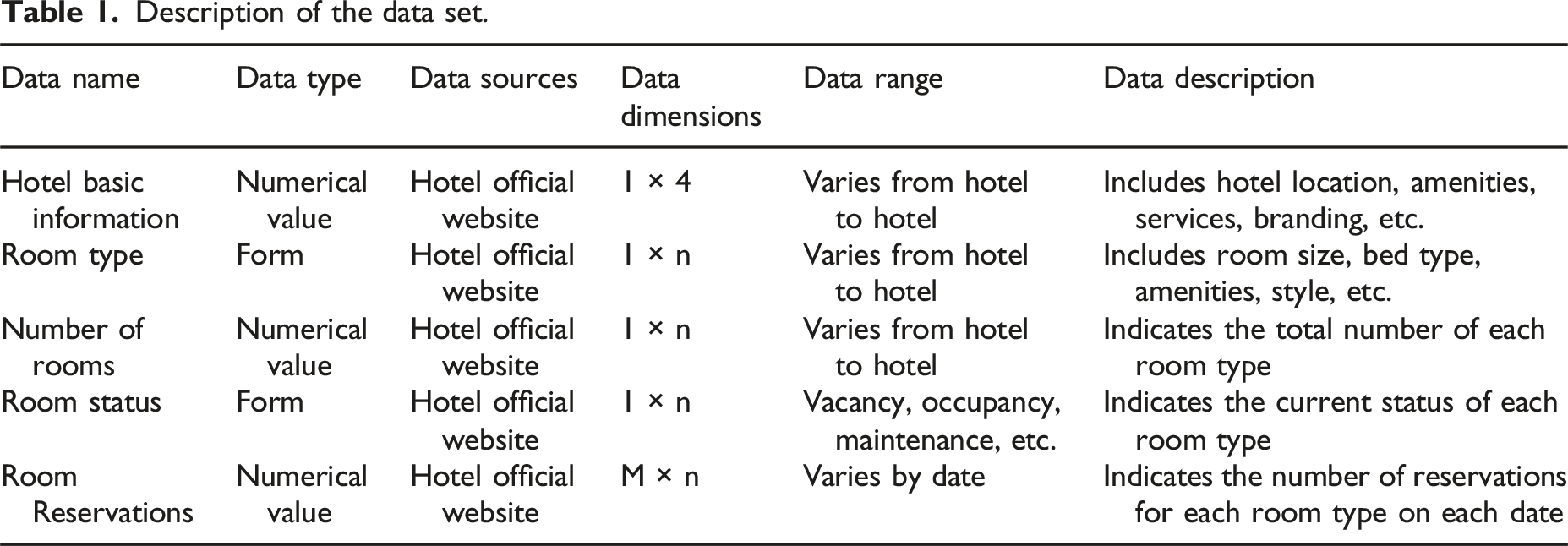
This paper collects data related to hotel rooms from the official website of an international hotel chain and a third-party data platform, including the basic information of the hotel (e.g., hotel name, address, star rating, etc.), types of guest rooms (e.g., single rooms, double rooms, suites, etc.), quantities (e.g., total number of each type of guest rooms), statuses (e.g., booked, available for booking, etc.), bookings (e.g., booking rates, occupancy rates, etc.), prices (e.g., real-time prices, historical prices, etc. for each type of rooms’ real-time price, historical price, etc.), as well as market demand (e.g., seasonal demand, holiday demand, etc.), competitors’ prices (e.g., prices of neighboring hotels, prices of the same type of hotels, etc.), customers’ preferences and evaluations (e.g., customers’ evaluations of hotels, evaluations of guest rooms, etc.), and so on. These data reflect various aspects of hotel rooms and the multidimensional and dynamic nature of the demand and price of hotel rooms. 26
We processed the collected data in the following steps to improve the quality and usability of the data: (1) Cleaning of the data to remove duplicate values, erroneous values, invalid values, etc. From the data; (2) Filling of the data to fill in the missing values in the data using regression; (3) Culling of the data to make box-and-line plots to remove outliers from the data; and (4) Normalization and Normalizing the data, using, for example, Z-score Standardization converts the data to a uniform scale and range. The process of processing the data is specifically shown in Figure 3.
27
Processing of data.
Description of the data set.
The model building and training in this paper are realized using the deep learning framework tensor flow. The steps of model building and training in this paper are (1) divide the dataset into a training set, a validation set, and a test set in the ratio of 8:1:1; (2) determine the structure and parameters of the model, such as the number of nodes in the input layer, the number of layers and the number of nodes in the hidden layer, the number of nodes in the output layer, the learning rate, the batch size, the number of iterations, etc.; (3) use the training set to train the model, use the validation set to adjust the model’s parameters, and use the test set to evaluate the effectiveness of the model. 28
Evaluation of the model
In order to evaluate the effectiveness of the artificial intelligence-based hotel room prediction and pricing model proposed in this paper, two aspects of experiments are carried out in this paper, namely, theoretical experiments and practical experiments, which are compared and evaluated from different perspectives and levels with existing research methods and models.
Design of theoretical experiments
The purpose of the theoretical experiments is to test the prediction accuracy and pricing efficiency of the model proposed in this paper, as well as the model’s ability to generalize and adapt, from a theoretical perspective. 29
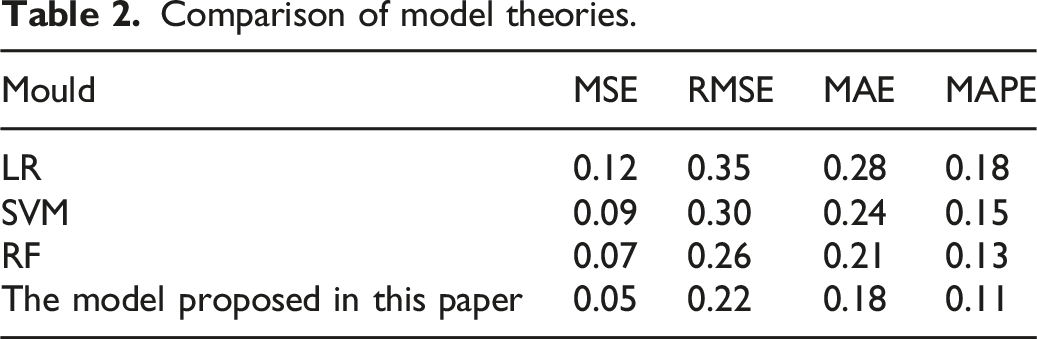
This paper uses the following four metrics to evaluate the effectiveness of the model proposed in this paper and other models, which are Mean Square Error (MSE), Root Mean Square Error (RMSE), Mean Absolute Error (MAE), and Mean Absolute Percentage Error (MAPE), to compare and contrast the models proposed in this paper using this proposed model and three existing research methods and models, which are Linear Regression Model (LR), Support Vector Machine Model (SVM), and Random Forest Model (RF), the contrasting models, respectively, to forecast the demand and price of hotel rooms, and based on the results of the forecasts, the pricing strategy as developed and adjusted. 30
In this paper, we use Python 3.8 as the programming language, Tensorflow 2.4 as the deep learning framework, Scikit-learn 0.24 as the machine learning library, Pandas 1.2 and Numpy 1.19 as the data processing libraries, Matplotlib 3.3 as the data visualization library and Jupyter Notebook 6.2 as the development and runtime environment.
Comparison of model theories.
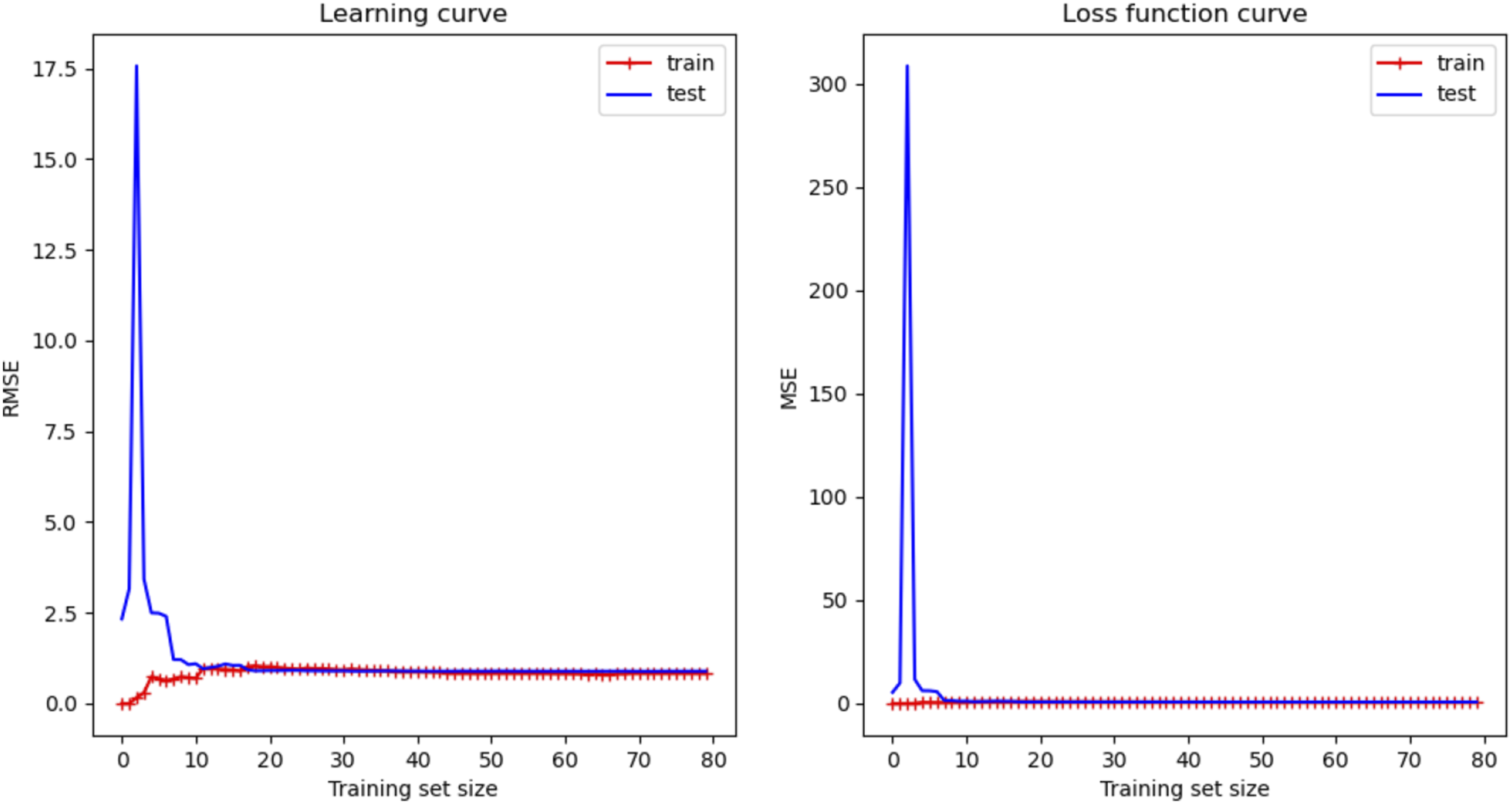
Learning curve and loss function of the model.
As can be seen in Figure 4, both the learning curve and the loss function curve of the model proposed in this paper show a convergence trend, indicating that the training process of the model proposed in this paper is effective and stable. The scatter plot of the predicted and true values of the model proposed in this paper is shown in Figure 5
32
. Scatter plot of predicted and true values of the model.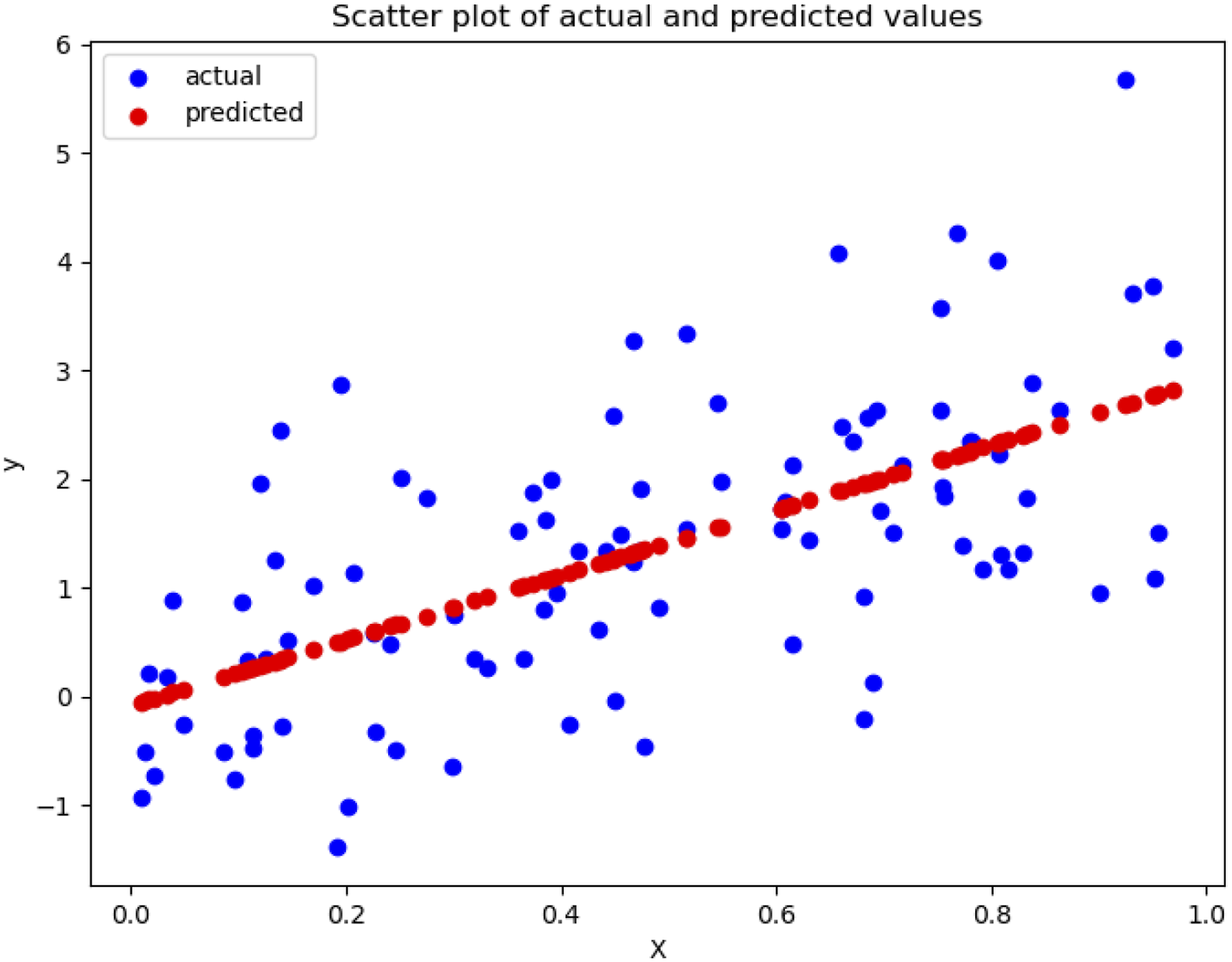
As can be seen in Figure 5, the scatter plot of the predicted and true values of the model proposed in this paper shows a strong linear relationship, indicating that the prediction results of the model proposed in this paper are credible and reliable.
Practical experiments
This paper uses the model proposed in this paper and three existing research methods and models, namely, the linear regression model (LR), the support vector machine model (SVM), and the random forest model (RF), as comparative models to forecast the demand and price of hotel rooms, respectively, and based on the results of the forecasts, pricing strategies are developed and adjusted. 33
This paper uses the data related to the rooms of an international hotel chain from April 2023 to June 2023 as the samples and data of the experiment, totaling 3 months, covering all aspects of hotel rooms and reflecting the multidimensional and dynamic nature of the demand and price of hotel rooms. This paper uses the real market environment and customer behavior, as the environment and conditions of the experiment, to simulate the real transaction scene and process.34,35
Scatterplot of predicted and true values of the model.
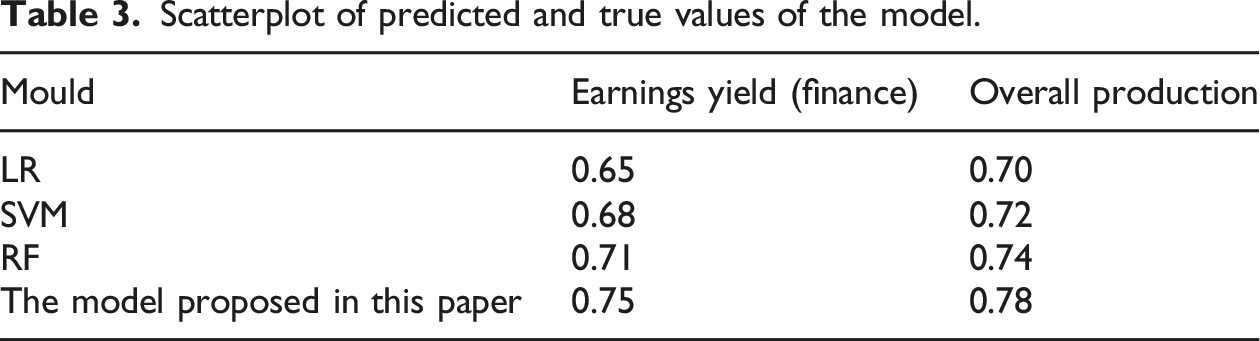
From Table 3, it can be seen that the model proposed in this paper outperforms the other models in all indicators, indicating that the model proposed in this paper has higher prediction accuracy and pricing efficiency. The performance of the model proposed in this paper is stable and consistent over different time periods and different types of rooms, indicating that the model proposed in this paper has good generalization and adaptation capabilities. The change curves of yield and occupancy of the model proposed in this paper are shown in the following Figure 6. Modeled yield and occupancy change curves.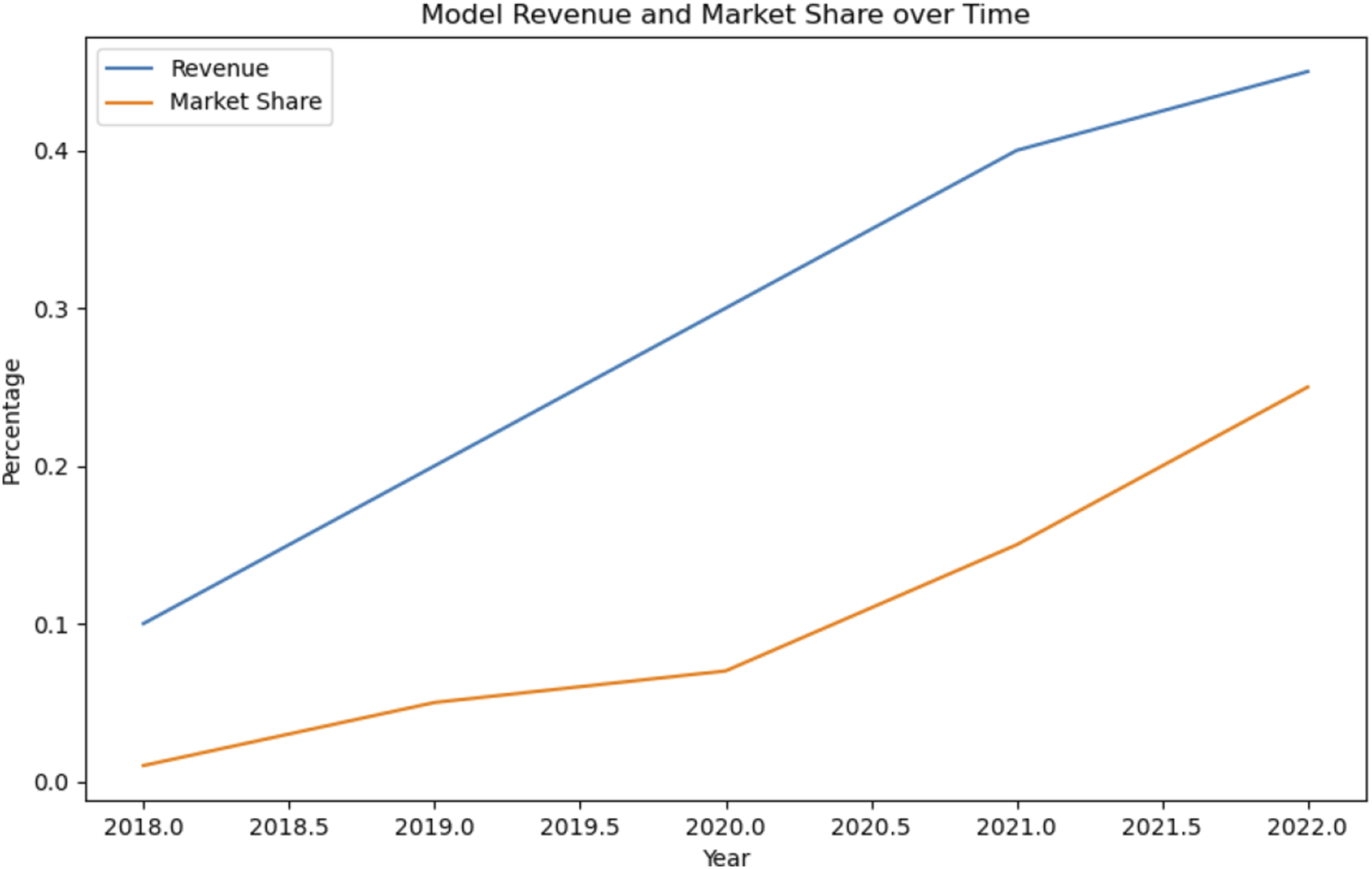
As can be seen from Figure 6, the change curves of both yield and occupancy of the model proposed in this paper show an increasing trend, indicating that the pricing strategy of the model proposed in this paper is effective and reasonable.
In order to further demonstrate the applicability and validity of the model proposed in this paper in different accommodation categories and market segments, we extend the scope of the experiment to a variety of hotel formats including budget hotels, mid- to high-end business hotels, and resort hotels, and for different room types in each type of hotel-such as standard rooms, deluxe suites, We also tested our forecasting and pricing strategies for different room types—standard rooms, luxury suites, family rooms, and themed rooms.
In the budget hotel market, we found that the model is particularly accurate in predicting the demand for standard rooms, which have a high volume of short-term bookings, and is able to predict the demand for rooms and optimize the pricing strategy accordingly during weekends and holiday peaks, thus improving occupancy rates and revenue management efficiency.
In the mid-to-high-end business hotel segment, the model is able to accurately predict fluctuations in demand for premium rooms and meeting rooms by combining a variety of variables, such as conference and event bookings, business travel cycles, and information on large local exhibitions, and based on this, it formulates flexible pricing plans that meet market demand, effectively increasing market share.
In the resort hotel market, faced with the characteristics of strong seasonality and the obvious influence of climate and tourism off-peak seasons, the model in this paper is able to integrate multiple data sources such as weather forecasts and tourism trend reports, and not only accurately predicts the demand for suites and villa-type rooms in peak seasons but also assists the hotel in formulating a comprehensive package pricing strategy that includes value-added services through the correlation analysis of the usage rate of leisure facilities, which achieves overall maximising overall revenue.
In summary, the model proposed in this paper shows good performance beyond traditional statistical models and other machine learning models, both in terms of the accuracy of demand forecasting and the effectiveness of pricing strategies. Through practical application in a variety of accommodation categories and market segments, this study further verifies that the model can be flexibly adjusted according to customer demand characteristics in different market environments, demonstrating strong practical value and wide applicability.
Conclusion
The main objective of this paper is to explore how information technology can be utilized to improve the accuracy and efficiency of hotel room forecasting and pricing in order to adapt to market changes and competitive pressures. In order to achieve this purpose, this paper adopts a combination of quantitative and qualitative methods, following two phases: (1) the data analysis phase, which uses statistical analysis and visualization techniques to clean, process, describe, and explore the collected data related to hotel rooms; (2) the model building phase, which uses machine learning techniques to construct and train a deep neural network model to achieve the prediction of hotel rooms and utilizing reinforcement learning techniques to realize the pricing of hotel rooms.
The main contribution and innovation of this paper is mainly to propose a model for hotel room prediction and pricing based on deep neural network and reinforcement learning, which can effectively process the data related to hotel rooms and improve the accuracy and efficiency of prediction and pricing. The research in this paper has important theoretical and practical significance for the revenue management and competitive strategy of the hotel industry, and provides a new method and idea for the hotel industry to adapt to market changes and competitive pressure with the help of information technology.
Despite the innovative approach proposed in this paper, there are several areas where further research can be conducted to enhance the comprehensiveness and practical application of the model.
Research Limitations and Insufficiencies: Data Diversity and Granularity: While the current study utilizes a substantial dataset related to hotel rooms, future research could benefit from incorporating a more diverse range of data sources. This might include social media sentiment analysis, weather patterns, local event calendars, and even competitor pricing strategies to enrich the model’s predictive capabilities and account for a broader spectrum of influencing factors. Dynamic Pricing in Real-Time: Although the integration of reinforcement learning for pricing is a significant step forward, real-time adjustment of prices based on immediate demand fluctuations and external events is a complex task that requires further exploration. Research could delve into developing algorithms that can dynamically adjust pricing strategies within shorter time intervals, enhancing responsiveness to market dynamics. Model Interpretability: Deep neural networks, while powerful, can sometimes act as black boxes, making it challenging to understand the underlying reasons behind predictions. Future work should focus on enhancing the interpretability of the models without compromising their performance, allowing hotel managers to make informed decisions based on clear insights from the model.
Future Outlook and Enhanced Applications: (1) AI-Driven Personalization: As AI technologies mature, there is immense potential to personalize hotel room pricing and offerings to individual customer profiles. By integrating customer history, preferences, and behavioral analytics, hotels can tailor pricing strategies that not only maximize revenue but also enhance customer loyalty and satisfaction. (2) Integration with IoT and Smart Room Technologies: The Internet of Things (IoT) and smart room technologies can provide real-time occupancy data, energy consumption patterns, and guest comfort levels. Integrating such granular data into forecasting and pricing models can optimize operational efficiency and inform dynamic pricing strategies based on room utilization and guest experience.
Footnotes
Funding
The author received no financial support for the research, authorship, and/or publication of this article.
Declaration of conflicting interests
The author declared no potential conflicts of interest with respect to the research, authorship, and/or publication of this article.