




Abstract
The English teaching network course mechanism based on the ecological environment of the Internet of Things based on edge computing is a very key existence in the development process of modern society. Its strong existence significance and purpose are mainly to further improve the level of science and technology in China. Combined with the development process of the Internet of Things in the field of ecological environment, the standard progress of the Internet of Things in the ecological environment is sorted out. The main purpose of this paper is to introduce this technology into the public perspective from various advanced physical calculation formulas. In this paper, the main method to verify the online course mechanism of English teaching in the ecological environment of the Internet of Things is to carry out more brand-new technical research based on the traditional research background. Different calculation methods are also the most important online course mechanism of English teaching. Finally, the conclusion and result we get is that the English teaching mechanism of the ecological environment of the Edge computing Internet of Things has a strong role and value.
Keywords
Introduction
In recent years, China’s edge computing Internet of Things processing technology has been gradually developed, which is favored and concerned by most people. 1 In order to further meet the basic needs of economic and social development, advanced communication technology, sensing technology, information technology, computer technology, and so on are actively introduced into the electric power industry. And they are integrated into a new English teaching network course mechanism. Especially in the popularization of Internet technology, intelligent data and information technology play a very important role in helping and guiding our English teaching.2,3 In the process of deep learning of edge computing Internet of things technology, we also skillfully applied sensors, intelligent electricity meters, and other different types of network technologies and integrated them into the new Internet of Things and smart grid. In order to be able to more fully to improve the overall quality of the edge computing Internet of Things deep learning at this stage and to provide better support and help for the reform of the mechanism of the network course for English teaching, not only the level of intelligence and the system efficiency should be enhanced but also more strict requirements are put forward for the identification, location, tracking, and monitoring in the related work. 4 And the unmanned aerial vehicle (UAV) terminal detection system is used in the edge computing Internet of Things deep learning, which strictly controls and manages the network course of English teaching mechanism. In the practical application in the process of the Internet of Things technology, it requires us to skillfully grasp huge amounts of data transmission, storage, and management of information. It provides a good development background for the modern English teaching network course mechanism based on edge computing Internet of Things deep learning more comprehensively. 5
The edge computing Internet of Things deep learning technology makes up for the deficiencies in the development technology of Internet of Things to a certain extent. Cloud computing can also upload terminal data information to remote servers in this process, thus providing effective help for the promotion of English teaching network course mechanism. Figure 1 is a schematic diagram of edge computing framework.
6
The massive Internet of Things data and information transmission of has brought a certain restriction effect to the modern Internet of Things English teaching technology to a certain extent. This new edge computing Internet of Things deep learning English teaching method is one of the very effective solutions. It is under the background of cloud computing centralization that the level of science and technology in the new era can further meet the basic living needs of the majority of the people. However, there still exist a lot of problems in the network teaching system.7,8 It is under the background of the era development that we begin to investigate further the English teaching network course mechanism based on edge computing Internet of Things deep learning, which can solve the problems that exist in the traditional English teaching. Schematic diagram of edge computing framework.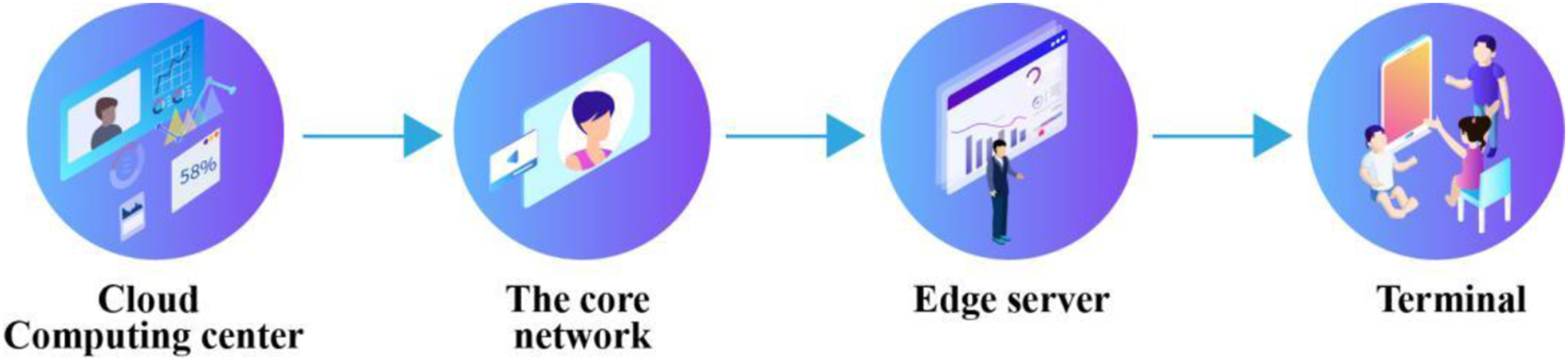
The edge computing, to a certain extent, applies the cloud computing service mode of the new era to the marginalized areas. This is also because of the different structural characteristics of the marginalized network environment, so that edge nodes are dispersed to geographical locations closer to users physically. In the development process of modern society, the edge computing structure can provide us a more perfect living and learning environment in daily network applications at a certain level. At present, there are still many big threats in the English teaching network course mechanism based on edge computing Internet of Things deep learning.
9
For example, denial of service. This is a system mainly responsible for attacks. Funds are disguised through a variety of new equipment and then it achieves the purpose of malicious appropriation of resources. A lot of new social resource distribution is more extensive in the edge computing Internet of Things. Its exact physical location is difficult to be effectively determined. Due to its feature of delaying longer, network English teaching environment is hard to realize an actual function under the background of big cloud computing services as shown in Figure 2 for the edge computing structure of Internet of Things deep learning.
10
Edge computing structure of Internet of Things deep learning.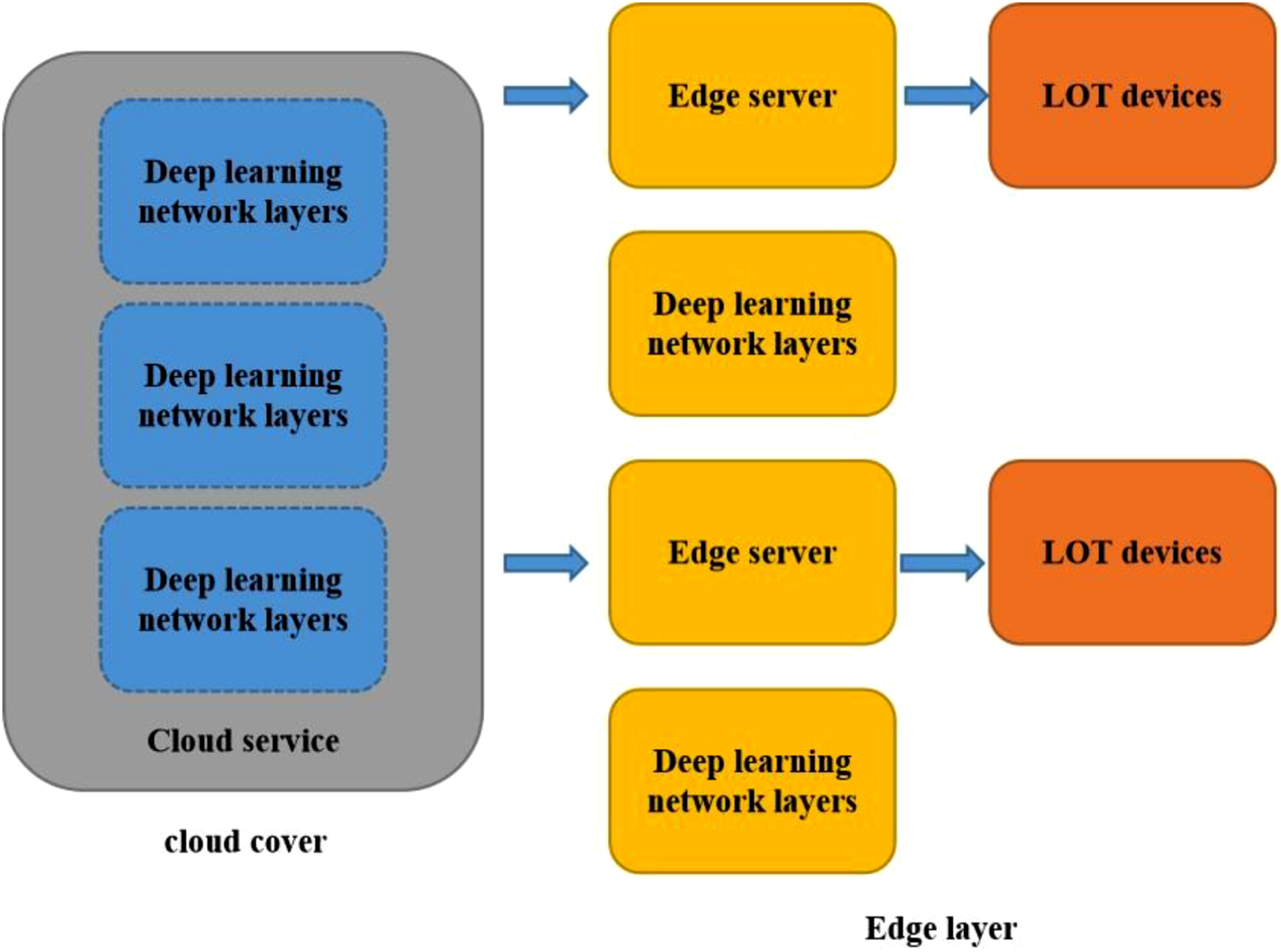
In the proposed mechanism, the Ecological Environment Internet of Things plays a key role in promoting efficient and accurate transmission of environmental information resources in the field of ecological environment through intelligent application of IoT technology. This process supports intelligent management decision-making through pollution source monitoring, environmental quality monitoring, and law enforcement supervision, thereby promoting the overall reduction of pollution emissions, prevention of environmental risks, and development of the environmental protection industry. The ecological environment Internet of Things not only provides a wealth of practical application scenarios and real data for English teaching but also ensures the interconnection of data and the collaborative work of systems through standardization construction, providing stable and reliable technical support and environmental protection for the English teaching network course mechanism based on edge computing.
Ecological environment of the Internet of things refers to the Internet of things technology intelligence application in the field of ecological environment, to promote environmentally efficient accurately convey information resources, through the support of pollution sources monitoring, environmental quality monitoring, and supervision of law enforcement and intelligence, in the whole process of the management decisions, and other areas of the ecological environment to promote the pollution emissions, prevent environmental risks, develop environmental protection industry, and promote the purpose of environmental management decision-making. Standards are the basic support for the ecological environment Internet of Things to give full play to its own value and advantages and the basis for the large-scale replication and rapid development of the ecological environment Internet of Things-related industries. Strengthening the construction of the ecological environment Internet of Things standard system is conducive to promoting the scientific development of ecological environment protection.
As a new product of the joint development of cloud computing and the Internet of Things, edge computing mostly uses marginal technologies to store and calculate data and information, which solves the disadvantages of the traditional cloud computing model’s central computing structure to the maximum extent.11,12 In the operating environment of English online course teaching mechanism, network marginalization has become a relatively common existence. According to the relevant network operation mode and concept, we can further understand its distributed and open application platform, so as to meet the basic needs of more people. The detailed deep autoencoder network structure is shown in Figure 3. Deep autoencoder network structure.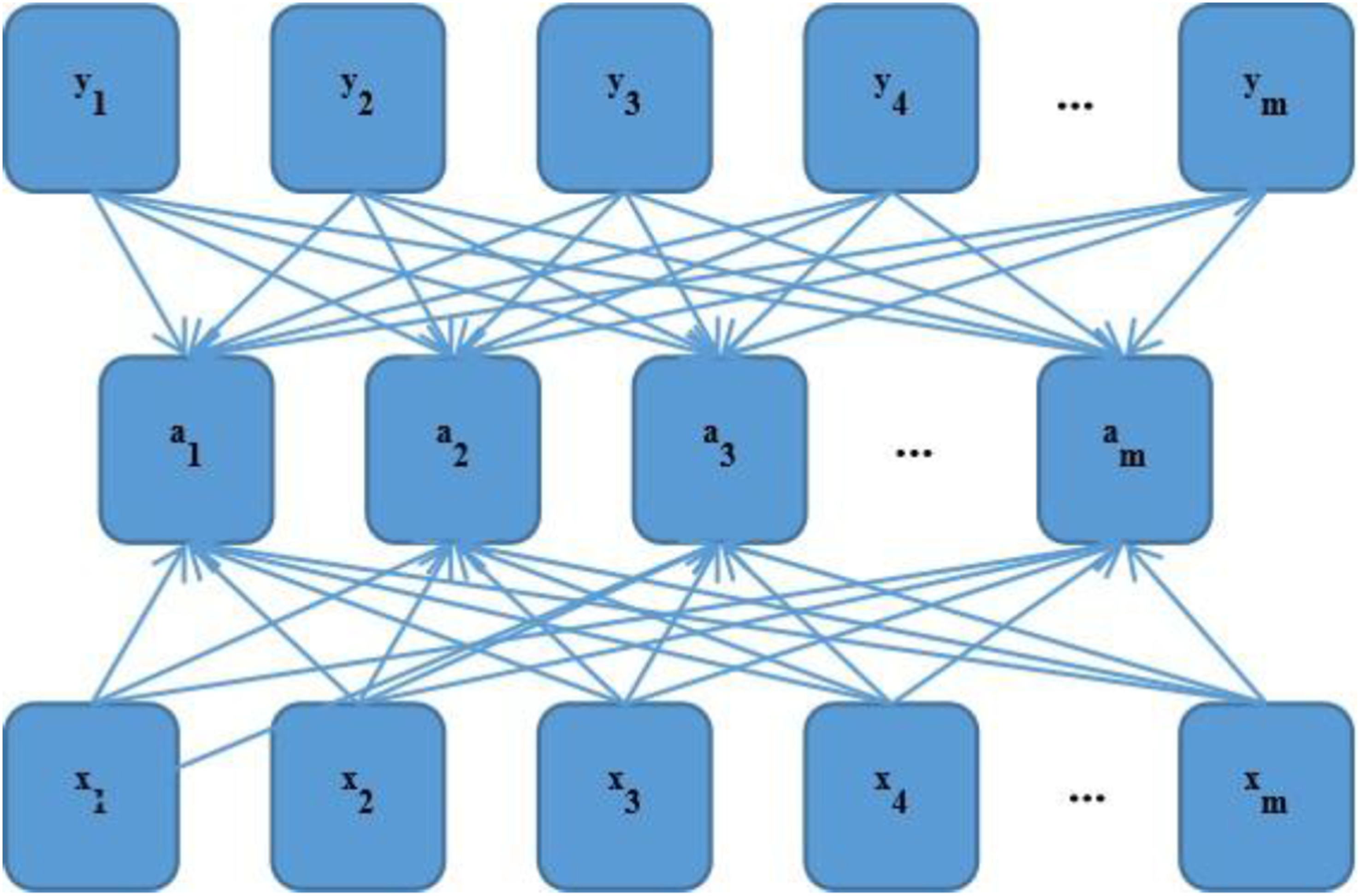
Figure 3 shows the structure of a deep autoencoder network, including an encoder and a decoder. It extracts data features through unsupervised learning and is suitable for speech recognition and natural language processing tasks in English teaching, improving the accuracy and efficiency of data processing.
Literature review
In the development process of modern society, edge computing Internet of Things ecological environment has provided comprehensive help and guidance for current English major courses to a large extent. The calculation and operation mode of each system has been paid attention to by the application of modern network technology, which can reduce the disadvantages of ecological environment in edge computing to a certain extent. The first is the algorithm of flock optimization, which first appeared in 2014 and was also known as a new swarm intelligence algorithm at that time. There are many similarities with other traditional swarm intelligence algorithms. As an abbreviation of the flock algorithm, CSO mainly simulates various intelligent behaviors of creatures in the flock. Through a series of intelligent behavior calculation, we can more comprehensively and accurately understand and master the powerful advantages and values of this technical algorithm. 13
Deep English knowledge learning helped the development of edge computer technology at a large level, among which the deep forest algorithm was proposed in 2017, and Alwan, Z. et al. obtained a new integrated learning mode through detailed research and innovation, which could be reasonably applied to the actual English course teaching. 14 With the development and progress of science and technology in recent years, deep neural network algorithm could also show its strong advantages and value in image and language processing, and promote the overall development and progress of edge computer to the maximum extent. To put it simply, the research on the related technology of deep forest was a kind of superposition of multi-layer nonlinear functions, so as to take a more accurate picture of the corresponding function values. According to the structure, the algorithm was also composed of two parts, namely, cascaded forest and multi-granularity scan.15,16
Decision tree was not only a basic algorithm of modern mechanization technology but also a new random forest unit, which brought great convenience in practical network computer operation. Decision tree was a new inverted tree structure in the actual edge network computing and its own sample point had a great role and ability in each link. In the process of reasonable analysis of its data set, we should further mine relevant data information. And its specific data information algorithms also included ID3, C4.5, and CART. Their specific measurement standards and sequence structure are shown in Figure 4 below. As a simple understanding, decision tree was a brand new technology that could rationalize different systems and data information.
17
Schematic diagram of decision tree structure.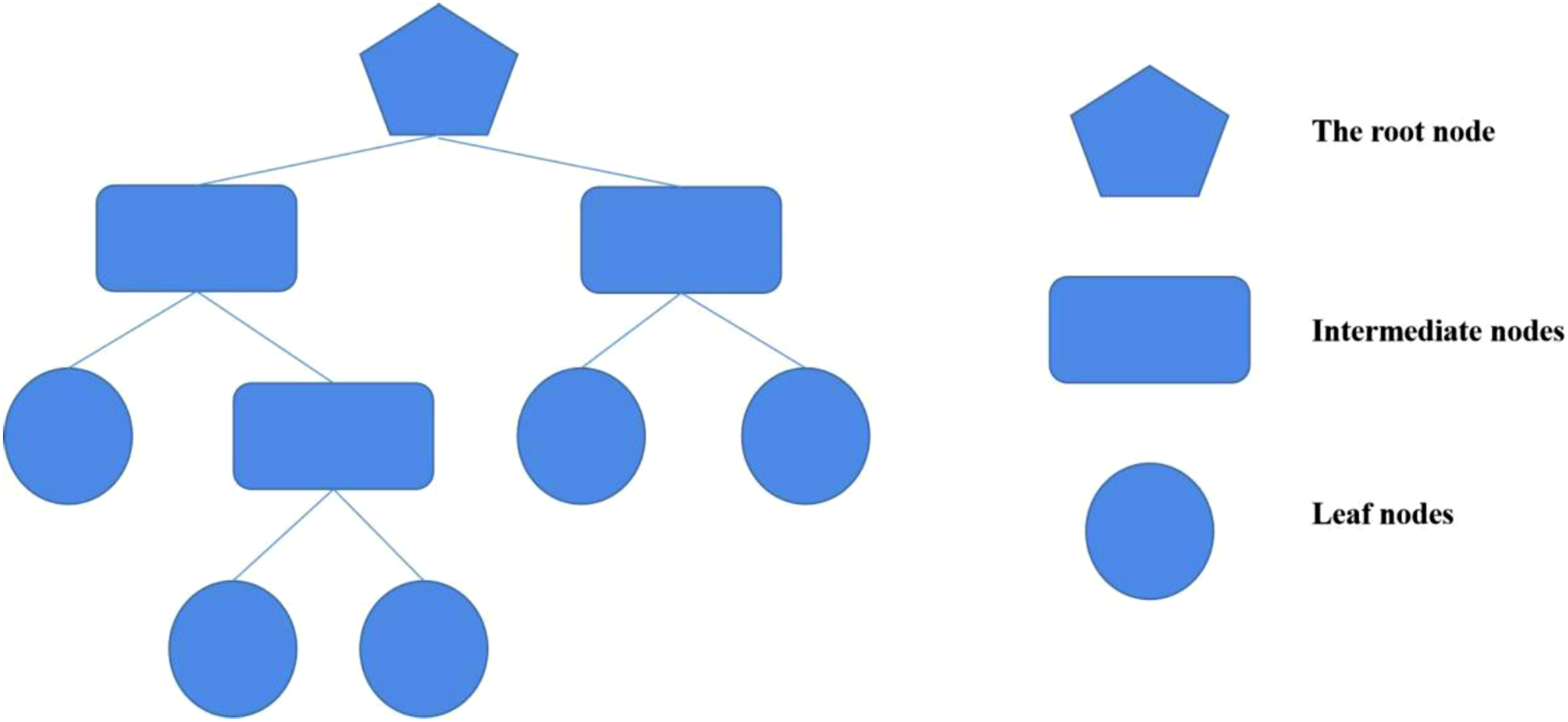
Figure 4 shows the basic structure of a decision tree, including root nodes, internal nodes, and leaf nodes. The data is classified using a series of judgment rules, which is suitable for analyzing student behavior and predicting learning outcomes in English teaching.
Random forest algorithm was also a kind of integrated learning algorithm. Traditional supervised learning style was mainly adopted. Through the integration of various integrated thoughts, decision tree of multiple data was finished. The result of random forest calculation was to maximize the accuracy of the current random forest algorithm through voting or mean value. The method of autonomous collection was mainly adopted in the random forest model. In the original data set N, the random extraction method of putting back was used to extract k times repeatedly, and then different k was put into a new data set, so as to obtain a good random forest decision value.18,19
Integrated learning was accomplished through data integration and simulation. And it was precisely because the edge system mode of integrated learning was very sensitive to changes in data information that the final data information model of decision tree was often in an unstable phenomenon.
20
Therefore, in order to further solve these problems, a new way of integrating strong classifier with multiple weak classifiers in the idea of ensemble learning was put forward. This was also a new way of English learning by using the idea of combination proposed in 2000, which greatly improved the effectiveness of network teaching. In this process, decision trees of multiple weak classifiers could be reasonably transformed to create an integrated learning model with better effects and more accuracy as shown in Figure 5. Structure diagram of integration algorithm.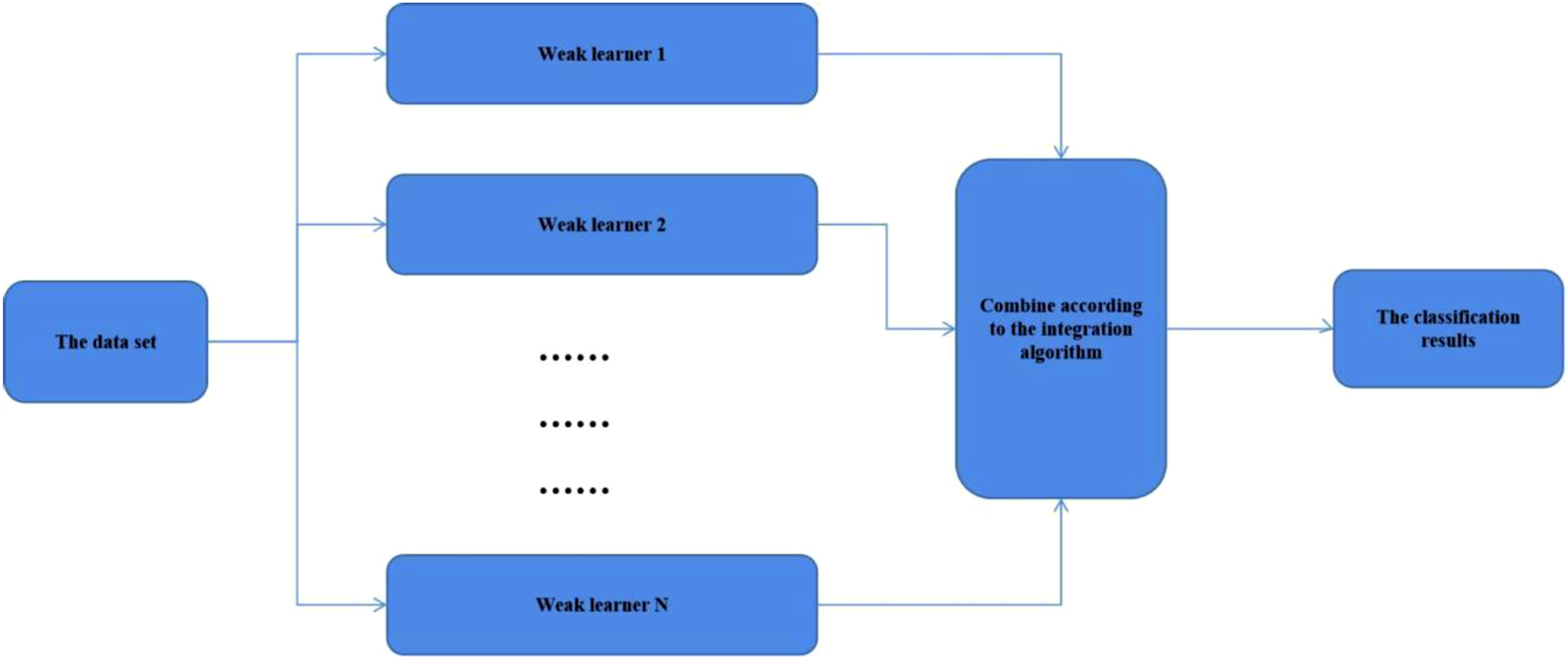
Figure 5 shows the structure diagram of the integration algorithm, which illustrates how multiple weak classifiers in ensemble learning can be combined into a strong classifier through voting or weighting, improving the accuracy and robustness of the model. It is suitable for multimodal data fusion and classification tasks in English teaching.
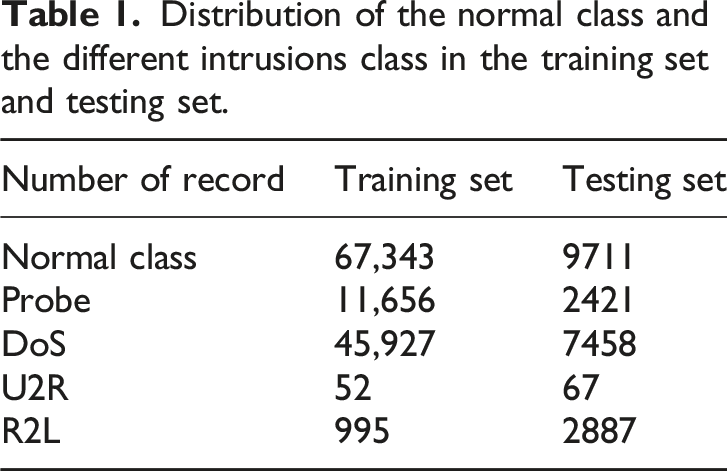
Distribution of the normal class and the different intrusions class in the training set and testing set.
English teaching network course mechanism based on edge computing Internet of Things deep learning was a relatively new teaching method in the development process of modern society, which could alleviate the problem of increased workload in edge Internet of Things technology to a large extent. In the research, more detailed research and analyses were carried out through its detailed analysis of technology research and testing methods. 22 Compared with traditional cloud computing, edge computing, as a new computing mode, had very strong characteristics of openness and universality, which could control network risks within a reasonable range to the maximum and protect the normal and stable operation of English teaching mechanism.
However, the current system has certain deficiencies in modular architecture and has not adopted the MVC layered design pattern, which to some extent limits the scalability and maintainability of the system. The MVC (Model View Controller) layered design pattern divides an application into three core components: model, view, and controller, effectively separating data, user interface, and business logic, and improving system flexibility and reusability. Therefore, it is recommended to introduce the MVC pattern in the system architecture to enhance the modularity and maintainability of the system.
In addition, in terms of permission control, the current system has not implemented the minimum permission principle of RBAC (Role-Based Access Control) model. The RBAC model manages user permissions through roles, ensuring that users can only access resources necessary for their work, thereby improving system security. The principle of minimum privilege is the core of RBAC model, which requires each user to be granted only the minimum privilege necessary to complete tasks, avoiding privilege abuse and potential security risks. Therefore, it is recommended to implement the RBAC model in the permission control module and strictly follow the principle of minimum permissions to enhance the security and compliance of the system.
The edge computing scenario and the actual situation were studied and analyzed in the research. First of all, aiming at the massive growth of user data in edge computing, it further solved the drawbacks existing in the edge network data computing center. Through the data information mode such as the chicken flock algorithm, it truly reflected the validity of the operation of edge data information. In addition, the detection model and scenes were properly supervised and managed for users’ abnormal behaviors, which provided more convenient conditions for modern Internet technology English teaching methods. Figure 6 showed the edge computing framework based on deep learning of Internet of Things devices. Edge computing framework based on deep learning of Internet of Things devices.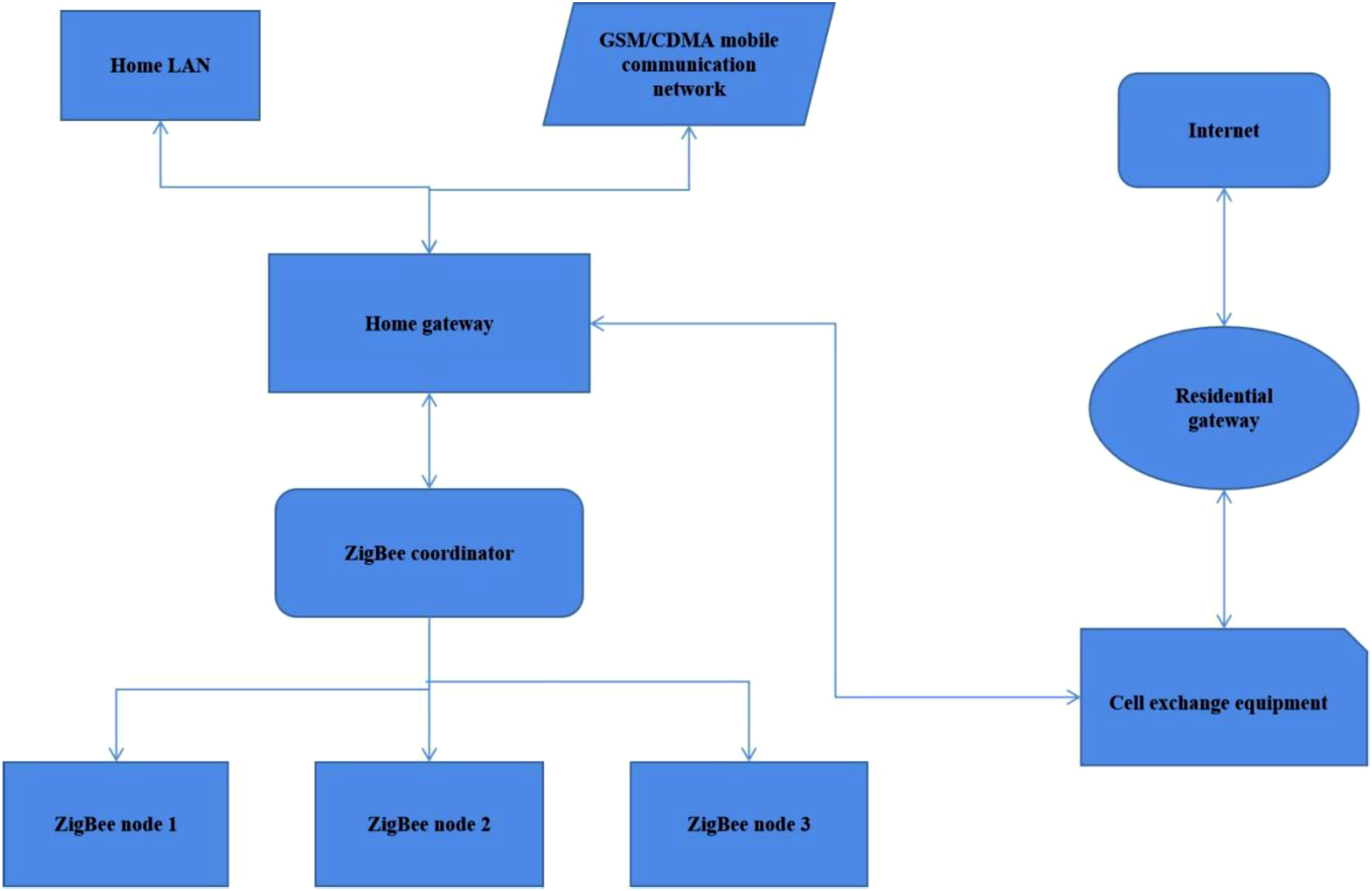
We used multiple methods to evaluate these algorithms. For the chicken flock algorithm and CSO flock optimization algorithm, we evaluate the optimization effect of the algorithm by simulating the data distribution and task allocation in different scenarios, comparing the system performance indicators before and after algorithm execution, such as task completion time and resource utilization. For the deep forest algorithm, we use cross validation to divide the data set into training and testing sets, and evaluate the classification performance of the algorithm by comparing the accuracy, recall, and other indicators of the model on the testing set. For decision tree algorithms, we evaluate the complexity and performance of the algorithm by calculating structural indicators such as the depth and number of nodes of the decision tree, as well as the classification accuracy of the model on the test set. For the random forest algorithm, in addition to calculating classification accuracy, we also evaluate the stability and generalization ability of the algorithm by observing out of bag errors (OOB errors).
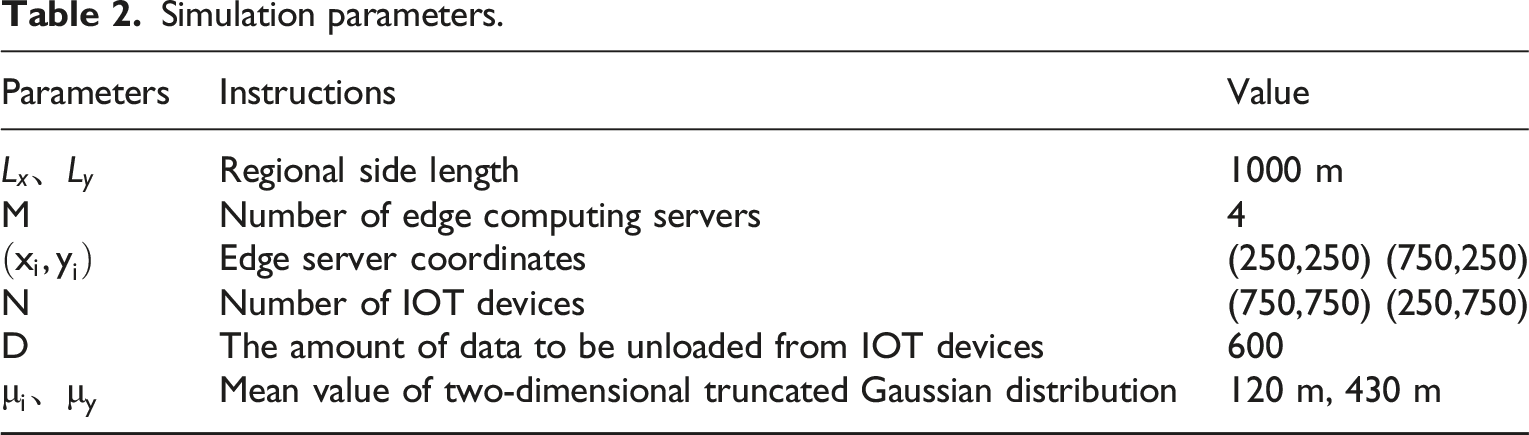
It is crucial to clarify the inter frame semantic coherence threshold when it comes to AR/video applications. This threshold defines the degree of semantic consistency of elements in video frames or AR scenes at different time points, ensuring the smoothness of content and user immersion. Usually, the threshold is dynamically adjusted based on specific application scenarios, content complexity, and user interaction needs. For example, in the field of education, for English teaching videos, the inter frame semantic coherence threshold may need to be set high to ensure that students can clearly understand the meaning of each word and sentence, avoiding comprehension barriers caused by fast screen switching or semantic inconsistency. When simulating real teaching scenarios, you can set parameters such as regional side length, equipment distribution density, and data unloading amount by building a simulation environment that includes edge computing servers and IoT devices, simulate the real-time data transmission, interactive response, and resource allocation process in English teaching, and process teaching data in combination with deep learning algorithms to verify the delay, energy consumption, and performance of the edge computing IoT ecosystem in the actual English teaching network course mechanism, so as to intuitively reflect the technical application effect in real teaching scenarios.
In addition, in order to further enhance the dynamism and adaptability of AR/video content, the introduction of dynamic modal dispersion algorithm has become an effective means. This algorithm dynamically adjusts the dispersion of various modalities (such as visual, auditory, and tactile) by analyzing multi-dimensional information such as element features, motion trajectories, and user interaction behaviors in video frames or AR scenes, in order to achieve a more natural and rich user experience. Specifically, the dynamic modal dispersion algorithm can intelligently allocate resources to different modalities based on the complexity of the current scene’s content and user concerns, ensuring that key information is highlighted while avoiding issues such as information overload or modal conflicts. For example, in English teaching videos, when explaining key vocabulary or grammar structures, algorithms can automatically enhance the visual modality display effect (such as enlarging fonts and changing colors), while appropriately reducing the interference of other non-key modalities, thereby helping students better concentrate their attention and understand the teaching content.
In order to better support multimodal teaching research, we have introduced the MPEG-7 multimodal description framework. The MPEG-7 standard provides a standardized method for describing multimedia content, which can effectively encode and describe information from different modalities, providing strong support for the integration and management of multimodal teaching resources. By using MPEG-7, we can more systematically annotate and retrieve multimedia materials in English teaching, such as videos, audio, and images, thereby improving the efficiency of teaching resource utilization and learning experience. In addition, Mesulam’s cross modal integration of brain regions provides an important neuroscience foundation for understanding multimodal learning. Mesulam’s research reveals how the brain integrates information from different sensory channels, which has important guiding significance for us to design effective multimodal teaching methods. By drawing on these research findings, we can better optimize the multimodal presentation in English teaching and promote students’ cognitive processing and knowledge internalization.
In order to more accurately quantify the degree of spatiotemporal coupling between graphical and textual modalities, we introduce a dynamic modal alignment model. This model evaluates the synergy between graphics and text by calculating their temporal and spatial correlations. The dynamic modal alignment model not only considers the temporal synchronization of graphics and text but also their spatial layout and interaction. Through this model, we can clearly distinguish between two different collaboration modes: complementary collaboration and enhanced collaboration. Complementary cooperation means that graphics and text complement each other in content and jointly convey complete information; enhanced collaboration refers to the mutual enhancement of graphics and text in expression, improving the effectiveness of information transmission.
In order to further verify the application effect of multimodal metaphor in practical teaching, we designed an empirical case. In this case, we chose a middle school English course with the theme of “Weather and Seasons.” In traditional teaching mode, teachers usually explain the characteristics of different seasons and weather changes through pictures and text descriptions. However, this single mode of teaching is often difficult to stimulate students’ interest and enthusiasm in learning. Therefore, we have introduced a multimodal metaphorical teaching method, which presents teaching content by combining multiple modalities such as video, audio, and interactive games. Specifically, we have created a short video about the changes in the four seasons, which includes rich visual elements and dynamic effects such as leaf discoloration and snowflake falling. At the same time, we also added vivid background music and narration to the video to enhance students’ auditory experience. In addition, we have designed an interactive game segment for students to consolidate their knowledge by dragging and matching pictures and descriptions from different seasons. Through comparative experiments, we found that the class using multimodal metaphor teaching method significantly outperforms the class using traditional teaching mode in terms of students’ learning interest, knowledge mastery, and classroom participation. This empirical case fully demonstrates the effectiveness and feasibility of multimodal metaphors in English teaching.
In order to further enhance the theoretical innovation of the article, we proposed the self-created quantitative index of “modal density index” and established a multimodal continuous model. The modal density index is used to measure the information density of different modalities in a specific teaching scenario. By calculating the distribution of different modalities in time and space, it provides a scientific basis for optimizing the allocation of multimodal teaching resources. The multimodal continuous model considers information from different modalities as a continuous whole, and achieves seamless fusion and efficient transmission of multimodal information by dynamically adjusting the weights of each modality.
However, the existing theoretical framework has certain shortcomings, especially the classification framework has not been effectively established. In order to better understand and apply multimodal teaching, we suggest constructing a two-dimensional matrix based on modal quantity dimension and symbol system dimension. This matrix can help us classify and analyze the specific roles and relationships of different modalities in teaching more systematically, providing a more scientific basis for the formulation of teaching strategies.
Overview of TPACK-M Theory: TPACK-M theory is an extension of TPACK (Technological Pedagogical Content Knowledge) theory in multimodal teaching environments, emphasizing the interaction between technical knowledge (TK), pedagogical knowledge (PK), content knowledge (CK), and multimodal knowledge (MK), which has a significant impact on the development of teaching abilities. TPACK-M theory provides a theoretical framework for understanding and improving teachers’ multimodal teaching ability in English teaching under the edge computing Internet of Things ecological environment.
The demonstration of mediating variables: In order to gain a deeper understanding of how the various elements in TPACK-M theory affect the development of multimodal teaching ability through mediating variables, we use structural equation modeling (SEM) to demonstrate. Structural equation modeling is a statistical method that can simultaneously handle multiple dependent variables and their interrelationships, and can test the direct and indirect effects in theoretical models.
Methods
Research scheme to solve problems
Overview of edge computing Internet of Things deep learning is as follows. In the current application of edge Internet of Things technology, intelligent English online course teaching mechanism has gradually shown its strong advantages and value. In the new application field of modern science and technology, the edge technology of Internet of Things has been able to improve the English teaching mechanism to the maximum extent.23,24 In the actual teaching environment, the new system model in the marginal computing network is used to guide the reform of education and teaching methods. Through real-time detection and management, it can more accurately grasp the overall content of deep learning of edge Internet of Things computing, thus providing help for the long-term development of modern Internet of Things technology.
System model
In the actual operation process of Internet of Things technology equipment, because the work efficiency of many modern equipment is relatively complex, the intensive tasks need to be uploaded to the edge computing server equipment in the work engineering, so as to improve the disadvantages existing in the traditional Internet of Things technology more specifically. The specific system model is shown in Figure 7. Balance comparison of edge computing server service.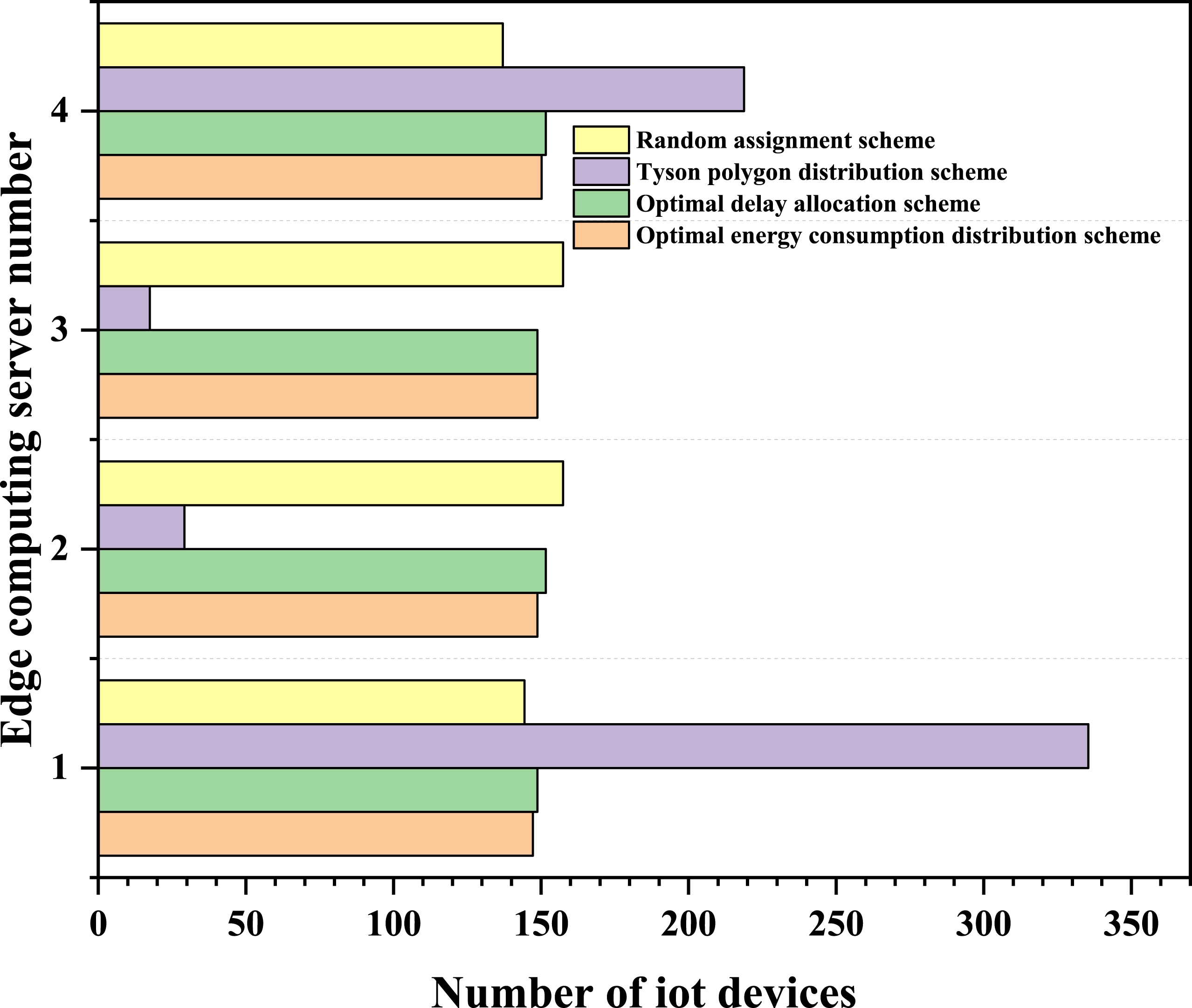
Data representation
Terminal devices of the Internet of Things and servers of edge computing are both distributed in the range of region Z 
In addition, we also need to consider the Internet of Things devices. When the coordinates run in a reasonable range, we can further apply the edge computing server into the scientific computing range, so that the edge server path of the Internet of Things devices can be reasonably improved. Its specific consensus calculation can be expressed as follows:



After we have calculated the coverage of each edge calculation, its own server coverage will also change significantly. Among the specific data values, the edge coverage data information transmitted by the Internet of Things can be expressed by the following formula:
Algorithm steps
In the actual edge computing network data measurement results, when the computing capacity of each computing server is in the same, we need to more accurately understand and grasp the boundary of its coverage. As long as the premise of meeting the basic needs of final computing, the Internet of Things devices can reduce the speed of science and technology as much as possible in practical work. Moreover, each algorithm step has its own unique advantages and convenient conditions. Equilibrium initial calculation method is mainly to solve the initial structural calculation according to the internal system step by step. The calculation steps are the input parameters, selection of element, descending lined up the steps, and determine the scope of the collection, which maximize the reasonable use of modern Internet of things technology.
Edge computing Internet of Things ecological environment applies cloud computing service mode to marginal areas and uses the decentralized characteristics of edge nodes to bring computing tasks closer to users, thus significantly improving the response speed and efficiency of English teaching. Specific evidence includes real-time transmission, storage, and management of massive data through drone terminal detection systems and sensor networks, providing a more stable and efficient online course environment for English teaching; The schematic diagram of edge computing framework (Figure 1) shows its advantages in data transmission of the Internet of Things, reducing the delay of data transmission. In addition, edge computing combined with deep learning technologies, such as deep automatic encoder network (Figure 3), optimized data processing and resource allocation, thus improving the intelligent level of online English teaching. The research also shows that the optimized energy consumption segmentation mechanism of edge computing can reduce the bandwidth demand by 51%, and the optimized energy consumption value can be reduced by 45% (Figures 10 and 11), which not only improves the overall performance of the system but also provides more reliable technical support for English online teaching. These technologies and methods together ensure the stable operation and efficient management of the English teaching online course mechanism.
In the optimization steps, the server often experienced relative latency, which required Lagrange multipliers. This requires that the objective function be defined as follows:
The inequality constraint of this calculation method can be expressed as follows:

The construction process of the scoring weight matrix is as follows: First, determine the evaluation index system of the main mechanism of the English teaching network, such as core indicators edge computing ability, IoT equipment compatibility, and teaching resource integration. Then, the relative importance of each indicator is compared pairwise using expert scoring or Analytic Hierarchy Process (AHP) to form a judgment matrix. For example, for n indicators, the element aij in the judgment matrix A represents the degree of importance of indicator i relative to indicator j. The 1–9 scaling method is usually used, where 1 represents equal importance, 9 represents extreme importance, and the median represents the difference in importance between different degrees. Next, perform consistency checks on the judgment matrix, and calculate the maximum eigenvalue λ max and consistency index CI. If CI is less than 0.1, the judgment matrix is considered to have acceptable consistency. Afterwards, the weight vector W is calculated using the eigenvalue method or geometric mean method, where each element wi represents the weight of the corresponding indicator, satisfying ∑ wi = 1. The final weight matrix W is the weight distribution of each evaluation indicator, which can be used for subsequent comprehensive scoring calculations. In practical applications, the comprehensive evaluation value of the main mechanism of the English teaching network can be obtained by multiplying the score values of each indicator with their corresponding weights and accumulating them, thus providing quantitative basis for decision-making.
Computing strategies
In the wide application of modern edge Internet computing technology, we pay most attention to the optimization of energy consumption, as well as the overall saving of resources. In the actual English teaching method simulation using MATLAB tools, we can further understand the powerful advantages and value of simulation technology. In the deep learning process of edge computing Internet of Things technology, through the collaborative application of UAV terminal detection system, sensor network and edge computing framework, real-time collection, transmission, and intelligent analysis of English teaching data are realized. For example, the edge computing server can conduct real-time processing and feedback syntax error correction results locally based on the voice recognition data uploaded by IoT devices, significantly reducing the cloud transmission delay. Meanwhile, the audio stream processing efficiency in English listening training was optimized through a dynamic task allocation model (Formulas (1) and (2)) between IoT terminals and edge nodes within Region Z. This technology integration has been validated in scenarios such as smart meter monitoring and environmental data interaction, providing low latency and high reliability technical support for English teaching. The distribution of Internet of Things devices mainly adopts binary continuous distribution mode, which can adjust the distribution structure more accurately in the case of uneven distribution of Internet of Things devices, as shown in Figure 8. The actual running status of the edge computing server needs to be reasonably integrated with the simulation parameters to ensure the reasonable distribution of energy saving and energy consumption in transportation theory to the maximum extent. Especially in the area where the fundamental U density of Internet of Things devices is large, edge computing servers will be affected by other factors and their density will begin to change slightly, thus avoiding the problem of excessive data information to the maximum. Relationship between average latency and hotspot density of Internet of Things devices.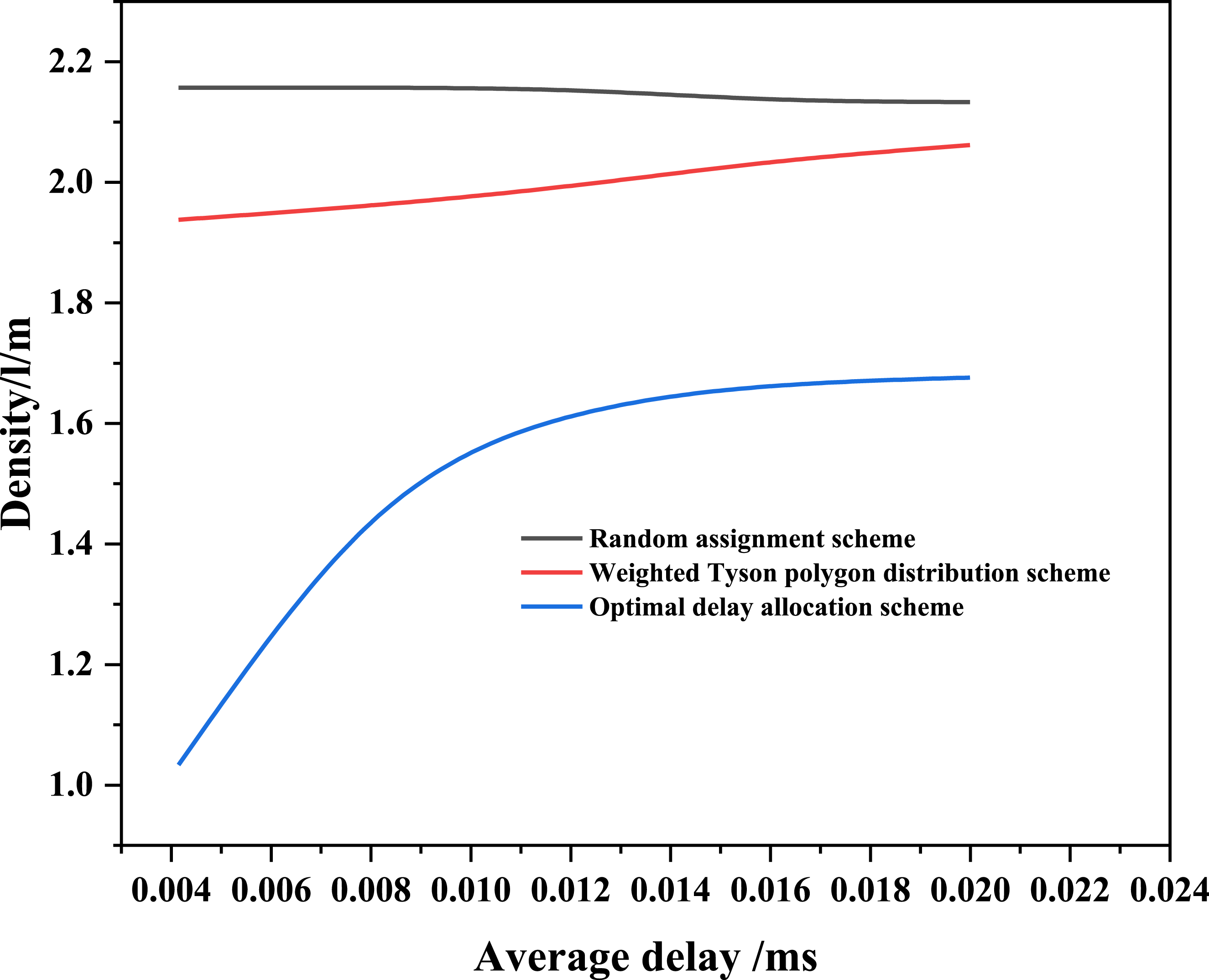
In this mode, the measurement and improvement of learning outcomes can be achieved through various means. Firstly, by introducing deep autoencoder networks and dynamic modal alignment models, the degree of spatiotemporal coupling between graphics and text modalities can be accurately quantified, and the collaborative effect of multimodal teaching can be evaluated, thereby providing scientific basis for optimizing teaching resource allocation. Secondly, structural equation modeling (SEM) is used to analyze the interactive effects of technical knowledge, pedagogical knowledge, content knowledge, and multimodal knowledge in TPACK-M theory on teaching ability, identify key mediating variables, and guide teachers to enhance multimodal teaching ability. In addition, through the construction of a scoring weight matrix, combined with expert scoring and analytic hierarchy process, the core indicators such as edge computing capability and IoT equipment compatibility are comprehensively evaluated to quantify the quality of learning achievements. Finally, based on simulation technology and actual data testing, the energy consumption segmentation mechanism and bandwidth allocation strategy are optimized to reduce system latency and energy consumption, improve the stability and efficiency of online courses, and indirectly enhance the sustainability and practical effectiveness of learning outcomes.
Simulation parameters.
Standardization progress of ecological environment IoT
Standards are the foundation and support for the healthy and orderly development of ecological environment Internet of Things. Standardization of ecological environment Internet of Things aims to establish association rules with existing standards and emerging industries. Complete and unified standard system to be able to get through different systems, different levels, and different regional ecological environments of IoT system barriers and barriers, avoiding the phenomenon of information island, reduce redundant construction, to standardize and promote the healthy and orderly development of ecological environment IoT technology application, as well as to the ecological environment of IoT industry rapid replication and scale.
In the research on the standard system of ecological environment Internet of Things, the overall framework of ecological environment Internet of Things system, as its core and basic content, defines the top-level design of ecological environment Internet of Things system and provides a basis and reference for other ecological environment Internet of Things technology and application standards.
The overall framework of eco-environment Internet of Things system is proposed based on the reference architecture of IoT system. The overall framework gives the domains of eco-environment Internet of Things system as well as the main entities in the domains and their interface relationships. The entity set in each domain of the Ecological environment Internet of Things constitutes a corresponding system, and the user system is divided into government use according to entity attributes.
Household system, enterprise user system. and public user system; the service delivery domain is divided into basic service domain and business service system according to the service level, including environmental cloud platform, GIS, atmospheric environment management, water environment management, and soil environment management. Data resource exchange system includes data exchange platform and data exchange standard. Operation and maintenance management domain is divided into system supervision system and operation and maintenance system according to management objectives. The sensing control domain includes environmental protection Internet of Things gateway and sensing system, including sensing terminal equipment to meet the requirements of ecological environment monitoring; The target object domain can be divided into perceptive object system and control object system according to entity attributes.
Results and analysis
In the process of specific Internet of things experimental calculation, each edge computer system has its strong advantages and value. Under different connectionless network operating mechanisms, the average power of the equipment will change to different degrees. In the random distribution mechanism, its detailed energy consumption distribution more accurately can be observed and the isolation of its average transmission frequency under the best segmentation mechanism is ensured, generally within the range of about 24% of the transmission power. The detailed variation range and value are shown in Figure 9. Relationship between average power and broadband of Internet of Things devices under energy consumption optimization segmentation mechanism.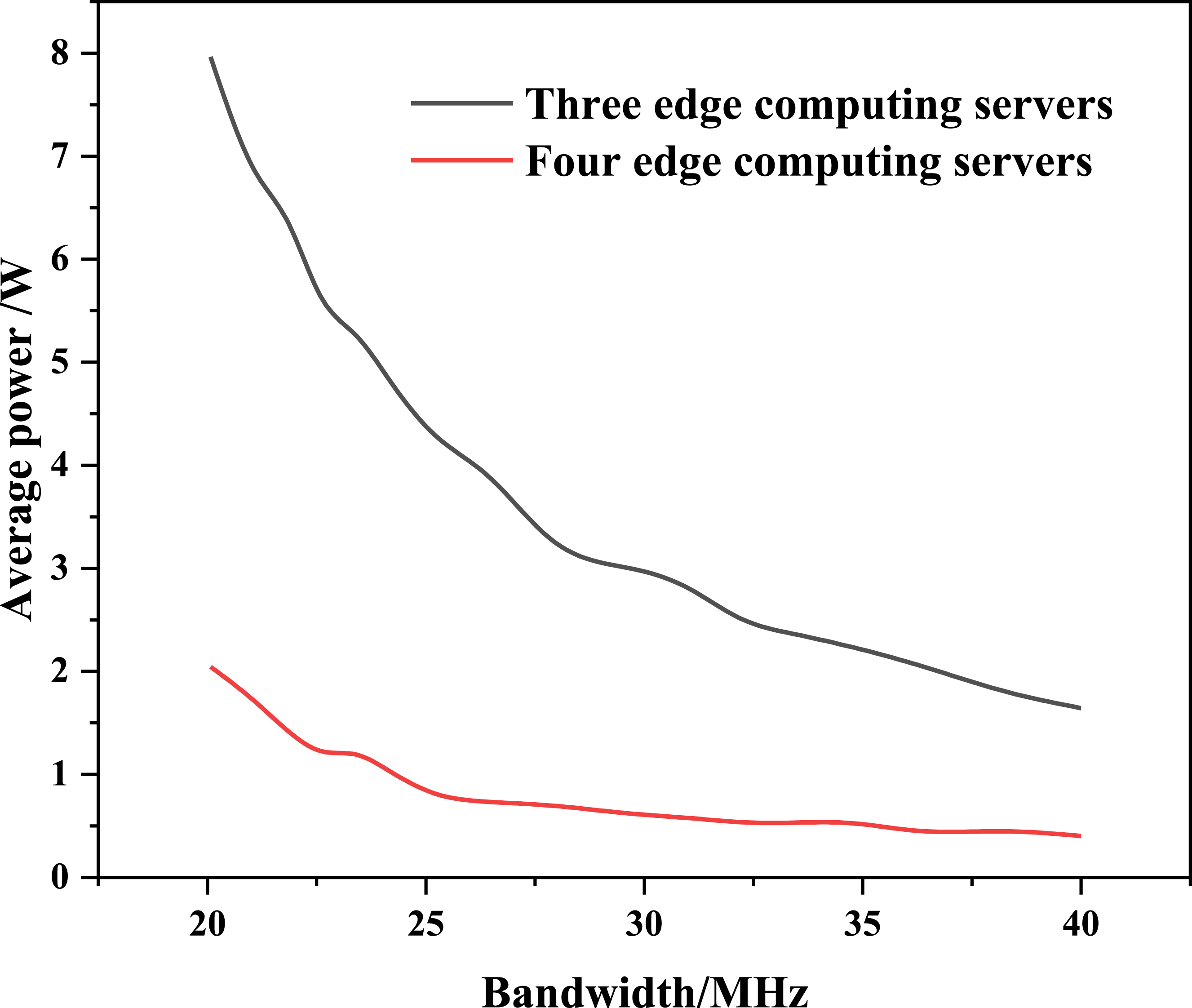
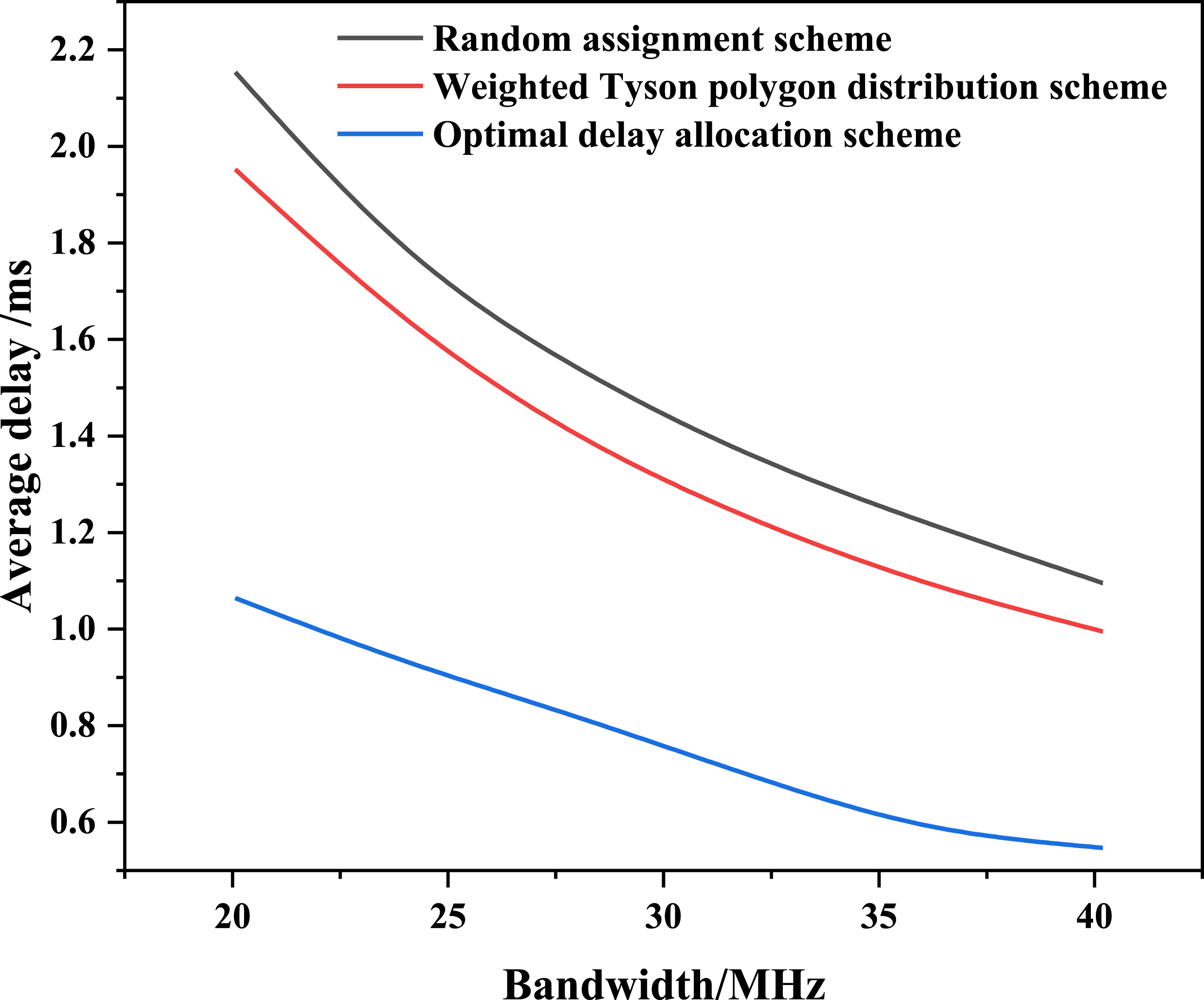
In addition, the actual English teaching network course mechanism of based on edge Internet of Things computing deep learning is closely related to the actual bandwidth operation to a large extent. The actual relationship can be shown in Figure 10. In the actual edge computing process of the Internet of Things, the corresponding method of random allocation is also adopted to gradually increase its own construction efficiency. By using the random segmentation mechanism, the bandwidth value can be appropriately reduced by 51% in the application of the Internet of Things technology. If the segmentation mechanism is optimized, its normal energy consumption optimization value can also be reduced to 45%, as shown in Figure 11 for further observation and analysis. Relationship between average power and bandwidth of Internet of Things devices. Relationship between average delay and broadband of Internet of Things devices.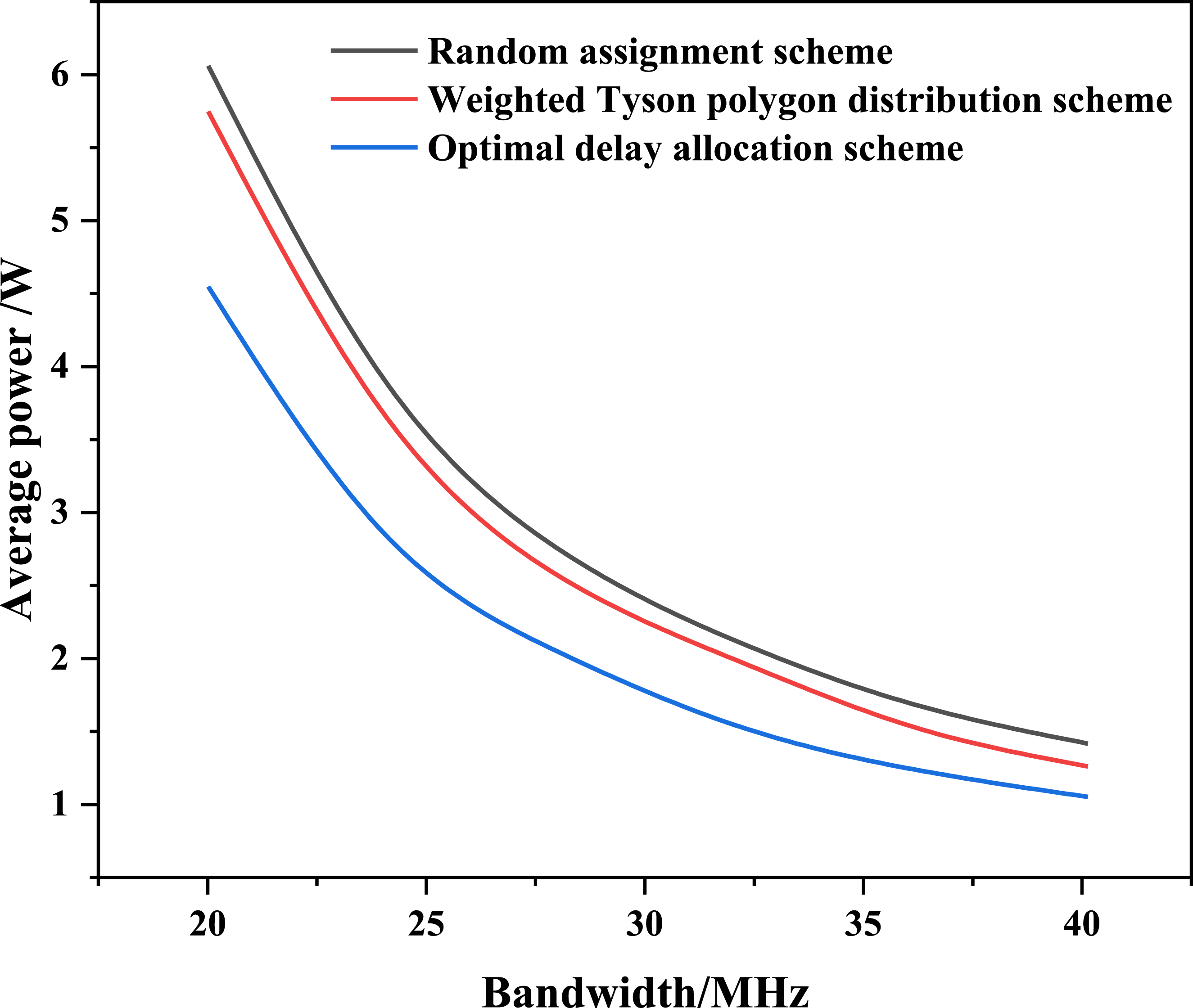
Different dimensions of the results of the data and results discussions are as follows. In the process of the English teaching network course mechanism based on edge computing Internet of Things deep learning, the corresponding experimental data information research needs to be performed without the experiment environment. One is the task of deep learning system and another is simulation technology. In the above research and expression, the collection operation of autoencoder networks at different depths can also be understood more accurately. Furthermore, the detailed data information recording of deep autoencoder can be mastered and understood more comprehensively. According to the different ratios of network data operation, a better understanding of the index variation between the numerical cost of computing data and the reduction of data size is formed. The edged computing method based on deep learning consists of different neuron settings.
According to the actual data information simulation, the actual data network information running state can be observed more clearly. In the simulator, each marginal server can be set in the actual computing process of the Internet of Things and 20–90 data information groups can be appropriately added, so that each group of data information can more truly reflect its specific operating status. In the actual Internet of Things computing system of FIFO, each detailed task data information deployment has its own uniqueness. The work can be finished until there is not enough strong bandwidth numerical work ability. This Internet of Things algorithm in the process of running would literally be deployment task, and the work can be conducted constantly in the process of learning according to the instructions of the data and information work, which can lay a better foundation and provide prerequisites for ascension of the quality of the English teaching mechanism based on deep learning.
Suggestions on standardization of ecological environment Internet of Things: According to the development status of ecological environment Internet of Things technology and application, the following suggestions are put forward for standardization of ecological environment Internet of Things. (1) Strengthen guidance and promote close integration of government, industry, academia, research, and application. The government guide and standardize the health development of ecological environment IoT technology application and fully mobilize the enthusiasm of enterprises, strengthen the “political production,” with five one of the ecological environment IoT standardization cooperation mode, promoting the ecological environment of IoT standard formulation, formulation, and implementation, and promote industrialization of environmental protection of things and standardized practices. (2) Improve the ecological and environmental standards system as needed. With the release of the three general standards for the Internet of Things of environmental protection as an opportunity, accelerate the development of the application standards for the Internet of things of ecological environment, formulate and publish the core technical standards including sensory control, information sharing, application support, and information security as soon as possible, and regulate and promote the development and application of the Internet of things of ecological environment with the standards. According to the standardization requirements of the Ecological environment Internet of Things, strengthen the sorting and analysis of the existing environmental information standards and related standards, give priority to the existing standards available, revise the current standards that are not suitable for current technology and application, analyze the current missing standards, and improve the ecological environment Internet of Things standard system as needed. (3) Urgent use first, promote ecological environmental group standards. Group standards have the advantages of fast development, timely response to market demand, flexible intellectual property policies, and efficient standard promotion.
It can promote technological innovation, and improve management level and service quality. The State Council “Deepening standardization Work Reform Plan” clearly put forward to foster the development of group standards reform new ideas. As an emerging technology industry field with active technological innovation, the group standard pilot work is relatively lagging behind. The government should be guided to give full play to the role of market players and promote the pilot work of eco-environmental iot group standards. Encourage societies, associations, consortia, and other social organizations in the field of ecological environment as well as relevant industrial technical standards alliances to participate in the formulation of environmental iot group standards that meet market and innovation needs. (4) Pay attention to actual results, based on the work needs of ecological environment. Fully understand the current status and needs of the Internet of things in the ecological environment, strengthen the integration with the existing environmental informatization standard system, and constantly improve and develop in practice to give full play to the guiding and normative role of the standard. Strengthen the support of standards for practical work, carry out work in many aspects such as organization and coordination, testing and certification, publicity and training, promote and guarantee the implementation of standards, and promote environmental protection information work to a new level.
Conclusions
In the development process of modern society, Internet of Things technology has a very broad application prospect and can further promote the further improvement of China’s scientific, technological, and economic strength. With the guidance and help of the edge Internet of Things, the resource consumption of traditional terminal data and information can be further reduced and maximum guidance for English online teaching is ensured. Moreover, in the actual Internet of Things computer operation process, through scientific and reliable data information, the traditional data network and the shortcomings in the big data Internet of Things English teaching can be improved targetedly.
Ecological environment is the premise and foundation for human survival and development. Without a good ecological environment, human survival and development is out of the question. In recent years, China has stepped up efforts to promote ecological progress. Top-level design and institutional building for ecological progress have been accelerated. Strong progress has been made in pollution control. However, it should also be noted that during the 14th Five-Year Plan period, China’s ecological progress is still in a critical period of pressure and heavy burden, and ecological and environmental protection work is still facing a grim and complex situation. The Internet of Things provides an opportunity to solve problems for future ecological environment protection. However, how to develop the Internet of things for ecological environment and standardization is an unavoidable topic. So, the problem of standardization is the Internet of things technology in the field of ecological environmental protection problem to be solved emphatically, hope that through ecological environment IoT policy support, attaches great importance to the ecological environment IoT standard system construction, promoting the ecological environment IoT key technology standards, to promote the ecological environment IoT technology standard internationalization. Let the standards of the Ecological environment Internet of Things help the development of the ecological environment Internet of Things, help solve the ecological environment problems, win the battle of pollution prevention and control, and promote the construction of ecological civilization in China to a new level.
It is also in the context of the rapid development of the Internet of Things technology, a real understanding of the adverse impact of network security risks on our production and life is formed. In our actual work and life, we are faced with a lot of big data challenges. In order to improve these problems in a more targeted way, detailed research and analysis from multiple perspectives are carried out and the following more detailed data information is summarized in the research.
In the actual Internet of things in-depth calculation data information, each algorithm has its unique advantages and value. In order to maximize the role of different algorithms in English network learning and teaching mechanism, the powerful value of edge data information in cloud computing network is comprehensively enhanced from clustering algorithm, random forest algorithm, decision tree algorithm, etc. According to the different performance and parameters of edge nodes, their own training speed can be improved more comprehensively, so as to better shorten the energy consumption time of edge Internet of Things technology and average load value. Because there are some abnormal phenomena in the current data detection information, it is difficult to use in the background of edge computing. In the process, different computer algorithms are used and the value of related formulas is given full pay to maximize the overall value of data information detection and its strong accuracy. It lays a foundation for deepening the advancement of edge network technology in English online course teaching mechanism. In view of the different types of network calculation, through the way of optimization and delay such as energy consumption, more precision work running mechanism is put forward. And then in a variety of modern haul data measuring, different targets are optimized to reduce the ratio of resources adjusted by the algorithm to the edge nodes in a comprehensive way. Some drawbacks in traditional Internet of Things calculation process can be improved reasonably, which provides help for English online teaching timely.
Footnotes

Funding
The author received no financial support for the research, authorship, and/or publication of this article.
Declaration of conflicting interests
The author declared no potential conflicts of interest with respect to the research, authorship, and/or publication of this article.
Data availability statement
The labeled data set used to support the findings of this study is available from the corresponding author upon request.