




Abstract
Traditional campus services are often difficult to meet the different needs of students, faculty, and school administrators. It is necessary to design a future campus intelligent service platform, which uses micro-service component architecture to achieve modularity and scalability. Combined with intelligent computer technology, this paper combines intelligent technology to build a smart campus (SC) system under the concept of digital intelligence empowerment, designs a fit calculation formula based on user portraits, and organically integrates user portraits with learning resource recommendations. This paper chooses collaborative filtering algorithm and association rule algorithm and makes use of users’ professional characteristics to supplement them to generate recommended candidate sets. Finally, through the experimental study, we can see that the user portrait recommendation method proposed in this paper is suitable for teaching resources recommendation in SC, and through systematic evaluation, we can see that the SC system proposed in this paper is theoretically reliable.
Introduction
The smart age gave birth to smart education and SC., smart education and SC also attracted people’s increasing attention. With the continuous improvement of cloud computing, big data, blockchain, artificial intelligence and other technologies, the advantages of intelligent education have become increasingly prominent. As a new star in the development of education, the construction of SC has also attracted great attention from colleges and universities. Moreover, through the analysis of campus intelligent service requirements and the research of micro-service components, suitable functional design is put forward, including the following aspects: software design principles, software outline design and software function module analysis. Through this functional design, we can create an efficient, intelligent, and convenient campus service platform.
The research objective of this article is to design and implement a future campus smart service platform to meet the diverse needs of students, faculty, and school administrators. Through the use of microservice component architecture to achieve modularity and scalability, combined with intelligent computer technology, build a smart campus system under the concept of digital intelligence enabling, to deepen the reform of campus education and promote the progressiveness of smart teaching.
Based on user demand analysis, this article designs the overall architecture of the smart campus system, including the security layer, application service core layer, big data platform analysis layer, and hardware infrastructure layer. Introducing user profiling technology, combined with collaborative filtering algorithm and association rule algorithm, design a learning resource recommendation algorithm to improve the accuracy and efficiency of recommendations. Construct an experimental system to verify the accurate recommendation effect of student portraits and the effectiveness of smart campus management. Through comparative experiments and system evaluation, verify the reliability and effectiveness of the smart campus system proposed in this paper.
This article organically integrates user profiles with learning resource recommendations. By designing a fit calculation formula and combining collaborative filtering algorithms and association rule algorithms, a recommendation candidate set is generated to improve the accuracy and personalization of recommendations. The overall architecture of a smart campus has been constructed from the aspects of security assurance layer, application service core layer, big data platform analysis layer, hardware infrastructure layer, etc., achieving the intelligence and convenience of campus services. Explored the application prospects of digital twin technology in the construction of smart campuses, as well as the role of 5G technology in improving the level of information management and modern educational technology application in smart campuses.
Through the research in this article, the theoretical system of smart campus system has been enriched, providing new ideas and methods for the construction of smart campus. The designed smart campus system has high practicality and reliability, providing a reference example for the construction of smart campuses in universities. The construction of a smart campus system can help improve the quality of education and teaching, optimize campus management, innovate educational and teaching models, and promote the sustainable development of the education industry.
Combined with intelligent computer technology, this paper combines intelligent technology to build a SC system under the concept of digital intelligence empowerment, so as to deepen the change of campus education and promote intelligent teaching to play its advanced role.
Related work
Smart campus concept
SC refers to a SC work, learning, and living integrated environment based on the Internet of Things. It is an advanced stage of digital campus development. 1 The construction of a SC is to provide personalized, comprehensive, and intelligent support for school education, teaching, scientific research management, and life services. Some parents through the construction of SC (SCes), and provide personalized customized services. Innovate educational and teaching models, connect various departments and fields of schools through the internet, achieve internet collaboration, and improve work efficiency. 2
Digital twin technology
Currently, the application of digital twin technology in education and management has achieved initial results. Reference 3 constructed a physical model of university campuses based on Building Information Model (BIM), which can intelligently perceive the behavior of key elements on the campus, and achieve the identification, warning, and control of public safety risks on university campuses; Reference 4 proposes the main applications of digital twins in the field of education, including for building green campuses, empowering vocational education, and promoting educational equity; Reference 5 proposes that digital twins can be introduced into educational practice as a new technological means to explore integration paths suitable for the development of universities themselves, and play an “appropriate” role in assisting them. The integration of digital twin technology into the construction of SC has effectively improved the intelligence level of teaching and management services in universities. Currently, researchers have not reached a consensus on the definition of digital twin campuses. Based on the research results of digital twin technology and SC, reference 6 defines digital twin campuses as follows: Digital twin campuses refer to the use of information technologies, and virtual reality to fully realize the digital expression of physical campuses in the virtual world, providing a full scene, immersive, and interactive experience for the operation and management of physical campuses, And connect physical spatial data and virtual spatial data in real-time to form a tightly closed campus intelligent ecosystem, achieving intelligent analysis and decision-making.
The essence of building digital twin campuses in universities is to explore a new model of campus intelligent operation characterized by data-driven governance, to achieve real-time monitoring, operation, and maintenance management, decision analysis, and intelligent optimization of university campus operation, improve the quality and efficiency of campus services, promote the process reengineering and evaluation reform of campus management, and achieve scientific decision-making of campus management from a global perspective. The digital twin technology provides a new direction for the construction of SC. Its real-time interaction, virtual and real symbiosis, and other functions promote the deep integration of online and offline education and teaching processes, creating a more realistic learning environment for students and bringing a more authentic learning experience, effectively improving the quality of education and teaching. 7
Smart campus
From “digital campus” to “SC”, the level of informatization development in universities is deepening day by day. However, data has always been a key factor restricting the deepening of informatization development. Traditional shared databases or data service platforms are prone to problems such as untimely data updates, complex protocols, poor scalability, and difficult maintenance. 8 In response to the possible issues mentioned above, combined with information collection from user surveys, face-to-face interviews, and other aspects, to ensure accurate understanding of campus user needs, four key requirements have been summarized: user experience, system scalability, security, and performance optimization. First, the platform interface design should be concise and user-friendly, so that users can easily operate it. Secondly, functional modules should be designed independently to adapt to constantly changing needs and be able to flexibly add or modify functions. Once again, security is crucial and measures such as authentication, permission management, and data encryption need to be considered to protect the security and privacy of user data. Finally, performance optimization includes improving response time and the ability to access concurrency, ensuring that the platform can operate normally even under high load conditions. In order to create a practical, intelligent, and smooth campus smart service platform, it is necessary to comprehensively consider the above elements and continuously improve the user’s smart service experience. 9
A SC is a carrier based on the Internet of Things in the campus, which effectively integrates modern educational technology resources and educational service resources. “SC” was originally mentioned by Zhejiang University in its development plan. SC emphasize the integration of high technologies, enabling intelligent data processing service platforms and convenient campus network application terminals to serve school management and teaching. 10 5G is the fifth generation mobile communication mode relying on the new generation of cellular mobile communication technology. Compared to 4G (LTE-A, wiMax), 5G has high speed, short latency. The advantages of low energy consumption and low cost help to improve data processing efficiency. Promoting the construction of 5G + SC can further enhance the level of campus information management and modern educational technology application. Implementing technological transformation in campus information management 11
5G + smart campus
The construction of 5G + SC has significant features. The application of 5G in SC, relying on standard peak rates, helps to adapt to the needs of high-definition video, virtual reality, and big data computing for teaching and management, allowing servers to connect to more terminal devices; Helping to integrate campus information resources and optimize information resource allocation. 12 5G + SC construction has the characteristics of no time and space limitations. With the support of 5G technology, traditional time and space limitations can be broken through through high-speed, ubiquitous, secure, and free information connections. Through the Internet, Internet of Things, and mobile Internet, data transmission can be carried out anytime and anywhere, highlighting the real-time nature of data dissemination. The bidirectional transmission of information flow has been achieved. 13 5G + SC have interactive characteristics, rather than simple information transmission. 5G + SC facilitate dialogue and information interaction between schools and teachers, as well as between teachers and students. Through human-computer interaction, sound, images and other media can be used to increase the audio-visual experience of all audiences, enhancing the initiative of SC construction, improving information feedback gain. Fourth, the emergence of 5G has solved the problem of high cost of high-speed interfaces, which helps to ensure data transmission speed and bandwidth. Reduce the number of base stations per unit and effectively reduce operating costs 14
The driving force of smart campus
SC provide the driving force for smart cities. Cities are composed of six core systems covered by different types of infrastructure, networks. 15 The five new infrastructures of smart cities should be cloud, Internet of Things, data lake, artificial intelligence, and video cloud. The deployment of these five new infrastructures may become landmark events that define whether a city has entered a smart city. 16 Information technology has evolved from a core system of early smart cities to a landmark construction for deploying future smart cities. It can be said that, without the development of information technology, smart cities have no future. SC in universities cultivate more talents for the construction of cities. 17 The continuous development of universities, technological innovation, education reform, and talent cultivation are the sustainable development path of smart cities, and the ultimate goal of education reform brought about by SC The education model has shifted from apprenticeship based to school based, and the teaching content has shifted from focusing on practical experience to focusing on scientific theoretical knowledge. 18
Accurate recommendation algorithm
In view of the problem that the online education platforms do not adopt recommendation algorithms or the algorithms are not targeted, the introduction of user portraits is a very effective solution. In the field of education, user portraits can express users’ knowledge, ability and interest preferences, and feature fusion between user portraits and learning resources can find the most suitable learning resources for users. Therefore, this learning resource recommendation platform constructs user portraits according to user historical behavior and attribute information, and designs a fit calculation formula based on user portraits, which organically integrates user portraits with learning resource recommendation, so that the recommendation results conform to user knowledge ability structure and interest preference.
The simple steps to construct a user profile using a vector space model-based representation are shown in Figure 1. User portrait construction.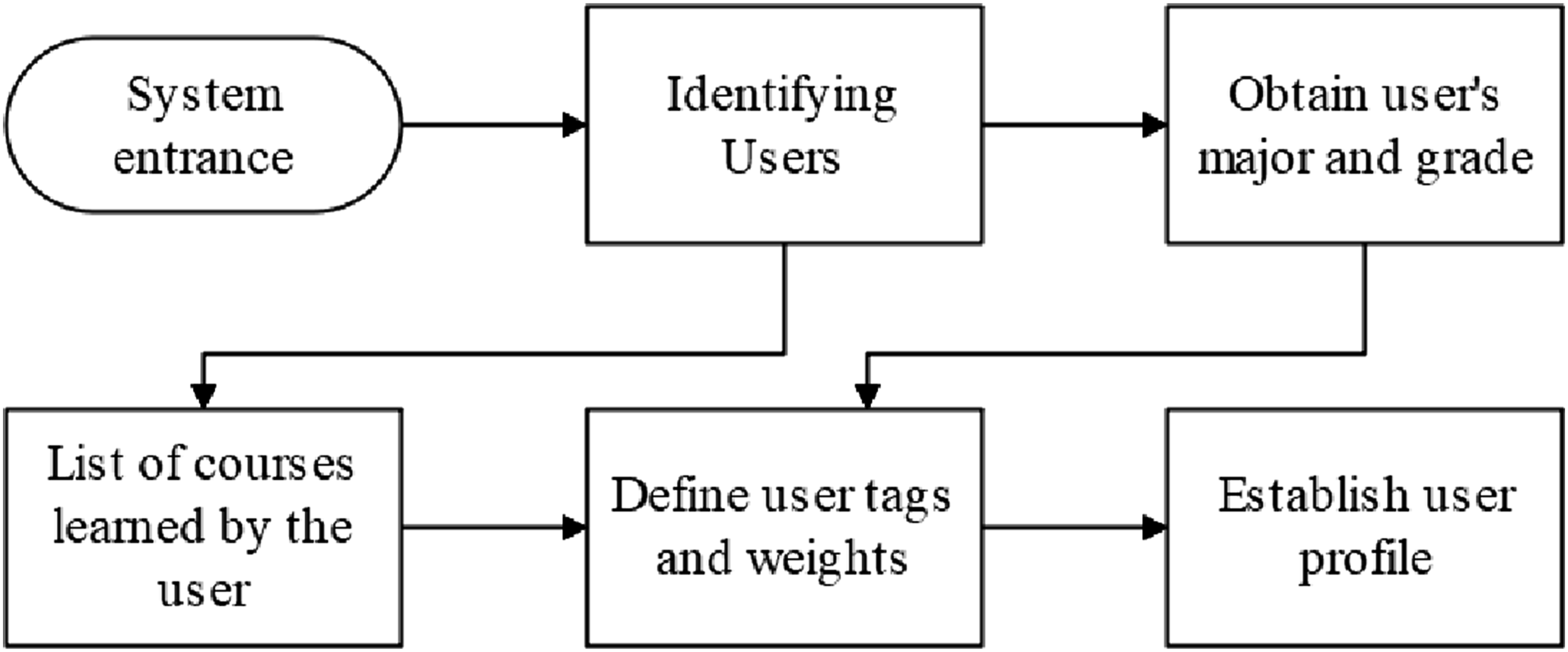
After the user portrait is constructed, we can get the tagged representation of the user, and then judge whether the resources in the resource library meet the requirements of the user’s knowledge structure. However, generally speaking, the scale of resource pool is huge, and it will take a lot of time to calculate the fit between all resources and users. Therefore, in this paper, user portraits are integrated with learning resources and recommendation algorithms. Through more efficient recommendation algorithms, a course candidate set that fits users better is generated first, and then the fit between users and resources is calculated. Considering the clustering effect and relevance of learning resources, this paper chooses collaborative filtering algorithm and association rule algorithm and makes use of users’ professional characteristics to supplement them to generate recommended candidate sets.
As shown in Figure 2, (1) Core principle: This algorithm recommends items such as item A, item B, item C, and item D by analyzing the similarity between users A and B. (2) User item interaction: In the system, users rate or interact with items to form a user item interaction matrix. The solid line represents clear ratings or interactions, while the dashed line represents possible interactions but not explicitly indicated. (3) Common methods for calculating similarity between users include cosine similarity and Pearson correlation coefficient. For example, comparing the joint ratings of user A and user B for items. (4) Recommendation generation: For the target user (such as user A), the algorithm finds the most similar user (such as user B) and looks for items that these similar users like but the target user has not interacted with, such as item C or item D. (5) Recommendation results: Based on the ratings of similar users, generate a recommendation list for target users, recommend items that they may be interested in, and improve user experience and satisfaction. Schematic diagram of user-based collaborative filtering recommendation algorithm.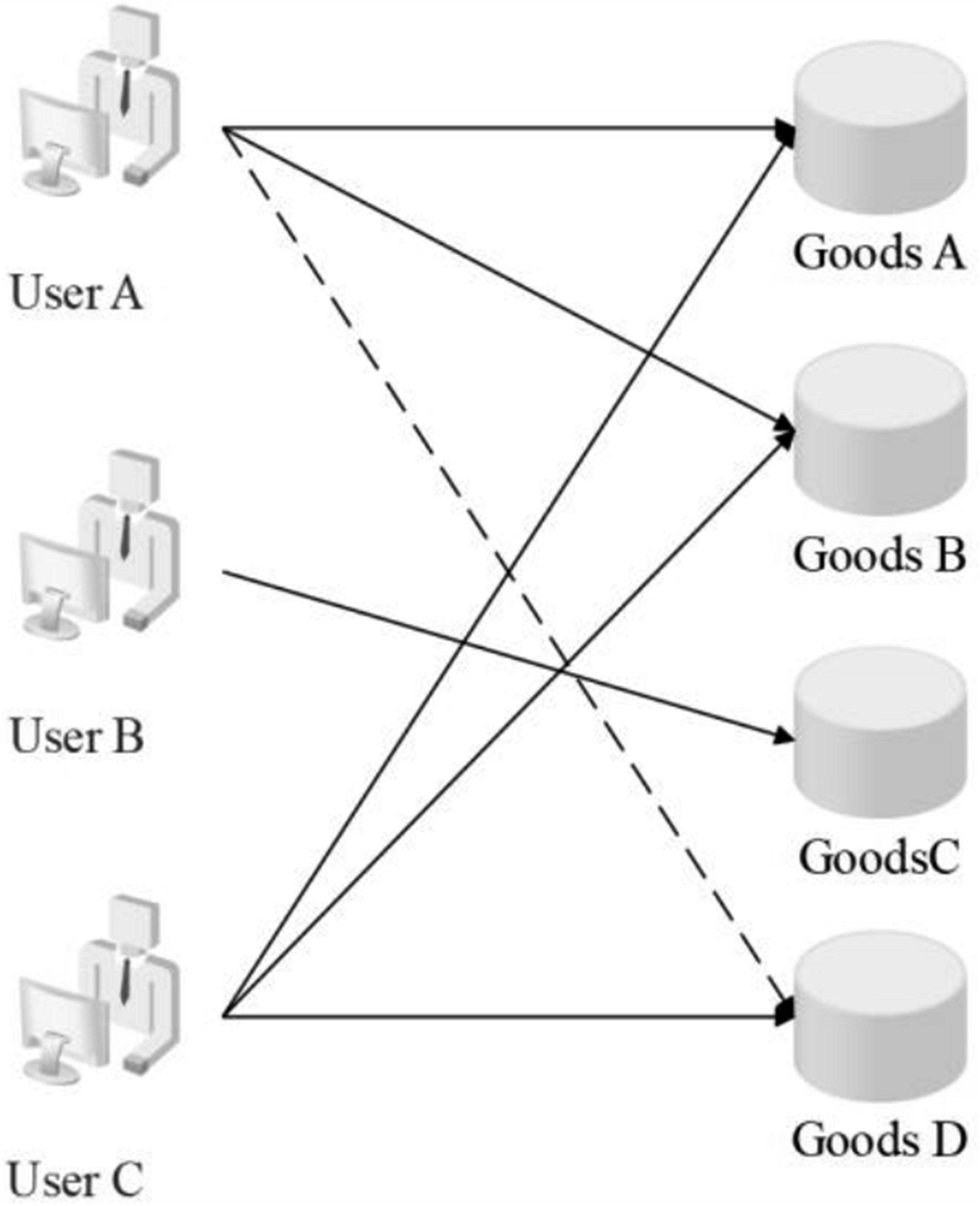
By integrating user portraits with learning resource features and recommendation algorithms, the computation of fit calculation can be reduced, the recommendation efficiency can be improved, and the recommendation results can meet personal interest preferences and professional knowledge needs. The specific algorithm design is shown in Figure 3. Design of learning resource recommendation algorithm based on user portrait.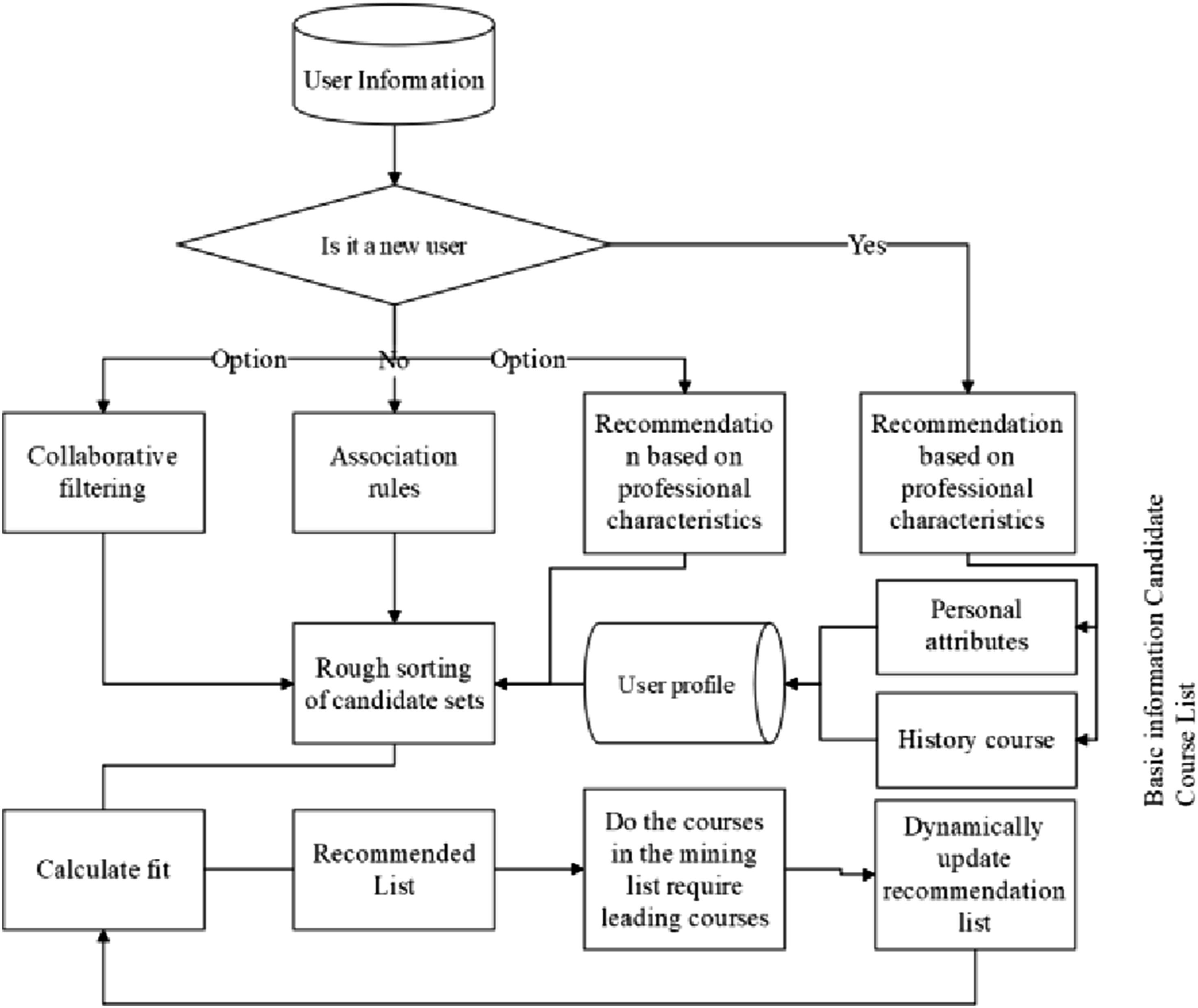
Based on the user information, the recommendation algorithm distinguishes new and old users. Because the new user has no behavior information, the user portrait is constructed and the candidate set is generated by using the user’s major and enrollment year. For old users, collaborative filtering and association rules are used to mine user behavior information, and professional characteristics are also used. Then, using user portraits, the fit degree between the items in the candidate set and users is calculated to obtain N items with the highest fit degree with user recommendation, and the recommendation list is further mined to judge whether the courses in the list need other leading courses as supplements. If there are leading courses that users have not learned, the leading courses are also added to the recommendation list.
The weight

Among them,
This article chooses formula (1) based on frequency weight definition rather than TF or TF-IDF methods, mainly for the special consideration of semantic relevance of educational content. Although TF (word frequency) and TF-IDF (word frequency inverse document frequency) are widely used for text feature extraction, their excessive reliance on statistical frequency and neglect of the structured nature of domain knowledge may lead to imbalanced weight allocation of key concepts (such as subject terminology and teaching logic) in educational settings. In contrast, formula (1) can more accurately capture the hierarchical relationships and semantic dependencies between concepts in educational content by integrating domain knowledge bases and contextual association rules, such as distinguishing the weight differences between core knowledge points and auxiliary explanations, thereby avoiding semantic bias in TF-IDF caused by relying solely on the statistical characteristics of document sets (such as high-frequency but low educational value generic vocabulary interference). This design meets the demand for precise and structured organization of teaching resources in smart campus scenarios.
The equation (1) is further optimized, and the equation (2) can be obtained by normalizing the frequency of tag occurrence by using

To sum up, in this algorithm, the process of building user portrait is shown in Figure 4. User portrait construction process.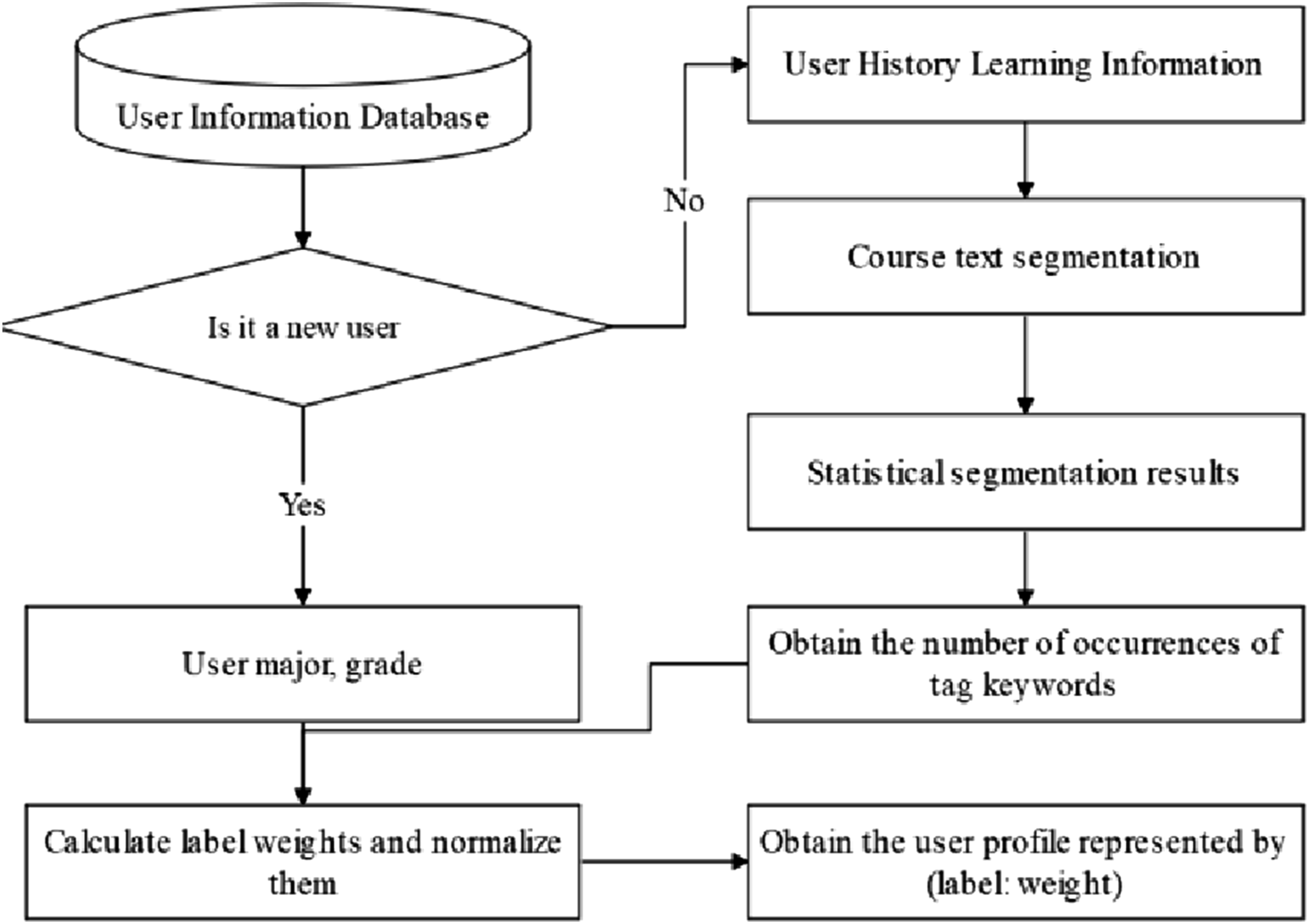
In practical systems, a user item rating matrix as shown in Figure 5 is usually maintained, and the similarity between users is calculated through this rating matrix. After finding similar users, candidate recommended items can be located, where Rij represents the rating of item j by user i. User project matrix.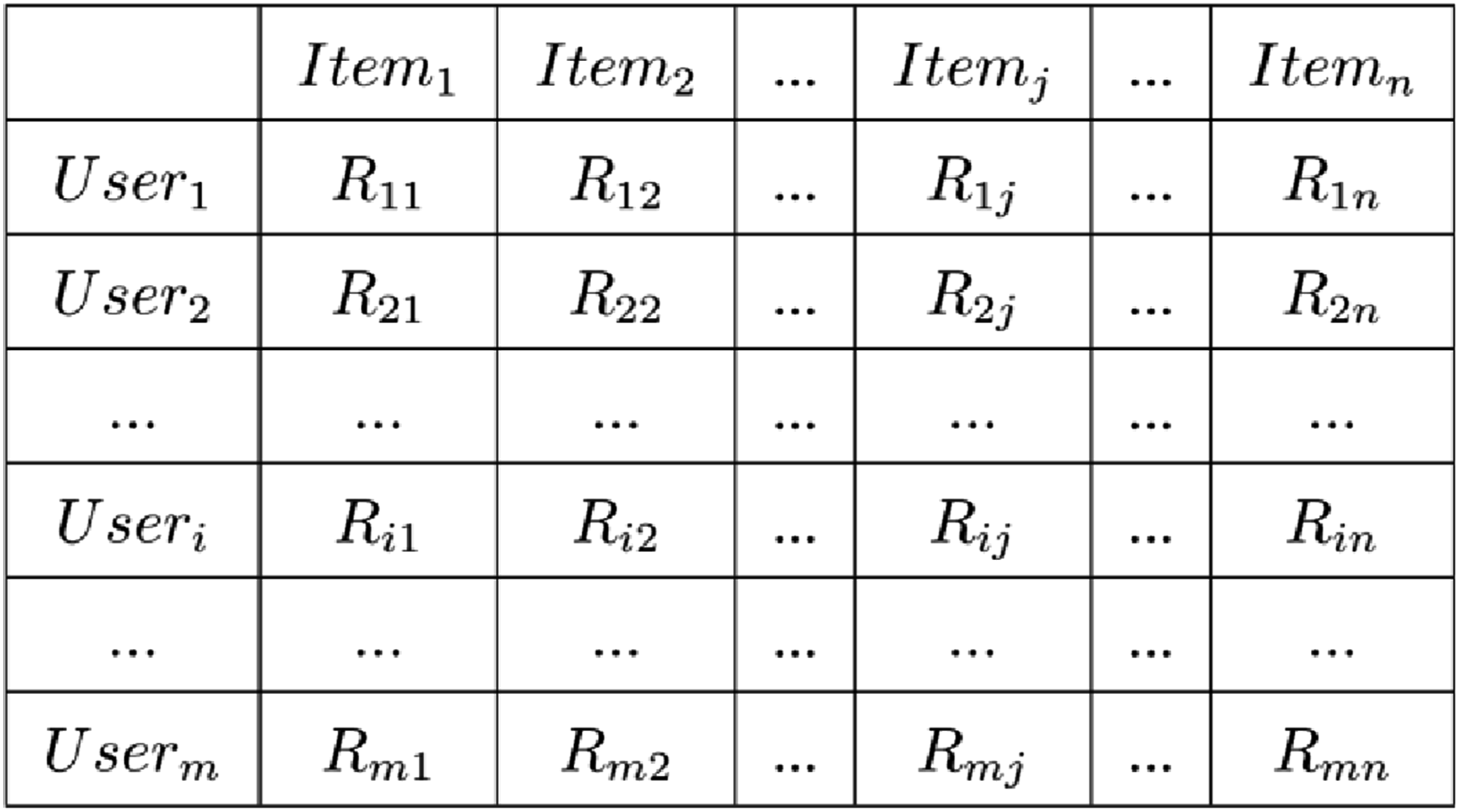
From the formula point of view, Pearson similarity is not applicable because users need to participate in the calculation process of scoring a single project. Therefore, this paper uses cosine similarity and Jacquard similarity to test and improve it. Based on the user project matrix in Figure 5, the cosine similarity is as follows
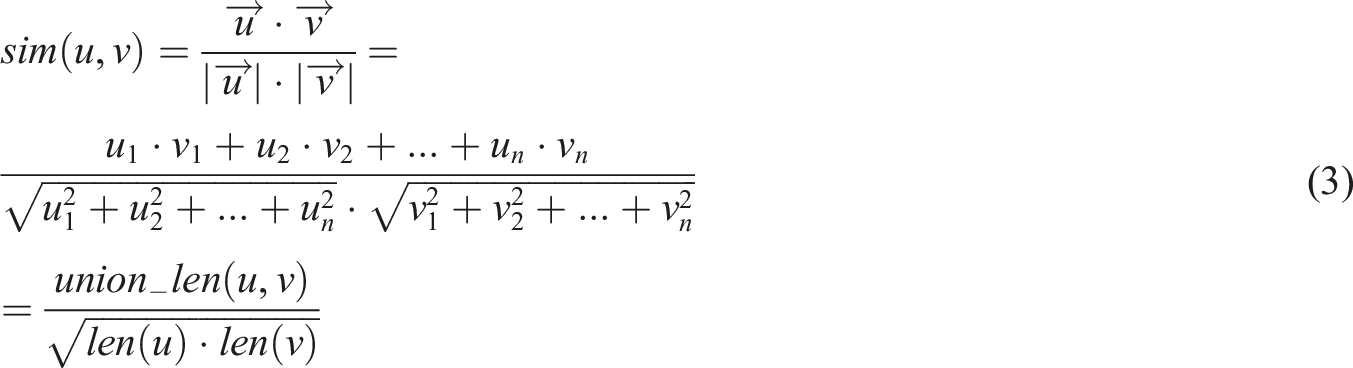

Compared with formula (3), formula (4) introduces the parameter
In order to enlarge the influence of main courses on similarity, equation (5) is used for optimization
20

The fit between the resource

In the process of integrating user profiles and learning resource label vectors (formula (6)), the system processes label noise through a triple mechanism of customized stop word filtering in the education field (such as filtering out low information words such as “analyze” and “based”), word form normalization (merging tags with the same stem), and TF-IDF weight threshold filtering (suppressing interdisciplinary high-frequency tags). At the same time, it combines semantic contribution evaluation (mutual information calculation) to retain core knowledge point labels (such as “derivative” and “calculus”), ensuring that the final label set has both semantic density and educational value. This process eliminates grammar noise while maintaining the professionalism and structural characteristics of educational content through hierarchical filtering.
On the basis of existing learner groups, in order to fully reflect learners’ subjectivity, this study attempts to use user-based collaborative filtering algorithm to give learning element sequence recommendations to enrich the learning element recommendation list.
Examples of possible learning paths for different learners.
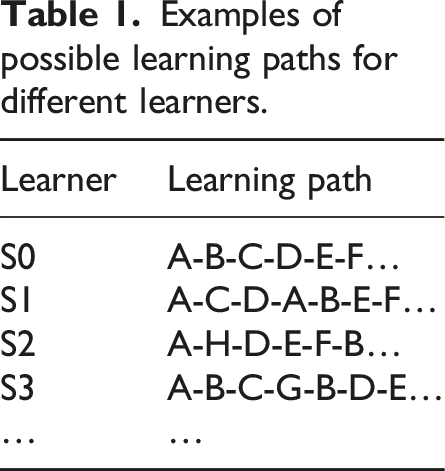
The calculation formula used in learning path recommendation is as follows



The value of
SC construction and model verification
SC construction
In the era of digital intelligence empowerment, SC will face new opportunities for change. This paper will study the overall architecture of SC from the security layer, application service core layer, big data platform analysis layer, and hardware foundation layer. In the security layer, it mainly studies algorithm optimization, technical specifications, technical services, etc., to provide information security, privacy protection and technical support for the campus network. In the core layer of application service, it mainly studies the application service system under intelligent decision-making to realize intelligent sensing, speech recognition, image recognition, and face recognition. In the platform analysis layer of big data, big data is mainly used to provide intelligent decision-making. In the hardware basic layer, it is mainly to build an intelligent sensing campus service system. The overall architecture is shown in Figure 6. Overall architecture of SC under digital intelligence empowerment.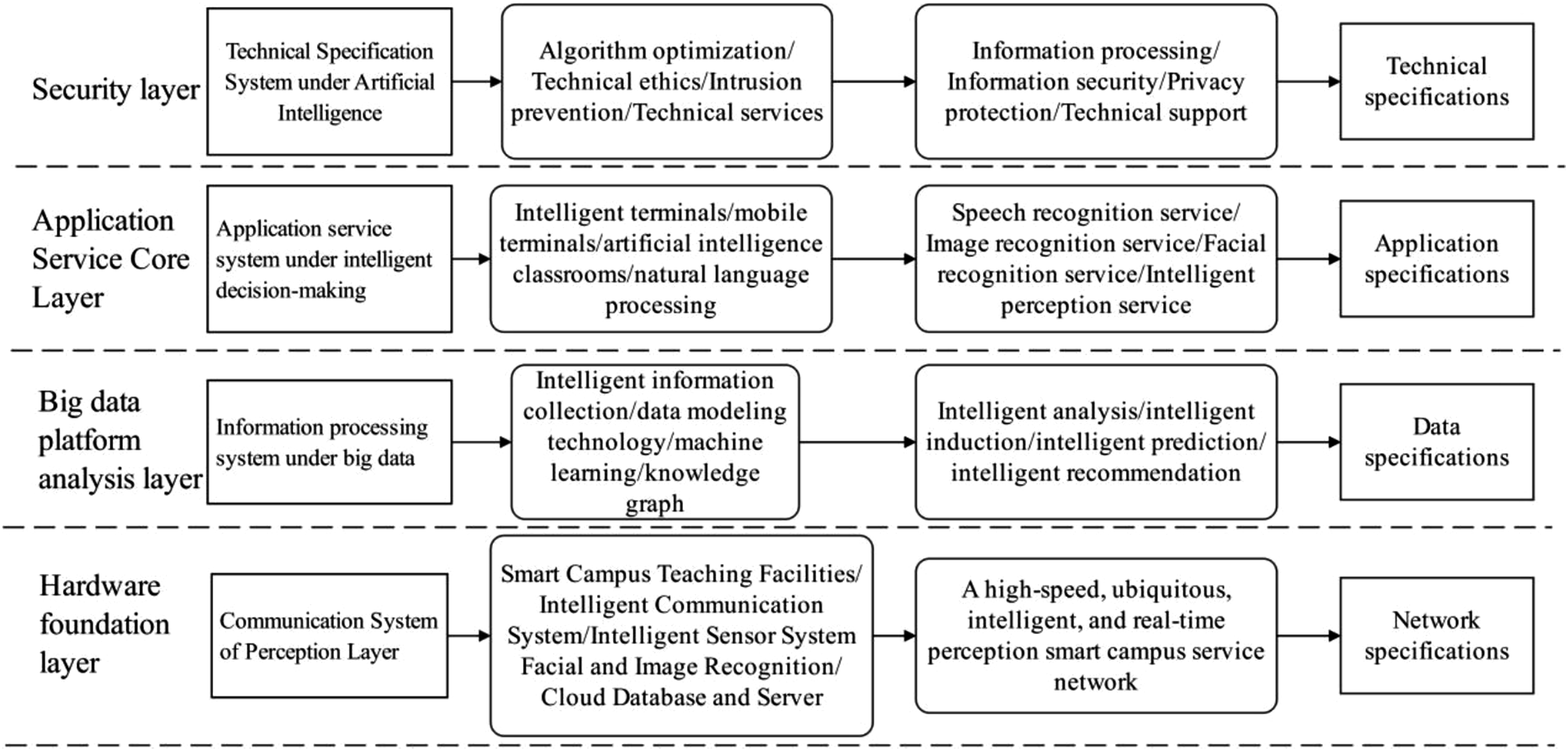
In platform of SC, there are two kinds of data on the big data platform: one is the data collected through RFID face recognition system, and the other is platform data on third-party systems. The big data service platform analyzes and processes campus big data in real time, generates visual data charts, or forms meaningful decision analysis conclusions, or provides corresponding recommendation materials for teachers and students. Its service framework is shown in Figure 7. The SC service framework under digital intelligence empowerment.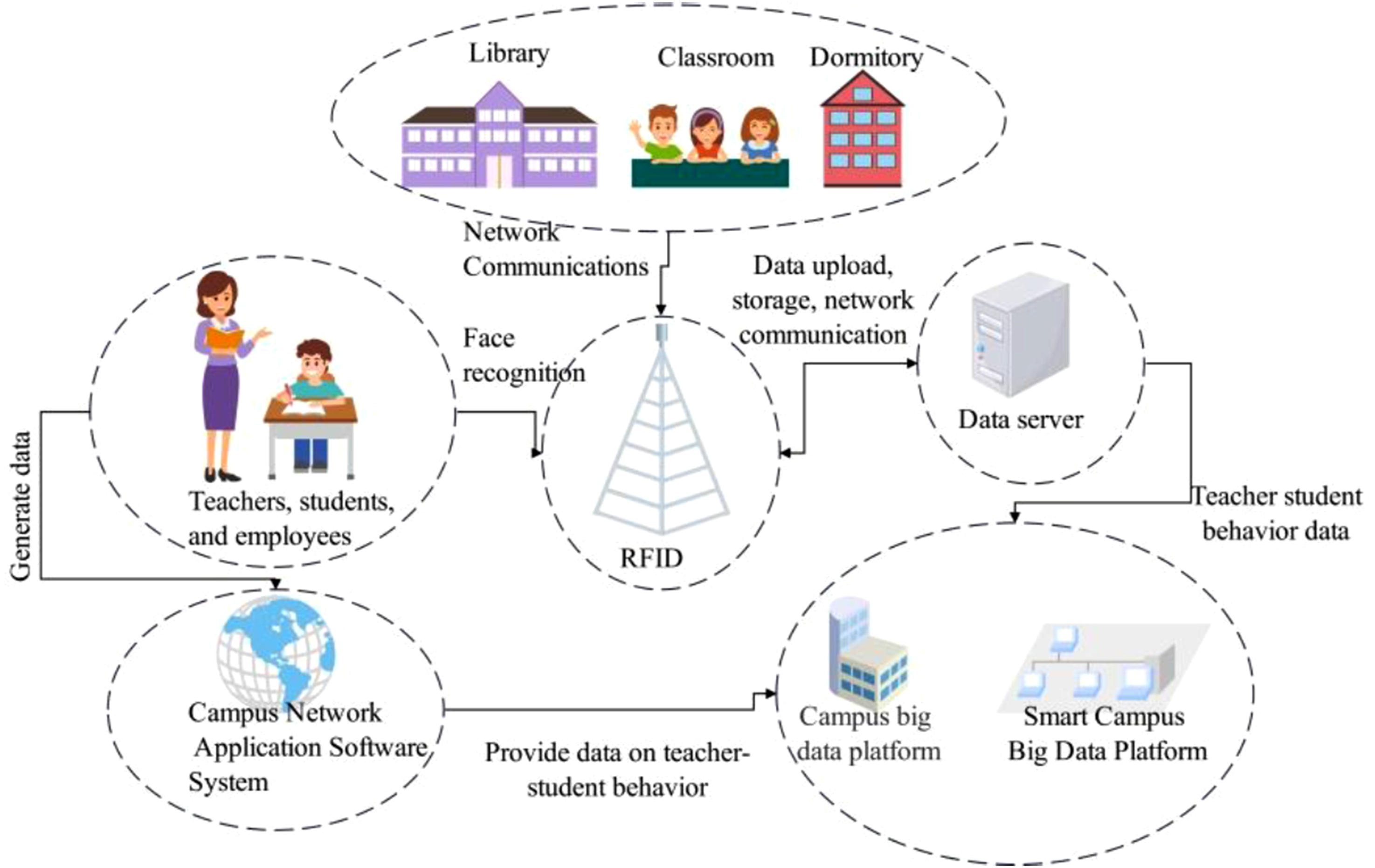
Accurate knowledge service based on multi-dimensional user portrait forms the construction process of accurate knowledge service model based on data conversion and flow process, and its core lies in accurately connecting user needs with services. The construction of accurate knowledge service model needs to be based on the user knowledge needs displayed by multi-dimensional user portraits, and at the same time consider a number of mechanisms that accurate knowledge service needs to meet, such as comprehensive demand expression, multi-agent element collaboration, dynamic feedback and optimization. The precise knowledge service model constructed in this paper consists of four layers, as shown in Figure 8. Accurate knowledge service model.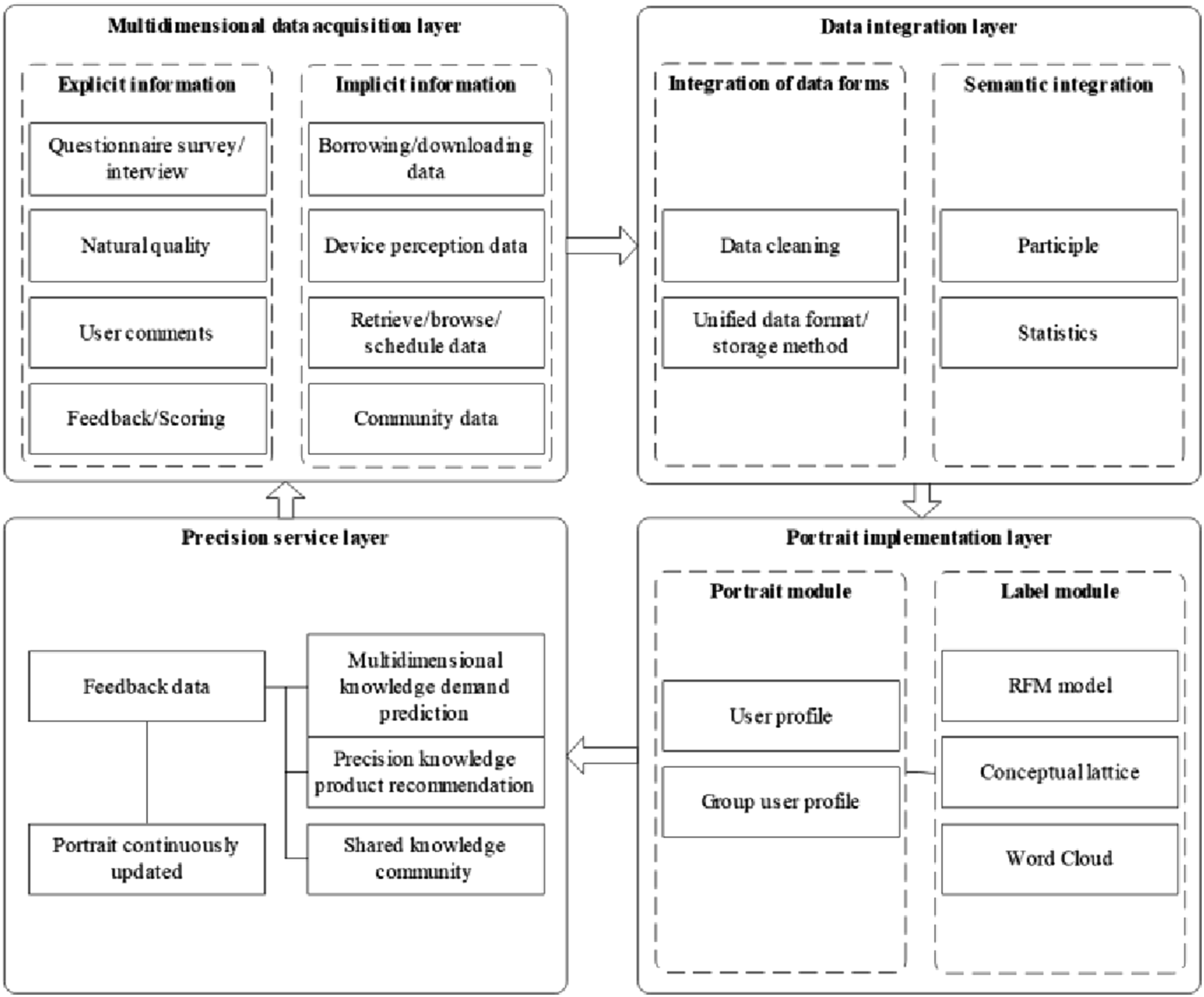
This paper adopts pseudo-distributed federated learning architecture, takes the texts published by student users as training data, and refers to the non-independent and identical distribution of data in federated environment, divides them into different holders according to data types as data sets held by participants participating in federated learning, extracts the interest topic features of training data sets by uniting multiple participants, and accurately classifies student user groups of different participants by using federated learning classification method, thus constructing group student user portraits according to student user categories. After the training of the student user classification model, the participation convenience can classify the local data according to the training results of the global classification model, so as to extract the topic interest tag of the student user group and construct the group student user portrait. The overall framework of the student user portrait is shown in Figure 9. Overall framework diagram of student user portrait construction.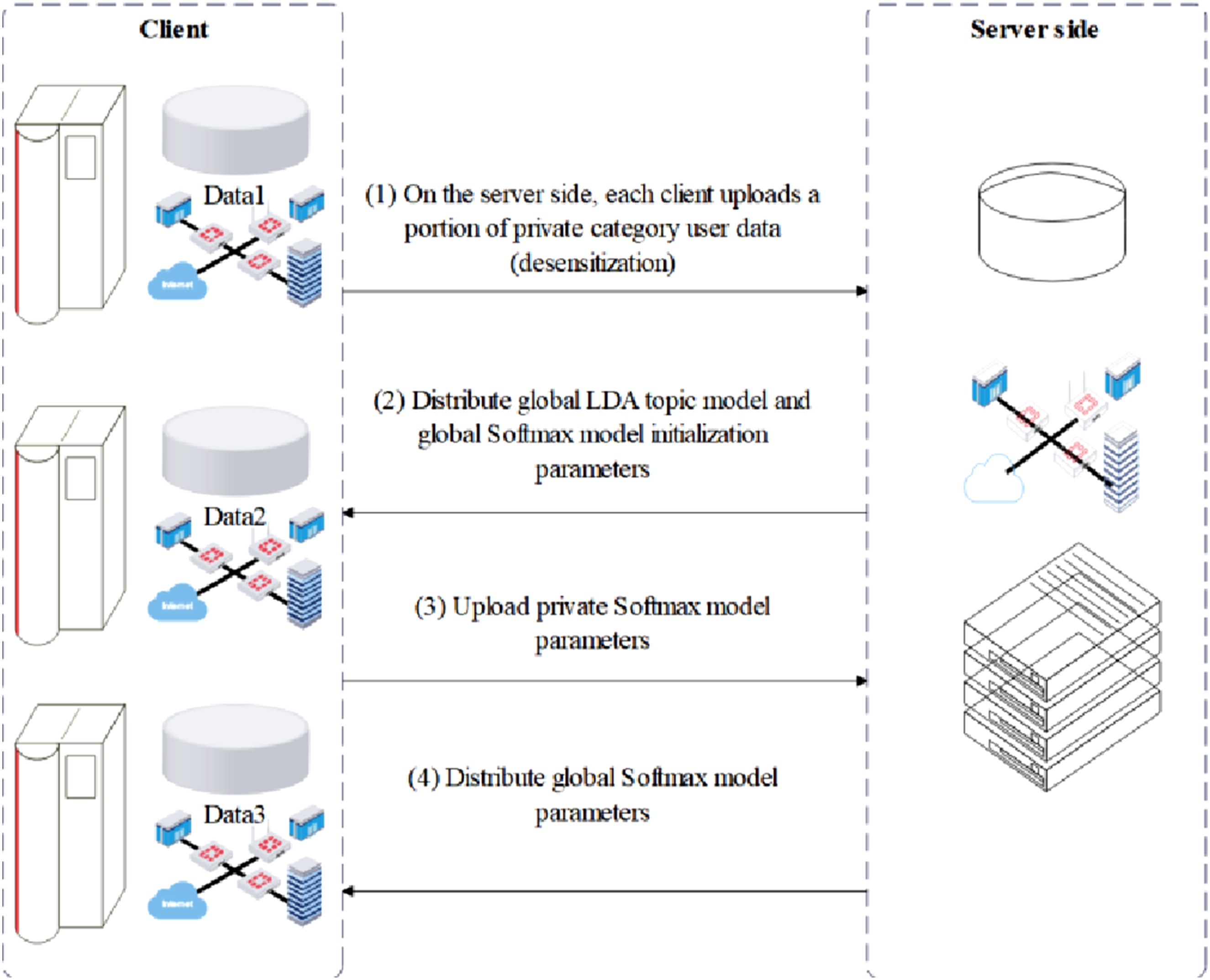
The flow chart of learning path recommendation based on learner portraits is shown in Figure 10. According to the details of learners’ portraits in the original database of learners’ portraits and the actual learning progress and state of learners, the recommendation model will match different recommendation strategies for different learners. For the initial target learners, the most prominent feature is that there is no or only a small amount of learning history data to use. With the help of the default learning meta-sequence given in the instructional design and the learning meta-sequence of excellent learners, the recommendation is given, and the former takes precedence. Flow chart of learning path recommendation based on learner portrait.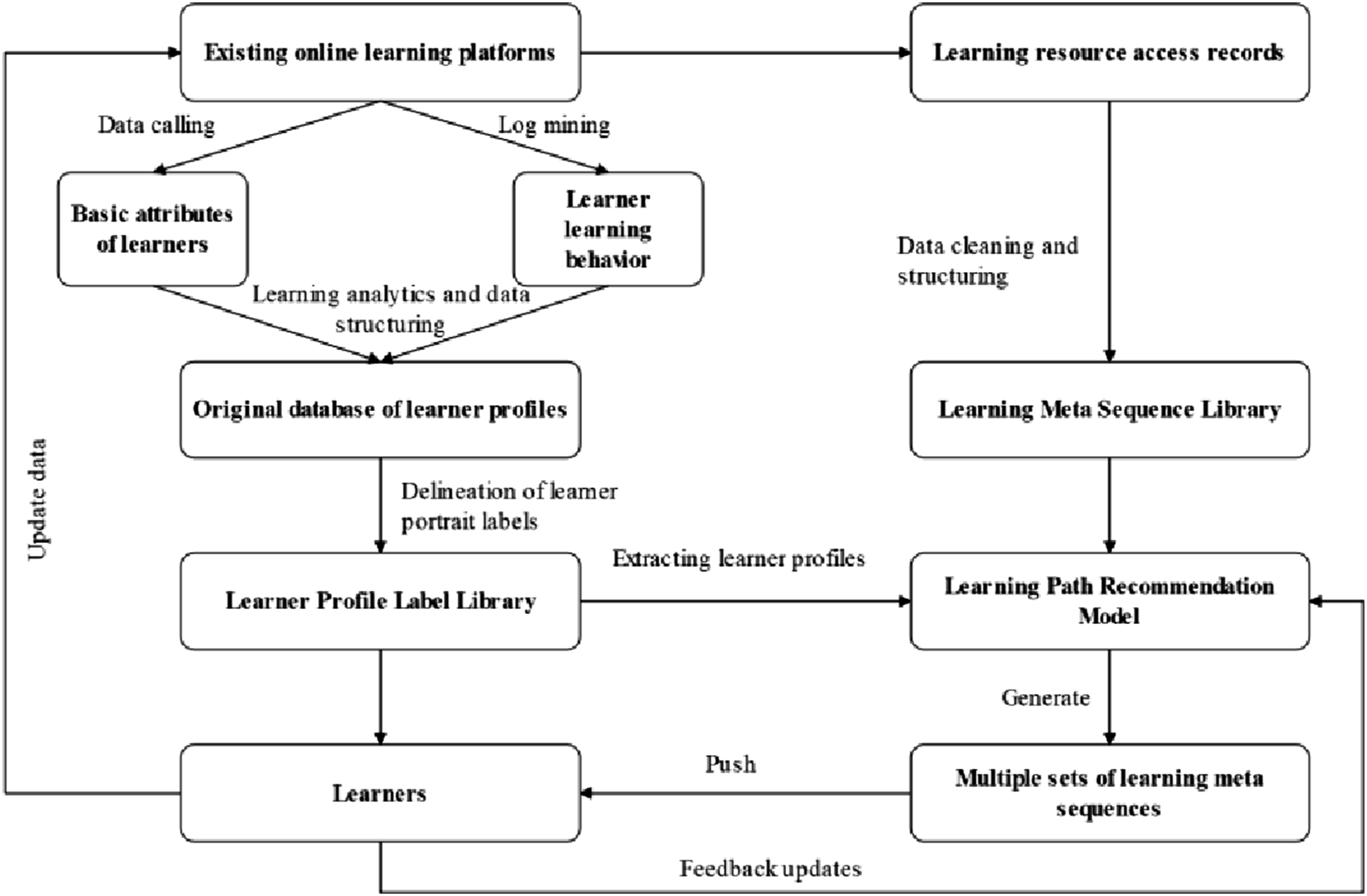
System experiment
The hardware parameters of experimental test.
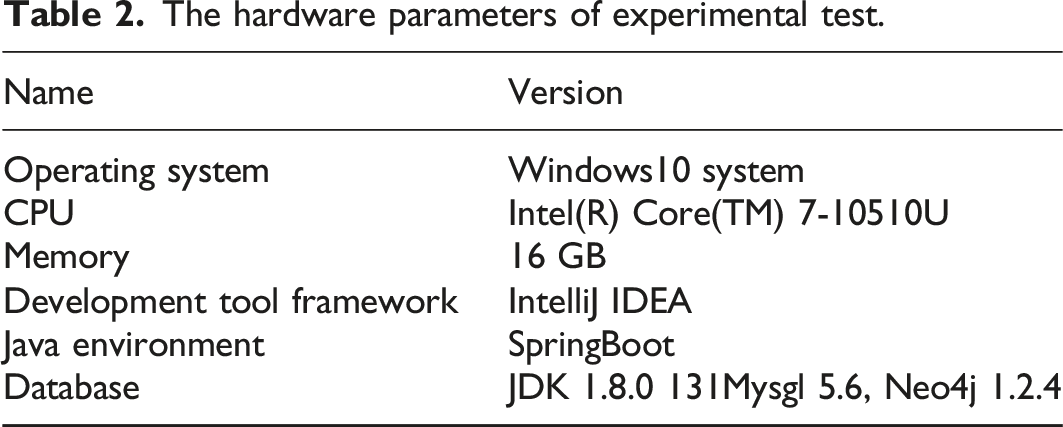
First, the accurate recommendation of students’ portraits is carried out. This paper takes the recommendation of learning resources for cultural courses as the research object. The basic hardware parameters of the experimental system constructed in this paper are as follows:
The runtime performance benchmark is as follows:
Response time: The average response time of the core interface is ≤200 ms (99% of requests)
Concurrent capability: Supports simultaneous online operations by ≥ 5000 users (TPS ≥800)
Resource utilization: CPU peak ≤70%, memory leakage rate <0.1%/24 h
The scalability test is as follows:
Horizontal expansion: When the number of nodes increases by 3 times, the throughput increases by ≥ 2.5 times
Database sharding: Query latency increase ≤15% when data volume increases by 10 times
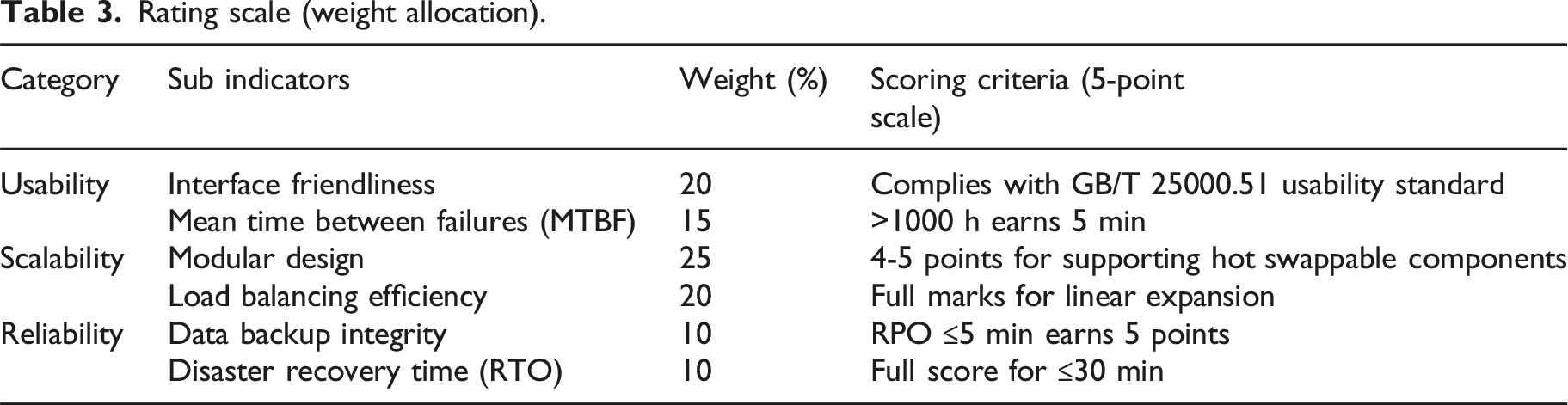
Rating scale (weight allocation).
The testing scenario is as follows:
Simulate the peak of course selection at the beginning of the school year: instantaneous concurrent users ≥8000; Continuous stress testing: 72 h uninterrupted service stability verification.
Experimental results based on performance testing of smart campus system.
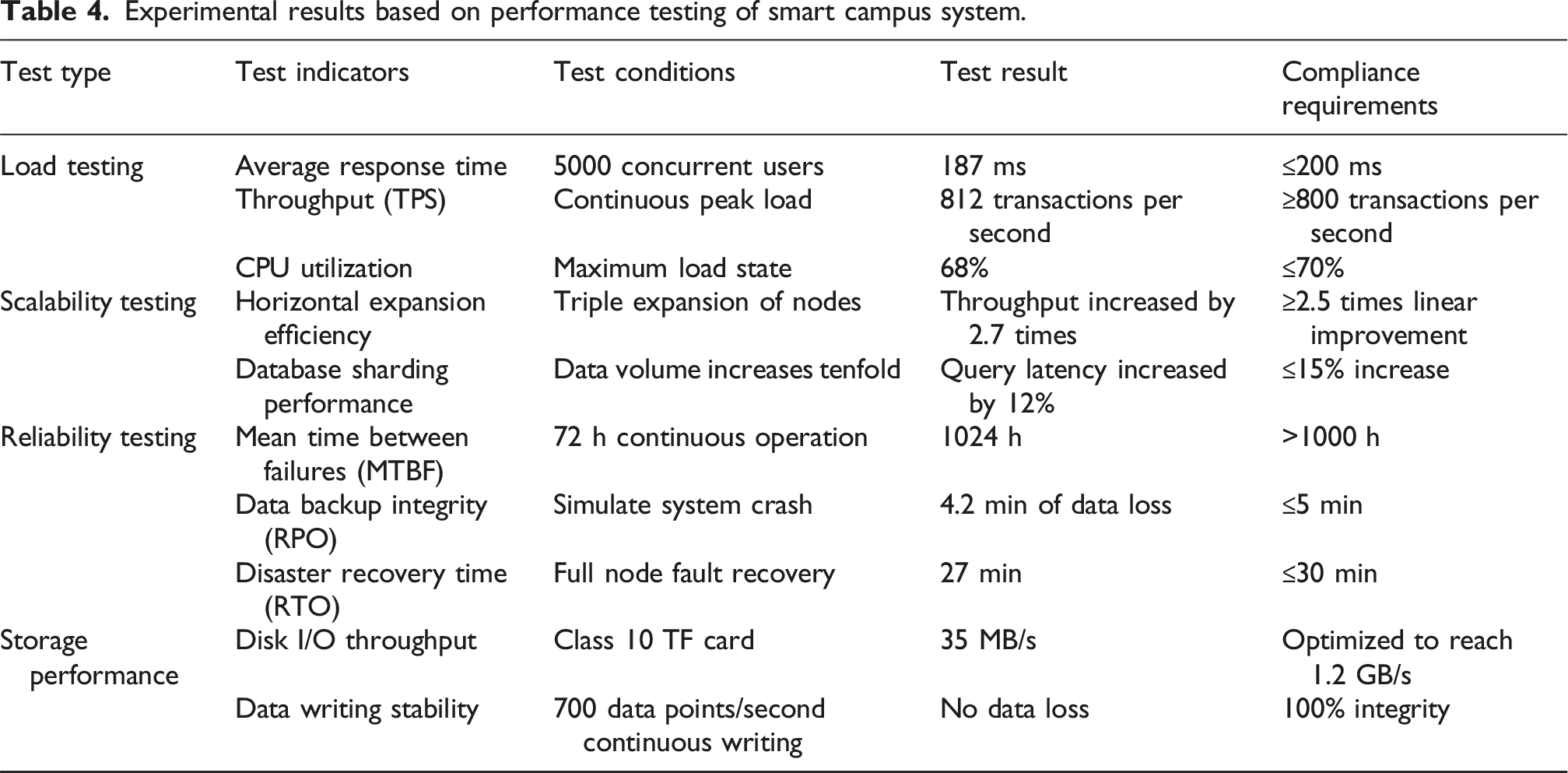
Table 4 Experimental results based on performance testing of smart campus system
The testing scenario is as follows:
Simulate the peak of course selection at the beginning of the school year: instantaneous concurrent users ≥8000;
Continuous stress testing: 72 h uninterrupted service stability verification
The measurement method is as follows: Use Phoronix testing suite for automated indicator collection; the experimental results based on the performance testing of the smart campus system are shown in Table 4:
The experimental data shows that the smart campus system performs well in load testing (average response time 187 ms/throughput 812TPS), has good scalability (throughput increased by 2.7 times after node expansion), and reliability meets financial grade standards (RPO = 4.2 min/RTO = 27 min). Although there is an I/O bottleneck of 35 MB/s in storage performance, it can be optimized through hardware upgrades, which overall verifies the engineering feasibility of the system in high concurrency, scalability, and disaster recovery.
The accuracy of the three recommendation methods is compared through experimental research, 20 sets of experiments were simulated, and the experimental results were statistically analyzed and plotted into a statistical graph, and the results shown in Figure 11 and table 5 are obtained by comparing multiple groups of recommendation data. The comparison result of accurate recommendation. Statistics of recommended performance indicator parameters.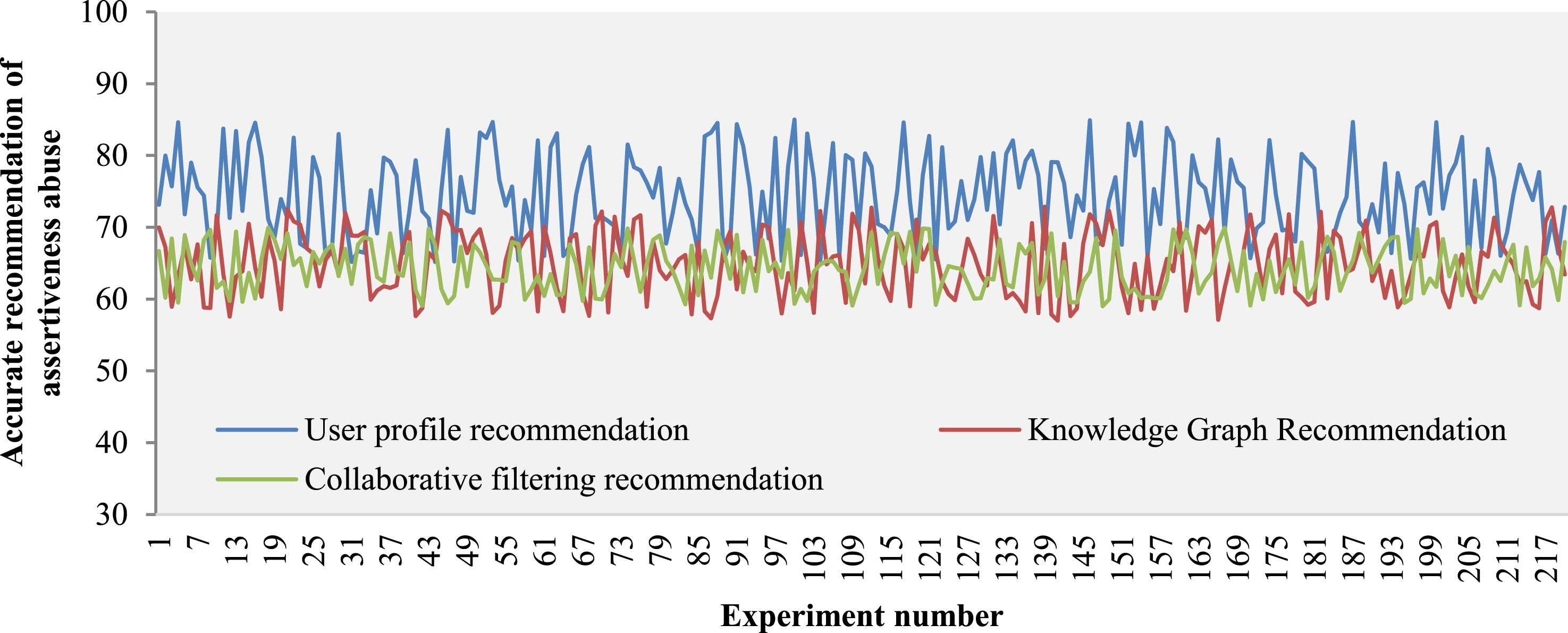
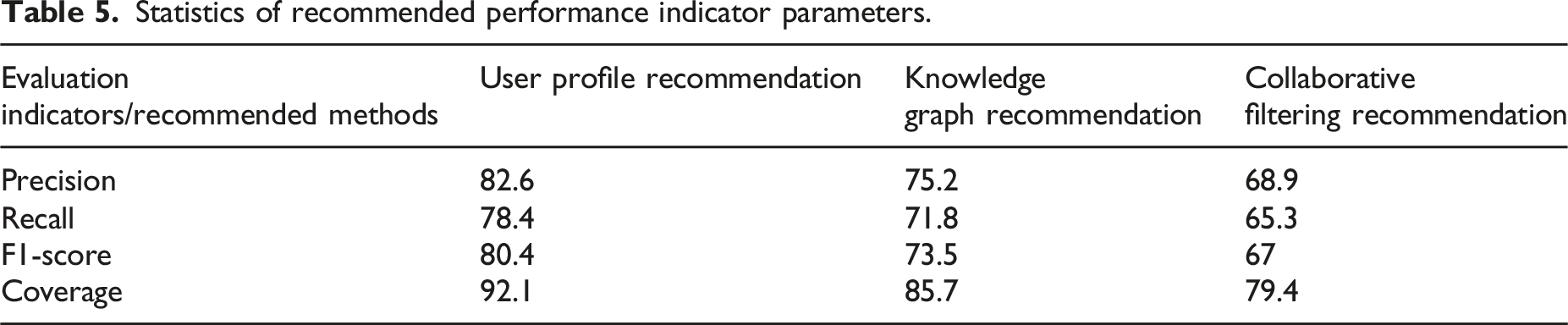
In Table 5, the student user profile recommendation method significantly outperforms knowledge graph and collaborative filtering recommendation in four core indicators: accuracy (82.6%), recall rate (78.4%), F1 score (80.4%), and coverage rate (92.1%). Its advantages stem from deep learning feature extraction, multi-dimensional user label system, and dynamic weight mechanism, making it particularly suitable for accurately matching student needs and solving cold start problems in educational scenarios. It is currently the optimal recommendation solution.
Evaluation of SC system.
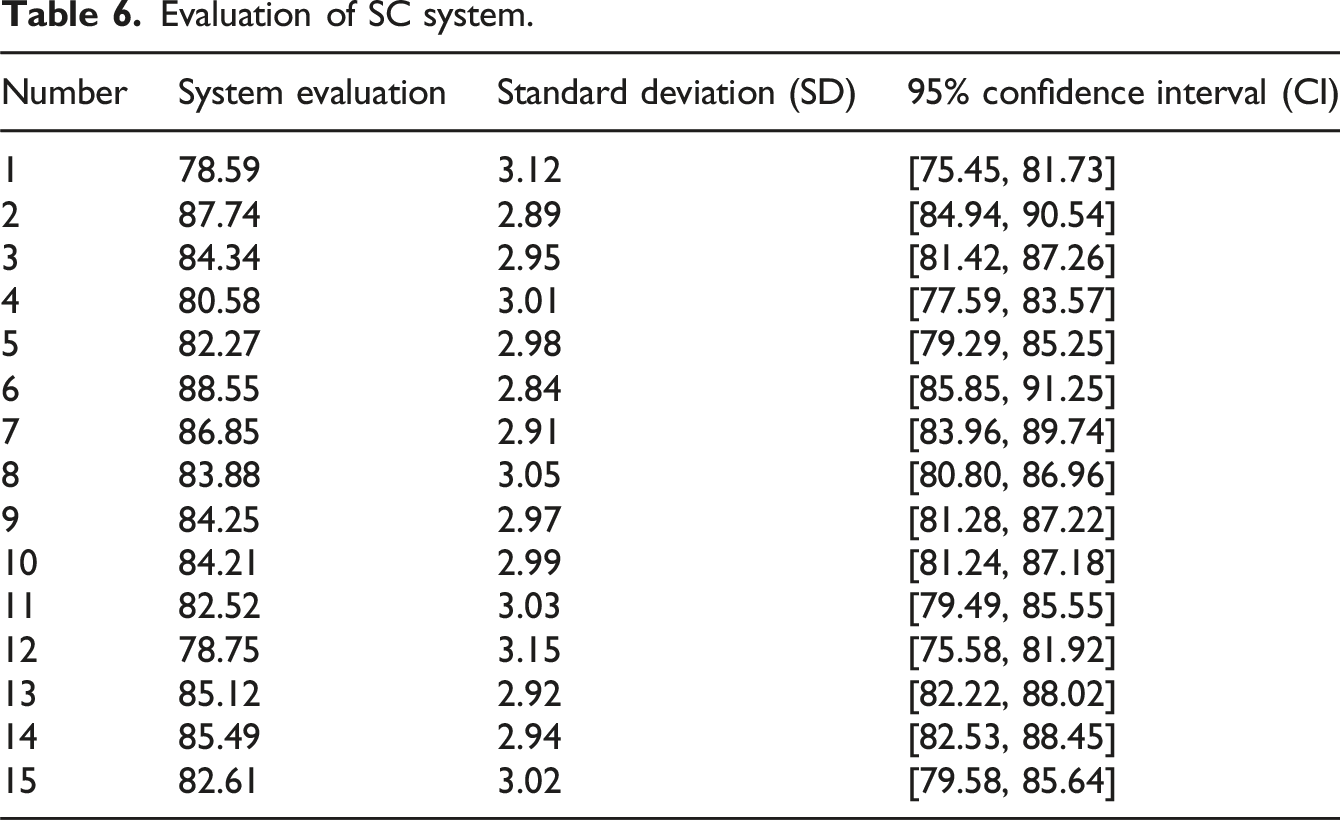
From the evaluation in Table 6, it can be seen that the system evaluation scores of the SC system proposed in this paper are distributed between [78, 89], which is a high evaluation, so the SC system proposed in this paper is theoretically reliable.
Conclusion
By dividing majors, students are mechanized and trained in batches to adapt to the industrialized society and become screws in the process of industrialization. With the arrival and development of artificial intelligence, the fourth industrial revolution, batch repetitive work has been replaced by artificial intelligence and mechanical arm, and the demand for innovative talents with multidisciplinary background is unprecedentedly high, so the topic of education reform has once again been pushed to the forefront. At present, all countries in the world are thinking about the problem of education reform, and the demand for innovative talents with multidisciplinary background is surging, and people are widely exploring the transformation of students’ training methods through quality education reform. Based on this, combined with intelligent computer technology, this paper combines intelligent technology to build a SC system under the concept of digital intelligence empowerment, and deepen the change of campus education. The research results show that the proposed student user portrait recommendation method is significantly higher than the knowledge map recommendation method and collaborative filtering algorithm in the accuracy of accurate recommendation. Therefore, the user portrait recommendation method proposed in this paper is suitable for the recommendation of teaching resources in SC. Moreover, through system evaluation, we can see that the intelligent campus system proposed in this paper is theoretically reliable.
Although this article presents a construction plan for a smart campus system empowered by digital intelligence, it demonstrates high theoretical feasibility and practicality. However, there are still limitations, such as a lack of in-depth analysis of the long-term stability and security of the system, as well as verification through practical deployment cases. Subsequent research directions should focus on the security reinforcement, stability optimization, practical exploration of large-scale deployment, and deep integration with other intelligent technologies (such as AI and blockchain) of the smart campus system, in order to further enhance the system’s intelligence level and comprehensive service capabilities.
Footnotes

Funding
The author received no financial support for the research, authorship, and/or publication of this article.
Declaration of conflicting interests
The author declared no potential conflicts of interest with respect to the research, authorship, and/or publication of this article.