




Abstract
The Source-Grid-Load-Storage (SGLS) system incorporates energy sources, grids, loads, and storage for effective power distribution. Optimization of addition scope and line losses is critical for refining system performance. Current approaches are inefficient, emphasizing the need for a better solution. The research addresses the optimization of SGLS systems by classifying incorporation scopes and minimizing theoretical line losses. A novel framework called, Enhanced Genetic Algorithm (EGA) is implemented for enhanced scope identification and reduced line losses, improving overall competence and sustainability. The SGLS system model includes energy sources, loads, and storage devices, interrelated in a grid. The optimization emphasizes on determining the finest configuration to integrate these components, guaranteeing minimal line losses and effectual energy flow for maintainable power distribution. EGA, includes advanced mutation, adaptive crossover, and local search methods. The proposed technique attained significant performance improvements, with reduced computation time and reduced iterations compared to standard Genetic Algorithms in optimizing SGLS configurations. Using IEEE 14-bus and custom-designed systems, the proposed method established improved optimization accuracy and reduced line losses. Results displayed 15.01 s computational time, improved competence in integrating sources, loads, and storage, outperforming traditional methods. The EGA efficiently optimizes incorporation and minimizes line losses in SGLS systems, offering significant developments over traditional methods. It offers a scalable and effective solution for modern grid systems, guaranteeing better energy management and sustainability.
Keywords
Introduction
The application of large-scale renewable energy capacity in distribution networks is critical for dual-emission standards. It can minimize network losses and improve renewable energy utilization by optimizing how it manages the level of integration of both distributed resources and aligned supply markets. Theoretical line loss analysis in SGLS provides a viable and potentially valuable avenue to support sustainable energy goals, reduce energy losses across the grid, as well as improve voltage quality, while maintaining secure, reliable, and affordable use of the power system. 1 Conventional investment decision approaches usually lead their analyst to make incorrect assumptions because they neglect the coupling of the load, storage, grid, and source relationships. Heterogeneous energy storage and grid coupling can regulate the peak and speed through the process flow to reduce new line construction and system-side loss while minimizing the high load connections to reduce grid-side loss and improve the coordination of networks. 2 Increasing uncertainty and variability in power production from renewable energy sources such as wind and photovoltaics lead to the power supply-demand mismatch issue and a reduction in the availability of flexible resources. These changes suggest that a new power system needs sufficient flexibility, and flexibility must increase for the future and beyond. 3 The Active Distribution Network (ADN) is described as a programmable smart structure with numerous distributed resources, such as photovoltaic energy and wind energy, energy storage, and programmable loads to optimize power flow. There are two main challenges: the identification of the integration scope as a means to optimize system configuration, and the application of SGLS’s theoretical line loss analysis to mitigate losses from variable renewable energy outputs. Optimizing these elements is crucial for increasing sustainability and efficiency as smart grid development gathers speed, especially when it pertains to wind and Photovoltaic (PV) energy integration. 4 Power generation, transmission, and consumption are all changing fundamentally because of changes to new power generation technologies, which extend beyond simple technological advancement. When the worldwide electricity system changes toward alternatives, the development and management of power networks have to adjust to the complex issues of integrating new energy sources. 5 Renewable energy generating technologies are advancing quickly and significantly because of the rapid changes of global energy environment due to zero-carbon ambitions. With constant advancement of technology and the daily growth in installed capacity, wind and solar power installations are expanding at an exponential rate. 6 The big data industrial park itself is economically highly valuable due to its scope and visible brand effect. The expansion of businesses over the long term and the expansion of the national economy have both been significantly aided by resource sharing. However, offering an array of public services and infrastructure, the park has also grown to be a significant source of carbon emissions. 7 Developments in communication and power grid architecture have brought the power grid and power communication network closer together. Protection, security, and monitoring are examples of secondary systems that depend on the strong support of the communication network, and their functioning is directly related to the power grid’s dependability. 8 Globally, governments and energy industry are moving toward low-carbon energy systems in response to the growing effects of climate change, with an emphasis on accomplishing climate goals. Comprehensive changes are required for this transition, especially in the area of power sector decarbonization. To maximize energy use from natural sources such as hydroelectricity, solar, and wind, improve system efficiency, and contribute to achieving carbon neutrality, the identification of integration scopes and the analysis of theoretical line losses are essential in SGLS. 9 The SGLS is an interacting feature of distribution network’s dynamic energy structure.
Furthermore, as distributed energy resources, energy storage (ES), and variable load technologies advance, the relationship is progressively improved. 10 A new power system’s technique for reducing emissions and carbon emissions is directly determined by the Energy Internet’s form. It starts with the source-load interaction model and the four SGLS linkages. To provide valuable guidance on implementing carbon emission reduction strategies to different concerns in the four primary SGLS links, it has to properly evaluate the carbon output factors, low-carbon evaluation system, emissions control model, as well as the differences in various links. 11 While, national carbon peaking, and carbon neutrality strategy target progresses, small hydropower has gained increased attention in recent years as a safe, effective, and clean renewable energy source. The majority of small hydropower plants, however, are situated in isolated alpine regions and generate electricity through discharge. 12
Research aims to lower theoretical line losses in SGLS systems and extend integration capabilities. Instead of conventional closed-loop methods, the research seeks to minimize computing time and iterations while improving sustainability, efficiency, and accuracy of SGLS with an EGA with advanced mutation, adaptive crossover, and local search strategies. The main contributions of this work are as follows: ⁃ To offer a more efficient and accurate optimization approach for SGLS systems, an EGA is proposed, which is enhanced by mutation and adaptive crossover, and local search. This approach decreases calculation time and the number of iterations associated with the system setup. ⁃ By improving the grid’s integration of energy sources, loads, and storage, the research raises the sustainability and balance of power distribution. The EGA promotes greater energy sustainability and improved grid management by reducing theoretical line losses and increasing energy flow efficiency. ⁃ The EGA is a flexible optimization tool that improves power distribution performance and dependability systems and sustainable energy solutions because it maximizes the integration of energy components.
Related works
The increasing integration of renewable energy sources presents challenges in balancing supply and demand. Although Energy Storage Systems (ESSs) offer an effective solution, coordination with renewable power plants is imperative. For hybrid ESS, Ruan et al. 13 proposed an optimal design model that considers power flow, unit commitment, and storage operation to ensure system stability and economic efficiency. Cheng et al. 14 employed an effective distributed power allocation model incorporating demand response and stakeholder interests (consumers, distributors, and distributed power operators), introducing carbon trading systems and green-certificate trading mechanisms to enhance energy storage flexibility and reduce carbon emissions. Their model utilized the Technique for Order Preference by Similarity to Ideal Solution (TOPSIS) method and second-order cone relaxation for planning, achieving a 43.7% increase in renewable consumption capacity and overall benefits.
As power systems progressively incorporate renewable generation, the need for flexible resources like energy storage grows. Sun et al. 15 proposed an energy storage capacity estimation method for provincial power systems using an 8760-h time-series simulation. Their research highlighted power balance challenges and presented solutions for both short-term and long-term imbalances, demonstrating that flexible interprovincial interconnection lines could reduce peak demand and minimize renewable curtailment rates. The deep coupling of cyber and physical networks in modern power systems increases operational uncertainty. Zang et al. 16 emphasized that vulnerability assessment is essential for ensuring stable, secure, and efficient operations. Their work noted the growing adoption of complex network theory for evaluating Cyber–Physical Power System (CPPS) vulnerability, addressing the relationship between cascading failures and system vulnerability, and reviewing understanding, classification, evaluation strategies, and research landscapes. The study also highlighted optimal CPPS operation and security protection measures. For Park-level Integrated Energy Systems (PIES), Mo et al. 17 presented a multi-objective optimization method resolving supplier self-interest conflicts through energy economics. Evaluated via PIES linkages, the method demonstrated performance improvements for all suppliers compared to traditional approaches in Guangzhou. Regarding grid decarbonization, Liu et al. 18 applied Life Cycle Assessment (LCA) to examine conventional, renewable, storage, and microgrid systems in Guangdong. Their findings revealed that systematic enhancements—even without structural grid modifications—could yield significant environmental benefits, though data limitations led to undervaluation of energy storage.
Wang et al. 19 developed an optimal scheduling solution for Hybrid Energy Storage Systems (HESS) by quantitatively integrating a semi-empirical battery degradation model with multiple stress factors (cycle depth, duration, and state of charge). Simplifying the Battery Energy Storage System’s (BESS) aging cost function via piecewise linearization reduced daily comprehensive costs by 11%. Their study further found that adding a flywheel became economically viable for microgrids exceeding 15 years of operation, providing recommendations for BESS financial management. Dong et al. 20 conducted a comprehensive bibliometric analysis of power systems and renewable energy research (2014–2023), identifying trends, research hotspots, and academic networks. China led in publication volume and centrality, with extensive international collaboration; prominent institutions included Tsinghua University, China Electric Power Research Institute, and North China Electric Power University. The findings underscored the importance of international cooperation and increased regional representation. Integrating new energy sources reduces system inertia, causing stability issues. Ma et al. 21 explored a Virtual Synchronous Generator model with a supercapacitor to mitigate frequency disturbances through added virtual inertia. Using bifurcation theory, they analyzed the model’s nonlinear behavior, discovering that systems with smaller capacitance recovered faster, while virtual inertia increased with larger capacitance. Addressing power quality and reliability challenges from distributed generation and electric vehicles, Huo et al. 22 proposed a novel structure and coordinated control strategy for Multi-Station Integrated Systems (MSIS). Their design featured a top-level control layer receiving grid commands while integrating distributed sources via converters and storage, with real-time simulation validating feasibility. For managing distributed renewable uncertainties, Xu et al. 23 analyzed optimal scheduling models for energy storage and cost-effective dispatching in active distribution networks, developing a comprehensive demand response model. Their control strategy combined time-of-use pricing with a Chaotic Particle Swarm Algorithm (CPSA), enhancing operational stability and cost-effectiveness by minimizing expenses and addressing demand-side needs. Liu et al. 24 analyzed the 2022 compound heatwave and drought in Southwest China, which severely impacted the grid, reducing hydropower output by 50% and slightly decreasing wind speeds. Although solar generation doubled, reduced hydropower and increased cooling demand created supply gaps. The research emphasized the potential synergy of Source-Grid-Load-Storage (SGLS) systems and the importance of early warnings for compound hazard events.
Power balancing challenges, high storage investment costs, and CPPS vulnerabilities hinder renewable integration into power networks. While distributed power allocation and HESS have advanced, gaps remain in optimizing power flow, unit commitment, and storage operation for grid stability, effectively reducing carbon emissions, and minimizing line losses. Current models inadequately address the coordination of storage and renewables for long-term sustainability. The proposed approach addresses these gaps by providing a robust framework for maximizing the integration of energy sources, loads, and storage. This method improves power flow management, reduces carbon emissions, and enhances financial efficiency by minimizing theoretical line losses. The advanced techniques employed by the Evolutionary Optimization Algorithm (EOA) can reduce computational time and increase flexibility in modern grid systems.
Overview of Source-Grid-Load-Storage (SGLS) systems and IEEE 14-BUS
For effective energy management, the SGLS system combines energy sources, grids, loads, and storage. A frequently used benchmark, and the IEEE 14-Bus system, simulate the distribution of electrical power and provide information on load balancing and grid operations. When combined, they allow for improvements in smart grid technology by optimizing energy distribution, storage, and consumption.
SGLS systems
In the SGLS, fossil fuels have been used as the main power source due to their reliable and predictable output characteristics. Energy storage technology remained in its early stages during this fossil fuel era, and the related equipment had not yet been widely used, which prevented the creation of an SGLS system. The three essential elements of traditional power systems, the source, grid, and load are most apparent in the operations of power generation, transmission, distribution, and consumption. The power system has double-high features due to the extensive use of sources of clean energy and the high percentage of electronic power equipment. The growing emphasis on technologies for storing energy that can boost system flexibility has led to the development of ever more complicated energy storage systems.
The EGA-based framework is utilized for Integration Scope Identification and Theoretical Line Loss Analysis in this dynamic design to optimize energy distribution and reduce losses in transmission in the SGLS systems. Particularly when integrating energy storage and renewable energy sources, the application of genetic algorithms provides a reliable technique for determining integration scopes and reducing line losses, increasing the overall efficiency of power systems.
The SGLS structural design of the new power system
The electrical industry has experienced phenomenal growth in theoretical ideas and technological concepts because of the continuing evolution of science, technology, and society. The integration of the source, grid, load, and storage is becoming one of the primary focuses in the power system sector. This fast-evolving architecture requires an integrated approach to maintaining system performance and viability, and requires assessing line losses and defining the scope of integration in the development.
The term “source” refers to the point where energy enters the power system and is converted into electrical power that is supplied to the grid from sources such as petroleum, coal, solar energy, and wind energy. As the percentage of renewable energy sources has increased, generation variances have increased in amplitude, potentially jeopardizing system stability. Well-designed, executed, and improved algorithms can fully utilize the incorporation of these energy sources to reduce these risks. Both recognizing the optimum arrangements for system stability and determining the extent to which it can incorporate various energy sources are possible.
The grid is the collection of transmission lines, substations, and other components that connect electricity sources with end-user loads. The efficiency of a grid is critically important in securing a consistent and reliable electrical supply. Advancements in smart grid technologies and ultra-high voltage transmission technology have largely improved the grid’s ability to support more complex schemes of integration and make the very best electricity distribution possible over extraordinarily expansive territories. Thus, an evolutionary algorithm can not only enhance the routing and integration options available but also simulate and refine the grid’s operation to minimize line loss while maximizing overall transmission efficiency.
The load is a representation of the amount of electricity used in different sectors, such as residential, commercial, and industrial. This industry has historically used electricity passively, but the development of energy storage devices, demand response plans, and electric cars is changing this to a more active, reciprocal relationship. Consumers who are both producers and consumers of energy have a crucial role in this change. Ensuring that energy production and consumption are balanced to lower peak demand and balance system loads could prove extremely helpful in determining the integration scope for demand-side management solutions. Storage technologies, including electromagnetic, pumped, and electrochemical storage, are crucial for managing renewable energy sources and offering power system flexibility. To optimize power system efficiency, minimize line losses, and ensure system stability, the framework makes it simple to integrate its source, grid, demand, and storage components.
Connection between source, grid, storage, and load
The coupling relationship between the source of energy, arrangement, consumer demand, and storage has grown increasingly complex due to the continuous creation and implementation of new power systems. Electricity can be transmitted in both directions between the source and the load instead of a single direction. When the power operating mode progressively shifts to source-load interaction, changes in user-side status can also have an impact on source-side operation. The production of source-side units can be impacted by optimizing operational choices, which can be achieved by thoroughly analyzing user demand input to get deeper knowledge of public expectations. Additionally, the large number of consumers who participate in energy market activities indirectly affects the capacity planning of the system. By strengthening the connection between the demand and the power source, this association improves energy efficiency.
Transforming the grid into an intelligent control center instead of a simple transmission channel is one of the new power system’s growth goals. With the help of digital automation devices, sophisticated information and communication technology, precise control of power flow is achievable. This capability is key for the theoretical analysis of line loss since lining losses is most important. Furthermore, the addition of energy storage facilities provides consistent power generation, as advancements using technologies such as artificial intelligence (AI) enable to reasonably predict future generation and load changes.
To improve the power system’s flexibility and regulation capacity, flexible resources such as air conditioners, electric cars, and distributed energy storage can be incorporated into a grid. This requires intelligent grid control mechanisms. When the proportion of new energy sources increases, the new power system faces challenges due to the loss of adaptable resources. Energy storage solutions can improve the overall efficiency of the electricity supply chain by strengthening the link between the generators, power, and load. To reduce oscillations in new energy generation, offer coordinated stable operation, and improve proactive assistance capabilities during grid integration, energy storage systems and generating units must be developed and connected. Energy storage devices must be precisely controlled to minimize theoretical transmission line losses, optimize energy distribution use, and flexibly enable grid dispatch management. To satisfy their electrical needs and gain financial rewards, users can freely choose electricity transactions based on their wants and storage capacity. In addition to offering a strong basis for the new power system’s stable operation, the extensive use of energy storage improves communication between all elements of the SGLS framework, strengthening the coupling and increasing system efficiency.
IEEE 14-BUS
It is important to understand the category and parameters of the elements of the system before discussing the details of the SGLS system. In an energy system, a bus represents a point where multiple components in the system connect, including loads, grid connections, storage systems, and generating units. A flow analysis would use parameters (e.g., voltage magnitude, phase angle, real power (P), and reactive power (Q)) to represent each of the nodes in this connectivity of the system. Relationships between these parameters that are established through solving load flow equations represent conditions that are important for the optimization of the system. There are many types of buses in a system, and characteristics and roles of each bus vary. A load bus represents actual (P) and reactive (Q) powers without a generating unit. The load flow equations are solved to find the voltage amplitude and phase angle, which ensures effective delivery of active and reactive power to satisfy a given power demand while also meeting system constraints. However, for a voltage-controlled bus (or bus with regulation), there is power generation. The generator is also denoted as actual power (Pg), and the voltage magnitude is limited by the generating unit capacity. Figure 1 shows the IEEE 14-Bus system, illustrating buses, generators, loads, transmission lines, and voltage control for power distribution. IEEE 14-Bus system architecture.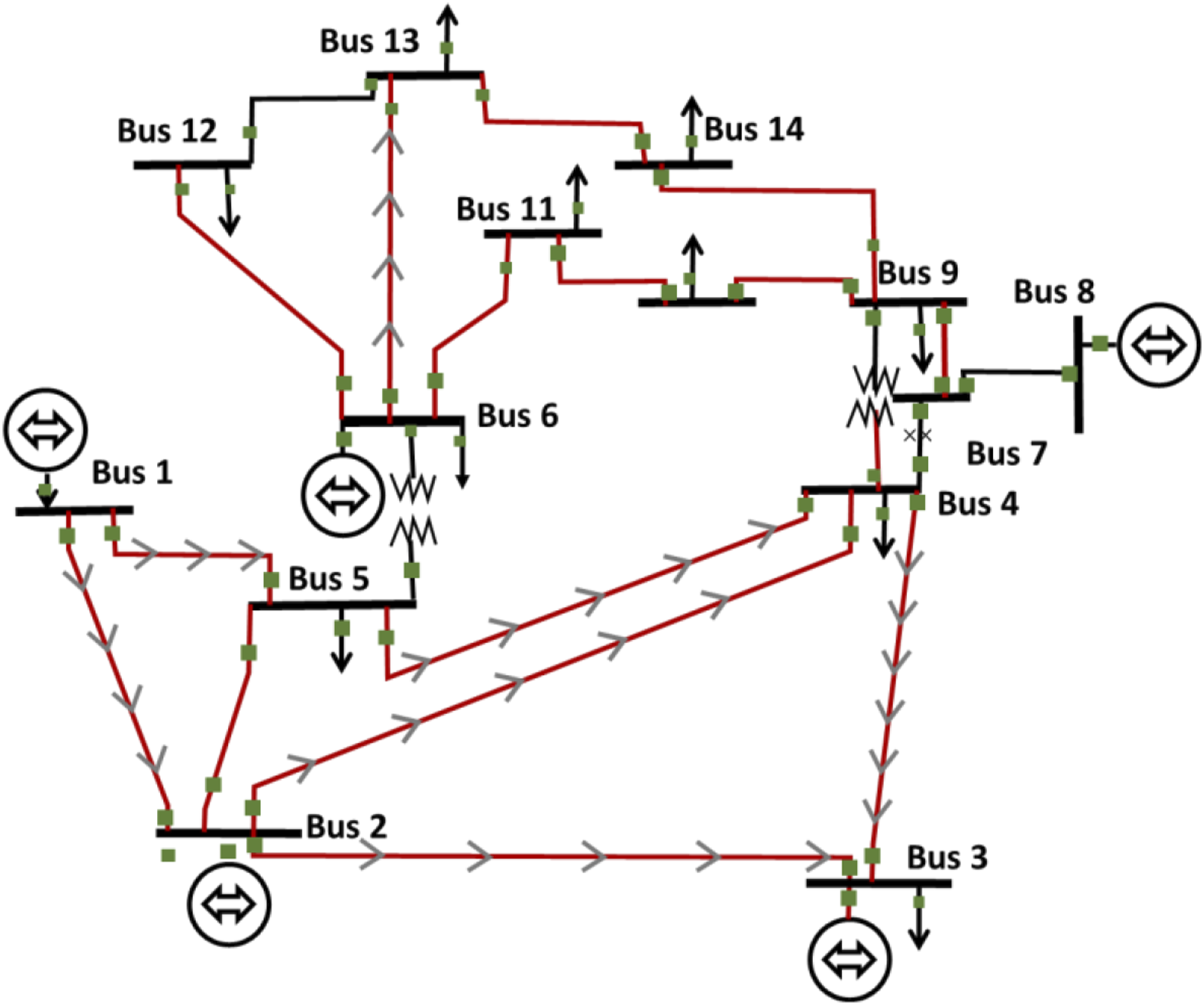
To maintain system stability and performance, load flow analysis must specify the reactive power and phase angle of the voltage. During a load flow solution, real and reactive powers are calculated, using a slack bus as the reference for the entire system. The voltage angle and magnitude of this bus are assumed known. The slack bus balances the system by compensating for the losses while delivering a sense of power. Combining sources, grid interconnections, loads, and energy storage units to be examined in the current research with the IEEE 14-bus model considers the SGLS system.
Line losses are crucial to the performance of SGLS Systems to optimize efficiency. These losses are minimized through theoretical analysis, especially when renewable energy systems and energy storage devices with variable power output are integrated. The best bus types for enhanced grid coordination and efficient use of power can be obtained with the aid of load flow equations.
Methodology
In SGLS systems, the EGA is used not only to maximize the overall integration opportunities but also to curtail theoretical line losses. The strategy also adopts searching locally, adaptive crossover operations, and sophisticated mutation techniques, which favor better solutions. In the SGLS system paradigm, energy sources, loads, and storage devices are all interconnected using a grid. EGA improves energy flow efficiency and minimizes line losses to optimize designs. Figure 2 illustrates the flow of the proposed method, displaying steps from data input to processing, optimization, and output generation. Overview of proposed methodology.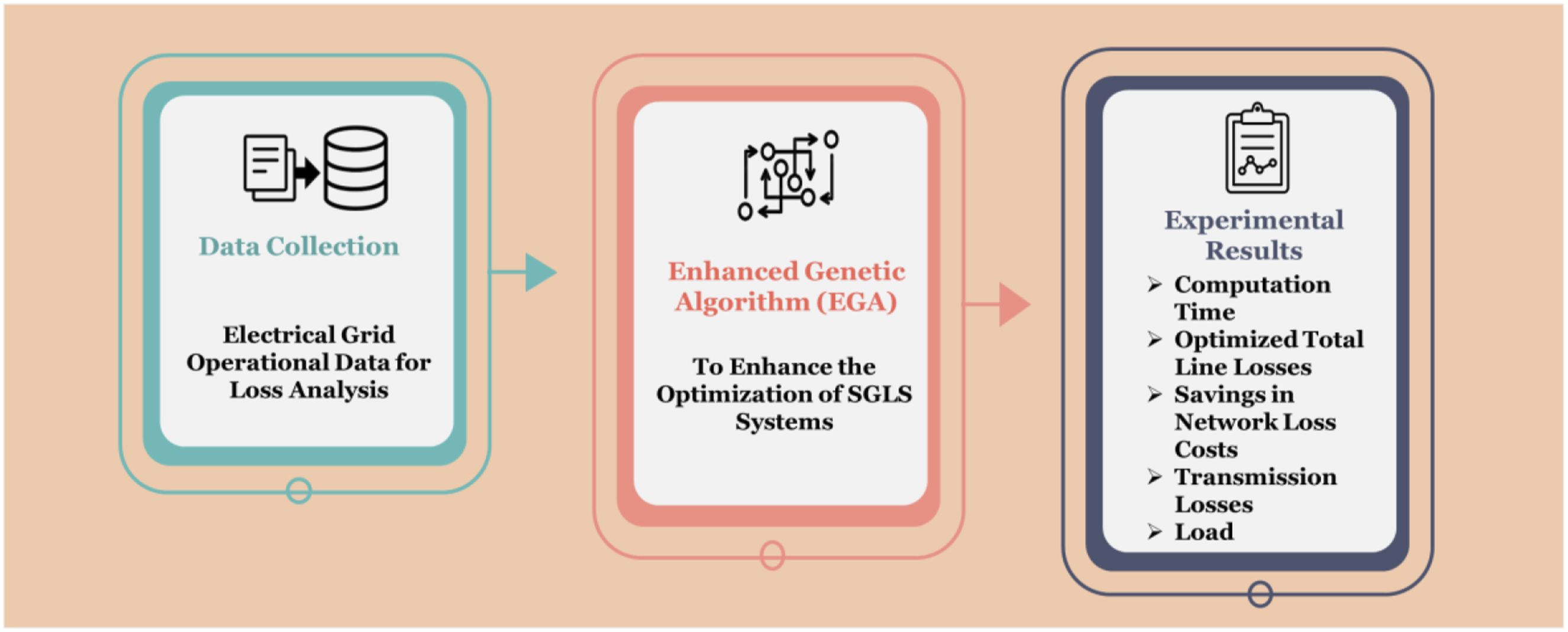
Data collection
The Electrical Grid Operational Data for Loss Analysis dataset was collected from the open-source Kaggle website: https://www.kaggle.com/datasets/zoya77/electrical-grid-operational-data-for-loss-analysis. This dataset includes operational data and electrical grid system characteristics gathered from several sources, storage devices, and loads connected by different grid nodes. It comprises metrics about demand, power capacity, availability, and line parameters that affect power losses. Identifying the variables affecting line loss and energy transmission efficiency is the goal of the data. It facilitates power distribution analysis and optimization in a complicated electrical network setting. Both numerical and categorical variables that indicate physical components and configurations are used to organize the dataset.
To enhance the optimization of SGLS systems using an Enhanced Genetic Algorithm (EGA)
Genetic algorithms (GAs) mimic properties of the natural evolutionary process and are typically used to find solutions for complicated, non-convex problems. The research can show that the process of minimizing theoretical line loss in SGLS systems and optimizing their integration with an EGA. Multi-objective optimization challenges include determining fitness for each individual when multiple objective functions can be maximized simultaneously. The objective of SGLS systems is to facilitate the successful integration of energy sources, grids, loads, and storage all while minimizing line losses. These constraints are critical for improving sustainability & performance of systems. Figure 3 illustrates an EGA flowchart, detailing the evolutionary process, including selection, crossover, mutation, and fitness evaluation steps. Flowchart of EGA optimization for SGLS.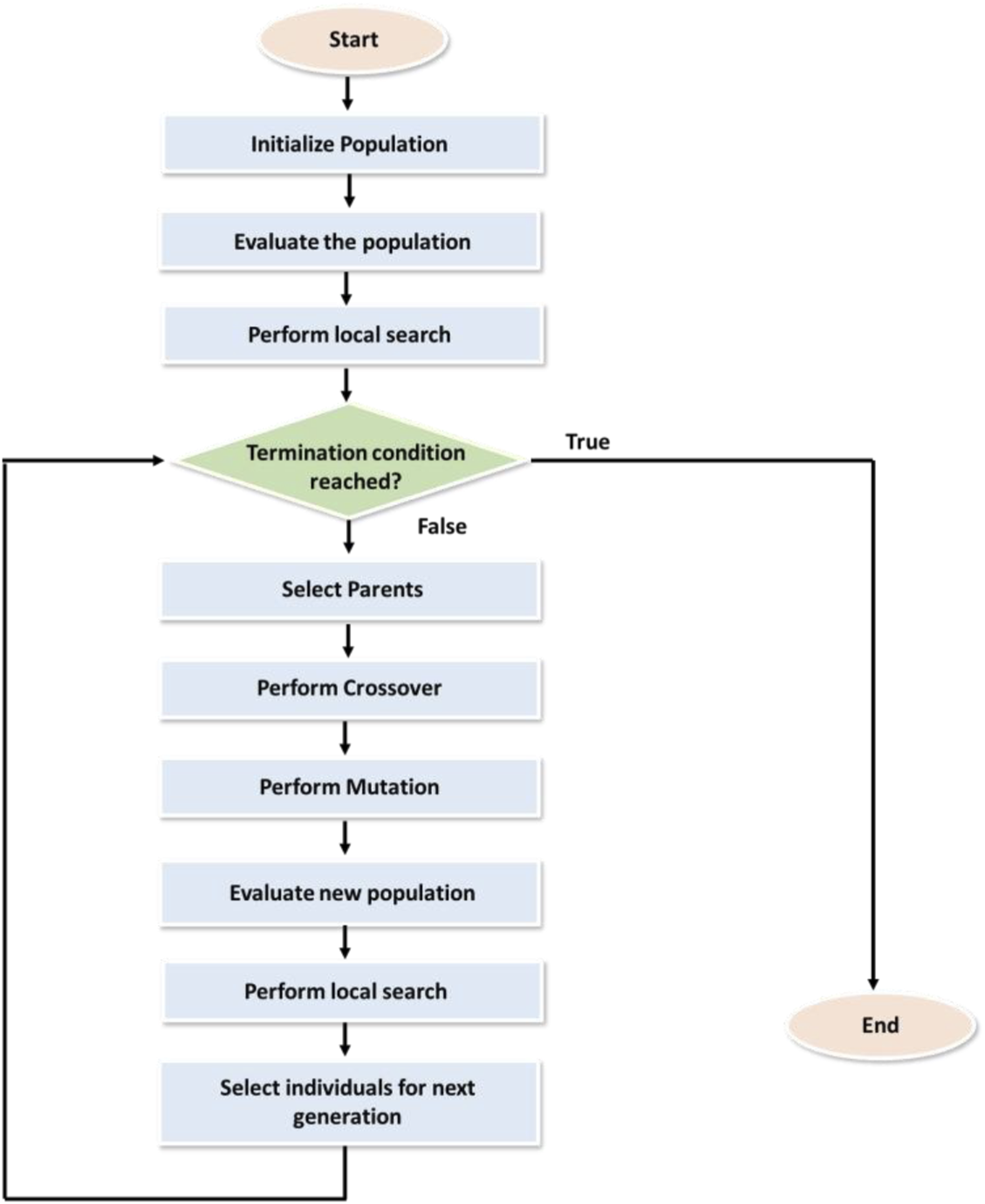
In various ways, the standard model has been adapted to improve the EGA’s performance. In this context, each individual represents a particular combination of input control variables, which consist of storage capacity, load sharing, and power output values. These persons are selected at random from feasible space that is determined by system constraints to signify legitimate configurations for the SGLS system. ⁃ Selection process
To calculate the probability of choosing each candidate for the following SGLS generation during the selection process. The system’s capacity to minimize line losses and optimize energy integration is reflected in the fitness function, which establishes the probability ⁃ Crossover and mutation procedures

The crossover process creates new SGLS individuals when one person, by combining the traits of two parent individuals, is chosen. Offspring that inherit favorable features from both parents are created through the exchange of control factors between parent individuals. The algorithm can investigate a large number of possible solutions as the crossover rate controls how frequently this procedure takes place. A mutation process is used to introduce small, random changes in the offspring’s SGLS control factors after crossing. By performing this, the population is kept diverse and the algorithm is prevented from prematurely converging to less-than-ideal solutions. Maintaining exploration in the solution space depends on the mutation rate, which regulates the probability of mutations occurring. ⁃ Power flow Calculations for feasibility
The EGA architecture incorporates power flow calculations to guarantee that people stay with practical SGLS system bounds. Power flow calculations are carried out following each selection, crossover, and mutation process to ensure that the final individual does not deviate from the limits of the system. This stage ensures that only viable people move on to the next generation by filtering out those who would provide impractical solutions. ⁃ Convergence and performance
The number of generations needed to obtain the most effective solution is decreased by the suggested EGA framework, which accelerates the GA’s rate of convergence. The EGA converges in a few iterations, while other GA approaches take several generations. The computing time is greatly reduced. The research indicates that the improved method sustains computational economy while providing superior optimization accuracy, converging on an optimum solution in fewer generations. The EGA facilitates the coupling of energy sources, grids, loads, and storage in SGLS systems through innovations employing mutation and local search methods. In essence, it is a practical tool for enhancing the sustainability of modern power systems via investing in efficiency and reducing theoretical line losses and increasing system performance. Algorithm 1 represents the EGA for following the optimization of SGLS systems.

Hyperparameters for EGA optimization.
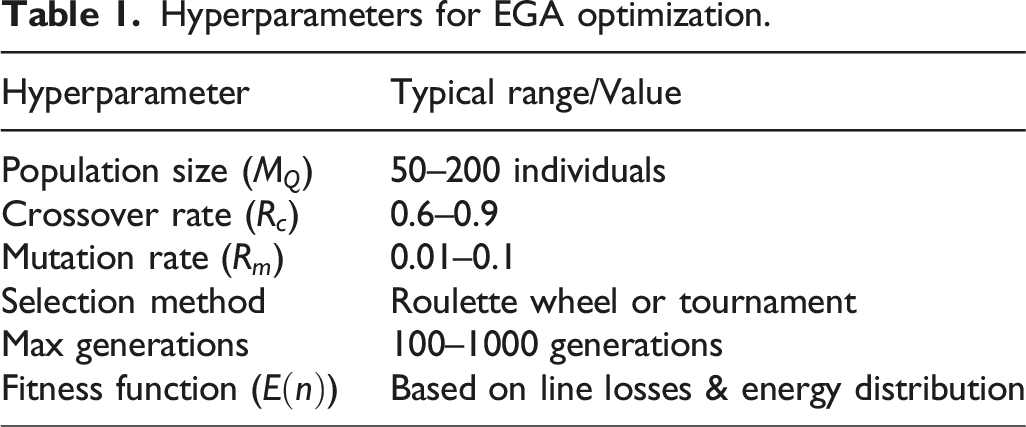
By optimizing these parameters, system performance and sustainability can be improved, but there may be trade-offs between the speed of optimization and the accuracy with which it is achieved.
Results and discussion
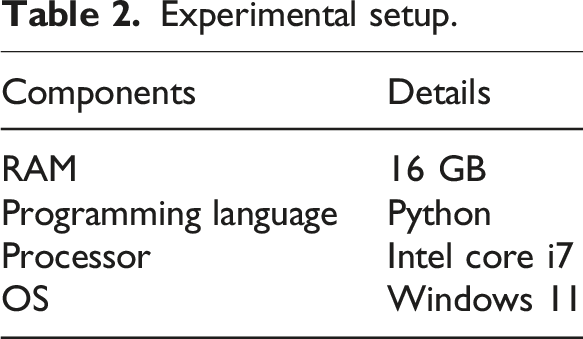
Computational platforms for genetic algorithms are one of the hardware and software elements required to help implement the proposed optimization framework based on the EGA. The experimental setup outlines the EGA strategies for examining and maximizing integration scope, assessing and minimizing line losses in SGLS systems while subject to dynamic conditions. Finally, the results are thoroughly analyzed, demonstrating how well the model optimizes key elements of system performance, including improving the accuracy of energy distribution and minimizing line losses in grid systems. These optimizations enhance resource sharing, ultimately leading to increased sustainability and efficiency.
Experimental setup
Experimental setup.
Optimization progress and fitness diversity in EGA for SGLS systems
Figure 4 shows the EGA’s performance in optimizing SGLS systems are displayed. It shows how the algorithm is effective in lowering energy losses by showing the decline in expected line loss (in kW) across generations. Population fitness variety over generations illustrates how the standard deviation, which measures fitness variety, decreases as the algorithm approaches its ideal answer. The increased stability and efficiency brought about by the EGA optimization procedure appear in both graphs. Reduction in Predicted line loss (in kW) and Fitness diversity across generations.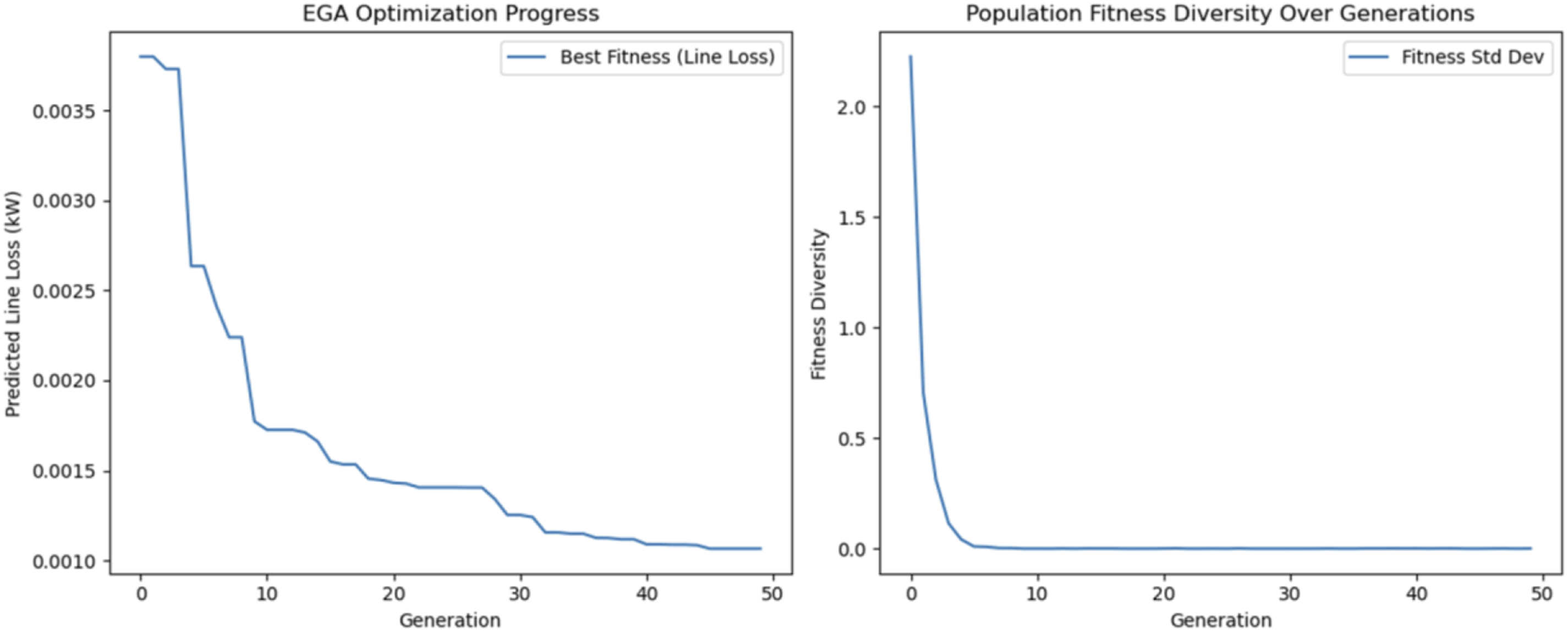
Predicted line loss reduction over generations using EGA
Figure 5 displays the EGA’s optimization efforts in lowering the expected line losses for an SGLS system across generations. The generation number is shown on the X-axis, and the best anticipated line loss attained in each generation is displayed on the Y-axis. As the algorithm converges toward an ideal solution for reducing line losses in the system, the figure shows an abrupt reduction in line losses in the system, it shows an abrupt reduction in line losses during the initial generations, followed by continued stability. Optimization of predicted line loss (in kW) over generations.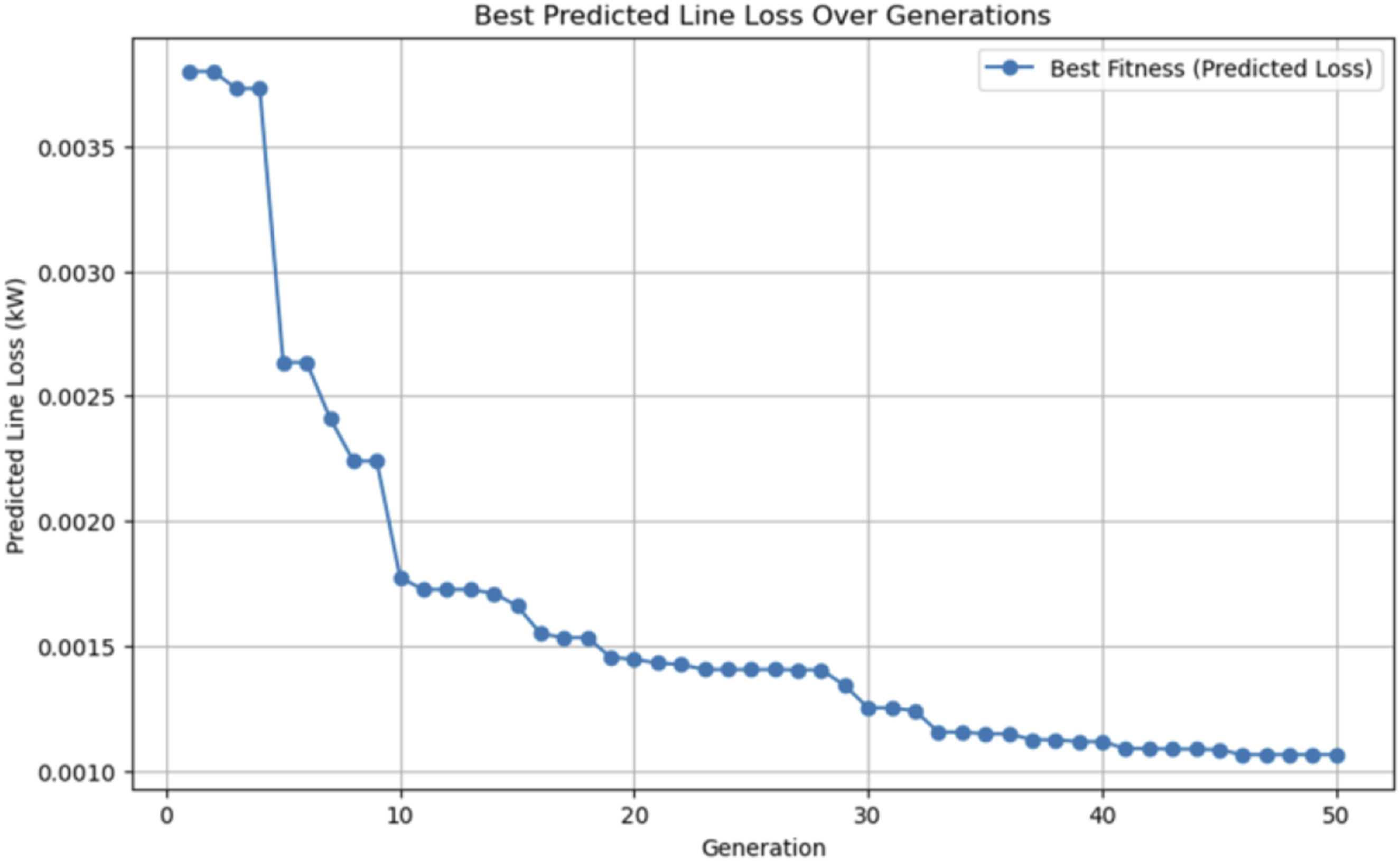
Actual versus predicted line loss for SGLS system
The actual line loss (in kW) and the anticipated line loss (in kW) for the SGLS system are contrasted in Figure 6. With the actual line loss on the x-axis and the expected line loss on the y-axis, each point represents a pair of data. There is a significant correlation between the actual and anticipated line loss values; with the prediction getting more accurate the closer the data points are to the ideal diagonal line. Correlation between actual and predicted line loss (in kW) in the SGLS system.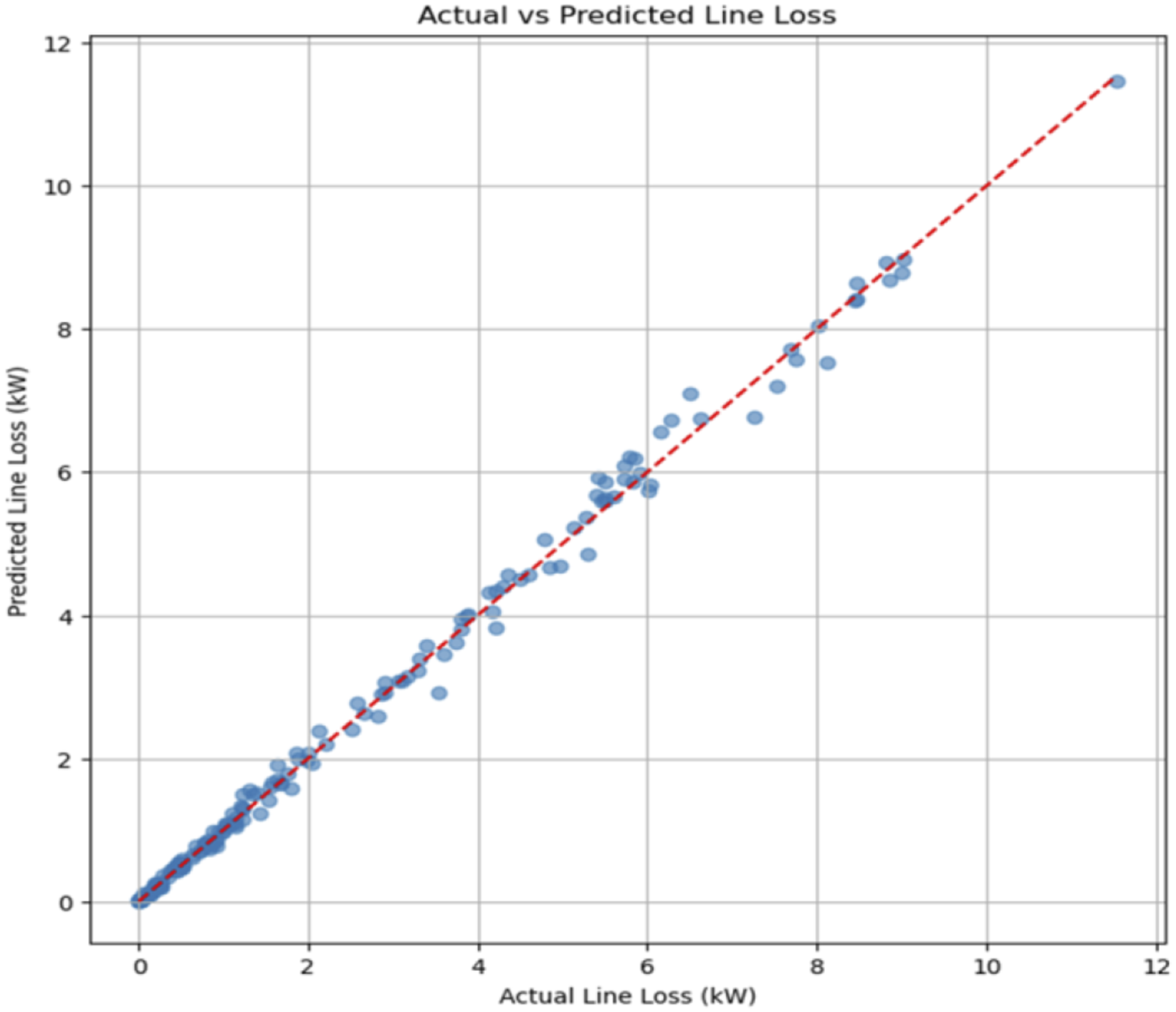
Distribution of predicted line loss in test set
The distribution of anticipated line losses (in kW) from the test set in an SGLS system is shown in Figure 7. The y-axis displays the frequency of each expected line loss value, while the x-axis displays the predicted line loss values, which range from 0 to 12 kW. There are fewer examples of larger expected losses, with the majority of predicted line losses located near the lower end of the range. This distribution highlights the system’s efficiency by showing that the majority of the anticipated line losses are relatively insignificant. The distribution of predicted line loss for the test set of the SGLS system.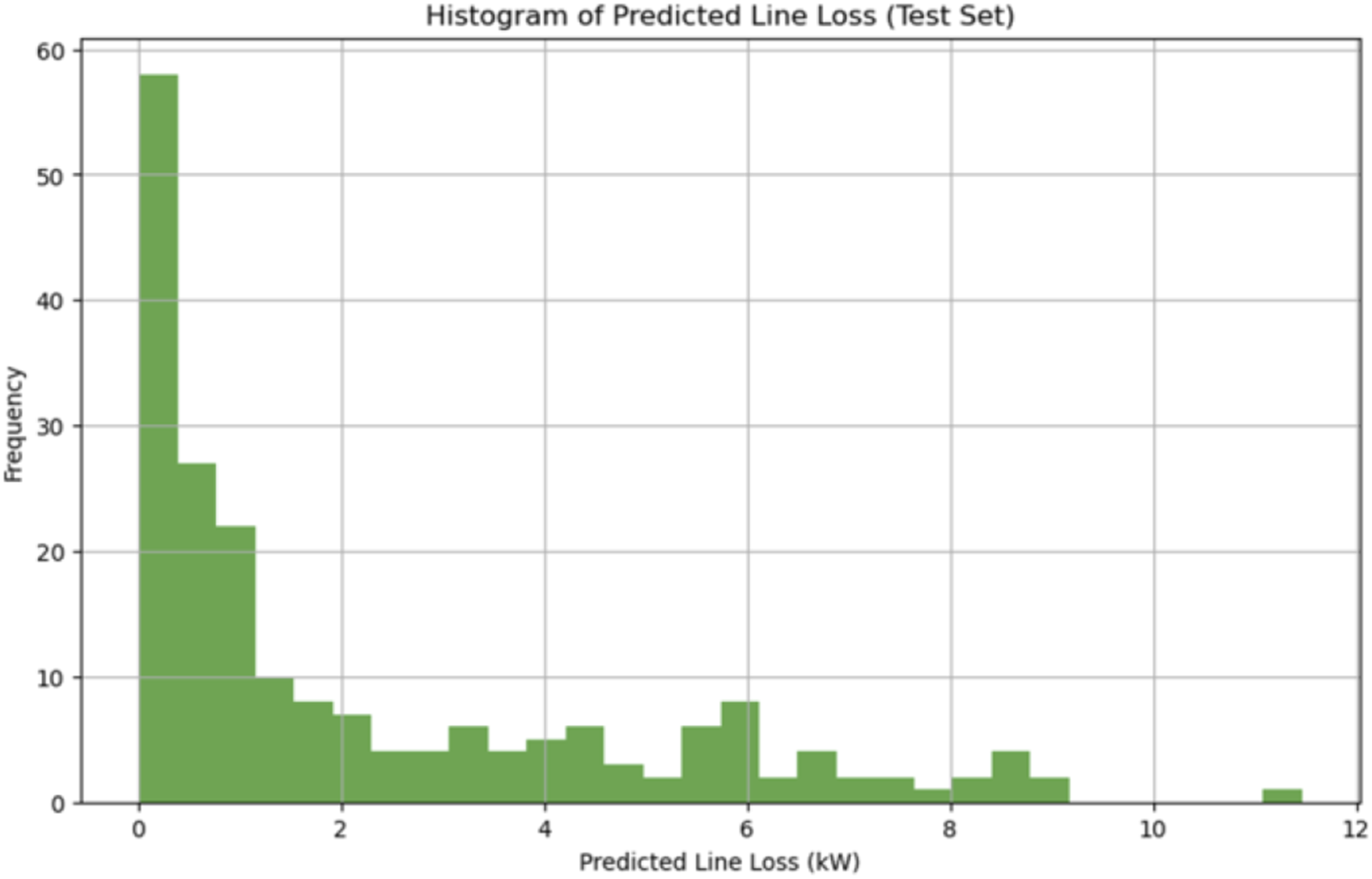
Comparison of different distribution networks
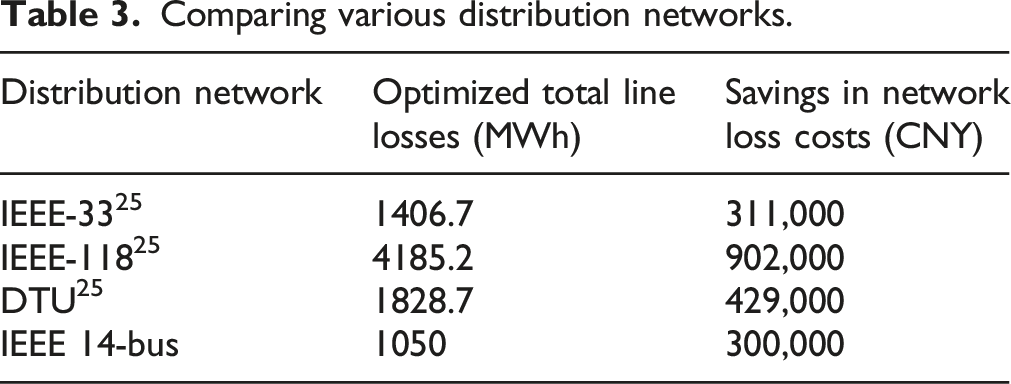
Comparing various distribution networks.
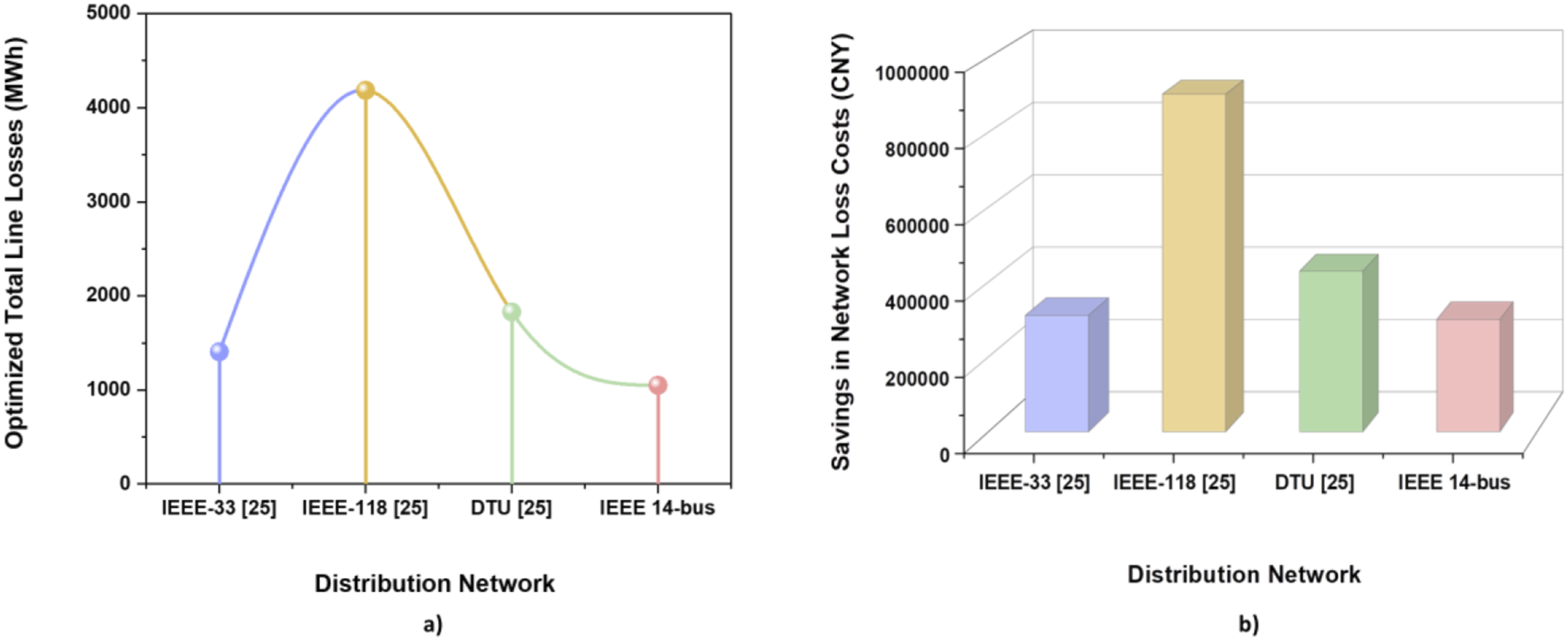
Analysis of various distribution networks: (a) Optimized Total Line Losses (MWh); (b) Savings in Network Loss Costs (CNY).
In comparison to larger systems, the IEEE 14-bus system, which was optimized using EGA, exhibits efficient performance with 300,000 CNY in network loss costs and 1050 MWh of total line losses.
Comparative analysis
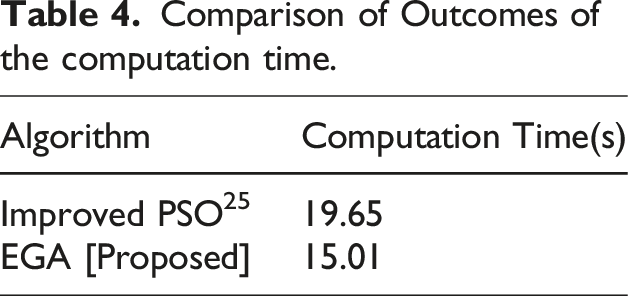
Comparison of Outcomes of the computation time.
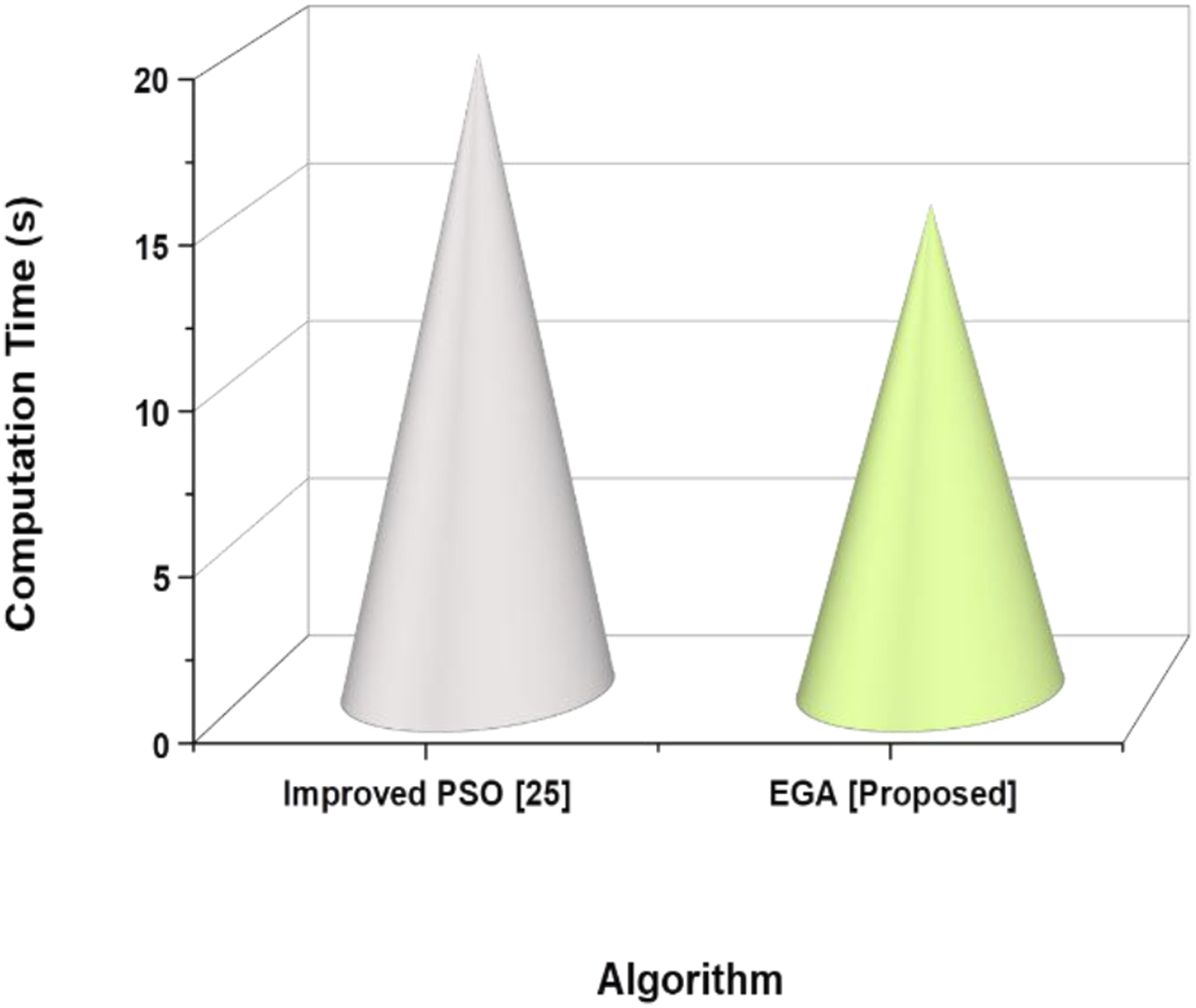
Comparative analysis of computation time outcomes.
In terms of computing time, the suggested EGA performs better than the Improved PSO, reducing it from 19.65 s to 15.01 s, indicating increased efficiency for SGLS system optimization.
Iterative performance testing of two models
Through iterative performance testing, the research analyzes the theoretical line loss with an emphasis on the integration scope of SGLS systems. It determines the main elements affecting line losses by examining different power flow arrangements between SGLS units. By increasing energy transfer and decreasing losses, the existing multi-target beetle antennae search optimization algorithm (MTTA) 26 and proposed methods are compared; the EGA method maximizes system efficiency and improves SGLS system performance and sustainability.
The two models’ iterative performance was assessed; Figure 10 shows the evaluation’s findings. The suggested EGA model performs the best iteratively, as seen in Figure 10(a). It can reach the ideal current loss more quickly and has a higher rate of convergence. The suggested EGA model can arrive at the ideal load value faster, as shown in Figure 10(b). Iterative performance testing of two models: (a) convergence of theoretical line loss, (b) convergence of load value.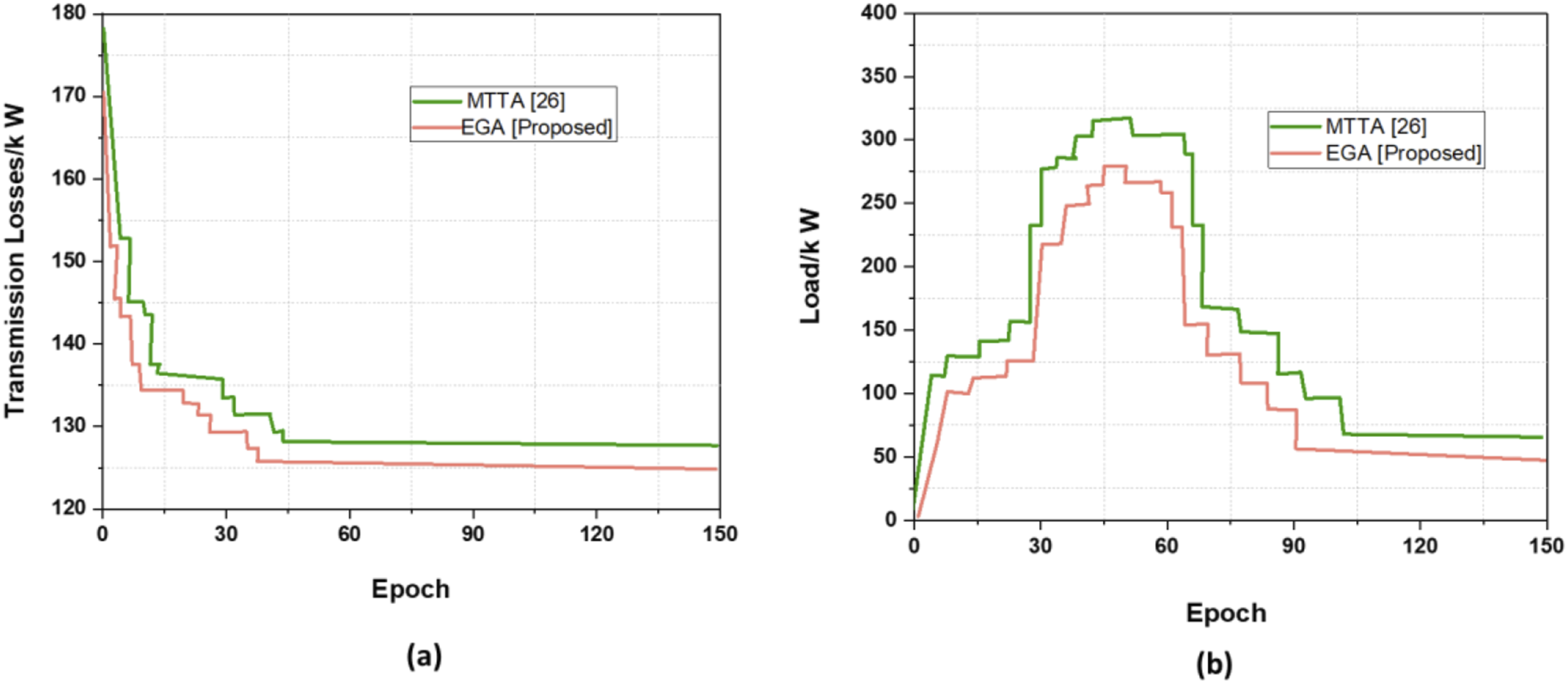
The determination of the integration scope and the theoretical analysis of line loss in SGLS systems that use improved PSO 25 are extremely sensitive to changes in load demands and grid topologies. The use of idealized system models, which might not take into consideration operational uncertainties and real-world operational variability in energy flow dynamics, is a drawback of this approach. When used to large-scale systems, MTTA’s computational complexity 26 is a major drawback that might result in longer convergence times and less accurate results in real-time applications, particularly in cases where network topologies are extremely dynamic. By using adaptive search algorithms, reducing computing complexity, and considering dynamic system changes into account, the suggested EGA optimization can get around these problems and improve accuracy and real-time performance in large-scale, erratic grid settings.
Computational complexity, scalability, and practical considerations
The computational complexity of the proposed EGA method primarily depends on the population size, number of generations, and the complexity of the power flow calculations integrated within each iteration. Given that each individual undergoes power flow validation to ensure feasibility, the overall complexity scales approximately linearly with the population size and the number of iterations. Empirical observations from our experiments suggest that the EGA maintains manageable computational demands for systems of the IEEE 14-bus scale, with a typical runtime of around 15 s. However, when extending the approach to larger and more complex grid systems, such as IEEE-33 or IEEE-118 bus networks, the computational burden increases significantly due to the higher dimensionality of the control variables and the increased complexity of power flow computations.
To address scalability, potential strategies include parallelizing the fitness evaluation process across multiple processors and employing more efficient power flow algorithms, such as fast decoupled or convex relaxation methods, to reduce computation time per individual. Moreover, adaptive population sizing and dynamic termination criteria can be employed to enhance efficiency in real-time or near-real-time applications.
Implementing EGA in real-time operational environments presents challenges related to the need for rapid convergence and the handling of operational uncertainties. To mitigate these issues, future work could integrate robustness-enhancing features, such as stochastic fitness evaluations, scenario-based optimization, or hybrid algorithms combining EGA with machine learning models for quick approximation of optimal configurations. These adaptations would improve the method’s applicability under dynamic and uncertain conditions, aligning with practical industry deployment requirements.
While the proposed EGA demonstrates promising performance in static, off-line optimization scenarios, its direct application to real-time grid management involves several challenges. The primary concern is achieving sufficiently fast convergence within the limited timeframes dictated by real-time operations, especially for larger and more complex power systems. Additionally, the inherent uncertainties in load demands, renewable generation, and system parameters require the algorithm to be adaptive and robust against fluctuations. To address these challenges, future research could focus on developing hybrid approaches that combine the EGA with rapid approximation techniques, such as surrogate modeling or reinforcement learning, to enable near-instantaneous decision-making. Implementing online or incremental optimization strategies, where the algorithm updates solutions based on real-time data streams rather than reinitializing from scratch, would further enhance practical applicability. Moreover, integrating uncertainty modeling within the fitness evaluation could improve the robustness of the solutions under operational variability.
Conclusion
The SGLS system used grids, loads, storage, and energy sources to effectively distribute power. To improve the system on an overall level, there must be an optimization of the integration scope and a reduction of line losses. The overall goal of the research was to reduce line loss theory and identify new scopes of integration to limit SGLS systems. Since there are limited efficient methods, a better alternative was proposed. There is a better definition of an integration scope and line loss reduction. The need for optimization for SGLS systems was viewed as how to improve sustainability, efficiency, and overall function of the system by integrating an EGA. With the model using the SGLS system, the components of terms of energy sources, loads, and storage devices were all fully interconnected through the grid. To obtain low line losses and efficient energy flow to achieve a sustainable power supply. Optimization was focused on identifying and defining the best configuration and alignment of the grid components to provide low line losses and provide usable energy. Then, the EGA integrated local search heuristic, adaptive crossover, and improved mutation. Using a method that provided a local search function with adaptive crossover and improved mutation, performance, and configuration optimization of SGLS systems, outperforming existing model when compared to EGA, and performed well in terms of computational time and iterations. The method presented produced lower line losses and improved optimization accuracy using IEEE 14-bus and specially constructed system losses. Results demonstrated improved performance compared to previous methods, with a 15.01 s computation time and improved efficiencies by merging the source-load-storage system. The throughput of an EGA in SGLS systems tends to optimize integration and minimize line losses more efficiently than traditional methods, exhibiting an improvement over traditional methods. The method outlined by this research is an effective and scalable solution for Smart Grid systems, while also maximizing sustainability, the effective management of asset energy. The proposed EGA prefers not to deal with dynamic system dynamics and different load conditions. Rather, it is focused more on theoretical line losses and optimizing the limits of the integration. In larger systems, it can also provide a greater computational burden. In the future, this method can be scaled up for larger, more complex SGLS systems with varying operating conditions and real-time data integration for dynamic optimization.
Footnotes

Funding
The authors received no financial support for the research, authorship, and/or publication of this article.
Declaration of conflicting interests
The authors declared no potential conflicts of interest with respect to the research, authorship, and/or publication of this article.
Data availability statement
The authors declare that the data supporting the findings of this study are available within the article. The raw/derived data supporting the findings of this study are available from the corresponding author at request.