



Abstract
The self-noise of a controlled-diffusion airfoil is computed with several numerical techniques based on the acoustic analogy and involving different degrees of approximation. The flow solution is obtained through an incompressible large eddy simulation. The acoustic field as described by Lighthill’s analogy is computed with a finite element method applied to the exact airfoil geometry, and this solution is compared with results based on a half-plane Green’s function. This problem behaves as a classical trailing-edge noise problem for a wide range of frequencies; however, other mechanisms of sound production become significant at high frequencies. The results highlight the relative strengths and weaknesses of quadrupole- and dipole-based formulations of the acoustic analogy based on incompressible Computational Fluid Dynamics (CFD) results when applied to wall-bounded turbulent flows.
Introduction
Trailing-edge noise or broadband self-noise, caused by the scattering of the boundary-layer disturbances into acoustic waves, occurs at the trailing edge of any airfoil surface. This noise mechanism is the minimum sound that a lifting surface would produce in absence of other sound mechanisms as turbulence interaction at the leading edge or possible trailing-edge vortex shedding due to the trailing-edge bluntness. This mechanism is responsible for a significant proportion of the noise emitted by low-speed cooling fans in automotive applications, 1 wind turbines,2,3 and high-lift devices.4,5
Different theories have been proposed for the modeling of trailing-edge noise. 6 More recently, generalizations of some of these theories have been proposed to take into account the noncompactness effects of a finite chord length. This is the case of the extension to Ffowcs Williams and Hall half-plane Green’s function (GF) 7 proposed by Howe, 8 or of the work of Moreau and Roger9,10 based on Amiet’s theory. 11 In the last years, detailed unsteady flow computations have been applied to predict trailing-edge noise, typically, although not always, in combination with an acoustic analogy. Early examples of such works can be found in the literature.12–14
The use of incompressible flow computations as a basis to define equivalent sources using the acoustic analogy has been object of some attention in the literature. In general, a GF that satisfies the correct hard-wall boundary conditions (BCs) of the problem on solid boundaries is necessary. For an arbitrary geometry, this GF can be computed numerically, or, equivalently, the acoustic equation with the correct BCs for the acoustic variable(s) can be solved numerically. Such an approach was applied successfully to trailing-edge noise prediction by Oberai et al., 15 based on a finite element method (FEM) to solve Lighthill’s equation, 16 and by Khalighi, 17 based on a boundary element method.
Methods based on surface-distributed sources defined over the boundary also need to satisfy the correct hard-wall acoustic BCs on solid boundaries; otherwise, large errors can arise for noncompact geometries. This is the case of Curle’s analogy, 18 later generalized by Ffowcs Williams and Hawkings for surfaces in arbitrary motion. 19 Curle’s solution to Lighthill’s equation is based on a free-field GF, because it assumes that the flow solution already satisfies the correct acoustic BCs at the wall. If the flow is incompressible, this condition is not met, which can lead to erroneous acoustic predictions when the solid body dimensions are not small compared to the wavelength, as illustrated in the literature.15,20 To overcome this issue, Schram 21 proposed to introduce an ad hoc explicit distinction between aerodynamic and acoustic pressure fluctuations. More recently, an alternative approach consisting in using Curle’s sources to define acoustic Neumann-type BCs was proposed. 22 Results presented as a proof of concept on a 2D geometry suggest that this approach is capable of capturing the physical behavior of trailing-edge noise as long as the scattering by the wall (Curle’s dipole sources) is the dominant contribution to the sound production.
The present work is inscribed in that line and aims at contributing to the field by exploring in deeper detail the respective contributions of dipoles and quadrupoles to the noise emitted by the flow developing over a controlled-diffusion (CD) thin airfoil, which has already been studied in previous works, both experimentally and numerically.23–28 The general framework is based on Lighthill/Curle acoustic analogies, addressing in particular the respective strengths and weaknesses of dipole- or quadrupole-based formulations when an incompressible flow model is used as an input and the chord is noncompact. Different implementations of these analogies are presented, for different choices of GFs. Results obtained using the analytical GF derived by Ffowcs Williams and Hall and a finite element solver are compared, demonstrating the respective merits of the various formulations in terms of efficiency and capability to highlight the sound generation mechanisms over a broad range of frequencies.
The outline of this paper is as follows: the next section presents the case and describes the incompressible flow computations; “Methodology for the acoustic study” section describes the approaches applied for the numerical acoustic study; “Results of the acoustic study” section contains the discussion of the acoustic prediction results obtained with the different approaches and, the final section presents the conclusions of the study. Appendix 1 is included containing a study of the sensitivity of the finite element results with respect to several modeling aspects (size of the source region and truncation error correction, averaging over several time windows, finite element discretization).
Case description and flow simulations
The airfoil geometry considered in the present work is related to the Valeo automotive cooling module illustrated in Figure 1 (left). The rotor is represented together with the heat exchanger placed upstream, the convergent guiding the flow to the rotor section, the motor and the downstream stator that is also holding the rotor. The selected blade profile is a CD airfoil designed by Valeo. The CD airfoil is the shape that is found at the midspan region of the fan blade and this profile is used for the pitchline (chord line at the designated angle of attack) analysis in their preliminary design process. CD airfoils are a class of cambered airfoil that employs specific characteristics to carefully control the flow around the airfoil surface. The profile has a 4% thickness to chord ratio and a camber angle of 12°.
(Left) Representation of the complete automotive cooling module and (right) the large wind tunnel of ECL. ECL: Ecole Centrale de Lyon.
The CD airfoil was investigated experimentally in the large anechoic wind tunnel of Ecole Centrale de Lyon (ECL), shown in Figure 1 (right). The measurements include wall pressure measurements (mean and spectra), hot wire measurements, and far-field microphones measurements.23–25 Additional measurements were performed in the 0.61 m2 tunnel of the Turbulent Shear Flow Laboratory at Michigan State University reproducing the flow conditions found in the ECL wind tunnel. The airfoil mock-up has a 0.134 m constant chord length (c) and a 0.3 m span (L). It is held between two horizontal side plates fixed to the nozzle of the open-jet wind tunnel as shown in Figure 1 (right). These plates are 0.25 m (≈1.85 c) apart and the width of the rectangular jet is 0.5 m (≈3.7 c). As shown by Moreau et al.,
29
this aspect ratio insures that the 3D effects at midspan are therefore minimized. The computations presented here are run with a speed
As in previous studies,13,31,32 a similar strategy has been used to take into account that the airfoil is immersed in a jet of finite width, which is deflected by the circulation created by the airfoil, having an impact on the airfoil loading and the corresponding noise created. In order to match closely the experiments with the LES computations around the airfoil, the following procedure is used. As shown by Moreau et al.,
29
a 2D Reynolds-averaged Navier–Stokes (RANS) simulation of the complete open-jet wind tunnel configuration including the nozzle, the airfoil, and part of the anechoic chamber is first required to capture the strong interaction between the jet and the CD airfoil and its impact on the airfoil loading at any incidence. The full RANS simulation provides velocity BCs for the smaller LES truncated domain which is embedded between the two boundary shear layers of the jet. The preliminary RANS computation is performed using the shear-stress transport
The size of the LES computational domain is
Methodology for the acoustic study
Overview of the approaches used in this work
All the acoustic prediction methods applied in this work aim at providing a solution for Lighthill’s equation,
16
with sources obtained from the incompressible flow computations described in “Case description and flow simulations” section. The considered flow around the airfoil is assumed incompressible in the source region and homentropic, and viscous effects are neglected. With these hypotheses, Lighthill’s equation expressed in Fourier domain can be written as

In the presence of solid walls, one alternative for solving equation (1) is to use a GF that is tailored to the geometry of the boundary, i.e. that satisfies the correct BCs of the problem. Given a tailored GF Gt, the acoustic pressure outside the source region is given by the following volume integral over the source region V

Alternatively, equation (1) can be solved numerically, forcing the acoustic variable to satisfy the correct hard-wall conditions at the boundary. In this work, Lighthill’s equation (1) is solved with a FEM, the details of which are presented in “Finite element models” section.
Curle’s solution
18
to Lighthill’s equation in the presence of walls makes use of a free-field GF and models the sources due to the interaction of the turbulence with the surface as surface-distributed dipoles. For a fixed rigid surface S, and under the same assumptions as above (homentropic flow, negligible viscous effects also at the walls, incompressible flow in the source region), Curle’s solution can be expressed as


However, if the flow pressure corresponds to an incompressible flow description and if the surface is not acoustically compact, Curle’s solution can become inaccurate while being mathematically exact. The reason is that it assumes that the surface pressure includes the acoustic scales and satisfies a priori the correct acoustic BCs on the surface. This is, however, not guaranteed when the pressure is given by an incompressible flow computation, which lacks acoustic information.
To overcome this limitation, Curle’s dipoles can be used to define BCs of the acoustic problem, which can then be solved numerically.
22
The rationale behind this is that the aerodynamic pressure should be sufficient to characterize the sources of sound production if dipoles are dominant, while the missing acoustic information on the surface can be computed numerically, provided that the acoustic pressure is forced to satisfy appropriate acoustic BCs on the surface. In particular, it can be shown that the solution of the homogeneous acoustic equation


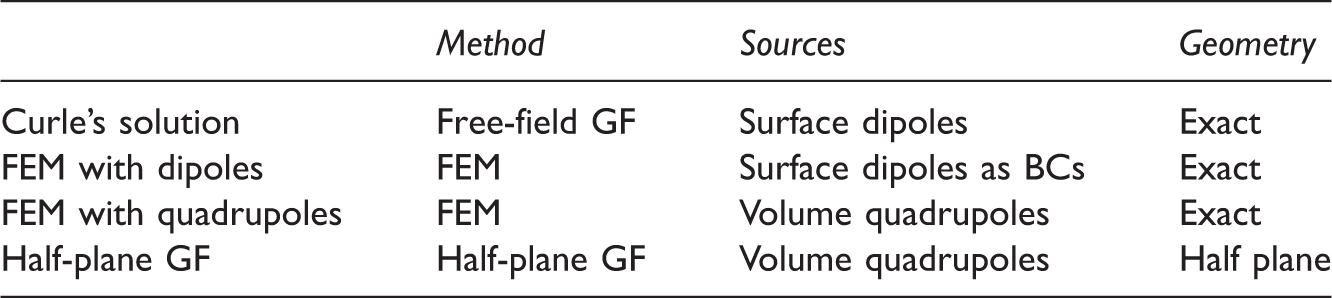
Approaches for the acoustic prediction.
BC: boundary condition; FEM: finite element method; GF: Green’s function.
Curle’s solution is based on equation (4), with the flow pressure mapped from the CFD mesh onto a surface acoustic mesh where the surface integral is evaluated. More details about the discretization of the airfoil surface are provided in “Discretization of the geometry” section.
As for the finite element computations, “Finite element models” section provides more details about the models and schemes. The FE computation with dipoles uses equation (6) to transform them into Neumann BCs of the acoustic equation, while the FE computation with quadrupoles is based on a discretization of the tensor
Finally, more details of the solution with the half-plane GF can be found in Christophe et al., 30 which follows the same approach used in the literature.25,26
Discretization of the geometry
A surface mesh with around 87,000 triangular elements and 43,500 nodes discretizing the full airfoil wall is shown in Figure 2. This mesh includes the whole span of the airfoil ( Top view and lateral view of the airfoil surface mesh.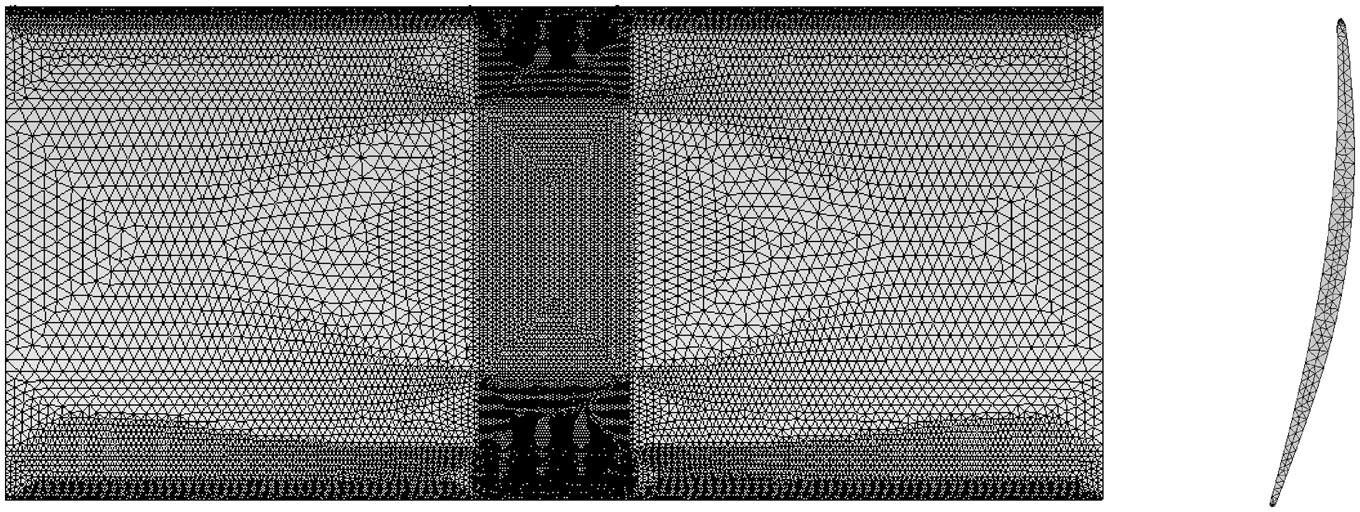
The surface mesh is refined around the center of the span, to capture near-field effects of the sources more accurately and also to reduce interpolation errors of the dipole sources on the acoustic mesh. The mesh is also refined around both trailing and leading edges, which are regions where the solution can display stronger gradients. A sensitivity study of Curle’s solution with respect to the mapping scheme of the flow pressure was carried out. The results were not very sensitive to the properties of the mapping scheme (such as whether it forced or not the conservation of the surface pressure integral), indicating that the surface mesh is fine enough to capture accurately the flow gradients that are relevant for the acoustic computation.
This surface mesh is used to compute Curle’s solution (with zero-valued dipoles outside the CFD region). It is also used to build a volume mesh around it for the finite element computations. The FE mesh, shown in Figure 3, has around 759,000 tetrahedral elements and 150,000 nodes. “Finite element models” section provides more details about the finite element schemes and models.
Midspan plane of the FE acoustic mesh. FE: finite element.
Finite element models
A weak form of the Helmholtz equation is solved numerically with the software LMS Virtual.Lab
33

The NRBCs are based on a perfectly matched layer
34
that starts on the external surface
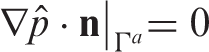
In equation (7), the surface integral depends on the BCs used to characterize the airfoil surface Computations with dipole sources

Note that to compute the Neumann BC from the flow pressure pf an hyper-singular boundary integral must be evaluated. This is done here with the same technology applied to compute the hyper-singular operator in variational indirect boundary element methods, and can therefore have a significant cost in terms of computation time and memory requirements.
Computations with quadrupole sources:
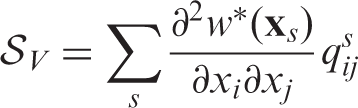
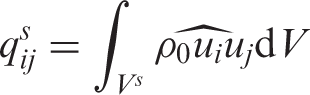
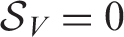
The quadrupole sources are defined in a subregion of the FE computational domain where most of the sound is produced. The influence of the extent of the source region is discussed in “Truncation of the quadrupole region” section of Appendix 1.
Discrete solutions in the space
The elements where the quadrupole source region is defined have always a fixed minimum order, which by default is taken as p = 3. The minimum order required is in any case p = 2, since the quadrupole sources require using the second derivatives of the shape functions. Note that the fact that the shape functions are defined in
It should be noted that the far-field points where the solution is measured are outside the FE computational domain. To obtain the acoustic field at these points, a Kirchhoff surface integral is computed on the external surface
The extent of the source region can have a significant impact on the accuracy of the acoustic results, especially when the source region is truncated abruptly.
38
In “Truncation of the quadrupole region” section of Appendix 1, a study of the sensitivity of the results to the extent of the source region is presented, as well as to the definition of spatial windows that are used to force the sources to decay gently toward the outlet to minimize the impact of spatial truncation errors. It is worth noting that the quadrupole source region is always well contained inside the FE computational domain and always several FE elements away from the external surface
Appendix 1 contains a study of the sensitivity of the FE results with respect to several numerical aspects of the FE models and source models.
Results of the acoustic study
This section discusses the results obtained with the approaches presented in “Overview of the approaches used in this work” section and compares them with the experimental measurements of Moreau and Roger. The results have been processed to make them comparable with the experiments. In particular, the sound pressure level (SPL) is computed as

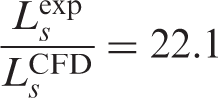
The experimental data are integrated in bins of width
All the results of the FE computations shown in this section have been averaged over the seven time windows, which represent each an individual numerical solution. For the Fourier transform of the flow data (pressure or quadrupole tensor
The details on the processing of the results based on the tailored half-plane GF can be found in Christophe et al. 30
Results based on quadrupole sources
Figure 4 shows some numerical results obtained for a listener at a distance Far-field radiation at 
Up to around 3700 Hz (kc = 9.2), the FE results with quadrupoles only around the trailing edge present an excellent agreement with the FE results with quadrupoles around the whole airfoil. This indicates that for frequencies below this, the sound radiated above the airfoil is due to the typical trailing-edge noise mechanism, related to the interaction of the boundary layer with the trailing edge of the airfoil. However, above that frequency, a significant deviation between the curves is observed, which suggests that there is a nonnegligible contribution of other mechanisms to the total sound production. This is consistent with the results reported by Sanjosé et al., 28 who observe in compressible CFD simulations a secondary source of sound appearing at high frequencies and related to the reattachment of the laminar bubble behind the leading edge of the airfoil.
The results with the approximation of the geometry (flat plate) show a fair agreement with the FE computations and provide a realistic estimation of the decay of the sound with the frequency; although for high frequencies (most notably above 4500 Hz, kc = 11.1), the results start to deviate from those obtained with the real geometry.
As explained above, the CFD data have been split into seven time windows, and the acoustic results have been obtained by averaging their results. To illustrate the uncertainty of the computational results associated with the turbulent flow input, the plot on the right of Figure 4 displays the limits of the variability interval corresponding to three times the estimated standard error of the mean. The limits of the intervals are approximately ±4 dB around the mean and are representative for all the presented computational results.
To gain further insight on the mechanisms of sound production at high frequencies, the incident field of the quadrupoles (free-field quadrupole noise) was computed through additional FE simulations on a model similar to the one discussed in “Finite element models” section, but without the airfoil boundary. Figure 5 shows the incident field at the same position (2 m above the trailing edge) due to the quadrupole sources all around the airfoil (spatial window 1; see “Truncation of the quadrupole region” section of Appendix 1) as well as that due to the sources only in the trailing-edge region (spatial window 4; see “Truncation of the quadrupole region” section of Appendix 1). The incident field is mostly dominated by the quadrupoles in the trailing-edge region up to 3000 Hz (kc = 7.4), but above that other contributions become significant. Across the whole frequency spectrum, the noise radiated in that direction is mainly due to the scattering of the airfoil, while the incident field is negligible.
Far-field radiation at 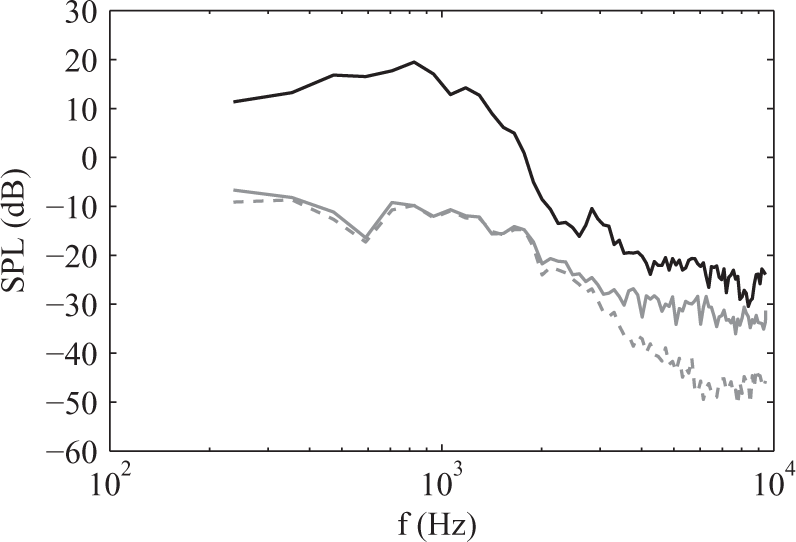
By contrast, as shown in Figure 6, the radiation in the chord-wise direction is dominated by the incident field across almost all the frequency range, while the scattering effect due to the airfoil wall seems to have only a small effect in general. Both the quadrupoles around the trailing edge and away from these region contribute to the incident quadrupole field.
Far-field radiation at θ = 0: Total (black solid line), incident (gray solid line), and incident with quadrupoles only around the trailing edge (gray dashed line).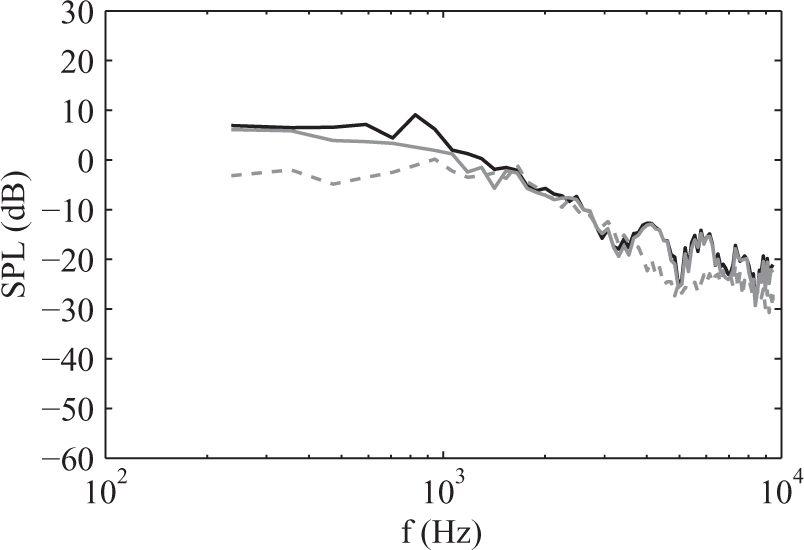
It is worth noting that at high frequencies, the computed acoustic levels at angle θ = 0 (mainly due to the incident field) are higher than those at angle
As expected, the evolution of the directivity with the frequency follows the typical pattern for trailing-edge problems for a large frequency range, especially at low frequencies. This can be observed in Figure 7. The scattered part of the acoustic field displays an increased number of lobes as the Helmholtz number based on the chord length increases. For the highest frequency shown in the figure (kc = 7.08), the incident quadrupole radiation is already quite large, and it needs to be subtracted to the total field to observe the multilobe pattern.
Directivity plots of the pressure amplitude at distance 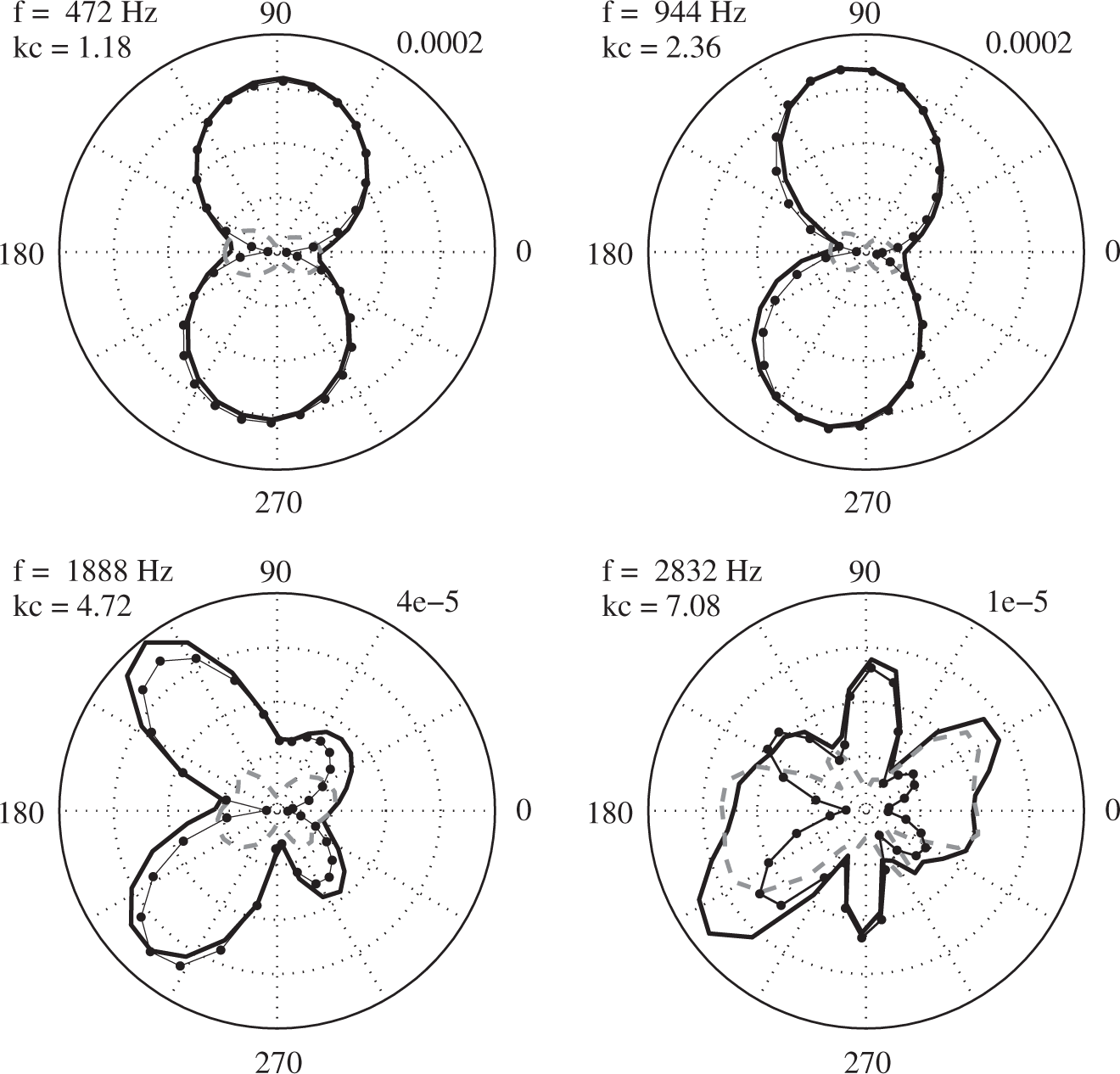
Results based on dipole sources
In this section, the results obtained through the FE computations with quadrupole sources are compared to those of the FE computations with dipole sources as BCs. Figure 8 shows results at Far-field radiation at 
When comparing with Curle’s solution, the FE results based on dipoles as Neumann BCs prove to overcome some of the limitations due to the use of incompressible pressure data. Indeed, Curle’s solution shows large deviations with respect to the quadrupole solution at high frequencies and fails to reproduce the sharp decrease in amplitude at around 1800 Hz (kc = 4.5). This is due to the fact that Curle’s analogy fails to reproduce the correct physical behavior when it is based on incompressible pressure data defined on a noncompact geometry.
This effect can be seen in more detail in Figures 9 to 11, which show directivity plots of the solution obtained with Curle’s analogy and with the FE computations with quadrupoles (only the scattered field) and dipoles. For low frequencies, for which the Helmholtz number based on the chord length is low, Curle’s analogy presents a similar directivity plot, which shows the behavior of a compact dipole. However, as the Helmholtz number increases, Curle’s solution fails to provide the physical multilobe directivity pattern, which is however obtained with the FE solutions, both with quadrupoles and dipoles. As mentioned before, there is also a frequency limit above which the FE results with dipoles as BCs start to deviate from those with quadrupoles, due to the fact that the incident quadrupole field is not negligible, but this limit is substantially higher than for Curle’s analogy, and, as long as dipole sources (due to the scattering on the wall) are the dominant mechanism of sound production, this approach provides physical and quantitatively meaningful results for the trailing-edge noise scattering.
Directivity plots of the pressure amplitude at distance Directivity plots of the pressure amplitude at distance Directivity plots of the pressure amplitude at distance 
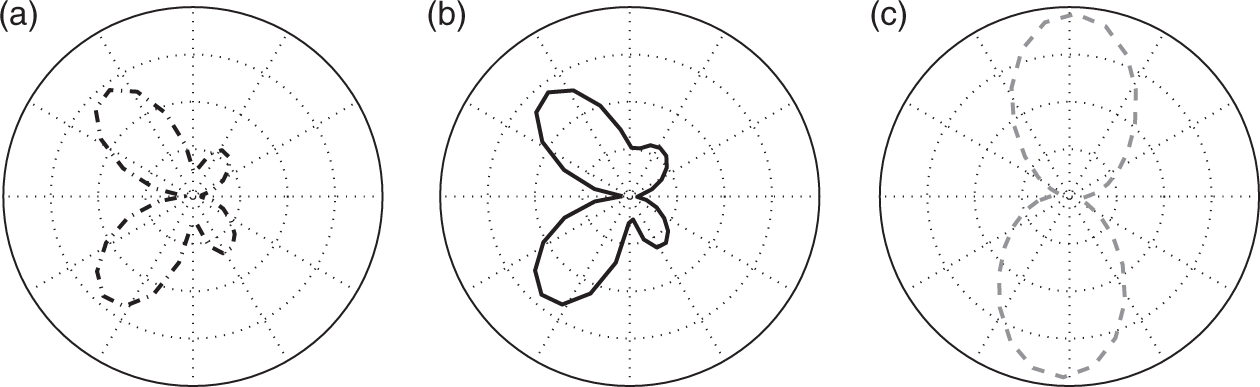
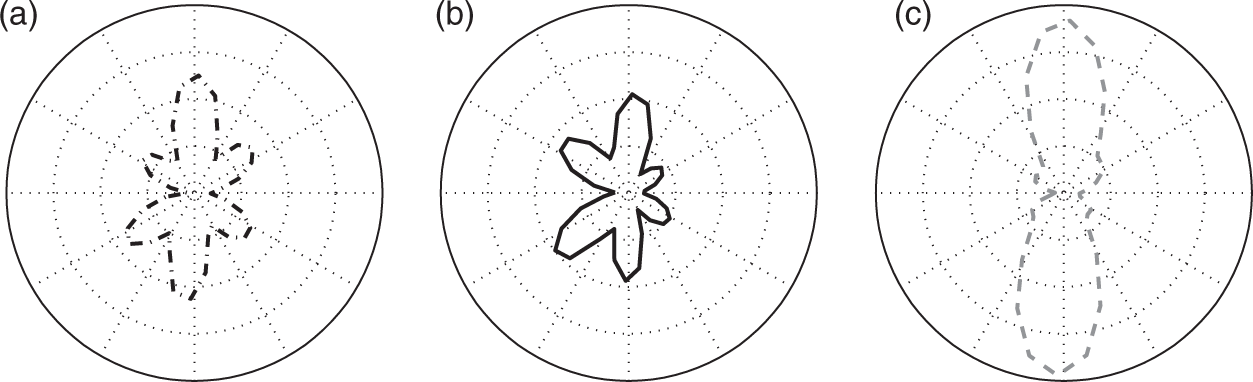
Conclusions
A numerical study of the self-noise of a CD airfoil has been presented. The numerical approach is based on the acoustic analogy with sources obtained from incompressible LES results. Results of FE computations based on both quadrupole sources, as defined by Lighthill’s analogy, and dipole sources, as defined by Curle’s analogy, have been compared to experimental results and to results obtained with a half-plane GF.
The approach based on the half-plane GF is less computationally expensive than full computations of the acoustic boundary value problem. Moreover, when comparing the results with those obtained with FE computations with sources only around the trailing edge, it can be seen that they are in fair agreement for most of the frequencies of interest. However, at high frequencies, when noncompactness effects increase and other mechanisms of sound production start competing with the trailing-edge scattering, some significant deviations are observed.
Solving the acoustic problem numerically allows tackling arbitrary geometries and does not require prior knowledge of the dominant mechanisms of sound production of a given problem. Indeed, the FE results for this case suggest that, although for a substantial frequency range the problem can be considered as a classical trailing-edge noise problem where scattering effects (dipole sources) dominate over free quadrupole noise, other contributions (free quadrupole noise, scattering of sources closer to the leading edge of the airfoil) start to be considerable as the frequency increases and the source region becomes less compact from an acoustic point of view. The influence at high frequency of a secondary source of sound close to the leading edge (near the flow reattachment point) has been reported in Sanjosé et al. 28
It is worth noting that the contribution of the subgrid turbulent scales to the sound production has been neglected in all the computations, and only the effect of the scales resolved by the LES has been included in the quadrupole source models. This assumption is reasonable for this case, at least for the frequencies and radiation directions where the problem is dominated by the scattering by the airfoil wall, including its trailing edge. Nevertheless, for higher frequencies, and especially in the radiation directions where the scattered field is negligible, it is unclear whether the error introduced by this approximation is negligible. This question is beyond the scope of this paper and should be addressed by future research.
The use of aerodynamic surface pressure to define the sources has been investigated too. When the pressure corresponds to an incompressible flow description, it does not satisfy the correct acoustic BCs on the airfoil wall, and Curle’s solution fails to capture the correct physics of the problem. Nevertheless, more accurate results can be obtained if Curle’s dipoles are used to define an intermediate BC for the acoustic boundary value problem. The results presented here confirm that computations purely based on dipoles treated this way succeed in capturing the physics of the acoustic scattering problem. This approach remains accurate as long as the sources are acoustically compact, and, therefore, dipole sources are dominant.
Footnotes
Declaration of conflicting interests
The author(s) declared no potential conflicts of interest with respect to the research, authorship, and/or publication of this article.
Funding
The author(s) received no financial support for the research, authorship, and/or publication of this article.