




Abstract
While a great deal is known in the agglomeration literature regarding the importance of having access to Marshallian externalities for firm performance, less is known about how geographically isolated and remote firms fare with the lack of such access. More recent literature suggests that firms, especially those within geographic proximity, can form a community of practice to facilitate deliberate learning and collectively create a shared repertoire, that is, a set of communal knowledge of procedures, techniques, and standards for best practices. Unlike Marshallian externalities, however, community of practice membership is not necessarily bounded by geography, and as such, isolated firms can also engage in a community of practice and unlock the shared repertoire for their own benefits. The study of the Ontario wine industry (1999–2009) finds that community of practice engagement weakens the detrimental impact of geographic isolation on firm performance, suggesting that isolated firms can tap into agglomeration benefits by engaging in a community of practice.
Keywords
Introduction
In most industries, firms engaged in the same business tend to be geographically clustered in a few places (Sorenson and Baum, 2003). The exogenous heterogeneity in the distribution of natural resources for the production of certain goods only explains approximately 20% of the observed agglomeration of economic activity (Ellison and Glaeser, 1999). The rest has been predominantly attributed to Marshallian externalities (Marshall, 1920)—that is, the increasing returns (Arthur, 1990) from local knowledge spillovers, pooling of labor, and specialized suppliers—that arise from the geographic co-location of firms specializing in the same trade (Krugman, 1991). These externalities are particularly salient in knowledge-intensive and creative industries (Caves, 2000; Malecki, 1984; Mudambi, 2008) because those knowledge-based assets that play crucial roles in the creation of novel products in these industries (Grant, 1996) also tend to be geographically concentrated as a result of Marshallian externalities.
The pure model of Marshallian externalities “presumes no form of co-operation between actors beyond what is in their individual interests in an atomised and competitive environment” (Gordon and McCann, 2000: 517) because these externalities result directly from geographic proximity, and as such, they can be passively effective without intentional collaboration and/or interaction. In contrast to the “in the air” Marshallian externalities, however, other research has found that the growth of an industry cluster can also be a result of the deliberate collective activities of local firms in pursuit of the common interest of making a stronger industry (Capello, 1999; Schmitz, 1995, 1999; Wang and Tan, 2019). Among these collective activities (e.g. sharing information, setting standards, advertising, promoting, and lobbying), collective learning (Capello, 1999; Keeble and Wilkinson, 1999; Lawson and Lorenz, 1999) is a way for dedicated firms to intentionally share, coproduce, and disseminate knowledge through the establishment of a community of practice (CoP; Brown and Duguid, 1991; Lave and Wenger, 1991; Wenger, 2000). A CoP is a relational space where individuals are “bound together by shared expertise and passion for a joint enterprise” (Wenger and Snyder, 2000: 139). A CoP provides members a gathering place to repeatedly interact and collaborate with each other. Through continuous engagement over time, members collectively develop a shared repertoire, which is defined as a set of communal resources of procedures, techniques, and standards for best practices (Wenger, 1998, 2000), that can benefit the entire community (Giuliani, 2011; Wenger, 2000).
Either a CoP or Marshallian externalities, or a combination of both, can lead to the accumulation of knowledge-based assets in a region and provide a locational competitive advantage to clustered firms that “benefit from a location in a geographic cluster of similar firms” (McCann and Folta, 2011: 104). What is less known is divergent firm implications of the various approaches. To access Marshallian externalities, a firm has to be physically located in the industry cluster or set up satellite branches there (McCann and Folta, 2008). Isolated firms located in remote or peripheral places are assumed to be excluded from Marshallian externalities due to their geographic distance to the industry clusters (Fitjar and Rodriguez-Pose, 2011). In contrast, while geographic proximity facilitates the formation of a CoP, the membership of a CoP is not necessarily bounded by geography, and even geographically isolated or remotely located firms can join a CoP. By being a CoP member, a firm can actively engage in collective learning and access the shared repertoire over long distance thanks to rapid advancements of transportation and communication technologies. As such, in comparison to Marshallian externalities, a CoP is less geographically bounded but more socially bounded (Vallance, 2011). Given that the accumulation of knowledge-based assets in a region can come from both Marshallian externalities and a CoP, engagement in a CoP can be a possible strategy for an isolated firm to tap into the knowledge-based assets accumulated in industry clusters. So far, however, this possibility has not been empirically explored and tested. This theoretical gap motivates us to empirically examine the research question: if geographically isolated or remotely located firms suffer from a locational competitive disadvantage due to a lack of access to knowledge-based assets accumulated in industry clusters, how does engagement in a CoP help them tap into agglomeration benefits?
By answering this question, our study provides complementary insights into agglomeration research. First, our arguments for the impacts of CoP engagement on geographically isolated or remotely located firms provide new theory to the under-addressed question of “how isolated firms tap into agglomeration benefits” (McCann and Folta, 2008). Conceptually, engagement in a CoP can be one of the potential strategies for isolated firms because it is less constrained by geographic proximity. This approach also helps advance our understanding of why a significant number of firms are located outside of large agglomerations of related firms (McCann and Folta, 2008: 551). The location choice of these firms (e.g. Lincoln Electric and Newell) may be a result of various reasons, including diseconomies of agglomeration resulting from congestion costs (Prevezer, 1997), intensified competition (Baum and Mezias, 1992), convergent mental models (Pouder and St. John, 1996), the fear of knowledge leak to competitors (Shaver and Flyer, 2000), or even non-economic reasons such as personal experiences (Dahl and Sorenson, 2012). In this sense, locating away from an industry cluster while participating in a CoP can potentially be a well-calculated strategy for a firm to gain benefits while avoiding the costs of agglomeration. Second, by highlighting how deliberate collective learning through a CoP complements passive Marshallian externalities, the study also addresses the relational and social aspects of the geographic concentration of economic activities (Gordon and McCann, 2000; ter Wal and Boschma, 2009; Turkina et al., 2016). There has been increasing awareness that the traditional view on agglomeration tends to overemphasize the role of geographic proximity (Boschma, 2005; Boschma and ter Wal, 2007; Funk, 2014), as it has been found that some isolated firms have managed to survive or even remain innovative, despite geographic barriers (Funk, 2014; Knoben et al., 2016), suggesting that geographic proximity is not the only channel for tapping into agglomeration benefits (Boschma and ter Wal, 2007). Finally, if CoP engagement is found to be a strategy for isolated or remote firms to remain competitive, as is posited in this study, our findings have practical implications regarding the location strategy of individual firms as well as regional development policies.
This study argues that geographically isolated and remotely located firms can engage in a CoP and unlock the shared repertoire for competitive advantage. While the notion of a CoP has gained popularity in other fields, it has only been addressed in the management literature rather sporadically, and current studies are primarily descriptive and exploratory, using qualitative methods (Bolisani and Scarso, 2014). In this study, we supplement current research by examining CoP engagement through a quantitative approach. The empirical study is focused on the wine production industry in Ontario, Canada (1999–2009), where a CoP was formed through the establishment of the Vintners Quality Association (VQA) by pioneering fine wineries, which were set to radically enhance the quality of made-in-Ontario wines by sharing the best practices and collectively creating winemaking knowledge in a harsh and cold climate. We accordingly operationalized the key construct, that is, CoP engagement, as the number of years of being a VQA member.
The regression results are consistent with our theory. The study finds evidence of locational competitive disadvantage: isolated wineries are subject to inferior performance, as measured by the fewer medals they win in wine-tasting competitions. In addition, engagement in a CoP has a positive impact on the performance of a winery in wine-tasting competitions. Finally, and most importantly, the study finds that the detrimental impact of geographic isolation is weakened by CoP engagement; the isolated VQA member wineries are not, in fact, less likely to win medals. Overall, the study illustrates that engagement in a CoP helps isolated firms remain competitive by tapping into knowledge-based assets accumulated in industry clusters. The findings show the possibility that geographically isolated firms can be equally competent as clustered firms if they are not sociologically and institutionally isolated.
Theory and hypotheses
Geographic isolation versus remoteness and firm performance
Marshall (1920) proposed three types of supply-side agglomeration externalities: (1) labor pooling, (2) specialized suppliers, and (3) knowledge spillover (Krugman, 1991). First, agglomeration both draws more workers (Ciccone and Hall, 1996; Henderson, 2003) and encourages local workers to make industry-specific investments in human capital (Rotemberg and Saloner, 2000), as the spatial concentration of similar types of firms increases job opportunities or decreases the cost of switching jobs for specialized workers (David and Rosenbloom, 1990). Second, specialized suppliers of intermediate products and services tend to co-locate with their agglomerated clients to obtain sufficient levels of demand and to reduce transportation costs (Folta et al., 2006; Hoover, 1948; Weber, 1929). Similar to specialized labor, suppliers are encouraged to make industry-specific investments in industrial clusters, resulting in exclusive specialized inputs that are not available outside of clusters (Saxenian, 1994). Third, and more importantly, spatial proximity enables face-to-face interactions among individuals and facilitates the spillover of knowledge and information between organizations in industrial clusters (Almeida and Kogut, 1997; Audretsch, 1998, 2003; Saxenian, 1994). It is worth noting that spatial proximity is particularly beneficial for the spillover of tacit knowledge—which is vital in knowledge-intensive and creative industries (Caves, 2000; Malecki, 1984; Mudambi, 2008)—because, unlike explicit information, tacit knowledge cannot be easily codified and transmitted over long distances.
It has been argued and empirically verified that agglomeration contributes to competitive advantage (e.g. Alvarez et al., 2000; Cuervo-Cazurra et al., 2014; Löfgren, 1986; Scotchmer and Thisse, 1992; Wang et al., 2014), although some scholars posit that different firms benefit from agglomeration in different ways. For example, Rigby and Brown (2015) found that the benefits of labor pooling and knowledge spillover tend to be larger for small and young firms, whereas older firms derive the largest benefits from having specialized suppliers nearby. In addition, new firms can be more susceptible to local competition and may initially experience a higher failure rate or lower performance (Sorenson and Audia, 2000), yet the fact that many new firms still choose to locate in clusters, even for non-economic reasons (Dahl and Sorenson, 2012), reinforces the Marshallian externalities.
Nevertheless, a significant number of firms do reside outside of such large agglomerations (McCann and Folta, 2008; Wang et al., 2018), and, ceteris paribus, they tend to be outperformed by firms within industry clusters. These firms can be geographically isolated from other firms or locate remotely from industry centers. In this study, we define geographic isolation as the degree to which a firm is located alone or apart from other firms in a place, that is, the opposite of agglomeration, and predict a negative impact of geographic isolation on firm performance. Generally, firms in geographically isolated locations experience decreased access to local, informal knowledge spillovers, and less exposure to diversity (Funk, 2014). Due to isolation, the absence of a critical mass of economic actors from the same or related industries impedes the diffusion of information and knowledge (Fitjar and Rodriguez-Pose, 2011). One can expect that isolated firms will perform less well than clustered firms (Marco-Lajara et al., 2016), particularly when it is vital to access tacit knowledge. Geographic remoteness, in contrast, is defined as the distance between a firm and the industry center. An industry center is the geographic center of the firm population, which is often created in history and path dependent, and where tacit knowledge of the industry is generated and supporting institutions are located. For example, Silicon Valley is often treated as the center of the information technology industry, and Hollywood is often regarded as the center of the movie industry. As such, geographic remoteness also dampens performance because a long spatial distance from the industry center makes it more difficult for a firm to access agglomeration benefits generated there. Therefore, we hypothesize the following:
Hypothesis 1a. Geographic isolation contributes negatively to firm performance. The more isolated a firm is from other firms (i.e. the lower its degree of agglomeration), the lower the firm’s performance will be.
Hypothesis 1b. Geographic remoteness contributes negatively to firm performance. The more distant a firm is from the industry center, the lower the firm’s performance will be.
CoP engagement and firm performance
Introduced by Lave and Wenger (1991) as a part of the broader conceptual framework for learning, CoP refers to the notion that groups of people or organizations come together as a community and interact socially to share their knowledge and learn from each other. While the concept has been studied in greater depth at the firm level, a growing interest in the application of this notion at the interfirm level has sparked recent studies examining how a CoP contributes to industrial clusters (Faulconbridge, 2007; Giuliani, 2011; Turner, 2010; Vallance, 2011). As a social entity where members contribute to knowledge generation through participation in practices, a CoP fits well in the learning process contextualized in industrial clusters (Brinks, 2016). Empirically, in the context of industry clusters, a community is composed of enterprises and organizations in a region, which are typically organized through professional associations. For example, previous research has studied the southeast region of the English wine industry as a community, featuring many small enterprises, a few large wine producers, and a strong presence of the industry’s producer association (Turner, 2010). Faulconbridge (2007) also investigated CoPs of advertising and law professional-service-firm clusters in London and New York seeded by professional associations.
Different from the other types of social interaction, a CoP is characterized by mutual engagement, joint enterprise, and a shared repertoire (Wenger, 1998). In the pursuit of their common interests, CoP members repeatedly engage and interact with each other to build the community (i.e. mutual engagement), and they are bound together by the collectively defined common purpose and interest (i.e. joint enterprise). The fundamental function of a CoP is to enhance intentional knowledge sharing among community members (Aljuwaiber, 2016) and enable collaborative knowledge transfer, translation, and transformation (Randhawa et al., 2017). The shared repertoire collectively developed by members, that is, a set of communal resources of procedures, techniques, and standards for best practices (Wenger, 1998, 2000), provides member firms critical knowledge that is needed to improve product quality and foster innovation (Aljuwaiber, 2016).
From the resource-based view (Barney, 1991), the shared repertoire resulting from a CoP represents a set of valuable intangible resources that are openly but exclusively shared by CoP members. Because non-CoP members do not participate in collective learning and cannot utilize the same resources, the shared repertoire of a CoP gives member firms a competitive advantage over non-member firms. A CoP exerts a positive impact on product quality and firm performance through the following three mechanisms. First, the explicit and tacit knowledge as well as various resources created and shared among community members enable firms to improve product quality and foster innovation. The practice of knowledge sharing within the community also facilitates problem solving by providing advice/solutions and the acquisition of new knowledge (Wenger et al., 2002). However, to benefit from a CoP, firms need to engage in community practices and take part in social interactions and mutual engagement. As Wenger suggested, engagement refers to “a more encompassing process of being active participants in the practices of social communities and constructing identities in relation to these communities” (Wenger, 1998: 4). Second, inclusion in a CoP enhances community members’ absorptive capacities for communal knowledge and resources, especially complex tacit knowledge (Turner, 2010). It is through the interactive processes that firms engage in practices to obtain a deep understanding of practices, develop community identity and commitment, and share common interests and professional norms (Tallman and Chacar, 2011; Vallance, 2011). As such, the longer firms engage in a CoP, the more community members are more able to observe and engage productively with each other and use the shared repertoire of resources to improve performance and product quality (Bolisani and Scarso, 2014). Third, a CoP can be viewed as a community structure that could be realized through professional associations (Faulconbridge, 2007; Turner, 2010). Such a structure provides various functions, such as organizing events, hosting regular formal meetings, setting industry quality standards, offering discussion forums for knowledge exchange, and distributing periodic publications. Members of such professional associations form communities that foster shared meanings and understandings in the community, promoting collective knowledge production. This type of community structure is particularly beneficial for industries where generating and exploiting knowledge at a collective level is vital (Turner, 2010). For example, McDermott (2007) found that the formation of a community is key to the upgrade of the Argentinian wine industry from lower- to higher-value wines. Turner (2010) also found that the events and training initiatives collectively organized by firms through the local trade association contribute to the success of the English wine industry. In summary, CoP members collectively generate a shared repertoire of knowledge, which in turn enhances their performance:
Hypothesis 2. Engaging in the CoP is positively associated with firm performance.
The conditioning effect of CoP engagement
Suppose that two firms are both geographically isolated and/or remotely located, but one firm participates in a CoP as a community member and the other firm does not. As discussed earlier, both the member firm and the non-member firm suffer from locational competitive disadvantages because isolation and remoteness from the industry cluster deprive them of agglomeration externalities. Remote firms are located too far away to access the pool of labor and specialized suppliers in the industry cluster, and isolation between a firm and other firms (which are mostly located in the industry cluster) prevents knowledge spillover. However, given that a CoP is not necessarily reducible to geographic co-location, the isolated or remote member firm is still able to engage and interact with the other members over long distances. More importantly, its engagement keeps the firm in the collective learning processes in the CoP, and as a result, the firm can utilize the shared repertoire of communal knowledge of best practices to improve product quality and advance innovation. Although the firm cannot take advantage of passive knowledge spillover within the industry cluster, its access to the shared repertoire helps it to obtain the specialized knowledge of the trade and keeps its knowledge up-to-date (Vallance, 2011). Moreover, as discussed earlier, CoP engagement enhances the member firm’s absorptive capacities, and consequently, it is more capable of absorbing new ideas, even when the ideas may originate far away. In contrast, the isolated/remote non-member firm neither has access to the shared repertoire nor has good absorptive capacities, and as a result, it suffers from a greater disadvantage. In addition, even though the member firm is too far away to directly access the pool of labor and specialized suppliers in the industry cluster or too isolated from other firms for geographical spillover, the membership allows the isolated/remote firm to engage in frequent social interactions with players in the field, including suppliers, talented workers, researchers, and the geographically more privileged firms. These connections make it possible for the member firm to access tacit knowledge flow in the trade, adopting the industry standards, and benchmarks against best practices. These benefits are not available to non-members because they do not participate. As a result, when two firms both suffer from isolation/remoteness, the detrimental impacts of geographic isolation or remoteness will be stronger for the non-member firm.
As shown above, while geographic proximity is critical for local knowledge spillover, it is not the only way through which a firm can access knowledge. In contrast to the notion that geographic proximity supports the formation and exchange of knowledge within a cluster, a CoP promotes learning and knowledge generation through social participation in communities, which is not necessarily bounded by geographic proximity (Turner, 2010). Participation and interaction are essential to collectively learning new knowledge (Tallman and Chacar, 2011). The social contacts through engaging in a CoP are argued to be able to overcome geographic isolation/remoteness and serve as a complement to geographic proximity (Fitjar and Rodriguez-Pose, 2011). The argument is consistent with Appold (1995) findings that it is collaboration, not merely location in an agglomeration, that increases firm performance. Unlike agglomeration externalities that can be passively effective, firms need to actively engage in community practices to benefit from a CoP. In addition, a CoP serves as an organized platform of social interaction, as members through the community structure organize events and meetings and collaborate on issues of common interest (Amin, 1999). As such, community members are able to call for cooperation, develop common agendas, and coordinate individual activities, resulting in fast information dissemination and effective resource mobilization (Rauch et al., 2014). Scott’s (1994) comparative study of the gem and jewelry clusters of Los Angeles and Bangkok, for example, attributed the greater dynamism of the Thai cluster to collective actions organized by the local business association in creating supporting services, such as disseminating information through trade exhibitions and international marketing, as well as mobilizing resources such as local training programs. Formed by the professional associations, these communities “work on similar issues, are composed of similar individuals, have similar training and objectives, share professional norms and so forth” (Tallman and Chacar, 2011: 285) and tend to have lower barriers to the absorption of knowledge, which flows more easily across the communities.
The abovementioned benefits of a CoP are of particular importance for firms that are geographically isolated or remotely located. McCann and Folta (2008), in a pioneering effort, have argued for the ways in which isolated/remote firms can possibly offset the locational competitive disadvantages. One of the approaches is establishing formal relationships with supporting institutions within clusters to access the flow of knowledge and institutional support. The argument for the importance of institutional relationships is rooted in the notion that economic activities are embedded in a social structure (Granovetter, 1985). The large body of literature in this research stream posits that institutional embeddedness in the social environment channels legitimacy and resources (Meyer and Scott, 1992; Tolbert, 1985) and improves efficiency and adaptation (Uzzi, 1997). Zaheer and George (2004), for example, found that merely being located in an industry center is not enough, and firms have to build up alliance relationships with the others both within and outside of the center to benefit from agglomeration. Similarly, a CoP provides an organization with connections to the resourceful institutions in the environment (e.g. Baum and Oliver, 1991, 1992). For example, Turner’s (2010) study on the English wine industry revealed that small enterprises in geographically dispersed areas ardently make use of non-territorial community structures (e.g. trade associations) to access various types of knowledge for upgrading the overall quality of their wines. More generally, CoP engagement offers isolated/remote firms distinct modes of social interaction and a transitory platform for the co-creation and exchange of knowledge (Turner, 2010):
Hypothesis 3a. Engagement in a CoP mitigates the disadvantages of isolation so that the negative impact of geographic isolation on firm performance will be weaker for firms that are more engaged in a CoP.
Hypothesis 3b. Engagement in a CoP mitigates the disadvantages of remoteness so that the negative impact of geographic remoteness on firm performance will be weaker for firms that are more engaged in a CoP.
Empirical context
The CoP for fine wine production in Ontario
Unlike Europe, Canada has a short history of producing fine wines. In the past, native Labrusca grapes have dominated the Ontario wine industry because of their cold hardiness and resistance to disease. However, wine made from Labrusca grapes tastes “foxy,” and Ontarian wines, as a result, were widely viewed as being of poor quality (Frank, 2008). In the early 1970s, after a prolonged decline, there existed only eight wineries in Ontario, making low-cost low-quality wines. Many attribute the birth of fine winemaking in Ontario to the founding, in 1975, of the Inniskillin Winery (Frank, 2008), which was the first Ontario winery to receive a wine production license since 1929. Inniskillin fully committed itself to making wines from European vinifera varieties and adopting European winemaking practices and norms that are equated with high-quality wine production (Colman, 2008; Robinson, 2006). Within a few short years, more wineries opened and were integral in establishing a new industry.
Troubled by the prevailing subpar quality and ingrained poor image of wine made in Ontario, Inniskillin and five other pioneering wineries with a vision of making high-quality and original Ontario wine voluntarily started the VQA program in 1989 (Massa et al., 2017). The co-founder of Inniskillin served as the founding chairman of the VQA. This group was initially a voluntary CoP focused upon sharing and developing technological knowledge, identifying the best practices of wine production in the unique Ontario terroir, and developing a quality standard based upon best practices. The international breakthrough of Ontario wine came in 1991 when Inniskillin’s 1989 Vidal ice wine won the Grand Prix d’Honneur at Vinexpo, Bordeaux, France. Pioneering wineries such as Inniskillin shared their best practices of ice wine production in the VQA and collectively turned the best practices into a strict quality standard. The standard specifies grape choices (i.e. ice wine in Ontario can be made only from vitis vinifera grape varieties or the hybrid variety Vidal Blanc), growing (i.e. grapes have to be left on the vine until a sustained temperature of −8°C or lower is reached), harvesting (i.e. an optimum stretch of temperatures between −10°C and −12°C), fermenting (subject to laboratory analysis), and so on. The VQA also registered “icewine” as a trademark, and only VQA members following the standard can use the trademark for their ice wines that pass the examination of the VQA tasting panel. Similarly, the VQA has developed quality standards for other wine products based upon the best practices of fine winemaking in the unique Ontario terroir.
While initially serving as a community of actors voluntarily developing and adhering to a standard of practice, the VQA lobbied the Ontario provincial government, which designated the VQA as Ontario’s wine authority in 1999 to build and regulate Ontario’s wine appellation system. The VQA needed to ensure member compliance with VQA rules by sanctioning opportunistic behaviors that are not aligned with the shared standards (e.g. unauthorized use or misuse of the VQA medallion). This approach became particularly important when the VQA wines started gaining market acceptance and becoming a lucrative business, and the success of pioneering wineries attracted a surge of new entrants. While a sizable proportion of new entrants located in the clustering area as argued by Sorenson and Audia (2000), many wineries did emerge at greater distance from the founding wineries and the center of the industry (regions including Lake Erie North Shore, Prince Edward County, and Northern Toronto). Driven by a desire to preserve their community and legitimacy, the members of the VQA lobbied the government to enact their rules into law that would stiffen the sanctions imposed on violators.
The VQA shared repertoire of fine wine production in Ontario
As evidenced by our interviews with VQA executives, the records of the VQA (e.g. VQA annual reports), newsletters, and web contents, the VQA provided its members a variety of activities and services aimed at improving the quality of Ontario wines. VQA membership enables a winery to access the knowledge and skills of producing quality wines in a cool climate, attain the status of a VQA winery, interpret the quality standard of the industry, and participate in the establishment of the appellation system. As we will elaborate below, through activities organized by the VQA, members collectively created a shared repertoire of procedures, techniques, and standards for best practices (Wenger, 1998, 2000), and these communal resources are a club good that is accessible only to VQA members.
First, all VQA wines must pass a comprehensive laboratory analysis to ensure that a number of quality benchmarks are met, such as volatile acidity and residual sugar: Prior to being approved for sale all VQA wines must also pass a sensory evaluation or tasting to ensure the wine is free from obvious faults, the wine is representative of quality wines of its general category, and the wine is within an acceptable range of varietal character for the stated varieties.
The VQA tasting panel is composed of qualified sensory panelists. All samples are blindly evaluated according to a variety of factors, including sensitivity testing, varietal recognition, and regional character. For example, the industry faced an unexpected quality issue in 2001 when an unusually high presence of Asian ladybugs gave some wines an unwanted “ladybug character.” The VQA accordingly trained the tasting panel members in the detection of this character. For identified quality problems, the taster must provide details substantiating the rating, which provides the tools for wineries to improve quality (VQA annual report 2006). Starting in 2003, the VQA issued an annual “winery report card” to its members, providing an analysis of successes and failures at the VQA taste panel and allowing wineries to benchmark themselves within the industry. “Aimed at supporting the concept of continuous improvement, VQA Ontario compiled a detailed review of the results of the VQA tasting process, including confidential individual results so that each winery could benchmark itself among its colleagues” (VQA annual report 2008).
In addition to the VQA laboratory analysis and sensory taste test, the VQA also emphasizes identifying the emerging best practices of winemaking in Ontario and diffusing the knowledge among its members. Although it is the skill, care, and artistry of the winemakers and grape growers that makes great wine, the VQA plays a supporting role in helping its members collectively create and share knowledge of best practices. Since 2007, the VQA has launched a series of Winemakers Forums designed to encourage knowledge sharing and build expertise. We are blessed with a very diverse group of winemakers, trained both abroad and at home, experienced with many different wines, and with a wonderful mix of techniques and ideas. The Winemakers Forums bring them together in informal discussion groups to discuss and refine what really works best for Ontario’s terroir. (VQA annual report 2008)
The costs and constraints of being a VQA member
The VQA, as the CoP of wine production in Ontario, offers open and voluntary membership, but members must reapply to renew their membership for a small annual membership fee each year (CAD$1000 for a winery in 2018). Although financially it does not cost too much to join the VQA, a VQA membership does constrain member wineries because, as members, they have to follow the VQA standards. It is worth noting that a major task of the VQA as a wine authority is to regulate the appellation of origin and ensure compliance. For example, in 2001, VQA Ontario issued four compliance orders in cases of violations of the VQA Act and Regulations, and all the orders resulted in full compliance. The VQA establishes, monitors, and enforces the quality and authenticity of origin for Canadian wines made under the appellation system (e.g. 100% Ontario grapes). Its standard committee comprises, principally, seasoned winemakers with the technical expertise required to evaluate the suitability of winemaking practices for use in quality wine production. VQA member wineries face constraints, as they have to follow the VQA standards (e.g. winemaking process, contents of the wine, labeling and packaging) and surrender their rights to release a finished wine without evaluation and permission by an expert tasting panel and a laboratory analysis by the VQA.
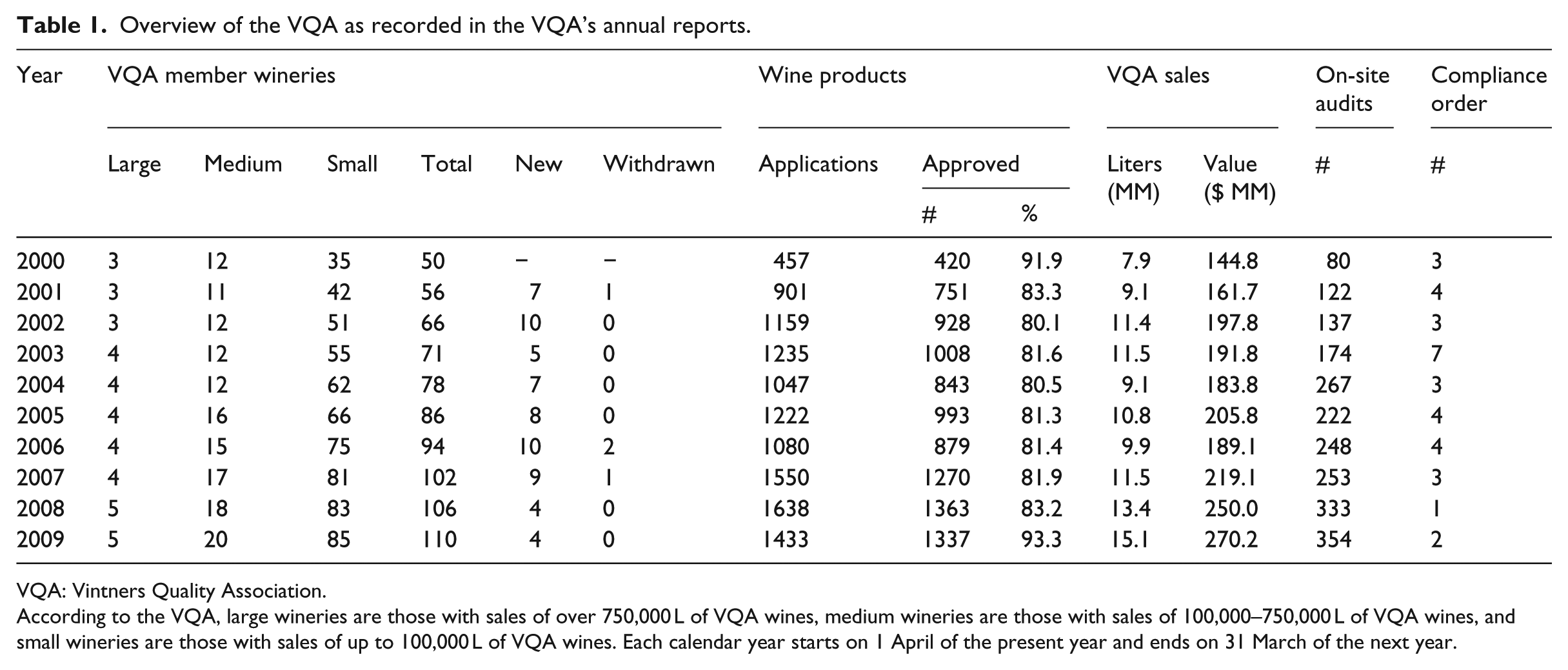
As a result, adherence to the VQA standards can potentially dampen a member winery’s out-of-the-box thinking and reduce its ability to create innovative wines that deviate too much from the VQA standards. Therefore, some wineries choose not to join the VQA. “It puts winemakers in a loose-fitting straight-jacket: ‘make your cabernet franc within this range of flavours and styles, or we’ll fail it’” (Phillips, 2015). “VQA started as a voluntary system, but it’s now provincial law, and wineries get more profit from wines certified VQA than from wines that aren’t. So while no one is forced to use the system, there are incentives to joining in” (Phillips, 2015). We believe that the continuous rise of the approval rate indicates the overall improvement of Ontario wine quality, and as a result, the amount a winery can benefit from the VQA is not as much as in the past. Therefore, people in the trade have suggested that “the Vintners Quality Alliance (VQA) should be disbanded … As for quality, let the market decide, as is common throughout the rest of the New World” (Phillips, 2015). However, in the early days, during the observation window of our study, the VQA, as a CoP of wine production in Ontario, played a critical facilitator’s role in supporting member wineries to improve product quality. For more details on the VQA, please see the overview presented in Table 1.
Overview of the VQA as recorded in the VQA’s annual reports.
VQA: Vintners Quality Association.
According to the VQA, large wineries are those with sales of over 750,000 L of VQA wines, medium wineries are those with sales of 100,000–750,000 L of VQA wines, and small wineries are those with sales of up to 100,000 L of VQA wines. Each calendar year starts on 1 April of the present year and ends on 31 March of the next year.
Locational competitive disadvantage in the Ontario wine industry
The clustered wineries have more access to flows of tacit knowledge in cool-climate wine production in the industry. Access to tacit knowledge flow is particularly important because a cool-climate taste profile in Ontario was in the process of development during the observation window as a collective effort of wineries to justify fine wine production in Ontario, where winter is long and cold. Arguably, the grapes grown in cooler regions such as Ontario ripen and accumulate their flavor slowly, and the wines tend to be more complex, with higher acidity and more mineral flavors than wines from warmer regions such as California. Such a unique taste profile has been created and to some degree institutionalized among a diverse set of stakeholders, including wine judges. Therefore, those wines reflecting a cool-climate taste profile are more likely to win medals because critics will think they are more reflective of the local terroir. As a result, it will be easier for clustered wineries, especially new entrants, to access and participate in the development of the knowledge of cool-climate wine production. As such, we predict that a winery will perform less well if it is geographically isolated.
Data and methods
Data
The data consist of three data sets. The first data set is a list of Ontario wineries compiled from The Wine Atlas of Canada (with early editions called Vintage Canada) by Tony Aspler, allegedly Canada’s foremost wine expert, who has documented the development of the Canadian wine industry since 1983 with its first-ever reference guide. In his publications, Aspler reported a winery’s basic information, such as its name, address, history, winemaker, and wine variety. We supplemented and cross-referenced this data set with information from other popular wine reference books, that is, John Schreiner’s The Wines of Canada; Konrad Ejbich’s A Pocket Guide to Ontario Wines, Wineries, Vineyards and Vines; Linda Bramble and Shari Darling’s Discovering Ontario’s Wine Country; and Andrew Brooks’ The Definitive Wine Tour Guide Crush on Niagara. Where the sources disagree, privilege was given to Aspler’s reference books. The second data set, the wine contest results, was obtained from the institutions hosting the two national wine contests, that is, All Canadian Wine Championships (ACWC) and Wine Access Canadian Wine Awards (WACWA). Another noticeable wine contest at the provincial level is the Ontario Wine Awards, which is excluded from the study because this VQA-founded contest is open to VQA member wineries only. While Ontario wine entrepreneurs were passionate about the vision of making the highest quality Ontario wine by international standards, as newcomers, they eagerly sought to establish legitimacy in the eyes of customers in Canada. The need for legitimacy coincided with, or even possibly triggered, the rising popularity of blind wine-tasting contests in Canada. Among the two national contests investigated in this study, the ACWC, with a history dating back to 1981, started attracting many new participants beginning in the mid-1990s, and the WACWA was created in 2000. Both contests deploy a blind tasting process, and based on the results, a participating wine can possibly win a gold, silver, or bronze medal in the respective category (e.g. merlot, chardonnay, ice wine, blended red or white). The third data set is the VQA membership information—that is, when a winery became a VQA member, which was obtained directly from the VQA.
Independent, moderating and dependent variables
Geographic isolation, the independent variable, is measured as the inverted value of population density, that is, the number of wineries in the same geographic region, as denoted by the Canadian postal code, plus one. More specifically

The Canadian postal code is a six-character uniformly structured, alphanumeric code, for example, X1X 2X3. The first three characters (alpha-numeric-alpha) refer to a forward sortation area (FSA), which identifies an exact area of a city or town or other geographic area. For example, L0S represents the south and northeast Niagara Region (the town of Niagara-on-the-Lake), whereas L4L represents Woodbridge, a community north of Toronto. In this study, a region is defined as a geographic area as denoted by the first three characters of the Canadian zip code. Two wineries will be viewed as being co-located in the same region if the physical address of the two wineries share the same first three characters of the Canadian zip code. As such, a firm will be treated as being more isolated if the region where the firm is located happens to host fewer firms. Note that the measure of geographic isolation in the study is essentially the inverted measure of agglomeration, which has been operationalized in the literature (e.g. Chung and Kalnins, 2001) as population density in governmental or administrative boundaries such as zip codes.
Geographic remoteness, the independent variable, is measured as the sum of spherical distances (Sorenson and Audia, 2000) between a winery and each of the six founding VQA member wineries. All founding members are located in the Niagara Peninsula region, which has long been the mecca of Ontario’s wine production in terms of output volume, tradition, education, and institution. In 1983, when there were only 13 wineries in Ontario, 10 of them were located in the Niagara Peninsula region. Currently, approximately 65% of Ontario’s VQA wineries are located there. The region is also home to the Cool Climate Oenology and Viticulture Institute (CCOVI) at Brock University, which was established in 1996 as Canada’s only internationally recognized academic and educational institute offering oenology and viticulture programs. While the region is widely acknowledged as the center of the industry, it is also a diverse region with subappellations. It is thus a methodological challenge to determine the exact physical location of the geographic center of wine production within the region. Given the unique history of Ontario’s fine wine industry, we decided to use the physical locations of the six wineries that founded the VQA to define the geographic center of the industry at an aggregate level.
CoP engagement, the independent variable and moderator, was measured as the number of years a winery has been a member of the VQA in a particular year. The assumption behind this measurement strategy is that the longer a winery has been a member of VQA, the more deeply the winery has been engaging in the CoP. For example, the original founding wineries of the VQA are deemed more deeply and consistently engaging in the VQA than late comers. In contrast, a VQA non-member is recorded as not participating in a CoP at all. It is worth noting that, so far in the literature, there is no consensus on how to measure a CoP, and most empirical studies of CoPs are based upon qualitative evidence (Giuliani, 2011; Turner, 2010). However, as we discussed earlier, in the unique empirical context, the VQA emerged and continued to serve as the CoP of fine winemakers in Ontario. Fine winemakers, through the VQA, collectively created the shared repertoire, a set of communal knowledge that is exclusively open to VQA members. Our measurement strategy is thus based upon the qualitative evidence in this industry. In addition, considering that a CoP is essentially a community of activities, our measurement strategy is also consistent with the existing literature that treats a trade association as the organization for collective activities (Battisti and Perry, 2015; Knoke, 1988; Olson, 1965; Perez-Aleman, 2003; Schmitz, 1995, 1999; Wang and Tan, 2019).
Performance in wine competitions. Access to financial performance data is very difficult to obtain from fine wineries as they are often privately held. Therefore, in our study, we measure performance by the number of medals awarded to a winery across two Canadian blind wine contests in a given year. In so doing, we follow other research that uses product awards as a proxy for firm performance (Soh, 2010), and we posit that the number of wine medals won in competition performance is a reasonable proxy for winery performance in our study.
In so doing, we argue that a winery’s award-winning wines indicates its capability of producing wines experienced by judges and, subsequently, perceived by customers in the marketplace as above average in quality and that this positive performance in wine competitions ultimately contributes to financial performance. Wine judges are individuals who are trained, certified, and considered professional experts in evaluating the quality of the wines of different terroirs. Previous research has found that the results of individual wine judges are controversial in nature and questioned the degree to which they are related to product quality (as is the case with experts in other cultural industries (Ginsburgh, 2003)). Many studies have deemed a wine judge’s evaluation to be a poor indicator of authentic product quality and questioned the validity of wine competitions (Hodgson, 2008, 2009a) and the expertise of wine judges (Hodgson, 2009b). For example, Hodgson (2008) has found that there is great variance in how individual judges review the same wines over time and found that individual “judges tend to be more consistent in what they don’t like than what they do.” To address individual variance and biases, wine contests are judged by panels of at least three individuals. Ashton’s (2012) research and that of others have found that, despite individual variation, there is a similarity in quality judgments across panels regarding how judges view the same wines. As described by Ashton (2012), in a comparison of subject evaluations with other professions ranging from medicine to auditing, in all fields, including wine judging, reliability is greater than consensus. Both reliability and consensus are, on average, substantially lower in wine judging than in other fields, although tremendous variability exists across judges in every field.
Therefore, although there is no “scientific” consensus on the taste of quality wine, groups of judges tend to reliably evaluate the same wines in a similar manner (Cliff and King, 1999; Smith and Bentzen, 2011; Stuen et al., 2015). Taken together, the evaluations of wine judges in wine contests are not an indicator of actual “high quality” by experts. However, research does suggest that a panel of judges’ evaluations of wines in wine contests offers a reliable indicator of the shared experience of wine quality. These judges agree, at a minimum, that those wines are “not bad” and of a higher quality in reflecting the establish terroir of a region (Duhan et al., 1999) compared with other wines. Furthermore, as such, contests can be subject to biases and fraud; wine-tasting contests, such as those we examine, are blind (wineries name) and independent judges are used to prevent bias and fraud and to encourage greater impartial judgment of a wine. This approach reduces the potential cognitive influences of winery status and reputation that might disrupt the evaluation of the wine.
Regardless of the subjective nature of the experience of quality among judges, positive evaluations from these “experts” in prestigious wine competitions signal wine quality, grants status to wineries (Benjamin and Podolny, 1999; Zhao and Zhou, 2011), and enables them to charge a premium (Roberts and Reagans, 2007) in their luxury good marketplace. Wine competition award stickers are often displayed on the bottles, which serve as signals for the hard-to-observe wine quality (Negro et al., 2015). Consumers rely on these signals to infer a wine’s quality and a winery’s status, thus influencing their subsequent purchasing behavior (Lockshin et al., 2006). As such, winning medals allows a winery to charge a higher price. For instance, a recent study suggests that the average French wine price increases by approximately 13% after having won a medal (Paroissien and Visser, 2018). Winning medals thus helps boost brand awareness, market share, and economic success. When a winery has established status through wine contests, it might no longer be required to enter contests for performance. In emerging settings (such as Ontario), medals won from wine contests are an indicator of performance. Although this measure does not fully equate to financial performance, prior research has found that wine competition awards are positively correlated with economic success (Ginsburgh, 2003; Lockshin et al., 2006).
Control variables
At the regional level, we included the regional average number of awards, that is, the average number of awards won by all wineries in each region to control for the average product quality of the cluster, as well as regional total wine volume and regional total vineyard acreage to control for the size of the wine industry in the region. At the firm level, we first included winery age to control for organizational age (years of existence) and for the possibility that wineries born at different times are associated with unique characteristics and competences. It is possible that organizations that are older may have more experience making wines, but it is also likely that the boutique wineries, often younger, are more engaged in wine contests, leading to advantages. Second, we included wine volume and winery acreage as two control variables for the size of a winery. These two control variables also serve as controls for the possible impact of natural advantages for wine production in a place as the production of wines is subject to terroir. Third, we included wine variety, which is measured as the number of different grape varieties a winery produces, to control for the specialist versus generalist nature of wineries (Benjamin and Podolny, 1999). As wine contests are organized in different categories, often defined by grape variety, it is also likely that a generalist winery has a higher possibility of earning medals than a specialist winery. Fourth, we also added a set of wine variety dummies of the popular wine varieties produced in Ontario according to the VQA. These popular varieties include red wines (Pinot Noir, Merlot, and Cabernet Franc), white wines (Vidal, Chardonnay, Pinot Blanc, and Riesling), and ice wine to control for the potential impact of a winery’s focus on a particular wine variety. Fifth, we added the number of awards from the previous year, that is, the awards a winery received in the previous year, to control for the past performance of the focal winery. In addition, winemaking heritage is a dummy variable that is coded as 1 if the founder of a winery belongs to a family, mostly from Europe, with a long winemaking history (Simons and Roberts, 2008). While Canada has a much younger wine history than Europe, starting in the mid-1800s, its wine production has been heavily influenced by European immigrants who were probably more knowledgeable in making wines. Finally, we also used three Ontario appellations of origin dummy variables: Lake Erie North Shore, Toronto and North of Toronto, and Prince Edward County.
All independent and control variables were lagged three years, thus reducing concerns about the temporality of data, reverse causality, and simultaneity, following empirical studies with a similar data structure (e.g. Yang et al., 2010).
Estimation methods
As the dependent variable, performance in wine competitions is measured as the number of medals won by a winery and is a count variable. Poisson regression is often an appropriate method to use when the dependent variable is a count variable. This approach assumes that the dependent variable has a Poisson distribution in which the conditional variance and mean are equal. This assumption is violated in our data, where the variance of founding is greater than the mean. We thus used the negative binominal regression model to account for variance over dispersion. We also tried the Poisson regression analysis and found consistent results.
Another methodological issue is the longitudinal nature of the data and the need to address the presence of unobserved heterogeneity. The unit of analysis was the winery, and multiple wineries were observed each year for nearly a decade (1999–2006). With panel data such as this, the most commonly used regression models are fixed-effects and random-effects models. The fixed-effects models control for, and partial out, the effects of time-invariant and individual-specific variables. The random-effects models assume that the time-invariant and individual-specific effects are uncorrelated with the independent variables. In our study, we followed empirical studies with a similar data structure (Barthélemy, 2017; Yin and Zajac, 2004) and chose random-effects models for the following two reasons. First, fixed-effects models can produce biased estimates when the panel spans a short observation windows (Greene, 2003). Second, fixed-effects estimators only pick up measurement error and thus should not be computed when some explanatory variables do not vary or vary very little over time (Greene, 2003; Yin and Zajac, 2004). In this study, the two independent variables (i.e. geographic isolation and CoP engagement) vary in a limited way and are fixed for some wineries in the sample (i.e. the wineries that have not joined the VQA throughout the observation window or the wineries that are located in a region without new entrants and exits). Additional sensitivity tests using robust error estimation and employing Poisson regression yield consistent results.
Moreover, another methodological concern is that the decision of a winery to join the VQA may be endogenous and can confound the interpretation of the regression results, for example, wineries with higher or lower quality are more likely to join the association and more likely to win awards in a wine contest. To tease out this part of the unobserved heterogeneity, we adopted a two-stage technique (Hamilton and Nickerson, 2003; Semadeni et al., 2014), following the strategy adopted in other empirical studies (Barthélemy, 2017). In the first stage, we used a probit model to predict the decision to join the VQA with a set of explanatory factors and then calculated the inverse Mills ratio that captures the endogeneity of the decision to join the VQA. In the second stage, we used the random-effects negative binomial models to predict the impacts of geographic isolation, CoP engagement, and their interaction on the performance outcome (i.e. number of awards), controlling for the endogeneity of the decision to join the VQA by adding the inverse Mills ratio that was obtained in the first stage as a control variable. Ideally, calculating the inverse Mills ratio in the first stage requires adding instrumental variables that impact the first-stage dependent variable (i.e. joining the VQA) but that do not directly impact the second-stage dependent variable (i.e. number of awards). These instrumental variables are to be entered in the first-stage model but not in the second-stage models. For this purpose, we used membership dummies to three other organizations that focus on advocating for and promoting the industry, that is, Ontario Wine Society membership, Wine Council of Ontario membership, and Ontario South Coast Wines membership. We assume that wineries joining these collective activities, organizations with distinct missions have similar profiles that may result in a higher or lower tendency of joining the VQA. As these organizations focus mainly on promotion and marketing, and enhancing wine quality is not the primary goal, we posit that memberships to these organizations is not directly associated with winning awards. More specifically, the Ontario Wine Society is a non-profit organization created by wine enthusiasts aiming at promoting Ontario wines by organizing wine-tasting events. Its members include not only wineries but also wine bars, restaurants, grape and vine tour operators, and so on. The Wine Council of Ontario was established in 1974 as an industry advocacy group representing the interests and voice of Ontario’s wineries to the provincial and federal governments. In addition to obtaining government support to this industry, it organizes marketing programs in collaboration with local sales channels, the VQA, and other institutions. Its members include not only wineries but also a variety of firms that are part of the industry value chain, for example, warehouses, logistics, wine bottle makers, banks, consulting firms, and so on. The Ontario South Coast Wines is a local organization that aims at promoting the wine region in Ontario’s South coast. Its members include grape and fruit wineries, as well as brewers and spirits makers.
Results
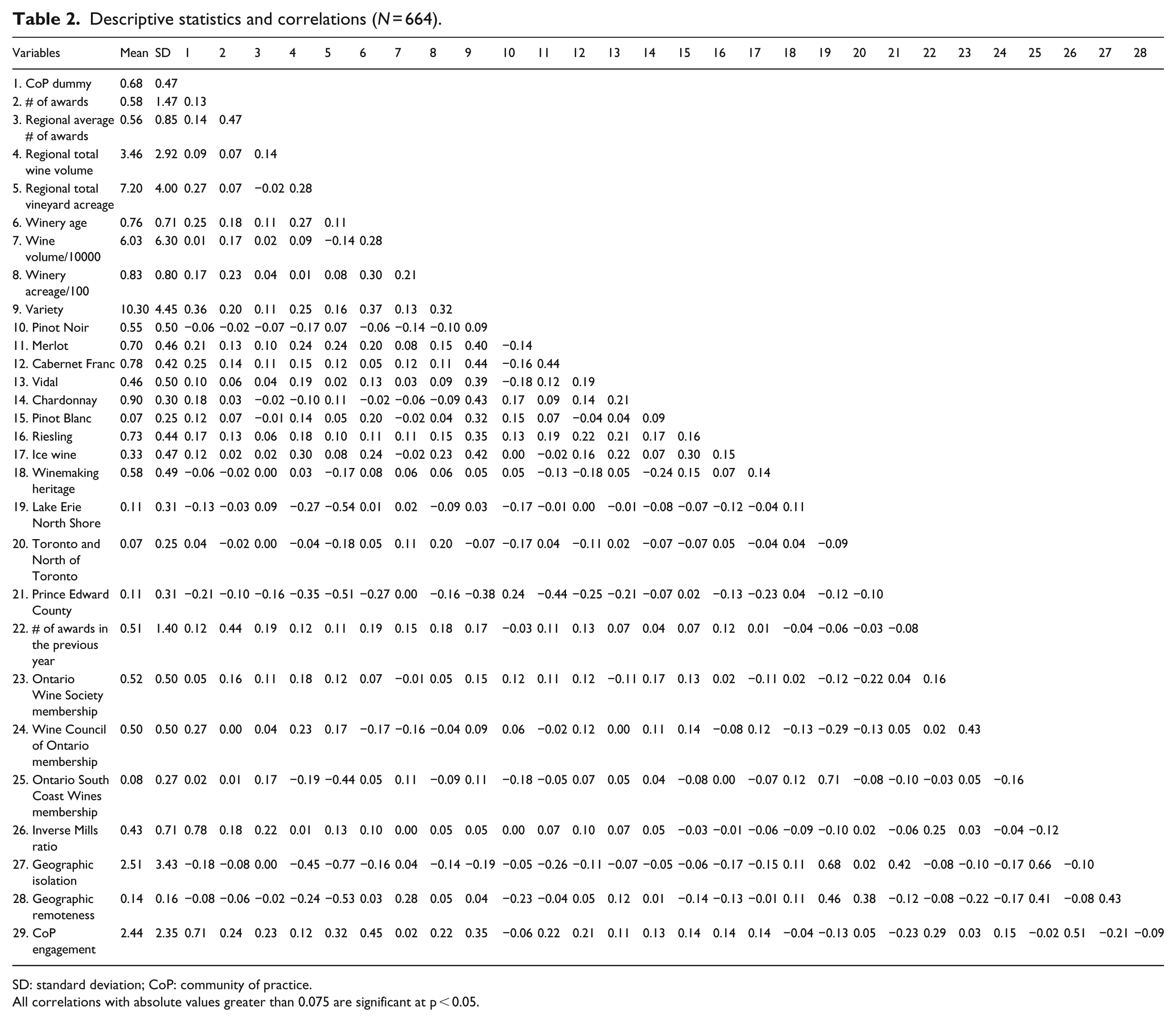
Table 2 reports the descriptive statistics of the variables used in the regression models. We checked the variance inflation factors (VIF) to test the presence of multicollinearity. A value below 10 is generally accepted as an indication that no significant impact of multicollinearity exists. The VIF values for all variables in the regression models range from 1.23 to 6.44, with the mean value at 2.52, showing that multicollinearity is not a problem in the regression analyses.
Descriptive statistics and correlations (N = 664).
SD: standard deviation; CoP: community of practice.
All correlations with absolute values greater than 0.075 are significant at p < 0.05.
Decision to join the VQA
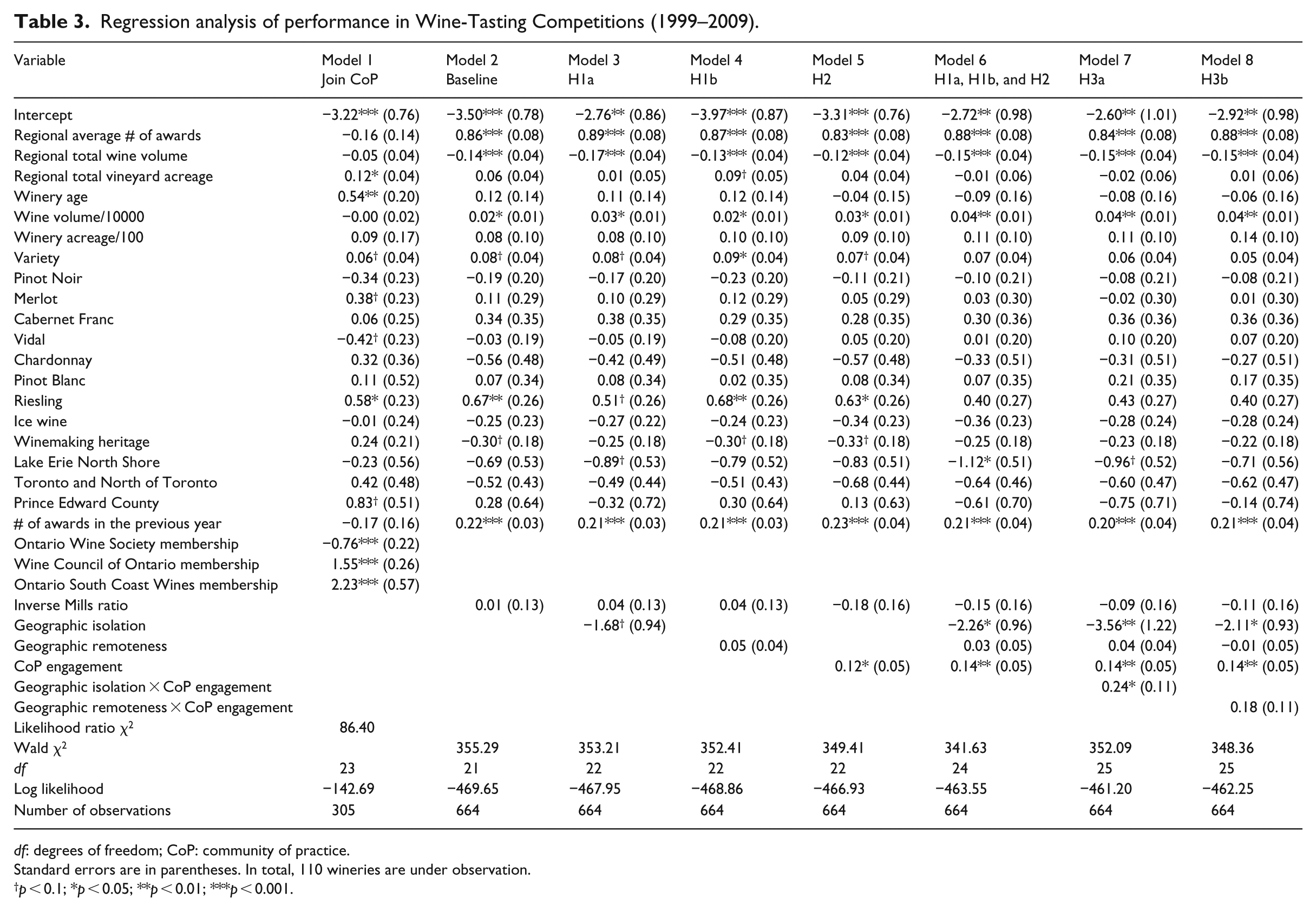
Model 1 in Table 3 presents the results of the probit regression analysis of Ontario wineries’ decision to join the VQA. The dependent variable is the dummy variable, which is coded as 1 if a winery is a VQA member and as 0 if not. Only wineries that were not a VQA member in the previous year were included in the analysis, and the existing VQA member wineries were excluded. As shown in Model 1, a winery will be more likely to join the VQA if the winery is a member of the Wine Council of Ontario (β = 1.55, p < 0.001) or a member of Ontario South Coast Wines (β = 2.23, p < 0.001). A winery will be less likely to join the VQA if the winery is a member of the Ontario Wine Society (β = –0.76, p < 0.001).
Regression analysis of performance in Wine-Tasting Competitions (1999–2009).
df: degrees of freedom; CoP: community of practice.
Standard errors are in parentheses. In total, 110 wineries are under observation.
p < 0.1; *p < 0.05; **p < 0.01; ***p < 0.001.
Performance in wine-tasting competitions
Models 2–9 in Table 3 present the results of the random-effects negative binomial regression analysis of Ontario wineries’ performance in wine-tasting competitions. The inverse Mills ratio obtained from the probit model was included in Models 2–9 as a control for the endogeneity of a winery’s decision to join the VQA.
Model 2 in Table 3 (baseline) includes all the control variables, most of which do not have an impact that is statistically significant. As expected, performance is positively associated with wine volume (β = 0.02, p < 0.05) and the number of awards in the previous year (β = 0.22, p < 0.001). The regional average number of awards has a positive coefficient that is statistically significant (β = 0.86, p < 0.001), indicating that a winery from a region where, on average, wineries produce higher quality wines than wineries in the other regions can produce higher quality wines and is more likely to win awards. Regional total wine volume, on the other hand, seems to have a negative impact (β = –0.14, p < 0.01) probably because some regions have wineries that focus on producing relatively less expensive but larger volume wines.
Model 3 (H1a) includes all the control variables and the independent variable geographic isolation, as measured by the inverted value of the number of wineries plus one in a Canadian postal code. Geographic isolation has a negative coefficient (β = –1.68, p < 0.1), which is close but below the 0.05 significance level. The result is consistent with H1a, which predicts that geographic isolation negatively contributes to performance. Model 5 (H2) includes all the control variables and the independent variable CoP engagement, as measured by the years that a winery has been a VQA member. As expected, CoP engagement contributes positively to firm performance (β = 0.12, p < 0.05), which supports H2. Model 6 (H1a, H1b, and H2) includes geographic isolation, geographic remoteness, and CoP engagement, and the results are consistent with the results obtained from Models 3 and 5 (Geographic isolation: β = –2.26, p < 0.05; CoP engagement: β = 0.14, p < 0.01).
Model 7 (H3a) examines the conditioning effect of CoP engagement (β = 0.14, p < 0.01) on the relationship between geographic isolation (β = –3.56, p < 0.01) and performance. The interaction term (i.e. geographic isolation × CoP engagement) has a positive coefficient (β = 0.24, p < 0.05), which is consistent with H3a, positing that firms engaging in CoP are less likely to suffer from locational disadvantages. Geographic remoteness, however, does not seem to affect performance as indicated in Model 4 (H1b), Model 6 (H1a, H1b, and H2), and Model 8 (H3b). The results do not offer support to H1b and H3b, and we will discuss this in further detail in the next section.
While the information in Table 3 is informative, it remains somewhat limited. To further demonstrate the interactive effects as proposed in H3a, we illustrated the interaction effects in Figure 1. The results shown in Figure 1 provide additional support for the hypotheses. The solid line presents the performance impact of geographic isolation for wineries that have been VQA members for 8 years. The dashed line presents the same impact for wineries that have been VQA members for 4 years. The dotted line presents the same impact for wineries that have not been VQA members, and the dotted sloping line demonstrates the negative impact of geographic isolation. The less sloping dashed line (i.e. 4 years as members of the VQA) and the almost horizontal solid line (i.e. 8 years as members of the VQA) show that such an impact is weaker for wineries that have been VQA members for a longer period of time.
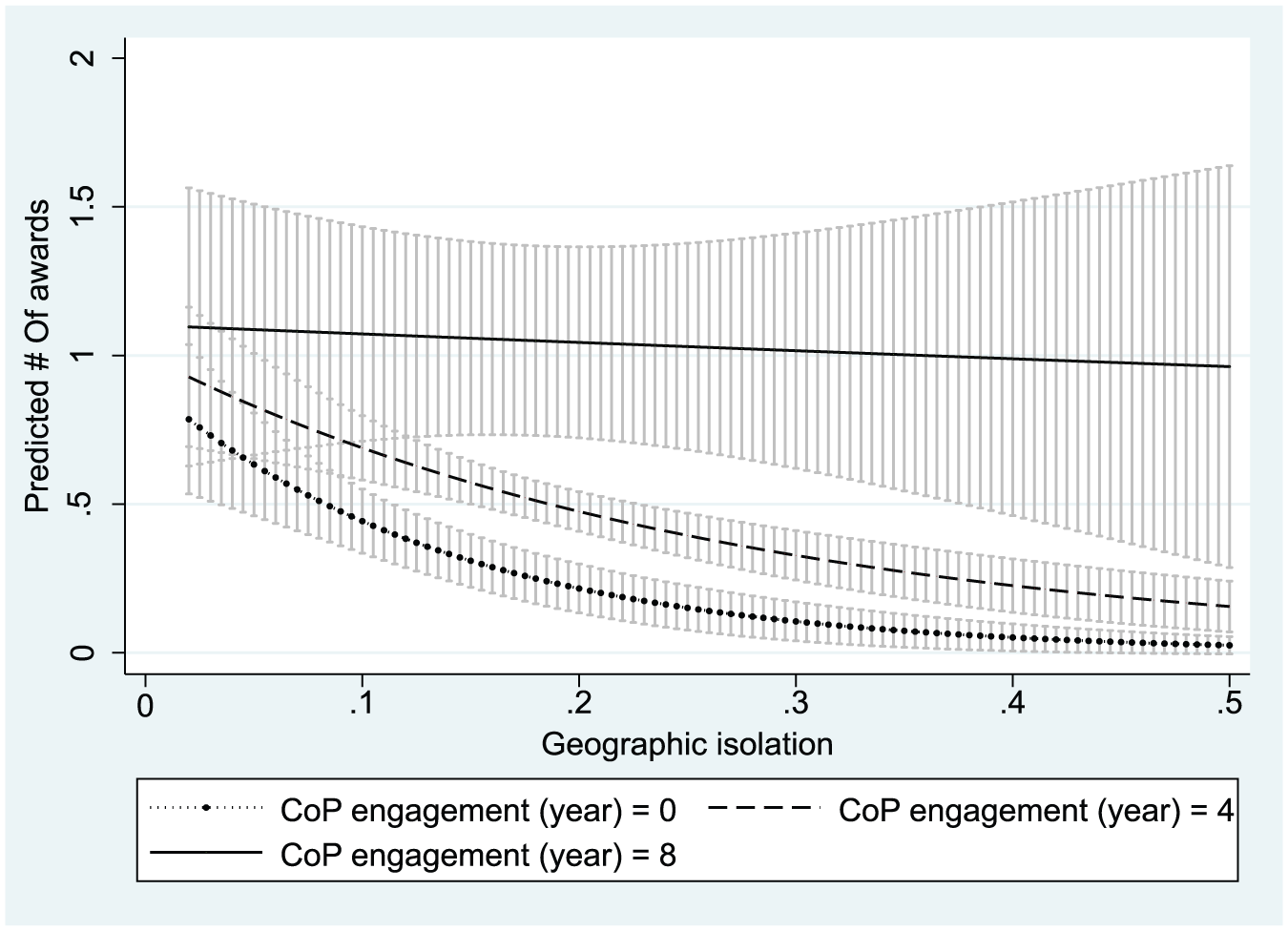
The predicted performance in wine contests with 95% confidence intervals.
Conclusion and discussion
This study examines the firm implications of a CoP, especially regarding how geographically isolated/remote firms can tap into agglomeration benefits by engaging in a CoP. A literature review shows that agglomeration theory, by assuming an atomistic competitive environment, has paid insufficient attention to the fact that the growth of industry clusters can be strongly influenced by the efforts of local firms’ deliberate collective activities in the pursuit of common interests (Capello, 1999; Schmitz, 1995, 1999; Wang and Tan, 2019). In particular, firms acting through a CoP (Brown and Duguid, 1991; Lave and Wenger, 1991; Wenger, 2000) can collectively create a shared repertoire of resources that is vital to the success of the entire community, especially knowledge-intensive industries. As CoP membership is not necessarily bounded by geography, CoP engagement serves as a potential strategy for geographically isolated firms to tap into agglomeration benefits (McCann and Folta, 2008).
The empirical study of Ontario fine wine production, which relies heavily upon the creation of winemaking knowledge in a harsh and cold climate, reveals that (1) geographic isolation is a source of locational competitive disadvantage, as it has a negative impact on firm performance, as measured by the awards won by a winery in wine contests; (2) engagement in a CoP allows firms to benefit from the shared repertoire created by the community, thus positively contributing to firm performance; and (3) CoP engagement mitigates the locational competitive disadvantage of isolation; thus, the detrimental impacts of geographic isolation are weaker for firms engaging in a CoP.
Contributions
The study contributes to agglomeration research by demonstrating that CoP engagement is a potential strategy for geographically isolated firms to tap into agglomeration benefits. First, the study reveals that geographic isolation does result in locational competitive disadvantage because isolation negatively impacts firm performance. On one hand, this finding reinforces the traditional claim in the agglomeration literature that co-location is necessary for firms to enjoy the Marshallian externalities that are available “in the air.” Isolated firms tend to suffer from the shortage of conventional Marshallian externalities. On the other hand, this finding underscores the importance of explaining the persistent phenomenon that firms keep occupying isolated locations despite their inferiority. This leads to the second contribution of our study: the impact of CoP engagement on firm performance.
This study finds that engaging in a CoP allows firms to access the shared repertoire and thus positively contributes to firm performance. While previous research has sporadically addressed the issue of CoPs in industry clusters through qualitative case studies (Bolisani and Scarso, 2014), this article is among the first studies to provide quantitative evidence regarding the positive impact of CoP engagement. Our empirical findings show that, by joining the VQA, Ontario wineries engaged in collective learning and co-created a shared repertoire of procedures, techniques, and standards for best winemaking practices that benefit the entire community. This shared repertoire constitutes a social form of externality, which is less geographically bounded than Marshallian externalities. In contrast, traditional agglomeration literature tends to overwhelmingly emphasize the role of geographic proximity and the associated Marshallian externalities (Funk, 2014; Tallman and Chacar, 2011; Vallance, 2011). This study contributes to the agglomeration literature by showing that the externality resulting from deliberate collective activities through a CoP serves as a complement to Marshallian externalities.
More importantly, we found that the benefits of CoP engagement are more salient for isolated firms. That is, isolated firms can tap into agglomeration benefits via CoP engagement. The findings provide the first empirical evidence of McCann and Folta’s (2008) proposition that community connections can help overcome locational competitive disadvantages. In a way, our study shows the possibility that geographically isolated firms may still be competent as long as they are not disconnected from the community. The study shows that CoP engagement helps firms address locational competitive disadvantages and empirically demonstrates that engaging in various VQA activities weakens the detrimental impacts of geographic isolation on wineries. It is worth noting that McCann and Folta (2008) posited that formal relationships with supporting institutions help isolated firms tap into agglomeration benefits without prescribing specifics about which connections matter and how to build them. The finding that actively engaging in CoPs via trade association membership can offset locational competitive disadvantage thus advanced McCann and Folta’s (2008) theoretical proposition. Zaheer and George (2004) argued that firms gain by forming alliances both within and beyond their geographic clusters to acquire technology-intense knowledge. This article extends Zaheer and George’s findings by showing that engaging in a CoP matters more for isolated firms, as they suffer from locational disadvantages. In addition, Turner (2010) studied the English wine industry and how the role of CoPs is cast differently for large versus small enterprises. Our study supplements his work by confirming the benefits of CoPs on the one hand and examining how different firms benefit from CoPs from the dimension of geographical location on the other hand. Overall, the study advances agglomeration theory by providing a possible explanation of why many firms reside, often persistently, outside of industry centers: these geographically isolated firms can tap into agglomeration benefits by actively engaging in a CoP, which is in line with the propositions of the network/relational view of industry cluster (Bathelt and Li, 2014; Glückler, 2007; Sturgeon et al., 2008; Turkina et al., 2016).
Finally, the result that geographic remoteness is not significantly associated with dampening firm performance and that CoP engagement does not exhibit significant effects on this relationship offer additional insights into agglomeration research. First, the results show that isolation has a dampening effect whereas the effect of remoteness is insignificant. This finding suggests that although both are disadvantageous locations, isolation brings more harm; that is to say, connectedness matters more than proximity in achieving agglomeration benefits. We posit that being geographically remote does not necessarily mean being geographically isolated. It is possible for a firm to be far away from the industry center but not completely isolated, as long as the firm is co-located with a few other firms in the remote place. A few remotely located firms might create “mini agglomeration externalities” among themselves. To some extent, this finding coincides with the view that traditional agglomeration research tends to overemphasize the role of geographic proximity (Boschma, 2005; Boschma and ter Wal, 2007). Second, the moderating effect of a CoP on geographic remoteness is not significant either. This finding indicates that when remoteness does not rule out the sub-level connectedness among remotely yet co-located firms, the advantages of institutional connections created by CoPs may be limited. This finding joins Turner’s (2010) work, which points out the possible limits to interfirm learning through CoPs. In contrast to his argument that small enterprises need more formal structural, as opposed to informal, cooperation in CoPs, our research indicates that firms with a certain level of access to information and knowledge may receive limited benefits from CoP engagement. The fact that CoP engagement more significantly benefits isolated firms as compared with its main impact on firm performance also points to its possible limits. Future research is encouraged to further explore the boundary conditions of CoPs.
Limitation and future research
While the above arguments emphasize the benefits of forming and joining a CoP, it is worth noting that a CoP, as a community structure, may put conformity pressure on its members (Roberts, 2006). As Wenger (2000) points out, “communities of practice can steward a critical competence, but they can also become hostage to their history, insular, defensive, closed in, and oriented to their own focus” (p. 233). This understanding is consistent with an institutional perspective that engagement in a CoP over time would increase pressure on firms to conform to standards of practice (Guler et al., 2002; Oliver, 1991) as rational myths and decrease the likelihood that they would depart from normative prescriptions to pursue innovation-based performance. In the long run, this pressure to conform to institutionalized best practices experienced by firms participating in a CoP may disrupt the ability of firms in contexts that are defined by changing performance demands to quickly adapt. Interestingly, this result is of particular concern for firms in the fine wine sector, as specialization and innovation are critical to establishing competitive advantage (Swaminathan, 2001). Given that this study’s observation window is the first few years when the VQA become the authoritative organization of the winery community, we posit that engaging in a CoP provides firms with access to knowledge and resources rather than inhibiting performance by inducing conformity. There has not been any study tackling the temporal dimension of CoPs, and future research is encouraged employing a longer time span (Wang, 2017) to uncover whether a firm’s engagement in a CoP leads to conformity pressures that influence performance and innovation.
By utilizing the number of awards that a winery wins in wine competitions to assess the winery’s performance, this study is consistent with the literature that has used product awards as a measure of firm performance (Soh, 2010). As discussed earlier, a winery’s performance in a wine competition serves as a reasonable proxy measure of firm performance in the wine industry because it is closely associated with a winery’s profitability via more sales or higher prices. This measurement strategy is also a practical solution, as the Ontario wineries are private-held firms, and their financial data are unavailable. However, this measurement strategy incorporates only a single indicator of firm performance and does not directly measure firm profitability. There does exist the possibility that a winery with outstanding performance in wine competitions will fail to achieve the same level of financial performance, just as a movie studio that wins Oscar statuettes may not perform as well financially in terms of box-office sales. It is undeniable that firm performance is a complex and multidimensional construct and should be measured as such. It is therefore necessary for future research to examine the hypotheses with financial data or a more comprehensive measure of firm performance.
Footnotes
Acknowledgements
We thank SO Editor Dr. Luca Berchicci and anonymous reviewers for their constructive comments, and Professor Brian McCann, and Professor Timothy Folta for their suggestions on the early draft of the paper. We also thank Professor David Saah and Ms. Megan Danielson for their assistance at University of San Francisco Geospatial Analysis Lab.
Declaration of conflicting interests
The author(s) declared no potential conflicts of interest with respect to the research, authorship, and/or publication of this article.
Funding
The author(s) received no financial support for the research, authorship, and/or publication of this article.
