




Abstract
The primary purpose of this study was to investigate the impacts of the COVID-19 pandemic on demands, resources, and job satisfaction among a convenience sample of early childhood education (ECE) staff employed in Head Start preschools in a large metro area of Colorado. A survey was administered to a sample of Head Start staff at two timepoints: Time 1 (pre-COVID-19 pandemic) in October of 2019 (n = 137) and Time 2 (during the COVID-19 pandemic) in November of 2020 (n = 86). The survey consisted of a combination of validated measures to assess personal and external demands and resources and work satisfaction. Workload is a perceived external demand that significantly improved from pre- to mid-pandemic in this sample (z = −3.3, p < 0.01). Many personal and external resources changed pre- to mid-pandemic, though none were statistically significant. Overall job satisfaction in this sample increased, though it was not statistically significant (z = −1.04, p = 0.3). Mitigating demands, such as minimizing workload, and increasing job-related resources, such as bolstering management supports, may lead to improved job satisfaction of the ECE workforce employed in Head Start settings. Although the COVID-19 pandemic has amplified poor mental health and numerous job demands, some of the pandemic-related regulations may have also decreased the workload for some subgroups of the ECE workforce, potentially translating to improved job satisfaction. However, significant disparities remain with respect to personal and external demands among this sample of the ECE workforce compared to the national workforce suggesting multi-level resources and supports are critical to further buffer these stressors.
Introduction
The first 5 years of life is a critical time for development of important fundamental skills that include language, motor, cognitive, and social and emotional skills (Black et al., 2017). The early childhood education (ECE) workforce plays a vital and important role in ensuring that children develop these skills early in life (Black et al., 2017; Whitebook, 2018). Unfortunately, the ECE workforce in the United States experiences significant burnout and turnover rates; for example, annual turnover rates range between 26% and 47% (Thorpe et al., 2020; Totenhagen et al., 2016). High burnout and turnover are negatively associated with worker well-being and can have adverse impacts on the health and development of young children in their care (McMullen et al., 2020). Improving job satisfaction of the ECE workforce, particularly among individuals working in low-resourced locations, is vital to mitigating turnover and burnout and promoting overall health and well-being.
The ECE workforce experiences significant disparities with respect to personal demands, including mental and physical health, as well as job satisfaction, compared to the national workforce (Farewell et al., 2021; Kwon et al., 2020a) . For example, Head Start teachers, or preschool teachers who work in Head Start settings, experience depression rates that are two to three times that of the national average (reference withheld). The ECE workforce is also at increased risk for physical health conditions including infectious diseases, diabetes, obesity, and heart disease (Linnan et al., 2017). Personal demands may be associated with high levels of external, work-related demands including work stress, long hours, and low pay (Faulkner et al., 2016; Kwon et al., 2020a; Linnan et al., 2017) These high demands may partially explain poor job satisfaction which is significantly lower among the ECE workforce compared to the national workforce; for example, our recent study found that 34% of ECE staff reported being very satisfied with their work compared to 49% of the national workforce (reference withheld).
The Jobs-Demands Resources (JD-R) model suggests that when demands or job-related stressors are high and resources that may buffer job demands and the associated physiological and psychological costs are low, job satisfaction, burnout rate, and turnover rate may be detrimentally impacted (Bakker and Demerouti, 2017). External resources, such as supervisory support, job autonomy, and role clarity including clear expectations, are critical to fostering job satisfaction by promoting both intrinsic and extrinsic motivation, which can lead to greater work engagement and a more positive attitude toward work (Bakker and Demerouti, 2007). Personal resources, such as resiliency and mindfulness, may also support motivation and associated positive outcomes despite high external demands (Grover et al., 2017; Xanthopoulou et al., 2007). These demands and resources often interact; personal and external resources may buffer the impact of demands on job strain and associated negative outcomes. Individuals seek to acquire and maintain resources and a greater pool of resources results in better outcomes, particularly among individuals who are confronted with high job demands (Hobfoll, 2002). Numerous studies have applied the JD-R model to varied occupational settings and found that external resources are associated with job dedication and organizational commitment (Bakker and Demerouti, 2007). Additionally, a recent study suggests that resources need to be investigated independently to yield a more refined model for educators (Sokal et al., 2020).
From 2020 to 2021, the COVID-19 pandemic had widespread impact on the ECE workforce and may have further amplified demands and reduced resources among Head Start teachers (Nagasawa and Tarrant, 2020). When lockdowns became mandatory, ECE settings were forced to close, which had negative repercussions on this often neglected segment of the workforce and the young children in their care (Pramling Samuelsson et al., 2020). In Colorado, the ECE workforce provides care for approximately 400,000 children under the age of 5 years in center-based settings (Whitebook, 2018). Early Milestones Colorado surveyed a large sample of the ECE workforce, which included Head Start teachers, throughout 2020 to determine the impact of the pandemic. The results showed that enrollment rates had decreased more than 50%. Additionally, almost 10% of Colorado’s ECE centers had to close (Delap et al., 2021), 23% of the ECE workforce were laid off or furloughed, and 47% of ECE staff reported an income loss in their homes (Delap et al., 2021).
Decreased enrollment rates, closures, and financial stressors are not the only impacts COVID-19 has had on the ECE workforce. ECE centers and directors often face additional demands, such as staff shortages and increases in costs for personnel and personal protective equipment (PPE) (Gros et al., 2021). In addition, classroom guidelines and protocols are continuously changing requiring extensive staff training (Delap et al., 2021; Nagasawa and Tarrant, 2020). Because of these increased demands, it is likely that COVID-19 may be contributing to poorer job satisfaction among Head Start staff which can lead to burnout and increased turnover rates.
The primary purpose of this study was to investigate the impacts of the COVID-19 pandemic on demands, resources, and job satisfaction among a convenience sample of Head Start staff in a large metro area of Colorado (see Figure 1). This study is the first to our knowledge that analyzed longitudinal data (pre-pandemic and mid-pandemic) to highlight changes in demands and resources experienced by the ECE workforce due to COVID-19. Findings can inform policy and programmatic changes that may potentially help to bolster job satisfaction and mitigate burnout and high turnover rates of the ECE workforce.

Conceptual model depicting the application of the Job-Demands Resources Model to personal and external demands and resources that may impact job satisfaction among the ECE workforce working in Head Start settings.
Materials and methods
Participants
All ECE staff employed at Head Start-funded ECE centers that had established previous partnerships with the Culture of Wellness in Preschools (COWP) program (https://cowpprogram.com) were eligible to participate. Researchers at a large public university in the United States developed the COWP program in 2012 (Farewell et al., 2020; Melnick et al., 2020; Powers et al., 2020). The goal of the multi-level, multi-component intervention is to increase fruit and vegetable consumption and physical activity of preschool-aged children and their families. As of 2021, the COWP program had been implemented in approximately 150 ECE centers serving over 77,000 low-income children and their caregivers in 14 counties in Colorado. In October 2019, the research team invited all Head Start staff (e.g., teachers, directors, administrators, family support staff) who worked at Head Start-funded ECE centers in three urban counties in Colorado (n = 302 ECE staff) to participate in an online survey to understand the demands and resources faced by ECE staff who serve high-need populations. The research team gathered eligible participants’ emails from existing contacts or ECE directors.
Procedure
A large university-affiliated Institutional Review Board (COMIRB) approved all procedures involved in this study (#20-1235). Participation was voluntary and data were kept confidential. A survey was administered at two timepoints: Time 1 (pre-COVID-19 pandemic) in October of 2019 and Time 2 (during the COVID-19 pandemic) in November of 2020. In September of 2019, the research team sent an information sheet electronically to ECE directors of all eligible Head Start centers. This sheet described that participation in the study was voluntary, that by answering the questionnaire, consent was given, and that their individual responses would be kept confidential and not shared with anyone other than key research personnel. Directors shared this information sheet with their staff. In November 2020, participants who had completed the survey a year prior were invited to take the survey again following similar procedures. During this second period of data collection, the United States reported more than 4 million COVID-19 cases, which remains one of the worst months of the pandemic as of November 2021.
Participants received an email invitation with a link to the electronic survey in October 2019. Study data were collected and managed using REDCap (Research Electronic Data Capture) electronic data capture tools. REDCap is a secure, web-based software platform designed to support data capture for research studies (Harris et al., 2009). Eligible participants received a total of four emails (one initial invitation and three subsequent reminders) at both Time 1 and Time 2. The Time 1 survey was enabled for data collection for a total of 3 weeks (October 4, 2019–October 25, 2019). The Time 2 survey was enabled for data collection for a total of 3 weeks (November 4, 2020–November 20, 2020). Eligible participants were those who had taken a Time 1 survey. Each survey took approximately 10 minutes to complete. Each participant received an incentive of a $10 Target gift card for participation in the Time 1 survey. Participants were offered a chance to win a $50 electronic gift card for the Time 2 survey completion.
Researchers sent email invitations with links to the electronic Time 1 survey to 302 eligible ECE staff. Of these invitations sent, 140 surveys were completed. Researchers excluded three duplicate surveys from the sample. This resulted in a final Time 1 analytic sample of 137 ECE staff surveys (completion rate: 45%) from preschools representing 32 Head Start ECE centers in three urban counties in Colorado. One year later, the 137 participants were sent the Time 2 follow-up survey. Of these, there were 86 surveys that resulted in matched Time 1 and Time 2 pairs. Only matched pairs were included in the final analytical sample for this study (completion rate: 67%).
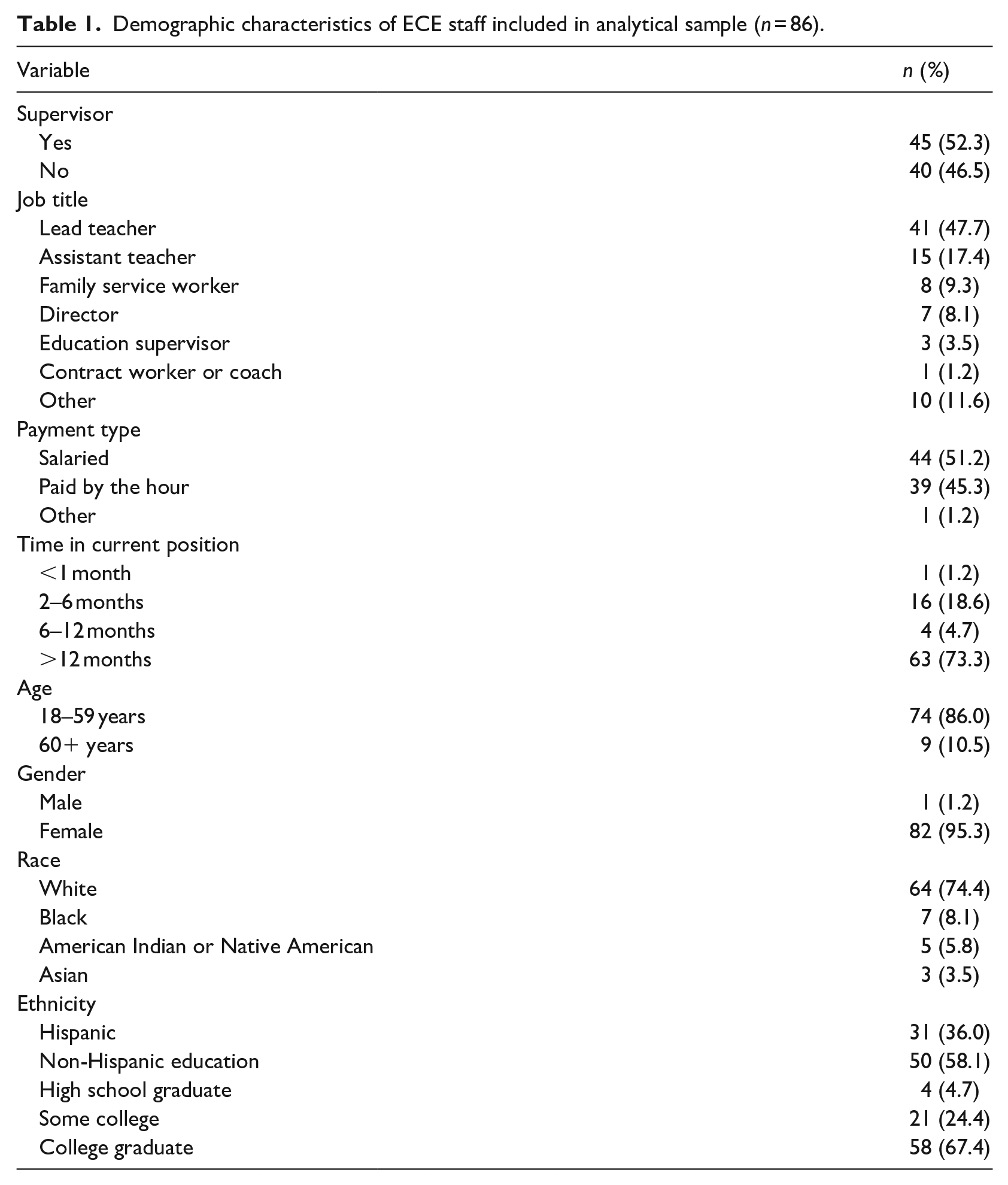
The final analytical sample included 86 Head Start staff, which included teachers, supervisors, and support workers, and demographic characteristics are presented in Table 1. Approximately three-fourths of providers were white and a third were Hispanic. The vast majority were female (95%). About 25% of the sample had some college-level education and 67% held a college degree. Half of the sample were lead teachers, 20% were Assistant Teachers, 8% were Directors, and approximately, a quarter were support staff (e.g., family service workers, coaches, etc.). Fifty-two percent of the sample were supervisors and 51% were salaried employees. Approximately a quarter of the sample had been employed in their current position for more than 1 year.
Demographic characteristics of ECE staff included in analytical sample (n = 86).
Instruments
Multiple validated tools described below were included in the survey to assess personal and external demands and resources that may impact job satisfaction among ECE staff.
Personal factors (demands and resources)
Personal demands were evaluated using the following two measures: (1) Cohen Perceived Stress Scale (PSS) and (2) Patient Health Questionnaire (PHQ-8). The PSS is a validated tool designed to measure “the degree to which situations in one’s life are appraised as stressful” (Cohen et al., 1983). The PSS is a valid and reliable tool that consists of 10 questions measured with a 5-item Likert scale (a = 0.84–0.86) (Cohen, 1994). Example questions include, “In the last month, how often have you felt nervous and stressed?” and “In the last month, how often have you felt confident about your ability to handle your personal problems?” The PSS was explored as a continuous measure for all analyses. The Patient Health Questionnaire-8 is a valid, brief measure of depression (a = 0.82) (Kroenke et al., 2009). Using a cutoff score of ⩾10, the PHQ-8 has a sensitivity of 70% and a specificity of 98% in the general population for any depressive disorder (Kroenke et al., 2009). Sample questions include, “How often during the past 2 weeks were you bothered by little interest or pleasure in doing things.” PHQ-8 scores were dichotomized for all analyses (0 = not depressed, 1 = depressed).
Personal resources were evaluated using the following two validated measures: (1) Brief Resilience Scale (BRS) and (2) Mindfulness Attention Awareness Scale (MAAS-5). The BRS is a 6-item reliable and valid tool for assessing resilience as the ability to bounce back or recover from stress (a = 0.85) (Kyriazos et al., 2018; Smith et al., 2008). Sample questions include, “I tend to bounce back quickly after hard times” and “I have a hard time making it through stressful events.” The MAAS-5 is a tool that includes 5-items related to mindfulness and shows high internal validity (a = 0.78–0.92) (MacKillop and Anderson, 2007; Osman et al., 2016). This tool asks how frequently or infrequently they currently have each experience such as, “It seems I am running on automatic, without much awareness of what I’m doing.” The BRS and M"AAS were explored as continuous measures for all analyses.
External factors (demands and resources)
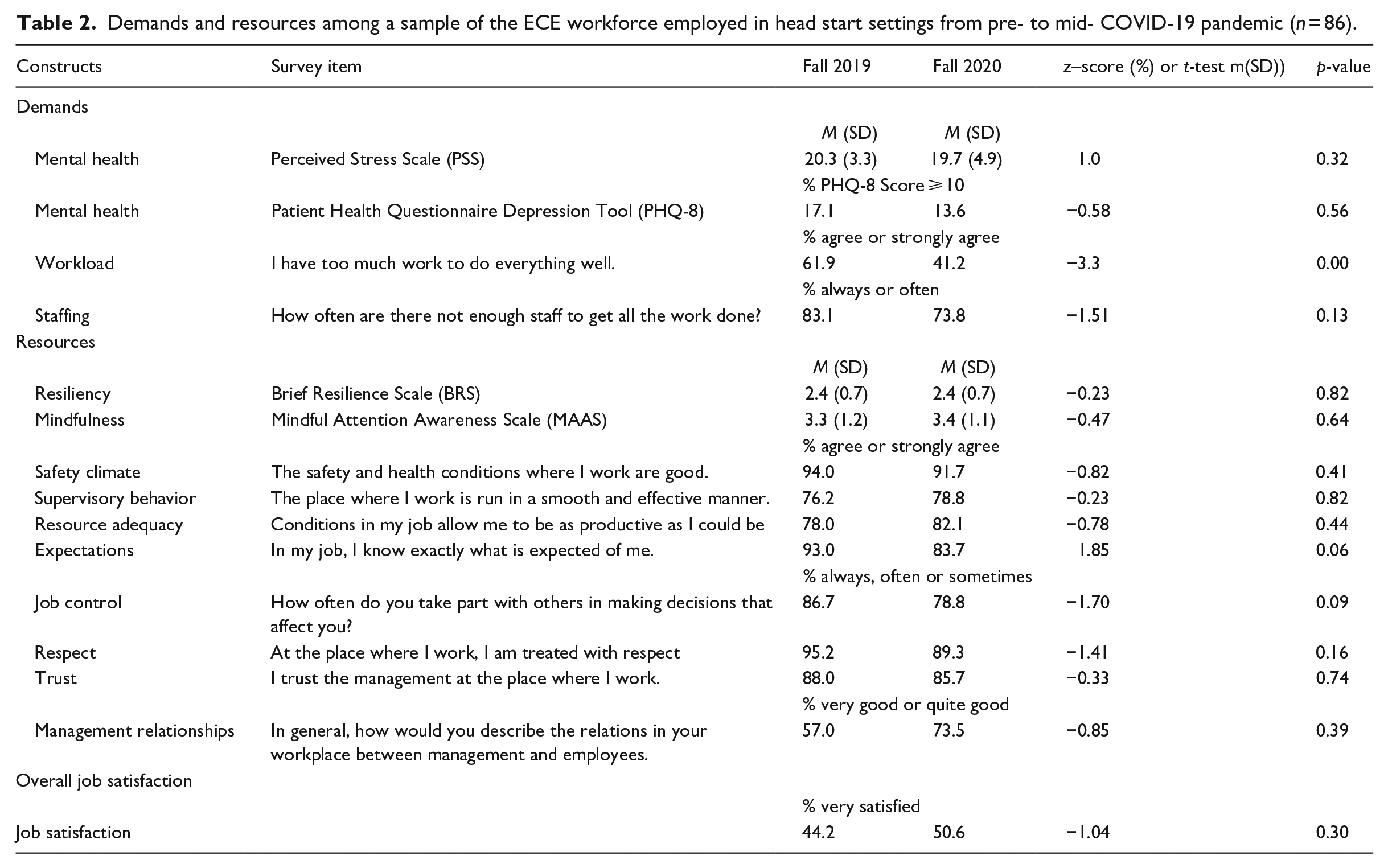
The Quality of Worklife (QWL) module was originally developed as a special section of the General Social Survey (GSS) which is administered through the National Data Program for Social Sciences at the University of Chicago (CDC, 2018). Researchers selected 20 items out of a total of 76 from the QWL module for this survey based on the relevance of the questions to demands and resources faced by the ECE workforce. The items were not analyzed as a scale, but rather as independent items, so the impacts of selecting independent items on the reliability and validity of this scale was not a concern. Constructs assessed included two-single item constructs related to demands (i.e., workload, staffing availability) and 8-single item constructs related to resources (i.e., safety climate, supervisory behavior, resource adequacy, expectations, job control, respect, trust, management relationship). All 76 questions from the QWL module were not included in the survey because of limited time and incentives available for survey completion, as well as limited relevance to the ECE workforce. All variables were dichotomized for analyses based on minimal variation in some of the measures (see Table 2).
Demands and resources among a sample of the ECE workforce employed in head start settings from pre- to mid- COVID-19 pandemic (n = 86).
Worklife satisfaction was also assessed via the QWL question: “All in all, how satisfied would you say you are with your job?” Responses were collected on a 3-item Likert scale (not satisfied, somewhat satisfied, very satisfied) and were dichotomized for interpretation (not satisfied or somewhat satisfied (0), very satisfied (1)).
Data analysis
Data were exported from REDCap in SPSS version 25 for analysis (IBM SPSS Inc., 2012). Univariate and bivariate analyses were run to explore the personal and external demands and resources, as well as overall job satisfaction at T1 and T2. McNemar tests were used to analyze the change in proportions between the pre- and post-dichotomized variable responses. Additionally, paired t-tests were run to compare to pre-post changes in continuous variable responses (perceived stress, resilience, mindfulness). Alpha (α) was set at 0.05; a more conservative correction (e.g., Bonferroni) was not utilized to account for multiple comparisons because of the exploratory nature of this study. To display percent changes in all continuous and categorical variables on one figure, means for the three continuous variables were converted to z-scores and associated percentiles using nationally representative data (from the GSS) were calculated. The QWL module is a joint project between the National Institute for Occupational Safety and Health (NIOSH) and the National Science Foundation and is administered to employed respondents every two rounds of the GSS. These data are representative of working adults in the United States. Percent change pre- to post- was then calculated for all variables and displayed in Figure 2.
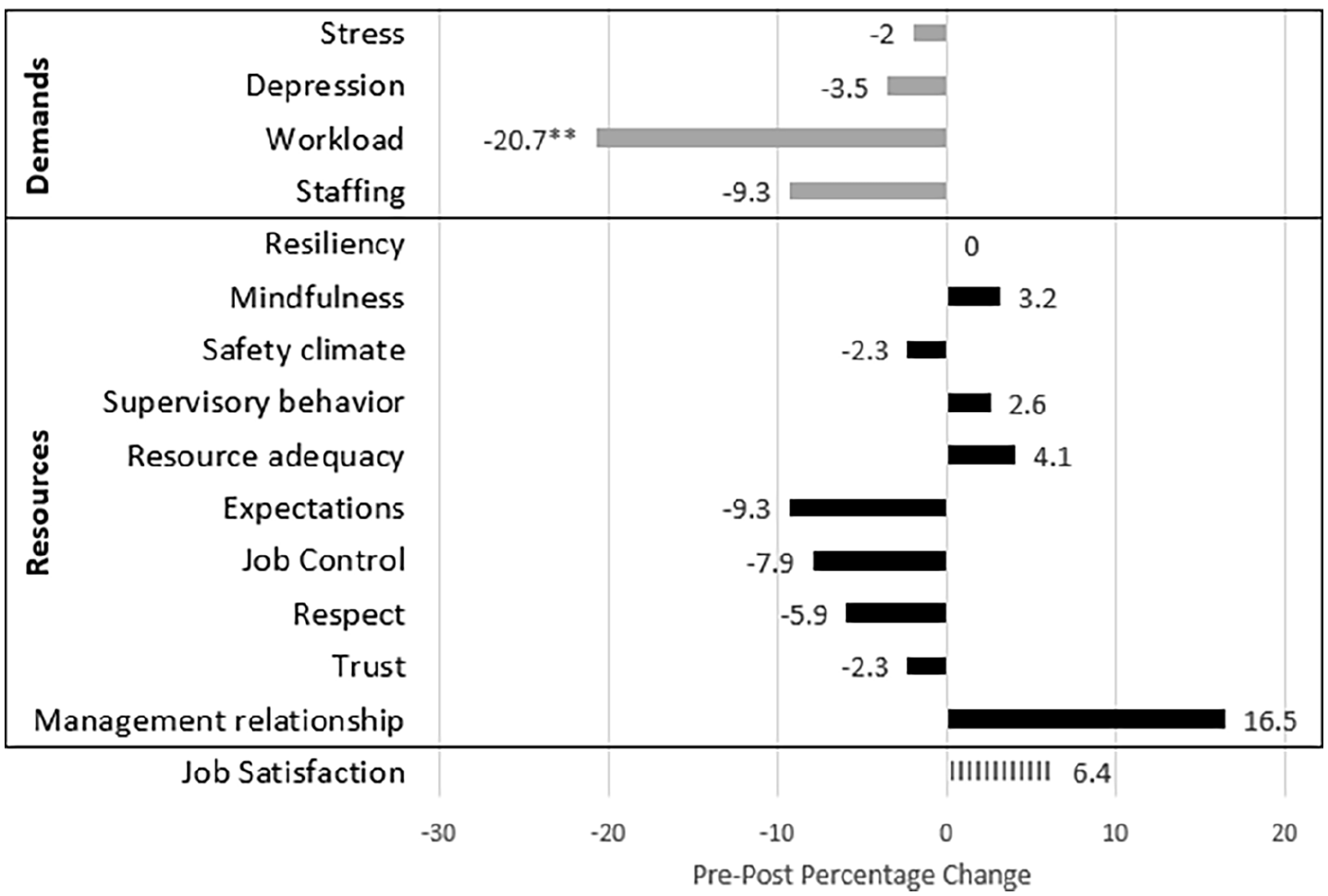
Pre–post percentage change in demands and resources of a sample of the ECE workforce employed in head start settings from pre- to mid-COVID-19 pandemic (n = 86).
Results
Demands and resources assessed via the survey are presented in Table 2. Mental health-related personal demands, such as stress and depression, decreased from pre- to mid-pandemic, but these changes were not statistically significant. However, this sample reported higher levels of depression and stress compared to nationally representative data at both timepoints. For example, 17.1% of Head Start staff at T1 and 13.6% of Head Start staff at T2 reported experiencing moderate or moderately severe depression compared to 8% in the national population (Kroenke et al., 2009). Additionally, on average, Head Start staff in this sample scored 20.3 (SD = 3.3) at T1 and 19.7 (SD = 14.9) at T2 on the Perceived Stress Scale, which are both significantly higher than the national average (means range from 17.4 to 18.4) (Roberti et al., 2006). ECE staff also reported significantly higher external demands, including workload and staffing concerns, compared to the national workforce. In general, external demands also decreased from pre- to mid-pandemic; however only one demand had a statistically significant change, and that was workload. Prior to the pandemic, 62% of Head Start staff reported that they had too much work to do everything well compared to 41% of Head Start staff mid-pandemic (z = −3.3, p < 0.01).
Overall, the results for personal resources were mixed. Resilience did not change at all pre- to mid-pandemic. However, numerous external resources decreased including safety climate, job control, respect, and trust, though none of these changes were statistically significant. Conversely, numerous external resources increased from pre- to mid-pandemic, including mindfulness, supervisory behavior, resource adequacy, and management relationships, though none of these changes were statistically significant. Change in job expectations (93% agreed that they know exactly what is expected for them pre-pandemic compared to 84% mid-pandemic) approached significance (z = 1.85, p = 0.06).
Finally, overall job satisfaction increased from pre- to mid-pandemic, though the change was not statistically significant. Prior to the pandemic, 44% of Head Start staff reported being very satisfied with their jobs compared to 51% mid-pandemic (z = −1.04, p = 0.3).
Figure 2 displays the percentage change for all variables pre- to mid-pandemic.
Discussion
The ECE workforce is a low resourced, yet important segment of the workforce and provides care for our youngest and most vulnerable population (Whitebook, 2018). Significant demands coupled with insufficient resources may be contributing to poor job satisfaction, which can lead to high burnout and turnover rates. Our findings suggest that the COVID-19 pandemic impacted our sample of Head Start staff in Colorado in unique ways and, and some unexpectedly positive ways, potentially shifting the balance of demands and resources in this sample.
Personal and external demands, including poor mental health (i.e., depression and stress), workload, and lack of staffing availability, improved from pre- to mid-pandemic in this sample; nevertheless, only a change in perceived workload was statistically significant. The fact that this effect was detected within this small sample, highlights the magnitude of this positive change related to the pandemic. Head Start staff in this sample were less likely to report that they had too much work to do everything well mid-pandemic compared to pre-pandemic. A decrease in demands may be due to smaller class sizes mandated by statewide regulations during the beginning of the COVID-19 pandemic, and parents choosing to keep their children at home during this time. However, working remotely may have also amplified the demands experienced by many teachers (both ECE and K-12), although that was not detected in our study (Kraft and Simon, 2020). Notwithstanding these positive trends, demands remained high for this sample aligning with studies conducted prior to the pandemic that cited disproportionately high rates of personal and external demands including stress, depression, workload, long hours, and low pay among the ECE workforce (reference withheld; Lee et al., 2019; McMullen et al., 2020; Schaack and Le, 2017).
Although personal resources (mindfulness and resilience) did not change from pre- to mid-pandemic, a recent study points to the importance of personal resources, and specifically mindfulness, with respect to emotional exhaustion and burnout of preschool teachers (Kim et al., 2021). Programs that cultivate mindfulness among Head Start staff may buffer the increased job demands resulting from the pandemic and lead to improved job satisfaction. Head Start teachers reported small changes with respect to external resource access. Safety climate, clear expectations, job control, respect, and trust decreased, whereas supervisory behavior, resource adequacy, and management relationship increased. Though none of these changes were statistically significant, a decrease in understanding job expectations approached significance (p = 0.06). This aligns with a recent study that found the ECE workforce reported limited opportunities for professional development during COVID-19, which coupled with new and changing protocols, amplified confusion related to job expectations and responsibilities (Delap et al., 2021). Additionally, though many of these resources did not statistically change in our sample, prior research in ECE settings suggests that teamwork, respect, and job control are independently associated with less psychological distress (Madill, 2018) and that a lack of sufficient safety protocols during the pandemic amplified stress experienced by the ECE workforce (Schilder and Sandstrom, 2021). Therefore, bolstering these resources given the increased demands resulting from the pandemic is imperative. Pre- and mid-pandemic resources among the ECE workforce are lower compared to the national workforce and are likely significantly related to poorer job engagement, satisfaction, and higher burnout and turnover (reference withheld; Faulkner et al., 2016; Kwon et al., 2020b).
This sample reported a small increase in job satisfaction from pre- to mid-pandemic which may be a result of decreased demands. An increase in job satisfaction and engagement may have direct and indirect impacts on burnout and turnover rates (Grant et al., 2019; Jeon and Wells, 2018; Lee et al., 2019), as well as the quality of care provided to young children in ECE settings and resulting in healthy developmental outcomes (McMullen et al., 2020). However, job satisfaction reported mid-pandemic remained low in this sample of Head Start staff. Prior to the pandemic, a 2017 study discovered that turnover rates among Head Start staff in Colorado ranged from 16% among lead teachers to 40% among floating teachers. Nearly 70% of directors reported difficulty filling teacher positions and reported that staff left to seek better wages, jobs, and careers outside of ECE (Schaack and Le, 2017). A recent study conducted during the pandemic revealed stressors that have been amplified during the pandemic, including learning to adapt to new teaching strategies and job requirements, increased anxiety about health and safety, communicating with parents, and helping to support administration, which can lead to increased turnover and burnout rates (Pressley, 2021). Though findings from the current study suggest potential improvements in the imbalance of demands and resources among this sample of the ECE workforce, the impacts of the pandemic are complex and complicated. Despite the pandemic-related hardships, it is important to focus on the “silver linings” of COVID-19 with respect to the ECE workforce and implications for policies that can promote job satisfaction and associated outcomes post-pandemic (e.g., decreasing workload).
This study is not without limitations. The sample size was relatively small and consists of 52% supervisors, which limits our ability to detect significant effects and explore the impacts of the pandemic specifically on Head Start teachers who are often lower-resourced. Additionally, the authors recognize that these data present findings from a sample of Head Start staff who continued working at their ECE centers throughout the pandemic and reflects a 67% retention rate; this may represent a biased sample because these individuals may be less likely to turnover and experience burnout compared to the overall ECE workforce. Before the pandemic, 34% of the full sample reported being very satisfied with their work compared to 44% of the final analytical sample included in this study; therefore, individuals who were less satisfied may have been less likely to complete the post-survey (and were potentially more likely to have left their positions). The demands reported in this sample both pre- and mid-pandemic remained extremely high which further highlights the importance of increasing supports for this low-resourced segment of the workforce.
Conclusion
The ECE workforce experiences many demands, with few resources, which may impact physical and mental health disparities, poor job satisfaction, and longevity in the field. Although COVID-19 may have mitigated some of the demands in this sample, significant demands remain. Additional longitudinal studies using mixed methods are needed to better understand the impacts of a national public health crisis, such as the COVID-19 pandemic, on the ECE workforce including variations across locations, center-types, and populations served. These findings suggest that policies and programs that focus on decreasing the workload of Head Start staff and potentially strengthening management relationships could lead to improved job satisfaction, thus resulting in decreased burnout and turnover among this sample of the ECE workforce. These improvements may then lead to higher quality care and improved outcomes for the children in early care and education settings.
Footnotes
Acknowledgements
The authors sincerely thank all the early childhood education providers who participated in this study.
Declaration of conflicting interests
The author(s) declared no potential conflicts of interest with respect to the research, authorship, and/or publication of this article.
Funding
The author(s) disclosed receipt of the following financial support for the research, authorship, and/or publication of this article: This study was funded by the Colorado Health Foundation [#16770]
