



Abstract
Participation in sports and physical activities is perceived as a means of increasing well-being and foster social inclusion of refugees in their new host societies. However, researchers criticize the existing approaches in sports-related integration-programs for not taking into account the specific needs and interests of refugees. The purpose of this study was to investigate how female Syrian refugees in collaboration with the municipality and sport and exercise providers could tailor PA to female refugees’ wishes and needs. Based on community-based participatory research (CBPR), the study was inspired by a two-phase preparatory intervention model. The initial results indicated that the involved refugees had a broad understanding of PA, awareness of its beneficial effects, a desire to be physical active in a variety of ways and with others, and had experiences with PA from both Syria and Denmark (primarily related to daily routines, recreational activities, and activities with their families). Furthermore, an “expectation gap” between the sports/exercise providers and the refugees concurrently identified the need for preparing providers to work with refugees. Co-creation has demonstrated that collaboration between the refugees and local actors could prove a vital approach when utilizing PA in refugee groups.
Keywords
Introduction
In 2015, the flow of refugees and migrants coming to Europe reached over one million individuals (Clayton, Holland, & Gaynor, 2015). Since then, migration and refugee influxes have decreased due to national and European policies enforced to stop the development. However, many countries are now attempting to somehow cater for large refugee groups (in particular those with a Syrian background), which, especially when it comes to health issues, may pose a challenge to the health care systems of many countries (WHO, 2018). This is due to the fact that refugees in general have a poorer state of health than the receiving population and their condition often deteriorates while the refugees await decisions about their application for asylum (Eckstein, 2011; Gerritsen et al., 2004). Currently, the political and societal focus on refugee health is in many European countries, such as Denmark, limited to a medical examination or counselling treatment in severe cases (e.g. depression and PTSD). Active health promotion, including a focus on physical activity (PA), mental health and social well-being, is not systematically part of the integration process of refugees in Denmark (The Ministry of Immigration and Integration, 2017).
PA and exercise are widely recognized as contributing to better health, broadly defined as social, mental and physical well-being (WHO, 1948). Furthermore, research suggests that participation in sports and PA may support refugees’ involvement in their new host society, potentially leading to empowerment (Block & Gibbs, 2017). Even so, newly arrived refugees are lees engaged in sports and recreation activities than their native-born peers (Robinson et al., 2019). One reason could be that the dominant approach in many health-programs targeting refugees is often based on what amounts to a one-way process, where refugees are expected simply to adapt to the existing options (Agergaard, 2018). Because of this, the existing exercise and health-programs have been criticized for not taking into account the knowledge of refugees’ different approaches to health and PA (as well as their previous experiences) (Agergaard, 2018). Their former lifestyle undoubtedly plays a role in their approaches to physical activity. But the situation appears to be that very little knowledge exists on how health-promoting efforts can be organized in order to reduce the top-down client-like way of engaging refugees and lower their dropout rate from such programs in the long-term (Agergaard, la Cour, Gregersen, 2016). The current approach in many sports-related integration projects is criticized for being top-down-controlled (Rosso & McGrath, 2016), often taking an assimilative approach (Nadeau, ÓReilly, Scott, 2016), and generally regarding refugees as a homogeneous group (Spaaij, 2013). Furthermore, sports providers often try to integrate refugees and immigrants into existing mainstream clubs and structures, which many studies have shown to be a problematic approach (Jeanes, ÓConnor, & Alfrey, 2015; Rosso & McGrath, 2016). In addition, Spaaij (2013) concludes that, if the desire is to promote inclusive and safe sports environments for people with refugee backgrounds, then it is essential to understand the process as dialectical and the adaptation as reciprocal.
Action research and collaborative approaches may provide a way to counteract the above-described criticism. Moreover, action research is outlined in the literature as approaches that prioritize underrepresented voices (Pearce, McMurray, Walsh, & Malek, 2017) and focus on empowerment based on, in this context, cooperation between the target group and the local actors in society (Stringer, 2008).
Thus, the purpose of this study was to investigate how female Syrian refugees in collaboration with a municipality and sports and exercise providers could tailor PA to the needs and wishes of female refugees. We applied a gender perspective, focusing specifically on females with ethnic minority backgrounds who are particular (compared to male refugees) rare member of sports organizations or partaking seldom in physical activities (Sawrikar & Muir, 2010).
Theory
Defining action research is a complex challenge as it has emerged from and is composed of several different research directions (Brydon-Miller, Greenwood, Maguire, 2003). However, there is agreement within action research that the original idea derives from Kurt Lewin (1946). Lewin challenged contemporary research by suggesting that the human motivation for development is linked with action (Lewin, 1946). The premise in this thinking is that, if an individual is to change, the likelihood of this happening is greater if the individual experiences participation and has some responsibility within the decision making (Reason & Bradbury, 2008). As Peter Reason & Hillary Bradbury explain: Action Research is a participatory process concerned with developing practical knowing in the pursuit of worthwhile human purposes. It seeks to bring together action and reflection, theory and practice, in participation with others, in the pursuit of practical solutions to issues of pressing concern to people, and more generally the flourishing of individual persons and their communities. (Reason & Bradbury, 2008: 4)
Action and reflection are thus central to action research, and the process that this involves is supported by theory (used as guidelines) as well as practice in collaboration with others (Reason & Bradbury, 2008). In action research, it is important to involve the participants, organizations and other stakeholders in the research processes through co-creation and the development of shared opinions then form the basis of the results (Kemmis, 2009).
This study is designed as community-based participatory research (CBPR), which is characterized by a cooperative approach that engages community members and researchers alike in a co-learning process (Minkler & Wallerstein, 2008). This design is intended to empower the participants (in this study Syrian females), and supporting the capacity of the local community – here by means of collaborating with relevant municipal and civic actors (Minkler & Chang, 2013). The design may also contribute to develop social relations among newcomers, who often experience a loss of community after leaving their home countries (Waardenburg, Visschers, Deelen, van Liempt, 2018). Also, a CBPR design may help build up social support, something that has been shown to be significant for migrants to become and remain physically active (Wieland et al., 2015). By using this approach, the study seeks to create a degree of social justice for a group who are currently facing challenges in terms of life circumstances and health (Reason & Bradbury, 2008).
Background, partnership and participants
This study took place in the fall of 2018 as a separate strand within a larger project called “SundSam”. 1 SundSam was developed as a partnership between the municipality of Silkeborg and Aarhus University with a shared interest in health promotion among refugees and in the long-term development of a community-based project targeting health promotion activities. One of the intentions was that the project should be meaningful to the refugees a group rarely included in such activities. In addition, the project is important from the refugees’ perspective because it focuses on improving their possibilities for attaining better health. Silkeborg Municipality 2 is a medium-sized Danish municipality, which in the recent years has received what is relatively speaking a large number of refugees (500+ a year), mainly from Syria and Eritrea, and this has sparked the municipal interest in this specific minority population. The present study involved collaboration between the municipality (represented by a municipality representative), a sports club (represented by a board member), researchers and a group of female Syrian refugees.
The female refugees who settled in the municipality of Silkeborg originated from Syria, and this makes them part of the biggest group among all recent refugees in Denmark (The Ministry of Immigration and Integration, 2017). Selection criteria for the female Syrian refugees participating in the project were that their age should be between 20–40 years and they should be newly arrived. The females had either fled from Syria or had come to Denmark because of family reunifications within the last three years. All were married and had children. The majority of the females had lived in big cities in Syria, but some also came from smaller villages throughout Syria. The refugees involved were recruited through a contact person at the language center, Sprogcenter Midt. The contact person was a teacher at the language center and worked with female Syrian refugees on a daily basis, she thus had a closer relation to the participants than any of the researchers. Several times a week the participants practiced Danish at the language center, which is also where the co-creation activities physically took place. Thus, the project was carried out in an environment safe and familiar to the female refugees. For pragmatic and ethical reasons, the female Syrian refugees were not directly involved in the formulation of the study’s research questions, nor the choice of the project design. When refugees arrives to a new country, they might be in a precarious situation trying to fulfill demands and expectations form different sides (e.g. public administration, internship and language education) (Ryom et al., under review). We did not want to contribute with further cross-pressure by demanding involvement from the female refugees in the beginning phases of the establishment of the project. However, the female Syrian refugees were essential co-creators of the development of the proposal of future sports and exercise offers, which might in turn affect the project designs of future studies. With additional capacity building and training, the female Syrian refugees could have had a more central position in this study. However, system-level demands on the female Syrian refugees, prevented this, as the main objective from the municipality and Danish state are job readiness as a sole focus for newly arrived refugees in Denmark (Ryom et al., 2020).
The sports and exercise provider (practitioner) partaking in the partnership was selected in light of whether the values and visions of the sports club harmonized with the aim of the project; in effect, we were looking for a sports club that was willing to co-create with a group of people who are seldom represented in Danish sports clubs. With this in mind, a local sports club (represented by a board member) was invited to participate because of its philanthropic approach and its vision about PA for all, as described on the club’s website. The role of the sports club was to develop and describe the opportunities for creating an exercise offer for – and with – the female Syrian refugees in the locality of Silkeborg.
Method
This study is inspired by a framework for developing health promotion interventions described by Hawkins et al. (2017). The original framework (Figure 1) consists of three stages: (1) Evidence review and stakeholder consultation; (2) Co-production; (3) Prototyping.
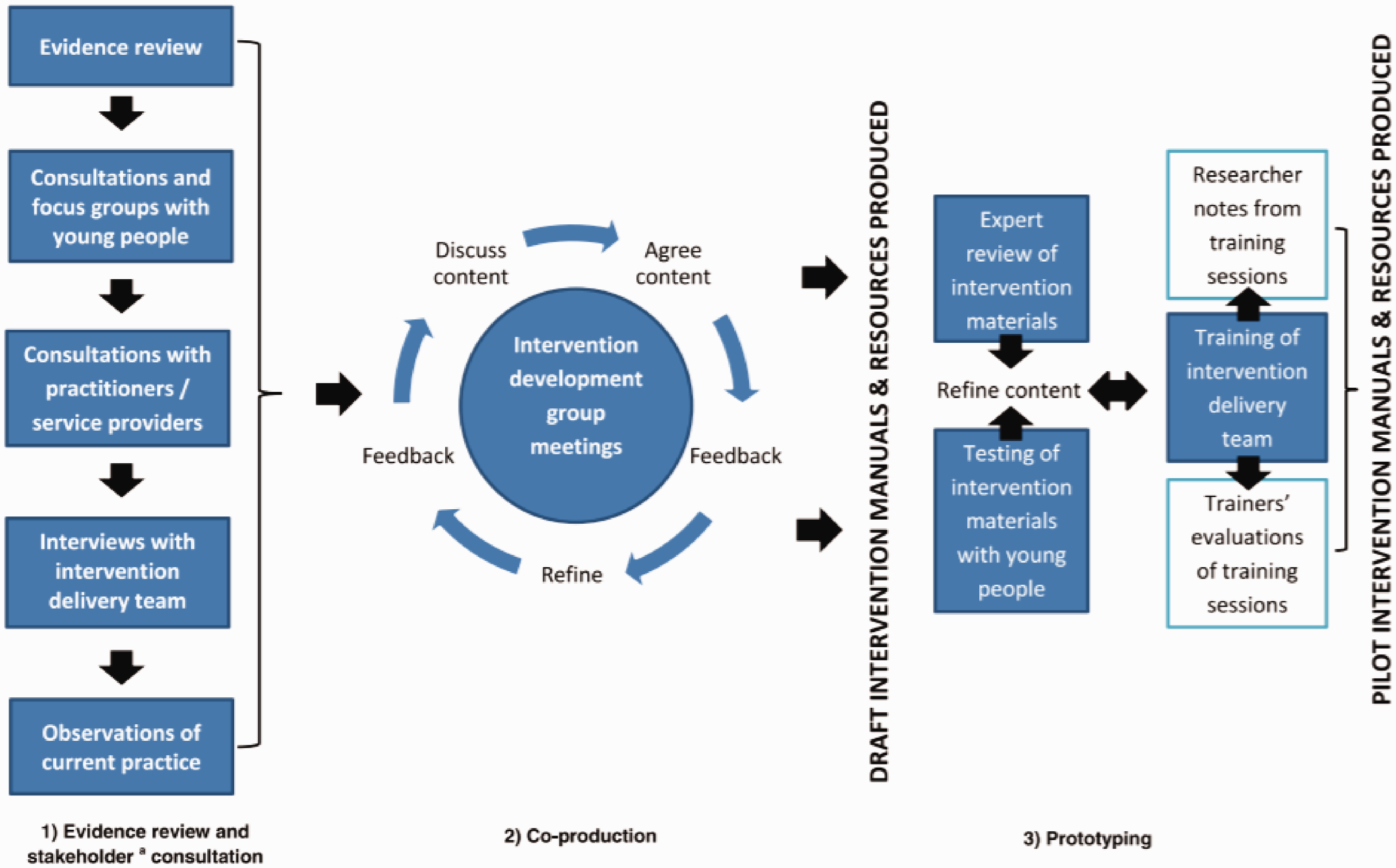
The three-stage framework by Hawkins et al. (2017).
Unlike the original framework this study does not, at first focus on prototyping (phase 3). Rather, this study is focusing on the establishment of partnership between local actors and the target group and can be described as an intervention preparatory study. The aim of this study was, therefore, to initiate preparation for future interventions that may be developed and in the long term implemented (though those aspects are not within the scope of this study). Thus, the study adopted a bottom-up perspective in which knowledge possessed by participants was fundamental to the development of relevant PA offers (Carey & Braunack-Mayer, 2009). Simultaneous, the study focused on practice and development within the setting where action is required, aiming to close the gap between practitioners and theorists. This presupposes that the researcher and the practitioners both engaged in a shared learning process (Kemmis, 2009). This involving approach may also lessen the challenges that often arise when traditional research transfers to – and is applied in – concrete practices (Steen, Kuijt-Evers, Klok, 2007). This study, then, was designed as a model consisting of two phases; (1) Mapping (Knowledge foundation) and (2) Workshop (Discussion and development of ideas) (see Figure 2).
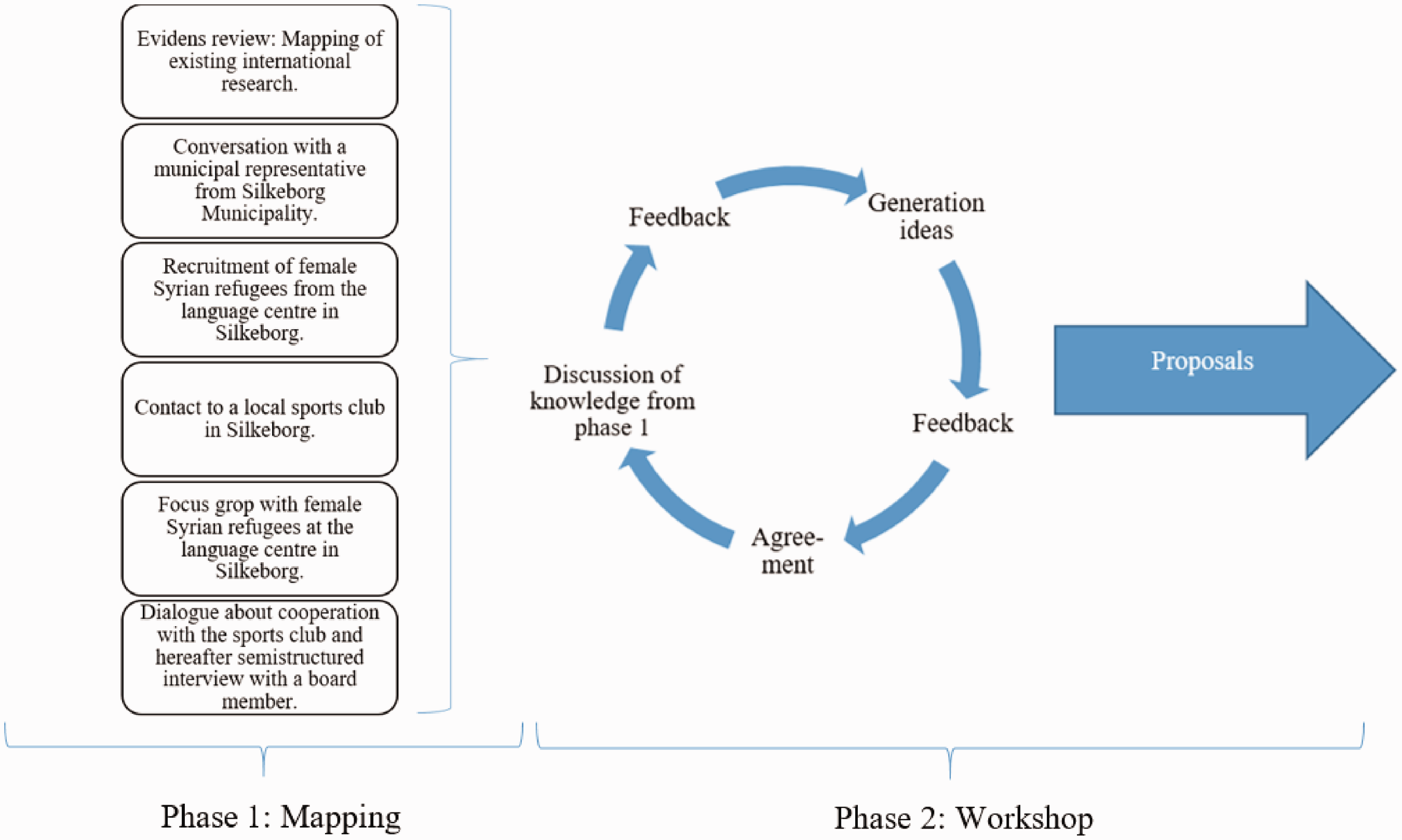
The study design divided in two phases (inspired by Hawkins et al., 2017).
Phase 1: Mapping (knowledge foundation)
Through a comprehensive review of available evidence involving international research, the existing knowledge about how sports and PA are used in the resettlement process of refugees was collected and organized. The inspiration for doing this came from scoping reviews in terms of summarizing and disseminating research findings as well as underpinning the main sources and types of evidence available. Drawing on the scoping review approach was useful in identifying gaps in the existing literature concerning refugees and PA (Arksey & O’Malley, 2005). In order to combine clarity in our work with a novel scoping review, we took inspiration from the Preferred Reporting Items for Systematic reviews and Meta-Analyses extension for Scoping Reviews (PRISMA-ScR), which aim to increase the methodological transparency. That guideline was therefore used within the study, with a few modifications to accommodate the aim of our study (Tricco et al., 2018).
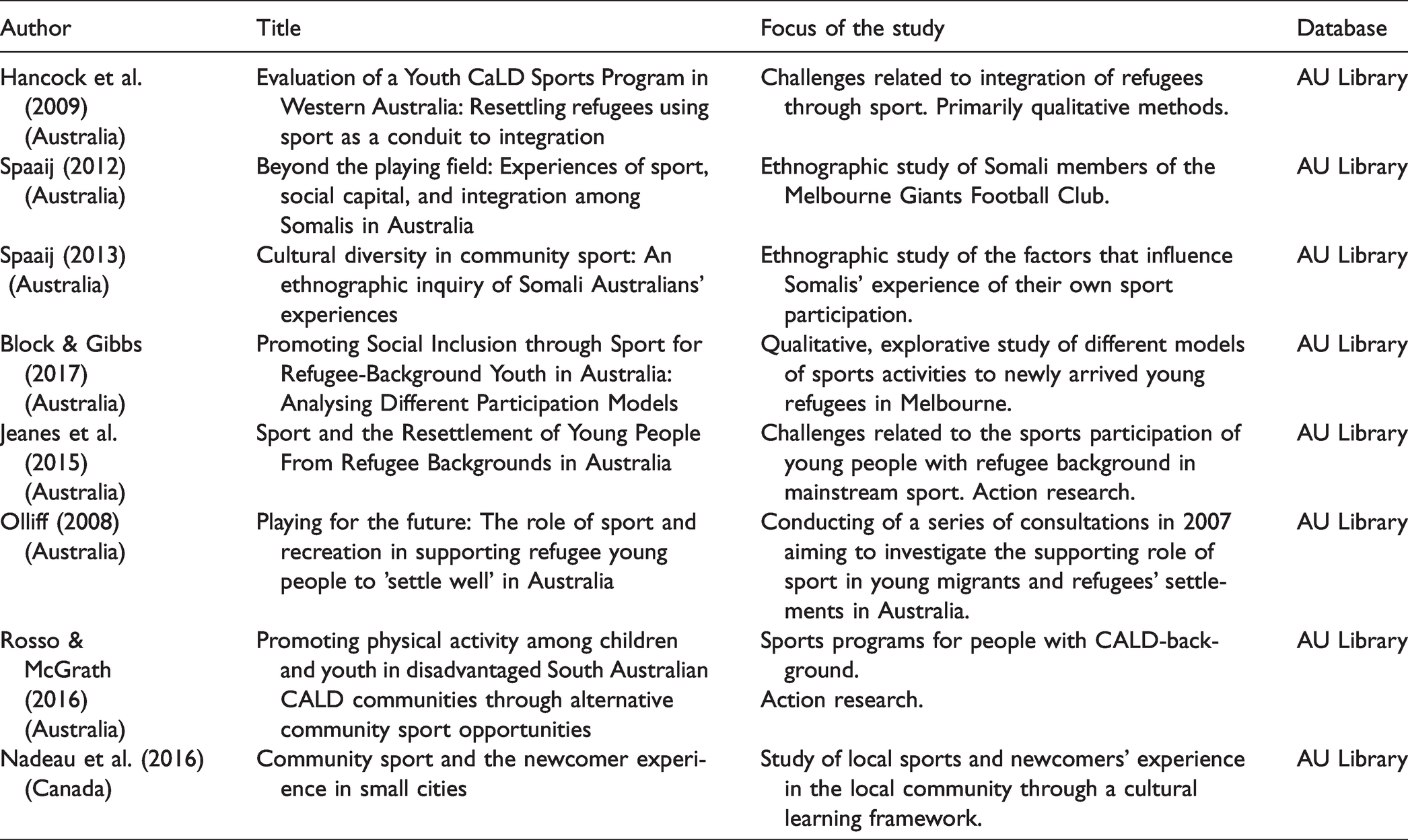
To obtain knowledge on the most recent literature, the studies included in the review were at most fifteen years old. The target group in the literature review were mainly refugees, but studies that were relevant to this project, but used related words such as “newcomers” or “immigrants”, were also included. We coupled these terms for the target group with words such as “Sport” and “Physical activity”. Table 1 summarizes the studies included in the literature review.
Results of the literature review.
In addition to the scoping review, information about the critical situation in Syria was investigated (through media and websites) in the attempt to get a sensitive feeling for what many refugees have witnessed prior to their arrival in Denmark.
Further, an introductory open document analysis of different sports club websites gathered insights into existing options and offers of PA within the municipality of Silkeborg. This was brought into play in the informal interview with the municipality representative from Silkeborg Municipality. Through this interview, knowledge of experiences with exercise offers for refugees and other ethnic minorities in the municipality was collected.
A focus group session (described later) involving four female Syrian refugees and aiming to map the perspective and knowledge of the participants was held at the language center. The knowledge thus produced together with the female Syrian refugees was analyzed and a brief version of the content is presented in Figure 3. The figure functioned as a supplement and reference point during the interview with the local sports club, which also took place in this phase of the process.

Display of female Syrian refugees’ experiences with, perception of and preferences for physical activity. PA: physical activity.
Phase 2: Workshop (discussion and development of ideas)
The iterative co-creation process during phase 2 was inspired by the approach to the work process present in action-research (see Figure 2). The process took the form of a workshop (lasting one and a half hours) where representatives form phase 1 (municipality, sports club, refugee and researcher) met at the language center, discussed the knowledge produced during phase 1 and, on the basis of this, developed ideas and proposals for future initiative (activities) by means of debate, evaluation and refinement. The representative for the female Syrian refugees was deliberately not a participant of phase 1 (the focus group), and she was therefore able to both reflect on the results from the focus group of the previous phase and simultaneous participate in the development and discussions of the proposals treated during the workshop. This generation of ideas resulted in concrete proposals about ways in which PA in the municipal may be adjusted to the target group’s experiences, understandings and needs.
Data collection in the field (phase 1 and phase 2)
As suggested by action research, the method applied in the study should not only be useful to the creation of knowledge, but also beneficial to the participants involved (Koshy, Koshy, Waterman, 2011). Thus, the focus group session, the individual interviews and the workshop were all used in the data-creation process of this study because those methods promote reflection while simultaneously offering a way in which the participants may learn something new about themselves – and one another (Minkler & Wallerstein, 2008; Reason & Bradbury, 2008).
Focus group (phase 1): female Syrian refugees
Focus group as a methodological approach represents a way in which data generation become an interactive process between the members of the focus group (Halkier, 2010). Accordingly, opinions and viewpoints from all participants are essential and their shared understanding is the output. This study used a focus group in order to collect the female refugees’ experiences as well as obtain an awareness of their understandings of PA and their barriers against PA. The focus group session employed the funnel approach, where questions at first are open and broad, but gradually become more narrow and specific (Owens, 2007). Six topics, prepared ahead of the focus group session, shaped the conversation. In addition, the participants were presented with different reflection exercises (e.g. they were to choose pictures of different kinds of physical activities) whose aim was to facilitate the discussion. Language barriers were taken into consideration in the sense that clear language and short questions were used (Brinkmann & Kvale, 2014). Furthermore, an interpreter was present to assist the communication between interviewer and the female refugees and to provide an atmosphere of trust and security.
Informal interview (phase 1): The municipality
During the initial phase of the project, an opportunity to conduct an interview with a representative from the municipality arose. Because of the circumstances, the interview took the shape of an informal conversation orientated around subjects formulated before the meeting (Thorpe, 2012). The conversation was important in terms of selecting and establishing the contact to the sports club and to identify the previous experiences of the municipality with helping refugees or other ethnic minority groups to become more physically active. The aim of the meeting was, moreover, to clarify the municipalities role in the further co-creation process (phase 2).
Semi-structured interview (phase 1): The local sports club
Knowledge about the experiences and expertise of the local sports club was collected through a semi-structured interview with a member of the board of the local sport club. The qualitative semi-structured interview is a way of shedding light on the perspective of the person being examined. The semi-structured approach allows the interviewer to stray from the interview guide and follow whatever direction the interviewee chooses to pursue. Open and in-depth questions represented the interview technique, which was chosen to avoid brief replies (Brinkmann & Kvale, 2014). In the debriefing stage, the board member agreed to participate in phase 2.
Workshop (phase 2): Key-representatives from phase 1
Inspired by Hawkins and colleagues’ co-production-stage (2017), phase 2 was organized as a workshop. The workshop offered a method whereby participants from different fields and with different understandings could meet face-to-face and interact with each other (Leask et al., 2019). In this way, knowledge was produced in the collaboration between representatives from phase 1 (municipality, sports club, and a representative of the female Syrian refugee) while a researcher acted moderator (Tausch & Menold, 2016) and an interpreter translated when needed. In the first part of the workshop, the researcher presented the results form phase 1 (verbally explained and visually presented in figures exemplified in Figure 3) and the participants then discussed these. Based on this discussion, the second part of the workshop, the stage of generating ideas, took place (Hawkins et al., 2017).
All interviews, focus group session and workshop were transcribed verbatim. Arabic language and quotes were translated with the help of the interpreter. Informed consent was collected from all persons involved.
Data analysis (phase 1 and 2)
Due to the fact that the project takes its inspiration from action research, the analysis was not driven by theory but dwelt instead on the process involved in the study (Kemmis, 2009). This means that a well-documented analysis embedded in the participants’ utterances is important to achieve a well-founded interpretation. Therefore, the criteria for interpretation was the participants’ self-understanding, and that the participants’ utterances was understood literally (Brinkmann & Kvale, 2014).
The strategy of the analysis was to code the content (as well as its meaning) (Creswell, 2007). This fits with the dominant focus of the study on the participants’ experiences and understandings. The argument for employing this technique is that, in this context, it does not make much sense to focus on the interaction or the discursive practice, because the interpreter translated the participants’ linguistic actions and this translation will not use exactly the same wordings or idioms as the participants have used in their mother tongue (Morville & Erlandsson, 2016). The analysis operated with an inductive and open approach, investigating the data material without any preconceived expectations. The analysis started with an open coding, where the content of every text-passage was deduced and described in summaries. The argument for using this strategy was to let the data itself speak (Blair, 2015) and the participants’ voices become known. Afterwards, the sense and meaning contained in the content of the data were structured by means of a systematic coding in the program Nvivo12. To every passage, labels were added and organized through the program. In this way, the coding became more closed and classified hierarchically in main-codes with associated sub-codes. The coding and analysis was carried out by a researcher and the participants have not been part of this process because it would have involved an analysis and coding in both Danish and Arabic and afterwards a triangulating by one who could understand both language and who possessed the qualifications of a researcher. As stated earlier, with additional capacity building and training, the female Syrian refugees could have had a more central position also in the data analysis, however system-level barriers prevented this in this study.
Findings
This section is divided into two separate, yet intertwined, phases in accordance with the design of our study (inspired by Hawkins et al., 2017): Phase 1 (mapping) and phase 2 (Workshop).
Phase 1: Mapping (knowledge foundation)
[…] you don’t have to perform a specific kind of exercise or a specific kind of sport. Just that you get up in the morning and move, give the children clothes on and make some coffee, actually that provides movement […]. (Female Syrian refugee, 24 years)
An important perspective on PA was related to the ways in which the participants described their life in Syria – before the war. They characterized life in Syria as filled with aspects pertaining to cooperation, community, more time and surplus, and the women described their life as orientated primarily around domestic duties. The participants elaborated that it was normal for Syrian women to engage in PA in the form of dancing, running or fitness, but also through participation in organized sports, such as handball and taekwondo. However, the participants’ own experiences with PA in Syria were described mainly as an added bonus through family excursions (related to play and socializing) and partly through movement incorporated into the daily routines of household, shopping and (for some) job. None of the women were members of sports clubs in Syria, although some had a few experiences with training in a fitness center in a big city. As such, the participants seemed to describe an ideal of PA in Syria, which contrasted with their own actual life.
In Denmark, the female Syrian refugees’ experiences with PA were mainly related to recreational activities in the natural environments together with close family during weekends and to movements in daily life, such as routines within domestic duties, job internship, and walks. In many ways, their Danish experiences align with their experiences of PA in Syria. All the participants elicited an interest in becoming more physically active and had various preferences for how to achieve this. The majority described a need to do PA with others (other women or family members) and to engage in activities like dancing, aerobics, exercises in fitness centers, learning to ride a bike and to be active out in nature. However, different barriers obstructed the participants’ ability to just go out and be more active in Denmark (Ryom et al., 2020). These include intrapersonal barriers (e.g. fatigue, back pain, obesity and the lack of skills, mental energy and time), but also interpersonal (e.g. inadequate language skills) and structural barriers (e.g. the cold Danish climate, economy, transportation and the requirement to shower after training) (see Spaaij, 2013, for an elaboration of the categories used to describe barriers against PA).
“[…] challenges would definitely occur with the bilingual persons because you do not have the same approach to this kind of stuff […]. It is not because of bad intentions that they arrive late or sit and talk [instead of doing exercise] but it is just the attitude, so this is what you [as coach] have to be prepared for […]”.
This quote illustrates the core of the challenge: the approaches, expectations and attitudes of the ethnic minority women and those of the coach conflict with each other, because they do not hold the same understandings of what it means to participate in a Danish sports club. The women are not familiar with the implied unwritten rules about life in an association or sports club. If coaches and sport providers do not understand or accept the participants’ attitude and understandings of PA, a clash of mentality may occur, and this in turn may prevent minority women from seeking out such offers.
“…sometimes there is an understanding gap… it would be great if you could come up with some models, activities or offers, which could solve or reduce the gap between the newcomers and the associational life [sporting life; ed.]”.
Furthermore, the municipality representative also pointed out a non-focus with regards to the integration of ethnic groups, refugees or migrants within the municipal department at the time of the study. According to the municipality representative, the policy in the area is not clear and therefore it is not decided who was to be responsible for the integration of refugees: the departments of the municipality or the sports clubs.
Phase 2: Workshop (discussion and development of ideas)
In the collaborative co-creation process of the workshop, five concrete proposals took form:
1. Mother/children weekend training
This proposal consisted of weekend training sessions, where mothers could be physical active together with their children. The representative for the Syrian refugees was very positive towards the proposal. The sports club expanded the proposal by suggesting that Arabic-speaking females could become trained as instructors, so that in the long term they could manage the team by themselves. In addition, the Syrian refugee was asked whether she wanted to become an instructor and she responded: “Yes, that would be a very good idea, if it could be possible”.
2. A Guide to outdoor facilities in the municipality of Silkeborg
This proposal was to develop a guide containing information about the freely available offers and outdoor activities within the municipality. The proposal was discussed and the sports club and the municipality debated on who should be responsible for developing the guide. They did not came to any solution on this matter. Further, the Syrian refugee expressed neither positive nor negative attitudes to the proposal. It was therefore unclear how important the participants found the proposal.
3. PA (as part of the scheduled activities) at the language center
The third proposal was to make PA a mandatory part of the Danish education at the language center. During the course, participants would become acquainted with different activities as part of their language education, and the board member of the sports club offered to make use of their facilities located near the language center. This could be a way of introducing the municipality’s different offers to ethnic minority groups. However, such an offer would require representatives from sports clubs to do the actual PA, as teachers at the language center should/could not be expected to take on this task.
The participants expressed how they saw several advantages to integrating PA into the process refugees have to go through when they arrive in Denmark. It might be easier to (begin to) be active when it is something you have to rather than something you can do. Further, the proposal might lessen some of those barriers related to PA that have been pointed out in this study (e.g. transportation to the location and financial barriers). However, the participants discussed that PA as part of the language center’s timetable could have a negative impact on the amount of Danish language lessons and perhaps on the amount of language they would learn, and it is hard to tell how the official legislative authorities would respond to that.
4. One weekly day of PA and health
As an expansion of proposal 3, it was suggested that one of the weekly internship-days (a requirement of the integration program) could be replaced with a weekly health day (focusing on diet and exercise). This proposal accommodated the refugee representatives’ wish for advice on health and diet and, according to how the board member described it, the proposal would include several desirable aspects by involving advice on diet, PA and language learning.
5. PA (as an offer) – Before or after the language lessons
As an alternative, it was suggested to offer PA either in continuation of or before the language lessons. The offer would still be part of the daily routine at the language center, but the representative of the female Syrian refugees was not very positive about doing PA after the lessons because she is generally very tired in the afternoon and occupied with family obligations. However, she was less dismissive about the morning proposal.
Process-related considerations
In accordance with the adoption of a bottom-up perspective, the design of this study is based on the involvement of the target group as well as local actors in the development of PA offers, and there are several advantages to this. First of all, the participants become co-owners of the initiative and this may increase the chance of maintaining the participation of the target group in a future offer (Leask et al., 2019). Secondly, the participants are considered co-creators; hence, the production of knowledge is a joint realization between the researcher, stakeholders (including practitioners) and citizens in the local context, and this approach differs from several other traditional schools of academia (Israel et al., 2008). The degree of participant engagement can be described on a continuum going from minimum necessary consultation to maximum engagement as “co-researchers” who co-design the work in action research (Bradbury-Huang, 2010). The participants in this study has not directly been involved in the initial framing of the study. However, the municipality, sports club and refugees are considered as co-creators as they have played a fundamental role within the study since their knowledge and perceptions were what drove the generation of ideas; thus, their engagement was essential to the development of future activity proposals.
In this study, the reflective process involved a transnational perspective in the sense of acknowledging that individuals (here Syrian female refugees) may feel that they belong to several nations and spaces at the same time (Dahinden, 2009). During this study, the Syrian female refugees were requested to look back on their lives in Syria – a place from which they have become physically and chronologically distanced, but to which they remain emotionally connected (Boccagni & Baldassar, 2015). This underlines the importance of a sensitive approach to all participants involved – and to encourage an awareness of a transnational perspective in future work.
Even though this study aims to prepare and not implement initiatives, the intention is to develop an awareness about the potentials of co-creation and to outline further research. The potential of the co-creation-process is, among others, exemplified in the connection that had become established between the sports club and the representative from the female Syrian refugees after the workshop since an open dialog about further involvement in the development of exercise offers was established between both parts. The study is in this way “unfinished”, but simultaneously spur further evolvement (Reason & Bradbury, 2008). This paper may serve as an inspiration for how to co-create with refugees and local stakeholders in an intervention preparatory process.
Conclusion
The study communicates a mapping of female Syrian refugees’ perceptions of and experiences with PA and subsequently uses co-creation to develop knowledge of the meeting between ethnic minorities and Danish sports clubs. Our mapping shows that the refugees involved had a broad understanding of PA, awareness of its beneficial effects, a desire to be physically active in a variety of ways and with others (other women or family members), and that they had experiences with PA from both Syria and Denmark (primarily related to daily routines, recreational activities, and activities with their families). Furthermore, an “expectation gap” between the sports clubs and the refugees identified the need for preparing sports clubs for how to work with ethnic minorities.
The approach of the study has revealed the challenges and potentials associated with an intervention preparatory co-creation model, where the target group is involved as co-creators. Collaboration between participants with different backgrounds and different languages may be challenging. However, the study also highlights the significant potential that comes with involving refugees, a group often excluded from research processes. By virtue of this approach, the refugees were heard and seen, and this in turn may promote empowerment within the group.
Footnotes
Acknowledgements
We would like to thank the Municipality of Silkeborg, the language center, the local sports club and, not least, the female Syrian refugees for their engagement and cooperation in this co-creation process.
Declaration of conflicting interests
The author(s) declared no potential conflicts of interest with respect to the research, authorship, and/or publication of this article.
Funding
The author(s) received no financial support for the research, authorship, and/or publication of this article.
