



Abstract
Synthetic Biology (SynBio) has emerged as the fastest-developing technology in human history, rapidly transforming industries by enabling novel biological system designs. This paper examines SynBio’s influence on architecture and construction, focusing on the evolution from Engineered Living Materials (ELMs) to Programmable Living Materials (PLMs). This paper is organized into four sections. The first introduces the field of SynBio and its initial impact on architectural design. The second section highlights contemporary ELM biomaterials projects and presents a taxonomy of emerging biomaterials in architecture. In the third section, we discuss a design proposal focused on bioplastics for small-scale, bio-grown habitats optimizing tension and elasticity. The final section explores PLMs, addressing the challenge of developing biostructures that transition seamlessly from nanoscale to macroscale while maintaining dynamic growth and function, as seen in large-scale living organisms. Speculative projects include self-lifting bio-membranes, 3D bioplastic structures, and spider silk infrastructures in a future of programmable materials.
Keywords
Introduction: Synthetic biology and architecture
Synthetic biology (SynBio), the fastest-growing technology in human history, is advancing at an astonishing rate of tenfold per year, far outpacing computer technology, which grows at a rate of 1.5 times annually. 1 By blending biology with engineering, SynBio enables the design and construction of novel biological systems, the reprogramming of organisms, and the creation of artificial biological components tailored for specific functions. Its applications are vast, ranging from biofuels and pharmaceuticals to lab-grown food, crop enhancement, and environmental remediation. This rapid expansion is fueled by breakthroughs in DNA sequencing, gene editing, and computational tools, which are accelerating both research and commercialization. Additionally, SynBio holds the potential to revolutionize construction materials, processes, and design.
Biodesign in architecture
Biodesign represents a groundbreaking fusion of biology, architecture, and construction, opening exciting new avenues for sustainable and adaptive building practices. Early work in the 2000s challenged the conventional view of buildings as inert structures by proposing that they function as dynamic ecological systems capable of interacting with and adapting to their environment. 2 From 2010 to today, increased collaboration among architects, designers, and scientists has led to the creation of experimental prototypes that integrate biological processes into architectural design. These pioneering projects have redefined materials as living, responsive entities that not only support environmental balance but also enhance structural resilience. This emerging trend saw the development of prototypes that integrated biological systems and processes into architectural design, heralding a new era of Biodesign building practices and reimaging materials.3–7
The first wave of BioMaterials: Engineered living materials (ELMs)
Advances in materials science have spurred the development of Engineered Living Materials (ELMs) for construction. ELMs integrate living organisms into materials, granting them unique capabilities like self-repair, self-replication, and responsiveness to environmental stimuli.8–11 Will Srubar proposes a taxonomy for ELMs, merging biological and materials science classifications. This system divides ELMs into two primary types: biological ELMs, made entirely of living cells, and hybrid ELMs, combining living cells with abiotic elements. 12 Srubar’s taxonomy presents a framework for future research, highlighting the advantages of ELMs over traditional smart materials.
Key first-generation biomaterials and their characteristics.

Bio-fabricated cement
A standout innovation in this wave is bio-concrete—a sustainable alternative to traditional concrete. Companies like BioMason, Prometheus Materials, and Starstone have developed bio-cement that leverages bacteria to induce calcium carbonate precipitation. 13 BioMason uses the bacterium Sporosarcina pasteurii to generate calcium carbonate crystals that bond aggregate particles, while Prometheus Materials employs cyanobacteria, which use photosynthesis to capture carbon dioxide and produce the necessary binder.14,15 This bio-concrete offers several advantages: it sequesters carbon, requires lower energy due to ambient-temperature production, and can self-heal cracks, thereby enhancing structural integrity over time. Despite these benefits, bio-cement currently falls short for high-compressive-strength applications like tall buildings and its costs remain a challenge. 16 However, its potential for reduced maintenance costs and future cost declines makes it an attractive option as this technology matures.
Bio-fabricated wood
In response to rising timber demand and deforestation concerns, research into lab-grown wood has accelerated. This innovative material is cultivated from plant cells in bioreactors, offering a sustainable alternative to natural timber. Companies such as Lingrove, Woodoo, and InventWood are leading the way, each with a unique approach. Lingrove produces bio-based composites like Ekoa from flax fibers and bioresins, which mimic natural wood while offering improved strength and versatility for furniture, automotive, interior walls, and aerospace applications.17–19 Woodoo modifies natural wood at the cellular level—removing lignin and replacing it with bio-based polymers—to yield translucent, fire-resistant, and flexible materials.20,21 InventWood, a spin-off from the University of Maryland, focuses on compressing and chemically treating wood to produce materials with strength-to-weight ratios that surpass steel and titanium alloys. 22 These innovations aim to ease pressure on natural forests and reduce waste by utilizing agricultural by products.
Bio-fabricated construction materials with mushroom
Mycelium, the vegetative network of fungi, is emerging as promising sustainable building material. 23 Today, the largest-scale architectural applications of ELM biomaterials have been realized using mycelium in projects such as Shell Mycelium in Kerala, India by BEETLES 3.3 and Yassin Areddia Designs (2017), The Growing Pavilion in Den Bosh by Company New Heroes (2019), and the winner of the Tallinn Architecture Biennale in Estonia by Simulaa and Natalie Alima (2022). Companies like Ecovative Design and Biohm harness mycelium’s natural binding properties to create composite materials for construction. Ecovative grows mycelium around agricultural byproducts such as hemp hurds to form insulation panels, packaging, and furniture components, while Biohm develops biodegradable, bio-based construction materials that promote a circular economy.24,25 Mycelium materials offer renewability, excellent thermal insulation, sound absorption, ductility, carbon sequestration and an option for the development of transplanetary habitats.26,27 Despite these advantages, challenges such as moisture susceptibility, consistency, durability, patents, and production scalability remain areas of active research.28–30
Other bio-fabricated materials
These innovations go far beyond the three biomaterials discussed above. Other notable developments include lab-grown leather, bio-plastics, and synthetic spider silk. A striking demonstration of this expanding field is the house created by Biobased Creations during the 2021 Dutch Design Week in Eindhoven, which showcased 100 different natural and plant-derived materials. 31 This groundbreaking structure incorporated only minimal non-biological elements—metal screws and glass windows—while its diverse palette featured lime plaster, wood, mycelium-based tiles, algae textile screens, straw cladding, seaweed wall tiles, and cutting-edge 3D-printed components made from algae and sewage sludge. As these biomaterial initiatives continue to flourish, championing sustainable practices and refining production methods, premium products, and innovative business strategies become essential in an industry traditionally resistant to change.
Bio-fabricated composite materials: Wood from engineered tree flakes
We envision the next evolution in SynBio construction emerging through bio-composites. These innovative materials blend synthetically engineered biological components with architecturally optimized structures to elevate performance. By harnessing digital design and state-of-the-art manufacturing techniques, they surpass the limitations of traditional, naturally sourced building materials. The result is a range of custom components that offer exceptional strength and flexibility. Strong by Form, a Chilean startup, is pioneering an advanced bio-composite structure that repurposes naturally grown wood. In conventional construction, wood is processed at a large scale, yet its natural strength derives from a complex microscopic composite of specialized cells and tissues. 32 Components like lignin enhance rigidity and compression resistance, while cellulose microfibrils provide tensile strength, enabling trees to withstand environmental forces. Emulating this natural design, Strong by Form precisely shaves trees into small wood flakes that retain their cellular organization. Software then optimizes the spatial orientation of these flakes, and a robotic system places them with minimal binding resin in a specific 3D pattern to maximize structural strength while reducing material use. Unlike conventional lumber processing, this method works with various tree types and utilizes parts that would normally go to waste, including small branches and irregular segments. At just 3.4 kg/m2, this engineered wood cuts construction material and transportation costs while offering enough strength to replace carbon-intensive materials like steel, aluminum, and concrete. 33 Extensive customization options make it a versatile, sustainable alternative for buildings, vehicles, and furniture. This innovative process represents a significant leap forward in sustainable construction.
Bio-fabrication: Impacts on design thinking
Lab-grown materials have sparked two distinct architectural discourses. One views biomaterials as direct substitutes for traditional construction materials, enhancing tactile and material qualities. The other embraces materials produced by living organisms, inspiring innovative form-making processes aided by sophisticated computational design and digital fabrication techniques. Iconic projects that illustrate this evolution towards more advanced approaches to form-making include The Living’s Hy-Fi tower (2014), which showcased the scalability and biodegradability of mycelium bricks, and Neri Oxman’s Aguahoja pavilion (2018), which orchestrated biomaterials such as cellulose, chitin, and pectin through delicate robotic fabrication processes. Subsequent initiatives, such as ETH Zurich’s MycoTree (2017), the Growing Pavilion (2019), and Eindhoven’s Biobased Bridge (2021), further demonstrate the load-bearing potential and sustainability of biomaterials. This paradigm shift has permeated architectural education, where curricula now integrate biomaterial research, shifting the focus from mere structural concerns to the complete lifecycle of buildings—from growth and construction to decomposition and reuse—challenging traditional approaches to design and material selection.
Bioplastic habitats
The advanced works referenced above conceptually explore morphogenesis, although in architecture this term typically refers to creating forms through computational methods that mimic natural growth patterns. This raises the question: How might synthetic morphogenesis be applied to large-scale architectural projects in coming decades? In nature, all organisms develop through morphogenetic processes rooted in evolution. Morphogenesis functions as an agent-based system where cellular problem-solving capabilities—inherited from unicellular ancestors—enhance evolutionary speed and resilience through collective intelligence and adaptive plasticity. 34 By contrast, our current understanding of construction materials frames them as media with stable performance characteristics, employed primarily for structural purposes and code compliance. Materials like stone, wood, steel, and reinforced concrete epitomize this traditional approach. For this paper, we have chosen to focus on bioplastics as our primary material of investigation. This selection stems from bioplastics’ properties as moldable, programmable matter, offering a more tractable alternative to manipulating living organisms directly. This approach enables us to explore biomimetic principles and sustainable material development while working within a more manageable domain of material science research.
Bioplastic as a catalyst for biomatter design
Bioplastic is a bio-based polymer derived from biomass, and it may or may not be biodegradable. They represent a compelling substrate for micro-scale experimentation with biomaterials. In its initial state, bioplastic exists as a malleable medium, like a soup, into which diverse components can be incorporated to achieve targeted properties. Derived partially from sustainable resources such as corn or sugarcane, bioplastics offer significant advantages over conventional petroleum-based plastics, particularly their biodegradability and reduced environmental impact.
The organic composition of bioplastics invites an investigation into the manipulation of critical characteristics essential for sustainable construction applications: elasticity, transparency, longevity, and structural rigidity. The production process involves extracting polymers from biological sources including corn starch, potato starch, algae, agricultural byproducts, or cellulose. Through straightforward methodologies, we can obtain the required polymers and combine them with plasticizers or supplementary additives. Subsequently, the mixture can be heated and formed into predetermined configurations (Figure 1). This adaptability makes bioplastics particularly valuable for architectural prototyping and material research, allowing designers to explore innovative structural solutions while addressing pressing environmental concerns. Furthermore, ongoing advancements in biopolymer science continue to expand the performance capabilities of these materials, suggesting promising applications at an increasingly larger scale. The four images showcase preliminary investigations into diverse bio-based material compositions. These studies assess multiple properties including morphology, light transmission, dimensional characteristics, pliability, and structural rigidity of biodegradable substances potentially sourced from corn, sugarcane, and additional biomass feedstocks. Source: Authors.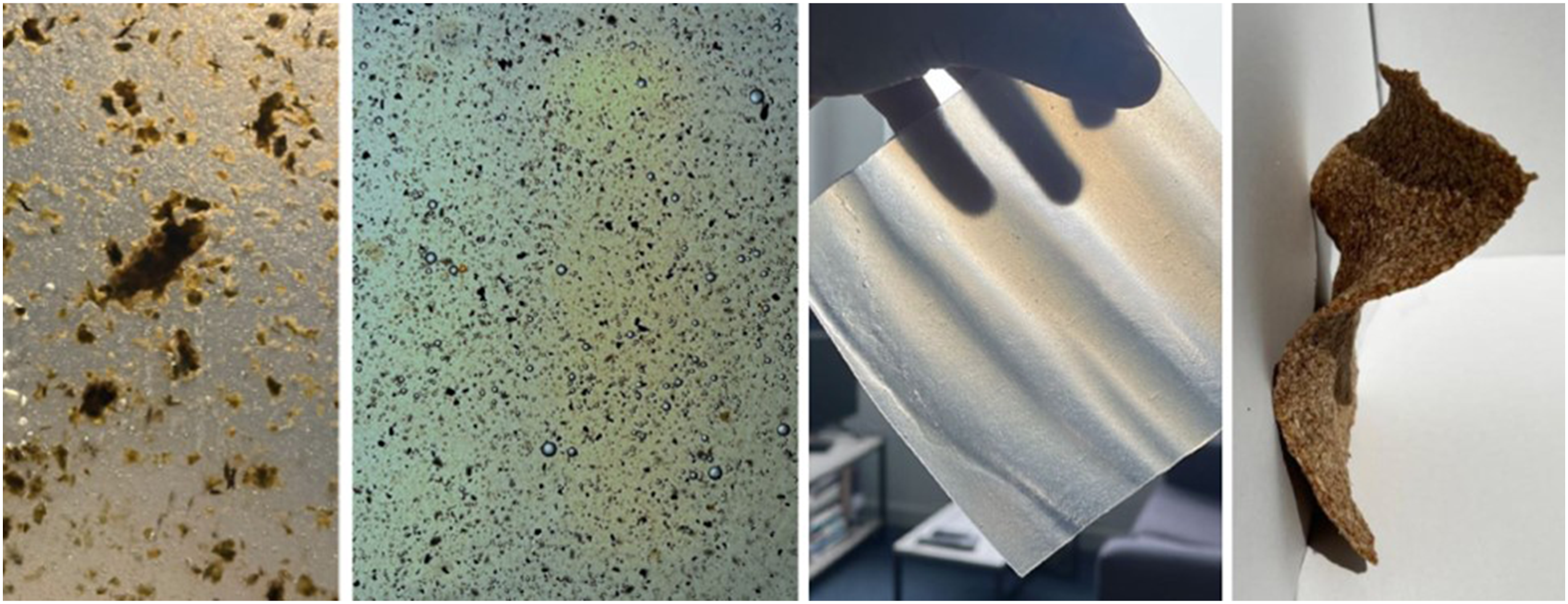
Classification of contemporary bioplastic research
The taxonomic framework for bioplastic research comprises several distinct dimensions, including structural classification methodologies, biodegradation pathways, bibliometric analytical approaches, and consumer perception studies. With respect to origin-based categorization, bioplastics are systematically delineated into three principal classifications: 1. Agro-polymers: Starch, Protein and Celluouse based Bioplastics; 2. Bio-Polyesters:Polylactic Acid (PLA) and Polyhydroxyalkanoates (PHA); 3. Bio-based Polymers: Bio-PE, Bio-PET, and BIO-PA. Coppola’s extensive investigation into bioplastic materials underscores that “PHA materials are the main resource to substitute conventional plastic use in most of the engineering applications fields. Nowadays, the PHA costs of production are too high, but further research on technology and sourcing can reduce manufacturing costs.” 35 Additionally, the environmental benefits of bioplastics, alongside their economic feasibility, remain key drivers for ongoing research and industrial interest. This necessitates a holistic evaluation, considering life cycle assessments and the development of robust, scalable production processes to ensure sustainable adoption. We are interested in understanding how this malleable formation can inform form-finding processes within our project.
Bio-composite bioplastic shelter
This research explores innovative bioplastic applications for temporary, small-scale shelters. We propose portable dwelling structures inspired by yurts and tents, utilized for nomadic life in Central and Eastern Europe circa 40,000 BCE. These ancient dwellings employed wooden stakes, ropes, and mammoth bones for structural support, with an outer skin made from mammoth hides that provided excellent water resistance, insulation, and wind protection. Contemporary yurts have replaced the traditional leather-based layer with heavy-duty fabric composed of acrylic-coated polyester.
Bioplastic shelter design
Our prototypes explore a tension-based structural system utilizing a bioplastic skin, moving away from traditional braced frames. We explored forming and folding techniques in the design of our bioplastic shelter by initially working with flat paper sheets and subsequently transitioning to bioplastic sheets. Precise cuts were introduced to enable folding into self-supporting structural shells (Figure 2(a) and (b)). This method was essential because, within our fabrication process, the bioplastic skin could only be produced with uniform consistency in a flat state, necessitating post-production folding to achieve its final form. Although we experimented with varying the structural rigidity of the sheets, our process did not permit material hybridization By “material hybridization,” we mean combining different types of bioplastic materials (e.g., mixing a stiffer bioplastic with a more flexible one) during the formation process to create sheets that have varied properties (like parts that are rigid and parts that are soft in one continuous piece). As a result, all structural transformations in this version relied exclusively on cutting and folding techniques to generate appropriate tension, rather than on integrating bioplastics with varied structural characteristics. Investigating material hybridization remains an area for future exploration. (a) This sequence of images illustrates the cuts and folding process of one of our bioplastic structure. (b) The top images display initial paper and fabric prototypes, while the bottom images depict the proposed flexible and rigid bioplastic version. Source: Authors.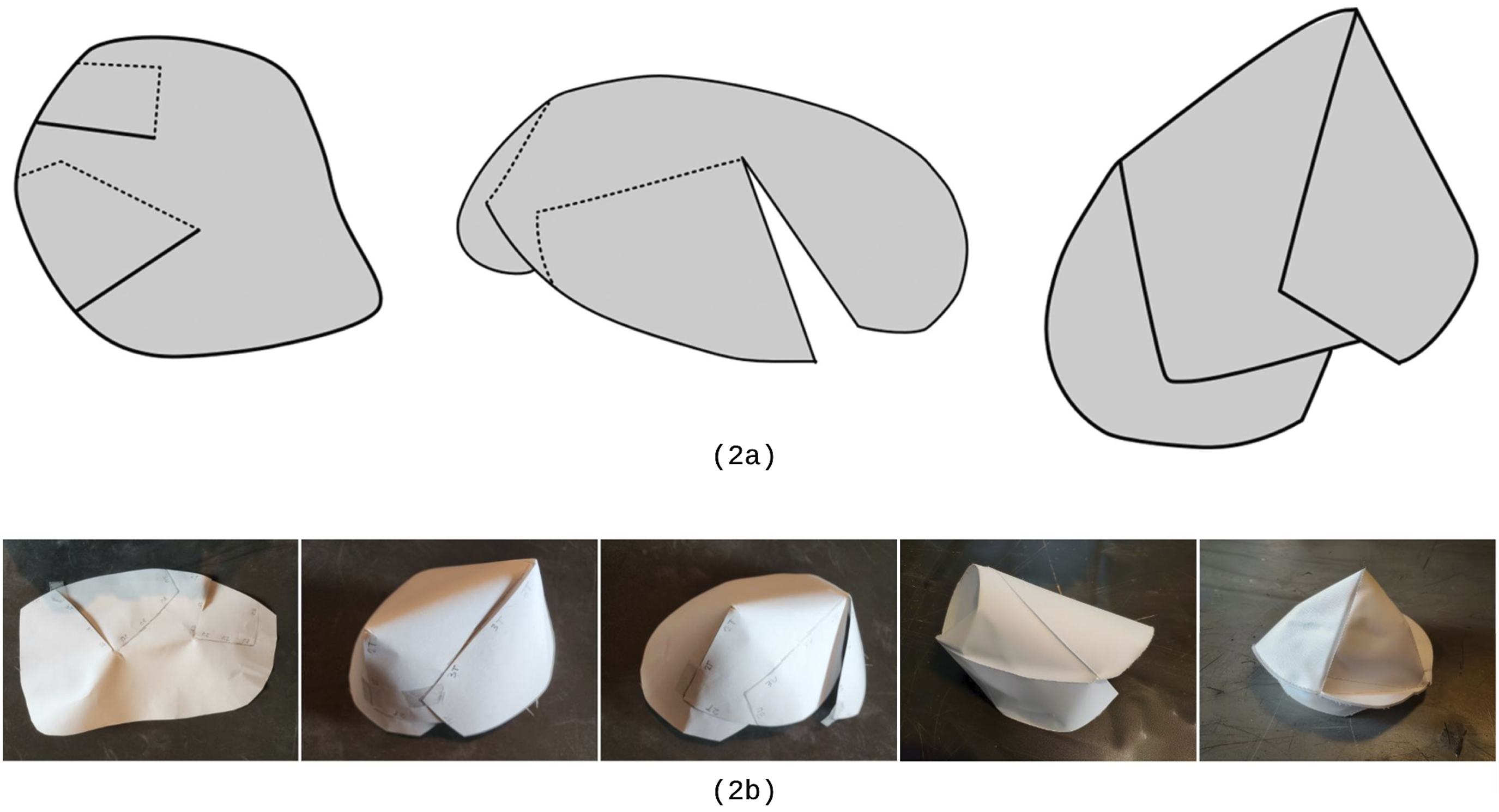
Bioplastic material formulation
We experimented with various material formulations for our bioplastic skin, developing a bio-based polymer derived from renewable biomass as a sustainable alternative for material design. The recipe utilizes Aquafoam as the primary biopolymer, providing the structural foundation. Glycerin or potato starch serves as the plasticizer, enhancing elasticity and flexibility, while coffee grounds act as the solvent, activating biological enzymes and influencing the decomposition rate of the final product. Water functions as the medium, ensuring all components blend smoothly. To improve moisture resistance, wax may also be incorporated into the mixture. The bioplastic is prepared by gently heating Aquafoam and water over medium heat (approximately 70°C–90°C), whisking continuously until the mixture reaches a thick, egg-like consistency. Glycerin and starch are added gradually, with quantities adjusted to control the material’s flexibility. Maintaining a stable temperature is essential to avoid burning or premature hardening. Once the desired consistency is reached, the mixture is removed from heat and poured onto a nonstick surface or into a container to cool. For consistent results, the material is dried in a dehydrator at 40°C–50°C for approximately 3 h. Drying time may vary based on the amount of water and glycerin used, as well as ambient humidity. Tools used include a stove, pan, whisk, measuring cup, glass container, and dehydrator. The final product is a flexible, biodegradable sheet suitable for experimental design and sustainable material research.
Future work will focus on modeling the shell’s structural behavior and correlating it with the bioplastic production process. We aim to reimagine architectural components, particularly the shell, to optimize properties like elasticity and transparency. This strategic design direction has led to the documentation of various biobased polymer mixtures with differing consistencies (Figure 3), as well as investigations into the impact of additional ingredients and controlled cooking processes on texture. Through the development of these shelter prototypes, we have identified key considerations for future design iterations: integrating the outer layer for natural camouflage, controlling transparency and thermal performance, designing effective joints and openings, and developing a rigid bioplastic for flooring applications. The top row presents a camouflaged outer shell rendering (top-left) and the completed bioplastic shelter prototype (right). The middle row illustrates the bioplastic preparation process: the biopolymer provides structure, the plasticizer adds flexibility, and the solvent activates enzymes and aids decomposition. To improve water resistance, wax is added to the mixture. Since the bioplastic behave like glue, it is best cooled on a nonstick surface. The bottom row shows a flat bioplastic sheet folded—using two precise cuts—into a shelter structure. Source: Authors.
Scaling up: Addressing limitations in bioplastic shelter prototyping
The development of our bioplastic shelters presented notable challenges, primarily impacting on scale and structural design. Our dehydrator’s size limited prototype dimensions, a constraint compounded by restricted workspace. Consequently, larger, more functional shelters were beyond our immediate capacity. To overcome these limitations, we acknowledge the necessity for enhanced engineering expertise. A deeper understanding of structural loads and material behavior under tension is crucial. Similarly, investigating the bioplastic’s thermal properties is vital for ensuring shelter durability against environmental stressors. Moving forward, we will prioritize improving our production capabilities. This includes exploring larger-scale fabrication techniques and conducting thorough material testing. Such advancements are essential for producing robust and viable bioplastic shelters. Moreover, although our prototype currently focuses only on the development of the bioplastic skin, recent advances by Colossal Biosciences in engineering mice with mammoth-like fur traits open exciting new possibilities. We can now envision a future shelter where architecture incorporates a bioengineered skin that truly mimics the insulating and resilient qualities of mammoth fur, offering lightweight protection and enhanced structural adaptability.36,37
Future architectural visions using programmable living materials (PLMs)
Although Engineered Living Materials (ELMs) are rapidly advancing within materials science and beginning to penetrate the construction industry with novel projects, advancements in genetic engineering and synthetic biology are paving the way toward a future generation of materials known as Programmable Living Materials (PLMs). Still largely speculative and nascent, PLMs aim to integrate living cells with inert components to create dynamic, programmable bio-matter with precise control over biological functions. 38 A defining feature of PLMs is their potential ability to direct morphogenesis—the biological process by which an organism or material develops its shape and structure. In synthetic systems, “synthetic morphogenesis” refers to the engineered control of shape formation and spatial organization within living or semi-living materials. 39 Much like programmable matter in computing—exemplified by projects such as Claytronics—PLMs envision materials that can self-organize, self-repair, and adapt to environmental stimuli, offering revolutionary possibilities for sustainable and responsive construction through enhanced material programmability and specificity. 40
Bridging synthetic biology and 3D printing
Our Bio-membrane Habitat concept envisions a bioplastic membrane that lifts itself into space, functioning similarly to a textile structure. This idea leverages cutting-edge Programmable Living Materials (PLMs) developed by teams at Nanjing Tech University, Earlham Institute, and the University of Cambridge. 41 These PLMs use synthetic biology and 3D printing to embed cells within matrices that grow, repair themselves, and respond to environmental changes. The research involved mixing tobacco cells with gelatin and hydrogel microparticles loaded with Agrobacterium tumefaciens, enabling DNA transfer into plant genomes. This bioink was 3D printed into intricate shapes and solidified with blue light. Over 48 h, DNA was successfully transferred, and antibiotics were used to remove the bacteria, allowing the cells to grow and express proteins from the new DNA. The experiment demonstrated the cells’ ability to produce green fluorescent proteins and betalain pigments. These programmable materials combine the adaptive qualities of living systems with the durability of non-living structures, paving the way for sustainable infrastructure solutions.
Towards living architecture: Bio-membrane habitats using programmable living materials
Following the principles of 3D bioprinting, we designed a speculative bio-membrane habitat. This concept fuses cutting-edge bioprinting with programmable living materials, resulting in a dynamic, self-assembling structure. The process begins with 3D printing a scaffold to support the growth of a bioplastic membrane. The membrane is engineered to expand horizontally while also elevating, reminiscent of textile structures (Figure 4). The membrane’s design incorporates principles of tensegrity, operating under a balanced system of tension and compression forces. Each constituent unit within the membrane is conceptualized to function analogously to the Festo Fluidic Muscle DMSP (Dynamic Modular Servo Pneumatic), a system previously employed in projects by the TU Delft Hyperbody research group.
42
The Festo Fluidic Muscle DMSPs are polymer-based tensile actuators known for their hermetic properties, contraction capabilities, and pressed connection mechanisms. Image of a tentative bio-tensegrity habitat utilizes tension and compression, similar to Festo Fluidic Muscles DMSP. We propose employing adaptive biomaterials to create flexible, moving structures. These self-adjusting forms suggest a dynamic, responsive environment that starts flat on the floor and self-adapts into space. Source: Project by Luis Fucci, Design 8, Fall 2023, Department of Architecture, Florida International University, Dr. Alfredo Andia’s Studio.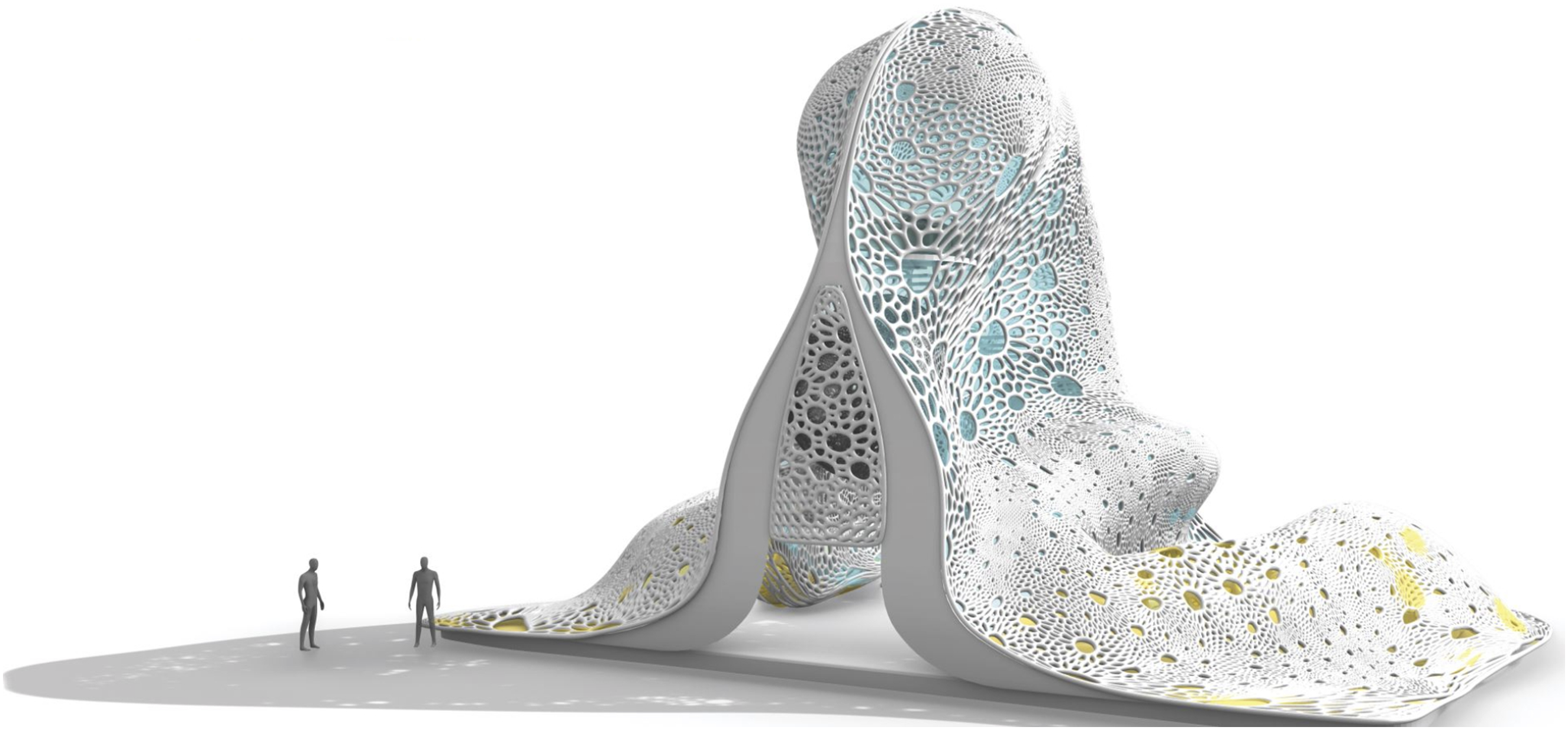
This concept proposes a bio-tensegrity structure using a more advanced, biologically programmed system. It envisions the development of bio-fabrics with specific engineered properties, surpassing the capabilities of current synthetic actuators. The key aspects of the conceptual bio-tensegrity architecture include: (1) Self-assembly and growth: The ability of the membrane to expand horizontally and self-elevate vertically; (2) Programmable behavior: Utilizing principles of synthetic biology to encode specific responses and functions into the living material; (3) Dynamic structure: The constant interplay of tension and compression forces throughout the membrane, allowing for adaptive configurations; (4) Biomimetic design: Drawing inspiration from natural systems to create a living, responsive architecture. Such a system could potentially respond to environmental stimuli, self-repair, and adapt its structure over time, presenting a paradigm shift in building design and functionality. This concept represents a convergence of various cutting-edge fields including synthetic biology, materials science, and architectural engineering. While currently speculative, such ideas push the boundaries of what’s possible in sustainable and adaptive architecture, potentially leading to buildings that are more resilient, energy-efficient, and harmonious with their environments.
The bio-nodes project
The “Nodes” project explores a speculative concept for growing 3D bioplastic structures from bio-scaffolding. The design begins with a scaffold frame, typically a cube, divided into grids where specific points, or nodes, are placed (left images in Figure 5). These nodes behave similarly to biological junctions, like plant stem nodes or human lymph nodes, and can be influenced by attractor elements to control the inflation process of the scaffold. The study shows how individual nodes respond to each other, alternating between expansion and contraction, creating a complex system that adapts to environmental and internal forces. The nodes project explores the transformation of bio-plastic structures from linear frameworks into spatial forms through the use of internal and external scaffoldings. Source: Project by Naomy Peralta Gomez.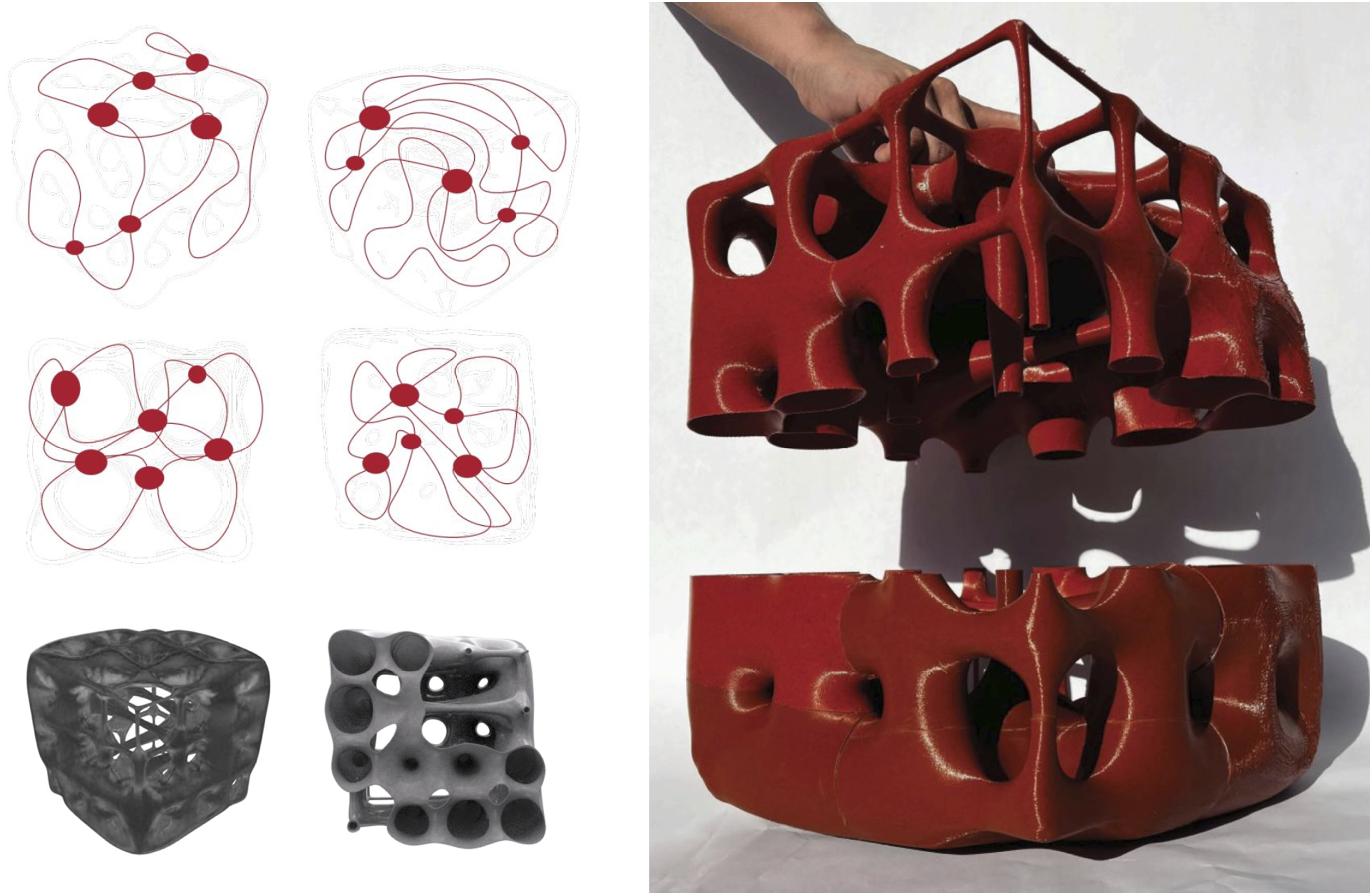
Combining frame and skin principles, inspired by natural exoskeletons like ants’, the project proposes innovative designs that integrate structural and protective elements. This biomimetic approach maximizes efficiency and functionality in architecture. The project investigates how the skeletal frame develops, while expanding nodes introduce a skin that merges into the structure (right image in Figure 5). Ultimately, “Nodes” challenges traditional architectural envelopes by creating a dynamic system where the building’s skin is rugged like nerve structure and serves multiple roles: structural support, temperature regulation, and sensory interaction. This approach unlocks new possibilities for spatial organization and responsive form generation.
Programmable bio-composites structure with spider silk
We have also explored spider silk as a material in a speculative context of future programmable materials. Spider silk, known for its exceptional strength and toughness, surpasses steel by weight and even outperforms Kevlar in some varieties. This unique material combines high tensile strength with remarkable elasticity, allowing it to absorb significant energy before breaking. Additionally, its lightweight nature and biodegradability make it an attractive option for various applications. Today, synthetic spider silk is produced through innovative methods. Companies like Spiber Inc. in Japan and Bolt Threads in the U.S. use microbial fermentation to create spider silk proteins, while Kraig Biocraft Laboratories uses genetically engineered silkworms for scalable, cost-effective production. They have improved synthetic spider silk scalability by optimizing microbial fermentation and building a mass-production facilities. Their focus has been on increasing protein yield and lowering costs, with primary applications in textiles, medical, and product design. However, construction-grade applications are still in the experimental or conceptual phase due to challenges in scalability, cost, durability, and integration. Potential construction applications include high-strength composites, concrete reinforcement, protective coatings, and flexible structures.
Contemporary synthetic spider silk, while not yet matching the full strength and elasticity of its natural form, presents exciting possibilities for new architectural design languages. Historically, architecture has rarely used string structures, which rely on tension rather than compression for load bearing, enhancing material efficiency and enabling large-span designs with minimal support. Examples include cable nets, suspension bridges, and tensile fabric roofs, known for their lightweight and expansive coverage. Although these systems offer aesthetic flexibility and dynamic forms, their modern architectural applications, like stadiums and exhibition halls, are often seen as repetitive. We explored string structures functioning in both tension and compression, inspired by projects like Junya Ishigami’s KAIT Workshop and TNA Architects’ Joshu Tomioka Station. We envision future advancements through programmable protein-based strings from synthetic spider silk, pushing this architectural exploration further.
String-based architectural forms
A generative design approach using reaction-diffusion and noise offset methods to craft string-based architectural forms embedded in natural settings is presented in Figure 6. We use reaction-diffusion growth processes found in nature to explore how self-growing structures might evolve spatially. Reaction-diffusion algorithms model and generate self-organizing structures that adapt to specific conditions, similar to how biological systems grow and evolve. These algorithms manage the interactions of multiple agents (e.g., chemicals or data points) that spread across a surface or volume, producing emergent, self-organizing forms. They can be implemented using scripts or node-based tools in platforms such as Grasshopper for Rhino, Houdini, Blender, or Processing, often in conjunction with solvers like Kangaroo or custom Python code. A conceptual project explores the development of a biologically grown string structure capable of adapting to tension and compression using reaction-diffusion algorithms in CAD systems to simulate the complex processes of self-growth in the spatial distribution of minimal structures. Source: Project by Maria Perez and Richard Salinas, Master Project, Spring 2021, Department of Architecture, Florida International University, Dr. Alfredo Andia's Studio.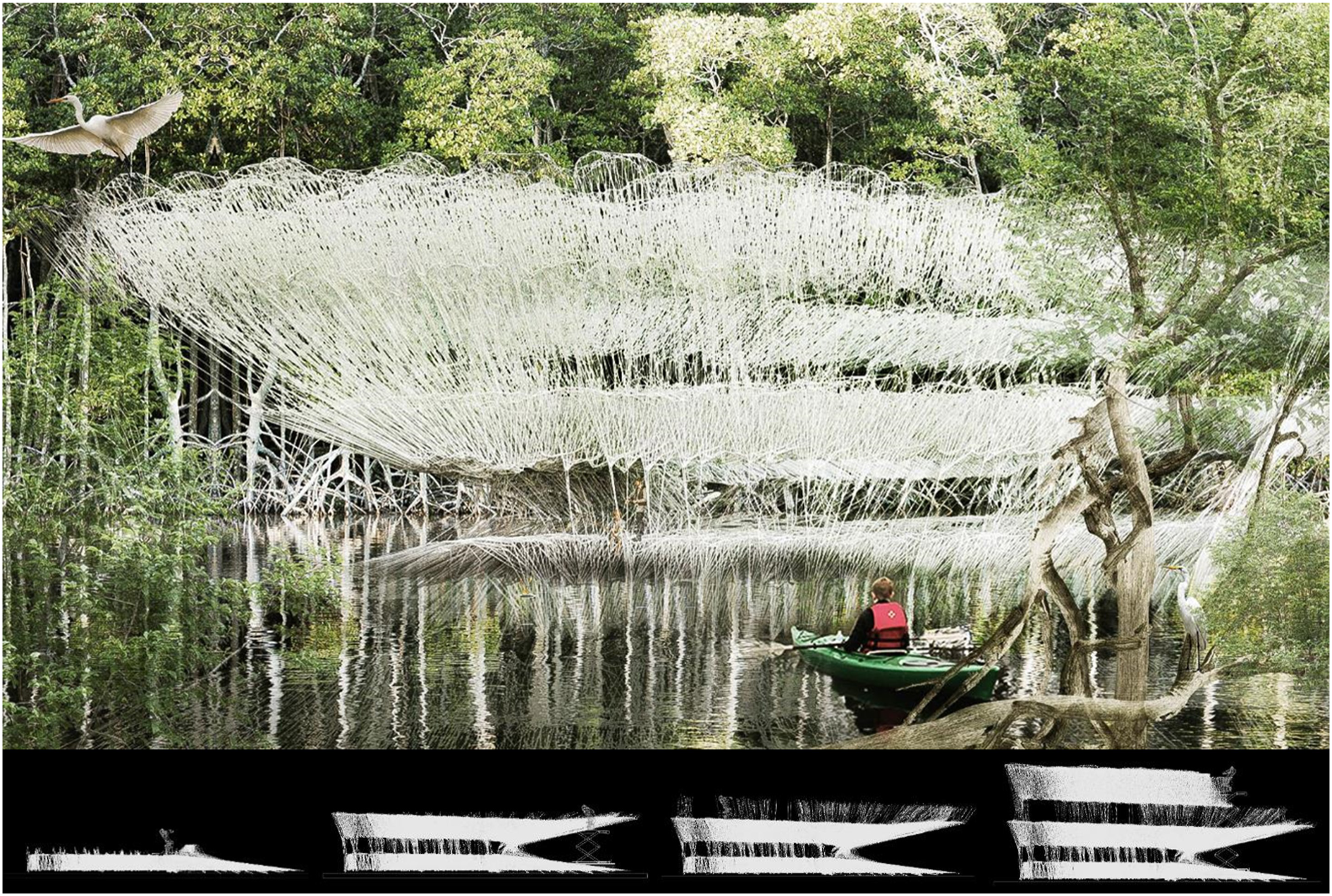
The resulting structure is a three-tiered platform supported by slender strings, each less than 5 mm in diameter, forming a dense, interconnected network that balances tension and compression. This complex system draws inspiration from the communal webs of Tetragnatha guatemalensis, spiders known for creating vast web networks that drape across forest canopies. Positioned above water, this intricate formation suggests an architectural approach that fluidly integrates with its surroundings, surpassing the adaptability of conventional construction techniques. Moreover, its web-like growth could incorporate channels for nutrient circulation, echoing the transport systems found in plants and trees.
We used the shortest path algorithm to develop another conceptual synthetic spider silk facade presented in Figure 7. The shortest path algorithm finds the most efficient route between two points. Nature uses the shortest path logic through adaptive behaviors in slime molds, roots, and neurons to efficiently optimize movement and connectivity. Figure 7 is divided into two rows, showing the algorithm’s logic (upper row) and its material realization (lower row). The upper row reveals the growth process. The top-left diagram depicts a densely interconnected mesh serving as the host vertical structure upon which the spider-silk structure develops. The top-central image portrays vertically oriented lines emanating from three basal points, representing the initial growth trajectory. The top-right diagram reveals a more structured pattern, with bifurcating lines forming prismatic, dendritic forms. The lower row presents rendered visualizations, transforming the abstract patterns into tangible facade concepts. These facades feature a translucent, fibrous texture, suggestive of woven synthetic spider silk. The consistent three-point growth origin is clearly visible, subtly varying across each rendering while maintaining a unified morphology. The algorithm’s efficiency is demonstrated through the direct, organic yet structured connections, revealing a balance between natural inspiration and computational precision in architectural design. Although no existing technology can yet deploy a shortest path façade using synthetic spider silk, we can envision a self-growing fabrication process involving engineered microbes or biobots that deposit biomaterials, or 3D-printed scaffold systems that trigger cellular growth, as demonstrated by the PLM process at Nanjing Tech University discussed earlier in this paper.
41
Facade design employing synthetic spider silk, generated via a shortest path algorithm. The shortest path algorithm guides efficient, minimal-material growth patterns for synthetic spider silk facades, optimizing structure and fabrication processes. Source: Project by Maria Perez and Richard Salinas, Master Project, Spring 2021, Department of Architecture, Florida International University, Dr. Alfredo Andia's Studio.
Programmable living materials as a design project
The adoption of Programmable Living Material (PLM) principles fundamentally alters architectural design, moving from a compositional approach to one of emergent form. This methodology, based on understanding generative algorithms, allows for nanoscale manipulation, resulting in designs that arise directly from inherent morphological processes. As evidenced by Turing’s (1952) research on reaction-diffusion, complex forms can emerge from simple interactions. 43 Reaction-diffusion is both a biological and mathematical model that describes how interacting substances diffuse and react to generate spatial patterns. As architects, we can employ procedural CAD methods to digitally simulate these behaviors. Biology is replete with similar processes that encode growth, spatial organization, and temporal modulation within cellular systems.
Fields in developmental biology—such as PLM and synthetic morphogenesis—utilize mechanisms such as spatial signaling gradients, feedback loops, and mechanical forces to guide the formation of complex multicellular structures. Although these mechanisms are only beginning to emerge, they represent promising directions for future development. The design work presented in this section speculates on how autonomous growth could significantly advance material complexity and functionality. This aligns with contemporary bio-inspired computational design, where material behavior is directly encoded. Consequently, architects are shifting from form-givers to facilitators of emergent structures, employing computational tools to simulate and direct biological growth. 44 This necessitates a deeper comprehension of biological systems and material science, pushing the boundaries of traditional architectural practice and encouraging interdisciplinary collaborations.
Conclusion
This article examines the evolution of diverse biomaterials during the last decade, propelled by innovations in synthetic biology techniques. We present in detail the rise of the most significant Engineered Living Materials (ELMs) projects being implemented in construction today such as Bio-concrete, Lab-grown wood, Mycelium, and other bio-fabricated materials, as well as new bio-composites. These bio-materials are seen as either direct substitutes or inspirations for innovative, computationally designed forms, impacting architectural design thinking. Our study examines the application of bioplastics in fabricating small bio-grown habitat models. Within controlled settings, we methodically assess the characteristics and prospective architectural uses of these substances for shelter building. We chose bioplastics as a conduit for exploring a readily programmable approach. The investigation seeks to understand the viability and constraints of bio-grown habitats, furthering research in sustainable design and bio-based construction materials. These findings inspire further innovation while understanding the difficulties in controlling this medium.
In this paper, we reveal that current biomaterials research is shifting toward the nascent development of Programmable Living Materials (PLMs). PLMs represent a significant transformation by integrating living cells with non-living components to create materials with programmable properties and behaviors.
This paper presents speculative designs—including bio-membrane habitats, Bio-Nodes, and spider silk structures—as both analytical and intuitive approaches to explore how programmable living materials (PLMs) might enable self-assembling systems. A natural next step is to ask: what developments are required to advance the application of emerging PLMs in architecture? These developments fall into three key areas: (1) fundamental scientific research, (2) the maturation of the biotech industry, and (3) the awareness and adoption of biotechnology within architectural discourse.
First, the emerging field of PLMs and synthetic morphogenesis, as outlined in this paper, will continue to evolve rapidly—embedding spatial organization, growth dynamics, and temporal modulation directly into living systems. This trajectory will significantly transform material science and is heavily dependent on sustained investment in foundational research, particularly in developed countries and China. 45
Second, the biotech industry itself must reach maturity. Major players—akin to Google and Microsoft in the tech sector—will need to emerge within biomanufacturing. McKinsey estimates that within the next 25 years, biotechnology could enable the production of nearly 60% of the analog products and materials used in the global economy. 46
Third, and perhaps most critically for the architectural profession, is what synthetic biologist Drew Endy identifies as a necessary cultural transformation: the cultivation of a genuine enthusiasm for biotechnology. Endy argues that “technologies become true when people make them true,” asserting that whichever nation first falls in love with biotechnology will gain a significant competitive advantage. 45 The same principle applies within professional domains. If architects stay disengaged from biotechnology and fail to engage critically or imagine its speculative potentials, the next 25 years will pass them by. In that period, a mature biomanufacturing industry may redefine the future of human environments, independent of architectural vision.
Footnotes
Declaration of conflicting interests
The author(s) declared no potential conflicts of interest with respect to the research, authorship, and/or publication of this article.
Funding
The author(s) received no financial support for the research, authorship, and/or publication of this article.
