



Abstract
The rapid evolution of artificial intelligence (AI) has fundamentally transformed the role of design tools, extending their function beyond conventional applications to become linguistic interfaces that mediate and structure cognitive and communicative processes in design. This study critically examines the reconfiguration of AI-driven design tools within interior design education, foregrounding their role as discursive agents in design communication. Through an in-depth analysis of an AI-based workshop conducted with interior design students, the research investigates how linguistic engagements with AI systems influences decision-making, conceptualization, and procedural methodologies within the design process. The findings reveal a shift from traditional design heuristics toward a linguistically embedded computational paradigm, elucidating how AI-generated textual and visual interactions inform cognitive schemata and foster epistemic innovation in design education. The study argues that AI-driven design tools not only enhance visualization capabilities but also act as cognitive co-agents that refine and articulate linguistic constructs within design discourse. By proposing an integrative framework for embedding language-oriented AI applications into interior design pedagogy, this research advances a reconceptualization of digital design engagement and advocates for a deeper integration of computational linguistics into design cognition and practice.
Keywords
Introduction
Computational design technologies have precipitated a paradigm shift in the function of design tools, transitioning them from conventional operational instruments to sophisticated cognitive interfaces that fundamentally alter the way designers conceptualize, generate, and communicate spatial configurations.1–3 Traditionally, design methodologies have been deeply interwoven with visual and tactile representations, employing sketches, physical models, and digital design systems as the primary vehicles for material exploration and spatial articulation.4–8 However, AI-driven systems introduce a transformative epistemological dimension by establishing linguistic input as a pivotal conduit for articulating the design intent, refining problem-solving strategies, and iterating conceptual constructs.9,10
The epistemic shift aligns with the understanding that digital frameworks enable computational precision, whereas analog methodologies foster interpretative flexibility and contextual synthesis.11,12 AI-driven design tools exemplify this duality, demanding structured linguistic articulation while concurrently amplifying the designer’s cognitive and creative potential. Within this emergent design paradigm, language transcends its conventional communicative role, functioning simultaneously as an operative mechanism for encoding computational directives and as an epistemological framework that enriches spatial reasoning and conceptual synthesis.13,14 This ontological evolution underscores the need for designers to develop advanced linguistic skills alongside visual literacy, as language becomes integral to AI-driven workflows.
The transformation is particularly salient within the field of interior design education, where AI-driven digital tools are being systematically incorporated into pedagogical methodologies to generate multimodal outputs from linguistic inputs.15–17 Consequently, the transition to AI-enhanced design methods requires advanced communicative skills, enabling designers to engage effectively with algorithmic systems.18,19 As AI systems become more adept at using language, the link between linguistic articulation and design cognition gains importance, positioning language as central to design ideation. This paradigm shift highlights computational literacy as essential to the contemporary design education.
Within this research framework, a mixed-methods approach is adopted to interrogate AI’s role as a linguistic interface in interior design education. The study systematically examines the progressive integration of text-to-text (txt2txt) and text-to-image (txt2img) generative tools within interior design pedagogy, elucidating how disciplinary expertise influences AI interaction and the cognitive dimensions of design ideation. Furthermore, the research evaluates the extent to which AI-generated outputs align with the design prompts when these linguistic tools are deployed as deliberate and controlled cognitive agents. Structurally, the study is predicated upon a workshop-based methodology that synthesizes the processual design phases. This approach is employed to critically assess the implications of AI-assisted tools for linguistic articulation and conceptual exploration in computationally enriched design workflows.
Background
To contextualize communicative processes in txt2txt and txt2img AI interactions, this study first explores the transformation of design tools as communicative media and their impact on design thinking and designer-artifact relationships. Then, it examines the integration of AI into interior design education, highlighting its potential and challenges through a review of recent literature to assess its pedagogical and cognitive implications.
Redefining design tools as communicative mediums
Design tools have traditionally enabled the articulation of spatial and material constructs while enhancing productivity.20,21 With the integration of AI into design workflows, these tools have evolved into communicative interfaces that effectively mediate cognitive and creative processes.22–24 Functioning as dynamic linguistic systems, AI-driven tools translate textual input into computational directives, bridging cognitive intent and algorithmic execution.25,26 This shift marks a transformation from passive instruments to active linguistic interfaces that shape design ideation and implementation.
To understand this communicative transformation, design tools must be examined as cognitive instruments instead of being seen as merely functional ones.27,28 They externalize mental constructs and support ideation through both tangible and digital modalities.21,29 Moreover, design tools serve as cognitive frameworks that facilitate reasoning and decision-making. 30 Building on this perspective, recent studies conceptualize design tools as mediators that guide designers through a cognitive sequence of potential design variations. 31 This conceptualization underscores that design tools not only fulfill functional roles but also actively construct and disseminate epistemological frameworks within design discourse. 9
The computational translation of design tools has amplified their communicative capacity, particularly with the advent of AI systems. The incorporation of linguistic interaction in the design process has become a defining characteristic of AI-assisted design workflows.32,33 These tools require structured verbal input, transforming visual representation into a hybrid system that combines textual, visual, and algorithmic interpretation.34,35 In this regard, redefining design tools as communicative media clarifies their evolving role in contemporary design practice. The effective execution of the design objectives is increasingly contingent on linguistic articulation, thereby reinforcing the interdependence between language and computational interaction.
AI tools facilitate structured dialogue between designers and systems, shaping both process and the output.36–38 This demands expanded linguistic competence, positioning language not only as a means of expression but also as a cognitive tool for engaging with algorithmic systems. 18 In this sense, the reconfiguration of AI as a design tool represents the linguistic operationalization of computational agency, wherein language serves as an intermediary that translates complex scenarios into linguistic design outputs.
Reflective design practice is inherently dialogical, and AI introduces new forms of cognitive dialogue between humans and computational agents. 14 This evolution necessitates a reconsideration of language not merely as a representational medium but as an active construct that shapes design cognition. AI-assisted tools simultaneously manipulate the cognitive agency of the designer and transcend conventional physical and mental capacities.17,33 The communicative power of these tools lies in their semiotic relationships among meaning, interpretation, and computation, positioning the designer as both creator and interpreter. In this context, AI tools embody linguistic objectification to refine and materialize design ideas.39,40 This transformation reinforces the conceptualization of AI tools as communicative frameworks that extend the expressive capacity of designers, effectively reconstituting designers as authors within computational design environments. Within this discourse, the role of language in AI-mediated interactions is critically examined within the context of interior design education, highlighting its implications for both design cognition and pedagogical methodologies.
AI as linguistic tool in interior design education
The design process is an implicit and cognitive operation shaped by intuitive decision-making and experiential knowledge.41–44 Designers navigate it through their accumulated knowledge, creative reasoning, and tacit insights that resist explicit articulation.45,46 With the increasing integration of AI tools, the design process is undergoing a paradigm shift toward systematic structuring and enhanced shareability. The systems reconfigure cognitive workflows by externalizing designers’ thought processes through structured datasets, linguistic inputs, and algorithmic operations. In doing so, they transform traditional modes of design cognition and decision-making.
The transformation in design tools has notably impacted interior design pedagogy. A discipline is defined as a systematic construct shaped by the dynamic interplay of objects, methodologies, principles, definitions, and tools. 47 Interior design, in this context, is structured as a multilayered discipline that synthesizes both theoretical and applied knowledge within the design process. Interior design process encompasses a series of interdependent and multidimensional stages, including ideation, conceptualization, spatial organization, atmospheric design, detail articulation, visualization, and evaluation.48–51 Accordingly, the educational focus of interior design extends beyond aesthetics and functionality to encompass design cognition, spatial organization, material knowledge, user experience, and technological integration.52–54 The adoption of computational tools has reconfigured these components, fostering new pedagogical strategies.
AI-assisted tools serve both generative and evaluative functions, allowing designers to iterate conceptual ideas through linguistic interaction. 55 The integration of these tools into interior design education catalyzes a linguistic transformation in design cognition. Language, for designers, is not merely a communicative instrument; rather, it serves as a fundamental structuring mechanism that shapes design ideation, spatial conceptualization, and decision-making processes. 56 In interior design education, language plays a central role in conceptualizing the design process, conducting critical evaluations, and articulating creative thought. The dialectic between verbal and visual modes deepens cognitive engagement and reinforces the role of language in spatial reasoning.19,57 AI-powered linguistic interfaces introduce a novel dimension to the design process, enabling designers to engage with computational systems through textual input. The outputs generated by AI are shaped through linguistic expressions, actively guiding the design process. In this transformation, language evolves from a mere vehicle for encoding design intent into an active agent that influences both design cognition and the designer’s creative agency. Accordingly, the integration of AI systems into interior design education necessitates the advancement of computational literacy among students, reinforcing the critical role of language as a tool for directing design workflows.
A review of the existing literature reveals that AI-assisted systems are increasingly being integrated into interior design education.16,25 These systems play a pivotal role in design processes such as ideation, sketch generation, and collage production, as well as in alternative design development, spatial planning, and atmospheric design. By facilitating spatial optimization and enabling the creation of personalized design solutions, AI-driven tools have emerged as transformative agents within the discipline.58–62 Furthermore, AI enhances spatial analysis and environmental optimization by evaluating factors such as lighting, acoustics, and material properties, thereby contributing to the development of more efficient and adaptive design alternatives.63–66 The advent of these systems has enabled design students to generate spatial representations directly from textual descriptions, significantly accelerating early-stage design processes. AI is no longer merely a visualization tool, it is increasingly recognized as a cognitive co-agent that actively shapes design ideation and decision-making. This shift necessitates a deeper examination into how creative autonomy and critical thinking skills can be pedagogically supported and also demands a critical evaluation of the tool’s inherent limitations and their implications for the designer’s creative autonomy.
The growing pedagogical reliance on AI-based tools necessitates a critical examination of their unintended consequences. While AI systems may enhance early-stage ideation and spatial analysis, they can also constrain creative exploration by foregrounding specific formal or aesthetic tendencies embedded in their training data.67,68 Moreover, the accelerated nature of AI production may limit students’ engagement with iterative and reflective design processes, potentially marginalizing critical thinking and inquiry within the design workflow. 69 In this context, as such tools assume a central role in interior design education, it becomes imperative to establish an ethical and critical framework that enables students to interrogate, reinterpret, and selectively recontextualize AI-generated outputs. 70 A critical stance —one that enables students to discern both the capacities and limitations of AI systems— should be a foundational element of emerging pedagogical models. Within the scope of this article, AI is not conceived as an autonomous designer, but rather as a generative tool—one that feeds the process and is shaped by the user’s knowledge, skill, and critical awareness. It is thus a system to be interrogated, guided, and transformed, rather than passively accepted.
In light of these dynamics, questions of authorship and intellectual ownership come into focus: Who owns an output generated through an AI system that both constrains and enables creativity? While the design tool contributes to the formation of ideas, it is ultimately the student’s interpretive and critical intervention that gives the output its final meaning and value. As such, authorship in AI-mediated design processes must be understood as distributed and contingent, rather than singular or absolute.
In this context, as AI-based tools increasingly occupy a central role in interior design education, it becomes essential to develop an ethical and critical framework that enables students to engage with, question, transform, and selectively reinterpret AI-generated outputs. Encouraging students to adopt a critical stance toward AI-generated outputs and to understand both the potential and limitations of these systems is fundamental to shaping future pedagogical approaches. Within the scope of this paper, artificial intelligence is conceptualized not as an independent designer, but as a mediating tool shaped by, and subject to, interrogation, guidance, and transformation based on the user’s knowledge, skills, and critical awareness.
AI plays a catalytic role in activating both the designer and the design process, positioning itself as a linguistic interface that actively shapes design cognition. Reliance on text-driven systems underscores the need to understand both the capacities and limitations of these tools. It highlights the importance of critical thinking in creative processes and emphasizes linguistic proficiency as a core competency for students. This shift enhances their ability to express spatial concepts clearly and fosters creativity through language-computation synergy. In conclusion, the pedagogical implications of AI-driven linguistic interfaces warrant further research supported by structured teaching models. This study proposes an integrative framework that connects students’ creative design cognition with digital processes, offering critical insight into the integration AI-supported approaches in interior design education.
Methodology
This study is supported by a 2-month workshop held during the fall semester of the 2024-2025 academic year, as part of the Health and Design elective course in the Interior Architecture Undergraduate Program at Istanbul Technical University, involving 12 participating students. The core content of the course focuses on the historical transformation of healing environments. Within this focus, the workshop emphasized pre-modern historical period healing environments, encouraging students to design spaces that foster individual recovery, emotional well-being, and holistic user experiences.
The primary reason for selecting the historical themes lies in the lack of comprehensive spatial knowledge regarding pre-modern healing environments in the existing literature. While textual information related to such environments is relatively abundant, there remains a notable scarcity of visual data from this period. Given that AI-driven design tools—particularly GPT-based systems—operate through txt2img generation processes, the choice of a pre-modern timeframe was a methodologically strategic decision. It provided a unique opportunity to explore the generative capacity of AI in a context where visual sources are limited but textual sources are accessible.
Moreover, working with historical contexts in which visual design data is fragmented or incomplete encouraged students to develop adaptive design thinking skills and critically engage with gaps in information. The historical framework was intentionally employed as a pedagogical strategy to foster students’ ability to reinterpret contemporary design challenges and propose future-oriented spatial solutions. Assessing the performance of AI in contexts characterized by limited image-based data is critical not only for evaluating its current capabilities under representational constraints but also for projecting its applicability to future-oriented design scenarios. If the proposed strategy yields sufficiently meaningful and methodologically sound results, this could substantiate its potential for engagement in speculative and forward-looking design inquiries. In this regard, the workshop aimed to establish a meaningful connection between past contexts and present or emerging spatial needs. Accordingly, the core focus of the workshop extends beyond the scope of the course itself and holds significant potential for being further examined and implemented across a range of design and educational contexts.
As part of the course, a mixed-methods research approach was adopted to investigate the integration of AI as a linguistic interface in interior design education. The workshop was structured to examine the impact of linguistic interaction with AI on the design process. In this context, healing environments from different historical periods were analyzed, followed by the development and visualization of relevant spatial scenarios. The rationale for adopting this scenario-based approach lies in its methodological capacity to inform interior architectural design by focusing on how users manifest their presence within a space throughout the design process.71,72 This approach conceptualizes the space-user relationship as a narrative, shaping the interior space through storytelling. It derives from the designer’s narrative competence, which is intrinsically linked to both creativity and the linguistic structures through which creativity is articulated. The coherence among scenario components reinforces the narrative and supports spatial comprehension. 73
Consequently, the scenario-based approach was adopted as the core methodology of the workshop, as it encapsulates the cognitive processes of the designer and gains identity through language. The primary objective of the workshop was to analyze the role of AI as a linguistic interface in interior design pedagogy through verbal and visual productions. To gain a deeper understanding of this role, the process was initially grounded in students’ design-based thinking and was gradually transformed into an AI-based workflow. This structured approach was also intended to clarify the distinction between student and AI contributions. It further encouraged reflection on conventional notions of authorship and originality, particularly concerning intellectual ownership in AI-assisted design contexts. The subsequent sections provide a comprehensice examination of the data related to this process.
Research context
The workshop was structured as a progressive process, beginning with students’ design thinking and research skills and gradually integrating AI tools. The primary rationale behind this gradual approach was to reveal the impact of each intervention on the design process at different stages. By initiating the workflow with textual production and supporting it with visual outputs, the study aims to provide a perspective on AI’s capacity to integrate verbal and visual elements within the design workflow. Scenario-based spatial visual production facilitated the identification of design problems and the development of potential solutions. For this purpose, AI technologies developed by OpenAI, namely ChatGPT-4o and DALL-E, were utilized as production tools. The main focus of this study is not the individual performance of the generated visuals or textual productions. Instead, it aims to explore how AI can support students’ traditional cognitive production processes and to assess the consistency between AI-generated spatial scenarios and their corresponding visual outputs. Therefore, the primary reason for choosing DALL-E over other txt2txt and txt2img AI tools was its greater capacity to interpret and evaluate prompts, thereby producing effective results in the context of linguistic communication.
In summary, the study aimed to conduct an inclusivity and effectiveness analysis based on txt2txt and txt2img data. By integrating AI-powered communication with interior design education and design knowledge, the study sought to evaluate the efficiency of the design process. To ensure a meaningful assessment of the proposed approach, workshop participants were selected from undergraduate interior design students with no prior experience using AI tools. The proposed methodological approach aims to explore how interior design students’ existing research and design skills interact with their ability to utilize AI-based tools. Further details of the methodology are presented in Section 3.3.
Data collection
The workshop adopted a mixed-method approach for the data collection process. • Observational Analysis: Interactions between students and ChatGPT-4o and DALL-E were documented through individual chat dialogues for each production. These dialogues were observed to identify linguistic expression patterns and the communication development process. • Comparative Design Evaluation: AI-generated txt2txt and txt2img outputs were analyzed against prompts expressing students’ design intentions. The alignment between textual descriptions and spatial outputs was assessed based on the consistency between scenario texts and their corresponding images.
Throughout the data collection process, only the textual and visual materials produced by students within the scope of the workshop were included in the analysis. Personal information, in-class discussions, and spontaneous feedback were excluded from the analytical framework for ethical reasons. To mitigate risks related to data privacy and surveillance, students were informed about the purpose and scope of the study, as well as how their data would be used. All collected data were anonymized during the analysis phase.
These methodological choices are closely tied to broader ethical concerns, including intellectual authorship, representational bias, and the potential impact of AI on critical thinking. The content generated by students was not attributed to the AI systems; rather, it was evaluated in terms of the students’ ability to guide, interrogate, and reinterpret AI-assisted outputs. In this respect, the study adopts a pedagogical approach grounded in ethical awareness and committed to supporting students’ critical agency within AI-mediated design processes.
All data collected during the workshop process was digitally recorded by students on the university’s institutional submission platform and the Miro Board created for the study (Figure 1). This enabled a systematic tracking of both the applied methodology and the resulting design outputs. Additionally, linguistic variations in dialogues were analyzed to understand how students adapted to AI-assisted design processes. Weekly submission examples from 6 students.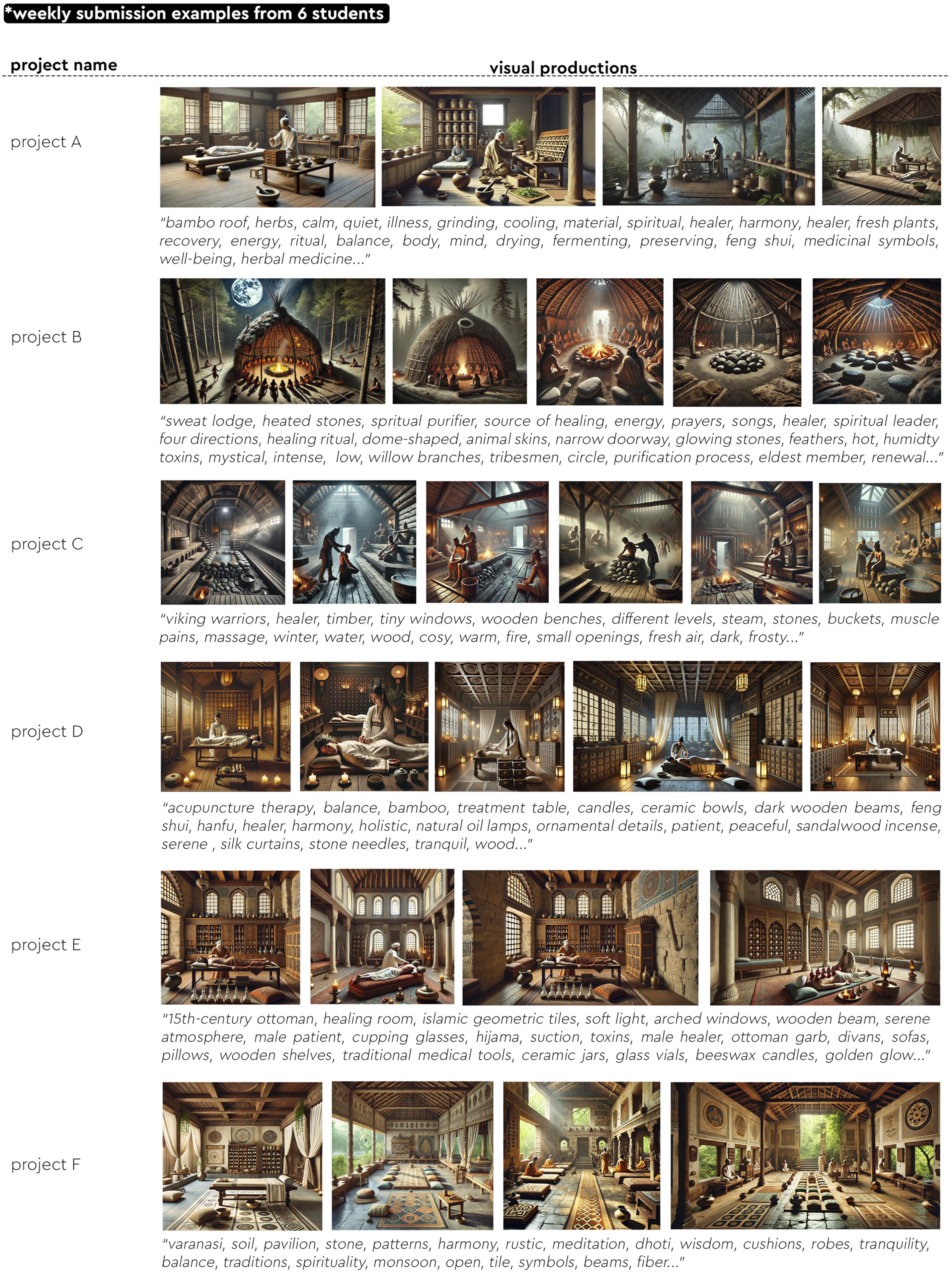
The study aimed to evaluate not only the generated textual and visual outputs but also the communication process itself, offering deeper insight into students’ interaction with AI-based design tools. In this regard, the focus of the study is not the quality of the visual productions but rather the communication process that establishes the consistency between textual and visual outputs.
Research design and implementation
The workshop model was structured to analyze how students interacted with AI interfaces—specifically ChatGPT-4o and DALL-E—through scenario-based textual productions and how these interactions shaped their design ideas and productions. The framework was designed to gradually enhance students’ knowledge and proficiency in AI usage, following a progressive learning approach. As illustrated in Figure 2, the workshop was conducted in four sequential and interdependent phases, each building upon the previous one (Figure 2). Workshop structure.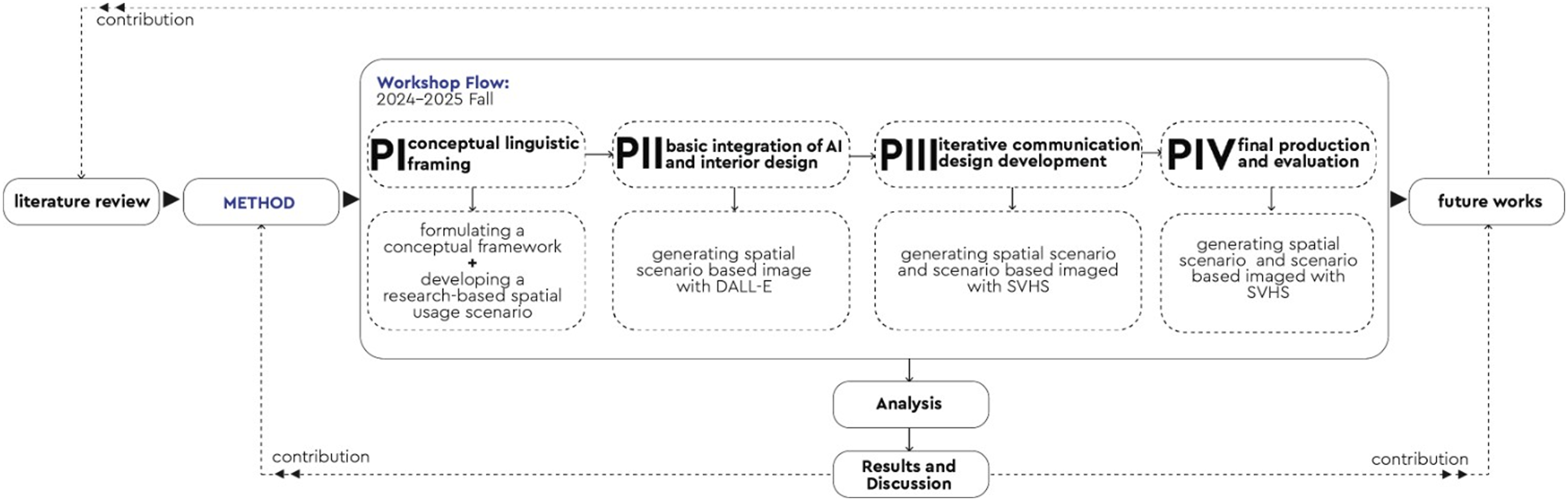
Detailed information regarding the workshop process, including the data provided to students throughout the sessions and the expected student outputs, is outlined as follows. Since the workshop involves intensive visual and textual productions, the outputs generated at each phase are exemplified through the works of three selected students (Student A, B and C) rather than presenting each student’s work individually. However, the analysis section provides a comprehensive evaluation encompassing all students.
Phase I: Conceptual linguistic framing
As part of this phase, students were provided with a lecture on the historical transformation of healing environments from a chronological perspective. Following the lecture, students were required to select a pre-modern historical period and conduct a comprehensive literature review on the healing spaces of that era. Their research drew upon relevant academic sources, focusing on both architectural attributes of spaces and contemporaneous healing methodologies. Additionally, students formulated a conceptual framework defining the spatial and functional characteristics of these historical settings. This framework was grounded in key terminologies identified through relevant to their research.
Following their literature review, students were developed a research-based spatial usage scenario and submitted their findings in a structured textual format. Notably, at this stage, students received no instruction regarding AI-driven design tools or design processes. As a result, students’ proficiency in AI usage was presumed to be negligible or entirely absent (Figure 3). Phase I productions.
Phase II: Basic integration of AI into interior design
At this stage, students were introduced to AI applications in interior design, focusing on txt2txt and txt2img generation through tools such as DALL-E, Midjourney, Stable Diffusion, and Crayon. A comparative analysis of these interfaces was presented to contextualize their capabilities within the computational design landscape. Additionally, a fundamental introductory lecture was given on the interfaces of ChatGPT-4o and DALL-E GPT, the AI tools utilized in the workshop. This session offered an overview of the AI-driven visual production process, along with a detailed explanation of interface functionalities and operational mechanisms. By the conclusion of this phase, students visualized their previously developed Phase I scenarios using DALL-E. This task aimed to facilitate a comparative evaluation of AI-generated outputs against manually produced spatial scenarios (Figure 4). Phase II productions.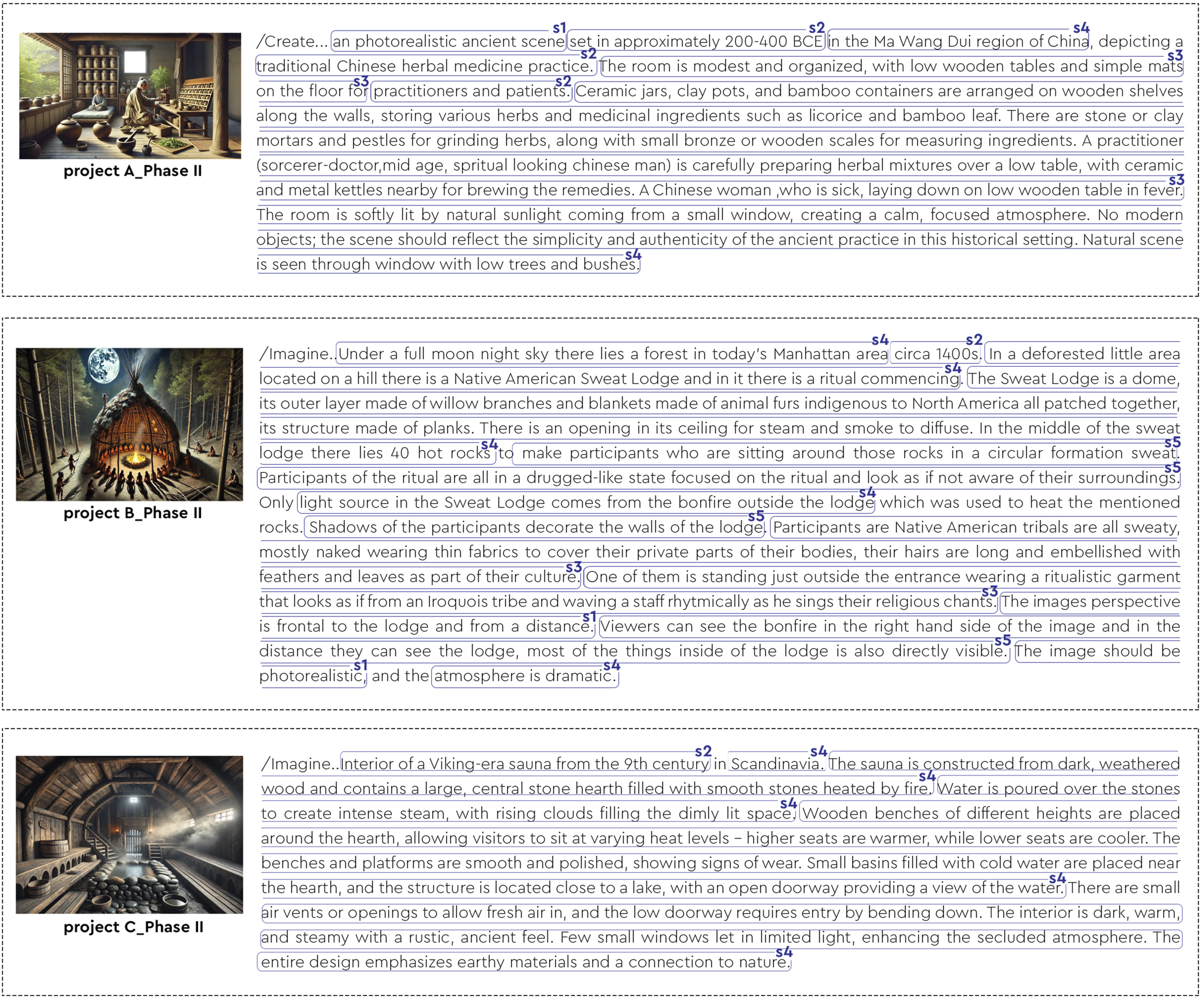
Phase III: Iterative communication design development
At this stage, an AI-based communication flowchart was developed, drawing insights from the discipline of interior design to facilitate an effective interaction process with DALL-E. The primary objective was to demonstrate how interior design knowledge can enhance communication with AI. In this context, a five-step textual workflow incorporating spatial scenario design—the central theme of the workshop’s production—was created and introduced to the students (Figure 5). Communication methodology with Dall-E.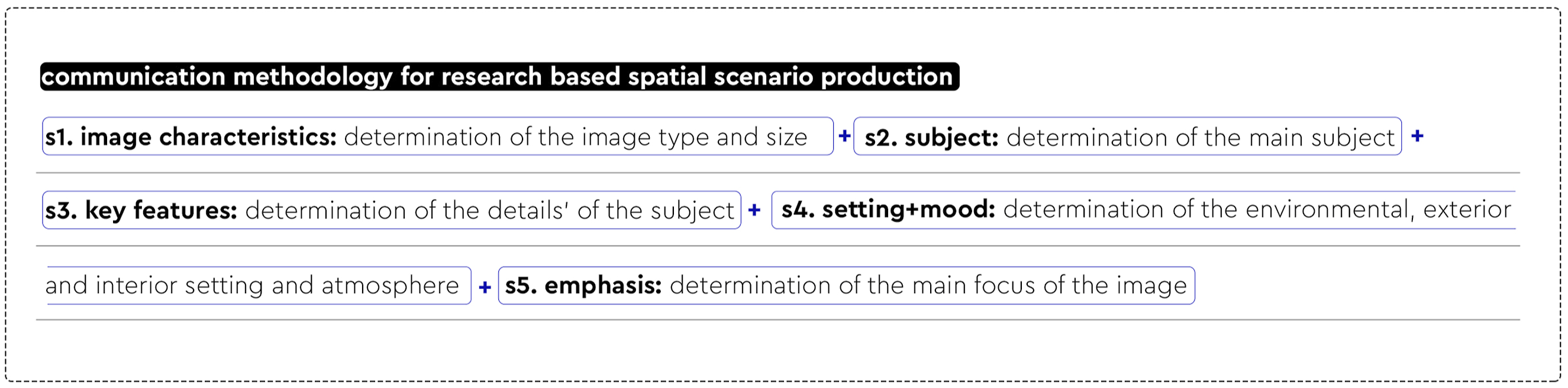
In the designated flowchart, the first step, image type (s1), and the final step, emphasis (s5), specifically adress the visual characteristics and focal elements of the generated image. Meanwhile, the intermediate steps—subject, key features, and setting + mood—focus on the spatial content of the image, particularly emphasizing spatial scenario design and spatial composition.
In the first step (s1), students are determined the type of image to be generated (e.g., photo-realistic, hand sketch, illustration), along with its orientation and size. In the second step (s2), students select a historical time period associated with the chosen healing space. Based on this selection, they establish the overarching framework of the scenario text, defining the main theme, healing methods, and key characters. The third step (s3) refines this framework by integrating specific details into the scenario text, such as character types, gender, age, roles, clothing, and healing-related objects. These additions enrich the scenario’s specificity. The fourth step (s4), setting + mood, directly integrates an interior design perspective into the scenario prompt, incorporating spatial design decisions. It consists of three main categories: environmental setting, addressing the interaction between the structure and its surroundings; building setting, focusing on architectural characteristics; and interior setting, emphasizing interior architectural design. Within this framework, students specify detailed design elements such as material choices, color, texture, lighting, furnishings, flooring, staircases, form, dimensions, layout, and atmospheric considerations.
At this stage, students are received a scenario guide checklist, outlining the required level of detail for developing and enriching their scenario texts. This guide supports their cognitive processes during scenario development (Figure 6). Scenario-based checklist.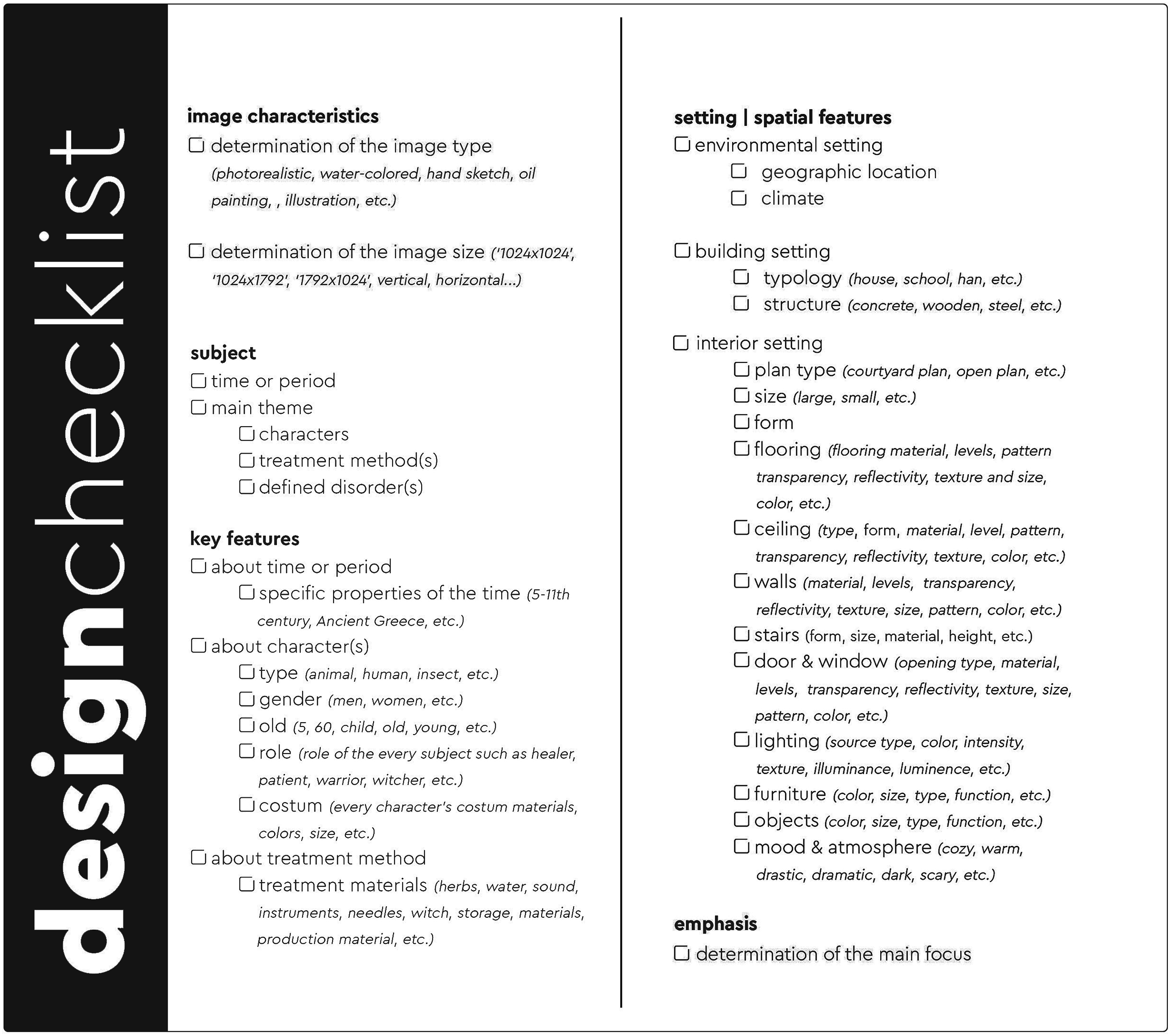
Given the limitations of general-purpose AI systems in generating contextually rich and discipline-specific scenarios, a specialized GPT model, Scenario Visionary for Healing Spaces (SV + HS), was developed to facilitate a controlled generative workflow in design contexts where visual data is scarce but rich textual data is available. The model was designed to support scenario-based design production, with a particular focus on aligning textual prompts with coherent visual outputs. “SV” represents the model’s foundational function as a Scenario Visionary—a tool that structures scenario-driven design narratives through guided language interaction. The “+HS” component reflects its customization for a specific case context, yet the structure of the model allows it to be reconfigured for other thematic areas in future studies. Furthermore, the use of SV + HS contributed to the data collection process by systematizing the generation of linked textual and visual outputs, ensuring consistency across participants and enabling focused analysis. Subsequently, leveraging the content developed within the provided guide, SV + HS was calibrated with ChatGPT-4o to assist students in research-based scenario development and scenario-driven visual production.
The primary rationale for creating SV + HS was to systematically support students in producing detailed, historically grounded, and conceptually coherent scenarios aligned with the specificities of interior design. SV + HS was introduced as a creative assistant, with its functionalities explicitly articulated to guide students throughout the scenario development process.
Based on the checklist content, SV + HS helps students craft detailed scenarios focused on healing spaces by guiding them through temporal settings, themes, characters, and spatial design decisions. Throughout each stage of interaction, the assistant poses directive questions to ensure that users provide sufficient detail in their scenarios. The conversation begins with broad, open-ended questions aligned with the checklist and gradually shifts toward more targeted queries that refine and enhance the user’s spatial and narrative decisions.
If students had engaged directly with a standard, general-purpose ChatGPT model, the guidance process would likely have been spontaneous and fragmented, lacking methodological integrity and potentially resulting in superficial and contextually detached outputs. To adress these limitations, SV + HS was systematically structured as a specialized instructional agent designed to guide students in maintaining narrative and conceptual alignment, prevent divergence into superficial or fragmented outputs, and ensure the development of conceptually rich and contextually coherent design intentions.
The structured dialogue with SV + HS follows a sequential logic: once the user responds to the initial question about the primary time period or historical setting, the assistant proceeds to the next inquiry. This systematic approach is maintained throughout all scenario-related inquiries. Once the user articulates their initial ideas, SV + HS converts them for further details before advancing to subsequent questions. After the user completes the scenario development, the assistant adheres to the structured dialogic framework outlined in Figure 7, ensuring a comprehensive and iterative co-creation process (Figure 7). Structured dialogue mapping.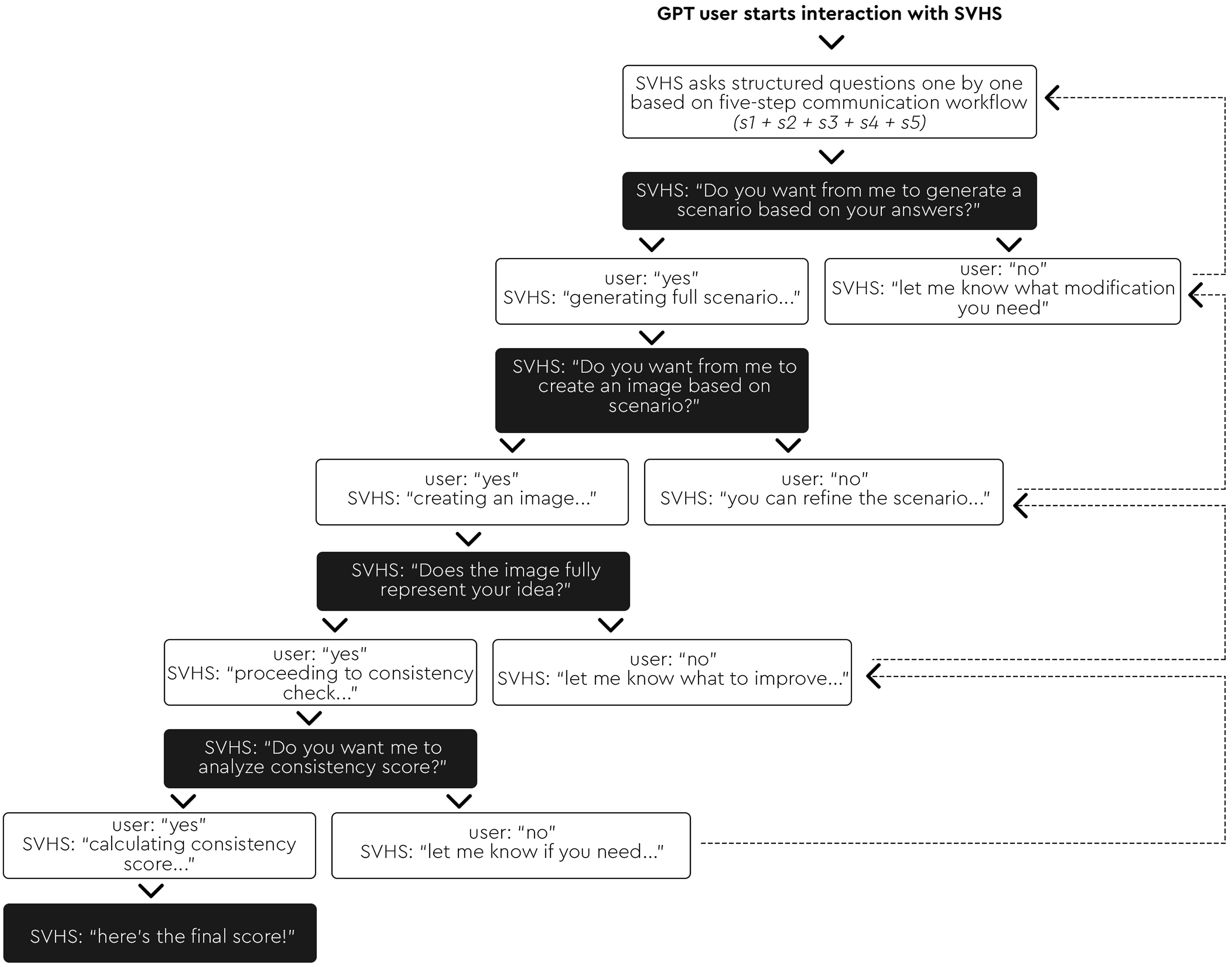
On of the primary objective of SV + HS is to explore how an AI-powered design tool can be trained to ask questions from an interior design perspective while simultaneously guideing the design process. By effectively steering the workflow as an assistant, SV + HS facilitates the integration of AI into interior design pedagogy and enables the observing of changes in design outcomes.
Additionally, SV + HS aims to assess how AI, acting as a pedagogical assistant, can support students’ cognitive processes, influence their thinking and production, and function as an evaluative tool within the creative workflow. This exploration seeks to provide insight into AI’s role in fostering critical and generative thinking within the design process. In alignment with this goal, students regenerated their scenarios using the SV + HS interface and then produced visuals based on the scenario texts developed within the AI environment (Figure 8). Phase III productions.
By contrast, the domain-specific structuring of SV + HS systematically directed students toward a well-defined design objective, ensuring that their cognitive trajectories remained consistent, conceptually enriched, and outcome-oriented. This approach not only strengthened the alignment between students’ design intentions and AI-assisted outputs but also reinforced the pedagogical integrity of the scenario-based design methodology.
Phase IV: Final productions and evaluation
At this stage, it is aimed to gather insights on the effectiveness of AI integration in scenario-driven spatial design and its impact on students’ cognitive and creative processes. Students revisited and refined their previous production process from Phase III, utilizing SV + HS to regenerate their scenario texts and produce corresponding visuals. This iterative approach allowed a comparative assessment of their initial and AI-assisted outputs. It provided a structured evaluation of how AI guidance influenced their design thinking, narrative coherence, and spatial articulation. Collected responses and revised productions were analyzed to determine the pedagogical effectiveness of AI as a design assistant, identifying key areas of enhancement and potential challenges in integrating these tools into interior design education framework (Figures 9). Phase IV productions. Consistency scores based on the formula.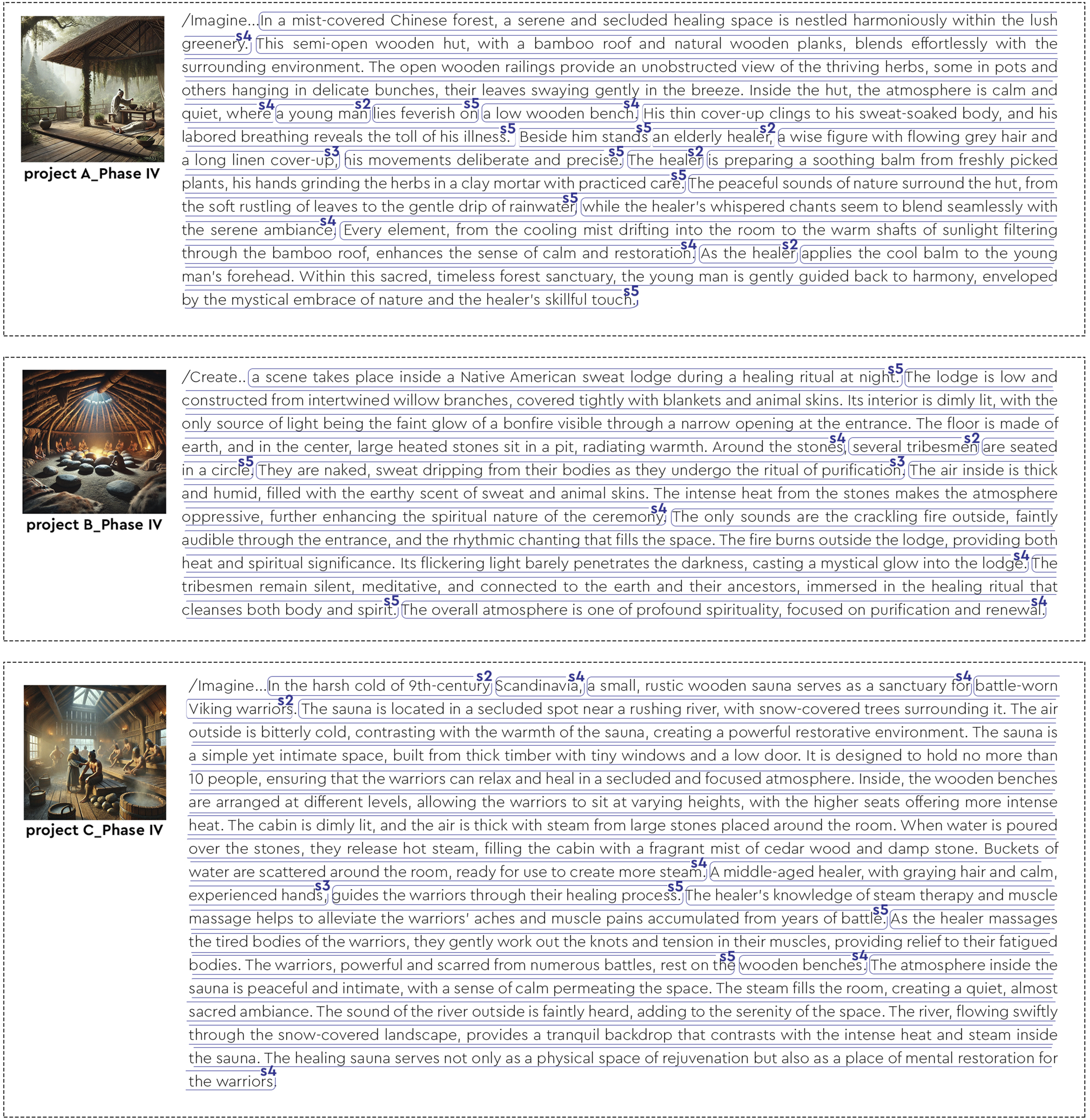
Each phase facilitated a gradual transfer of knowledge, ensuring a step-by-step learning process tailored to students with varying levels of proficiency in interactions with AI-based design tools. A progressive instructional model was implemented, in which students with less familiarity with these tools received targeted knowledge and guidance at each stage. This structured approach enabled the observation of students’ development across different phases, specifically assessing how their communication skills with the AI tool influenced their design outputs. Furthermore, this model allowed for a comparative measurement of how the adopted communication strategies impacted their creative production process. Within this framework, the analysis data used to evaluate the communication process, along with the rationale for its selection, is comprehensively presented in Section 3.4.
Analysis parameters
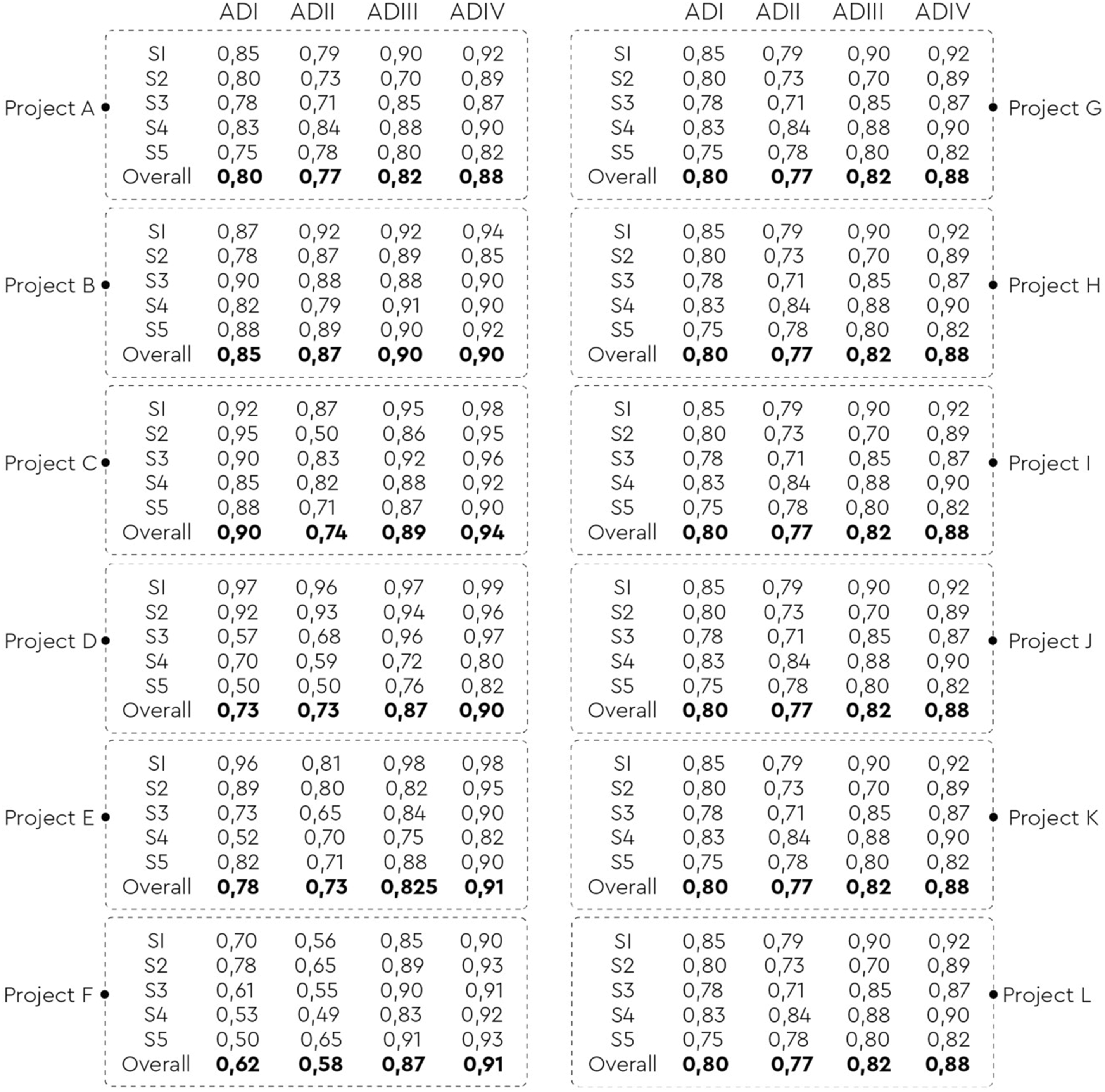
The analysis data (AD), use to evaluate the communication process and content within the adopted workflow, are structured and presented below: • AD I: The comprehensiveness of the scenario texts developed during the Phase I, based on the literature review was assessed. This data revealed students’ proficiency in developing spatial scenarios and transforming them into coherent narratives. Particular emphasis was placed on their ability to utilize conceptual frameworks derived from literature-based research. • AD II: The consistency between the scenario text from Phase I and the corresponding visual outputs from Phase II was evaluated. This analysis was designed to reveal the impact of students’ basic knowledge of AI-supported tools and their ability to engage in hybrid production processes with AI. • AD III: The alignment between the scenario text and the visual output generated druing Phase III was assessed to determine narrative-visual coherence. This data highlights how enhanced communication skills with AI-based tools influence the intended production. Additionally, it identifies the impact of guiding students’ fundamental cognitive processes through AI-based approaches on the final production outcome. • AD IV: The consistency between the digitally developed scenario text and the generated visual output from Phase IV was analyzed. The analysis aimed to determine the impact of students’ increasing interaction with AI-supported tools, as well as their proficiency and familiarity with these tools during their production process.
These findings have been used to assess the impact of AI on linguistic and computational thinking processes within interior design pedagogy and to position the analysis within the broader academic discourse.
Research results
This study, systematically evaluated AI-generated images and scenarios to measure their alignment with corresponding textual descriptions. A structured consistency evaluation framework, consisting of five parameters “image characteristics (s1), subject (s2), key features (s3), setting / spatial features (s4), emphasis (s5)” and their sub-parameters was developed based on the design checklist produced during phase III. Each AI-generated image and scenario was examined based on these five categories, assessing how accurately the design elements from the text were translated into the visual representation. A numerical consistency score (Ci) was calculated for each category (s1+s2+s3+s4 + s5), providing a quantitative measure of alignment. The consistency score for each image was calculated using the following formula:

The overall consistency score (
Holistically evaluating the overall dataset through student-generated outputs reveals distinct findings across production phases. The analysis provides critical insights into how students’ interactions with AI-based design tools transform through linguistic production, AI integration, visual output synthesis. • According to ADI, the average success rate in Phase I —research-based scenario development—was calculated as 79.7%. This finding indicates that, in the initial stage of the design scenario creation process, students demonstrated a certain level of proficiency in producing scenario texts based on literature review. • In ADII, Phase II performance metrics indicate that as students transitioned into AI-supported systems, the success rate declined to 73.9%. The students’ limited proficiency with these tools lowered expected production consistency. This decrease highlights the initial challenges students faced in adapting their linguistic outputs to AI-driven interfaces, underscoring the necessity for explicit pedagogical scaffolding during early AI integration phases. • In ADIII, Phase III productions showed significant improvement, with the success rate rising to 86.8%. This improvement suggests that structured methodological guidance, such as scenario checklists and specialized AI interactions, significantly enhanced students’ linguistic articulation and scenario visualization skills. This stage demonstrates that students enhanced coherence between linguistic inputs and AI-generated outputs by adopting a more conscious and strategic approach to guiding AI tools. The implementation of AI-supported iterative processes led to greater accuracy and consistency in visual design outcomes. Additionally, this finding highlights the positive impact of the developed checklist and the SV + HS, contributing to improved production outcomes. • In ADIV, Phase IV productions recorded the highest levels of success, with the final success rate reaching 91.2%. The results indicate that iterative engagement with AI tools fostered students’ adaptive learning strategies, critical scenario refinement abilities, and deeper control over multimodal design communication. This final stage indicates that, through accumulated and structured experience, students strengthened the integration between linguistic and visual outputs, attaining a high level of control over AI-assisted design workflows. Familiarity with the design tool positively influenced production outcomes.
In addition to these quantitative findings, several cross-cutting pedagogical findings emerged across the four phases of the workshop. These findings offer deeper insight into how AI-mediated workflows contributed to students’ cognitive and creative development. • • • •
In conclusion, this study presents critical findings into how AI-supported design pedagogy reshapes linguistic and visual production processes in interior design education. Although students initially encountered adaptation challenges, they progressively established a more proficient interaction with AI tools, reaching peak performance levels in the final phase. This research highlights the potential of AI not only as a generative tool but also as an active cognitive agent that fosters epistemic development, supports strategic thinking, and reconfigures the methodologies underlying creative design processes.
Conclusion and discussion
This study highlights the transformative role of AI as a linguistic interface in interior design education. It emphasizes AI’s capacity to shape design cognition, support conceptual articulation, and facilitate structured dialogue between designers and computational systems. AI-assisted tools extend beyond visualization, contributing to decision-making, iterative refinement, and the epistemic structuring of design knowledge.
The integration of AI-driven linguistic interfaces introduces a paradigm shift in how interior design students conceptualize and articulate their ideas. By embedding textual interactions into the design process, these tools bridge the gap between computation and creativity, fostering a hybrid cognitive model that merges language with visual representation. The study identifies that AI-powered text-to-text and text-to-image systems enhance students’ ability to externalize abstract concepts, engage in structured design workflows, and refine their spatial reasoning capabilities. AI-mediated linguistic interaction serves as a scaffolding mechanism in design education, particularly for novice designers struggling with conceptual development. The ability of AI to provide immediate feedback, generate alternative interpretations, and facilitate multimodal learning environments reinforces its role as an active cognitive co-agent.
This study calls for a structured integration of AI-assisted design tools within curricula, emphasizing their potential to augment linguistic proficiency, computational literacy, and design cognition. The methodology employed in this research demonstrates the efficacy of scenario-driven AI-assisted learning. By analyzing linguistic patterns in student interactions with AI, the study offers insights into how AI supports cognitive processes and decision-making in interior design education. The research also highlights the significance of iterative student-AI dialogues in refining design prompts and outcomes, suggesting that structured AI engagement can foster more deliberate and reflective design thinking.
Building upon these insights into AI-mediated reflective practices, the workshop’s conceptual framing strategy further aimed to develop critical and speculative design skills. In this context, working with historical environments characterized by limited visual data was not intended as a historical reconstruction exercise. Rather, it aimed to strengthen students’ ability to make creative inferences in the face of data gaps and to develop critical thinking and design skills under conditions of uncertainty. This approach was deliberately structured as a pedagogical strategy to support students in producing design scenarios that address contemporary issues and speculate on future spatial possibilities. It has been explored as a methodological approach applicable to various thematic contexts characterized by the presence of textual data and the absence of visual information.
In alignment with these strategy, the integration of the custom GPT model, SV + HS, further reinforced the study’s pedagogical aims. Designed specifically to support scenario-based spatial reasoning, SV + HS functioned as a dialogic assistant that guided students through conceptually fragmented design problems with structured linguistic prompts. This structured engagement enabled students to navigate ambiguity, maintain narrative cohesion, and articulate spatial intentions with greater clarity. Beyond merely generating outputs, the AI system was instrumental in shaping students’ design cognition, particularly under conditions of limited visual data. The developed model has been observed to hold the potential to contribute to the development of AI-mediated design pedagogies that prioritize linguistic structure, scenario logic, and epistemic authorship. This indicates that the model can be customized and applied to scenario generation across different design topics. As such, the methodology not only expanded the expressive possibilities of AI-assisted tools but also established a replicable framework for cultivating future-oriented thinking and critical design skills in interior design education.
While this study provides valuable insights into the integration of AI-driven linguistic interfaces in interior design education, several limitations must be acknowledged. First, the research relies on a specific set of AI tools, namely ChatGPT-4o and DALL-E. Future studies should investigated whether different AI platforms —with varying natural language processing and generative design capabilities— would yield different outcomes.
Additionally, the study was conducted within a single educational institution, limiting its generalizability to broader pedagogical contexts. Interior design curricula, teaching methodologies, and student interactions with AI may differ significantly across institutions, necessitating further research across diverse educational settings to validate the findings.
The cognitive shift required for students to effectively engage with AI-based linguistic interfaces presents a learning curve. While the study highlights the benefits of AI-assisted design tools, individual differences in digital literacy, language proficiency, and prior exposure to computational tools may impact student adaptation.
Further research is needed to examine how these factors influence learning outcomes and AI adoption in design education. Moreover, this study primarily focuses on AI’s role in facilitating conceptualization and visualization. AI’s impact on critical thinking, originality, and authorship in the design process underexplored and warrants further investigation. The extent to which AI influences design decision-making and whether it enhances or constrains creative autonomy should be explored in future studies. Future research should also explore how curricular frameworks can meaningfully integrate ethical reasoning and critical AI literacy, thereby enabling students to remain critically aware of the sociotechnical implications of the tools they employ.
The study underscores that the integration of AI into design education extends beyond simply augmenting productivity or expressive potential; it demands a deliberate navigation of complex ethical terrains. It advances the proposition that pedagogical frameworks grounded in the agency of the designer and the generative capacity of human ideation can give rise to more authentic approaches within AI-mediated production. In this context, the limitations inherent to AI systems are not viewed as fixed constraints but rather as conditions that can be critically negotiated and strategically reconfigured through the designer’s reflective engagement and epistemic authorship.
In conclusion, AI-driven linguistic interfaces constitute a significant evolution in interior design pedagogy. By enabling structured linguistic interaction and multimodal representation, AI redefines how students engage with tools, articulate spatial ideas, and develop conceptual frameworks. Their integration into curricula opens promising opportunities toward cultivating computationally literate, critically reflective, and creatively empowered designers.
Footnotes
Acknowledgements
This study is derived from the doctoral dissertation currently being conducted by Gözde Gökdemir under the supervision of Assoc. Prof. Hande Zeynep Kayan within the Interior Architecture PhD Program at the Graduate School of Mimar Sinan Fine Arts University. The authors would like to express sincere gratitude to Prof. Dr Ervin Garip at Istanbul Technical University for his invaluable support and contributions throughout the workshop process, particularly for providing the educational framework in which the study was conducted. The authors are also grateful to students who participated in the workshop for their active engagement and creative productions, which significantly enriched the outcomes of this research.
Declaration of conflicting interests
The authors declared no potential conflicts of interest with respect to the research, authorship, or publication of this article.
Funding
The authors received no financial support for the research, authorship, and/or publication of this article.
