



Abstract
Institutions of higher education are increasingly focused on student outcomes such as persistence. This study investigated factors that contribute to a sense of belonging, a key contributor to persistence, in business students attending a small 4-year public commuter campus in the Midwest. A survey was administered to students in an introductory business course with a first-year experience component to examine three categories of variables: student demographics, faculty interventions, and student activities. Using logistic regression, three faculty interventions showed a significant correlation with sense of belonging: faculty encouragement, faculty empowerment, and faculty interest. These results suggest that when commuter campuses are successful in cultivating caring, positive relationships between students and faculty, their student’s sense of belonging may be enhanced and persistence improved. This is important because these factors are within the control of a commuter campus, which tends to have fewer options and more challenges in enhancing persistence than residential campuses.
Higher education institutions are undergoing increased scrutiny from funding agencies, accrediting bodies, and prospective students in terms of student outcomes. Therefore, it is incumbent on schools to ensure that an increasing number of students complete the course of study in a timely manner. The National Student Clearinghouse Research Center (2015) reported that overall persistence rates are approaching 70%, which is an improvement over earlier years, when completion rates were as low as 50% (Tinto, 1975). However, if one disaggregates the data by type of college and type of student, a different picture emerges. Specifically, persistence rates vary greatly by institution type, and they are much lower for certain categories of students, such as those who attend part time, those who are above their mid-20s in age, those who commute to campus, and members of certain racial groups.
Tinto’s (1993) early work on persistence marked the beginning of researchers’ efforts to identify institutional approaches to address the challenges that students face in completing a college education. Tinto’s study suggested that students remain enrolled if they become integrated within the institution on two dimensions: academic and social. Academic integration occurs when students become attached to the intellectual life of the college and develop an interest in learning. Social integration occurs when students create relationships and connections outside of the classroom. Tinto’s early work on persistence led to an expansion in the ways in which researchers looked at the issue. As a result, the literature is rich in studies that examine both predictors and interventions related to student persistence (Braxton, Milem, & Sullivan, 2000; Cox, Schmitt, Bobrowski, & Graham, 2005; Hausmann, Schofield, & Woods, 2007; Kuh, Kinzie, Bridges, & Hayek, 2007; Strayhorn, 2012).
Numerous analyses have been conducted as researchers have investigated various categories of variables, including the individual characteristics of students (Allen, Robbins, Casillas, & Oh, 2008; Braxton et al., 2000; Hausmann et al., 2007; Kuh, Cruce, Shoup, & Kinzie, 2008; Strayhorn, 2012), faculty interventions (Braxton et al., 2000; Hausmann et al., 2007; Houser & Frymier, 2009; Kuh et al., 2008; Morrow & Ackermann, 2012; Myers, 2004; Pascarella & Terenzini, 2005), and student activities (Ahlfeldt, Mehta, & Sellnow, 2005; Braxton et al., 2000; Christie & Dinham, 1991). While all factors that influence student persistence are of interest, the middle category—faculty interventions—provides the most opportunity for many agents of the institution to support student success directly. Engagement theory has provided institutions with information on another dimension of student persistence: Students who report feeling more engaged have higher persistence rates (Kuh et al., 2008). As this theory was further explored by researchers, the notion of a sense of belonging was introduced, and ultimately its link to persistence was established (Braxton et al., 2000; Strayhorn, 2012).
Researchers have provided valuable information on many aspects of this topic; however, the majority of these studies focused on traditional students studied on residential campuses (Braxton et al., 2000; Christie & Dinham, 1991; Pascarella & Terenzini, 1983; Terenzini & Pascarella, 1984). Consequently, there is a gap in the literature regarding commuter campuses and the nontraditional students whom they serve. These students have long been identified as a group worthy of specific attention due to the additional challenges that they face (Bean & Metzner, 1985; Christie & Dinham, 1991), but much remains to be understood about ways in which institutions can assist this population.
Thus, the purpose of this study was to investigate factors that contribute to a sense of belonging in business students attending a small commuter campus in the Midwest, serving about 3,500 students. A survey was administered in three consecutive semesters to students in an introductory business course with a first-year experience component. Logistic regression was used to analyze the results. The statistically significant findings contribute important information on this topic.
Student Persistence Problem
Within the past several years, there has been increased scrutiny of the effectiveness of institutions of higher education in educating and retaining students (Tovar & Simon, 2010). However, the problem of student persistence is not new. Decades ago, Tinto (1975) reported that up to 50% of students who enrolled in college left before completing a degree. Since then, rather than improving, completion rates for some student groups, primarily those at less selective institutions, declined through the late 1980s and early 1990s to around 46% (Bound, Lovenheim, & Turner, 2010). In the meantime, data on this topic have shifted from just reporting completion rates to looking at retention rates, specifically persistence rates.
For example, a recent report by the National Student Clearinghouse Research Center (2015), a nonprofit nongovernmental provider of educational research and data, did not include completion rates, only retention and persistence rates, both of which showed higher average rates for cohorts entering in 2014 when compared to those who entered in 2009 (National Student Clearinghouse, n.d.). The report (National Student Clearinghouse Research Center, 2015) showed that although persistence rates have risen to averages as high as 72%, increases in persistence have not been consistent for all types of schools nor for all students. When disaggregating the data by type of institution (public vs. private), enrollment type (part time vs. full time), and age of the student when entering college (over 24 years vs. under 20), the rates vary greatly, with public, part-time, and older students experiencing much lower persistence rates. For example, full-time students entering 4-year public institutions had average persistence rates close to 88%, but part-time students at the same institution persisted on average at a rate of 61%. For private schools, the gap was even larger, with persistence rates of 90% for full-time students but only 61% for part-time students. Students who began college at age 20 or younger had overall persistence rates of around 78%; students over 24 years of age when enrolling in school persisted at an average rate of only 50%. Persistence rates also varied based on gender and ethnicity. Females persisted at higher rates than males and students of color persisted at lower rates than Whites (Kuh et al., 2008; National Center for Education Statistics, 2012). Therefore, studies that address interventions to improve persistence rates for all students continue to be important, especially those that focus on public institutions serving groups with lower persistence rates, such as commuter campuses with nontraditional, older, part-time students.
Engagement Theory and Nontraditional Students
Kuh et al. (2008) posited that student engagement is a key factor affecting academic success and persistence. In a multiinstitutional study, the researchers analyzed a variety of factors in an effort to determine the relationships between key student behaviors, institutional practices, and student success (defined by both grade point average and persistence to the second year of college). Results indicated that, as students spent energy investing in psychosocial integration and became engaged in educationally purposeful activities, such as first-year experiences, peer tutoring, and group projects, they were more likely to perform better academically, be more satisfied with the college experience, and persist and graduate.
Although several precollege factors, such as higher ACT or SAT scores, were shown to have a positive effect, the degree of that effect diminished with consideration of external college experiences, such as living off campus, part-time enrollment status, and being employed off campus (Kuh et al., 2008). These findings support what Bean and Metzner (1985) recognized early on: The differing experiences of nontraditional students pointed to the need for a conceptual model of persistence, or lack thereof, for these students. The continuing need to have this gap in the literature addressed was supported by Braxton, Hirschy, and McClendon (2004), who suggested that conducting studies that focus specifically on students who face additional challenges from the external environment, especially those on commuter campuses is necessary.
Additional Challenges for Commuter Versus Residential Campuses
Much of the literature on factors that contribute to a student’s sense of belonging has focused on residential campuses (Braxton et al., 2000; Christie & Dinham, 1991; Pascarella & Terenzini, 1983; Terenzini & Pascarella, 1984). Christie and Dinham (1991), in a series of interviews with students from a large public research institution, attempted to identify influences on social integration. Their findings revealed that students who lived on campus had more opportunities to socialize with peers and to be involved in extracurricular activities, and as a result, they were more likely to become integrated with the campus. Conversely, students who lived off campus were more likely to be met with competing demands from friends and family and were at increased risk for withdrawal.
Numerous schools serve students who are termed nontraditional in that they tend to be older, commute to campus, and attend part time (Bean & Metzner, 1985). This is especially true for commuter campuses, because they do not have residential housing units. Commuter campuses are more likely to be serving first-generation college students who tend to be less engaged overall, perceive their college campus as less supportive, and persist at lower rates (Pike & Kuh, 2005). First-generation students are defined as those students whose parents’ educational attainment did not extend beyond high school; second-generation students are defined as those who have at least one parent who had attended college. This is an important distinction because second-generation students are more likely to have received encouragement toward positive outcomes in their education and are more likely to be familiar with the academic and social expectations of higher education. First-generation students lack this degree of parental input and support due to their parents’ inexperience with higher education.
An additional factor that negatively affects engagement by nontraditional students on a commuter campus is living off campus (Pike & Kuh, 2005). These students have long been identified as having more numerous, and stronger, external forces pulling on them (Bean & Metzner, 1985; Christie & Dinham, 1991). These external influences have been shown to have an impact on a student’s relationships on campus, resulting in less interaction with peers and faculty, participation in fewer campus-related extracurricular activities, and more interaction with the external environment (Bean & Metzner, 1985). Therefore, schools, such as commuter campuses, that serve nontraditional students face additional challenges when attempting to improve persistence rates by improving students’ engagement with the college (Bean & Metzner, 1985; Christie & Dinham, 1991).
Importance of a Sense of Belonging
The term sense of belonging was introduced by Hurtado and Carter (1997) and defined as an individual’s perception of her or his place in relation to a group or college community. Since then, the term has been more fully described as encompassing the student’s perceived level of social support on a campus, also referred to as a sense of connectedness, or a feeling of being important to others (Strayhorn, 2012). In their extensive study of a sense of belonging, Hausmann et al. (2007) found that the factors that positively influenced a sense of belonging were primarily social in nature, such as interactions with faculty and peers, as well as social support from peers or parents. Tovar and Simon (2010) examined the various components of the phenomenon and suggested that it comprised three factors: (a) the nature of the instructor–student relationship, as defined by the student’s perception of faculty concern, (b) the student–peer relationship and perceived level of peer support, and (c) the nature of the student–classroom interactions in terms of perceived classroom comfort.
Strayhorn (2012) extended the specifics by suggesting seven core elements of a sense of belonging: (a) It is a basic human need for all people, (b) it is a fundamental motivation that in the educational setting drives behavior toward or away from academic success, (c) it can vary in importance in certain contexts, (d) it is related to a feeling that one matters, (e) it is affected by social identity, (f) it can foster other positive outcomes such as engagement and achievement, and (g) it is subject to change as conditions and context change. Finally, Hurtado and Halualani (2014) examined colleges that put an emphasis on assisting students in developing a sense of belonging. They noted that, according to the American Association of Colleges and Universities, institutions of higher education should be focused on achieving inclusive excellence in all practices, processes, and structures. Thus, a sense of belonging can be considered an essential indicator of inclusive excellence (Strayhorn, 2012).
Link Between Sense of Belonging and Persistence
Tinto’s (1975) study on student persistence is one of the earliest and most cited works on this topic and the first to link a lack of student integration to departure from the campus. Since then, researchers have focused directly on a student’s sense of belonging and found that sense to be a positive influence on academic achievement (Strayhorn, 2012) and persistence (Allen et al., 2008; Braxton et al., 2000; Hausmann et al., 2007; Tovar & Simon, 2010). Looking further into the connection between sense of belonging and persistence, Morrow and Ackermann (2012) focused on first-year students’ sense of belonging and their intention to persist; their regression model showed no statistically significant correlation. However, the significance test for the predictor labeled perceived faculty support was statistically significant in predicting the intention to persist. In addition, the models for motivational factors and goal setting by students were statistically significant and indicated that higher levels of each predicted a student’s intention to persist.
The studies discussed here demonstrate that, while several approaches have been taken, much remains to be learned about the link between a student’s sense of belonging and the intention to persistence. This is due in part to the complex interrelationships among personal, environmental, and institutional variables (Hausmann et al., 2007; Morrow & Ackermann, 2012). Therefore, research that examines the influence of these additional factors on a student’s sense of belonging is needed, especially for commuter campuses.
Study Design
Coming from the context of a commuter campus, the authors of this study were interested in the effects of certain variables on a student’s sense of belonging that might be particularly applicable in this setting. When designing this study, the authors looked to the literature for variables that might prove to have a statistically significant impact on the sense of belonging in nontraditional business students on a small 4-year public commuter campus in the Midwest. Attention was focused specifically on variables that were categorized as demographic, faculty interventions, and student activities.
Demographic Variables and Sense of Belonging
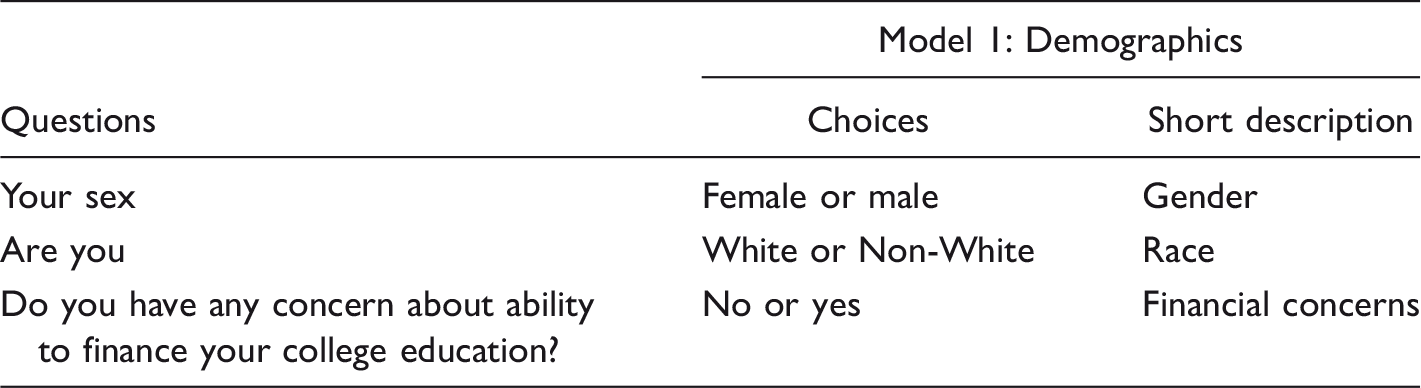
Several researchers have found gender to be a statistically significant predictor of a sense of belonging, with females reporting higher rates than males (Braxton et al., 2000; Kuh et al., 2008). However, other researchers found that gender was not a statistically significant predictor of persistence (Allen et al., 2008) or a sense of belonging (Hausmann et al., 2007). Therefore, the variable gender was included in this study to explore its significance for this population.
The variable representing a student’s race has been included in many studies of student success, or persistence, and sense of belonging; however, similar to gender, the results have varied. Braxton et al. (2000) reported a statistically significant relationship between the race of a student and a sense of belonging with Whites reporting higher rates than non-Whites. Maestas, Vaquera, and Munoz Zehr (2008) found that a student’s sense of belonging was critical in the retention of all students but in particular students of color. Kuh et al. (2008) reported that race was statistically significant in terms of persistence for African Americans and Latinos but not for other races. Conversely, quantitative studies conducted by Allen et al. (2008) and Hausmann et al. (2007) found no statistically significant impact on persistence for the race variable.
Other factors have a moderating influence on the variable race. An early study by Hurtado and Carter (1997) revealed that perceptions of a hostile racial climate negatively affected the sense of belonging of Latino students. More recently, Dayton, Gonzalez-Vasquez, Martinez, and Plum (2004) revealed that Latino students’ sense of belonging was influenced by strong relationships with faculty and staff. Also, Fries-Britt and Turner (2002) found that students at historically Black colleges and universities reported that faculty support influenced their success. Still, socializing with students from different backgrounds and experiencing positive, diverse peer interactions positively affected a sense of belonging in minority groups (Locks, Hurtado, Bowman, & Osegura, 2008; Maestas et al., 2008). Based on the varying impact of the race variable, it was included in this study to determine whether it had an impact on a sense of belonging.
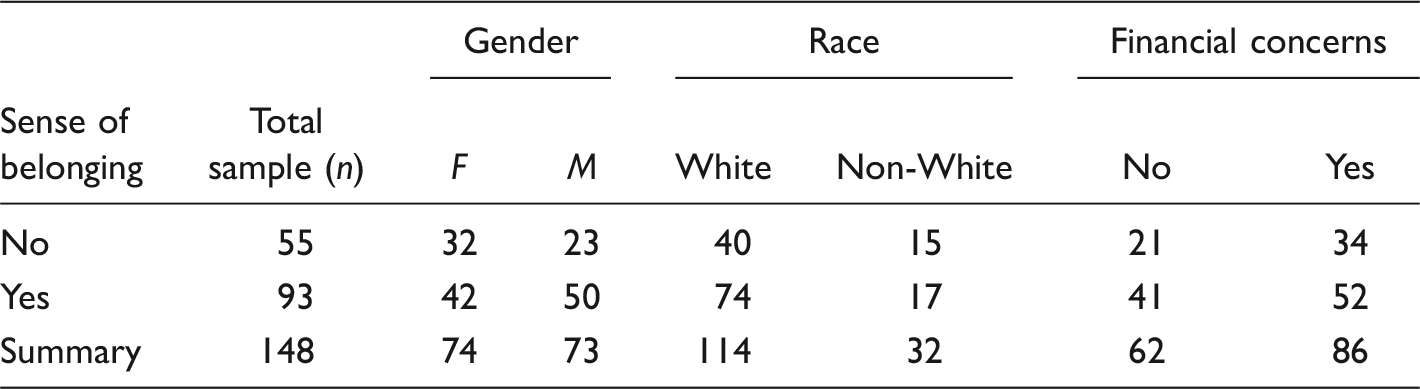
The variable financial concerns or a student’s socioeconomic status has been included in studies and has provided conflicting results regarding persistence and a sense of belonging. Allen et al. (2008) reported socioeconomic status to be statistically significant in predicting persistence, with those in advantaged statuses more likely to persist than those who were less advantaged, while other studies indicated that it was not statistically significant (Braxton et al., 2000; Hausmann et al., 2007). However, according to a national study conducted by Higher Education Research Institute (HERI) in 2015, nearly two thirds of students at 4-year public institutions expressed concern about their ability to finance a college education (Eagan et al., 2015). Our sample closely mirrored that statistic, with 58% expressing such concern. Thus, this variable was included in this study by asking students whether they had financial concerns about paying for college to determine its effect on their sense of belonging.
Faculty Interventions and Sense of Belonging
The topic of the impact of faculty interventions on student engagement and sense of belonging has been studied for quite some time. Also, the link between a sense of belonging and a student’s actual persistence, or intention to persist, has been firmly established. To add to the literature in this emerging area, rather than directly looking at persistence, the authors of this study focused on factors that contribute to a student’s sense of belonging, especially those that an institution can readily influence, such as faculty interventions.
Researchers have reported that student interaction with faculty members, including educationally purposeful interventions, was a statistically significant predictor of intention to persist (Braxton et al., 2000) as well as a sense of belonging (Hausmann et al., 2007; Pascarella & Terenzini, 2005). For example, Morrow and Ackermann (2012) indicated that perceived faculty support, such as the ability to discuss problems with a professor, was positively related to a student’s intention to persist. Further, Braxton et al. (2000) noted that some learning activities such as class participation can affect a sense of belonging. These are examples of the types of direct support that faculty members can provide to students.
Faculty support can also take a more indirect approach, such as demonstrating to students that they take an interest in them or care about them. In a study by Myers (2004), caring was positively related to a student’s willingness to communicate in class. When faculty members treated students as partners in the learning process, students gained a sense of empowerment, which can lead to increased motivation, a sense of competency, and a feeling that their efforts matter (Houser & Frymier, 2009).
Student Activities and Sense of Belonging
Christie and Dinham (1991) identified factors that affect a student’s integration to a campus, including institutional experiences, extracurricular activities, and external experiences. Not surprisingly, their results were consistent with other studies that found that living on campus and participating in extracurricular activities both served as means to more positive social integration. Students who lived off campus, or who had high demands from friends or family off campus, were less likely to become socially integrated and were at increased risk for withdrawal.
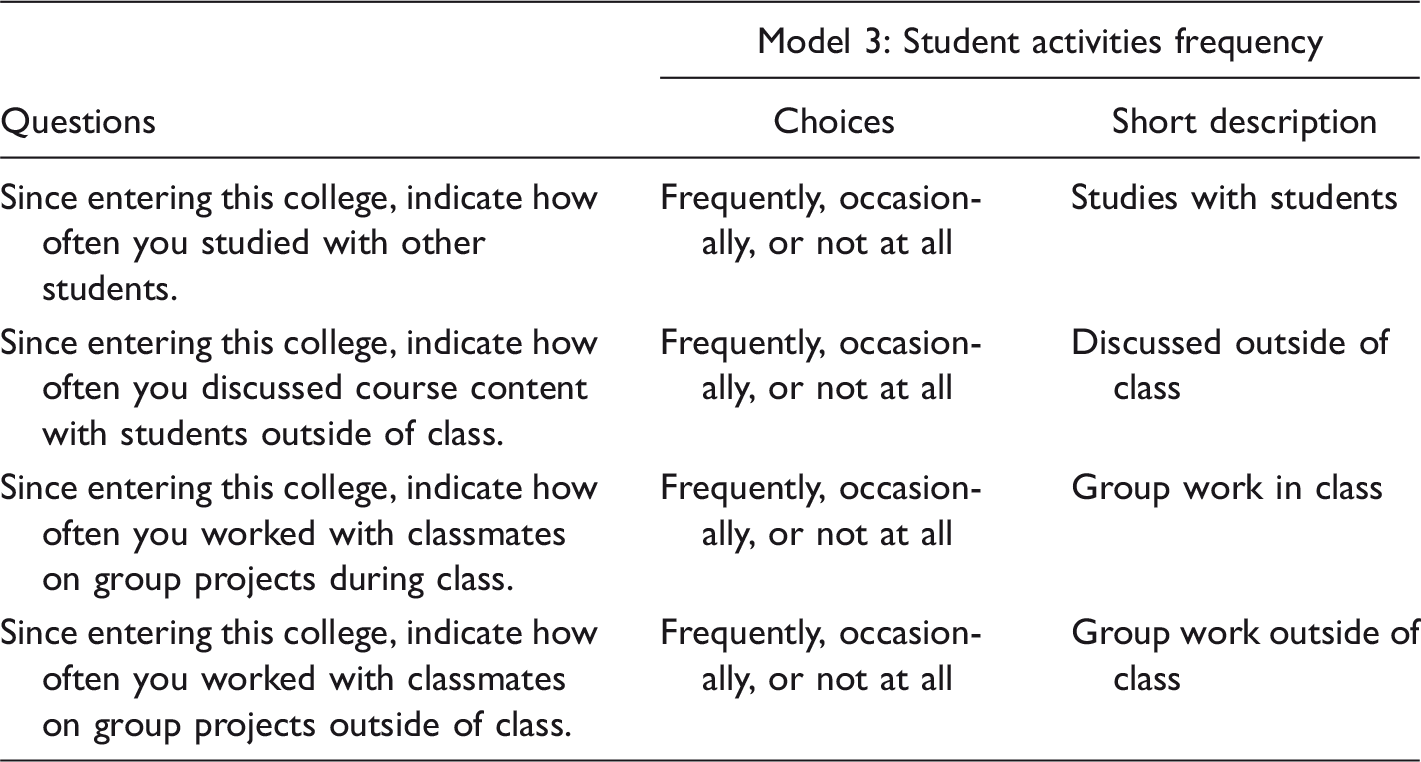
Additionally, particular activities of students have been studied for their effects. For example, group work has been included in several studies, albeit with contradictory results. Ahlfeldt et al. (2005) linked problem-based learning, a group-based teaching technique that encourages collaboration, to increased engagement. Yet, Braxton et al. (2000) found that group work was not statistically significant in predicting a sense of belonging. The present study included four student activities variables, each of which was measured in terms of the frequency with which students engaged in them to determine their impact on sense of belonging.
Research Questions and Instrumentation
This study examined the effects of several variables on business students’ sense of belonging at a small 4-year public commuter campus in the Midwest. Three research questions guided the study:
Which student demographic variables contribute to sense of belonging? Which faculty intervention variables contribute to sense of belonging? Which student activity variables contribute to sense of belonging?
The survey instrument was the 2015 Your First College Year survey, purchased from HERI, which is an interdisciplinary center for research whose mission includes improving understanding of the impact of higher education on students (HERI, n.d.). The survey comprised 36 questions that include demographic variables and items to measure a wide range of cognitive and affective variables (see tables for all questions included in this study).
The dependent variable for all research questions was dichotomous and represented a student’s sense of belonging. The specific survey item was I feel a sense of belonging to this campus. Answers occurred on a 4-point Likert-type scale and were collapsed to agree and disagree, as the researchers were interested in whether or not participants felt a sense of belonging, not the magnitude of those feelings.
Questions Analyzed in Model 1 for Research Question 1.
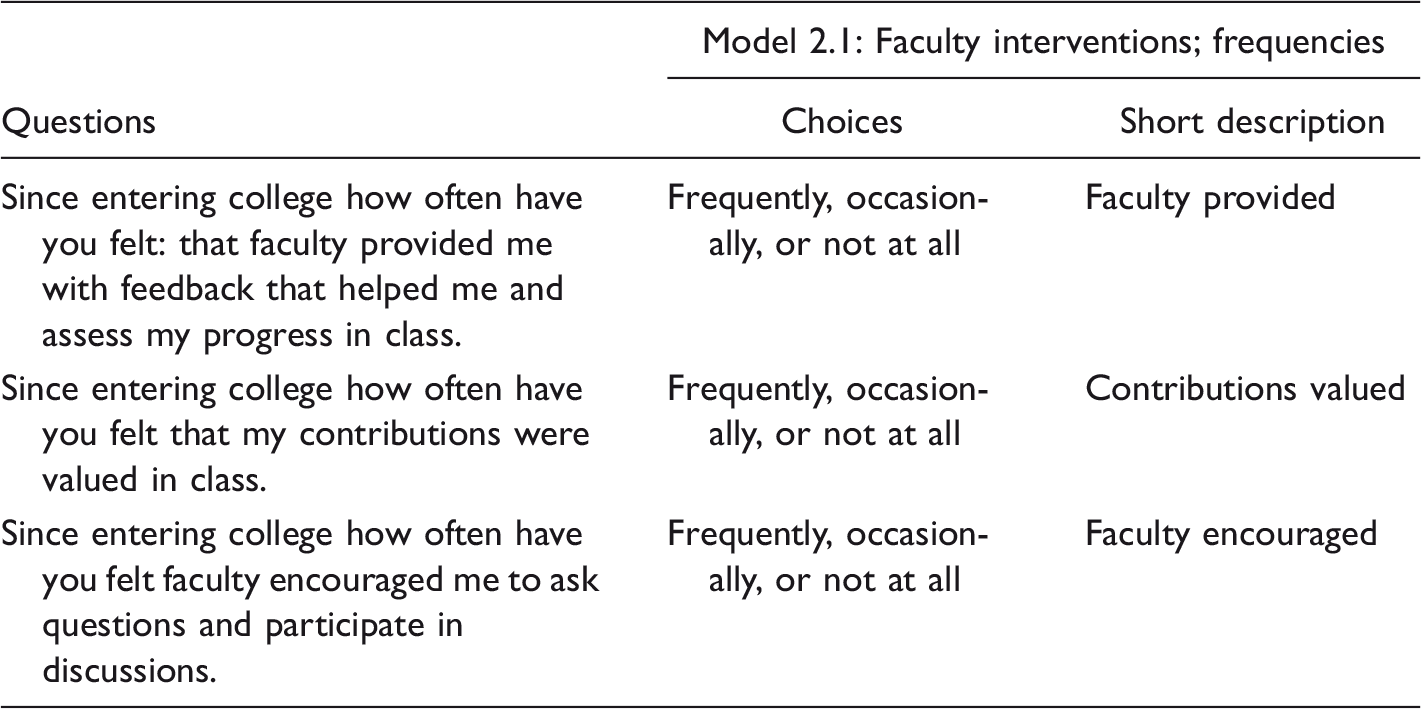
Questions Analyzed in Model 2.1 for Research Question 2.
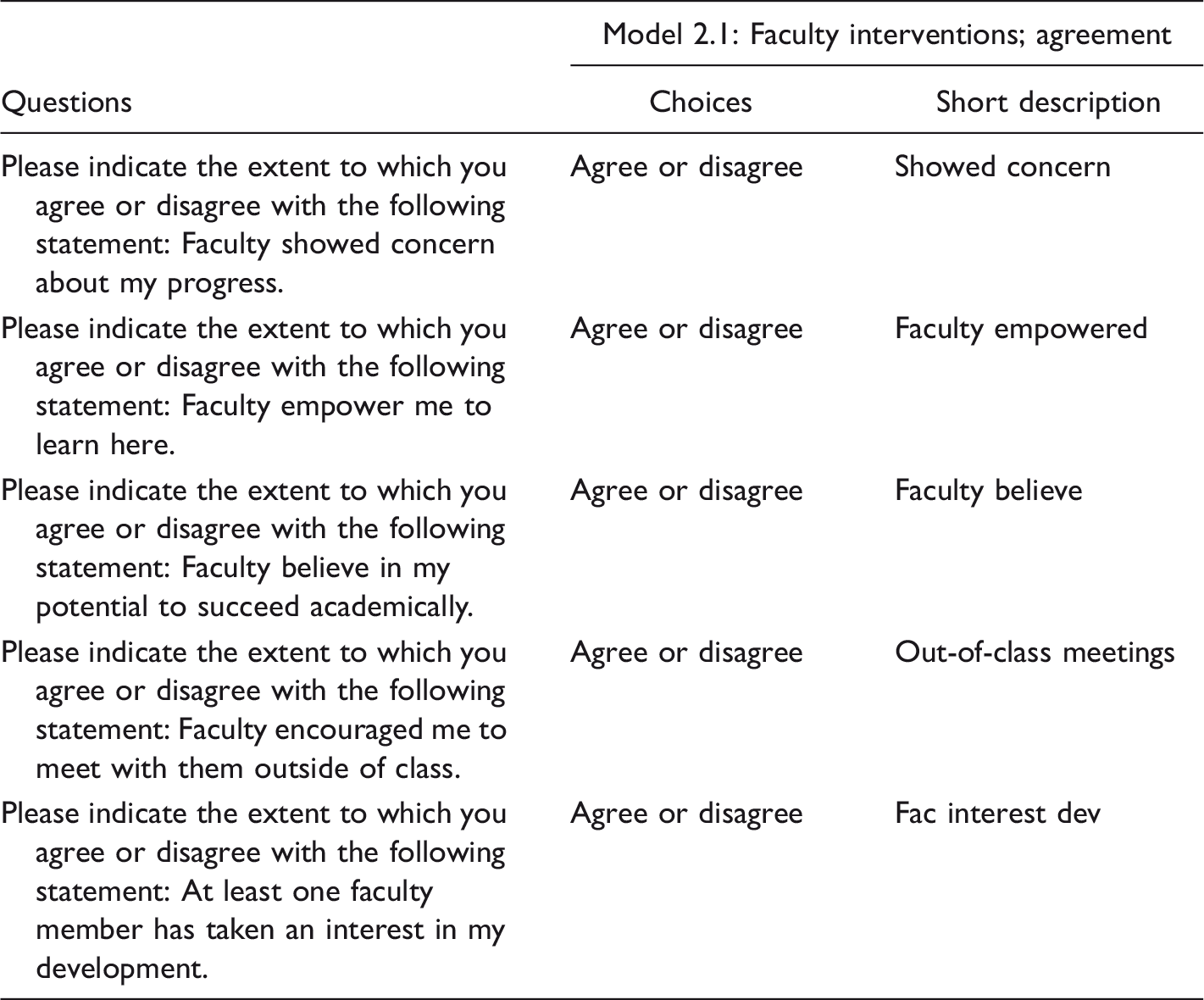
Questions Analyzed in Model 2.2 for Research Question 2.
Questions Analyzed in Model 3 for Research Question 3.
Data Collection and Analysis
The population for this study included all students in an Introduction to Business course over three consecutive semesters, Spring and Fall 2015 and Spring 2016. This course contained elements of a first-year experience program designed to orient students to both the discipline and the university as well as activities to increase student engagement. Paper surveys were administered during the last 2 weeks of the course. There were a total of 252 students enrolled in the courses, and all were invited to participate. A total of 151 surveys were returned, for a response rate of 59.9%; however, three surveys were substantially incomplete and therefore unusable, leaving 148 usable response sets, for a response rate of 58.7%.
Sample: Gender, Race, and Financial Concerns.
Logistic regression was used because of the dichotomous dependent variable. This method offers advantages over discriminant analysis in that it does not require assumption of a normal distribution to be met. Further, it can handle continuous, discrete, and dichotomous variables (Mertler & Vannatta, 2010). Using forward logistic regression allowed researchers to determine which independent variables contributed to students’ sense of belonging. Prior to executing logistic regression, data were checked for multicollinearity. Tolerance for all variables exceeded .1 indicated that multicollinearity was not a problem.
Results
Research Question 1 asked, “Which student demographic variables contribute to sense of belonging?” This model included three demographic variables: gender, race, and financial concerns. None of the variables was statistically significant.
Logistic Regression Analysis for Model 2.1.

Note. −2 Log likelihood = 177.50. Hosmer and Lemeshow p = .511. Percent classified correctly = 68.5.
Logistic Regression Analysis for Model 2.2.

Note. −2 Log likelihood = 170.86. Hosmer and Lemeshow p = .954. Percent classified correctly = 71.6.
Research Question 3 asked, “Which student activity variables contribute to sense of belonging?” This model included student activity variables that inquired about the frequency of student activities: studying with other students, discussing course content with students outside of class, and group work in and out of class. None of the variables was statistically significant.
Implications for Practice and Limitations
This quantitative study investigated factors that contribute to a sense of belonging in business students attending a small 4-year public commuter campus in the Midwest. Three categories of variables were analyzed: student demographic information, faculty interventions, and student activities. None of the demographic variables were statistically significant. In terms of gender, the findings corroborated those of Hausmann et al. (2007). Race was consistent with the findings of Allen et al. (2008) and Hausmann et al. (2007). Financial concerns mirror the results reported by Braxton et al. (2000) and Hausmann et al. (2007).
Three faculty intervention variables were found to have a significant correlation to sense of belonging: how frequently faculty encouraged students to ask questions and participate in class, whether students agreed that faculty empowered them to learn, and whether students agreed that at least one faculty member took an interest in their development. This finding is consistent with the results of previous studies linking faculty interventions with a student’s sense of belonging (Hausmann et al., 2007; Pascarella & Terenzini, 2005). This is especially important because it provides information to faculty who teach at commuter campuses about steps that they can take to increase a student’s sense of belonging and ultimate success. Although first-year experience courses are charged with fostering an encouraging environment for students early in their academic careers, it is incumbent on all faculty members to provide positive encouragement and support to students throughout their entire college experience.
Based on the results of this study, from an administrative perspective, these types of supportive behaviors can be recognized and rewarded, especially at institutions serving nontraditional students. For example, teaching evaluations can include questions that specifically address positive, supportive behaviors, so faculty members receive feedback on their performance in this area. While engaging in these behaviors can be challenging for some faculty members, those who have not been successful in this area can receive assistance in making improvements in this area, such as training and rewards to make improvements. Administrators can recognize faculty members who excel in this area, perhaps by providing recognition or monetary awards. These gestures would illustrate the institution’s commitment to supporting students’ sense of belonging on their campus.
The last group of variables studied, student activities, did not reveal any statistically significant relationships. The results are consistent with those reported by Hausmann et al. (2007). In addition, this study included two variables directly addressing group work, both in and out of class, and found them not to be statistically significant, which was consistent with the findings reported by Braxton et al. (2000).
The findings in this study add to the literature by providing information on ways in which commuter campuses can improve their students’ sense of belonging and ultimately their persistence, specifically by proactively cultivating caring, positive relationships between students and faculty. The results show that, as Hurtado, Ruiz Alvarado, and Guillermo-Wann (2015) asserted, educators have a significant role in creating a student’s sense of belonging. The findings also suggest that sense of belonging is less about the type of classroom activity chosen and more about the nature of the relationship between a faculty member and her or his students. Showing support and making a connection that extends beyond the transaction of a particular course appear to have a positive impact on a student’s sense of belonging and, as previous research has shown, ultimately the intention to persist at the institution.
The positive effects of a good relationship between faculty and students cannot be underestimated. Recent studies indicate that the effects of certain college experiences can affect more than one’s sense of belonging and ultimate persistence; they can extend into the workplace after graduation. In research performed by the Gallup Corporation (Gallup, Inc., 2014), data obtained from more than 30,000 college graduates revealed that positive college experiences can affect the extent to which graduates become engaged in their new careers. Higher levels of engagement equate to satisfaction, productivity, and involvement in the workplace. Graduates who reported positive experiences with professors who cared about them as people, made them excited about learning, or encouraged them to pursue their dreams were more than twice as likely to be engaged at work as those who did not report such interactions. Their findings also indicated that high-impact educational experiences such as internships, extracurricular and cocurricular activities, and projects also positively influenced workplace engagement.
Although this study expands the literature on student persistence, the results may not be generalizable beyond this context. Particularly, the sample was delimited to students with a particular interest in business; therefore, it is unclear if the same relationships would hold true for students in other majors. In addition, while the return rate was sufficient, the sample size was a bit low. Expanding the study to multiple commuter campuses would allow for a larger sample. Also, although the connection has been made between a sense of belonging and persistence, it is still unclear a sense of belonging predicts actual completion rates. It may be fruitful to conduct a series of longitudinal studies to ascertain whether these preliminary indications hold true. A qualitative study to identify why these variables are statistically significant while others in the same category were not would be useful and a mixed-method study might yield some additional insights. Others are encouraged to contribute to this growing body of literature.
Footnotes
Acknowledgments
A sincere thank you is acknowledged to Dr Bala Arshanapalli, of Indiana University Northwest, for his assistance and guidance during the data analysis for this project. His input was valuable and sincerely appreciated.
Declaration of Conflicting Interests
The author(s) declared no potential conflicts of interest with respect to the research, authorship, and/or publication of this article.
Funding
The author(s) received no financial support for the research, authorship, and/or publication of this article.