



Abstract
A preparatory process is widely accepted to be a common feature in the perpetration of sexual offenses. Numerous commentators, however, have documented the difficulties in defining and understanding this process, given its transient nature and its specificity to this one form of criminal behavior. This theoretical review aims to provide a universal model of a grooming process for the achievement of illicit or illegal goals in which achievement requires the compliance or submission of another individual—one that can be applied both to the sexual offending process and beyond. First, an evaluation of three process models of grooming is conducted. Second, using a process of theory knitting, an integrated universal model of illicit grooming is developed. This model unites salient elements of the previous models while seeking to address their limitations. It is founded in control theory and self-regulation approaches to behavior, assumes a goal-directed protagonist, and comprises two distinct phases, namely, (1) a potentiality phase of rapport-building, incentivization, disinhibition, and security-management and (2) a disclosure phase in which goal-relevant information is introduced in a systematic and controlled manner in order to desensitize the target. Finally, the theoretical quality of the model is appraised, and its clinical implications are discussed.
Key Points of the Research Review
Descriptions of a preparatory grooming process are pervasive in theories of the sexual offense process. Using a process of theory knitting, a universal self-regulation model of grooming is developed. An initial potentiality phase involves rapport building, incentivization, disinhibition, and security management. A later disclosure phase systematically introduces goal-relevant information to desensitize the target. Removing sexually deviant motivation as a prerequisite makes this model more applicable in other areas of criminal behavior.
A preparatory process has been widely accepted to be a common feature in the sexual offending process (Beauregard, Proulx, Rossmo, Leclerc, & Allaire, 2007; Finkelhor, 1984; Kaufman, Hilliker, & Daleiden, 1996; Smallbone & Wortley, 2000; Wolf, 1984). Although not all sex offenses involve preparatory processes, it has been said that sexual assaults rarely occur spontaneously, and many studies have found that a majority of sexual offenders self-report engaging in behaviors designed to develop a relationship with their victim prior to the initiation of sexual contact (see table 1 in Leclerc, Proulx, & Beauregard, 2009). Furthermore, sex offenders may attempt (or may be required) to engage in the same types of behavior to develop relationships with caregivers, guardians, and others in the wider community in order to gain access to children (McAlinden, 2006; Ost, 2004).
Most criminal justice and mental health professionals, likely also the lay public in general, may demonstrate a basic understanding of “grooming” and be able to provide a broad definition of the concept. Despite this, a number of commentators (e.g., Craven, Brown, & Gilchrist, 2007; Gillespie, 2004; Ost, 2004) have highlighted that difficulties in establishing consistent legislation targeting the grooming of children for sexual abuse may be due to the lack of a coherent definition of grooming in the context of sexual abuse. Craven et al. (2006), following a review of the literature, defined sexual grooming as “a process by which a person prepares a child, significant adults and the environment for the abuse of this child … [including] gaining access to the child, gaining the child’s compliance and maintaining the child’s secrecy” (p. 297).
It is equally important to define what grooming, as it relates to sexual offending, is not. 1 The grooming process has been described as transient, for which it is difficult to locate the start and end points (Gillespie, 2002), but any definition of grooming should distinguish it from other processes in the commission of a sexual offense. A useful illustration comes from Polaschek and Hudson’s (2004) descriptive model of rape, which locates a preparation phase between that of an approach phase and an offense phase. It can certainly be argued that targeting/approach and offense/maintenance phases are part of a wider sexual offending process (e.g., Polaschek & Hudson, 2004; Ward & Gannon, 2006; Ward, Hudson, & Keenan, 1998; Ward, Louden, Hudson, & Marshall, 1995). The grooming process, however, should be distinct from any targeting or solicitation phase, since a person can only be groomed after that person has been targeted for approach and contact has been made. Similarly, distinction should be drawn from any postoffense maintenance phase. McAlinden (2006) reminds us that the literal term “to groom” means to “‘prepare, as for a specific position or purpose’ or ‘to prepare for a future role or function’” (p. 4). The grooming process ceases to be preparatory once the chosen goal has been achieved. Distinctions should also be drawn between this form of grooming and grooming processes that are referred to in, for example, business and organizational literatures. Their conceptualization of grooming typically describes processes of employee succession, career progression, and talent development (e.g., Cohn, Katzenbach, & Vlak, 2008; Zhang & Rajagopalan, 2006).
Craven, Brown, and Gilchrist (2007) conclude their review of sexual grooming by stating, “the phenomenon of sexual grooming needs to be considered and combated as a whole” (p. 64). They continue, “[in] reality, the identification of sexual grooming is plagued by the difficulty of distinguishing sexually motivated behavior from non-sexually motivated behavior, because essentially these behaviors can be the same, despite the differing motivation” (p. 66). These behaviors are likely to be maladaptive manifestations of those utilized in any context where an individual has a vested interest in achieving a personal goal, the achievement of which requires the compliance of or action from another person. Howitt (1995), for example, suggests that similarities exist between those behaviors attributed to sexual grooming and seductive behaviors in the adult courtship process.
In sum, many—but not all—sex offenders demonstrate behaviors that could be defined as grooming. However, an understanding of grooming is required that not only explains those behaviors attributable to a grooming phase in the sexual offending literature (e.g., online and off-line grooming of a child, grooming parents/caregivers to gain access to children, grooming of adults in sexual assault and exploitation, grooming of professionals, etc.) but also the same processes as they manifest in other illicit or illegal activity (e.g., for engagement in terrorism, for drug or weapons trafficking, or for the trafficking of humans).
Models of Sexual Grooming
The following sections provide a brief overview of three contemporary models of the grooming process as they relate to sexual offense processes. It is recognized that many models of the larger sexual offense process and perpetrator modus operandi include discussion of preparatory processes, but this initial analysis will focus on these models intended to specifically describe a grooming process.
Olson et al.’s theory of luring communications
Olson, Daggs, Ellevold, and Rogers (2007) developed a theory of child sexual predators’ luring communications that aimed to emphasize the communicative processes involved in child sexual abuse. Olson et al. separate four factors sequenced over a period of time: (1) gaining access—the causal factor that predicts action; (2) the cycle of entrapment—the action factor; (3) communicative responses to sexual acts—the intervening factor; and (4) ongoing sexual abuse—the outcome factor. Each of these factors is indirectly influenced by the contextual environment: time, culture, and issues around power and control. The action factor has at its core the phenomenon of “deceptive trust development,” described as the phenomenon that enables the protagonist to groom, isolate, and approach the child. Olson et al. define grooming as “the subtle communication strategies that child sexual abusers use to prepare their potential victims to accept the sexual contact” (p. 241). The success of the approach is dependent on the strategy used and the response of the victim.
Olson et al.’s (2007) model has many positive features. It is constructed as a framework of cause, action, and intervention, explaining—to some degree—the functional mechanisms behind the processes, and presents the protagonist as goal motivated. It also acknowledges the influence of external factors on those mechanisms. Olson et al.’s descriptions of communicative desensitization and reframing are particularly strong. In this process, the perpetrator desensitizes the target both to their physical and emotional presence and closeness and to conceptual (goal related) topics, such as inappropriate touch or sexualized imagery and conversation. Their descriptions of assessment of feedback and the creation of circumstances that are favorable to goal success are strong theoretical elements as too is the notion that goal success is dependent on that feedback. Olson et al. also cite examples of protagonists’ use of what can be described as incentives: moral incentives implicitly communicating the notion that sexual contact is beneficial or healthy and coercive incentives in the form of threats, blame, and detrimental outcomes of noncompliance.
Nonetheless, the model also has limitations. It is a bottom-up, qualitatively driven analysis with a highly specific focus: offenses committed by male adults against prepubescent and early pubescent victims, where the perpetrator and victim are acquainted but not related, and where the ultimate goal is sexual contact. This could limit its generalizability to grooming processes under other circumstances and in other forms of illicit behavior. It is a model of a “luring” process and includes processes and behaviors that occur before, during, and after contact and thus is perhaps too broad to be considered an explanation of grooming alone. Also, some concepts overlap making it difficult to conceptualize the model as a continual process. The model is not clear on the transition between grooming, isolation, and approach—for example, indicating a route from both grooming and isolation to approach that seems implausible before an approach phase has occurred. Although trust development is posited as central to the entire process, the actual mechanism/mechanisms by which trust is developed is not described in detail, only as an intangible substance produced as a side effect of grooming, isolation, and approach.
Some of the behaviors provided as examples of approaches may actually represent goals such as sexual conversation with a child (e.g., Briggs, Simon, & Simonsen, 2011), and Olson et al. (2007) do not account for the various goals a protagonist may wish to achieve. The model also makes etiological assumptions, viewing the protagonist as likely having low self-esteem, interpersonal inadequacy, lack of empathy, fear of intimacy, lack of impulse control, and so forth, making it less generalizable to offenders who report acquisitive approach goals related to maintaining or heightening positive emotions and who instrumentally plan their activities (Ward, Hudson, et al., 1998). This focus on negative behaviors is also demonstrated by the emphasis on coercion and secrecy as strategies. Grooming is as likely to involve positive behaviors such as flattery and affability. Similarly, the victim’s responses are assumed to be negative, passive, and/or dismissive, which research indicates is not always the case (Webster et al., 2012).
O’Connell’s model of cybersexploitation
O’Connell (2003) was among the first to examine Internet sexual grooming strategies, using observation methods involving undercover researchers posing as young, isolated females, and created a model of “cybersexploitation.” O’Connell’s model appears to contain three phases that, for the purpose of this review, are labeled as targeting, grooming, and exploitation. Focusing on the grooming phase, O’Connell (2003) outlines seven stages that typically occur in sequence: (1) friendship forming, (2) relationship forming, (3) risk assessment, (4) exclusivity, (5) sexual, (6) fantasy reenactment, and (7) damage limitation.
In Stages 1 and 2, the protagonist seeks information about the target as a means of assessing aspects of their circumstances that may make them more amenable to manipulation as well as gaining insight into the target’s life (in order to relate to them). In Stages 3 and 4, the protagonist builds the relationship, establishing secretiveness and assessing the potential for detection (e.g., the whereabouts of caregivers, or surveillance over computer use). After establishing that it is safe to do so, the protagonist seeks to isolate the target and create exclusivity between themselves and the target. The protagonist seeks constant feedback from the target allowing them to assess levels of trust. Once the protagonist feels they have gained the child’s trust, Stages 5, 6, and 7 involve introducing sexual topics into conversation and gauging the target’s responses. Three tactics are hypothesized for introducing sexual topics: (1) gentle boundary pressing, (2) reducing inhibitions through exposing the child to pornography or sending/requesting sexual images, and (3) fantasy reenactment, either through mutuality (encouraging the child to participate in fantasy) or through coercion.
O’Connell’s (2003) model has a number of strengths. The model clearly demonstrates a mechanism for relationship forming and the generation of mutuality and trust between the protagonist and the target. It also emphasizes risk assessment and management and the protagonist’s safety from detection. The model outlines a mechanism whereby initial phases of relationship building and risk assessment are systematically regulated and assessed for adverse effects that the protagonist’s strategies may have had on those processes. A coherent mechanism is provided for the introduction of goal-relevant information in the sexual stage as well as the assessment of the effects of disclosures on the target along with strategies to amplify positive or mitigate negative (or null) effects. Gentle boundary pushing as a mechanism for goal-achievement proficiently characterizes purposeful, controlled goal disclosure—particularly the use of sexual imagery to reduce inhibitions. O’Connell also notes that protagonists can “modify their approach in a manner that affords them the greatest amount of leverage with a child.” (p. 10). Finally, O’Connell describes the use of incentives to motivate the target toward mutual goal achievement: moral incentives, such as appealing to a shared sense of mutuality or closeness; natural incentives, such as appealing to the target’s sense of curiosity, agency, or mastery (e.g., framing it as beneficial or educational); and/or coercive incentives, such as emotional blackmail and threats.
O’Connell’s (2003) model also has limitations. The model does not confine its definition of grooming to the preparatory phase and overlaps with behaviors related to targeting and exploitation. Like Olson et al.’s (2007) model, it is highly specific to sex offenders who target children, specifically female children, and even more specifically children online, which limits its generalizability. It illustrates what Taylor and Quayle (2006) call the constrained behavioral repertoire—those limitations on behavior determined by one’s external environment. The online environment is not the same as the off-line environment and is bounded by technical limitations that are determined by the structure of the Internet (Taylor & Quayle, 2006). Thus, there are some elements of grooming processes described off-line that are not possible online because of the nature of that form of communication (e.g., supplying alcohol or drugs).
The model is based on data generated from the use of manufactured vulnerable, socially isolated personas to lure potential offenders, limiting the generalizability of the model to circumstances where the protagonist isn’t assumed to be interested in socially isolated targets or skilled in proactively identifying this vulnerability in the target. It also makes it difficult to generalize to those targets that do not initially respond negatively to the protagonist’s goal (e.g., Webster et al., 2012). The model is simple, but the deeper mechanisms for behaviors and strategies utilized are not unpacked in detail. For example, the explanation of relationship forming lacks detail on the psychological processes by which these relationships are formed and maintained. Also, despite arguably being elements of the same process, relationship forming is separated into constituent parts (friendship, exclusivity) that seem to need to occur in sequence, and it is not explained how escalating this process leads to “exclusivity” or why exclusivity is necessary to goal achievement.
European online grooming project
The European Online Grooming Project (EOGP; Webster et al., 2012) was a large-scale mixed-methods project utilizing police records as well as interviews and focus groups with offenders, young people, and stakeholders. Webster et al. developed a model containing six key features of grooming as it manifests on the Internet. These features are presented as cyclical and whereby individuals incorporate features for various lengths of time “according to a dynamic inter-relationship between their goals and needs and the style or reactions of the young person” (p. 42).
The six features are (1) offender vulnerability—situational factors (i.e., challenging life events) or the breakdown of interpersonal relationships; (2) scanning—mapping the online territory and appraising the characteristics of potential online targets; (3) identity—making either major, minor, or no changes to the way in which they self-represent; (4) contact—in terms of the mode of contact, the number of targets contacted, the style of contact, and the time point within the process at which contact was attempted; (5) intensity—desensitization through visual images, language, and use of incentives; and (6) outcome—collecting images, sexualized discussion, meeting, and so on. The authors also note that the various pathways through these features can be either maintained and/or managed through the process of deindividuation, through the online environment, cognitive dissonance and distorted beliefs about the target, and perceptions of how young people look and how they behave.
The EOGP model has a number of strengths. It highlights the role of risk management, identifying and dealing with risk related to Internet communication technology logistics (i.e., covering one’s technical tracks), conversation management (essentially damage limitation), and location. The concept of “gentle socialization” is a well-articulated mechanism for relationship building involving explicitly flattering language, mentoring, shared interests and life experience, and presenting favorably. Three techniques for desensitization are described—visual images, language, and incentives (e.g., gifts/threats)—and a gradual process of offence intensity and escalation. Also of theoretical strength is their conceptualization of this process as a “sexual test”—an explicit or subtle introduction of sexual discussion—and the common use of incentives to motivate compliance. Efforts to mitigate the risk of detection is described explicitly in terms of concealing personal information, proactively managing potential evidence of wrongdoing, managing conversations to minimize detection, and discourage disclosure by the target.
Importantly, in contrast to the other models, the EOGP explicitly discusses the fact that not all targets will behave in the same way—the baseline extent to which targets will be willing to engage in goal-relevant activities will differ from target to target. Webster et al. (2012) describe targets not as passive but as active, complex, resilient, and purposeful agents who can react positively to goal-related information, even when it is perhaps not in their interest and even engage in behaviors that can place them at personal risk. This necessitates a model that accounts for external factors related to the target, as these will affect the likelihood of goal achievement either favorably or unfavorably. As Webster et al. (2012) note, targets who engage in goal-related behaviors (e.g., sending sexual images, using sexual language, etc.) were viewed positively by protagonists. Thus, the model would also need to account for the fact that not all targets will need to be desensitized to the same extent and a mechanism to assess the extent of desensitization and to modify behavioral strategies based on that feedback is required.
The EOGP model also has limitations. Like Olson et al. (2007) and O’Connell’s (2003) models, it is highly specific to both sexual offending and how sex offenses manifest online. The behaviors it describes are also bounded by those behavioral constraints particular to Internet technology—although it should be acknowledged that the model accounts for various sexual motivations. Like Olson et al.’s model, the EOGP model mixes etiology (the “why”) and process (the “how”) and incorporates assumptions about the personal characteristics of protagonists—taking their lead from Ward and Hudson (1998) who state that models of the sexual offense process should include cognitive, affective, and behavioral factors. The EOGP model categorizes protagonists on factors such as self-efficacy, confidence, stimulation, addiction, cognitive dissonance, and offense-supportive beliefs and also tries to explain the nature and genesis of the goals those traversing the model have established. Understanding that protagonists will have different goals is important but including explicit assumptions about etiology makes it difficult to apply the model beyond individuals with these particular characteristics.
Furthermore, the purpose and mechanisms underlying these elements and behaviors are not made explicit. For example, the process of desensitization is described but the underlying mechanism whereby desensitization allows protagonists to achieve a specific goal (e.g., obtain a sexualized image of the target) or why and how the different techniques would interact to result in goal achievement are not explained. Also, the mechanism is assumedly a cyclical gradual process of intensity and escalation, and an assumption can be made that the results of the “sexual test” are fed into some feedback process, but this is not unpacked in the model.
The Rationale for an Integrated Model
The models evaluated in the previous sections are notable for the vast range of phenomena for which they account and their contribution to our understanding of grooming. Together, they contain a variety of novel and complementary theoretical strengths but also some individual and shared limitations. In this review, it is argued that it is theoretically both possible and useful to integrate these models into one comprehensive model of grooming—one that is also generalizable to the widest possible range of related phenomena. In an attempt to provide a more universal model, this review defines grooming as a series of explicit or implicit goal-directed behaviors that together share the intention of preparing a target individual, where his or her compliance and/or submission is advantageous and/or necessary for the specific purpose of achieving an unlawful or exploitative goal.
Using a process of theory knitting (Kalmar & Sternberg, 1988; Ward & Hudson, 1998), the aim of the following sections is to introduce a motivational and behavioral micro-model of grooming for illicit goals as it develops over time. This model draws together the valid, relevant, and novel elements of Olson et al. (2007), O’Connell (2003), and Webster et al.’s (2012) models while addressing their limitations where possible. Those salient features are (1) a cause/action/effect goal-motivated framework, (2) self-regulatory feedback systems, (3) the effects of external influences—most notably an active and sentient target, (4) relationship forming, (5) the effect of reinforcing/coercive incentives in all models, (6) the use and effect of risk-management strategies, and (7) a discrete desensitization process that controls the introduction of goal-related information/activities.
This model does not seek to explain the psychological value humans assign to goals (e.g., Deci & Ryan, 2000; Kasser & Ryan, 1996; Vroom, 1964) nor to explain expectations about the likelihood of attaining goals (e.g., Abramson, Seligman, & Teasdale, 1978; Bandura, 1989; Rotter, 1966). It seeks simply to apply the mechanisms that transfer people from a state of goal formation to one of goal achievement (e.g., Carver & Scheier, 2001) and to represent the process of grooming over time.
Control theory and self-regulation
Self-regulation theories of human behavior (e.g., Baumeister & Vohs, 2007; Carver & Scheier, 1981, 2001) are founded in control theory and the notion of homeostasis—systems in which the elements are regulated in such a manner that internal conditions remain as stable and constant as possible. Self-regulatory feedback systems (see Figure 1) can be illustrated using the example of the thermostat in centrally heated homes. Its goal is to achieve a stable equilibrium between the ambient temperature and a desired temperature. The thermostat executes a comparative test between the ambient and the desired temperature: if a discrepancy is found it instigates an action (heating on) and if equilibrium is found it does not (no heating). The combination of that action and any relevant external influences (e.g., an open window) has a tangible effect on the environment and generates a new ambient temperature for comparison to the desired value. A cycle of test-operate-test continues until the ambient temperature matches or exceeds the desired value, the comparisons detect no discrepancy, and no further action is required.
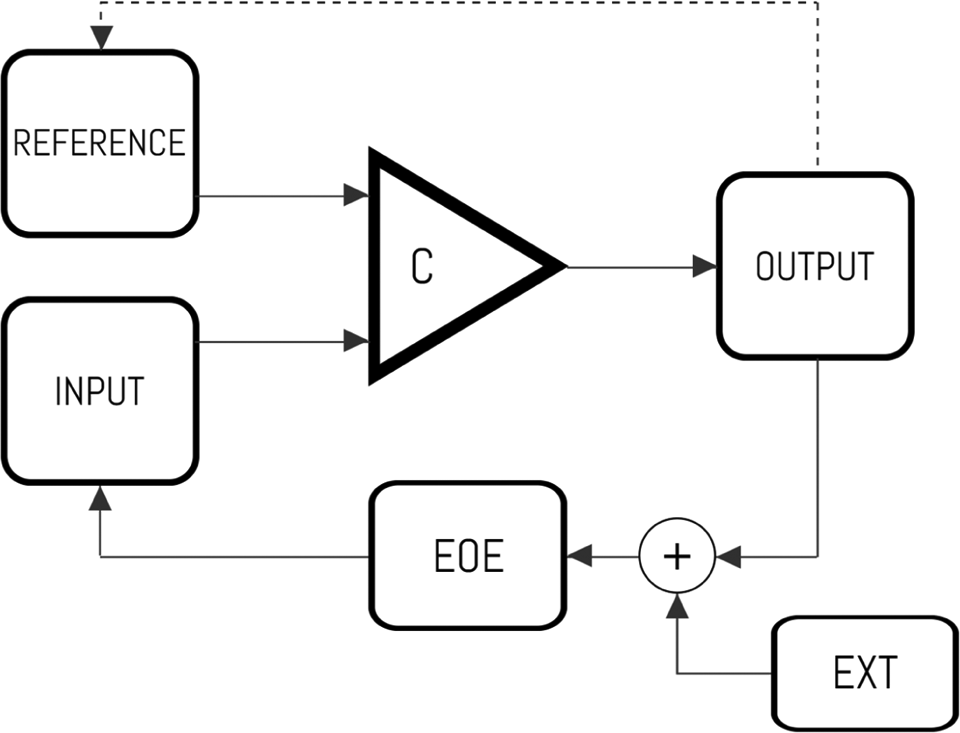
A self-regulation feedback loop (adapted from Carver & Scheier, 2001). C = comparator; EOE = effect on the environment; EXT = external factors.
Carver and Scheier (1981, 2001) applied these concepts to human behavior. Their control-theory approach to behavior utilizes feedback loops to explain the process of goal achievement through a cyclical process of comparing, adjusting, operating, and testing behavior until there is equilibrium between a current experiential state and a desired one.
Having established a goal to achieve, this system of behavior is presented with both an input value (our current experiential state) and a reference value (a desired experiential state). The self-regulation process compares the input and the reference. If no discrepancy is found, then no further action is necessary, as circumstances are as we desire.
If a discrepancy is found, then goal achievement requires one of three actions. First, the individual can instigate a behavioral strategy that brings about an effect on the external environment and consequently generates a new input value for comparison with the reference value. If, after the strategy has been executed and tested, the discrepancy remains, then this cyclical process can be repeated with other behavioral strategies. Second, an individual can change the reference value by which the success or achievability of the goal is measured (e.g., reducing the standard required). This “self-referential” change in standards is more gradual and effortful and is likely to occur only after many attempted behavioral changes have failed (Carver & Scheier, 2001). Third, individuals can simply abandon the goal altogether.
Self-regulation in sex offender theory
It is important to recognize existing applications of self-regulation in theories of the wider sexual offending process. The aim here is not to provide an in-depth evaluation of those process models but simply to highlight the fact that the use of self-regulatory mechanisms in the field of sexual offending research is well established. Finkelhor (1984) first introduced the notion of a grooming process that involves a series of goal-directed behaviors to gain the trust of another. Both Wolf’s (1984, 1985) addition cycle and Salter’s (1995) deviant cycle model of offending include surface descriptions of grooming and control over a victim and can be viewed as self-regulatory, whereby sexual fantasy and offending is used to alleviate negative mood states (Ward, Polaschek, & Beech, 2006). Similarly, the relapse prevention model of offender treatment (Pithers, 1990; Pithers, Marques, Gibat, & Marlatt, 1983) involves the formation and maintenance of an abstinence goal through self-monitoring of cognitive and behavioral responses, particularly when presented with high-risk situations and the use of efficacy-enhancing strategies and coping skills.
Later, Ward and colleagues (e.g., Ward & Hudson, 2000; Ward, Hudson, et al., 1998, Ward, Louden, et al., 1995) used self-regulation models to explain both acquisitory and avoidance behaviors in the sexual offence relapse process, emphasizing their relevance to processes of etiology, relapse, and treatment. Their good lives model of offender treatment also theorizes that sexual offending reflects socially unacceptable attempts to pursue goals (primary and secondary “goods”) and the use of self-regulation strategies to achieve these goals (Ward & Gannon, 2006; Ward, Mann, & Gannon, 2007). In fact, Webster et al. (2012) explicitly aligned their grooming model, on both a philosophical and practical level, with Ward and Hudson’s self-regulation theory of the sexual offense process.
How and why these goals are formed and the various ways in which goals and strategies for their achievement can become dysfunctional is explained in integrated etiological theories of criminal behavior (for sex offending see, e.g., Seto, 2008; Smallbone & Cale, 2015; Ward & Beech, 2006). For example, pedophilic disorder may represent the psychological diathesis for the genesis of aberrant goals and values related to forms of sexual offending (Seto, 2008). Furthermore, such etiological processes can lead to the formation of exploitative or criminal goals or make certain goals more salient and imperative (Ward & Gannon, 2006).
These same etiological factors, however, may not apply to other instances in which we see the same grooming behaviors (e.g., terrorism and human trafficking), and thus it is important to extract the behavioral processes from etiological explanations. As Ward, Polaschek, and Beech (2006) note, process models are not intended to unpack the underlying vulnerabilities or establish criminogenic needs—these are left in a “black box” at the top of the model to be explained by multifactorial etiological theories. For the purpose of this model, it is enough to say that psychological systems can lead to dysfunction in the goal-directed nature of humans and their task of achieving primary and secondary human goods. The model is conceptualized as a contributory mechanism in larger self-regulatory processes related to higher order goals related to sexual behavior in general. Grooming a target for sexual purposes is likely to represent an instrumental goal nested within a higher order goal (perhaps sexual contact more broadly) and represents a maladaptive strategy for attaining the universal good of relatedness.
A Self-Regulation Model of Illicit Grooming
The following sections outline a self-regulation model of a grooming process that is applicable to the sexual offending process. This model is founded in the following assumptions: (1) grooming is an example of goal-directed behavior; (2) goals can be varied, multiple, and hierarchical; (3) progression toward goals is self-regulated; and (4) the mechanics of self-regulation are described by control theory in the form of feedback systems. It describes a process that begins at the initiation of communication (contact) between the protagonist and the target and ends at the first instance of goal achievement. It includes two distinct phases (see Figure 2). The first is an initial potentiality phase that involves four behavioral processes (rapport building, incentivization, disinhibition, and security management) to construct an environment favorable to the likelihood of goal achievement (or at least reaches some desired level). The second is a later reactive disclosure 2 phase that seeks to capitalize on the favorable circumstances created in Phase 1 and introduces goal-relevant information in a systematic and controlled manner designed to desensitize the target to the goal.
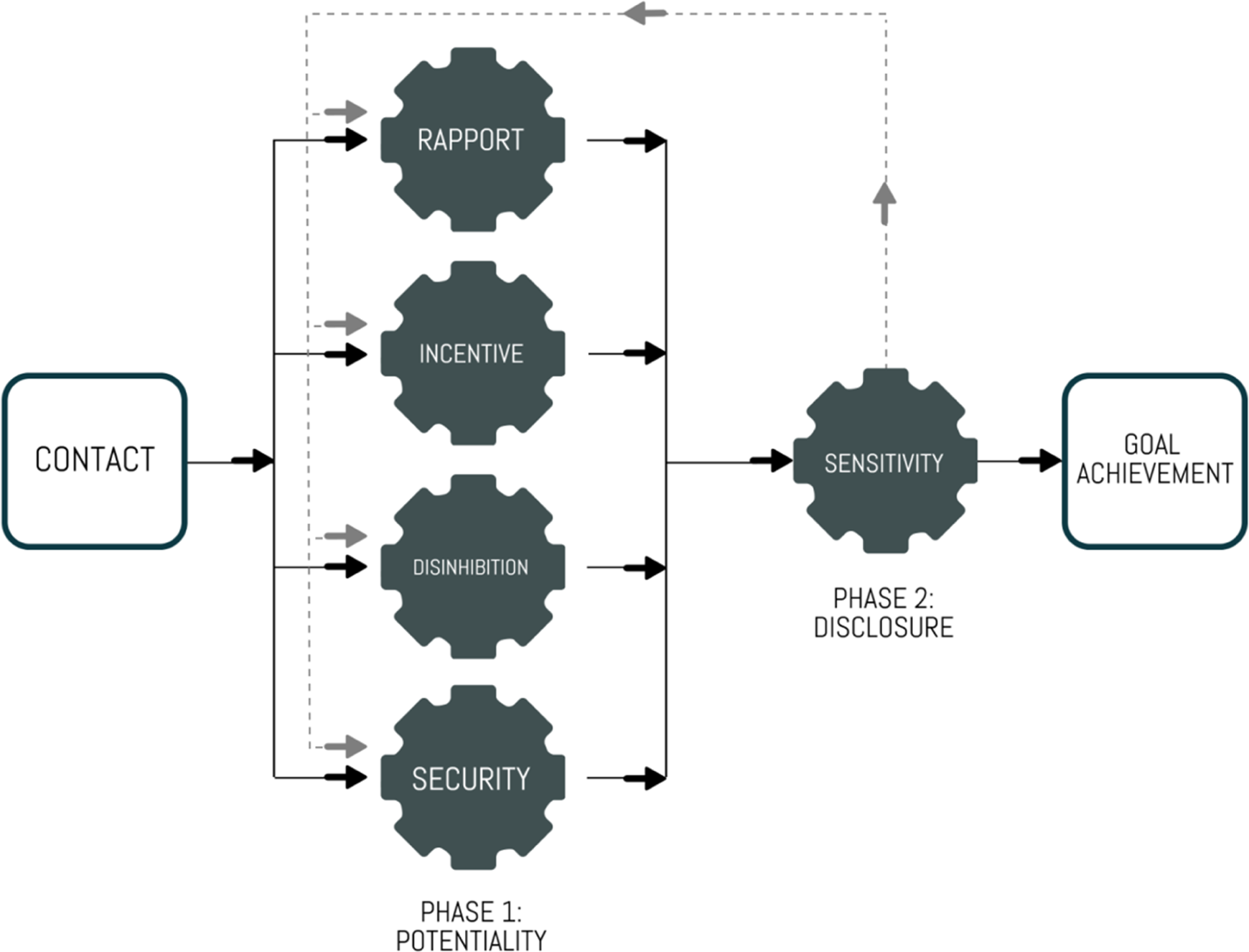
A self-regulation model of illicit grooming. Black solid lines/arrows indicate progress through the model; gray dashed lines/arrows indicate feedback loops.
In Figure 2, each of the cogs represents a self-regulatory feedback loop, the purpose of which is to accumulate a desired level of capital in that component: an amount judged by the protagonist to be enough to achieve their goal. As noted, the protagonist is also able to change the reference if initially desired levels standards are found to be unnecessarily/unfeasibly high—for example, if the target’s baseline level of willingness to engage is higher than anticipated. The predicted optimal strategy for grooming in this model is for the protagonist to accumulate considerable levels of rapport, incentive, disinhibition, and security in order to develop a level of perceived efficacy in divulging goal-related information without goal-compromising responses from the target. Ultimately, the target’s accommodation of, tolerance for, and participation in goal-relevant activity represent the achievement of a “groomed” status.
Each of the previous models of grooming describes examples in which the protagonist invests time and effort to develop trust and desensitize the target. Nonetheless, all note that duration of effort ranges from a matter of minutes to a number of years. O’Connell (2003) and Webster et al. (2012) describe examples of individuals moving directly to the disclosure of goal-related information (the “hit and run” strategy). The duration of time a protagonist invests in the grooming process is likely to be determined by the varying amounts of potentiality and desensitization in the target—the “dynamic inter-relationship between goals and needs” described by Webster et al. (p. 42)—and the increased risk of detection the longer the process continues.
Phase 1: Potentiality
In their integrated theory of sexual offending, Ward and Beech (2006) introduce the concept of the ecological niche to explain the reciprocal interaction between those individuals who engage in sexually exploitative behavior and their environment. Their ecological niche describes a process, whereby organisms (including humans) are not simply passively impacted upon by their environment and engage in active choices, activities, and physical processes that change the environment around them to suit their ecological needs (Lewontin, 1982, 2000; Odling-Smee, Laland, & Feldman, 2003). The overall purpose of Phase 1 is to increase potentiality: to create and maintain an environment conducive to goal achievement and favorable to the process of desensitization in Phase 2. This is achieved through four mechanisms. The first is rapport—that creates and regulates the quality of the relationship between the protagonist and target. The second is incentive—that creates and regulates the motivational devices provided to the target to engage in goal-relevant activities. The third is disinhibition—that seeks to reduce the target’s ability to respond genuinely, accurately, cogently, and convincingly. The fourth is security—that minimizes and regulates the potential for uncontrolled or untimely exposure of goal-relevant or personally identifiable information.
The protagonist utilizes each of these mechanisms to whatever extent they believe is necessary to achieve their goal. Each of the components is self-regulated in terms of their level of capital when compared to a desired amount. What constitutes adequate capital in each of these mechanisms may differ between individuals and may also differ within the same individual on different occasions and/or under different circumstances, through self-referential change. For example, the same individual may change the desired levels for potentiality mechanisms and switch from a high-rapport, high-incentive strategy to a high-disinhibition, high-security strategy, perhaps when encountering a reluctant target.
Figure 3 uses rapport as an example to illustrate these self-regulatory potentiality systems in action. In order to attain equilibrium between current and desired levels of rapport, the protagonist engages in rapport building (for incentive, incentivization; for disinhibition, disinhibitors; and for security, security-management). Rapport building, along with any external influences (e.g., the target as an active and sentient agent, the quality of communicative devices, other individuals in the vicinity, etc.), has the effect of changing levels of experiential rapport. This new value is compared again to the desired level in a cycle of test-operate-test that continues until the desired level of rapport is achieved. Each of the potentiality systems is reliant on the achievement of subordinate goals nested within them, each with the same feedback mechanisms and currency of capital for goal achievement. Rapport, for example, has subordinate goals of mutual attentiveness, positivity, and coordination, the combined stock of which represent the overall capital of rapport. Each of the potentiality systems described subsequently is formed of a self-regulatory feedback system.
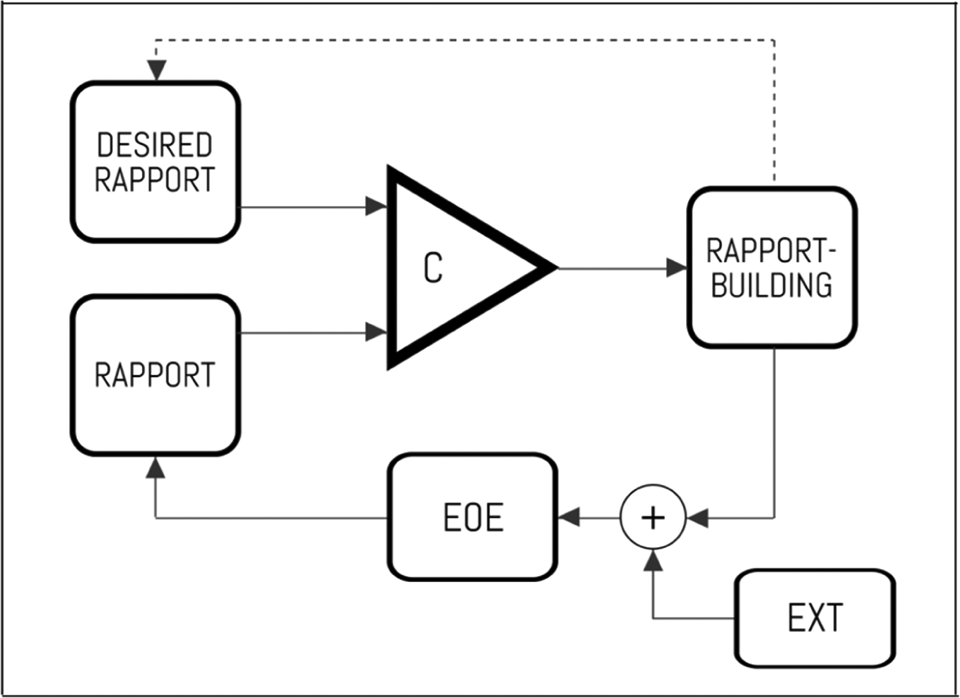
A self-regulatory feedback loop for the goal of achieving and maintaining a desired level of rapport. C = comparator; EOE = effect on the environment; EXT = external factors.
Rapport
Tickle-Degnen (2006) defines rapport as the significant human experience of close and harmonious connection that aids the experiential bonding of individuals into relationship with one another, in single, short interactions or across repeated, extended interactions, and from which new acquaintances can predict the future of a relationship. Individuals who demonstrate rapport “develop, maintain, and indicate their rapport through a stream of interlinked signals and responses that are shaped by their personal physical and psychological properties, the parameters of the task in which they are engaged, and the physical and social environment of their actions” (Tickle-Degnan, 2006, p. 382).
Tickle-Degnen and Rosenthal (1987, 1990) developed a model of the experiential nature of rapport and its behavioral expression. The experience of rapport is dependent on three essential components: (1) mutual attentiveness—the focus of each being directed toward the other, creating a sense of mutual interest, (2) positivity—an atmosphere of mutual friendliness and caring, and (3) coordination—the experience of regularity, predictability, and consequently refined interaction. Tickle-Degnen and Rosenthal (1990) note that rapport is dynamic and temporal and that although the structural components of rapport do not change over time, their relative importance in maintaining rapport will change.
Tickle-Degnen and Rosenthal (1987, 1990) suggest that although positivity and mutual attentiveness are constant throughout, in earlier interactions, participants place a greater weighting on positivity, warmth, and friendliness rather than cooperation, since cooperation would not be expected to be high at such an early stage. As participants gain knowledge and experience of the other, however, they may feel less need to present themselves in such a favorable light and introduce variability (“character”) into the relationship, for example, by expressing negative behaviors (e.g., dissent). The way in which protagonists present themselves to the target was examined by Webster et al. (2012) who found that some sex offenders present themselves—to varying degrees—in ways they believe would appeal to the target and continually refine that presentation based on target feedback. McAlinden (2006), in reviewing grooming techniques, notes that trust allows an environment of confidence and predictability, in which demonstrating vulnerability and taking risks becomes more permissible. In later interactions, however, individuals place a greater weighting on coordination, as there is an expectation for interaction to be less awkward and to flow more smoothly, and as interaction develops communication styles become more relaxed, stable, and predictable (Tickle-Degnen & Rosenthal, 1987, 1990).
These processes encapsulate what O’Connell (2003) described as the friendship and relationship-forming stages of the grooming process and the “gentle socialization” outlined by Webster et al. (2012). In fact, gentle socialization overlaps significantly with the three elements of rapport, with complimentary behaviors and presenting favorably constituting positivity, mentoring suggesting mutual attentiveness/coordination, and experience congruence constituting mutual attentiveness. Williams, Elliott, and Beech (2014) also applied the concept of rapport specifically to explain a distinct friendship-building theme identified in online grooming conversations.
Incentive
Incentives are stimuli that create motivation to action in their recipient, particularly to favor one decision over another. Callahan (2004) provides a useful taxonomy that divides incentives into three broad categories, based on the different ways in which they motivate agents into action. The first are remunerative (or financial) incentives, in which the recipient can expect some form of material reward in exchange for acting in a particular way. The second are moral incentives that appeal to the recipient’s sense of self-esteem or need for approval, present a particular action as a right or admirable thing to do, or imply that the failure to act in a certain way may lead to a negative view of the protagonist. The third are coercive incentives, in which the recipient can expect that the failure to act in a particular way will result in direct negative material consequences, such as punishment or physical violence. Coercion occurs when a protagonist (1) delivers a threat of some consequence, (2) attempts to induce the recipient to act contrary to their preferences, and (3) deprives the recipient of some freedom or autonomy (Feinberg, 1998; Perloff, 2010). McClelland (1987) also describes four types of natural incentives or subconscious motives that are universal and innate (1) variety—the motivation to seek at least moderate amounts of novelty and complexity; (2) impact—motivation provided by opportunities to demonstrate agency and mastery through exploration, physical manipulation, and play; (3) contact/sexual—the motivation to seek physical, emotional, and intimate closeness with others; and (4) consistency—the motivation to avoid tension and conflict arising from uncertainty and discrepancy.
Incentives not only motivate to action but also serve to reward or punish specific behaviors that we seek to promote or deter. Thus, the mechanism of incentivization invokes notions of operant conditioning, and instrumental and social learning (Bandura, 1977; Skinner, 1953; Thorndike, 1933). Money and material gifts (remunerative incentives) act to reinforce behaviors that increase the likelihood of goal achievement, whereas coercive incentives such as physical violence or threats are designed as punishments for behaviors that are detrimental to goal achievement. Coercive incentive strategies may also involve the removal of (or indicate removal of) punishment to negatively reinforce goal-positive behavior, producing goal-positive behaviors designed to escape or avoid punishment. Conversely, threatening to remove certain appetitive incentives (e.g., threatening to remove financial incentives) works as a negative punishment for goal-negative behaviors.
Research into sexually exploitative behavior is replete with descriptions of the use of remunerative, moral, coercive, and natural incentives in the sexual abuse process, including bribery, gifts, money, flattery, sexualized games, emotional blackmail, force, and threats against the target, their family, or their pets (e.g., Brackenridge, 1997; Elliott, Browne, & Kilcoyne, 1995; Finkelhor, 1984; Finkelhor & Yllo, 1985; Lang & Frenzel, 1988; Lovett, 2004; Mitchell, Finkelhor, & Wolak, 2005). Beauregard, Proulx, Rossmo, Leclerc, and Allaire (2007) discuss the use of incentives in the offense process, such as money and gifts. Kaufman, Hilliker, and Daleiden (1996), too, found that offenders (particularly intrafamilial offenders) adopted strategies that involve giving gifts, love/attention, threatening to withdraw benefits, and threatening to alter the target/perpetrator relationship to gain the target’s compliance. The process is also likely to involve exploiting the target’s natural incentives, such as curiosity, exploration, mastery, closeness, intimacy, and the avoidance of conflict. Webster et al. (2012) discuss the “active” target, with their own needs and goals, in greater detail. All three models of grooming evaluated previously include some description of incentives being used to motivate the target to engage in goal-relevant activities as do analyses of online grooming transcripts (e.g., Kloess, Beech, Hamilton-Giachristis, Seymour-Smith, Long, & Shipley, 2015; Williams, Elliott, & Beech, 2014)
Disinhibition
Inhibition, as it relates to psychological processes, is the process of placing voluntary or involuntary restraints on the direct expression of our inclinations. Conversely, disinhibition refers to the use of physical or psychological entities to lessen one’s own inhibitions or the inhibitions of another. Individuals with greater levels of disinhibition are thought to act more impulsively, be more thrill seeking, and not consider as deeply the long-term consequences of their actions (Vrieze, McGue, Miller, Hicks, & Iacono, 2013). One such form of disinhibitor is drug intoxication, notably (given its availability and legality) alcohol. Alcohol intoxication has been shown to disrupt performance on a wide range of activities and is believed to selectively impair mechanisms fundamental to behavioral control (for a review, see Fillmore, 2003). In this model, the goal is defined as diminishing the target’s ability to respond genuinely, accurately, cogently, and convincingly during Phase 2.
Although not specifically related to the deliberate use of disinhibitors as a strategy by a protagonist, a number of studies have demonstrated a positive association between alcohol use and experiences of sexual victimization and a substantial proportion of sexual assaults occur when the victim has been drinking (Testa & Livingston, 2009). As well as the role of disinhibitors in vulnerability to victimization, artificially decreasing levels of inhibition in a target, is also recognized as a strategy in the sex offending process as a means to increase the likelihood of compliance in a target. For example, Kaufman et al.’s work on the modus operandi of adult and juvenile sex offenders includes, in their Modus Operandi Questionnaire, “alcohol/drugs” in their subscale of threats and coercion as a strategy to gain compliance. Similarly, Beauregard et al. (2007) also include the provision of drugs or alcohol as a noncoercive strategy to lure the target and incite them to participate.
This concept is not well articulated in previous models of grooming. Olson’s et al.’s (2007) model focuses on communicative rather than physical processes, and both O’Connell (2003) and Webster et al. (2012) focus specifically on online grooming where behaviors are bounded by the nature of online communication, where protagonist and target are physically separated from one another. However, the Internet itself may be a disinhibitor. Webster et al. (2012) cite Suler’s (2004) online disinhibition effect and the reduction in inhibitions caused by three interacting factors (1) dissociative anonymity—separating one’s online actions from one’s real world identity, (2) invisibility—feeling less self-conscious as a result of not being physically seen, and (3) dissociative imagination—believing that off-line rules and norms do not apply in the online “dimension.” Consequently, choosing to groom someone online—a place where risk-taking behavior is perceived as more acceptable—may perhaps be a modern, technological strategy for target disinhibition (Taylor & Quayle, 2006).
Security
The protagonist also needs to protect themselves from exposure or detection, particularly in this context of illicit and illegal goals. The protagonist will seek to mitigate any risk of detection from both detection of their identity (should they wish to conceal it) and untimely and uncontrolled detection of their super-ordinate goal, either by the target or by some other non-goal-related individual. This mitigation is likely to encompass two subordinate goals: (1) controlling disclosure of personal information, such as not revealing one’s name or location and (2) identifying the potential hazards related to the target, such as seeking relevant information about the target’s location, supervision, modes of communication, and so on. This is conceptually similar to the preparation phase in Polaschek and Hudson’s (2004) descriptive model of rape, whereby the protagonist appraises the expressive potential of the situation before deciding whether they can achieve their goal or if constraints accorded by the circumstances are too excessive for goal achievement.
O’Connell’s (2003) model clearly emphasizes environmental risk assessment and management and the protagonist’s safety from detection. Both O’Connell and Olson et al. (2007) also stress the importance of isolating the target (physically and psychologically) that not only mitigates for risk of detection by or disclosure to those in the support network but also strengthens coordination in rapport—the protagonist positions themselves as the target’s confidante. O’Connell described protagonists preventing detection, assessing their own and the target’s environments, and the continual assessment of trust, comfort, and vulnerability within the target: ultimately their “receptiveness.” Similarly, Both Williams et al. (2014) and Kloess, Beech, Hamilton-Giachristis, Seymour-Smith, Long, and Shipley’s (2015) analyses of sex offender–child dyads include themes describing self-preserving enquiries from offenders to victims about the secrecy of their relationship and the environment in which the relationship is being built.
Phase 2: Disclosure
Phase 2 seeks to capitalize on the favorable circumstances established in Phase 1 and involves a series of behavioral strategies directly related to goal achievement. It involves the controlled disclosure of information related to the ultimate goal, assessing feedback, and regulating the whole system accordingly. Once the protagonist has established satisfactory levels of rapport, incentive, disinhibition, and security, the next stage introduces goal-relevant information. This does not, however, mean that the machinations in Phase 1 terminate. Phase 2 is reactive in terms of overall goal achievement in the sense that as the four potentiality systems continue to test-operate-test based on feedback it receives from Phase 2 activities.
Sensitivity
In this model, sensitivity is defined as the responsiveness of the target to goal-relevant stimuli and is regulated by the protagonist through a process of controlled and timely exposure—a process described by Cornish (1994) as “instrumental initiation.” In contrast to the mechanisms in Phase 1, sensitivity is a capital stock that the protagonist seeks to reduce to a desired level. This model hypothesizes that reducing sensitivity and moving an individual from a state of goal nonactivity to a state of goal activity requires a process of systematic desensitization similar to that originally proposed by Wolpe (1968).
In this process, the protagonist takes on the role of an amateur behavioral therapist engaging in a maladaptive form of exposure therapy (see Spiegler (2015) for a review of contemporary behavior therapy). The process involves counter-conditioning, beginning with controlled exposure to less potentially goal-compromising information (i.e., least likely to lead to an extreme emotional response) and progressing to the introduction of more potentially goal-compromising information. The protagonist needs to eventually reveal their intentions—through either direct communication (e.g., verbal) or indirect communication (i.e., behavioral cues)—to the target in order to achieve their goal. To do this, the protagonist gradually introduces small exposures to increasingly overt goal-relevant information. Throughout, the protagonist assesses positive feedback in the form of active (voluntary) or passive (compelled) behaviors executed by the target. Once sensitivity has been reduced to a desired level, the protagonist can introduce—either directly or indirectly—information about the primary goal and the role(s) required of the target to achieve that goal.
The notion that the sexual abuse of children involves a gradual, progressive process of physical, and psychological sexualization has been expressed in many descriptions of offender modus operandi (e.g., Beauregard et al., 2007, Berliner & Conte, 1990; Christiansen & Blake, 1990; Kaufman et al., 1996; Singer, Hussey, & Strom, 1992). The three models of grooming evaluated previously all accounted for some process of desensitization in the grooming process. Olson et al. (2007) describe communicative desensitization, whereby the protagonist desensitizes the target to both their physical presence and closeness and conceptual (goal related) topics through behaviors such as inappropriate touching, sexualized imagery, sexualized conversation, and so on. Olson et al. also introduce the notion of feedback, in that the target’s response to initial information and activity will considerably impact whether or not further goal-related activity will follow. O’Connell’s (2003) model, too, clearly distinguishes this process as sequential, the commencement of which is qualified to some extent by success in those prior stages. In the latter stages of O’Connell’s model, protagonists introduce sexual themes and references into the conversation and assess responses, with three tactics employed: gentle boundary pressing, reducing inhibitions through exposure to goal-relevant information or activities (e.g., viewing pornography), and mutual fantasy reenactment. Webster et al.’s (2012) model presents this process as the “sexual test”—techniques for desensitization, such as the use of visual images or goal-relevant language—an explicit or subtle introduction sexual discussion.
Distinct from the feedback loops in Phase 1, however, is that here a discrepancy detected by the comparator activates two feedback loops. If the effect on the target is positive (or at least negligible), then the protagonist can continue to escalate goal-related disclosures and maintain the desensitization process. However, there is also potential for the effect of goal-related disclosures to have secondary effects on the protagonist’s capital stocks of rapport, incentive, disinhibition, and security. The primary purpose of Phase 1 is to mitigate and limit, proactively and in advance, these secondary effects in Phase 2. For example, high rapport, built proactively, has been found to “inoculate” targets to negative experiences—positive antecedents mitigate the negative effects of dissatisfaction (DeWitt & Brady, 2003) and lower compensation is required to maintain a high-rapport relationship after a negative response (Worsfold, Worsfold, & Bradley, 2007). The secondary feedback loop (see Figure 4) allows for strategies of damage-limitation in response to negative target response in Phase 2. This feedback process allows the protagonist to reemphasize, reassess, and reinforce the potentiality mechanisms and engage in any necessary reparatory behaviors.
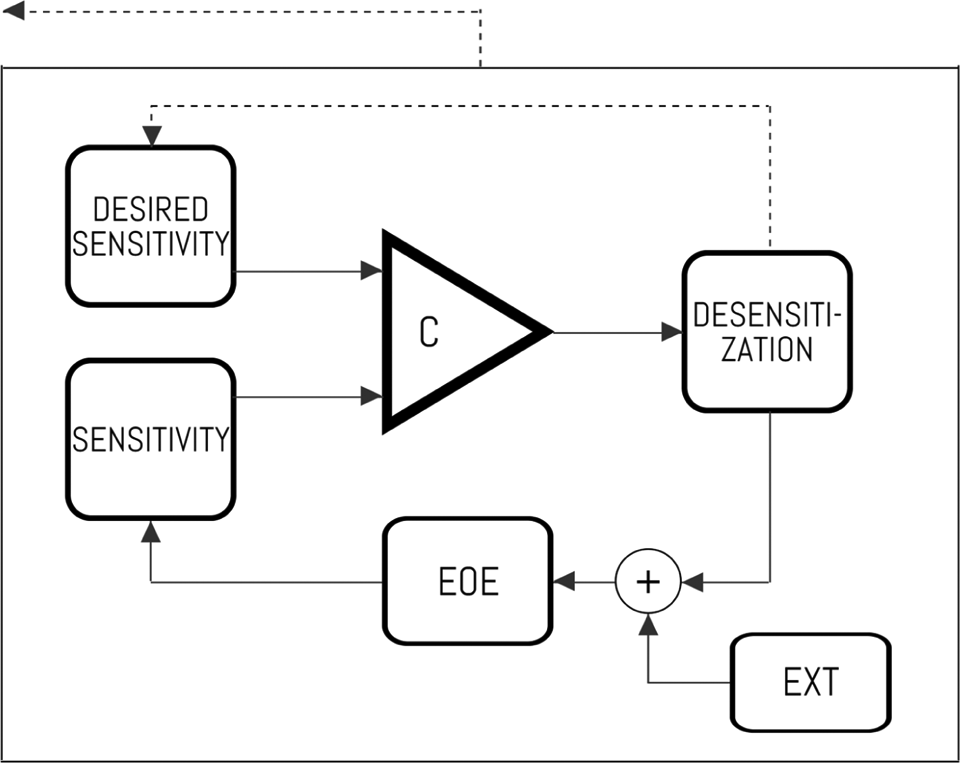
A self-regulatory feedback loop for the goal of achieving and maintaining a desired level of sensitivity. C = comparator; EOE = effect on the environment; EXT = external factors.
This is not to suggest that goal disclosure cannot continue in instances where feedback is perceived as negative—the protagonist may choose to escalate anyway. O’Connell (2003) calls this the “hit and run” tactic—found to be very common in their sample—whereby aggressive protagonists were rarely interested in damage limitation or extended/repeat contact and would swiftly disclose their intentions, assess the immediate effect of disclosure on their target, and, when detecting little evidence of compliance or submission, choose to either or abandon the grooming process and resort to a purely coercive strategy or abandon their goal entirely. In this model, the latter strategy is accounted for as the protagonist can self-referentially recalibrate the relative salience of each mechanism for goal achievement, increasing the salience of incentivization (particularly the use of coercive incentives) at the expense of rapport, disinhibition, and/or security. It is arguable, however, as to whether such a highly coercive strategy would still constitute grooming per se.
Theory Appraisal and Clinical Application
The preceding sections present an integrated model to represent the process of illicit grooming. It includes two distinct phases: (1) an initial potentiality phase that involves four behavioral processes (rapport building, incentivization, disinhibition, and security management) intended to construct an environment favorable to goal achievement, and (2) a later disclosure phase that seeks to capitalize on those favorable circumstances and introduces goal-relevant information in a systematic and controlled manner designed to desensitize the target to the goal. It is important to reiterate that not all offenders will engage in grooming and not all instances whereby contact is established with a target and an illicit goal is initiated will necessarily involve grooming behaviors. This model is designed to apply in those cases in which these forms of preparatory behavior are observed.
The model is explicit and consistent in the way in which the grooming process is defined as a strictly preparatory process and distinct from targeting and maintenance phases. It is intended as an offense process model and as such makes few, if any, etiological assumptions about the formation of the illicit goal (or goals), only that the goal exists and requires at least one other individual’s compliance or submission to be achieved. It was a principal aim to produce a model that progresses from a focus on grooming as unique to sex offenders and in need of specialist explanation. It aims to be as universal as possible and applicable to preparatory processes in any forms of illicit behavior that require one individual to gain the compliance/submission of another in order to achieve a goal, such as gaining the compliance of people for human trafficking or preparing vulnerable people to carry out acts of political violence.
The model is consistent with established theories of general human goal-seeking behavior. It draws from a variety of domains and adequately explains the various phenomena previously described as grooming (within the sexual offense process), unifying concepts of self-regulation, systematic desensitization, operant conditioning—among others—and provides a rationale for their application in explaining the grooming process. It also draws on specific concepts from previous models of grooming, defines, decodes, and expounds them, and the emphasis on explaining underlying behavioral machinations in greater detail represents an advance on those models. It also represents a reduction in the number of stages in the previous theories that require explanation. The model is also designed to be parsimonious with existing process theories of sex offending behavior (e.g., Ward, Hudson, et al., 1998; Ward & Hudson, 2000), research into offense scripts and modus operandi (e.g., Beauregard et al., 2007; Kaufman et al., 1996), and theories of offender relapse (Pithers, 1990; Pithers et al., 1983; Ward & Gannon, 2006; Ward, Mann, et al., 2007). Thus, it can be thought of as an example of theoretical pluralism (Ward, 2014) in that the model is intended to be viewed as a contributory mechanism within larger illicit goal-related processes (e.g., multifactorial etiological theories of sexual offending).
It is important to acknowledge that this model is intended to be provisional and requires further empirical support. The various mechanisms remain theoretical in that the model sought only to unite previously accepted models of the grooming process. However, it is anticipated that the model has potential to lead to new, novel methods for understanding, assessing, and intervening in grooming and its related behaviors. Certainly, there should be rich data available with which to test various hypotheses that this model generates—especially in the field of sexual abuse, where, for example, the phenomenon of online grooming generates its own data. Furthermore, having outlined a mechanism of desensitization in the grooming process, experimental paradigms can be developed that can measure this process directly. Since the model is designed as a universal theory of grooming, it is hoped that those with an interest in other forms of illicit grooming utilize this model to understand and explain the behaviors of individuals of interest. For example, Charvat (2009, 2010) discusses the use of “groomers” in terrorism offenses—highly knowledgeable individuals who “start to feed strong propaganda” (p. 82) to an identified target, a process that “can take a long time, as the groomer has to be certain they have the right people and the potential recruit is not going to be made aware that he or she is in contact with a terrorist until they are ready” (p. 82).
In terms of implications for the treatment of sex offenders, it is first important to outline that such treatment is primarily cognitive–behavioral and skills-oriented in nature. As Ward, Mann, and Gannon (2007) note, a key therapeutic task is to balance the promotion of positive, nonoffending client goals (i.e., good lives) while also promoting the identification and reduction in risk (i.e., relapse prevention). Such treatment practices are typically assessment driven and will involve a detailed psychosexual evaluation, which includes gaining insight into contextual elements of the client’s offense, such as interpersonal dynamics, behavioral patterns, and personal and environmental circumstances. This model of grooming provides a framework on which to assess these concepts in clients for whom grooming was significant element of their offense and subsequently formulate appropriate and specific treatment plans and targets. For example, understanding the role of moral incentivization arguably provides a more practical understanding of instrumental manifestations of offense-supportive cognitions (e.g., how pro-offending beliefs about sexual contact between adults and children are communicated to the victim in order to encourage them to engage). The model also has implications for clinicians required to judge the applicability of mens rea in the preparation of criminal behavior—what Ost (2004) referred to as the “crucial question of intent” (p. 151). In being better able to define and explain the extent and nature of a client’s grooming behaviors, the clinician is better able to place this behavior in a wider meaningful context of criminal engagement.
That the model is able to accommodate a range of higher order goals and strategies related to clients’ offending behaviors also makes it particularly useful for group work therapy, which often includes clients with a variety of offense types for whom each may demonstrate grooming behaviors manifesting in different ways. On a practical level, providing a translatable model of the grooming process also assists clinicians in better communicating these offense process concepts to relevant clients. Indeed, the model’s universality and the potential for multiple pathways means relevant clients may also be better able to relate their own experiences of these concepts without needing to bend their experience to the model or vice versa, providing a personalized behavioral context to which clients can relate the cognitive aspect of treatment. Such an understanding allows clients to identify any subsequent lapses into grooming behaviors, whether that be developing rapport with an inappropriate target or escalating the sexual nature of a conversation, and to develop and rehearse strategies to adequately cope with such instances.
As it is maintained that all of the mechanisms will be involved in the grooming process to some degree, and that protagonists with varying goals simply accord different relative salience to each mechanism, there is the potential for the development of multiple clinical pathways for grooming behaviors, allowing for more individualized case formulation. Three candidate pathways appear to have preliminary theoretical support: mentor, coercive, and expeditious. The mentor pathway is one in which the protagonist seeks to connect with the target in a meaningful (yet instrumental) way and is characterized by high rapport, high incentive, and low security. It is similar to “manipulative” (e.g., Beauregard et al., 2007), “pseudo-intimacy” (e.g., Lehmann, Goodwill, Hanson, & Dahle, 2015), and “intimacy-seeking” (e.g., Webster et al., 2012) offense strategies and is more likely to involve high investment in desensitization over a long duration. The coercive pathway is one in which the protagonist seeks to pressurize or intimidate the target and is characterized by low rapport, high incentivization, and high security. It is similar to “coercive” (e.g., Beauregard et al., 2007) or high “criminality” offense strategies (e.g., Lehmann et al., 2015) and involves moderate investment in desensitization over shorter durations. The expeditious pathway is one in which the protagonist is predominantly focused on the goal, involves as little or no investment in desensitization, and is solely concerned with rapid advance through Phase 2. It is characterized by high security only and, in the context of sex offenders, is likely to describe “hypersexual” individuals (Webster et al., 2012) and the “hit-and-run” technique (O’Connell, 2003). This pathway may also describe individuals who abandon the grooming process and resort to high levels of coercion.
Alongside these forms of tertiary postoffense treatment, the model can also contribute to primary and secondary prevention practices (see Dahlberg & Krug, 2002). To illustrate this, we focus on three prevention targets: interpersonal mechanisms, desensitization, and security. The first target for prevention would be the interpersonal mechanisms (rapport, incentivization, and disinhibition)–the education of the general public about the nature of the relationships between protagonists and targets and promoting widespread societal and community awareness and vigilance for grooming behaviors. The second target would be the desensitization process–educating potential targets about appropriate physical and emotional boundaries and promoting personal safety and resilience. This could also be a target for bystander intervention, seeking to educate, equip, and empower those around a target (e.g., families peers and community members) to intervene in instances where there is evidence of potential grooming. The third target is that of security. This would involve the use of situational prevention techniques to increase both the effort, the difficulty in carrying out the behavior, and the risk, the likelihood of detection, for protagonists, and thus increasing the costs of engagement while decreasing the benefit (e.g., Cornish & Clarke, 1986; Smallbone & Wortley, 2006).
In conclusion, previous descriptions of sexual grooming have focused so specifically on the sex offense process as to adversely limit the application of what is a tremendous wealth of knowledge to a wider range of comparable phenomena. The above-mentioned model is presented as a novel reinterpretation of the salient and innovative features that have been developed over the previous decades in the field of sexual offending research, one that is grounded in well-established and more general—and thus more widely applicable—theories of human behavior and goal-directed processes.
Footnotes
Acknowledgment
The author would like to thank Anthony Beech, Caoilte Ó Ciardha, Ian McPhail, Neil Shortland, Mia Bloom, John Horgan, Katharine Staley, and Alexa Queenan for their valuable comments on earlier iterations of this model.
Declaration of Conflicting Interests
The author(s) declared no potential conflicts of interest with respect to the research, authorship, and/or publication of this article.
Funding
The author(s) received no financial support for the research, authorship, and/or publication of this article.