



Abstract
Interpersonal hurts and violence against the individual have a high prevalence and are associated with a range of long-term problems in terms of psychological functioning. There is a growing body of research highlighting the role of forgiveness therapy in improving different aspects of psychological health in populations who have experienced diverse types of hurt, violence, or trauma. This article reports the findings of a systematic review and meta-analysis of the efficacy of process-based forgiveness interventions among samples of adolescents and adults who had experienced a range of sources of hurt or violence against them. Randomized controlled trials were retrieved using electronic databases and an examination of reference sections of previous reviews; each study was assessed for risk of bias. Standardized mean differences (SMDs) and confidence intervals (CIs) were used to assess treatment effects. The results suggest that forgiveness interventions are effective in reducing depression (SMD = −0.37, 95% CI [−0.68, −0.07]), anger and hostility (SMD = −0.49, 95% CI [−0.77, −0.22]), and stress and distress (SMD = −0.66, 95% CI [−0.91, −0.41]) and in promoting positive affect (SMD = −0.29, 95% CI [−0.52, −0.06]). There was also evidence of improvements in state (SMD = −0.55, 95% CI [−0.88, −0.21) and trait (SMD = −0.43, 95% CI [−0.67, −0.20]) forgiveness. The findings provide moderately strong evidence to suggest that forgiving a variety of real-life interpersonal offenses can be effective in promoting different dimensions of mental well-being. Further research is, however, needed.
Key Points of the Research Review
Previous meta-analyses that assess the effectiveness of forgiveness therapy in promoting mental health and well-being outcomes have significant methodological limitations.
This review extends previous research by critically appraising randomized controlled trial studies and meta-analyzing results for the purpose of assessing the effectiveness of forgiveness interventions on a range of aspects of mental health and well-being.
The findings suggest that forgiveness therapy reduces common mental health problems such as depression, stress, and distress and promotes positive emotions.
The findings also indicate that group-based or individually delivered forgiveness interventions, using the Enright or REACH model, and administering 12 or more sessions result in increases in psychological adjustment.
While forgiveness interventions appear to be effective in promoting mental health and subjective well-being, further research is needed that assesses the efficacy of two key process-based forgiveness models, and their effectiveness and cost-effectiveness compared with other methods of treatment for interpersonal hurts.
Introduction
Minor or major interpersonal hurts occur frequently, within a variety of contexts and due to a multitude of reasons. People can experience such hurts as a result of major, overt forms of violence such as conflicts within the Middle East (i.e., Palestine–Israel) and the Bosnian war. Most hurts, however, result from everyday acts of violence such as bullying, child abuse, intimate partner violence, and elder abuse (Krug, Dahlberg, Mercy, Zwi, & Lozano, 2002). Interpersonal hurts can also occur within otherwise healthy relationships due to violations of norms or rules such as, for example, individuals feeling unacknowledged or as a result of rejection (Diblasio, 1998). People who experience such hurt can feel a variety of emotions such as chronic anger and hostility, which may sometimes lead them into a cycle of violence in order to seek revenge (Park, Enright, Essex, Zahn-Waxler, & Klatt, 2013; Shectman, Wade, & Khoury, 2009). The harboring of chronic anger and hostility can also result in physical and mental health problems (Chida & Steptoe, 2009; Goldman & Wade, 2012).
Remaining chronically angry, hostile, or in search of revenge is, however, only one of a number of possible responses. Another response to being hurt is forgiveness, which is defined as the decision to let go of negative resentment-based emotions, cognitions, and behaviors and developing positive regard for an offender, be it compassion, sympathy, or pity (Enright & Fitzgibbons, 2000; Wade & Worthington, 2005).
A central focus of counseling and therapy is to help clients overcome the negative consequences of experiencing interpersonal hurts (Macaskill, 2005). Over the last 20 years or so, clinicians and researchers have also become increasingly interested in the health benefits of forgiveness, largely because of its potential for reducing negative thoughts and emotions stemming from interpersonal hurts (Wade, Hoyt, Kidwell, & Worthington, 2013). In addition, improving general population well-being, such as reducing common mental health problems, as well as increasing positive emotions and relationships, is a key policy goal in many countries (e.g., Department of Health, 2011). This is largely because well-being is linked to reduced health risk behaviors such as smoking and excessive drinking, improved learning and educational attainment, greater work productivity as well as improved physical health (Huppert, 2009; Royal College of Psychiatrists, 2010). Understanding what promotes mental well-being is therefore vitally important, and it is argued that interventions that facilitate positive actions and attitudes have a key role to play in enhancing psychological health (Huppert, 2009).
Forgiveness Interventions
A growing number of experimental studies have been conducted to evaluate the extent to which forgiveness programs promote the psychological health of adolescent and adult populations who have experienced interpersonal hurt or violence. Almost all experimental studies have assessed the effects of forgiveness interventions on domains of health such as psychological functioning and mental health problems such as depression, anxiety, or stress. In a limited number of cases, effects on other dimensions of well-being such as marital satisfaction, gratitude, positive affect, self-esteem, hope, and spiritual well-being (Lundahl, Taylor, Stevenson, & Daniel, 2008) have also been examined.
Two key models of forgiveness intervention programs have been developed and investigated: process-based and decision-based interventions. While similar in content, process-based models tend to be one of two types. The first model promoted by Enright and the Human Development Study Group (1996) encompasses 20 units and four key phases, which include cognitive, affective, and behavioral elements. The first uncovering phase involves identification of psychological defenses, recognition and expression of anger over the offense, and acknowledgment and evaluation of the psychological harm caused by the offense (e.g., shame, guilt, rumination). In the second decision phase, participants explore meanings of forgiveness, consider the possibility of forgiveness as a response, followed by a commitment to forgive. The third work phase entails cognitive reframing (i.e., seeing the offender in a new light), developing empathy and compassion for the offender and accepting the pain experienced. In the final deepening phase, participants are encouraged to find meaning in the suffering experienced, recognizing their own past mistakes, which may have required forgiveness. They are also encouraged to develop an awareness of the universality of being hurt as well as finding a new purpose in life as a result of the hurt. These steps are intended to help the participant experience event-specific decreased negative affect and increased positive affect (i.e., forgiveness; Baskin & Enright, 2004; Wade & Worthington, 2005).
The second type of process-based forgiveness intervention is the REACH model developed by Worthington (2001). REACH is an acronym for a five-step forgiveness approach. First, participants recall the hurt (R). Second, they develop empathy for the offender (E). Third, participants consider forgiveness as an altruistic gift for the offender (A). Fourth, they make a commitment to forgive (C). In the final step (H), they hold onto forgiveness in times of difficulty (Wade et al., 2013; Worthington, 2001).
The Enright and REACH models are the most widely used forgiveness interventions. Other authors (Luskin, Ginzburg, & Thoresen, 2005) have developed six step models of forgiveness that primarily use cognitive and behavioral therapy. For example, components include defining forgiveness, using positive and negative visualizations (i.e., related to the event), heart-focused meditation and relaxation techniques, education about the negative health impact of holding grudges as well as teaching about cognitive restructuring (i.e., explaining how grievances are created and maintained). Another model comprises a decision-based forgiveness intervention developed by McCullough and Worthington (1995). This comprises 1- to 2-hr single sessions in which victims are encouraged to develop empathy for the offender and write letters expressing how they felt (Baskin & Enright, 2004).
All four models described above share some commonalities. For example, all define forgiveness and emphasize its potential benefits as well as encouraging the development of empathy for the offender. A key distinction, however, is that process-based interventions involve the use of a range of cognitive, affective, and behavioral strategies over a longer period of time. Decision-based approaches on the other hand are significantly shorter in length and seem largely to rely on cognitive components (Baskin & Enright, 2004; Lundahl et al., 2008).
Evidence of Effectiveness
Three meta-analyses have been carried out to assess the effectiveness of forgiveness interventions (Baskin & Enright, 2004; Lundahl et al., 2008; Wade et al., 2013), all of which have significant limitations. Baskin and Enright (2004) included nine experimental studies, examining the effectiveness of process- versus decision-based programs. However, the dependent variable “emotional health” comprised a variety of outcomes, including positive affect, negative affect, and self-esteem, making it impossible to assess if change was achieved in all or just some of these domains. The second review (Lundahl et al., 2008) examined the effectiveness of forgiveness-based interventions on wider aspects of mental health. However, the authors also meta-analyzed data from both randomized controlled trials (RCTs) and non-RCTs, did not make direct comparisons with a no-treatment/wait-list control group, and used both validated and unvalidated scales. The most recent meta-analysis was conducted by Wade, Hoyt, Kidwell, and Worthington (2013) to assess the effects of forgiveness therapy. However, this latter review did not provide estimates of the effectiveness of forgiveness interventions based on data from RCTs alone (although the impact of study design was found not to have had an impact on outcome). Moreover, assessments of outcome were derived from quantitative measures without a clear indication as to whether these were validated measures, and only a limited number of aspects of mental well-being were assessed (depression, anxiety, and hope).
This article reports the findings of an updated systematic review and meta-analysis of the effectiveness of forgiveness interventions in improving a variety of aspects of mental well-being in adolescents and adults who experienced a range of transgressions, based on data from experimental studies only.
Method
Design
A systematic review of the published literature was undertaken by searching a range of electronic databases to identify studies that met predetermined inclusion criteria. The first author (S.A.) took overall responsibility in designing, conducting, and reporting the review. The second author (J.B.) advised on all aspects of the review such as whether studies met the inclusion criteria and risk of bias. The second author also checked the review to ensure that all data extracted and inputted for analysis were correct.
Inclusion Criteria
English-language studies using RCT designs in which participants were allocated to an experimental or a waiting-list/no-treatment control group were selected for review. We included studies evaluating a process-based forgiveness intervention delivered either on an individual or group basis and which assessed the efficacy of the intervention on mental health and well-being outcomes. Only standardized and validated measures from the selected studies were used to assess key outcomes pertaining to mental health and well-being. The standardized scales that were included were measures that assessed the same overall concept in each study (i.e., depression, stress) and were administered to all participants completing the intervention in the same way, at similar time points and scored in the same manner. Scales were also selected on the basis of whether they showed adequate reliability and validity such as internal consistency, test–retest reliability, and construct validity. Each of the included scales is listed in the meta-analysis results section of this article.
Search Strategy
Electronic searches using Medical Literature Analysis and Retrieval System Online, PsychINFO, Education Resources Information Center, and Behavioral Sciences collection were carried out in 2014. Search terms such as “forgive” or “forgiveness” as well as terms such as “RCT” were used to narrow the results of the search. Additional records were also identified by examining the reference sections of previous published reviews (Lundahl et al., 2008; Wade et al., 2013) and included papers. To assess if studies identified through a search of electronic databases and other published papers met the inclusion criteria, titles and abstracts were examined. This was followed by a full-text review of the articles to further assess if they met the inclusion criteria.
Data Extraction and Management
Data were extracted independently by the first author (S.A.) and entered into Review Manager 5. This was subsequently checked by the second author (J.B.) for accuracy. Where appropriate, study authors were contacted to request missing information relating to the risk of bias criteria or to request information about missing data.
Assessment of Risk of Bias in Included Studies
The guidelines as outlined in the Cochrane Collaboration tool (Higgins & Green, 2008) were used to examine studies for risk of bias. Studies were assessed for allocation sequence, blinding, incomplete outcome data, selective reporting, and other potential sources of bias (i.e., examination/adjustment of confounders prior to and during main analysis). In assessing the methodological quality of studies, each of the previous characteristics was assigned one of the three categories: “low risk,” “unclear risk,” or “high risk.”
Measures of Treatment Effect
Standardized mean differences (SMDs) to assess differences in outcomes between groups and 95% confidence intervals (CIs) to assess the precision of results are presented for all analyses. The effect size (SMD) was calculated automatically in Review Manager 5, which divides the difference in mean outcomes between experimental and control groups and divides by the pooled standard deviation.
Unit of Analysis Issues
One study (Shectman et al., 2009) randomly assigned groups (i.e., students in different classes) while Ripley and Worthington (2002) randomly assigned couples. The remaining studies randomly assigned individuals. Studies that randomly assign clusters have limitations resulting from the fact that participants within the same clusters may be similar, thus resulting in correlations of observations within clusters (Higgins & Green, 2008). Clustered RCTs can consequently result in an overestimation of the accuracy of the results such as narrow CIs and a reduced α value, resulting in an increased probability of a Type I error (Higgins & Green, 2008). However, sensitivity analysis, where the two cluster trials were temporarily removed in Analysis 6, did not result in a significant change in the overall result. For instance, the overall result for Analysis 6 with the two cluster studies was SMD = −0.43, 95% CI [−0.67, −0.20], p = .0003 and after removing the two studies results remained similar SMD = −0.43, 95% CI [−0.68, −0.19], p = .0004. Hence, as both studies presented minimal concern regarding a Type I error and there were no significant differences in results for Analysis 6, it was considered unnecessary to adjust the analysis using intraclass correlation coefficient values.
Dealing With Missing Data
All studies were assessed for missing data such as selective reporting of outcomes or missing summary data (i.e., standard deviations) for outcomes as well as dropout rates and whether authors applied intention-to-treat analysis. Where appropriate, authors were contacted to request missing summary data.
Assessment of Heterogeneity
Evidence of between-study heterogeneity was assessed using the I 2 and α value from the χ2 test. A threshold of I 2 ≥ 50% combined with a significant p value from the χ2 test was set as evidence of substantial heterogeneity. In cases where there were significant levels of heterogeneity, further analysis was undertaken (i.e., dividing studies into subgroups) or, if appropriate, studies were not combined (Higgins & Green, 2008).
Data Synthesis
When combining studies the decision to use a fixed or random effects model was dependent on the levels of heterogeneity observed. A fixed effects model was used where there was no statistically significant heterogeneity present (i.e., I 2 ≤ 50%). In cases where I 2 ≥ 50%, a random effects model was applied.
Results
Results of the Search
The electronic searches produced 514 records of which 26 appeared to be relevant to the review, based on a search of titles and abstracts. A search of previous meta-analyses produced 21 records, most of which were duplicates of the above studies. A full-text review was then carried out and 15 papers were selected for inclusion, with 12 being excluded. Ten studies were excluded because they did not utilize a no-treatment or waiting-list control group (Al-Mabuk, Enright, & Cardis, 1995; Greenberg, Warwar, & Malcolm, 2008; Graham, Enright, & Klatt, 2012; Hebl & Enright, 1993; Hui & Chau, 2009; Lampton, Oliver, Worthington, & Berry, 2005; W. F. Lin, Mack, Enright, Krahn, & Baskin, 2004; W. N. Lin, Enright, & Klatt, 2013; Osterndorf, Enright, Holter, & Klatt, 2011; Reed & Enright, 2006); two studies did not randomize participants (Baskin & Rhody, 2011; Freedmam & Knupp, 2003).
Treatment and Control Groups
All included studies used a waiting-list or no-treatment control group design. Nine studies directly compared forgiveness therapy with a wait-list control condition (Allemand, Steiner, & Hill, 2013; Coyle & Enright, 1997; Freedman & Enright, 1996; Goldman & Wade, 2012; Luskin et al., 2005; Ripley & Worthington, 2002; S. R. Rye et al., 2012; Toussaint, Peddle, Cheadle, Sellu, & Luskin, 2010; Wade & Meyer, 2009). Six studies directly compared forgiveness treatment with a no-treatment control condition (DiBlasio & Benda, 2002; Harris et al., 2006; Park et al., 2013; Rye & Pargament, 2002; M. S. Rye et al., 2005; Shectman et al., 2009). In two of these studies (M. S. Rye et al., 2005; Rye & Pargament, 2002), the forgiveness intervention was tested among a religious and secular group; the outcome results for both of these groups were therefore combined for the meta-analysis and compared with the control group. In one study (S. R. Rye et al., 2012), the forgiveness intervention was tested among a gratitude and daily events group; the results were also combined and compared with the control group.
Five of the above studies compared a forgiveness treatment, alternative treatment, and a control condition (DiBlasio & Benda, 2002; Goldman & Wade, 2012; Park et al., 2013; Ripley & Worthington, 2002; Wade & Meyer, 2009). For the purpose of this review only posttest data from two arms were included: forgiveness intervention and control group (i.e., wait-list/no-treatment control) because we wanted to assess the effectiveness of forgiveness treatment in comparison to those not receiving any treatment, rather than compare their effectiveness with an alternative treatment.
Table 1 provides further details about the samples, offense type, sample size, mode of treatment, location, length of interventions, model type, and mean age of participants for each included study. The majority of studies did not specify where the intervention would be delivered. However, three studies (Park et al., 2013; Shectman et al., 2009; Toussaint et al., 2010) stated that they delivered the intervention in schools and a correctional facility.
Key Components of Forgiveness Studies.

Outcomes
The 15 included studies administered 78 outcome measures in total. However, not all of these scales were included in the meta-analyses because many of these studies used nonvalidated measures. Three studies, including a total of 10 validated scales, did not provide posttest means or standard deviations (DiBlasio & Benda, 2002; Luskin et al., 2005; Toussaint et al., 2010). Four scales from a further three studies (Freedman & Enright, 1996; Ripley & Worthington, 2002; Rye & Pargament, 2002) could not be meta-analyzed because there was not a minimum of two studies assessing the same overall concept.
In other cases, multiple scales measuring similar constructs were used. In such cases, single scales were selected from these studies and the decision to select single scales was based on the following: four studies (not using multiple scales) measured forgiveness as the development of positive emotions (i.e., compassion) toward the offender, while three studies measured forgiveness as reductions in avoidance or revenge. Of the two studies that used multiple subscales (Harris et al., 2006; S. R. Rye et al., 2012), the presence of positive affect (forgiveness) subscale was chosen. Of the two studies using multiple scales to assess forgiveness as reductions in event-specific negative affect (Allemand et al., 2013; Shectman et al., 2009), the revenge subscale was selected. As a result, there was an almost equal amount of studies assessing the two related concepts in the meta-analysis (i.e., six studies assessed forgiveness as developing positive regard for an offender and five assessed forgiveness as reductions in event-specific negative affect). In total, 36 measures were included in the meta-analyses.
Risk of Bias in Included Studies
Figures 1 and 2 (below) present a risk of bias graph and summary table. Figure 1 assesses seven risk of bias criteria, with green indicating low risk; yellow, unclear risk; and red, high risk. Overall, the graph shows that approximately 40% of studies posed a low risk of bias with regard to detailing the method of randomization. In 100% of the studies, it was unclear if a method of allocation concealment was used. All included studies posed a high risk of bias with regard to “blinding.” About 60% of studies posed a low risk of bias in relation to incomplete outcome data and approximately 90% of studies were rated as low risk on levels of selective reporting. Just over 50% of studies were rated as low risk for other sources of bias such as pretest group differences. Figure 2 shows how all included studies were rated on each of the risk of bias criteria.
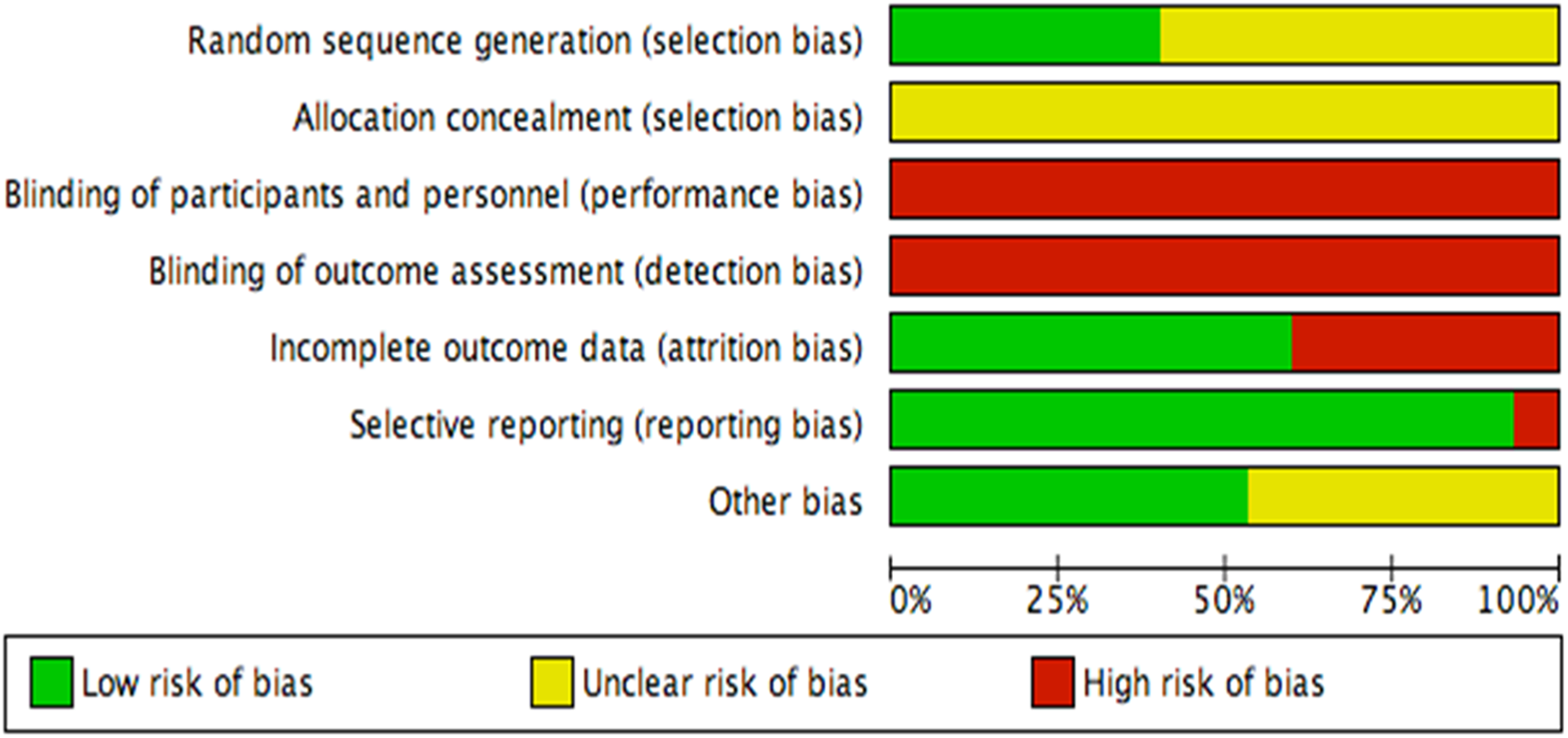
Risk of bias graph: Review authors’ judgments about each risk of bias item presented as percentages across all included studies.

Risk of bias summary: Review authors’ judgments about each risk of bias item for each included study.
Effects of Interventions
Meta-analyses—Forgiveness treatment versus control
Of the 15 studies included in the review, data from only 12 studies were meta-analyzed. Three studies (DiBlasio & Benda, 2002; Luskin et al., 2005; Toussaint et al., 2010) did not provide posttest scores (means and standard deviations) for any outcome assessments.
Of the 12 studies included in the meta-analyses, the majority provided data for similar outcome scales, which resulted in 13 meta-analyses using a total of 36 scales. Meta-analyses of forgiveness treatment versus control were carried out for seven outcome groups in total: depression, anxiety, anger/hostility, stress/distress, positive affect, levels of state forgiveness, and levels of trait forgiveness.
All scales that were combined in the meta-analyses were measured at comparable time points (i.e., posttest) and only standardized scales were included. The results for all meta-analyses involved the calculation of effect sizes (SMD) with 95% CIs. Results with a minus sign denote that the forgiveness treatment benefits the experimental group. Only postintervention scores (means and standard deviations) were used. In cases of high heterogeneity (I 2 ≥ 50%) and a significant α value from the χ2 test) a random effects model was used, while for no or moderate heterogeneity (I 2 ≤ <50%) a fixed effects model was applied.
Analyses 1–4 (below) present the results for a number of negative affect outcomes, and Analysis 5 presents the results for positive affect. Analysis 6 presents the results for the impact of treatment on levels of state forgiveness while Analysis 7 presents the results for the assessment of the impact of forgiveness treatment on levels of trait forgiveness.
Due to the fact that Analysis 6 showed substantial levels of heterogeneity and involved a large number of studies, subgroup analyses were also carried out to explore the impact of model, mode, and number of sessions on state forgiveness (using the same outcome measures as those presented in Analysis 6). For instance, Analysis 8 examined the effects of the Enright model. Analysis 9 examined the effects of the REACH model. Analysis 10 examined the effects of receiving 2–8 sessions. Analysis 11 examined the effects of administering 12+ sessions. Analysis 12 examined individual treatment effects, while Analysis 13 tested the efficacy of administering group interventions. These subgroup analyses were chosen for two reasons. First, prior research has indicated differential effects of interventions due to variation in model type, mode, and number of sessions (Lundahl et al., 2008; Wade et al., 2013). Second, due to the limited number of studies it was not possible to explore the effects of other factors (Table 2).
Key Results Organized by Outcome Groups.
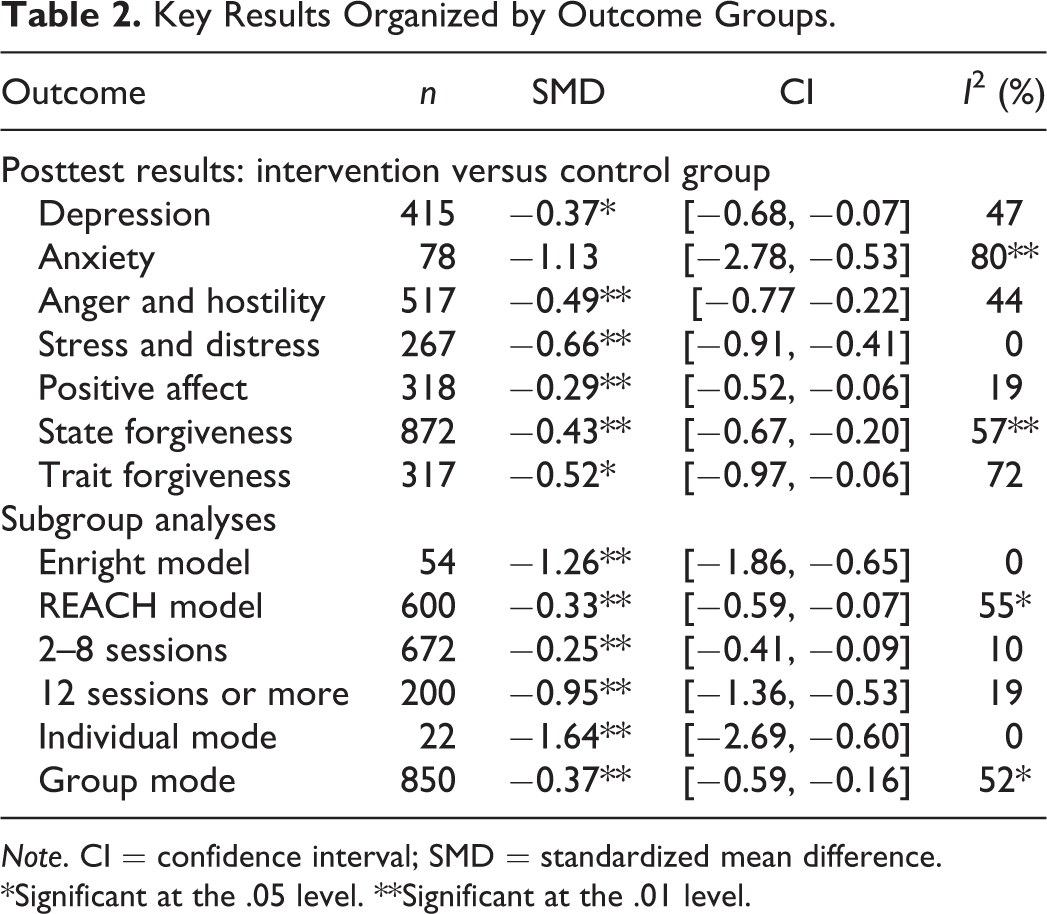
Note. CI = confidence interval; SMD = standardized mean difference.
*Significant at the .05 level. **Significant at the .01 level.
Meta-Analyses
Negative Affect Outcomes
Analysis 1: Depression
Six studies (n = 415) measured depression (Allemand et al., 2013; Freedman & Enright, 1996; M. S. Rye et al., 2005; S. R. Rye et al., 2012; Rye & Pargament, 2002; Wade & Meyer, 2009). Four of these studies used the Beck Depression Inventory or Centre for Epidemiology Studies Depression Scale. One study (Allemand et al., 2013) measured negative affect (i.e., disappointed, sad, anxious, worried, sluggish, and exhausted). Wade and Meyer (2009) used the Brief Symptom Inventory. The meta-analysis showed a small significant change favoring the intervention group (SMD = −0.37, 95% CI [−0.68, −0.07], p = .02). Between-study heterogeneity was not significant (I 2 = 47%, p = .09; Table 3).
Effects of Forgiveness Treatment on Levels of Depression.

Analysis 2: Anxiety
Three studies (n = 78) measured anxiety. One of these studies (Freedman & Enright, 1996) used the State-Trait Anxiety Scale. Coyle and Enright (1997) administered the State Anxiety Scale and Rye and Pargament (2002) used the Costello and Comrey Anxiety Scale. The meta-analysis showed a nonsignificant difference favoring the intervention group (SMD = −1.13, 95% CI [−2.78, −0.53], p = .18). Between-study heterogeneity was significant (I 2 = 80%, p = .007; Table 4).
Effects of Forgiveness Treatment on Levels of Anxiety.

Analysis 3: Anger and hostility
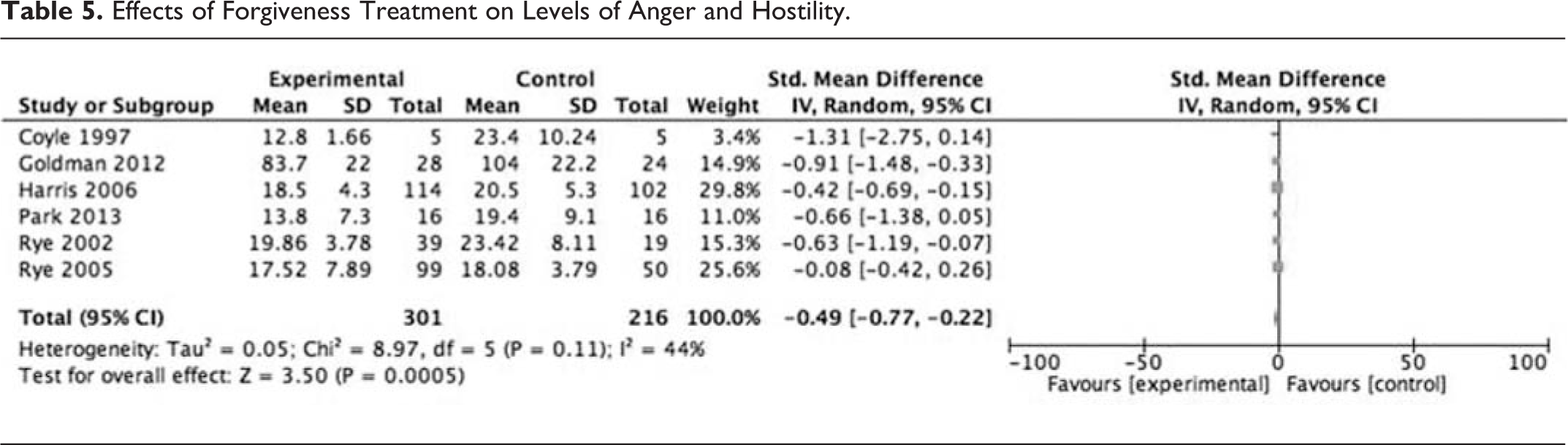
Six studies (n = 517) measured anger and hostility. Two of these studies used the State Anger Scale (Coyle & Enright, 1997; Park et al., 2013). A further two studies administered the Trait Anger Scale (Harris et al., 2006; M. S. Rye et al., 2005). Goldman and Wade (2012) administered the State Hostility Scale while Rye and Pargament (2002) used the Hostility Subscale of the Aggression Questionnaire. The meta-analysis showed a medium significant effect favoring the intervention group (SMD = −0.49, 95% CI [−0.77, −0.22], p = .0005). Between-study heterogeneity was not significant (I 2 = 44%, p = .11; Table 5).
Effects of Forgiveness Treatment on Levels of Anger and Hostility.
Analysis 4: Stress and distress
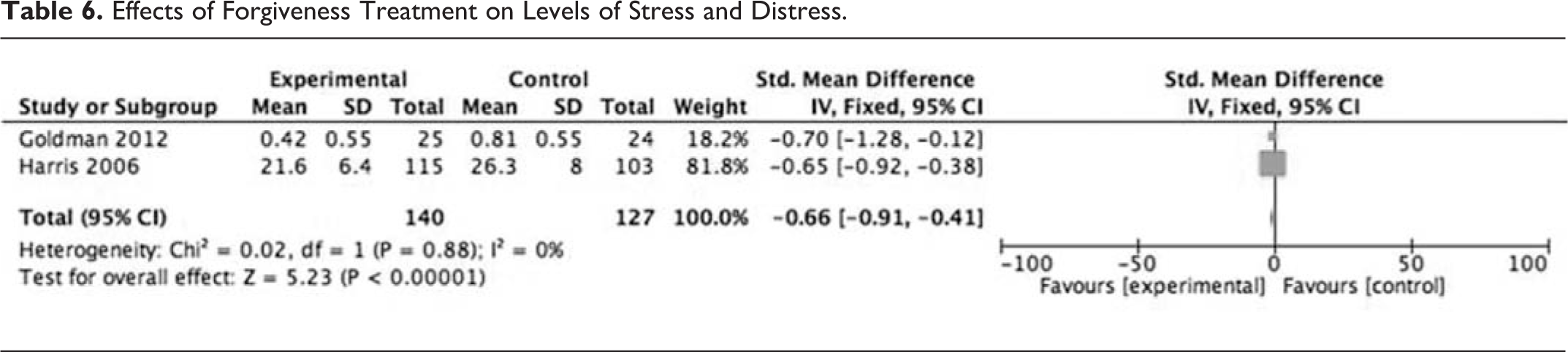
Two studies (n = 267) measured stress and distress (Goldman & Wade, 2012; Harris et al., 2006). One study used the Global Severity Index of the Brief Symptom Inventory to measure distress, while Harris et al. (2006) used the Perceived Stress Scale. Meta-analysis results show a large and significant overall effect favoring the intervention group (SMD = −0.66, 95% CI [−0.91, −0.41], p = .00001). There was no between-study heterogeneity (I 2 = 0%, p = .88; Table 6).
Effects of Forgiveness Treatment on Levels of Stress and Distress.
Analysis 5: Positive affect
Six studies (n = 318) measured positive affect. Allemand, Steiner, and Hill (2013) measured satisfaction, happiness, confidence, hopefulness, and energy. Freedman and Enright (1996) used the Hope Scale. Goldman and Wade (2012) as well as Wade and Meyer (2009) measured feelings toward offender (i.e., soft hearted, warmth, compassionate) using Batson’s Empathy Adjectives. S. R. Rye et al. (2012) administered the Gratitude Questionnaire, while Rye and Pargament (2002) used the Anticipation of Future Subscale from the Miller Hope Scale. The meta-analysis showed a small significant effect favoring the intervention group (SMD = −0.29, 95% CI [−0.52, −0.06], p = .01). Between-study heterogeneity was not significant (I 2 = 19%, p = .29; Table 7).
Effects of Forgiveness Treatment on Levels of Positive Affect.

Analysis 6: Levels of state forgiveness
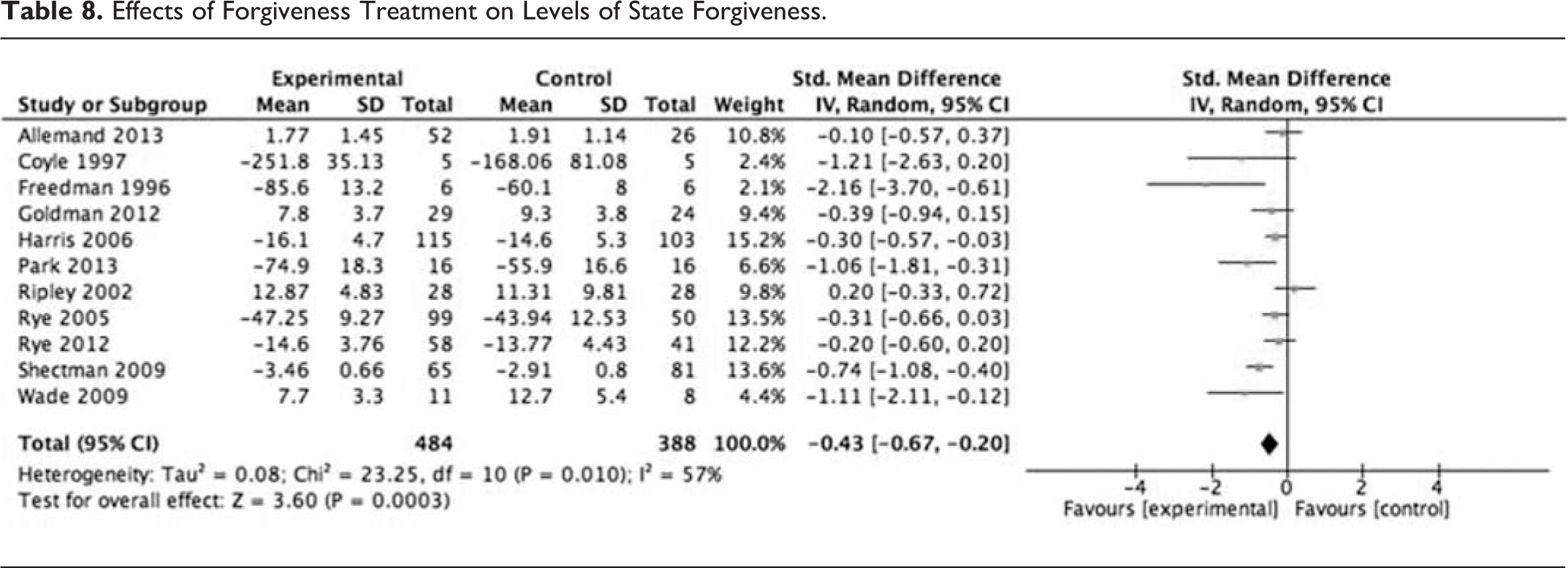
Eleven studies (n = 872) measured state forgiveness. Three types of scales were administered in six studies: the Psychological Profile of Forgiveness Scale (Harris et al., 2006; M. S. Rye et al., 2005; S. R. Rye et al., 2012), the Enright Forgiveness Inventory (Coyle & Enright, 1997; Park et al., 2013), and the Forgiveness Scale (Freedman & Enright, 1996) to assess the absence of negative emotions, cognitions, and behavior and the presence of positive feelings, thoughts, and behavior toward an offender. In two of the studies that administered the Psychological Profile of Forgiveness Scale (Harris et al., 2006; S. R. Rye et al., 2012), authors presented data for the absence of negative and presence of positive subscales separately; consequently the presence of positive subscale was selected. Five studies (Allemand et al., 2013; Goldman & Wade, 2012; Ripley & Worthington, 2002; Shectman et al., 2009; Wade & Meyer, 2009) assessed situation-specific negative affect (i.e., revenge, avoidance) by administering the Transgression-Related Interpersonal Motivations (TRIM) Scale. In two of the latter (Allemand et al., 2013; Shectman et al., 2009), the avoidance and revenge subscales were presented separately and thus the revenge subscale was selected. The meta-analysis produced statistically significant findings favoring the intervention group (SMD = −0.43, 95% CI [−0.67, −0.20], p = .0003). Between-study heterogeneity was significantly high (I 2 = 57%, p = .01; Table 8).
Effects of Forgiveness Treatment on Levels of State Forgiveness.
Analysis 7: Levels of trait forgiveness
Two studies (n = 317) measured trait forgiveness using the Forgiveness Likelihood Scale (Harris et al., 2006; S. R. Rye et al., 2012). The meta-analysis results showed a significant overall effect favoring the intervention group (SMD = −0.52, 95% CI [−0.97, −0.06], p = .03). Between-study heterogeneity was not significant (I 2 = 72%, p = .06; Table 9).
Effects of Forgiveness Treatment on Levels of Trait Forgiveness.

Subgroup Analyses
Analysis 8: Effects of Enright model on levels of state forgiveness
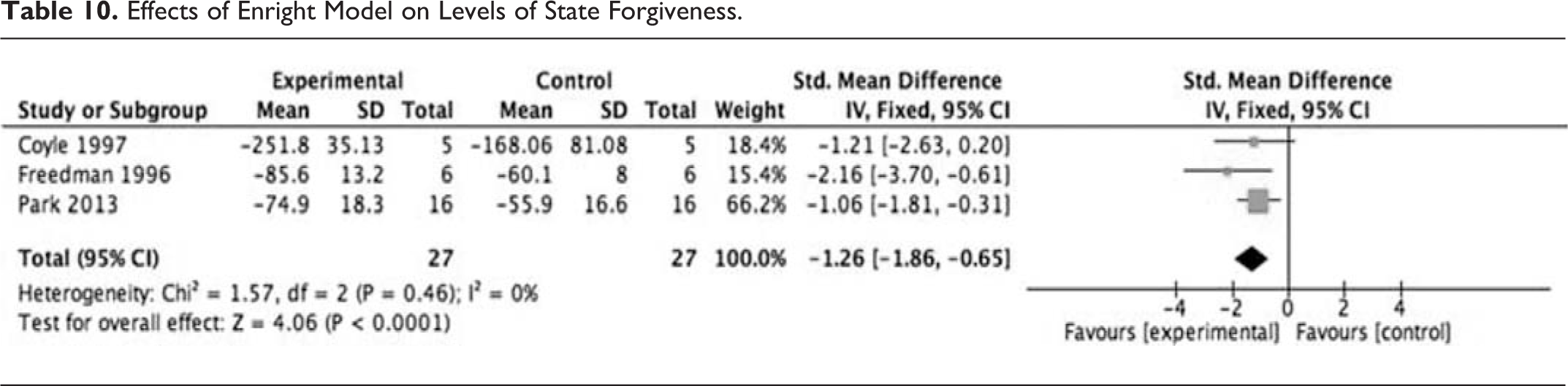
Analysis 8 (n = 54) included three studies (Coyle & Enright, 1997; Freedman & Enright, 1996; Park et al., 2013) that used the Enright forgiveness model to improve state forgiveness. The Enright Forgiveness Inventory was administered in all three studies and measured the absence of negative emotions, cognitions, and behavior and the presence of positive feelings, thoughts, and behavior toward an offender. Results showed a large and statistically significant effect favoring the intervention group (SMD = −1.26, 95% CI [−1.86, −0.65], p = .0001). No between-study heterogeneity was found (I 2 = 0%, p = .46; Table 10).
Effects of Enright Model on Levels of State Forgiveness.
Analysis 9: Effects of REACH model on levels of state forgiveness
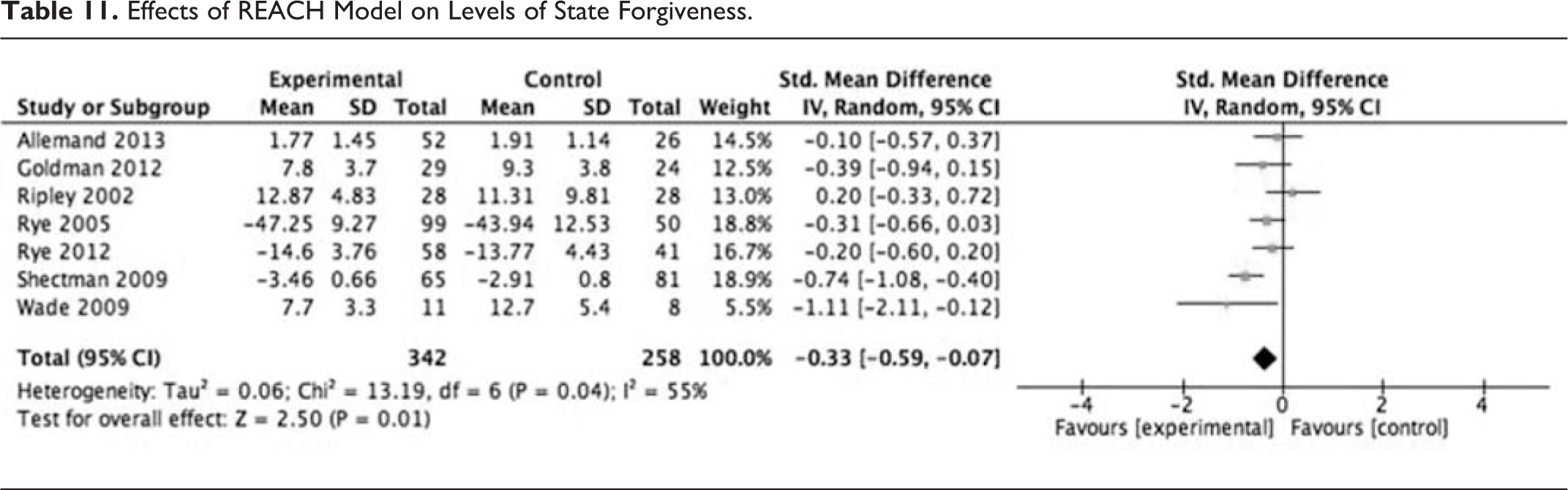
Seven studies (n = 600) that used the REACH model were assessed for the intervention impact on levels of state forgiveness. Three of these studies (S. R. Rye et al., 2012; M. S. Rye et al., 2005; Wade & Meyer, 2009) administered the Forgiveness Scale to assess the absence of negative emotions, cognitions, and behavior and the presence of positive feelings, thoughts, and behavior toward the offender. The remaining four studies (Allemand et al., 2013; Goldman & Wade, 2012; Ripley & Worthington, 2002; Shectman et al., 2009) used the TRIM Scale to measure situation-specific negative affect (i.e., revenge). The results showed a small effect favoring the intervention group (SMD = −0.33, 95% CI [–0.59, −0.07], p = .01). Between-study heterogeneity was significant (I 2 = 55%, p = .04; Table 11).
Effects of REACH Model on Levels of State Forgiveness.
Analysis 10: Effects of number of sessions on levels of state forgiveness (2–8 sessions)
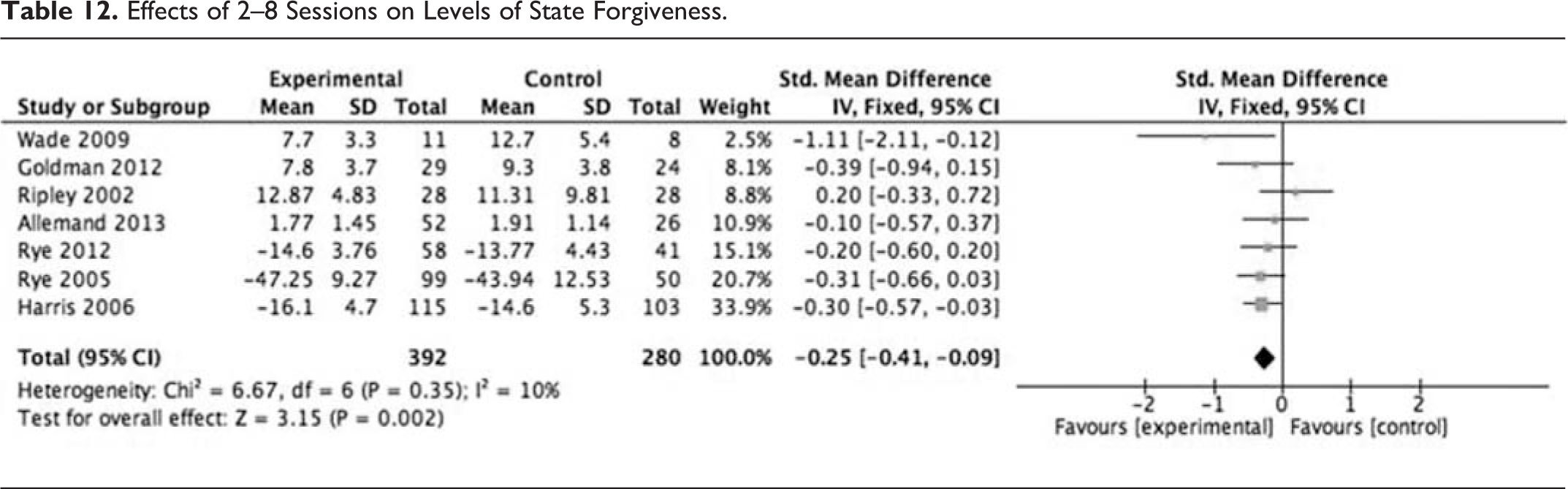
Seven studies (n = 672) that administered 2–8 sessions were assessed for the effects of the number of sessions received on levels of state forgiveness. Three of these studies (Allemand et al., 2013; Goldman & Wade, 2012; Ripley & Worthington, 2002) used the TRIM Scale to measure situation-specific negative affect (i.e., revenge), while the remaining four (Harris et al., 2006; S. R. Rye et al., 2012; M. S. Rye et al., 2005; Wade & Meyer, 2009) administered the Forgiveness Scale to assess the absence of negative emotions, cognitions, and behavior and the presence of positive feelings, thoughts, and behavior toward the offender. The meta-analysis showed a statistically significant, albeit small difference favoring the intervention group (SMD = −0.25, 95% CI [−0.41, −0.09], p = .002). Between-study heterogeneity was nonsignificant (I 2 = 10%, p = .35; Table 12).
Effects of 2–8 Sessions on Levels of State Forgiveness.
Analysis 11: Effects of number of sessions on levels of state forgiveness (12 or more sessions)
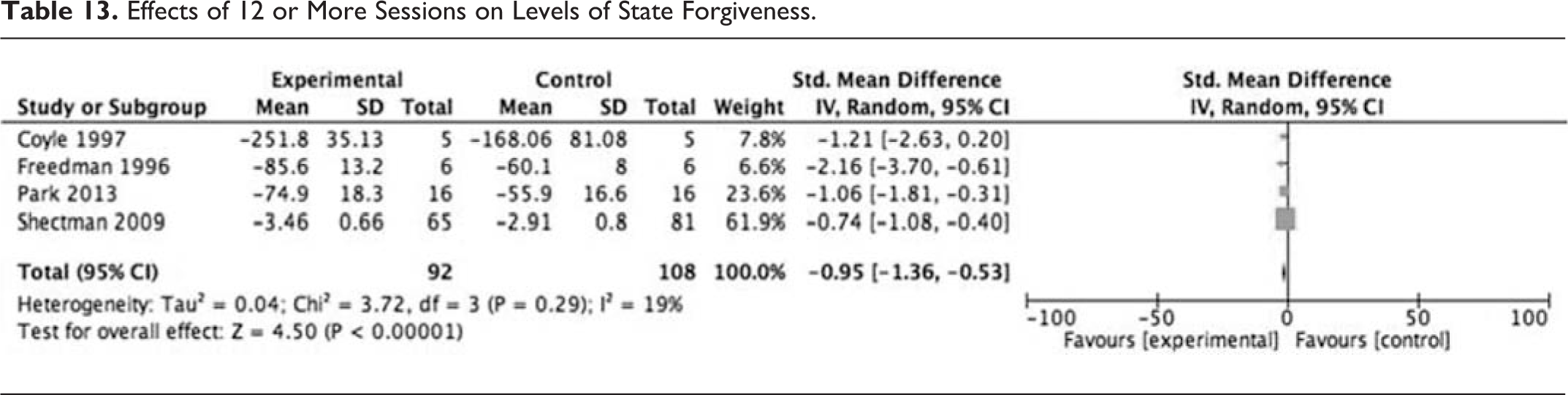
Four studies (n = 200) that administered the forgiveness intervention in 12 or more sessions were assessed for effects on levels of state forgiveness. Three of these studies measured the absence of negative emotions, cognitions, and behavior and the presence of positive emotions, thoughts, and behavior toward the offender by administering the Psychological Profile of Forgiveness Scale (Freedman & Enright, 1996) and the Enright Forgiveness Inventory (Coyle & Enright, 1997; Park et al., 2013). One study (Shectman et al., 2009) used the TRIM Scale to measure situation-specific negative affect (i.e., revenge). The meta-analysis showed significantly large effects favoring the experimental group (SMD = −0.95, 95% CI [–1.36, −0.53], p = .00001). No between-study heterogeneity was present (I 2 = 19%, p = .29; Table 13).
Effects of 12 or More Sessions on Levels of State Forgiveness.
Analysis 12: Individual treatment effects on levels of state forgiveness
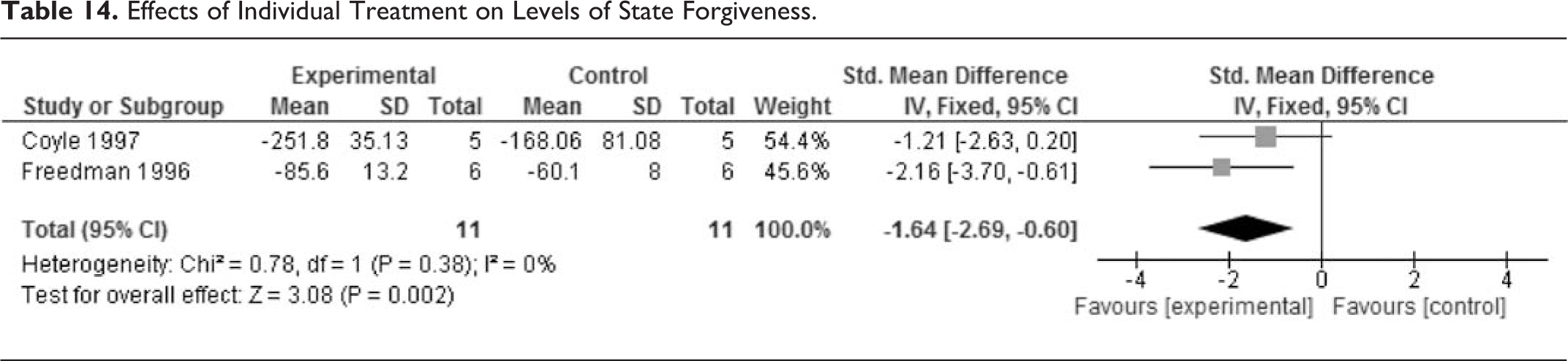
Two studies (n = 22) that administered sessions using an individual format to deliver the treatment were assessed for effects on levels of state forgiveness. Both studies measured the absence of negative thoughts, cognitions, and behaviors and the presence of positive emotions, thoughts, and behaviors toward the offender by administering the Psychological Profile of Forgiveness Scale (Freedman & Enright, 1996) and the Enright Forgiveness Inventory (Coyle & Enright, 1997). Meta-analysis results indicate a large and statistically significant overall effect (SMD = −1.64, 95% CI [−2.69, −0.60], p = .002) favoring the experimental group. No between-study heterogeneity was present (I 2 = 0%, p = .38; Table 14).
Effects of Individual Treatment on Levels of State Forgiveness.
Analysis 13: Group intervention effects on levels of state forgiveness
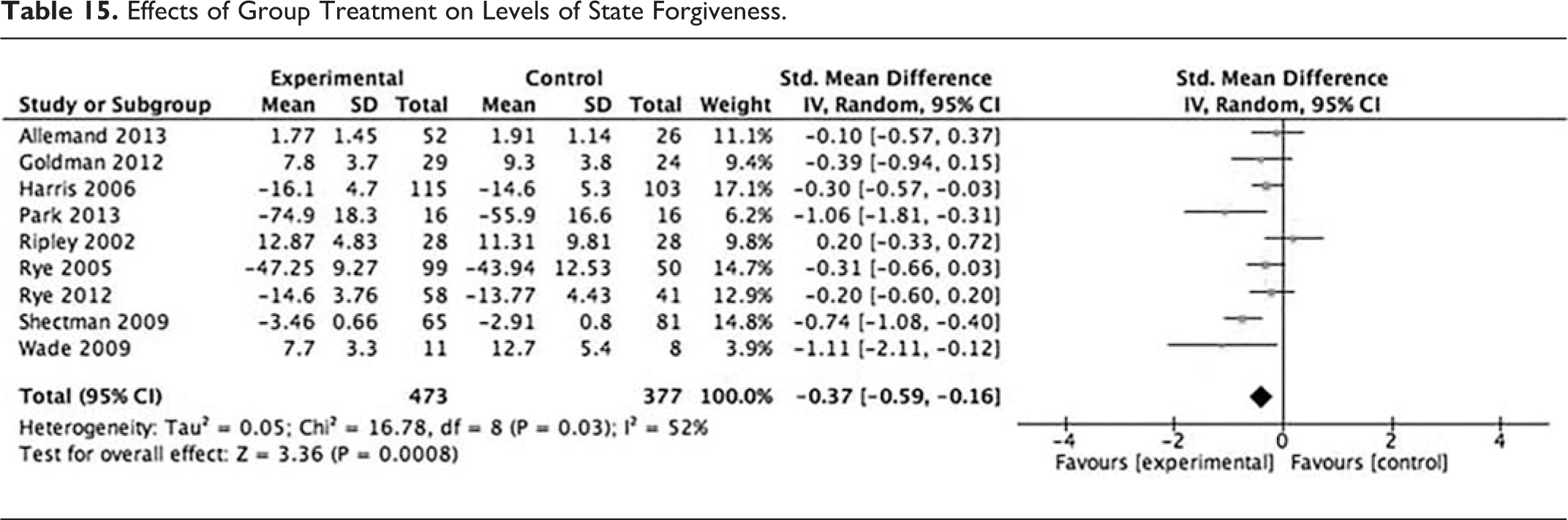
Nine studies (n = 850) administered the treatment using a group mode. Interventions were assessed for effects on state forgiveness. Four of these studies (Allemand et al., 2013; Goldman & Wade, 2012; Ripley & Worthington, 2002; Shectman et al., 2009) used the TRIM Scale to measure situation-specific negative affect (i.e., revenge). The remaining seven studies measured the absence of negative thoughts, cognitions, and behaviors and the presence of positive emotions, thoughts, and behaviors by administering the Psychological Profile of Forgiveness Scale (Freedman & Enright, 1996), the Enright Forgiveness Inventory (Coyle & Enright, 1997; Park et al., 2013), and the Forgiveness Scale (Harris et al., 2006; M. S. Rye et al., 2005; S. R. Rye et al., 2012; Wade & Meyer, 2009). Meta-analysis results showed a significant, albeit small effect favoring the intervention group (SMD = −0.37, 95% CI [−0.59, −0.16], p = .0008). Significant between-study heterogeneity was present (I 2 = 52%, p = .03; Table 15).
Effects of Group Treatment on Levels of State Forgiveness.
Discussion
Summary of Findings
Of the 15 studies selected for inclusion in this review, a total of 12 studies and 36 outcome measures were used to carry out 13 meta-analyses. Initially, we combined and analyzed studies using broad outcome groups such as negative affect and state forgiveness but the results produced medium effects with substantial levels of heterogeneity. This was due to the fact that while the studies included in the meta-analyses were all evaluations of process-based interventions, they were diverse in terms of the model type, mode, number of sessions, cultural context, and the gender and age of participants. In order to investigate some of the observed heterogeneity, subgroup analysis was undertaken on the basis of model type, group versus individual format, and number of sessions received. It was not possible to examine all diversities due to the limited number of studies and in cases where heterogeneity was low, broad outcome groups were formed (i.e., positive affect).
With regard to assessing the effectiveness of forgiveness interventions in reducing negative affect, most studies (Analyses 1, 3, and 4) produced small, medium, and large statistically significant effects in favor of the intervention group, and there was no significant between-study heterogeneity. For example, small effects were present for depression (SMD = −0.37), with a moderate effect observed for anger and hostility (SMD = −0.49) and large effects for stress and distress (SMD = −0.66). With the exception of anxiety (n = 78), which did not produce a significant overall effect, all other meta-analyses assessing negative affect had sample sizes between 270 and 500 participants, with resulting small CIs. These results suggest that forgiveness interventions are effective in reducing various components of negative affect.
In Meta-analysis 5, a number of measures of positive affect such as gratitude, hope, satisfied/happy/confidence, and empathy (i.e., feeling “softhearted/compassionate”) were combined. Combining five studies produced a total sample size of 318 and a significant, albeit small effect in favor of the intervention group. This suggests that forgiveness therapy can enhance overall emotional well-being.
The findings are to a large degree consistent with previous research, which suggests that forgiveness programs improve poor mental health, promote positive affect, and increase levels of forgiveness (Lundahl et al., 2008). However, while previous research found decreases in levels of anxiety, the current meta-analysis did not support this result. However, it may be relevant to note that two of the three studies assessing anxiety produced significant results but that the sample sizes were relatively small. In either case, further research is warranted.
Generalizability
The studies included in the systematic review used diverse samples of participants. Adolescents, adults, and older adults as well as male and female participants took part, and interventions were tested across cultures (Israel, South Korea, Switzerland, and the United States). Meta-analyses that showed large effects (Analyses 12 and 8) in relation to the impact of treatment on levels of psychological adjustment (i.e., forgiveness) also reflected this diversity. However, due to the limited number of studies it was difficult to investigate further the effects of age, gender, or cultural context on outcomes. In addition, although there were some cross-cultural studies, a majority were conducted in the United States and therefore further research is needed that assesses the effects of these interventions in different countries and other cultures and among minority ethnic groups as well as educationally and economically diverse samples.
The studies also evaluated the effectiveness of forgiveness interventions, with people experiencing a range of problems such as sexual abuse, abortions, marital hurts, civil conflict, and a range of other hurtful interpersonal experiences, and the findings are therefore generalizable to a range of hurts or abuse.
Moderator Analyses
To examine the impact of treatment on the levels of state forgiveness, 11 studies were meta-analyzed. The results showed small effects (SMD = −0.43) and substantial heterogeneity. To investigate this heterogeneity, we conducted subgroup analyses that assessed the effects of different models (i.e., Enright vs. REACH), modes (i.e., individually delivered vs. group-based), and number of sessions (i.e., 2–8 vs. 12 or more) on levels of functioning (i.e., state forgiveness). In the majority of cases, heterogeneity was significantly reduced and results showed significant effect sizes, all benefiting the treatment group. Subgroup analyses showed that the Enright model (n = 3 studies) produced a larger impact on forgiveness than the REACH (n = 7 studies) model; that more sessions (n = 4 studies) were more effective than less (n = 7 studies); as were interventions that were delivered on an individual (n = 2 studies) compared with a group (n = 9 studies) basis. There is, however, some confounding of these results because the REACH model was only delivered on a group basis, and it is not therefore possible to know whether this model would be more effective than the Enright model if delivered individually. This points to the need for further rigorous studies directly comparing these different models when delivered using similar formats and number of sessions, in addition to the need for cost-effectiveness data. The present review also specifically focused on assessing the effectiveness of forgiveness treatments in comparison with no-treatment control groups, and further research that compares forgiveness interventions with other types of treatments aimed at improving psychological adjustment is also needed.
These findings are consistent with previous research, which showed that individually delivered programs, using the Enright model of forgiveness and administering more sessions, seem to be more effective in promoting psychological well-being (Baskin & Enright, 2004; Lundahl et al., 2008; Wade et al., 2013). However, as suggested above, in some cases subgroup analysis revealed that the number of treatments administered (i.e., 12 or more) appeared to be the factor influencing levels of forgiveness, and there were no individually administered REACH models with which to compare them. Thus, further research is needed directly comparing different models, modes of treatment, and number of sessions.
Limitations of the Review
This review has a number of limitations. First, there was a low to moderate quality of evidence rating for the included studies due to the potential for high risk of bias. However, this was mostly due to the issue of “blinding,” which is difficult to ensure in studies of this nature. Most other risk of bias factors were either low (randomization, selective reporting, and other sources of bias) or generally unclear risk (i.e., allocation concealment). Second, the moderator analyses were limited to measures of forgiveness due to the limited number of studies measuring other outcomes. Third, the review did not include unpublished papers or non-English-language studies, and most of the studies were conducted in the United States and a few countries outside of America, suggesting the need for caution in terms of extrapolating the findings to populations from more diverse or different cultures.
Implications for Treatment
Despite the above limitations, the findings of this review indicate that forgiveness interventions can improve mental health and subjective well-being. This suggests the need to consider forgiveness therapy as a potentially effective method of helping people who have experienced a variety of abuses, to improve their psychological health, within therapeutic and other settings. These interventions can be used with patients who have no religious or spiritual inclinations, but the findings suggest the need for clarity concerning core concepts underpinning the intervention. For example, emphasizing to clients that forgiveness does not necessarily involve reconciliation, condoning, tolerating, or excusing hurtful behavior, which serves to protect victims of violence from further unhealthy relationships.
The findings of this review identified differences in outcome dependent on the mode of treatment, model used, and number of sessions administered. Both REACH and the Enright models can be applied in a group format, and the findings of this review suggest that this format may be most effective if the sessions are applied over a longer period of time such as 12 or more weeks. The findings also suggest, however, that individually delivered forgiveness programs, using the Enright model, and again administering 12 or more sessions, may result in greater increases in psychological adjustment, although further research is still needed.
Conclusion
Interpersonal hurts including trauma and abuse are common and have a significant impact on the mental well-being and functioning of victims. There is a need to identify effective methods of improving the mental well-being of this group. This review provides moderate quality evidence indicating that process-based forgiveness interventions are effective in improving mental well-being following a range of significant hurts among diverse population groups. These findings suggest that forgiveness interventions could have an important role to play in promoting the general psychological well-being of individuals and populations who experience a range of problems resulting from having been traumatized. The results also suggest the need for more research, particularly to assess the impact of different types of forgiveness interventions that vary in length and mode, and their effectiveness in treating adolescents and adults who have experienced different types of abuse outside a U.S. context. Future research should utilize RCT designs and include validated measures that assess a variety of psychological health outcomes and also assess the efficacy of different models and modes of treatment.
Implications for Future Policy, Practice, and Research
Both group-based and individually delivered process-based forgiveness interventions should be available within mental health settings to promote the mental well-being of patients who have experienced a range of hurts or abuse.
There is a need for further research comparing the different models of process-based forgiveness interventions, and assessing their effectiveness with other populations (i.e., adolescents, elderly, married couples), other types of interpersonal hurts (e.g., bullying and harassment) and in terms of their effectiveness on other aspects of well-being.
There is also a need to compare forgiveness-based interventions with other methods of supporting victims of abuse, in terms of what works, for whom, under what circumstances.
Footnotes
Acknowledgments
We would like to express our gratitude to Cathy Bennett and Jane Dennis who offered helpful advice concerning methods of combining data where multiple measures of the same outcome have been used.
Declaration of Conflicting Interests
The author(s) declared no potential conflicts of interest with respect to the research, authorship, and/or publication of this article.
Funding
The author(s) received no financial support for the research, authorship, and/or publication of this article.