



Abstract
Women experience persistent pain at higher rates than men; however, women are less likely to be provided with adequate or appropriate care and more likely to have their pain experiences dismissed. The purpose of this review is to consider the complex interaction of the biopsychosocial factors in the experience of persistent pain in order to inform improved models of care. Given persistent pain is among the most frequently reported health consequences of intimate partner violence (IPV), this review focused on studies exploring the association between persistent pain and IPV. Three reviewers independently and systematically searched seven databases. Qualitative and quantitative studies describing the association between IPV and persistent pain published between January 2000 and June 2018 were included. Twelve studies met the inclusion criteria. The included studies demonstrated that a history of IPV places an additional burden on women who experience persistent pain that cannot be explained by an underlying psychological condition. Health care practitioners should be aware of this phenomena to ensure diagnosis, assessment, and treatment plans are targeted accordingly. Future policy directives and research should account for and seek to elucidate this additional burden.
Persistent pain, defined as pain lasting longer than 3 months, has a significantly negative impact on quality of life and physical function (Andrews et al., 2018). It is a term used interchangeably with chronic pain. The estimated global prevalence of persistent pain is between 30% and 50% (Andrews et al., 2018; Elzahaf et al., 2012; Fayaz et al., 2016; Goldberg & McGee, 2011). The biopsychosocial model of pain asserts that the experience of persistent pain reflects a complex interplay between social, biological, and psychological factors. These factors interact to influence the experience of persistent pain and play a role in maintaining or worsening symptoms (Engel, 1977). This model is distinct from the biomedical understanding of persistent pain that argues there is a clear pathophysiology for pain symptoms. As some individuals with persistent pain do not have a clear pathological explanation for their pain and the pain experience is not standardized, the biopsychosocial model of persistent pain allows for a more nuanced and holistic approach to management of pain.
The role of gender and sex in persistent pain is well established, such that women disproportionately experience persistent pain when compared to men (Berkley, 1997; Blyth, n.d.; Breivik et al., 2006; Cimmino et al., 2011; Fillingim et al., 2009; Greenspan et al., 2007; Meana et al., 2004; Meisler, 1999; Rovner et al., 2017; Rustøen et al., 2004; Unruh, 1996). Also recognized is the pervasive gender bias in the treatment of persistent pain (Bernardes et al., 2008; Hoffmann & Tarzian, 2001; Racine et al., 2012). In health care settings, women are more likely than men to be undertreated, misdiagnosed, or prescribed inappropriate medication for their persistent pain symptoms (Hoffmann & Tarzian, 2001). A review of the literature found that women’s reports of pain experiences are often labeled by health care professionals as hysterical, fabricated, or nonexistent, resulting in women generally being diagnosed with psychological conditions when they present with persistent pain (Samulowitz et al., 2018). The same review found that women received more prescriptions to psychiatric medication than pain medication (Samulowitz et al., 2018). There is a demonstrated co-occurrence between psychiatric disorders and persistent pain (Defrin et al., 2015; Mostoufi et al., 2014; Velly & Mohit, 2018), which is commonly relied upon to explain women’s symptoms as psychosomatic.
These persisting gender biases in health care and their seeming acceptance (Fillingim et al., 2009; Greenspan et al., 2007; Hoffmann & Tarzian, 2001) are referred to as the “gender paradox of pain” (Hoffmann & Tarzian, 2001). The paradox is such that, despite women experiencing pain at higher rates than men, they are not provided with adequate or appropriate care when they seek help, such as a prescription to analgesics (Wesolowicz et al., 2018). In addition to this, the effect of analgesics has largely only been tested on male models (Beery & Zucker, 2011). Current literature suggests women with persistent pain do not feel believed or understood and have to work hard to be taken seriously (Jackson, 2019; Samulowitz et al., 2018; Werner et al., 2003). Additionally, women have reported that health care encounters left them doubting their pain or feeling they were to blame (Werner et al., 2003). Other barriers to health care disproportionately experienced by women include cost and lack of time (Salganicoff et al., 2014). It has been suggested this chasm exists because the pain is invisible and relies on self-reporting, often with no clear pathology (Samulowitz et al., 2018). In order to address the gender paradox, the complex interplay and interaction of the biopsychosocial factors contributing to the experiences of women with persistent pain must be better understood.
A commonly associated social factor in the persistent pain experience is a history of intimate partner violence (IPV), where IPV is defined as emotional, physical, or sexual harm experienced in a current or former intimate relationship. Various observational studies (Bonomi et al., 2009; Campbell, 2002; Coker et al., 2000; Jamieson & Steege, 1997; Kramer et al., 2004; Leserman et al., 1996; Rapkin et al., 1990; Reiter & Gambone, 1991; Walling et al., 1994) and reviews (Leserman & Drossman, 2007; Plichta, 2004) have established that persistent pain is among the most frequently reported health consequence of IPV. Additionally, women both disproportionately experience IPV and persistent pain (Breivik et al., 2006; Cimmino et al., 2011; Fillingim et al., 2009; Greenspan et al., 2007; Meana et al., 2004; Rovner et al., 2017; Rustøen et al., 2004). Thus, the intersection of persistent pain and IPV is largely experienced by women, as compared to men.
The association between IPV and persistent pain is not limited to physical violence. It includes IPV involving physical or sexual violence, stalking, and psychological aggression such as the use of coercive tactics by a current or former intimate partner (Breiding et al., 2015). That some forms of violence are not immediately apparent to practitioners reflects the frequently missed association between persistent pain and experiences of IPV, resulting in an absence of definitive diagnoses of persistent pain (As-Sanie et al., 2014) and a lack of effective management (Campbell, 2002; Coker et al., 2000; Leserman et al., 1996; Plichta, 2004). Help seeking can also be impacted by stigma associated with IPV (Overstreet & Quinn, 2013) and persistent pain (Balogun-Mwangi et al., 2016), resulting in women not disclosing for fear of being judged or not believed.
Given the complexities in the experience of IPV and its co-occurrence with persistent pain, applying the biopsychosocial model of persistent pain may help practitioners to identify IPV and appreciate the intersection with persistent pain. In order to do so, practitioners must better understand the signs, symptoms, and health conditions that are common in women who have experienced IPV (Campbell et al., 2002) and acknowledge the unique and multifaceted impact of persistent pain on the health and well-being of women who have experienced IPV (Tiwari et al., 2013), both of which must be considered in the context of the gender paradox in the treatment of persistent pain. To better understand the complex interaction of the biopsychosocial factors that contribute to the gender paradox of pain, we undertook a systematic review of the literature examining a history of IPV and persistent pain. The purpose of the review was to identify studies examining the experience of persistent pain among women who have experienced IPV. The review was structured around the following aims: to identify the characteristics of persistent pain among women who have experienced IPV and to describe the impact of persistent pain among women who have experienced IPV.
Method
We conducted a systematic review as per the Preferred Reporting Items for Systematic Reviews and Meta-Analysis guidelines. See Figure 1 for a summary of the study selection process.
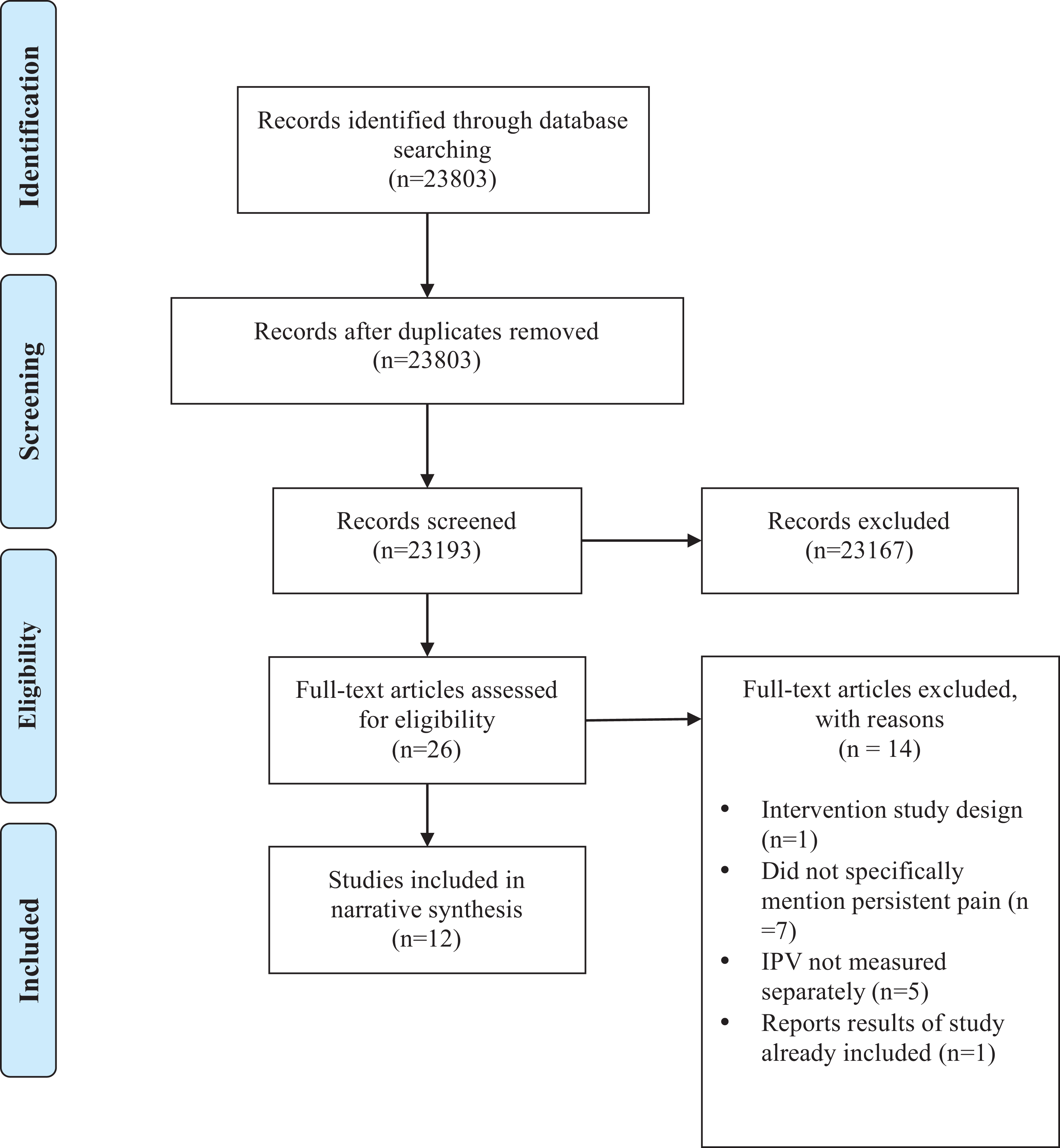
Preferred Reporting Items for Systematic Reviews and Meta-Analysis diagram.
Search Strategy
The electronic databases searched were Scopus, MEDLINE, CINAHL, ProQuest, PsycINFO, CNKI, VIP, and Wanfang. The search terms included (wife OR wom? n OR female* OR spous* OR partner* OR “battered wi*” OR cisgender OR “same sex” OR lesbian* OR queer OR transg*) AND (“family violence” OR violence/or domestic violence/or intimate partner violence/or physical abuse/or rape/or IPV/OR “gender based violence” OR “partner abuse” or exp Spouse Abuse/OR “conjugal abuse” OR “sexual abuse” OR “sexual violence” OR (partner adj5 (abus* or violence or assault))) AND (pain* OR injury OR trauma* OR chronic pain/or persistent pain/or facial pain/or neck pain/or back pain/or pelvic pain/OR headache* OR migraine* OR “pain syndrome*).
The search was conducted independently by H.H., H.C., and J.S. during February–March 2018. H.H., H.C., and J.S. removed all duplicates and reviewed all publications by screening titles and abstracts. P.C. and N.W. independently reviewed the remaining publications by appraising the full text against the inclusion criteria. The differences were resolved by consensus.
Inclusion and Exclusion Criteria
The inclusion and exclusion criteria were devised by the research team to determine publications that considered the association between IPV and persistent pain when both are experienced by women. The literature identified through the search strategy (see Figure 1) was included or excluded according to the criteria in Table 1. The review focused on the experience of all women who are known to disproportionately experience IPV and persistent pain (Breivik et al., 2006; Cimmino et al., 2011; Fillingim et al., 2009; Greenspan et al., 2007; Meana et al., 2004; Rovner et al., 2017; Rustøen et al., 2004).
Inclusion and Exclusion Criteria.
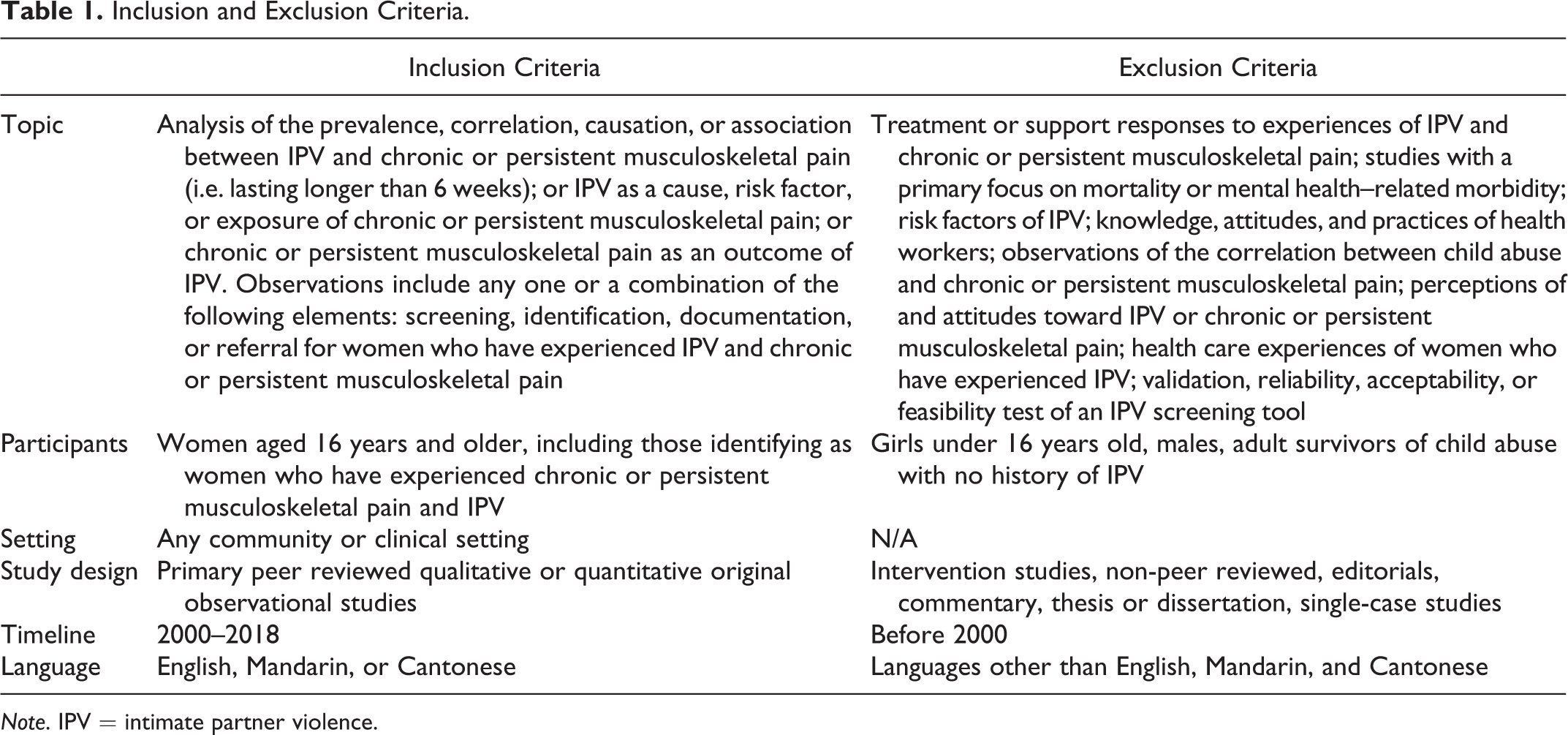
Note. IPV = intimate partner violence.
Data Extraction, Quality Appraisal, and Analysis
Each study was reviewed independently, and data were extracted using categories decided on by the principal researchers (N.W., K.B., and P.C.; see Table 2). N.W. and K.B. conducted the quality appraisal. The quality of cohort and case–control studies was assessed against the Newcastle-Ottawa Scale (NOS) and an adapted form of the NOS for cross-sectional studies (Herzog et al., 2013; see Table 3). The NOS tool has been designed to assess the quality of nonrandomized studies (Wells et al., 2019).
Overview of Included Studies.

Note. DA's = District Attorney's; DA’s = District Attorney’s
Results of the Quality Appraisal of Included Studies.
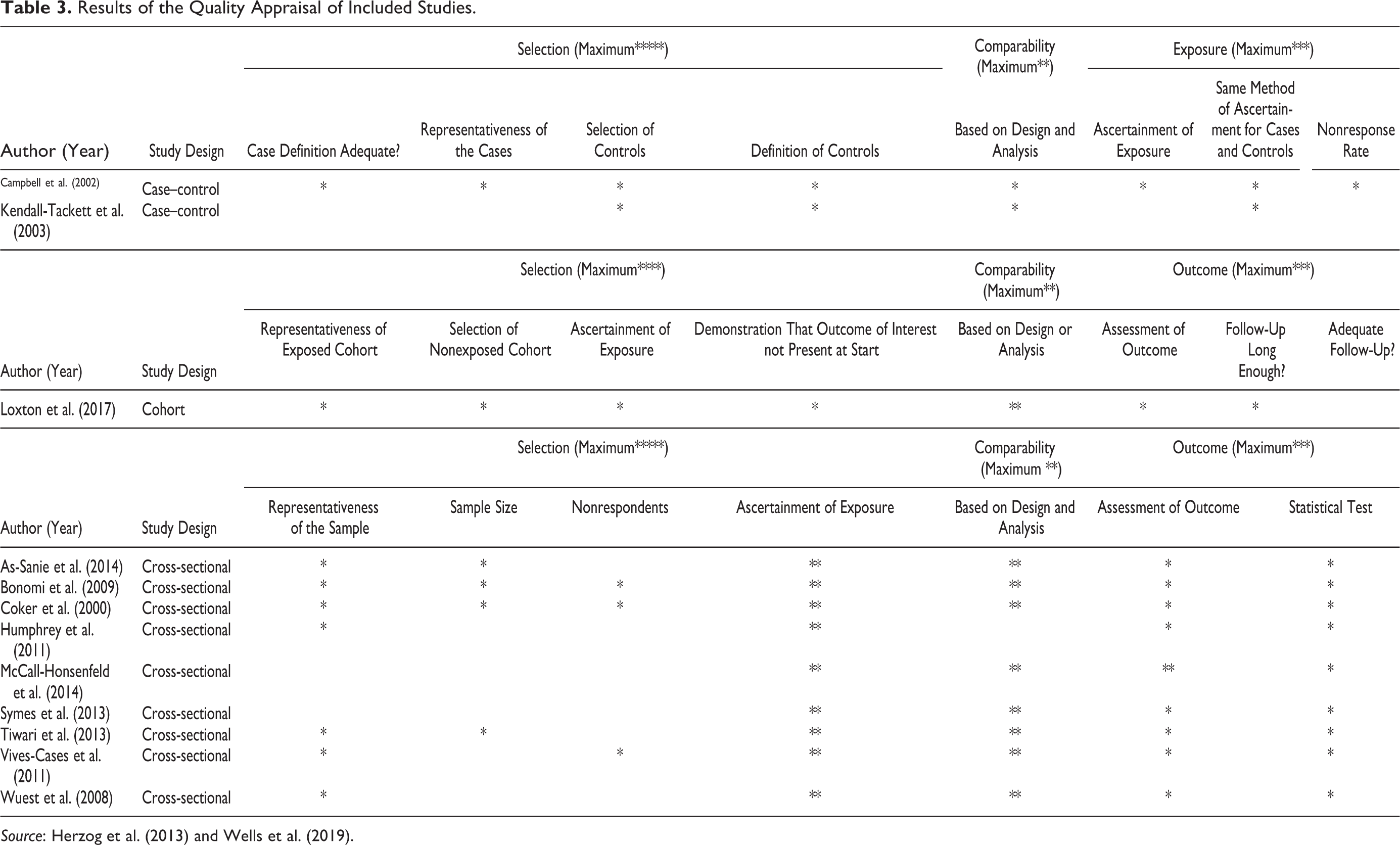
Source: Herzog et al. (2013) and Wells et al. (2019).
Given the broad range of studies included, a narrative synthesis approach was used for analyzng results (Popay et al., 2006). The narrative synthesis process involves iteratively developing a preliminary synthesis of the findings of included studies, exploring relationships in the data and assessing the robustness of the synthesis (Popay et al., 2006). The interpretation of the results was informed by the biopsychosocial model of persistent pain to better understand the individual and contextual influences on persistent pain as it intersects with IPV among women.
Results
Of the studies identified, 12 were included in the final review (see Figure 1). The majority of studies (n = 10) were conducted in English-speaking countries including the United States, Australia, and Canada (As-Sanie et al., 2014; Bonomi et al., 2009; Campbell et al., 2002; Coker et al., 2000; Humphreys et al., 2011; Kendall-Tackett et al., 2003; Loxton et al., 2017; McCall-Hosenfeld et al., 2014; Symes et al., 2013; Wuest et al., 2008). All included studies used quantitative methods. Pain was largely measured using established measurement tools including the Brief Pain Inventory (BPI) short form (SF; As-Sanie et al., 2014; Humphreys et al., 2011; Symes et al., 2013), the Medical Outcomes Study 36-item Short-Form Health Survey (Campbell et al., 2002; Loxton et al., 2017), and the Von Korff 7-item Chronic Pain Grade (CPG) Scale (McCall-Hosenfeld et al., 2014; Tiwari et al., 2013; Wuest et al., 2008). The remaining studies used self-reported pain symptoms (Coker et al., 2000; Kendall-Tackett et al., 2003) and clinical records (Bonomi et al., 2009; Vives-Cases et al., 2011). Detailed characteristics for each study are shown in Table 2.
Methodological Quality Appraisal
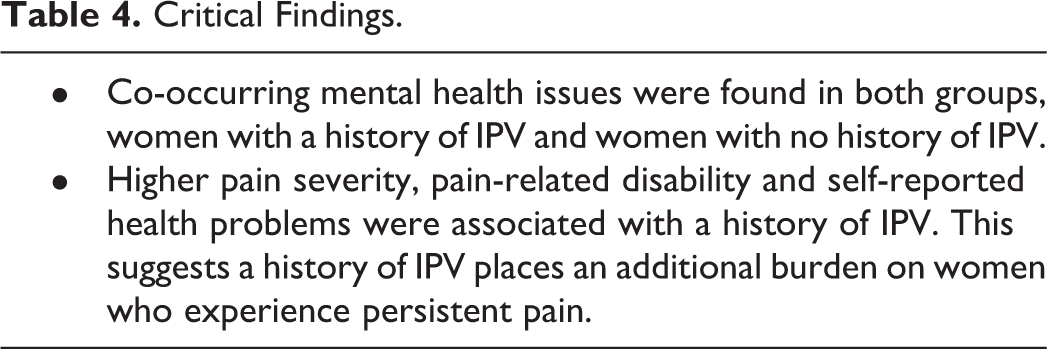
Most studies were of moderate to high quality on the NOS Scale (Table 3; Wells et al., 2019). Largely, the studies did not control for the biases present in observational studies such as selection bias and nonparticipation bias or potential confounders such as a history of child abuse. Four of the 11 studies recruited a community sample (Humphreys et al., 2011; Loxton et al., 2017; Vives-Cases et al., 2011; Wuest et al., 2008). The remaining seven studies used clinical samples or a previous diagnosis by a doctor (As-Sanie et al., 2014; Bonomi et al., 2009; Campbell et al., 2002; Coker et al., 2000; Kendall-Tackett et al., 2003; McCall-Hosenfeld et al., 2014; Symes et al., 2013). Conclusions on causality could not be made as all study designs were observational. Additionally, five of the studies did not have a comparison group of women with no history of IPV (Humphreys et al., 2011; Loxton et al., 2017; Symes et al., 2013; Tiwari et al., 2013; Wuest et al., 2008). The majority of the tools used to measure persistent pain relied on self-reported data. All studies except for one (Kendall-Tackett et al., 2003) used a validated measurement tool to measure persistent pain. Only four studies (Bonomi et al., 2009; Campbell et al., 2002; Humphreys et al., 2011; Symes et al., 2013) used a validated IPV measurement tool, and all studies relied on self-reported data. Of the eight cross-sectional studies, only three accounted for nonresponders (Bonomi et al., 2009; Coker et al., 2000; Vives-Cases et al., 2011). Further comments on quality in specific studies are included in Table 2 and critical findings are reported in Table 4.
Critical Findings.
Characteristics of Persistent Pain
Type of persistent pain associated with IPV
The studies found associations between IPV and a range of different persistent pain conditions including chest pain (Bonomi et al., 2009), abdominal pain (Bonomi et al., 2009; Campbell et al., 2002), cervical/pelvic pain (Bonomi et al., 2009; Campbell et al., 2002; Coker et al., 2000; Wuest et al., 2008), back pain (Bonomi et al., 2009; Campbell et al., 2002; Coker et al., 2000; Vives-Cases et al., 2011; Wuest et al., 2008), neck pain (Coker et al., 2000; Vives-Cases et al., 2011), arthritis (Coker et al., 2000), and problematic pain or stiffness in joints or muscles (Wuest et al., 2008). All forms of IPV were found to be associated with increased reporting of back pain (Wuest et al., 2008) and frequent headaches/migraines (Campbell et al., 2002; Coker et al., 2000; Vives-Cases et al., 2011; Wuest et al., 2008). Kendall-Tackett et al. (2003) found that women with a history of abuse, including child abuse, reported more persistent pain symptoms than women with no history of abuse. The timing of the abuse, IPV or child abuse, was not found to be associated with increasing persistent pain symptoms.
Severity of pain associated with IPV
An association was found between IPV and pain severity (As-Sanie et al., 2014; Humphreys et al., 2011; McCall-Hosenfeld et al., 2014; Symes et al., 2013; Tiwari et al., 2013; Vives-Cases et al., 2011). Symes et al. (2013) reported that all abuse experiences were significantly associated with higher pain severity, and Humphreys et al. (2011) found that among the women who reported persistent pain, 75% reported moderate to severe pain, compared to 25% who reported mild pain. Additionally, Humphreys et al. (2011) found that increasing length of time in an abusive relationship was positively associated with experiencing moderate to severe pain. Conversely, Tiwari et al. (2013) found that only sexual abuse severity was associated with increased pain severity and that other forms of IPV did not have a significant effect on increasing persistent pain severity.
Impact of Persistent Pain
Pain-related disability associated with IPV
Pain-related disability was only reported on in two studies (As-Sanie et al., 2014; Wuest et al., 2008). Wuest et al. (2008) found an association between high pain–related disability and more severe spousal abuse compared to women who reported low pain–related disability. As-Sanie et al. (2014) similarly reported an association between a history of physical abuse as an adolescent or adult and significantly higher pain–related disability but did not distinguish the impact of child abuse and IPV.
Affective impact of pain associated with IPV
Women with a history of IPV were found to experience worse affective impacts of mental health conditions including post-traumatic stress disorder (PTSD), anxiety and depression, and more severe persistent pain (As-Sanie et al., 2014; Symes et al., 2013; Tiwari et al., 2013; Wuest et al., 2008). As-Sanie et al. (2014) found that adult sexual abuse experienced by women with chronic pelvic pain was associated with more severe depressive symptoms. The authors also noted the importance of understanding the complexities of the relationship between persistent pain and depression and as it impacts pain treatment outcomes, suggesting that depression plays a mediating role in the relationship between a history of IPV and persistent pain. McCall-Hosenfeld et al. (2014) similarly found that depression was a mediating factor in persistent pain severity whereas PTSD was not, and Wuest et al. (2008) found that depressive symptoms co-occur with high disability pain and a history of IPV. In contrast Tiwari et al. (2013) found the co-occurrence of IPV and severity of persistent pain was not mediated by depressive symptom severity but rather PTSD symptom severity. However, the authors noted the positive correlation between worsening depressive symptoms and worsening PTSD symptoms, suggesting an indirect relationship between worsening depressive symptoms and more severe persistent pain.
Discussion
This review elucidated the association between IPV and persistent pain in terms of the characteristics of persistent pain and the factors that impact on the experience of persistent pain symptoms. These findings support literature that has established an association between persistent pain and IPV (Bonomi et al., 2009; Campbell, 2002; Coker et al., 2000; Jamieson & Steege, 1997; Kramer et al., 2004; Leserman et al., 1996; Leserman & Drossman, 2007; Plichta, 2004; Rapkin et al., 1990; Reiter & Gambone, 1991; Walling et al., 1994). In studies with a comparison group of women with no history of IPV, it was demonstrated that persistent pain among women who have experienced IPV is characterized by higher pain severity, higher pain–related disability, and a worsening affective impact of mental health conditions. Taken together, this demonstrates that a history of IPV is associated with a more negative experience of persistent pain and one that is distinguished from the experience of women who have never experienced IPV.
The type of persistent pain associated with a history of IPV varied among the studies, suggesting there is no clear persistent pain etiology associated with IPV. However, the association between persistent abdominal pain and pelvic pain and a history of IPV reflects literature that found a substantial proportion of women who present with abdominal or pelvic pain have a history of sexual abuse (Beck et al., 2009; Cichowski et al., 2013; Mark et al., 2008; Panisch & Tam, 2019; Poleshuck et al., 2005). While a strong association was found between a history of IPV and headaches/migraines or back pain, this could reflect the higher prevalence of back pain and migraines more generally, which are among the leading causes of years lost due to disability (Vos et al., 2017). Determining whether there is a clear persistent pain etiology associated with IPV relies on women disclosing IPV and practitioners adequately identifying this co-occurrence in patients.
Given the gender paradox in the treatment and management of persistent pain, it is likely that women who experience both IPV and persistent pain are not being adequately identified and responded to in clinical settings. To address this, there must be an improved understanding of the patient help seeking and practitioner barriers to effectively managing persistent pain in women with a history of IPV. For example, an established barrier to help seeking is fear of not being heard or believed by practitioners. Women who do not feel heard or believed are more likely to distrust and not depend on practitioners for management of their persistent pain, resulting in fewer diagnoses or regular presentations to clinical settings (Balogun-Mwangi et al., 2016). This fear can be explained by the demonstrated gender bias in the treatment of persistent pain that results in women not being given a diagnosis or appropriate analgesics (Ahlsen et al., 2014).
An additional barrier to help seeking is IPV stigma. Where women experience acute injury as a result of IPV, the fear of IPV stigma may prevent women seeking early intervention for their pain (Overstreet & Quinn, 2013). Delayed treatment, or lack of treatment, is a factor commonly associated with higher persistent pain severity (van Hecke et al., 2013), which could explain the higher pain severity among women who had a history of IPV in studies in our review (As-Sanie et al., 2014; Humphreys et al., 2011; McCall-Hosenfeld et al., 2014; Symes et al., 2013; Tiwari et al., 2013; Vives-Cases et al., 2011). These barriers reinforce the important role practitioners play in ensuring clinical environments are nonjudgmental and do not perpetuate gender biases or stigma around IPV and persistent pain.
Our review supports previous research that establishes the important role of psychological factors, which must be considered by practitioners in the treatment of women with persistent pain and a history of IPV. A systematic review demonstrated an association between a history of IPV and mental health conditions including PTSD, anxiety, and depression, and poorer health outcomes including persistent pain (Dillon et al., 2013). While no causal relationship has been established, there is an association between persistent pain severity and experiencing or worsening mental health conditions (Mostoufi et al., 2014; Velly & Mohit, 2018). It is critical that women’s pain is not dismissed as psychosomatic and instead that psychosocial factors such as experiences of trauma and abuse are considered holistically by practitioners in determining effective management approaches. Further, by understanding the gender paradox of persistent pain, practitioners can be mindful of gender biases when treating women who present with persistent pain and co-occurring mental health conditions.
From a biopsychosocial perspective, higher pain severity may be considered as part of a response to trauma, and there may be co-occurrence with PTSD (Wuest et al., 2010). PTSD is prevalent among women with a history of IPV and has been shown to mediate the relationship between IPV and the development of physical health symptoms including persistent pain (Golding, 1999). Consistent with this, one study in our review found that the type of IPV may be an important factor in this relationship between PTSD and persistent pain (As-Sanie et al., 2014). These findings may be explained by specific psychological factors outlined by Sharp and Harvey (2001) that are thought to maintain and reinforce the relationship between PTSD and persistent pain. These factors include attentional biases toward perceived threats and/or painful stimuli, anxiety sensitivity, persistent reminders of the trauma, avoidant coping styles, depression and an accompanied reduction in physical activity, increased perception of pain, and overwhelmed cognitive resources (Sharp & Harvey, 2001). Additionally, it has been suggested that the attentional bias toward threats and anxiety sensitivity associated with PTSD makes individuals hyper-responsive to pain (Defrin et al., 2015). This literature draws from the biopsychosocial model of persistent pain and asserts that psychological factors, such as those that accompany PTSD, have a modifying effect on persistent pain symptoms, often leading to more severe pain or pain-related disability.
As indicated by the biopsychosocial model, these factors cannot be viewed in isolation and practitioners must appreciate that persistent pain, a history of IPV, and PTSD interact with and influence each other. However, much of the research that investigates mechanisms underlying the co-occurrence of psychosocial factors relevant to PTSD and persistent pain has been done with all male samples or male veterans experiencing combat trauma (Mostoufi et al., 2014). There is a need for gender-sensitive research that focuses on better understanding the relationship between women’s experiences of persistent pain and trauma related to IPV and that specifically considers how this intersects with the gender paradox in the treatment of persistent pain.
Much of our lack of insight into persistent pain among women who have experienced IPV relates to limitations in study design. The literature is largely based on cross-sectional studies, creating difficulty in drawing conclusions on causality between experiences of IPV and persistent pain (As-Sanie et al., 2014). The studies generally refer to women who have experienced abuse, which was inclusive of child abuse, adolescent abuse, and IPV. Not controlling for child abuse potentially introduces bias as it is associated with poorer health outcomes in adulthood (Richmond et al., 2009; Scott-Storey, 2011). However, as child abuse is often associated with IPV in adult life, it is difficult to control for this confounding factor (Rind et al., 1998). The studies also largely relied on a clinical sample or a previous diagnosis by a doctor, thereby excluding women without a definitive diagnosis of persistent pain. As indicated by the gender paradox in the treatment and diagnosis of persistent pain, this is potentially a large cohort of women. Additionally, using clinical samples could introduce bias as patients presenting to clinical settings, in particular tertiary settings, are more likely to have severe symptoms. Community samples and self-reported symptoms should be used to address these limitations and would also result in a more diverse sample of women who may be experiencing additional barriers to health care based on intersecting factors including race, ethnicity, class, and sexuality. As we recognize it is challenging to address these limitations, we suggest a study design that allows for investigation of the biopsychosocial factors that contribute to the lived experience of persistent pain.
Considered together, the included studies do not provide a homogenous report of the experiences of persistent pain among women with a history of IPV; however, they demonstrate that the experience is distinct from women who do not have a history of IPV. These findings argue strongly for the need to better understand the biopsychosocial factors contributing to experiences of persistent pain, in particular the impact of historical and ongoing trauma associated with IPV. Better understanding this complexity could provide greater insight to practitioners in the management of persistent pain for women who have experienced IPV and contribute to addressing the gender paradox in the treatment of persistent pain.
Strengths and Limitations
The review is characterized by the following strengths. Undertaking the analysis through the biopsychosocial lens ensures the application of the findings is not limited by the biomedical understanding of pain. While we have not sought to use the biopsychosocial model to map potential mediators in the relationship between IPV and persistent pain, interpreting the results through this lens contributes to our understanding of co-occurring experiences of persistent pain and IPV. This association, however, is still being understood and represents a complex interplay of factors that may not have been identified yet. For example, the studies we identified as part of this review provided little insight into women’s social identities and experiences. As such, future research in this area would benefit from gaining a deeper and more diverse perspective on women’s lived experience. The biopsychosocial model could be used to explore the association between IPV, pain, and mental health among women with a diversity of experience and social identities. Publication bias was reduced by searching multiple databases in English, Cantonese and Mandarin languages. Bias in study selection was reduced by authors independently screening studies for inclusion and exclusion. Data extraction (N.W., P.C., K.B.) and quality assessment (N.W. and K.B.) were also undertaken independently by authors, thereby reducing bias in the synthesis of evidence and quality appraisal. Any studies written before 2000 and those in a language other than English, Cantonese or Mandarin were excluded; therefore, it is possible that studies have been excluded that may depict the diverse experiences of women. The reliability and validity of the quality appraisal tool, NOS, has been questioned (Hartling et al., 2013; Lo et al., 2014; Margulis et al., 2014; Stang, 2010); however, it was recommended by Cochrane as an effective quality assessment (Rivas et al., 2015). The review is additionally limited as it excluded intervention studies, excluding an analysis of the health care experience of women with persistent pain who have experienced IPV compared to women who have not experienced IPV.
Implications of the Review for Practice, Policy, and Research
Practice
Health care professionals must consider the implications of the association between IPV and persistent pain for screening, diagnosis, and management. This involves being aware of their co-occurrence and how it influences the experience of persistent pain. Health care professionals should use a biopsychosocial approach to pain management, ensuring they treat patients’ pain as a holistic and multifaceted condition. Furthermore, other professionals including social workers, case workers, home visitors, and child advocates must also consider the association between persistent pain and IPV and how this may manifest for their clients. It is imperative that all professionals dealing with women who experience IPV and persistent pain confront gender biases and stigma around both IPV and persistent pain in order to combat the gender paradox in the treatment and management of persistent pain. Professionals must also consider the diverse intersecting experiences and biases of women who experience co-occurring IPV and persistent pain, insofar that every woman may have a unique experience.
Policy
Currently, a majority of pain research is conducted using male samples and generalized to apply to women patients (Jackson, 2019; Mostoufi et al., 2014). As has been demonstrated through the example of IPV, women have a distinct and unique experience of persistent pain. Additionally, the gender paradox in the treatment of persistent pain suggests that women’s needs are not being met by clinicians or that current evidence based practice guidelines are not appropriate for women experiencing persistent pain. As such, policy directives must be inclusive of diverse experiences and include a sex and gender analysis to ensure the clinical and nonclinical differences between the sexes and genders can be accounted for in the screening, treatment, and management of persistent pain. Additionally, language used in policy in reference to IPV and persistent pain must consider the role of deficit discourse (Fogarty et al., 2018) in contributing to reductionist and essentialist solutions to complex issues.
Research
Future research in this area would benefit from gaining a deeper and more diverse perspective on women’s lived experience. For example, exploring the association of IPV and pain and mediators of mental health from diverse perspectives. Engaging diverse communities of women will provide a greater understanding of the varied biopsychosocial factors that influence the co-occurring experience of persistent pain and IPV. A framework such as PROGRESS-Plus could be used to guide the research to ensure that it is conducted through an equity lens (O’Neill et al., 2014). PROGRESS-Plus identifies the factors that contribute to health inequity and encourages researchers to consider their intersection. Additionally, given the stigma and biases associated with persistent pain and IPV, samples should be recruited from the community where possible. It is well established that clinical samples do not necessarily reflect a generalizable experience of persistent pain and IPV as women may not present if they fear they will not be heard or believed (Balogun-Mwangi et al., 2016). Community samples would likely also ensure the experiences of women from diverse communities and cultural backgrounds are included (Tiwari et al., 2013). Studies must also control for confounding factors, in particular child abuse, and should report on both negative and positive aspects of women’s experience to ensure the literature does not promote a deficit discourse.
Conclusion
The review demonstrates the experience of persistent pain and IPV is still largely misunderstood. While it has emerged that an experience of IPV creates an extra burden on women who are experiencing persistent pain, the underlying mechanisms and contributing factors are not clear. Future studies need to be adequately designed to account for the biases in the literature to date and to investigate gaps in current knowledge. Given the gendered prevalence of both IPV and persistent pain, and the gender paradox in the treatment of persistent pain, understanding the co-occurrence of persistent pain and IPV has the potential to illuminate misunderstood complexities in the management of persistent pain. Unless women’s experiences of co-occurring IPV and persistent pain are adequately understood and responded to, the gender paradox will persist, and women will continue to bear a disproportionate burden of persistent pain.
Implications of Review for Practice, Policy, and Research
Health care professionals should be aware of the intersection between IPV and persistent pain, as well as the gender biases in the management and treatment of persistent pain.
Policy makers should be aware of the language used in policy addressing IPV or persistent pain so as not to promote a deficit discourse and thereby encourage reductionist or essentialist strategies. Additionally, policy directives should include a sex and gender approach to address the gender paradox of persistent pain.
A history of IPV creates an additional burden for women who experience persistent pain, but it is not well understood how and why this burden manifests. The focus of future research should consider this question as well as including the perspective of women from diverse communities and cultural backgrounds.
Footnotes
Declaration of Conflicting Interests
The author(s) declared no potential conflicts of interest with respect to the research, authorship, and/or publication of this article.
Funding
The author(s) disclosed receipt of the following financial support for the research, authorship, and/or publication of this article: Author, Patricia Cullen received funding from NHMRC Early Career Fellowship (Grant ID APP1158223).
