



Abstract
Aim:
The long-term effects of intimate partner violence (IPV) on physical health outcomes and health-related behaviors are underresearched in comparison to the effects on mental health and pregnancy. This systematic review examines the recent research in this area from 2012 through 2019.
Methods:
SCOPUS, PubMed, EBSCOhost, and gray literature were searched using the key words “intimate partner violence” and “health.” To meet inclusion criteria, studies needed to be original research and focus on IPV during adulthood and its effects on the physical health or health-related behaviors of women. Fifty-two studies were qualitatively analyzed, with results grouped into broad categories of effects, including cardiovascular, endocrine, infectious diseases, and health screening.
Results:
IPV was shown to have negative effects on physical health outcomes for women, including worsening the symptoms of menopause and increasing the risk of developing diabetes, contracting sexually transmitted infections, engaging in risk-taking behaviors including the abuse of drugs and alcohol, and developing chronic diseases and pain. It also has significant effects on human immunodeficiency virus outcomes, worsening CD4+ cell depletion. Results varied regarding the effects of IPV on cardiovascular health outcomes.
Conclusion:
The result of this review demonstrates that women who have experienced violence and abuse are at significantly increased risk of poor health outcomes in a variety of areas and so require specialized and tailored primary care. This review highlights significant gaps in this field of research, particularly in relation to cardiovascular disease, endocrine dysfunction, and neurological symptoms and conditions. It demonstrates a need for additional long-term studies in this field to better inform the health care of women who have experienced IPV and to establish the physiological mediators of these outcomes.
Keywords
Intimate partner violence (IPV) includes physical, sexual, emotional, and financial abuse and control by a current or former intimate partner, most commonly by a male against his female partner (World Health Organization [WHO], 2013). It has a sociocultural basis, with perpetration stemming from the devaluation and subjugation of women (Fincham et al., 2013; Flynn & Graham, 2010; WHO, 2013). Some risk factors for experiencing IPV have been identified, including childhood exposure to abuse, low socioeconomic status, poor education, and early age of marriage (WHO, 2013; Yakubovich et al., 2018). It is more prevalent in countries with poor gender equality and high poverty rates but is nonetheless widespread, transcending race and religion and affecting developed and developing countries, rich and poor communities (Bonomi & Glass, 2008; Devries et al., 2013; Guruge, 2012; WHO, 2013).
Prevalence varies worldwide, with the WHO (2013) estimates suggesting that between 13% and 61% of women have experienced physical IPV and between 20% and 75% have experienced emotional IPV. Approximately, 38% of murders of women globally are perpetrated by a current or former intimate partner (Stockl et al., 2013). The economic impact of IPV is substantial, costing the U.S. economy US$12.6 billion annually. In Australia, the cost of violence against women and children exceeds US$22 billion annually (Lips, 2014; Welfare, 2018). Much of the economic burden is carried by the victims, followed by governments, particularly in relation to health care expenditure (Devries et al., 2013; Gideon & Edward Elgar Publishing, 2016; Guruge, 2012).
The health effects of IPV are both acute and chronic. Acutely, IPV, particularly physical and sexual violence, can result in fractures, traumatic brain injuries, skin lacerations, burns, and, in severe cases, death (Antai, 2011; Hewitt et al., 2011; Sugg, 2015; WHO, 2013). Long term, all forms are associated with the development of anxiety, post-traumatic stress disorder, eating disorders, depression, and suicidal ideation (Bacchus et al., 2018; Dillon et al., 2013; Loxton et al., 2017; Sugg, 2015). In relation to pregnancy, IPV has been shown to increase the likelihood of preterm delivery and low birth weight, as well as the rate of preeclampsia, obstetric complications, and fetal or neonatal death (Berhanie et al., 2019; Ezeudu et al., 2019; Martin-de-Las-Heras et al., 2019; Yu et al., 2018).
Despite this significant research into the effects of IPV on mental health and obstetric outcomes, there is a paucity of clear evidence regarding its effect on long-term health outcomes, including risk factors for and development of chronic diseases, as well as health behaviors including engagement with health services, substance use, and sexual health (Campbell & Lewandowski, 1997; Dillon et al., 2013; WHO, 2013). Women affected by IPV are, by definition, uniquely disadvantaged and “at risk” (Stockman et al., 2015), and it is known that they have generally poorer health outcomes than unaffected women (Campbell, 2002; Hawcroft et al., 2019; Hurwitz et al., 2006; Welfare, 2018; WHO, 2013); as a result, they need tailored, nuanced care. Similarly, health policies and guidelines need to be informed by the intersection of abuse and negative health outcomes. To optimize the health of these women, it follows that health practitioners must have sound, evidence-based knowledge of how these experiences will impact health and women’s engagement with health services. This review aims to contribute to this knowledge by systematically collating data on the long-term effects of IPV on physical health and health-related behaviors, including development of chronic and infectious diseases, use of health screening services, and risk-taking behavior such as drug and alcohol abuse. It will also identify contradictions or discrepancies in the existing pool of research and provide a platform for future research direction. To enable easy comparison of the effect of different types of IPV on specific disease and health outcomes, this review will be organized by health outcome, with subheadings as follows:
– Cardiovascular
– Endocrine
– Neurological
– Infectious diseases
– Substance use
– Health screening and health service utilization
– Chronic diseases
– General physical health
IPV will be used interchangeably with abuse, and IPV+ will be used to refer to population or sample groups who reported experiencing IPV. IPV is a global public health crisis, as echoed by the vast health and economic consequences. In order for health professionals to adequately respond to individuals who have experienced IPV, they must be informed of the potential effects, making research into these areas critical.
Existing Literature
Several systematic reviews and meta-analyses were identified during the search process. In 2013, Dillon et al. published a literature review examining research from 2006 through to 2012 that evaluated the physical and mental health effects of IPV (Dillon et al., 2013). This review identified that IPV+ women were more likely to suffer somatoform and psychosomatic disorders, including headaches, dizziness, and stomach pain. It clearly identified an association between IPV and sexually transmitted infection (STI) prevalence and risk, including in relation to human immunodeficiency virus (HIV). Gynecological problems including vaginal discharge and dyspareunia and abnormal cervical screening test results were also shown to be more common in IPV+ populations. An earlier review by Campbell et al. also emphasized statistically significant links between IPV and gynecological disorders and symptoms and STI incidence rates (Campbell & Lewandowski, 1997). These correlations were largely consistent across the studies reviewed by Dillon and Campbell and were reiterated in a WHO report (Campbell & Lewandowski, 1997; Dillon et al., 2013; Krug & WHO, 2002). This review will aim to identify additional recent information in this space to consolidate this knowledge.
Despite these clear areas of correlation, the previous systematic reviews on this topic could not identify consistent findings in relation to the effect of IPV on other health outcomes. Of note were contradictory findings in cardiovascular, respiratory, and gastrointestinal disorders; neurological damage and symptoms; chronic pain; and poor self-assessment of health. Additionally, although it has been hypothesized that abuse induces a chronic inflammatory state (Kraynak et al., 2019; Powers et al., 2019; Tsuyuki et al., 2019), there has been little representation of endocrine disorders or inflammatory biomarkers in previous reviews which this article will aim to correct. These areas will thus form a significant component of this review as it aims to substantiate any correlations and better identify what conditions, symptoms, and outcomes IPV+ women are at risk of.
Other reviews in this field had significant limitations, including primarily focusing on mental health repercussions or the effects of IPV on children. Bacchus et al. (2018) published a systematic review and meta-analysis of the health effects of IPV but primarily focused on mental health and only incorporated cohort studies. This review found no link between IPV and incidence of STIs, contradictory to the reviews by Dillon and Campbell (Bacchus et al., 2018; Campbell et al., 2018; Dillon et al., 2013). This kind of discrepancy, as well as the failure for some categories of analysis to reach statistical significance, shows the limitations of the current data in this field and demonstrates the need for additional studies to be conducted.
Method
Literature searches of PubMed, SCOPUS, and gray literature were conducted, using key words “intimate partner violence” or “domestic violence” or “family violence,” and “health.” Gray literature searches focused on reference lists in government reports and previous reviews (Krug & WHO, 2002; Welfare, 2018; WHO, 2013). The time period of January 2012 through May 2019 was applied to the search. This allowed for a logical continuation of the review conducted by Dillon et al. in 2013 which was exhaustive and had largely the same inclusion criteria as this article. As such, and to avoid duplication, this review will focus on research published since 2012 when Dillon et al. retrieved their papers. This will enable a clear analysis of the new data, and comparisons with the findings found in previous reviews will be conducted in the Discussion section.
An overview of the review process is outlined in Figure 1. The initial search yielded 7,267 results, the titles and abstracts of which were reviewed during the first review period. Application of inclusion and exclusion criteria, outlined below, and deletion of duplicates resulted in a pool of 105 full-text articles to be evaluated. During this evaluation, 53 articles were eliminated; the main reasons for elimination include a sole focus on mental or obstetric health, results that did not differentiate between male and female participants, and results that failed to provide a comparison group. One study looking at compliance to antiviral medication during pregnancy and the postpartum period was included as the focus was on infectious disease risk rather than on pregnancy outcomes. Similarly, those that focused solely on mental health outcomes or acute physical outcomes (such as fractures) were excluded. No restrictions were placed on sample size or study design. After the final review, 52 studies remained and were included in this review.
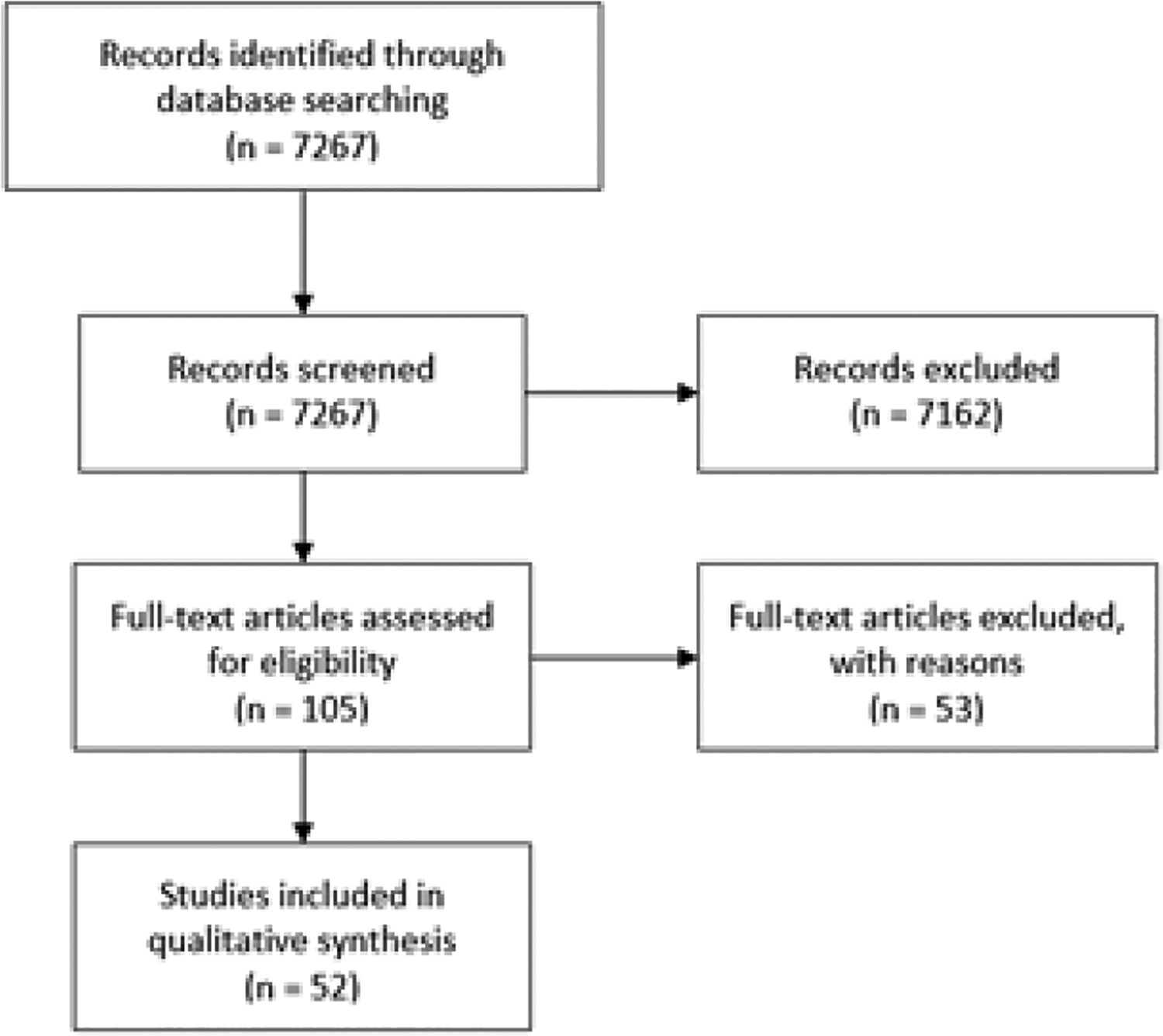
Literature review selection process.
The review process utilized the following inclusion criteria: Research must be original, with no reviews included. Studies must have been published between January 2012 and May 2019. The results must have pertained to women only, or in studies including both men and women, the results specific to women must have been separately available. The study must have included a “nonabused” comparator group to allow for the identification of IPV as a specific risk factor. The study must have evaluated physical health consequences of IPV, or its effects on health-related behaviors, including risk-taking behaviors. IPV must have occurred after the age of 16. The full-text article must have been accessible in English.
The reviewed studies are diverse in population groups and study designs. While several focus on specific demographics, nationally representative sampling was also utilized in many studies, resulting in a diverse pool of data. More detailed analysis of the demographics of study populations and the potential impact this has on findings will be undertaken in the Discussion section.
Results and Discussion
The 52 reviewed studies had different foci for the physical and health-related behavioral effects of IPV. A summary table showing the representation of different categories of effects is shown in Table 1.
Summary Table of Health Effects Examined in Reviewed Papers.

Cardiovascular
Twelve of the reviewed papers examined the cardiovascular effects of IPV. Of these, six specifically analyzed the link between IPV and hypertension. The study by Al-Modallal et al. assessed 238 Palestinian refugees residing in humanitarian camps in Jordan and found that women subjected to any category of IPV (physical, sexual, or psychological) as determined by validated questionnaire were more likely to be diagnosed with hypertension (Al-Modallal, 2016). Of note, victims of sexual IPV+ were more than twice as likely to have hypertension compared to those who did not experience this subtype. Important to note however is that this study did not consider all-form abuse as a separate category nor did it incorporate crossover or multiform abuse in its analysis. This combined with a small sample size and a marginalized, disadvantage population are the main limitations of the study and potentially explain why it is the one of only two studies to return a conclusive, statistically significant finding between IPV and hypertension.
Al-Modallal et al. demonstrated that, across their data set, psychological abuse was the most prominent and consistent risk factor for poor health outcomes. An additional 2012 study demonstrated a correlation between severe emotional abuse and hypertension, with a hazard ratio of 1.24 (Mason et al., 2012). This study failed to find any correlation between physical or sexual abuse and hypertension (Mason et al., 2012). The only other study to find a positive link between IPV and hypertension failed to reach statistical significance (Lacey & Mouzon, 2016). One study showed that the use of antihypertensive medications was higher (odds ratio [OR] of 1.27–1.36) in women who had experienced physical or sexual IPV (Stene et al., 2013). Of the remaining three studies, one conclusively showed no link between the two but did not incorporate emotional abuse into its definition of IPV (Clark et al., 2014), one failed to reach statistical significance (Halpern et al., 2017), and one found a link that disappeared when demographic variables were considered (Bosch et al., 2017). There is significant inconsistency across these studies in populations, study design, and results, and no conclusive correlations can be drawn. However, it is evident that there is the potential for IPV, particularly of a psychological nature, to impact blood pressure. What is needed are additional studies in diverse populations, including those who are not marginalized by other socioeconomic and geopolitical factors, with an emphasis on examining how psychological or emotional abuse might serve as a risk factor for developing hypertension. Through this mechanism, early interventions in vulnerable populations can be applied to reduce the long-term sequelae of developing this disorder.
Additional cardiovascular risk factors were examined in seven studies. Obesity was positively correlated with IPV in two studies, with one reporting that abused women were 1.4 times as likely to be obese as nonabused (Bosch et al., 2017; Stene et al., 2013). One study reported on the effect of IPV on cholesterol, showing no link to overall cholesterol levels or cholesterol-lowering medications but a positive correlation between a history of abuse and low high-density lipoprotein levels and high triglyceride levels (Stene et al., 2013). Al-Modallal et al. showed that women subject to sexual or psychological IPV were more likely to be diagnosed with hyperlipidemia (Mason et al., 2012).
Cardiovascular disease was directly examined in six studies. Halpern et al. (2017) conducted unique research into the effects of IPV on inflammatory cardiovascular disease biomarkers, finding positive correlations with several of the markers, as well as chest pain and palpitations. This was in a small population group of 37, with a disproportionate rate of abused women (51%; Halpern et al., 2017). This limits how applicable the findings are to more representative cohorts of women but does provide a significant opportunity for additional research in larger population cohorts. If serum markers of cardiac disease are demonstrated to be higher in IPV+ women, it provides not only the potential for easy identification and early intervention but also insight into the physiological and biochemical mediators of disease outcomes in these women.
Al-Modallal demonstrated that exposure to IPV of any kind was associated with greater rates of heart disease, particularly in the setting of psychological abuse with 12.1% of abused women being diagnosed with heart disease, compared to 3.8% of women who had not been psychologically abused (Al-Modallal, 2016). Of the remaining four studies, only two data pools were utilized, giving homogenous results, albeit in a large sample of women. One data pool showed cardiovascular disease was significantly more prevalent in abused women (Karakurt et al., 2017; Whiting et al., 2017), while the other showed IPV caused a 1% increase in 30-year cardiovascular disease risk, which was mitigated when additional covariates such as health insurance status, race, ethnicity, socioeconomic status, and education level were used in the analysis (Wright et al., 2018, 2019).
Cardiovascular disease is a focal point for international medical research and a priority area for governments due to the high associated public health cost (Gheorghe et al., 2018; Kaptoge et al., 2019). As a result, multiple early intervention protocols have been developed including relatively simple serum tests and imaging studies to identify patients at risk (Allan et al., 2013; Chen et al., 2017; Kaptoge et al., 2019; Mundra et al., 2018). While more research is needed to determine whether experiences of IPV predispose women to developing cardiovascular risk factors or disease states, the data outlined in these studies demonstrate that there is a likely pathophysiological connection. Once this has been substantiated, policies and protocols for early interventions and screening can be developed specifically for women affected by IPV so that they can make use of, and benefit from, the advances that have taken place in this area of medicine.
Endocrine
Four studies looked for any link between IPV and the development of diabetes (Al-Modallal, 2016; Lacey & Mouzon, 2016; Mason et al., 2013; Stene et al., 2013). The study by Al-Modallal et al. revealed 21.2% of women who had experienced psychological IPV were diagnosed with diabetes, compared to 13.0% of women who had not experienced this subtype of abuse (Al-Modallal, 2016). As previously discussed, the sample used in Al-Modallal’s study was comparatively small and incorporated severely disadvantaged women with significant potential for confounding variables; this may account for the findings generated by this study. Mason et al. (2012) echoed these findings, demonstrating that exposure to IPV led to a higher hazard ratio even when adjusted for confounding variables. Severe psychological abuse was again the most profound risk factor for diabetes, although physical and sexual abuse were also associated. This study used a large sample size of nurses from a broad range of demographics, adjusted for all major confounding variables, and incorporated multiple subtypes of IPV. This greatly enhances the generalizability of the findings.
By contrast, Lacey et al., who used a racially homogenous data pool of U.S. Caribbean Black women and looked only at severe physical violence, found no statistically significant correlation (Lacey & Mouzon, 2016). One further study found no statistically significant link between lifetime IPV and self-reported diabetes diagnosis, despite utilizing a large and diverse population and accounting for multiple subtypes of IPV (Stene et al., 2013). As with cardiovascular disease, these findings are inconsistent, potentially due to the vastly different population groups analyzed and the classification and incorporation of subtypes of IPV. It is clear from the Al-Modallal and Mason studies that there is significant potential for women exposed to IPV to be at greater risk of diabetes.
The effect of IPV on cortisol levels was assessed in two studies, both of small sample sizes (Basu et al., 2013; Kim et al., 2015). IPV was positively associated with lowered cortisol awakening response, dissociative symptoms, flattened diurnal cortisol patterns, and higher midday cortisol, but the results were not consistent across the two studies. Individuals under high levels of stress are shown to have elevated cortisol (Lee et al., 2015); it follows that an individual subject to abuse would have an increase in stress biomarkers. Given the utility of biomarkers like cortisol as a marker of physical and psychological stress states, as well as its association with endocrine disease states, this is a promising area of future research. Biochemical mediation is critical to understanding how and why women exposed to IPV develop endocrine diseases.
Gibson et al. (2019) was the only study to examine menopause symptoms in women. Night sweats were more common in women who had experienced emotional or physical IPV, compared to nonabused women (Gibson et al., 2019). Emotional and sexual IPV also increased the odds of experiencing dyspareunia (OR = 1.60 and 1.44, respectively). Sexual IPV was associated with increased odds of vaginal dryness (OR = 1.41) and vaginal irritation (OR = 1.42). These findings substantiate those outlined in previous reviews (Campbell & Lewandowski, 1997; Dillon et al., 2013). It is worth noting that, despite the obvious link between sexual IPV and gynecological outcomes, emotional and physical IPV were also shown to increase symptoms. Again, this raises an important question regarding mediation, particularly hormonal. Hormonal fluctuations are characteristic during the menopausal experience, and decreasing levels of estrogen are linked to vaginal dryness and irritation, dyspareunia, and loss of sexual function (Dennerstein et al., 2007). Examining these endocrinological findings shows just how little is known about the changes that occur at a molecular level as a result of abuse. There is evidence of IPV posing as a risk factor for endocrine diseases but almost nothing in relation to the mechanism by which this occurs. Evaluation of cortisol levels as shown above must, therefore, serve as a starting point to the implementation of biochemical and endocrine testing of women exposed to IPV.
Neurological
Six reviewed papers assessed the potential links between IPV and neurological symptoms and conditions. Headaches were examined in two papers, with one finding no link between lifetime IPV and headache severity (Gerber et al., 2012) and the other study failing to reach statistical significance (Campbell et al., 2018). This contrasts with the previous review by Dillon et al., which showed that headache was more common in IPV+ women (Dillon et al., 2013). Significant research exists on the neurological effects of IPV in the setting of acute traumatic brain injury, and it is possible that headache as a consequence of IPV is a more acute rather than chronic problem and so not within the scope of the reviewed papers (Goldin et al., 2016; Haag et al., 2019; Iverson et al., 2017; St Ivany & Schminkey, 2016). Indeed, one of the studies examining headache noted that IPV sufferers with likely traumatic brain injury were more likely than IPV sufferers without traumatic brain injury to experience neurological symptoms (Campbell et al., 2018).
Recurrent dizziness was also evaluated by two papers, both of which established statistically significant correlations with IPV (Al-Modallal, 2016; Campbell et al., 2018). Al-Modallal et al. found that rates of dizziness were higher across all categories of IPV+ women when compared to unaffected women (Al-Modallal, 2016). In the setting of psychological abuse, 75% of affected women suffered from recurrent dizziness, compared to 48.7% of unaffected women. This demonstrates that neurological symptoms are not only a function of physical blows to the head but rather can be associated with all forms of IPV, including psychological. This is a clear indication that the mechanisms by which IPV affects physical health are not always direct or predictable and demonstrates that abuse has whole-of-body consequences.
Campbell et al. showed 60% of IPV+ women experienced dizzy spells, compared to 37% of unaffected women (Campbell et al., 2018), but it is worth noting that this study focused on physical IPV and likely brain injury. The consistency of these findings echoes previous reviews which highlighted recurrent dizziness and neurological symptoms as a recognized sequelae of IPV (Campbell & Lewandowski, 1997; Dillon et al., 2013). Campbell et al. (2018) also revealed statistically significant correlations between a history of IPV and risk of experiencing memory loss, blackouts, vision problems, hearing problems, and difficulty concentrating, but these were not researched in any other papers. Karakurt et al. (2017) and Whiting et al. (2017), using the same data pool, found nervous system disorders in general were significantly more common in women who had suffered IPV.
Roos et al. (2017) conducted a small case–control study on women in South Africa who underwent structural brain imaging. Women with previous brain injury were excluded, and the IPV+ group had all experienced violence within the past year. This study established that many of the women who had experienced IPV showed altered connectivity in certain regions of the brain, particularly regions involved in cognitive–emotional control (Roos et al., 2017). This study again demonstrates that physical brain injury is not necessary to provoke neurological consequences in the setting of IPV. Structural brain imaging is well utilized in the setting of traumatic brain injury secondary to abuse, and in acute settings, but this is a stand-alone study in the context of long-term sequelae (Smirl et al., 2019; Valera et al., 2019). Connectivity imaging studies and magnetic resonance imaging are expensive modalities which serve as barriers to their utilization, but they may provide critical insights into the way abuse fundamentally restructures neurocognitive pathways and thus have a role to play in future research. Notably absent from this pool of data is cognition assessments. These are validated and relatively inexpensive tools that could be utilized in place of, or in addition to, costly brain imaging to assess the impact of IPV on neurological function (Calvillo & Irimia, 2020). It is particularly critical to delineate between subtypes of IPV in this area; physical assaults to the head have known impacts, while generalized physical IPV, as well as sexual and psychological, is unexplored.
Infectious Diseases
An examination of the literature in this field shows significant research into the effects of IPV on HIV status and outcomes and on the transmission of STIs. Of the reviewed studies, eight reviewed the effect of IPV on HIV (Anderson et al., 2018; Brown et al., 2013; Hampanda, 2016; Jewkes et al., 2015; Kacanek et al., 2013; Kouyoumdjian et al., 2013; Lacey & Mouzon, 2016; Siemieniuk et al., 2013). Jewkes et al. (2015) demonstrated a correlation between emotional abuse and a greater decline in CD4+ and CD8+ T cells in HIV-positive women in South Africa but found no correlates with other types of IPV. These results were largely reflected in the study by Anderson et al. (2018) in which IPV was associated with an adjusted OR of 3.54 for having a CD4+ count of less than 200 and an OR of 1.84 for having a detectable viral load. Siemieniuk et al. (2013) found women with a history of abuse were twice as likely to have uncontrolled viral replication, were more likely to be hospitalized for both HIV- and non-HIV-related reasons, and reported worse general health than those unaffected by IPV. As a further reflection of this, two studies found HIV-positive women who had experienced IPV were less likely to be using or be adherent to antiretroviral therapy (Hampanda, 2016; Siemieniuk et al., 2013).
Three studies showed that HIV rates were higher among women who had experienced IPV (Kouyoumdjian et al., 2013; Lacey & Mouzon, 2016). One study also showed that the IPV+ group was more likely to have been diagnosed with HIV earlier in the course of infection, as determined by CD4+ cell counts (Siemieniuk et al., 2013). Additionally, Mathew et al. (2013) showed that women with HIV had an increased likelihood of suffering IPV, with an adjusted OR of 5.113. This study posits IPV as an outcome, making it unique in comparison to other studies reviewed and demonstrating the connection between STIs such as HIV and abusive relationships (Mathew et al., 2013).
These findings have significant weight. They demonstrate that IPV+ women are not only more likely to contract HIV, but they are also likely to suffer from worse outcomes than women unaffected by abuse. Both HIV and IPV disproportionately affect marginalized women, and both serve to exacerbate this marginalization. This creates a vicious cycle of disadvantage which may go some way to explaining these results. The correlation between IPV and CD4 T-cell counts, and viral load is a critical finding; it suggests that abuse has a fundamental impact on the immune states of these women. This has consequences for the way IPV+ women with HIV are managed, as well as on prevention and early detection policies. More broadly, it conveys another mechanism by which IPV confers worse general health outcomes and should serve as an impetus to examine whether IPV+ women have consistently worse outcomes across a variety of immune-mediated states.
A further four studies assessed the connection between STIs and IPV (Decker et al., 2014; Hess et al., 2012; Spiwak et al., 2013; Taft et al., 2015). All the studies found that STI rates were higher in IPV+ women. Spiwak et al. (2013) assessed this correlation in a population from India, and one from the United States, with the results from the Indian population failing to reach statistical significance. Winter and Stephenson (2013) conducted a large study in a population of Indian women which found that IPV was associated with a greater incidence of self-reported symptoms of reproductive tract infections, including genital sores and abnormal vaginal discharge.
Coinciding with these greater rates of STIs is the analysis of contraception use and risk-taking sexual behavior among IPV+ populations. Two studies found links between IPV, particularly physical abuse, and increased use of contraception (Dalal et al., 2012; Taft et al., 2015). Both studies focused on low socioeconomic populations with high overall rates of IPV, with one in Bangladesh and one in Timor-Leste. These studies contrast with three others which found that a history of IPV was associated with decreased use of contraceptives (Decker et al., 2014; Hess et al., 2012; Kacanek et al., 2013). Decker et al. (2014) found that women who had experienced recent physical or sexual IPV had increased odds of unprotected vaginal sex, unprotected anal sex, and involuntary nonuse of condoms. This study was conducted in a population aged 16–29 and stands in contrast to a study by Dalal et al. (2012) in a Bangladeshi population, which found young participants were more likely to use contraception than older women. These contradictions suggest a need for further research into factors that contribute to risk-taking sexual behavior as covariates to IPV, such as age, socioeconomic status, education level, and geographical habitus. It is important to note that these studies did not highlight sexual IPV as being a greater determinant of STI risk or contraceptive nonadherence compared to physical or emotional IPV. This is a pertinent reminder that the implications of IPV are not always obvious correlations but rather stem from a system of total control that affects the individual as a whole rather than as a sum of separate, distinct parts.
Several of these papers discussed the fear victims of violence have in relation to sexual choice, which potentially accounts for contraception nonadherence in these populations, particularly as it relates to reproductive coercion and control by an abusive partner (Decker et al., 2014; Hess et al., 2012; Kacanek et al., 2013). The socioeconomic disadvantage common among IPV+ women in these studies could contribute to a reduction in use of contraception, as could fear of reprisal from an abusive intimate partner. In an attempt to understand this, Kacanek et al. (2013) conducted a trial in IPV+, HIV-negative women in South Africa and Zimbabwe for prevention of HIV transmission, with one arm of the trial given condoms and the other diaphragms. Both were associated with significant odds of nonadherence, but the diaphragm arm had greater rates of adherence, potentially due to it being a mode of contraception controlled by the woman (Kacanek et al., 2013).
Substance Use/Abuse
Five studies examined in this review looked at alcohol use by IPV+ women, with four finding statistically significant links between a history of abuse and risk of abusing or becoming dependent on alcohol (Bosch et al., 2017; Dichter et al., 2014; Lacey & Mouzon, 2016; Lacey et al., 2015; Wright et al., 2019). Lacey et al. (2015) found IPV+ women had an adjusted OR of 5.0 for alcohol dependence compared to their nonabused counterparts. This study was limited by its use of severe physical violence as its only IPV parameter, a limitation also demonstrated in a study by Bosch et al. (2017). Dichter et al. (2014) and Lacey and Mouzon (2016) echoed these findings by showing links between physical IPV and problem drinking; Dichter et al. did not find any correlation between psychological or sexual abuse and problem drinking. The study by Wright et al. (2019), surveying young people in the United States, was the only study that failed to find a link alcohol abuse and IPV.
IPV was found to be associated with increased risk of smoking and increased number of cigarettes smoked, with no studies providing contradictory data (Dichter et al., 2014; Flanagan et al., 2016). Of note, Dichter et al. only found correlations between physical and sexual IPV and smoking, with no association found for psychological abuse. Intravenous drug use, needle sharing, and generalized substance abuse were also found to be more common in IPV+ women (Lacey & Mouzon, 2016; Lacey et al., 2015; Stoicescu et al., 2019). These data coincide with the links between STI rates and contraception nonadherence in IPV+ women, suggesting that women who have been abused are more likely to engage in risk-taking behaviors generally, whether by choice or coercion.
These findings deviate from those seen so far in this review in that physical and sexual abuse dominate the correlations, with psychological associations conferring either less or no increased risk. This is a critical point for analysis given the known links between mental health and substance use; it demonstrates that abuse mediates substance use and abuse through mechanisms other than the psychological. These findings also demonstrate a need for screening for IPV at health services that handle infectious diseases and drug and alcohol abuse.
Health Screening and Health Care Service Utilization
Four studies looked at the rates of preventative health care screening tests among women (Brown et al., 2013; Dutta et al., 2018; Mathew et al., 2013; Rafael & Moura, 2017). Intimate examinations pose the risk of uncovering evidence of assault, as well as retraumatizing IPV+ women; this is reflected in two studies which found that IPV+ women were less likely to undergo cervical cancer screening tests (Dutta et al., 2018; Rafael & Moura, 2017). Both studies accounted for physical IPV only. This should be viewed in conjunction with the study by Cesario et al. (2014), which also used physical IPV only, and suggested rates of cervical cancer are higher among IPV+ women. Higher cervical cancer prevalence is perhaps reflective of higher rates of sexually transmissible infections, such as HPV, which is linked to the development of cervical cancer. It is also important to consider this finding in the context of barrier contraceptive use in IPV+ women; nonadherence to barrier methods poses an additional risk factor for contraction of HPV. These findings and the explanation thereof rely on physical and sexual methods of impact; however, it is important to consider that emotional and sexual abuse may also contribute to an unwillingness to undergo cervical screening and that this should be evaluated by future studies.
A large study by Brown et al. (2013) showed that, while women who had experienced any form of lifetime IPV were more likely to undergo HIV tests and breast exams, they were less likely to undergo screening that involves active participation such as mammography. Mathew et al. (2013), positioning IPV as an outcome rather than a covariate, showed that women who conducted monthly self-examinations of their breasts were less likely to report IPV. This study has the potential limitation of suggesting health checks and screening are protective factors against IPV, where in fact, as reflected in the other studies reviewed, women who do not experience IPV are more likely to proactively engage with their health as they are free to do so.
Prosman et al. (2012) demonstrated, through a small study of women in Rotterdam, largely from low socioeconomic backgrounds, that women abused by their partners visit their family doctor almost twice as often as nonabused women and have increased odds (OR = 3.6) of being referred for additional diagnostics (Prosman et al., 2012). The authors used a Composite Abuse Scale to incorporate all forms of IPV (Ford-Gilboe et al., 2016). Montero et al. (2013) also showed a positive correlation between IPV history and health care service utilization (Montero et al., 2013). Both studies recruited participants who were already actively seeking care; as a result, these findings do not consider IPV+ women who are unable or unwilling to seek medical care through fear of reprisal or lack of financial means. These studies do highlight the need for health care service engagement with women who experience IPV, as it is a critical moment to apply interventions and deliver care; however, it is likely that they overestimate how many IPV+ women are free to engage with health services.
Chronic Disease
Eight of the reviewed studies examined general chronic disease incidence in women. Gastrointestinal disorders, musculoskeletal conditions, respiratory diseases, liver diseases, and urinary and renal problems were found to be higher in IPV+ women (Al-Modallal, 2016; Chandan et al., 2019; Humphreys et al., 2012; Karakurt et al., 2017; Lacey & Mouzon, 2016; Loxton et al., 2017; Stene et al., 2013; Stockl & Penhale, 2015; Whiting et al., 2017). Karakurt et al. found that women who had “domestic violence” documented in their health record were more likely to have several general health conditions including cardiovascular, musculoskeletal, neoplastic, and gastrointestinal disorders (Karakurt et al., 2017). Significantly though, this analysis relied upon the identification of violence in a patient’s history and failed to incorporate a nuanced approach to what constitutes abuse. Al-Modallal (2016) again showed that psychological IPV was the biggest risk factor for chronic disease states, with their analysis reaching statistical significance for gastrointestinal, respiratory, urinary, and liver problems.
One small study found that temporomandibular joint disorder was more common in abused women, while another showed that abused women had premature telomere shortening, suggestive of cellular aging processes (Chandan et al., 2019). Neoplasms were more common in abused women in three studies (Cesario et al., 2014; Karakurt et al., 2017; Whiting et al., 2017). Additionally, Coker et al. (2017) showed that, among cancer patients, women who had experienced IPV were more likely to have additional physical comorbidities at the time of interview.
Of particular note are three studies that assessed chronic pain in female populations. Al-Modallal (2016) found that 51.6% of IPV+ women experienced fibromyalgia, compared to 23.9% of nonabused women. As with most findings in this study, the risk was highest among women subject to psychological IPV. This was echoed in a large Australian study by Loxton et al. (2017) which showed that, up until the age of 85, women who had experienced physical IPV had consistently worse scores for body pain than nonabused women. This study did not gather data for other subtypes of IPV. Montero et al. (2013) demonstrated that IPV+ women had increased odds (OR = 1.68) of using analgesia. Previous reviews on this topic also demonstrated that chronic pain was more common in IPV+ women, with variable risk profiles across subtypes (Campbell & Lewandowski, 1997; Dillon et al., 2013). Given what this review has demonstrated about how IPV can have indirect consequences, it is important to consider the relationship between nonphysical IPV and pain; as demonstrated by Al-Modallal et al., chronic pain in IPV+ is not only a consequence of injury but rather a feature of an abused body as a whole.
Gynecological problems were reported by three studies, not including the aforementioned study by Gibson et al. (2019) which looked at gynecological symptoms during menopause specifically. Stockl and Penhale (2015) found that pelvic problems were consistently reported by women in their study and were significantly more common in IPV+ women in all age brackets, except over 85 years old. Pelvic issues were associated with sexual, physical, and emotional abuse, another demonstration of the indirect consequences of abuse. This coincides with findings from two other studies using the same data pool which showed gynecological problems, generally, were more common in IPV+ women (Karakurt et al., 2017; Whiting et al., 2017). Again, this is broadly reflective of previous review findings (Campbell & Lewandowski, 1997; Dillon et al., 2013).
General Physical Health Outcomes
General physical health ratings were assessed in six of the reviewed studies, with five demonstrating that IPV+ women had a greater likelihood of reporting fair or poor general health than nonabused women (Dichter et al., 2014; Kamimura et al., 2014; Lacey et al., 2015; Loxton et al., 2017; Siemieniuk et al., 2013; Wathen et al., 2018). Analysis by Lacey et al. (2015) revealed an adjusted OR of 3.2 for poor perceived general health in abused versus nonabused women. Loxton et al. (2017) reflected this, with consistently worse scores for general health and physical functioning in abused women of all ages, except those over 85 years old. As has been noted, these studies were limited to physical violence. Kamimura et al. (2014) was the only study with contradictory findings, showing no difference in self-reported physical health by IPV+ women utilizing a free clinic in the United States. One study showed that women with a history of being abused by a partner were more likely to undergo voluntary sterilization than nonabused women (McCloskey et al., 2017).
Four studies reported on weight issues among abused women (Bosch et al., 2017; Mason et al., 2017; Stene et al., 2013; Stockl et al., 2013). The results were variable. One study showing that women who had experienced IPV were 1.4 times as likely to be obese (Bosch et al., 2017), and another showed consistent links between weight issues generally and experiences of violence, particularly emotional abuse (Stockl et al., 2013). These results were contradicted by one study showing no correlation between body mass index and a history of abuse (Stene et al., 2013), and another which, although reporting that women who experienced both physical and sexual violence gained 1.1 kg/m2 more over 5 years than their nonabused counterparts, failed to reach statistical significance (Mason et al., 2017). The link between a history of abuse and weight gain is unclear from current data, and more research needs to be done in the field of mental health covariates to establish accurate cause and effect models.
Psychosomatic symptoms were analyzed in two studies (Montero et al., 2013; Stockl et al., 2013). Montero et al. (2013) reported an adjusted OR of 2.03 for somatic complaints among abused women, suggesting they are more than twice as likely to suffer such symptoms as nonabused. This was reflected in the study by Stockl & Penhale (2015) which linked physical, sexual, and emotional abuse to psychosomatic symptoms across several age groups. Most notably, women between the ages of 16 and 49 who had suffered sexual or physical IPV were 2.34 times as likely to report psychosomatic symptoms than nonabused women, and women between the ages of 50 and 65 who experienced emotional abuse were 2.56 times as likely to report psychosomatic symptoms than those with no IPV history (Stockl et al., 2013). Psychosomatic symptoms were well-established outcomes in previous reviews, and these recent findings substantiate this connection (Campbell & Lewandowski, 1997; Dillon et al., 2013). These studies reflect the chronic, whole-of-body nature of the health consequences of IPV and suggest that nonspecific symptomatology with no obvious underlying cause can and should be seen as a potential red flag for health care practitioners in recognizing the signs of IPV.
General Discussion
IPV is a complex, multifaceted phenomenon with a sociocultural basis but significant physical health sequelae. This review has highlighted several critical areas for both ongoing analysis and future research.
Multiple studies included in this review failed to incorporate psychological and sexual abuse in their variable definitions of IPV. This is largely due to using existing databases with limited violence information; however, it is the main source of limitation in these studies. Repeatedly in this review, we have seen that psychological abuse serves as a significant risk factor for both chronic diseases and negative health symptoms, including but not limited to dizziness, hypertension, diabetes, gynecological symptoms, and HIV outcomes (Al-Modallal, 2016; Campbell et al., 2018; Jewkes et al., 2015; Mason et al., 2012). Future studies must prioritize psychological abuse as not only a core component of the experience of IPV but also as an important risk factor for poor health outcomes. It is easy to dismiss psychological abuse given its nonviolent nature, but this review reflects the fact that it can be just as harmful, if not more so, than physical abuse. This has challenges in reporting bias—it is substantially easier to specifically ask about forms of physical abuse compared to psychological which encompasses an enormous range of behaviors; however, validated screening tools minimize this bias and should be more widely utilized (Babcock et al., 2019; Ford-Gilboe et al., 2016).
This review has also demonstrated that, when existing databases are used to obtain IPV prevalence statistics, the resulting information pool tends to be a blunt instrument, relying on the documentation of a history of violence or abuse. Although this is a common issue with retrospective cohort studies, in the field of IPV research, it is likely to skew findings and miss significant numbers of affected participants by failing to account for nuanced experiences that do not fit classically into a violence picture. It also relies upon participants having disclosed their IPV experiences in response to blunt questionnaires; given what we know about the difficulty IPV+ women have in disclosing their abuse, this again skews the population data. This highlights the need for future studies to be designed with an IPV focus in mind from the beginning, using validated and nuanced screening tools to ensure the participants feel safe to disclose and also to ensure a robust and accurate data set.
The mechanisms behind the physical health sequelae of IPV are very poorly understood, in part due to the indirect nature of many of the consequences. For example, although it is easy to hypothesize how sexual IPV could increase cervical cancer rates, it is decidedly less clear how psychological abuse may worsen CD4+ T-cell counts in HIV+ women. This review has shown several promising ways in which these indirect relationships could be understood. Firstly, serum biomarkers have been established in the use of both early/acute identification, as well as ongoing monitoring of disease states. This review looked at elevated cortisol and inflammatory cardiac biomarkers in abused women, but these were small stand-alone studies. If we look at the broad patterns of consequences to this kind of abuse, it can be hypothesized that IPV induces a chronic inflammatory state. This would offer one explanation for many of the endocrine, cardiovascular, neurological, and chronic disease states outlined in this review.
To establish this, further studies are needed that look at biomarkers of inflammation and specific markers of disease in abused women, including but not limited to C-reactive protein, cortisol, erythrocyte sedimentation rate, and cardiac biomarkers (troponin, CK-MB, brain-natriuretic-peptide). It is only through careful examination of these biochemical markers that we will begin to understand whether inflammation is indeed a core mechanism for developing these diseases following exposure to IPV. They will also play a pivotal role in the way health care providers identify, evaluate, and care for IPV+ women. Policies and protocols specific to this population must be developed, so they get the nuanced care they require, tailored to their unique health needs.
This review has demonstrated several notable gaps in the literature that should be evaluated in future studies. In relation to cardiovascular health, no attention was paid to specific cardiac diseases including heart failure and acute coronary syndrome. Given the significant morbidity and mortality associated with these conditions, and the link demonstrated between IPV and cardiac biomarkers by a study in this review, this is significant. Longitudinal cohort or case–control studies could serve to rectify this and add to the data provided by serum biomarker assessments. In relation to endocrine health, thyroid and adrenal diseases were lacking representation in these studies. If the inflammatory hypothesis is accurate and given what has been established about cortisol and diabetes in IPV+ women, it follows that these critical endocrine organs would be affected. From a neurological perspective, cognitive assessments, cognitive decline, and dementia were absent from all studies. Previously, it may have seemed reasonable that these domains of health were associated with traumatic brain injury and severe physical trauma alone; however, given what this review has demonstrated in terms of how abuse affects the whole body both directly and indirectly, this cannot remain the case. These domains must be assessed in future studies. Women experiencing IPV are marginalized and at risk, and we have seen how their ability to access care can be restricted by their experiences. It is critical that progress is made in evaluating these and other chronic conditions, so that these women can experience the same optimization of health that their nonabused peers experience.
Finally, it is clear that IPV is highly nuanced, both in basis and in outcome. Many of the domains assessed in this review interlap, and it is important to consider the interplay between them. For example, it is shortsighted to consider substance use and dependence without accounting for mental health involvement, just as it is wrong to assess utilization of cervical screening without accounting for sexual IPV. Studies in this space must adopt nuanced methodologies to try and accommodate this interplay and improve their validity.
Conclusion
The pool of findings analyzed in this review clearly show that all forms of IPV are significant public health issues, with serious physical health consequences that extend beyond the acute setting. Longitudinal studies in diverse and large population groups are needed to firmly establish the way in which IPV affects the different facets of physical health and the biochemical and physiological factors that mediate these outcomes.
Implications of Systematic Review for Practice, Policy, and Research
Practice
This systematic review details multiple facets of health affected by IPV and abuse. Chronic disease including cardiovascular disease and hypertension, cancer, STIs, drug and alcohol abuse, smoking, diabetes, and elevated cortisol have been shown to occur at greater rates in women affected by IPV. Additionally, these women are less likely to engage in screening tests such as cervical cancer testing and have poorer outcomes in conditions such as HIV. This has significant implications for health practitioners in responding to patients affected by IPV. Practitioners need to first be able to recognize women affected by this kind of abuse, respond appropriately, and tailor health care to their specific needs. Blood pressure monitoring, routine blood work to serum biomarkers and endocrine function, cancer screening in a respectful environment, and counseling regarding risk-taking behaviors must all form part of the care provided to women who have or are experiencing IPV. This review has demonstrated that IPV is a health issue and its effects must inform the way medical professionals practice. Traditionally, this has focused on mental health and, to a lesser extent, pregnancy, but there is substantial evidence to indicate this must be expanded to include all aspects of physical health and health-related behaviors.
Policy
Health services need to implement policy and protocols in relation to confirmed cases of IPV. This enables early interventions and appropriate referrals to be made to both specialist health services and mental health counseling, ensuring the aspects of health affected by IPV, as demonstrated in this review, are less likely to be overlooked. It must be remembered, however, that protocols and action must consider the victim’s right to choose and should not at any time force a patient to follow up with health services if they do not wish to do so. Patient autonomy needs to be a critical component of any policy implementation
Research
This review clearly demonstrates the areas of physical health affected by IPV, beyond the acute setting and mental health. However, the paucity of studies to validate the findings of those examined shows a clear need for additional studies into the long-term effects of IPV, particularly studies that take into account and compare the multiple subtypes of IPV. This research is inherently complicated by ethics and safety in gathering participants, but it is critical if we are to firmly establish links between IPV and health outcomes such as diabetes, cervical cancer, HIV, and heart disease. Additional research in this field will also serve to validate IPV as a genuine health issue that should be respected, recognized, and acknowledged by health practitioners for the impact it has on women.
Footnotes
Authors' Note
Cassandra Szoeke's salary is supported by the NHMRC.
Declaration of Conflicting Interests
The author(s) declared no potential conflicts of interest with respect to the research, authorship, and/or publication of this article.
Funding
The author(s) received no financial support for the research, authorship, and/or publication of this article.
