



Abstract
Black men are disproportionately affected by firearm assaults in the United States, and these disparities are rooted in structural and social inequities. The objective of this scoping review of research was to identify risk and protective factors for firearm assault injuries among Black men at all levels of the social-ecological framework. The search was conducted in 2021. The initial search generated 1,122 articles. Studies were eligible if they (a) included an analysis of modifiable risk or protective factors for firearm assaults among Black men; (b) reported an estimate of correlation, association, or effect between risk or protective factors and firearm assault injuries, firearm violence, and/or firearm homicides; and (c) were published peer-reviewed articles. In all, 19 articles were identified for review. Risk factors identified at each ecological level include the following: (1) Individual: firearm possession/weapon use and criminal legal system interaction; (2) Relationships: gang membership and exposure to other people who have experienced a firearm assault; (3) Community: indicators for socioeconomic status and racial residential segregation; and (4) Societal: historical racist policy. Individual-level substance use had mixed results. Few (26%) studies examined protective factors at any ecological level, but community-level factors like neighborhood tree cover were identified. Future research needs to examine risk and protective factors at the societal level and multiple ecological levels simultaneously leading to more effective multi-level interventions that will guide policy formation. A greater diversity of study designs, research methods, and theoretical frameworks is needed to better understand factors associated with firearm assault among Black men.
Introduction
Firearm violence is a public health crisis in the United States. In 2020, homicide was the third leading cause of death among people aged 15 to 34 years, and 89% of those deaths were caused by a firearm (Centers for Disease Control and Prevention, 2021). Stark racial and gender disparities persist for firearm injuries, where young Black men are disproportionately affected. Firearm injuries have been the leading cause of death among Black men aged 15 to 34 years for over a decade, and Black men in the same age range were almost 12 times more likely to die from a firearm injury than White men of the same age in 2020 (Centers for Disease Control and Prevention, 2021).
In addition to the human toll of firearm injuries for victims and their families, firearm injuries incur substantial economic burdens. A 2019 report from the United States Joint Economic Committee and Giffords Law Center estimates that total firearm violence results in annual economic costs of over $229 billion (Joint Economic Committee, 2019). These economic costs include factors related to lost income, employer costs, healthcare costs, and costs to the criminal legal system. Peek-Asa et al. (2017) estimated annual and per-hospitalization costs for assault-related firearm injuries in the United States from 2003 to 2013 to be $20,989 for per-admission costs and $389 million in average annual costs, the highest annual costs by any intent (compared to self-harm, unintentional, legal intervention, undetermined) (Peek-Asa et al., 2017). More recent data from 2016 to 2018 suggest that the hospitalization costs for firearm assaults have increased to an average of $34,949 per patient costs. This figure does not include the initial corresponding emergency department charges which average $1388 per visit (Barry et al., 2022).
Racial disparities in firearm injuries are well established in the literature; however, less is known regarding modifiable risk and protective factors associated with firearm assault injury among Black men. It is critical to identify the most salient risk and protective factors at multiple ecological levels because these factors do not influence violence in isolation, they interact with each other. A better understanding of these factors will help inform the development of effective interventions that act across multiple ecological levels to reduce firearm-related assaults among Black men (National Center for Injury Prevention and Control, Division of Violence Prevention, 2022).
The social-ecological model was used to organize this review. This model has been used to better understand violence by conceptualizing the relationships among individual, relationship, community, and societal-level risk factors (Bronfenbrenner, 1977; Dahlberg & Krug, 2006). Violence is a complex phenomenon that arises from the intersections among “personal, situational, and sociocultural factors” (Heise, 1998). The model depicts how factors at one level influence factors at another level by nesting the levels within each other. The interaction of these factors can increase the risk of experiencing violence. The innermost level represents individual-level factors, such as personal history factors like substance use, history of abuse, and education. The next level represents relationship-level factors, examining social relationships with peer groups, friends, or family members, which may influence a person’s behavior. The third level represents community-level factors, examining characteristics of the settings people reside in that may increase the risk of experiencing violence. Examples of these factors include neighborhood poverty and high density of alcohol outlets. The last level represents societal-level factors, structural determinants such as policies and social and cultural norms, that create the climate in which violence may be encouraged. High levels of income inequality are associated with violent outcomes (Heise, 1998; Krug et al., 2002; National Center for Injury Prevention and Control, Division of Violence Prevention, 2022).
The purpose of this review of research is to examine risk and protective factors for firearm injury and firearm-related homicide among Black men. We focus on Black men because of the disproportionate burden of firearm injuries they experience in the United States, and the urgent need for improved multi-level interventions and research-based policies. The racial and gender disparities we see in firearm assault injuries are shaped by structural racism and rooted in structural and social inequities (Crear-Perry et al., 2021; Roach, 2016). Structural racism is defined as the “macrolevel systems, social forces, institutions, ideologies, and processes that interact with one another to generate and reinforce inequities among racial and ethnic groups” (Powell, 2008). Intersecting pathways between structural (e.g., racism, discriminatory policies, and practices of systems) and social (e.g., poverty, income inequality, inadequate housing, unequally funded schools, and discriminatory educational policies) determinants lead to increased racial and gender inequities in firearm violence (Crear-Perry et al., 2021; CSDH, 2008; Roach, 2016). For example, policies that result in racial residential segregation decrease educational and employment opportunities, and unjust treatment by the criminal legal system creates conditions that increase the risk of violence (Jacoby et al., 2018; Johnson & Bennett, 2017). Furthermore, the cumulative effects of trauma through long-term subjugation of Black people enforced through structural policies and practices (e.g., enslavement, tenant farming, mass incarceration, Jim Crow and racial terrorism, and laws restricting freedom and economic development) result in the transmission of trauma to subsequent generations (Sotero, 2006). This intergenerational transmission allows the multi-level marginalization of Black people to persist (Sotero, 2006), contributing to increased risk for violent experiences.
Methods
We conducted a scoping review of research examining risk and protective factors for firearm assault injury among Black men to provide a comprehensive overview of available evidence and to identify gaps in the research as opposed to synthesizing the data within these studies (Munn et al., 2018). A scoping review, versus a systematic review, was indicated because of the broad objectives for this review of research (Munn et al., 2018). The search was conducted with assistance from an information scientist using four electronic databases in 2021: Web of Science, PubMed, Scopus, and CINAHL. Boolean search algorithms were submitted to each database (Figure 1) and index terms and keywords related to firearm injuries and/or firearm homicide among Black men were submitted for each search. The initial search produced 332 articles from Web of Science, 506 articles from PubMed, 60 articles from Scopus, and 224 articles from CINAHL. We reviewed reference lists and conducted a forward citation search in Scopus to locate articles that may have been missed. All articles were imported into Covidence, a web-based tool that streamlines parts of the review process, for article screening (Veritas Health Innovation, 2021).
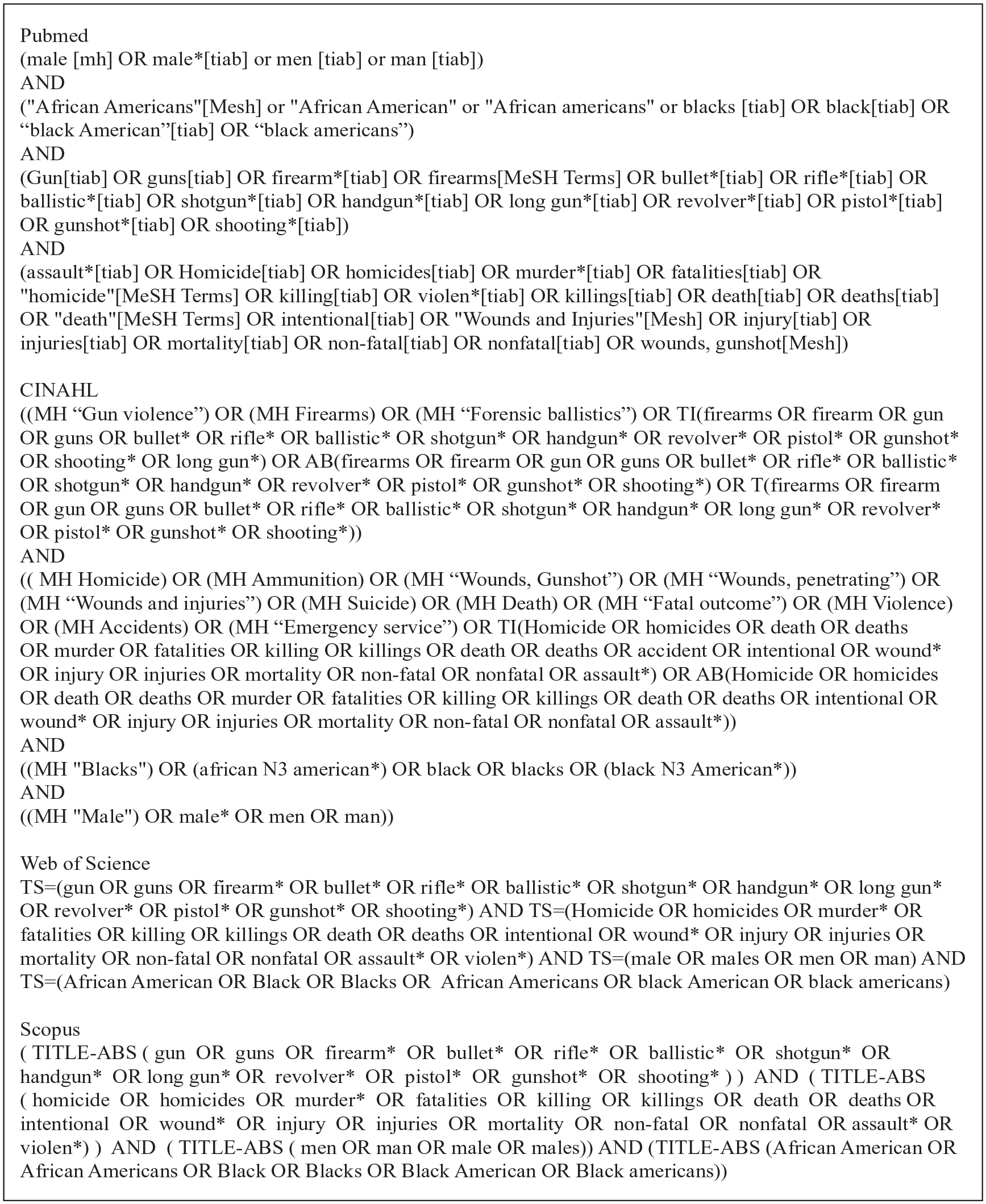
Boolean search algorithms used for PubMed, CINAHL, Web of Science, and Scopus.
Studies were eligible if they (a) included an analysis above and beyond descriptive epidemiology of modifiable risk or protective factors for firearm assault injury and/or firearm homicide among Black men; (b) were published articles in the peer review literature; (c) had a study sample including at least 35% Black men (similar to other reviews of research among Black men; Addison et al., 2022; Ezennia et al., 2019) (d) had firearm assault injury and/or firearm homicide as an outcome; and (e) used observational study designs. Studies were excluded if they (a) were not in English; (b.) were conducted outside of the United States; (c.) were non-original research articles, conference abstracts, editorials, dissertations, letters, commentaries, or reviews; (d) only investigated law enforcement shootings, self-inflicted firearm injury, unintentional firearm injury, or other forms of intentional injury (e.g., stabbings, blunt assault); (e) only included non-modifiable risk factors (e.g., race, gender, age); (f) focused exclusively on firearm-like weapons (e.g., air/pellet guns); (g) only focused on factors for gun carriage; (h) only included analysis of interventions, programs, or policies; (i) and used qualitative or mixed-methods study designs. We excluded experimental or quasi-experimental studies because studies employing these designs investigate the impact of interventions, programs, or policies on firearm violence and were interested in identifying risk and protective factors that can be targeted in interventions, programs, or policies.
Title and abstract review and full-text review were independently completed by two authors (LM and MU) using the established inclusion and exclusion criteria. Discrepancies were resolved by a third author (NI). Data from the final articles remaining after full-text review were extracted by following a standardized template. The template included publication characteristics (e.g., year of publication, citation), study design, population sample and study setting, confounders/covariates, outcome measures, numerical estimates of correlation, association, or effect between identified risk or protective factors and firearm assault injuries and/or firearm homicide, social-ecological model level, and limitations. Data extraction was independently completed by at least two authors (LM, MU, or NI) on all the selected articles. Methodological quality appraisal for the final articles was determined using the Guide to Community Preventive Services: Systematic Reviews and Evidence-Based Methods scoring tool (Zaza et al., 2000). Quality assessments were independently completed on all the final articles by two authors (LM and MU).
Results
A total of 1,122 articles were identified through the database search. Duplicate articles were removed leaving 740 articles. In all, 606 articles were found to be irrelevant during the title and abstract review, and 121 of the full-text articles were excluded using the inclusion and exclusion criteria above, leaving 19 articles for review and synthesis (Figure 2).
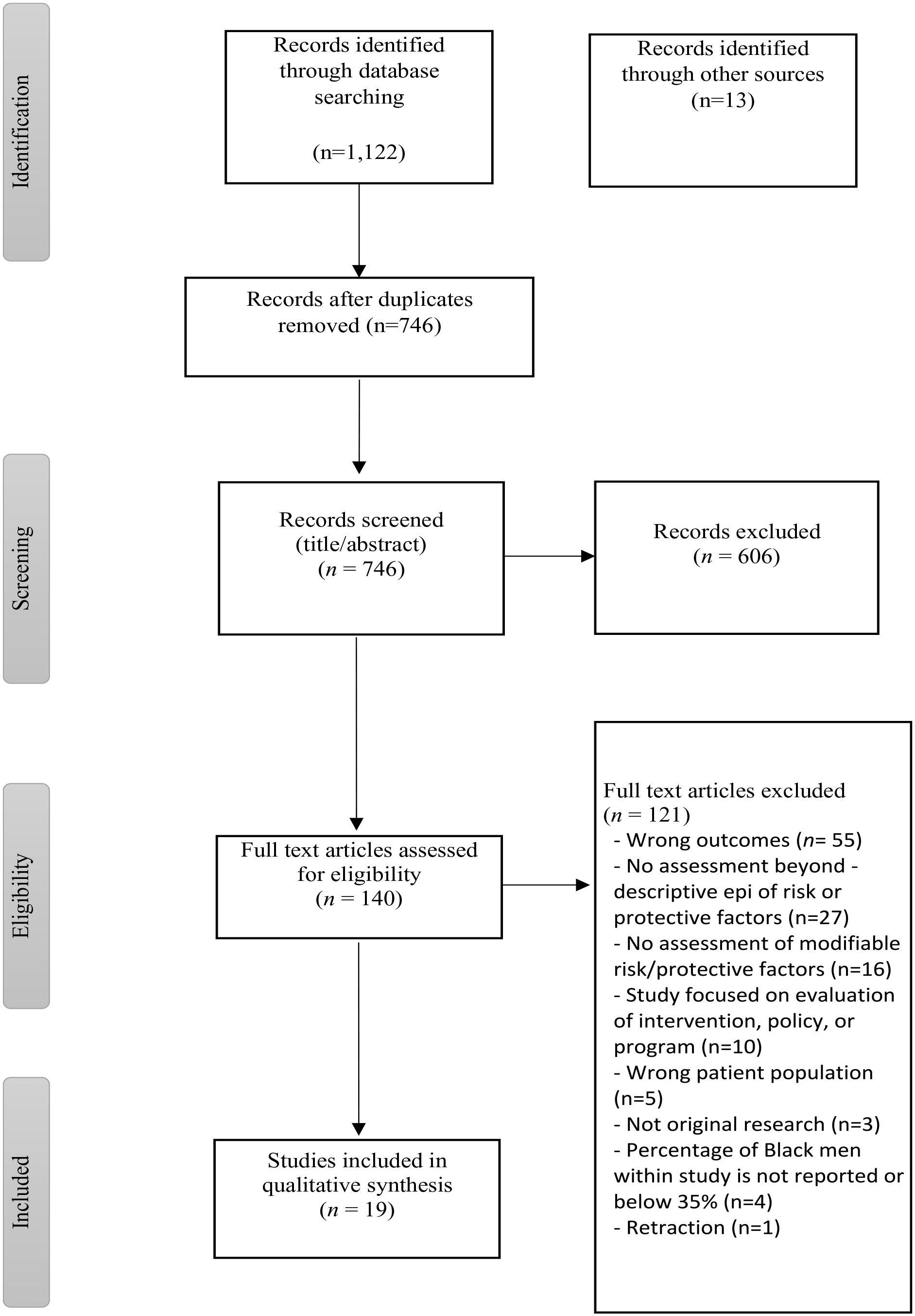
PRISMA flow diagram.
Study Characteristics and Methodology
The reviewed articles were published between 2002 and 2021. A summary of the characteristics and findings of the included articles are shown in Tables 1 to 5. Most studies’ (79%) samples included adolescents and young adults. One article used a multistate sample (Kongkaewpaisan et al., 2020) and three articles used a statewide sample (Formica et al., 2019; Goin et al., 2018; Lovelady et al., 2022; Pear et al., 2020). The remaining 15 articles were isolated to one site (e.g., hospital) or city in an urban area. One study’s outcome was not firearm assault and/or homicide but repeat assault-related injury (e.g., firearm, stabbing, and blunt force assaults). This study was included in this review because the majority (67%) of the study sample experienced a firearm assault and thus was important to include (Richardson et al., 2016). Another study had all firearm injuries as an outcome; however, 53% of these injuries were assault-related therefore we also included it in the review (Paris et al., 2002).
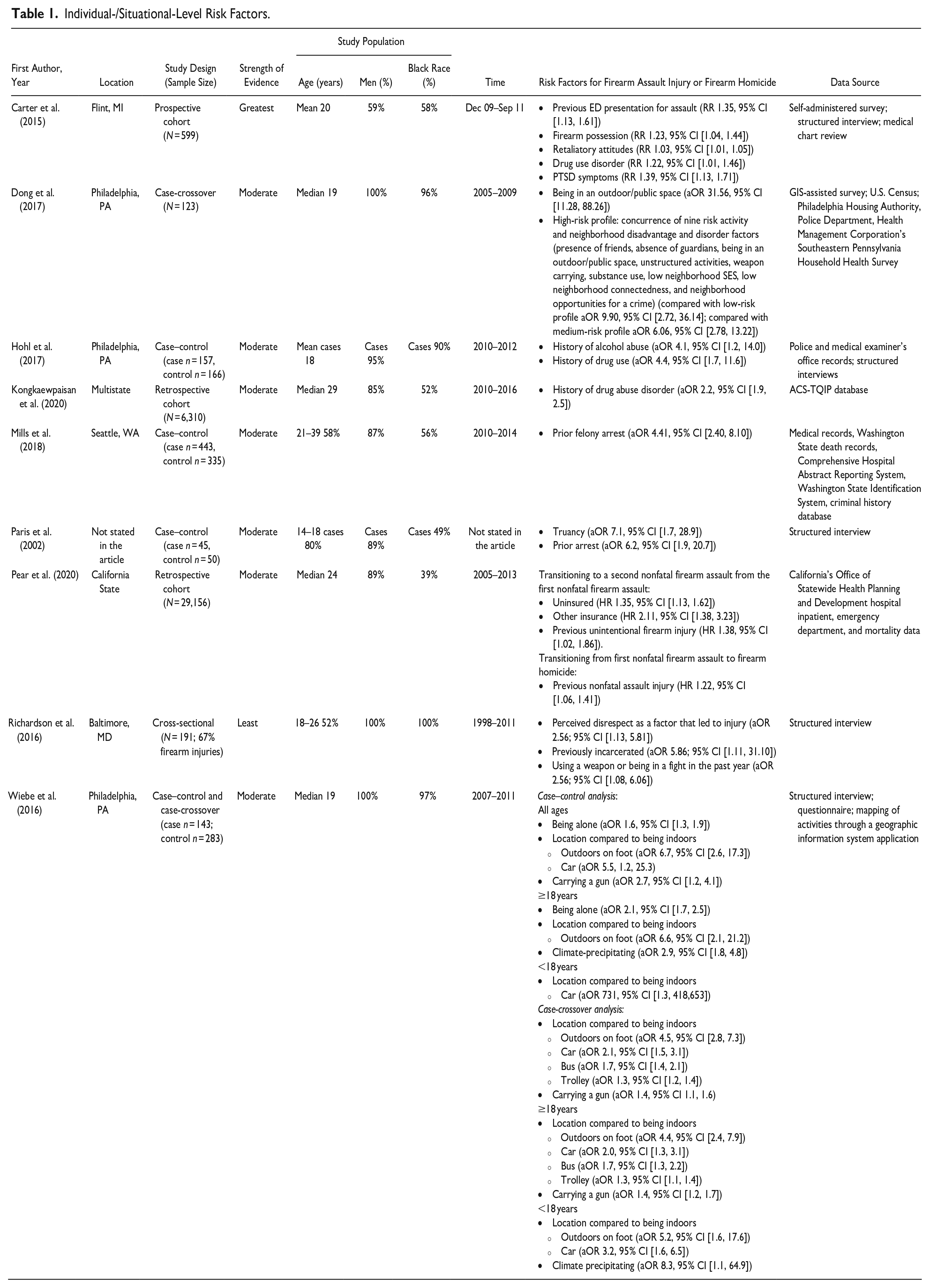
Individual-/Situational-Level Risk Factors.
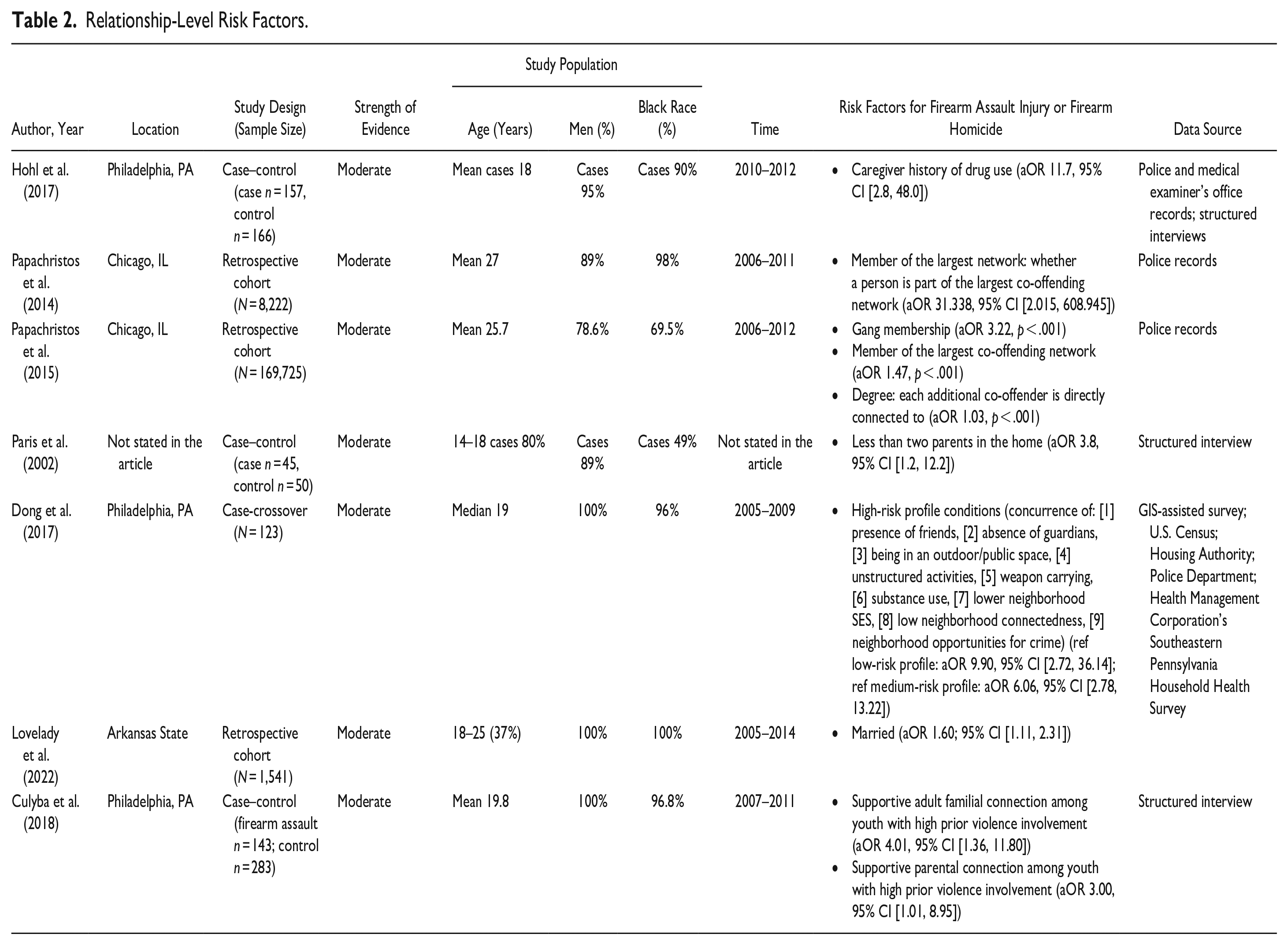
Relationship-Level Risk Factors.
Community-Level Risk Factors.
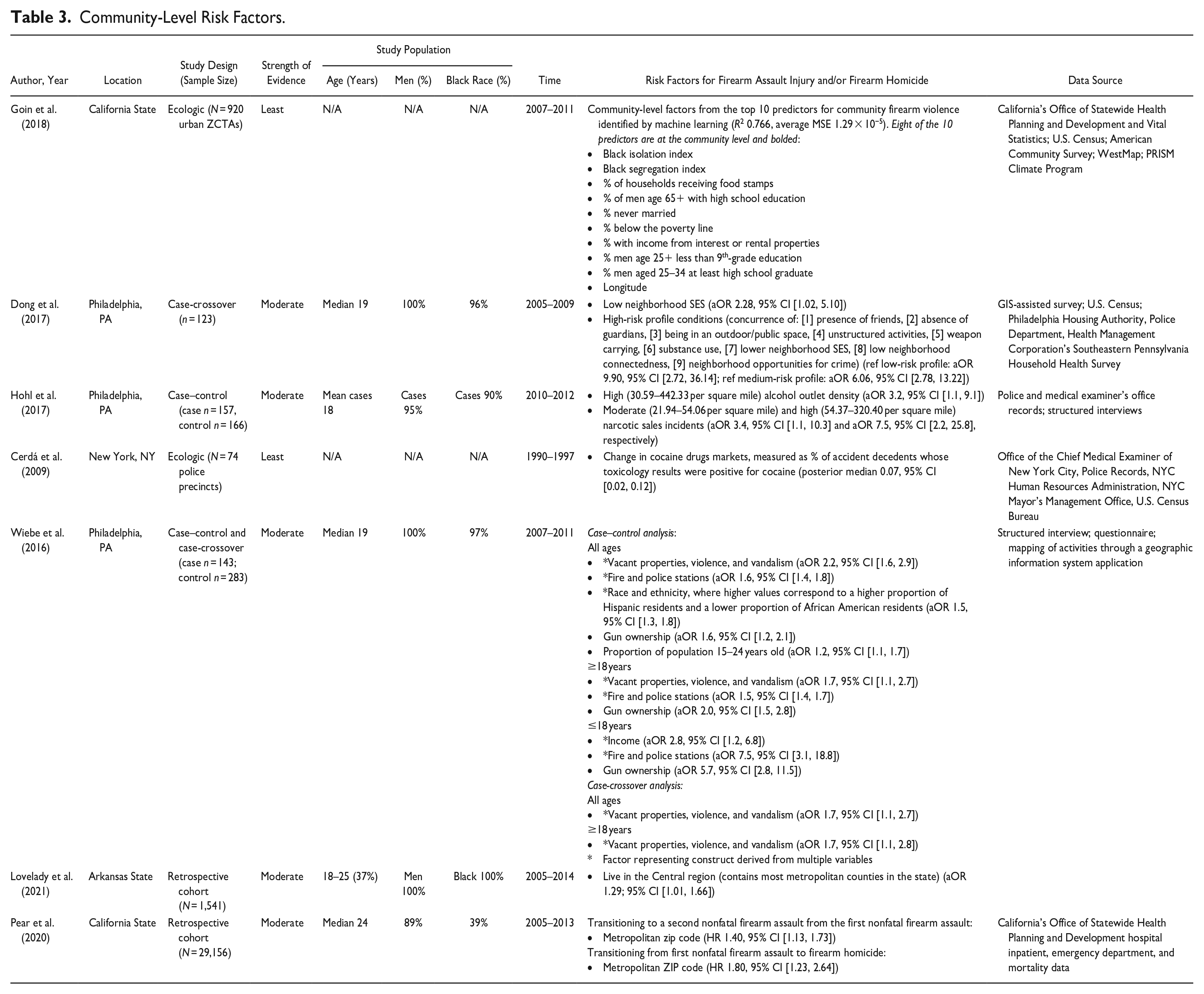
Societal-Level Risk Factors.
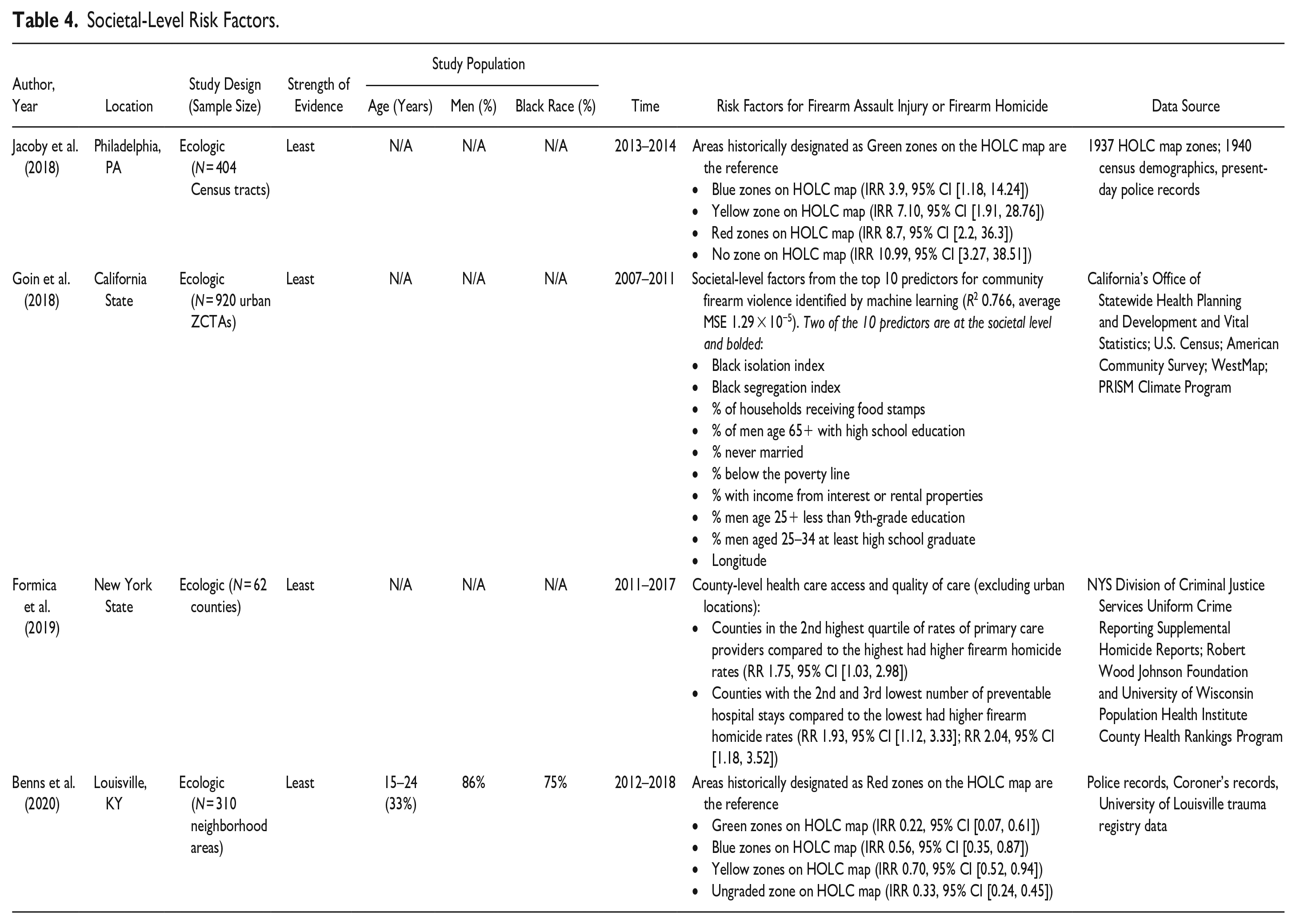
Protective Factors at All Ecological Levels.
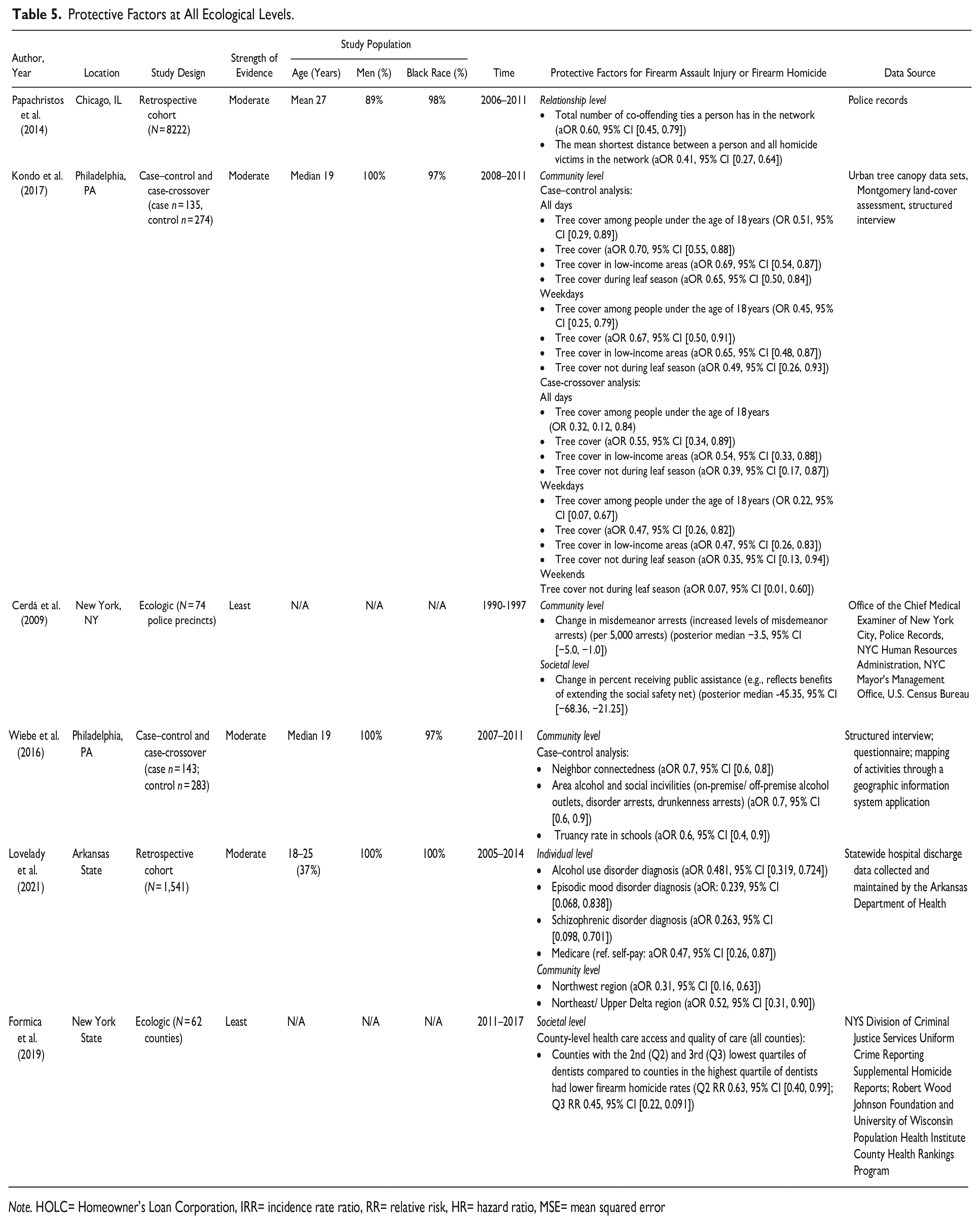
Note. HOLC= Homeowner’s Loan Corporation, IRR= incidence rate ratio, RR= relative risk, HR= hazard ratio, MSE= mean squared error
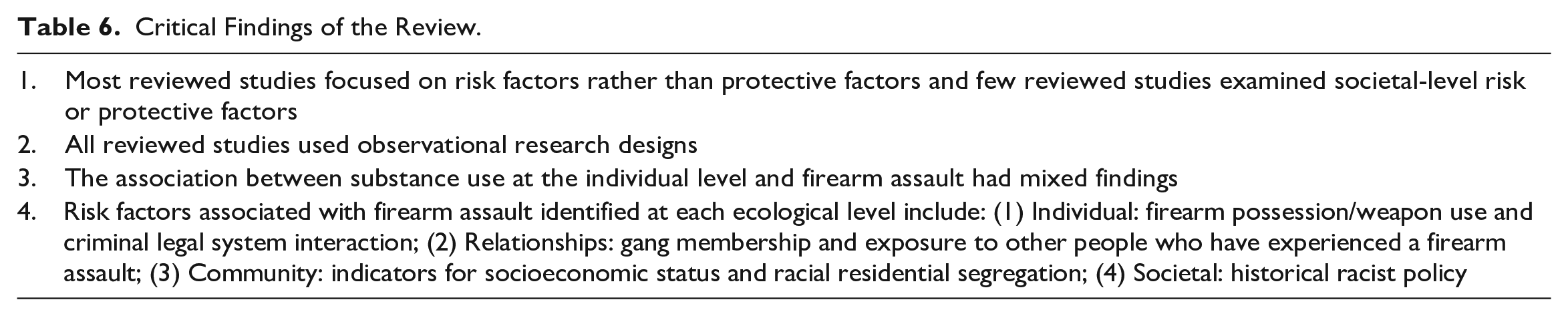
Critical Findings of the Review.
Implications for Practice, Policy, and Research.

Quality of Included Studies
Results of the quality appraisal using the Guide to Community Preventive Services: Systematic Reviews and Evidence-Based Methods scoring tool are detailed in Appendix A (Zaza et al., 2000). The strength of the study design was rated based on the following criteria: prospective cohort studies had the “greatest” strength, case–control and retrospective cohort studies had “moderate” strength, and cross-sectional and ecologic study designs had the “least” strength. The quality of the study was determined by the number of threats to validity. Threats to validity assessed were as follows: selection bias, measurement bias, misclassification bias, analytic bias, attrition bias, and confounding (Zaza et al., 2000). A score of zero to one threat to validity was considered “good” quality, scores of two to four threats to validity were considered “fair” quality, and scores of five or more threats to validity were considered “limited” quality. All studies in this review only included quantitative analyses, there were no qualitative or mixed-methods designs.
Only one (5%) study was considered to have the “greatest” strength study design, 11 studies (58%) were considered to have a “moderate” strength study design, and seven studies (37%) had the “least” strength study design. Most studies (58%) had two threats to validity. Among all the studies, the most common threats to validity were the population that served as the unit of analysis was not the entire eligible population or a probability sample at the point of observation (n = 14, 74%) and there were other selection bias issues not otherwise addressed including bias resulting from self-reported data (e.g., recall bias, social desirability bias) and nonparticipation bias (n = 13, 68%).
Risk Factors
Individual/Situational Level
Nine (47%) of the studies examined risk factors for firearm assault injury or firearm homicide at the individual/ situational level.
History of substance use (alcohol and other drug use) was identified as a significant risk factor in three studies: (1) history of drug use (RR 1.22, 95% CI [1.01, 1.46]; aOR 2.2–4.4, 95% CI [1.7, 1.9], [2.5, 11.6]) (Carter et al., 2015; Hohl et al., 2017; Kongkaewpaisan et al., 2020), (2) history of alcohol abuse (aOR 4.1, 95% CI [1.2, 14.0]) (Hohl et al., 2017). These studies used greatest and moderate strength study designs and were fair to good quality (Carter et al., 2015; Hohl et al., 2017; Kongkaewpaisan et al., 2020). By contrast, one study with good quality and a moderate strength study design found a diagnosis of alcohol use disorder (identified using ICD-9 codes) to be protective against firearm assault (aOR 0.481, 95% CI [0.319, 0.724]) (Lovelady et al., 2022). Six studies examining the association between substance use and firearm assault did not find significance (Hohl et al., 2017; Mills et al., 2018; Paris et al., 2002; Pear et al., 2020; Richardson et al., 2016; Wiebe et al., 2016). Three of these studies examined alcohol or other drug use at the time of the firearm assault rather than a history of substance use or abuse (Hohl et al., 2017; Richardson et al., 2016; Wiebe et al., 2016), two examined substance use-related diagnoses retrieved from hospital-based data using International Classification of Diseases, Ninth Revision (ICD-9) codes (Mills et al., 2018; Pear et al., 2020), and one examined history of any drug use (Paris et al., 2002).
Three studies examined mental health symptoms as risk factors. Only one study found a significant association (PTSD symptoms: RR 1.31, 95% CI [1.13, 1.71]) (Carter et al., 2015). This study had the greatest strength in study design, fair quality, and measured PTSD using a validated instrument reflecting Diagnostic and Statistical Manual of Mental Disorders (DSM) diagnostic criterion (Carter et al., 2015). Two studies did not find a significant association between several mental health-related diagnoses (psychoses, depression/anxiety, impulse-control/conduct disorder, affective disorders, psychotic disorders, any mental health disorder) and firearm assault; however, mental health-related diagnoses were identified using ICD-9 codes from hospital-based data (Mills et al., 2018; Pear et al., 2020).
Two studies examined a previous injury as a risk factor for subsequent firearm assault (Carter et al., 2015; Pear et al., 2020). One study found previous emergency department (ED) presentation for any assault-related injury to be a risk factor for subsequent firearm violence (RR 1.35, 95% CI [1.13, 1.61]) (Carter et al., 2015). The other study found previous unintentional firearm-related injury as a risk factor for experiencing a second nonfatal firearm assault (HR 1.38, 95% CI [1.02, 1.86]) and a previous non-firearm assault as a risk factor for firearm homicide (HR 1.22, 95% CI [1.06, 1.41]) (Pear et al., 2020). Both studies had fair quality and used either a “greatest” or “moderate” strength study design (Carter et al., 2015; Pear et al., 2020).
Firearm possession or weapon use was examined in three studies and identified as a significant risk factor in all three studies (Carter et al., 2015; Richardson et al., 2016; Wiebe et al., 2016). All studies were of fair quality and ranged in study designs from “least” to “greatest” strength. One study examined past 6-month firearm possession (RR 1.23, 95% CI [1.04, 1.44]) (Carter et al., 2015), one examined using a weapon or being in a fight in the past year (aOR 2.56, 95% CI [1.08, 6.06]) (Richardson et al., 2016), and the third examined carrying a firearm at the time of the assault (aOR 1.4–2.7, 95% CI [1.1, 1.2], [1.6, 4.1]) (Wiebe et al., 2016).
Four studies examined criminal legal system interaction as a risk factor for firearm assault. Three studies with “least” to “moderate” strength study designs of good to fair quality had significant results (Mills et al., 2018; Paris et al., 2002; Richardson et al., 2016). One examined prior felony arrest (aOR 4.41, 95% CI [2.4, 8.1]) (Mills et al., 2018), the second examined any prior arrest (aOR 6.2, 95% CI [1.9, 20.7]) (Paris et al., 2002), and the third examined previous incarceration (aOR 5.86, 95% CI [1.11, 31.10]) (Richardson et al., 2016). Two studies did not find significant results (Carter et al., 2015; Mills et al., 2018). One measured criminal justice involvement (e.g., on probation or parole) (RR 1.17, 95% CI [0.98, 1.41]) (Carter et al., 2015), and the second measured misdemeanor arrests (aOR 1.51, 95% CI [0.94, 2.44]) (Mills et al., 2018). Skipping class (e.g., truancy) was examined in one study and found to be associated with firearm assault (aOR 7.1, 95% CI [1.7, 28.9]) (Paris et al., 2002). This study used a “moderate” strength study design and was of fair quality (3 threats to validity) (Paris et al., 2002).
Two studies examined a person’s location (e.g., outdoor/ public space) at the time of assault and climate as risk factors. Being in outdoor and public spaces at the time of the assault compared to being indoors (range aOR 1.3–31.56, 95% CI [1.1, 11.28], [1.4, 88.26]) (Dong et al., 2017; Wiebe et al., 2016) and being alone (aOR 1.6, 95% CI [1.3, 1.9]) (Wiebe et al., 2016) were significantly associated with an increased odds of experiencing a firearm assault. Climate (precipitation at the time of the event) was associated with firearm assault in a case–control analysis among people who were 18 years or older (aOR 2.9, 95% CI [1.8, 4.8]) and in a case-crossover analysis among people who were less than 18 years old (aOR 8.3, 95% CI [1.1, 64.9]) (Wiebe et al., 2016). Both studies used a “moderate” strength study design and had fair quality (Dong et al., 2017; Wiebe et al., 2016).
Self-reported participant attitudes were examined in two studies of fair quality that used “greatest” and “least” strength study designs. Surveys were administered by study-team members in both studies (Carter et al., 2015; Richardson et al., 2016). Carter et al. (2015) also used a self-administered survey. One study found self-reported retaliatory attitudes to be a risk factor for firearm violence (RR 1.03, 95% CI [1.01, 1.05]). Retaliatory attitudes were measured using a retaliatory subscale of children’s perceptions of environmental violence (Carter et al., 2015). The other study found perceived disrespect to be associated with a repeat assault-related injury (aOR 2.48, 95% CI [1.11, 5.56]). It is unclear how disrespect was measured in this study (Richardson et al., 2016).
Only two studies examined individual-level socioeconomic factors as risk factors for firearm assault. Being uninsured was associated with experiencing a second firearm assault after an initial firearm assault (HR 1.35, 95% CI [1.13, 1.62]) in a fair-quality study that used a “moderate” strength design (Pear et al., 2020). Being on public assistance (e.g., Temporary Assistance for Needy Families, SNAP food benefits, disability benefits, etc.) was not found to be associated with firearm violence (RR 0.93, 95% CI [0.79, 1.11]) (Carter et al., 2015).
Relationship Level
The relationship level consists of relationships (e.g., social networks, caregivers, family, friends) and circumstances surrounding these relationships that may increase the risk of experiencing firearm violence (e.g., caregiver substance use). Seven (37%) of the articles examined risk factors for firearm assault injury or firearm homicide at the relationship level.
Three studies with “moderate” strength study designs and fair quality examined factors around caregivers and/or supportive adults (Culyba et al., 2018; Hohl et al., 2017; Paris et al., 2002). Caregiver history of drug use (aOR 11.7, 95% CI [2.8, 48.0]) (Hohl et al., 2017), having less than two parents in the home (aOR 3.8, 95% CI [1.2, 12.2]) (Paris et al., 2002), supportive adult familial connections (≥1 supportive adult family member[s]) among youth with high prior violence involvement (aOR 4.01, 95% CI [1.36, 11.80]), and supportive parental connections (≥1 supportive adult parent[s]) among youth with high prior violence involvement (aOR 3.00, 95% CI [1.01, 8.95]) (Culyba et al., 2018) were found to be significant risk factors. Two of these studies also had nonsignificant factors. Caregiver history of frequent alcohol use (aOR 1.6, 95% CI [0.4, 6.3]) (Hohl et al., 2017), positive adult connections among youth with both low prior violence involvement and high prior violence involvement (aOR 0.92, 95% CI [0.34, 2.44]; aOR 2.46, 95% CI [0.81, 7.49] respectively), supportive adult familial connections among youth with low prior violence involvement (aOR 1.43, 95% CI [0.53, 3.86]), and supportive parental connections among youth with low violence involvement (aOR 1.19, 95% CI [0.46, 3.06]) (Culyba et al., 2018) were not found to be associated with firearm assault. One study with a “moderate” strength study design and good quality examined relationship status with significant others and found being married to be associated with increased odds of experiencing a firearm assault (aOR 1.60, 95% CI [1.11, 2.31]) (Lovelady et al., 2022).
Two studies using a “moderate” strength study design and of good to fair quality examined exposure to high-risk social networks (network of people who are co-offending: involved in a crime that leads to a co-arrest with at least one other person) as a risk factor for firearm assault and/or homicide measured by the spread of firearm injuries through the process of social contagion. Social contagion is “the extent to which one’s probability of victimization is related to direct and indirect exposure to gunshot victims in one’s social network” (Papachristos et al., 2015). These studies examined whether having more exposure to people who have experienced a firearm assault or homicide in one’s social network increased the probability of experiencing a firearm assault and/or homicide (Papachristos & Wildeman, 2014; Papachristos et al., 2015). Being a member of the largest co-offending network was found to be significantly associated with firearm homicide and firearm assault (aOR 31.338, 95% CI [2.015, 608.945] and aOR 1.54, p < .001 respectively). In addition, each additional co-offender is directly connected to was associated with a 3% increased odds of experiencing a firearm assault (aOR 1.03, p < .001) (Papachristos et al., 2015). Being a member of a gang was examined in one study and found to be significantly associated with firearm assault (aOR 3.22, p < 0.001) (Papachristos et al., 2015). Knowing someone who has been injured or killed by a firearm was examined in one study using a “moderate” strength design of fair quality and was not significantly associated with firearm assault. Regression results were not presented by the authors (Paris et al., 2002).
Community Level
Six (32%) studies examined risk factors at the community level. Four of these studies examined community-level factors related to population demographics (e.g., neighborhood poverty rates) and neighborhood disorder (e.g., crime rates, vacant properties, violence rates, access to alcohol outlets, and illicit drug markets). They ranged from good to fair quality and used “moderate” to “least” strength study designs. One study using a “moderate” strength study design with good quality found several community-level factors to be associated with firearm assault (Wiebe et al., 2016). In their case–control analysis among participants aged 10 to 24 years, five community-level factors were found to significantly increase the odds of firearm assault: (1) areas with more vacant properties, violence, and vandalism (aOR 2.2, 95% CI [1.6, 2.9]), (2) being in areas with fire and police stations (aOR 1.6, 95% CI [1.4, 1.8]), (3) race and ethnicity, where higher values correspond to a higher proportion of Hispanic residents and a lower proportion of African American residents (aOR 1.5, 95% CI [1.3, 1.8]), (4) neighborhood gun ownership (aOR 1.6, 95% CI [1.2, 2.1]), and (5) proportion of population aged 15 to 24 years old (aOR 1.2, 95% CI [1.1, 1.7]) (Wiebe et al., 2016).
Two studies using “moderate” strength study designs with “good” and “fair” quality found living in a metropolitan area to be associated with increased risk for firearm assault and firearm homicide (aOR 1.29, 95% CI [1.01, 1.6]; HR 1.80, 95% CI [1.23, 2.64]) (Lovelady et al., 2022; Pear et al., 2020). Low neighborhood socioeconomic status (SES) was also significantly associated with firearm assault (aOR 2.28, 95% CI [1.02, 5.10]) (Dong et al., 2017).
Two studies using “moderate” and “least” study designs with good quality examined risk factors related to community availability and access to alcohol and/or drugs (Cerdá et al., 2009; Hohl et al., 2017). One study found high alcohol outlet density (30.59–442.33 per sq. mile) compared to low alcohol outlet density (0–16.96 per sq. mile) (aOR 3.2, 95% CI [1.1, 9.1]) and moderate (21.94–54.06 per sq. mile) and high (54.37–320.40 per sq. mile) narcotic sales incidents compared to low sales (0–21.93 per sq. mile) (aOR 3.4, 95% CI [1.1, 10.3]; aOR 7.5, 95% CI [2.2, 25.8] respectively) to be associated with an increased odds of firearm homicide (Hohl et al., 2017). Moderate alcohol outlet density (aOR 1.4, 95% CI [0.6, 3.5]), visible bars and taverns (aOR 5.2, 95% CI [0.8, 33.5]), visible beer stores and corner stores (aOR 1.1, 95% CI [0.5, 2.4]), and visible alcohol advertisements (aOR 2.2, 95% CI [0.8, 5.6]) were not associated with firearm assault (Hohl et al., 2017). The other study found a change in the cocaine drug market, measured by the annual change in the percent of accident decedents with positive cocaine toxicology, to be a risk factor for firearm homicide (posterior median 0.07, 95% CI [0.02, 0.12]) (Cerdá et al., 2009).
Societal Level
Three studies (16%) examined risk factors at the societal level. They all had “least” strength study designs and their quality ranged from fair to good. Two studies conducted in Philadelphia, PA and Louisville, KY, respectively, examined the association between historical structural racism, and current-day firearm assault using residential security maps—commonly known as redlining maps—from the government agency the Homeowner’s Loan Corporation (HOLC) (Benns et al., 2020; Jacoby et al., 2018). These redlining maps were created in the 1930s and “spatially marked” neighborhoods based on perceptions of their desirability of investment. Moreover, these maps were part of a concerted effort to enforce place-based discrimination across the United States that was used to determine the risk of lending for home loans. Neighborhoods considered to be lowest risk were colored in green and those considered to be highest risk were colored in red. Neighborhoods with large populations of marginalized people—including Black Americans—were usually designated as “redlined” neighborhoods (Rothstein, 2017). One study used historically designated green zones as the reference and found historically designated red zones to be associated with more than an eightfold greater incidence of firearm violence (Jacoby et al., 2018). The other used red zones as the reference group and found green zones to have less incidence of firearm assaults (IRR 0.22, 95% CI [0.07, 0.61]) (Benns et al., 2020).
One study identified factors related to county-level healthcare access and quality of care (Formica et al., 2019). In a subsample analysis excluding urban locations (only including suburban and rural counties), counties with lower rates of primary care providers compared to counties with the highest rates of primary care providers had higher firearm homicide rates (RR 1.75, 95% CI [1.03, 2.98]). Counties with higher numbers of preventable hospital stays compared to counties with the lowest number also had higher firearm homicide rates (RR 1.93, 95% CI [1.12, 3.33]; RR 2.04, 95% CI [1.18, 3.52], respectively) (Formica et al., 2019). The subsample analysis (excluding urban locations) was performed because healthcare providers are concentrated in urban areas, potentially confounding the relationship between healthcare access and firearm homicide. In the model including the entire sample (rural, suburban, and rural counties), no significant associations were found for primary care providers or preventable hospital stays (Formica et al., 2019).
Composite of Risk Factors
Two (10.5%) studies examined a composite of risk factors. When combined and examined together, the factors increased the risk of firearm assault and/or homicide. They used “moderate” and “least” strength study designs and were fair quality (Dong et al., 2017; Goin et al., 2018). Goin et al. (2018) identified the top 10 risk factors for firearm violence using machine learning from a set of publicly available variables. These factors included indicators for structural racism and neighborhood poverty and education, and together they predicted 76.6% of the variation in firearm violence (Goin et al., 2018). Eight of the ten factors identified were at the community level and two were at the societal level. (1) Black isolation index, (2) Black segregation index, (3) percent of households receiving food stamps, (4) present of men age 65+ with high school education, (5) percent never married, (6) percent below the poverty line, (7) percent with income from interested or rental properties, (8) percent of men age 25+ with less than ninth-grade education, (9) men age 25 to 34 with at least high school graduation, and (10) longitude (Goin et al., 2018). Longitude was a nonspecific proxy for other place-based characteristics that could not be included in the analysis because they were not publicly available. The authors hypothesized these characteristics might include variations in housing policy, social norms, police presence, or social cohesion (Goin et al., 2018).
Dong et al. (2017) created three risk profiles using latent class analysis and found the high-risk profile condition to be associated with increased odds for firearm assault when compared to the low-risk and medium-risk profiles (compared with low-risk profile aOR 9.90, 95% CI [2.72, 36.14]; compared with medium-risk profile aOR 6.06, 95% CI [2.78, 13.22]). The high-risk profile includes the concurrence of nine risk activities and neighborhood disadvantage and disorder factors present at the time of the assault: (1) presence of friends, (2) absence of guardians, (3) being in an outdoor/public space, (4) unstructured activities, (5) weapon carrying, (6) substance use, (7) low neighborhood SES, (8) low neighborhood connectedness, and (9) neighborhood opportunities for crime (Dong et al., 2017). Most of the factors examined were different in these studies, except for indicators for neighborhood poverty.
Protective Factors
Five (26%) studies identified protective factors for firearm assault and/or homicide. Some factors were hypothesized to be protective, and some factors were hypothesized to be risk factors but found to be associated with decreased firearm assault and/or homicide.
Individual Level
Only one study using a “moderate” strength study design with good quality found individual-level factors to be associated with a decreased risk for firearm assault. Alcohol use diagnosis (aOR 0.481, 95% CI [0.319, 0.724]), episodic mood disorder diagnosis (aOR 0.239, 95% CI [0.068, 0.838]), schizophrenic disorder diagnosis (aOR 0.263, 95% CI [0.098, 0.701]), and Medicare compared to self-pay (aOR 0.47, 95% CI [0.26, 0.87]) were associated with a decreased odds for firearm assault (Lovelady et al., 2022).
Relationship Level
Only one study using a “moderate” strength study design with good quality identified relationship-level factors to be associated with a decreased risk for firearm homicide. Being involved with a greater number of co-offenders decreased the odds of experiencing a firearm homicide (OR 0.60, 95% CI [0.45, 0.79]) after adjusting for neighborhood fixed effects. The authors hypothesized this occurred because people with a greater number of arrests with co-offenders are more likely to have experienced incarceration, temporarily removing them from the risky networks during the study’s observation period (Papachristos & Wildeman, 2014).
Each social tie removed from a person who died by firearm homicide also decreased one’s odds of becoming a firearm homicide victim after adjusting for neighborhood fixed effects (OR 0.42, 95% CI [0.27, 0.65]) (Papachristos & Wildeman, 2014). In other words, the further away a person is from a homicide victim, the lower their risk of becoming a homicide victim (Papachristos & Wildeman, 2014).
Community Level
Four studies using “least” to “moderate” strength study designs of fair to good quality found community-level factors to be associated with decreased firearm assault and/or homicide (Cerdá et al., 2009; Kondo et al., 2017; Lovelady et al., 2022; Wiebe et al., 2016). One study examined tree cover and found it to be protective of firearm assault broadly and in several different settings (e.g., in low-income areas, during and not during leaf season, among people under 18 years) in both case–control and case-crossover analyses (Kondo et al., 2017).
As expected, being in an area with higher neighbor connectedness was associated with decreased odds of firearm assault (aOR 0.7, 95% CI [0.6, 0.8]) (Wiebe et al., 2016). Being in areas with higher truancy (aOR 0.6, 95% CI [0.4, 0.9]) and areas with higher alcohol and social incivilities (areas with higher on-premise and off-premise alcohol outlets, disorder arrests, and drunkenness arrests) (aOR 0.7, 95% CI [0.6, 0.9]) were also associated with reduced odds of experiencing a firearm assault (Wiebe et al., 2016). All these results are from case–control analyses, and the authors noted the results did not account for the possibility that cases and controls experienced varying levels of exposure during their daily activities. Considerable variability was also found in additional analyses between the groups (Wiebe et al., 2016). Another study found an increased level of misdemeanor arrests (per 5,000 arrests) to be associated with a small decrease in firearm homicide (−3.5 per 100,000 population, 95% CI [−5.0, −1.0]); however, felony arrest rates had no significant effect (−0.002 per 100,000 population, 95% CI [−0.003, 0.000]) (Cerdá et al., 2009). The authors explain that neighborhood collective efficacy may play a role in this finding. Neighborhoods that have more community member engagement and mobilization may also have higher policing (Cerdá et al., 2009).
Societal Level
Only two studies identified societal-level factors that were associated with decreased firearm homicide. One study examined public assistance and found increases in the percentage of residents receiving public assistance were associated with a decrease in firearm homicides (−45.35, 95% CI [−68.36, −21.25]) (Cerdá et al., 2009). The other study examined county-level healthcare access among New York counties and found counties with less dentists had lower firearm homicide rates compared to counties with the highest number of dentists (2nd lowest quartile RR 0.63, 95% CI [0.40, 0.99], 3rd lowest quartile RR 0.45, 95% CI [0.22, 0.091]) (Formica et al., 2019). The authors also examined this relationship among a subsample that excluded urban locations and the associations became nonsignificant (2nd lowest quartile RR 0.92, 95% CI [0.49, 1.73], 3rd lowest quartile RR 0.58 95% CI [0.27, 1.28]) (Formica et al., 2019). The authors note there may be a protective association in counties with fewer dentists in the full sample that includes urban areas because healthcare providers are often concentrated in urban areas, confounding the relationship between healthcare access and firearm homicide. Although they adjusted for the percent rural population in the full sample, residual confounding is likely present (Formica et al., 2019).
Discussion
The purpose of this review of research is to synthesize the existing research examining risk and protective factors for firearm assault injuries and/or firearm homicide among Black men using the social-ecological model. Of the nine (47%) studies that identify individual-level risk factors, firearm possession or weapon use and interaction with the criminal legal system are consistently found to be risk factors. The profound discrimination experienced by Black men throughout the criminal legal system is well documented (Committee on Revision of the Penal Code, 2021; Klein et al., 2023; Palamar et al., 2015; Pierson et al., 2020). Potential mechanisms that explain the association between criminal legal system involvement and firearm assault are the intersection between reentry into society after incarceration and housing instability, barriers to employment, and limited educational opportunities (Geller & Curtis, 2011; Holzer et al., 2005; Richardson et al., 2016). Housing instability is associated with multiple adverse outcomes including experiencing violence (Freedman & Owens, 2011; Geller & Curtis, 2011). Having a criminal record significantly limits opportunities for housing, employment, and education including access to financial aid (Blankenship et al., 2018; Geller & Curtis, 2011; Holzer et al., 2005), which can lead to reliance on participation in underground markets for survival, increasing risk for violence.
There are mixed findings around individual-level substance use. Nine studies examined substance use as a risk factor. Three studies using designs ranging in strength and quality found the history of drug or alcohol used to be a significant risk factor. Among the six studies that did not find substance use as a significant risk factor, there was only one that also examined a history of drug use (Paris et al., 2002). The remaining studies measured substance use differently. Three measured substance use at the time of the injury and two defined substance use as a diagnosis (ICD-9 code) from hospital-based data. Using diagnosis codes to define substance use has limitations. Underdiagnosis of alcohol use disorders and substance use disorders have been documented when relying on diagnosis codes (compared to survey-based prevalence rates) (Williams et al., 2022). Barriers to accessing substance use treatment may also translate to disengagement in the healthcare system, leading to underdiagnosis. Also, people with more resources may be more likely to have a formal diagnosis (documented ICD-9 or -10 code) due to decreased barriers to receiving care. This may explain why one study that examined substance use-related diagnoses from hospital-based data found a protective effect (Lovelady et al., 2022).
Of the seven (37%) studies that identify risk factors at the relationships level, most of the factors examined are around caregiver relationships; however, none are consistently associated with firearm assault. Being in a gang and exposure to other people who have experienced a firearm assault are the most consistent factors associated with increased firearm assault. Six (32%) studies identify risk factors at the community level. Community-level indicators for SES (e.g., households receiving food stamps, household income, household education) and racial residential segregation are most consistently found to be predictors for firearm assault. This is not surprising. There is strong evidence demonstrating how multiple racial health disparities stem from structural racism and resulting inequities in social determinants (e.g., poverty, income inequality, inadequate housing, food insecurity) (Williams et al., 2019). There is also evidence demonstrating an increased risk for firearm assaults in communities with higher access to alcohol and illicit drug markets.
Three (16%) studies identify risk factors at the societal level. Several studies (53%, n = 10) examine factors at multiple ecological levels, and two studies (11%) create a composite of risk factors at multiple ecological levels. Among the societal-level risk factors, historical racist policy and practices reinforcing racial residential segregation (e.g., redlining) and decreased healthcare access are predictors for firearm assault. There is growing evidence demonstrating racial disparities and inequities in health stem from structural racism and other structural determinants like U.S. policy, practices, and colonial legacies (e.g., slavery, Jim Crow segregation, “redlining,” GI bill, mass incarceration) (Crear-Perry et al., 2021; Williams et al., 2019). Moreover, since data extraction was completed for this review, more studies have been published that demonstrate the association between historical racist policy (e.g., redlining) and firearm assault and homicide. These studies add to the research in this review by including multi-city analyses (Mehranbod et al., 2022; Spitzer et al., 2023), accounting for spatial non-stationarity (i.e., examining if the effect of historical redlining on firearm death differs across US cities) (Mehranbod et al., 2022) and demonstrating that the intersection of past and present structural racism—historical redlining and contemporary racialized economic segregation—is related to spatial racial disparities in nonfatal firearm assault (Uzzi et al., 2023).
Few studies (26%, n = 5) examine protective factors at any social-ecological level. Community-level factors are more consistently protective against firearm assault (e.g., neighborhood tree cover, neighbor connectedness), but there is inconsistency among many factors associated with decreased firearm assault.
Interestingly, the one study that examines associations between supportive adult connections and firearm violence does not find supportive adult connections to be protective, and in fact found no significant associations between adult connection and firearm violence among adolescents with low prior violence involvement and found increased odds of firearm violence in adolescents who had high prior violence involvement (Culyba et al., 2018). Positive adult connection was defined by the presence of at least one supportive adult family member and by the presence of at least one supportive parent in the family genogram created by the adolescent participant. The participants in this study were interviewed within 2 weeks of their firearm injury. Possible explanations for these results could be the acute nature of a serious injury may change the way the adolescent perceives or experiences adult connections (Culyba et al., 2018). Also, this study does not examine environmental and societal contextual factors, such as neighborhood disadvantage. High-quality, supportive adult connections may not be enough to mitigate firearm violence in a low-resourced neighborhood with multiple environmental risk factors for violence (Culyba et al., 2018).
All studies in this review were observational studies. By nature, observational studies cannot imply causation and confounding variables can sometimes make results difficult to interpret (Hulley et al., 2013). Good observational studies, however, can provide the formative information needed to develop future interventions. Only one study used a “greatest” strength study design, a prospective cohort study (Carter et al., 2015). Among the remaining studies, 11 (58 %) used a “moderate” strength design (e.g., case–control, retrospective cohort) and 7 (37%) used a “least” strength design (e.g., cross-sectional, ecologic). Most studies had few threats to validity (1–2) and their quality was rated “good” (37%, n = 7) or “fair” (63%, n = 12). More strong prospective cohort study designs are needed to examine factors associated with firearm assault injury among Black men. Although experimental study designs are considered the gold standard, they are generally unethical to perform when examining risk factors for violent injury outcomes because people cannot be randomized into groups that are exposed to the detrimental effect of firearm violence. However, experimental and quasi-experimental study designs can be used to examine interventions and policies that address and target salient risk and protective factors for firearm assault-related injuries among Black men.
There are inherent limitations with the terms we use to rate study quality using the quality appraisal tool. Studies using qualitative and mixed-methods research methodologies, and studies utilizing critical frameworks originating from researchers who are Black, Indigenous, and People of Color are not included in this review. This lack of inclusive research designs, methodologies, and frameworks provides a limited perspective and examination of factors associated with firearm assault among a population that is marginalized and often dehumanized in our society.
Conclusion
The available research on risk and protective factors for firearm injuries among Black men is limited. Most studies in this review focused on risk factors rather than the protective resilience, assets, and resources among Black men and their communities. In addition, most of the studies in this review focus on individual, relationships, and community-level factors, excluding societal-level factors. We know racial inequities in firearm violence stem from societal-level factors and will persist unless we intervene at the societal level. Interventions that only address individual, relationships, and community-level factors are merely creating “Band-Aid Solutions.” Future research needs to examine risk and protective factors at the societal level and multiple ecological levels (including societal) simultaneously. There is also a critical need for a greater diversity of study designs, methods (e.g., qualitative, mixed methods), and theoretical frameworks. This will lead to more effective multi-level interventions and will guide research-based policy formation.
Supplemental Material
sj-docx-1-tva-10.1177_15248380231217042 – Supplemental material for Risk and Protective Factors for Firearm Assault Injuries Among Black Men: A Scoping Review of Research
Supplemental material, sj-docx-1-tva-10.1177_15248380231217042 for Risk and Protective Factors for Firearm Assault Injuries Among Black Men: A Scoping Review of Research by Lea A. Marineau, Mudia Uzzi, Shani A. Buggs, Ngozi Ihenacho and Jacquelyn C. Campbell in Trauma, Violence, & Abuse
Supplemental Material
sj-docx-2-tva-10.1177_15248380231217042 – Supplemental material for Risk and Protective Factors for Firearm Assault Injuries Among Black Men: A Scoping Review of Research
Supplemental material, sj-docx-2-tva-10.1177_15248380231217042 for Risk and Protective Factors for Firearm Assault Injuries Among Black Men: A Scoping Review of Research by Lea A. Marineau, Mudia Uzzi, Shani A. Buggs, Ngozi Ihenacho and Jacquelyn C. Campbell in Trauma, Violence, & Abuse
Footnotes
Acknowledgements
We would like to thank Stella Seal, MLS for her contributions to this work.
Declaration of Conflicting Interests
The author(s) declared no potential conflicts of interest with respect to the research, authorship, and/or publication of this article.
Funding
The author(s) disclosed receipt of the following financial support for the research, authorship, and/or publication of this article: This work was supported by the National Institute On Drug Abuse of the National Institutes of Health under Award Number F31DA053029. The content is solely the responsibility of the authors and does not necessarily represent the official views of the National Institutes of Health.

Supplemental Material
Supplemental material for this article is available online.
Author Biographies
References
Supplementary Material
Please find the following supplemental material available below.
For Open Access articles published under a Creative Commons License, all supplemental material carries the same license as the article it is associated with.
For non-Open Access articles published, all supplemental material carries a non-exclusive license, and permission requests for re-use of supplemental material or any part of supplemental material shall be sent directly to the copyright owner as specified in the copyright notice associated with the article.
