



Abstract
Despite the benefits of classroom physical activity breaks on student health and academic outcomes, more research is needed to understand what factors may be associated with classroom physical activity break implementation, to bolster buy-in from school stakeholders and increase implementation. This quantitative study examined frequency of classroom physical activity break implementation in relation to (1) objectively measured teachers’ physical activity and sedentary behaviors, (2) confidence for leading classroom physical activity breaks, (3) social norms (perceptions of other teachers’ classroom physical activity break implementation), and (4) teacher- and school-level demographics. In total, 153 classroom teachers in 20 elementary and middle schools completed a survey including classroom physical activity break frequency, confidence, and social norms, one item each, dichotomized (1 = “most/all the time” OR “agree/strongly agree”). Accelerometry assessed total activity and daytime sedentary behavior. Analyses included multilevel binary logistic regression. Teachers were 90% female, 68% White, and 55% in elementary schools. Odds of implementing classroom physical activity breaks were lower among middle school teachers, 14 times greater among those with greater confidence, and over 17 times greater when teachers perceived others frequently implementing classroom physical activity breaks. Teacher activity was not associated with classroom physical activity break implementation. Future interventions to increase classroom physical activity break implementation should focus on increasing teachers’ confidence to lead classroom physical activity breaks and creating more buy-in from classroom teachers to enhance each school’s culture of health. By enhancing teacher confidence and social norms for implementing classroom physical activity breaks, we may increase school-based physical activity opportunities.
Keywords
Physical inactivity is associated with many adverse health outcomes, including increased risk for overweight and obesity, increases in stress/anxiety, and poor sleep behaviors (Carson et al., 2016; Piercy et al., 2018). The benefits of physical activity (PA) and consequences of sedentary (SED) behaviors are well documented for children and adolescents (Carson et al., 2016). In addition to reducing risk for childhood and adult obesity, PA has been shown to promote positive mental health and sleep behaviors (Piercy et al., 2018). Schools, where nearly all children spend more of their time than any other place and sit for more than 65% of the day (Waters et al., 2011), present an optimal environment to create opportunities for increasing PA. Furthermore, academic co-benefits of increasing PA during school have been demonstrated, with a meta-analysis showing benefits that include improving on-task behavior, reducing off-task behavior, and improving selective attention (Watson et al., 2017). School-based PA interventions are effective for changing practices in ways that benefit students (Mei et al., 2016; Wang et al., 2015); therefore, it is critical to identify approaches to provide opportunities for all children to increase PA and reduce SED behaviors.
One strategy for promoting PA in schools involves classroom PA (CPA) breaks, defined as “short bouts of PA performed as a break from academic instruction” (Watson et al., 2017). CPA breaks have been shown to increase minutes of PA as well as time on task, effort, and attention in elementary and middle school students (Carlson et al., 2015; Donnelly et al., 2017; Katz et al., 2010; Watson et al., 2017; Weaver et al., 2018). However, these breaks are only effective when implemented, and despite the existence of several online curricula that are readily adopted by schools, evidence suggests that they are not always implemented in classrooms (Carlson et al., 2017; Densley et al., 2021). More research is needed to understand what factors may be associated with teachers’ CPA break implementation, to bolster buy-in from school stakeholders (e.g., teachers, school wellness champions, administration) through the initial adoption process (Densley et al., 2021).
Based on the Social Ecological Model, which examines multiple levels of influence on health behaviors, various teacher- and school-level factors that may influence provision of CPA break implementation have been identified (Macdonald et al., 2021; Michael et al., 2019; Sallis et al., 2006). At the intrapersonal level, a study of barriers to general promotion of PA in schools found that teachers’ daily average moderate to vigorous PA (MVPA) levels were associated with increased PA promotion, whereas identifying as female, teaching at a middle school, and having an obese weight status were associated with less PA promotion (Pulling Kuhn et al., 2021). Furthermore, teachers’ confidence level related to implementing PA is a well-documented intrapersonal factor associated with teachers’ CPA break implementation (Abi Nader et al., 2018; Macdonald et al., 2021; Michael et al., 2019). One recent qualitative study examining teacher perceptions of implementing classroom PA breaks found that confidence levels for implementing classroom activity varied across teachers, and that many teachers requested additional ideas of how to increase classroom-based PA (Dinkel et al., 2017). Teachers may not feel comfortable implementing PA in the classroom if they are not familiar with practicing it in their own daily routine or do not feel that they have the adequate resources to implement activity on their own. At the interpersonal level, school-level barriers have also been identified, including lack of support from administration or a school culture that is not supportive of CPA break implementation (Michael et al., 2019). However, the extent to which perceived “social norms” or standards of behavior among teachers are related to CPA break implementation is understudied.
Purpose
This cross-sectional study builds on this existing literature to examine associations between teachers’ self-reported frequency of implementing CPA breaks and their (1) objectively measured PA and SED behaviors, (2) self-reported confidence for leading CPA breaks, (3) perceived social norms (e.g., perceptions of other teachers’ CPA break implementation), and (4) teacher- and school-level demographic factors. We hypothesized that implementing CPA breaks all or most of the time would be associated with (1) higher PA levels and lower SED behaviors by teachers, (2) higher confidence in the ability to lead activity breaks, and (3) increased perceptions that other teachers implement CPA breaks (norms). We also hypothesized that teacher-level factors (i.e., gender, education level, years of experience, and weight status) and school-level factors (i.e., school type and free and reduced meal services [FARMS] eligibility) would have associations with teachers’ frequency of CPA break implementation, such that the female gender, fewer years of experience, a non-healthy weight status, and teaching in a middle school would be negatively associated with CPA break implementation.
Method
Participants
Data collected from classroom teacher participants in the Wellness Champions for Change (WCC) study were used in this analysis (Lane, Driessen et al., 2018). Teachers were from 20 elementary and middle schools across four school systems/districts in a Mid-Atlantic state. WCC is a school-based cluster-randomized controlled trial examining the impact of training teachers and students to implement school wellness policies on student nutrition and PA behaviors. A description of teacher recruitment has been previously documented (Lane et al., 2018; Pulling Kuhn et al., 2021). A total of 465 teachers from 20 schools participated. After providing written informed consent, teachers were emailed an electronic survey (Qualtrics Version 2017.11, Provo, UT). Survey data on demographics and CPA break implementation were used for the current analyses. A subset of these teachers was offered the opportunity to wear an accelerometer to objectively measure PA, based on accelerometer inventory and presence at school on the day of accelerometer distribution. Of the 325 teachers who received an accelerometer, 172 taught special courses (e.g., music, art, resource) or were teaching assistants and were excluded from current analyses because they were not the primary teacher for a self-contained classroom; thus, the final sample size was 153 classroom teachers with both survey and accelerometer data. Compared with the 153 survey respondents who were excluded based on not being a generalist classroom teacher, classroom teachers in these analyses (n = 153) were more likely to be White (p < .001) and have a graduate degree (p<.001). IRB approval was granted by the university and school district IRBs in the four school systems/districts and written informed consent was obtained from teachers. Teachers received a $20 dollar gift card for participating.
Measures
Outcome Variable
Teacher CPA break implementation
Teacher CPA break implementation was assessed using an adapted version of the Perceptions of the Environment at School (PEAS) survey (Lane, Driessen, et al., 2018). The original version of the PEAS survey consists of 40 items that assess students’ perceptions of policies, physical environment, and practices related to healthy eating and PA at school, including one item focused specifically on implementing CPA breaks. For teachers, the question was slightly adapted (e.g., “My teacher gives students short breaks in class where they stand up or get out of their seats to move [like brain breaks or energizers]” to “I give my students short breaks in class where they stand up or get out of their seats to move [like brain breaks or energizers]”). Responses were on a 5-point Likert-type scale ranging from “1” (never) to “5” (always). For analyses, this variable was dichotomized so that “1” included responses of “most of the time” or “always” and “0” included responses of “never,” “rarely,” or “sometimes.” From here on, most of the time/always will be described as “frequently” and never/rarely/sometimes will be described as “infrequently” to examine CPA breaks implemented with consistency.
Predictor Variables
Teacher PA behaviors
Teachers wore an Actical accelerometer (Philips Respironics, Bend, OR, USA) to objectively measure PA. Acticals were placed on teachers’ nondominant ankle with a nonremovable, reinforced hospital band worn next to the skin under the sock (Hager et al., 2015). Acticals were attached on the first day of data collection and removed approximately 7 days later (collecting activity data in 24-hour periods). Accelerometer counts were collected in 15-s epochs. Actical software (Version 2.12) was used to download the accelerometer data and smoothed to 1-minute intervals. Data included average minutes of total PA, MVPA, and light PA (LPA) using thresholds validated among adolescents (Hager et al., 2015) and previously applied to adult populations (Hager et al., 2016). Daytime SED behavior was examined by extracting data between 7 am and 11 pm, as has previously been performed to examine daytime SED behavior (Van Cauwenberg et al., 2015).
Teacher confidence
Teacher confidence was assessed using a single item that read “I feel confident in my ability to lead activity breaks in my classroom” and was scored on a 5-point Likert-type scale ranging from 1 (strongly disagree) to 5 (strongly agree). For analyses, this variable was dichotomized so that agree/strongly agree was coded as “1” and strongly disagree/neutral/disagree was coded as “0.”
Teachers’ perceptions of social norms
Teachers’ perceptions of social norms were assessed using an adapted item from the PEAS survey that read “Other teachers at my school give their students short breaks in class where they stand up or get out of their seats to move [like brain breaks or energizers]” (Lane, Driessen, et al., 2018). Responses were on a 5-point Likert-type scale ranging from 1 (never) to 5 (always). As was done with the outcome variable, this variable was dichotomized so that most of the time/always (hereon, “frequently”) was coded as “1” and never/rarely/sometimes (hereon, “infrequently”) was coded as “0.”
Teacher-level demographics
As part of the electronic survey, teachers self-reported demographic variables including gender, race, level of education, and years of teaching experience. Teachers also self-reported height and weight, which was used to calculate body mass index (BMI, kg/m2). Thresholds for overweight (25 kg/m2) and obesity (30 kg/m2), based on Centers for Disease Control and Prevention (CDC) cutoffs, were applied (CDC, 2020).
School-Level Demographics
Demographic data for each school were collected from the National Center for Education Statistics (NCES) and included school type (i.e., elementary, middle), student eligibility for free and reduced-price meal services (FARMS), school urbanicity (i.e., rural, urban, and suburban), and school enrollment (small: 200–399; medium: 400–799; large: 800–1,199).
Statistical Analysis
Data were analyzed using SPSS Version 26. Descriptive analyses were performed for continuous variables by calculating means and standard deviations and for categorical variables by calculating frequencies. Bivariate analyses using mixed-effect models that accounted for school clustering determined associations between teachers’ CPA break implementation and daily average total PA, MVPA, LPA, daytime SED behavior, confidence, social norms, and each demographic covariate. For the main analyses, we examined total PA and daytime SED behavior by 60-minute increments to provide interpretable model coefficients (Kandola et al., 2020). Multilevel binary logistic regression models were run to assess associations between the dependent variable (teacher CPA break implementation) and independent variables (total PA, daytime SED behavior, confidence, social norms, and teacher- and school-level demographic factors), with a random intercept at the school level to account for clustering of teachers within each school (Radenbush, 2002). The first model included teacher-level variables at Level 1 (total PA, daytime SED behavior, confidence, social norms, gender, race, education level, years of experience, and weight status), whereas the second model also included school-level covariates at Level 2 (school type, urbanicity, FARMS eligibility, and enrollment). Both models controlled for the number of days the accelerometer was worn.
Results
Table 1 presents teacher and school characteristics. Of the 153 participants, the majority were female (91%), identified as White (68%), and had either a masters or doctoral degree (71%). Most teachers had between 11 and 20 years of experience (39%), and most were classified as either overweight (28%) or obese (44%) based on self-reported height and weight. Of the 20 schools, 11 were elementary, 13 had <75% FARMS eligibility, 11 were located in suburban areas, and 15 had a school enrollment of 400–799.
Descriptive Characteristics (N/%)
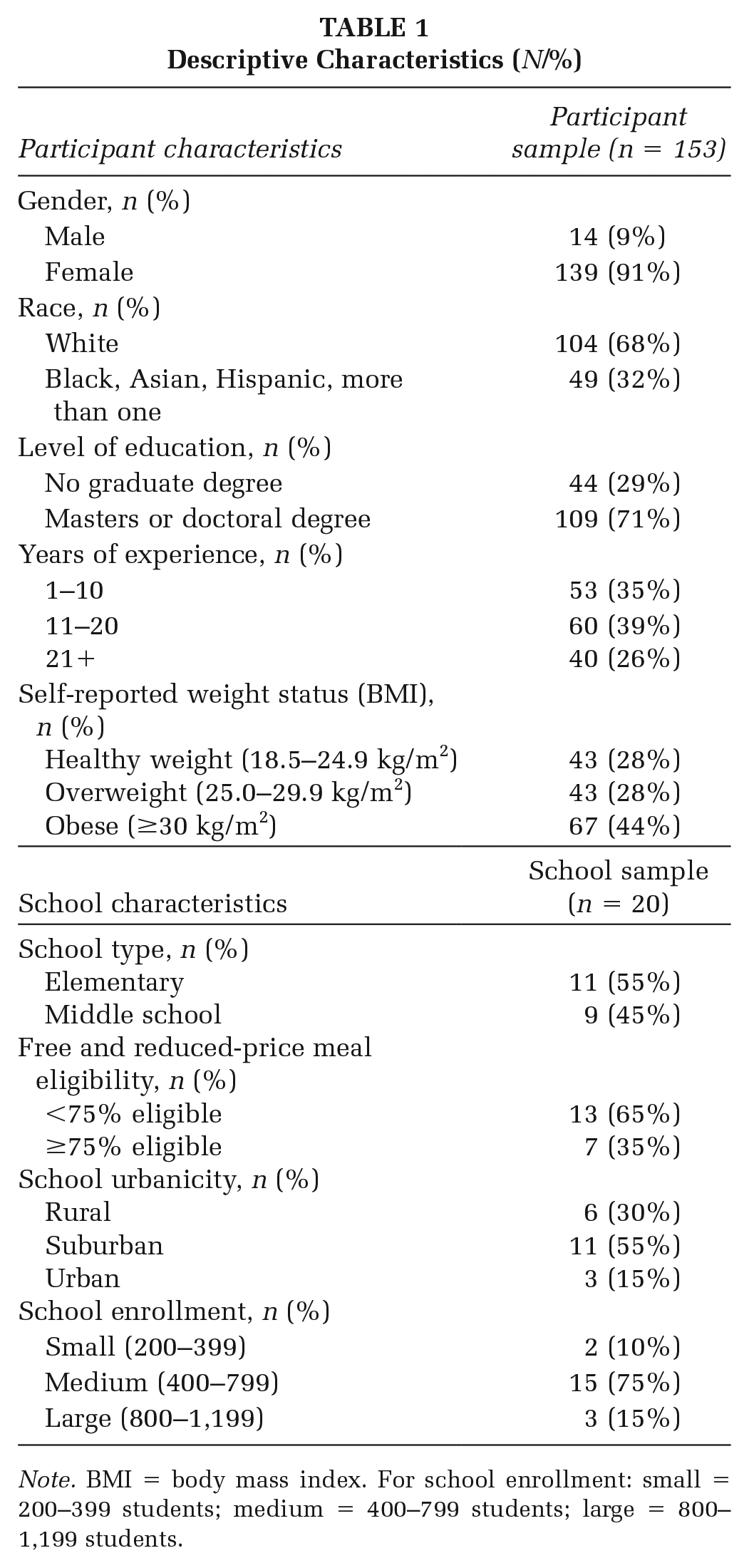
Note. BMI = body mass index. For school enrollment: small = 200–399 students; medium = 400–799 students; large = 800–1,199 students.
Total PA, LPA, MVPA, and SED behavior had skewness and kurtosis values within ±1 indicating approximately normal distributions. Teachers’ daily time in total PA averaged 6.95 hours (SD = 1.39; range = 3.41–11.2), daily MVPA averaged 23.30 minutes (SD = 13.60; range = 1–57), daily light PA averaged 6.57 hours (SD = 1.32; range = 3.38–10.60), and daytime SED behavior averaged 9.77 hours (SD = 1.25; range = 6.72–13.38). The intraclass correlation coefficient of PA break provided by the teachers within each school was estimated as .25.
Table 2 shows percentage of dichotomized responses for each survey item. Almost half of teachers reported giving students CPA breaks frequently (47%). Most teachers agreed or strongly agreed that they felt confident in their ability to lead activity breaks in the classroom (80%). Most teachers (74%) reported perceiving that other teachers at their school infrequently gave students CPA breaks.
Frequencies (%) of Dichotomized CPA Break Implementation, Confidence, and Social Norms Reported by Teachers
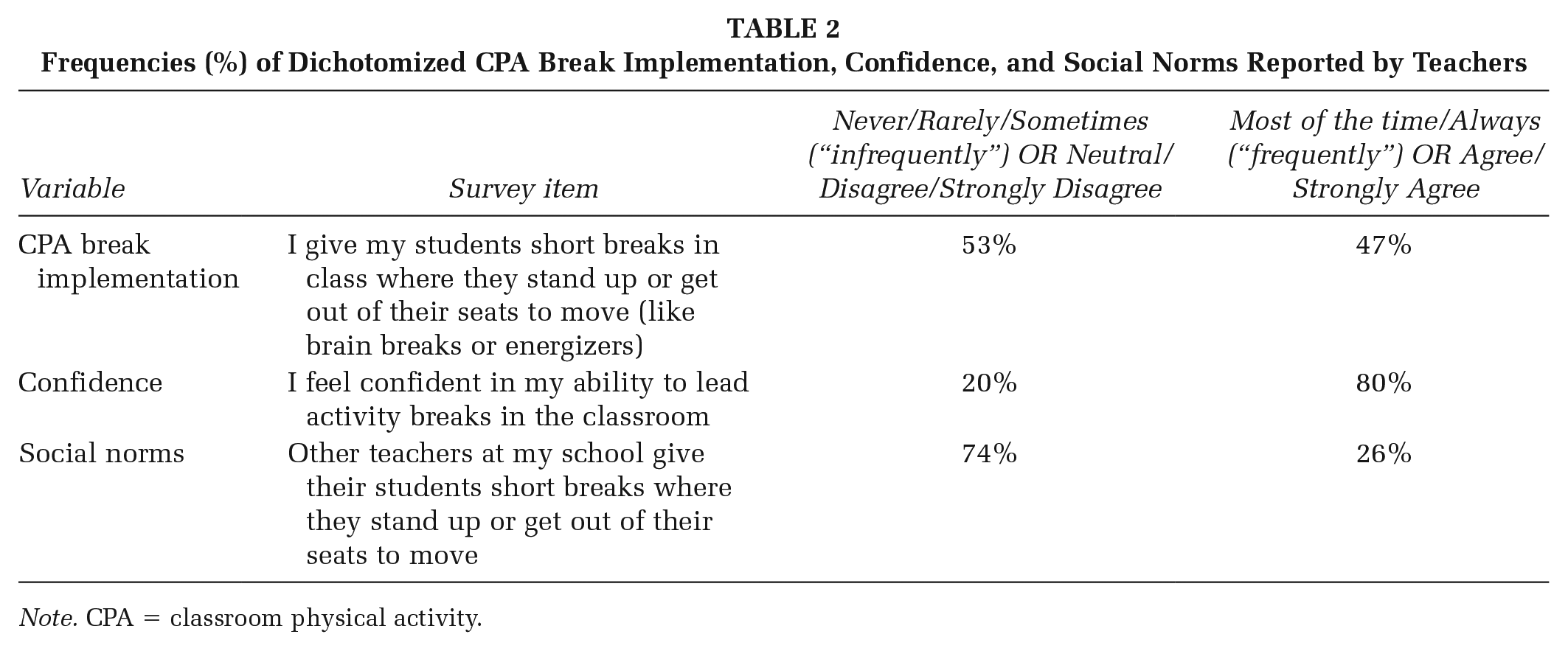
Note. CPA = classroom physical activity.
Table 3 shows results of the bivariate analyses, accounting for clustering within schools for differences in CPA break implementation by demographic variables. The number of teachers who reported providing CPA breaks frequently was higher among teachers who agreed or strongly agreed that they felt confident in their ability to lead activity breaks (p = .042), and among teachers in elementary schools (p = .001). The number of teachers who reported providing CPA breaks infrequently was higher among those who also perceived other teachers to infrequently provide students with CPA breaks (p = .010). Teacher total PA, MVPA, LPA, daytime SED behavior, gender, race, education level, years of experience, weight status, and school urbanicity, FARMS, and enrollment showed no associations with teachers’ reported frequency of CPA break implementation.
Bivariate Analysis by Self-Reported CPA Break Implementation With MVPA, LPA, and Sedentary Behavior in Minutes
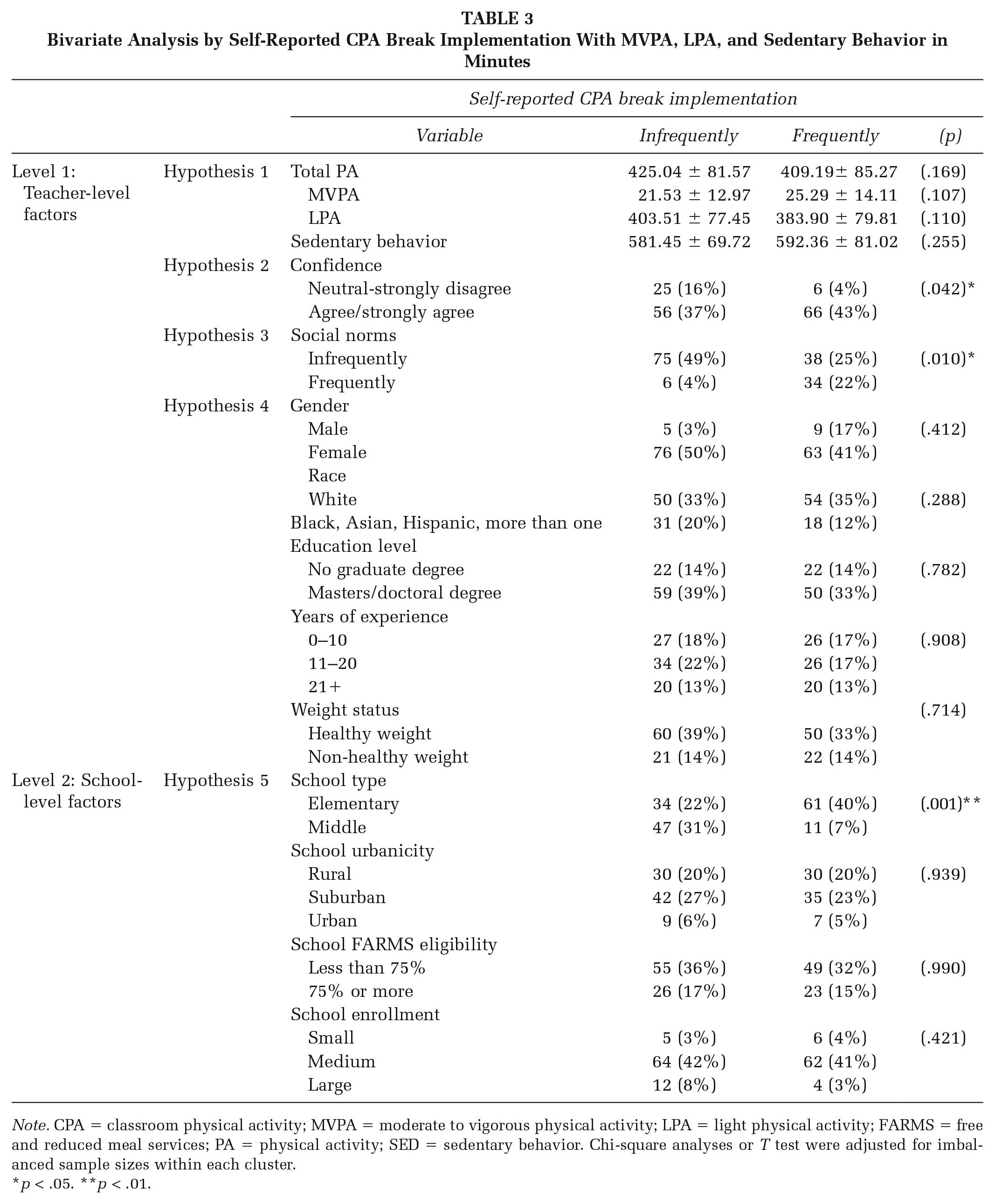
Note. CPA = classroom physical activity; MVPA = moderate to vigorous physical activity; LPA = light physical activity; FARMS = free and reduced meal services; PA = physical activity; SED = sedentary behavior. Chi-square analyses or T test were adjusted for imbalanced sample sizes within each cluster.
p < .05. **p < .01.
The odds ratios in Table 4 were derived from the multilevel binary logistic regression models. In Model 1, which examined teacher-level factors, teachers’ CPA break implementation was higher among those with greater confidence (adjusted odds ratio [aOR] [95% confidence interval, CI]: 12.93 [3.12–53.45], p < .001), and among those who perceived that their fellow teachers frequently implemented CPA breaks (aOR [95% CI]: 16.55 [4.60–59.53], p < .001). Total PA, SED behavior, gender, race, education level, and weight status were not significantly associated with the outcome. In Model 2, when adding in school-level factors, significant associations remained for confidence (aOR [95% CI]: 13.89 [3.06–63.13], p < .001) and perceived norms about colleagues’ use of CPA breaks (aOR [95% CI]: 17.53 [4.46–68.88], p < .001), with an additional positive association for school type (middle vs. elementary; aOR [95% CI]: 0.09 [0.02–0.42], p = .002), such that the odds of implementation of CPA breaks in middle school was lower than in elementary schools.
Multilevel Binary Logistic Regression Models for Confidence, Social Norms, and School Type in Relations to Self-Reported CPA Break Implementation
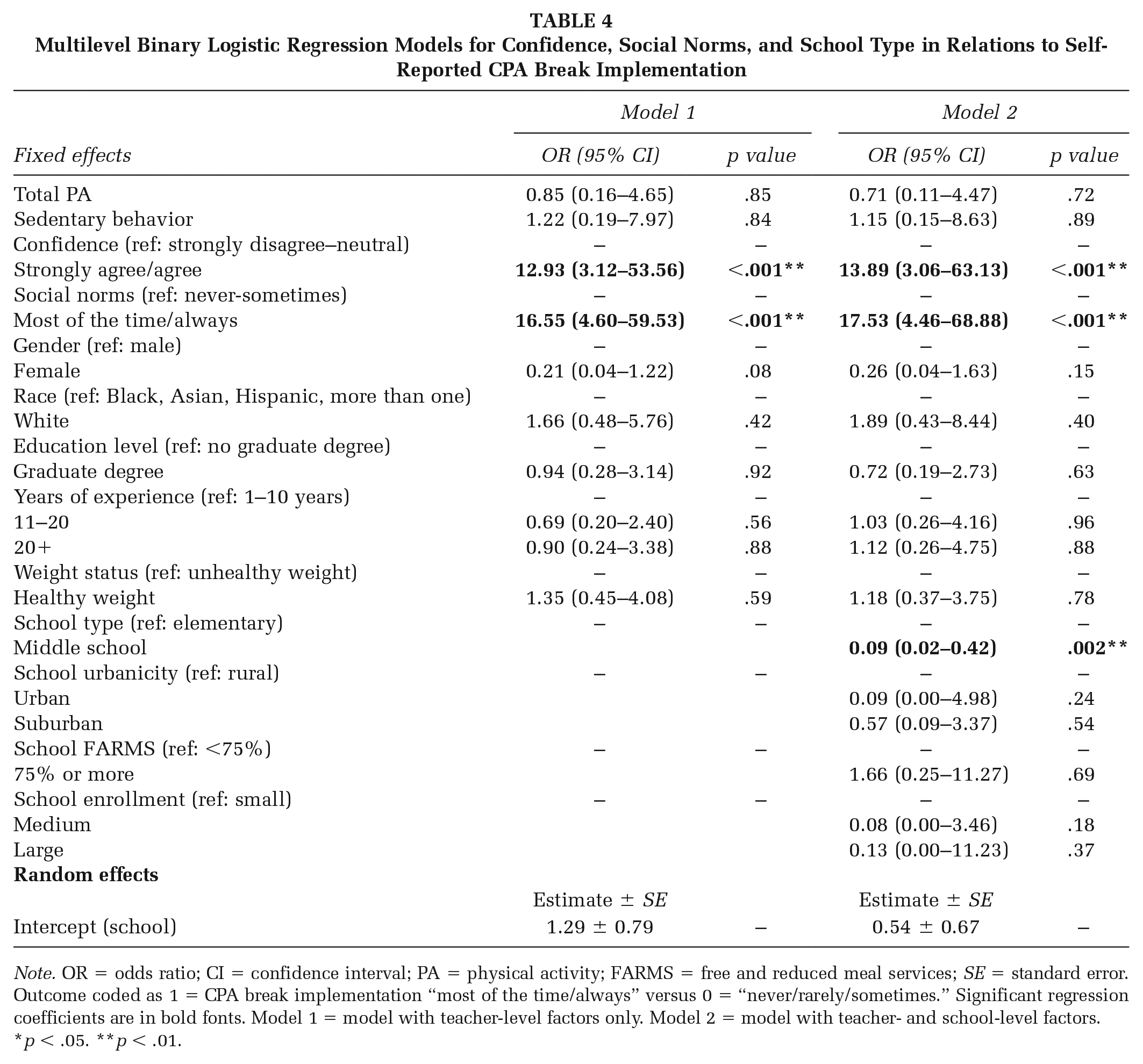
Note. OR = odds ratio; CI = confidence interval; PA = physical activity; FARMS = free and reduced meal services; SE = standard error. Outcome coded as 1 = CPA break implementation “most of the time/always” versus 0 = “never/rarely/sometimes.” Significant regression coefficients are in bold fonts. Model 1 = model with teacher-level factors only. Model 2 = model with teacher- and school-level factors.
p < .05. **p < .01.
Discussion
Guided by the Social Ecological Model, the purpose of this study was to examine teacher- and school-level factors associated with teachers’ self-reported frequency of implementing CPA breaks. Overall, we found that teachers’ PA and SED behaviors were not associated with CPA break implementation but having confidence in leading CPA breaks and perceiving other teachers to frequently implement CPA breaks were positively associated with teachers’ own CPA break implementation. We also found that teachers in middle schools were less likely to implement CPA breaks. This study adds to the current literature on teacher- and school-level factors associated with teachers’ CPA break implementation and provides future directions for points of intervention and research related to teachers’ PA-related beliefs.
Teachers’ objectively measured PA and SED behaviors were not associated with CPA break implementation, which is contrary to a previous study’s findings in which teachers’ daily average MVPA was associated with their PA promoting practices at school (Pulling Kuhn et al., 2021). One reason for this finding is that the current study only examined frequency of CPA break implementation in the classroom, whereas the previous study examined school-wide PA promoting practices that were not limited to the classroom environment. Perhaps teachers’ daily PA behaviors were more important for their PA promoting behaviors as a whole, rather than when considered specifically as related to teachers’ PA behaviors within the classroom, such as leading CPA breaks.
Teachers who were confident in their ability to lead CPA breaks were 14 times more likely to frequently implement CPA breaks. This finding is consistent with other studies that found that confidence, or self-efficacy, was associated with teachers’ CPA break implementation (Abi Nader et al., 2018; Macdonald et al., 2021; Michael et al., 2019). Future research should seek to determine the best ways to increase teachers’ confidence in CPA break implementation, as a potential point of intervention to increase CPA. Professional development or other training opportunities could be useful in increasing teachers’ confidence for leading CPA breaks.
Teachers who perceived other teachers at their school to implement CPA breaks frequently were over 17 times more likely to frequently implement CPA breaks. Based on the social ecological theory, social norms and school culture can influence PA-related behaviors (Sallis et al., 2006) and studies have qualitatively shown that observing other teachers implement CPA breaks facilitated their own implementation (Campbell & Lassiter, 2020). The current study quantitatively confirms this finding. Furthermore, bivariate analyses indicated that nearly 50% of teachers who infrequently implemented CPA breaks also perceived other teachers to infrequently implement CPA breaks, which could be driving this finding. Future research is needed to understand why teachers are or are not implementing PA in the classroom, and how gaining support from the majority is more important than individual-level interventions perhaps through peer role modeling or targeted professional development training focused on PA.
At the school level, only school type was associated with CPA break implementation. Teachers in middle schools were less likely to frequently implement CPA breaks. This finding is in line with a previous study that showed teaching in a middle school was associated with fewer PA promoting practices among teachers (Pulling Kuhn et al., 2021), and is not surprising given that teachers face challenges with CPA break implementation with secondary students (Institute of Medicine, 2013). Other teacher and school-level demographic factors were not associated with CPA break implementation, suggesting that other teacher or school characteristics may be less important than confidence and social norms. Although weight status was not associated with CPA break implementation, 72% of teachers had either an overweight or obese weight status. A previous study showed that having an obese weight status was negatively associated with school PA promotion (Pulling Kuhn et al., 2021), indicating that the health profiles of teachers may play an important role in their PA promoting behaviors.
Limitations and Strengths
This study had several strengths and limitations. First, survey items were from validated tools, but were self-reported and included only one item per construct. The objective measures of PA using 24-hour accelerometry was a strength of the study, particularly with such a large sample. The sample was diverse in terms of race, years of experience, school locale, and enrollment, but were from one state so the findings may not be generalizable. The study design was cross-sectional, indicating that relationships were found, but direction of relationships remains unknown.
Implications for Practice
The results of this study add to the existing evidence-base that highlight the importance of inter- and intrapersonal factors, such as teachers’ confidence and social norms, for implementing CPA breaks more frequently. The following are suggestions for how school leaders can enhance teachers’ confidence for implementing CPA breaks:
Engage classroom teachers in professional development for implementing CPA breaks that provides ideas and examples of CPA break options;
Provide classroom teachers with space, equipment, and resources for implementing CPA breaks;
Advise classroom teachers to take a progressive approach by implementing strategies that require little effort at first (e.g., rearranging furniture to increase PA), then implementing more ambitious strategies like integrating PA into lessons once they become comfortable with more student movement in their space.
The following are suggestions for how school leaders can enhance their schools’ social norms for implementing CPA breaks:
Know if and how the local school wellness policy may support CPA break implementation;
Obtain principal and/or administrative support for CPA breaks and require their representation on the school wellness team;
Require classroom teacher representation on the school wellness team to advocate for CPA break implementation;
Engage a group of teachers (rather than individual teachers) in professional development for CPA break implementation;
Utilize peer role modeling of CPA break implementation to promote the development of behavioral strategies for increasing CPA break implementation among other teachers and increasing communication about CPA breaks;
Prepare pre-service teachers to advocate for CPA break implementation and PA promotion in schools by teaching them how to form wellness teams and gain buy-in from other teachers;
Implement school wellness policies that encourage all teachers to engage in CPA break implementation.
Conclusion
The results of this study show that teachers in elementary schools (vs. middle), who were more confident in their ability to lead CPA breaks (vs. less) and who perceived other teachers in their school frequently implemented CPA breaks (vs. infrequently) implemented CPA breaks in their classrooms. In addition, teachers’ objectively measured PA was not associated with their CPA break implementation. These results suggest that intrapersonal and interpersonal characteristics such as confidence and social norms may be vital to increasing the likelihood of teachers implementing CPA breaks. Future interventions to increase CPA break implementation should focus on increasing teachers’ confidence to lead CPA breaks and creating more buy-in from classroom teachers to enhance each school’s culture of health.
Footnotes
Acknowledgements
We gratefully acknowledge and thank the research assistants who collected the data and teachers who participated. This research was funded in part by United States Department of Agriculture AFRI Childhood Obesity Grant (ID: 2016-68001-24927), the Mid-Atlantic Nutritional Obesity Research Center Pilot and Feasibility Program (NIH NIDDK P30DK072488); American Heart Association (19CDA34660015/Elizabeth Parker/2019); Program in Health Disparities and Population Health Seed Grant, University of Maryland School of Maryland; University of Maryland Baltimore, Institute for Clinical and Translational Research, which is funded in part by Grant Number TL1 TR003100 from the National Center for Advancing Translational Sciences (NCATS), a component of the National Institutes of Health (NIH), and NIH Roadmap for Medical Research. Its contents are solely the responsibility of the authors and do not necessarily represent the official view of the University of Maryland Baltimore ICTR, NCATS, or NIH. The Wellness Champions for Change trial is registered at:  . IRB approval was granted by the University of Maryland School of Medicine Institutional Review Board and school district IRBs in the four school systems/districts.
The authors declare that there is no conflict of interest.