



Abstract
Mars has long occupied a central place in scientific and cultural imaginations as the nearby world most plausibly capable of hosting life. This article traces the intellectual and institutional evolution of astrobiology from its origins as NASA-supported exobiology through the Viking missions and into the contemporary framework that guides life-detection efforts today. We examine the oscillation between optimism and pessimism that characterized scientific views of Martian life in the decades preceding Viking, shaped by laboratory experiments, telescopic observations, early spacecraft encounters, and evolving hypotheses of planetary environments. Key figures, including Joshua Lederberg, Carl Sagan, and James Lovelock, advanced contrasting visions of how life might manifest beyond Earth and how it should be detected. Results from Mariner and Viking missions revealed Mars to be both more alien and more complex than previously assumed, underscoring the dangers of limited data and Earth-centric assumptions. In hindsight, Viking’s ambiguous biological results highlighted the necessity of grounding life-detection experiments in a robust understanding of planetary context, comparative planetology, and the diversity of life on Earth. We argue that Viking’s greatest legacy lies not in definitive answers but in establishing methodological and epistemological foundations that now inform biosignature standards, life-detection frameworks, and future exploration of Mars, ocean worlds, and exoplanets.
Keywords
Mars has long captivated human imagination as the nearby world in many respects most like our own, prompting us to wonder whether life might also have taken hold there.
Widespread conjecture about life on other planets goes all the way back to the Copernican revolution, when humans learned that there were in fact other planets. Scientifically informed speculation increased in the 20th century (Dick, 1996). A through line can be seen from the origins of NASA-supported astrobiology (née exobiology) early in the Space Age to the landing of the Viking biological experiments on Mars and to the current state of astrobiology today. Fifty years after this landing, the influence and repercussions of this audacious experiment are still seen in our current efforts and plans for future astrobiological exploration.
When it came to the possible existence of life elsewhere in the solar system, in the two decades leading up to the Viking landings, learned opinions in the scientific community swung between wild optimism and stark pessimism. In 1952, the Miller–Urey experiment demonstrated the synthesis of biologically relevant molecules in a hypothetical primitive reducing atmosphere, which was then thought likely to represent the primordial composition of all terrestrial planet atmospheres (Miller and Urey, 1953). This fueled a wave of optimism about finding life on Mars and Venus. In 1959, Stanley Miller argued that not only should Mars and Venus have current conditions suitable for life but also the primordial environments on these worlds should have been similar to those that gave rise to life on Earth. “This is,” he wrote, One of the important reasons for the tremendous interest in finding out if living organisms are on Mars, and why most of all we want to examine these organisms… What are the basic components of these organisms? Do they have proteins, nucleic acids, sugar? If they are completely different, then our theories about the primitive earth and the results of this experiment seem not at all convincing. If Martian organisms are identical to the Earth’s organisms in basic components, then there seems to be the possibility that some cross-contamination occurred between the Earth and Mars. But, if Martian organisms have small but significant differences, then it would seem that theirs was probably an independent evolution, under the kind of conditions that we envision as those of the primitive Earth. (quoted in Ezell and Ezell, 1984).
This outlook led some planetary scientists to favor biological interpretations of observed phenomena such as the seasonal “wave of darkening” on Mars, often touted as evidence for plant life but later understood as being caused by windblown dust. In 1957, William Sinton reported in The Astrophysical journal the discovery of chlorophyll on Mars: Sinton, 1957 “This evidence, together with the strong evidence given by the seasonal changes, makes it seem extremely likely that plant life exists on Mars.” This observation, later found to be a misinterpretation of a terrestrial absorption caused by deuterated water vapor, illustrates how wishful thinking has often colored our views about possible life on Mars.
Among the significant original advocates for exobiology at NASA was Joshua Lederberg, a microbiologist who won the Nobel Prize earlier in his career for discovering bacterial conjugation as a mechanism of horizontal genetic exchange between microbes. Lederberg’s recognition of the great adaptability of microbial life led him to take seriously that environments off Earth could be habitable. As we began to explore the solar system, Lederberg, who coined the word “exobiology,” believed that environments such as Mars were promising enough as potential habitats that scientific searches for life should be prioritized. He also recognized the potential risks to life, both terrestrial and extraterrestrial, that such exploration could conceivably present, as well as the importance of avoiding contamination for scientific research, and he was among the earliest advocates of what has come to be known as planetary protection. Lederberg was also a strong advocate for in situ biological experiments and helped create momentum for mission concepts that eventually led to the Viking program. In the first decades of planetary exploration, when planetary science was still young and insecure and seeking its own respectability among the more established landscapes of astronomy and Earth science, exobiology was not widely embraced. Lederberg, discussing the impact of his Nobel Prize, remarked that it had allowed him “to stay in a non-reputable game. Not disreputable, mind you, but non-reputable. It might have been very, very difficult otherwise and it would have been very hard for a capable young scientist who’s had a lot of risks to take in his career to hitch it to something as uncertain as exobiology.”
In 1960, NASA established an Office of Life Sciences. In the previous year, NASA had awarded its first grant in exobiology: $4,485.00 to Yale microbiologist Wolf Vishniac to develop a prototype device for detecting microorganisms on Mars. Nicknamed the “Wolf trap,” Vishniac’s instrument was designed to detect microorganisms by cultivating microbes found in the regolith and recording signs of metabolism. Although he did not live to see the landing of Viking, his ideas were seminal for developing the instruments in the Viking Biological Laboratory.
We were slow to accept how alien other worlds truly are. Before the age of planetary exploration, scientific interpretations tended to support widespread beliefs that the other nearby worlds were more Earth-like than we found once we actually visited them. These illusions were shattered by the results of the first flyby missions to other planets. In 1961, NASA launched Mariner 2 to Venus. Its 1962 flyby of that planet revealed a hot surface incompatible with liquid water and organic life. As this result became public in December 1962, the New York Times published an editorial entitled “Venus Says No,” which described these observations as “disheartening” and “disillusioning” and went on to say, The finding of extraterrestrial life in some form similar to that on earth, even at the lowliest stage, would lend support to the widespread belief—rooted deeply in the aspirations of mankind—that life as we know it is not unique to this insignificant corner of the universe but exists in many other systems similar to ours throughout the universe… The message from Venus now reduces the hope of finding evidence in support of this speculation to one half, so far as our solar system is concerned. Mars now remains our only hope of turning this universal dream into reality, and the evidence so far is not very encouraging. The message from Venus may mark the beginning of the end of mankind’s grand romantic dreams.
(A modern reader cannot help but notice that the concept of possibly habitable ocean worlds in the outer solar system was absent from this assertion).
Expectations were thus high for the first flyby of Mars by Mariner 4 in July 1965. NASA’s attempts to temper these expectations were sometimes fuel for misunderstandings: On July 1, 1965, the day that Mariner 4 was to encounter Mars, the New York Daily Herald wrote, “In what amounts to a non sequitur, NASA says the photo mission is not designed to answer the question of life on Mars but only to shed light on the possibility of extraterrestrial life.” The efforts by NASA to accurately portray the purpose and reality of possible conclusions to be drawn from missions continue today, for example, in frequent reminders that Europa Clipper is not meant to search for life but to characterize the possible habitability of Europa.
The light that Mariner 4 did shed was a harsh one that further woke us from our dreams of nearby Earth-like places. The resolution was low and the coverage sparse (only about 5% of the planet was imaged), but the images seemed to show a cratered, lunar-like surface (Fig. 1). The judgments were swift and, for hopeful believers in extraterrestrial life, painful. Walter Sullivan’s report in the New York Times began with, “A heavy, perhaps fatal, blow was delivered today to the idea that there is or once was life on Mars.” At a White House ceremony presenting the images and results, US President Lyndon Johnson declared, “It just may be that life as we know it with its humanity is more unique than many have thought.” In the wake of these results, exobiology and, in particular, the search for life on Mars may have hit a low point in credibility. The nascent field was ridiculed in an editorial by Philip Abelson, the editor of Science who wrote: “In looking for life on Mars we could establish for ourselves the reputation of being the greatest Simple Simons of all time.”
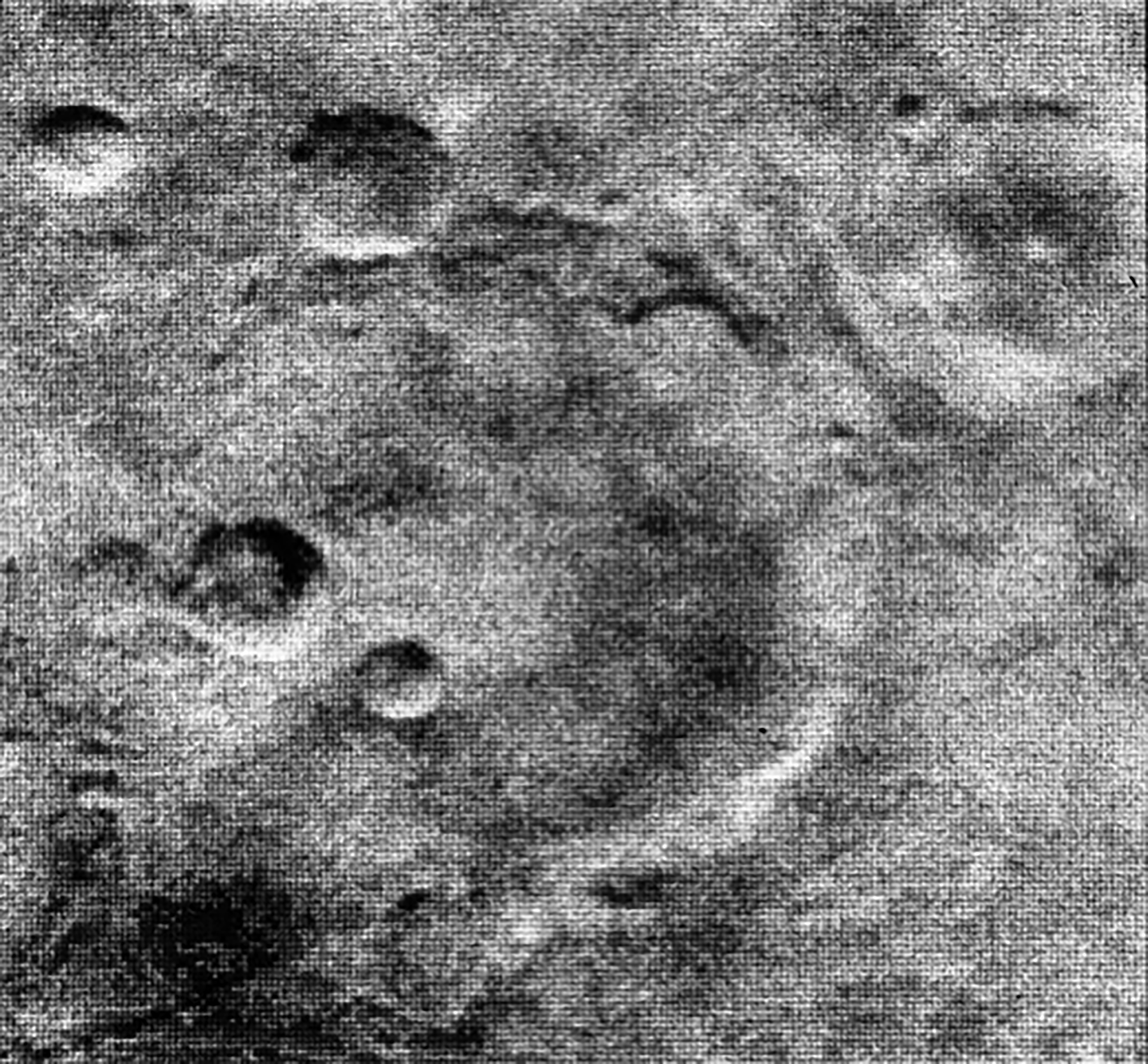
A Mariner 4 image shows a grainy view of a cratered landscape (NASA). Image credits: NASA/JPL, Planetary Image Archive number PIA02980.
In hindsight, a major lesson of Mariner 4 was the danger of assessing a planet’s past and present biological potential on the basis of a very limited data set and extrapolating the nature of an entire planet from results specific to one location.
Despite the “disappointment” of Mariner 4, planetary exploration in the 1960s, riding the coattails of Apollo, had an unstoppable momentum. In 1971, NASA launched Mariner 9, the first successful orbiter of Mars. (Mariner 8 launched 3 weeks earlier but sadly never achieved orbit, tumbling out of control 6 minutes into flight and falling into the Atlantic. As of this writing, it is still the last NASA interplanetary spacecraft lost to a launch accident). The global dust storm that greeted Mariner 9’s arrival obscured all surface features, which delayed the start of the mapping mission, dramatically illustrating the dynamic nature of Martian surface–atmosphere interactions. In nearly a year of mapping, Mariner 9’s cameras revealed a completely different Mars: Complex, varied, and changing with the seasons. It displayed a diverse range of ages and terrain types that indicated a history of tectonic, volcanic, erosional, and climatic changes. Most important for exobiology were numerous traces of past fluvial activity, including dendritic river valleys and massive outflow channels presumably carved by liquid water early in the planet’s history (Fig. 2). Layered polar terrains hinted at a history of changing climate. Crater morphologies suggested ancient impacts into a volatile-rich surface and later epochs of erosion in an atmosphere (and inferred hydrosphere) quite different from the modern one. We learned that Mariner 4 had glimpsed a highly unrepresentative patch of ancient cratered terrain (e.g., Ezell and Ezell, 1984).
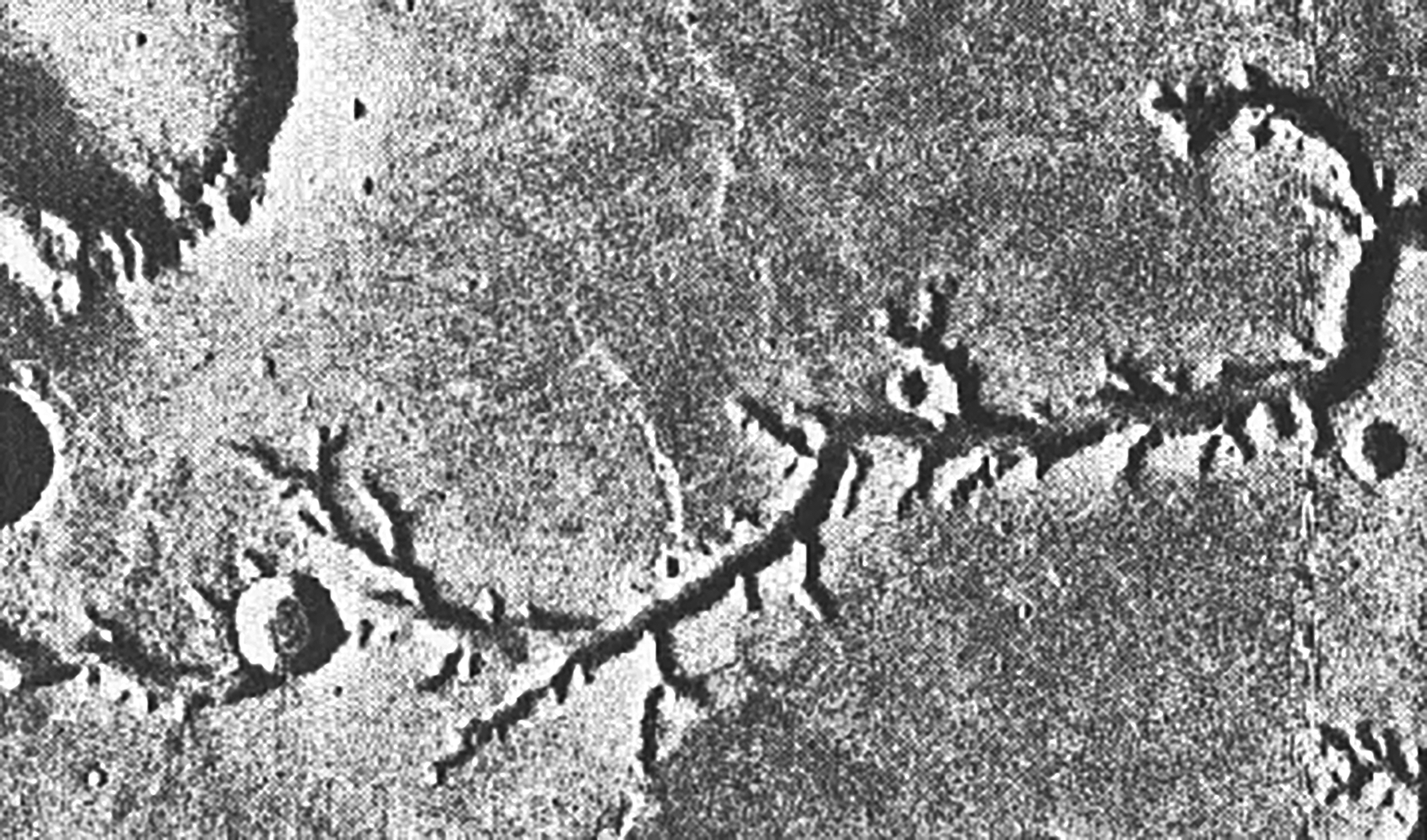
A Mariner 9 image shows the branching valley Nirgal Vallis. Approximately 400 km in length, it was one of the first features seen that strongly indicated past flowing water. Image credits: NASA/JPL-Caltech, Planetary Image Archive number PIA15090.
We also learned that, while its surface environment today is frozen and bathed in ionizing radiation, Mars had experienced major geological epochs that must have been quite different from today. The suggestion of a more watery past was immediately recognized as evidence that the climate had changed significantly and conditions in the deep past must have been able to support abundant surface water. Ancient Mars could have been more like Earth. This began to swing the pendulum back toward optimism about possible life on Mars. However, expert opinion on the significance and meaning of Mariner 9’s results for the overall evolutionary state of Martian geology, climate, and potential biology varied widely.
In a book of essays (Mars and the Mind of Man) written 1 year after Mariner 9’s arrival, Carl Sagan and Bruce Murray sharply disagreed about the nature of the planet they had been mapping. Bradbury et al., 1973 Murray concluded that Mars never really had an Earth-like past but was in the process of coming to life geologically and might have a much more Earth-like future. Sagan, while conceding that Mariner 9 had not detected life and had definitively ruled out a technical civilization on Mars, more optimistically concluded that the polar caps held enough water and CO2 ice to produce an atmosphere that was intermittently as thick as Earth’s. Sagan’s view that Mars might quasi-periodically sport a more Earth-like climate led him to hypothesize that life could have adapted to become dormant during colder and drier phases and active during quasi-periodic warmer and wetter times.
Despite the vastly increased clarity provided by global imaging, it was clear that in situ observations of the surface and atmosphere would be needed to truly begin to unravel the enigmas of Mars and assess its biological potential.
In his popular 1973 book The Cosmic Connection, Carl Sagan wrote: “The idea of Martian organisms as sleeping beauties, awaiting a somewhat wet kiss from Viking, is a long shot—but a fascinating one (Sagan, 1973).” This possibility—of intermittent periods of benign, watery surface conditions during which life might flourish—promoted by Sagan, was influential in the design of the Viking biological experiments. It is striking, in hindsight, that the design of these instruments, in which water was added to Martian regolith to search for metabolic activity, could be seen as much more likely to turn up signs of life that thrived in terrestrial conditions rather than those on Mars.
One dissenting view that is worth noting was that of James Lovelock, who concluded well before Viking that, if life existed on Mars, its presence could be detected through atmospheric gases in chemical disequilibrium and that, therefore, there was no point in sending surface instruments to look for life. This led him, in partnership with Lynn Margulis, to develop the Gaia hypothesis, which posits that life can act as a planetary-scale phenomenon with global atmospheric signatures (Lovelock and Margulis, 1974). Interestingly, this insight now underpins modern approaches to biosignature searches on exoplanets, where life-detection strategies place strong emphasis on identifying persistent chemical disequilibria in atmospheric compositions. However, the limitations of this approach are illustrated by the ongoing debate over reports of methane on Mars. The existence, variability, and potential origins of Martian methane remain uncertain, and even if present, such disequilibrium cannot be uniquely attributed to biological activity given plausible abiotic sources and surface–atmospheric interactions. More fundamentally, as argued by Hoehler (2022) in the context of H2/CO2 disequilibrium on Enceladus, the presence of life does not necessarily imply that all available chemical energy will be exploited or that detectable disequilibrium will be driven toward a unique or maximal biosignature. (How much chemical disequilibrium is sufficient to constitute a biosignature under these conditions remains unclear.) This raises the question of how confidence in the detection of life on exoplanets will ultimately be established: Whether atmospheric observations alone can provide sufficient evidentiary weight, whether their interpretation will rely on continued in situ exploration of solar system environments that ground-truth biological and abiotic processes, or whether we must ultimately embark on grander ambitions of in situ research on planets that orbit other stars. To be certain, confidence in the search for life beyond Earth will ultimately emerge from the interplay between exoplanetary and planetary science exploration, where each advances the other by expanding the comparative and empirical frameworks of astrobiology.
With the Viking Project, Mars became a world inhabited by our machines: Spacecraft that touched down, returned images from its surface, and dug into its dirt. The Viking missions as a whole were tremendously successful and provided the basis for our modern understanding of the atmosphere and surface of Mars. Yet by far the most visible component of the mission, and the major selling point that was used to promote the mission to Congress and the public, was the search for life. The results of the Viking biology experiments were often described as a vast disappointment (though, as described, there were dissenting views, which have persisted), continuing the pendulum swings between optimism and pessimism that have characterized our evolving views of life on Mars. In his 1986 book To Utopia and Back, Norman Horowitz (1986), the lead investigator on the pyrolytic release experiment, stated that “The failure to find life on Mars was a disappointment, but it was also a revelation. Since Mars offered by far the most promising habitat for extraterrestrial life in the solar system, it is now virtually certain that the Earth is the only life-bearing planet in our region of the galaxy. We have awakened from a dream.”
Perhaps the major lesson of Viking is that before we could meaningfully and successfully search for life on another planet, we needed a much deeper understanding of both life on Earth and comparative planetology. Viking’s arrival at Mars in 1976 predates some transformative discoveries that have fundamentally reshaped our understanding of the Earth system and the life that inhabits it. These include the discovery of deep-sea hydrothermal vent systems where life thrives independent of sunlight (Corliss et al., 1979) and the recognition of Archaea as a distinct domain of life (Woese and Fox, 1977). The Viking results rightfully made NASA and the nascent planetary science community (emerging from earth science) cautious about committing to further life detection experiments in the absence of a more sophisticated theoretical basis.
NASA, and the broader international space and science community, have spent the five decades since Viking steadily advancing the scientific and historical understanding of Mars. Re-invigorated in the mid-1990s, missions to Mars have “Followed the Water” and “Explored Habitability” and are now poised to “Search for Signs of Life.” The data that have been returned by the Curiosity rover have solidified the view that those who championed Viking thought to be true: That Mars was a once habitable planet, much like our own Earth. It was habitable—billions of years ago—but today we know the surface to be inhospitable to life as we know it. The pendulum has swung further toward optimism for finding residues of ancient life or else for learning something important about the uniqueness of Earth’s biosphere if such traces are never found. As for the prospects for extant life, learned opinions vary, appropriately given our still partial knowledge of the Martian subsurface and the limits of planetary life.
Largely owing to the renewed public and scientific interest in possible life on Mars in the aftermath of the report of possible nanofossils in Martian meteorite ALH 84001, NASA began an ambitious astrobiology program, which has supported terrestrial analog field studies, research on extremophilic organisms, and a growing interest in developing searches for agnostic biosignatures, that is, physical or chemical signs of life that do not presuppose the specific biochemistry of Earth-based organisms. This steady investment is poised to pay dividends as we embark on a future of exploration equipped with the necessary knowledge, environmental context, and matured technologies to humbly ask the profound question, “Are we alone?”
According to NASA, the next two decades of robotic Mars exploration will include three co-equal scientific themes: “Exploring the Potential for Martian Life,” “Revealing Mars as a Dynamic Planetary System,” and “Supporting the Human Exploration of Mars” (NASA, 2024). While the missions to be launched to achieve these goals await confirmation, humanity is moving closer to realizing the ambitions of Viking. Perseverance has discovered an intriguing rock, a roughly 1 m long mudstone named Cheyava Falls—with preserved white “leopard spots” that closely resemble those made on Earth by microbial activity—along with additional evidence, which makes such features potential biosignatures. Scientists are eager to see that sample—and all the samples cached at Mars—delivered to the deep bench of terrestrial laboratories. Only such a complete and exhaustive investigation of the returned samples, which can occur here on Earth, will give us the answers we crave about them and what they mean for the potential biological history at Mars. An ESA mission, Rosalind Franklin, with contributions from NASA, will launch soon and conduct the first subsurface astrobiology investigations at Mars as part of the next true life detection mission since Viking. The 2030s and beyond have the potential for search for life missions, both robotic and crewed, to help us answer these outstanding questions about Mars. The National Academies of Sciences, Engineering, and Medicine recently released a report that included priorities for crewed exploration, with one of the top science priorities being the search for life on Mars (NASEM, 2025). We are all swimming in the right direction to answer the question: Did life ever arise on Mars? If not, why not? One of the most important aspects of any well-constructed life-detection mission is that a nondiscovery is still scientifically profound. Even in the absence of direct evidence for life on a habitable world, we gain critical insight into the origins of life by constraining the chemical pathways that may, or may not, lead to its emergence. On Earth, the chemical fingerprint of life is so pervasive that disentangling biological signals from prebiotic or abiotic chemistry can be extraordinarily challenging. And unfortunately, due to plate tectonics, nearly all of the rock record that would have recorded that history has been overprinted or erased. Mars, in contrast, has likely never experienced active plate tectonics. Its rocks preserve an ancient geochemical archive that may record prebiotic processes in ways no longer accessible on Earth.
While the search for life starts here on Earth and takes us first to Mars, it does not end there. Viking showed us that we needed to understand life on Earth in more depth and with context before we would really be ready to search for life elsewhere. And we have spent the past several decades doing just that. Scientists have a much better understanding of what the requirements for life are, and they have been able to broaden our understanding of life as we know it and conceptualize life as we don’t know it. The search for life has expanded much beyond Mars. In our own solar system, the icy ocean worlds—most prominently Europa and Enceladus—may have the potential to support subsurface chemolithoautotrophic life analogous to terrestrial deep ocean hydrothermal vent communities. Europa Clipper, launched in 2025, is going to tell us more about this potential habitability and expand our understanding of the environments that could support life. When Viking launched, we had yet to discover our first exoplanet. Today, we know that almost all stars host their own planets. With these discoveries, the search for life has expanded far beyond just our nearest neighbor and truly out into the cosmos.
The Viking missions marked humanity’s first in situ attempt to search for life on another planet and fundamentally reshaped how we approach that challenge. Viking taught us that life detection cannot rely on isolated measurements alone but must be grounded in a deep understanding of planetary context: Geologic history, environmental conditions, and chemical background. Although Viking did not provide a definitive detection of life, its legacy lies in the clarity it brought to the complexity of interpreting potential biosignatures. That lesson continues to guide astrobiology today, informing how we design life detection experiments, interpret ambiguous signals, and frame the search for life across Mars and other planetary environments. Contemporary scientific frameworks such as the Biosignatures Standards of Evidence (Meadows et al., 2022) and the Life Detection Knowledge Base (Pohorille et al., 2025) reflect this legacy directly and formalize the need for multiple, contextualized lines of evidence when evaluating potential biosignatures. In this sense, Viking was not an endpoint but a foundation, one that continues to shape the trajectory of astrobiology exploration 50 years later.
Authors’ Contributions
D.G.: Conceptualization and writing—review and editing (equal). B.M.R.: Conceptualization and writing—review and editing (equal). R.H.: Writing—review and editing (equal).
Footnotes
Acknowledgments
The authors acknowledge helpful discussions with Scott Perl and Lindsay Hays.
Author Disclosure Statement
There are no conflicts of interest.
Funding Information
R.H. is supported by an appointment to the NASA Postdoctoral Management Program through the Astrobiology Program at NASA Headquarters, administered by Oak Ridge Associated Universities under contract with NASA. The views expressed in this article are those of the authors and do not necessarily reflect the views of NASA.
Associate Editor: Michael A. Meyer