




Abstract
This study longitudinally examined the experiences of four different student cohorts who participated in Adelante, a sustained orientation/transfer program designed to assist students in the transfer process from the community college to a baccalaureate-degree granting university. The researcher found that students positively perceived the services, structure, social networking environment, and early exposure to careers. The study provides evidence for the validation function of sustained orientation programs and suggestions for similar programs to help Latina/o students succeed.
Introduction
Latina/os are the fastest growing group in the United States (Brown, 2014; Lopez, 2014). Consequently, researchers have indicated that population growth has directly affected American higher education institutions, particularly 2-year colleges, as more and more Latina/o students have enrolled to receive a community college education (Camacho Liu, 2011; C. J. Gonzalez, 2015). Data from the Pew Research Center suggested that 18- to 24-year-old Latino/a student enrollment tripled between 1996 and 2012 and surpassed the enrollment of Black and White students (Krogstad & Fry, 2014). Moreover, the growth in the Latina/o student population has tremendously affected the California Community Colleges (CCCs) with “two thirds of Latino college students (7 out of 10) [beginning] their college career at a community college” (C. J. Gonzalez, 2015, para. 6). Recent data indicated that the CCCs enrolled over 2.4 million students (California Community Colleges Chancellor’s Office, 2013). The same database quantified a 43.35% Latina/o enrollment in the CCCs, while Asian students constituted 10%, and African Americans made up 7.99% of the overall student population (California Community Colleges Chancellor’s Office, 2013). Other studies reported a higher percentage—46%—of Latina/o student enrollment in the CCCs (Lopez, 2014).
Despite the high enrollment rates of Latino/as in CCCs, they academically lag behind their White peers (Guzman-Lopez, 2014). Data indicated that more than 40% of the Latina/o student population enrolled in basic skills courses in CCCs (Student Success Task Force [SSTF], 2012), which negatively affected their transfer and success rate (Fain, 2013). Further data describing the CCCs indicated that only “four out of 10 Latino degree-seeking students completed an associate degree, certificate or transferred to a four-year institution after six years” and 35% of the Latina/o student group were not college-ready (Campaign for College Opportunity, 2013, pp. 13-14). Researchers went as far as describing the “pathway to the baccalaureate as segregated” because of a racial achievement gap between Latina/o and White students at 4-year universities (The Civil Rights Project, 2012, para. 1).
In 2012, the California Legislature established the SSTF and the Student Success Act of 2012 to address the academic achievement gap and low transfer rates (SSTF, 2012). The SSTF drafted a list of recommendations, including the need for CCCs to provide sustained mentoring, counseling, and tutoring for transfer students with the goal of ending the racial achievement gaps (SSTF, 2012). The Student Success Act allowed the Board of Governors (BOG), the CCCs main governing body, to “establish policies around mandatory assessment, orientation, and education planning for incoming students” (Taylor, 2014, p. 3). The Act and the SSTF’s recommendations initiated a comprehensive, statewide reform to address low completion rates through coordinated support systems, including transfer programs for effective educational planning (SSTF, 2012, p. 43).
The study described in this article examined the experiences of four different student cohorts from 2011-2015 who participated in the Adelante program, an orientation/transfer program in a Southern California community college that was designed to fulfill the orientation recommendations by the SSTF and Student Success Act and to assist students in the transfer process from the community college to a baccalaureate-degree granting college. The program was created in 2011 by a partnership between the community college that houses the program, a University of California (UC) institution, and a California State University (CSU) institution. In the 1960s, the State of California created a Master Plan for higher education, whereby students performing in the top 12% of their high school class were eligible to enroll at the UC, students in the top third could enroll at the CSU, and the community college was open to all students. One function of the CCC was preparation for transfer to a baccalaureate-degree granting college, such as the CSU or UC. As such, the partnership between the community college, UC, and CSU in this study is indicative of a system-wide collaboration between institutions to assist students in the transfer process. The partnership offered program participants guaranteed admission into the UC and CSU partner institutions.
The goal of the study was to understand the experiences of four cohorts of students who participated in the program or successfully transferred from the community college to the UC or CSU institutions. Reflecting on the major themes from previous research studies about Adelante’s first and second cohorts, the researcher in the present study similarly investigated students’ experiences in the program from the third and fourth cohorts as a means to compare experiences in the program across the four cohorts. The researcher also looked at the experiences of students from the second cohort that successfully transferred from the community college to a UC or CSU to compare their experiences with the experiences of students from Cohort 1 that transferred to the UC or CSU. Therefore, the study was a longitudinal, interpretive qualitative research study that included one-on-one interviews with students who currently participated in the program at the time of the study and those who successfully transferred. This study responded to the recommendations of previous authors in the Journal of Hispanic Higher Education (S. M. Gonzalez, Cash Brammer, & Sawilowsky, 2015; Pérez & Ceja, 2010; Zalaquett, 2005), particularly researchers’ suggestions to evaluate programmatic interventions that seek to help Latina/o students succeed (Rodriguez, Rhodes, & Aguirre, 2015). The findings shed light on the importance of sustained orientation, assistance, and educational planning through programs similar to Adelante.
Orientation and Transfer Programs
Higher education institutions have created programs to help transfer and first-year university students for a long time. In fact, there was a drastic increase of orientation and first-year programs in the 1960s and 1970s (Tinto, 2000, 2006). Townsend and Wilson (2006) described, Institutional leaders have supported the development of institutional practices such as learning communities and first-year seminars, practices that enable entering students and faculty to know one another more fully than in large lecture halls. The underlying assumption behind each of these practices is that the more students are involved in or integrated into college life, the greater the likelihood they will stay in college and attain their degree. (p. 439)
As suggested by Townsend and Wilson (2006) and supported by Tinto’s (2006) research, the goal of the programs was to help students successfully integrate into the academic and social environments of higher academic institutions. Despite the growth of student support programs over the years, they primarily targeted or assisted residential, White, male students (Astin, 1993; Braxton, Sullivan, & Johnson, 1997; Pascarella & Terenzini, 2005).
Unlike White male students, researchers have identified different reasons why Latina/o students struggle to transfer to 4-year universities (Cohen & Brawer, 2003; Pascarella & Terenzini, 2005; Townsend & Wilson, 2006). Specifically, Latina/o students face unique factors, including cultural alienation, arduous cultural shifts, and culture shock that disproportionately affect their academic success (Andrade, 2018; Penfold Navarro, 2011; Rendón Linares & Muñoz, 2011). Studies revealed that Latina/o students felt uncomfortable, alienated (Penfold Navarro, 2011), misunderstood, and unwelcomed (Morillas & Randall Crosby, 2007; Valencia & Black, 2002), and they viewed universities as hostile environments (Hungerford-Kresser, 2010). In describing the experiences of CCC Latino/a students, C. J. Gonzalez (2015) argued that “the transfer pathway . . . [was] difficult to navigate” and students received insufficient transfer information or counseling (para. 19-20).
To address the limited scope and failure of previous programs to understand the profiles of non-White students, particularly Latina/os, in the last decade, higher education institutions across the United States established student success, orientation, and transfer programs, including Mathematics, Engineering, Science Achievement (MESA), Early Academic Outreach Program (EAOP), and Puente (Santiago & Brown, 2004). Studies have reported positive outcomes in programs directed toward Latina/o student success, including Upward Bound (Rodriguez et al., 2015), the Puente Program (Rendón, 2002), MESA, EAOP (Santiago & Brown, 2004; TRIO Santiago & Brown, 2008), and other mentor programs (Salas, Aragon, Alandejani, & Timpson, 2014). Although the structures, locations, and models of the aforementioned programs differed, they were similarly attuned to the cultural needs of Latina/o students, provided comprehensive assistance, focused on community-building, and sought to validate students’ cultures and identities (Santiago & Brown, 2004, 2008).
Validation Theory
One crucial element in successful student services and transfer programs for Latina/os is their positive validation function. Rendón’s (1994, 2000) work is highly credited for validation theory, which stipulates that Latina/o students are more likely to persist and effectively integrate into school when others positively affirm their identity, culture, and academic experiences. Rendón Linares and Muñoz (2011) defined validation as the intentional, proactive affirmation of students by in- and out-of-class agents (i.e., faculty, student, and academic affairs staff, family members, peers) in order to: (1) validate students as creators of knowledge and as valuable members of the college learning community and (2) foster personal development and social adjustment. (p. 12)
The previous definition was a springboard for six total tenets in Rendón’s validation theory (Rendón Linares & Muñoz, 2011), but most pertinent to this study are the following tenets: (a) “it is critical that validating agents actively reach out to students to offer assistance, encouragement, and support, as opposed to expecting students to ask questions first” (p. 17); and (b) “when validation is present, students feel capable of learning and have a sense of self-worth” (p. 18).
Affirmation of students’ identity through positive validation was essential in letting students feel a sense of belongingness and community (Castellanos & Gloria, 2007; S. M. Gonzalez et al., 2015; Zalaquett, 2005) and encouraged them to form special social bonds with other Latina/o students and faculty (Rendón, 2000). Several studies provided support for these claims by suggesting that students viewed school as a home away from home and formed strong social networks and connections with other Latina/os and faculty if they felt positively validated (K. P. González, 2001; S. M. Gonzalez et al., 2015; Hurtado, 2002; Rendón, 2000). Moreover, students were more likely to persist if they felt that faculty and institutions allowed them to contribute their personal knowledge, intelligence, and strengths in classroom and school settings (Rendón Linares & Muñoz, 2011). Fundamentally, researchers indicated that validation nurtures positive, holistic student development and effective integration into educational environments.
Several studies applied validation theory to the context of Latino/a students’ participation in orientation and educational services programs. According to Rendón (2002), the Puente Program was a great example of institutions’ commitment to validating Latina/o students’ identities and cultures because it was grounded in a holistic approach to understanding and validating students’ lives as academics and agents of change. The program provided culturally aware mentors, counselors, and staff, as well as services and support for transfer. Pérez and Ceja (2010) went as far as suggesting that programs that create partnerships between high schools, community colleges, and 4-year universities, such as the Puente Program, were fundamental to effectuate positive validation and empowerment in students. The authors argued that validation is a necessary prerequisite to fostering a “transfer culture” in students (p. 13). Ornelas and Solorzano (2004) similarly argued that community college partnerships with 4-year institutions were vital to increase comfort in transfer and student persistence.
Previous Investigations of the Adelante Program
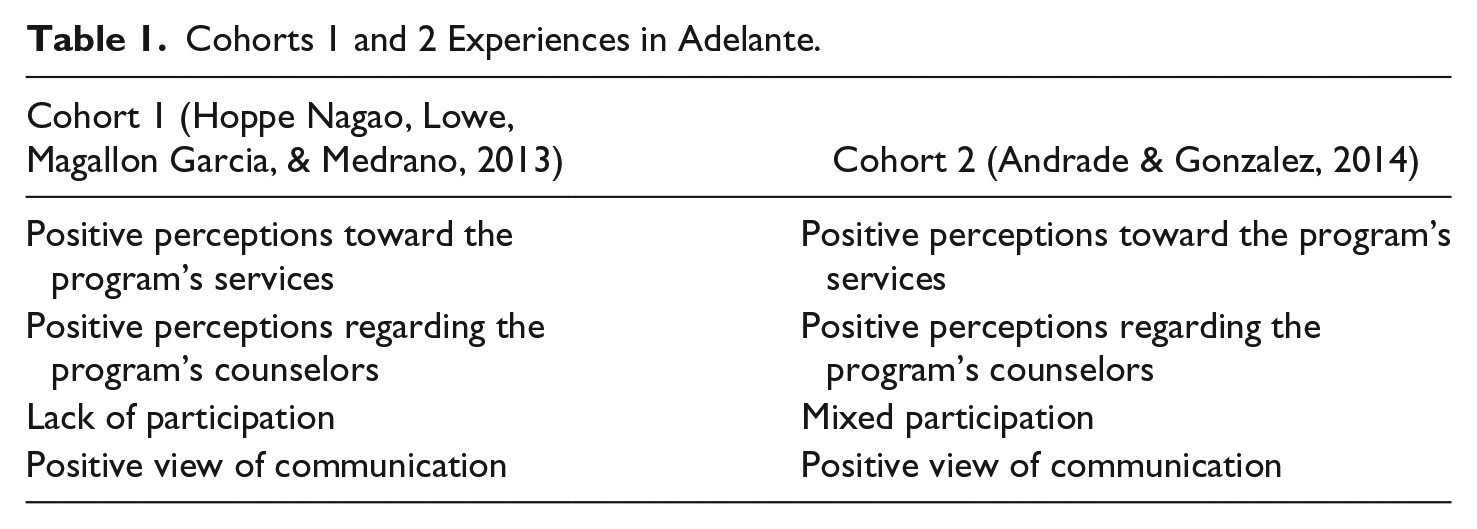
Researchers have investigated students’ experiences in the Adelante program in the first cohort (Andrade, Hoppe Nagao, Medrano, Lowe, & Currie, 2015; Hoppe Nagao, Lowe, Magallon Garcia, & Medrano, 2013), the second cohort (Andrade & Gonzalez, 2014), and students from the first cohort that transferred to the UC or CSU partner institutions (Andrade & Gonzalez, 2014). Table 1 describes the most prevalent student perceptions from interviews with 20 participants in the first cohort (Andrade et al., 2015; Hoppe Nagao et al., 2013) and 25 participants in the second cohort (Andrade & Gonzalez, 2014). Students in both cohorts generally perceived the program in a positive light. For example, students positively reported that the program’s services, including personalized mentorship, counseling, and financial aid, were very helpful. The program helped them understand the institutional requirements for transfer to the specific UC and CSU in partnership with the program. In addition, students reported positive interactions with Adelante counselors. Unfortunately, students in the first cohort did not actively participate in program events, while students in the second cohort indicated mixed participation. Overall, most students in the first and second cohorts viewed the program as effective and helpful and positively described the program’s communication, including advertisements and social media, which informed them about important deadlines and events.
Cohorts 1 and 2 Experiences in Adelante.
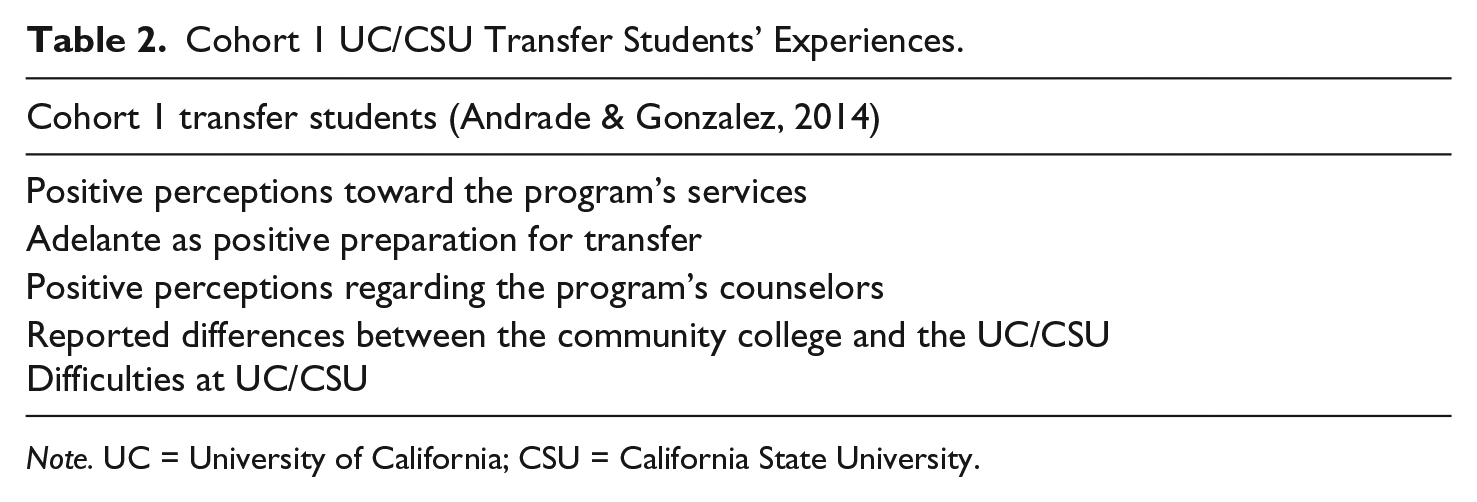
Andrade and Gonzalez (2014) interviewed 15 students from the first cohort that transferred to the UC or CSU (see Table 2). Students reported positive perceptions of the Adelante program. The majority of students described that the program provided sufficient and necessary services for successful transfer and they regarded the program’s counselors as supportive and caring. Several students indicated that Adelante counselors made their transition smooth. Despite the positive comments, several transfer students indicated important differences between the community college and UC/CSU environments that made their transitions difficult. For example, financial struggles, larger campus sizes, higher academic expectations, and unfamiliarity with the 4-year campus environments made transfer difficult for most students. The students indicated that the Adelante program was foundational in their transfer, but administrators at the UC and CSU were not helpful, understanding, or did not provide guidance.
Cohort 1 UC/CSU Transfer Students’ Experiences.
Note. UC = University of California; CSU = California State University.
The student perceptions in Tables 1 and 2 are important to spotlight because, sequentially, the present study focused on students from the third and fourth cohorts, as well as students from the second cohort that transferred to the UC or CSU. The purpose was to compare the experiences of the four cohorts of students who participated in the program or successfully transferred from the community college to the UC or CSU institutions. The experiences of four cohorts of college students will be compared and discussed in the following section.
Longitudinal, Interpretive Qualitative Research Design
The study was grounded in a longitudinal, interpretive qualitative research design. The study is a longitudinal qualitative study because it investigated the perceptions of students in four different cohorts across 4 years. Saldaña (2003) indicated that longitudinal qualitative research is difficult, but important in the field of education. He defined longitudinal qualitative research as “continuous research in the same small society over a number of years” (p. 2) that often involves in-depth data collection from one-on-one interviews, focus groups, or fieldwork notes. Examples of longitudinal qualitative research include the analysis of perceptions and attitudinal changes, including “cohort effects” across different generations (Saldaña, 2003, p. 3). Although there is no precise timeframe for these studies, longitudinal qualitative studies “assume a long-term field engagement” (p. 4). Hurtado and Ponjuan (2005) supported longitudinal qualitative research by illustrating, “more detailed studies are necessary concerning the types of college programs that engender a sense of belonging and college success” (p. 250).
The researcher identified emergent themes across student’s experiences using an interpretive research strategy. The interpretive approach for research places responsibility on researchers to adequately interpret behavioral phenomena by interacting with participants and understanding their “actions, motives, and feelings,” as well as their subjective experiences and knowledge (Lindlof & Taylor, 2002, p. 11). The goal of the interpretive research tradition is to place participants’ viewpoints at the forefront and to interpret others’ voices in relationship to their context, setting, and environments. As Rowlands (2005) suggested, “interpretive research acknowledges the intimate relationship between the researcher and what is being explored, and the situational constraints shaping this process” (p. 81). Researchers working under the interpretive approach often utilize one-on-one interviews (Rowlands, 2005).
It is fitting to describe the role of the researcher under the interpretive qualitative research design because the researcher is the pivotal instrument that interprets students’ voices and experiences. Identifying the role of the researcher is important to gain insight on the subjective viewpoint and worldview of the interpreter (Keyton, 2015). The primary role of the researcher in this study was to assess the Adelante program by listening to students’ voices regarding the educational services. The researcher is a Latino first-generation college student, but despite having a similar background as many of the students in the study, the researcher’s objective was to review the program as a means of evaluating whether institutional investment in such a program was worthwhile.
Method
The methodology largely resembled the approach taken by previous studies, which used one-on-one and mobile phone interviews (Andrade & Gonzalez, 2014; Andrade et al., 2015; Hoppe Nagao et al., 2013). The use of qualitative interviews with an open-ended interview protocol was fitting to understand students’ firsthand experiences and perceptions, as well as any validation agents (Rendón Linares & Muñoz, 2011). Andrade et al. (2015) similarly found that over-the-phone and one-on-one interviews were the most appropriate to understand the experiences of Latina/o and Adelante students. Similarly, Hoppe Nagao et al. (2013) found that Latina/o and Adelante students often had busy schedules and preferred phone calls to participate in interviews.
Procedure
The researcher received Institutional Review Board (IRB) approval from all institutions involved. Participants’ contact information was obtained from administrators at the CSU, UC, and Adelante. Consequently, the researcher conducted over-the-phone and one-on-one interviews. The researcher trained two assistants to help interview students at different times and throughout several months.
Measures
The researcher and assistants utilized the demographic surveys and interview protocols used in previous studies (Andrade & Gonzalez, 2014; Andrade et al., 2015; Hoppe Nagao et al., 2013). The questions in previous protocols were created with a validation theory in mind. The researchers asked questions related to students’ perceptions about their surroundings and about transfer, reactions to new educational surroundings, emotional and mental states, expectations, and recommendations for faculty and administrators (Rendón Linares & Muñoz, 2011). The protocol from previous studies was used to maintain consistency in reports between the first, second, third, and fourth cohort interview responses. Interviews lasted between 30 and 45 min.
Setting
One-on-one interviews occurred at the community college, the CSU, or UC. The location of phone calls varied, but the researcher and assistants primarily called students from a quiet and secure room at the CSU or community college. The Adelante program was created in 2011 by a partnership between the community college that houses the organization, a specific UC and a specific CSU. The community college nears the downtown area of a major metropolitan, urban city with a predominantly Latina/o population. The name Adelante means “Move Forward,” which signified the program’s goal to increase the educational success and achievement of its surrounding population, particularly Latina/os. The program provided mentoring, counseling, parental involvement, and early university exposure, all of which fit the recommendations of the SSTF in California. The program was structured to recruit students as early as high school, guaranteed students the opportunity to transfer to the partner UC or CSU institutions, and provided mentoring and counseling for students who preferred to complete certificates or AA degrees. The program has received national recognition for increasing student persistence and transfer rates, particularly to the UC and CSU institutions that are partnered with the program.
Sample
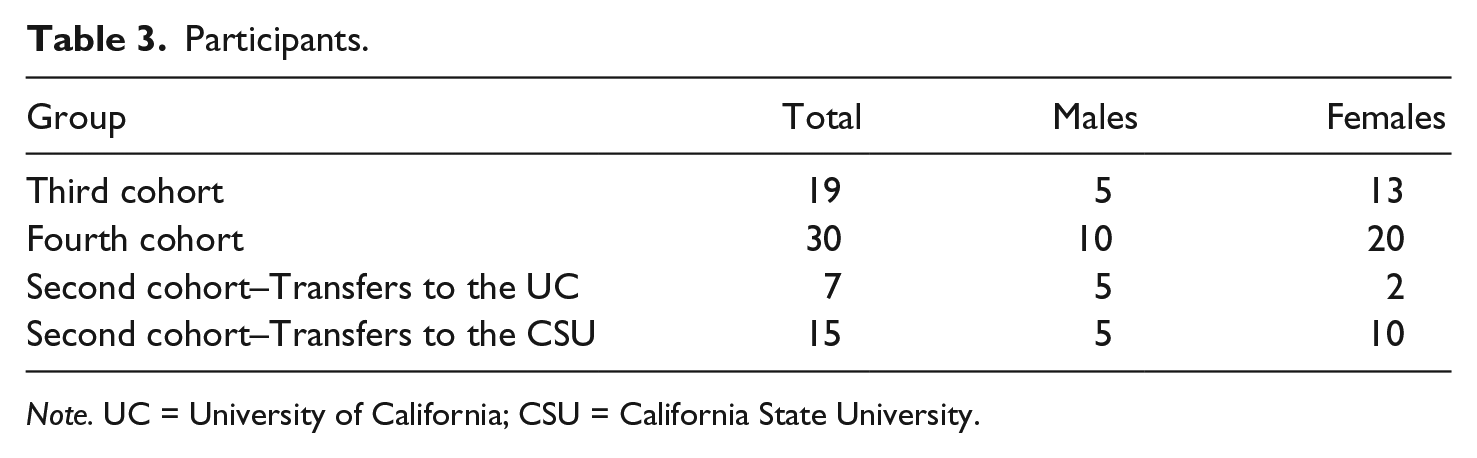
The researcher and assistants interviewed a total of 71 students (see Table 3). Every participant from the third and the fourth cohorts identified as Hispanic/Latina/o and they were all between 18 and 22 years old. All transfer students to the CSU identified as Hispanic/Latino/a. Five transfer students to the UC identified as Hispanic/Latino/a, one identified as Asian, and one identified as “Other.” All participants who transferred to the UC and CSU were between 18 and 22 years old, except seven CSU transfer students who were over the age of 23.
Participants.
Note. UC = University of California; CSU = California State University.
Data Analysis
After the in-person or phone interviews, the principal researcher transcribed the conversations and searched for consistent themes in the students’ responses. The search for consistent themes includes the identification of repeated phrases, consistent descriptions, or similar language. The process is called thematic analysis (Reinard, 2008) and helps researchers identify recurrent patterns across participants’ voices and descriptions. The researcher drafted a list of recurrent main themes and additional subthemes that fit the larger main themes. For example, under the main theme of “The most helpful services” in Table 7, the researcher listed recurrent subthemes, such as “Counselors”; Constant reminders, including emails and phone calls”; “Transfer workshops”; and so on that fit the main theme. Simultaneously, the researcher asked the assistants to similarly identify major and subthemes to eventually compare the lists. The researcher and the assistants consequently confirmed and agreed on the most prevalent major and subthemes. Creswell (2007) described this mutual agreement process as intercoder reliability to ensure accuracy.
Trustworthiness
The researcher and assistants ensured trustworthiness through triangulation and interrater reliability (Creswell, 2013). Triangulation was established by using the protocols in previous studies, matching similar emergent themes from the present study to previous studies, and cross-matching emergent themes between the researcher and assistants. Interrater reliability was established by evaluating consistency across raters. The goal was to find cohesive themes that were similar across cohorts and in the researcher’s and assistants’ interpretations. In essence, the goal of longitudinal qualitative study is to show similarity or dissimilarity of themes across different groups and time. In the context of Latina/o student development, researchers have suggested that longitudinal qualitative design is often more trustworthy than snapshot, short-term studies because researchers may more accurately map out the major factors, themes, or identity development of participants across time (Torres, 2004; Torres & Hernandez, 2007).
Findings
Reflecting on the major themes from previous assessments of Adelante’s first and second cohorts (Table 1), the present study focused on students’ experiences in the program from the third (Table 4) and fourth (Table 5) cohorts as a means to compare experiences across the four cohorts. This study also looked at the experiences of students from the second cohort that successfully transferred from the community college to a UC (Table 6) or CSU (Table 7) to compare their experiences to the experiences of students from Cohort 1 that transferred to the UC or CSU (Table 2). The findings are separated for Cohort 3, Cohort 4, and Cohort 2 students who transferred to the UC or CSU because, although the emergent themes and subthemes are similar at times, the researcher wanted to show the progression of themes in a sequential, linear fashion. Moreover, the researcher separated the findings per cohort to preserve the spirit of true longitudinal qualitative design related to the study of cohorts (Saldaña, 2003) and the integrity of students’ explanations in their respective groups.
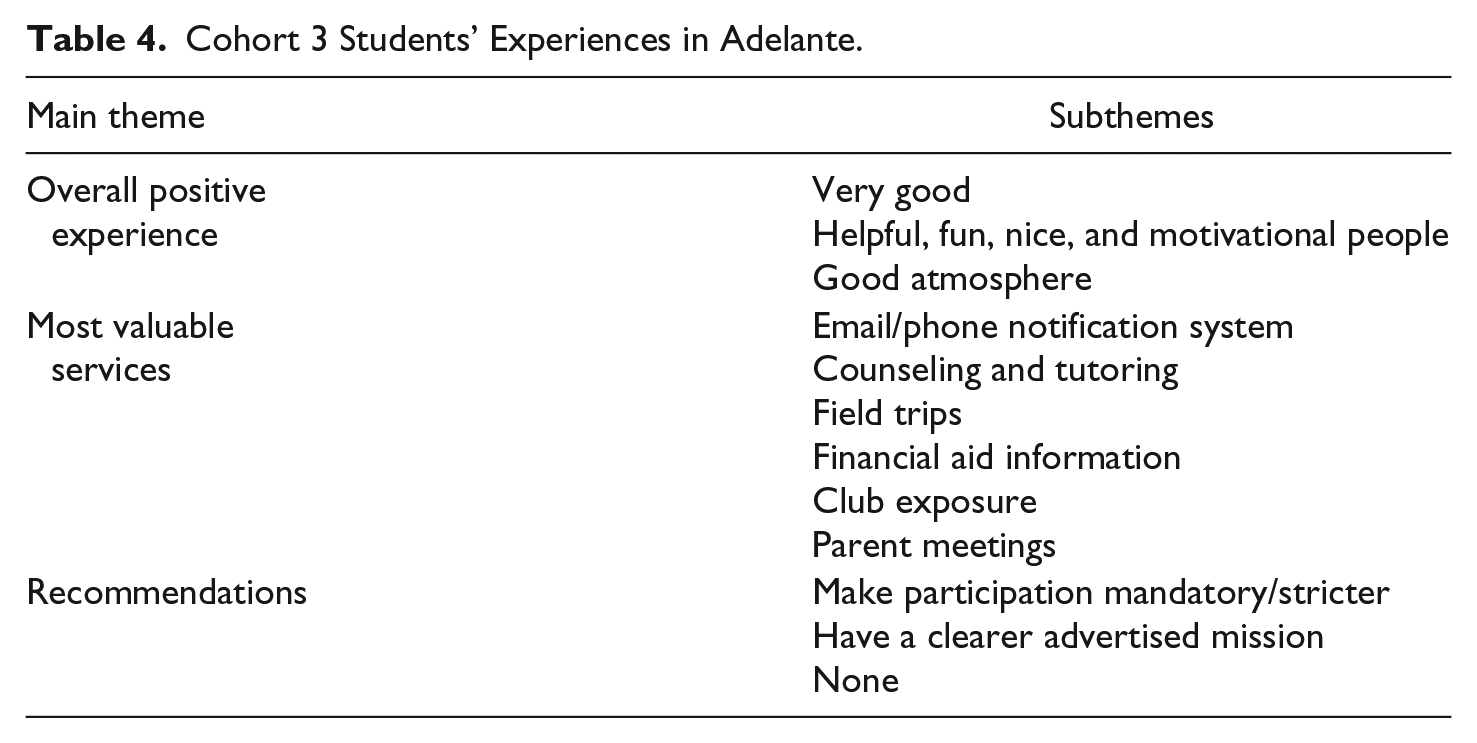
Cohort 3 Students’ Experiences in Adelante.
Cohort 4 Students’ Experiences in Adelante.

Note. UC = University of California.
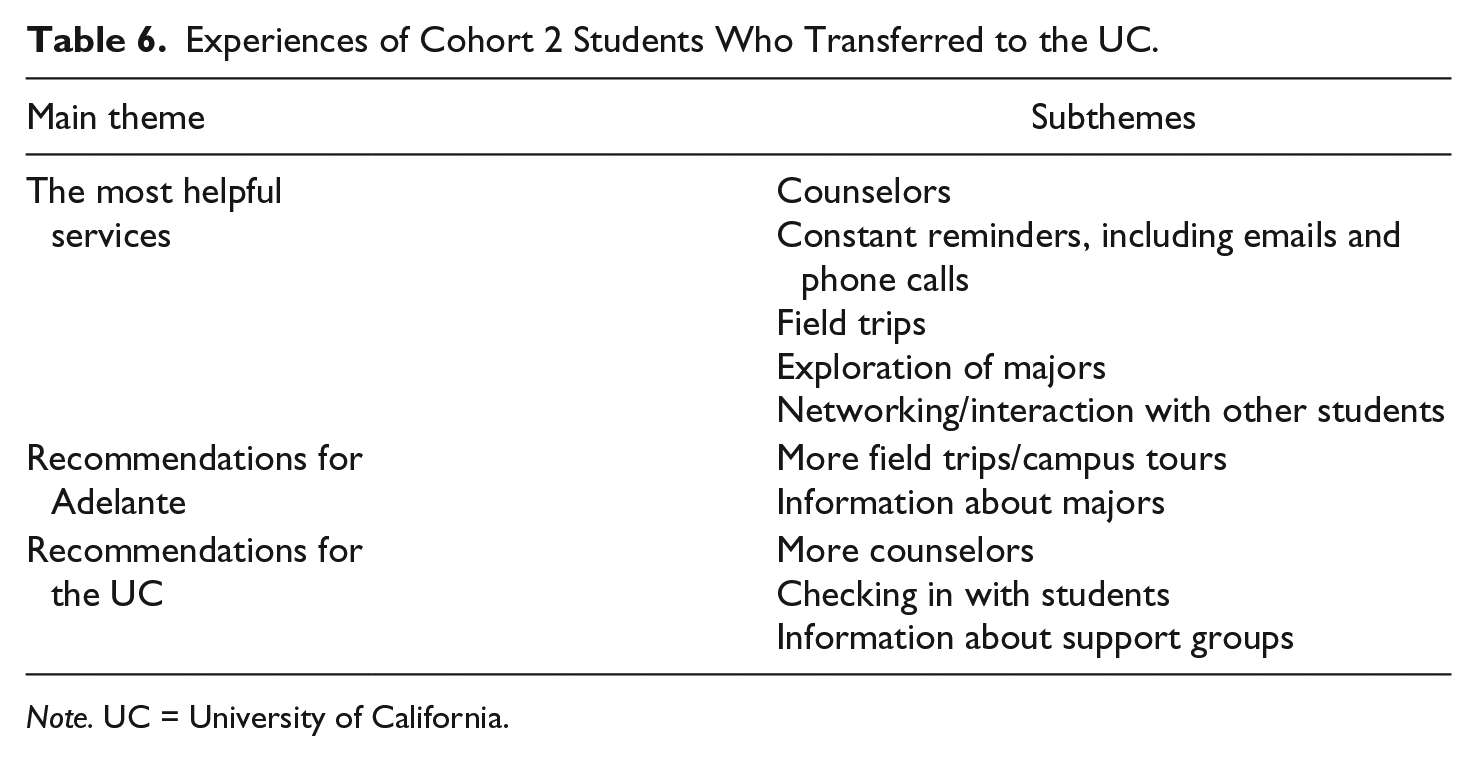
Experiences of Cohort 2 Students Who Transferred to the UC.
Note. UC = University of California.
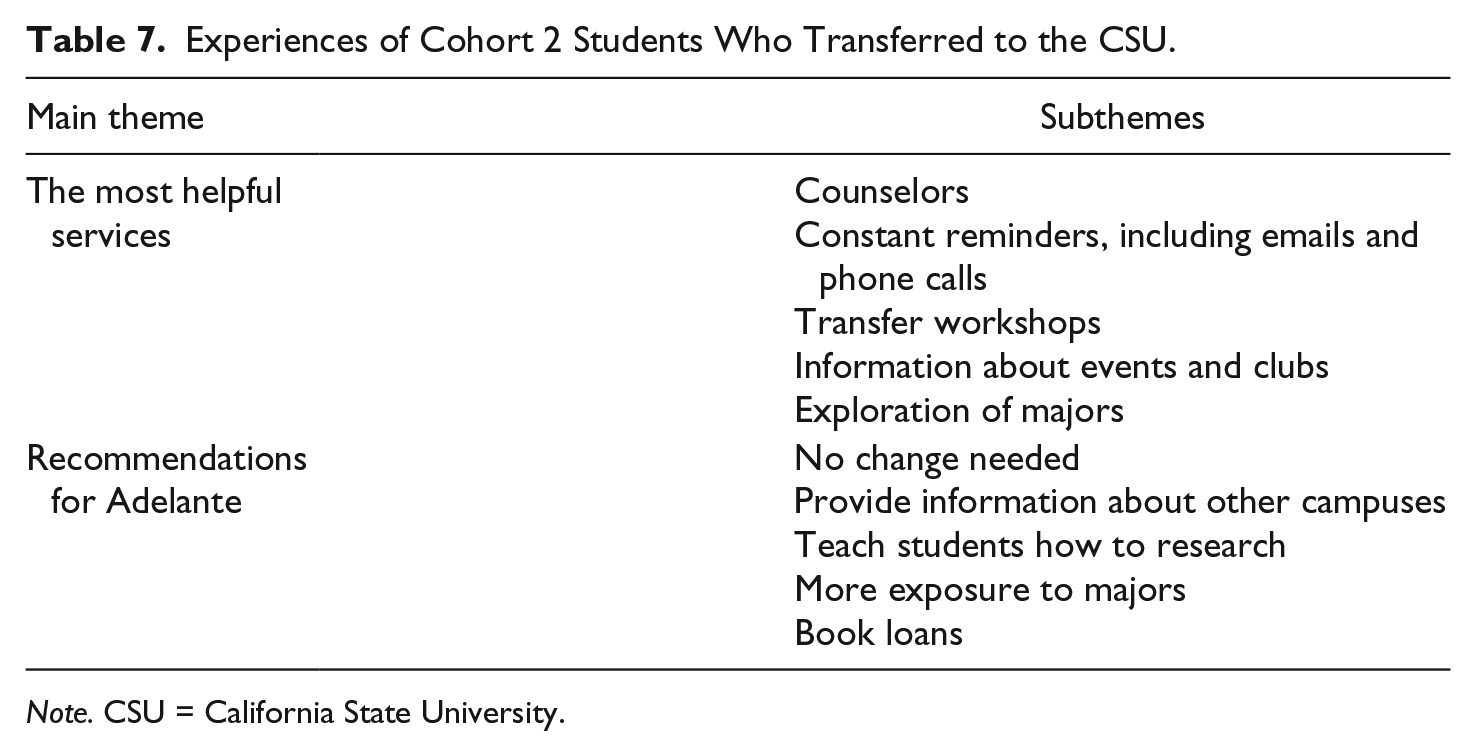
Experiences of Cohort 2 Students Who Transferred to the CSU.
Note. CSU = California State University.
Cohort 3 Students’ Experiences
Table 4 lists the major themes and subthemes that emerged from Cohort 3 students’ responses. The major themes consisted of students’ overall positive experience, description of the most valuable services provided by Adelante, and recommendations for the program.
Overall positive experience
Students described an overall positive experience in the Adelante program and expressed satisfaction with the staff and counselors, as well as the environment. Students indicated that the personnel was “very good,” “positive,” and “amazing” and the counselors were helpful, fun, nice, motivational, and encouraged them to succeed. Staff contributed to students’ positive outlook and future planning. One student described, Through the program I heard about [the UC] and how to transfer. There is a guarantee that I can further my education and it has been really helpful. The counselors are really nice and that helps a lot. Other departments aren’t so nice or helpful. I think that this program has helped me grow as a person. The resources were helpful and I wouldn’t have known about them without it.
The students explained that the program created a good, positive atmosphere where the students had fun socializing and meeting other students. When describing her overall experience in the program, another student indicated, “Amazing! I wish I could take some friends because people just go there and have conversations with people—you know—just laugh and they are helpful.”
Most valuable services
The participants listed an endless array of valuable services provided by Adelante. The two most recurrent and important were the email/phone notification system and counseling/tutoring. Students indicated that the constant notifications and reminders helped them keep track of events, workshops, and program support meetings. Undoubtedly, the counseling and tutoring offered by Adelante was vital for students’ planning and motivation to succeed. For instance, one student indicated that the counselors “gave me a direct story about what to do and where to go” and another stated that “I’ve gotten answers whenever I had a question” to suggest that counselors were practical and straightforward.
Furthermore, the program provided other important services that made the program attractive and helpful. Students listed field trips as a useful way to gain exposure to 4-year universities, including the UC and CSU. In addition, students appreciated exposure to clubs at the community college, including MESA and other extracurricular activities. Financial aid information was particularly valuable. One student noted, I remember when the financial aid members came and helped us do our applications correctly. We also had people come in to tell us about student loans. [I appreciated that] little people that come and help us learn about stuff like that [sic].
Last, students described parent meetings as among the most valuable services described by students. When discussing the most valuable services, one student described, Definitely parent meetings. I felt at home and explaining them what college was going to be like. When college came, [Adelante] helped my parents understand. [My parents] learned to give me the time and space.
Recommendations
Cohort 3 students provided important recommendations to strengthen the program. One recommendation was for the program to make participation mandatory or stricter. As indicated by one student, I think they need to be a little bit more strict. Like be more, I feel that because a lot of students are in it, they don’t pay too much attention. I feel like [this other program] does that.
The latter student suggested that another program effectively obligated students to participate in counseling, events, and workshops. Many students did not participate actively in Adelante’s field trips, workshops, or events because the program did not make such participation mandatory. Furthermore, several students indicated that Adelante needed a clearer advertised mission. They expressed that the program’s mission was unclear because they did not know if the program was solely focused on transfer or other educational objectives. One student said, I don’t know much about the program or what’s about. Maybe they need more posters around campus because, you know, when people walk to classes and stuff they can see the posters in between.
The latter student described that she heard about Adelante by accident in one of her classes, but she did not regularly attend meetings because she was not sure about the requirements to participate in the program. In other words, the program did not reflect a single, clear mission and the purpose of the program was not communicated appropriately.
Despite the recommendations from students to improve different elements of the program, a consistent response was that Adelante did not need to change whatsoever. As one student stated, Honestly, I think it’s a great program. They let us know about application fees and classes to take. Our educational plan gets done. They go over the educational plan and tell us about certain classes to take and not take.
The majority of students appreciated the services, structure, and social networking setting altogether. One student had no recommendations because, according to her, “it was perfect.”
Cohort 4 Students’ Experiences
Table 5 lists the major themes and subthemes that emerged from Cohort 4 students’ responses. The major themes in this section were consistent with the major themes from Cohort 3’s opt-in students’ experiences.
Overall positive experience
Overall, the students described a positive experience, primarily in their interactions with counselors. All students indicated that the counselors were helpful. One student indicated that the staff was “very good” and another student indicated that “the counselors are very nice and helpful.” Counselors provided very “useful information” about the transfer process, financial aid, and requirements to “get through school.” Similar to previous cohorts, students described counselors and staff as extremely caring. In addition, several students characterized Adelante as a “comfortable” environment where they met other students from similar backgrounds. As one student noted, I feel good in Adelante. I feel that I saved a lot more time and have gotten further in my education than other people my age at community colleges. [The program] helped me graduate faster. I would have taken longer without this program. It’s been very good. Whenever I have a question, there are people that are willing to help you out. It’s been fun meeting new people.
In general, students had a positive experience because of the various resources and daily interactions with staff and peers.
Most valuable services
Cohort 4 students found value in the myriad services offered by Adelante. Identical to Cohort 3, Cohort 4 students repeatedly described the email/phone notification system and counseling and tutoring as the most valuable services in the program. Moreover, the students were incredibly appreciative of the counselors’ knowledge, time, and patience in working with them. The students also expressed gratitude for the workshops and events and they appreciated the opportunity to network with other students, counselors, and staff. One student expressed, “The director said she will try her best to help us transfer to get somewhere far.” This student explicitly identified the director of the program as energetic and helpful. Students indicated that they valued volunteering opportunities at the community college and in the community, such as community outreach events. Several students looked forward to participating in the UC summer program, a program that exposes them to the UC environment before transfer, which they perceived as a great opportunity to learn about the UC campus and expectations.
Recommendations
Similar to the Cohort 3 students’ opinion that the program was “perfect,” one Cohort 4 student expressed that she did not have recommendations for the program because “it’s very well organized.” Several students suggested that counselors and staff should offer more information about early scholarships and other financial assistance information. One student indicated, “I have not been to a different campus other than [a nearby university] and here at [the community college]” to express the need for more field trips and exposure to different universities.
Cohort 2 Students Who Transferred to the UC
Table 6 lists the major themes and subthemes that emerged from the experiences of Cohort 2 students who transferred to the UC. Researchers asked students to describe their experiences in Adelante and how the program influenced their transfer to the 4-year university. The major themes that emerged from students’ responses consisted of students’ descriptions of the most helpful services provided by Adelante, as well as recommendations for the program and for UC administrators.
The most helpful services
Students described counselors as the most helpful service provided by Adelante. Counselors were the most valuable resource in terms of the bureaucratic process to successfully transfer. Several students characterized counselors as motivational and positive. One student declared, “[Adelante] gives us hope especially for Hispanics and for the community. It gives us hope that if we try we can achieve our full potential and get into universities that are hard to transfer.” In a similar light, another student indicated I trusted the program a lot. I felt really lucky to be in the program. I have friends who went to other community colleges and tried to come here and you could only be here straight out of high school. I really liked all the resources and opportunities like the field trips. Adelante in a sense made everything feel more possible. I always knew I would go to college but this was the extra push I needed. I felt the whole program counting on me and it worked as extra support. Field trips to set foot on college campuses made it more real. I built a personal relationship with the counselors at Adelante so I felt comfortable going to them to ask any questions and I liked the one-on-one individual attention because they got to know you and they could better help you.
The previous students described the program as a source of hope and trust, which helped the students feel a sense of comfort. The latter student goes as far as suggesting that acquaintances from other colleges desired to be part of Adelante, but could not participate in the program if they did not enroll in the community college that houses the organization.
Students listed many other helpful services. Consistent with Cohorts 3 and 4, Cohort 2 transfer students positively perceived the constant reminders, including emails and phone calls, which helped them stay on track for transfer. Several students mentioned that the field trips to the UC helped them familiarize themselves with the campus. Moreover, students indicated that the Adelante program helped them explore their majors of interest, which eventually helped them decide to transfer. In particular, students mentioned that they were highly interested in the science and engineering majors offered by the UC. Last, students specified that Adelante helped them network and interact with other students who were interested in transferring to or were already at the UC. The networking and interaction with other students helped students feel prepared to transfer to the 4-year university.
Recommendations for Adelante
Students provided useful, practical recommendations for the program. The most important, recurrent recommendation was that Adelante should offer more field trips and campus tours. Several students illustrated that they were not entirely familiar with the campus buildings, including the precise locations of the financial aid and counseling services centers at the UC. A few other students described feeling lost and not knowing where to go once they entered the UC campus. As one student illustrated, Once I transferred it was kind of like you’re on your own. Constant check-ins would be helpful. They could also have student support groups from the same class at [the community college]—everybody who transferred can share their experiences about the transfer process. Student support [would help students] know they are not the only one going through difficulties, both between UCI and CSUF.
Students asked for a centralized information system about all the potential majors at the UC, as well as information about clubs, buildings, and events related to their majors. The end goal of increased student networks and support would be to ease the transfer experience.
Recommendations for the UC
Unfortunately, students who transferred to the UC did not feel the same support and personalized assistance from UC counselors as they did in Adelante. One student explained, I haven’t been reached out from [UC] counselors since I got here. Once I transferred it was kind of like “you’re on your own.” Constant check-ins would be helpful. They could also have student support groups from the same class at [the community college]. . . . I still go back to [Adelante] to ask the counselors questions because I live so close and I feel more comfortable there. It’s a comfort zone and because I don’t know who to go to at [the UC].
As expressed by the student, she felt that the UC counselors did not reach out to assist her. As a result, the student did not feel as comfortable at the UC as she felt in Adelante due to the lack of “check-ins.” Furthermore, students recommended that UC administrators provide information about support groups on campus. As specified previously, students largely appreciated that Adelante provided networking opportunities for students to connect with students at the UC when they were still at the community college. Students sought a similar experience at the UC.
Cohort 2 Students Who Transferred to the CSU
Table 7 lists the major themes and subthemes that emerged from the experiences of Cohort 2 students who transferred to the CSU. Researchers asked the students to describe their experiences in Adelante and how the program influenced their transfer to the 4-year university. The major themes consisted of students’ descriptions of the most helpful services provided by Adelante, as well as recommendations for the program and for CSU administrators.
The most helpful services
Unsurprisingly, students who transferred to the CSU described counselors as the most helpful service provided by Adelante. One student noted, The constant reminders—[Adelante staff] were really involved in student success. I appreciate the emails with important deadlines. They would even call home for FAFSA reminders. The activities they provide helped explore what you think you might be interested in, like majors. . . . It’s really chill and exciting.
The constant reminders through emails and phone calls helped them plan and fulfill all the requirements for transfer. The majority of students identified transfer workshops and information about events and clubs as useful services, as well. Unlike the students who transferred to the UC, students who transferred to the CSU indicated that they were thankful that Adelante exposed them to different majors. These students felt knowledgeable and connected to the majors they chose to study at the CSU.
Recommendations for Adelante
A few students expressed that Adelante should teach students how to research. Students felt that they were not prepared for the rigor and expectations of research at the CSU unlike the academic expectations of the community college. Moreover, students suggested that Adelante could set up more meetings, events, and orientation to the majors that were offered at the CSU. Although several students were attracted to specific careers before transfer (e.g., business and sociology), others preferred a more robust exposure to other majors. Consistently, several CSU transfer students explained that there was no change needed for the Adelante program.
Recommendations for the CSU
Interestingly, students’ recommendations for CSU administrators were very similar to those provided by UC transfer students. First and foremost, numerous students recommended that CSU administrators and counselors check-in with students after transfer. In describing a recommendation for universities to better assist students, one student indicated, When it comes to the counseling, I would always visit different counselors. They would sometimes tell me different things. The counselors might not be on the same page so all students should have a specific counselor. More consistency would help with confusion.
Several students felt that counselors and administrators at CSU did not reach out to students in a similar fashion as Adelante counselors. In fact, another student described that she would have a better experience: Maybe if the Adelante program helped me keep up with school at [the CSU]. Sometimes I forget about updates that I need to fill out and it would be helpful if Adelante continued to help with that because, for example, [the counselors] at [the community college] always reminded me when deadlines where due so they helped me keep up.
The student elaborated on that statement by illustrating that counselors at the CSU did not seem to understand her academic intentions and did not provide consistent advice about courses and major requirements. She recommended that the counselors at the community college assist her in her studies at the CSU. Another student candidly described, We had orientation and it was stressful. In my mind I was told we would get one-on-one counseling and it was not like that. It was in group and so I didn’t really know what to take. Adelante might have helped with that.
Therefore, the students who transferred to the CSU repeatedly advocated for check-ins and consistent counselor involvement, similar to the students who transferred to the UC.
Discussion
The investigation of students’ experiences in the Adelante program across four cohorts, including the experiences of students who successfully transferred to a UC or CSU, sheds light on the importance of the organization in fostering a college-going and transfer-oriented culture. Overall, there were several themes existent across all four cohorts that support Rendón’s theory of validation (Rendón, 1994, 2000; Rendón Linares & Muñoz, 2011) and point to the validation function of the orientation and transfer program.
First, similar to experiences of students in the first and second Adelante cohorts (Andrade & Gonzalez, 2014; Andrade et al., 2015; Hoppe Nagao et al., 2013), the majority of students in the third and fourth cohorts said that their experiences in Adelante were positive and they described the program as helpful, motivational, and foundational to their persistence or successful transfer. Of utmost importance is the fact that a majority of students perceived the program as “perfect” and well organized. The students favorably described the structure, including the sustained counseling, social events, social media communication, and field trips. The students appreciated the email and communication system, as well as the active attempt by Adelante administrators to involve parents and the surrounding community. Moreover, students described a sense of relief and appreciation for the guaranteed acceptance into a UC or CSU if they participated in the program. The findings in this study, along with research regarding successful student support programs (Crisp, 2010; Dowd, Pak, & Bensimon, 2013; Pascarella & Terenzini, 2005; Zalaquett & Lopez, 2006), indicate the urgency and need for programs like Adelante for Latina/o students to positively influence student success, social networking, retention, persistence, integration, and active participation. Studies have shown that programs like Adelante function as a central hub where students find mentors, financial aid information, cultural resources, and moral support (Zalaquett & Lopez, 2006). Echoing Ornelas and Solorzano’s (2004), as well as Pérez and Ceja’s (2010) research, the partnership between the community college, the UC, and CSU was important because it provided the structural foundation for students to persist and feel comfort in transfer.
Second, there was overwhelming consensus across participant groups in the present and previous studies that the counselors and staff were important for student motivation and optimism. These agents made participation in the program incredibly meaningful, which is reflected in students’ perceptions that the counselors and administrators affirmed their identities without judging or encouraged them to succeed. The counselors provided academic, educational, emotional, and psychological support for students to persist and successfully transfer. The students perceived the counselors as investing time and energy in providing personalized support, extremely knowledgeable, culturally sensitive, and understanding. Several students pointed to the fact that the counselors and Adelante administration provided a hopeful vision and necessary push for them to succeed or look forward to transfer. The importance of counselors and support staff for Latina/o student success is well evidenced and supported by previous studies that go as far as suggesting that counselors are the foundational reason why Latina/o students succeed and persist, particularly in the community college context (Tovar, 2015). Countless research studies about institutional agents, which include counselors, indicate that they help students positively integrate into and successfully navigate higher education pathways (Bensimon, 2007; Bensimon & Dowd, 2009; Stanton-Salazar, 2001). This study, along with the findings of the previous authors, indicate that counselors and staff are crucial for positive validation that positively influences students’ motivation, persistence, and adjustment. Similar to previous programs (Pérez & Ceja, 2010; Rendón, 2002), the Adelante program effectuates the necessary validation for Latina/o students to persist and transfer.
Third, a large majority of participants stated that the program offered a comfortable environment to connect and network with other students. Students viewed the Adelante program’s events, workshops, and counseling sessions as an opportunity to connect with students from similar backgrounds and going through similar academic trajectories. Students connected with other students to feel more comfortable about the prospects of transfer and to learn from others about the community college, UC, and CSU environments. Research indicates that social relationships and interactions are among the top benefits offered by programs, such as Adelante, because they remain after participation in a program (Tovar, 2015). According to Deil-Amen (2011), Latino/a students frequently positively integrate into an educational environment if they find comfortable places where they can academically and socially feel a sense of belonging. In addition, several studies explain that culturally rich environments, particularly those that embrace, celebrate, and affirm Latina/o culture, help students persist and succeed (Gloria & Segura-Herrera, 2004; Nora & Crisp, 2009; Pérez & Ceja, 2010; Rendón, 2002). Culturally sensitive environments instill a sense of belonging and the feeling of having a home away from home at school that positively influences students’ integration and motivation (K. P. González, 2001; S. M. Gonzalez et al., 2015; Hurtado, 2002; Rendón, 2000). The cultural affinity found in these programs positively affects student persistence, as well (Torres, 2006).
Fourth, students largely appreciated the early exposure to majors and career development offered by Adelante. The program administrators and counselors exposed the students to majors at the community college and the university through events, workshops, and flyers, which consequently served as a major source of motivation. Students connected with other students and mentors through the Adelante program purposefully to plan their educational goals early. Many students found motivation in knowing that other students at the community college and the university would work with them to enhance their professional opportunities and networking. Several students went as far as suggesting that they wanted more networking opportunities, guest lectures, events, and workshops primarily crafted for career advancement, professional development, and research. Previous studies support early exposure to majors as a means to motivate students and to help them develop lifelong professional skills (Booth et al., 2013; Castellanos & Gloria, 2007). Early career exploration helps Latina/o students develop self-efficacy, adaptation skills, and aspirations to succeed in higher education (Flores, Ojeda, Huang, Gee, & Lee, 2006; Gloria, Castellanos, & Orozco, 2005; Gloria & Rodriguez, 2000). Career development and early exposure to majors inspires students to feel a sense of self-worth, a crucial aspect of effective validation.
Recommendations and Conclusion
This longitudinal, interpretive qualitative study revealed that students positively perceived the services and structure, including the counselors, social networking environment, and early exposure to careers. The findings lend support to the previous Adelante studies that identified the program as a helpful tool in helping Latina/o students succeed and transfer (Andrade & Gonzalez, 2014; Andrade et al., 2015; Hoppe Nagao et al., 2013) and numerous studies supporting the creation of culturally specific student support programs. Importantly, the study provides evidence that the sustained orientation programs and educational services recommended by the SSTF and the Student Success Act in California for students, including Latina/os, are vital and urgent in California and nationally. Institutions in California and nationally should mimic the structure of programs like Adelante and push policy-makers to continue supporting similar programs to increase Latina/o persistence, success, and transfer rates. The ultimate benefit of these programs, as Garcia (2015) indicated, is that “student support programs that have historically served minoritized students . . . can serve as the model for all advising practices on campus” (para. 2).
This study lends support to previous recommendations for student support, orientation, and educational services programs (S. M. Gonzalez et al., 2015; Pérez & Ceja, 2010; Rodriguez et al., 2015; Zalaquett, 2005). First, community college–university joint programs should establish culturally specific programs for Latina/o students to focus on the following objectives: (a) building community and interconnected networks between Latina/os, (b) providing culturally aware counselors and mentors who understand Latina/o identities and needs, and (c) instilling appreciation of Latina/o culture and diversity. Culturally specific programs “infuse cultural values for Latina/os,” such as interdependence, belonging, and community (Castellanos & Gloria, 2007, p. 385). Second, community college–university joint programs should promote career and professional development for students who may increase participation in events and workshops by emphasizing professional relationship building and development. Professional development may include research opportunities, networking with instructors, and participating in major-related projects with students. Last, university partners need better tracking and support for incoming transfer students who participate in community college programs similar to Adelante. The universities should make the transition smoother by instilling a sense of belonging during the time period when students transition between the community college and 4-year universities. Transparency, consistency, and prolonged programmatic assistance is vital for student retention and ease of transfer.
There is room for important future studies based on some of the limitations in the present study. Most of the students in the study self-identified as Latina/o, so very little is known about other ethnic or cultural groups that may participate in similar programs. Moreover, the study followed students who transferred to a UC or CSU, but did not assess if the different institutional types and climates influenced students’ well-being or success. A more encompassing look at different ethnic or cultural groups, similar to previous studies about African American and Asian American students (Gloria, Kurpius, Hamilton, & Willson, 1999; Museus, 2008; Palmer & Gasman, 2008), as well as the institutional type and climate may reveal different types of (in)validation for students. In addition, future studies may quantitatively study the program’s influence on students’ success, including persistence, retention, and grade point averages (GPAs). Of utmost importance is the fact that programs, curriculum, or other services must continuously validate students, their cultures, and identities. Positive validation will instill in students the sense of belonging and motivation to “salir adelante,” to succeed and move forward, which is the whole purpose of the program analyzed in this study.
Footnotes
Declaration of Conflicting Interests
The author(s) declared no potential conflicts of interest with respect to the research, authorship, and/or publication of this article.
Funding
The author(s) received no financial support for the research, authorship, and/or publication of this article.