



Abstract
Prior research has established that having a low future orientation is associated with offending. Additionally, it has been found that being exposed to adverse childhood events such as physical abuse may lower one’s future orientation and increase one’s offending likelihood. One gap in this line of research concerns the potential mediating role of future orientation on the relationship between trauma and offending. The current study fills this gap in the literature using a sample of adjudicated delinquents from a large southern state. The results from the study partially support the hypotheses; while future orientation lowers the likelihood of offending and trauma exposure increases offending likelihood, future orientation does not appear to mediate the relationship between trauma exposure and crime. Limitations and future research directions are discussed.
The Joint Impact of Adverse Childhood Experiences (ACEs) and Future Orientation on Offending
Prior research from both criminology and psychology has reported that young individuals holding low future orientation are more likely to engage in risky behaviors such as crime (Brezina, Tekin, & Topalli, 2009; Caldwell, Wiebe, & Cleveland, 2006; Gibbs & Shelly, 1982; Piquero, 2016). A smaller, more recent set of studies have explored the potential causes of this low perception (feeling hopeless or negative) of the future and some have reported that experiencing child abuse or other forms of violence may decrease the individual’s future orientation (Kerig & Becker, 2010; Monahan, King, Shulman, Cauffman, & Chassin, 2015; Swisher & Warner, 2013; Warner & Swisher, 2014). Some of these studies have been limited in their methodologies, though, and none have investigated whether ACEs may also decrease the youth’s future orientation. This is unfortunate given the negative impact this collection of 10 adverse events are known to have on offending and other life outcomes (Bellis, Lowey, Leckenby, Hughes, & Harrison, 2014; Felitti et al., 1998; Fox, Perez, Cass, Baglivio, & Epps, 2015). The current study seeks to fill this void and investigate whether future orientation mediates the relationship between ACEs and later offending.
Using a sample of adjudicated youth sentenced to some form of community placement (such as probation supervision) in the state of Florida, the impact of ACEs on one’s future orientation will first be assessed. Next, the potential mediating influence of future orientation on the positive relationship between ACEs and later recidivism will also be considered. The findings from this study seek to inform the intervention efforts considered by practitioners and policy makers. Specifically, if the study’s findings are in agreement with prior research, then the results may suggest that interventions should include a focus on increasing an individual’s aspirations for the future in order to help reduce further offending and other antisocial behavior. Prior to presenting the central analyses of the study, an overview of the literature will be presented including a discussion of the relationship between future orientation and crime and factors that may influence one’s future orientation. First, an outline of ACEs and their impact on crime will be offered.
ACEs and Offending
Originally identified among a sample of privately insured adults, Felitti and his colleagues (1998) reported 10 distinct negative childhood experiences that were positively correlated with a range of negative health outcomes such as cancer, lung disease, and early death. Referred to as ACEs, these negative childhood events include physical abuse, emotional abuse, sexual abuse, physical neglect, emotional neglect, household substance abuse, violent treatment toward mother, parental separation or divorce, household mental illness, and having an incarcerated household member. A unique feature of the ACEs framework is that the frequency, severity, and/or duration of each distinct event are not considered in the overall ACE score. Instead, if an individual experienced at least one incident of the event (i.e., one incident of sexual abuse), then they score a 1 for that ACE. The overall count of distinct experiences is summed, so that ACE scores can range from 0 to 10. As scholars have continued to investigate the impact of ACEs on a range of outcomes, it has been found that these experiences are highly interrelated and have a cumulative stressor impact on an individual’s brain development (Anda, Butchart, Felitti, & Brown, 2010; Anda et al., 2006; Cicchetti, 2013; Teicher et al., 2003).
It has been reported that while ACEs have a detrimental impact on one’s later health, they are also associated with an increase in delinquency and serious offending (Fox et al., 2015). Using a sample of adjudicated delinquents from the Florida Department of Juvenile Justice (FL DJJ), it has been found that youth with more ACEs also have a higher risk of rearrest and have a shorter period of time to rearrest than their counterparts (Wolff, Baglivio, & Piquero, 2015). Further, justice-involved youth, particularly those from disadvantaged environments, are more likely to have experienced these forms of trauma and abuse than those in the general population (Baglivio & Epps, 2015; Baglivio, Wolff, Epps, & Nelson, 2015; Kerig et al., 2010). In sum, trauma-exposed youth are more likely than their peers to experience a wide range of negative outcomes later in life, ranging from involvement with the criminal justice system and deleterious health consequences. However, what is less known, particularly with regard to the relationship between ACEs and offending, are potential explanations for this relationship. It has yet to be investigated the impact of these specific traumatic exposures on one’s later future orientation, a factor that is known to be associated with offending.
Future Orientation and Offending
Future orientation, conceptualized as “the degree to which individuals possess positive attitudes toward their futures” (Robbins & Bryan, 2004, p. 430), has been found to be associated with criminal behavior and other risky acts in a wide range of samples (Caldwell et al., 2006; DuRant, Cadenhead, Pendergrast, Slavens, & Linder, 1994; Robbins & Bryan, 2004). Specifically, it has been reported in both qualitative and quantitative studies that individuals with lower future orientations who do not think much of the future or perhaps believe they will die young are more likely to commit crimes than those with higher degrees of future orientation (Brezina et al., 2009; Gibbs & Shelly, 1982; Piquero, 2016). This is not unexpected given the arguments of both rational choice (Nagin & Paternoster, 1993) and self-control (Gottfredson & Hirschi, 1990) theories. The arguments of the rational choice theory are well portrayed in interviews that Gibbs and Shelly (1982) conducted with a sample of commercial thieves. They found these men tended to possess a fatalistic attitude where they, strongly believing they would one day get caught for their crimes, lived for the present. If one does not hold much certainty for the future, an offender’s hedonistic calculus would suggest to enjoy each day as they come without planning for the future (see also Brezina et al., 2009). Likewise, based upon the general theory of crime, Gottfredson and Hirschi (1990) posit that one’s ability to plan for the future composes one element of an individual’s self-control. If an individual is more oriented toward immediate gratification as opposed to not putting one’s future at risk, then they will be inclined to act upon their impulses and potentially engage in criminal behavior. 1
As scholars from both psychology and criminology have assessed the relationship between future orientation and antisocial behavior, a wide range of various operationalizations have been used. In general, these can be separated into two groups: those that measure perceptions of an early death (Brezina et al., 2009; Caldwell et al., 2006; DuRant et al., 1994; Piquero, 2016) and those that use a personality inventory such as the Future Outlook Inventory (Kruger et al., 2015; Monahan, Steinberg, Cauffman, & Mulvey, 2009, 2013). Despite these separate strategies, they all suggest that those with lower future orientation are more likely to offend than those with higher future orientation.
For instance, Caldwell, Wiebe, and Cleveland’s (2006) measure of future orientation relied upon participants’ responses to a number of different indicators including the likelihood of living to 35, being killed by 21, and being diagnosed with HIV/AIDs. Using an African American subsample of Wave I Add Health respondents, the researchers reported that after controlling for a number of different neighborhood, economic, and family actors, those who had lower future orientation were more likely to be delinquent. Brezina, Tekin, and Topalli (2009) improved upon this cross-sectional research by using the first two waves of the Add Health data and found that those who reported a higher probability of being killed by age 21 at Wave I were more likely to offend at Wave II.
In a more recent analysis of a sample of serious adjudicated delinquents from the Pathways to Desistance data, Piquero (2016) assessed the ability of the youths’ forecasted age of death to predict offending trajectory membership. Those who predicted an earlier age of death were more likely to belong to a chronic offending pattern than those who predicted a longer life. This same sample of serious adjudicated delinquents has also been used to investigate the relationship between the Future Outlook Inventory (Cauffman & Woolard, 1999) on offending persistence (Monahan et al., 2009, 2013). This personality inventory includes several items intended to measure one’s future orientation and includes items such as “I will keep working at difficult, boring tasks if I know they will help me get ahead later.” Along with the negative relationship between future orientation and offending persistence, Monahan, Steinberg, Cauffman, and Mulvey (2009, 2013) reported that an individual’s future orientation develops through their mid-20s (see also Steinberg et al., 2009). This has important implications for delinquency prevention and intervention programs as this demonstrated correlate of offending is known to be lower at this stage in the life course compared to older adults. It also leads us to consider what other factors besides age may influence the development of one’s future orientation.
Predictors of Future Orientation
As the previous section illustrated, many studies have established a relationship between an individual’s future orientation and their antisocial behavior. Given less empirical attention, however, is what factors may be associated with one’s future orientation. Recall that Piquero (2016) used the Pathways to Desistance data to establish a relationship between a predicted early age of death and offending trajectory membership. In additional analyses, he also explored potential predictors of expected early death. Gender (being male relative to being female) and race/ethnicity (being Hispanic relative to Blacks and Whites) were found to be associated with a predicted premature death. Additionally, respondents who lived in adverse neighborhood conditions characterized by social and physical disorder were more likely to predict an early age of death.
Of central relevance to the current study, there is some evidence to suggest that trauma exposure serves to lower one’s future orientation and survival expectations (Monahan et al., 2015; Swisher & Warner, 2013; Warner & Swisher, 2014). For instance, using the first three waves of the Add Health data, Warner and Swisher (2014; see also Swisher & Warner, 2013) found evidence that being a childhood victim of physical abuse lowered expectations of survival to age 35. Interestingly, they did not find this effect for being a child sexual abuse victim. One limitation to this study included that the child abuse measures were measured retrospectively at Wave III, potentially leading to measurement error.
Other researchers have also relied upon the Pathways to Desistance data to explore the relationship between violence exposure and future orientation. Monahan, King, Shulman, Cauffman, and Chassin (2015) reported that those who were exposed to violence were slower to develop their future orientation between the ages of 15 and 25 relative to their counterparts. This is significant as one’s future orientation is known to develop through one’s late teenage years into early adulthood (Steinberg et al., 2009) and implies that not only is one at a heightened risk of delinquency and other antisocial acts as a teenager, but this risk may continue into early adulthood as a result of this trauma.
Scholars have offered three potential theoretical explanations for the relationship between violence exposure, future orientation, and crime (Agnew, 2002; Hirschi, 1969; Kerig & Becker, 2010). The first, offered by Kerig and Becker (2010), argued the relationship between trauma and delinquency may be mediated by post-traumatic stress disorder (PTSD). As Kerig & Becker. discussed, justice-involved youth are more likely to have been exposed to trauma and are also more likely to have been diagnosed with PTSD than their peers. Further, one symptom of PTSD among youth is that these individuals often perceive their future to be shortened. In other words, they have a low degree of future orientation. This, then, serves to increase a juvenile’s likelihood of engaging in delinquent acts.
Second, Hirschi’s (1969) social control theory also offers a potential theoretical linkage for this relationship. In brief, Hirschi argued that those who have weaker prosocial attachments, lower commitment to society, less involvement in prosocial activities, and a lack of belief in conventional laws and rules would be more likely to offend as their bond to society is weak. Being exposed to violence, abuse, or neglect may weaken this bond. As discussed by Craig, Baglivio, Wolff, Piquero, and Epps (2017), 5 of the 10 ACEs involve some form of abuse or neglect, potentially indicating low parental attachment. Other potential ACEs, such as parental separation or divorce or having an incarcerated family member, may also weaken one’s bond to society. As Hirschi discussed, individuals that are weakly bonded will have reduced expectations and aspirations for the future. This, as a result, frees them to offend (see also Kornhauser, 1978).
The third theoretical explanation of this relationship was offered by Agnew (2002) as an extension of his general strain theory. First, being exposed to violence could be experienced as either a direct strain (if the juvenile was directly victimized) or a vicarious strain (if they witnessed another’s victimization). Agnew argued this would reduce future orientation and increase expectations of early death, which may be perceived as an anticipated strain. Through experiencing these three distinct types of strain (direct, vicarious, and anticipated), an individual may be more likely to engage in delinquency as a coping mechanism. Using a national sample of male high school students, Agnew found some support for this argument. Specifically, those who had been victimized, witnessed a close other be victimized, or anticipated being a victim of serious violence later in life were significantly more likely to be delinquent. However, it should be noted these data were cross-sectional in nature and failed to demonstrate that exposure to violence increased one’s fear of victimization which, in turn, increased later delinquent behavior. The current study seeks to examine whether this form of mediating relationship exists between ACEs, future orientation, and later offending.
ACEs, Future Orientation, and Offending
In sum, prior literature has suggested that not only is there a negative relationship between future orientation and offending (Brezina et al., 2009; Monahan et al., 2013; Piquero, 2016), but one’s future orientation may be lower as a result of trauma exposure (Monahan et al., 2015; Warner & Swisher, 2014). This pattern of results would suggest that future orientation may mediate the relationship between violence exposure and offending (see also Agnew, 2002; Hirschi, 1969), though this is yet to be tested directly. Further, scholars have yet to consider the impact of a collection of 10 negative childhood experiences, or ACEs, on one’s future orientation. It is these gaps that the current study seeks to fill.
Based upon the prior literature, the current study hypothesizes the following:
Method
Sample
In order to test these hypotheses, the current study utilized a sample of youth from the FL DJJ. The sample was made up of a 3-year cohort of all juveniles who were given an official referral (equivalent to an adult arrest) and completed some form of a community-based placement (e.g., probation) between July 1, 2009, and June 30, 2012. The Positive Achievement Change Tool (PACT) risk/needs assessment is given to all FL DJJ-referred youth. There are two versions of the PACT, the Pre-Screen and the Full Assessment, and while both calculate an identical recidivism likelihood score, only the Full Assessment provides data on the topics related to the current study. The current study includes juveniles who received the Full Assessment as this version, but not the Pre-Screen, included the necessary data to measure the youths’ ACE scores and future orientation. Trained juvenile probation officers conduct the assessment through semistructured interviews, and additional information is provided by a review of the youth’s case file and confirmation with available official education and child abuse records from other state agencies. The PACT has been reported to be a valid predictor of continued juvenile justice system involvement (Baglivio, 2009; Baglivio & Jackowski, 2013; Baird et al., 2013; Winokur-Early, Hand, & Blankenship, 2012).
Youth are given the Pre-Screen Assessment when they first enter the FL DJJ system. The Full Assessment is then given if they score a moderate-high or high risk of reoffending. The youth are reassessed several times during their supervision; all low- and moderate-risk youth are reassessed every 180 days and the moderate-high and high-risk youth are reassessed every 90 days. If a low- or moderate-risk juvenile becomes higher risk, then they are given the Full Assessment. 2 Additionally, it is FL DJJ policy that the Full Assessment be given to all youth disposed to day treatment/reporting programs in the community, an intensive family therapy overlay to probation supervision, or any youth being considered for residential placement, regardless of their recidivism risk. The final sample was composed of 25,461 youth who received some form of community-based placement, where 39.17% were low risk, 16.28% were moderate risk, 30.41% were moderate-high risk, and 14.14% were high risk to reoffend. The current sample included 19.4% of all community-based placement completions over the 3-year period. 3
Measures: Reoffending
The main outcome variable of interest, reoffending, was measured as a rearrest within 12 months following completion of the community-based placement. This was coded dichotomously where 1 indicated the youth was arrested at least once and 0 indicated they were never arrested during the follow-up period. Approximately, 41% of our sample was rearrested within the first year of their community-based placement.
Measures: ACE Score
Each youth’s ACE score was measured through a multistage process. First, if the respondent reported they had ever experienced 1 of the 10 ACE indicators, they were coded 1 for that particular ACE. If they did not, they were coded as 0. The 10 ACEs are physical abuse, emotional abuse, sexual abuse, physical neglect, emotional neglect, household substance abuse, violent treatment toward mother, parental separation or divorce, household mental illness, and having an incarcerated household member. Then, the total number of ACEs each youth indicated they experienced was summed to create the overall ACE score. This ranged from 0 to 10 where 0 indicated they had not experienced any ACEs and 10 indicated they had experienced all 10 events at least once. In the current sample, the mean ACE score was 2.62 and it ranged from 0 to 10. As can be seen in Figure 1, most of the youth had one or two ACEs.
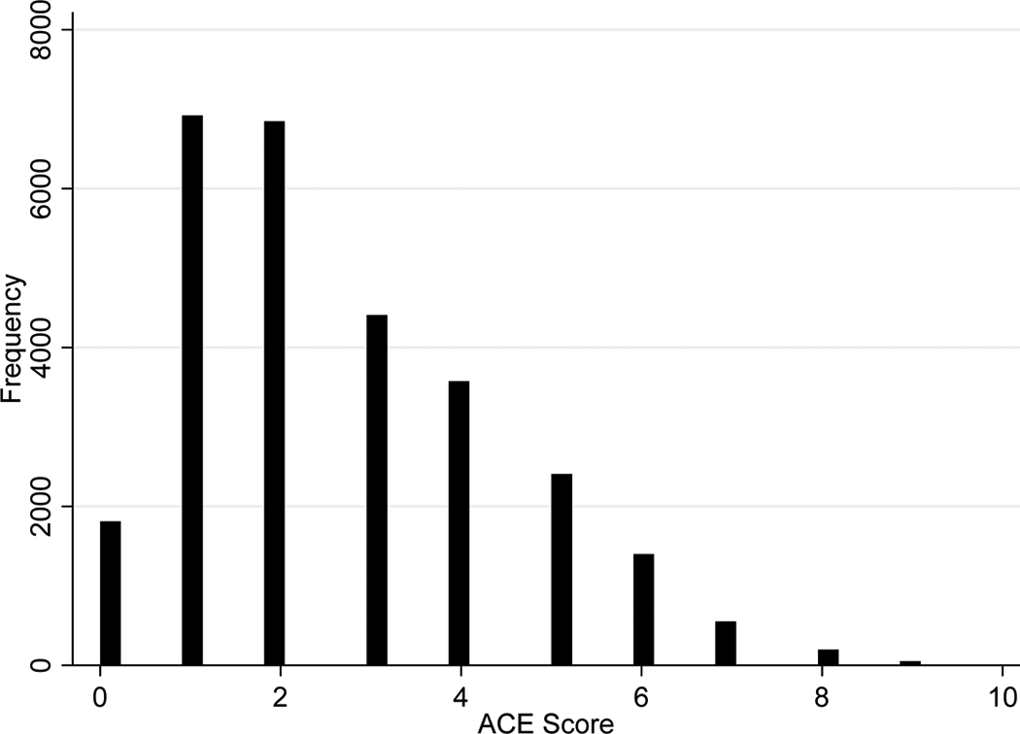
Adverse childhood experience score frequency distribution.
Measures: Future Orientation
In order to measure our key variable of interest, future orientation was operationalized by a measure from the Full Assessment that indicated the youth’s aspirations for their future. In the Full Assessment, the juvenile’s probation officer would rate if the youth discussed their future in a positive way with plans or aspirations of a better life, potentially including employment, education, raising a family, travel, or other pro-social life goals. Based on the youth’s responses, the probation officer would indicate if the youth had high aspirations with a sense of purpose and commitment to a better life (24.4%), had normal aspirations with some sense of purpose (62.8%), had low aspirations with little sense of purpose or plans for a better life (12.5%), or believed nothing matters and he or she would be dead before long (.3%). Based on the distribution of this measure, it was recoded into a binary indicator where 1 indicated the youth had either high or normal aspirations for their future and 0 indicated they had low or no aspirations for the future. Eighty-seven percent of the respondents indicated a normal or high aspiration for the future, leaving 13% having low future orientation.
Measures: Control Variables
Several relevant control variables were also included in the analyses including the respondents’ race/ethnicity, sex, age, socioeconomic status (SES), antisocial peer associations, impulsivity, social bonds, and measures related to the youth’s criminal history and criminal attitudes. The race/ethnicity variable included two measures, one a dichotomous measure indicating if the youth was Black and another indicating if the youth was Hispanic; White served as the reference group for both. Forty-seven percent of the sample was Black, 15% were Hispanic, and 38% were White or of other race/ethnicity. Sex was also controlled for; 0 indicated the youth was female and 1 indicated they were male. Seventy-seven percent of the sample was male. The age the youth was upon completion of their community-based placement was used to control for the respondents' age (mean = 17). A measure of the youth’s neighborhood disadvantage was used to indicate the youth’s SES. The amount of disadvantage in each youth’s neighborhood was derived from the youth’s census tract’s socioeconomic conditions. Six variables from the American Community Survey were utilized including (1) proportion of families living below the poverty line, (2) median family income (logged and reverse coded), (3) proportion of female-headed households, (4) unemployment rate, (5) proportion with a high school degree (reverse coded), and (6) proportion of households receiving public assistance. Results from a confirmatory factor analysis demonstrated these measures loaded on one factor. They were then standardized and combined to form an additive index of concentrated disadvantage (α = .88). These variables have been used in prior research including those investigating the impact of ACE scores with FL DJJ data (Baglivio, Wolff, Epps, et al., 2015; Craig, Baglivio, Wolff, Piquero, & Epps, 2017; Kubrin & Stewart, 2006).
The current study also controlled for antisocial peer associations, impulsivity, and social bonds due to their theoretical and empirical relevance (Burgess & Akers, 1966; Gottfredson & Hirschi, 1990; Hirschi, 1969; Pratt & Cullen, 2000; Pratt et al., 2010). The antisocial peer association measure indicated whether the youth, at the time they completed their supervision, spent time with either gang members or antisocial peers. If they indicated they did spend time with such peers, they were coded as 1 and if they did not, they were coded as 0. Forty-seven percent of the current sample spent time with at least one antisocial or gang-affiliated peer. The impulsivity measure represented if the youth acted before thinking and was scored on a scale from 0 to 3, where 0 indicated the youth was not impulsive and 3 indicated they were highly impulsive. The mean impulsivity score was 1.00 and ranged from 0 to 3, indicating most of the respondents tended to not be very impulsive. In order to control for the youth’s social bonds, an index measuring a form of attachment to conventional others was used. This measure was used in prior research (Craig et al., 2017) and is composed of 4 items. The first indicates if the youth had any positive, nonfamily relationships upon completion of their community supervision. If the youth did not have any positive adult relationships, they were coded as 0 while those who had at least one relationship were coded as 1. The second item indicated if the youth had prosocial community ties upon completion of their supervision (0 indicated no, 1 indicated at least some). The third item measured if the youth spent time with prosocial friends (0 indicated no, 1 indicated yes). The fourth item indicated if the youth felt close to their prosocial parents or other caretakers (0 indicated not close, 1 indicated felt close to at least one caretaker). The 4 items were summed to create an index that ranged from 0 to 4, where 0 indicated no social bonds and 4 indicated they had all four potential bonds. The mean social bonding score was 3.10 on a range from 0 to 4.
As one’s prior criminal history and criminal attitudes may not only be associated with future recidivism but also one’s future orientation (Fine, Baglivio, Cauffman, Wolff, & Piquero, 2017), indicators of these constructs were also included. Five measures of criminal history were controlled for including age of first arrest, history of prior detention placements, history of prior residential placements, prior misdemeanor offenses, and prior felony offenses (see also Fine et al., 2017). These measures were taken from the FL DJJ information system, so it does not rely upon self-report data from the youth. Age of first arrest was coded as 12 and below (coded 1), 13–14 (2), 15 (3), 16 (4), and above 16 (5) per C-PACT protocol. This measure’s mean was 2.19, indicating most respondents were 13–15 when they were arrested for the first time. An item indicating a history of prior placements in detention of at least 48 hr was measured as none (coded 0), one (1), two (2), or three or more (3). On average, the sample had 1.16 prior detentions. An item indicating a history of prior placements in long-term juvenile justice residential facilities was measured as none (coded 0), one (1), or two or more (2). In the current sample, the mean was .37, indicating most had not been placed in a residential facility. The number of prior misdemeanor referrals was also measured, where 0 indicated zero or one, 1 indicated two, 2 indicated three or four, or 3 indicated five or more misdemeanors. The mean for this item was .86. Finally, an item indicating the total number of referrals for a felony was measured as none (coded 0), one (1), two (2), or three or more (3). The average number of prior felony referrals was 1.21.
As Fine, Baglivio, Cauffman, Wolff, and Piquero (2017) found criminal attitudes to be associated with later recidivism among a similar sample, the current study replicated this measure to control for this potential relationship. Specifically, a 3-item index was used that included measures of respect for authority figures, attitude toward law-abiding behavior, and acceptance of responsibility for antisocial behavior. An item indicating the youth’s respect for authority was coded, such that 0 indicated they respected most authority figures, 1 indicated they did not respect them, 2 indicated they resented most of them, and 3 indicated they were hostile or defied them. To measure the youth’s attitude toward law-abiding behavior, a measure indicated if the youth believes prosocial rules apply to them (coded 0), believes some rules apply (1), does not believe they apply (2), or resents or is defiant toward the rules (3). The final measure indicated if the youth accepts responsibility for their antisocial behavior (0), minimizes, denies, justifies, excuses, or blames others (1), believes antisocial behavior is okay (2), or is proud of their antisocial behavior (3). These items were mean-scored and the mean of the index was .38 with a range of 0–3, where higher scores indicated more criminal attitudes (α = .72).
Analysis Plan
After first estimating the bivariate correlations between the variables of interest to ensure ACEs are indeed related to recidivism, several logistic regressions were estimated to examine whether a youth’s future orientation mediated the relationship between their ACE score and reoffending. Based on the mediation models discussed by Baron and Kenny (1986), the first regression model estimated the effect of ACE scores and the control variables on future orientation. The second model assessed the effect of ACE scores and the control variables on reoffending. The third and final model then estimated the effects of ACE scores, future orientation, and the control variables on reoffending. If future orientation serves to render insignificant the effect of ACE scores on reoffending, then full mediation could be said to exist. If, however, the ACE score is still a significant predictor of reoffending in this final model but the effect size as indicated by the odds ratio is reduced, then future orientation partially mediates the relationship between ACEs and reoffending.
Results
Bivariate Correlations
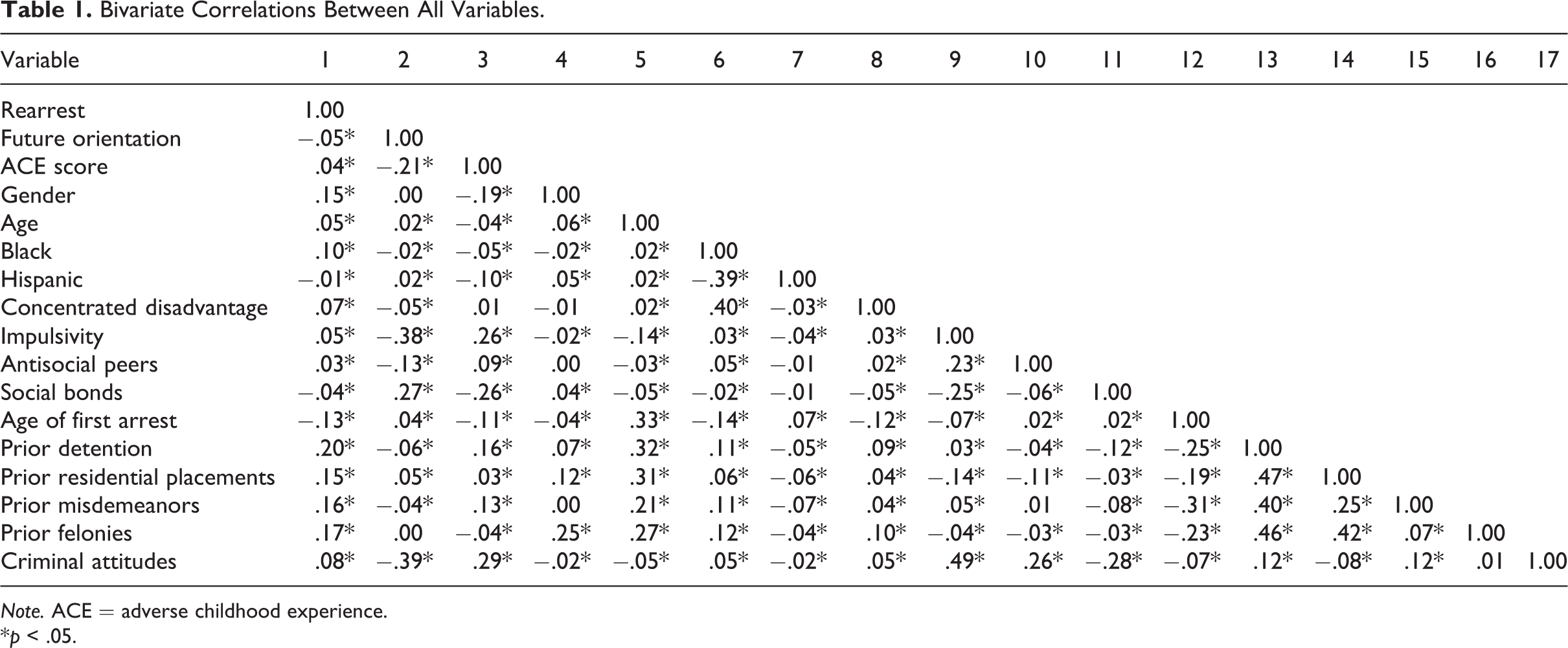
Table 1 presents the bivariate correlations between all of the variables in the current study. 4 Among our key variables of interest, these results reveal that there is a significant negative yet weak relationship between an individual’s future orientation and rearrest. There is also a significant positive weak relationship between an individual’s ACE score and rearrest. Finally, there is a significant negative weak relationship between future orientation and ACE scores. It should also be mentioned that multicollinearity does not appear to be an issue in the current analyses as no correlation was greater than r = .49, and all postanalyses variance inflation factors were 1.77 or less.
Bivariate Correlations Between All Variables.
Note. ACE = adverse childhood experience.
*p < .05.
Logistic Regressions Predicting Future Orientation.

Note. ACE = adverse childhood experience.
†p < .10 (two-tailed). ***p < .001.
Effect of ACE Scores on Future Orientation
As discussed by Baron and Kenny (1986), three sequential regression models should be estimated to determine whether a mediating relationship exists between a set of variables. The first model estimated the effect of the independent variable, or ACE Score, on the potential mediator, future orientation. As indicated by those with more ACEs were significantly less likely to have a high future orientation than those with fewer traumatic experiences (odds ratio [OR] = 0.90, p < .001). Further, male (OR = 0.76, p < .001) and older respondents (OR = 0.92, p < .001) also had significantly lower future orientation scores than their counterparts. Those coming from a disadvantaged environment (OR = 0.88, p < .001) had significantly lower future orientations than their counterparts as did those who were impulsive or had antisocial peers (OR = 0.35, p < .001; OR = 0.83; p < .001, respectively). Those with higher social bonds had significantly higher future orientations (OR = 1.49, p < .001). Those who had a later age of first arrest had a higher future orientation (OR = 1.09, p < .001) as did those with more prior residential placements (OR = 1.21, p < .001) and more misdemeanor referrals (OR = 1.09, p < .001). Finally, those with stronger criminal attitudes had significantly lower future orientations than those with weaker attitudes (OR = 0.35, p < .001).
Mediating Effect of Future Orientation on the Relationship Between ACEs and Rearrest
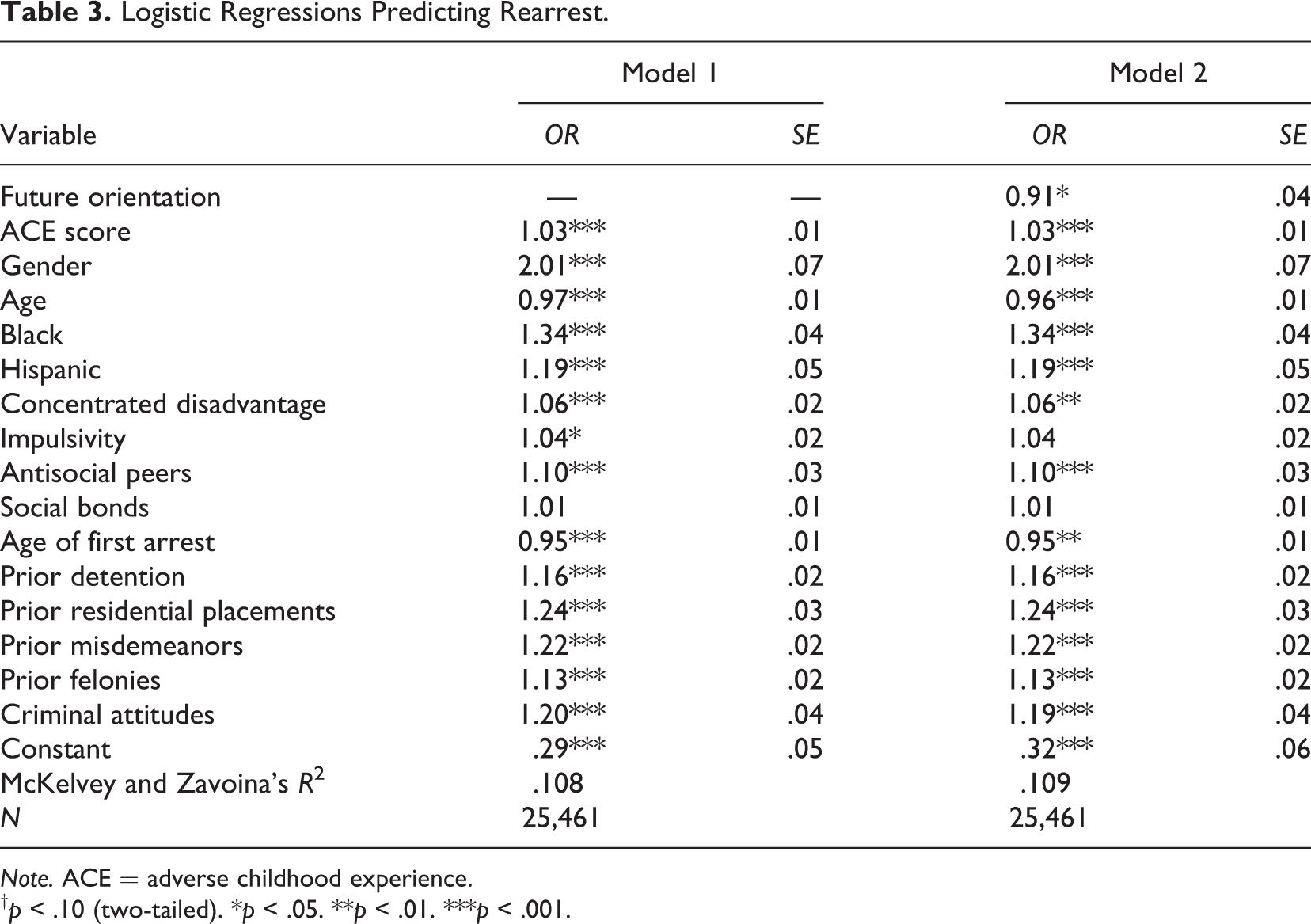
As the first analysis indicated there is a significant relationship between the potential mediator and the key independent variable, the focus then turned to establishing that there is a relationship between the independent and dependent variables (Baron & Kenny, 1986). The first model in Table 3 presents the results of the logistic regression that estimated the effects of ACE scores and the control variables on rearrests. Those with more ACEs were more likely to be rearrested than their peers (OR = 1.03, p < .001). Males (OR = 2.01, p < .001), younger respondents (OR = .97, p < .001), Blacks (OR = 1.34, p < .001), and Hispanics (OR = 1.19, p < .001) were also significantly more likely to be rearrested than their counterparts. With the exception of social bonds, all remaining control variables were significant predictors of rearrest in their anticipated directions.
Logistic Regressions Predicting Rearrest.
Note. ACE = adverse childhood experience.
†p < .10 (two-tailed). *p < .05. **p < .01. ***p < .001.
As the prior model indicated there is a significant relationship between the key independent and dependent variables of interest, the final step was to add the potential mediator to the analysis (Baron & Kenny, 1986). The second model in Table 3 presents the results of the logistic regression that estimated the effects of future orientation, ACE scores, and the control variables on rearrest. While future orientation had a significant negative effect on rearrests (OR = 0.91, p < .05) indicating that those with lower future orientations were more likely to be rearrested, those with more ACEs were still more likely to be rearrested than those without these experiences (OR = 1.03, p < .001; identical to the OR without the future orientation measure added). Similar to the prior model, all of the other control variables, with the exception of impulsivity and social bonds, were significant predictors of rearrest.
Discussion and Conclusion
One’s future orientation, or the extent to which someone holds a positive attitude about their future (Robbins & Bryan, 2004), has been linked to antisocial behavior such as offending in a large variety of studies (Brezina et al., 2009; Caldwell et al., 2006; DuRant et al., 1994; Piquero, 2016). Scholars have also reported that being exposed to trauma may lower one’s future orientation and expectations of surviving into adulthood (Monahan et al., 2015; Swisher & Warner, 2013; Warner & Swisher, 2014). Given that ACEs have been linked to serious and persistent offending (Fox et al., 2015), it is surprising that no study to date has investigated the potential link between ACEs, future orientation, and offending. The current study sought to fill this gap and assessed if future orientation may mediate the relationship between ACEs and offending using a sample of adjudicated delinquents from a large southern state.
The results presented in this study offered mixed support for the hypotheses. Specifically, the first hypothesis was supported as it was found that those with higher ACE scores were more likely to have reduced future orientations than those with lower ACE scores. This is in line with prior research that has also reported trauma exposure serve to lower one’s future orientation (Monahan et al., 2015; Swisher & Warner, 2013; Warner & Swisher, 2014). Some of these studies are of particular importance as they were conducted with nationally representative samples, thus highlighting the generalizability of these findings. Additionally, as prior research has relied upon specific measures of trauma such as physical or sexual abuse or violence, this is the first time the link between trauma operationalized as ACEs specifically has been linked to a lower future orientation.
However, the results were not supportive of the second hypothesis. Namely, there was no evidence to suggest that future orientation mediated the positive relationship between ACEs and rearrests. While both future orientation and ACE scores were related to rearrests as expected, future orientation did not appear to reduce the size of the effect of ACEs on rearrests. This is demonstrated by the consistent OR across Models 1 and 2 in Table 3, indicating that even with the consideration of one’s future orientation, each additional ACE increases the odds of recidivism by 9%. Thus, there is no evidence of full or partial mediation (Baron & Kenny, 1986).
These findings fail to support the theoretical explanations offered earlier. First, as Kerig and Becker (2010) discussed, trauma exposures and PTSD diagnoses are more likely to occur among justice-involved youth. Having a lower future orientation is a potential indicator of PTSD and may increase the likelihood of offending. Relatedly, in his extension of the General Strain Theory, Agnew (2002) argued that being victimized (either directly or indirectly) may increase one’s likelihood of later victimization and fear that they would die young. Delinquent coping would then result from these strains. While his analyses offered some support for this theoretical argument, they did not offer a direct test of this hypothesis. As discussed previously, Agnew’s analyses relied on cross-sectional data and did not directly test that the fear of one dying young would mediate the relationship between earlier victimization and delinquency.
These findings also failed to support Hirschi’s (1969) social control theory. While Hirschi did not specifically refer to the concept of future orientation, he did argue that those with weak social bonds should have lower aspirations and expectations for the future (see also Kornhauser, 1978). This would, in turn, lead to an increase in delinquent and other antisocial behavior. Based on the premise that individuals who have been exposed to ACEs would be more likely to have lower social bonds and thus a lower future orientation, this may also imply a mediating relationship between ACEs and future orientation on later recidivism. However, the current analysis demonstrated that one’s future orientation did not impact the relationship between ACEs and recidivism. This is similar to the findings of Craig and her colleagues (2017) who reported social bonds failed to buffer the relationship between ACEs and recidivism among the same sample of adjudicated delinquents from Florida. 5 Taken together, these results suggest potential mediating factors in the relationship between ACEs and recidivism may be challenging to identify.
Further, while the current analysis did not indicate one’s expectations for the future mediated the relationship between ACEs and later rearrests, this may be an artifact of the measurement strategy. Recall that prior research has relied upon two groups of measures to operationalize a respondent’s future orientation. The first strategy was to use a personality inventory (Kruger et al., 2015; Monahan et al., 2009, 2013) while the second utilized survey questions that measured one’s perceptions of an early death (Brezina et al., 2009; Caldwell et al., 2006; DuRant et al., 1994; Piquero, 2016). The current study relied upon a trained probation officer’s assessment of the youth’s aspirations for their future. Specifically, this measure indicated if the youth had a sense of purpose and was committed to improving their life or if they had little sense of purpose or had a short life expectancy. This measure has perhaps more in common with the survey questions that measure the respondents’ perceived likelihood of an early death. It would be worthwhile to replicate this study by measuring the respondents’ future orientation with a personality inventory, such as the Future Outlook Inventory (Cauffman & Woolard, 1999). While the findings from prior studies using both types of measures have generally suggested that lower future orientation increases offending, the personality inventory may reflect a more nuanced measure of this construct and thus produce different results than the measure utilized here.
Along with the potential limitation of the future orientation measure, other limitations should also be discussed. Recall the data were originally collected for risk assessment purposes and only the Full PACT Assessment included the measures necessary for the current study. Although the original conceptualization of ACE scores argues for 10 ACEs to be summed as binary exposures, others have pointed out that the severity, number, duration, and timing of these victimization exposures are also salient (Smith & Thornberry, 1995). Unfortunately, these contextual details were not available in the current data. Second, similar to the future orientation measure, only one measure each was available to indicate antisocial peer associations and impulsivity. 6 Future research should attempt to expand upon these measures as a full battery of items may unmask additional distinctions in these effects.
Third, some youth in the current sample may have underreported ACE exposure such as neglect or sexual abuse. Given that many of the youth were not evaluated until they were adolescents, it is possible they may have forgotten or concealed these experiences. Although the probation officer has access to the state’s child abuse registry database and is educated on identifying cues of such abuse, underreporting may still be an issue. That said, the current results should not be impacted unless there was a systematic underreporting of abuse. Fourth, as noted by the skewed distribution of the original future orientation measure, many youth in the current sample indicated they were positively adjusted, though this again may also be minimizing undesired traits or underreporting.
Fifth, the recidivism measure relied upon an official measure of rearrest, not self-reported delinquency. Although approximately 40% of our sample were rearrested within the first year following completion of their community-based sentence, this may not be representative of all youth who reoffended during this time. Finally, the generalizability of our sample is also limited to adjudicated FL DJJ-involved youth who received the Full PACT assessment and completed some form of community-based placement as opposed to all youth regardless of their disposition. However, as the sample included a disproportionately higher number of high-risk youth, the sample may be more policy-relevant than other samples that are generalizable to all youth. As Mulvey and colleagues (2004) discussed, most existing longitudinal studies tend to focus on school- or community-based samples, potentially obscuring important differences between lower and higher risk youth. It should also be noted that as our sample size was large and many of our analyses indicated significant effects, readers should use caution when interpreting our final results and future research should use a variety of sampling frames to assess the potential mediating effect of future orientation on the ACE-offending relationship.
Another area worthy of future research would be considering how changes in one’s future orientation may impact the relationship between trauma exposure and offending. Recall that future orientation is argued to develop throughout one’s adolescence and early adulthood (Monahan et al., 2009, 2013). Monahan and her colleagues (2009, 2013) reported that exposure to violence can slow this development, potentially allowing a delinquent to maintain their offending longer than if they had not had this exposure. Perhaps as one’s future orientation grows over time, this may weaken the relationship between ACEs and offending. Unfortunately, the measures to test this hypothesis were not available in the current data, leaving this a question for future work.
Policy Implications
Although the results from the current study did not find that future orientation mediates the relationship between an individual’s ACE score and later offending, they did still indicate that having a positive attitude toward one’s future has a protective effect on crime. Thus, regardless of an individual’s exposure to traumatic experiences, it would still be beneficial to promote a more positive future orientation, particularly among justice-involved youth. There are several potential interventions that could be used to help individuals develop a more future-oriented perspective including the SNAP program (Augimeri, Walsh, & Slater, 2011). This is a cognitive-behavioral program that teaches youth to stop, think, and plan prosocial alternatives to anger before acting. By emphasizing the importance of thinking about one’s behavior and the potential long-term consequences, the program develops the youth’s ability to exercise self-control to the benefit of their future.
Additionally, these findings join a growing number of others that highlight the importance of prevention and early intervention among those at risk of ACEs (Baglivio, Wolff, Epps, et al., 2015; Craig et al., 2017; Wolff et al., 2015). Efforts should be made to target both the children and their families to engage in programs such as Multisystematic Therapy and Functional Family Therapy as they have been reported to reduce crime and be cost-effective (Lee et al., 2012). Along with this reduction in offending, these individuals may also experience benefits in other areas of their life including their physical and mental health.
Footnotes
Acknowledgments
The author would like to thank Drs. Michael Baglivio, Alex Piquero, Chad Trulson, and Kevin Wolff as well as the anonymous reviewers for their assistance and feedback on the manuscript.
Declaration of Conflicting Interests
The author(s) declared no potential conflicts of interest with respect to the research, authorship, and/or publication of this article.
Funding
The author(s) received no financial support for the research, authorship, and/or publication of this article.