



Abstract
Thousands of children ages 12 and under are referred to juvenile justice systems each year, and little is known about how their experiences may differ from those of older youth. The purpose of this study was to compare risk factors associated with juvenile justice referral between children and adolescents and examine differences in adjudication and disposition of referred children and adolescents. The moderating role of adverse childhood experiences (ACEs) was also examined. Using data from the Florida Department of Juvenile Justice, results suggest children referred to the juvenile justice system are more likely to have experienced greater numbers of ACEs, have family and school problems, and be referred by schools. Results also indicate children and adolescents differ in their experiences within the juvenile justice system, and that experiences vary according to exposure to ACEs. Results suggest juvenile justice system officials should consider the unique needs of children referred to the system and be cognizant of the influence of non-legal factors in decision-making for this population.
One of the most important predictors of long-term antisocial behavior, negative outcomes, and persistent justice system contact among youth is the onset of offending behavior (DeLisi et al., 2013). As compared to those with later onsets of problematic behaviors, juveniles with early problem behavior onset, including early-onset offending and/or arrest, experience increases in long-term negative outcomes, including decreased educational attainment (Ward et al., 2021), compromised physical and mental health outcomes (DeLisi et al., 2013), and persistent offending and/or criminal justice system involvement (Farrington et al., 1990). Research often refers to offending behavior committed by children at or before age 12 as child delinquency (Loeber, 2003; Baglivio et al., 2020). In 2018, nearly 63,000 children ages 12 and under were referred to juvenile justice systems across the United States (Sickmund et al., 2020). Though referred in smaller numbers than adolescents, younger juveniles present unique challenges to the juvenile justice system as children adjudicated as delinquent are more likely than older youth to experience continued justice system contact throughout adolescence and adulthood, and may present with different risk factors and needs than referred adolescents (Loeber, 2003).
Given the potential for long-term consequences associated with early offending onsets, increasing understanding of risk factors and experiences associated with justice system contact for children is an important priority for individuals working in the juvenile justice system. States differ in their handling of child delinquency, with some states employing minimum ages of juvenile court jurisdiction to restrict justice system contact for children, and others treating children under certain ages as status offenders rather than adjudicating youth for criminal offenses (Abrams et al., 2019). Though legal restrictions may dictate which children experience justice system contact, discretion on the part of juvenile justice system officials may also influence formal system processing (Streib, 1976). Since its creation, the juvenile justice system has operated with the goal of providing individualized, rehabilitative services for referred children, and non-legal factors such as family and school circumstances are often taken into consideration in decision-making throughout juvenile justice system processing, from referral to adjudication to disposition (Feld, 2017; Hawkins & Kempf-Leonard, 2010). Given differences in risk factors and outcomes between children and adolescents engaging in delinquency and the level of discretion and rehabilitative intent involved in juvenile processing, it is possible the risk profiles of children and youth who come into contact with the juvenile justice system differ, and that their experiences with the juvenile justice system differ as well.
Little is known about the characteristics of children who come into contact with juvenile justice systems, what happens within the system to children who encounter the juvenile justice system, and how their experiences may differ from adolescents (Mears et al., 2014; Snyder et al., 2003). Because of the rehabilitative orientation of the juvenile justice system, it is possible non-legal factors such as exposure to adversity may influence referral and processing decisions for children, and that their influence differs from that associated with adolescents (Mears et al., 2014). Further, the ways in which non-legal factors such as exposure to adversity interact with child delinquency to affect processing for children referred to the juvenile justice system remains unexamined. The goal of the current study is to begin addressing these gaps in the literature by examining the extent to which risk factors for justice system contact differ between children and adolescents, examining the relationship between child delinquency and adjudication and disposition, as well as examining the extent to which exposure to adverse experiences affects relationships between child delinquency and adjudication and disposition in the juvenile justice system.
Theoretical Framework
The labeling perspective, with its influences from conflict theories and symbolic interactionism, provides a useful framework for considering how children referred to the juvenile justice system may differ from adolescents, as well as whether exposure to adversity influences experiences for children within the juvenile justice system. Under the labeling perspective, children and youth may be referred to the juvenile justice system due to non-legal factors that point to the need for services (Maschi et al., 2008). Children coming into contact with the justice system, particularly children with higher exposure to adverse experiences, may be more likely to be perceived as “risky” or in need of services as compared to older youth or youth with fewer adverse exposures. Because they may be perceived as high risk by justice system officials, they may be more likely to be seen as in need of formal social control and intervention, and therefore may be more likely to receive intensive sanctioning and deviant labeling (Bernburg & Krohn, 2003; Maschi et al., 2008; Rodriguez, 2013).
The labeling perspective incorporates tenets from symbolic interactionism and conflict theories, suggesting individuals in positions of power assign deviant labels to those with less social capital, and that efforts to reduce crime and rehabilitate individuals with a history of offending may lead these individuals to engage in further criminal behavior (Mahoney, 1974; Paternoster & Iovanni, 1989). Paternoster and Iovanni (1989) identified two key lines of research within the labeling perspective: (1) research examining the consequences associated with deviant labeling and (2) research examining the effects of legal and non-legal characteristics on who and what is labeled deviant by agents of social control (Paternoster & Iovanni, 1989). Derived from symbolic interactionism, the labeling perspective argues efforts at formal social control may have the unintended consequence of increasing the behaviors they are attempting to regulate (Paternoster & Iovanni, 1989). Rather than deterring subsequent undesirable behavior, symbolic interactionism and the labeling perspective suggest public application of a deviant label via formal sanctioning may lead an individual to alter their own self-perception. Because the individual has been publicly labeled deviant, the individual may come to see themselves as deviant, embracing the label as a new self-identity. According to the labeling perspective, being labeled as deviant may lead to exclusions from prosocial opportunities and others, increasing probability of subsequent antisocial behavior.
The theoretical framework underlying the current analyses relies on the second component of the labeling perspective. The labeling perspective derives its hypotheses pertaining to who and what is labeled deviant from conflict theories (Paternoster & Iovanni, 1989). Conflict theories argue deviant labels are the result of differential power between individuals or groups of individuals. The labeling perspective suggests agents of formal social control may decide to label individuals and behaviors as deviant based on a host of factors, including a desire to maintain control and impose control upon others (Paternoster & Iovanni, 1989). According to the perspective, though legal factors are associated with the decision to label an individual as deviant, non-legal factors, particularly non-legal factors that are interpreted as threatening, risky, or in need of control by agents of social control, also play a part in decision-making by system actors. Accordingly, decisions made by juvenile justice system officials, including law enforcement officers, probation officers, attorneys, and judges may be affected by non-legal factors, such as age and exposure to adverse experiences.
Literature Review
ACEs and Child Delinquency
Child delinquency refers to delinquent offenses committed by children ages 12 and under (Loeber & Farrington, 2001). Children who engage in delinquency differ from adolescents involved with the justice system in a number of ways, including increased risk of experiencing negative outcomes and differing risk profiles (Loeber & Farrington, 2001). Existing research indicates children who begin offending at younger ages face increased risk of a host of negative outcomes in adulthood, including increased rates of substance use and psychological disorders (McGue & Iacono, 2005), financial problems, and drug-related and violent offending behavior (Moffitt et al., 1993). Research suggests age of onset is one of the more consistent and important correlates of persistent offending behavior across the life-course (Farrington et al., 1990; Loeber & Farrington, 2001), making understanding the experiences of children in the justice system and risk factors associated with childhood justice system contact important research priorities. Risk factors for child delinquency are somewhat different than those of older juveniles. While peer delinquency plays a large role in shaping offending behavior in adolescence (Akers et al., 1979; Moffitt, 1993), during the early years of a child’s life, risk factors for early-onset offending stem from school and family environments (Farrington, 2010; Wasserman et al., 2003). At the school-level, failure to develop a protective bond with school and poor academic performance have been associated with early-onset offending behavior (Wasserman et al., 2003). Family characteristics that may contribute to early childhood delinquency include antisocial caregiver behavior, caregiver substance abuse, caregiver psychopathology, negative parenting practices, exposure to child maltreatment, exposure to domestic violence, and large family size (Shader, 2001).
Though not explicitly named, many of the identified risk factors for child delinquency are in line with the adverse childhood experiences (ACEs) scale. ACEs are defined as traumatic events that occur before the age of 18, conceptualized originally in the CDC-Kaiser study (Felitti et al., 1998). The original ACEs study identified seven ACEs, including physical, emotional, and sexual abuse and exposure to intimate partner violence, caregiver mental illness, caregiver incarceration, and caregiver substance use (Felitti et al., 1998). The measure was expanded over time to include physical and emotional neglect as well as caregiver divorce or separation, for a total of 10 ACEs (Dong et al., 2004). The CDC-Kaiser study and subsequent research examining the impact of ACEs has found significant relationships between the number of ACEs a person has experienced and negative outcomes, including poor physical and mental health (Schilling et al., 2007), substance abuse (Mersky et al., 2013) and risky behavior (Fagan & Novak, 2018). Experiencing ACEs in childhood has also been found to lead to more immediate consequences, and research suggests children who experience greater numbers of ACEs manifest significantly higher levels of externalizing and problem behaviors as compared to children with fewer or no ACEs (Hunt et al., 2017).
ACEs have been identified as a significant risk factor for delinquent behavior and justice system contact. Studies have shown that between 75%–93% of youth entering the juvenile justice system have experienced a trauma, compared to the general population at about 25%–34% (Rosenberg et al., 2014). Using data from over 600 adolescents to better understand the relationship between ACEs and justice system contact, Fagan and Novak (2018) found exposure to ACEs was associated with substance use, offending behavior, and arrest. Specifically, the authors found youth who reported higher numbers of ACEs were also more likely to report using alcohol and marijuana, violent offending behavior, and an arrest at the age of 16, with some differences in these relationships according to youth race (Fagan & Novak, 2018). Existing research also suggests juveniles with higher ACE scores have a greater chance of being assessed as high risk to reoffend when using a validated risk assessment tool (Baglivio et al., 2014). These juveniles will additionally have a greater likelihood of being classified as serious, violent, and chronic offenders by the age of 18. Using a sample of over 25,000 juveniles, Wolff and Baglivio (2017) examined the effects of ACEs on juvenile delinquency and found both direct and indirect effect of exposure to ACEs in childhood on recidivism. According to results, youth who reported higher numbers of ACEs were significantly more likely to recidivate than those with fewer ACEs. Additional research using data from the Florida Department of Juvenile Justice confirms these results, suggesting a robust relationship between exposure to ACEs and offending/justice system involvement (Craig et al., 2017; Wolff et al., 2017).
Beyond their association with justice system contact broadly, ACEs have also been found to increase risk of early-onset justice system contact. Using data from all youth arrested in Florida between 2007 and 2012, Baglivio et al. (2015) found ACEs increased risk of early-onset persistent offending. Baglivio et al. (2015) found youth exposed to greater numbers of ACEs were more likely to experience justice system contact at younger ages and maintain contact throughout adolescence as compared to children with fewer ACEs. Baglivio et al. (2020) also found ACEs were associated with early-onset justice system contact, finding exposure to ACEs significantly increased odds of arrest ages 12 and under among youth in their sample. Though the results of Baglivio et al. (2015; 2020) suggest ACEs may be associated with early arrest, their results do not provide insight into the ways in which ACEs may shape a child’s subsequent experiences within the juvenile justice system. Beginning to address this question, Cho et al. (2019) found a small proportion of youth exposed to child maltreatment had been adjudicated by the juvenile justice system by age 13. Though only examining a sample of youth exposed to the child welfare system and addressing a subset of ACEs, Cho et al. (2019) findings suggest children exposed to adversity may face heightened risk of adjudication by the juvenile justice system.
Child Delinquency in the Juvenile Justice System
Though research is limited in its examination of the experiences of children within the juvenile justice system, children regularly come into contact with justice systems across the United States. Currently the United States lacks a national minimum age standard as it relates to juvenile court jurisdictions (Abrams et al., 2019). The majority of state laws allow for children to be prosecuted in juvenile court, though court proceedings may be developmentally inappropriate for children and the formal involvement of children in the criminal justice system can increase the likelihood of poor health and future justice system contact (Abrams et al., 2019; Novak, 2019). When looking at state laws and policies related to the minimum age requirement for juvenile court jurisdiction, as of 2021, only 22 states have established a minimum age ranging from six to 12 years old (National Juvenile Justice Network, 2021). In these states, children below the minimum age are considered ineligible for prosecution based on chronological age and are excluded from prosecution (Abrams et al., 2019).
In addition to lacking a national minimum age standard, states also lack guidance on what sanctions may be more appropriate for younger children and youth, leaving decisions regarding arrest, adjudication, and disposition subject to discretion on the part of justice system officials (Abrams et al., 2019). At the level of arrest and referral to the juvenile justice system, existing research and labeling theory suggest both legal and non-legal factors are related to the decision to refer juveniles to the juvenile justice system (Paternoster & Iovanni, 1989). Legal factors such as offense seriousness, prior justice system contact, safety concerns and department policies have been shown to be significantly influential in decisions concerning juvenile arrest (DeCunzo, 2017). Additionally, non-legal factors such as drug use, age, gender, socioeconomic status, attitude towards offense, mental health, and inability to contact parent/guardian have also been shown to significantly influence officers' decisions on whether to arrest a juvenile or not (DeCunzo, 2017; Sealock & Simpson, 1998). Though existing research indicates younger youth are less likely to be arrested as compared to older youth (Sealock & Simpson, 1998), it is possible these protective effects disappear among younger children and youth who conform to police expectations of delinquency (Morash, 1984). Existing research indicates youth who present as delinquent are more likely to be arrested than youth who do not conform with preexisting notions regarding delinquency (Morash, 1984), suggesting children appearing to be at risk, including children exposed to a greater number of ACEs, may be more likely to be perceived as deviant by law enforcement officers or agents of social control, increasing risk of arrest and justice system referral.
Once referred, individual factors – both legal and non-legal – are regularly considered in the various decision-making stages involved in the juvenile justice system (Cauffman et al., 2007). Discretion on the part of juvenile justice system officials is a cornerstone of the juvenile court process, and is thought to allow for the provision of individualized attention and services (Ross, 1994). In an effort to provide individualized services, juvenile justice officials often administer risk assessments to referred children and youth to better understand presenting needs (Mears & Kelly, 1999). However, it is possible these risk assessments also encourage decision-makers to process children and youth who may otherwise be dismissed due to presenting non-legal factors (Mears & Kelly, 1999). Research suggests non-legal factors regularly impact decision-making in the juvenile justice system; however, their effects may vary according to the stage in the judicial process (Bishop et al., 2010). In the earlier stages of juvenile court processing, juvenile court officials, specifically decision-makers, are thought to rely on stereotypes surrounding gender, age, race, class, the intersection of these, as well as concerns regarding community safety and perceptions of youth risk when making decisions due to the limited information they have on youth (Leiber & Peck, 2012). During intake and judicial disposition, greater discretion is allowed, which is thought to increase the probability of reliance upon individual discretion and subjective decision-making (Bishop et al., 2010). In their examination of the role of both legal and non-legal factors associated with intake, adjudication, and disposition in the Florida Juvenile Justice System, Bishop et al. (2010) found non-legal factors such as age, family structure and school problems were associated with intake decisions. Specifically, Bishop et al. (2010) found younger youth were less likely to be referred for formal prosecution, while youth from single caregiver homes and youth with a history of school problems were significantly more likely to be referred for formal prosecution. Though Bishop et al. (2010) did not explicitly test the relationship between ACEs and intake decision-making, intake decisions are thought to be heavily influenced by risk factors associated with delinquent behavior (Bishop et al., 2010). Given the relationship between ACEs and delinquency (Fagan & Novak, 2018), it is possible ACEs are associated with intake decisions, and that children and youth who present with greater numbers of ACEs are more likely to be referred than children and youth with fewer ACEs.
Additionally, research suggests non-legal factors may play a role in adjudication and disposition decision-making (Evangelist et al., 2017). According to recent research, judges may bear implicit biases that can impact judicial judgment (Rachlinski et al., 2009). For example, Chen et al. (2021) found that youth who were perceived as more dominant, less trustworthy, less healthy and having darker skin had a higher probability of receiving harsher sentences (Chen et al., 2021). In their study of adjudication decision-making, using data from the University of Michigan’s Child and Adolescent Data Lab, Evangelist et al. (2017) found non-legal factors such as age, race, and gender were associated with adjudication decision-making, controlling for legal factors including offense type and severity, and offending history. Non-legal factors such as family structure have been shown to serve as an important factor during judicial dispositions (Smith & Rosier, 2015), and youth living in two-parent households may be treated with more leniency by decision-makers than those living in single-parent households (Leiber & Mack, 2003).
Existing research also suggests ACEs are associated with disposition decision-making. In a study examining the relationship between ACEs and residential placement across a sample of 4733 adjudicated youth in Florida, Zettler and colleagues (2018) found youth with higher numbers of ACEs experienced significant increases in probability of receiving a residential placement (Zettler et al., 2018). Given the associations between non-legal factors including age and referral, adjudication, and disposition decisions, as well as the association between ACEs and disposition, it is possible ACEs and non-legal factors including age interact to affect referral, adjudication, and disposition decision-making for children and juveniles. Though existing research suggests these factors may all be associated with decision-making in the juvenile justice system, research is limited in its specific examination of the relationship between child delinquency, ACEs exposure, and referral to, adjudication, and dispositions within the juvenile justice system.
Current Study
Research indicates children who engage in delinquent behavior are at higher risk for a host of negative outcomes, including continued offending throughout the life-course (Loeber, 2003). Though existing research has identified risk factors associated with delinquency in childhood, research is limited in its examination of risk factors associated with justice system contact and involvement in childhood. Additionally, research is limited in its examination of the experiences of children in the juvenile justice system, and if and how these experiences differ from those of justice-involved adolescents. Given the overlap in risk factors associated with child delinquency and ACEs, the outcomes associated with ACEs in childhood and risk factors for early-onset offending, and the relationship between ACEs and arrest and offending behavior, it is possible ACEs are an important risk factor for early justice system contact and that ACEs impact a child’s experiences when involved with the juvenile justice system. The goal of the current study is to address existing gaps in the literature by examining the following research questions: (1) To what extent do children referred to the juvenile justice system differ from adolescents on a number of risk factors, including ACEs? (2) Is child delinquency associated with referral to a diversionary program, and is this relationship moderated by ACEs such that children with more ACEs have different odds of being referred to diversion than children with fewer ACEs? (3) Among non-diverted children and youth, is child delinquency associated with adjudication, and is this relationship moderated by exposure to ACEs, such that children with more ACEs have different odds of adjudication than children with fewer ACEs? (4) Among adjudicated children and youth, is child delinquency associated with commitment to a residential program, and is this relationship moderated by ACEs, such that children with more ACEs have different odds of referral than children with fewer ACEs?
Methods
Sample
This study used data from a sample of all youth referred to the Florida Department of Juvenile Justice for their first offense from July 1, 2018 through January 2021. This time frame was chosen to obtain recent data and ensure all youth were administered the Community Assessment Tool (CAT) pre-screen assessment (Florida Department of Juvenile Justice, 2019b). The CAT risk assessment was designed by the Florida Department of Juvenile Justice in an effort to help probation officers and case managers determine a youth’s risk to reoffend, identify areas of need and develop an intervention plan tailored to the youth’s presenting risks (Florida Department of Juvenile Justice, 2021a). The CAT pre-screen assessment is administered via face-to-face interview to all youth referred to the department of juvenile justice in Florida upon intake; youth identified as moderate-high or high risk to reoffend are administered the full CAT assessment. The CAT pre-screen assessment contains questions pertaining to nine domains, including official records of referrals, demographics, school, family, relationships, alcohol and drugs, trauma and mental health, attitudes and behaviors, and aggression (Florida Department of Juvenile Justice, 2019b). Youth referred for their first offense were chosen for the sample to avoid introducing bias attributable to previous experiences with the juvenile justice system into estimates. The use of this sample allows for more comparable estimates of justice system processing and eliminates the need to account for justice system history in models. A total of 11,759 youth were first referred in the selected time frame. Of these youth, those who were currently not enrolled in school were removed from the sample to preserve sample comparability, leaving a total of 10,488 youth. 1 In the Florida juvenile justice system, youth who come into contact with law enforcement for delinquency may be diverted upon initial contact; their case may also be dismissed prior to formal intake (Florida Department of Juvenile Justice, 2021b). Because youth whose cases are dismissed prior to the intake process do not have information on adjudication status, they were not included in models examining the relationship between ACEs and adjudication. Nine-hundred and thirty three youth were missing information regarding adjudication due to early case dismissal; another two were missing information on school and family risk factors. To avoid imputing information on adjudication, these youth were removed from the sample. The final analytic sample for diversion models contained 9553 youth; models for adjudication and residential commitment contained 6004 and 1191 youth, respectively.
Measures
Dependent variables
The juvenile justice process in Florida contains a number of decision points at which a youth may be assigned a disposition. Following formal intake, youth are administered the CAT pre-screen risk assessment, the results of which are used to assist in making the initial decision regarding whether to divert a youth, or to refer them for formal processing (Florida Department of Juvenile Justice, 2021a). If youth are not diverted, they move through the system toward adjudication. If adjudicated, they may be given a wide range of dispositions, including probation, community service, fines, intensive day treatment, residential placement, and others. Adjudication may also be withheld, pending successful completion of a treatment plan. Because the juvenile justice process in Florida contains a number of decision points following initial referral during which officials may use discretion to make decisions pertaining to the youth’s subsequent involvement (Florida Department of Juvenile Justice, 2021b), we included several different outcome measures to reflect different decision points in the juvenile justice process. Diversion status was measured dichotomously, using official records of disposition to diversion programming (1 = diverted, 0 = not diverted). If youth were diverted upon intake, they were considered diverted. If they were not diverted upon intake, they were not considered to have been diverted. Adjudication status was measured dichotomously, reflecting whether or not a youth was adjudicated among youth who were not diverted (1 = adjudicated or adjudication withheld, 2 0 = not adjudicated). In the Florida juvenile justice system, a youth may not be adjudicated even if they are not diverted- their case may be dismissed, or the youth may be transferred to the adult criminal justice system (Florida Department of Juvenile Justice, 2021b). In models examining the relationship between child delinquency, ACEs, and adjudication, youth whose cases were dismissed and/or transferred were considered to be not adjudicated. To examine the relationship between child delinquency, ACEs, and disposition following adjudication, commitment to a residential program was assessed through the inclusion of a dichotomous variable reflecting whether a youth was committed to a residential program for their primary disposition after adjudication (1 = assigned to a residential commitment program, 0 = not assigned to residential commitment as their primary disposition). In the current sample, over 90% of adjudicated youth not assigned to residential commitment programs received a primary disposition of probation.
Independent variables
Age was measured dichotomously, using official records of the youth’s age in years at the time of official referral. Juveniles ages 12 and under at the time of referral were coded as children (1 = 12 and under, 0 = 13 and over). Exposure to ACEs was measured continuously, using youth responses to questions asked during the CAT pre-screen assessment, administered at intake. Upon intake, youth were asked a series of questions in the CAT pre-screen assessment, including whether they had ever experienced any of 10 ACEs, including exposure to intimate partner violence, child abuse and/or neglect, caregiver incarceration, caregiver mental health problems, caregiver divorce/separation, and/or caregiver substance use problems (Florida Department of Juvenile Justice, 2019a). Youth responses were summed to create a total ACE score.
Control variables
Several case-related control variables were included in the models and were derived from official records housed in Florida’s Juvenile Justice Information System (JJIS). Detention status was measured as whether or not the youth was detained upon arrest (1 = detained, 0 = not detained). Charge count was measured via the inclusion of a continuous measure assessing the number of charges imposed upon the youth, and representation status was measured as a dichotomous variable assessing whether the youth had legal representation (1 = legal representation, 0 = no legal representation). History of involvement with the child welfare system was measured as a dichotomous variable reflecting whether the youth had ever been involved with the child welfare system (1 = involvement, 0 = no involvement). Offense severity was measured through the inclusion of a dichotomous variable assessing whether the youth was referred for a felony offense; in cases where youth were referred for multiple charges, the most serious charge was used to categorize youth as referred for felony offense. Violent offending was measured through the inclusion of a dichotomous variable assessing whether the referral offense was categorized as violent. Referral source was measured through the inclusion of a dichotomous variable assessing whether the youth was initially referred to the department by their school (1 = referred by school, 0 = not referred by school).
At the youth-level, control variables were derived from youth responses to assessment items on the CAT pre-screen. CAT pre-screen assessment items and constructs were included in the assessment because of their association with delinquent behavior (Florida Department of Juvenile Justice, 2019b). School problems were measured using youth responses to a series of school-based questions on the CAT pre-screen. Questions assessed the youth’s school conduct (1 = conduct problems in school, 0 = no conduct problems in school), attendance problems (1 = problems with attendance, 0 = no problems with attendance), and academic performance in the most recent school term (2 = some Ds and Fs or worse, 1 = mostly Bs and Cs, no Fs, 0 = Mostly As or Mostly As and Bs). Deviant peer association was measured dichotomously, created by assessing responses to two questions assessing whether the youth has a history of associating with deviant peers or gang members, and/or currently associates with deviant peers and/or gang members (1 = deviant peer association, 0 = no current or past deviant peer association). If youth responded affirmatively to either question, they were coded as associating with deviant peers. Alcohol use was measured categorically, reflecting the youth’s history and/or current use of alcohol (3 = alcohol use is currently negatively impacting the youth’s life, 2 = current use, 1 = history of use, 0 = no history). Drug use was measured categorically, reflecting the youth’s history and/or current use of drugs (3 = drug use is currently negatively impacting the youth’s life, 2 = current use, 1 = history of use, 0 = no history). Aggressive behavior endorsement was measured through the inclusion of a dichotomous measure assessing whether the youth believed physical aggression is an appropriate means to resolve conflict (1 = believes aggression is an appropriate means to solve conflict, 0 = does not believe). Antisocial attitude was measured through the inclusion of two dichotomous measures assessing youth responses to questions pertaining to whether youth abided by conventional values (1 = does not abide by conventional values, 0 = does abide by conventional values) and accepted responsibility for their behavior (1 = does not accept responsibility for behavior, 0 = accepts responsibility for behavior). Responses were coded such that higher scores indicated endorsement of antisocial beliefs. Family problems were measured through the inclusion of three measures assessing the youth’s perceptions of their family’s willingness to support them (3 = hostile, berating, or belittling of youth, 2 = little or no willingness to support, 1 = inconsistently willing to support, 0 = consistently willing to support), the level of conflict between family members (3 = domestic violence, 2 = threats of physical violence, 1 = verbal intimidation, yelling, 0 = some well-managed conflict), and the extent to which the youth respected parental authority and abided by rules in the home (2 = consistently disobeys or is hostile, 1 = sometimes obeys or follows rules, 0 = usually obeys and follows rules). Gender was operationalized as a dichotomous measure using youth reports of their gender obtained at intake (1 = female, 0 = male). Race/ethnicity was measured through the inclusion of a series of dichotomous variables assessing whether a youth identified as non-Latino/a White, non-Latino/a Black, Latino/a, or another race/ethnicity at intake. Because most youth in the sample were identified as non-Latino/a White, White youth served as the reference category.
Analytic Strategy
Because all variables were derived from official records, missing data were minimal in the analytic sample. Two youth were missing information on family and school-based risk factors and they were removed from the sample. To begin the analyses, mean difference tests were conducted comparing children ages 12 and under and adolescents ages 13–17 referred to the Florida juvenile justice system on a number of legal and individual characteristics. Following mean difference testing, multivariable logistic regression models were conducted examining the association between age at referral and adjudication/disposition. To examine the relationship between child delinquency and diversion, multivariable logistic regression models were conducted using the full sample. The relationship between child delinquency and adjudication was also examined using a multivariable logistic regression model using only youth who were not initially diverted. The relationship between child delinquency and commitment was finally examined using a multivariable logistic regression model containing only adjudicated youth. 3 To assess for moderation, child delinquency status was interacted with the continuous ACEs measure in all models. Once interaction models were conducted, marginal effects were calculated for all moderation tests to determine the discrete change in effects associated with ACEs (Williams, 2012). Because p-values associated with non-linear interaction effects are not reliable measures of significance, significance was assessed using second differences between marginal effects (Mize, 2019; Mustillo et al., 2018). The mlincom command was used to calculate second differences between marginal effects. If the associated p-value was significant in calculations of differences across ACEs, the interaction effect was determined to be significant.
Results
Descriptive Results
Descriptive Results by Age Group (N = 9553).

Notes. * = significant mean difference at p < .05. S.D. = Standard Deviation. Min. = Minimum. Max. = Maximum.
Multivariable Results
Diversion
Multivariable Logistic Regression Results Predicting Diversion, Adjudication, and Commitment.

Notes. O.R. = Odds Ratio; R.S.E. = Robust Standard Error; * p < .05, ** p < .01, *** p < .001.
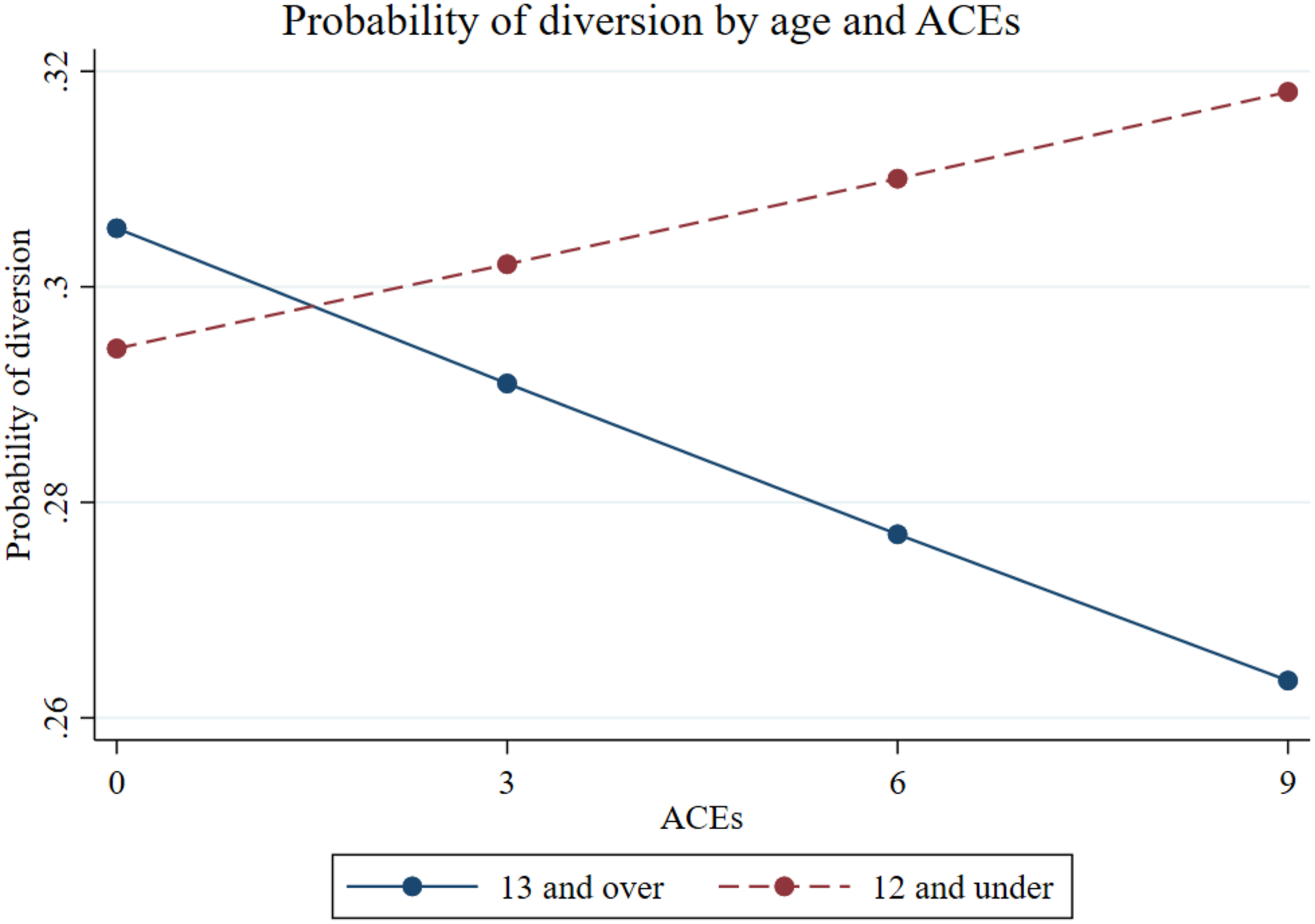
Marginal probability of diversion according to age and ACEs (N = 9553). All estimates were calculated holding other variables at their means.
Marginal Effects For Children Age 12 and Under.

Notes. S.E. – Standard Error. Standard errors were calculated using the Delta method. Margins reflect adjusted predicted probabilities of experiencing a given outcome; marginal estimates were calculated holding all other variables in models at their means. Significant differences (p < .05) were detected across all levels of ACEs for diversion and adjudication. Estimates associated with commitment should be interpreted with caution due to the small number of children given residential dispositions. Significant differences (p < .05) were detected between three and zero ACEs and five and zero ACEs for committed children; the p-value associated with the difference between three and five ACEs was .074. For each outcome, the maximum ACEs used to calculate marginal effects was chosen using the greatest number of observed ACEs among children and youth with a given outcome.
Adjudication
Examining research question three pertaining to the relationships between child delinquency, ACEs, and adjudication, among youth who were not diverted, age was significantly associated with adjudication, such that children ages 12 and under were significantly less likely to be adjudicated than youth ages 13 and over (OR = .68, p = .018, see Table 2). ACEs were not associated with adjudication (p = .527). In addition to age, youth with more charges (OR = .70, p < .001), youth who denied responsibility for their actions (OR = .66, p = .013), and youth who were detained (OR = .60, p < .001) had significantly lower odds of adjudication. Black youth (OR = 1.26, p = .028), youth referred for a felony offense (OR = 17.84, p < .001), youth who were represented by an attorney (OR = 29.67, p < .001), youth who denied parental authority (OR = 1.50, p < .001), youth with conduct problems in schools (OR = 1.25, p = .049), youth with poor grades (OR = 1.19, p = .013), and youth referred for school-related offenses (OR = 1.33, p = .015) had significantly greater odds of being adjudicated delinquent. ACEs also significantly moderated the relationship between child delinquency and adjudication, such that children with more ACEs were significantly more likely to be adjudicated than children with fewer ACEs (see Figure 2 and Table 3). Among children with no ACEs, probability of adjudication was six percent. Among children with seven ACEs, the probability of adjudication rose to nine percent, holding all other variables at their means. Marginal probability of adjudication according to age and ACEs (N = 6004). All estimates were calculated holding other variables at their means.
Residential commitment
Among adjudicated youth and addressing research question four, pertaining to the relationships between child delinquency, ACEs, and residential commitment, neither age (p = .871) nor ACEs (p = .137) were associated with referral to a residential commitment program (see Table 2). Youth referred for a violent offense (OR = 2.91, p < .001), youth with poor grades (OR = 1.94, p = .002) and youth who were detained (OR = 1.71, p = .043) had significantly greater odds of referral to a residential program, while youth who were referred to the juvenile justice system for a school-based offense had significantly lower odds of being sent to a residential commitment program (OR = .18, p = .003). In models predicting disposition to a residential program, ACEs significantly moderated the relationship between child delinquency and commitment, such that children with fewer ACEs had significantly greater odds of referral to a residential program than children with more ACEs (see Figure 3 and Table 3). Among children with no ACEs, probability of commitment after adjudication was six percent; among children with five ACEs, the probability of commitment following adjudication was only two percent, suggesting a decrease in probability as ACEs increased. Marginal probability of commitment to residential placement according to age and ACEs (N = 1191). All estimates were calculated holding other variables at their means.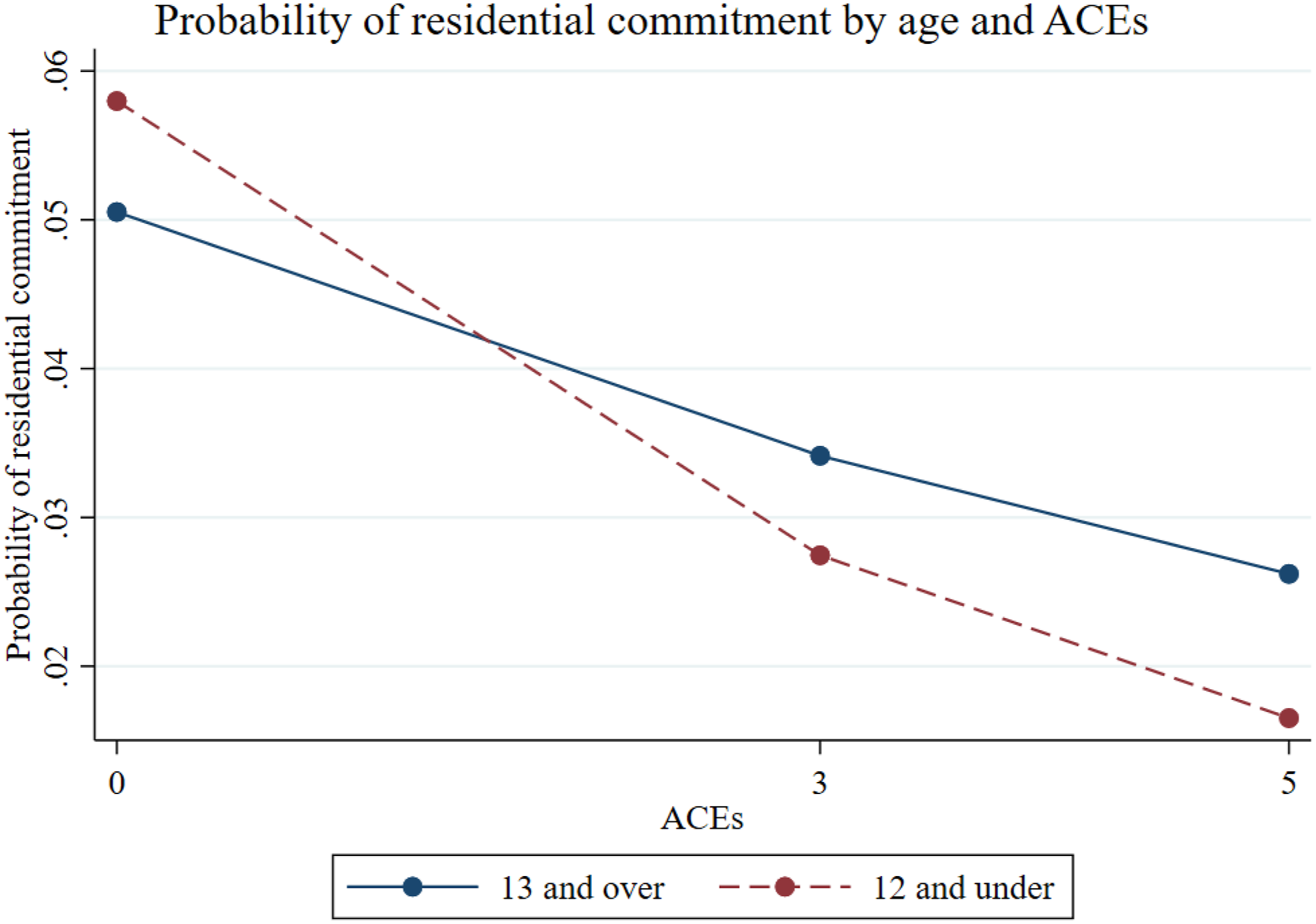
Discussion
The goal of the current study was to increase understanding of differences in risk factors associated with juvenile justice system contact between children and adolescents and of the various experiences of children encountering the juvenile justice system by examining the associations between referral as a child and subsequent adjudication and disposition, as well as examining variation in these associations according to exposure to adverse childhood experiences. Data were obtained from the Florida Department of Juvenile Justice for all youth referred to the juvenile justice system for their first offense in 2018–early 2021, and analyses were conducted to compare juveniles ages 12 and under and those ages 13–17 on a range of individual and case characteristics. Multivariable models were also conducted to examine the relationships between child delinquency and diversion, child delinquency and adjudication, and child delinquency and residential dispositions, as well as comparing these relationships across exposure to ACEs.
Differences in Risk Factors Associated with Referral Between Children and Adolescents
In response to the first research question, according to descriptive results, children referred to the juvenile justice system differed from adolescents referred to the system on a multitude of individual and case-level factors. At the individual-level, gender did not significantly differ between youth ages 13–17 and children ages 12 and under referred to the department of juvenile justice. Referred children were more likely to be identified as Black than referred adolescents, and referred adolescents were more likely to be identified as White or Latino/a. Children also exhibited significantly greater endorsement of aggression and antisocial beliefs, more school and family problems, and were more likely to have a history of involvement with child welfare services. Children were also more likely to have been referred to the department of juvenile justice by their schools as compared to adolescents and reported higher numbers of ACEs. Adolescents were significantly more likely to have problematic drug and alcohol use and deviant peer associations. At the case-level, children were more likely to be referred for a violent offense, were less likely to be detained, had fewer charges, and were less likely to be represented by attorneys.
Results of means differences tests conform with existing theories pertaining to persistent, or early-onset offending behavior and offending in adolescence. As suggested in theory and prior research, referred adolescents were more likely to associate with deviant peers and engage in substance use as compared to referred children, reflecting developmental patterns in offending and the correlates of offending behavior associated with adolescence (Akers et al., 1979; Moffitt, 1993). Children referred to the juvenile justice system were more likely to manifest family and school-based problems (Loeber, 2003; Moffitt, 1993; Sampson & Laub, 1997), including higher numbers of ACEs. This difference could reflect differences in risk factors associated with persistent, early-onset offending behavior. Prior research and theory suggest juveniles with an earlier-onset of offending, or earlier system contact, are more likely to have a history of exposure to adverse home environments, negative relationships with schools or authority figures, and may be more likely to manifest persistent antisocial tendencies (Loeber, 2003; Moffitt, 1993; Sampson & Laub, 1997); results suggest children referred to the juvenile justice system in Florida are more likely to manifest these risk factors as compared to adolescents. These results may also indicate law enforcement agents and agents of social control are more likely to formally intervene in children who present with a higher number of risk factors. It is possible, if law enforcement officers and/or agents of formal social control are familiar with a child’s home environment and/or past experiences, they may be more likely to refer the child to the juvenile justice system for intervention (DeCunzo, 2017; Morash, 1984; Sealock & Simpson, 1998).
Child Delinquency, ACEs, and Diversion
Addressing the second research question, results from multivariable models predicting diversion suggested being a child was not associated with diversionary program referral; however, results also suggested children with more ACEs were more likely to be referred to diversion than children with fewer ACEs. It is possible these results are indicative of differing requirements associated with diversion programming (Mears et al., 2016). Diversion may represent a more appropriate treatment assignment for younger youth as compared to older youth, and younger youth may be better suited to diversionary interventions (Brogan et al., 2015). Among younger children experiencing more ACEs, diversionary interventions may be better suited to their presenting risks and needs, leading to increased odds of diversionary program referral as compared to children with fewer ACEs (Wilson & Hoge, 2013). It is also possible this relationship reflects an effort on the part of juvenile justice system officials to formally intervene in the lives of children with more ACEs in hopes of preventing subsequent justice system involvement, representing the potential net-widening effects of diversion programs (Mears et al., 2016). Diversion decisions are made at various times in the juvenile justice system process, and can occur following the administration of risk assessments (Mears et al., 2016). It is possible juvenile justice officials are less inclined to dismiss children who present with a higher number of risk factors, regardless of the legal circumstances associated with their referral. Post hoc analyses indicated children with fewer ACEs who were not diverted were more likely to have their cases dismissed as compared to children with more ACEs who were not diverted, and that children whose cases were dismissed experienced fewer ACEs as compared to children whose cases were diverted, suggesting children with more ACEs may have been sent to diversion programming in an effort to deliver services to the youth rather than dismiss them from the system.
This finding may also be indicative of the Florida Department of Juvenile Justice’s commitment to trauma-informed services (Florida Department of Juvenile Justice, 2021c). The Florida Department of Juvenile Justice aims to provide trauma-informed care to all youth referred to the system, including implementing universal trauma screening and providing evidence-based trauma-informed treatments to youth in need (Branson et al., 2017; Ko et al., 2008). Because all youth referred to the system are screened for their exposure to ACEs, and because the department is committed to providing evidence-based services for children and youth with a history of trauma exposure, children who present with ACEs may be more likely to be referred for diversionary services as compared to children who do not report any ACEs at intake. The trauma-informed commitment of the department may lead system officials to divert children with a history of ACEs exposure rather than dismiss them (as is more likely to occur with children with no ACEs exposure), regardless of case-related characteristics. Though doing so provides an opportunity for the child to receive services addressing their presenting needs, it also provides an opportunity for further justice system intervention and entanglement (Mears et al., 2016).
Beyond ACEs and age, committing a felony offense was significantly associated with odds of diversion, such that youth who committed felonies were significantly more likely to be diverted as compared to youth who did not. It is possible this finding reflects differences in later case dismissal, such that youth who are referred for misdemeanor offenses may be more likely to have their case dismissed as compared to those referred for felony offenses (Evangelist et al., 2017). In line with prior research, females were more likely to be diverted as compared to males (Evangelist et al., 2017; Zane, Welsh, et al., 2021). Youth with a history of conflict in the home and youth who denied parental authority were also more likely to be diverted, which may reflect the service-orientation of diversionary interventions (Mears et al., 2016). Youth who were detained, youth who were represented by an attorney, youth who were charged with a greater number of offenses, and youth who manifested antisocial attitudes were less likely to be diverted. It is possible these findings reflect differences in the underlying severity of the youth’s case, and that youth with more severe cases are more likely to obtain counsel, be charged with a greater number of offenses, or be detained prior to their adjudication hearing (Feld & Schaefer, 2010; Zane, Welsh, et al., 2021).
Child Delinquency, ACEs, and Adjudication
Addressing the third research question, results from models examining the relationship between age, exposure to ACEs, and adjudication status also conform with theoretical expectations and prior research (Matza, 1969). Results confirm findings in prior research suggesting legal factors are associated with likelihood of adjudication among youth (Bishop et al., 2010); in contrast with some prior research (Bishop et al., 2010) but in line with other work (Evangelist et al., 2017), non-legal characteristics were also found to impact adjudication. According to results of the full model predicting adjudication, children ages 12 and under were significantly less likely to be adjudicated than adolescents. Among children experiencing more ACEs, though, the protective effects of age on adjudication were not found, suggesting children experiencing a greater degree of adversity do not differ in adjudication probability from adolescents. It is possible this difference reflects an increasing desire to intervene on the part of justice system officials. When encountering younger youth referred to the system, justice system officials may be less inclined to formally adjudicate the youth (Evangelist et al., 2017); however, when these younger youth also present with a multitude of risk factors for subsequent offending, they may be perceived as at greater risk by justice system officials, and therefore in greater need of monitoring and surveillance or formal intervention (Smith & Rosier, 2015). System officials may be more inclined to adjudicate this subsample of youth, removing the protective effects associated with age for children referred to the juvenile justice system. In line with the arguments of the labeling perspective, justice officials may perceive children with more ACEs as more in need of control and supervision as compared with children with fewer ACEs; this differential exposure to adversity may lead justice system officials to formally adjudicate, or label, the child, because the child may be perceived as deviant or at-risk (Paternoster & Iovanni, 1989; Smith & Rosier, 2015). Though detected effects were small, small effects at individual stages in the juvenile justice process may compound as a juvenile’s case progresses, leading to more pronounced differences in individual experiences and outcomes (Guevara et al., 2006).
Beyond age, detention and charge count were associated with significant reductions in odds of adjudication. It is possible these findings reflect the nature of the juvenile justice process in Florida, and that youth who are detained may ultimately have their cases dismissed (Florida Department of Juvenile Justice, 2021b). Youth who were represented by lawyers were significantly more likely to be adjudicated as compared to youth who were not represented, suggesting youth may obtain representation when the facts associated with their referral are more likely to lead to adjudication (Feld & Schaefer, 2010). This finding may also reflect the aggravating effect of legal counsel on sanctioning in the juvenile court system identified in existing research (Feld & Schaefer, 2010; Peck & Beaudry-Cyr, 2016). Youth who were referred for a felony offense, youth who had a history of conduct problems in school, and youth who denied parental authority were also significantly more likely to be adjudicated, which may be indicative of the nature of the charges facing the youth and/or judicial attempts to provide more intensive services to youth at risk of subsequent offending (Buss, 2011; Feld, 1997).
Child Delinquency, ACEs, and Placement in a Residential Program
In response to the fourth research question, results from models predicting commitment among adjudicated youth suggest non-legal factors do not predict disposition to the same extent as with adjudication. According to results, non-legal factors like age and ACEs were not associated with commitment to a residential program; instead, legal factors such as whether the youth committed a violent offense and whether the youth was detained were associated with commitment. This finding is somewhat contrary to prior research indicating non-legal factors are associated with disposition decisions (Bishop et al., 2010); however, this difference could be due to measurement of dependent variables and sample differences rather than substantive differences in findings. Though being age 12 or under was not significantly associated with receiving a disposition to a residential placement, among children, those with more ACEs were significantly less likely to receive a disposition of residential commitment than those with fewer ACEs. Though these results should be interpreted with caution due to the small number of children sent to a residential facility, it is possible these results indicate children with more ACEs are seen as more amenable to treatment by juvenile justice officials. Rather than sending youth to a residential placement, system officials may feel treatment-oriented services in the community may be a more appropriate sanction for children with more ACEs as compared to those with fewer ACEs, as ACEs may be perceived as malleable risk factors contributing to the youth’s delinquent behavior (Berryessa & Reeves, 2020). It is possible children with fewer ACEs who engage in offending behavior severe enough to warrant residential placement upon their first referral to the juvenile justice system may be seen as less likely to be rehabilitated, as system officials may feel there is some intrinsic difference within the child that limits their amenability to treatment (Mears et al., 2014). Children with fewer ACEs may be viewed as less “salvageable” by officials in the juvenile justice system and may therefore be more likely to receive a residential disposition (Cano & Spohn, 2012; Galvin & Ulmer, 2021).
Policy Implications
Though preliminary, findings from the current study do have implications for policy makers and practitioners in the field of juvenile justice. According to descriptive results and prior research (Loeber, 2003), children referred to the juvenile justice system differ from adolescents across a number of risk factors. Children, for example, are more likely to have been referred from schools, have a history of school and family problems, and have a higher number of ACEs while adolescents are more likely to associate with deviant peers, and have substance use and attendance problems. Accordingly, practitioners within the juvenile justice system should be prepared when encountering younger children to suggest and provide services more tailored to their unique group needs. Results from this study suggest children may be more in need of intensive, family-based interventions and services, as well as therapeutic services intended to address previous trauma exposure and antisocial coping. Adolescents may be more in need of substance abuse services, as well as services intended to improve school attendance and/or reduce deviant peer association. Recognizing potential differences in needs between referred children and adolescents and providing services intended to address those unique needs – whether through the provision of services exclusively designed for younger children and youth or the generation of individualized service plans following needs assessments – may help to reduce future delinquency and/or justice system contact among children referred to the juvenile justice system (Brogan et al., 2015).
Results also suggest disentangling social service referral from juvenile justice system referral may be beneficial in reducing juvenile justice system involvement for children (Schwalbe et al., 2009). According to results, children exposed to greater numbers of ACEs were more likely to be diverted as compared to children with fewer ACEs. Diversionary programs intended to avoid adjudication, such as therapeutic diversionary programs, or wrap-around services administered outside of the juvenile justice system may be particularly beneficial for children referred to the juvenile justice system with greater exposure to ACEs (Schwalbe et al., 2012). However, diversion programs may also result in net-widening effects for children and youth as children may be referred to the juvenile justice system in an effort to intervene in problematic behaviors rather than as a response to delinquency (Mears et al., 2016). Developing and strengthening mechanisms to provide children with needed interventions without referring them to the juvenile justice system may help to reduce net-widening and subsequent negative outcomes for children exposed to adverse experiences. One such mechanism includes developing and enforcing minimum ages for juvenile court jurisdiction. Minimum ages require system officials to pursue intervention opportunities outside of the justice system when encountering a younger child in need (Abrams et al., 2019). Rather than referring the child to the juvenile justice system for assistance, minimum ages eliminate this possibility, requiring intervention to come from somewhere outside of the justice system.
Another potential source of intervention outside of the juvenile justice system for children exposed to adverse experiences is school. According to results from the current study, children referred to the juvenile justice system were more likely to be referred by schools and to manifest behavioral problems in school settings. Rather than referring children to the juvenile justice system for services, schools should consider implementing trauma-informed approaches to their behavioral management systems (Chafouleas et al., 2016). Trauma-informed approaches in educational settings involve recognizing signs of trauma in children, providing trauma-informed responses and service delivery to children in need, and avoiding behavioral responses with the potential to re-traumatize children and youth, such as arrest and/or referral to the juvenile justice system (Chafouleas et al., 2016). By employing trauma-informed responses in school settings, schools may be able to identify children in need of services and provide or help families to access appropriate services without referring children to the juvenile justice system, thereby reducing risk of deviant labeling and its associated negative outcomes.
Results from the current study also provide preliminary insight into potential differences in how perceptions of children and adolescents may shape outcomes within the juvenile justice system. According to results, while children broadly are less likely to be adjudicated than adolescents, children who experience greater numbers of ACEs are equally likely to be adjudicated, suggesting perceptions of risk or perceptions of a need for intervention may be driving decision-making among juvenile justice system officials, rather than legal factors such as offense type and severity. Though this helping orientation may be beneficial to children experiencing greater numbers of ACEs, research also suggests well-intended juvenile justice programming may be harmful (McCord, 2003; Petrosino et al., 2000), and that, compared to peers who do not experience intervention, youth involved with the juvenile justice system may be more likely to experience subsequent involvement (Bernburg et al., 2006; McCord, 2002, 2003). Given existing research, it is therefore possible justice system officials may be harming youth in an attempt to deliver services intended to help youth. This speculation is preliminary, and future qualitative research should be conducted with juvenile justice system officials to better understand the factors underlying their decision-making processes for children.
Limitations
Though the current study provides important preliminary insight into differences in juvenile justice system processing and dispositions for children, it has several notable limitations. First, the current study is limited by the cross-sectional nature of the data. Variables of interest do have theoretical time-ordering, suggesting it is likely ACEs were experienced before referral to the juvenile justice system, but it is possible results would be different if longitudinal data were available. Similarly, the data are limited by the lack of information on the timing of exposure to ACEs. It is possible ACEs occurring concurrently with juvenile justice involvement function differently in their association with adjudication and disposition as compared to ACEs occurring long before justice system contact, and the current study’s cross-sectional measure of ACEs limits our ability to determine whether these relationships differ according to when ACEs were experienced. The current study is also limited by the small number of children referred to residential placement programs. It is possible estimates would differ if a larger sample were employed, and future research should expand on the findings of the current study to better understand the relationships detected. This study is also limited by its inability to examine recidivism outcomes for children and adolescents referred to the juvenile justice system. Due to data limitations, recidivism measures were not available; though the study relies on the labeling perspective’s assumptions regarding the effects of justice system contact, it is possible the effects of justice system contact on subsequent arrest and/or delinquent behavior differ between children and adolescence. Data limitations also limited our ability to account for judicial circuit in analyses. Florida’s juvenile justice system is comprised of 20 judicial circuits, making the data multilevel. To account for this limitation, analyses were conducted using robust standard errors (Huang, 2016; Zane, Cochran, & Mears, 2021); however, future research should employ multilevel approaches where possible. Finally, the current study is limited by its use of quantitative data. It is possible justice system officials do not perceive children who are exposed to more ACEs as more at risk and in need of intervention, as implied by the study’s results. Qualitative research examining judicial perceptions of children, particularly children exposed to ACEs, should be conducted to better contextualize the results of the current study.
Conclusion
The purpose of this paper was to contribute to understanding of the experiences of children referred to the juvenile justice system by examining differences in risk factors between children and adolescents referred to the juvenile justice system and the association between diversion referral or subsequent adjudication and disposition among children and adolescents, as well as examining variation in these associations according to exposure to ACEs. Results indicated children and adolescents referred to the juvenile justice system differed across a wide range of risk factors. Additionally, results found children with more ACEs were more likely to be diverted, children who experienced more ACEs were more likely to experience adjudication as compared to children with fewer ACEs, and children who experienced more ACEs were less likely to be sent to a residential commitment program. According to results, children who experience a greater number of ACEs may be perceived as more in need of intervention than children who have experienced fewer ACEs, leaving them vulnerable to the potential stigmatizing effects of juvenile justice system intervention. Though the study’s use of cross-sectional data and additional limitations prohibit causal inference, results indicate juvenile justice system officials should be cognizant of the unique needs of children entering the juvenile justice system as well as the role of non-legal factors in decision-making.
Footnotes
Declaration of Conflicting Interests
The author(s) declared no potential conflicts of interest with respect to the research, authorship, and/or publication of this article.
Funding
The author(s) received no financial support for the research, authorship, and/or publication of this article.
