



Abstract
Growing up in a household without two parents present is an established risk factor for youth delinquency. However, much of the research on family structure and delinquency derives from U.S. samples, limiting applicability to the developing world. The present study explores the role of traditional and non-traditional family structures on self-reported delinquency in eight English-speaking Caribbean nations. We further examine the moderating role of family processes (parental attachment and parental supervision) and commitment to negative peers on this relationship. We find that youth from intact nuclear families, with a mother and father present, engage in less delinquency than youth from intact blended, single-parent, or no-parent households. Further, family structure moderated the relationship between delinquency, parental attachment, and commitment to negative peers. Theoretical and research implications are discussed.
Keywords
Introduction
Growing up in a household without two parents is an established risk factor for youth delinquency (Apel & Kaukinen, 2008; Wells & Rankin, 1991; Rebellon, 2002). However, much of the research on family structure and delinquency derives from U.S. samples, limiting applicability to the developing world. While benefits exist for youth residing with an intact family (i.e., with a mother and father present), such as the ability to provide greater supervision, the traditional family might not serve as a strong protective factor against delinquency in some countries, such as those in the English-speaking Caribbean, given cultural differences in the role and function of diverse family structures. While the English-speaking Caribbean has been the subject of a relatively wide body of research on family structure, there is little research available on the relationship between family and delinquent behavior, so it remains a question whether family structure and family processes are related to delinquency in a way that is similar to high-income countries.
As in other developing nations, youth in the Caribbean comprise a large subset of the population (Foss et al., 2013). Examining the relationship between family structure and delinquency garners unique insights into the youth crime problem in the region. The present study explores the role of traditional and non-traditional family structures on self-reported offending in eight English-speaking Caribbean nations: Antigua and Barbuda, Dominica, Grenada, Guyana, St Kitts and Nevis, St Lucia, St Vincent and the Grenadines, and Trinidad and Tobago. We further examine the moderating role of family processes (parental attachment and parental supervision) and commitment to negative peers on the relationship between family structure and delinquency. The theoretical implications of this work are relevant for future policy and programming in the region as family-based programs developed have been exported to the Global South without an examination first of whether these processes support transferability (Katz et al., 2021).
Family Structure in the Caribbean
The prevalence of different family structures is difficult to determine in the Caribbean due to variations in items included in data collection instruments. Census estimates in Guyana (from 2009) and Trinidad and Tobago (from 2011) show that approximately 55% and 54% of households, respectively, are nuclear households 1 (United Nations, 2019). Additional estimates suggest the percentage of female-headed households in Antigua and Barbuda, Dominica, and Grenada ranged from around 40%–50% (Mondesire, 2015).
The Caribbean has a uniquely “matrifocal context,” especially among African-Caribbean families, with women playing a prominent role in the family and society overall (Safa, 2005). Some have attributed the regions’ matrifocality to colonization of the Caribbean through slavery and indentured servitude; enslaved individuals were not allowed to marry; however, mothers and children were often kept together (Safa, 2005). Herkovits & Herkovits (1934) suggested a cultural persistence argument linking matrifocality to cultural norms on family roles in Western Africa. In post-colonial societies, the influence of missionaries clashed to reinforce marriage and nuclear families as a sign of the middle class (Safa, 2005).
Even with men present in the home, women are typically responsible for child-rearing and socialization. However, research notes that some men play a key role in children’s decision-making (Roopnarine, 1996). The extended family also plays a vital role in the region, with the presence of grandparents, other relatives, and other non-related influencers (e.g., godparents, friends) (Plaza, 2000).
While the number of single-parent households has grown exponentially and been deemed a social concern in developed nations such as the United States and the United Kingdom, a high number of these households, particularly female-headed households, have been present for much longer in the Caribbean (Wilson, 1989; Stuart, 1996). One study noted that approximately 75% of Caribbean mothers under 25 had their first child before entering a residential union (Stuart, 1996). Differences in relationship status by ethnicity have been identified, with the East Indian population more likely to be married before parenthood than African descent (McKenzie, 1993). Visiting relationships and common-law unions – living together without being legally married – are more common in the region than legal marriages (Safa, 2005; Bose-Duker et al., 2021). Parental migration, particularly of men in society, to other areas of the country or other nations for employment opportunities is common and influences family structure and processes in most nations in the Caribbean (Ho, 1993; St Bernard, 2003).
Family Structure and Problem Behaviors
A substantial literature base emerged in the 1980s with the rise in non-traditional family structures in the United States and other developed nations. A consensus emerged in the field that certain types of family structures were associated with adolescent delinquent and problem behaviors (for exceptions, see Van Voorhis et al., 1988; Laub & Sampson, 1988). The prevailing notion was that two parents could better care for, supervise, and socialize children than one parent. Meta-analyses concluded that delinquency prevalence was 10–15 times higher in broken compared to intact homes. However, heterogeneity in types of offenses and types of family structures exists (see Wells & Rankin, 1991), and juveniles in divorced compared to non-divorced homes have higher levels of delinquency (see Price & Kunz, 2003).
Beyond broad comparisons, family structure has been explored as a correlate of violent offending and property crime. In general, prior research indicates the non-traditional family structure is more predictive of minor offenses (e.g., status offenses) than property and violent behavior (Wells & Rankin, 1991). While youth in two-parent households often have the lowest levels of delinquency, other studies note that the presence of a stepparent is particularly criminogenic (Apel & Kaukinen, 2008). For example, using a U.S. national-level sample, Rebellon (2002) found that the presence of a stepparent was significantly related to violent offending and that changes in family structure were linked to property offending. More recently, Jacobsen and Zaatut (2020) found that youth in households with a stepparent were more likely to commit status offenses but living with a stepparent was unrelated to violent and property crimes. Increases in offending, however, may not hold long-term (Boccio & Beaver, 2019).
Research on single-parent households has also reported mixed results. For instance, Jacobsen and Zaatut (2020) concluded that youth in single-parent households were significantly less likely to engage in status offenses and violent and property offending than those living with both biological parents or with a biological parent and stepparent. This supports Rebellon’s (2002) findings that being in a single-parent household was not a significant predictor of delinquency. In contrast, research has identified single-parent households as a risk factor for youth gang involvement (Hill et al., 1999). Single-parent homes may also serve as a protective factor in some cases. Jaffee et al. (2003) found that, in general, the less time fathers lived with their children, the more conduct problems the children had; however, when fathers who engaged in high levels of anti-social behavior spent more time living with their children, the children had more conduct problems.
Studies on non-Western youth have also reported conflicting results. A recent study of youth in Malaysia found that the majority of youth surveyed from two juvenile detention facilities were from intact families (68.4%), and there was no significant difference in delinquency variety (a scale of 17 offenses) by family structure (Tan et al., 2017). Instead, poor family relations were predictive of higher levels of delinquency. In contrast, Rathinabalan and Naaraayaan (2017) reported that youth in single-parent households in India engaged in significantly higher delinquency levels than youth in non-single-parent households.
Parental Attachment, Supervision, and Commitment to Negative Peers
Various explanations grounded in theory and logic exist to explain the relationship between family structure and delinquency, much of it centered around the availability and presence of parental figures and parenting styles. Family structure and parenting processes are explicit in models of control (Hirschi, 1969; Gottfredson & Hirschi, 1990) and social learning (Akers, 1973); and while many studies identify direct effects between family structure and delinquency, a plethora of research exposes factors that moderate and mediate this relationship (Van Voorhis et al., 1988).
Many theorized pathways between family structure and delinquency are indirect and consider family processes and dynamics. Two important and commonly measured explanations include the level of attachment between a child and their parent and the parent’s supervision practices. Parents provide intangible support to children, impacting their propensity to engage in deviant acts when exposed to opportunity. Low levels of attachment between parent and child are associated with higher levels of delinquency (Hoeve et al., 2012), regardless of the gender of the children. Although this relationship is stronger for mothers than fathers, effect sizes decrease as adolescents age (Hoeve et al., 2012). In addition, one of the most consistent findings in the literature is that higher levels of supervision, where parents monitor their children’s behavior and know where their children are and what they are doing, predict lower levels of adolescent delinquency (Hoeve et al., 2009). This is particularly relevant in discussions of family structure, given that single parents might not be able to devote as much time to monitor their children’s behavior with work and other expectations.
While prosocial parenting can prevent delinquency, peer influence and commitment to delinquent peers are particularly salient during the teenage years, and are consistently some of the strongest determinants of delinquent behavior (McGloin & Thomas, 2019). Peers provide the primary social context for adolescents. During this developmental period, youth spend more time outside the home and outside direct parental supervision with peers. Unstructured socializing with peers (Hoeben & Weerman, 2016) and association with anti-social peers (Ary et al., 1999) increase the likelihood of delinquency. Peer effects are often stronger than the family during adolescence; once peer influence is included in models, its effect often exceeds that of family factors (Aseltine, 1995).
Though we know examining commitment to delinquent peers is important for youth, we know little how this commitment persists across different family structures. There are reasons to suggest variation may exist. Youth from families with two parents in the home, monitoring, and correcting behavior, may instill stronger protection against delinquent peer influences as youth spend more time away from home. Further, when parental figures are absent, youth may be more strongly influenced by peers.
The Current Study
Building from the unique historical context of family structure in the Caribbean, we seek to extend the current literature on family structure and delinquency by exploring this relationship in the English-speaking Caribbean. While prior literature on family structure and delinquency demonstrates conflicting findings, this relationship has rarely been examined in the Caribbean. Changes in family structure (e.g., more divorce, single-parents, and working mothers) have been noted as a concern and researched in the Western world as a correlate of delinquency; the historic context does not necessarily support these factors as concerns in the study nations where already high rates of single mothers provide for their children.
We specifically explore the role of attachment to parents, parental monitoring, and commitment to deviant peers in moderating the relationship between family structure and delinquency. A moderator is a variable that affects the direction and/or strength of the relation between an independent or predictor variable and a dependent or criterion variable (Baron & Kenny, 1986). While family process variables and peer variables are commonly tested as mediators in family structure research, the inclusion of moderating effects provides a more nuanced understanding of the relationship between parents, peers, and delinquency within different family structures in this region of the world.
Broadly, international inquiry, such as this, further contributes to our understanding of how culture influences the relationship between the family and delinquency. The lack of empirical examination of this relationship outside Western nations, like the Caribbean, is problematic when family-based prevention programs such as those funded by international development organizations are implemented in the study region based on invalid assumptions (Katz et al., 2021).
The region is diverse yet distinctive, with shared political, social, and cultural heritages, making it a fitting location to examine these issues. The study nations are all former British colonial societies that gained independence post-1960 but remain connected formally and informally through the Commonwealth (Byron & Condon, 1996). Each country is also considered a small island developing state by the United Nations, characterized similarly by geographic isolation, reliance on imported goods, and poverty (United Nations, 2021). This “islandness” often results in distinctive mechanisms of social control that may play a role in influencing family processes (Scott & Staines, 2021).
Beyond the context, the current study is strengthened by our family and delinquency measures. Apel and Kaukinen (2008) note the limitations of using a binary measurement of intact vs. non-intact families. Thus, we offer a nuanced examination of the association between family structure and delinquency, including the intact nuclear family structure (mother + father), intact blended (parent + stepparent), single parent, and no parental figure. Our use of self-reported delinquency measures also strengthens the current study. While official sources of data (e.g., police or court data) are often used to examine the family structure and can provide contributions, youth from non-traditional families may be overrepresented in the data, and indeed prior research in the United States has confirmed this sampling bias (Nye, 1958). It is also plausible that police are more likely to deal informally with youth from traditional parents, where they note the presence of two parents to monitor and correct future negative behavior (Price & Kunz, 2003).
We examine the following three questions: Research question 1: What percentage of youth have engaged in any offending, violent offending, and property offending by family type? Research question 2: Is family structure related to self-reported delinquency controlling for demographic characteristics? Research question 3: Do parental attachment, parental supervision, and commitment to negative peers moderate the relationship between family structure and delinquency?
Data and Methods
Data Source
The present study used data from the Caribbean School Youth Survey (CSYS), administered between 2014 and 2015 to Form 5 secondary school-aged respondents who attended public schools across the eight nations of focus: Antigua and Barbuda, Dominica, Grenada, Guyana, St Kitts and Nevis, St Lucia, St Vincent and the Grenadines, and Trinidad and Tobago. All schools were invited to participate in these nations except in Guyana and Trinidad and Tobago. This included 11 schools in Antigua and Barbuda, 15 in Dominica, 18 in Grenada, 8 in St Kitts and Nevis, 23 in St Lucia, and 26 in St Vincent and the Grenadines. Due to their size, 89 schools in Guyana and 99 schools in Trinidad and Tobago were randomly selected for participation (out of a possible 115 and 135 schools, respectively; the sample was calculated with a margin of error of 5% at a 95% confidence level). A total of 288 of 318 invited schools engaged for a school-level response rate of 91%. The school-level response rate across nations was 100% in Antigua and Barbuda, Grenada, Guyana, St Kitts and Nevis, St Lucia, and St Vincent and the Grenadines. The rate was 93% in Dominica and 74% in Trinidad and Tobago.
All students present in their homerooms on the scheduled day were given the survey instrument. Of the eligible 23,743 students, 16,046 responded to the survey for an individual response rate of 68%. Across nations individual response rates ranged from 63% in Guyana and Trinidad and Tobago to 87% in Dominica; prior studies in the United States using passive consent procedures report similar student response rates (Esbensen et al., 2001). The high school- and student-level response rates suggest our study findings can be generalizable to school-attending youth. We only include responses from youth between 15 and 18 years old in the present study. Respondents did not answer any questions on family structure in 18 cases, which we removed from our analysis. We excluded cases using listwise deletion when any variable was unknown, which was 3% of the total sample.
Measures
For the present study, we employed the Eurogang survey instrument developed by the Eurogang Working Group (EWG). The working group created the instrument to collect data using a common set of data elements to measure the scope and nature of Troublesome Youth Group (TYG) problems and associated causes and correlates from school-aged youth in a variety of nations to conduct cross-national research (e.g., Esbensen et al., 2012). Many of the items and scales contained in the instrument were adopted from a well-established prior body of literature. All of the items and scales used in the present paper were adopted from Esbensen’s work evaluating the G.R.E.A.T. program (Esbensen & Osgood, 1999) and have been used in a vast body of subsequent work (Deschenes & Esbensen, 1999; Carson et al., 2017; Matsuda et al., 2013). 2 Other iterations of the items and scales have been used in large-scale surveys like the Denver Youth Survey. Items used for low self-control (a combined scale of risk-seeking and impulsivity) were originally drawn from Grasmick et al. (1993). Our neutralization scale is a shortened set of questions from the Esbensen & Osgood’s neutralization scale (1999).
Family Structure
Our measure of family structure was based on who the respondent most often resided with at the time of the survey. The question asked, “Think of the place you live most of the time. Which of the following people live with you?”. Categorical responses included mother, father, stepmother, stepfather, aunt, uncle, grandmother, grandfather, and other. We use a nuanced measure of family structure, including the intact nuclear family structure (mother + father), intact blended (parent + stepparent), single parent, and no parental figure.
Delinquency
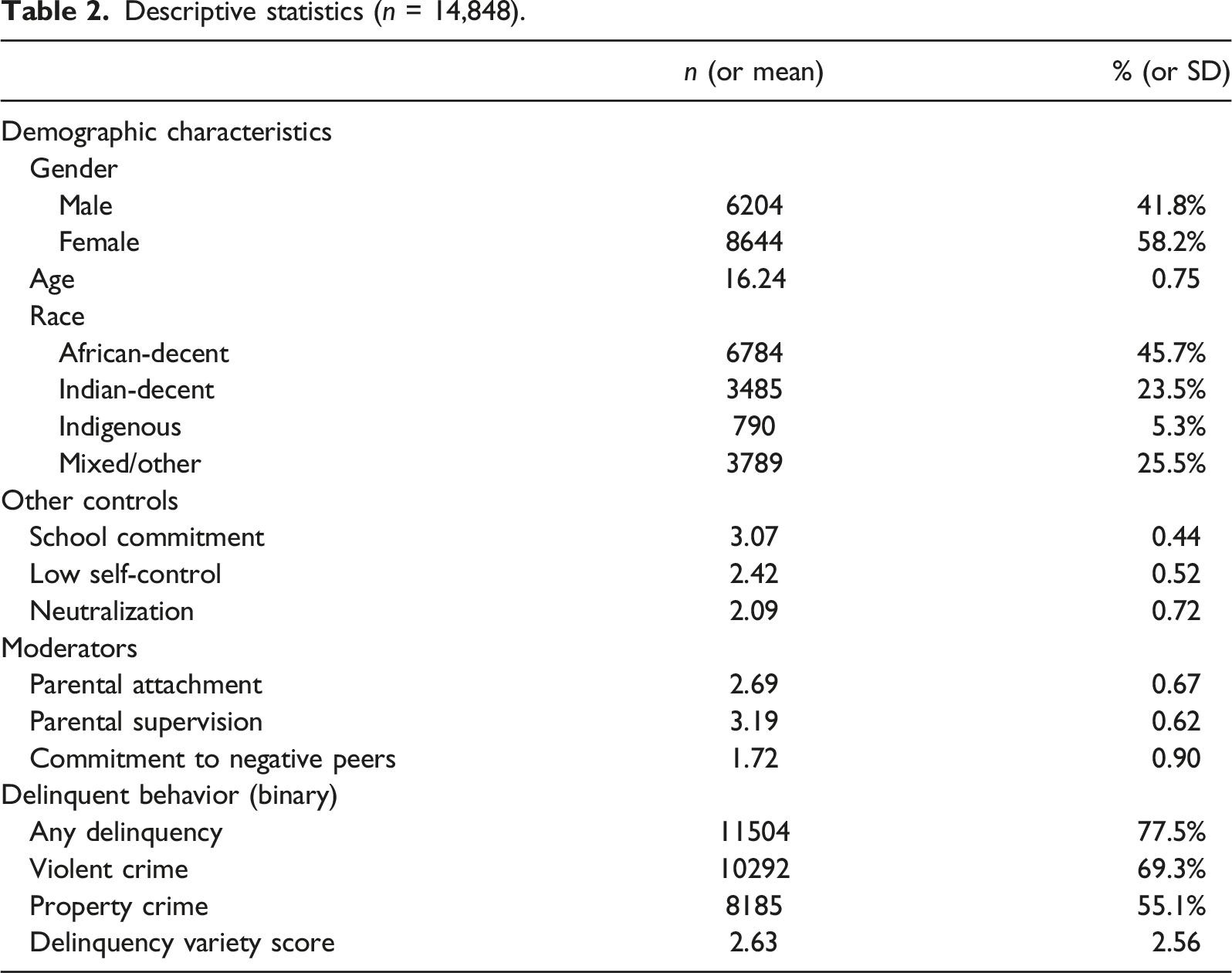
We include two types of delinquency measures in the current study. First, we separate offenses into categories: violent offending and property offending. These are binary measures coded one if the respondent engaged in the offense in the previous year. Second, given the high prevalence of offending (78% of the sample had engaged in at least one offense), we use delinquency variety scores for violent and property offending, where higher values indicate higher levels of delinquency. Over the past 40 years, variety scores have been considered a superior method for measuring offending. Hindelang et al. (1981) was one of the first to acknowledge a preference for variety scores, reporting that they are more reliable than frequency scores. Subsequent research has reported that variety scores are beneficial in that they are also associated with the frequency and seriousness of offending (Farrington, 1973), they are less susceptible to outliers, they are less likely to be skewed, and they possess the “highest” concurrent validity and “equal” predictive validity when compared to other scales (Sweeten, 2012). In a review of the literature and examination of the five most frequently used scales measuring offending Sweeten (2012) concluded, “Variety scales are the preferred criminal offending scale because they are relatively easy to construct, possess high reliability and validity, and are not compromised by high frequency non-serious crime types” (p. 533).
Our violent offense measure relied on four individual items that asked, “During the past 12 months, how often have you: (a) Hit someone with the idea of hurting them, (b) Carried a hidden weapon (of any kind) for protection, (c) Attacked someone with a weapon (of any kind), and (d) Been involved in fights with other groups.” The property offense measure included six items that asked, “During the past 12 months, how often have you: (a) Avoided paying for something such as movies, or the bus (b) Purposely damaged or destroyed property that did not belong to you, (c) Illegally spray painted a wall or building, (d) Stolen or tried to steal something worth LESS than EC$100, (e) Stolen or tried to steal something worth MORE than EC$100, and (f) Gone into or tried to go into a building to steal something.”
Parental Attachment
The parental attachment measure is a scale including five questions. Responses with higher values indicated higher levels of attachment. Individual questions included “You can talk to your parents/guardians about anything” and “Your parents/guardians always trust you.” Respondents answered Likert responses ranging from none of the time to all the time.
Parental Supervision
Similarly, the parental supervision measure is comprised of five questions with higher values indicative of higher levels of supervision. Questions included “Your parents/guardians know where you are when you are not at home or at school” and “Your parents/guardians know who you are with if you are not at home.” Responses ranged from none of the time to all of the time.
Commitment to Negative Peers
Commitment to negative peers is a scale comprised of three questions asking how likely the respondent would still hang out with their friends if they were getting them into trouble (1) at home, (2) at school, and (3) with the police, borrowed from Esbensen and Weerman (2005). Responses ranged from not at all likely to very likely. Higher values correspond with higher levels of commitment to negative peers.
Items and scale relibability and validity.
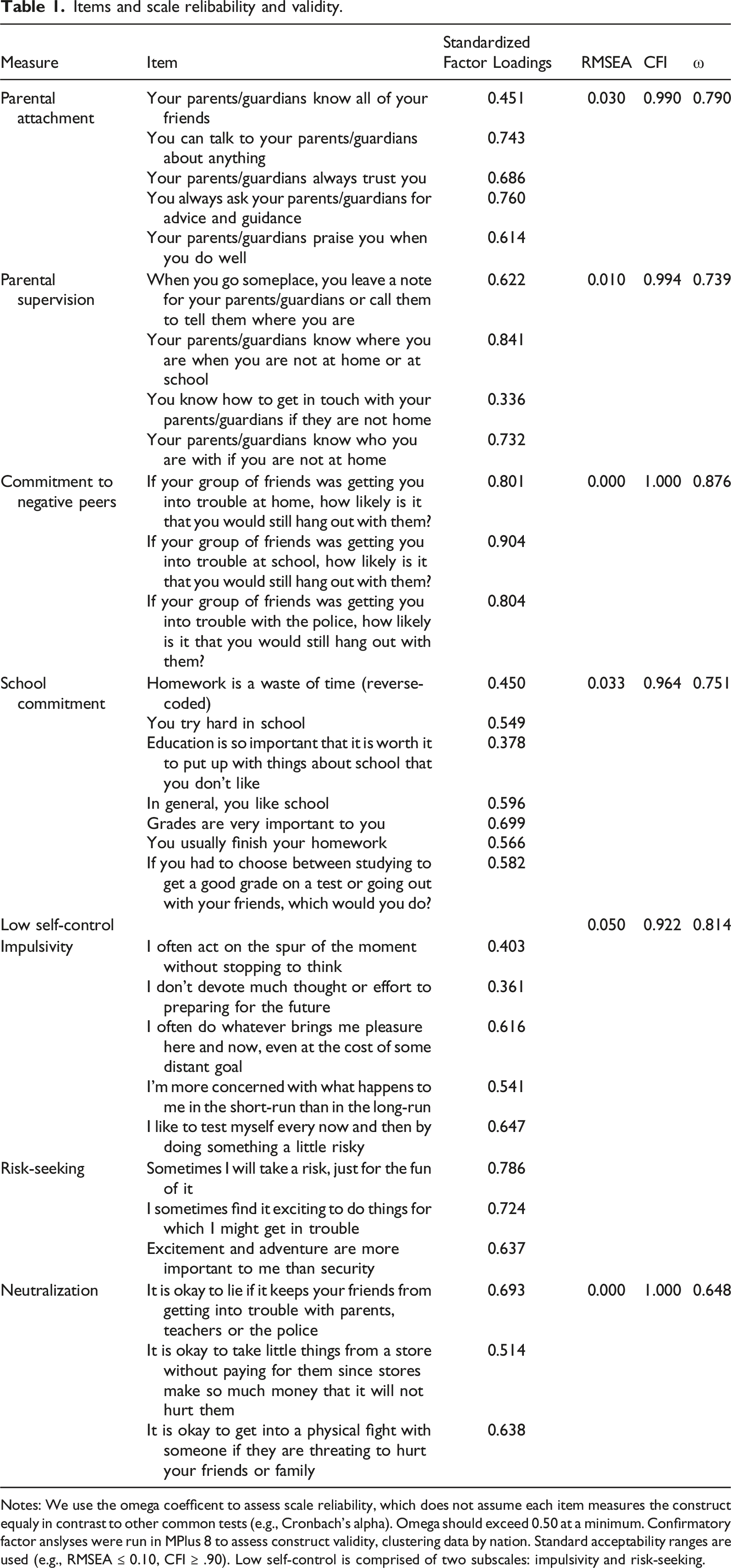
Notes: We use the omega coefficent to assess scale reliability, which does not assume each item measures the construct equaly in contrast to other common tests (e.g., Cronbach’s alpha). Omega should exceed 0.50 at a minimum. Confirmatory factor anslyses were run in MPlus 8 to assess construct validity, clustering data by nation. Standard acceptability ranges are used (e.g., RMSEA ≤ 0.10, CFI ≥ .90). Low self-control is comprised of two subscales: impulsivity and risk-seeking.
We also estimated scale reliability using the coefficient omega (ω; McDonald, 1970). Compared to the more popular measure of internal consistency, Cronbach’s alpha (α), omega (ω) does not assume that each item measures the construct equally well (i.e., essential τ equivalence; Crocker & Algina, 1986) and provides optimal estimates of internal consistency (Zinbarg et al., 2005). The nested data structure is also taken into account since the omega is calculated using lambda (λ) and residual variance from CFA results. There is no universally accepted threshold for adequate levels of omega reliability, but some researchers suggest that omega should exceed 0.50 at a minimum, with 0.75 preferable (Watkins, 2017). All the questions, omega coefficients, and factor loadings for the parental attachment, parental supervision, and commitment to negative peers scales supporting their reliability and validity are included in Table 1.
Demographics
Self-reported gender, ethnicity, and age at the time of the survey were also collected from each respondent. Gender response options included male and female (1 = male; 0 = female). Regarding ethnicity, the responses were re-coded into four groups: African descent, East Indian descent, Indigenous, and mixed/other race (e.g., white, European, Asian, Chinese).
Other Control Variables
In addition, we include three theoretically relevant control measures derived from social control, self-control, and social learning theories. These individual-level theories are frequently used in criminological research and are relatively strong behavioral predictors of crime, with R2 ranging from 0.28 to 0.38 (Weisburd & Piquero, 2008). Including these measures allows us to identify better the relationship between family structure, delinquency, and our moderating variables.
First, the school commitment scale contains seven items with questions like “You try hard in school”. Second, the low self-control scale is comprised of eight items; questions include “I often act on the spur of the moment without stopping to think” and “I like to test myself every now and then by doing something a little risky”. Third, we include a measure of neutralization. The three-item scale asks whether it is okay to lie if it keeps your friends from getting into trouble with parents, teachers, or the police. Responses for all three scales ranged from strongly disagree to strongly agree. Higher scores indicated higher levels of school commitment, low self-control, and neutralization. Again, questions, omega coefficients, and factor loadings for each theoretical scale are included in Table 1; the tests indicate reliable and valid scales.
Analytic Strategy
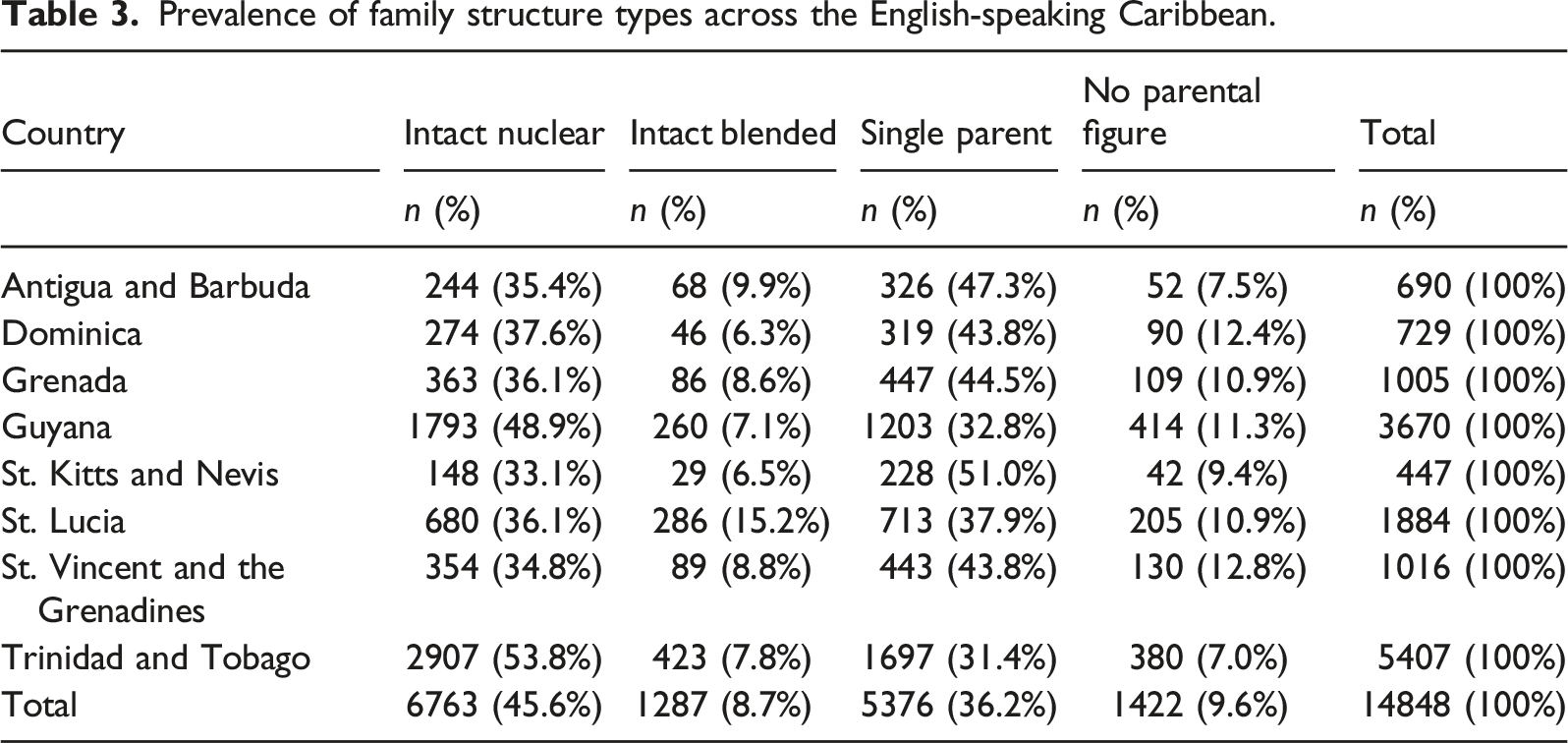
After the descriptive statistics for our sample are described, we present the prevalence of each family structure for each nation’s sample included in the current study. We display the number and percent of youth engaging in any delinquency and, separately, violent and property delinquency. We use chi-square tests to compare differences by family structure type. Next, a series of hierarchical regressions are used to examine the relationship between family structure and delinquency, accounting for the nested nature of the data. In addition, moderating effects are tested in the final model by adding interactions between the family type and the moderating variables (i.e., parental attachment, parental supervision, and commitment to negative peers). Figures are presented to display these effects. We used STATA 17 for all analyses.
Descriptive Statistics
Descriptive statistics (n = 14,848).
Prevalence of family structure types across the English-speaking Caribbean.
Results
Delinquency Involvement by Family Type
Delinquency involvement by family type.
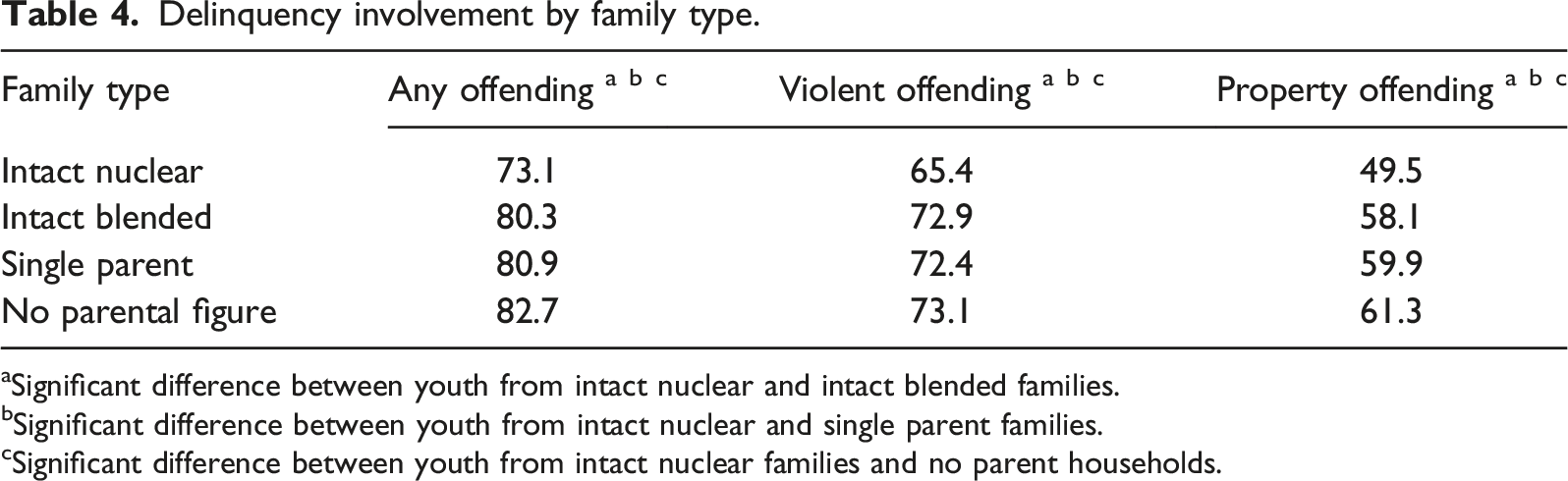
aSignificant difference between youth from intact nuclear and intact blended families.
bSignificant difference between youth from intact nuclear and single parent families.
cSignificant difference between youth from intact nuclear families and no parent households.
Family Structure and Delinquency Variety
Hierarchical regression predicting delinquency variety in the English-speaking Caribbean.
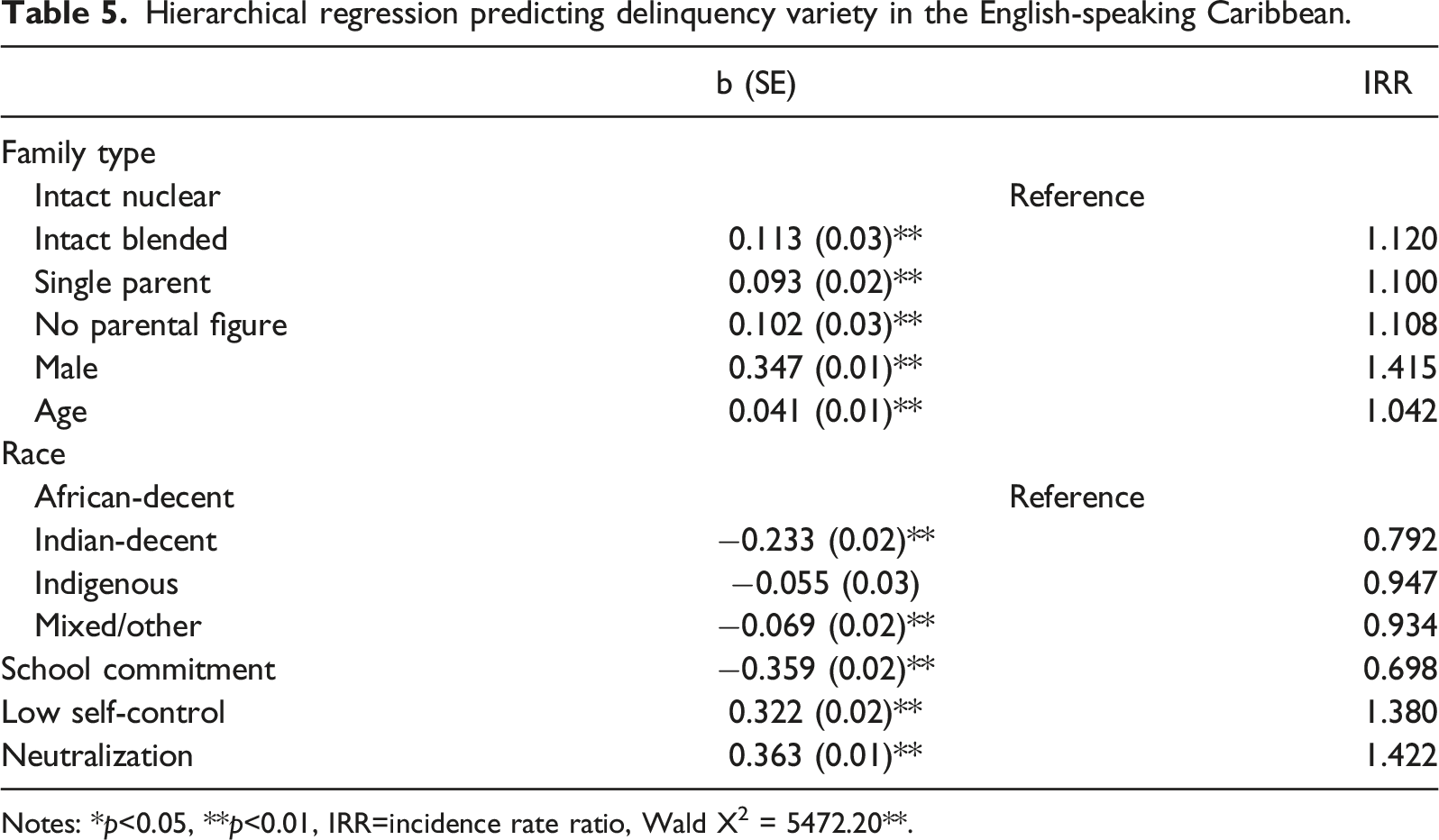
Notes: *p<0.05, **p<0.01, IRR=incidence rate ratio, Wald X2 = 5472.20**.
Further, being male (IRR = 1.415, p < .01) and older (IRR = .042, p < .01) were significantly associated with higher delinquency variety scores. Compared to the youth of African descent, the youth of East Indian descent (IRR = .792, p < .01) and mixed/other race youth (IRR = .934, p < .01) self-reported lower delinquency variety scores. The variety score for Indigenous youth was not significantly different compared to youth of African descent (IRR = 0.947, p = n.s). For the other control variables, lower school commitment (IRR = 0.698, p < .01), lower self-control (IRR = 1.380, p < .01), and higher neutralization (IRR = 1.422, p < .01) were significantly associated with higher levels of delinquency.
Moderating Effects of Parental Attachment, Parental Supervision, and Commitment to Negative Peers
Interactional effects from a hierarchical regression predicting delinquency variety in the English-speaking Caribbean.
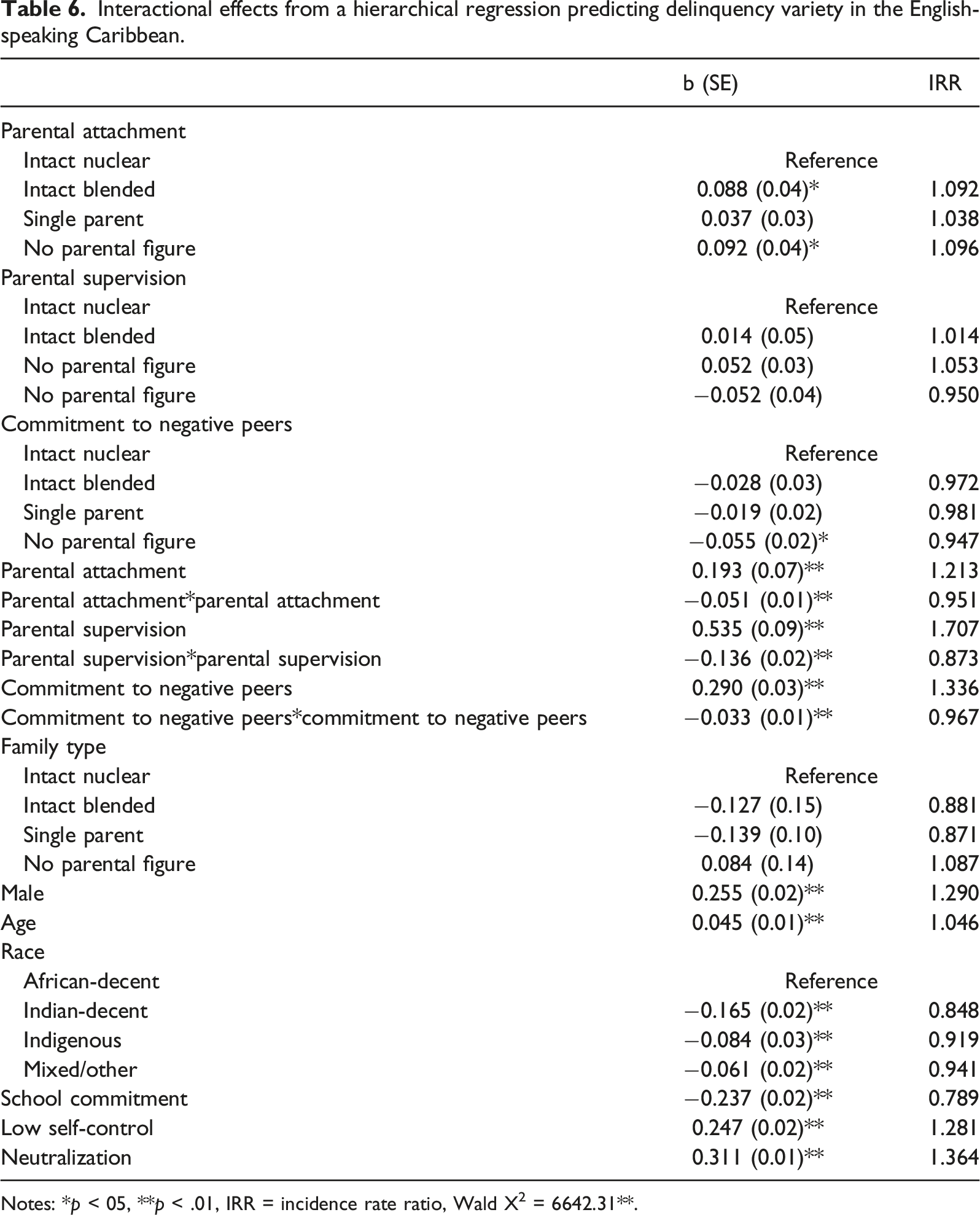
Notes: *p < 05, **p < .01, IRR = incidence rate ratio, Wald X2 = 6642.31**.
First, parental attachment was significantly associated with delinquency. The association between parental attachment and delinquency differed significantly across family types. The interaction term for delinquency risk was significantly lower for youth from intact nuclear families compared to intact blended families (IRR = 1.092, p < .05) and youth with no parental figures (IRR = 1.096, p < .05). The difference between intact nuclear families and single-parent households was positive but not significant (IRR = 1.038, p = n.s.). These relationships are shown in Figure 1. After a threshold of around two, as parental attachment increased, delinquency the variety score decreased steeply for youth from intact nuclear families. In comparison, parental attachment had less of an effect on delinquency for youth from intact blended homes and those with no parental figures, showing only a slight, albeit significant, decrease in reported delinquency for youth with higher parental attachment after a threshold of about three. Deliquency variety score across parental attachment level, by family type.
Second, while overall parental supervision was significantly related to the respondent’s delinquency variety score in this model, there were no statistically significant differences by family type. Delinquency variety scores decreased as parental supervision increased regardless of family type.
Third, while commitment to negative peers was significantly associated with delinquency variety scores, commitment to negative peers only moderated the relationship between family structure and delinquency between youth from intact nuclear families and youth with no parental figure. As commitment to negative peers increased, delinquency risk was significantly lower for youth with no parental figures compared to intact nuclear families (IRR=0.947, p < .05). This relationship is displayed in Figure 2. Deliquency variety score across comitment to negetive peers level, by family type.
Each of the control variables included in the model remained statistically significant in this final model. Males (IRR = 1.290, p < .01) and older youth (IRR = 1.046, p < .01) self-reported higher delinquency variety scores. Compared to the youth of African descent, the youth of East Indian descent (IRR = 0.848, p < .01), Indigenous youth (IRR = 0.919, p < .01), and mixed/other race youth (IRR = 0.941, p < .01) reported significantly lower delinquency variety scores. Lower school commitment (IRR = 0.789, p < .01) predicted lower levels of delinquency, while higher low self-control (IRR = 1.281, p < .01), and neutralization (IRR = 1.364, p < .01) were significantly associated with higher levels of delinquency.
Discussion
The current study examined the association between family structure and delinquency in the English-speaking Caribbean. Self-reported family structure by secondary-school youth across the eight study nations indicates that many (46%) youth reside in intact families. Less, but still a substantial proportion of youth (36%) reside in single-parent households. Relatively fewer live in blended households (9%) or homes with no parental figure (10%). International research on the link between family structure and adolescent behavior contributes critical theoretical insights, and can inform crime prevention efforts, particularly in developing nations such as those represented here – perhaps even more so given limited resources (Thomson & McLanahan, 2012).
Our findings largely confirm prior literature suggesting that youth in intact families are less delinquent (Wells & Rankin, 1991; Price & Kunz, 2003; Apel & Kaukinen, 2008; Rebellon, 2002; Hill et al., 1999; Boccio & Beaver, 2019). We found significant differences in delinquency involvement between youth from intact families than the other types of family structures. Less variation existed between the three other structure types. Youth from intact families engaged in lower levels of overall, violent, and property delinquency than youth from the other types of family structures. These differences remained when controlling for demographic characteristics. Like research outside the region, males and older youth were more delinquent.
Nye (1958), and later Hirschi (1969), argued that it is not the structure of the family which is causally related to delinquency, but rather the relationships and interaction patterns which are key factors. Recent academic inquiry has focused on family processes and dynamics within different family structures as mediating and moderating influences on delinquency (Jacobsen & Zaatut, 2020). A consistent finding is that strong parental attachment and closeness can play a significant role in buffering against delinquency, particularly for children in single-parent households (Hoeve et al., 2012). We found that parental attachment significantly moderates the relationship between family structure and youth delinquency. This influence was significant and pronounced for youth living in intact families and, to a lesser extent, for youth living in single-parent families. Youth from intact homes reporting high levels of parental attachment were significantly less delinquent than those reporting lower levels of attachment. Inversely, youth from intact families with low levels of parental attachment had close to the highest predicted mean levels of delinquency compared to youth in blended families and those with no parental figures.
Much prior research suggests that youth from intact families benefit from having two biological parents in the home (e.g., greater monitoring, involvement, and supervision) and that strong attachment to two parents provides greater protection from delinquency than strong attachment to one parent (Rankin & Kern, 1994). However, the advantages of living with two biological parents may not be shared equally by all youth. Musick and Meier (2010) found that children from high conflict married-parent families had significantly worse outcomes in adolescence and young adulthood than children in low conflict married-parent families. Low or poor attachment to parents may indicate other problems in intact families, such as parental rejection or family violence, which may be associated with youth delinquency. Additional work demonstrates that living conditions, movement of people in and out of the home, and adverse experiences in the home also influence subsequent delinquency (Bonner et al., 2019). Further investigation into other aspects of home and family functioning is needed to understand better the role of family processes on delinquency in different Caribbean family structures.
We also found that parental supervision is important regardless of family type. When youth perceived higher levels of monitoring, when their parents knew where they were and who they were with, they self-reported less delinquency. This finding is consistent with a long and rich body of research testing this relationship (Hoeve et al., 2009). Notably, parental supervision did not moderate the relationship between family structure type and delinquency, given that single parents are theorized to have less time and ability to supervise their children. Our findings demonstrate that both single parents and intact parents can provide enough supervision to serve as a protective barrier against delinquency. Prior research in the Caribbean by Wang et al. (2013) similarly reported a link between delinquency and parental knowledge, youth disclosure, and parental control. They concluded that youth disclosure to parents was predictive of reduced delinquency while problematic parent-youth communication increased delinquency. This work suggests children are less delinquent when parents serve as an authoritative figure to provide guidance and encourage appropriate behavior, but also listen to, and problem solve with their children.
Direct control over delinquent behavior has been described as a complex, multidimensional set of processes that operate in different ways (Wells & Rankin, 1988). This is particularly important to consider when centering research on families living in regions of the world that are not often the focus of study. While our results highlight the importance of monitoring (our operationalization of supervision), other components of supervision – direct control through punishment and rewards and normative regulation – should be explored further (Wells & Rankin, 1988; Nye, 1958). Future research should continue to explore the role of parental supervision in the Caribbean and incorporate the reciprocal relationship between a child’s behavior and parenting style and the role of parental expectations and discipline (Patterson, 1982; Wells & Rankin, 1988). Specific attention to the intersection of gender, race, and Caribbean culture in family dynamics would provide a nuanced understanding of the role of family on adolescent behavior. This is particularly important as family counseling programs focused on reducing youth delinquency are being adapted and implemented in the Caribbean (see Stahlberg et al., 2022).
Finally, our commitment to negative peers finding aligned with prior literature and expectations showing that higher levels of negative commitment to negative peers increased delinquency (McGloin & Thomas, 2019). This is unsurprising given our respondents’ ages (i.e., between 15 and 18 years old); a period when youth spend increasing time and are influenced greater by peer groups (Katz & Fox, 2010). Further, we found that the influence of peers differed by family structure type, comparing youth from intact families and no-parent households. The relationship between peers and delinquency was positive regardless of the youth’s family structure; however, slightly less influential for youth without parents in the home, a finding that deserves further inquiry.
One explanation for a direct effect between family structure and delinquency relates to the resources a parent can provide, which we could not address in the current study. Higher rates of female-headed households are often concentrated in areas of disadvantage where schools typically perform poorly and social organizations are lacking (Sampson, 2012). Beyond this, with gender gaps in wages where women earn less than men and one less parent providing income for a household, single-parent households often provide fewer financial resources to their children. Findings from the Caribbean region generally support this as well (Wilson, 1989). For instance, it is estimated that in the region, women earn approximately 40% of men’s incomes (UNDP, 2005). However, an examination of data from the Jamaican Survey of Living Conditions (from 1990 to 2010) found that children received larger resource shares in female-headed households compared to households headed by males, which might mediate disparities in the relationship between family structure and delinquency (Bose-Duker et al., 2021). Future work needs to incorporate these structural factors.
Limitations exist in the present study. We are only able to use a cross-sectional approach providing an initial look at this topic. Future work is needed using longitudinal data to examine causal processes. Further, our data were collected at schools on only 1 day. As truancy and delinquency are linked, our findings may be biased. Another major limitation of this collection approach is that our data may suffer from common method variance. Common method variance occurs when observed variance is due to the measurement method rather than the constructs themselves; this concern is particularly relevant for self-report surveys collected at one-time point. We note, with this limitation, that our final modeling design, using interaction terms, may mitigate some concern, as noted by Chang et al. (2010), “including a non-linear interaction term in the model is likely to reduce CMV because such a complex relationship is, in all likelihood, not part of the respondents’ theory-in-use” (p. 180).
Omitted variable bias occurs when other explanatory variables which correlate with the outcome and included variables are not included in a regression model. Given the importance of family processes explaining delinquency beyond the data we had available, our model is likely biased. For instance, prior research finds that parental past and present involvement in anti-social behavior affects their children’s participation in delinquency (Roettger & Swisher, 2011). Data for the present study was not collected on parents beyond what was presented here, so we could not include such measures in our models. Related, only general measures of parental attachment and supervision were asked, so we could not compare effects for mothers and fathers separately or for other family members. Specifically, future researchers need to better explore structural factors and the emotional settings families provide youth in the region. For example, research understanding the unique moderating and mediating relationships that family adaptability and cohesion have on delinquency are needed to more fully understand family variability and its impact on youth behavior. Better measuring of the variability of families, not just by family structure, will allow scholars to differentiate unique relationships and enhance future research and delinquency prevention efforts.
Youth from no parental figure households responded to parental measures, which begs the question of whom the respondents view as their guardians. Additionally, we excluded the influence of extended family members in the present study because it was not significant in our models. Future work should incorporate and explore this influence. Given the lack of literature on this topic in the region, we focus on family structure overall. Prior literature indicates that family structure and delinquency differ by gender or race, and these factors should be disaggregated in future work.
Our findings extend prior literature on the importance of family structure and processes in influencing delinquency in the English-speaking Caribbean. There has been exponential growth in the number of single-parent households around the world and a shift towards women being married and having children later in life, smaller family sizes, and increased divorce rates in the Caribbean (despite the region still having one of the highest teen pregnancy rates in the world) (St Bernard, 2003). These changes highlight the importance of continued research on this topic and strong policy recommendations for crime prevention efforts.
Footnotes
Acknowledgments
The Eurogang working group developed the survey instrument used in the study, for which we are thankful. We would also like to acknowledge support from several individuals, including Rhea Reid, who served as project manager on the ground and led data collection efforts in each nation on behalf of the RSS, Mr. Grantley Watson, head of the RSS, who spearheaded efforts on behalf of that organization, and Keisha Linton, who assumed the role of the project manager in September 2015 to lead the administration of data collection in Guyana and Trinidad and Tobago. In addition, we would like to thank Modupe Sodeyi, Kim Ramsey, and Blanche Goring, who collected data in the original seven participating RSS nations; and to Marlon Anatol and Randy Seepersad, who led data collection efforts in Guyana and Trinidad and Tobago, respectively. Most of all, we would like to thank Lidia Nuno for serving as the ASU project manager. She collaborated with the above persons to ensure the project was well organized, collected high-quality data, and co-authored the final report to RSS. The contents of this document are the sole responsibility of the authors.
Declaration of conflicting interests
The author(s) declared no potential conflicts of interest with respect to the research, authorship, and/or publication of this article.
Funding
This research was funded by the United States Agency for International Development (USAID) under Award No. AID-538-F-14-00001 through the Regional Security System (RSS). The research was also funded in part by the ASU Foundation through a generous gift by the Watts Family.
Ethical Approval
This research was approved by the Institutional Review Board at Arizona State University (IRB Protocol # 1301008686).
