




Abstract
This study used a sample of 257 female college students to investigate the heterogeneity of threat assessment, risk response, and delays in behavioral response, after the establishment of discomfort. Findings from three ordinary least squares (OLS) regression models indicated that (a) increased rape myth acceptance was correlated with threat assessment delays, (b) increased rape myth acceptance and prior verbally coercive sex were correlated with risk response delays, and (c) frequent pornography consumption and prior victimization were correlated with delayed behavioral response so that a woman remained in a risky sexual situation longer after establishing discomfort as compared to counterparts. Implications for research and policy are addressed.
Female college students in the United States face a heightened risk of sexual assault (Fisher, Cullen, & Turner, 2000; Koss, Gidycz, & Wisniewski, 1987). To more fully understand this relationship, research has highlighted the role of perpetrator factors and situational characteristics that diminish women’s sexual safety (Schwartz & DeKeseredy, 1997; Schwartz & Pitts, 1995). In addition, scholars have identified a host of individual victim factors correlated with women’s vulnerability to assault (Adams-Curtis & Forbes, 2004; Franklin 2010). In line with the feminist position on violence against women, existing victimology scholarship underscores the usefulness of this research to empower and educate women while simultaneously holding perpetrators solely responsible for violence.
One avenue of scientific inquiry has implicated delays in danger cue recognition and response as increasing a woman’s vulnerability to assault (Messman-Moore & Brown, 2006). To be sure, women unable to recognize threats to safety in sexual situations face increased risk for victimization. Research has also identified some factors that predict a woman’s threat assessment and danger cue response to determine why it takes some women longer to recognize and respond to risk as compared to others (Breitenbecher, 1999; Messman-Moore & Brown, 2006; Norris, Nurius, & Graham, 1999). In particular, prior victimization and trauma-related symptoms have been correlated with deficits in danger cue recognition and response (Messman-Moore & Brown, 2006). Situational alcohol intoxication has also impaired recognition and response to sexual threat (Norris, Nurius, & Dimeff, 1996). Additional gender- and risk-related behaviors have not, however, been investigated in the general danger cue recognition literature. Furthermore, a gap remains in terms of the factors that explain the time lag between the point a woman identifies a situation as threatening and the point she responds by initiating a behavioral response. Indeed, some women feel threatened and respond immediately by exiting a given situation. Others may feel threatened but wait longer to leave—increasing the likelihood of victimization (Messman-Moore & Brown, 2006). Investigations of the factors that predict this time lag are absent from the danger cue recognition and sexual victimization literature.
The current study addresses these limitations by investigating the impact of relevant attitude and behavior factors on danger cue recognition and response in a hypothetical heterosexual encounter among a sample of 257 college women. The current research is informed by social scripting theory as it translates into the expectations individuals have concerning heterosexual sex encounters and the assessment and response to danger cues in sexual scenarios.
Social Scripting Theory and Sex Scripts
Gagnon and Simon (1973) were the first to apply social scripting theory to human sexual interactions by observing the ways individuals apply preconceived scripts to their respective heterosexual encounters. Simon and Gagnon (2003) have suggested that sex scripts are derived from the complex interplay between a person’s own cognition or mental processing, an individual’s experience of interpersonal relationships, and the cultural messages presented to him or her regarding the norms related to specific sex behaviors. In response to these messages, individuals formulate behavioral scripts. In other words, individuals develop tangible expectations for a particular type of event, and specifically, one related to heterosexual sex. Expectations then are informed by social experiences and may produce cues about what to anticipate in a given interaction. Accordingly, an individual can predict the events that would lead to a desirable outcome—like consensual intimacy.
These ideas are relatively common, oftentimes stereotypical, and are reinforced and reiterated in various cultural contexts (Kim et al., 2007; Wiederman, 2005). Pragmatically, sex scripts reduce uncertainty and anxiety in dating and sexual situations because both parties can usually forecast the sequence of events that will take place. In this way, an individual’s script informs his or her expectations of a given sex event. Similarly, a sex script would identify the types of interpersonal cues that may be threatening or inappropriate in a consensual heterosexual encounter. General dating and heterosexual scripts have changed little since the 1950s in terms of adherence to traditional gender roles and these scripts continue to be held by a large portion of the American adult dating population (Bartoli & Clark, 2006; Laner & Ventrone, 2000; Metts, 2006: Morr Serewicz & Gale, 2008).
The Traditional Sex Script
A typical heterosexual sex script suggests that a man should pick up his female date, open her car door, pay for her meal, and walk her to her doorstep at the end of the evening (Lloyd & Emery, 2000; Morr Serewicz & Gale, 2008). If sexual contact occurs, it will be the result of his initiation—further cementing his control and relative power (Emmers-Sommer et al., 2010; Lewin, 1985). A woman should be courted and not “chase” a potential mate by making phone calls or pursuing other contact. On dates, she should eat little, listen intently, and allow her male suitor to open her door, pull out her chair, and pay for her meal (Laner & Ventrone, 2000). Traditional sex scripts suggest that the woman be most concerned with safeguarding sexual access as the moral gatekeeper of her sexuality (Bartoli & Clark, 2006; Peplau, Rubin, & Hill, 1977). She is not supposed to initiate intimacy and is expected to resist his sexual advances (even if only as “token resistance”), regardless of her own arousal or her desire to engage in sexual contact (Byers, 1996; Muehlenhard & McCoy, 1991; Muehlenhard & Rodgers, 1998). When women do initiate a date, research finds that men are more likely to expect sex and expect more sex than if the date was initiated by the man (Emmers-Sommer et al., 2010; Muehlenhard, 1988; Muehlenhard, Friedman, & Thomas, 1985). These increased sexual expectations have been cited as contributing to sexual assault (Bostwick & DeLucia, 1992; Mongeau & Carey, 1996).
The “Hookup” Script
Recently, researchers have noted transitions in the ideology surrounding the ways that adolescents and young adults relate sexually to one another (Bogle, 2007, 2008; Paul, McManus, & Hayes, 2000). Young adults are “hooking up” or engaging in casual, noncommittal sexual intimacy prior to establishing relational or interpersonal intimacy (Fielder & Carey, 2010a; 2010b). The “hookup” script is different because both parties are overtly interested in some degree of sex (e.g., kissing, petting, oral sex, or sexual intercourse) with few expectations for interpersonal closeness. Any relational progress occurs at the behest of the male involved after the two have been sexually intimate (Bogle, 2008).
Despite these shifts, individuals from this age group still report adherence to the traditional script when speaking conceptually about first dates, first sexual encounters, and romance expectations (Seal, Smith, Coley, Perry, & Gamez, 2008; Serewicz & Gale, 2008). Among those who do participate in the hookup, there is ambiguity regarding the “rules” for these encounters. Women who are “hooking up” also express the desire for exclusive relationships that imitate traditional coupling as characterized by the traditional script depicted above (Bogle, 2008; Paul & Hayes, 2002). The disconnect between behavioral engagement in casual sex and the expectation for exclusivity in heterosexual pairing may produce conflict in terms of the behavioral cues a woman should anticipate during intimacy. Further complicating competing expectations is the creation of confusion for women concerned with relationship progress but who must remain considerate of danger cues and personal safety. To be sure, women willing to participate in noncommittal, casual, and somewhat risky sexual intimacy often do so for the greater good of a potential relationship (Paul & Hayes, 2002)—a goal that echoes the traditional sex script. Despite the dissimilar sequence of events in these two settings, a common theme remains: sex and intimacy are scripted and each individual participates to achieve a particular outcome.
Sex Scripts and Sexual Assault
A review of empirical literature on sexual assault risk factors suggests that women are provided with conflicting messages about normal and healthy sexual encounters as compared to behavior that should elicit fear in interpersonal settings—consequently clouding personal sex scripts for consensual sexual activity and, thus, their sexual well-being. When considering gender-role socialization and the formation of scripts, society presents women with messages about normative sexual behavior that contradicts messages about safety. Scripts have been influenced by risk behaviors that are masked as desirable so that a woman anticipates intimacy based on her script, but in doing so, engages in behavior that diminishes her sexual safety. Moreover, a considerable overlap exists between events that are characteristic of seduction and those present in incidents of rape (Hannon, Hall, Kuntz, Van Laar, & Williams, 1995; Littleton & Axsom, 2003; Littleton, Axsom, & Yoder, 2006), despite the script one adheres to. For example, in both traditional and “hookup” scripts, the man is more sexually assertive and conveys his arousal and interest in intimacy; she responds by saying “no” to his advances (Check & Malamuth, 1983). His socialization and exposure to rape myths (e.g., “When a woman says no, she doesn’t really mean no”) might cause him to question her “real” motivation for saying no. He is unsure whether this is a “token no” provided to uphold her sexual gatekeeper function and salvage her reputation or whether she is earnestly resisting his advances (Check & Malamuth, 1983). Consequently, he verbally pressures her, maybe using forms of seduction or coercion and other strategies to “loosen her up” to successfully gain sexual access (Byers & Lewis, 1988). Until this point, she may not perceive his actions as threatening or dangerous because this is the expected sequence of events that typically takes place during seduction or other sexual encounters (Littleton & Axsom, 2003). She will likely not make a concerted effort to get away and, instead, might continue participating in the script. Repeated refusals by the woman, interpreted as token resistance by the man (Polaschek & Ward, 2002), may prompt feelings of justification where he believes physical coercion and/or force is an appropriate mechanism to overcome her resistance (Metts & Spitzberg, 1996; Muehlenhard, Andrews, & Beal, 1996).
A woman anticipating relationship progress, like dating exclusivity or romantic commitment, may demonstrate deficits in the timely assessment of risk cues. The socialization of behavioral scripts and related social messages confounded with these scripts can play a fundamental role in clouding the interpretation of these cues and contributing to misperception of danger. Although the current study does not test social scripting theory, the formulation and consequences of sex script adherence contributes conceptually to this analysis as a useful framework for understanding how women make safety-related decisions in intimate contexts. Thus, a variety of cognitions and behaviors may inform an individual’s expectation of events in heterosexual encounters and her perceptions of and responses to risk. Specifically, adherence to traditional gender roles, rape myth acceptance, pornography consumption, alcohol intoxication, sorority affiliation, and prior victimization experiences may inform a woman’s sex scripts and influence the way she processes and reacts to danger.
Traditional Gender Roles
Gender influences behavior (Bem, 1981) by shaping how individuals interact with one another (Larsen & Long, 1988) and by influencing how men and women relate and interpret messages from the opposite sex. Stringent adherence to gender roles may inform sexual expectancies and danger cue recognition. Gender roles are defined as “normative behaviors and attitudes which are expected from individuals, based on their biological sex, and which are often learned through the socialization process” (Ben-David & Schneider, 2005, p. 386). For example, men are socialized to display strength, dominance, aggression, and a lack of emotions (Kilmartin, 2000). Traditional femininity, in contrast, embodies weakness, dependence, subordination, and helplessness. The manifestation of these roles can be witnessed through heterosexual interactions defined by adherence to masculine and feminine relationship goals. In assessing the characteristics of “traditional” and “hookup” scripts, the man is sexually confident, pursues his would-be mate, and physically demonstrates arousal—characteristics of stereotypical masculinity (Kilmartin, 2000). The woman is responsible for being the responder, the gatekeeper, and the trophy to be had. Her reactions are passive and accommodating. To be sure, a woman who reports increased acceptance of traditional gender roles may be more likely to assess and respond to sexual initiation in passive ways and may wait longer before recognizing and actively responding to threat as a consequence of her preconceived sex script.
Rape Myth Acceptance
Rape myths have been defined as a series of stereotypical and false beliefs about the nature, motivation, and harm caused by a forced sexual encounter (Burt, 1980; Lonsway & Fitzgerald, 1994). They are designed to blame the victim, excuse the perpetrator, and underestimate the emotional, physical, and psychological consequences of rape (Koss et al., 1994). In assessing danger cue recognition, adherence to rape myths may influence a woman’s beliefs about the events that transpire in heterosexual interactions and the scripted behavior that is appropriate in such settings. In other words, if women adhere to rape myths, the sex scripts they formulate may also reflect these views. A woman may, therefore, believe that “only women who are not careful are raped” or that “rape only happens to certain kinds of women or women who actively provoke it” (Koss et al., 1994). Belief in these myths displaces the sexual risk and heightened vulnerability of rape onto “other” women who may not be “smart enough” to stop a sexually escalating situation before it gets out of hand. In this case, risk factors may be overlooked because rape-congruent beliefs impede a woman’s perception of danger in related sex settings, affecting a her ability to respond to masked sexual threat (Ryan, 2011).
Pornography Consumption
Exposure to pornographic media may also have important implications for shaping sex scripts and the assessment of danger cue recognition and response. Scholars have long surmised that pornography portrays women as passive and weak and objectifies them as sexually pleasing (Brosius, Weaver, & Staab, 1993)—often further entrenching both femininity and misconceptions surrounding healthy consensual sex. Davis et al. (2006) reported a relationship between violent and hardcore pornography consumption and rape myth acceptance among female participants. In addition, Brown and L’Engle (2009) found that early exposure to sexually explicit material (including X-rated videos) correlated with a more traditional gender ideology and increased sexual activity among adolescent girls. Pornography’s fundamental messages about women, sex, seduction, and the expected sexual response suggest that women participate in such encounters to service men—reiterating staunch gender traditionality and rape myth ideology. The women portrayed in these media outlets are often presented as the readily available and willing recipients of men’s sexual and sexually objectifying attention. Moreover, women are degraded in ways that reflect ultrafeminine stereotypes (Dines, Jensen, & Russo, 1998; Russell, 1988). As part of a particular gender ideology, the consumption of pornography among women may produce related sex (and rape myth–congruent) scripts (Eggermont, 2006; Mosher & MacIan, 1994) so that women expect a series of events to occur in intimate settings that may mirror the objectification and humiliation presented in pornographic media. An individual’s scripts may be characterized by sexual debasement so that threats to safety in the form of risk behaviors that are encountered in intimate settings go unaddressed.
Alcohol Intoxication
Extant research has demonstrated multiple causal pathways for understanding alcohol’s effect on behavior. Scholarship has identified the contribution of alcohol’s physiological effects on behavioral disinhibition, which have undermined risk assessment and response behavior through cognitive impairment (Davis, Stoner, Norris, George, & Masters, 2009; Loiselle & Fuqua, 2007). In contrast, an “expectancies approach” (Dermen & Cooper, 1994a, 1994b) suggests that individuals formulate behavioral expectancies or expectations (e.g., scripts) that are associated with drinking alcohol that have little to do with physiological effects on cognitive functions. Instead, alcohol’s relationship to sexual behavior can stem from cultural messages about what happens when someone is intoxicated (Leigh, 1990).
Related, a “value-expectancy model” (see Griffin, Scheier, Acevedo, Grenard, & Botvin, 2012, for a review) underscores the calculation of perceived positive as compared to perceived negative consequences of alcohol consumption and how perceptions may promote drinking behavior. These expectations are, in part, informed by past positive drinking outcomes so that a woman who previously consumed alcohol to intoxication and perceived favorable relationship results may be more likely to anticipate positive outcomes if alcohol is involved in future interpersonal interactions. Thus, general patterns of regular alcohol use may impede a woman’s ability to identify and handle risk (Davis, George, & Norris, 2004; Norris et al., 1996, 1999) through these value expectancies that have shaped her sex scripts (Pumphrey-Gordon & Gross, 2007). For example, the mere physical presence of alcohol in heterosexual contexts can serve as a cue for permissive sexual behavior, especially among heavy drinkers (e.g., Brown, Goldman, Inn, & Anderson, 1980). In spite of these concerns, college women may drink excessively to prepare for co-ed gatherings or see alcohol as a social tool useful for cementing relationships (Schwartz & DeKeseredy, 1997). These perceptions have been shaped, in part, by social messages that suggest alcohol is an appropriate sexual access strategy (Berkowitz & Padavic, 1999; Handler, 1995; Martin & Hummer, 1989) and are reinforced when women’s positive experiences of consensual sex also include alcohol. To be sure, the more frequently women consume alcohol, the more likely they may be to develop positive alcohol expectancies and may alter their sex scripts, impairing the timely assessment and response to danger cues in sex settings.
Sorority Affiliation
A socializing institution on American college campuses with a rich history of gender role traditionality (Scott, 1965), sorority women face a heightened risk for sexual assault victimization (Franklin, 2010). Sorority affiliation may similarly influence sex script formation for women through their group membership experiences. Sororities have facilitated the mate selection and heterosexual coupling of female members by providing ready access to fraternity men through participation in social events largely characterized by a Greek-only invitation list with the intended purpose of “finding men” (Berkowitz & Padavic, 1999; Scott, 1965). In addition, women are taught to trust Greek-affiliated men in intimate encounters (Norris et al., 1996) and are encouraged to achieve relationship progress with fraternity members (Berkowitz & Padavic, 1999). These women may produce sex scripts to accommodate behavior characteristic of dating and sexual strategies employed by fraternity counterparts. Alcohol, isolation, and assertive sexual pursuit may be welcomed in consensual settings with men because these characteristics signal imminent sexual or relationship gains. Accordingly, risk factors (Muehlenhard, & Linton, 1987) may not be interpreted as threatening due to sororal socialization and the trust learned in Greek-organizations based on fictitious kinship bonds (e.g., fraternity “brothers”; Norris et al., 1996; Nurius, Norris, Dimeff, & Graham, 1996; Robbins, 2004).
Prior Sexual Victimization
Several studies have reported that women with prior victimization histories report longer response latencies and, consequently, delayed perceptions and responses to threat in risky sexual scenarios (Messman-Moore & Brown, 2006; Soler-Baillo & Marx, 2005; Wilson, Calhoun, & Bernat, 1999). Prior victimization has also influenced the strategies women use to address risk (indirect or proactive methods, including avoidance, disengagement, or management, vs. active or resistance methods that include fighting or screaming to resist assault; Macy, 2007; Norris et al., 1996). Some studies suggest, however, that victims are less able to effectively recognize and respond to danger cues, citing information processing deficits and posttraumatic stress disorder (PTSD) as diminishing perceptions of threat (Wilson et al., 1999). Chu (1992) proposed that the “numbing effect” of PTSD limited women’s awareness of a risk situation and undermined their ability to effectively respond. Others have found that victimized women are just as able as their nonvictimized counterparts to recognize danger cues but the timing of their responses differs (see Messman-Moore & Brown, 2006, for a review) or their responses to threat are less active/direct (Breitenbecher, 1999; VanZile-Tamsen, Testa, & Livingston, 2005). Even so, research has suggested that the relationship between prior victimization and danger cue recognition may be explained because women with victimization histories process information and behavioral cues in ways that differ from women with no history of victimization (Chu, 1992; Kluft, 1990). In this way, revictimization may confuse scripted behavior in intimacy contexts so that the expected sequence of events is less static and defined or interpretable. Women with a history of adult victimization have been less able to identify threat, but more importantly, have reported significantly later behavioral leave responses than nonvictimized women (Messman-Moore & Brown, 2006), which were correlated with later sexual assault victimization. As it pertains to the current study, women with a history of adult sexual victimization may have misperceptions of what to expect when interacting with the opposite sex, altering their expectations of if, when, and how to respond to danger in sexual settings.
Purpose of the Current Study
The current research fills a gap in the literature on danger cue recognition and sexual victimization by investigating threat assessment, risk response, and why certain women feel threatened and identify risk but remain in a risky situation longer than others before initiating a behavioral response. Specifically, this study addressed the following research questions:
Research Question 1: What individual attitude and behavior factors significantly correlate with danger cue recognition?
Research Question 2: What individual attitude and behavior factors significantly correlate with danger cue response?
Research Question 3: What individual attitude and behavior factors significantly differentiate respondents who recognize risk but wait longer to initiate a behavioral response as compared to others?
Methods
Data for the current analysis were obtained from a convenience sample of pencil-and-paper survey responses collected in undergraduate classes ranging in course level and substantive material at a large Northwestern public university during the spring semester of 2007. Student participation was solicited through verbal invitations during regularly scheduled class times. During solicitation announcements, information was provided regarding when and where the survey would take place. Voluntary and anonymous self-administered questionnaires were completed during these scheduled times. Prior to survey administration, an Institutional Review Board (IRB)–approved disclosure containing information about survey content was presented. Participants were also informed that through their participation, they were implicitly providing consent. Respondents were seated appropriately for privacy protection. Participants were provided with university counseling center contact information. Administration of the survey yielded a total of 282 female respondents. Twenty-five surveys were eliminated due to missing data on variables included in the analysis, leaving a total of 257 female respondents. 1
Sample demographics revealed that average age of female respondents as 20.68 years. The majority of participants were single (97%) and of those nonmarried participants, approximately 51% were in an exclusive dating relationship—with an average relationship length of less than 1 year. In addition, 81% of women had engaged in consensual sexual intercourse, and of those, 2% reported only one incident of sexual intercourse and the rest reported having had sex multiple times. Finally, women reported a lifetime average of 3.90 sex partners and a mean age at first intercourse of 17 years. A comparison of the sample to the university population demonstrated moderate representativeness on pertinent demographic variables. The average age of the student population (23 years) was only slightly different from the sample mean (20.68 years). In terms of race, the student population was made up disproportionately of White students (75.5%), followed by Asian (6.1%), Hispanic (4.2 %), and African American (2.6%) students. These percentages were similar to the sample, with White students overrepresented (84%) relative to other races and ethnicities. 2 Table 1 presents the sample demographics.
Sample Characteristics.

Participant race: 0 = non-White, 1 = White.
Year in college: 1 = freshman, 2 = sophomore, 3 = junior, 4 = senior.
Marital status: 0 = not married, 1 = married.
Exclusive dating relationship: 0 = No, 1 = Yes.
Average relationship length: 0 = less than 1 year, 1 = about 1 year, 2 = about 2 years, 3 = about 3 years, 4 = more than 3 years.
Sorority affiliation: 0 = No, 1 = Yes.
Greek-only housing: 0 =No, 1 = Yes.
On-campus residence: 0 = No, 1 = Yes.
Same-sex roommates: 0 = No, 1 = Yes.
Ever had sex: 0 = No, 1 = Yes.
Sex only one time: 0 =No, 1 = Yes.
Dependent Variables
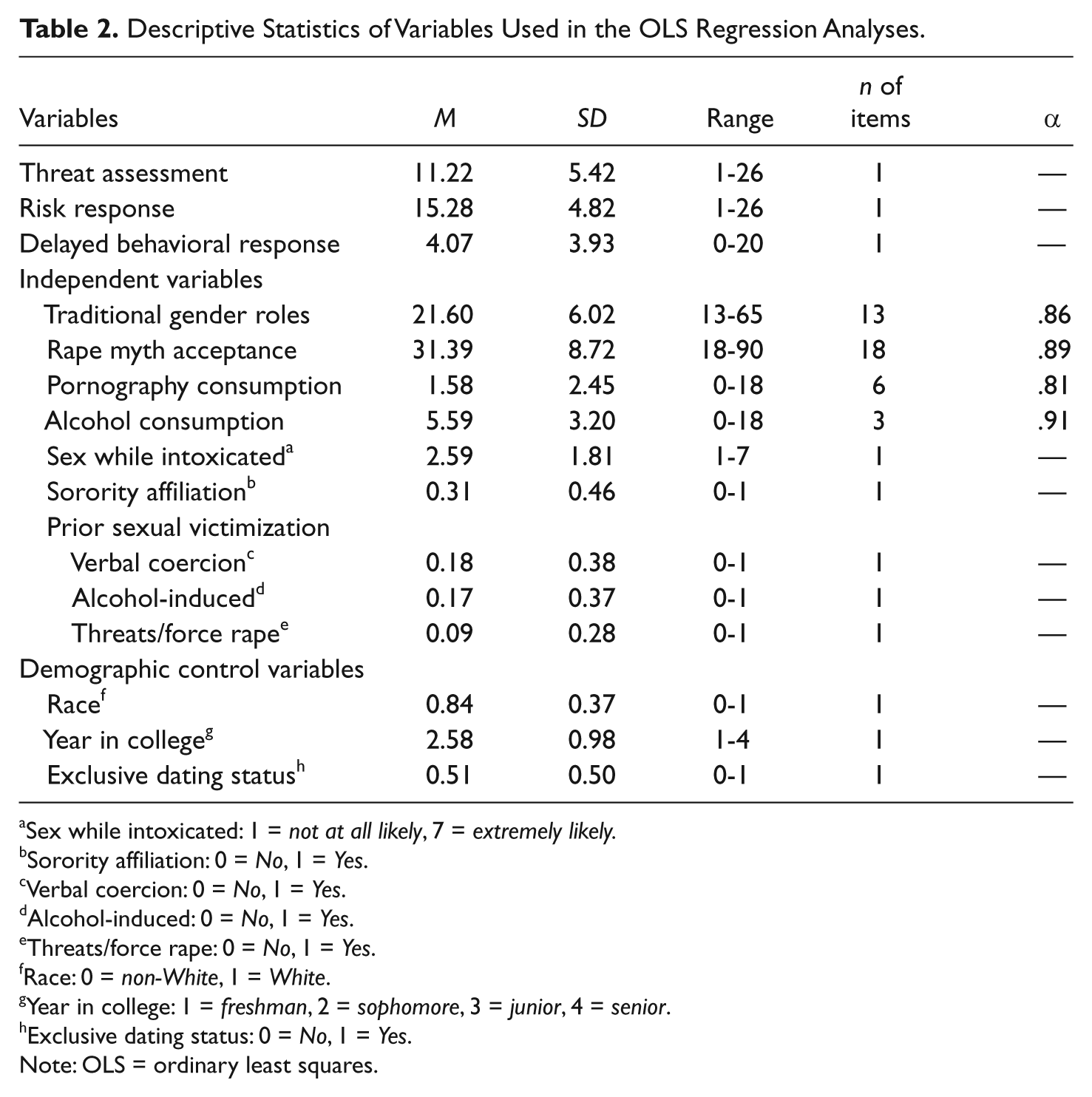
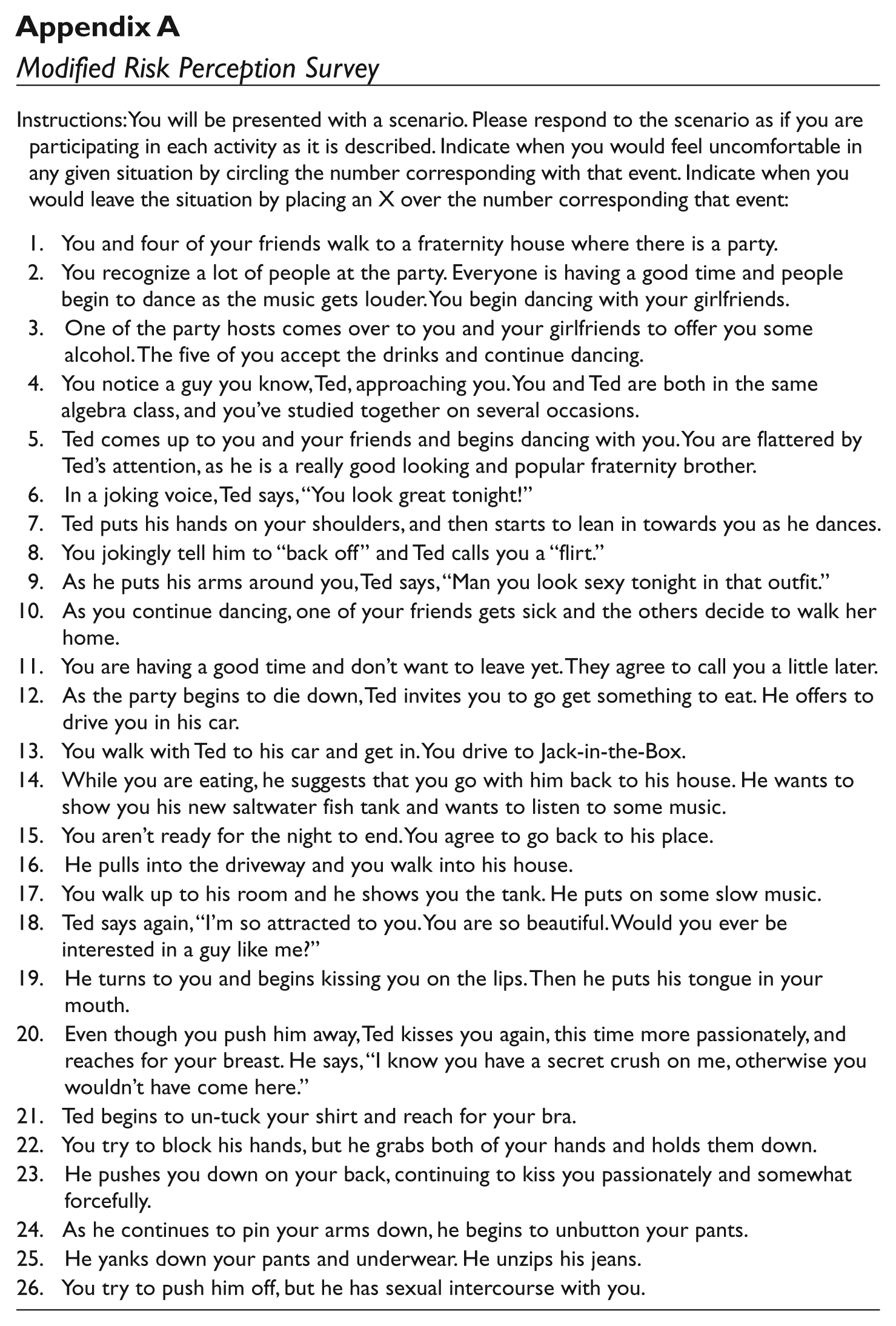
Three continuous dependent variables were included in the current study: threat assessment, risk response, and delayed behavioral response. To capture threat assessment and risk response, a slightly modified version of Messman-Moore and Brown’s (2006) Risk Perception Survey (RPS) was employed. The RPS is a written scenario depicting a heterosexual encounter between a man and a woman who are acquainted with one another that ends in sexual assault. 3 The vignette contains 26 numbered statements that increase in risk. Participants were asked to project themselves into the scenario and identify when they first felt uncomfortable, representing a “discomfort score” that ranged from 1 to 26 and captured the participant’s ability to appraise threat among ambiguous and clear risk factors (M = 11.22, SD = 5.423). Participants were then asked to identify when they would leave the scenario, capturing a “leave score” that ranged from 1 to 26 and indicated the participant’s behavioral response to risk (M = 15.28, SD = 4.819). Higher numbers correspond with increasingly risky events and, as a result, the selection of higher numbers captured participants’ decreased ability to recognize and effectively respond to danger cues. Appendix A presents the modified RPS.
The third dependent variable was a continuous measure that captured the time lag between when the participant appraised threat by signifying feelings of discomfort in the RPS and when she responded to threat by signifying a leave response. This delayed behavioral response measure was created by calculating the mathematical difference between the threat appraisal score and the risk response score (M = 4.07, SD = 3.93). Scores ranged from 0 to 20 with higher numeric values indicating increased threat tolerances and, thus, delayed risk responses. The higher the difference score, the longer the participant waited to leave the situation after recognizing feelings of discomfort. Table 2 presents the descriptive statistics of all variables used in the analysis.
Descriptive Statistics of Variables Used in the OLS Regression Analyses.
Sex while intoxicated: 1 = not at all likely, 7 = extremely likely.
Sorority affiliation: 0 = No, 1 = Yes.
Verbal coercion: 0 = No, 1 = Yes.
Alcohol-induced: 0 = No, 1 = Yes.
Threats/force rape: 0 = No, 1 = Yes.
Race: 0 = non-White, 1 = White.
Year in college: 1 = freshman, 2 = sophomore, 3 = junior, 4 = senior.
Exclusive dating status: 0 = No, 1 = Yes.
Note: OLS = ordinary least squares.
Independent Variables
Traditional gender roles
Gender role traditionality was captured through a modified 13-item index used to measure traditional and egalitarian sex roles (TESR; Larsen & Long, 1988). Constraining the data to fit a one-factor model in a confirmatory factor analysis produced factor loadings for 7 items that failed to reach .4. The remaining 13 items in the TESR were retained for use in the present analysis (factor loadings ranged from .424 to .748). Responses to each question were captured on a 5-point Likert-type scale from strongly agree (coded 5) to strongly disagree (coded 1). The scale ranged from 13 to 65, with higher numeric values representing increased acceptance of traditional gender roles (M = 21.60, SD = 6.02, α = .86).
Rape myth acceptance
Rape myth acceptance was captured with a modified version of Lonsway and Fitzgerald’s (1995) Illinois Rape Myth Acceptance Scale, Short Form. The scale consisted of 19 questions reflecting stereotypical beliefs about rape designed to deny its seriousness, justify perpetrator behavior, and blame victims for their victimization. Responses to each question were measured on a 5-point Likert-type scale from strongly agree (coded 5) to strongly disagree (coded 1). A confirmatory factor analysis revealed only one item that loaded less than .4; the remaining 18 items were retained for use (factor loadings ranged from .439 to .748) in the scale. Values ranged from 18 to 90 and higher numeric scores represented increased rape myth acceptance (M = 31.39, SD = 8.72, α = .89).
Pornography consumption
Six questions assessed the frequency with which the respondent viewed pornographic media described as material that showed “actual intercourse and other sexual acts,” “graphic but simulated acts,” and “hard-core sexual acts (e.g., bondage, S&M)” contained in magazines, books, movies, and Internet Websites “within the previous six months” (factor loadings ranged from .658 to .816). Responses were coded on a 4-point Likert-type scale from never (coded 0) to frequently (coded 3). Six items were summed to create a scale from 0 to 18 with higher values representing more frequent consumption (M = 1.58, SD = 2.45, α = .81).
Alcohol consumption
Alcohol consumption was operationalized by summing responses to three questions that captured frequency, quantity, and variability of consuming alcoholic substances (Felson & Burchfield, 2004; Leigh, 1990; Ullman, Karabatsos, & Koss, 1999). Respondents were asked (a) “During the past 6 months, how often did you drink any alcoholic beverages, including beer, light beer, wine, wine coolers, or liquor?” (b) “During the past 6 months, how often did you drink five or more alcoholic beverages in one day or evening?” and (c) “During the past 6 months, how often did you drink to the point of intoxication or drunkenness (i.e., feeling dizzy, passing out, or feeling out of control)?” A confirmatory factor analysis produced item loadings that ranged from .910 to .932. Responses were captured on a 7-point scale from never (coded 0) to every day (coded 6) and were summed to create a scale from 0 to 18 (M = 5.59, SD = 3.20, α = .91). Individuals scoring higher on the scale demonstrated more frequent and problematic alcohol consumption patterns.
Sex while intoxicated
The respondent’s likelihood of engaging in sex while under the influence of drugs or alcohol was captured with one item that asked, “In the next 6 months, how likely would you be to have sex after drinking alcohol or using drugs?” (Franklin, 2011; Fromme, Katz, & Rivet, 1997). Responses were coded on a 7-point Likert-type scale from not at all likely (coded 1) to extremely likely (coded 7; M = 2.59, SD = 1.81).
Sorority affiliation
Sorority membership was captured through a dichotomous variable where non-Greek affiliation was coded 0 (68.9%) and Greek affiliation was coded 1 (31.1%).
Prior sexual victimization
A modified version of Koss and Oros’ (1982) Sexual Experiences Survey (SES) was used to capture prior sexual victimization. Type of prior victimization was operationalized using an ordinal-level variable that measured victimization severity. Participants were only included in the category of victimization representing the most serious tactic employed by the perpetrator to ensure independence (see Koss et al., 2007, for updated instructions on coding the SES). Prior victimization experiences were measured so that respondents who reported no victimization were coded 0 (56.8%), verbal coercion resulting in unwanted sexual intercourse were coded 1 (17.9%), the use of drugs or alcohol resulting in sexual victimization were coded 2 (16.7%), and the use of threats of force or actual force resulting in completed rape were coded 3 (8.6%). From this, four dummy variables were created to estimate the multivariate models (a) no victimization, (b) verbal coercion resulting in unwanted sex, (c) intoxicated sexual assault, and (d) threats of force and/or force that resulted in completed rape, 4 with “no victimization” as the reference category. For each dummy variable, responses were coded 1 if the participant responded affirmatively and 0 otherwise.
Demographic Control Variables
Three demographic variables were included as controls: race, year in college, and dating status. Race was a dichotomous measure of White (coded 0; 84%) and non-White (coded 1; 16%). Year in college was a continuous measure ranging from 1 to 4, capturing current class standing. Freshmen were coded 1 (14.8%), sophomores were coded 2 (33.1%), juniors were coded 3 (31.1%), and seniors were coded 4 (21%). Dating status was captured by asking whether the participant was currently in an exclusive dating relationship. Respondents who answered no were coded 0 (48.6%) and yes were coded 1 (51.4%), respectively.
Analytic Strategy
For each multiitem independent variable, scale scores were developed (DeVellis, 2003). Construction of scales employed principle components rotation, with an item loading cutoff criterion of .40, and acceptable internal consistency. Prior to estimating the multivariate models, data were screened for skewness and kurtosis. Estimates fell within the acceptable range and did not exceed recommended cutoff values of 3.0 and 8.0, respectively (Kline, 2005). In addition, multicollinearity diagnostics were evaluated; tolerances ranged from .720 to .941 and VIF (variance inflation factor) statistics ranged from 1.06 to 1.39, indicating that multicollinearity was not a problem in the current analysis (Belsley, Kuh, & Welsch, 1980). Finally, appropriate inspection of residual plots for normality, heteroskedasticity, and outliers demonstrated that data adequately met assumptions for estimating multivariate models (Tabachnick & Fidell, 2007). The outcome variables of interest were continuous and, as a result, multivariate ordinary least squares (OLS) regression models were estimated to determine whether and to what degree particular cognitive and behavior factors were significantly correlated with threat assessment, risk response, and delayed behavioral response, net of controls.
Results
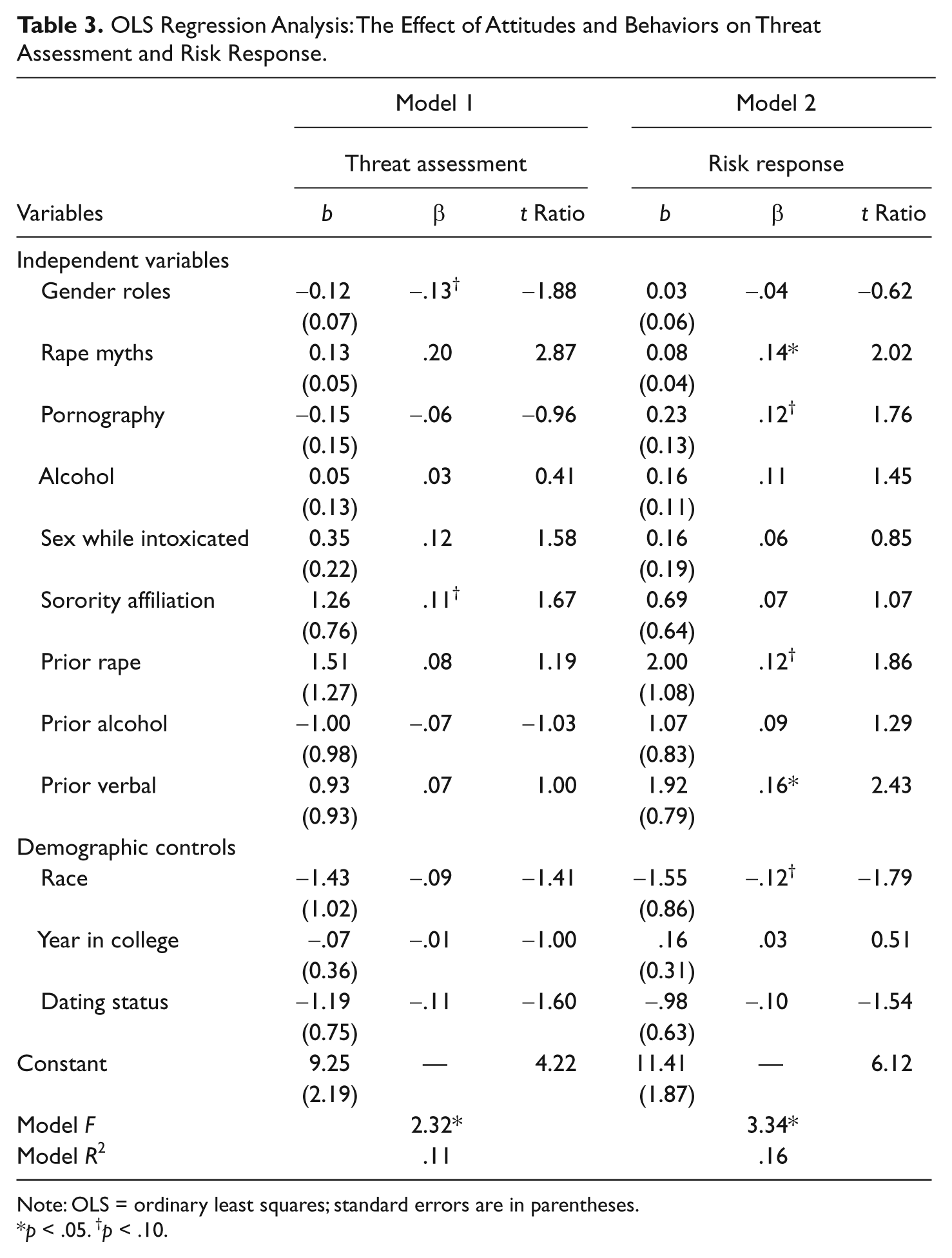
Tables 3 and 4 present the results of the three OLS regression models. In Table 3, the first model estimated the impact of cognitive and behavior factors on threat assessment and explained approximately 11% of the variation in the dependent variable as evidenced by the model R2. Findings demonstrated that rape myth acceptance was significantly correlated with threat assessment (β = .20, p < .05). Specifically, as rape myth adherence increased, so too did the delay in threat assessment. This finding lends credence to the notion that antisocial beliefs regarding sex and relational intimacy may influence women’s perceptions of discomfort in danger settings. It is important to point out that though traditional gender roles and sorority affiliation approached significance (β = –.12, p < .10; β = 1.26, p < .10, respectively), none of the other theoretically relevant variables or demographic controls were significantly correlated with threat assessment in this analysis.
OLS Regression Analysis: The Effect of Attitudes and Behaviors on Threat Assessment and Risk Response.
Note: OLS = ordinary least squares; standard errors are in parentheses.
p < .05. †p < .10.
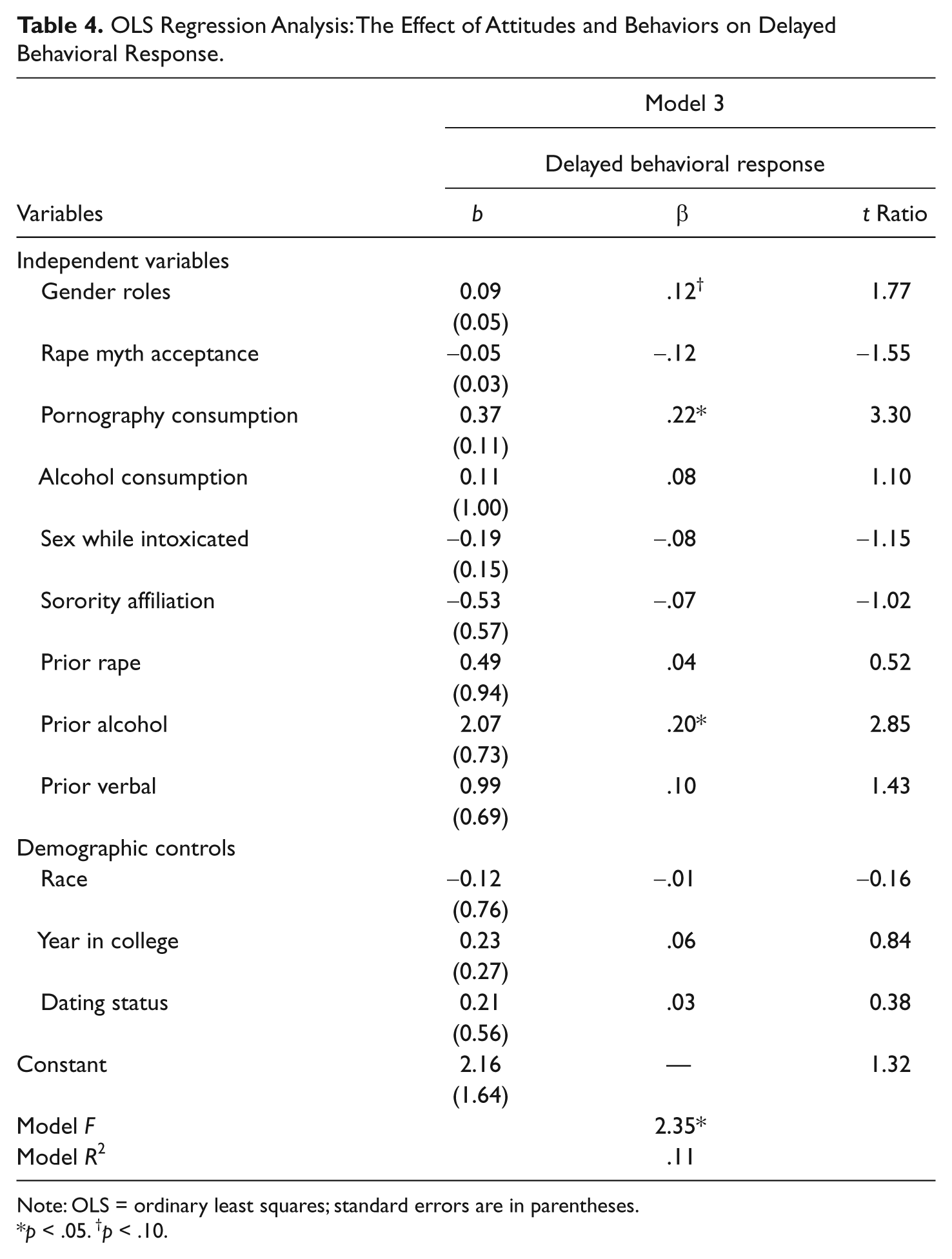
OLS Regression Analysis: The Effect of Attitudes and Behaviors on Delayed Behavioral Response.
Note: OLS = ordinary least squares; standard errors are in parentheses.
p < .05. †p < .10.
Model 2, located in Table 3, presents the results of the second OLS regression analysis investigating risk response or the point at which the respondent would actively leave the sexually risky scenario. According to the model R2, approximately 16% of the variation in the dependent variable was explained by the variables contained in the analysis. Rape myth acceptance remained positively related to risk response (β = .14, p < .05) so that as rape myth acceptance increased, so did risk responses—demonstrating later behavioral initiation from the vignette. Prior verbal coercion was also significantly correlated with increased risk response (β = .16, p < .05) illustrating that those women who reported unwanted sex as a result of verbal coercion were limited in their ability to expeditiously respond to risk. In other words, reports of previous verbal coercion increased risk responses among the women in this sample. Moreover, pornography consumption (β = .23, p <.10), prior threats/force resulting in completed rape (β = 2.00, p < .10), and race (β = −1.55, p < .10) approached statistical significance in Model 2.
Table 4 presents the final model where delayed behavioral response was regressed on the independent and control variables. Several important findings emerged, and the model explained approximately 11% of the variation in the dependent variable as demonstrated by the model R2. First, frequency of pornography consumption was positively and significantly related to delayed behavioral response. To be sure, increases in the regularity of pornography use produced increased time lag between the point at which the female respondents indicated that they would exit a sexually risky scenario, once discomfort had been established (β = .22, p < .05). Although prior literature has not investigated the extent to which pornography consumption predicts delayed behavioral responses to sexual risk, this finding is substantively consistent with more recent research on the positive significant relationship between viewing hardcore pornography and adhering to rape mythology in a female sample (Davis et al., 2006).
Excessive alcohol consumption and sex while intoxicated failed to exert significant influences on delayed behavioral response. In addition, sorority affiliation had no significant impact on the time lag between discomfort and leaving in the risky sexual scenario. This is also an unanticipated finding, considering the mixed messages presented to sorority members in terms of safety and sexual risk and prior research on Greek-only samples that highlights deficits in risk assessment/response among this particular population (Norris et al., 1996; Nurius et al., 1996). Finally, the relationship between prior victimization experiences in the form of intoxicated sexual assault and delayed behavioral response was statistically significant (β = .20, p < .05). In particular, prior intoxicated sexual assault victimization was correlated with increases in the delay between threat assessment and risk response. This relationship appears to capture risk response deficits found in research on revictimization as well as underscores concerns surrounding the presence of alcohol in risky sexual situations. The inclusion of control variables had no significant effect on the dependent variable in the third analysis.
Discussion
Scholarship on violence against women has attempted to address particular factors that are responsible for enhancing women’s vulnerability and sexual assault risk. This literature has established the importance of danger cue recognition on sexual assault likelihood (e.g., Messman-Moore & Brown, 2006). Indeed, women who effectively appraise threat in both clear and ambiguous risk contexts (Norris et al., 1999) and assertively respond to threat are less vulnerable to predatory sexual encounters. In addition, certain individual and situational characteristics may preclude women from effectively negotiating dangerous heterosexual encounters by misperceiving behavioral cues that should put them on alert for sexual assault. This literature has established the influence of trauma-related symptoms, prior victimization, and situational alcohol consumption on danger cue recognition, with less attention to gender- and risk-related variables. In addition, research has yet to focus on why some women assess threat and feel discomfort but wait to leave a risky and distressful situation, further entrenching their vulnerability. Using social scripting theory as the backdrop, the current study addressed these research limitations by investigating the relationship between theoretically relevant cognitive and behavior variables on threat assessment, risk response, and the time lag between the two.
Findings from the current analysis warrant additional discussion. First, rape myth acceptance was significantly correlated with threat assessment and risk response but not with an increased delay between discomfort and the point of exiting a risky situation. The significant findings presented in this analysis support previous research linking rape myth acceptance to sex script formation and myth adherence to behavior (Ryan, 2011). Rape mythology highlights situational expectations involving sexual intimacy and so women who adhere to these myths may incorporate ideas about intimacy that reflect these views in their sex scripts. Women who do so may be limited in the way they perceive risk and respond to threat so that they are involved in a risky situation longer before feeling discomfort and wait longer when faced with a risky situation before initiating a leave response than those women who do not similarly adhere to rape myths. In this study, however, rape myth acceptance did not significantly affect delayed behavioral response or the time lag between discomfort and leave, revealing that once participants felt discomfort, their leave responses followed in a manner that was not significantly different from their counterparts. Perhaps adherence to rape myths desensitizes women, so they are unable to define situations that should elicit cautionary behavior; once they are cognizant of discomfort, feelings of threat inform their leave responses in ways comparable to individuals who do not similarly adhere to rape myths.
Second, the consumption of pornographic media by women in this study was significantly correlated with delayed behavioral response, once threat had been established. It is important to reiterate that this relationship was significant in the final analysis, but pornography consumption had no significant impact on threat assessment or risk response in the first two models. This means that there is something unique about the delay between assessment and response in terms of the way that exposure to pornography influences behavioral outcomes. Little research has explored the effects of pornography consumption and exposure among female samples (but see Davis et al., 2006). Results from this study suggest, however, that more frequent pornography consumption may expose women to andocentric media messages, resulting in more lengthy behavioral response delays as compared to women who do not view pornography. It may be that women who are more regularly exposed to the objectification and degradation characteristic of pornography may be misinformed about healthy sexual interaction so that they tolerate threat longer, even after they recognize feelings of discomfort. These women may also be less in tune with recognizing the necessity and urgency of initiating a behavioral response, and consequently, they wait to leave. In other words, women are able to establish their personal feelings of discomfort but, as a result of frequent pornography exposure, may be out of touch with how quickly risk can progress to danger and, as a result, a sense of immediacy in these types of situations may go unresolved.
Third, it is interesting to note that neither general alcohol consumption nor the likelihood of having sex while intoxicated were significantly correlated with any of the dependent variables. The current study proposed that alcohol consumption patterns and alcohol-related sex behaviors (and thus, the expectancies that are created as a result of these experiences) may inform behavioral scripts for heterosexual interaction, producing delays in danger cue recognition and response. Findings from the current research suggest that a pattern of regular alcohol consumption did not symbolically translate to alcohol-related expectancies in sex-related scenarios, and therefore, produced no impact on increased vulnerability to sexual assault, at least among this sample of women. These results do not, however, speak to the physiological impediments to decision making that occur as a result of situational alcohol consumption.
Finally, only prior sexual victimization in the form of intoxicated sexual assault was significantly related to delayed behavioral response. These incidents are legally defined as criminal because intoxicated victims are unable to consent, but in many college contexts people may not see the use of alcohol to gain sexual access as deviant or illegal (Flack et al., 2007; Martin & Hummer, 1989). Women may view alcohol and other similar strategies as appropriate in heterosexual contexts where the goal is casual intimacy or more serious relationship progress. Consequently, women may be more likely to anticipate the “hookup” or sexual encounter involving alcohol and expect a certain progression of events to take place (Bogle, 2007; Strouse, 1987). If a woman felt discomfort (or recognized risk) she may not be willing to leave because of her diminished capacity to assess the appropriate response, particularly as it is related to her uncertainty regarding the status of the event and the relationship at stake. Is she really at risk or is this a series of events that will lead to a positive relational outcome? Though speculative, this explanation is informed by prior research where Nurius et al. (Nurius, Norris, Young, Graham, & Gaylord, 2000) found that, among their sample of women with victimization histories, social consequences and a desire to preserve the relationship predicted diplomatic rather than assertive behavioral responses to a sexually risky scenario.
This analysis has provided some evidence for the role of rape myth acceptance, exposure to pornography, and past alcohol-related victimization on danger cue recognition but it is not without limitations. First, this study is cross-sectional, making it impossible to infer causation. Second, each of the three models only explains a moderate amount of the variation in the dependent variables under investigation. Even so, this study is the first of its kind in the risk perception literature to investigate the time lag between threat assessment and behavioral response to threat among women in intimate heterosexual encounters. It should also be reiterated that the women in this study were presented with a hypothetical scenario and, consequently, their reports of discomfort and behavioral response reflected their intentions rather than their real-time responses. The current research does not have a way of demonstrating that a woman’s report of behavioral intentions in the vignette captured her actual behavior, though it should be noted that research in psychology and criminology has employed vignettes for the purpose of understanding human behavior and has demonstrated significant links between reported intentions and later actions (Fishbein & Ajzen, 1975; Kim & Hunter, 1993). As it pertains to the current analysis, studies interested in danger cue recognition have asked respondents to calculate risk and danger for “other women” participating in a hypothetical event. Prior analyses have found that women can assess global risk for others but are comparatively optimistic (or indicate “positive illusions”) regarding their own vulnerability (Cue, George, & Norris, 1996; Hickman & Muehlenhard, 1997; Norris et al., 1996, 1999). Many women believe they are too smart to put themselves in risky situations or, if faced with threat, would be able to competently negotiate their way out of danger (Livingston & Testa, 2000). This study captured women’s own beliefs regarding personal risk. The use of first-person scenarios attempts to effectively deal with these discrepancies (see Cue et al., 1996, for related discussion). Despite the issues raised here, prior research has employed similar techniques with relative success (Cue et al., 1996; Messman-Moore & Brown, 2006), including multiple-wave data collection efforts, and reported significant correlations between late leave responses and sexual victimization (Messman-Moore & Brown, 2006). Finally, the measure used to capture the intention to engage in sex while intoxicated presents concerns surrounding issues of consent that go unaddressed in this survey instrument. This measure also captures the likelihood of engaging in future behavior rather than measuring frequency of a past behavior—both of which are limitations that should be considered when interpreting findings from this analysis.
The current research reiterates the importance of critically evaluating gender and its influence on female behavior. In addition, the results presented here produce important considerations for the continued study of sexual victimization among college women. As such, these findings may have substantive implications for augmenting policies designed to prevent violence against women on college campuses. Specifically, strategies with content grounded in theory have fared better than interventions without this foundation (Anderson & Whitson, 2005). Perhaps cognitive approaches for both male and female college students that focus on sex script formation and danger cue recognition may be used in concert with traditional programming that instructs the use of safety techniques and target-hardening strategies (e.g., Schwartz & DeKeseredy, 1997).
Although the women in this study were provided with the response option of leaving the situation, programming should teach similarly assertive behavioral responses that do not necessarily involve leaving but are aimed at helping to preserve feelings of safety. The use of different refusal strategies may enable a woman to respond sooner after feeling threatened because she would not be forced to weigh the costs of forfeiting the interaction by leaving against the potential benefits of staying to preserve intimacy. Behaviors would include calling a friend, engaging in direct verbal refusals, and using some form of force (pushing him away/off, pouring a drink on him). These, along with the leave response, would provide women with a repertoire of tactics to call upon when faced with varying degrees of threat in dating and sexual situations.
In addition, teaching healthy relationship and sexual principles may reduce uncertainty and subsequent victimization risk for women who might otherwise “wait around” to see how a potentially dangerous sexual scenario “pans out” (see Domitrz, 2003). Currently, programming typically relies on educating homogeneous sex groups about rape attitudes, rape knowledge, behavioral intentions related to guarding oneself, and rape awareness (Anderson & Whitson, 2005), though not all programming approaches successfully eradicate perpetration or victimization, particularly over time. Results of this study suggest, however, that educating men and women about the basics of safe and honest relationship and heterosexual intimate interactions to counter the lessons learned from viewing pornography and/or adhering to rape mythology has the potential to eradicate the confusion and misinformation potentially responsible for shaping adverse sex scripts and affecting the misperception of danger cues that might otherwise lead to rape and sexual assault.
In sum, findings from the current analysis suggest that there are socialization messages about the nature of male and female sexual encounters that are plagued by misinformation. Women are taught to expect and look forward to certain events like seduction through the use of alcohol, isolation, and a male sexual initiator. Women are also instructed to define these events in desirable ways, despite their documented risk for sexual assault (Muehlenhard, & Linton, 1987). Some women may be informed regarding what constitutes danger cues in interpersonal settings but may still be unable or unwilling to recognize those cues when presented with a sexually risky situation. Others may feel discomfort but neglect to act on those feelings as a result of broader socializing agents that confuse women in terms of what to expect in safe and healthy sexual encounters. Further efforts directed toward eradicating myths and reversing the adverse effects of pornographic media messages and socialized alcohol expectancies as manifested in heterosexual encounters can reduce uncertainty and ambiguity so a woman can more clearly identify and assertively respond to a sexual situation where she feels threatened, reducing her vulnerability to rape and sexual assault.
Footnotes
Appendix
Modified Risk Perception Survey
| Instructions: You will be presented with a scenario. Please respond to the scenario as if you are participating in each activity as it is described. Indicate when you would feel uncomfortable in any given situation by circling the number corresponding with that event. Indicate when you would leave the situation by placing an X over the number corresponding that event: |
| 1. You and four of your friends walk to a fraternity house where there is a party. |
| 2. You recognize a lot of people at the party. Everyone is having a good time and people begin to dance as the music gets louder. You begin dancing with your girlfriends. |
| 3. One of the party hosts comes over to you and your girlfriends to offer you some alcohol. The five of you accept the drinks and continue dancing. |
| 4. You notice a guy you know, Ted, approaching you. You and Ted are both in the same algebra class, and you’ve studied together on several occasions. |
| 5. Ted comes up to you and your friends and begins dancing with you. You are flattered by Ted’s attention, as he is a really good looking and popular fraternity brother. |
| 6. In a joking voice, Ted says, “You look great tonight!” |
| 7. Ted puts his hands on your shoulders, and then starts to lean in towards you as he dances. |
| 8. You jokingly tell him to “back off” and Ted calls you a “flirt.” |
| 9. As he puts his arms around you, Ted says, “Man you look sexy tonight in that outfit.” |
| 10. As you continue dancing, one of your friends gets sick and the others decide to walk her home. |
| 11. You are having a good time and don’t want to leave yet. They agree to call you a little later. |
| 12. As the party begins to die down, Ted invites you to go get something to eat. He offers to drive you in his car. |
| 13. You walk with Ted to his car and get in. You drive to Jack-in-the-Box. |
| 14. While you are eating, he suggests that you go with him back to his house. He wants to show you his new saltwater fish tank and wants to listen to some music. |
| 15. You aren’t ready for the night to end. You agree to go back to his place. |
| 16. He pulls into the driveway and you walk into his house. |
| 17. You walk up to his room and he shows you the tank. He puts on some slow music. |
| 18. Ted says again, “I’m so attracted to you. You are so beautiful. Would you ever be interested in a guy like me?” |
| 19. He turns to you and begins kissing you on the lips. Then he puts his tongue in your mouth. |
| 20. Even though you push him away, Ted kisses you again, this time more passionately, and reaches for your breast. He says, “I know you have a secret crush on me, otherwise you wouldn’t have come here.” |
| 21. Ted begins to un-tuck your shirt and reach for your bra. |
| 22. You try to block his hands, but he grabs both of your hands and holds them down. |
| 23. He pushes you down on your back, continuing to kiss you passionately and somewhat forcefully. |
| 24. As he continues to pin your arms down, he begins to unbutton your pants. |
| 25. He yanks down your pants and underwear. He unzips his jeans. |
| 26. You try to push him off, but he has sexual intercourse with you. |
Acknowledgements
The author would like to thank Dr. Noelle E. Fearn for her helpful comments on earlier drafts of this manuscript.
Author’s Note
An earlier version of this article was presented at the 2008 annual meeting of the American Society of Criminology in St. Louis, MI.
Declaration of Conflicting Interests
The author declared no potential conflicts of interest with respect to the research, authorship, and/or publication of this article.
Funding
The author received no financial support for the research, authorship, and/or publication of this article.