




Abstract
Despite progress in the application of routine activity theory to violence against women, much remains unknown about guardianship. The current study examined if presence of a capable adult guardian limited the risk of revictimization by an intimate partner, controlling for social support (N = 497). Analyses tested differential impacts of guardians by examining if the presence of the victim’s friends/family, abuser’s friends/family, and/or bystander during the earliest reported physical abuse incident or threat of abuse affected likelihood of revictimization within a year. Odds of revictimization decreased by 60% when the earliest reported physical abuse incident or threat of abuse occurred in the presence of the respondent’s friends/family. Implications for practices and research suggestions are discussed.
Although feminist scholars have stressed patriarchy and gender inequality as the causes of intimate partner violence (IPV), they have also argued that IPV is the result of individual, structural, and situational determinants (DeKeseredy, 2011; Wilkinson & Hamerschlag, 2005). Situational perspectives used to understand the causes of repeat victimization for other crimes may illuminate the situational correlates of abuse incidents that affect continued risk of IPV (Farrell, Phillips, & Pease, 1995). Situational correlates include the presence of third parties (e.g., guardians) who may affect the thoughts, feelings, and behaviors of potential offenders and victims, in effect shaping the outcome of the incident (Wilkinson & Hamerschlag, 2005). Routine activity theory takes into account situational circumstances, including the presence or absence of guardians during criminal events, and has successfully been extended to violence against women, and violence between current and former intimate partners (C. A. Franklin, Franklin, Nobles, & Kercher, 2012; Gover, 2004; Mannon, 1997; Rodgers & Roberts, 1995). Although situational measures, including levels of guardianship, have been used to explain the causes of other types of crimes, they have been noticeably absent in the majority of IPV research (Wilkinson & Hamerschlag, 2005).
The presence of guardians and self-guardianship behaviors has been shown to decrease the levels of crime in general (Hollis-Peel, Reynald, van Bavel, Elffers, & Welsh, 2011; Tewksbury & Mustaine, 2003). Despite the potential protective effects of guardians, very few studies have explicitly tested the relationship between guardianship and crime (Hollis-Peel et al., 2011). Even less is known about guardians’ capabilities, a key component of the guardianship concept. It is possible the relationship between the victim and guardian affects the guardian’s capability and likelihood of intervention (Reynald, 2010).
Using calendar and respondent data from 497 abused women who accessed a Chicago health care facility, the current study first examined if the mere presence of a guardian during an incident of physical abuse or threat of abuse reduced the likelihood of repeat victimization, controlling for overall levels of social support. That is, those with higher levels of social support may be more likely to have an individual present during the event. The study then unpacked the differential impact of guardians on the risk of repeat victimization by examining the relationship between the guardian and victim. In doing so, this study tested if the presence of the victim’s friends/family, the abuser’s friends/family, or a bystander during a physical abuse incident or threat of physical abuse affected the likelihood of repeat victimization. 1
Opportunity Theory and Victimization
The goal of routine activity theory, a subset of opportunity theory, has been to unravel the opportunity structure that facilitates or hinders a crime event from occurring (R. V. Clarke, 1997; Wortley, 2008). According to routine activity theory, the opportunity structure is based on the convergence of three factors in time and space—presence of motivated offenders, availability of suitable targets, and the absence of capable guardians (Cohen & Felson, 1979)—and thus influences the offender’s interpretation of risks and rewards. Routine activity theory has been successfully applied to understand the etiology of property crime (Mustaine & Tewksbury, 1998), cybercrimes (Holt & Bossler, 2008; Reyns, Henson, & Fisher, 2011), and violent crime (Felson, 1997).
Despite the success of routine activity theory in understanding the causes of other types of crimes, feminist researchers have critiqued it for being an “isolated and apolitical” approach (Schwartz & Pitts, 1995, p. 27). Feminist theorists have argued that there is something unique about violence against women that requires an explicit focus on gender relations in society that is absent in general victimization and opportunity theories (Daly & Chesney-Lind, 1988). Limitations of general victimization theories included the failure to consider gender, gender relations, and the systematic use of violence against women by intimate partners. In response to these criticisms, structural components of male privilege and sociocultural conditions that influence IPV have been integrated into the routine activity framework to understand offender motivation, target suitability, and guardianship (C. A. Franklin et al., 2012; Schwartz, DeKeseredy, Tait, & Alvi, 2001; Schwartz & Pitts, 1995). An integrated feminist routine activity theory has shown success with high-school and college-age samples in understanding sexual assault (C. A. Franklin et al., 2012; Schwartz et al., 2001), dating violence (Gover, 2004), and cyberstalking (Reyns et al., 2011).
The first component of the routine activity triangle is the presence of a motivated offender. Motivation has been ubiquitous within the routine activity framework, suggesting that under the right circumstances everyone is motivated to commit crime (R. V. G. Clarke & Felson, 1993). Feminist scholars have examined the origins of abusers’ motivation to differentiate them from those who are not motivated to abuse their current or former intimate partner despite having opportunities to do so. Researchers have found that sources of motivation for IPV include the abuser’s peer-support network (K. Franklin, 2004; Schwartz et al., 2001), rural towns (DeKeseredy & Schwartz, 2009), and a “rape-supportive” culture in the United States (Mustaine & Tewksbury, 2002).
The second aspect of the routine activity triangle is a suitable target. Even with the progress in equality women have achieved, gender inequity remains worldwide, including in Westernized developed nations. Rates of lifetime IPV have shown that women, compared with men, are at a greater risk and are more likely to be injured (Breiding et al., 2014), indicating that IPV is a gender-based crime. In addition to macro-level gender inequality that has influenced women’s victimization experiences, lifestyle factors have affected an individual’s suitability as a target (Schwartz & Pitts, 1995). These macro- and micro-level factors have influenced motivated offenders to view intimate partners as suitable targets.
While motivation and target suitability can be conceived as situational measures, changing cultural norms takes time to achieve and may not vary from event to event. Less attention has been paid to the effect of guardianship, which conceivably should be the easiest aspect of the routine activity triangle to change, as evidenced by the success of approaches within the situational crime prevention framework (R. V. Clarke, 1997). The presence or absence of guardians has the potential to spatially and temporally vary across incidents of abuse between the current and former intimate partners. Changes in abusive behavior have the potential to vary with changes in guardianship.
Operationalizing Guardianship in IPV Prevention
Operationalization of guardianship has tended to focus on proxy measures, including the presence of a dog or alarm system (see Coupe & Blake, 2006; Garofalo & Clark, 1992; Stahura & Sloan, 1988), and self-guardianship behaviors, such as possessing a weapon or body alarm (Tewksbury & Mustaine, 2003). However, Hollis, Felson, and Welsh (2013) have pointed out that proxy measures and self-guardianship behaviors do not measure the presence of other individuals and actually capture aspects of target hardening or social control that make a target less suitable. Instead, Hollis-Peel et al. (2011) have defined a guardian as “any person and every person on the scene of a potential crime that may notice and intervene (whether they intend to or not)” (p. 57). Reynald (2010) has proposed that guardianship can be measured on three dimensions that include “1) willingness to supervise, 2) ability to detect potential offenders, and 3) willingness to intervene when necessary” (p. 358). Hollis et al. (2013) have further emphasized the human element of the guardianship concept, and that the guardian’s mere presence should prohibit criminal behavior. Situational correlates, such as the physical presence or absence of a capable guardian, provide measures of guardianship that reflect the original conceptualization of the concept and move analyses beyond demographic measures of lifestyle risk (Akers, 2000).
Although the original focus on risky activities outside the home did not consider that intimate partners might be motivated offenders, more recent research has shown that women are more likely than men to be victimized by an intimate partner (Schwartz et al., 2001). Nevertheless, there may be other individuals present in the household who are outside the couple dyad. These individuals may have the capacity to serve as guardians and hold abusers accountable for their behavior. Situational aspects of an event, including the presence of other individuals or the use of self-protective behaviors by the victim, have the potential to influence future events, including risk of repeat victimization (Fisher, Daigle, & Cullen, 2010; Wilkinson & Hamerschlag, 2005).
A closer examination of the guardianship concept is needed to unpack the effect different types of guardians may have on the likelihood of a crime event occurring. For example, Cohen and Felson (1979) have stated that guardians must be capable. Offenders may perceive that a guardian is not capable of holding him or her accountable for violent behavior. The relationship between the victim, offender, and guardian may affect the guardian’s effectiveness or likelihood of intervention.
Abusers have often been seen as charming to family and friends (Adams, 1989). Given the disconnect between the abuser’s behavior in front of family and friends, and what the victim tells them, the abuser has the potential to manipulate family and friends to align with the abuser despite their knowledge of past violence (Bancroft, 2002). The abusive mentality may also be transmitted among the abuser’s familial and peer networks (Akers, 1998; Burgess & Akers, 1966; DeKeseredy & Schwartz, 2013). Manipulation tactics and patriarchal peer-support networks that hold definitions favorable to abuse have the potential to limit the capability of an abuser’s family and friends in preventing repeat victimization.
The ties that an IPV victim has with a third party may affect the type of involvement the victim receives from that third party (Wilkinson & Hamerschlag, 2005). Baumgartner (1993) has recommended that victims receive help from individuals who are not as close to the abuser as to her. This is because when third parties offer mutual support for both the victim and the abuser, they have been more likely to recommend reconciliation rather than separation. Consistent with this recommendation, IPV victims who have sought help from family and friends reported improved mental health (Coker et al., 2002) and may be better situated to move on from the abusive relationship (Liang, Goodman, Tummala-Narra, & Weintraub, 2005). Overall, the presence of the victim’s friends and family should reduce the risk of repeat victimization, as they may be more likely to offer undivided support to the victim.
Hollis-Peel et al. (2011) have conceptualized guardianship as the mere presence of an individual. Therefore, bystanders and strangers should be capable of limiting abusive behavior. Bystander intervention programs have demonstrated effectiveness in limiting sexual assault on college campuses (Coker et al., 2011; McMahon & Banyard, 2012). Indeed, the presence of an individual (who may be unaware that a crime is about to take place) may suggest to the offender that the crime could be reported (Hollis-Peel et al., 2011).
By unpacking the situational context of the event, connections between event characteristics and continued risk of abuse can be identified (Wilkinson & Hamerschlag, 2005). Doing so will lend further support to the applicability of routine activity theory to older abused women. Prior studies that have used routine activity theory to understand violence against women have almost exclusively relied on high-school and college-age samples (see Fisher et al., 2010; C. A. Franklin et al., 2012; Gover, 2004; Reyns et al., 2011; Schwartz et al., 2001), which may not be generalizable to all victims of violence against women. Identifying individual and situational correlates of IPV for a community sample would allow for the design of prevention programs and identifies the utility of bystander intervention programs for addressing violence against women beyond sexual assault.
Aims of the Study
One aim of the present study was to examine whether the mere presence of a guardian during the earliest incident of physical abuse or threat of abuse captured on the life history calendar, regardless of the relationship between the guardian and the victim, affected the likelihood of repeat victimization during the calendar year, controlling for overall levels of social support (Hollis-Peel et al., 2011). In addition, the study aimed to unpack the differential impact of guardians on risk of repeat victimization by considering the relationship between the victim and the guardian. According to Reynald (2010), the most capable guardians were those willing to supervise and intervene on behalf of the potential victim. Overall, the current study examined two research questions:
Method
Data
The data for the current study came from the Chicago Women Health Risk Survey (CWHRS), a publicly available dataset (Block, 2000a). The original aim of the CWHRS was to determine what factors increased the risk of intimate partner homicide by collecting data from both a hospital/clinic sample and a homicide sample. Data used in the current analyses were collected in Chicago health care facilities over a 2-year period (1997-1999).
The causal link between higher levels of guardianship and lower crime rates has seldom been subjected to empirical test (Hollis-Peel et al., 2011). This could be due to the difficulty in conducting empirical analyses on guardianship. A true experimental test of guardianship would involve manipulating guardianship levels, and then examining the impact on crime rates, which is yet to be conducted because other factors beyond guardianship affect crime and cannot be controlled for (Hollis-Peel et al., 2011). Life history calendars, 2 a cost-effective alternative to collecting longitudinal data, capture time-ordered measures that can test the effect of guardianship on continued victimization risk and move beyond “cross-sectional correlations of guardianship and crime” (Hollis-Peel et al., 2011, p. 58). The CWHRS, though limited in the level of detail on guardian intervention, allows for a prospective analysis by examining the impact of guardianship during the earliest reported IPV incident on the life history calendar on the likelihood of repeat victimization over a 1-year period, similar to the methodology of Fisher et al. (2010) and Tillyer, Gialopsos, and Wilcox (2016). In addition, unlike prior research that has almost exclusively relied on college samples, the CWHRS sample was representative of and focused on high-risk individuals who may never had contacted the police, counseling agencies, or shelters (Block, 2000b).
Hospital/Clinic Sample and Procedure
Primary investigators of the CWHRS encouraged medical personnel to screen for IPV among all women who accessed the health care facility, for whatever reason, during the period of study. Approximately 2,740 women accessed a hospital or clinic and were screened with three short questions about the past year, revolving around physical violence, sexual violence, and fear of returning home. The screening was incorporated into the clinic or hospital’s routine, and strict protocol was established to ensure the participants’ safety and confidentiality (see Block, 2000b).
Of the women who answered the screening questions, interviews were administered to all women 17 years of age and older who answered “yes—within the past year” to one of the three screening questions and consented to an interview, and a random sample of women 17 years of age and older who had an intimate partner in the past year and who did not respond affirmatively to all three screening questions. Overall,
The interview rate was 86% of eligible women who screened positive, 27% of eligible women who screened negative but had experienced abuse before the prior year and 9% of eligible women who screened negative . . . A considerable number (22%) of women who screened negative interviewed positive and some (9%) who screened positive interviewed negative. (Block & DeKeseredy, 2007, pp. 9-10)
Upon completion of the interviews and based on responses to the modified version of the Conflict Tactics Scale (Straus, 1979), the sample was split into two groups: a comparison group of women not physically abused or threatened with physical abuse by an intimate partner in the past year (n = 208), 3 and women physically abused or threatened with physical abuse by an intimate partner in the past year (N = 497). Demographic differences between the abused and comparison samples are found in Table 1. Additional details on the CWHRS and data collection process are found in Block and DeKeseredy (2007) and Block (2000b). The sample for the current analyses was limited to 497 abused women who completed the life history calendar that detailed IPV incidents over the last calendar year. As noted in Table 1, of the 497 women abused in the past year, the abusive partner was a man for 477 respondents and a woman for 17 respondents.
Demographic Characteristics for CWHRS Abused and Comparison Samples.

Note. CWHRS = Chicago Women Health Risk Survey.
Once the woman agreed to participate, interviews were conducted in a secure and private setting to ensure the safety and confidentiality of the respondent. Informed consent from each participant was obtained and documented prior to each interview. In-person interviews were conducted and included questions on psychological abuse, physical and mental health, an assessment of social support, a modified version of the Conflict Tactics Scale, and a life history calendar. The calendar collected details on the dates of physical abuse incidents or threats that had occurred within the last 12 months, along with the situational context of each incident. Situational correlates included if someone was present during the abuse incident and the relationship between the victim and that individual.
Measures
Dependent variables
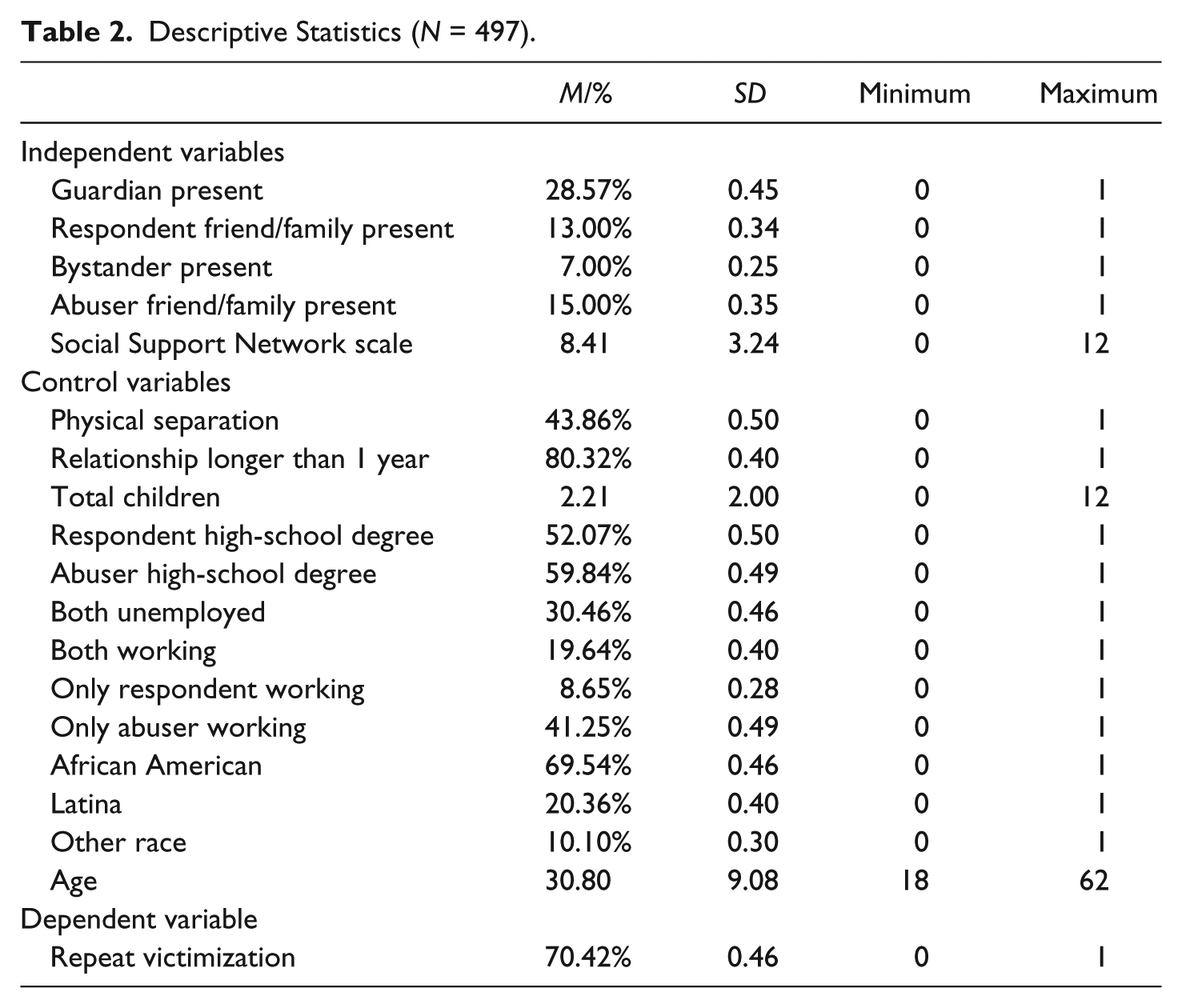
The outcome measure was repeat IPV victimization by the same abusive partner. For women who had had more than one abusive partner in the past year, interviewers for the CWHRS asked the woman to focus on one abusive intimate partner, who the respondent identified by “Name,” who was responsible for the most serious incident. This partner was considered by the respondent to be her most abusive partner in the past year, not necessarily the partner she felt closest to. All responses to questions regarding abuse, including the life history calendar, were based on the respondent’s relationship with “Name.” Abusive behavior included threats of violence, forced sex, slapping or pushing, punching or kicking, beating up or choking, threatened weapon use, or weapon use (Block, 2000b). Respondents who reported that “Name” committed more than one incident of physical abuse or threat of abuse over the past year were coded “1,” whereas respondents who only experienced one incident over the past year were coded “0.” 4 Descriptive statistics for the outcome measure are found in Table 2. 5
Descriptive Statistics (N = 497).
Presence of capable guardians
Guardianship for the current study was conceptualized as the mere presence of an individual capable of intervening (Hollis-Peel et al., 2011). When completing the life history calendar, respondents were first asked, “Was anyone ever present other than you and (name) in an incident?” If the respondent said yes, she was asked, “Who was present?” Respondents then self-reported if a bystander, their family or friends, the abuser’s family or friends, or children were present. In the current study, children were excluded as potential guardians as children need guardians and would have been unable to serve the capable guardian role. The mere presence of an adult guardian during the earliest reported incident of physical abuse or threat of abuse on the life history calendar during the past calendar year was captured with a binary measure where “0” = no adult was present during the incident and “1” = someone was present during the incident. Presence of a guardian during the earliest reported physical abuse incident or threat of abuse on the calendar was then disaggregated into three binary predictor variables. The disaggregated measures captured the relationship between the victim and the guardian to assess the differential impact of guardians on repeat victimization. These three measures were the presence of the victim’s friends/family (e.g., people she knows, not the abuser), the presence of the abuser’s friends/family, and the presence of a bystander (“0” = individual not present, “1” = individual present).
Control variables
All control variables were measured at the time of the interview. Levels of social support may influence the availability of guardians. The collaborators of the CWHRS developed a Social Support Network scale that assessed whether the respondent had acceptance and support, tangible help in emergencies, and access to and knowledge of resources (Block, 2000b) at the time of the interview. The scale ranged from 0 to 12. In the CWHRS, the mean score was 8.42 (SD = 3.23), and the reliability coefficient was high (alpha = .8359). Alpha was consistently high for women in all three racial/ethnic groups (alpha = .8087 for African American women; alpha = .8474 for Latina women; alpha = .8568 for White or other women). Reliability for each of the three components was also high. 6
Demographic characteristics and aspects of the respondent’s current or former relationship previously shown to be associated with abuse risk were included in the models (Brownridge et al., 2008; Caetano, Cunradi, Schafer, & Clark, 2000; Collins, 2008; Hampton, Oliver, & Magarian, 2003; Kaukinen, 2004; Marcus & Swett, 2003; Stets & Pirog-Good, 1987). Relationship status with “Name” at the time of the interview, the respondent’s most abusive partner in the past year, was captured with two different measures: separation status and relationship length. Separation status at the time of the interview was a binary measure coded “0” = currently in a relationship with the abuser and “1” = was the respondent’s former partner. Relationship length was captured in the original questionnaire as an ordinal variable but was collapsed into a binary measure for analyses, where “1” = relationship was longer than 1 year. Many of the respondents did not have a high-school degree. Level of education of the respondent and the abusive partner at the time of the interview was captured with binary indicators, where “1” = high-school degree or more. The employment status of the couple at the time of the interview was captured with a series of binary variables. “Both Working,” “Only the Respondent Working,” and “Only the Abuser Working” were the variables included in analyses. “Both Unemployed” served as the reference category. Race/ethnicity was coded into three binary groups: “African American,” “Latina,” and “Other Race,” where “Other Race” served as the reference category. Age ranged from 18 to 62. The total number of birth, adopted, and foster children the respondent had 7 were included in the models. A distribution of the independent and control variables is also found in Table 2.
Analyses
The analyses proceeded in two stages: First, bivariate statistics in the form of chi-squares were conducted to measure the associations between the presence and absence of guardians on the likelihood of repeat victimization. Logistic regression was used to analyze the effect of guardianship on the odds of repeat victimization. Two separate logistic regression models were run. The first model tested if the mere presence of a guardian affected the likelihood of repeat victimization. The second model examined if the relationship between the guardian and victim influenced the odds of repeat victimization.
The majority of independent variables included in the analyses were missing data on less than 1% of cases, with abuser’s education (13.5% of cases) and employment (4.3% of cases) missing the most data (listwise n = 376). Overall, 4.19% of all values were missing in a non-monotone pattern. Missing data on independent and control variables were multiply imputed in SPSS using the Markov Chain Monte Carlo method. Consistent with Rubin’s (1996) recommendations, five stacked datasets were created, each of which contained an estimate of the missing values. To assess the significance of models, Schafer’s (1997) combination of chi-squares into a F statistic with Allison’s (2007) SAS macro was used (see Roberts & Lyons, 2011). Parameter estimates across the five stacked datasets were automatically pooled in SPSS to obtain an average of the parameter estimates.
Results
The 497 respondents reported a total of 4,974 incidents of physical abuse or threats over the past year. The number of reported incidents ranged from 1 to 172, with a median of three reported incidents. The majority of respondents (70.42%) reported repeat victimization. 8 The descriptive statistics in Table 2 indicate that guardians were present during 28.57% of the earliest reported physical abuse incidents or threats. 9 In the majority of incidents, only one type of guardian was present. The most common guardians present during the earliest reported incident were friends/family of the abuser (15% of respondents) and friends/family of the victim (13% of respondents). Bystanders were the least likely guardians to be present. Only 7% of respondents reported a bystander witnessing the earliest incident captured on the life history calendar. 10
According to the bivariate analyses, the mere presence of a guardian was not significantly associated with the likelihood of repeat victimization (F1 = 0.098, p ≥ .05). There was a significant association between the presence of the victim’s friends/family and repeat victimization (F1 = 5.149, p ≤ .05). The presence of the remaining guardians (i.e., bystanders, abuser’s friends/family) was not significantly associated with repeat victimization.
Consistent with the results obtained from the bivariate analyses, Model 1 in Table 3 presents the results obtained by including the mere presence of a guardian as a predictor of risk in a multivariate model. The mere presence of a guardian was not a significant predictor of repeat victimization, Exp(b) = 0.74, p ≥ .05.
Logistic Regression Models Predicting Repeat Victimization (N = 497).

p ≤ .10. *p ≤ .05. **p ≤ .01. ***p ≤ .001.
Model 2 in Table 3 presents the result from the multivariate logistic regression analyses where guardianship was disaggregated. Only the presence of the respondent’s friends/family reduced the risk of repeat victimization, Exp(b) = 0.36, p ≤ .001. The odds of repeat victimization decreased by more than 60% when the respondent’s friends/family had been present. The presence of bystanders or the abuser’s friends/family was not significantly associated with risk of repeat victimization.
Consistent across both multivariate models predicting repeat victimization, as level of social support increased, risk of repeat victimization was reduced by almost 20%—Model 1: Exp(b) = 0.84, p < .001; Model 2: Exp(b) = 0.83, p < .001. Employment of both partners, only the respondent, and only the abuser provided protection from repeat victimization. If the respondent had a high-school degree, risk of repeat victimization was reduced by 50% in both models. Separated respondents were not at increased risk of repeat victimization.
Predicted probabilities use the coefficients from the logistic regression models to predict the probability of the outcome at various levels of the independent variables, holding all other variables in the model at their means. In Figure 1, the predicted probabilities of repeat victimization when a victim’s friends/family were present were estimated for the average unemployed, non-separated, African American respondent across three different levels of social support (i.e., mean level of social support, 1 SD above, and 1 SD below the mean) at the time of the interview. If the respondent had high levels of social support (1 SD above the mean) at the interview and her friends/family were present, the predicted risk of repeat victimization was 41.40%. If a victim’s friends/family were not present during the earliest incident but the respondent had high levels of social support at the interview, the predicted risk of repeat victimization was 66.43%. In contrast, if the respondent had low levels of social support (1 SD below the mean) at the time of the interview and her friends/family were present, the predicted probability of repeat victimization was 70.76% and 87.14% if her friends/family were not present and she had low levels of social support at the time of the interview. Figure 1 indicates that across all three levels of social support, the presence of the victim’s friends/family has a consistent negative effect on the likelihood of repeat victimization.
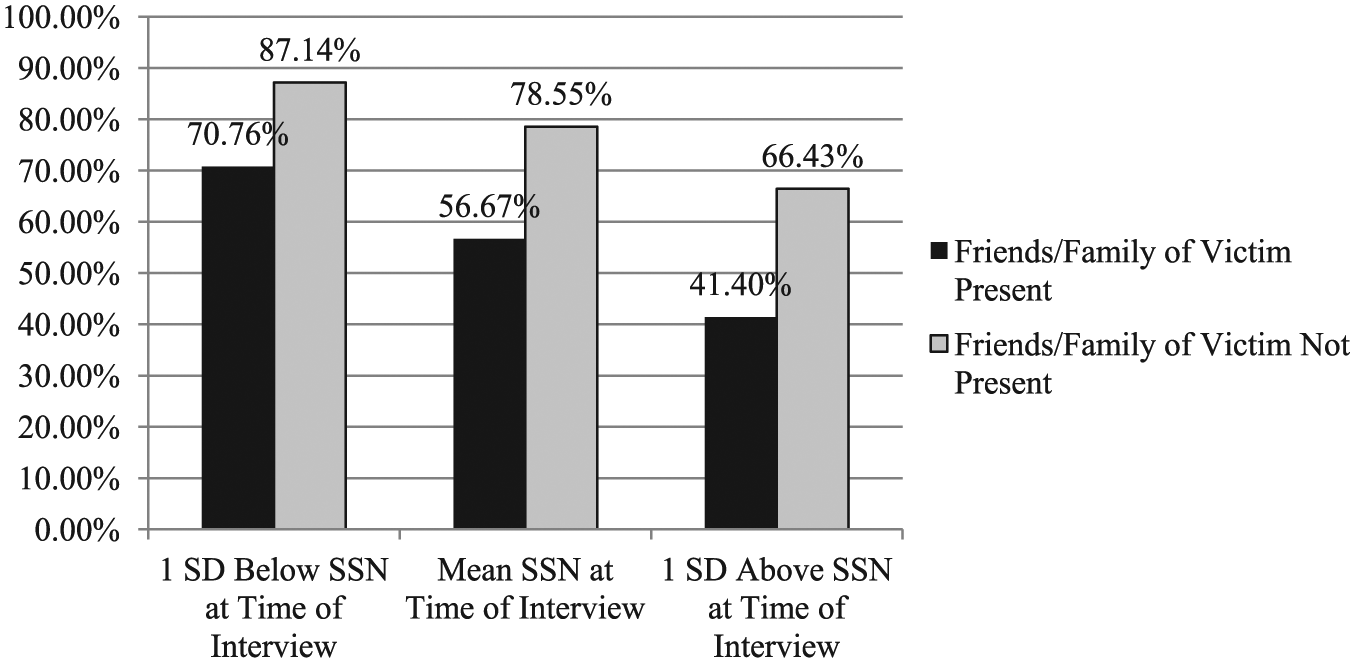
Predicted probability of repeat victimization for an unemployed, both respondent and abuser have high-school degrees, non-separated, African American race respondent in her 30s based on SSN scale at the interview and presence/absence of respondent’s friend/family during the earliest reported incident (N = 497). SSN = Social Support Network.
Discussion
The current study tested the effect of having a guardian present during the earliest incident of physical abuse or threat of abuse in the past calendar year on risk of repeat victimization by first operationalizing the concept of guardianship as recommended by Hollis-Peel et al. (2011). The analyses then considered the second part of the guardianship concept, capability, by examining the relationship between the guardian and victim (Reynald, 2010). If guardianship is solely measured as the presence or absence of a third party (Hollis-Peel et al., 2011), the findings from the current study indicated that guardians did not offer protection from continued abuse. However, once the relationship between the guardian and victim was considered the findings showed that guardians vary in their capability, with the presence of the victim’s friends/family offering a 60% reduction in the odds of repeat victimization. The presence of the offender’s friends/family or a bystander did not affect the risk of repeat victimization. Finally, higher levels of social support, measured at the interview, reduced the risk of repeat victimization.
The theoretical contributions of this study include highlighting that guardians vary in their capability, and that victims of different crimes may have different capable guardians. Tilley (2009) has previously suggested, “guardian capability may be less important than guardianship credibility” (p. 120, emphasis in original). Bancroft (2002) has noted that the abuser often shows a different side to family and friends as part of the manipulation process, so that family and friends come to believe the abuser over the victim. If the family member or friend of the victim were to actually witness the abuse, their perceptions of the abuser may be challenged, causing them to take action and provide support to the victim (Baumgartner, 1993). It is possible that family and friends who witness the abuse initiate help-seeking behaviors on behalf of the victim and shame the offender. Future research should refine the guardianship measure to determine what role guardians played during the incident and the actions, if any, they took on behalf of the victims’ safety post-incident and the association of this with perceived credibility (Reynald, 2010; Tilley, 2009). The practical implications of this study suggest that if friends or family of the victim witness an abusive incident, they have the potential to play an important role in limiting repeat abuse.
Although the presence of the victim’s friends or family decreased the risk of repeat victimization, a victim’s friends or family were present in only 13% of the earliest physical abuse incidents or threats of abuse reported on the life history calendar. Extended kin have been less likely to reside with the immediate family in modern 21st-century households (Mannon, 1997). These societal-level changes in household dynamics may affect the rates of IPV through levels of guardianship. Nevertheless, low levels of guardianship may also indicate that the respondent has been isolated. The manipulative nature of abusers has been discussed in detail elsewhere (see Johnson, 1995; Stark, 2007), but it is possible that abusers make the decision not to engage in violence when someone is around. It would be beneficial for future research to examine why guardians were not present and to determine if some abusers make the decision not to engage in abusive behavior when others are around.
The presence or absence of guardians could also be tied to levels of social support. Findings from the current study indicated that respondents with greater social support, which included knowledge of resources as well as acceptance and support, measured at the interview, reported a reduced risk of repeat victimization. Prior research has shown that social support limits the negative physical and mental health effects of IPV (Coker et al., 2002). Together, these findings suggest that social support has the ability to limit many different negative outcomes of IPV. Potential future research includes examining the overlap between support and guardianship and teasing out the difference between them. In addition, it would be worthwhile for future research to examine if level of social support influences the presence of guardians.
It is possible the abuser learned the abusive mentality from family and friends, or that family and friends did not want to believe the individual is an abuser (Akers, 1998; Bancroft, 2002; Burgess & Akers, 1966). In either of these explanations and consistent with the theoretical propositions of social learning theory and the intergenerational transmission of IPV, the abuser’s family and friends would be poor sources of support for the victim. When the abuser’s family and friends hold the same values as the abuser, it is unlikely that they will effectively challenge attitudes or shame the abuser into changing behaviors. This finding may explain why retributive shaming was found not to be an adequate policy response to IPV (Koss, 2000). Instead, policy that is focused on having the victim’s friends and family intervene may be more likely to show success in limiting repeat victimization (Baumgartner, 1993). Nevertheless, it is possible the abuser threatens to physically attack or actually attacks the victim’s family or friends, which would reduce the likelihood that family or friends would offer support. Future research should also capture whether the abuser is victimizing friends and family.
Collegiate bystander intervention programs for sexual assault have been expanded to address violence against women more generally and focus on holding friends accountable (McMahon & Banyard, 2012). Prior research has indicated that bystanders who are friends of a potential sexual assault victim were more likely to intervene than when the potential victim was a stranger (Katz, Pazienza, Olin, & Rich, 2015). There may be differences between bystanders as defined in the current study (e.g., strangers, people passing on the street) and the way bystanders have been conceptualized by McMahon and Banyard (2012). One practical implication of the results of the current study is that it is vital to understand whether the likelihood of bystander intervention depends only on the relationship between the bystander and victim, or whether it also depends on the type of crime that is about to unfold.
Importantly, the study was able to test the casual impact of guardianship on IPV risk. Hollis-Peel et al. (2011) recommended moving beyond cross-sectional analyses of guardianship and crime. The current study was able to test the causal impact of guardianship by examining whether the presence of a guardian during an earlier incident influenced the likelihood of repeat victimization. Ideally, future research would want to capture the presence or absence of guardians during the first incident of abuse that ever occurred in the relationship (Farrell et al., 1995). Nevertheless, similar to the methodology used by Fisher et al. (2010) and Tillyer et al. (2016), guardianship can reduce the risk of repeat IPV victimization over a 1-year period.
Prior work on routine activity theory and violence against women has almost exclusively relied on college samples (see Fisher et al., 2010; C. A. Franklin et al., 2012; Schwartz et al., 2001). The findings from these earlier studies laid the foundation for the current study’s extension of the integrated feminist routine activity theoretical approach to older IPV victims who may have greater commitments to their current or former abusive partner than college-age women. The theoretical contributions of this study include that the impact of guardianship was not equal for all victims of violence against women. Future research on routine activity theory and violence against women should not focus exclusively on college-age samples but, like the current study, also include older victims, current and former partners, and victims in same-sex relationships.
There are limitations that deserve mention. First, measures were unable to assess the level of intervention by the guardians, making it difficult to determine the guardian’s capability. Guardians who take an active role may be more effective in limiting abuse than those who are passive (Reynald, 2010). Nevertheless, Hollis et al.’s (2013) refinement of the guardianship concept has claimed that the mere presence of individuals should be enough to limit criminal behavior, and that it is not necessary for the guardian to intervene. As mentioned by Reynald (2010), future studies should measure levels of intervention by guardians. Doing so will unpack the role of the guardian in limiting criminal behavior.
Given that many incidents of IPV occur within the household (Sherman, 1995), it is reasonable to assume that the earliest reported incident occurred at home. The way the data were collected cannot illuminate if the guardian who was present lived in the house or was just visiting. If the guardian resides with the victim and offender, it increases the chances he or she will be present during a later incident, increasing the risk to the offender to continue the abusive behavior (Farrell et al., 1995). Future research should examine if the person who is present resides with the victim and/or offender or is just visiting or passing by. Furthermore, the measures from the current analysis did not make distinctions between friends and family members. It would be interesting to see if differences emerge between these two groups. It was also unclear what would happen if the third party was a friend to both the victim and the offender. Future research should develop more fine-tuned measures to capture the guardianship relationship.
There are a number of potentially confounding variables that the current analyses were unable to control for. Typically, studies that analyze the effect of routine activity theory on violence against women have included only one or two components of the routine activity triangle, and have focused almost exclusively on target suitability or offender motivation (see Mustaine & Tewksbury, 2002; Schwartz et al., 2001; Schwartz & Pitts, 1995). The CWHRS did not allow for measurement of target suitability or offender motivation, making the current analyses only a partial examination of the theory. Situational correlates, such as whether the abuse incident occurred at home or in public or during the day or at night, were not collected. Despite the absence of these potentially confounding variables, very few datasets offer the opportunity to prospectively test the influence of guardianship on the risk of repeat victimization for IPV victims. Calendar data provide the first step in testing the time order of this relationship and move beyond cross-sectional analyses (Hollis-Peel et al., 2011). Future research should include longitudinal measures that capture all three components of the routine activity triangle along with situational details of the abuse incident to examine which has the greatest effect on repeat victimization risk (Wilkinson & Hamerschlag, 2005).
In addition, control variables were measured at the time of the interview and not at the time of the earliest incident in the past year. The interview may have been conducted as much as a year after the earliest reported incident of physical abuse or threat of abuse. This is important for demographic measures that may change over time, such as separation. For instance, a woman may have been separated from her partner at the time of the interview but had been living with him or her at the time of the earliest incident in the past year. Separation has been shown to increase risk of abuse (Brownridge et al., 2008). Nevertheless, a prior study that analyzed the CWHRS data has shown that separated respondents were not significantly different from non-separated respondents in both frequency and timing of abuse (Hayes, 2016). Finally, the study also did not systematically measure psychological abuse in the life history calendar but instead focused on the likelihood of repeat physical and sexual abuse.
The current study indicated that guardians were not equal in their capability of limiting repeat victimization for a non-college sample of abused women. The presence of the victim’s friends or family was associated with a reduced risk of repeat victimization. Bystander intervention programs may therefore be effective in addressing IPV if the programs focus on bystanders who are friends or family of the victim (Katz et al., 2015). Therefore, it is more than just the mere presence of a guardian—as recommended within the mainstream framework of routine activity theory—when preventing repeat victimization by an intimate partner. Abusers may have to perceive that the guardian is capable of holding the abuser accountable, or that the victim believes that the guardian can offer support. Routine activity theory, with a specific focus on guardianship, can be used to understand the etiology of IPV.
Footnotes
Acknowledgements
The author thanks David Pyrooz, Joshua Freilich, Leana Bouffard, and the anonymous reviewers for their comments.
Declaration of Conflicting Interests
The author(s) declared no potential conflicts of interest with respect to the research, authorship, and/or publication of this article.
Funding
The author(s) received no financial support for the research, authorship, and/or publication of this article.