




Abstract
The number of people traveling to high altitudes is increasing. Inevitably, this has been accompanied by a rise in morbidity and mortality. Deaths at high altitude reported by the Himalayan Database have increased from 75 (1950–1989) to 160 (1990–2019) (Salisbury et al., 2021). Early and appropriate management of conditions such as acute mountain sickness (AMS), high-altitude pulmonary edema (HAPE) and high-altitude cerebral edema (HACE) have the potential to reduce deaths in the high-altitude environment.
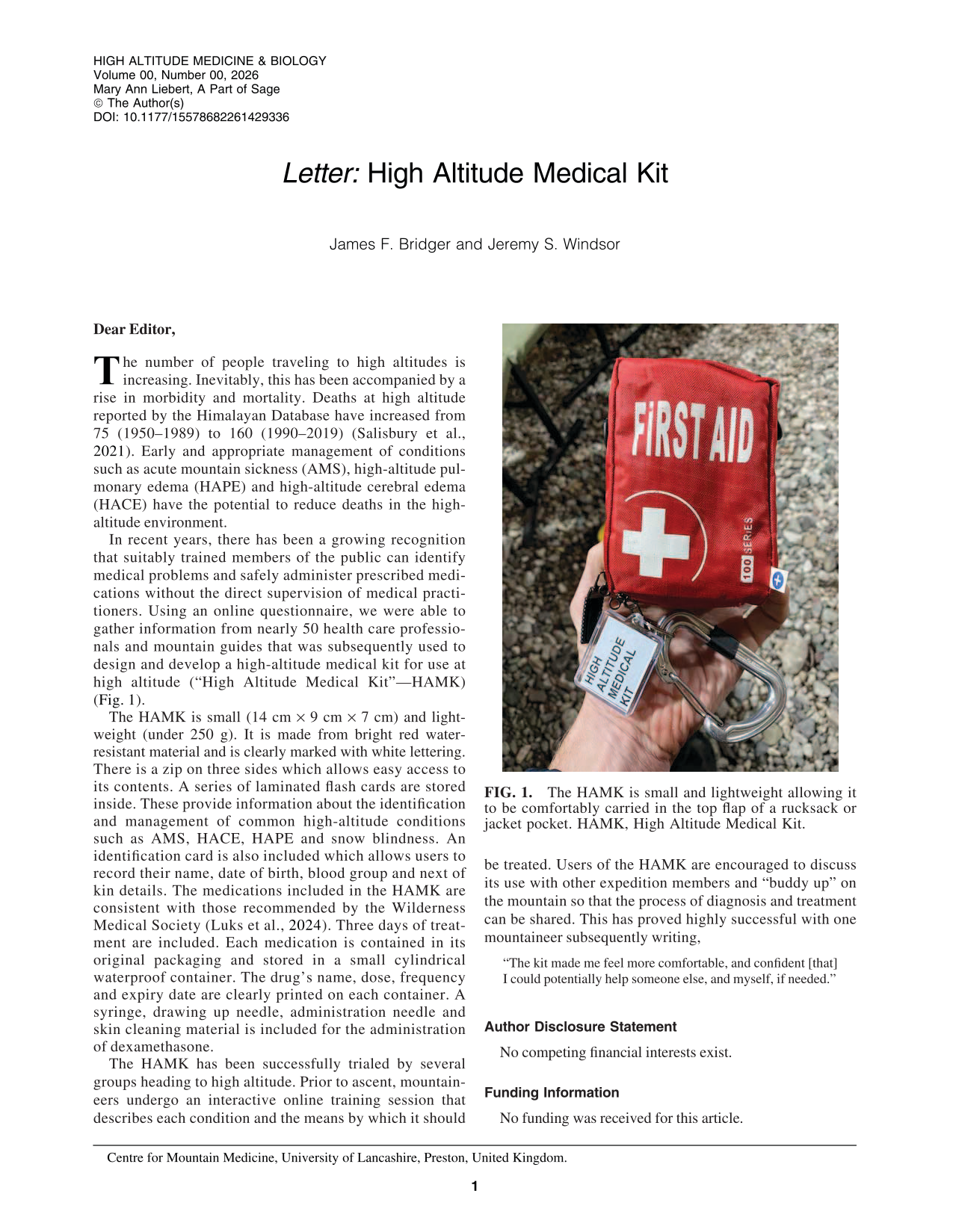
In recent years, there has been a growing recognition that suitably trained members of the public can identify medical problems and safely administer prescribed medications without the direct supervision of medical practitioners. Using an online questionnaire, we were able to gather information from nearly 50 health care professionals and mountain guides that was subsequently used to design and develop a high-altitude medical kit for use at high altitude (“High Altitude Medical Kit”—HAMK) (Fig. 1).
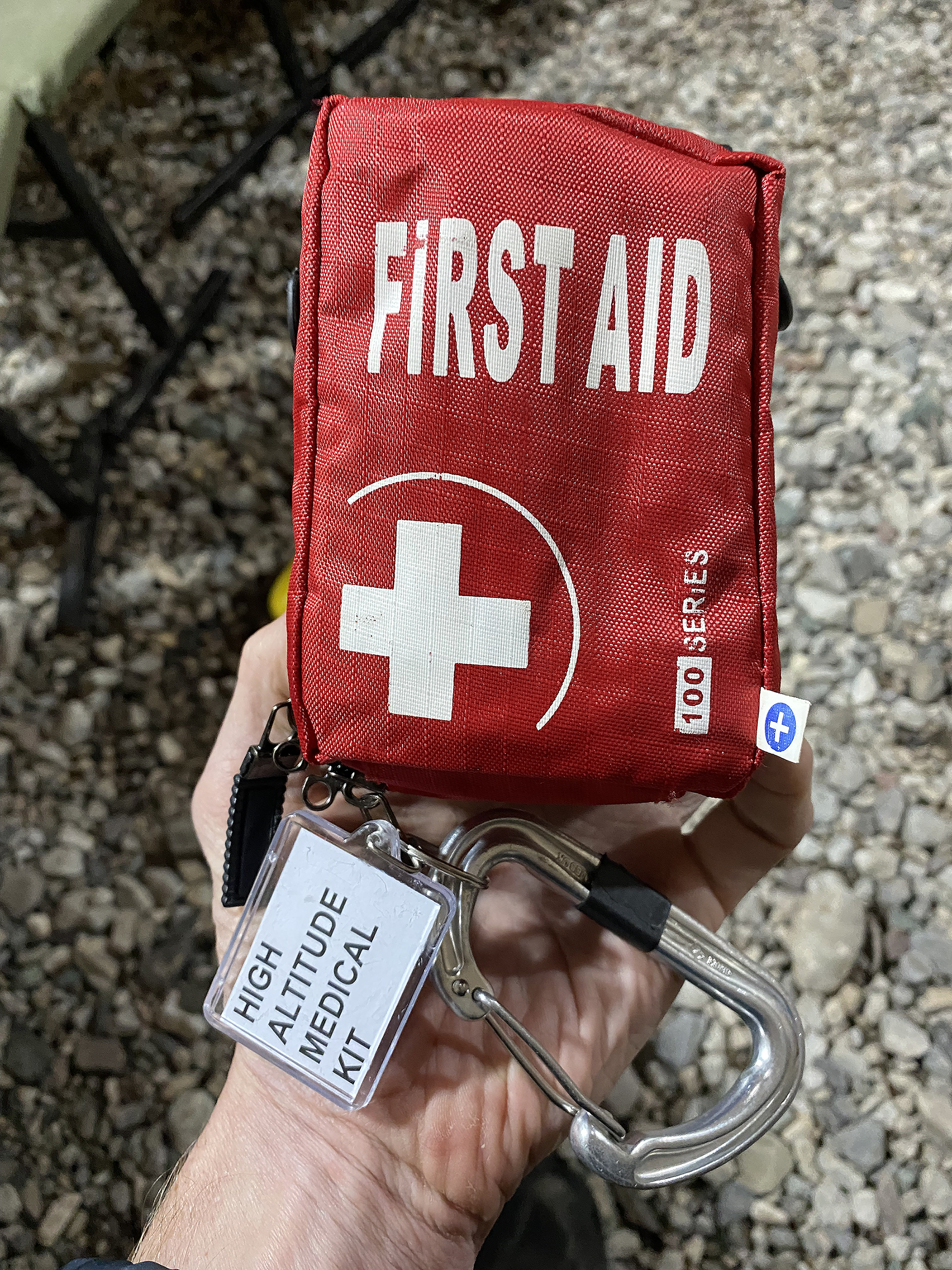
The HAMK is small and lightweight allowing it to be comfortably carried in the top flap of a rucksack or jacket pocket. HAMK, High Altitude Medical Kit.
The HAMK is small (14 cm × 9 cm × 7 cm) and lightweight (under 250 g). It is made from bright red water-resistant material and is clearly marked with white lettering. There is a zip on three sides which allows easy access to its contents. A series of laminated flash cards are stored inside. These provide information about the identification and management of common high-altitude conditions such as AMS, HACE, HAPE and snow blindness. An identification card is also included which allows users to record their name, date of birth, blood group and next of kin details. The medications included in the HAMK are consistent with those recommended by the Wilderness Medical Society (Luks et al., 2024). Three days of treatment are included. Each medication is contained in its original packaging and stored in a small cylindrical waterproof container. The drug’s name, dose, frequency and expiry date are clearly printed on each container. A syringe, drawing up needle, administration needle and skin cleaning material is included for the administration of dexamethasone.
The HAMK has been successfully trialed by several groups heading to high altitude. Prior to ascent, mountaineers undergo an interactive online training session that describes each condition and the means by which it should be treated. Users of the HAMK are encouraged to discuss its use with other expedition members and “buddy up” on the mountain so that the process of diagnosis and treatment can be shared. This has proved highly successful with one mountaineer subsequently writing,
“The kit made me feel more comfortable, and confident [that] I could potentially help someone else, and myself, if needed.”
Footnotes
Author Disclosure Statement
No competing financial interests exist.
Funding Information
No funding was received for this article.