



Abstract
The present study provides an example of the integrated data analysis technique of creating and interpreting merged profiles. By using this approach to merging data sources, we gained unique insight into goal disruption theory (GDT). Qualitative data suggest that military personnel harbor a wide range of desired end-states. Quantitative data support a component of GDT, suggesting that participants who have a strong need for desired end-state displayed greater purposive harm endurance. Interpretation of merged profiles revealed caveats to this relationship, in particular that not all end-states are equally motivating. Results illustrate the benefits of the integrated data analysis technique of creating and interpreting merged profiles. Utilization of the merged profiles illuminated relationships that would not have been exposed otherwise.
Scholars have recently noted that creating and interpreting merged profiles is an underutilized data integration technique that can yield novel theoretical and practical advances (e.g., Bazeley, 2009; Johnson & Onwuegbuzie, 2004). This study provides one such example—specifically, we used a convergent parallel mixed method design, the main aim of which was collecting, analyzing, and interpreting integrated quantitative and qualitative data to test several components of goal disruption theory (GDT; GDTheory.com; Siegel, 2004, 2011, 2013; Siegel et al., 2012). The goal of integrated data analysis and interpretation was accomplished through the creation of profiles, which were built using participants’ quantitative responses and interpreted by examining their qualitative responses (e.g., Buck, Cook, Quigley, Eastwood, & Lucas, 2009). The underlying logic of this approach is that the integration of both qualitative and quantitative data is greater than each method’s individual contribution (see Bazeley, 2009; Woolley, 2009).
An example of the creation and interpretation of merged profiles was recently provided by Buck et al. (2009). According to these authors, a profile is a grouping of qualitative responses derived from a quantitative relationship between two or more variables. In the study by Buck et al., merging two types of data, qualitative interviews and quantitative questionnaire responses, created profiles used to examine African American girls’ attitudes toward science. Quantitative data revealed several distinct profiles (i.e., orientations toward science); qualitative data, on the other hand, provided girls’ rich descriptions of science. By combining the quantitative and qualitative data, subtle nuances were uncovered in a seemingly homogenous sample. For example, girls’ success in school and experiences with science are closely linked with girls’ confidence and the importance placed on science.
The methodology used by Buck et al. (2009) illustrates one way in which data from different sources can be synthesized to encourage joint interpretation of the data. As noted by Bazeley (2009), joint interpretation is often “the key to unfolding the complex relationships in the topic of study” (p. 205). Furthermore, this description of integrated data analysis fits well with a major purpose of mixed methods research—complementarity, the goal of which is to provide a richer and more comprehensive understanding of the phenomenon of interest than just one method alone (Greene, Caracelli, & Graham, 1989; see also Mark & Shotland, 1987). This goal of complementarity guided the present study, and was achieved through the creation and interpretation, which was achieved through the creation and interpretation of merged profiles. Specifically, using profiles to interpret the merged data allowed us to paint the richest, most complete picture of the plight of United States military personnel.
Desired End-States of Military Personnel
Over the past 15 years, the United States has become involved in a number of military conflicts, including the wars in Iraq and Afghanistan, the broader war on terror, ongoing conflicts in Libya, and the drug wars in Central and South America. The prevalence of protracted military engagement places military personnel in a variety of potentially life disrupting situations, putting strain on their well-being, both during deployment and at home. In comparison to the general population, these strains are evidenced by historically high suicide rates (Bachynski et al., 2012) and the elevated prevalence of mental disorders in veterans (Centers for Disease Control and Prevention, 2011; for a review, see Dekel & Monson, 2010). Indeed, military suicide has increased to a record high of 33 deaths per month across all branches of the military (Bachynski et al., 2012), a rate of one suicide every day. Furthermore, according to the same report, military suicide rates increased 80% between 2004 and 2008.
Given this troubling set of circumstances, the present study sought a more comprehensive understanding of the plight of military personnel. Examined through the framework of GDT (see Siegel, 2013), this study investigated one of the adaptive responses that is associated with increased goal demand. In particular, we hypothesized that military personnel with the greatest need for their desired end-state would report the most specific end-states, the most immediate end-states, and the greatest willingness to endure harm to reach their desired end-state (i.e., purposive harm endurance).
Goal Disruption Theory
Derived from the work of Tolman (1926a, 1926b, 1932, 1959) and Lewin (1936, 1941/1999, 1951), GDT (Siegel, 2004, 2011, 2013; Siegel et al., 2012; see also Lewandowsk, Rosenberg, Parks, & Siegel, 2011) posits that peoples’ behavior is goal directed and purposive; it is driven by one ultimate goal—an innate need for psychological equilibrium (see also Cannon, 1932; Festinger, 1957; Heider, 1958; Henning, 2011; Higgins, 1989; Selye, 1950). In this model, as in other scientifically comparable frameworks (e.g., frustration–aggression hypothesis, Berkowitz, 1988, 1989; reactance theory, Brehm, 1966; cognitive dissonance, Festinger, 1957; self-discrepancy theory, Higgins, 1989), equilibrium is a peaceful, homeostatic state. According to GDT, behavior is instigated by psychological disequilibrium, an aversive imbalance in the psychological state that motivates people to strive to regain equilibrium (Perls, Hefferline, & Goodman, 1951; Raup, 1925). While myriad occurrences have the potential to arouse psychological disequilibrium (e.g., a traffic jam or an unresponsive spouse), GDT focuses on one specific cause of psychological disequilibrium, negative goal expectation violations, which occur when peoples’ beliefs about their goals and their ability to achieve those goals are revealed to be inaccurate.
While not all negative goal expectancy violations lead to psychological disequilibrium, a goal violation that does result in psychological disequilibrium is known as a goal disruption (Siegel, 2004, 2013; Tolman, 1932, 1959; see also Lewandowski et al., 2011). Goal disruption, which comes from Tolman’s (1932, 1959) theorizing, particularly about behavior in a heightened drive state, and Lewin’s (1941/1999, 1942/1999) ideas about goal frustration, results in an automatic adaptation process that persists until there is a return to equilibrium (Tolman, 1959; see also Festinger, 1957; Richter, 1943). According to GDT, when goal disruption occurs, a series of adaptive processes lead people to automatically shift focus toward the cause of the violation and the path through which equilibrium can be restored. This process, known as goal adaptation, rearranges people’s goal hierarchies—a return to equilibrium becomes the paramount focus, while all other goals become secondary (for a similar conceptualization see Arndt & Solomon, 2003; Lewin, 1943; Perls et al., 1951). Peoples’ expectations of what they believe will lead to equilibrium (i.e., desired end-states) become salient; attention shifts toward goal-relevant stimuli, while goal-irrelevant stimuli are relatively ignored (e.g., Burgoon, Newton, Walther, & Baesler, 1989; Harvey, Harkins, & Kagehiro, 1976).
Central to GDT is the systematic nature of the changes that occur as a result of goal disruption (Figure 1). The effects of experiencing a goal disruption are wide ranging; a suite of processes, behaviors, and characteristics are affected, including but not limited to, reduced cognitive complexity (Frauenfelder, 1974; Ionescu, 2012; Pennell, 1996), impaired ability to take the perspective of others (Amici, Aurelli, Visalberghi, & Call, 2009), increased impulsivity (Nordgren & Chou, 2013), increased tendency to use stereotypes (Kugler, Cooper, & Nosek, 2010), and increased purposive harm endurance (Siegel, 2004, 2011; Siegel et al., 2012). These processes automatically engage with the purpose of maximizing the likelihood of a return to equilibrium; however, these processes are not useful in all contexts and can be harmful in many. For example, one adaptive process that has received attention is an increase in purposive harm endurance (i.e., a willingness to endure pain if the harm is a means to goal satiation). Two prior investigations (Siegel, 2011; Siegel et al., 2012; see also Siegel & Navarro, 2013) showed that increases in goal demand are associated with greater purposive harm endurance. Understanding the psychological processes that are related to increased purposive harm endurance, and understanding the contexts in which this potentially harmful behavior is most likely to occur, [omit: and the range of adaptive changes to expect] can be beneficial in identifying and preventing incidents that might occur otherwise.
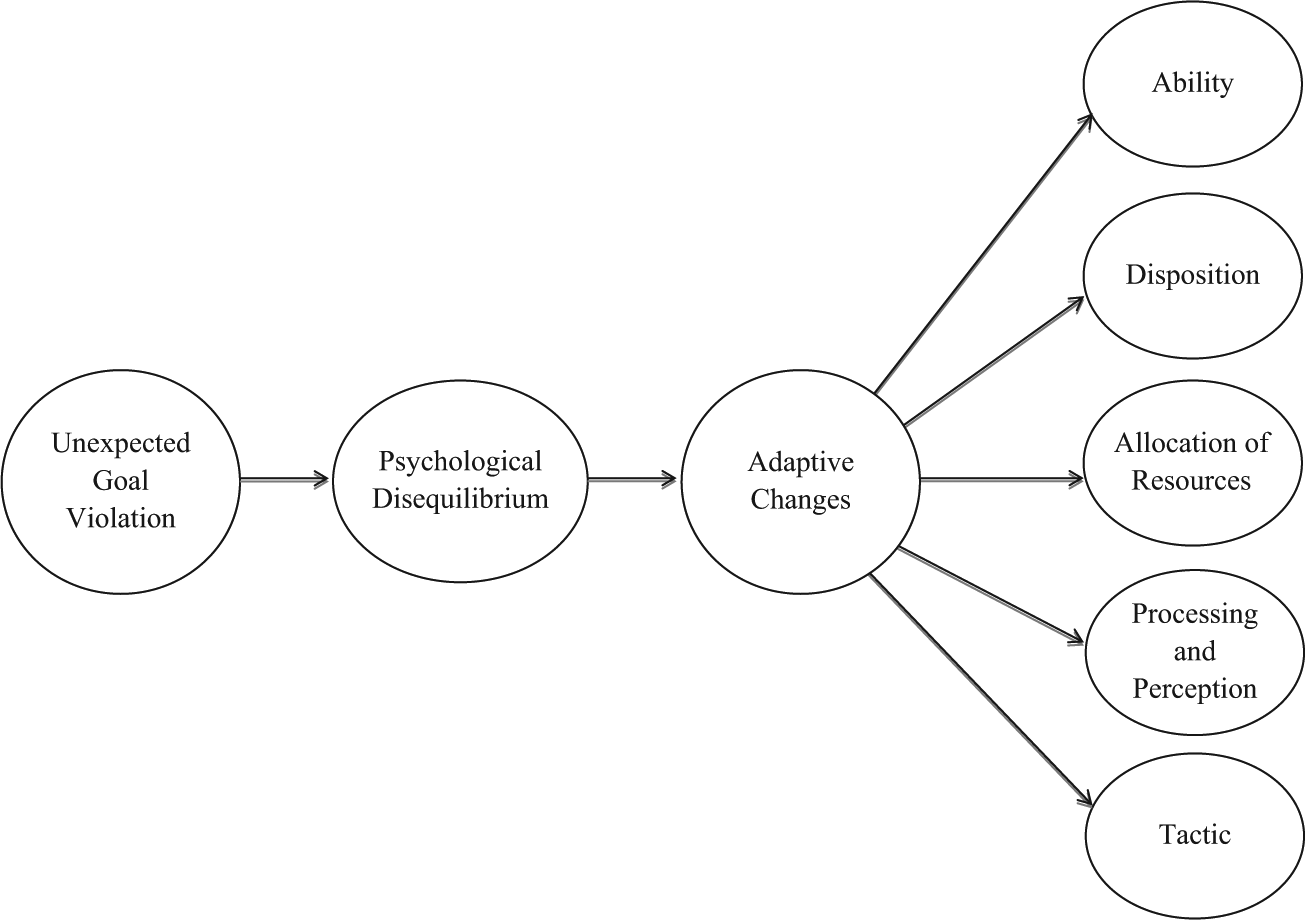
Diagram of goal disruption theory.
The Current Study
In the current study, we used the creation and interpretation of merged profiles to examine the plight of U.S. military personnel in the richest, most complete way possible. In particular, this investigation sought to build on the merged profile technique espoused by Buck et al. (2009) to assess components of GDT that would be difficult to illuminate otherwise. We had several goals, the first of which was to replicate prior quantitative findings, which revealed a relationship between need for a desired end-state and purposive harm endurance. The samples in the two prior studies were young adolescents (Siegel et al., 2012) and college students (Siegel, 2011). We expected that a similar pattern would be revealed among the current sample of military personnel.
Our next goal was to use a merged data interpretation technique (e.g., Bazeley, 2009; Buck et al., 2009; Creswell & Plano Clark, 2011) to gain further insight into this quantitative relationship. To do this, we created merged profiles with the aim of gaining a more comprehensive understanding of the most salient desired end-states harbored by military personnel. We sought additional insight into the hypothesized quantitative relationship between an increased need for desired end-state and willingness to endure harm through examination of participants’ qualitative responses with regard to their most salient desired end-states in each profile. Thus, an exploratory mixed methods research question was ventured,
The final goal of the present article was to expand the use of merged profiles presented by Buck et al. (2009). Specifically, we used content analysis to examine theoretical differences across the qualitative responses in each profile. According to GDT, when a goal disruption occurs, all resources are focused on a return to equilibrium (see Siegel, 2013). As such, when people are in a state of goal disruption, the end-state associated with equilibrium will be activated and become highly salient. Paths to the end-state will be activated; people will become hyperfocused on a return to equilibrium. People in goal disruption will ruminate, elaborate, and extensively pontificate on the desired end-state associated with equilibrium. Accordingly, the end-states of people in goal disruption should be more specific than those not in goal disruption. Also, as people in goal disruption are concerned with immediate goal attainment, short-term needs take priority over long-term considerations. As such, people in goal disruption should be more likely to focus on immediate rather than long-term goals. To test these GDT predictions, we posed a mixed methods hypothesis:
Method
In accord with various scholars’ recommendations, we took care to ensure that the mixed methods design matched the research questions at hand (Creswell & Plano Clark, 2011; for a discussion on substantive theorizing, see Wicker, 1989). In particular, we implemented the data validation variant of a convergent parallel design (see Figure 2 for a diagram of the design; Creswell & Plano Clark, 2011). In this convergent parallel design, we collected quantitative and qualitative data simultaneously, but prior to integration, analyzed and interpreted the two data sources separately. It is important to note that while data can interact reciprocally (Creswell & Plano Clark, 2011), the qualitative data in the present study were meant to illuminate the quantitative data. We then merged the data to create a data set made up of qualitative and quantitative information (i.e., merged profiles), which was then interpreted.
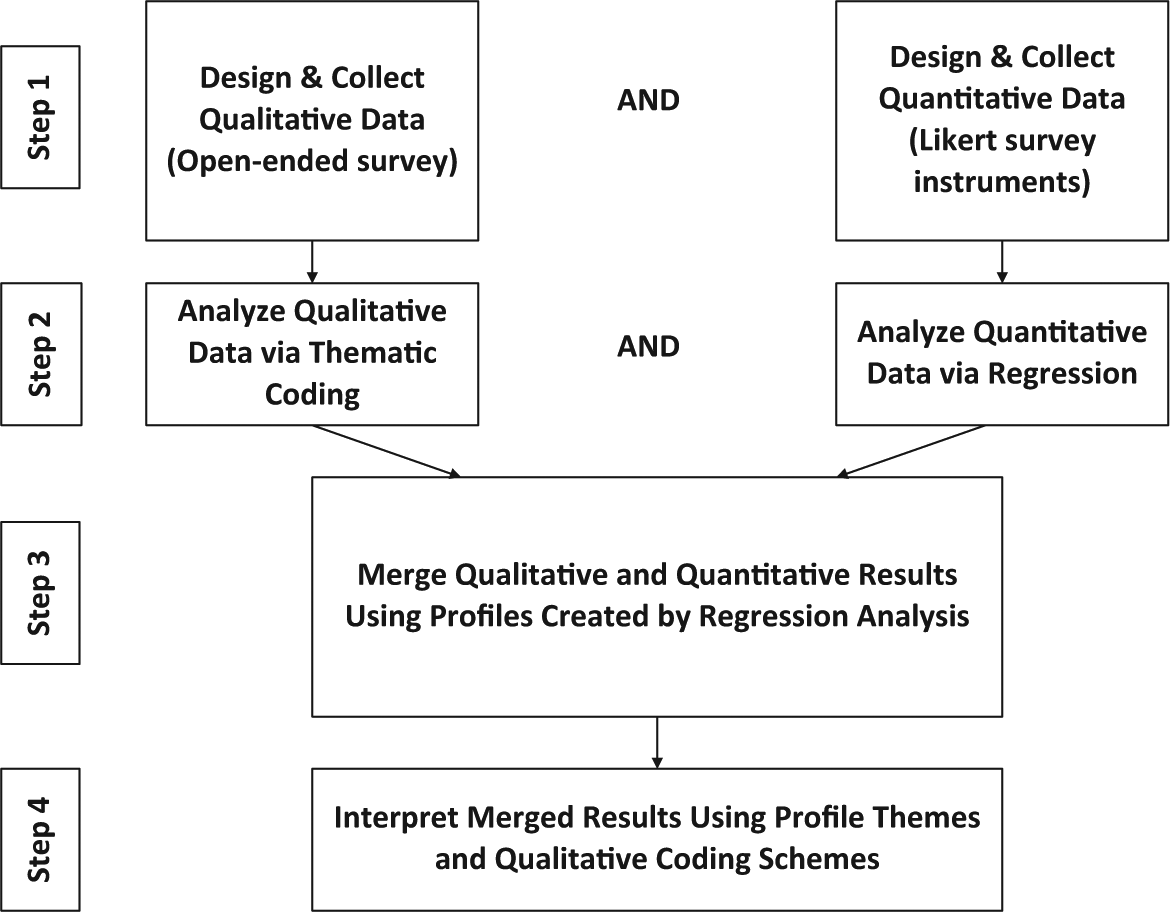
Convergent parallel design: Data validation variation.
Sampling Procedure
Data were gathered from a snowball sample of 127 active duty, reserve, and retired military personnel. The snowball sampling method accumulated participants for approximately 3 months, at which time the researchers halted data collection. Although not always ideal, snowball sampling was an appropriate method of data collection in the present study. In particular, snowball sampling provided access to, and built trust with, military personnel who may be less inclined to discuss mental health because of stigmatization (Hoge et al., 2004).
Participants responded to recruitment e-mails during the spring of 2010. The e-mail briefly explained the nature of the study and its requirements (e.g., the amount of time it will take to complete). To take part in the study, participants had to be computer users with Internet access. Recruitment e-mails were sent to known military or retired military personnel. On clicking the link in the e-mail, participants were directed to the cover page containing a more detailed description of the study as well as an informed consent form. Recipients were asked to complete the survey and forward it to any other current or retired military personnel that they believed would be interested in participating.
Sample
Ages ranged from 18 to 70 years (M = 43.07, SD = 9.15). The sample consisted of 100 (79%) men and 27 (21%) women, with an average 11.79 years in the military (SD = 9.15), representing many branches of the U.S. Armed Forces—Air Force, Army, Coast Guard, Marines, Navy, and Reserve. Of these respondents, 30 (24%) were on active duty, while 87 (69%) were not. Additionally, 118 (93%) had been on active duty at some point, while 9 (7%) had not; 38 (30%) had seen combat, while 80 (63%) had never been in combat; and 29 (23%) had been deployed overseas at some point, while 89 (70%) had not.
Qualitative Item
Desired End-State (e.g., “Perfect World”)
The open-ended perfect world item is a way of assessing participants’ desired end-state. The item asks participants, “We would like you to think about what would make your life perfect this year” (Siegel, 2004). This statement is followed by six examples (i.e., “If only I knew what I wanted to do for a living, then my life would be perfect;”“If only I had better friends, then my life would be perfect;”“If only I had more money, then my life would be perfect;”“If only I could fall in love, then my life would be perfect;”“If only I could do better in school, then my life would be perfect;”“If only I could get along better with my parents, then my life would be perfect”), and a blank space into which participants put their answer.
We provided a large number of examples (i.e., six) because we wanted to activate a range of different end-states in participants’ minds, so that one specific end-state did not bias responses. To establish the examples, previous studies that used this item (e.g., Siegel, 2004), as well as the military distress literature, was assessed (for a review, see Campbell & Nobel, 2009). The six examples chosen reflect the overlap between these two literature sources. Furthermore, these common categories of end-states directed the creation of a coding guide that was used to assess qualitative data.
Coding of Open-ended Desired End-State Item
Prior to analyzing the qualitative data, we examined prior research to inform the creation of a coding guide. First, we looked to investigations that used the current open-ended prompt (e.g., Siegel, 2004, 2011; Siegel et al., 2012), which uncovered eight consistent categories of desired end-states: (a) family, (b) academics, (c) finances, (d) career, (e) romantic relationship, (f) content, (g) spiritual, and (h) more free time. Next, we looked to Campbell and Nobel’s (2009) review of military distress, which identified seven similar themes: (a) work, (b) social–interpersonal, (c) family, (d) self-identity, (e) psychological environment, (f) cultural environment, and (g) physical environment. The overlap between the categories uncovered by Siegel (2004) and those revealed by Campbell and Nobel (2009) was convincing evidence that a coding guide should be created a priori.
Two raters independently coded participants’ responses, with a high degree of interrater reliability (k = .83; p < .001). Disagreements were resolved through discussion between the two raters. The coding scheme seemed to fit the range of responses well—at least 6 respondents fell into each category.
Quantitative Measures
Need for Desired End-State
Following the open-ended desired end-state item, participants were presented with a 5-item Likert-type measure. All responses were on a 7-point scale. Designed to assess the intensity of participants’ need to reach the desired goal, previous uses of this scale indicate strong internal consistency (α = .78-.89; Siegel, 2004, 2011; Siegel et al., 2012). Sample items from this scale included, “How important is it for you to reach your perfect world?” (Not important/Very important); “How much is your future happiness dependent on reaching your ‘perfect world’?” (Not at all dependent/Completely dependent); and “How much do you need to reach your perfect world?” (No need/Large need).
Purposive Harm Endurance
This 7-item measure (Siegel, 2011) was designed to assess participants’ willingness to risk physical and emotional harm to attain their previously indicated desired end-state (i.e., perfect world). The scale has demonstrated validity in a variety of contexts (Siegel, 2011; see Siegel, 2013), and its reported levels of internal consistency have been acceptable (α = .86-.93; Siegel, 2011, 2013). Sample items included, “I would be willing to hurt my career if I thought it would lead to my perfect world;”“I would be willing to have to go to the hospital if I thought it would lead to my perfect world;”“I would be willing to hurt myself if I thought it would lead to my perfect world.” Responses ranged from 1 (Not at all willing) to 7 (Very willing).
Anxiety
Anxiety was measured using the Beck Anxiety Inventory (BAI; Beck, Epstein, Brown, & Steer, 1988; Steer & Beck, 1997). The BAI is a 21-item self-report instrument. Widely used in the literature, the BAI is a valid and reliable measure (α = .92-.94; Fydrich, Dowdall, & Chambless, 1992; Steer, Ranieri, Beck, & Clark, 1993). Respondents were asked to read a list of common anxiety symptoms and indicate how much they have been bothered by each symptom over the past month. Sample symptoms included inability to relax, fear of the worst happening, nervous, and scared. The response format contained four items: (a) not at all; (b) mildly but it did not bother me; (c) moderately—it was not pleasant at times; and (d) severely—it bothered me a lot.
Stress
Respondents’ stress level was measured with the perceived stress scale (PSS; Cohen, Kamarck, & Mermelstein, 1983). This scale was designed to assess the amount of stress that people perceived in their lives over the past month. The shortened version of the PSS, which consists of 4 items, was used in the present study. This scale is the most widely used measure of stress, and its validity has been repeatedly displayed (Cohen & Williamson, 1988; Hewitt, Flett, & Mosher, 1992). Furthermore, the PSS shows good internal consistency (α = .80-.86; Hewitt et al., 1992). It measured participants’ responses from 1 (Never) to 5 (Very often) and included items such as, “In the last month, how often have you felt that you were unable to control the important things in your life?” and “In the last month, how often have you felt difficulties were piling up so high that you could not overcome them?”
Results
Quantitative Analyses
The quantitative data were examined first. The primary focus of quantitative analyses was to test the relationship put forth in Hypothesis 1, that respondents’ need for their desired end-state would account for significant variance in purposive harm endurance, above and beyond other possible explanatory variables such as stress and anxiety. All measures used showed acceptable levels of internal consistency: (a) Need for desired end-state (α = .92), (b) Purposive harm endurance (α = .93), (c) Anxiety (α = .94), and (d) Stress (α = .74).
To examine the relationship between respondents’ need for desired end-state scores and their purposive harm endurance scores, a hierarchical multiple regression analysis was employed. The purpose of this analysis was to determine the unique relationship between need for desired end-state and purposive harm endurance, above and beyond stress and anxiety. While hierarchical regression and standard multiple regression (i.e., all variables are entered into the model at once) both represent conservative tests of Hypothesis 1 because of the inclusion of covariates, hierarchical regression also provides the size of the unique contribution of need for desired end-state, above and beyond stress and anxiety. In other words, this analysis sought to rule out the potential alternative hypothesis that participants’ general stress or anxiety results in increased purposive harm endurance (see Tabachnick & Fidell, 2007). When conducting the regression analysis, assumptions of normally distributed residuals, linearity, homoscedasticity, and multicolinearity were assessed. No assumption violations were detected, with the exception of anxiety measure, which displayed unacceptable levels of both skew and kurtosis (i.e., compared with a standard cutoff of 1; Tabachnick & Fidell, 2007). A sensitivity analysis was conducted using a square root transformation, and results remained the same; thus, for ease of interpretation, the original measure was used.
A two-step hierarchical regression was calculated. With purposive harm endurance as the dependent measure, two groups of predictor variables were entered into the model: (a) gender, age, anxiety, and stress, and (b) need for desired end-state. Table 1 presents the results of this regression analysis. No variables in Step 1 were significant, F(4, 122) = 1.57; ns. Step 2 added participants’ need for desired end-state to the model, which accounted for significant variance in purposive harm endurance, above and beyond preceding variables, F(5, 121) = 6.70; p < .001, accounting for approximately 17% additional variance beyond Step 1, ΔR 2 = .17, ΔF(1, 121) = 25.95; p < .001, and 22% of the total variance. In support of the first hypothesis, this finding indicates that as participants’ need for a desired end-state increases, purposive harm endurance also increases.
Relationship Between Need to Achieve a Desired End-State and Purposive Harm Endurance.
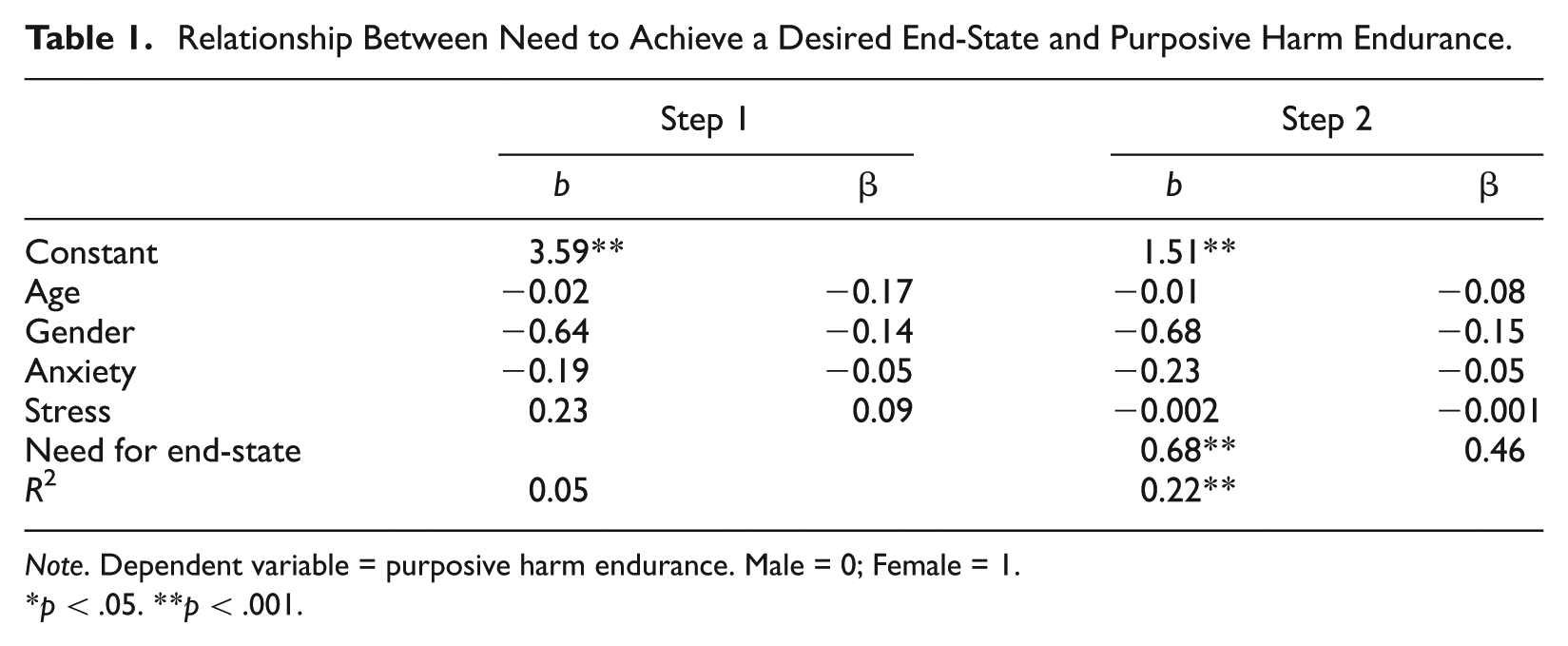
Note. Dependent variable = purposive harm endurance. Male = 0; Female = 1.
p < .05. **p < .001.
Qualitative Analyses
To further elucidate this quantitative finding, participants’ qualitative responses were examined. Table 2 presents a summary of these results (N = 127). As expected, the categories into which participants’ desired end-states fell were in line with prior research (Campbell & Nobel, 2009; Siegel, 2004, 2013). As evidenced by the table, five of the eight categories each accounted for at least 10% of the total sample; combined they accounted for 76% of responses. Thus, analysis focused on the responses in these five categories: (a) money and financial concerns, (b) family concerns, (c) employment-related issues, (d) romantic relationship concerns, and (e) respondents who did not believe in perfection or were content. While these categories may contain overlap (e.g., mentions of marriage in family concerns and romantic relationship concerns categories), they were not meant to be rigid. Coders were trained to assign responses to each category, which is an inherently subjective process; we did not ask that an objectively correct answer be chosen.
Summary of Qualitative Findings.
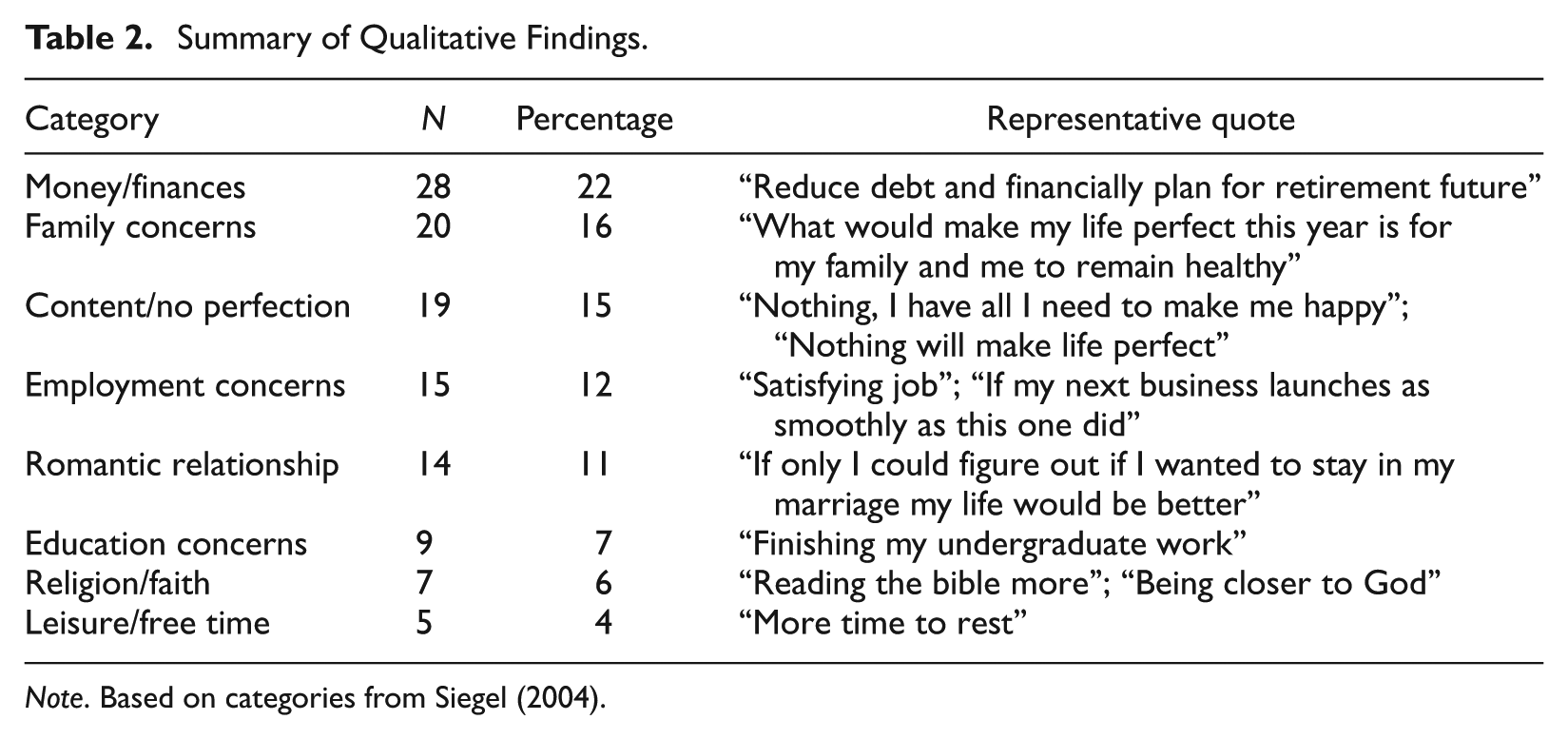
Note. Based on categories from Siegel (2004).
Money and Financially Based End-States
Money and financial concerns represented the most frequently mentioned desired end-state. While 22% of the sample (n = 28) mentioned money or their financial status in some way, the specific answers to the question varied widely. Some respondents stated their answers bluntly: “More money,” wrote one respondent; “Better financial standing,” wrote another. Yet other respondents were more specific in stating why money would make their lives perfect. One person wrote, “That I could sell my house and not have to worry about the mortgage being paid on time and my life would be perfect.” Another participant responded, “If I had enough money to continue school and maintain my home.” Conversely, a few respondents indicated that their lives were, on the whole, tolerable; however, they stated their lives might be even better if they were better off financially. One respondent stated, for instance, “My life is fine and on a steady course, but it would improve if I had more money.” Similarly, another respondent said, “I am already blessed with everything I need to be happy—loving God, great wife, good job, wonderful kids. I suppose being more financially secure for retirement would make me more satisfied.”
Familial End-States
Another large portion of participants indicated that issues involving their families were deeply intertwined with their sense of perfection. In other words, many participants’ desired end-states involved familial concerns. Specifically, 16% (n = 20) of respondents answered the open-ended item with family-related concerns. Responses within this category also varied rather widely. Many respondents indicated that they wanted to start, or continue building, a family: “Having a child and being married” and “Wife kids and big family” were two representative responses. Another large swath of respondents who fell into this category was concerned about their family’s health. One respondent, for example, said, “If only there could be a cure for my wife’s ailment.”
Employment Concerns
Another 12% (n = 15) of the sample indicated that something having to do with their job—a new one, a better one, a nicer boss—would make their lives perfect. A common theme that emerged was respondents’ concern over simply keeping their present employment. Several people echoed 1 participant, who said, “Job security/stability” would make his/her life perfect. Yet others were more concerned about the quality of their superiors:
If only I didn’t work for complete idiots. It’s not even that they are forced to make bad decisions it’s that they can’t and are mentally unable to think for themselves. They don’t understand the first thing about being a supervisor.
Another group of participants wrote about having their own business or career as a way to attaining perfection. One respondent, for instance, said, “What will make my life perfect is by me having the career I desire . . .”
Romantic Relationship End-States
An additional 11% (n = 14) of the present sample responded to the open-ended item by saying that starting, ending, or improving a romantic relationship would make their lives perfect. Several participants wrote of their desire to find love. One respondent, for instance, said that life would be perfect if he/she had “someone to come home to, share my inner thoughts with, and just be myself with.” Another person stated that his/her desired end-state included relationship clarity: “If only I could figure out if I wanted to stay in my marriage my life would be better.” Other respondents also mentioned clarity, but indicated general contentment in their relationships. From one telling example:
At the moment, I currently have the love of a smart, beautiful, sexy woman. I’m leaving for Japan in 7 months, and all I can think about is taking her with me. Getting married feels a bit rash because we have only been dating for about 6 months, but I have known her for 8 years.
Content/There Is No Perfection
Finally, 15% (n = 19) of the present sample indicated that they were either content, or that they did not believe perfection is a reality. While these respondents’ answers are conceptually distinct, for qualitative analyses they were grouped together. In the context of GDT, these responses could be an indication that these participants were in psychological equilibrium. They were in psychological harmony, reporting that there is nothing overwhelmingly negative affecting their lives. Put another way, a common theme might undergird both responses of being content or not believing in perfection—the absence of currently striving for a concrete goal.
Sixteen participants indicated, to varying degrees, that they do not believe perfection exists or that it is attainable. For instance, one person wrote, “Becoming a god (yeah right). I don’t think any one thing could make anyone’s life perfect.” In a similar vein, another person stated simply, “Perfection is unattainable.” These participants’ responses are interesting for a few reasons. First, it may reflect that they were realists when it came to thinking about their desired goals. It could be that there was a goal toward which they were striving, but that they knew, even if the goal was accomplished, life would not be perfect. Furthermore, these responses stating that perfection is unattainable could reveal a shortcoming in the qualitative item. Perhaps, because some participants were realists, the item did not capture what it was intended to—the solution to participants’ salient goal disruption.
Alternatively, four respondents in this category noted that they were rather content with their lives at present. As one participant wrote,
Actually, I am a pretty happy guy in my personal life. I’m retired and working part-time that I enjoy, have a beautiful wife who loves me and whose company I treasure. I have no life-threatening health issues. My income and investments make us financially secure.
While these responses were grouped with those that indicated perfection is unattainable for analysis, there was a clear distinction. In particular, for these participants, the qualitative item seems to have captured what it was intended to—these participants did not have a salient disruptive event that created a deficit. They were content; there was no searching for perfection, that is, no searching for a solution to the disrupted goal.
Mixed Methods Interpretation: Creation of Profiles
Using the procedures of Buck et al. (2009) as a guide, the first step to creating merged profiles was to perform a median split (see Figure 3) on the two quantitative variables of interest (i.e., need for desired end-state and purposive harm endurance). It is important to note that a median split is an appropriate procedure to produce these categories for several reasons. First, it avoids issues of nonnormality such as skew in the data while creating profiles—a benefit over mean splitting. Second, assuming that some responses will arise more than others, these will be most representative of each profile. In this way, a median split allows for the identification of prominent responses that fall outside the scope of GDT (i.e., a falsification test) as well as providing corroborating evidence for responses that are theory consistent. While participants who fall along the edge of a particular profile may not be entirely representative of that profile (e.g., a participant in the 49th percentile), given a large enough sample, the representative cases should arise as more frequent qualitative responses. In other words, those themes related to the most representative cases should become apparent, regardless of the fact that the 49th and 51st percentiles may be indistinguishable.

Scatterplot of mixed methods profile construction.
The median split created four categories, two of which were theory consistent: (a) high need/high harm and (b) low need/low harm, and two of which were theory inconsistent: (c) low need/high harm and (d) high need/low harm (see Figure 4 for diagram of theory consistent logic). Simply, quantitative data were used to create four profiles, insight into which was derived from participants’ qualitative responses
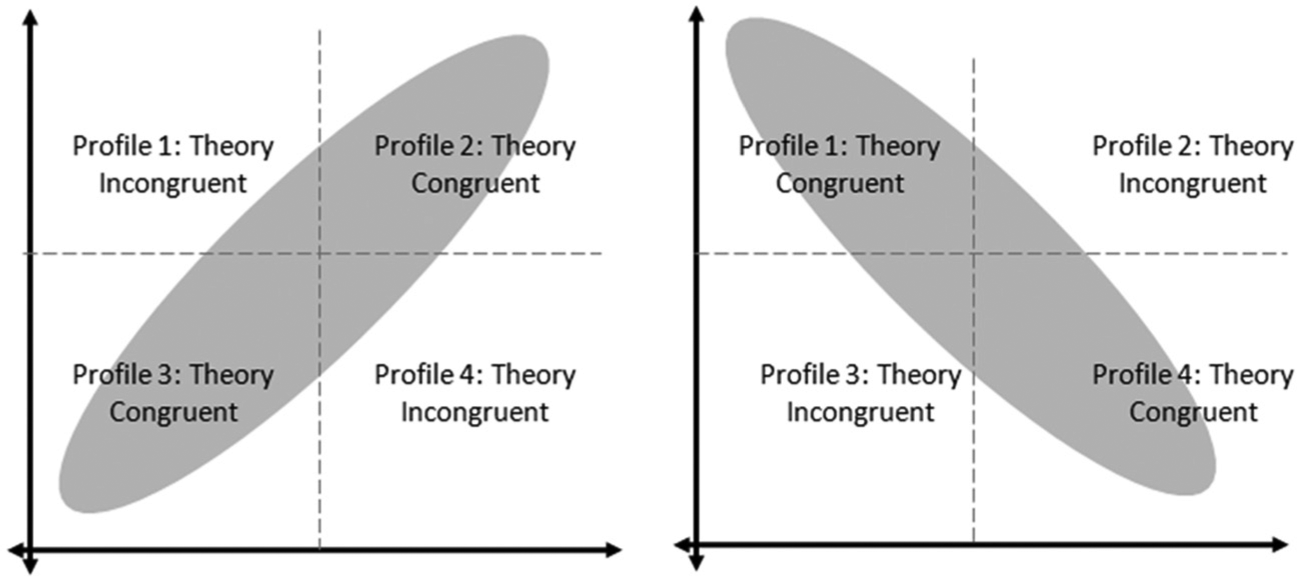
Theoretical profile creation.
Interpretation of Profiles: Patterns of Need and Harm
The first aim of the merged profile interpretation was exploratory—specifically, we sought more nuanced insight into the quantitative hypothesis. To further inform Hypothesis 1, we posed an exploratory research question (Research Question 1): Do desired end-states with distinct content elicit different amounts of need? Similarly, do desired end-states with differing amounts of need result in different levels of purposive harm endurance?
First, the data revealed that some desired end-states are associated with a greater need for goal satiation than others. The merged data indicate that the majority of respondents (65%) who mentioned family as the desired end-state are in the higher range of need for the desired end-state. A similar pattern was revealed among those who mentioned having a career-oriented desired end-state. Most participants (73.3%) who listed something career related as their desired end-state indicated a high need for the outcome. Interestingly, the reverse appears to be true for those participants who mentioned having financial needs, as they were more likely to fall into the low-need category (39.3%). Overall, it seems that thoughts of family or career that are activated by the open-ended question seem to have high need associated with them. Finance-related thoughts that are activated, on the other hand, seem to be associated with low need for the end-state. This finding is particularly interesting because the content of career and finance goals are so closely linked, but the end-states are associated with distinct levels of need.
Put another way, data indicate that qualitatively distinct desired end-states differ in the amount of need associated with them. As illustrated by Figure 5, not all goal states are equally desired. Certain desired end-states tend to elicit high need, and will, in turn, be more likely to guide behavior. In particular, desired end-states that deal with family or career tend to elicit stronger need (see Figure 5). Yet other goal situations may elicit very little need (e.g., financial goals) and thus have negligible impact on behavior. Specifically, the results of the interpretation of merged profiles indicate that all desired end-states are not equally related to the harm one would endure to achieve them.
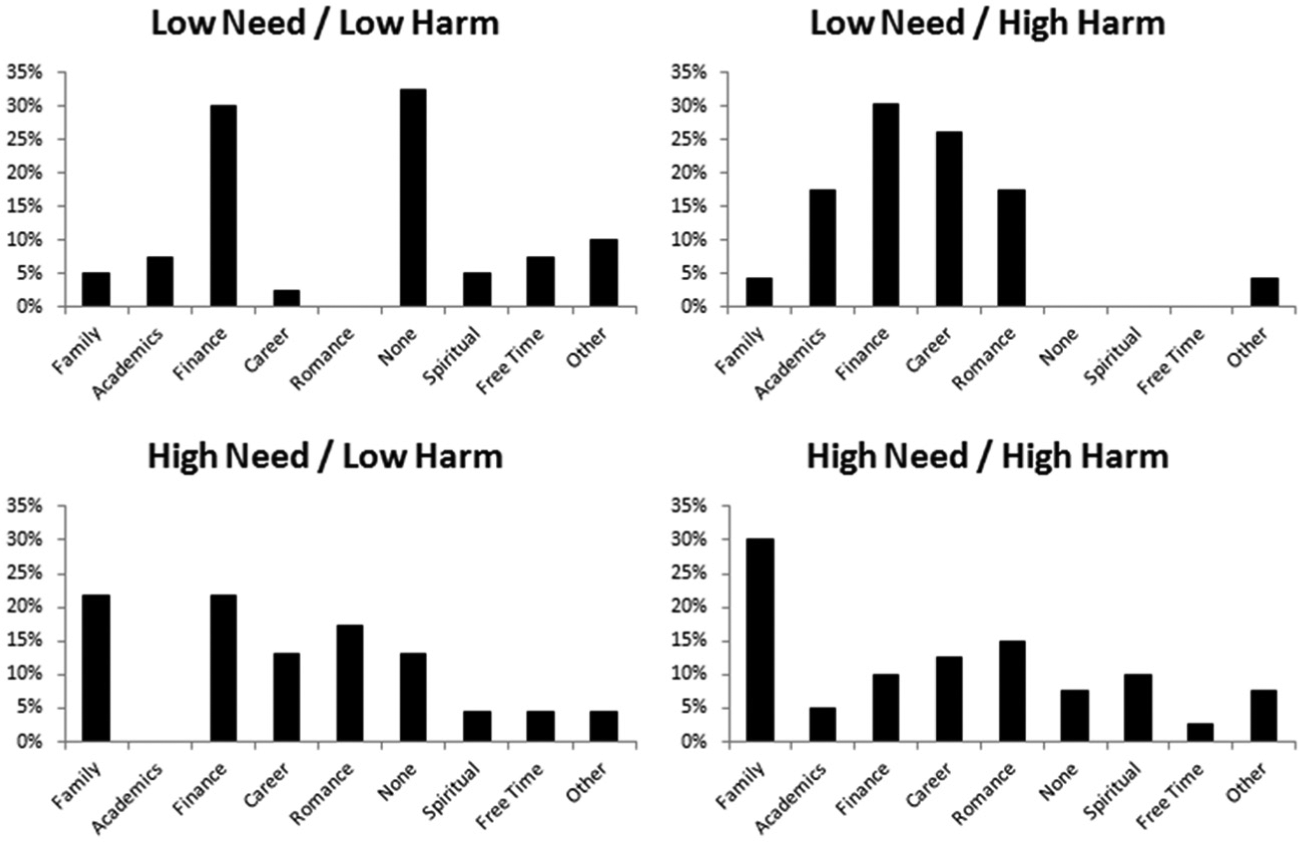
Percentage of profile response frequency regarding desired end-states.
Another major result from the interpretation of patterns among profile responses also provides insight into Research Question 1, which held that military personnel with a particular desired end-state display greater purposive harm endurance. Comparing those with high need who are willing to endure purposive harm and those with a high need who are not willing to endure purposive harm is telling. Specifically, the pattern of results obtained for participants whose desired end-state involved family was the most prominent. If family is involved, purposive harm endurance is high—even if the need is low. On the contrary, those who mentioned an academic end-state were rarely willing to endure purposive harm. Not a single participant with a low need for an academic end-state was high in purposive harm endurance. When it comes to finance, some participants were willing to endure purposive harm, but the majority were not willing to do so. Participants who mentioned a career-oriented perfect world also followed this pattern: most in high need were low in purposive harm endurance. The pattern among career-oriented is most striking when compared when contrasted with participants with a family-related desired end-state. Of those with family-related end-state, 85% were high in purposive harm endurance; of those with a financially related end-state, only 32% were high in purposive harm endurance. The majority of participants (16 out of 19; 84%) who reported they were content (i.e., reported no salient desired end-state) neither had high need for a perfect world nor were willing to endure purposive harm to achieve it.
These results extend Buck et al.’s (2009) descriptive profiling technique by employing it as a proscriptive, theory-building tool in the context of GDT. This technique illustrates how the theory can be falsified, corroborated, and extended. Novel findings regarding the nuanced relationship between need for desired end-state and purposive harm endurance were revealed through the interpretation of merged profiles. Put another way, the GDT framework was expanded in a way that may not have been possible through quantitative or qualitative data alone.
Interpretation of Profiles: Content Analysis by Profile
The second aim of the merged data interpretation was to assess Hypothesis 2, which held that the desired end-states of participants who fall into the high-need/high-harm profile would be significantly more specific and immediate than the desired end-states of participants in the low-need/low-harm category. To do this, participants’ responses in each of the four profiles were examined through content analysis. Four coders who were not aware of the study’s hypotheses coded participants’ qualitative desired end-states on two attributes: (a) whether the response was specific or general, rated from 1 (Specific) to 7 (General) and (b) whether the response referred to an immediate or distant goal, rated 1 (Immediate) to 7 (Distant). For the Specific/General item, coders showed acceptable levels of agreement, k = .72 and thus were averaged into a composite (see McGraw & Wong, 1996). However, for the Immediate/Distant item, agreement was lower, k = .57, and thus were neither appropriate to aggregate nor to explore for further analysis. This low level of agreement may have been due to the absence of explicit time referents in many of the responses (e.g., respondents did not indicate whether their desired end-states would be achievable now or later).
To explore the second hypothesis, we conducted a one-way analysis of variance across profiles for the Specific-General item. Results indicate a marginally significant difference between profiles, F(3, 123) = 2.42, p = .07, suggesting a potentially significant difference across specific profiles. A planned comparison analysis showed a significant difference between the Low–Low and High–High profiles, t(73) = 2.37, p = .02, indicating that participants in the Low–Low profile reported significantly more general responses (M = 3.92, SD = 1.66) than the participants in the High–High profile, who reported more specific responses (M = 3.13, SD = 1.28). The Levene’s test of homogeneity of variance revealed a significant effect, p = .01, indicating that the variance across groups may differ. Thus, the t test used the adjusted variance degrees of freedom (73) to account for this violation. All other assumptions of the analysis of variance were fulfilled. Simply, for the variable that was usable (i.e., coders’ ratings were reliable), specificity/generality, results support this component of GDT and indicate that the end-states of participants in the High-Need/High-Harm profile were significantly more specific than the end-states of participants in the Low-Need/Low-Harm profile.
Discussion
Based on the recommendations of Bazeley (2009) and others (e.g., Creswell & Plano Clark, 2011), this study represents an example of one way in which quantitative and qualitative data can be integrated to produce results that would be unobtainable from either method individually. In the present study, guided by GDT, we created and interpreted merged profiles to derive unique insight into the desired end-states of military personnel. The quantitative data, the qualitative data, and the integrated interpretation of merged profiles reveal several novel findings, all of which support a component of GDT. Together, these data provide a rich, comprehensive picture of the desired end-states of military personnel.
Providing backing for the first hypothesis, quantitative data show that need for a desired end-state is strongly associated with increased purposive harm endurance. This result supports a prediction of GDT, which holds that as a need for a goal increases, people become more willing to endure purposive harm to reach the goal. Indeed, this finding implies that knowing how strongly an end-state is needed can help circumvent potentially dangerous behavior before it occurs. Furthermore, this finding is in line with a growing stream of research examining GDT—while the relationship between need for a desired end-state and purposive harm endurance had been revealed among college students (Siegel, 2011) and young adolescents (Siegel et al., 2012), the current results replicate these prior findings in a sample of military personnel. This result also suggests that seemingly irrational behavior (e.g., running into a burning building) may instead be purposive, undertaken with a specific end in mind (e.g., saving a child).
Qualitative data reveal that a range of end-states are desired by military personnel. As expected, peoples’ salient desired end-states map onto stressors that have been uncovered in prior scholarship (e.g., Campbell & Nobel, 2009; Siegel, 2004), including concerns about family, academics, finances, career, and romantic relationships. Furthermore, for many people, there is not a salient desired end-state; rather, they are content with their lives, indicating the absence of unexpected goal violations. Guided by GDT’s view of behavior as purposive, these qualitative data suggest that examining peoples’ desired end-states offers insight into the unexpected goal violations affecting their lives.
Most relevant to the present article, the merged data analysis technique of creating and interpreting profiles revealed several novel findings. In support of the first research question, creating and interpreting profiles resulted in differentiating participants for whom the need for a desired goal is high (vs. low) and those whose purposive harm endurance is high (vs. low). Interestingly, some goal states (e.g., financial concerns) are associated with stronger need while others (e.g., family concerns) are associated with more purposive harm endurance. In other words, this interpretation indicates that not all goal states are equal when it comes to the amount of need or purposive harm endurance associated with them.
Content analysis of the qualitative responses in each profile resulted in support for the second hypothesis: coders’ ratings of participants’ responses show that participants in the high need/high harm profile displayed significantly greater specificity in their desired end-states than those in the low need/low harm profile. This result is in line with GDT and suggests that along with an increased willingness to endure harm to reach a desired end-state, intense need for an end-state is associated with greater goal specificity. According to GDT, this finding is due to a shift in the allocation of resources that occurs as a result of goal disruption. Two adaptive processes proposed by GDT were tested in the present study (i.e., purposive harm endurance and end-state specificity), and the support provided for the hypotheses herein strongly suggests a future focus on system-wide changes that occur as a result of goal disruption.
In sum, through the creation and interpretation of profiles, we revealed two unique insights into GDT and the plight of military personnel. First, not all end-states are equally demanded; some elicit more need than others, and some elicit greater purposive harm endurance than others. Second, content analysis showed that desired end-states that elicit the most need and the most purposive harm endurance are significantly more specific than those that elicit the least need and the least purposive harm endurance. The emergence of these two findings as a result of creating and interpreting profiles lends further support to the utility of the merged data analysis technique. Along with the study by Buck et al. (2009), the present study represents a prime example of the novel understandings that can arise when data are merged (see Bazeley, 2009).
Limitations
The central limitation of the present study is the sampling technique. While snowball sampling is often necessary (Crano & Brewer, 2002), it is far from the ideal method of obtaining participants. The result in the current investigation was a heterogeneous sample that consisted of members of all branches of the U.S. Armed Forces; active duty, retirees, and reservists; soldiers with combat experience and those without; and some currently deployed and others at home. Because of the lack of homogeneity among the sample, however, the present findings are strengthened. Put differently, the effects uncovered in this study might be even more robust due to the nature of the sample.
Conclusion and Future Directions
Three important future directions become clear from these findings. First, the utilization of coders to content analyze qualitative responses across profiles illustrates an expansion of this method of merged data analysis. Importantly, this adds another layer of complexity that researchers can use for profile creation. In the current study, we uncovered a quantitative relationship, split qualitative data into profiles and thematically analyzed them, and then used blind coders to create new variables to analyze across profiles.
Second, while Buck et al. (2009) employed an integrated profile interpretation as a descriptive tool, the current investigation extends this methodology by using profiling as a proscriptive tool for theory building. Results from the exploratory research question revealed a qualitative interaction—that is, nuances in the quantitative relationship became apparent only through examining the profiles. This interpretation technique has implications for advancing theory and the discovery of boundary conditions, particularly that we can derive theoretical insight that may not be possible with the use of one method alone or the simple comparison of qualitative and quantitative results.
Finally, the relationship between need for a desired end-state, purposive harm endurance, and stress deserves additional empirical attention. While not the focus of the present study, these data indicate that need for desired end-state is a better predictor of purposive harm endurance than stress. Indeed, need for a desired end-state accounted for significant variance above and beyond stress. However, this result is only one indication of how these variables interact with each other. Future research should examine the interplay between stress, need for a desired end-state, and purposive harm endurance.
The utilization of the merged data analysis technique of creating and interpreting merged profiles in the present study offers previously unrevealed insight into GDT (see Siegel, 2013). Specifically, the data clearly indicate that participants who have a strong need for desired end-state display greater purposive harm endurance. However, this relationship appears stronger for some goals than others: certain desired end-states are associated with higher need while others are not; certain desired end-states are associated with greater purposive harm endurance while others are not. Combining the two data sources through the interpretation of merged profiles allows this study to provide more comprehensive insight into this group of military personnel as well as GDT as a theoretical framework.
Footnotes
Declaration of Conflicting Interests
The author(s) declared no potential conflicts of interest with respect to the research, authorship, and/or publication of this article.
Funding
The author(s) received no financial support for the research, authorship, and/or publication of this article.