



Abstract
There is a paucity of empirical research on teaching mixed methods. To fill this gap in literature, this convergent mixed methods study explores the effectiveness of using active learning approaches in teaching a mixed methods course. The qualitative data, including 10 individual interviews, 29 students’ reflections, and 26 teaching evaluation surveys, were used to examine students’ learning experience and outcomes. Students’ presentations (N = 29) and final papers (N = 29) were transformed into numbers as the quantitative data. The converged results indicated that students were actively engaged in learning and achieved the expected learning outcomes. This study makes valuable contributions to the mixed methods pedagogical culture by providing details and suggestions on how to use active learning approaches in teaching mixed methods.
Mixed methods is a research methodology in which “a researcher or team of researchers combines elements of qualitative and quantitative research approaches for the broad purposes of breadth and depth of understanding and corroboration” (Johnson et al., 2007, p. 123). Since mixed methods emerged in the 1980s, the value of using it to solve complex research problems has been well recognized, and scholars across countries and disciplines have widely adopted this methodology (Molina-Azorin & Fetters, 2017; Zhou and Wu, 2022). In addition to the published mixed methods research studies, the number of mixed methods theses and dissertations has also increasing (Toraman et al., 2020), as well as demand for mixed methods training (Guetterman, 2017).
To prepare a new generation of mixed methods researchers, research methodologists initiated the discussions on teaching mixed methods. The recent literature mainly addressed two topics: (1) the problems and strategies of teaching mixed methods (Frels et al., 2012, 2014; Hesse-Biber, 2015) and (2) the pedagogical approaches/models to mixed methods teaching (Christ, 2009; Guetterman et al., 2019; Hou, 2021; Ivankova & Plano Clark, 2018; McKim, 2017; Mertens, 2010; Onwuegbuzie et al., 2013; Poth, 2014). However, there is still a lack of literature of empirical evidence for designing, implementing, and evaluating mixed methods research courses (Frels et al., 2014; Hou, 2021). The pedagogical knowledge about how to effectively teach mixed methods research has not been fully developed neither (Ivankova & Plano Clark, 2018). When discussing pedagogical culture for research methods, a few researchers addressed the importance of student-centered learning and student engagement in hands-on activities (Bazeley, 2003; Hesse-Biber, 2015; Hou, 2021); but, few studies focused on the exploration of using active learning approaches in teaching mixed methods. Therefore, this study aimed to contribute to this body of work by examining an active learning mixed methods course at a large Midwestern university in the United States.
Active Learning Approaches
Active learning is defined “in contrast to the worst of traditional teaching in which teachers actively present information and students passively receive it” (Meyers & Jones, 1993, p. 19). Active learning can be any instruction method that engages students in the learning process, including problem-based, discovery-based, inquiry-based, project-based, and case-based approaches (Cattaneo, 2017). Regardless of the various approaches, a pedagogy for active learning would focus on learner-centered and team-based instructional methods to engage students in learning. The benefits of active learning have been evidenced in teaching and learning across a diversity of disciplines. Students were found to have a better understanding of new knowledge, higher level of cognitive achievements, improved knowledge transformability, and increased critical thinking abilities (Michael, 2006; Revell & Ayotte, 2020).
The core elements of active learning pedagogy are twofold. First, course activities should be designed to make students direct their learning and actively acquire knowledge rather than passively receiving knowledge (Chi, 2009; Major, 2020; Petress, 2008). Active learning is based on the constructivism framework, where students build new knowledge based on their previous knowledge through critical thinking and learning experiences (Cattaneo, 2017; Ford, 2010). Accordingly, the instructor’s role needs to be as coach and mentor, but not leader. Instructors need to design a course with learner-centered objectives in mind. Second, teaching and learning activities should make students mentally and physically engaged in the learning process. These activities include but are not limited to small groups, inquiry-based instruction, problem-solving tasks, self-regulated learning activities involving exploration and reflection, and cooperative/collaborative student projects involving students’ interaction and collaboration (Michael, 2006; Nguyen et al., 2021).
Research Questions
Based on the framework of active learning, I designed a graduate-level, active learning, mixed methods course. The purpose of this convergent mixed methods study is to investigate the effectiveness of this course by examining students’ learning experience and their learning achievements. Two research questions are as follows. 1. What are students’ learning experiences in this active learning course? 2. How well do students learn about mixed methods in this course?
The Methodological Aim
There is a dearth of literature on teaching mixed methodology. The number of published pedagogical works predominantly on the topic of teaching mixed methods courses comprised only 2% of mixed methods research articles (Frels et al., 2014). To date, there are few empirical studies examining topics related to teaching mixed methods (Hou, 2021). More empirical studies on mixed methods teaching are needed to prepare the next generation of mixed methods researchers and to promote the adoption and expansion of this methodology over time. This study aims to contribute to this literature gap by discussing and evaluating how a mixed methods course is effectively designed and implemented in the framework of active learning. It includes details of course design procedures, teaching activities, and assessment strategies. It adds an additional empirical work to the pedagogical literature of mixed methods.
Details of the Active Learning Mixed Methods Research Course
Course Objectives and Contents
Course Objectives
The course under examination is titled “An Introduction to Mixed Methods Research” with the purpose of introducing students to the fundamental and core topics of mixed methods as a research methodology based on the concept of integration. Integration is the “central defining feature of mixed methods research” and is the unique quality that differentiates mixed methods research (MMR) from other inquiries (Plano Clark, 2019, p. 108). In examining recently published mixed methods articles between 2009 and 2017, Zhou and Wu (2022) found most reported challenges of using mixed methods were associated with users’ uncertainty of integration during the research process. Zhou and Wu (2022) advocated that when designing mixed methods research, mixed methods users should fully recognize integration challenges and deliberately collect evidence to address integration from the research planning phase to the implementation phase. Accordingly, in this mixed methods course, all course contents and activities incorporate and emphasize the concept of integration with the aim to improve students’ knowledge and skills of integration in mixed methods research.
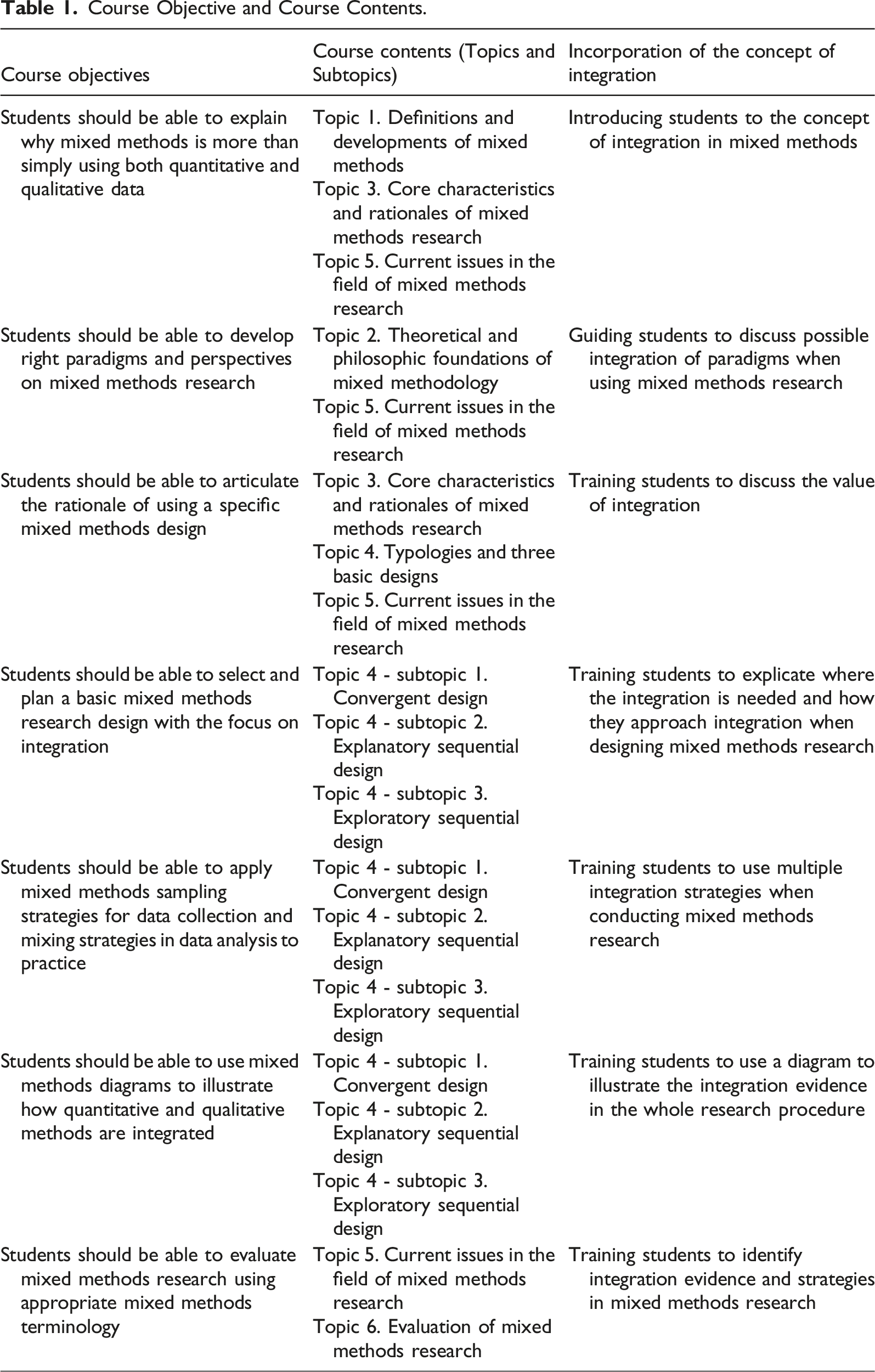
This course is a four-credit hour and 15-week graduate-level course. After completing this course, students should be able to (1) explain why mixed methods is more than simply using both quantitative and qualitative data, (2) develop mixed methods research paradigms, (3) articulate the rationale of using a specific mixed methods design, (4) select and plan a basic mixed methods research design with the focus on integration, (5) apply mixed methods sampling strategies for data collection and mixing strategies in data analysis for practice, (6) use mixed methods diagrams to illustrate how quantitative and qualitative methods are integrated, and (7) evaluate mixed methods research using appropriate mixed methods terminology.
Course Contents
Course Objective and Course Contents.
Course Design and Implementation
Course Design
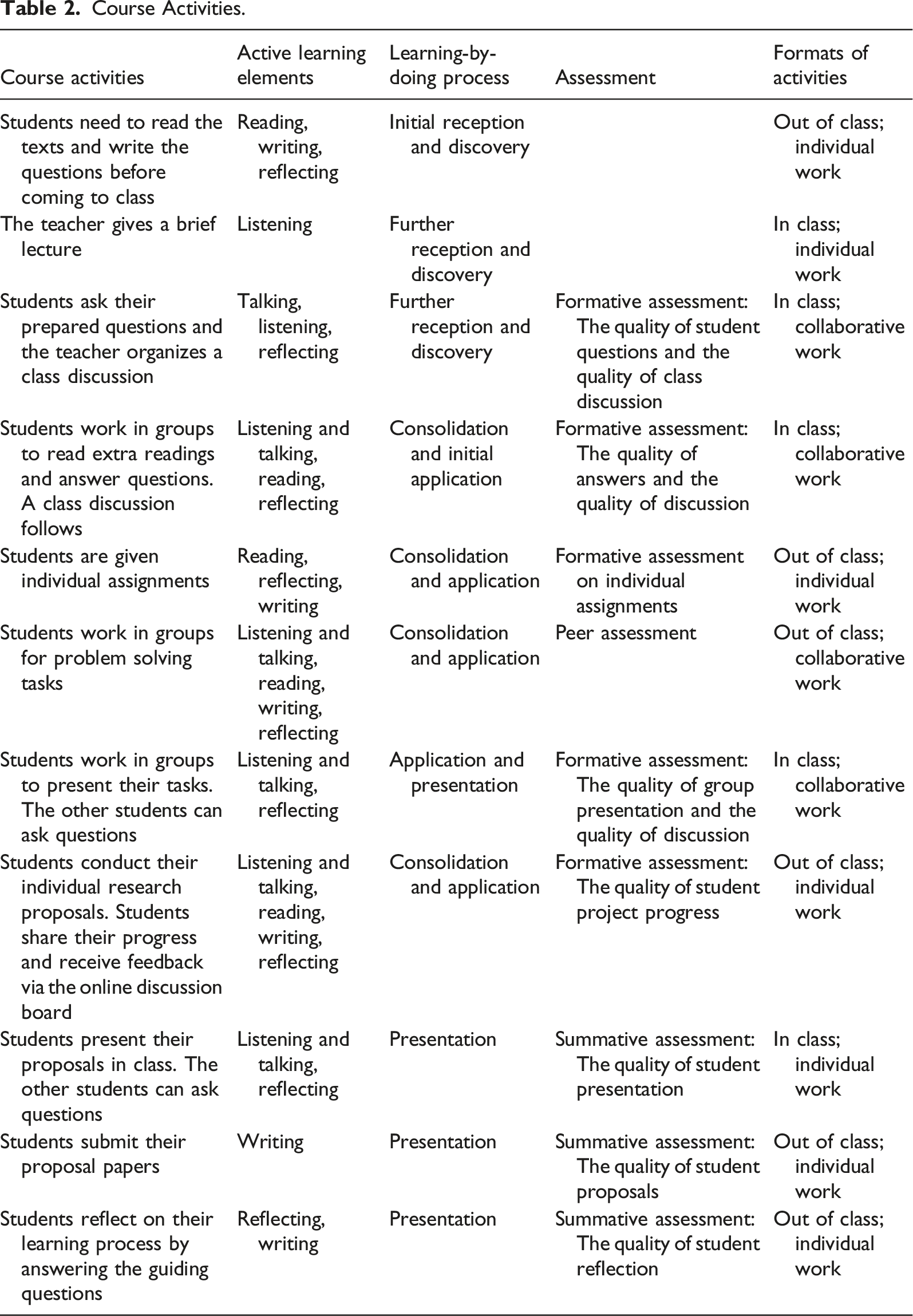
The course is designed by following Meyers and Jones’s (1993) framework of active learning that consists of three interrelated factors: basic elements, learning strategies, and teaching resources (see Figure 1). Guided by the active learning framework, this mixed methods course consists of a diversity of in-class and out-of-class activities/assignments that are designed to actively engage students’ individual exploration and collaborative learning. All activities aim to help students learn by doing, from receiving a new concept, discovering the concept, consolidating the concept, applying the concept to practice, to presenting the concept (see Table 2). Structure of Active Learning (Adapted from Meyers & Jones, 1993, p. 20). Course Activities.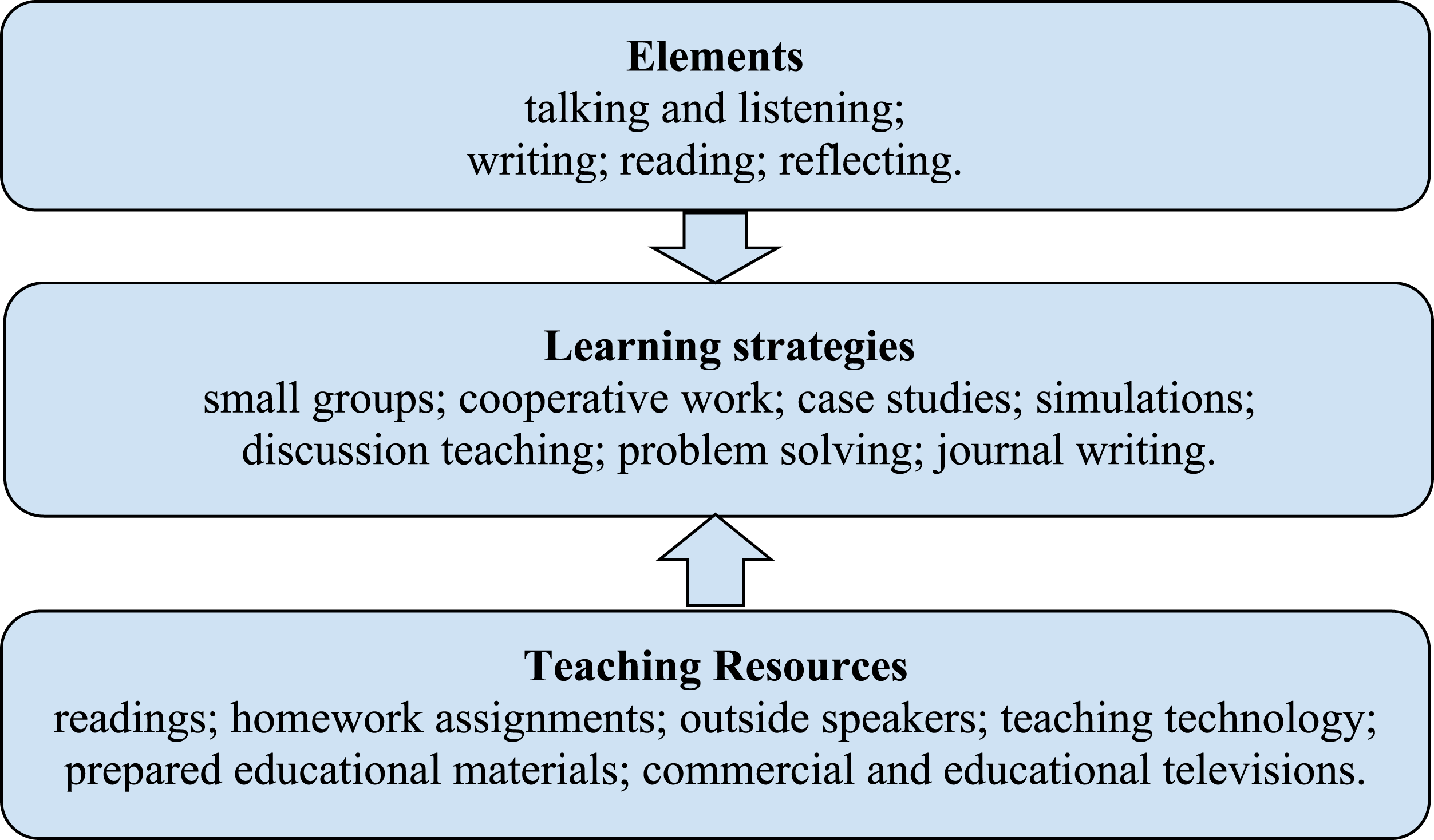
Course Implementation
As Table 2 indicates, in the teaching and learning activities for each course topic (see Table 1), students are firstly given a brief introduction of the new concepts. The content teaching time is decreased to less than 30% in favor of class discussion and group work.
Reception and Discovery Activities
Before each lecture, students are required to complete assigned readings and write down their questions about the new concepts. Students are encouraged to ask thoughtful questions after critical reading, rather than asking the questions to which they can easily find answers.
During class, students listen to my lecture and raise questions for further clarification. In most cases, instead of answering the questions directly, I try to guide and involve other students to share their thoughts. Meanwhile, I examine how well students understand the new concepts and where any gaps remain from the class discussion. From there, I scaffold student learning and help them construct new knowledge based on what they already know. In this case, the class discussion can go deeper through instructor-student dialogue and student-to-student interaction. Students can listen to others and reflect on their own learning.
After the lecture and the class discussion, the next activity is in-class group work on extra readings. Students, in small groups (typically three students), are assigned to read one selected article about the new concepts. Each group is given the same questions for discussion, and then they share their group discussion results with the rest of class. Based on the group discussion and class discussion, I can examine how well students learn about the content and then decide on the next step.
Consolidation and Application Activities
The above in-class activities help with students’ reception and discovery of the new knowledge. The next step for students is to consolidate and to apply the new knowledge. This part includes a series of individual and group work as well as out-of-class and in-class activities. First, students are required to individually complete an assignment to apply the new concepts to practice. For instance, when students learn about the difference between multiple methods and mixed methods, I ask them to identify one article that uses multiple methods and another article that uses mixed methods. Students need to explain in writing why they believe the two articles used multiple methods and mixed methods, respectively. The individual assignments are usually submitted to the online discussion board, where other students and I can review and comment.
Second, students in small groups are assigned tasks that are related to the individual assignments. The tasks are designed to assess individual work and to consolidate students’ learning via group work. Following the above example, after identifying the required articles, students work in groups to compare their articles and decide which articles best illustrate the characteristics of multiple methods and mixed methods, respectively. In the group discussion, students can listen to others, talk about their thoughts, reflect on learning, read, and write as needed.
The next step is for students to present their learning outcomes. Following the above example, each group reports their selected articles and gives the rationale for their selection. The rest of the class can ask questions for clarification. In this activity, students can listen to others, share thoughts, and reflect on the new concepts. I can evaluate students’ learning outcomes and their confidence in using the new knowledge.
In addition to the above regular activities for each course topic, students also have the chance to integrate all learned knowledge and to apply it in their own research projects in this course. Another activity I ask students to complete near the end of semester is individual reflection on their learning according to the course objectives on the syllabus.
Methodology
Research Design
Guided by a pragmatic paradigm, this convergent mixed methods research study intended to enhance the understanding of students’ learning experiences and learning achievements of MMR from an active learning course (Collins et al., 2006; Creswell & Plano Clark, 2017; Greene et al., 1989). The priority was on the qualitative strand, including individual interviews, student reflections, and open-ended data in teaching evaluations. The interview and reflection were designed and aligned with the research questions. To corroborate the qualitative findings, corresponding quantitative data were used to confirm the qualitative findings.
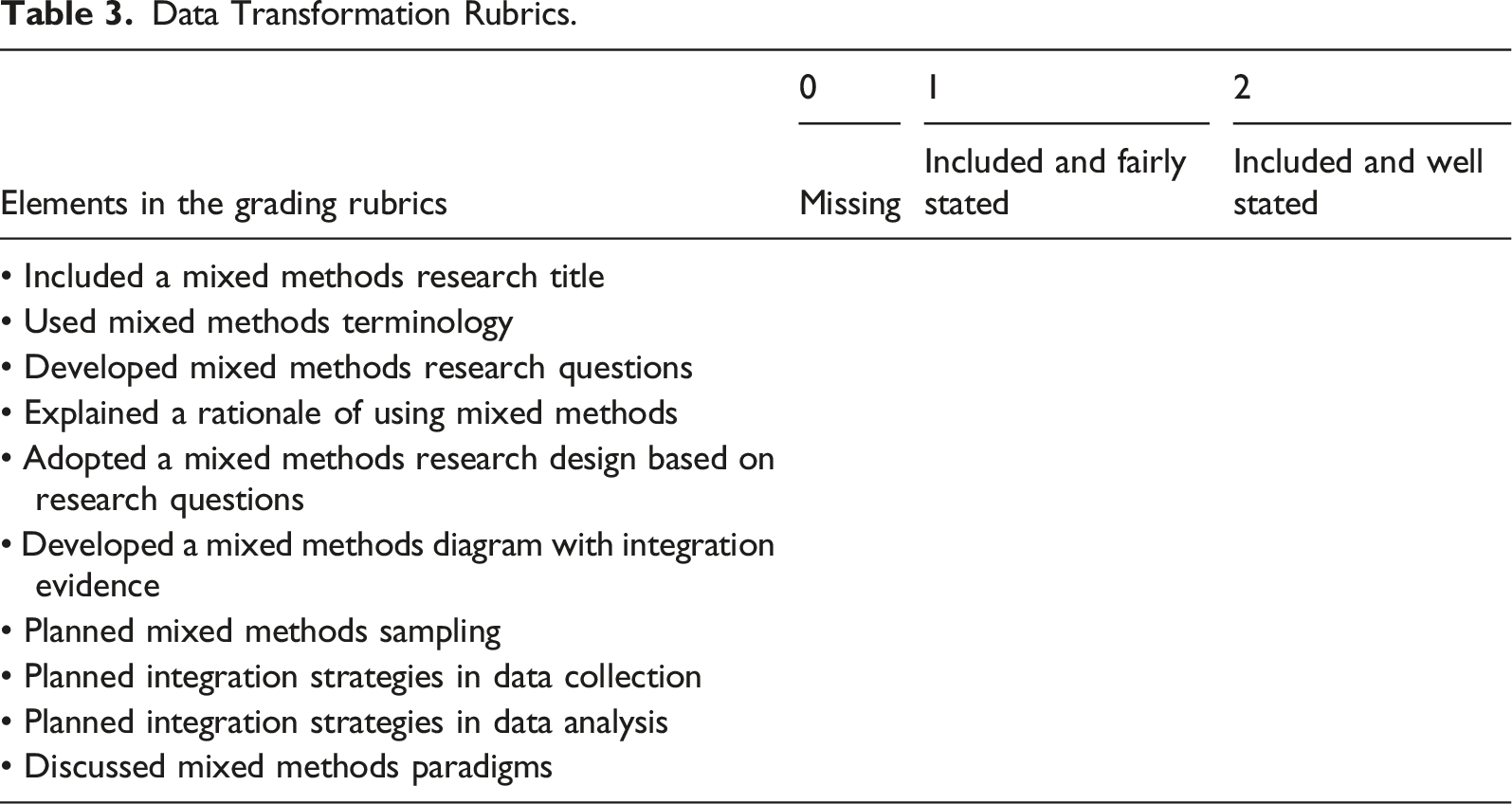
Data Transformation Rubrics.

Teaching mixed methods using active learning approaches: A convergent design.
Data Collection and Analysis
Participants
The course was taught in the fall of 2018 and in the fall of 2019, with an enrollment of 20 and nine doctoral students, respectively. Most students were from the College of Education with a few students from the College of Communication. All of them completed at least one qualitative research course and one quantitative research course before taking this course. In this study, I used student records from the two cohorts and individual interview data from the cohort of 2018.
Data Collection
In summer of 2019, the students who completed this course in the fall of 2018 were invited to an individual in-person interview. 10 of 20 students accepted the invitation. Due to the Covid-19 pandemic, I did not conduct an interview with the cohort of 2019. Hence, the data used in this study were in five categories: (1) the interview data from the cohort of 2018 (N = 10), (2) students’ individual reflections from the cohorts of 2018 and 2019 (N = 29), (3) students’ final presentations from two cohorts (N = 29), (4) students’ final projects from two cohorts (N = 29), and (5) the teaching evaluations from two cohorts (N = 26).
In the qualitative strand, the three types of data included individual interviews, students’ written reflections, and the open-ended data from the teaching evaluation. A graduate assistant, Eva, conducted the interviews. She was a third-year doctoral student majoring in educational research methodology and had taken two courses and two seminars in mixed methods research. All interviews were audio recorded. Each interview lasted about 40 min.
A semi-structured interview protocol with six open-ended questions with probes was used to explore students’ learning experience and knowledge of mixed methods. Open-ended questions and probes included: (1) What course activities improved your learning of mixed methods and integration? Why do you think so? (2) What course materials are most helpful to your learning of mixed methods and integration? Why do you think so? (3) Could you share one course assignment that was most helpful to your learning? (4) After completing this course, what is your understanding of mixed methodology? (5) What is integration in mixed methods? Please explain it by giving some detailed examples. And (6) Have you used, or will you use mixed methods? Please share your experience or perceptions.
In addition to the interviews, students’ written reflections and the open-ended data in teaching evaluation were used to explore students’ learning experience and knowledge of MMR as well. The written reflections asked about students’ learning experiences and understanding of MMR. The open-ended questions in teaching evaluation asked for students’ comments on teaching, recommendations for the instructor, and additional suggestions for the course.
In the quantitative strand, student presentations and final project papers were converted to numbers to rate students’ skills of using mixed methods. The closed-ended data in teaching evaluations were used to examine students’ learning experience and self-evaluated learning achievements. The teaching evaluation survey included multiple closed-ended questions in three parts: student self-evaluation of their learning, student feedback on the course content, and student evaluation of the instructor. All items used a 5-point Likert scale with five indicating the most positive score.
Data Analysis
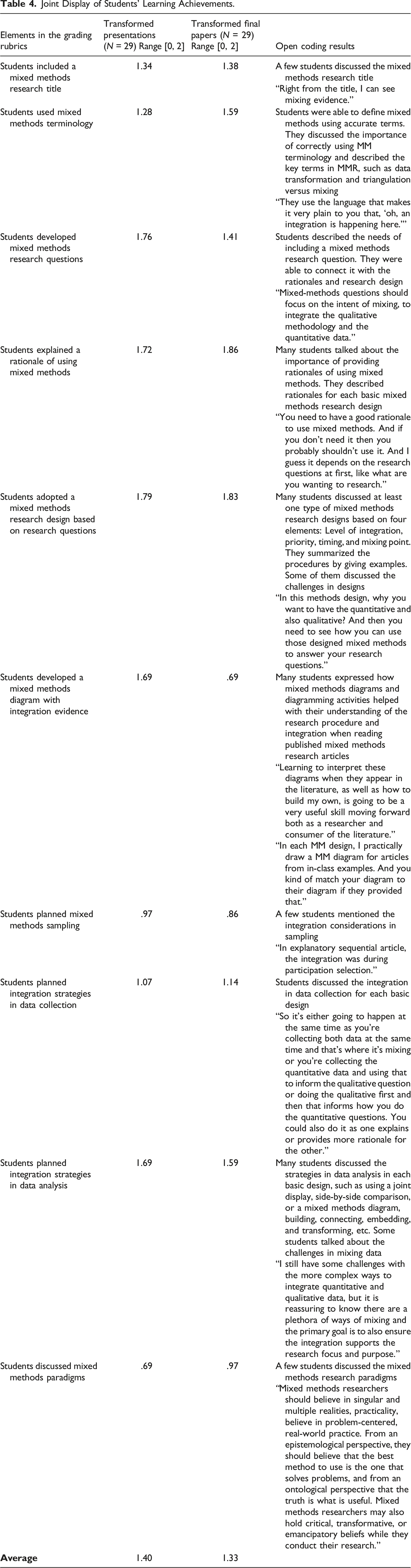
Joint Display of Students’ Learning Achievements.
Multiple triangulation strategies were used, including researcher’s reflexivity, member checking, and peer debriefing. As the instructor as well as investigator, I know the course (learning goals, contents, assignments, etc.) and my students well and can best interpret the data based on the research purpose. However, I also bring my subjective bias to the coding process. To reduce such bias, I assigned random numbers to students’ interviews and reflections when I was coding. Moreover, after analyzing the interviewing data, I conducted member checking with the participants. No misunderstandings were found. Furthermore, I invited Eva to review my codes and themes as peer debriefing. We reached a high level of agreement in the coding results.
In the quantitative strand, student presentations and project papers were transformed into numbers using a grading rubric with 10 items to examine students’ skills of using mixed methods (see Table 4). Any elements of the rubric that were missing were scored at “0.” Any elements that were included but lacked adequate description/discussion were scored at “1.” Any elements that were included and featured a sound description/discussion were scored at “2.” That said, if students can fairly apply all 10 elements of mixed methods to practice, they should obtain a score around “10.” A score above “10” indicates a higher level of achievements. A score lower than “10” shows a lower level of achievement. The transformed numbers were analyzed using descriptive statistics techniques in Excel 2016.
To reduce my subjective bias on students’ performance, I assigned random numbers to students’ presentations and final papers when I transformed the data. To validate the transformation results, I randomly selected three of the 29 student presentations (10%) and three of the 29 student final papers (10%) and sent them to Eva for transformation. As a result, we reached an 88% inter-rater agreement.
Results
Results on Students’ Learning Experience
According to the qualitative results, students were highly engaged and actively directed their learning through inquiry-based instruction, collaborative learning, critical thinking, and hands-on class activities. The qualitative findings were congruent with the quantitative teaching evaluations scores. Specifically, there was one item that asked students to evaluate how well the instructor “created an environment which fosters student involvement.” The average score of this item was as high as 4.85 on a 5-point scale. Another five items asked students to self-evaluate their engagement in this course, including attending class (4.97/5), checking BlackBoard (4.86/5), participating in class discussion (4.88/5), completing all assignments (4.95), and making best efforts toward advancing learning (4.92/5). The average of these five items was even higher, at 4.91/5, which indicated students’ self-reported engagement in learning. The qualitative findings provided the details about how this course helped students actively engaged in learning as follows.
Inquiry-based Instruction and Scaffolding
The students said that the class was very communicative, “more like a conversation rather than a lecture.” The instructor’s role “was not limited to the narration of the course materials.” Instead, the instructor “was constantly questioning” and “kept probing.” The students “had time to ask questions” and reflect on other students’ questions.
Students also actively prepared for questions and answers in class discussion (4.88/5). They said, “you have to read the textbook before you come in or you’re just going to flounder while you’re in here;” and “assuming I came into class always without reading the text, I think that I will be getting the icing but I will miss the cake [laughter] because you don’t have the base and you are just lost.” Most students thought the class discussions were very intriguing and inspiring. One described the scenario of class discussion as follows: I can't remember what the article was about, but I remember she [the instructor] came in with one answer, and then someone else in there had brought up something from the article. And then we were debating amongst ourselves, and sometimes it got to the point where we were debating with her [laughter]. And I think that's a big component of active learning, is that she’s in there with us [laughter] going through these things together. And not only will she guide us, but she wants us to respond back to her in a way that some professors may see it as a challenge, but I think we all looked at it as very respectful and comfortable saying, “But what about this [laughter]?”
Moreover, students stated the instructor used a “bottom-up” and “scaffolding” style of explaining things “related the materials and content to specialty areas” and “fostered application of knowledge throughout the course.” Some students described the lecture as “it’s like the text comes alive because the instructor is trying to relate it, connect it to different examples,” and the PowerPoint slides “were building blocks that help to understand the subject.” These qualitative findings merged with students’ teaching evaluation score (4.88/5) of the item “the course materials assisted and enhanced my learning.”
Furthermore, students described their self-learning under the instructor’s guidance and support. Many students mentioned that they always “went back to and reflected on the course materials and texts after class.” They moved on their self-exploration with the instructor’s feedback and support, as they said, “having her [the instructor] there while we are doing practical things after the theoretical part of the lecture was helpful” and “we are not afraid to ask questions.” The above qualitative findings were convergent with students’ self-evaluation score (4.92/5) in the teaching evaluation item: “I gave my best effort toward advancing my learning in this course.”
Collaborative Learning and Formative Assessment
All students were highly and proactively involved in collaboration with others in this course because they were able to advance their understanding and complete challenging tasks through discussing with other students as well the instructor. They commented, “when engaging in tasks that require strategic and extended thinking, working collaboratively is effective because you learn from others”; “our group assignments and the autonomy provided by the professor on how to complete the task cultivated a professional learning community”; and “teamwork was very effective and beneficial as it allowed us to engage in fruitful discussions, competitions, and gave us chances to challenge each other, which made it fun in addition to facilitating the content.”
Students gave details on how they engaged in collaborative learning with group members through out-of-class meetings. They explored and discovered the contents in partnership with teammates, such as “when we have different opinions, we refer to the textbook or other resources, and sometimes we look for help from Dr. Zhou. So I think it’s kind of like a knowledge building process.”
Furthermore, students viewed collaborative learning as formative assessment because they can double check their own understanding of difficult concepts and reflect on others’ perspectives. When the instructor went through the group tasks in class, students were able to exchange their group work results and self-evaluate their learning. As one student addressed, “we had the opportunity to defend or critique these articles as being ‘very good’ or ‘not so good’ examples of MMR.” Another student remarked, “given by the classmates’ and Dr. Zhou’s discussion, I had more ideas for my own research. How can I conduct it? How will I design it?” Some students particularly talked about their feelings of formative assessment in this course. They said, We had different tasks that assessed our understanding, but I like how I did not feel like I had a ‘quiz’ or ‘exam’ to write, they appeared more to me as learning milestones which we were covering;” and “the fact that I didn't feel that I had to be concerned about my grade helped me to learn the material, to understand it. And don’t just read it to say that you want to get an A.
Directed Readings and Critical Thinking
Most students mentioned how the readings with guiding questions and tasks made them think. The guiding questions and tasks asked questions like “where are the points of mixing? Can you draw it with a diagram?” These questions made students think critically while reading. One illustrative example was as follows. The reading reflection worksheets, they were something where you actually had to sit down and think very hard. So on your first, initial reading of this article, you may say, “Oh. There’s the answer,” and write it down, but she [the instructor] would make you go deeper. And then when you had to dig those answers out of the article, you would find additional information that you didn't read on the first pass through the article. So then you would think, “Oh. Geez. I have to start over [laughter].”
More importantly, the directed reading activities made students learn how to read critically. Students developed the habits of asking themselves questions while reading, such as “well, what kind of technique were used to integrate?” and “why was this a convergence type of a study?” As one student said, “I began dissecting the article more strategically and focused on elements such as the rationale/need, types of research questions, and the mixed methods design used. I started feeling more comfortable identifying the key components within the article.” These qualitative findings converged with the teaching score of the item (4.88/5): “The course materials assisted and enhanced my learning.”
Hands-on Activities and Multifaceted Assignments
Students generally believed that the assigned articles every week with diverse tasks advanced their learning from multiple aspects. For instance, the activity of searching for mixed methods methodological articles made students “build a deep comprehension” of different types of mixed methods research. Giving justification on the basic elements of mixed methods research designs made students “realize different issues between practice and theory.” Working in groups to search and summarize literature on a specific mixed methods topic was helpful to “article critique and literature synthesis.” Writing and presenting the final mixed methods research proposal made students put what they had learned into practice.
The diversity of class activities and assignments also made learning enjoyable and fitting to students’ diverse learning styles. As some students claimed, “I am just the kind of learner who needs to be able to do something to learn something. I don’t understand until I see it in process.” Another one stated, “once I sit and talk a project out with someone, things make a lot more sense.” Some students were more visually than audibly oriented in learning, so they liked the diagramming activities the most. Lastly, more than one student mentioned that they appreciated “the good use of technology in delivering the content” because “it was a perfect virtual community that allowed us to communicate through.” The above qualitative results were merged with the teaching evaluation score of one item (4.81/5): “Activities/assignments were purposeful and promoted learning.”
Results on Students’ Learning Achievements
In the teaching evaluation survey, there was one item that asked about students’ self-evaluation of learning achievements (“I learned new concepts, skills or applications in this course”). The mean score of this item was as high as 4.92 on a 5-point scale. According to the transformed data of students’ presentations and final papers, students met the course objectives at a moderate-to-high level. Their skills of applying mixed methodology to practice was averaged at 1.37 in a range of [0, 2], with 0 indicating “not achieved the expected learning outcomes,” one indicating “achieved the expected learning outcomes,” and two indicating “exceeded the expected learning outcomes.” Specifically, the average score of students’ presentations was 1.40, and the mean of students’ final papers was 1.33 (see Table 3). That said, students were able to apply most of the mixed methods research elements to planning mixed methods research as expected except for mixed methods sampling and discussion on mixed methods paradigms. The joint display with the qualitative findings provided the details of students’ learning achievements (see Table 3).
One surprising result was that most of the students presented mixed methods diagrams in their project presentations (M = 1.69), but only a few students included the diagrams in their final papers (M = 0.69). The qualitative data indicated that students had adequate knowledge of mixed methods diagraming. This was the only divergence finding after comparing the quantitative and qualitative results. It was probably because students used the diagrams to critique articles and design their own projects but did not feel it was necessary to report it in the final papers. Most students included a mixed methods diagram in their presentation slides and clearly illustrated their research using it.
In addition to the use of diagrams, students’ application of mixed methods sampling and paradigms was scored lower than 1. This was probably because students did not learn these two concepts well enough to apply them in practice. This was also probably because I did not find an effective assessment to examine their knowledge and skills. I should ask students to write reflective journals on these two topics in future teaching.
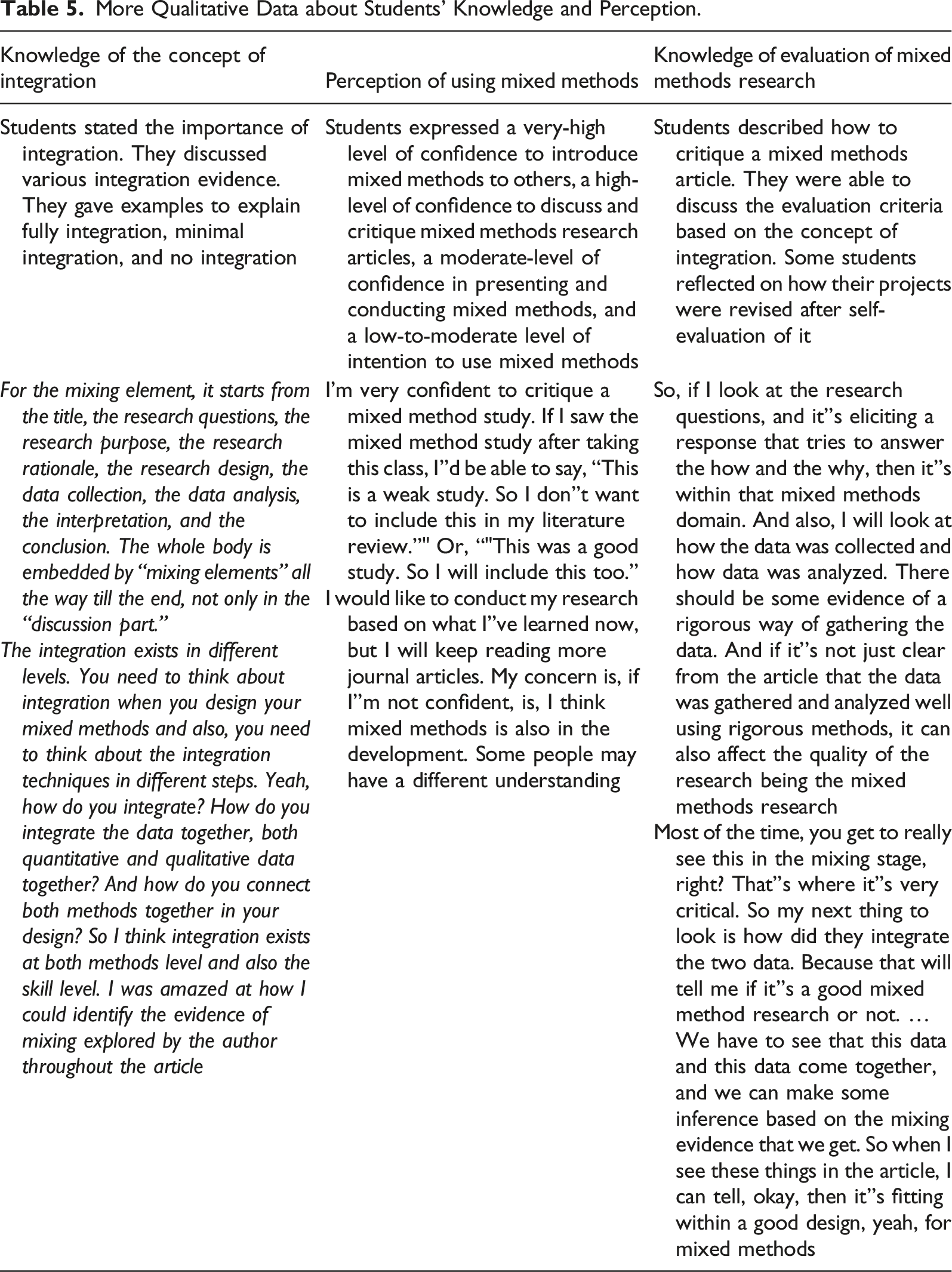
More Qualitative Data about Students’ Knowledge and Perception.
Discussion
The results of this study indicated that this active learning mixed methods course provides multiple opportunities for students to engage in the learning process and construct their knowledge about mixed methodology through critical thinking and multifaceted practices. As a result, they were able to discuss mixed methods research questions and research designs using mixed methods language, explain the value-add and rationales of mixed methods research, discuss integration evidence and strategies, apply criteria to assess the quality of a published mixed methods study, and develop a mixed methods proposal. Such knowledge and skills fit Guetterman’s (2017) typology of proficiency required for a mixed methods researcher.
Additionally, according to the results, the average teaching evaluation score of this course was as high as 4.87 on a 5-point Likert style. Students gave positive comments on their learning experience, which aligned with the results from the previous studies such as Hou (2021), Ivankova and Plano Clark (2018), and Poth (2014). Although researchers use different pedagogical approaches in teaching mixed methods, the goal is the same in permeating student-centered and experiential learning. This is also the pedagogical culture Hesse-Biber (2015) called for in teaching mixed methods as “students need to be engaged with the learning of research methods” (p. 471).
Suggestions on the Use of Active Learning
According to the results of this study, students generally appreciated the effectiveness of inquiry-based instruction or instructional scaffolding that guides self-exploration, directed course materials that provide self-learning resources, hands-on activities that motivate their learning, and collaborative learning opportunities that enable formative self-assessment.
Using active learning approaches to teach mixed methods is desirable pedagogy among learners if the instructor can create and foster an environment that motivates, engages, scaffolds, and supports students’ guided learning and self-exploration. To create a reciprocal active learning environment for students, instructors are recommended to include the following fundamental components. Each component should involve students’ critical thinking, listening, talking, reading, writing, and reflecting as active learning elements require. 1. Next, instructors can organize group work and class discussion for students to evaluate and reflect on their understanding through teamwork. Then instructors can assign students a high cognitive activity such as extra readings to encourage students to apply the knowledge. Students should have opportunities to discuss their thoughts with peers and instructors for knowledge consolidation. In the assessment aspect, instructors should always provide students with formative assessment and feedback. Formative peer assessment is also encouraged. The instructional scaffolding strategies are consistent with Nguyen et al.’s (2021) explanation strategies in active learning, where teachers provide students with clarifications and expectations of activities. 2. 3. 4.
In addition to the collaboration with instructors, students should also be provided opportunities for teamwork. Peer collaboration can happen in multiple formats, including in-person meetings, online discussion community, group discussion, teamwork in collaborative assignments, peer assessment, etc. The purpose of peer collaboration is mainly to assist students’ self-learning and to motivate students in learning activities.
The collaboration opportunities are aligned with Nguyen et al.’s (2021) planning strategies and Haughton’s (2019) multiple levels of peer collaboration strategies. Nguyen et al. (2021) suggested to plan effective team-based activities and to encourage students to give feedback to others. Haughton (2019) encouraged within-group collaboration and then between-group collaboration to support a communicative and supportive classroom environment. This suggestion of providing collaborative opportunities also agrees with Johnson et al. (2019), where researchers used an open-space learning activity to promote students’ collaborative and active learning when teaching mixed methods in health science.
The Role of Active Learning in Teaching Mixed Methods
As stated above, active learning can advance students’ self-learning ability, develop students’ critical thinking, and enhance their knowledge transformation ability, which best fits mixed methodology courses. In other words, active learning mixed methods courses can encourage students to learn “how to learn,” which is the basics of research. Research is a scientific and creative process to investigate the problems in practice. Methodology is the tool that researchers use to make the process rigorous. The usage of a methodology in solving various emerging problems in practice should be flexible. This is especially true in disciplines full of complex research problems, such as public health and education.
Among all research methods, mixed methodology particularly requires innovative usages during this development and expansion stage. There are strict rules of using mixed methods, such as rigorous integration, but there are also gaps with regards to application in practice. For instance, though multiple mixed methods research designs exist and are discussed in literature, mixed methods users have still reported a lack of guidance in adapting the existing designs to their research (Zhou and Wu, 2022). That said, mixed methods scholars need to learn not only the research knowledge and skills, but also gain critical thinking skills on the innovative uses of this methodology. Learning how to learn mixed methods is essential to students as future researchers because it can give them the foundation to flexibly apply this methodology when solving practical problems in their disciplines.
This study is congruent with the existing literature in mixed methods pedagogy. Beginning in the early 2000s, instructors of mixed methods courses have noted the importance of active learning. They advocated that teaching mixed methods should “place learning within an experiential context as much as possible” (Bazeley, 2003, p. 120), and claimed that “it is critical to present provide them with a range of hands-on activities” to engage students in learning (Hesse-Biber, 2015, p. 471). Ivankova and Plano Clark (2018) employed a socio-ecological framework to engage students’ active learning when teaching mixed methods in education. Johnson et al. (2019) discussed the use of an open-space learning activity to promote students’ collaborative and active learning when teaching mixed methods in health science. Frias and Popovich (2020) employed an experiential approach in a business mixed methods course to provide students with hands-on learning activities and collaborative opportunities in the learning process. Adding to the existing literature, the current study detailed how to use active learning approaches systematically when teaching mixed methods.
Contribution to Mixed Methods Research
The current study explores active learning strategies in teaching mixed methods courses, which adds to the literature gap of mixed methods pedagogy. It reports empirical data on students’ active learning experiences, including students’ perceived useful course activities and self-directed learning process, etc. More importantly, this study illustrates how to add active learning elements to the design and implementation of a mixed methods research course. The integrated results give supporting evidence that active learning is effective and desirable. The study further discusses why and how to teach mixed methods under the framework of active learning, such as how to design instructional scaffolding, how to create useful resources, and how to develop collaborative learning environments. The above information provides a valuable reference to instructors who are interested in teaching mixed methods in their fields. With the development and expansion of mixed methods pedagogy, it is hopeful that more young scholars can receive systematic mixed methods research training and adopt this methodology in the long run.
Methodological Limitations
The first limitation of this study lies in that I was the primary coder of the qualitative data. To reduce the bias, I used various validation strategies such as member checking, peer debriefing, data triangulation, and researcher’s reflectivity. Second, I was the primary rater who transformed students’ presentations and final papers into numbers. To reduce the bias, I invited a second rater to examine the inter-rater reliability; however, the second rater only transformed 10% of the data due to her availability. The two limitations imply bias in data analysis.
Future Research Suggestions
The study explores teaching a face-to-face mixed methods course using active learning approaches. Engagement in online teaching could be much more challenging than it is in a face-to-face classroom. There should be extra strategies required for teaching an online active learning mixed methods course. Therefore, future research should examine whether active learning can be equally efficient when adopted for teaching fully online mixed methods courses. I would like to express my thanks of gratitude to Eva Zhou who helped with data analysis for this project.
Footnotes
Declaration of Conflicting Interests
The author(s) declared no potential conflicts of interest with respect to the research, authorship, and/or publication of this article.
Funding
The author(s) received no financial support for the research, authorship, and/or publication of this article.
