



Abstract
Health care expenditure is increasing day by day across the globe. High cost of branded/innovator drug could be one possible reason for this. Policy makers and governments were looking for alternative strategies to reduce cost without compromising quality of care delivered. Generic drugs were found to be one such alternative. Present review was undertaken to enlighten on generic drugs, policies implemented by various governments, and perceptions of physicians and patients worldwide. Literature search was carried out in May 2016 using keywords “generic drug,” “generic medicine,” “physicians perception,” “patients perception,” “policies.” Full text articles of past decade were retrieved using electronic databases PubMed, Google Scholar. Thirteen studies were included for final analysis. Results were discussed under five themes: history, policies, and ethical considerations, perceptions of patients, and perceptions of physicians. It was noticed that results were mixed in nature. Some countries have well-established policies with good awareness among physicians and patients while some of them were in budding stages. Great variations that exist in health care structure among developed and developing countries reflected on generic drugs also. Long-term randomized trials to establish safety, bioequivalence of generic drugs were recommended. Awareness programs by mass media, health care professionals are need of the hour to increase acceptability of generic drugs.
Introduction
In many countries, a rise in health care expenditure has been noticed. 1 A total of 13–32% of four-week household expenditure was contributed to health care in 51 low- and middle-income countries. 2 It is evident that the medicines contribute significantly to cost burden. 1 Pharmaceutical industry in India has witnessed an exponential growth in the last two decades. It has emerged into one of the world's largest venture with an investment of Rs 1500 crores in 1980 to Rs 1,19,000 crores in 2012.3 In spite of this potential growth in the field, statistics suggest that 79% of health care expenditure in rural areas was cost of medicines. 3
Government, policy makers were looking for approaches which reduce the cost burden without interruption in delivery of care. 1 Generic drugs were considered as an alternative, to deal with high costs of branded drugs. A generic drug by definition “is a pharmaceutical product, usually intended to be interchangeable with an innovator product that is manufactured without a license from the innovator company and marketed after the expiry date of the patent or other exclusive rights.” 4
Though generic drugs were considered similar to its innovator drug regarding safety, strength, efficacy, quality, dosage form, and route of administration there is a lot of debate worldwide. 5 The present review focuses on the scenario of generic drugs worldwide. This is essential in the light of difference of opinion regarding the policies adopted, perceptions of physicians, patients, and global market.
Objective
To review the current status of generic drugs worldwide and suggest strategic recommendations for their effective utilization in future.
Methodology
Search strategy
Literature search was done for one month period (May 2016). Search engines used were Google Scholar and PubMed. Full text articles in English language belonging to past decade were considered. Keywords used were “generic drug,” “generic medicine,” “physicians perception,” “patients perception,” “policies.” Review articles were also included. Articles comparing specific generic drug with the branded drug and randomized controlled trials (RCT) were excluded. Inclusion of studies for final analysis in this review were represented in Figure 1.
Flow chart depicting selection of articles for the review.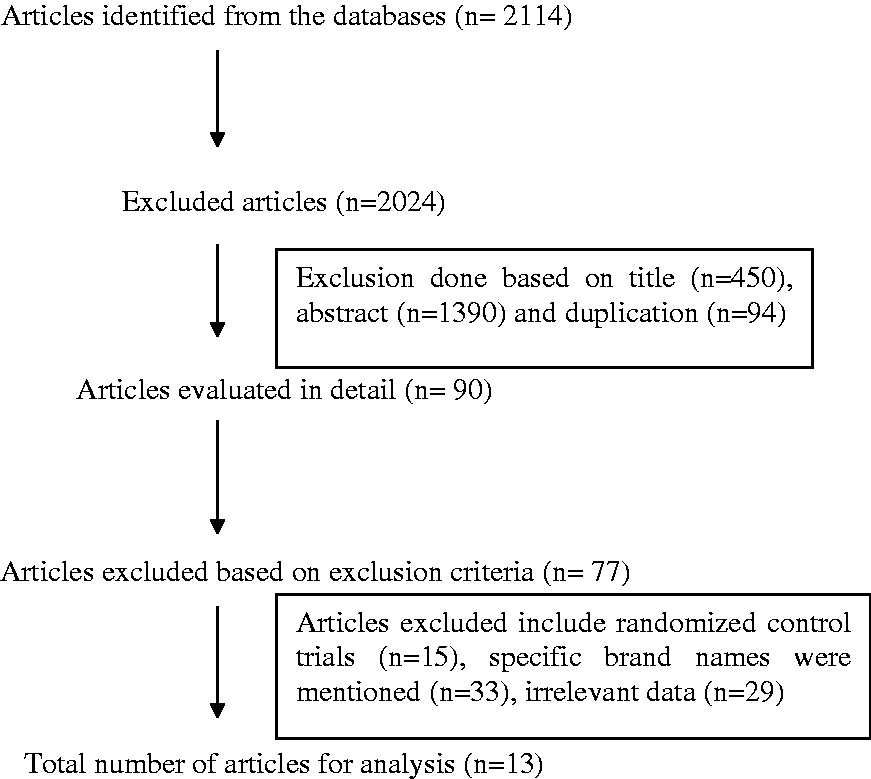
Results
After analyzing these 13 articles, outcomes were discussed under the following five themes.
History and legislations6–8
The history of generic drugs dates back to the mid-1960s.
1906: Pure Food and Drug Act—Established regulation of food and drugs.
1938: Food, Drug and Cosmetic (FDC) Act—Introduced safety standards.
1962: Kefauver–Harris Amendments to FDA&C Act—Tightened safety standards and introduced requirement that drugs must be effective.
In the mid-1960s, new generic drug was supposed to undergo trials only after the expiry of patent of branded drugs, which made companies wait for longer duration.
1984: Drug Price Competition and Patent Restoration Act/Hatch–Waxman Act—Stated that for generics, preclinical and clinical testing need not be repeated.
It also allowed for testing before patent expiry of innovator/branded drugs, which resulted in dramatic decrease of waiting period for drugs to less than three months from three years.
1992: Generic Drug Enforcement Act: Impose debarments and other penalties for illegal activities involving approval of abbreviated drug applications under Federal FDC Act.
1997: Food and Drug Administration Modernization Act: Amended Federal FDC Act. This act was on reforming regulation of food, medicinal products, and cosmetics in the United States.
2003: Medicare Prescription Drug, Improvement and Modernization Act. Study on making prescription pharmaceutical information accessible for blind and visually impaired individuals.
Policies in few developed and developing countries
Details of policies on generic drugs in different countries. 5
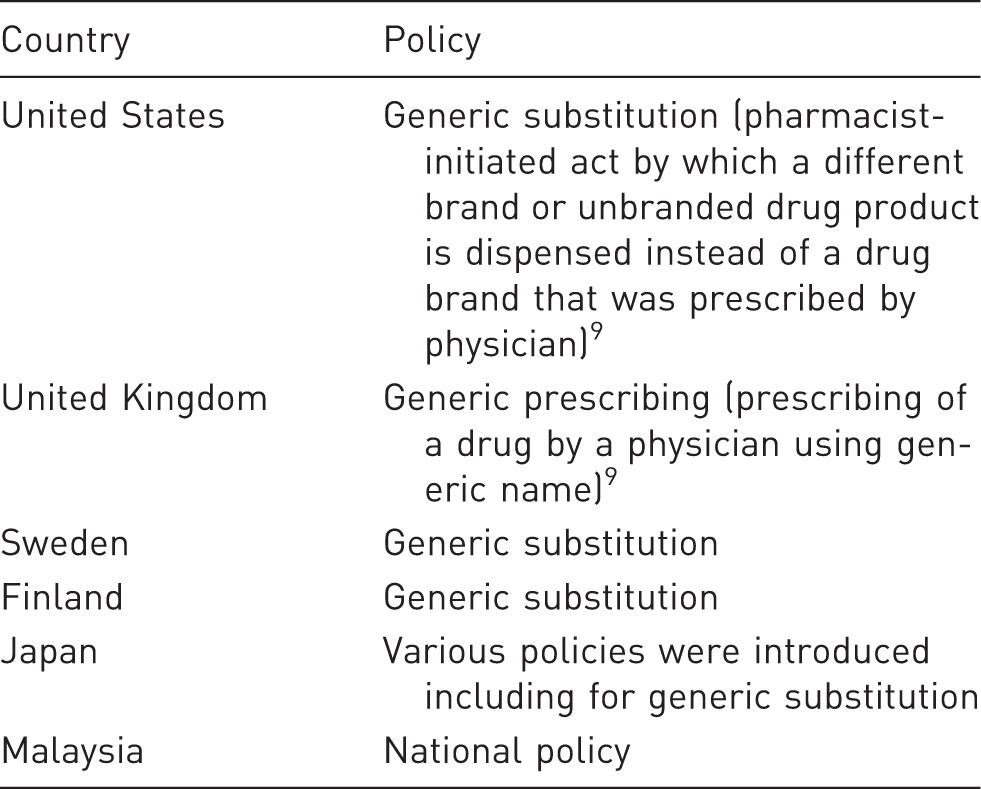
Generic substitution and generic prescribing stand to be the common policies adopted by various countries for their promotion.
Generic substitution policy was first introduced in Finland in 1993. It was then replaced by generic prescribing in 1996 followed by generic substitution since 2003. Sweden introduced generic substitution policy in 2002. In the United States, approved drugs and therapeutically equivalent generic products, at federal level, were listed in orange book that serves as a guide to pharmacists, health care professionals. Similarly, list of interchangeable products was issued by Swedish Medical Products Agency and Finnish Medical Agency (Fimea) in their respective countries.
However, scenario in the United Kingdom is little different from these countries. Here, generic prescribing is practiced more commonly implying key role of physicians. Generic substitution is restricted to National Health Service (NHS) hospitals.
Ethical considerations in the promotion of generic drugs
The ethical principles followed in prescription practices of physicians or substituting branded with generic drugs need due consideration and are discussed in the subsequent sections.
The four ethical principles that help us in making ethical decisions were as follows:
Respect for autonomy; Beneficence; Nonmaleficence; Justice.
Perceptions of patients
Acceptance of generic drugs was directly or indirectly related to the perceptions of physicians, health care personnel, and patients.
Europe
Study on patients’ attitudes, in Greece, showed 49% reported that they knew what generic drugs are but majority (83.5%) of them were of the view that they are cheaper than branded drugs. While 40% of them were of opinion that effectiveness of generics was similar to branded drugs, 71.2% of patients reported that physicians/pharmacists never substituted branded drugs. A total of 50.8% of them were willing to use generics while lack of knowledge (63.7%) constituted major reason for not willing patients. 11
In Portugal, 77.5% of patients responded that they consumed generics. Doctor’s prescription (65.3%) contributed for their widespread acceptance. A total of 88.7 and 64.5% of them were willing for generic substitution based on doctors’ and pharmacists’ recommendation, respectively. Doctors, pharmacists, and publicity campaigns remained as source of information for 55.6, 50.4, and 27.3% participants, respectively. Nonprescription by doctors, lack of trust in their efficiency, and lack of information to patients were considered as reason for underuse of drugs in Portugal. 12
United States
In a survey, it was found that low-income women are aware of generic drug discount program through family and friends (26%), pharmacist (21%), physician (17%), and television advertisement (10%). 13
Among elderly adults in primary care settings, only 3.8% disagreed that generics were of low cost compared to brand drugs. Racial differences exist in attitudes on generic drugs. The black believe that generics were not equivalent (adjusted odds ratio 0.28) and as safe (adjusted odds ratio 0.38) as brand drugs. 14
Asian countries
In Japan, 68.4% of the patients knew “generic drug.” Their awareness was majorly restricted to cost and effectiveness of medication. Eighty-six percent and 71.1% believed that generics were of low cost and as effective as brand drugs, respectively. Reasons for acceptance included prescription from physicians (48.6%) and pharmacists (33.1%). 15
There even exist racial differences in seeking low-cost drugs. The Caucasian patients (82.5%) had more awareness on generic drugs compared to African American patients. African American patients were of the opinion that cheaper generic drugs may not be very effective compared to more expensive branded drugs while this was not the case with Caucasian patients. A total of 72.2% of the Caucasian patients still felt that the generic drugs are effective in spite of being available at low cost. 16
Perceptions of physicians
Though generic prescription, substitution, and other policies were adopted in various countries, it is evident that negative perceptions and lack of in-depth knowledge on generic drugs among physicians and other health care personnel do exist. 5 Familiarity, availability, and perception that brand name samples were effective, of high standard with few adverse effects, relationship with pharmaceutical representatives are some reasons for physician’s preference for brand drugs over generics. 10
Europe
In case of Italian family pediatricians, 37.2 and 32.6% were reported to have sufficient and fairly good knowledge on generics but only 13.5% of them confirmed that more than half of their patients were treated using generics. 17
In Portugal, 91.6% pharmacists recommended generic substitution in their pharmacies. 92.6% pharmacists believed that low cost of generics would reduce government expenditure on health. 12
United States
Although generic substitution laws have been adopted by all states in US, they may be overruled by requesting to dispense as written, either by the physicians or patients. Greater than 2.7% of prescriptions fall into “dispense as written” category by physicians with the odds being 78.5% greater for specialists. 18
Asian countries
It is to be noted that, even though, majority of the general practitioners (85.1%) in Malaysia showed high prescribing rate for generic drugs, it was noted that older generation practitioners were skeptical. 19 It was also found that the prescription patterns were influenced by advertising and product bonuses offered by drug companies.
Physician’s survey conducted in Saudi Arabia showed that 76% of them were aware of the term “generic” while only 47% were aware of bioequivalence. Fifty-two percent of them believed that branded drugs should be substituted with local generics. Clinical effectiveness was largely responsible for influencing physicians (71.9%) to switch from brand to generic drugs. 20
In India, private hospitals cater 80% outpatient care, 60% of all in hospital care. As cited earlier, 79% health care expenses were due to medicinal cost. Therefore, Government of India launched a nationwide campaign, “JanAushadhi” in 2008, with key objective of “ensuring availability of quality medicines at affordable prices to all.” These drugs were dispensed at regulated stores known as “Jan Aushadhi Stores.” This program was implemented under Bureau of Pharma Public sector undertakings of India. 3
Discussion
Generic drugs are a boon not only to developing countries but also to developed nations. They contain active ingredients similar to innovator drug, but inactive ingredients (excipient) differ. 5
When generic drugs were considered to be of low cost, it is because of no cost involved in identification of new chemical entity, research and development, marketing. 6 Cost varies from 20 to 90% of innovator drug. 1 Price of initial/first entry generic medicine will be marginally less while average generic price drops down to 50% of innovator drug on entry of second generic. Fall in average generic price is accentuated by increase in generic drugs. This system of pricing is common in US, Sweden, Finland. In 2005, 12.5% price reduction policy was introduced in Australia. In reference to the policy, first new generic version of medicine in the list of pharmaceutical benefit scheme (PBS) should be priced 12.5% lesser than the existing low priced brand drug, to be included in PBS list. 5
Low cost of these drugs not only reduces burden in health care sector, but also helps in achieving Millennium Development Goal “Health for All” by increased access to medicines and redistribution of the savings to other sectors of health care. Further, low cost implies better drug regimen adherence by patients. 21
Lack of generic medicine policies and financial incentives hinders physician to accept and prescribe generic drugs. 1 Existing policies in various countries should be clearly defined. 19 Awareness should be created among health care professionals who lead to acceptance of generics changing their negative perceptions. There is also need to educate the patients for switching to generic drugs. 22
In New Zealand, educational awareness campaigns to educate doctors, pharmacists, and consumers were undertaken by Pharmaceutical Management Agency (PHARMAC). National Prescribing Service (NPS) promotes quality use of generics in Australia. NHS in UK plays a pivotal role in developing interventions to promote generics. 1 Independent not for profit organization, NPS limited in Australia is educating consumers by organizing educational campaigns and materials. 5 In 2010, Portugal government implemented mass media publicity campaign with “You Can Trust” slogan. However, it was realized that the effectiveness was high through personal interactions with health professionals rather than mass media campaign. 12
Labeling of drug with international nonproprietary name has been recommended by the UK Medicine and Healthcare Products Regulatory Agency as it helps in minimizing confusion for patients to identify medications. 19
Doctors and pharmacists have significant potential to influence behavior of patient. Nursing profession is expanding and can play a role next to doctors and pharmacists in promoting generic drugs. Success of the generics would be outcome of mutual and active interaction between doctors, pharmacists, and patients. 19
Limitations
This review has provided only a brief outline of the generic drugs. The effects on market of giant pharmaceutical companies and generic switch overreported by few studies were not given ample consideration in the present review.
Recommendations
Publicity campaigns, initiated by government, nongovernmental organizations, and media professionals, should be organized to enhance awareness and utilization of generics.
Legislations and policies should be drafted by the government not only to promote generics but also to maintain standards of generics ensuring that these laws were implemented aptly.
Vigorous randomized control trials in the field of generics should be encouraged to prove efficacy and safety.
Communication between health care professional and consumers will be of great value.
An initiation from multinational pharmaceutical companies to manufacture generic drugs will be a salutation.
Conclusion
While generic drugs appear to reduce cost burden in health care sector, extensive scientific research to establish safety and bioequivalence is advised. This would likely to change the perceptions of patients, physicians, and other health care personnel. It was aptly stated by Yusuf Hamied, ex-chairman of Chemical, Industrial and Pharmaceutical Laboratories in an interview “I am not against patents; I am against monopolies” should be the motto of pharmaceutical companies. Since “Health for All” is the strategy, alternative ways which would simultaneously reduce burden on the government and provide quality health care to the maximum should be initiated. Increasing the availability and accessibility of generic drugs will facilitate significantly in achieving this goal.
Footnotes
Declaration of conflicting interests
The author(s) declared no potential conflicts of interest with respect to the research, authorship, and/or publication of this article.
Funding
The author(s) received no financial support for the research, authorship, and/or publication of this article.