



Abstract
Expectations and how they are communicated influence employees’ motivation, effort, goals, efficacy and performance. This study examined faculty performance evaluation standards and processes of 60 academic departments in research universities for motivationally relevant elements. Characteristics were systematically analysed to understand their content and motivational implications. They were examined for features influential on employee engagement, effort, persistence, innovation and organizational commitment, in an iterative, qualitative process. The researchers distilled eight key features of performance standards with influential, research-based motivational implications and analysed how they are demonstrated in the standards. These eight motivationally positive components were evident, but not consistent across these standards. Findings suggest that higher education institutions re-examine their faculty performance standards, consider their motivational messages and implications. Further research on faculty performance standards is also indicated.
Introduction
Expectations and the way they are communicated can influence the nature of employees’ motivation, the degree of effort they expend, their goal orientations, their efficacy for success, and the quality and quantity of their performance output (Gagné and Deci, 2005; Latham, 2007). Previous research has demonstrated effects of faculty climate and individual differences on faculty members’ competence development, teaching investment and research productivity (Hardré et al., 2007; Lee and Rhoads, 2004). Previous examinations of standards show important differences in how expectations and criteria for judgment are communicated (Hardré and Cox, 2009; Hardré et al., 2010). The present study focuses on the analysis of faculty performance standards and evaluation processes for motivational implications.
Faculty members are the credibility of an institution and source of its intellectual capital (Gappa et al., 2007). How the administration motivates faculty will influence how they practice and share their expertise (Latham, 2007) with students, colleagues and as active members within the institution. Faculty members need clarity of goals and guidance into productive activity, because their multifaceted roles require that they participate, lead and serve, and balance multiple complex responsibilities for which they are accountable (Middaugh, 2001). We examined the promotion and tenure evaluation and performance specifications from 60 academic departments in 23 research universities for motivational elements and messages, whether explicit or implied. Our goal was to systematically examine their content and analyze their motivational implications. The overarching questions that guided this study were the following: What implications for faculty motivation and consequent performance do these practices have? How can knowing these implications inform administrative policy and practice?
Background
Effective promotion and tenure systems inevitably reflect the history and nature of the institution, are compatible with current institutional goals and objectives, balance and encompass both institutional needs and individual professional interests, are credible, manageable, and defensible and allow recourse (Miller, 1988). It is a tall order for organizational policy to establish and communicate performance standards for a diverse range of faculty and achieve these goals. Added to these aims is the need to address motivation, to frame performance standards and processes in ways that are motivationally positive, for a diverse group of expert adults. Principles from motivation theory, research and HR practice can inform and support these goals.
Policy and Communication of Expectations and Performance
Organizational policy and standards influence motivation and performance, through employees’ self-perceptions, success expectations, interpersonal relatedness, trust, efficacy, risk-taking and innovation and organizational commitment (Deci, 1995; Swanson and Holton, 2001). These perceptions and the feelings they promote, in turn, influence employees’ effort and performance (Braskamp and Ory, 1994; Latham, 2007). Motivational messages are communicated in the organization’s performance evaluation standards and processes (Hardré and Miller, 2006; Sansone and Harackiewicz, 2000). Some institutions and departments communicate dual or conflicting messages that have different potential influences on effort and quality of work (Braskamp and Ory, 1994; Fairweather, 1996; Hearn, 1999). In spite of the importance of performance standards on faculty work (O’Meara and Rice, 2005) and the influence of motivation on workplace performance (Latham, 2007), there has been relatively little research on how faculty performance standards and processes contribute to motivation. Some features of the standards expressed in rewards and evaluation systems tend to promote individual motivation, while others tend to thwart it (Amabile et al., 1990; Deci and Ryan, 2002). Similarly, the messages contained in certain ways of expressing expectations support collaborative and collegial behaviors, while others tend to promote competition and reduce collaboration (Ryan and Deci, 2000). Some performance evaluation and rewards policy tends to be more effective in promoting quality performance on tasks that involve high cognitive flexibility and problem-solving (Amabile et al., 1990), and for tasks that require independent performance in highly skilled and ill-defined projects (Erez et al., 1990), which are common characteristics of faculty work. Performance standards and their implicit values create messages about the organization that influence employees’ choices and contributions (Braxton et al., 2002; Latham and Wexley, 1993). Faculty success promotes organizational success and contributes to the institutional accumulated advantage (Bentley and Blackburn, 1991). Work and performance standards can be examined through the lens of motivation theory and research, so that rewards and evaluation systems send messages consistent with the organizational mission and goals, rather than messages that undermine them (Diamond, 1993).
Previous Research
Previous studies of faculty productivity include those focused on external, organizational climate characteristics (Goodwin and Sauer, 1995), salary (Hearn, 1999), personal beliefs and expectations (O’Meara, 2003), or integrated effects of individual and organizational factors (Blackburn et al., 1991; Hardré et al., 2007, 2011; Levitan and Ray, 1992). Some past research on standards has looked at their language, specifications and outcomes, but neglected their motivational messages. For a full review of these studies see Hardré and Cox (2009) or Hardré et al. (2010).
Previous systematic research on faculty motivation is limited but broadly ranging. Some studies have focused on individual characteristics (McKeachie, 1979; Landino and Owens, 1988; Levitan and Ray, 1992), while others are grounded in life-cycle development (Baldwin and Blackburn, 1981; Goodwin and Sauer, 1995; Hu and Gill, 2000). It is clear that faculty members respond to the specifications and criteria for promotion and tenure (Tien, 2000) which can interact with individual characteristics to influence where faculty members focus their efforts (Bailey, 1999). Differences in faculty priorities (such as among research, teaching and service) have been identified across the career trajectory (Levin and Stephan, 1989; Walker, 2002). The US research university can be a competitive and stressful environment for many faculty members, with its demands of personal research goals, teaching and mentoring graduate students, and extensive service to the institution and profession (Gmelch et al., 1986; Serow, 2000). Stress from such multiple and sometimes conflicting demands can affect not only work performance but overall well-being (Deci and Ryan, 2002; Ryan and Deci, 2000). However, careful attention to factors that assist faculty members in prioritizing and setting goals can help balance their work and development, and support self-regulation. Yet few studies have examined the motivational features or implications of these influential standards.
Assessment and evaluation standards influence motivation through processes such as internalization, as individuals adopt and negotiate personal values and goals with those of the organization and its leadership (Deci et al., 1989). As employees either initially share, or eventually internalize (adopt and fully endorse) the organization’s goals and values, individual and organizational values become consistent, producing positive motivation (Deci et al., 1994). However, if individual and organizational values are not aligned, then individual motivation that produces performance tends to be externally pressured (controlled or introjected from others) (Ryan and Deci, 2000). External (or extrinsic) motivation often produces low quality performance and dissatisfaction, and may result in the individual leaving the organization (Latham, 2007; see also Bono and Judge, 2003). Performance standards are necessary to validate decisions and guide employee choices (Teodorescu, 2000), yet how they are written can send messages that either support or thwart desired outcomes and employee performance over the long and short run (Massy and Zemsky, 1994).
Recent work has looked at faculty perceptions and individual differences drawing on principles of work motivation from multiple theoretical frameworks (Hardré et al., 2007, 2011). Among faculty across disciplines, value of research and research effort account for large amounts of unique positive variance in research productivity, while teaching load accounts for the largest significant amount of negative variance (Hardré et al., 2007, 2011). Departmental interpersonal support is closely related to efficacy and efficacy to value and effort (which predict productivity) (Hardré et al., 2007, 2011). Narrative examples from faculty in these studies also underscore that faculty members form perceptions and direct their professional efforts based on messages about what their departments and institutions value and expect.
The way that expectations and performance standards are communicated helps to frame employees’ thinking (Diamond, 1993; Latham, 2007), and may influence the development of faculty intellectual capital (Gappa et al., 2007). Faculty members’ commitment to their institution and department have diminished over time (Judy and D’Amico, 1997), and that organizational commitment influences retention, promotion and tenure (Werbel and Gould, 1984), motivation and involvement (Mowday et al., 1982), task performance and policy compliance (Angle and Perry, 1981) and adoption of organizational values and priorities (O’Reilly and Chatman, 1986). For these reasons it is important to examine evaluation documents in light of the motivational messages they contain and how these can influence employees’ thinking about the place they work and the work that they do (Braskamp and Ory, 1994; Fairweather, 1999).
Theoretical Frameworks
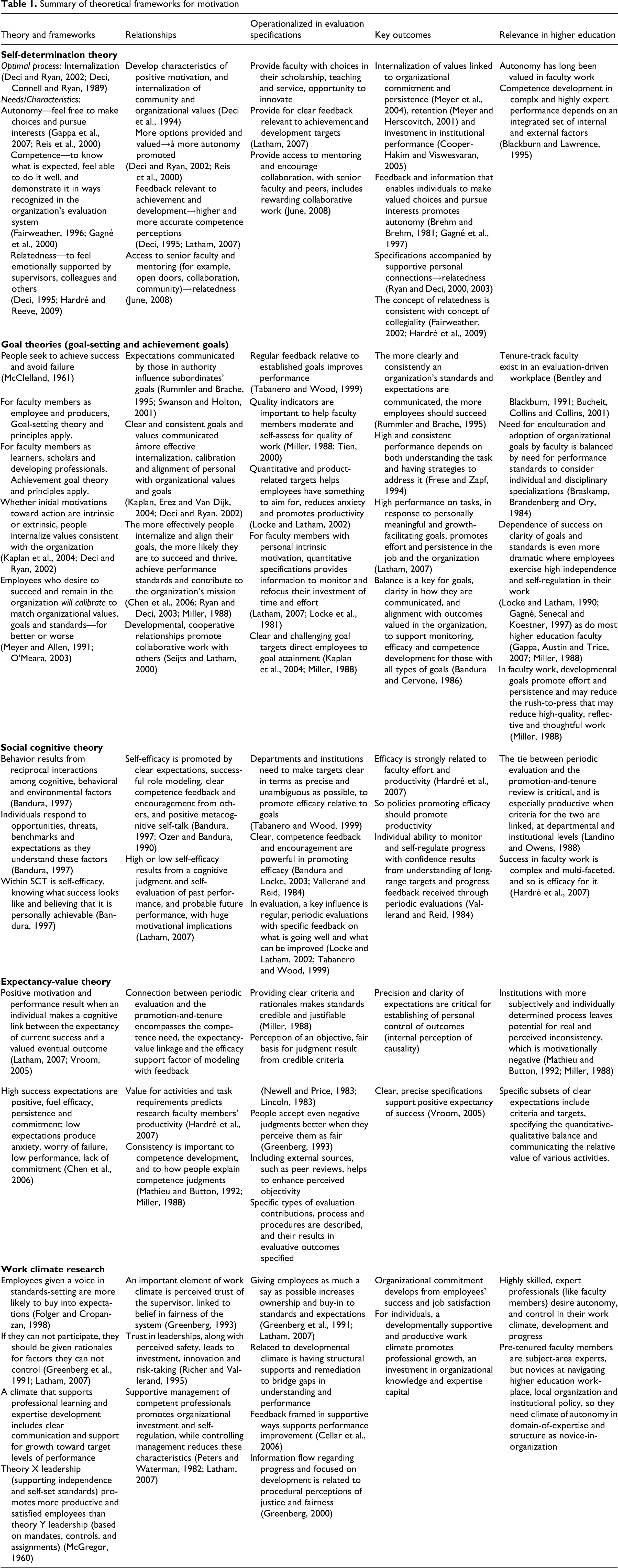
There are many theories and variables that can serve as frameworks for understanding motivation in faculty work. The present study took a multi-theory approach, integrating motivation theories that explain different facets of human motivation, but intersect for application in the workplace: Self-determination theory, goal theories (achievement goals and goal-setting), social-cognitive theory, expectancy-value theory, and work climate research. Self-determination theory (Deci and Ryan, 2002; Ryan and Deci, 2000) provides a framework for understanding the role of faculty members’ development and interpretation of competence and the role of external sources in supporting or undermining that development through processes such as internalization. Two types of goal perspectives, achievement goal theory (Dweck, 1999) and goal-setting theory (Locke and Latham, 2002) provide frameworks for understanding the role of faculty members’ reasons for their long- and short-range plans and choices. Social-cognitive theory (Bandura, 1997), which includes self-efficacy, provides a framework for understanding the role of faculty members’ self-perceptions and the influences of others with regard to meeting performance expectations. Expectancy-value theory (Atkinson, 1964; Vroom, 2005) provides a framework for understanding the relationship between external standards and internal perceptions that inform subsequent actions. Finally, work climate research, including theory X and theory Y (McGregor, 1960) integrates the key factors from the various theoretical models into workplace dynamics, still focused on communication and employees’ perceptions. Table 1 summarizes the key features of each of these frameworks
Summary of theoretical frameworks for motivation
Questions Used to Analyze the Specifications
Based on a review of the motivational considerations relevant to documentation in evaluation and performance standards and on issues relevant to the literature on faculty work (see review in previous section), we used the following questions to guide our analysis of the evaluation documents.
What elements of the faculty performance standards contain explicit or implicit motivational elements, and how are they communicated?
What motivational implications do these elements present?
Methods
Procedure
The researchers identified chairs of 120 academic departments in 23 research universities in 13 states across the USA. We contacted the chairs by email stating that our goal was, ‘to analyze the explicitly stated departmental evaluation criteria used to judge faculty members’ annual performance and merit, and tenure and promotion decisions’, and requested copies of documents containing their department’s evaluative criteria for faculty performance. Confidentiality was guaranteed, and we confirmed that information would be coded in analysis and aggregated in reporting. Sixty (50 percent) of the 120 department chairs returned the documents that we requested.
Sample Characteristics
Our sample is comprised of 60 cases of specifications for periodic evaluation, promotion and tenure at research universities. All of the institutions fit the following profile based on the 2006 Carnegie classifications (Carnegie Foundation, 2006): level: 4-year or above; control: 19 (86 percent) public and 2 (14 percent) private; total enrollment: 14,500 to 35,600; undergraduate instructional program: balanced arts, sciences and (some) professions, with high graduate coexistence (Bal/HGC or AandS+Prof/HGC); graduate instructional program: comprehensive doctoral-granting, with or without medical and veterinary (CompDoc/MedVet or NMedVet); enrollment profile: high undergraduate (HU) or majority undergraduate (MU); undergraduate profile: full-time 4-year, more selective, lower transfer-in (FT4/MS/LTI) and full-time 4-year, selective, higher transfer-in (FT4/S/HTI); size and setting: large, 4-year, primarily residential (L4/R), with a few less residential; basic classification: research university with high or very high research activity (RU/H) or (VH).
Of the specifications sent, 41 (68 percent) sets were departmental specifications and 19 (32 percent) were institution-level guidelines.
1
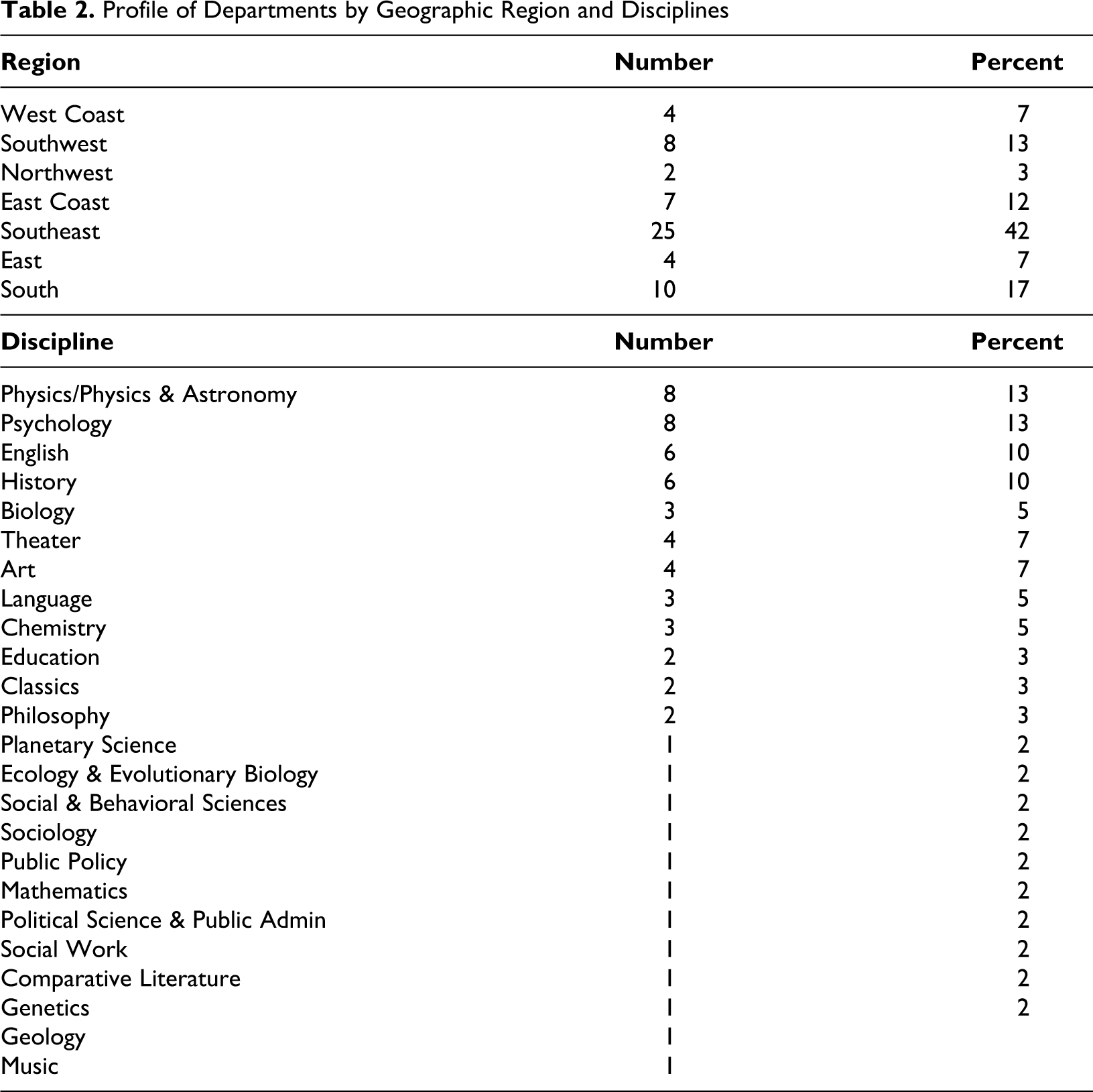
Though some departments provided institutional specifications, we treated all of the sets of specifications as departmental, as they were provided as authoritative for that department. Table 2 shows the profile of departments by geographic region and discipline.
Profile of Departments by Geographic Region and Disciplines
Principle I clarity and precision of expectations and criteria
Analysis Method
The two independent researchers used a five-phase process of observation data capture and analysis with regard to these documents. This process followed an iterative qualitative analysis method from the field of program evaluation (Fitzpatrick et al., 2004; Stake, 1995). It is similar to a grounded theory approach, but structured and focused by the research questions on motivational characteristics. The first phase was to examine the literatures in general motivation, work motivation and faculty work specifically, with the goal of identifying a framework to guide the consistency of our independent observations. This framework is laid out in the Background and in Table 1. The second phase was the divergent phase, in which the two researchers independently examined and coded the documents for explicit and implicit evidence of motivational elements in how each department had developed, presented and articulated its evaluation and performance specifications. This analysis was informed and guided by the research questions and framework. The third phase was the first convergent phase, in which the two researchers met, shared, discussed their independent observations, and recorded them into a set of examples for each component of the framework. In this phase we also identified incidence (occurrence in less than 50 percent) and prevalence (occurrence in more than 50 percent) of these characteristics within the whole set of data, as a process of clarification and compilation. In the fourth (second convergent) phase we synthesized those compiled observations into themes and patterns, which we iteratively aligned with the principles from the research-based frameworks. Examples of specifications representing the eight motivational principles were extracted from the specifications and compared to models that theory and previous research would indicate as motivationally positive. Thus, we generated a set of findings based on the patterns of motivational elements in the specification documents, viewed within the specialized nature and functional characteristics of US research universities.
Findings Synthesis of Patterns of Motivational Elements
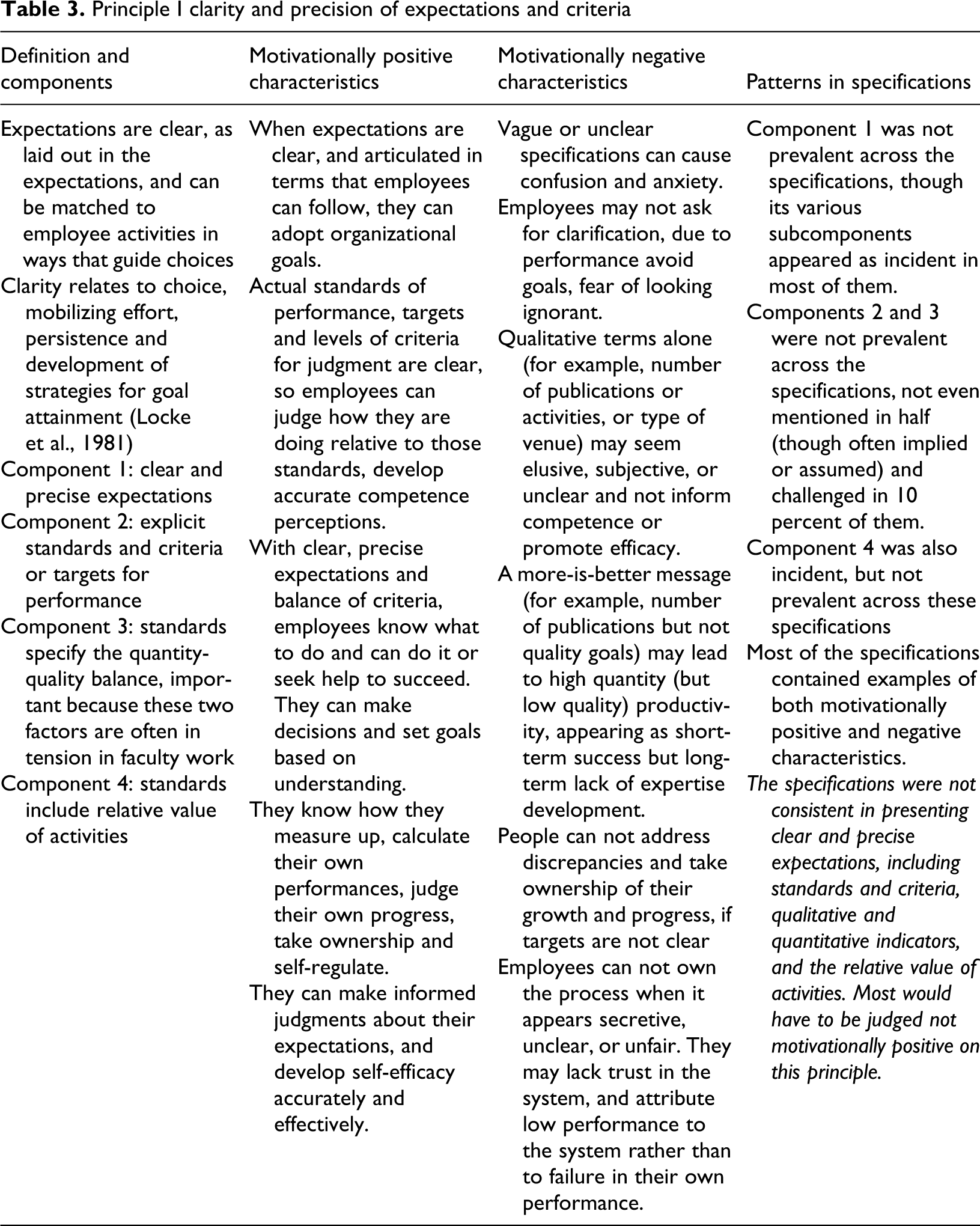
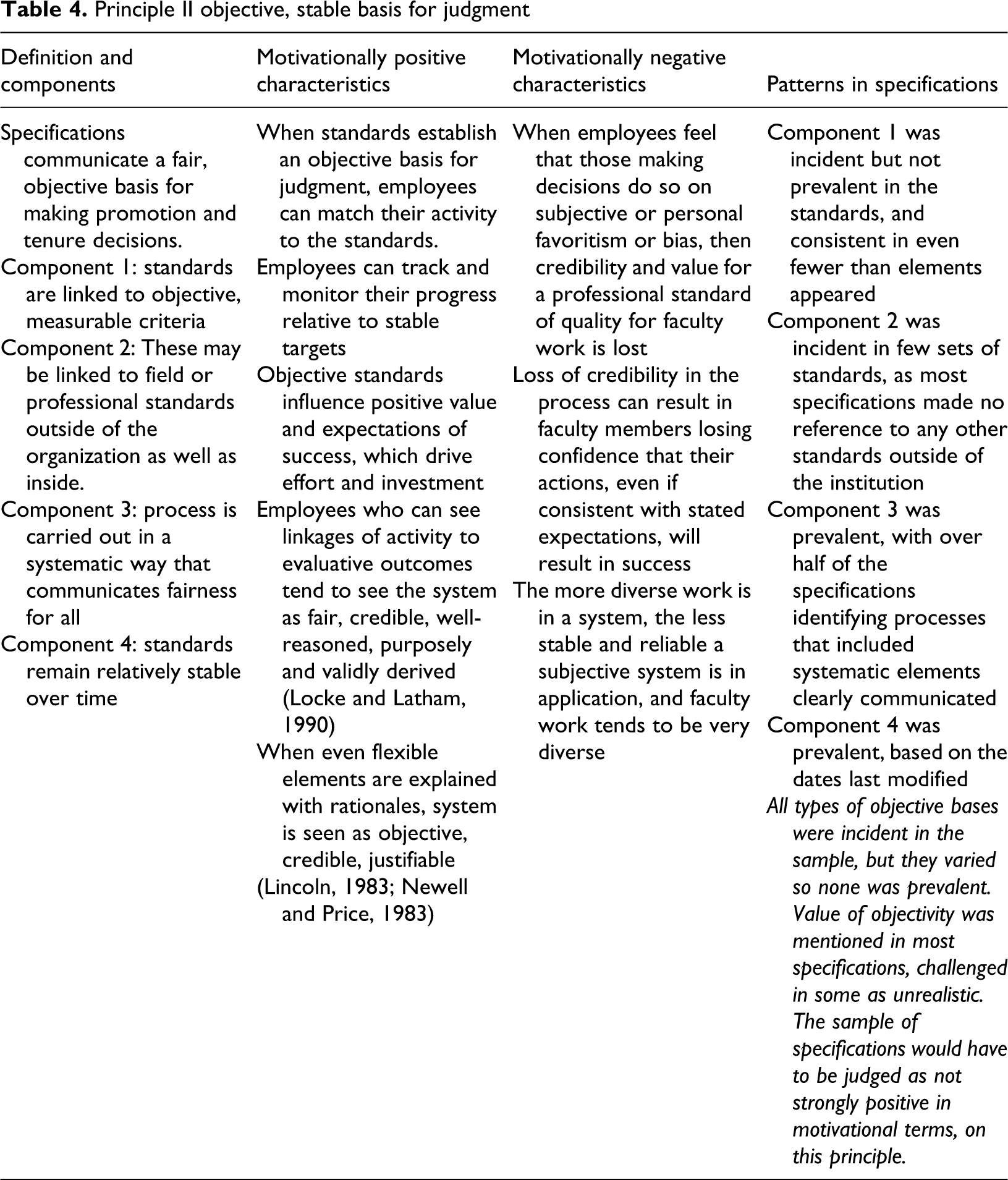
Our findings on how the specifications demonstrated motivationally positive and negative elements are summarized in Tables 3 –10, organized under the eight principles to which our observations distilled. Each section includes one of the principles, with its terms defined and operationalized (column 1), its potentially positive and negative motivational implications explained and supported (columns 2 and 3), and summary of its patterns of occurrence in the specifications (column 4).
Principle II objective, stable basis for judgment
Principle I, summarized in Table 3, illustrates the need for individualized plans that are clear, precise and aligned to criteria that support development along the career trajectory. Vague or unclear specifications can cause confusion and anxiety. With clear, precise expectations and balance of criteria, employees know what to do in order to succeed. They can make decisions and set goals based on accurate information.
Principle II, summarized in Table 4, depicts establishment of objective standards to allow for professional monitoring by each faculty member. Objective standards influence positive value and expectations of success, which drive effort and investment. Loss of credibility in the process can result in faculty members losing confidence that their actions, even if performance consistent with those expectations, will result in success.
Principle III Validity of standards (with alignment of workload, rewards and incentives)
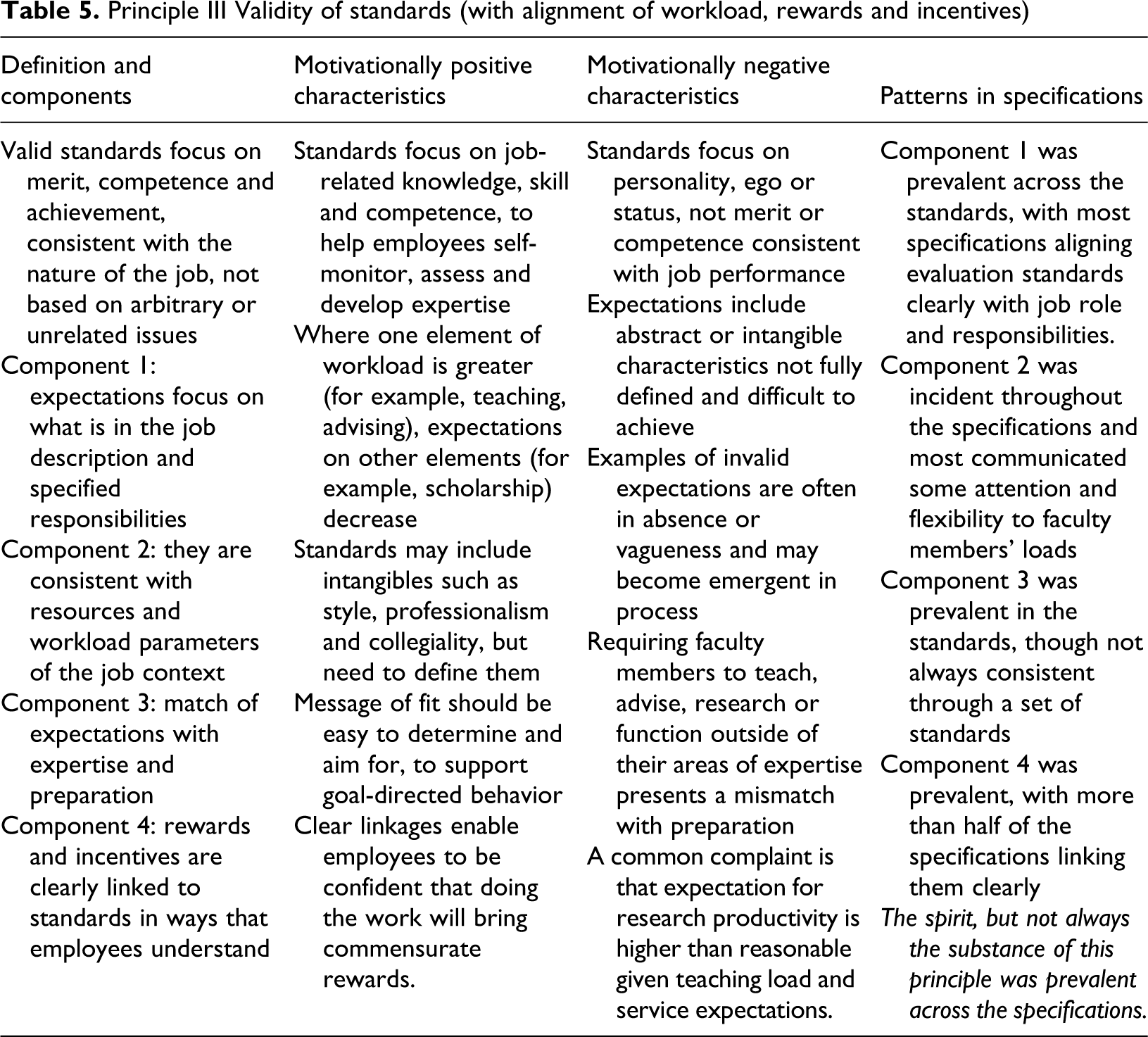
Principle III, summarized in Table 5, targets establishing valid standards that focus on merit, competence and achievement, consistent with the nature of the job, not based on arbitrary or unrelated issues. Established standards help faculty self-monitor, assess and develop expertise. Mismatching faculty members outside of their areas of expertise presents a motivationally negative perception of the expertise they currently bring the department, as does evaluating them based on factors outside of their job descriptions.
Principle IV supportive, developmental, cooperative work climate
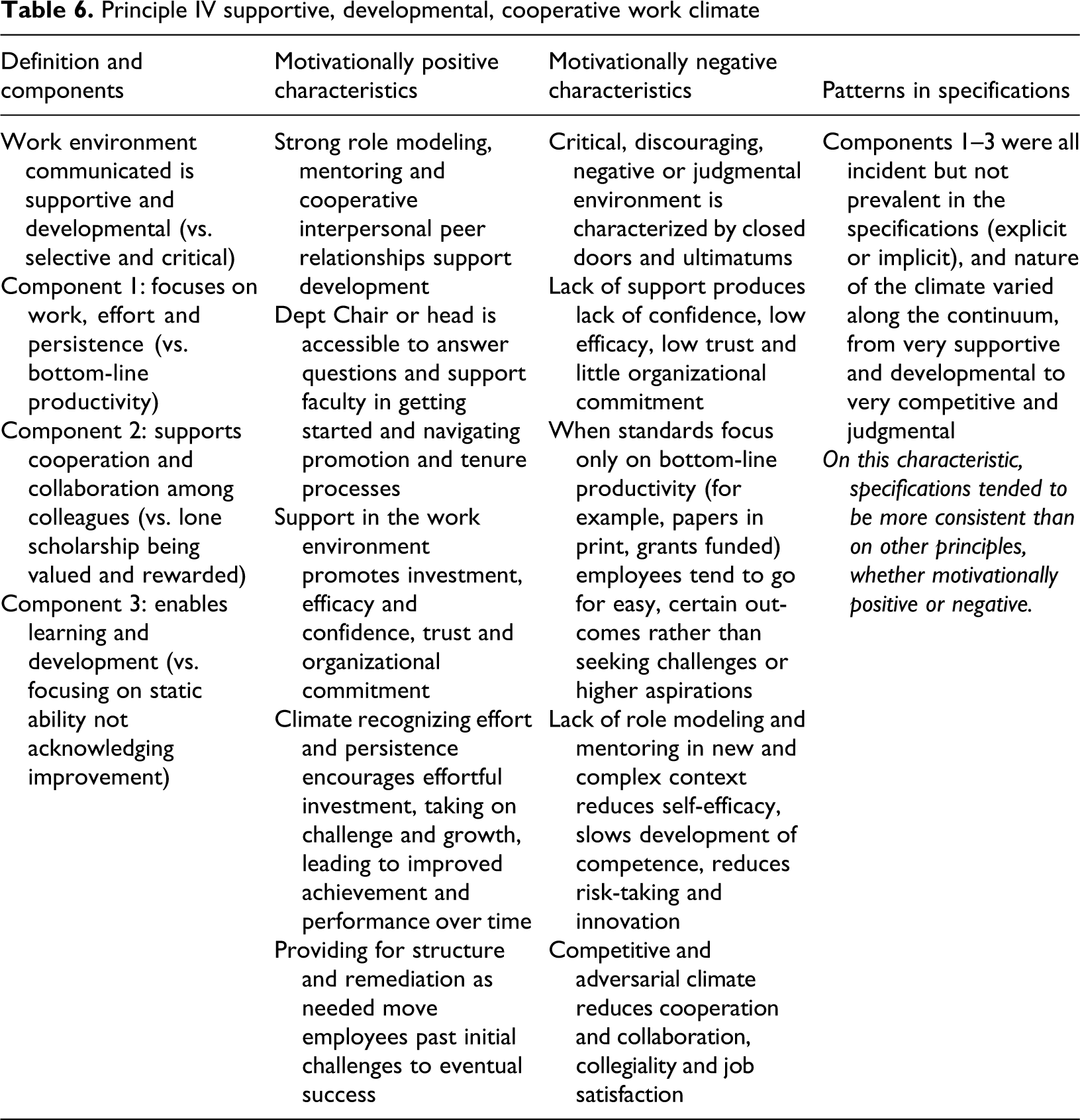
Principle IV, summarized in Table 6, promotes strong role modeling, mentoring and cooperative interpersonal peer relationships, which in turn, support development. Lack of support produces lack of confidence, low efficacy, low trust and little organizational commitment.
Principle V process and feedback specified, with information flow relevant to standards
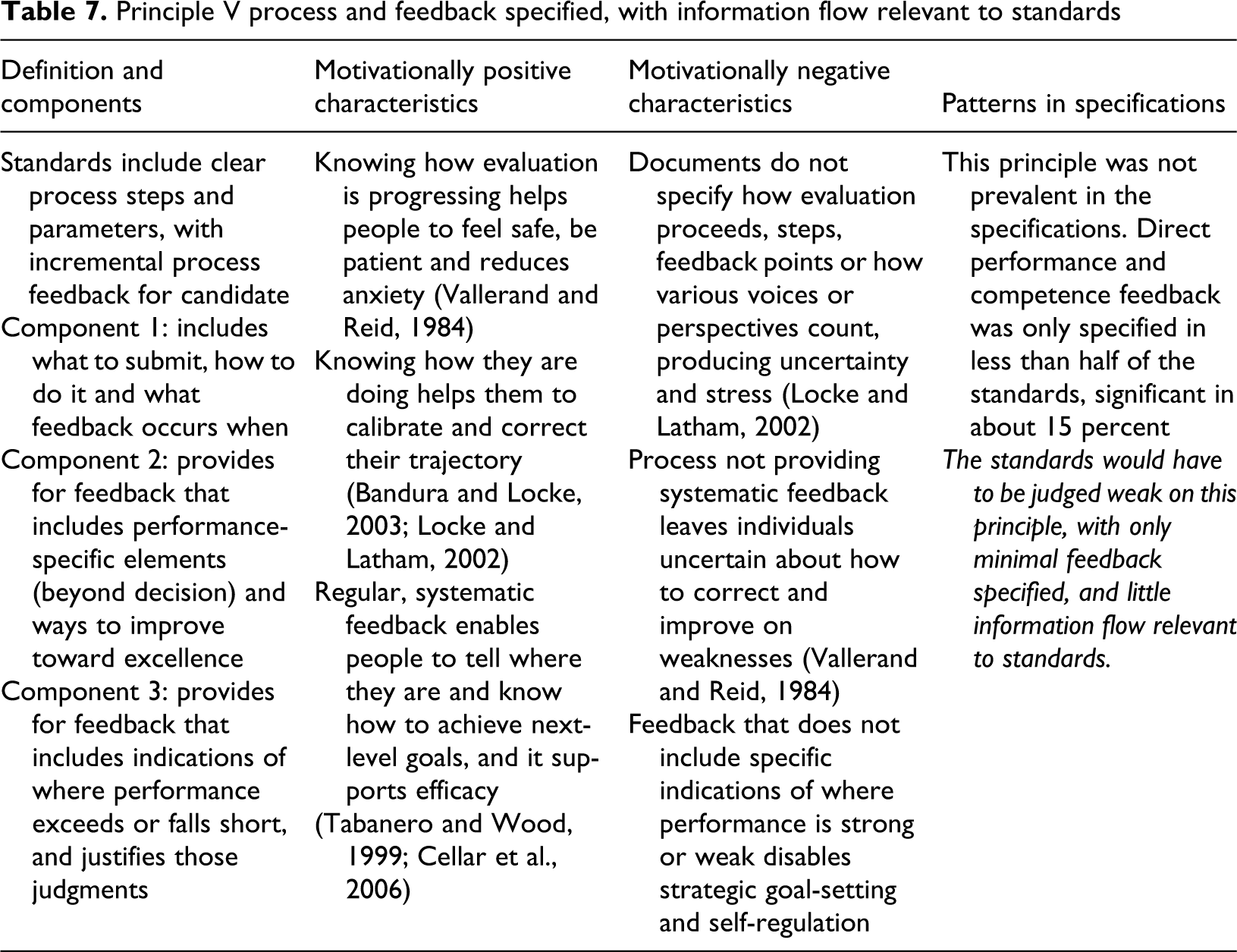
Principle V, summarized in Table 7, underscores the need for performance standards to include clear steps that outline the process, including parameters and incremental feedback points. Documents that do not provide specific processes produce uncertainty and stress.
Principle VI respect for identity as adult professionals, provides autonomy and control
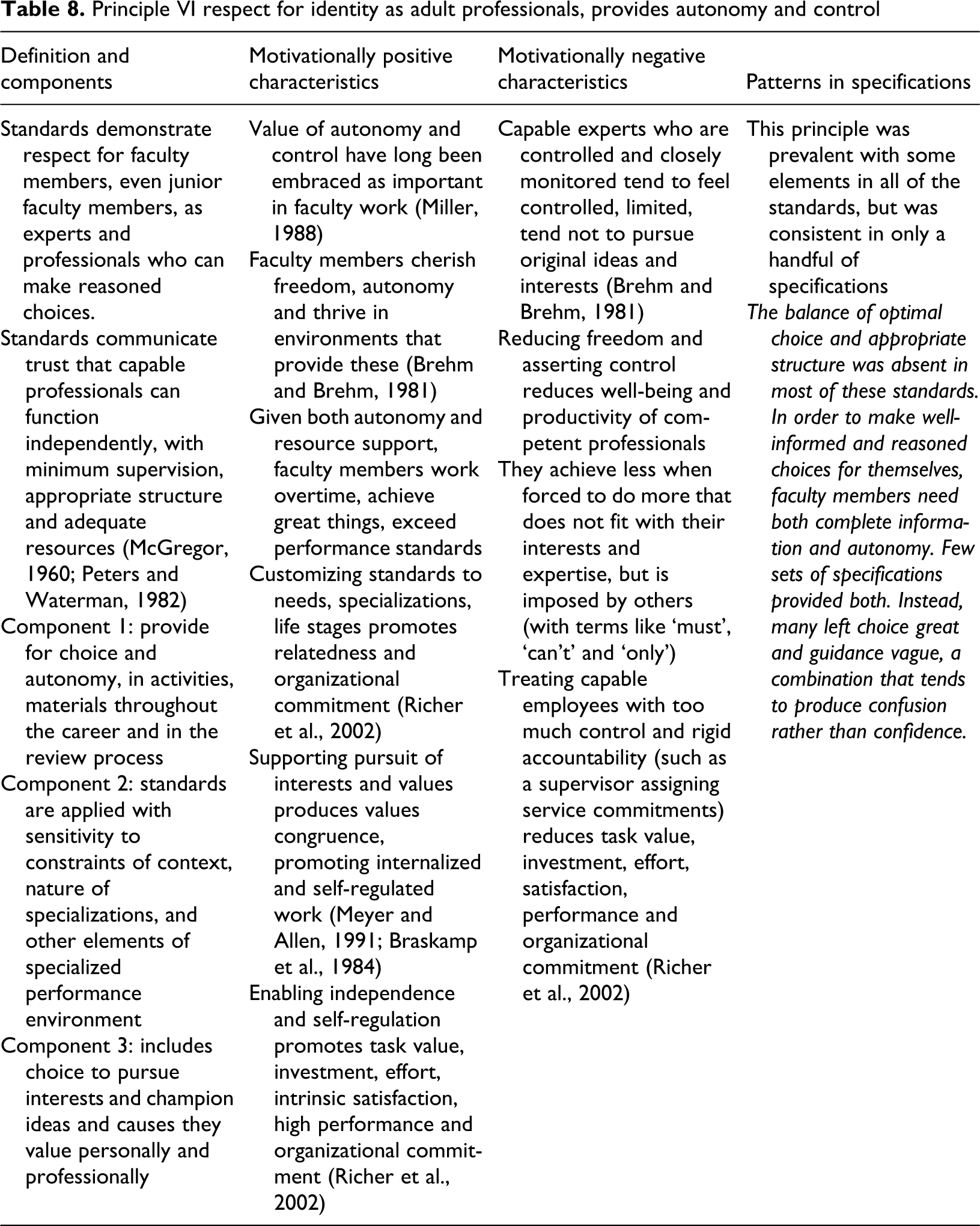
Principle VI, summarized in Table 8, illustrates the need to explicitly state standards that require demonstration of respect for faculty members, including pre-tenured faculty members, as experts and professionals who can make reasoned choices. Capable experts who are controlled and closely monitored tend not to innovate or pursue original ideas and interests.
Principle VII evaluation based on productive, personally meaningful approach goals
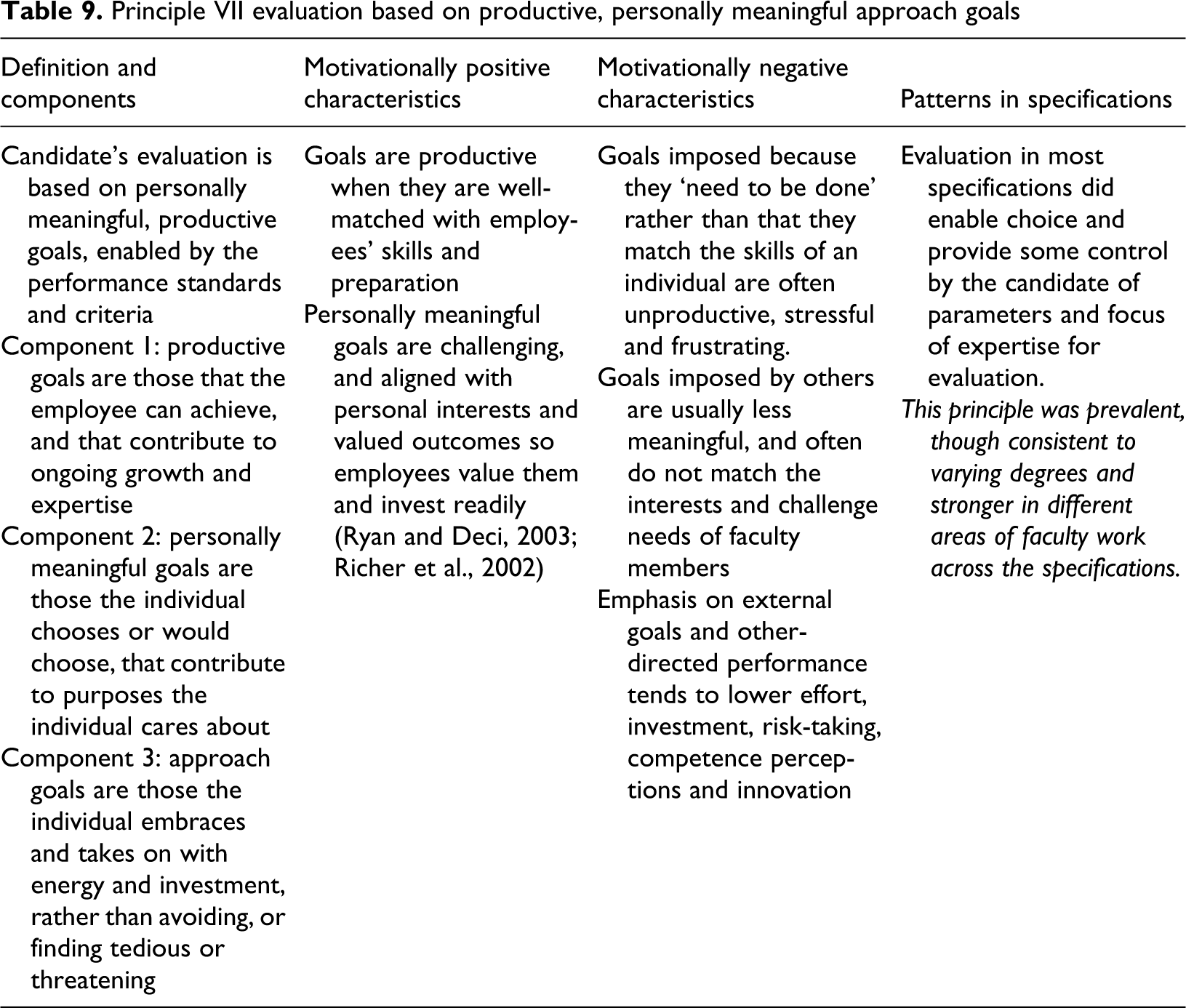
Principle VII, summarized in Table 9, establishes an evaluation that is based on personally meaningful, productive goals, enabled by the performance standards and criteria. Goals that are imposed by others are usually less meaningful, and often do not match the interests and challenge needs of faculty members.
Principle VIII consistent presentation and application of standards
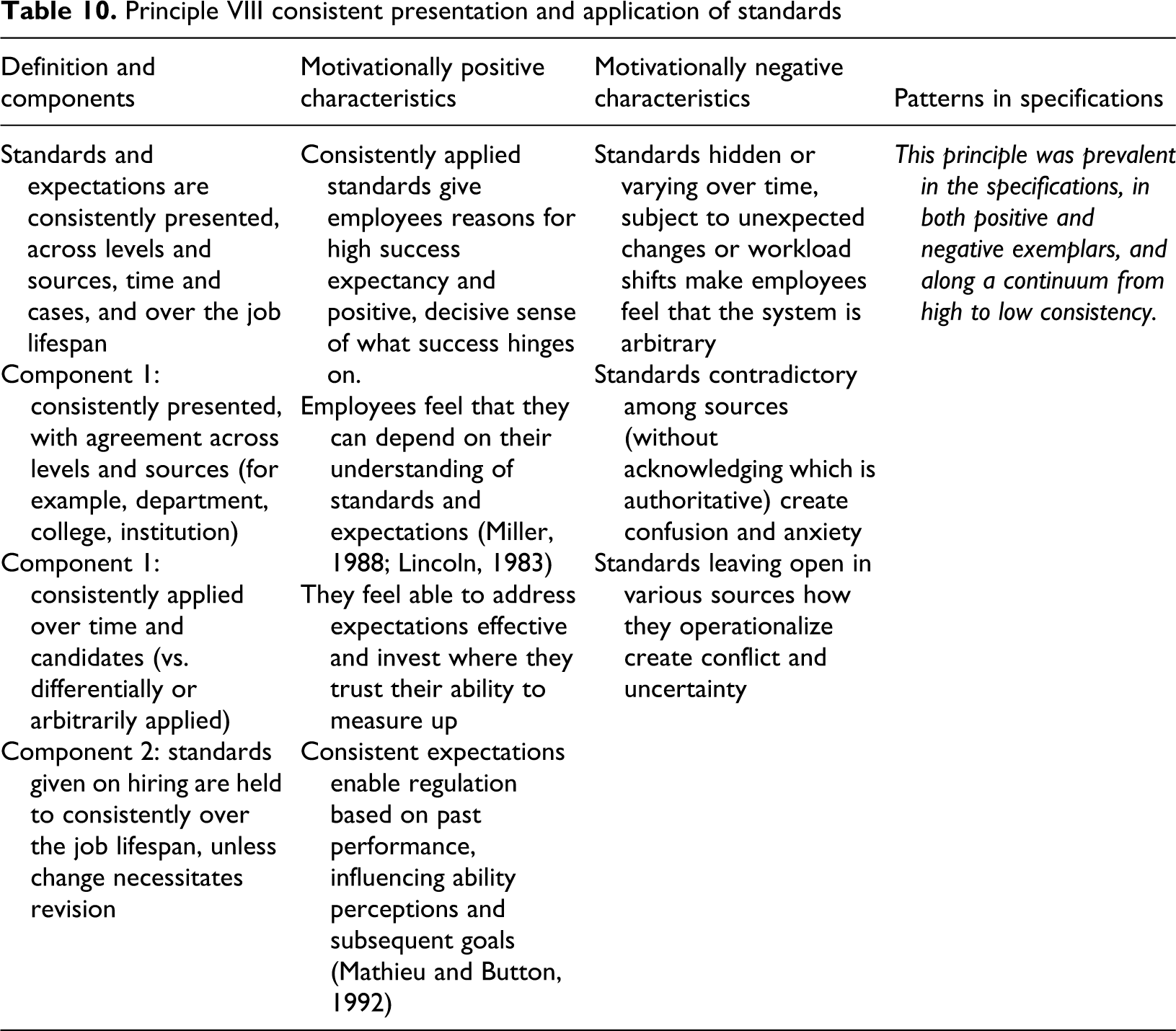
Principle VIII, summarized in Table 10, requires standards and expectations that are consistently presented, across levels and sources, time and cases, and over the job lifespan. Standards that are hidden or vary over time make employees feel that the system is arbitrary.
Limitations
Ours was a voluntary sample, and constitutes only a small percentage of the possible cases among US research universities, so the representativeness of these findings must be viewed with caution. Any effort to apply these findings must also take into account differences in institutional type and context, such as different types of colleges in the USA, and differences in institutional policy and structure among universities internationally. However, our intent is not to generalize even to all similar departments, but only to illustrate the range and patterns of difference among those in this sample, on the motivational elements. We believe these patterns are sufficient to raise important questions about the potential implications of faculty evaluation standards across higher education contexts.
Discussion
All of the motivationally relevant principles were evident in these specifications, with most incident (appearing in less than half of them), some prevalent (appearing in more than half) but most not consistently articulated in motivationally positive ways, based on motivation theory and previous research.
Multiple institutional documents lacked coherence, and alignment. For example, on Principle I, an institutional specification that featured quantity parameters (for example, number of publications) would be motivationally different from department specifications that featured quality parameters over quantity. This difference could lead to conflict between working for numbers of publications in less prestigious venues and aiming for higher quality even if it meant fewer publications overall. The specifications presented some motivational strengths, but very few had all eight characteristics that would allow a possible candidate, or newly hired faculty member, to be aware of motivational characteristics without first experiencing the process. On entering an institution, what faculty members know officially and consistently (rather than anecdotally) is based on what the evaluation standards say. Yet even these are necessarily interpreted, viewed through the lens of perception and assumption, informed largely by their previous experiences in other institutions and settings.
Consistency within Standards
Some specifications had only one or two characteristics articulated in motivationally positive ways, or only one of multiple subcomponents within a principle, so they must be considered far from optimally motivating. For example, on Principle III, validity of standards, some specifications addressed issues of autonomy, a mainstay of faculty member values and aspirations and a core principle of self-determined motivation. Yet they fell short of articulating responsibilities and match of job requirements with rewards and incentives, so they failed to address competence relative to job expectations.
Not many of the faculty performance specifications presented a prevalence of theoretically demotivating features, such as explicit threats of negative action for non-performance (for example, loss of job, increase in teaching load), though some did. The motivationally negative effect of such contingencies is in their tendency to cause employees to reduce risk, by playing it safe, which also tends to reduce growth, innovation and overall gains in performance over time. Accountability is necessary, but instead of threats, institutions that communicate motivationally positive messages take more developmental positions, offering support and assistance for new faculty hires to establish strongly and to remediate any initial misunderstandings of what is expected of them. This characteristic was at the heart of Principle IV, the supportive, developmental work climate.
However, not many of these standards contained consistently positive motivational characteristics throughout. Most included vague elements (for example, terms like ‘high quality research’ or ‘excellence in teaching’) without definitions or more specific indicators that further define and operationalize these targets of performance. Vague, qualitative statements like these may promote uncertainty; lead to worry, concern or error; and enable inconsistency in implementation of process and standards. The contrastive motivationally positive example was the standards that provided definitive targets (such as specifying types of journals for publication, expectations of sole or collaborative authorship, levels of venues for presentations, or evidence from teaching evaluations), consistent with Principle I, clarity and precision of expectations and criteria. Another example of motivationally positive standards were those that provided for regular, consistent feedback on how faculty members were progressing toward goals such as promotion and tenure, consistent with Principle V, process and feedback specified. The amotivating example of this was a lack of regular feedback that could leave faculty members uncertain of their status and unsure of whom or how to ask. Given the overall pattern of their characteristics matched across the eight principles informed by these five bodies of motivation theory and research, the faculty performance specifications in these 60 academic departments in 23 research universities must be judged as largely amotivating, and could be improved by revision with attention to their motivational messages.
The characteristics of these specifications do not reflect a strong, positive motivational message to faculty. As performance specifications do influence employees’ motivation, investment and productivity, administrators in higher education may have reason to be concerned. Our analysis of these standards suggests that departments such as these are probably not optimizing the positive motivational potential of their performance specifications, and may actually be undermining motivation, effort, innovation, and productivity with implicitly demotivating or amotivating elements.
What is valued in a department and institution necessarily will guide its promotion and tenure decisions along with its faculty hiring and retention (Bentley and Blackburn, 1991), as by doing so it aligns personnel action and evaluative processes with the needs and values of the organization (Braskamp and Ory, 1994). So is it for better or worse that departments, even in the same disciplines and tier of institutions, vary so much on what they communicate that they value and reward? Motivationally, this is a double-edged reality. Those whose interests and values align with the department should succeed and stay, and those whose interests and values are not aligned may seek work elsewhere (Richer et al., 2002). However, jobs elsewhere may be scarce, limited by budget cuts or few retirements (Alpert, 1985). In such cases candidates may remain for years, in a department that fits poorly, perform minimally or refit their work to the valued norms only because they are rewarded (Gappa et al., 2007). Alternately, a potentially valuable faculty member may give up the academic job altogether, choosing corporate or industry work over remaining in an institution where her interests are not valued (O’Reilly and Chatman, 1986; Richer et al., 2002). Her work there may still be extrinsic, but as one colleague who made this choice said, ‘I make three times the money for my suffering.’ Most publicly funded institutions cannot compete with salaries offered for faculty expertise in the private sector, but they can leverage climate features like relatedness, autonomy and competence development, built into motivationally well-designed evaluation systems. Such systems help to ensure candidate clarity, professional development, efficacy, engagement and effort, and support effective goal-setting and achievement, toward success in promotion and tenure.
Regarding organizational climate, some departments state clearly that their intention and policy is that tenure is a permanent commitment of the institution to the faculty member. Others challenge the permanency of tenure by requiring regular review and specifying that failure to meet the specified standards over a period of several years can lead to dismissal of even tenured faculty. The former is by definition a developmental, growth-oriented relationship, which research demonstrates is generally supportive of autonomy and learning goal orientation (Deci and Ryan, 2002; Miller, 1988). Risk and innovation are valued, and are safe in the reduction of performance-contingent threats to job security. High standards and rigorous expectations still exist, but in a framework of support for expertise development. The role of senior faculty in such a climate is helpful and collegial with tasks involving mentoring and guiding junior colleagues. In contrast, the latter, though it may be intended as rigorous and selective, often sets up a high-risk, performance-contingent relationship that may even be interpreted as adversarial (Bucheit et al., 2001; Greenberg, 2000). Such environments may promote compliance or competition, and performance goals instead of learning and professional development goals, so that efficacy and creativity often suffer. The role of senior faculty is often seen as judging, and junior colleagues are unlikely to seek mentoring or share needs. The message conveyed in this performance-contingent framework is that faculty members are expected to be the best, and that only the best will survive. Indeed, only performance-oriented individuals generally stay, while talented and qualified candidates who would thrive in a developmental and cooperative environment may not (O’Reilly and Caldwell, 1980; Locke and Henne, 1986).
Another contrast reflected in the standards is consistency of growth and intrinsically motivated effort, in contrast to the traditional view of faculty work as extrinsic and cyclic. Work patterns can be characterized and explained as a developmental trajectory (improving over time as faculty gain expertise), and taking advantage of opportunities as they arise, versus being cyclic reacting to external pressures (such as a surge of productivity just prior to promotion and tenure review). The developmental and opportunistic frameworks anticipate consistently high effort with increasing productivity commensurate with maturity, new opportunities, and the development of professional networks, giving faculty credit for being competent professionals who can self-promote and take advantage of resources. In contrast, the external pressure cycle frames faculty members as responding primarily to the rewards system and the promotion and tenure clock. This type of productivity cycling has been observed and criticized in higher education for decades, and is prevalent in the faculty work literature (Diamond, 1986; Goodwin and Sauer, 1995; Levin and Stephan, 1991). These contrastive views are related to the motivation issue, in that faculty members who are productive only in response to the imminence of extrinsic rewards have by definition a very different motivational profile than those who are productive for personally important, intrinsically valued reasons. Intrinsically motivated faculty members take advantage of resources and seek growth opportunities, and these are supported by expectations of consistent and developmental productivity with support and feedback.
The motivation research consistently demonstrates that those who are productive for intrinsic reasons are more productive and personally satisfied than those who are productive for extrinsic reasons (Gagné and Deci, 2005). Yet a reality of the workplace is that some tasks that make important contributions to the department and institution are not personally interesting or intrinsically valued, yet they must be done. Examples often cited are teaching lower-level or general education courses, and serving on the least interesting committees. However, an attentive chair or mentor can promote more self-determined (albeit extrinsic) motivation by providing rationales, such as explanations of the importance of that uninteresting contribution to a mutually valued outcome (Reeve et al., 2003).
Faculty beliefs differ about what is possible, expected and valued in their work (Kasten, 1984), and myths and misconceptions pervade faculty work in higher education (Fairweather, 1999). Administrators may like to believe that all post-doctoral scholars are fully motivated, able to read into, intuit and understand even vague specifications, but often they are not. Specifications may also be written strictly, even harshly, to reduce litigation and discourage laziness in faculty careers. However, they can be written to address legal requisites and still be motivationally supportive.
Certainly, based on past experience and personal characteristics, employees may interpret some elements of standards and criteria differently. However, the research-proven principles and strategic characteristics highlighted here are consistent with research on workplace motivation, organizational psychology and previous research in faculty work. For the majority of skilled professionals, they align with needs, dominant perceptions and motivations. For the individual with disparate interpretations, based on past negative experiences, relational support and enculturation should assist, and if not, that person may not be well-suited for the organization.
Implications for Policy in Higher Education
If institutions and departments are concerned about faculty development, motivation and retention, policymakers may want to make use of these eight principles by examining their own evaluation standards (both process and products) for these explicit and implicit motivational messages, and consider their implications. The investment in writing good specifications is an investment in faculty success. It can help identify those in need of help earlier, and aid in recruitment and retention of highly qualified faculty members. Experts often underestimate the need to clearly articulate expectations for those newer to the field or context (for review, see Hardré et al., 2007). Most faculty performance specifications were written by senior faculty, and they contain assumptions typical of experts equipped with insider knowledge, failing to expose confusions common to beginners. Departments and institutions should perhaps consider having input from newly tenured faculty in the crafting of performance standards, so that they are attentive to issues more freshly experienced by those who have recently run the gauntlet.
The eight principles distilled here can form a basis on which to begin such a re-examination. Some additional overarching questions that administrators might ask in considering revisions of standards follow: What does this standard do for the motivation of the faculty member? Are the philosophy and climate that underlie the evaluation and rewards system clear and consistent, or could they be confusing to faculty members unfamiliar with the nuances of the organization? Are the values and processes aligned at all levels of the organization? If institutions and departments seek conceptual change or focus of faculty time and energy to invest in particular activities, then aligning their evaluation and rewards systems with those goals is a powerful way to support and facilitate those changes. Awareness of the potential motivational messages, both explicit and implicit, contained in evaluation standards can be foundational for organizational change efforts.
Directions for Future Research
A next step is for researchers to investigate how the standards explicitly promote or reduce faculty members’ motivation, to see how consistent their effects are with the theoretical frameworks and previous research. Investment in faculty expertise development leads to long-term organizational development and stability, so that institutions and departments can expect to gain value from such investment. Much of the motivational effect of standards, expectations and evaluations depends on the way information is delivered (Richer and Vallerand, 1995) and how standards are implemented. Thus, beyond examining the effects of the written standards, a further study of verbal communication and direct feedback on performance relative to the standards, from delivery through implementation of evaluation processes is indicated.
Footnotes
Acknowledgement
Special thanks to the department administrators who responded to our request for materials in this investigation. You know who you are, and we are deeply grateful that you provided the data for this research.