



Abstract
A previous study examined role stress in relation to work outcomes; in this study, we added job structuring antecedents to a model of role stress and examined the moderating effects of locus of control. Structural equation modeling was used to assess the plausibility of our conceptual model, which specified hypothesized linkages among teachers' perceptions of (a) mechanistic/organic job structuring, (b) role ambiguity, role conflict, and role overload, and (c) commitment, satisfaction, and intentions to leave the school. Respondents to survey questions designed to capture the above constructs included 177 teachers in seven moderately sized comprehensive high schools in Southern California. Results indicated that predicted patterns of relationships were partially moderated by locus of control. The study suggests ways to reduce role stress and enhance the work outcomes of teachers through identifying an appropriate job structure.
Introduction
The study of role stress has been of interest to researchers since the publication of Kahn et al.'s (1964) initial work, Organizational Stress: Studies in Role Conflict and Ambiguity. These authors’ social-psychological inquiry into role stress was predicated on the assumption that an organization is an ‘open dynamic system’ of roles and that ‘major determinants of the behavior of each person are to be found in the behavior of other members’(Kahn et al., 1964: 12–13). Role stress occurs when there is a ‘role pressure’ or ‘influence attempt’ (Kahn et al., 1964: 15) that produces adverse consequences for the individual (Kahn and Quinn, 1970). In this context, role ambiguity refers to the ‘expectations surrounding a role, and role conflict [emphasis added] involves the incompatibility of demands facing an individual’ (Tubre and Collins, 2000: 155). Although the subjects of role conflict and role ambiguity have been most often the subject of role stress research, investigations have also focused on the topic of role overload (Reyes and Imber, 1992). Role overload refers to ‘too many demands and too little time in which to meet them adequately’ (Byrne, 1994: 649). Recently, Bauer and Brazer’s (2011: 93) examination of role stress among new USA principals maintained that all three types of role stressors were ‘organizational attributes that contribute to outcomes reflecting the quality of the work experience for professionals’.
In educational studies conducted in the USA and Europe, role conflict and/or role ambiguity have been associated with a number of negative work outcomes for teachers, including reduced job satisfaction (Conley et al., 1989; Conley and You, 2009), burnout (Byrne, 1994), and decreased commitment (Conley and You, 2009). Indeed, in the context of the current accountability movement, where ‘increased demands’ and a ‘rapidly changing working environment’ are challenging the ability ‘of teachers to adapt to these changes' (Koustelios and Kousteliou, 1998: 135), the study of role stress appears paramount.
Recently, increasing attention has also been provided to personality variables within organizational behavior research (Byrne, 1994; Crossman and Harris, 2006; Oliver et al., 2006). In education, using Byrne’s (1994: 667) terminology from her study of teacher burnout, these personality variables might moderate the relationship between role stress and work outcomes. Among teachers, Byrne (1994) noted that personality factors might explain how similarly situated individuals respond dissimilarly to role stressors. One such variable was locus of control, which was the ‘extent to which people believe that they have control over their own fate’ (Ng et al., 2006: 1057). Locus of control has been viewed as a relatively stable personality trait or characteristic of an individual (Ng et al., 2006). This characteristic can be seen as ranging from internal locus of control, meaning people believe they control their fate to external locus of control, translating to peoples' beliefs that external events control their fate.
Locus of control has been found to be consequential for outcomes at work among employees generally, including their job satisfaction (Bein et al., 1990; Ng et al., 2006; Spector, 1988; Sunbul, 2003), perceived influence within an organization (Spector, 1988), and intentions to leave (Spector, 1988). The general conclusion of this line of research was that high internal locus of control was associated with more positive work outcomes for individuals. However, there has not been research on locus of control as a potential moderator of the relationship between teacher role stress and work outcomes. Therefore, the current study examined the relationships among antecedents and consequences of role stress for secondary school teachers with internal and external locus of control. Building on the foundations of some previous work (e.g., Beehr, 1995), we examined two specific role stress antecedents—mechanistic and bureaucratic job structuring—and the outcomes of teacher satisfaction, commitment, and intention to leave.
Job structuring antecedents
Two organizational variables were selected for examination as role stress antecedents: mechanistic job structuring and organic job structuring. Originating from a distinction posed by organizational theorists Burns and Stalker (1961), this selection was not meant to suggest that there were no other potential organizational variables beyond those chosen that might be related to role stress and teacher work outcomes. Although not an inclusive list of organizational variables, Freund and Drach-Zahavy (2007) found these two overarching structuring schemes were appropriate because they embodied prominent polar extremes; the former a more regulated and the latter a more responsive scheme of job structuring. From a contingency theory perspective in organizational theory (Scott, 2003), mechanistic job structuring emphasized the establishment of certainty through ‘authority centralization, work regularization, [routinization], and formalization’ and coincided with managerial preferences for coordination and control (Freund and Drach-Zahavy, 2007: 322). Organic job structuring emphasized ‘feedback, responsibility, … influence’, and shared decision making and coincided with professional expectations about the organization of work (Freund and Drach-Zahavy, 2007: 322).
In examining school organizations, these two structuring schemes seemed relevant to today’s educational management. This modern-day observation repeated the dilemma termed by Ogawa et al. (1999: 282) as the dilemma of professionalism. On one hand, educational managers were being asked to exert greater bureaucratic control as a response to the needs of student testing and/or student achievement (Conley and Glasman, 2008). On the other, there was a press for teacher development and the school offering professional development to the faculty, thereby ‘opening up’ the school and increasing faculty autonomy. Indeed, in education, teachers viewed themselves as professionals and as such expected to be recognized as possessing a degree of expertise that gave them the right to a high level of work autonomy. However, the professional ethos and the rights that teachers expected as professionals potentially conflicted with their role as members of schools' bureaucratic organization (Hall, 1967).
In general, the bureaucratic structure became embodied when school managers placed constraints on autonomy. Such a strategy could be viewed as incongruent with the rights and freedoms teachers expected as professionals. This tension gave rise to a perennial question in education about the role of teachers: Were they professionals with full autonomy, or were they ‘semi-professionals’ who should not expect complete autonomy (Etzioni, 1969; Lortie, 1975)? As Jacobsson and Pousette’s (2001: 157) study of work coordination in Sweden underscored, ‘autonomy is … expected in schools’, and efforts to formalize and standardize teaching as a means of work coordination was at odds with the work of professionals.
For many (non-professional) employees, mechanistic job structuring oriented toward the creation of work certainty could be expected to reduce role conflict and ambiguity, because uncertainty reduces predictability and blurs expectations (Bacharach et al., 1986). Among teachers, however, managers’ efforts to structure the job bureaucratically may come into conflict with employees' views of their profession, which placed the control of uncertainty under the prerogative of the professional. Therefore, such structuring could be expected to increase role conflict and ambiguity.
Based on this reasoning, Bacharach et al.’s (1990b) study of USA school teachers predicted that mechanistic job structuring (assessed, for example, in terms of routinization) increased role stress. Interestingly, in contrast to these predictions, the study found higher levels of routinization to be associated with lower levels of both role conflict and ambiguity among secondary school teachers. These findings indicated that bureaucratically structuring the job reduced uncertainty by clarifying organizational expectations, thus reducing role stress among teachers in the complex organizations of secondary schools.
Consistently, Jackson and Schuler's (1985) meta-analysis of role stress research from members of different occupations suggested that the presence of written communications and rules (an aspect of what Freund and Drach-Zahavy, 2007, termed mechanistic job structuring) had a tendency to reduce role ambiguity and perhaps role conflict by providing information that clarified employees' role perceptions. Well-defined rules and procedures, they suggested, offered a certainty in the operationalization of how work processes were undertaken, thus reducing role conflict among these employees. That is, there appeared an indication of the beneficial nature of mechanistic job structuring.
Conversely, organic job structuring considered autonomy to be consistent with a professional ethos (Conley et al., 1989), emphasizing that the control of uncertainty was within teachers' professional work sphere. However, as noted, a persistent question in research in the USA and other similar educational settings was where teachers fell along the continuum between the organic (professional) and mechanistic (or highly bureaucratic associated with low autonomy). If teachers were considered full professionals, higher levels of autonomy might be expected to be associated with lower role ambiguity and conflict. Indeed, Jackson and Schuler (1985) found negative correlations between skill variety, autonomy, and feedback (from others and from the job) and role ambiguity in their meta-analysis. These findings indicated that the higher the level of these task characteristics, the lower the role ambiguity. However, for role conflict, correlations between such characteristics and role conflict were not as strong. Weak negative correlations were found, for instance, between feedback and role conflict. Nonetheless, it could be posited that organic job structuring reduced role conflict and ambiguity by lessening a potential conflict between a professional and a bureaucratic ethos of managerial control.
Thus, our first two hypotheses indicating that both mechanistic and organic job structuring are associated with lower role stressors were:
Work outcomes
Having chosen mechanistic and organic job structuring as antecedent variables, three organizational variables were selected for examination as role stress consequences: satisfaction, commitment, and turnover intentions.
A number of studies have suggested that ‘dysfunctional individual and organizational consequences [such as low satisfaction] result from the existence of role conflict and role ambiguity in complex organizations’ (Rizzo et al., 1970: 150). Beehr's (1995) seminal book, Psychological Stress in the Workplace, suggested that the negative consequences examined often focused on those valued by the individual as opposed to the employing organization. For example, role stressors (e.g., role ambiguity) were often viewed as highly consequential to aspects of individual well-being such as reducing satisfaction and self-esteem and increasing anxiety and tension. Beehr (1995) argued that although this research has been helpful in identifying areas of incompatibility between the individual and the organization, an excessive focus on individually valued consequences may have lessened relevance for organizational managers. For example, as Beehr (1995: 133) noted, a major issue was ‘whether the organization or its agents care as much about the individual’s health as the individual does—and whether this health is as crucial to the well-being of the organization as it is to the individual’. Therefore, he suggested that the focus of role stress research be expanded to encompass outcomes also valued by the organization.
One organizationally valued outcome in this regard was an employee’s intention to leave an organization. Employee turnover appeared logically related to the experience of role stress given the idea that a stressful occupation increased adverse effects, causing a natural withdrawal (Beehr, 1995). Furthermore, school organizations must bear the costs of recruiting and training new personnel (Conley and Woosley, 2000). Most studies have not examined actual turnover but have focused instead on intentions to leave an organization. Intentions to leave may not translate to actual quitting behavior; however, the examination of employees’ intentions to leave as a consequence of role stress was considered important to improving an understanding of the psychological process of employee withdrawal (Lachman and Diamant, 1987). Employee withdrawal was a broader metric than simply intending to leave. According to Beehr (1995: 141), employee withdrawal was complex and included lateness, absenteeism, and turnover, as well as psychological withdrawal. In Jackson and Schuler’s (1985) meta-analysis, the role stressors of role ambiguity and role conflict were weakly but positively associated with turnover intentions.
When examining the relationship between teacher role stress and the outcomes of satisfaction, commitment, and intentions to leave, two shortcomings of previous research should be noted. Firstly, insufficient research has assessed the extent to which satisfaction and commitment intervened in the role stress–intentions to leave relationship (Elangovan, 2001). Whereas satisfaction represented an affective response to specific aspects of the job, commitment was an attitudinal response to the entire organization (Williams and Hazer, 1986). Although satisfaction and commitment have been conceptualized as mediators in turnover research, it is less clear how they affected each other and intentions to leave. Elangovan (2001: 159) noted The notion of job satisfaction and organizational commitment being causally related has not been incorporated in most turnover models…. Studies have: 1) failed to include both satisfaction and commitment in their models; 2) neglected to specify causal relationships between them; or 3) failed to adequately examine their antecedents.
Therefore, research including possible mediators between role stress and intent to leave may create a better understanding of the role played by these variables and could clarify the interplay of satisfaction and commitment.
Secondly, research that has included all three role stressors—role ambiguity, role conflict, and role overload—in assessing their effects on satisfaction, commitment, and turnover is lacking. Elangovan (2001) examined general stress as a precursor to satisfaction, commitment, and turnover intentions among a sample of USA graduate business students. However, the study did not examine the possible effects of specific role stressors (e.g., role conflict, role ambiguity, and role overload) on those relationships. Elangovan (2001), however, found satisfaction and commitment to mediate the relationship between general stress and turnover intentions, with satisfaction having a strong, positive effect on commitment and in turn reducing turnover intentions.
Therefore, our next set of hypotheses was:
Locus of control
Although much research has investigated role stress, including its effect on teachers' intentions to leave (e.g., Conley and You, 2009; Lachman and Diamant, 1987), less attention has been focused on how personality variables may affect the role stress–work outcome relationship. One such personality variable was locus of control.
Ng et al. (2006: 1059) noted that individuals tended to seek greater control over their lives and that ‘the perception of control [in one’s life] is psychologically beneficial’. In reviewing the concept of locus of control, Rotter (as cited in Ng et al., 2006: 1057) described the original differentiation between internal and external locus of control. Internals are those who believe that they are the masters of their fate and, therefore, often are confident, alert, and directive in attempting to control their external environments…. Externals, on the other hand, are those who believe that they do not have direct control of their fate and perceive themselves in a passive role with regard to the external environment.
According to Ng et al. (2006), just as locus of control was posited to affect general well-being, it could also be expected to affect outcomes at work. Their meta-analysis of research on locus of control at work categorized research in three areas: (a) studies relating locus of control to well-being such as psychological well-being, life satisfaction, and job satisfaction; (b) studies relating locus of control to motivation to exert work-related effort, task performance, and career success; and (c) studies associating locus of control with an individual's behavioral orientation or the tendency to exert control over the environment (such as by seeking jobs with desirable task characteristics). Their examination of 222 articles found locus of control to be related to the broad range of work outcomes outlined above, although the relationships for behavioral orientation were weakest. The locus of control construct had a strong cognitive focus because it ‘represents the extent to which a person believes that s/he has control’ (Ng et al., 2006: 1072). Therefore, a ‘cognitive process [of] self-evaluation' may help explain these results (Ng et al., 2006: 1072). Continual self-evaluation might encourage adjustments to be made to one's overall sense of control in life, with well-being and favorable affective reactions to work experienced as a result.
In education, noting that studies examining ‘how locus of control is related to [such work aspects] … as social satisfaction, intrinsic and extrinsic satisfaction [and] role clarity’ were limited, Sunbul's (2003: 58–59) study of 290 high school teachers in Turkey explored relationships among gender, age, locus of control, job satisfaction, and burnout. Among the findings were that an external locus of control was positively related to the emotional exhaustion and depersonalization aspects of burnout. ‘Teachers with external locus of control had more emotional exhaustion [and depersonalization] than teachers with internal locus of control’ (Sunbul, 2003: 63). Sunbul (2003: 65) reasoned that teachers' efforts to ‘achieve a sense of competence and psychological success in their work … may become frustrated in a work setting characterized by unpredictability and lack of personal control’. Also concerned with the relationship between organizational variables and locus of control, Byrne’s (1994) findings indicated that secondary teachers demonstrated increased feelings of external locus of control when confronted with role conflict. However, these studies did not examine relationships among organizational variables separately for teachers with an internal and external locus of control.
In the broader organizational behavior literature, Jackson and Schuler (1985) also addressed locus of control when they examined personality characteristics that may affect role ambiguity and role conflict. Their meta-analysis found low to average correlations between external locus of control and role ambiguity and role conflict, indicating that the experience of these role stressors was generally associated with an external locus of control. Furthermore, Organ and Greene (as cited in Jackson and Schuler, 1985) held that those with a high internal locus of control may have a more detailed understanding of their role, thus experiencing less role ambiguity. Regarding role conflict, Jackson and Schuler (1985: 35) noted that those with an internal locus of control may also rely on ‘self-generated role definitions' when experiencing conflicting role expectations and thus ‘impose their own role expectations upon themselves in order to bring clarity and consistency’ to a situation.
These authors (Jackson and Schuler, 1985) also speculated that the relationships between role ambiguity and conflict and such negative outcomes as job dissatisfaction might be less strong for those with internal as opposed to external locus of control. Although the theoretical reasoning for this more tenuous link was not well-specified, it may be that ‘ambiguous and/or conflicting role expectations cause employees to lose any sense of being in control of outcomes’ (Jackson and Schuler, 1985: 35). Therefore, Jackson and Schuler (1985) posited that there may be a general tendency for role stress to affect differently those with an external compared to an internal locus of control.
Thus, our final hypothesis was:
Study purpose
Research focusing on identifying antecedents and consequences of role stress, as examined above, calls for specifying conditions that are likely to lead to increased role stress on the part of employees. In this context, it is imperative that we identify which role stressors set in motion the process of formulating intentions to leave an organization (Lachman and Diamont, 1987), as well as to better understand organizational antecedents of those stressors. However, research has not satisfactorily assessed the relationships among all three role stressors and their antecedents and consequences. In addition, it is unclear what effect teacher locus of control has on these relationships. Therefore, in the present study, we explore, utilizing structural equation modeling (SEM), the causal ordering of job structuring, role stressors, and perceived work outcomes among a sample of secondary teachers.
Figure 1 shows the conceptualization of the predicted relationships among the study variables.
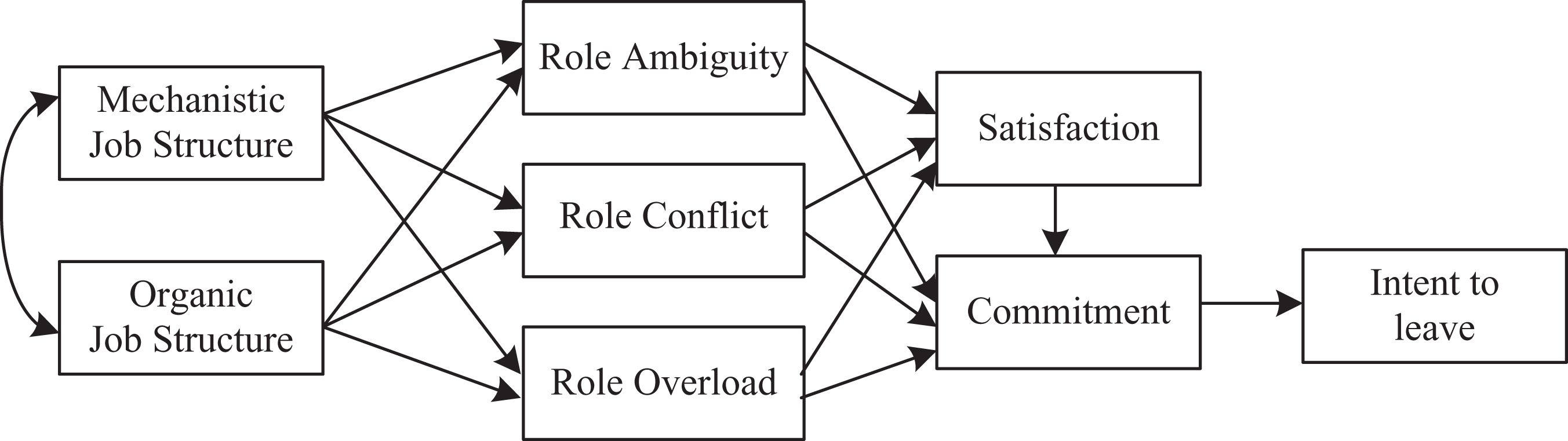
Conceptual model specifying the hypothesized linkages among job structuring, role stresses, satisfaction, commitment, and intent to leave.
Method
This study was part of a larger research project examining the relationships among teachers’ organizational variables and perceived work outcomes. In a previous study, we (Conley and You, 2009) examined teachers’ perceptions of role stressors, the attitudinal characteristics of satisfaction and commitment, and intentions to leave the school organization. As an extension of research work from the study of Conley and You (2009), the current study examined the role stress antecedents (mechanistic and organic job structuring) as moderated by locus of control. It should be noted that the instrument and measures were designed around research situated in the USA and may not appropriately capture or represent stressors experienced in other cultural settings. The next several sections describe the study sample, procedure, measures, and model development.
Sample
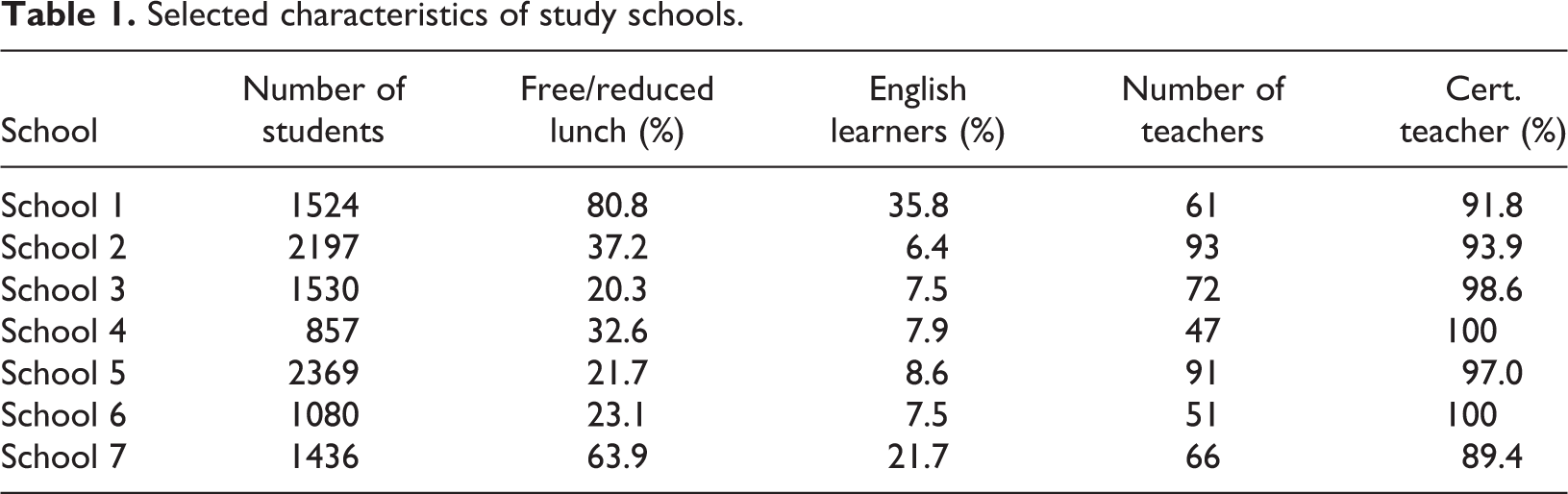
Data were collected from 177 teachers employed in seven moderately sized comprehensive high schools (Grades 9–12) in three neighboring counties in a southern coastal region of California. Table 1 provides the numbers of students, percent of students receiving free and/or reduced-priced lunches, percent of English language learners, numbers of teachers, and percent of certified teachers from the seven schools. Schools were chosen based on their geographic accessibility to the university research team and prior district contact. In addition, an effort was made to select those schools that overall were as similar as possible on school demographic characteristics, such as mid-sized city locations and school size, socioeconomic status indicators, and accountability performance (see Conley et al., 2006). Schools were moderate to large in size considering their locations bordering mid-sized coastal cities (857–2369 students). Five schools were fairly close to each other in the proportions of students receiving free or reduced-price lunches (from about 20% to 37%), with two schools higher, at about 64% and 81%. Thus, schools were moderate to moderately low in student socioeconomic status. In two schools, approximately one-quarter to one-third of the students were English-language learners, whereas in the five others the proportion was smaller, ranging from about 6% to 9%. At all school sites, the large majority of teachers were fully credentialed.
Selected characteristics of study schools.
California State Department of Education data indicated that the schools were moderately high performing in terms of student achievement on student test scores, the State Accountability Performance Index (API).1 These data also indicated that the schools were located in ‘urban fringe' areas bordering medium-sized cities, and all were on a traditional as opposed to a year-round calendar. Two schools were in a high school district configuration and the other five were in unified configurations serving kindergarten through 12th-grade students.
Procedure
Data collection occurred during the 2010–2011 academic year. After obtaining permission to survey teachers, some principals indicated that faculty meeting agendas were full, and they preferred distribution of surveys in teachers' mailboxes. Therefore, in three schools, we attended school faculty meetings to describe the study and distribute packets including a cover letter, university human subjects information, and measures of the study variables along with directions for returning the survey. In four others, following an announcement of the study at a faculty meeting, these materials were provided in teachers' mailboxes. Teachers responded to a number of Likert-scaled items developed to capture the above concepts and described in the following sections. In addition, teachers were asked questions designed to describe their age, gender, years of teaching experience, and role (e.g., teacher, mentor teacher).
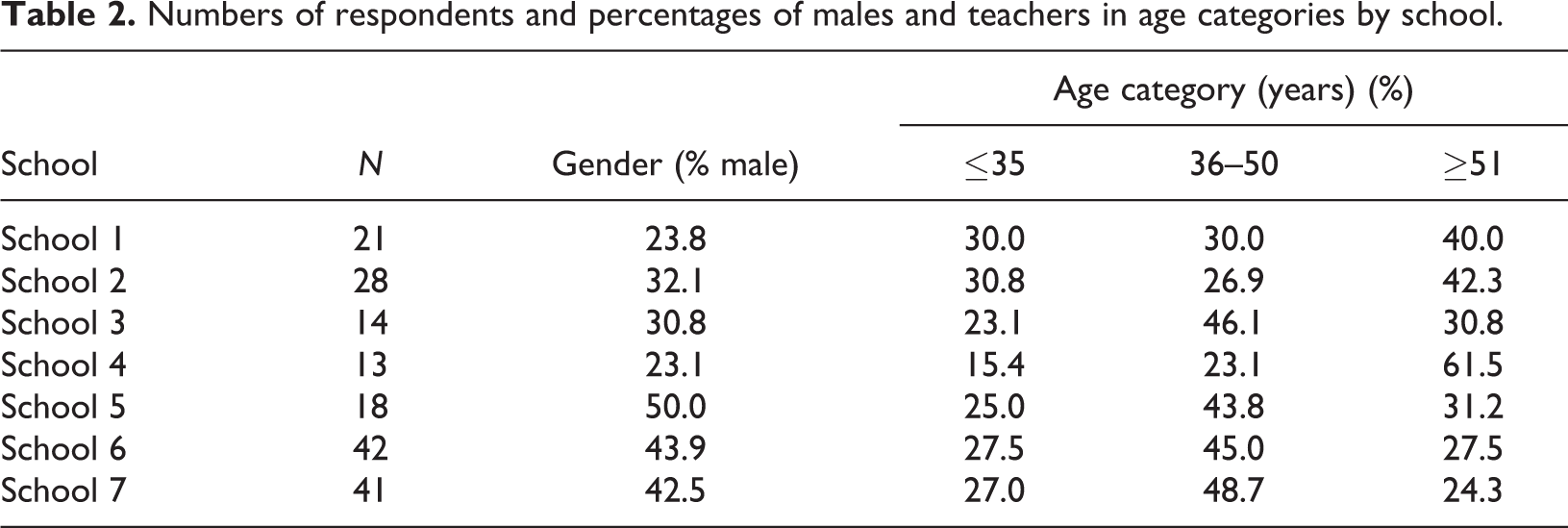
Of the 390 teachers, 177 (45%) estimated to be present at the time of data collection by school administration (e.g., on campus, at meetings, and/or not on leave) returned usable questionnaires. Response rates in the schools ranged from a high of 84% (School 6) to a low of about 26% (School 5). The relatively low percentage of responses from the two schools with the lowest return rates (Schools 3 and 5) may have been a result of the collection of surveys at the end of the year, dissemination following the schools' visit by an accreditation team, and the method of survey distribution (mailbox versus in person). Of the sample teachers, 65 (36.7%) were males. In addition, 26.7% of the sample was under age 36, 34.5% was between 36 and 50 years of age, and 38.8% was over 50. The mean years of teaching experience was 16.37 years, and approximately one-half of the sample had 15 or more years of teaching experience. Further, 39% of the sample reported a bachelor’s degree as the highest degree earned; for an additional 49.2%, a master’s degree was the highest earned, and 10.2% (or 18 teachers) possessed a specialist degree or doctorate. Of 164 teachers who reported their positions, 140 were regular classroom teachers, 14 were mentor teachers or specialists, and 10 were department heads (13 reported other or missing). It is not unusual in California for schools to have fairly high proportions of older, experienced teachers. In the 1970s, an increase in teacher hiring in California produced a large current cohort of older teachers. In addition, large numbers of new teachers leave the profession each year; estimates have suggested that one-half depart after five years in the profession (see Brown and Wynn, 2009).
Table 2 displays numbers of teacher respondents, gender, and age for each school. Respondents from each school had fairly similar proportions of males and teachers in different age groups. The age 35 and under category often had the lowest proportion of teachers (ranging from a high of 30.8% to a low of 15.4%), with the balance of teachers 36 or more years of age (see Table 2).
Numbers of respondents and percentages of males and teachers in age categories by school.
Measures
This study examined two job structuring variables, which were conceptualized as role stress antecedents (exogenous variables): mechanistic and organic job structuring. These variables were measured by scales developed by Bacharach et al. (1990a) and further conceptualized as mechanistic and organic job structuring by Freund and Drach-Zahavy (2007).
Mechanistic job structuring was assessed by items related to pervasiveness of rules, formalization, and record keeping, adapted from Bacharach et al. (1990a) and combined into a single measure as used by Freund and Drach-Zahavy (2007). The scale consisted of 12 items on a scale ranging from 1 (definitely false) to 4 (definitely true). A sample item was: ‘We have procedures here for every situation’. The Cronbach’s alpha reliability for mechanistic job structuring was 0.78.
Organic job structuring was originally indexed by three variables (six items), feedback from the job, task identity, and autonomy (Freund and Drach-Zahavy, 2007). However, based on our confirmatory factor analysis (CFA; described later), the first two items did not contribute to the distinctiveness of the organic job structuring measure and were deleted from subsequent analyses. Thus, the measure consisted of four items assessed on the same four-point scale as mechanistic job structuring. A sample item was ‘How things are done here is left pretty much up to the person doing the work’. The Cronbach's alpha for organic job structuring was 0.79.
This study also examined the three role stressors (mediating variables) of role ambiguity, role conflict, and role overload. Role ambiguity, defined as the perceived environmental demand of uncertainty or ambiguity about how to carry out the work role (Abramis, 1985, 1994), was measured with six items from Rizzo et al. (1970) scored 1 (very false) to 7 (very true). A sample item was ‘I feel certain about how much authority I have (reverse-scored)’. The Cronbach's alpha for role ambiguity was 0.76.
Role conflict, defined as occurring when different groups of persons with whom an individual must interact, held conflicting expectations about that individual’s behavior, was measured on the same seven-point scale with nine items from Rizzo et al. (1970). A sample item was ‘I must do things that should be done differently’. The Cronbach's alpha for role conflict was 0.85. Role overload, defined as incompatibility between work demands and the time available to fulfill those demands, was measured with three items adapted from Bacharach et al (1990a) on the same scale and drawn from the operationalizations of Cammann et al. (1979). A sample item was ‘I am rushed in doing my job’. The Cronbach's alpha for role overload for the sample was 0.76.
Regarding the affective work outcomes of satisfaction and commitment (mediating variables), satisfaction was defined as the extent of satisfaction with one’s success in meeting career goals and expectations and was a four-item scale. Items were specifically chosen to tap feelings of career success, and items not directly related to career satisfaction (e.g., satisfaction with pay, supervision) were specifically excluded (see Conley et al., 1989). The four items used to measure satisfaction were scored from 1 (very dissatisfied) to 4 (very satisfied) (such that higher values equaled higher satisfaction). A sample item was ‘How satisfied are you with the chance your job gives you to do what you are best at?’ The Cronbach's alpha for satisfaction was 0.89. Commitment was defined as the strength of a person’s identification with and involvement in the organization (Bluedorn, 1982; Porter et al., 1974). It was a composite measure of 15 items adapted from Mowday et al. (1982) and measured on a scale ranging from 1 (strongly disagree) to 7 (strongly agree). A sample item was ‘I am willing to put in a great deal of effort beyond that normally expected in order to help this school be successful’. The Cronbach's alpha for commitment was 0.87.
Intent to leave or turnover intentions (dependent variable) was measured by five items on the same seven-point scale and was adapted from Landau and Hammer and Nadler et al. (as cited in Wayne et al., 1997). A sample item was ‘I am actively looking for a job outside this school’. The Cronbach's alpha was 0.81 for this scale.
Finally, we examined locus of control (our moderating variable), defined as holding generalized expectations that one has ‘little or no control over events and personal circumstances’ (external) as opposed to attributing ‘the responsibility for such events to themselves, effectively internalizing this responsibility' (internal) (Oliver et al., 2006: 836). Locus of control was measured by items adapted from Spector (1988) designed to tap internal and external control at work. The items were measured on a scale of 1 (disagree very much) to 6 (agree very much); items tapping external locus of control (Items 5, 6, 8, 9, 10, 12, 13, and 16, see the Appendix) were reverse-scored such that higher scores on all items meant internal locus of control. A sample item for internal locus of control was ‘A job is what you make of it’. A sample item for external locus of control was ‘Getting the job you want is mostly a matter of luck’. Cronbach's alpha was 0.83 for this scale.
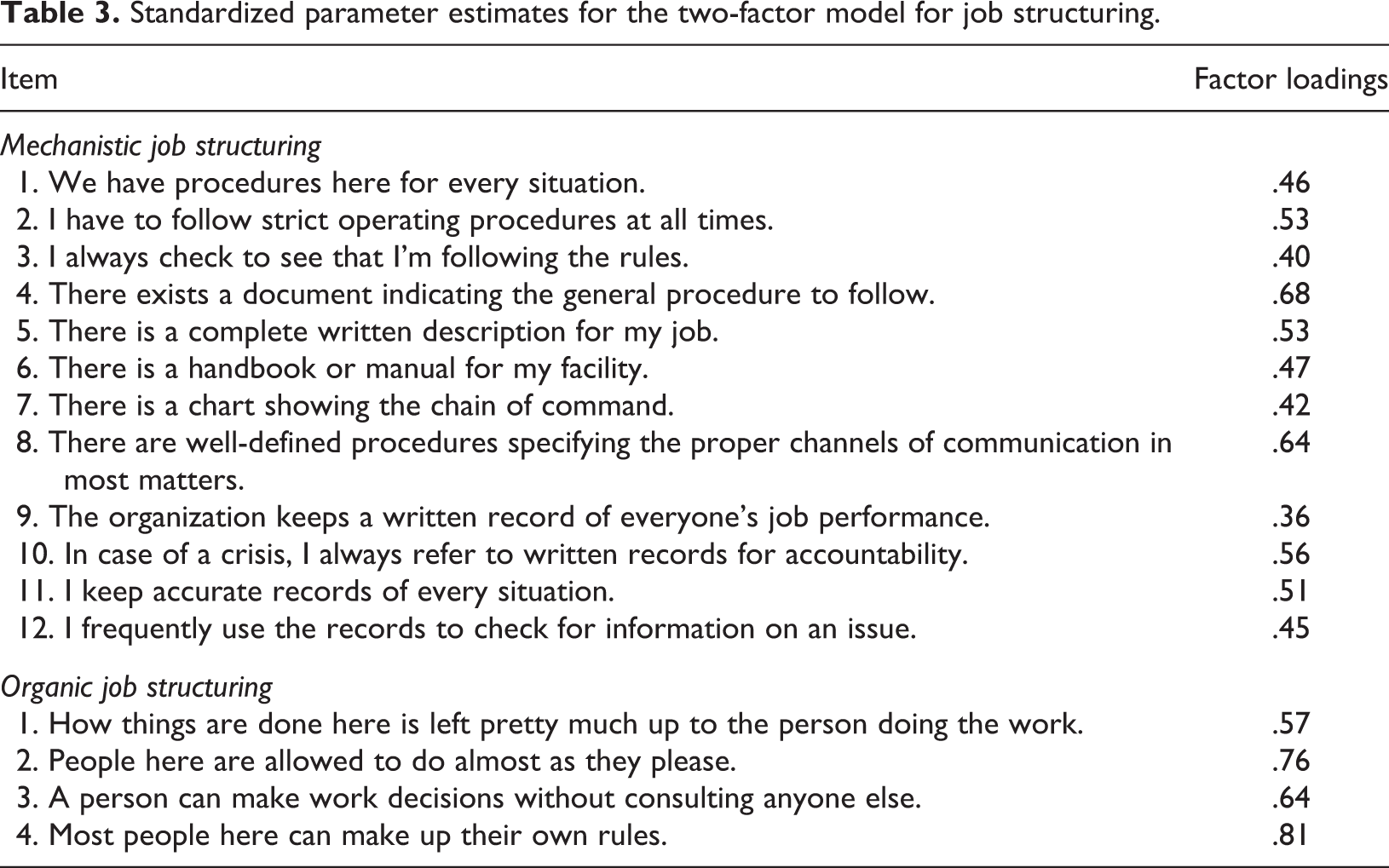
Table 3 contains all scale items for mechanistic and organic job structuring, and Table 4 contains the items for role ambiguity, role conflict, and role overload. The Appendix contains scale items for satisfaction, commitment, intentions to leave, and locus of control.
Standardized parameter estimates for the two-factor model for job structuring.
Standardized parameter estimates for a three-factor model for role stress.

Model development
The data were analyzed using SEM to assess the hypothesized structural relationships among latent variables. SEM was selected because it represented an appropriate analytic approach to deal with issues of specifying directionality among variables of interest and generating flexibility with which to test causal relationships. The analysis was conducted in two stages. Firstly, we assessed measurement models to evaluate the independence of the dimensions of job structuring and role stress examined in this study. Secondly, we proceeded with the assessment of the hypothesized structural relationships among latent variables. Because our data contained missing values, we conducted our analysis using full information maximum likelihood (FIML) estimation (Arbuckle, 1996) available in AMOS 5 (Arbuckle, 2003).
Model specifications
Measurement model
Because we had a priori hypotheses about the structure of the studied construct (e.g., number of factors, loadings of variables on factors), we conducted CFAs to examine the distinctiveness of (a) mechanistic and organic job structuring and (b) the three role stress variables included in our investigation.
Tables 3 and 4 show the standardized factor loadings of the two aspects of job structuring and the three types of role stress. In order to determine item loadings on these factors and the sign of those item loadings, we computed standardized parameter estimates for the two-factor model (see Table 3). For job structuring, two of the original six organic job structuring items showed low factor loadings (<.30); therefore, we limited the organic scale to the four items related to autonomy (see Table 3). For role stress, results indicated that the standardized factor loadings of each construct were substantively large (>.41), suggesting the distinctiveness of the three dimensions included in our investigation: role ambiguity, role conflict, and role overload (see Table 4).
Structural model
After assessing the measurement model to evaluate the independence of the dimensions of job structuring and role stress examined in this study, we proceeded with the assessment of the hypothesized structural relationships among latent variables. As a final step, we tested the moderating effect of teacher locus of control on the hypothesized model.
Model evaluation
Goodness of fit statistics used in SEM are measures of model fit assessing how well the estimated (i.e., fitted, implied) covariances between all the variables fit the observed covariances. The chi-square statistics and the p-value are used for testing whether the hypothesized model fits the data well. Thus, we were looking for a model where we did not reject the null hypotheses. However, the chi-square statistic value is sensitive to sample size; therefore, other measures were developed to assess model fit. In the present study, the normal fit index (NFI), comparative fit index (CFI; Bentler, 1990), and the non-normed fit index (NNFI) were used. Both the NFI and NNFI adjusted for complexity of the model. In general, although NFI, CFI, and NNFI values greater than 0.90 have been used as representing acceptable model fit (McDonald and Ho, 2002), a revised cut-off value close to 0.95 was recommended (Hu and Bentler, 1999).
Results
A preliminary descriptive analysis was conducted. Means, standard deviations, and ranges among study variables were computed (see Table 5). Several points about the means appeared noteworthy. Firstly, for mechanistic and organic job structuring, means appeared moderate in strength (M = 2.74 and 2.39, respectively, corresponding to between 2 ‘mostly false’ and 3 ‘mostly true’). In addition, the mean for mechanistic job structuring appeared closer to 3 or ‘mostly true’, indicating that teachers agreed on average that mechanistic structuring (rules, formalization, and record keeping) was present in their work. Secondly, role ambiguity and role conflict means also appeared moderate (M = 2.23 and 3.89, close to 2 ‘mostly true’ for role ambiguity (due to reverse-scoring) and 4 for role conflict or ‘uncertain’); further, perceptions of role overload were close to 6 or ‘mostly true’. With regard to satisfaction and commitment, the means were moderate (for satisfaction, M = 3.11, which was close to 3 or ‘satisfied’; for commitment, M = 5.33, which is close to 5 or ‘slightly agree'). Finally, for intent to leave, the mean (2.04) appeared lower, close to 2, indicating ‘moderate disagreement’ on average that one intended to leave one's school. In addition, it should be noted that the intercorrelations indicated that whereas mechanistic job structuring was negatively related to role ambiguity and role conflict, organic job structuring was positively related to these variables (Table 5). These zero-order correlations indicated that high mechanistic job structuring was associated with low role ambiguity and role conflict (r = –.38 and –.36, p < .01) but that high organic job structuring was associated with high role ambiguity and role conflict (r = .23 and .21, p < .01).
Descriptive statistics and intercorrelation matrix for study variables.

Note. *p < .05, **p < .01.
Models specifying the predicted patterns of relationships were tested for the entire group, for teachers with an internal locus of control, and for teachers with an external locus of control. The locus of control groups were formed by dividing the sample at the 50th percentile on the locus of control variable.
The patterns of relationships for the whole group are shown in Figure 2, and the patterns of relationships for the internal and external locus of control groups are shown in Figure 3.
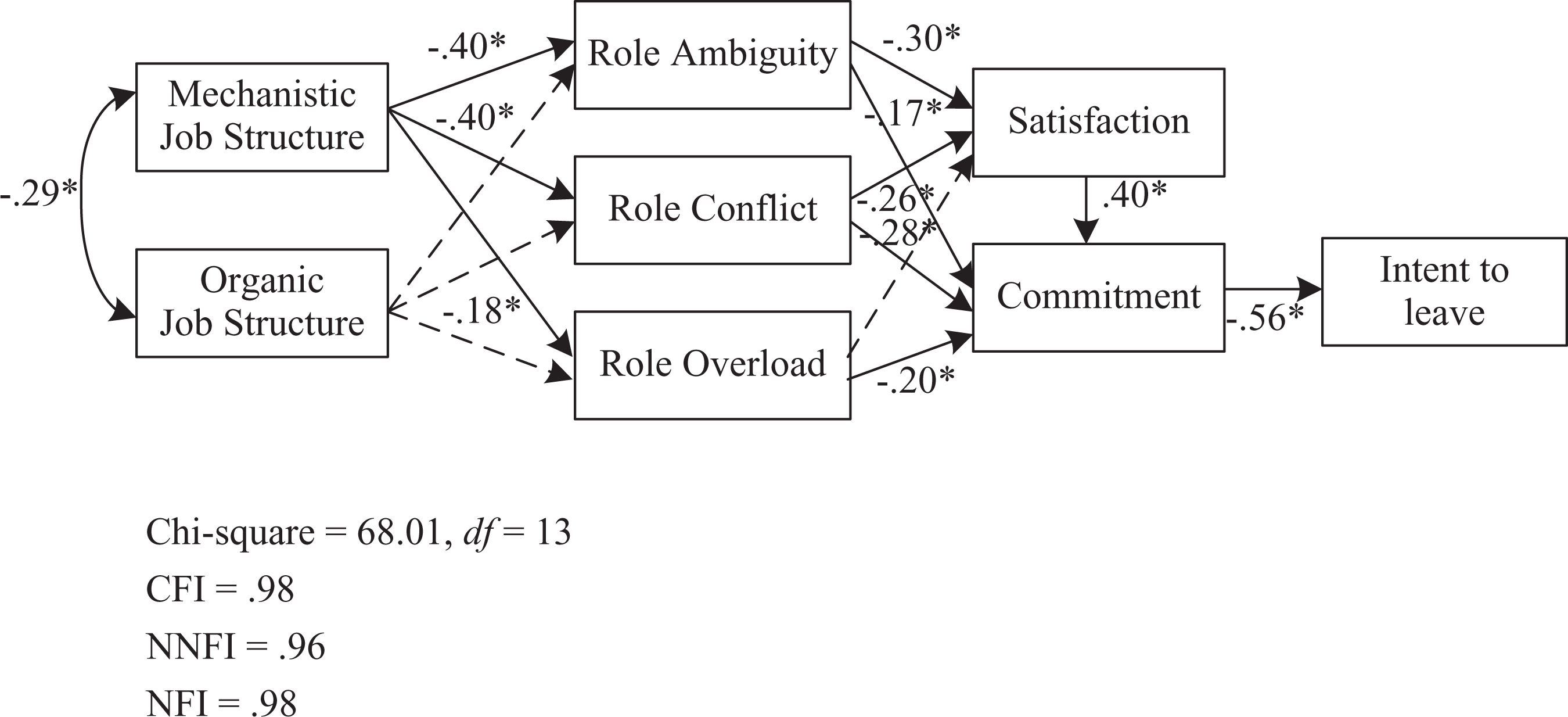
Final model with standardized coefficients (*p < .05).

Final models testing locus of control as a moderator (*p < .05).
Based on the results of the SEM, we answered the research questions posed by Hypotheses 1–7 as follows. For H1, which tested the relationships between mechanistic job structuring and role stress, we found that for the group of teachers as a whole, the higher the perceptions of mechanistic job structuring, the lower the perceived role stress, that is, the more teachers perceived mechanistic job structuring, the lower their perceived role ambiguity, role conflict, and role overload (Figure 2).
For H2, examining the relationships between organic job structuring and role stress, we found that for the group as a whole, the hypothesis was not supported for organic job structuring. This indicated that when the effects of organic job structuring were considered together with mechanistic job structuring, organic job structuring did not influence teachers' perceived role ambiguity, role conflict, or role overload (Figure 2).
For H3, testing the relationships among role stress, satisfaction, and commitment, we found that for the group as a whole, the higher the perceptions of role ambiguity and role conflict, the lower the perceived satisfaction and commitment. However, the hypothesis received mixed support for role overload. Role overload did not influence teachers' perceived satisfaction, but it did influence teachers' perceived commitment. Specifically, the more teachers perceived role overload, the lower their perceived commitment (Figure 2).
For H4, which tested satisfaction as mediating the role stress–commitment relationship, we found that for the group as a whole, satisfaction mediated the relationship between two role stressors and commitment. Specifically, satisfaction mediated the effect of role ambiguity and role conflict on commitment (Figure 2).
For H5, which tested commitment as mediating the satisfaction–intent to leave relationship, we found that for the group as a whole, commitment mediated the relationship between satisfaction and intentions to leave the school organization (Figure 2).
For H6, testing the relationship between commitment and intentions to leave, for the group as a whole, the greater the commitment, the lower the intentions to leave the school organization. H1 and H3–H6 were supported through the path from mechanistic job structure -> role ambiguity, role conflict, role overload -> satisfaction -> commitment -> intentions to leave (with the exception that role overload did not influence job satisfaction but did influence commitment; Figure 2).
Finally, H7, examining locus of control as a moderator of the relationships among job structuring, role stress, and work outcomes, received partial support, particularly regarding the effects of role ambiguity and role overload (Figure 3). For teachers with internal and external locus of control, the higher the perceptions of mechanistic job structuring, the lower the perceived role ambiguity and role conflict. In addition, for both groups, the higher the perceptions of role conflict, the lower the perceived satisfaction and commitment. However, for the internal locus of control group, the greater the role ambiguity, the lower the perceived satisfaction. In addition, for that group, the greater the role overload, the lower the perceived commitment. For the external locus of control group, the greater the role overload, the lower the perceived satisfaction. Finally, for teachers in both groups, commitment mediated the effect of satisfaction on intentions to leave; higher commitment was in turn associated with lower intentions to leave. Thus, the partial support of H7 owed to the differential results concerning the influence of role ambiguity and role overload on work outcomes.
Discussion
The introduction to this article drew attention to a potential conflict between the perceived professional or semi-professional ethos of teachers and the bureaucratic structure of school organizations. However, it was asserted that to some degree, the establishment of work certainty (associated with bureaucratic job structuring) could also be expected to reduce role stressors. This reduction in stressors was further expected to enhance satisfaction, commitment, and longevity in the school organization. The results of this study are discussed separately for the group as a whole and teachers with internal and external locus of control.
Group as a whole
The finding of this study that mechanistic job structuring was negatively related to role ambiguity and role conflict was consistent with suggestions from previous research (Bacharach et al., 1990a, b; Jackson and Schuler, 1985); namely, that the presence of written communication and rules provided information clarifying organizational expectations and thus reducing experienced role stress. The strong negative effect of mechanistic job structuring on role ambiguity and role conflict (–.40 and –.40) and the moderate but statistically significant negative effect of mechanistic structuring on role overload (–.18) indicated that the greater the bureaucratic job structuring, the less the role ambiguity, role conflict, and role overload.
However, when mechanistic and organic job structuring were considered together in the structural equation, contrary to prediction, organic job structuring did not reduce role stress. This finding was unexpected as, for example, Jacobsson and Pousette (2001) suggested in Swedish schools, directives aimed at reducing teacher discretion may be perceived as incongruent with the work of professionals. ‘Autonomy … is expected in schools’ whereby the professional is expected to supply ‘much structure and coordination' (Jacobsson and Pousette, 2001: 157). Organic job structuring (e.g., as reflected in the item, ‘How things are done here is left pretty much up to the person doing the work’) did not reduce role stress. This finding might be explained in part if we consider that our organic job structuring measure did not specify the ability to make decisions over particular aspects of work.
For example, teachers' notions of autonomy may differ from those typically defined in the literature as the discretion exercised in carrying out one's job assignment (Hackman and Oldham, 1980). For instance, were teachers to be asked about their autonomy over curriculum, they may consider that autonomy limited because curricula were largely developed by state and district teams. However, if asked about their autonomy over the student learning environment (e.g., arranging the physical setting, determining instructional methods), teachers may rate their autonomy higher. Correspondingly, considering oneself to have less influence over the curriculum may not increase role stress whereas having less influence over the learning environment may. Therefore, measures of autonomy that distinguish among different work aspects may be helpful in future research. In addition, qualitative follow-up research examining how teachers view autonomy may be useful in this regard.
Another possible explanation for the failure of organic job structuring to affect role stressors could be its study definition in terms of autonomy (previously described) while omitting such task characteristics as task identity and feedback from the job (Hackman and Oldham, 1980). Jackson and Schuler's (1985) meta-analysis indicated that autonomy was negatively related to role stress in three studies they examined, but that other task characteristics might also reduce role stress. For example, feedback from the job was expected to provide more information to employees, thereby reducing role ambiguity. Interestingly, our (zero-order) correlation finding indicating a positive association of organic job structuring with role ambiguity and role conflict indicated that those teachers who report making their own work decisions and rules also experienced higher role ambiguity and conflict. Interestingly, Rogers and Molnar's (1976: 600) study of USA county administrators found one dimension of autonomy to be correlated positively with role conflict and role ambiguity; they reasoned that the ‘authority to make decisions’ possibly contributed to disputes and disagreements, thereby increasing role stress. As noted in this study, however, when mechanistic and organic job structuring were considered together in the model, mechanistic job structuring was most influential on role stress.
In this context, the finding that mechanistic job structuring led to reduced role stress which increased satisfaction deserves some discussion. Although sources of mechanistic job structuring were not examined in this study, and average perceptions of mechanistic structuring were moderate, we can speculate about how managerial structuring might contribute to reducing role stress and increasing satisfaction. For example, role conflict may deal with teachers being ‘increasingly confronted with conflicting demands [including] coping with negative or neutral support from administrators and parents’ (Byrne, 1994: 648). To provide one illustration of managing through mechanistic job structuring, although parent–teacher conferences are not common in high schools, a teacher might find him/herself confronted with a parent who has learned late in the semester that her/his child has failed several tests. The parent may become increasingly irate when asking the teacher why he/she was not informed earlier as to the student's lack of progress, potentially leading to role stress. However, an administrator or a department head who has provided teachers ‘well-defined procedures’ (e.g., mechanistic job structuring) might reduce a sense of conflict in role expectations (i.e., between administrative expectations that teachers handle conflicts and demands from parents). Procedures might call for informing administrators/department heads when an appointment is scheduled, thereby increasing the certainty that a superior would be aware and present to offer assistance if needed.
Turning to the relationship between role stressors and work outcomes, our finding that satisfaction led to feelings of commitment and in turn to decreased turnover intentions was consistent with previous research (Conley and You, 2009; Elangovan, 2001). In an exception to the general pattern of relationships (role stress -> satisfaction -> commitment -> reduced intention to leave; Figure 2), role overload influenced commitment (–.20) but not satisfaction. This finding suggested that experiencing time incompatibility with organizational demands did not make a teacher less satisfied with the job but would lead the teacher to question his or her commitment to the organization. Education managers might consider time incompatibility issues in reducing teacher role stress, particularly when ‘role overload’ infringed on what the teacher believed he or she had to do to improve student learning (Collinson and Cook, 2004). Possibly, the effect of role overload in influencing commitment (second in strength of the role stressors) was most pronounced when it interfered with a core purpose—to reach students and help them learn (Lortie, 1975). Our 15-item measure of commitment incorporated several aspects regarding the strength of a person's identification with the organization, including teachers’ willingness to ‘put in effort beyond what is normally expected [and] accept almost any type of job assignment’ to keep working at the school. It is not surprising that teachers experiencing role overload question investing this greater involvement in job assignments and tasks.
Locus of control groups
For the group as a whole (as described above), we noted that findings revealed a strong negative effect of mechanistic job structuring on both role ambiguity and role conflict. Similarly, when internal and external locus of control groups were examined separately, mechanistic job structuring affected role ambiguity and role conflict (but not role overload). Therefore, for both groups, bureaucratic job structuring was found to reduce the role stressors of role conflict and role ambiguity.
Turning to findings concerning the relationships among role stress, satisfaction, commitment, and intent to leave for the two groups (internal and external locus of control), notably, role overload affected satisfaction and commitment differently depending on the group. Among teachers with an external locus of control, role overload decreased satisfaction (–.22), but for the internal locus of control group, role overload decreased commitment (–.27; Figure 3). Interestingly, the outcome of commitment was immediately antecedent to intention to leave in our model (Figure 1). As noted elsewhere (Firestone, as cited in Conley and You, 2009: 783), even if lessened commitment did not materialize in actually leaving the organization, a reduced attachment to organizational goals and values may make teachers feel ‘trapped in their work’, and ‘no longer committed to providing the skill and effort they did earlier' in their careers. From our study, role overload appeared particularly consequential for the commitment of teachers who believed that they were in control of outcomes given their efforts. It may be that time compression at work challenged this belief, contributing to the frustration of teachers with a high internal locus of control and explaining their reduced commitment to the school.
A final point should be made concerning locus of control. The Work Locus of Control (WLOC, Spector, 1988) measure in this study tended to be used with workers in organizations other than schools. The measure did not refer specifically to teachers' work with students. Therefore, adding items that were more oriented to teacher–student interactions to the instrument may yield research that is more beneficial to teachers and education managers. Examples might include self-perceptions of tendencies to persist with children who are difficult to reach and/or self-perceptions of inclinations to experiment regularly with instructional innovations. If teachers believe they can succeed as a result of their own efforts, it seems likely they would continue to persist in both of these areas.
Several study limitations should be noted. Firstly, the generalizability of the findings was restricted by the use of cross-sectional data and a relatively small sample. Secondly, our focus on organizational antecedents of stress was limited to mechanistic and organic job structuring. Mechanistic as opposed to organic job structuring represented a very narrow range of options in organization theory, administration and management theory, and leadership studies. By drawing on these concepts, we utilized a structural-functionalist perspective (Scott, 2003) that in itself is subject to criticism and should not be considered the only approach to be taken in studying organizational stressors. Thirdly, role stressors were not the only causes of employee withdrawal or intentions to leave. Influencing factors could include (but not be limited to) the dehumanizing effects of bureaucratic organizations and to interpersonal group-level conflict in schools. Fourthly, it could be argued that our discussion of the personality characteristic of locus of control and psychological issues in organizational behavior research conflated psychological issues with personality theory. It should be noted that many psychological issues do not arise from personality problems or disorders but from other types of dynamics at play. Finally, much of the research cited in this paper developed from a research base in the USA and Western Europe and may not be representative of studies in other cultural settings.
In sum, the study, as conceptualized from a perspective of role stress in organizations, suggested that mechanistic job structuring was important for increasing teacher satisfaction, commitment, and intentions to remain at one’s school, by helping to alleviate the role stress dimensions of role ambiguity and conflicting demands. Among teachers with an internal locus of control, it appeared particularly important that some degree of mechanistic job structuring be in place to reduce role ambiguity and conflict and increase satisfaction and commitment. Although we noted that our focus was limited to mechanistic and organic antecedents of role stress, our approach yielded some valuable insights to guide educational leaders and their practice. Indeed, a focus on these job structuring schemes addressed a longstanding concern in educational management (Ogawa et al., 1999): to what extent should managers implement bureaucratization as opposed to implementing professional enhancing strategies? Furthermore, by better understanding teachers’ dispositions (e.g., locus of control) and how teachers with different dispositions might react differently to the same stressors, managers can more appropriately craft interventions as opposed to treating all teachers as one monolithic group. Efforts directed toward examining which stressors are reduced by which types of mechanistic job structuring at the high school level may prove beneficial in enhancing an understanding of how the most important aspects of role stress could be reduced for teachers, thus ultimately retaining teachers in their school organizations.
Footnotes
Appendix
Funding
This research received no specific grant from any funding agency in the public, commercial, or not-for-profit sectors.