



Abstract
Teacher collaboration is a vital factor in successful school reform, and the networks in which educators are embedded support (or constrain) access to essential social capital resources. In this study, authors used social network analysis to examine the changing structure of teacher collaboration networks over the course of a rural District’s 3-year Professional Learning Community (PLC) initiative. Visual depictions (sociograms) of district- and school-level teacher collaboration networks were generated, and measures of network cohesion – including size, density, connectedness, components, and degree – were calculated at three points in time. Authors worked in partnership with district administrators to explore how location of teachers and principals, and network capacity for diffusion of innovation, changed over time. School leaders may not know how to purposefully influence communication ties between teachers, relying instead on the invisible web of personal affiliations through which professional opinions travel. This study contributes to the field’s understanding of how administrator choices about organizational structure affect “cross-pollination” and the networks through which teachers are able to access and contribute the knowledge and ideas they need in order to deliver high-quality curriculum and instruction to all students.
Introduction
Collaboration has become a contemporary organizational imperative. The phenomenon is widespread with virtually no sector or discipline untouched – from government to industry, music, and fashion, the term “collaboration” evokes an understanding that two or more people have come together to accomplish something that they could not have as independent actors working alone. In the context of schooling, the establishment of professional learning communities (PLCs) predicated on teacher collaboration is one of the most predominant reform approaches worldwide (Woodland, 2016; Yendoll-Hoppey and Dana, 2010) as research has linked educator collaboration to outcomes including teacher satisfaction (Sargent and Hannum, 2005; Vescio et al., 2008), teaching practices (Curry, 2008; Slavit et al., 2011; Vescio et al., 2008), and student achievement (Egodawatte et al., 2011; Goddard et al., 2007; Lomos et al., 2011).
As faculty members in a College of Education situated in a bucolic region of the northeast United States, our work is most often in partnership with school leaders of small, geographically dispersed rural schools. It is not uncommon for the superintendents and principals with whom we work to express enthusiasm for the idea of improved educator collaboration, along with the opinion that their schools are already “tight-knit” by nature and therefore almost by definition operate as a professional learning community. Despite this impression, it is not clear that teachers in rural schools have any more or better access to each other’s knowledge, expertise, and skills via collaboration than their urban or suburban counterparts. The most recently available Teaching and Learning International Survey (TALIS) data suggest that in the United States, teachers in rural settings spend substantially less time engaged in teamwork or in dialogue with colleagues than non-rural teachers (nearly an hour less per week, on average). 1 This is supported by the National Center for Education Studies (NCES) data compiled by Choy, Chen and Burgarin (2006) which showed that teachers in schools with fewer than 150 students were far less likely to engage in mentoring and coaching or to collaborate regularly with other teachers (Glover et al., 2016). Less teacher collaboration may in part be due to some of the practical exigencies of small rural schools, especially singleton teachers (those who are the only math or 4th grade teacher in their school, for example) who operate in geographically dispersed locations, making the possibility of getting teachers together with and across buildings more difficult.
Efforts at improving educator collaboration in rural schools have been successful, however, in the U.S. and worldwide, where the creation of PLCs predicated on teacher teaming is often seen as a “cost-effective strategy for teacher professional development in impoverished communities” (Sargent and Hannum, 2009: 259). PLCs have gained considerable popularity over the past few decades, and with good reason – research shows that they positively correlate with teacher satisfaction, student achievement, school culture, and instructional practice (Caprara et al., 2006; Dufour et al., 2008; Talbert, 2010; Vescio et al., 2008). When implemented wisely, PLCs have the potential to leverage existing social capital in a school or district into significant gains for teaching and learning (Woodland and Mazur, 2015). The cultivation of PLCs is increasingly part of school reform and professional development models across the globe. Though research findings are not clear-cut, there is evidence to suggest that implementation of PLCs is producing benefits for teachers and students in China (Ryan et al., 2009; Sargent and Hannum, 2005, 2009; Wang, 2015), Cameroon (Lange, 2014), Singapore (Hairon and Dimmock, 2012), Pakistan (Hashmi, 2011), England and Finland (Webb et al., 2009), as well as the United States. In the most comprehensive study of U.S. rural teacher collaboration currently available, Chance and Segura (2009) took a qualitative look at a rural high school through interviews, observations, and document analysis. The school realized gains in proficiency tests, met its targets for Adequate Yearly Progress, and improved both attendance and graduation rates. The researchers found that the “heart” of the improvement process was a system of teacher collaboration and professional learning that had been implemented by the school’s principal (Chance and Segura, 2009: 7).
Capacity for widespread and systemic instructional improvement is greatly determined not only by the number of individual teachers in a school who have knowledge of or expertise in a particular innovation, but by the ability of the existing network of professional relationships to support the acquisition, flow, and sharing of critical resources (Farley-Ripple and Buttram, 2015). Networks are “a critical way to sustain the work of teaching and learning and ultimately of change” (Daly, 2010: 1). Underlying these assertions is the idea that individuals are embedded in social structures, that relational ties between individuals in those structures serve as conduits for the exchange of resources, and that such resources can be accessed to advance individual or institutional goals (Nahapiet and Ghoshal, 1998). Because sources of knowledge and ideas are understood to lie in the structure of relational ties in which an actor is embedded (Adler and Kwon, 2002: 19), an individual’s position relative to a larger network may have profound implications both for the actor and for the network as a whole. It is theorized that denser (teacher support) networks are associated with resource exchange and complex curricular implementation, whereas sparser networks of ties may provide access to different types of information and resources (Daly et al., 2010). It stands to reason that a purposefully designed, cohesive teacher communication network has far greater capacity to equitably meet the needs of all students than an uncoordinated, disjointed professional learning community. A disconnected network of isolated teachers and groups promotes pockets of equity and excellence and/or stagnation; such a network is incapable of supporting the flow of professional knowledge and instructional innovation school-wide.
PLCs are a predominant approach to educational networking worldwide; the idea of networks has emerged as a critical means of supporting school improvement in the U.S. and internationally. Working in the Netherlands, Veugelers and Zijlstra (2002) found that networks that bring teachers together from diverse schools can foster professionals “who feel ownership over their own work, who have a feeling of commitment to the network that they consider as theirs, and who have a caring relationship with the other members of the network” (p.173). Similarly constructed teacher networks in Austria were found to support the sharing of information, professional learning, and self-esteem of teachers (Rauch, 2013). Researchers in Australia noted that professional development initiatives were more successful when teachers had the opportunity to be part of a “growth network” (Clarke and Hollingsworth, 2002). However, because teacher networks exist within broader cultural and political contexts, the norms in different countries may complicate the way that networks form and grow (Veugelers and Zijlstra, 2002).
Professional learning communities as social networks
Increasingly, educational leaders and researchers are becoming aware that the social capital existing in schools is too valuable to be left to the serendipitous circumstances of geographic proximity or mutual amenability; in other words, it shouldn’t happen simply by accident. Formal organizational networks such as the construction of PLCs are thought to play a key role in shaping teacher self-efficacy beliefs, in enabling access to information, and in strengthening or diminishing organizational commitment (Daly et al., 2010). Tie formation between teachers is shaped “in profound ways by existing organizational norms, structures, and practices” (Coburn, et al. 2010: 46). A school’s organizational conditions affects how teachers form relationships with each other by exerting influence over who they interact with, the amount of contact they have with one another, and expectations for how they interact; school administrators play a central role in shaping those organizational conditions (Deal et al., 2009; Evans and Stone-Johnson, 2010; Moolenaar et al., 2010).
The focus of this study is the formal, face-to-face network of teacher teams established by a district for the sake of creating a professional learning community in which teachers collaborate in order to improve instruction and student learning. The notion of teaming is crucial to an understanding of PLC-created networks for two reasons. First, it is understood that teams are the building-blocks of successful organizations (Goh, 1998). Second, although networks of informal relational ties are important, those ties are largely outside an administrator’s immediate locus of control. Direct and indirect effects of school-based, purposefully formed collaborative teacher teams, however, fall squarely within the purview of school leaders. Administrators set up, support, resource, and supervise the development of PLCs, with the expectation that collaboration between teachers (that take place within and through teaming structures) will lead to improvements in instruction.
The study and context
This study took place from 2013 to 2016 in Four Pines, 2 a school district that used the term PLCs to refer to educator collaboration and as a shorthand to indicate groups of teachers brought together in teams to look at matters of instruction. The Four Pines District has “Rural-Distant” NCES classification, i.e. is a district that is more than 5 miles but less than or equal to 25 miles from an urbanized area, and that is more than 2.5 miles but less than or equal to 10 miles from an urban cluster (National Center for Education Statistics, n.d.). It comprises four elementary schools: Foxtail, Mountain, Spruce, and Longleaf (all pseudonyms) serving students from pre-kindergarten through grade six in five rural communities in New England.
Like many rural school districts, the geographic area of Four Pines is considerable, and spans nearly 160 square miles. Despite being one of the largest districts in the state in terms of geographic size, its population of 585 students (at the time of this study) classifies it as one of the state’s smallest. The District comprises four unified elementary schools; the schools are located in four different towns, serve five different communities, and send children on to three different middle/high schools. All towns served by the district have a population of less than 2000 residents; two have a population of less than 1000 residents. Two are old mill towns past their industrial prime, while three are characterized by large tracts of farmland. All are between 94% and 100% white.
The PLC initiative
The overall aim of the Four Pines PLC initiative was “cross-pollination” – to create greater capacity, district wide, for teacher collaboration and the improvement of instructional practice organized around key topics and content of teachers’ choosing. The District’s theory of action was that if all teachers collaborate and problem solve about matters of instructional practice, and new knowledge and ideas about instruction are shared among all PLCs, then the quality of teaching instruction will improve writ large, which will enable all of our Four Pines students to access high-quality curriculum and experience meaningful learning. At the outset of the district PLC initiative, the Four Pines superintendent explained that the nature of the unified arrangement, although fiscally and logistically advantageous to the towns, also has the purported benefit of supporting the sharing of knowledge and expertise across multiple schools. Yet, building a common culture, sharing practices, and ensuring instructional equity remained a formidable challenge. Despite past efforts to encourage teachers within and between schools to work together, teachers and schools persisted in operating in relative isolation. In his opening all-district memo at the beginning of the school year he called for the “cultivation of collaboration” and outlined his plan to “enact means for cross-pollination.” The superintendent, who had been with the Four Pines district for 12 years (10 as principal at one of the elementary schools), expressed frustration with what he characterized as the low quality of dialogue in the current teacher teams. “These people are friends,” he said. “They hang out together, they’re in a knitting or a biking club together, you know…but when it comes to getting them to look at each other’s math scores and talk specifically about what they do in their classrooms, it’s just not happening.” Moreover, he explained, the schools operated largely as independent organizations, with few or no connections between educators in the other buildings.
Four principals, the superintendent, the special education director and the curriculum coordinator were responsible for launching the PLC initiative, and became identified as the District Instructional Leadership Team (DILT). The superintendent partnered with a group of university researchers (including the authors of this paper) to help guide the DILT through the first years of the PLC work. To promote implementation of the PLC initiative, the DILT and university team utilized the Teacher Collaboration Improvement Framework (TCIF). The TCIF is a blueprint that school principals and teachers can use to create, evaluate, and improve professional collaboration within their educational contexts (Gajda and Koliba, 2008). Though a complete description of the TCIF framework is beyond the scope of this paper, it includes six non-linear steps that help school administrators and teachers to operationalize and create conditions for effective collaboration: (1) raise collaboration literacy, (2) identify and inventory communities of practice, (3) reconfigure teacher teams, (4) assess quality of collaboration within teams, (5) make corrections, and (6) recognize accomplishments. The TCIF addresses school-level factors that are critical to supporting educator collaboration – namely finding time to meet, composing groups with the appropriate membership, helping groups find the right focus for their work, implementing disciplined inquiry-based processes, and facilitating the flow of resources and information across collaborative groups (Dufour et al., 2008; McLaughlin and Talbert, 2006; Woodland, 2016).
Research questions
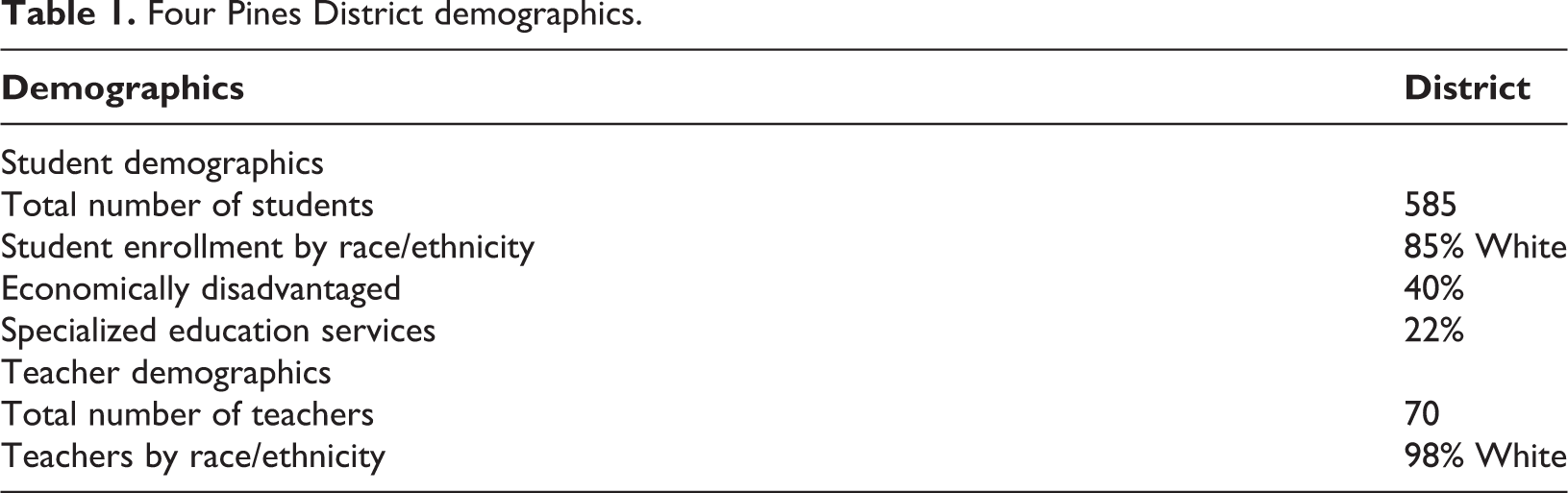
In this study, we aimed to examine rural school and district capacity for diffusion or “cross-pollination” between teacher teams. In other words, we looked at how the emergent PLC network appears to enable or constrain the ongoing spread of ideas (generated within an individual teacher team) between PLCs within and across schools. Without a cohesive network structure, collaborative work can exist in a state of “parallel play” where teacher groups lack access to each other’s professional knowledge, and shared understandings about how to best foster student learning are inhibited. We sought to better understand the structure of the Four Pines teacher collaboration network and how it changed over the course of a 3-year PLC initiative. Demographic information for the District is found in Table 1. We used social network analysis to address the following research questions: How did the structure of the Four Pines teacher collaboration network change over time? How were district teachers positioned to access and broker network resources over time? How were principals positioned to access and broker network resources over time?
Four Pines District demographics.
Social network analysis (SNA)
SNA is a way of describing, measuring, analyzing, and visualizing relationships between actors in a social system. While often referred to as a method, SNA is in fact a “set of theories, models, and applications that are expressed in terms of relational concepts and processes” (Carolan, 2014: 4). SNA is, in some ways, a way of measuring a person’s access to communal resources, as it assumes that “an actor’s position in a network determines in part the constraints and opportunities that he or she will encounter” (Borgatti et al., 2013: 1). Moreover, it treats individuals in a network as inter-dependent actors, their behavior at least in part determined by the position they occupy in the network (Deal et al., 2009). SNA holds that relationships or connections between people in a network are critical conduits through which many types of resources – knowledge, information, advice, materials, etc. – may flow (Daly, 2010).
Social network analysis is increasingly applied to a variety of educational research questions, especially those that are concerned with educator collaboration and the implementation and sustainability of innovation and reform initiatives (Atteberry and Bryk, 2010; Coburn et al., 2010; Whitcomb et al., 2016; Woodland et al., 2014). Leana and Pil (2006) found that attending to the overall structure of a school’s collaboration network could facilitate information sharing and exchange of knowledge among individuals. Moolenaar and Sleegers (2010), working in the Netherlands, found that teachers in “dense” instruction-focused collaborative teams perceived their working climate to be more innovative than teachers in schools where fewer such relational ties existed. They emphasized the importance of links that “nurture and stimulate the growth of a schoolwide innovation-supportive climate in which risk taking can occur in a safe environment” (p.111). Coburn et al. (2010) looked at network structure in four U.S. non-rural elementary schools, and found that collaboration between teachers can be heavily influenced by existing organizational norms, structures, and practices, and that “the tie formation process is amenable to policy intervention” (p.48). To date, SNA has not been used by researchers or practitioners to any notable degree to explore or investigate pressing issues faced by rural educators. One aim of this study is to stimulate and contribute to a nascent SNA research agenda in rural settings worldwide.
Data collection and analysis
A multistep process was used to generate the raw descriptive data about the teacher collaboration network. A sociometric survey instrument was administered through which all Four Pines teachers identified what teams (“PLCs”) they were on and with whom. At a district-wide meeting, teachers were asked to identify all the collaborative teams of which they were a member, and all the other members of the PLCs in which they participate. In advance of its administration, the Superintendent and building principals communicated with all teachers via email and in person via faculty meetings about the purpose of the survey and how the data would be used. The pre-survey administration protocol including informing school personnel about the purpose of the survey, how the data would be used to inform decision-making about how to improve teacher teaming, and that their responses would remain completely confidential. All names of individuals and schools used throughout this paper have been changed to protect the identity of each respondent. The survey was voluntary, it was choice to opt-in, and teachers had the option to withdraw from the process at any point in time. We were able to create a spreadsheet that accurately identified all school personnel by name, the teams of which they were a member, and the number and size of teams for each of the four schools in the district. To confirm the accuracy of the data provided by the teachers we cross-referenced organizational charts and lists with information made available on the district website (e.g., staff contact lists, job titles, school improvement plans, school newsletters, etc.). In addition, we asked principals to cross-check the aggregated data and results of the team inventory process. Verified raw data to construct the network were organized into a 2-mode matrix in ®Excel that represented the individual educators and the groups/teams/committees to which each was a member. This matrix was imported into SNA software including R (R Core Team, 2013) and UCINET (Borgatti et al., 2002) that enabled creation of the teacher network sociograms (maps). This multi-step data collection process took place at three points in time: Spring of 2014 (T1) prior to the advent of any official district-wide PLC initiative; Spring of 2015 (T2), nine months into their process of PLC implementation; and Spring of 2016 (T3) after the district had been engaging in their district-wide PLC reform initiative for two full school years.
Our research questions look specifically at structural network properties of cohesion and centrality, which are measures requiring explanation as to their calculation and analytic utility. Cohesion refers to how “tangled up” or “knitted” together a network is overall (Borgatti et al., 2013: 150), and “measures of cohesion” is a term used to describe an array of sociometric equations run on a whole network (rather than on individual network nodes). Measures of cohesion allow the examination and description of whole-network structures from an array of different angles; they also help researchers make predictions or assumptions about network capacity and characteristics. Several indicators of network cohesion were analyzed in this study: size, density, isolates, connectedness, and components. Table 2 provides brief descriptions of the key measures of cohesion used in this study.
Key measures of network cohesion.
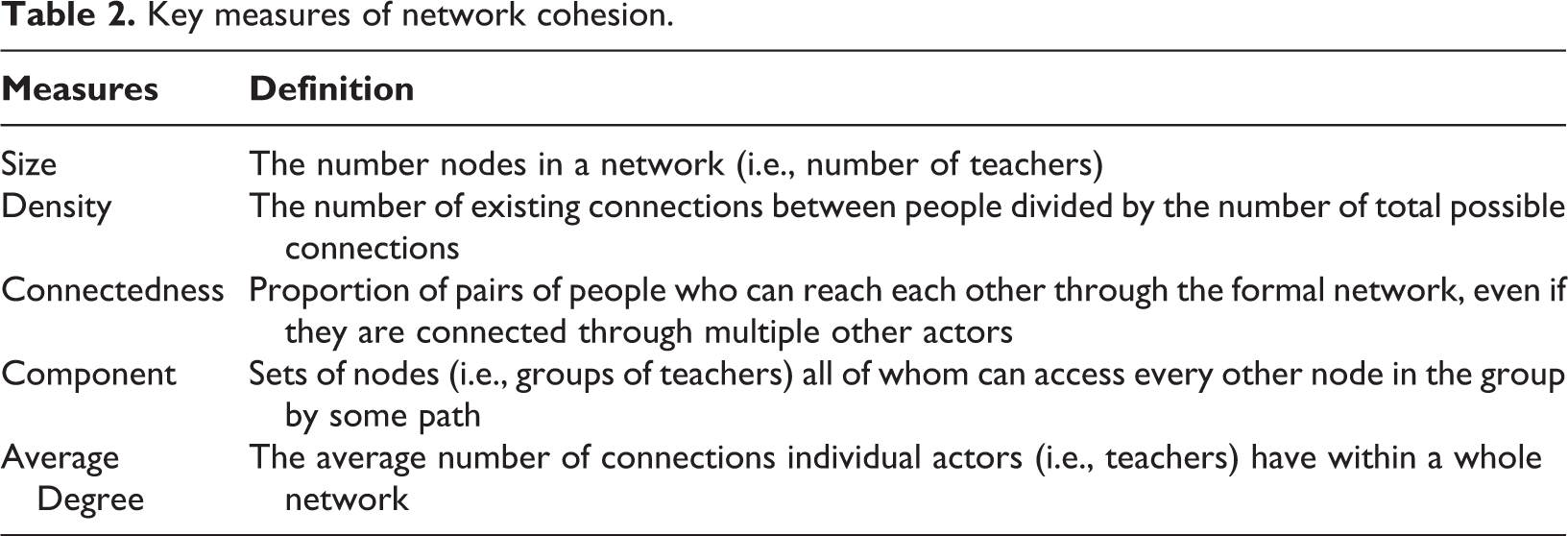
Size refers to the number of nodes or actors that make up a network. Because SNA is the product of multiple academic traditions, its vocabulary is both rich and frequently confounding, as there are often several words that refer to the same thing. As an example, an individual network entity (such as a person) may be referred to accurately as an actor, a node, a vertex, an ego, or an alter. In this study, we interchangeably use the terms “actor” and “node” to refer to individuals in the networks, i.e. teachers, administrators, or paraprofessionals. Between network actors there are lines or “ties” that represent some type of connection; in this network, the lines represent connections between teachers that result from shared membership on a PLC team.
Density refers to the actual proportion of ties that exist between people out of the total number of ties possible, and can be used indicator of social cohesion (i.e. higher density = more cohesion). However, it cannot be assumed that a higher density score indicates a more effective communication network; gluts of ties may stymie the flow of information and resources just as surely as will a paucity of ties (Krackhardt, 1994). Claims of network capacity in relation to density must be considered within the unique context of each network. Typically, small networks are apt to have higher densities than large ones, given that it is easier to maintain ties with a small group of people than with a large one. A network of 10 people, therefore, will be expected to have a higher density than a network of 200.
Connectedness indicates the proportion of pairs of people who can reach each other through network channels. Although it might seem counterintuitive, teachers in rural settings may find it especially difficult to reach each other through formal communication channels because unlike large districts with bureaucracies and “chains of command,” small organizations tend to be “flatter” and may function by norms of collegiality and innate sense of community rather than official communication outlets. In terms of connectedness, it is neither possible nor efficient for every actor (teacher) in a network (school) to have direct access to every other; however, it is important that formal channels do exist so that expertise, information, and resources to flow between actors. Similarly, we look at isolates to understand how many and which school staff are disaffiliated with the network, and thus without access to network resources.
Finally, most networks are made up of components, which are defined as sets of nodes who can all access every other node by some path. In an undirected network such as the one under study here (meaning that ties either exist or they don’t – there is no directional property to them) two actors are members of the same component if there is a path connecting them. In theory, networks with many components tend to be less cohesive (Borgatti et al., 2013: 13).
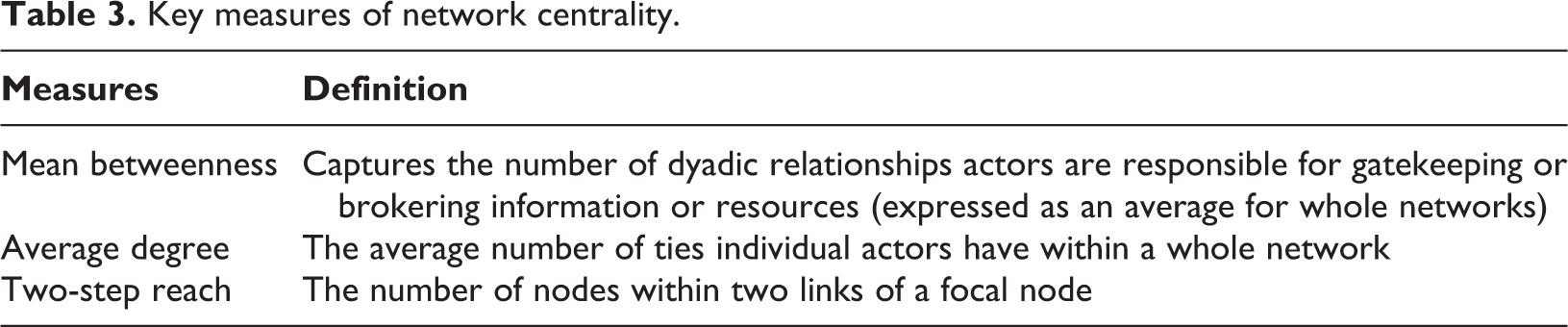
Where measures of cohesion (discussed above) are calculated based on networks as a whole, measures of centrality speak to the properties of individual nodes. In this study, measures of centrality – specifically average degree, mean betweenness, and two-step reach – shed light on how teachers are positioned to give, receive, and broker information in their school’s collaboration networks over time (see Table 3). Average degree refers to the average number of ties individual actors have within the network; it is distinct from density because while density situates existing ties within the universe of all possible network ties, average degree is an indicator of the actual ties that exist for the average actor in the network. Average betweenness indicates the extent to which network actors serve as a bridge or tie between two otherwise unconnected individuals. High betweenness suggests actors (i.e., teachers, principals) may be positioned to serve as brokers in exchange processes (Freeman, 1979). It is not always the case that actors in the position of betweenness serve as facilitators of information and resource exchange; acting as a bottleneck is also possible for people in those positions. However, it is generally found that high betweenness centrality helps to hold networks together (Cross and Parker, 2004). Two-step reach indicates the number of other people within two links of the focal node. For this study, that measure was calculated only for principals in order to understand changes to principals’ structural network positions.
Key measures of network centrality.
Results
In this study, we sought to understand how implementation of a PLC school reform initiative in a rural district affects the structure of teacher collaboration networks and the position of teachers and principals in those networks.
Changes in the district-wide teacher collaboration network
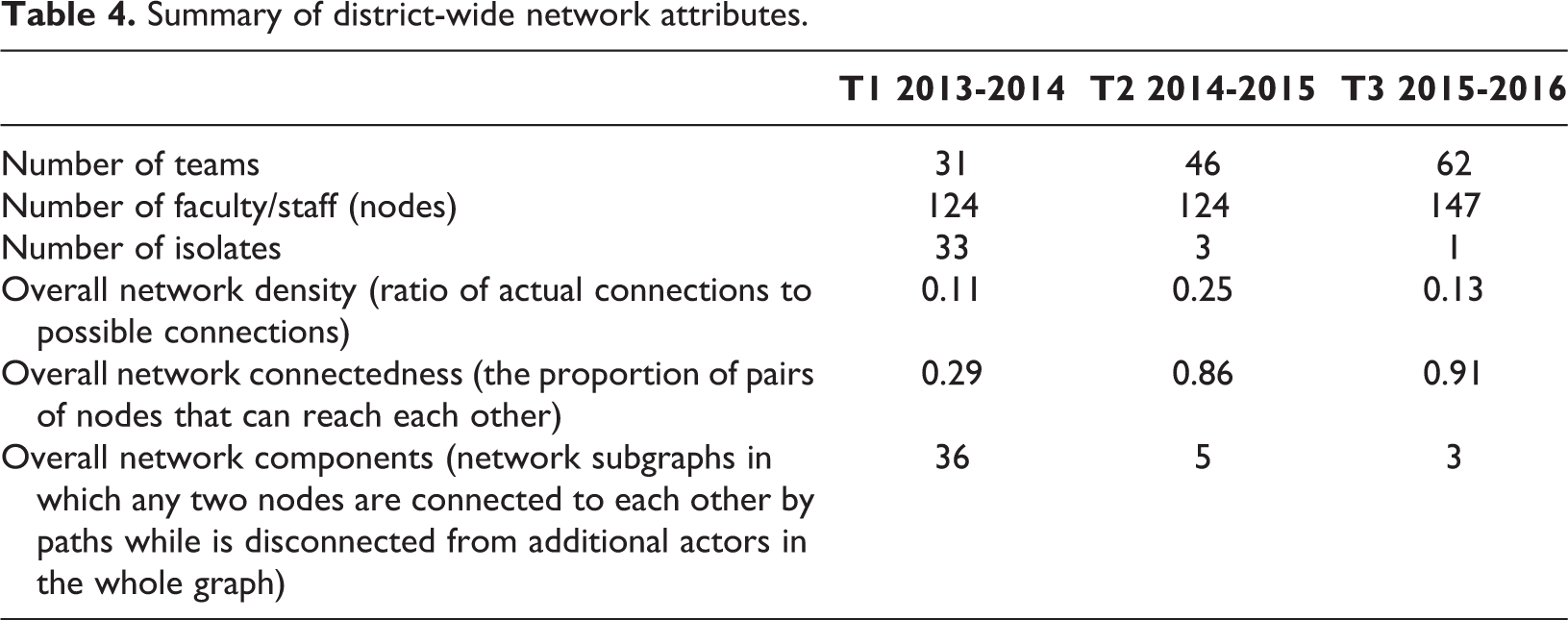
Prior to the launch of the PLC initiative (T1), the Four Pines district comprised 31 PLC teams across the four elementary schools (see Figure 1). Notably, the district had 33 isolates –33 individual teachers, paraprofessionals, and specialists who were not associated with any PLC, and thus disaffiliated with (not connected to) the larger network. The density of the Four Pines’ network was 0.11, meaning that 11% of all possible connections between teachers were present. Its overall connectedness was 0.29, indicating that even though the district is “small,” less than a third (29%) of nodal pairs were able to reach each other through the network.
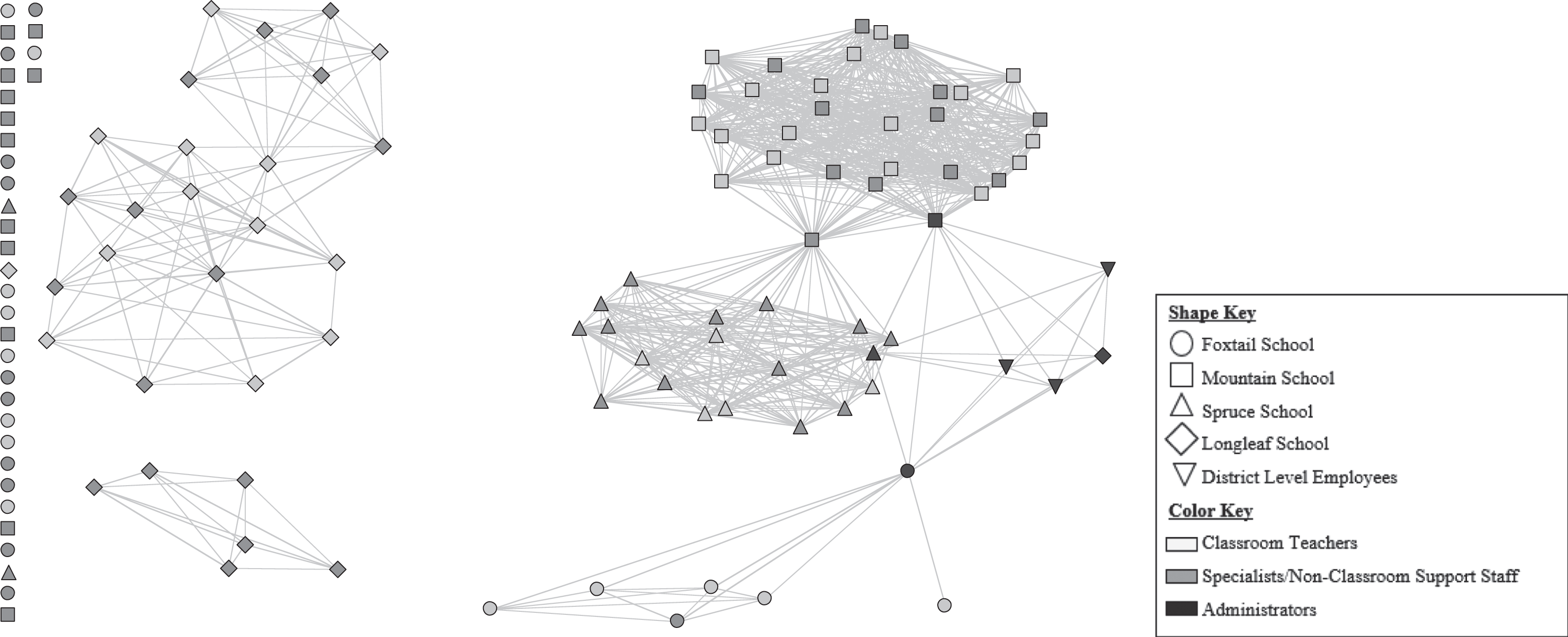
T1 2013-2014 District-wide teacher collaboration network. Node color = actor role Shape = school affiliation.
At T2, roughly a year into the PLC initiative, the number of PLCs had increased to 46 and isolated educators had dropped to three (see Figure 2). Overall density increased to 0.25 (25% of all possible connections between teachers were present), connectedness increased to 0.86 (86% of district actors were part of a single component), and the number of isolates (teachers with no formal connections) decreased to three. Between T1 and T2, Four Pines leaders sought to take advantage of the smallness of their school setting. Wide geography and low enrollment can act as a limitation on how rural leaders configure teacher teams and create professional learning communities. The four principals and superintendent recognized the need for all of their teachers to have access to at least one team, were able to “see” all of the isolates (through SNA maps), and strategically reconfigured their professional learning community so that nearly everyone was assigned to at least one district-level team.
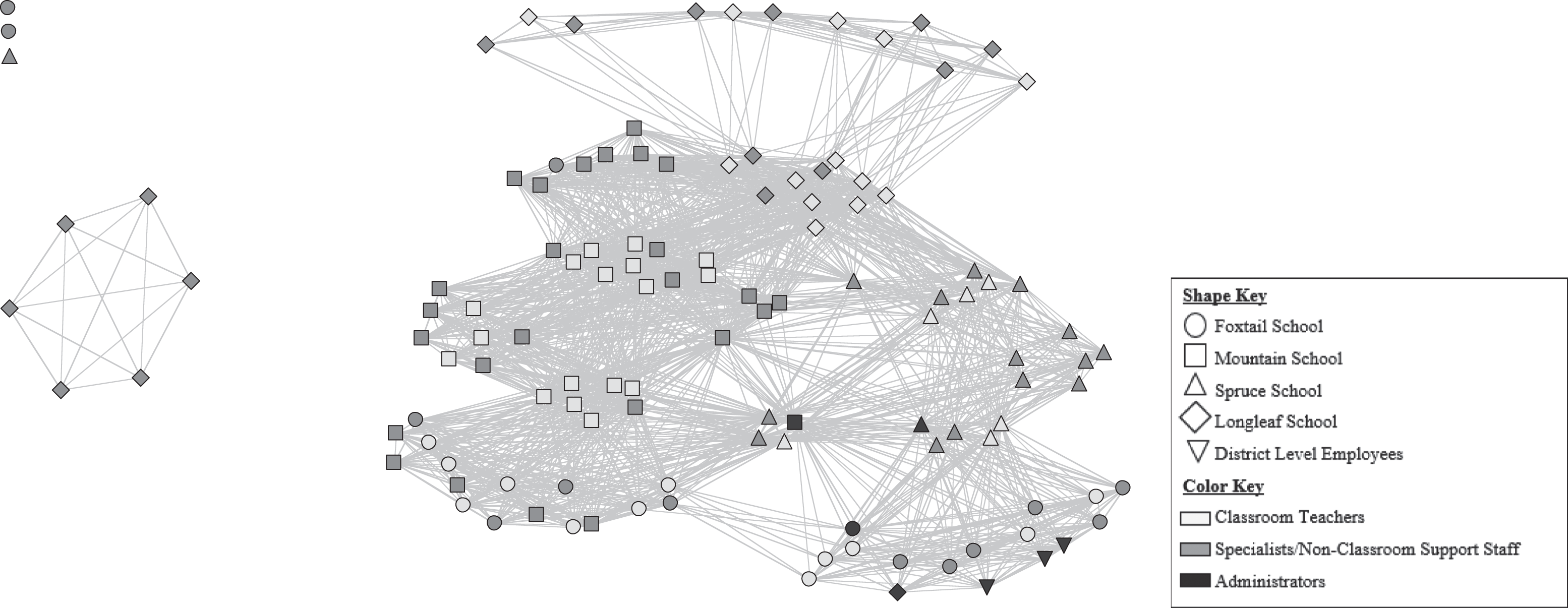
T2 2014-2015 District-wide educator collaboration network. Node color = actor role Shape = school affiliation.
At T3, roughly two years into the initiative (see Figure 3), the number of PLCs had increased to sixty-two and one isolate remained (a school nurse). Overall density receded to 0.13 (13% of all possible connections present), but connectedness increased once again to 0.9, i.e. nearly all teachers, 91%, were part of a single component. Here, the increases in PLCs and connectedness between teams reflect the choice and the ability of rural school leaders to reduce the size of PLCs and decrease the number of redundant ties (i.e. reducing the number of teams on which teachers are expected to serve).
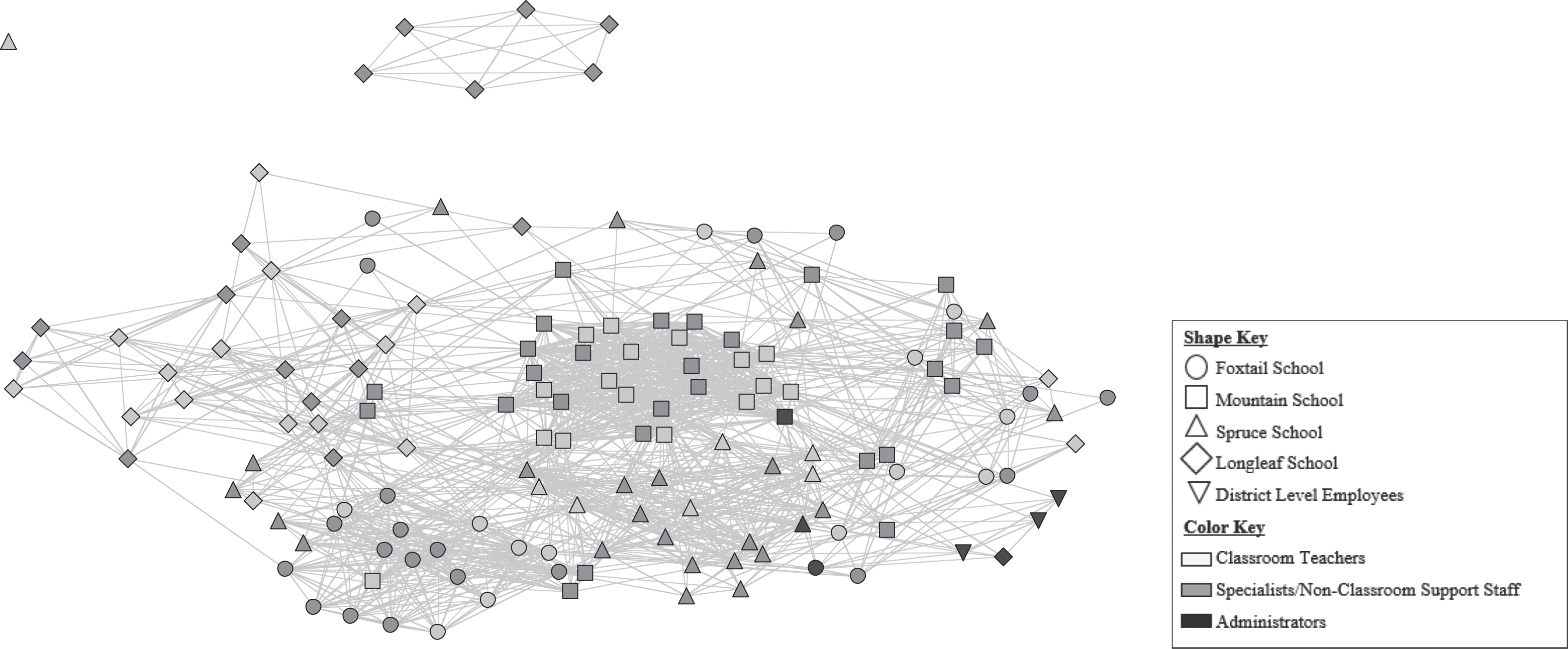
T3 2015-2016 District-wide teacher collaboration network. Node color = actor role Shape = school affiliation.
Between T2 and T3 overall cohesion increased (see Table 4). Findings shown in Table 4 suggest that the enactment of the PLC initiative resulted in fundamental changes to the structure of their teacher collaboration network.
Summary of district-wide network attributes.
Changes in school-level teacher collaboration networks
Visual changes in the structure and position of actors in each school-level teacher collaboration network from T1 to T3 are depicted in Figures 4 through 7. The location of the principal in his/her school network is circled. In two schools (Foxtail and Mountain) it can be seen that the principal moved from a more peripheral role to a more central brokering role in the network. In the other two schools (Spruce and Longleaf) the position of the principals did not shift as dramatically.
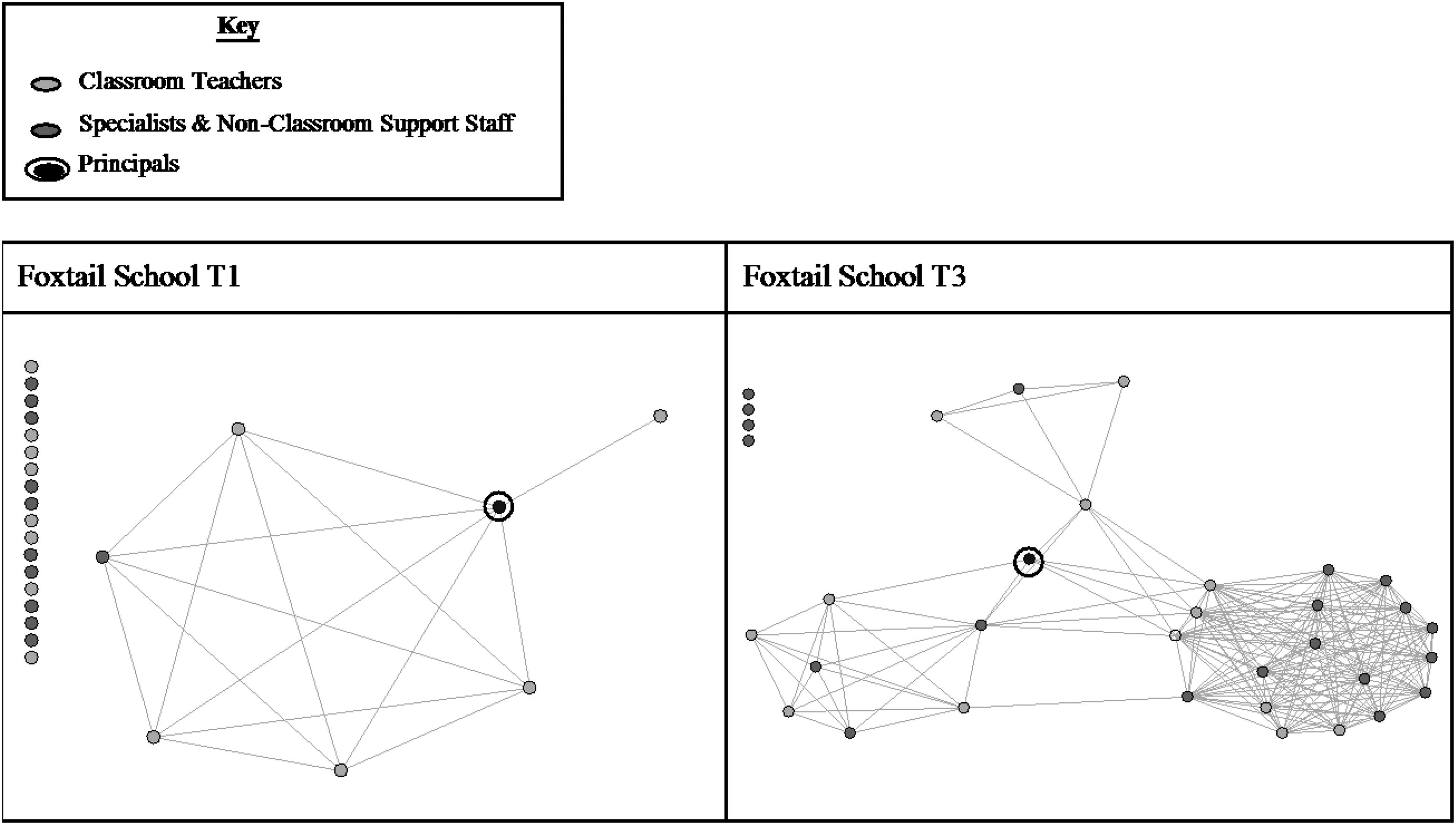
Foxtail School teacher communication network T1 and T3.
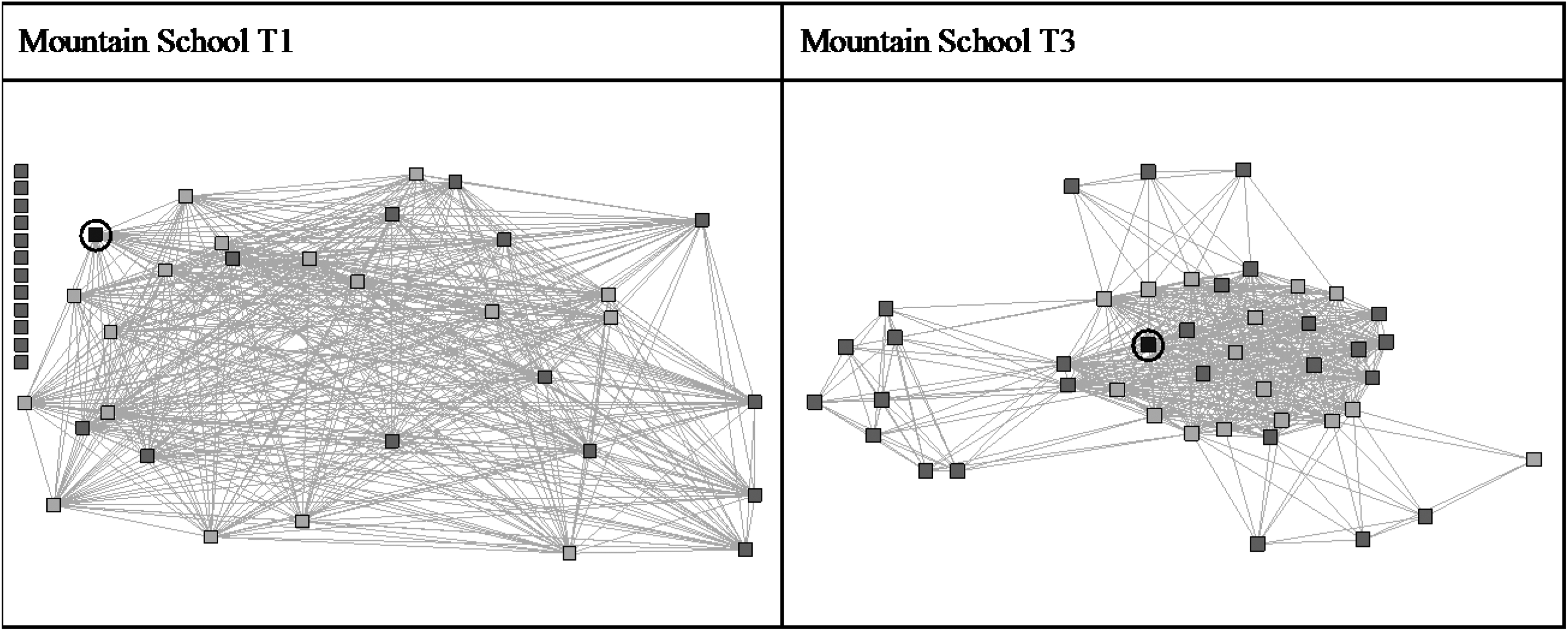
Mountain School teacher collaboration network.
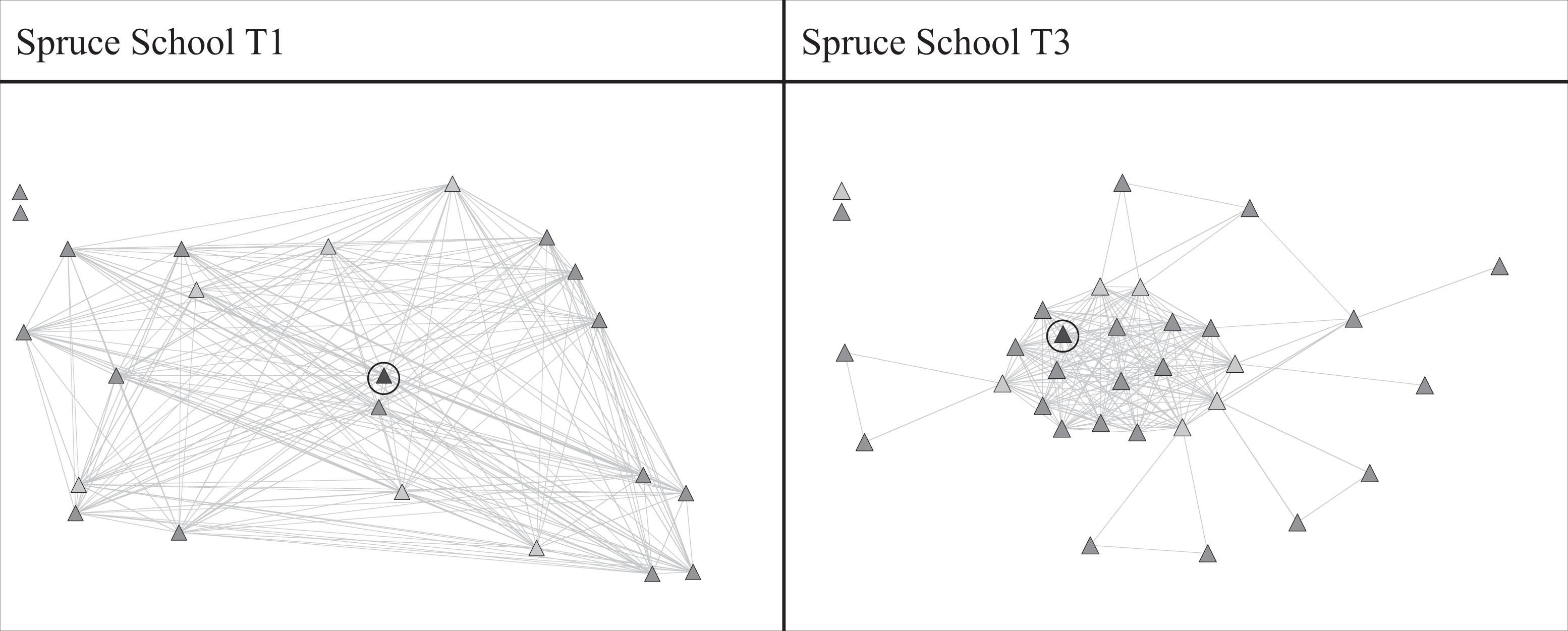
Spruce School teacher collaboration network T1–T3.
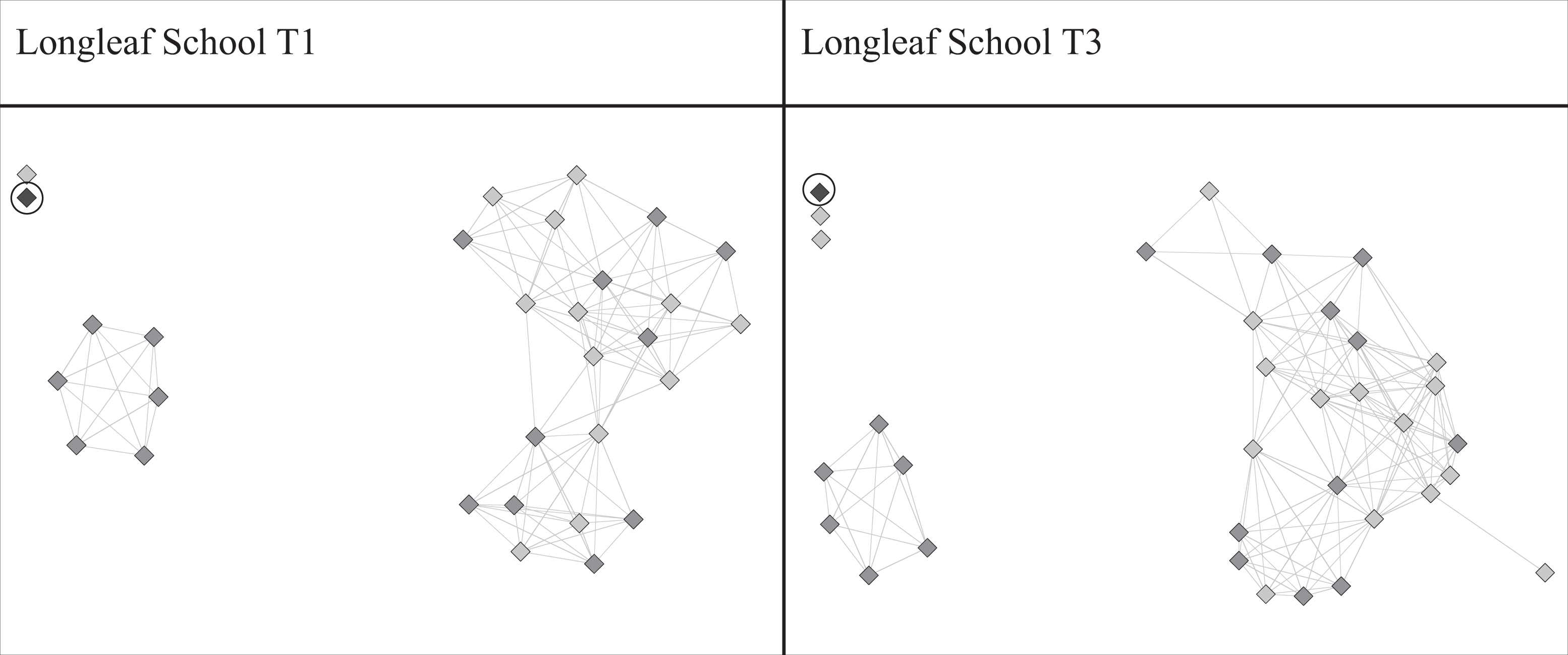
Longleaf School teacher collaboration network T1–T3
Over the course of the three-year PLC initiative, the number of PLCs (formal teacher teams) increased at each elementary school. At Foxtail, it doubled from three to six; at Spruce it increased from seven to eleven; at Mountain it increased from five to nine; and at Longleaf from fifteen to seventeen. See Table 5 for a summary of school-level measures of cohesion at T1 and T3.
Measures of cohesion – School-level teacher collaboration networks.
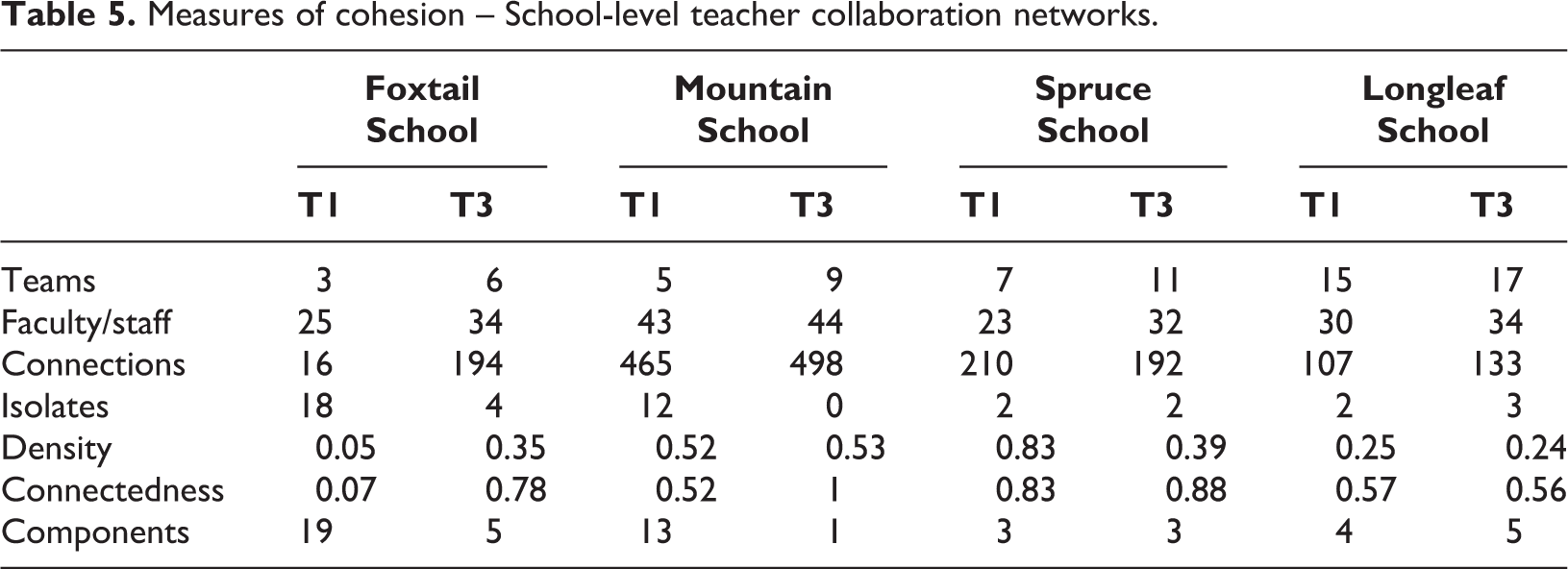
The number of isolated educators decreased at Foxtail (18 to four – a librarian, a music teacher, a nurse, and a technology teacher), and at Mountain (twelve to zero); it increased at Longleaf (two to three – two grade-level teachers and the principal) and remained the same at Spruce (two – a fifth grade teacher and a nurse). Changes to network density also varied across schools from T1 to T3. Foxtail, which began with a low density (largely due to the number of isolated teachers in its network) increased from 0.05 to 0.35 (35% of all possible ties between teachers present). Mountain began with a moderate density (0.52) that was maintained over time (0.53). Spruce, which started with a highly dense network (83% of all possible ties present) settled at a lower density (0.39), and Longleaf saw a minimal shift in its low-moderate density (0.25 to 0.24). In terms of connectedness, however, notable increases were realized in all schools but one. Foxtail’s connectedness score increased from 0.07 (7% of actors in one main component) to 0.78 (nearly 83% of actors in one main component); Mountain’s network became completely connected, starting at 0.52 and ending at 1 (every actor in one main component); Spruce, which already had a high connectedness level at T1 (0.83), further increased to 0.88. Only Longleaf’s connectedness remained without appreciable changes, starting at 0.57 and ending at 0.56. Several of the schools began at T1 with a high number of network components, in part because every isolate (every teacher, principal, specialist not connected to any other actor in the formal collaboration network) gets counted as its own component. Two schools (Foxtail and Mountain) saw marked decreases in components, while Spruce’s components remained steady and Longleaf added a component by means of a new isolate.
By the third year of the PLC initiative, marked changes had occurred in the structure of the district and school teacher collaboration networks. At the district level, the number of PLCs (formal teams) doubled, isolates dropped, and the district-wide connectedness became markedly higher. Individual schools also followed a similar pattern of increased teams, decreased number of isolated teacher, and increased overall connectedness. Teachers applauded the strategic moves made by their administrators to configure PLCs. Far fewer teachers felt “left out,” and far more felt like part of a team and expressed appreciation for being involved in “something important and bigger than just my classroom and school.”
Network position of teachers over time
Measures of centrality show that the position of the average teacher in three of the four rural schools changed markedly when both average degree and betweenness were considered. The number of ties (average degree) of the average Foxtail actor increased from 1 to 11 (i.e. teachers went from having a connection to a single educator to having ties to 11 others). The average degree of Mountain and Longleaf teachers increased just slightly from 22 to 23 and 7 to 8 respectively. Average degree at Spruce decreased from 18 to 12 (see Table 6).
School-level teacher collaboration networks.
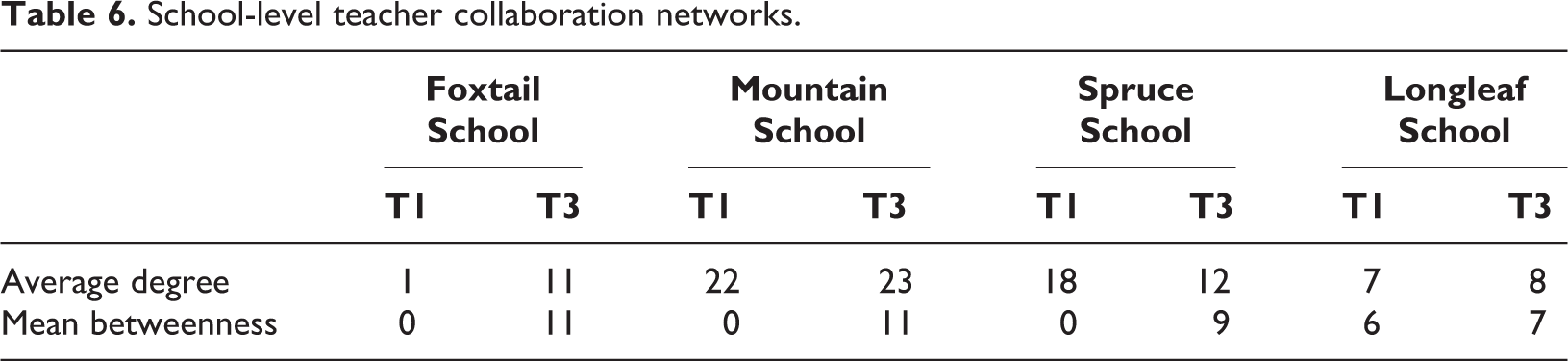
The betweenness measure indicates the extent to which the average educator is in a brokerage position between other teachers. It can be interpreted in a number of ways depending on the composition of the network under study. Average betweenness reflects the extent to which teachers bridge multiple teams. The ability of teachers to access each other’s expertise via teams is a hallmark of PLCs and especially important to consider in rural settings where few formal teams may actually exist. In practical terms, zero average betweenness means that new knowledge generated in any one given team cannot spread, as no formal channels exist along which innovations are able to diffuse from team-to-team and among school personnel. At T1, Longleaf had a mean betweenness of 6, in part due to three actors with very high betweenness scores (with those actors removed, the overall score drops to 2). A paired t-test of individuals’ betweenness scores at each school reveals a significate increase (p < 0.001) at Spruce, Foxtail, and Mountain, and no significant change at Longleaf.
At three of the four schools (Foxtail, Mountain, and Spruce) betweenness for the average actor began at zero; this was due to the nature of the teaming structure in those schools at the beginning of the District’s PLC initiative, where teachers were usually on only one PLC team. Limited numbers of PLCs pose a barrier to innovation. When teachers primarily interact with similar others, or no others, new ideas and problem solving are impeded. The phenomenon of singleton teachers (without proximate colleagues) and too few teams is fairly unique to the rural setting, and one that Four Pines leaders sought to strategically address through their PLC school reform initiative.
Network position of school principals over time
Ego-level network analysis of each of the four school principals reveals considerable changes over time for three of the four principals in terms of their ability to reach their instructional staff though the school’s collaboration network. See Table 7 for a summary of changes to ego-network measures over time. Both at T1 and T3, the Mountain and Spruce principals maintained sizeable networks, having direct connections with 30 and 20 other nodes, respectively. The Foxtail principal had a smaller network (6), and the Longleaf principal did not have any connections to other nodes.
Principals’ ego-network measures.
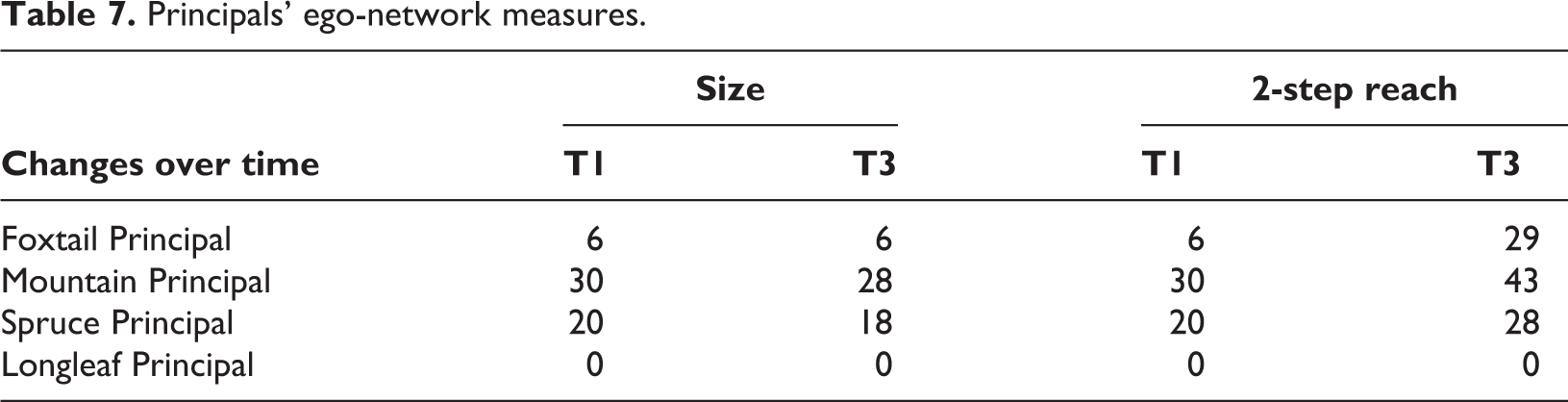
Notable changes were seen in three of the principals’ two-step reach scores, which indicate the number of nodes in the greater network within two links of the principal. At Foxtail, two-step reach increased from 6 to 29 (the total network included 34 nodes at T3, so at that time the Foxtail principal was within two links of all but five network actors). At Mountain, two-step reach increased from 30 to 43 (the total network included 44 nodes at T3, so at that time the Foxtail principal was within two links of all but one network actor). For Spruce, two-step reach increased from 20 to 28 (the total network included 32 nodes at T3, so at that time the Foxtail principal was within two links of all but four network actors). Because she was an isolate, the Longleaf principal was unable to reach or access, through the collaboration network, any of the other 33 members of her network (all teachers and specialists), or the ideas generated through her school’s individual PLCs.
Discussion
Although PLCs have become “globally fashionable” (Webb et al., 2009: 405–422), there remains a paucity of literature that empirically explores the structure, attributes, and development of PLCs and teacher networks over time (e.g., Daly, 2010; Spillane and Kim, 2012). This study looked at the changes to formal, face-to-face educator networks in one rural district during the first three years of a PLC initiative. Specifically examined were overall and individual changes in educators’ ability to access and broker the resources of the network. The results show marked changes to the overall structure of the whole-district network, especially in terms of increased teams, reduced isolates, and increased connectedness. In school-level networks, changes were variable, with notable differences to betweenness scores and principals’ reach in three of the four schools. These results may have implications for the way that schools can conceptualize, describe, and measure PLCs and other collaborative teaming initiatives.
The crucial role of principals
Literature from the U.S. and international contexts supports the idea that leadership is “a crucial factor in the success or failure of a school’s participation in networking” (Evans, 1996: 216). A primary responsibility of principals in relation to PLCs is the establishing and maintaining of norms for collaboration (Dufour et al., 2008), and network theory suggests that some measure of principal centrality is necessary for such a task (Friedkin and Slater, 1994). Results of this study correspond with others that suggest that the intentional positioning of school leaders in teacher collaboration networks increases school capacity for the diffusion of innovation (Moolenaar et al., 2010). It is understood that while principal leadership is essential to the success of a PLC initiative (Dufour et al., 2008), it is neither practical nor desirable for principals to be a member of every team. However, this study suggests that in rural schools, principals may need to play an active role in PLCs, at least in the initial stages. At the outset of the PLC initiative, principals at three of the four elementary schools were already connected to their school’s teacher collaboration networks, i.e. they were a member of at least one team within their school and could act as an important broker through which ideas could flow between teams. Importantly, at these three schools, the collaboration network became less overly redundant and more connected over time. At Longleaf, where the principal chose to remain isolated from her school’s collaborative structure, no changes in network capacity were realized throughout the PLC initiative. That means that even though the same significant amount of time and resources were expended for PLC development at Longleaf as the other three schools, the structure of the Longleaf teacher network remained untouched by the PLC initiative - isolated Longleaf teachers remained disconnected from their network over time.
A fruitful direction for future rural research may be to look more closely at how principals are positioned in their school networks, what a principal’s “optimal” position should be, and how principals’ network positionality relates to the success of collaborative networks. Although it was beyond the scope of this study to investigate why the Longleaf principal persisted as an isolate, possible explanations may include length of employment in District (Longleaf principal in district 26 years vs. six years or fewer for the other three principals) and observed leadership style (the superintendent characterized the Longleaf principal as “more likely than the other principals to embrace ‘management by exception’ vs. ‘transformative leadership practices’”). Future network studies could incorporate an analysis of node level attributes such as a principal’s leadership style, longevity, and other demographic characteristics.
District vs. school-level teams
It is understood that any attempt to increase collaboration has implications for teachers’ time and workload. In this study, Four Pines leaders attempted to be sensitive to that, and feedback from teachers persuaded administrators that redundancies and team size were resulting in inefficient use of time and resources. At time 1, teachers were on too many teams, often with some of the same people. In response, district-level teams were made grade-level specific (e.g. all third grade teachers in the district were members of the same team) while school-level teams remained topical and focused on such things as needs of students in special education. In addition, principals reduced PLC size to an average of six members. These strategic changes increased connectedness in the networks, and enabled teachers to participate in the networks without placing undue burdens on time or workload. This configuration may be a useful strategy for rural districts where individual buildings house few teachers who share grade level content. Because this investigation was conceptualized as a network study, various dimensions of collaboration were not explored, including the extent to which changes to the PLCs resulted in changes to teachers’ daily workflow, or to improvements in classroom instruction or student achievement. Follow-up investigation that employs a mix of network and qualitative data analysis could provide important insight into how the implementation of PLCs affects teacher collaboration process and outcomes.
In addition to membership, however, school leaders must consider team processes – the ways of working together that can look like everything from “coblaberation” (Trotman, 2009) to the shared sense of purpose, structured and meaningful dialogue, and careful cycles of inquiry that are the hallmarks of effective PLCs (Woodland, 2016). For example, it is well known that dialogue is often a threat to quality in teacher teams; without well-defined norms and processes, teachers can lapse into general discussions of students or teaching challenges rather than specific matters of instructional practice (Achinstein, 2002; Dufour, 2003). In taking a bird’s-eye view of one district’s PLC teaming structure, this study cannot describe or shed light on changes to the important internal processes that are critical to successful educator collaboration – for example, though we can see that teachers’ betweenness scores generally increased as the teaming structures were refined, we cannot speak to the extent to which social capital was actually mobilized as a result. However, this study does help elucidate the development of a rural school district’s PLC network over time, and how network structure might support and constrain the diffusion of instructional innovation.
Conclusion
It is internationally recognized that PLCs and the teacher networks they engender are critical to the success of a variety of educational and organizational goals in schools, and function as one of the most effective ways for an instructional force to access and make sense of the knowledge and expertise that moves practice forward (Hairon and Dimmock, 2012; Hashmi, 2011; Lange, 2014; Ryan et al., 2009; Sargent and Hannum, 2005, 2009; Wang, 2015; Webb et al., 2009; Woodland, 2016). Teacher collaboration is a reform approach that consistently shows promise for both teacher and student learning (Farley-Ripple and Buttram, 2015; Pounder, 1999; Ronfeldt et al., 2015; Slavit et al., 2011; Sun et al., 2017). Simply stated, teachers without access to a professional learning community are not likely to be as effective in the classroom (Bakkenes et al., 1999).
This study shows how teacher collaboration networks changed over the course of a rural U.S. school district’s 3-year PLC initiative. Compared to urban, suburban, and town public school districts, rural public school districts are faced with relatively low enrollment and student density, higher transportation costs, limited access to the technology, and critical shortages of credentialed personnel. These characteristics, in turn, limit the feasibility and desirability of various school reform strategies more prevalent in urban and suburban settings, such as building consolidation/closure and reduction in the size of the teaching force. In addition, where PLCs (or some form of disciplined, widespread educator collaboration) are a requirement for U.S.-based urban “turnaround” schools, and are nearly ubiquitous in most suburban settings, rural settings may be tacitly permitting a strong sense of community and close personal social ties to substitute for the type of disciplined professional collaboration necessary for instructional improvement. The state of having no or a minimal number of organizationally required teams, coupled with a high degree of isolated teachers (those with no formal job-embedded connections to others) is a problematic, but not uncommon, phenomenon. Organizational infrastructure to support formal teacher access to job-embedded social capital is often unattended to by school administrators. Principals may not know how to influence communication ties between teachers or rely on an invisible web of personal affiliations through ideas, information, and opinions travel (Deal et al., 2009). We believe one contribution of this current study is to help demonstrate how the strategic evidenced-based choices of school leaders can have a strong and immediate effect on teacher’s ability to access colleagues, and capacity to diffuse the flow of knowledge and instructional innovation schoolwide. Four Pines leaders chose to enact a comprehensive PLC initiative, and in less than three years eliminated isolates (connected all teachers), increased cohesion, and increased density of their teacher collaboration network.
Teacher networks are a vital factor in successful school reform. As Bryk, Gomez, and Grunow contend, “In an arena such as education, where market mechanisms are weak and where hierarchical command and control are not possible, networks provide a plausible alternative for productively organizing the diverse expertise needed to solve complex educational problems” (Bryk et al., 2011: 6). We hope that this study might showcase the value of using social network analysis to investigate the development of the laudable, but rhetorically imprecise, school reform strategy of professional learning communities. Use of SNA may help advance the field’s understanding of how school-based teacher networks and PLCs, may support (or constrain) teacher access to the social capital resources they need to deliver high-quality curriculum and instruction to all students.
Footnotes
Authors’ note
The authors attest that this work has not been published elsewhere, is not presently under review elsewhere, and will not be submitted elsewhere while under review for Educational Management, Administration, and Leadership.
Declaration of conflicting interests
The authors declared no potential conflicts of interest with respect to the research, authorship, and/or publication of this article.
Funding
The authors received no financial support for the research, authorship, and/or publication of this article.