



Abstract
This research explores a new methodological path for doing green cultural criminological research via social media. It provides original case-study data and aims to stimulate further empirical and theoretical debate. In particular, the study explores how Twitter users have represented the harms related to an ongoing pipeline project in Italy (referred to as TAP), and the resistance to those harms. To these ends, it offers a virtual and visual ethnography of Twitter posts and posted images.
Introduction
Green 1 criminology is considered an evolving critical criminological perspective (South, 1998) with an interdisciplinary orientation, which focuses on crimes and harms affecting human and non-human species, the environment and the planet by individuals, corporations, criminal organizations and the state. 2 In addition to being a theoretical perspective (rather than an established theory; see South, 1998 and White, 2010), it is also an active network of interested people seeking to debate ideas and, ultimately, prompt change, restore environmental and ecological justice and ‘ameliorate environment degradation and its consequences for humanity and […] non-human species’ (Ugwudike, 2015: 192).
The concept of harm is central to the perspective, especially for those who take a political economy approach to the study of green crimes (e.g. Lynch et al., 2013; Ruggiero and South, 2013; White, 2002, 2013). The idea (differently attributed by Lynch et al. (2013) to the influences of the work of Hillyard and Tombs (2004, 2007), and by Ruggiero and South (2013) to Sutherland) is that what causes harm is not necessarily (and not often) proscribed by the criminal law: powerful corporations, which may be greatly influential to the shaping of laws that have an environmental and ecological impact (e.g. rules on exploitation of natural resources, environmental protection etc.), and the state, may often overlook environmental and ecological harms to pursue economic interests. In short, they often have no interest in regulating harmful, yet profitable, behaviour or activity. However, although not proscribed by the criminal law, some behaviour – or omission (Huisman and Van Erp, 2013; Pemberton, 2007) – causes serious (and scientifically measurable; see Lynch et al., 2013) harm to people, non-human species and the environment, and, as such, deserves criminological attention.
Media representations can contribute to the construction – and concealment – of green harms and crimes. When discussing the integration of green and cultural criminologies into ‘green cultural criminology’, Brisman and South (2013, 2014) have argued that green criminology scholars should take inspiration from cultural criminology’s interest in mediated representations of crime and crime control – particularly in light of the role of media images and frames in the shaping of public perceptions, attitudes, behaviour and policy, along with social movements and collective action (see e.g. Benford and Snow, 2000; Snow et al., 1986). Media representations, as pointed out by Brisman and South (2013), are highly selective: by reporting only on what is considered ‘newsworthy’, the media tend to cover only certain green stories (and frame them in certain ways), while under-reporting, misrepresenting or misinterpreting others (for example, Hulme (2009) illustrates how the media misinterprets the nature and extent of disagreement between scientists on climate change). Media and particularly the social media, however, can also be used by people, for example by the affected populations, to channel alternative representations of green stories and environmental harms, which may be in opposition to dominant media frames. Despite their potential to uncover under-reported green harms and crimes, raise awareness and stimulate social and/or legal response, 3 counter-representations of environmental crimes and harms in social media have so far largely been understudied in green cultural criminology as well as in green victimology (Hall, 2017; Williams, 1996).
The ‘approach’ (Brisman and South, 2013: 115) of green cultural criminology aims to provide a useful framework to explore resistance to environmental crimes and harms, particularly when activism and protest are performed as a celebratory and playful activity by environmental justice movements and spontaneous street protesters (for some examples of playful urban activism, see Brisman and South (2013) and Millie (2017)). With a few exceptions (e.g. Brisman, 2010; Brisman and South, 2013; McClanahan, 2014; Natali, 2013; Yates, 2007), resistance to environmental crimes and harms has been under-studied in green criminology. This is particularly surprising in relation to the use of social media which can be a powerful tool for green campaigning and mobilizing against social control and abuse by state and law enforcement authorities. An illustrative example of this is offered by the protests against the North Dakota pipeline in the US, which passes through the Standing Rock Indian reservation. In this case, tough repressive action and violence committed by governmental agencies against the Sioux Tribe and activists (mostly perpetrated between September and December 2016) received extensive exposure via social media (especially via YouTube and Twitter, mostly through the use of the hashtag #NoDAPL). The relevance of social media to the study of recent political protest (including the 2011 movements in Egypt, Spain and the United States) has also been recognized in other social science disciplines, including sociology (see e.g. Gerbaudo, 2012; Tufekci and Wilson, 2012), and has led to interdisciplinary projects also involving science, communication and technology studies (Cowart et al., 2016; Mercea, 2011), and international relations (e.g. Howard et al., 2011). This suggests that green cultural criminology – itself open to interdisciplinarity – must also engage in the study of social media representations of protest.
This research explores a new methodological path for doing green cultural criminological research via social media and provides empirical data that gives us a basis for stimulating the empirical and theoretical debate. In particular, the study aims at exploring how Twitter users have represented the harms related to an ongoing (although yet to be fully underway) pipeline project in Italy (referred to as TAP), and the resistance to those harms. To these ends, it relies on a virtual and visual ethnography of Twitter posts and posted images. The importance of the visual in criminology, and of seeking a ‘more theoretically and methodologically informed understanding of images’ in a digital era characterized by an ‘unprecedented proliferation of images’ (Brown and Carrabine, 2017a: 1), has been stressed by various critical and cultural criminologists (Brown and Carrabine, 2017b) and has great potential (as well as methodological limitations) in green cultural criminological research (Brisman, 2017; Natali, 2013, 2016; Natali and McClanahan, 2017; Vélez Torres et al., 2012). However, the study of images posted (and sometimes also produced) by people using social media has been under-addressed in green cultural criminological research.
Studying representations of harm and resistance on Twitter (as well as other social media) via posted images and visual material allows us to explore and understand what people perceive as causing harm to them, other species and the environment – which may not be (accurately or sufficiently) documented by the print or broadcast media. Perhaps more importantly, such research aims to ‘hear’ the voice of affected and unheard communities. This is crucial to the work and political project of green cultural and visual (Van de Voorde, 2017) criminologists, whose ultimate aim is to address environmental injustice and promote (policy) change.
Background: The TAP project
The Trans Adriatic Pipeline, commonly known as TAP, is a state-authorized project that aims at bringing natural gas from Azerbaijan to Italy (and, through it, to Europe) via Turkey, Greece and Albania. It is part of the so-called Southern Gas Corridor supply route for natural gas to Europe approved by the European Commission and funded by the European Investment Bank (EIB).
The pipeline’s landing point in Italy will be at San Foca, one of the most famous marine (or bathing beaches) in the municipality of Melendugno, a small village in the Salento Province, situated in the south-eastern Apulia (or Puglia) region. 4 San Foca is also located in the protected nature reserve of Torre Guaceto, characterized in particular by the presence of 100-year old olive trees.
The project was approved by the Italian Parliament in October 2013, before its environmental and social impact had properly been assessed (the company’s Environmental and Social Impact Assessment or ESIA was approved by the government through the Decree of environmental compatibility of the TAP project only in September 2014), and despite evident opposition in the region and in the affected municipality of Melendugno. The past two Italian governments led by Giovanni Letta and Matteo Renzi respectively and the current government led by Paolo Gentiloni have all supported the TAP pipeline, which has recently been described – by the current Minister of Economic Development, Carlo Calenda – as a project of strategic importance for the country, ‘essential’ and ‘crucial to the energy security of Italy and for the transition to a decarbonized economy’.5,6
Concretely, the project envisages the construction of a micro-tunnel, which enters the coast at 800 metres distance from the shoreline and at a depth of 25 metres, and runs underground until 700 metres from the shoreline. The pipeline runs for approximately eight kilometres above the ground until it reaches the Pipeline Receiving Terminal (PRT), which is to be built in the municipality of Melendugno. At the PRT, the gas is to be warmed up before flowing into the Italian natural gas grid – operated by a private company known as Snam Rete Gas – and reaching other European countries. The laying down of the pipeline from San Foca to the PRT involves the removal of century-old olive trees, and, between the PRT and the Snam gas grid (which is situated in Mesagne, a city 55 km north of Melendugno), thousands of them (Basilicata24, 2017).
The company leading the project, the Trans Adriatic Pipeline AG (or simply TAP), confirms its social and environmental commitment on its website (https://www.tap-ag.com/) and seeks to reassure the public that the TAP project will have minimal impact on the environment and the local community. According to the website (Trans Atlantic Pipeline, n.d.a), the pipeline, which will ‘not be visible from the coast and will be invisible for its entire route’, will ‘pass through a specially constructed 1.5 km micro-tunnel, entering it at a depth of 25 metres’, which will ‘ensure that the pipeline does not affect the local Posidonia seagrass and the Mediterranean Maquis onshore’. In addition, the PRT in Melendugno ‘has been designed to integrate with the surrounding landscape with limited visual impact’. Most importantly, TAP promises that by:
[u]sing electrical heaters to warm the gas and facilitate its flow, the PRT will emit zero emissions during normal operations unless there are interruptions or sudden pressure variations in the Snam Rete Gas network. At most, the PRT will be producing emissions for less than 2% of its annual operating time – which will account for 0.6% of the total level of emissions of the Melendugno municipality
– this according to non-specified official data allegedly provided by the Apulia region (Trans Atlantic Pipeline, n.d.b).
Claims of minimal environmental and ecological impact are, however, challenged by many municipalities of the Apulia region, including the Melendugno municipality, and by citizens’ and eco-justice groups, also represented in the NOTAP Committee, who all fear negative impacts on the natural environment, on public health and on tourism.
Since the inception of the TAP project, the NOTAP Committee has been very active in reporting alleged violations in the implementation of the project, especially through social media (e.g. its Facebook page at https://www.facebook.com/pg/comitato.notap/about/?ref=page_internal; its official Twitter account @no_tap; and its website http://notransadriaticpiperline.blogspot.co.uk/). In addition, it has also organized many peaceful protests 7 against the project and filed law suits against the company.
The many proceedings pending before administrative courts, which have mainly been instigated by the NOTAP Committee, the region and the Melendugno municipality, have, however, only been successful in delaying the start-date for the project, originally agreed in May 2016. In all instances, administrative courts have positively assessed the legality of the project’s administrative authorization procedure (the latest judgment was issued on 27 March 2017, No. 1.392).
The TAP project eventually commenced in March 2017, after the company was authorized by an Italian administrative court to begin laying the pipeline. The start of the project involved the uprooting of 231 century-old olive trees situated in the locality of San Foca in the face of strong opposition from the municipality and activist groups. Local protests in San Foca escalated on 21, 28 and 29 March 2017 into clashes with the police. A few weeks after the protests of March 2017, the company managers, the Prefect and the Mayor of Melendugno agreed to suspend the progress of the project, and therefore the uprooting and transfer of olive trees, until the end of the holiday season (in October 2017). However, in breach of the agreement, the company then carried on with the uprooting and removal of the olive trees, leading to further clashes between activists and the police on 3 and 4 July 2017.
Methodology
The article explores people’s representation of green harms and protest on Twitter through a virtual (Pauwels, 2011; Pink et al., 2016; Postill and Pink, 2012) and visual ethnography of Twitter posts and posted images. In spite of the set limits on the number of characters publishable in a post (140 characters, recently increased to 280), Twitter was selected over other social media predominantly because of the technical accessibility (at least in the real-time index, see below) of its textual and visual content to all users (as opposed to e.g. Facebook, whose privacy settings often impede access to content). Twitter also has an established reputation for protest and activism within pre-existing literature, particularly in relation to the development of small grassroots movements; the openness of the platform, in addition, facilitates access to journalists, the development of publicized counter-narratives and the strategic co-ordination of protests (see Bastos and Mercea, 2016; Bruns et al., 2013; Ems, 2014; Penney and Dadas, 2014), particularly in the Italian context (Vicari, 2013). The content analysis of posts, however, also included material published on Facebook, which allows users to be more articulate, and other digital platforms like YouTube (for more see below in ‘Data analysis’ section). For the focus of this article on people’s representation of the harms caused by the TAP pipeline (along with the resistance to those harms), we decided not to limit the analysis to the Twitter posts published by activist groups (e.g. by the NOTAP Committee), which can be highly selective and only advance certain frames, but to extend it to the material published by all Twitter users. The analysis of textual and visual material published by Twitter users allowed us to broadly explore the meanings that people – rather than only activist groups – attribute to TAP-related harms (and protest) on Twitter.
Data collection took place between 1 June and 31 August 2017, though the data retrieved contained a mix of tweets from both the collection period and the period prior. Tweets were collected purely on the inclusion of the hashtag #NOTAP – the tag adopted by the protest movement throughout the campaign. Rather than use pre-existing social media research tools, a custom toolset was devised using Python programming language and Tweepy, a Python library designed to facilitate connectivity with the Twitter API. 8 Data were stored initially in a secured NoSQL database on the same server before being pre-processed into NVivo compatible datasets and for import and coding.
Data collection
Despite the appearance of Twitter as an archive of the everyday, its usefulness to researchers as a comprehensive archive is precluded by Twitter’s division of their content into two indexes; the ‘real-time index’ and the historical index. The Twitter API provides free access to Twitter’s real-time index which includes all tweets up to seven days prior. The historical index, i.e. tweets older than seven days, is primarily only accessible through Gnip, a company owned by Twitter that currently monetizes access to this data through the levy of a substantial fee. The division is a result of both technological limitations and financial incentive. To be as responsive as it is, the real-time index is held entirely in high-speed random-access memory, whilst the historical archive resides on slower but cheaper and scalable hard-disk storage (Twitter, 2014). This division also allows the monetization of historical data through the Gnip platform.
Because of this division, most tweets were collected via our ‘Listener’ tool. The Listener utilized Twitter’s streaming API which allowed the tool to monitor for and collect Tweets in real-time. Running 24 hours a day on a remote server, the Listener could ensure that researchers collected a comprehensive dataset of #notap tweets during the collection period which ran from June to August 2017. Any tweets matching the hashtag criteria would be retrieved by the Listener as a data package through the API. Each data package contained both the visible content of the tweet such as the text content itself, but also large amounts of meta-data including embedded links to other content, links to images, retweets and favourites counts etc. 9
The division between the real-time and the historical indexes on Twitter poses particular time-sensitive challenges for social science researchers wishing to utilize Twitter data. Researchers who want a comprehensive collection must be ready to respond to events within seven days before data begins to slip away into the historical index. The disappearance of data presents a challenge for academic research design which does not cope well with accelerated research timelines that are imposed by social and other digital media. For this project, however, the goal was not necessarily to produce a comprehensive account of resistance to the TAP project, but to use it as a case study for the exploration of social media’s role in the representation of, and opposition to, environmental harm. As the TAP project had been in preparation since 2013, a fully comprehensive retrieval of #notap tweets was neither technically feasible, due to the limitations of the real-time-index, nor necessary to achieve the research goals. However, with the TAP project receiving authorization to commence in March 2017, and the subsequent online and offline protests that followed, it was advantageous to the research project to draw from these key moments of conflict where possible. Whilst this was not directly possible without access to the historical index, the resurgence of conflict and online activity in July 2017 provided unanticipated but valuable retrospective indirect access to this historical data from March onwards in that year.
Processing and sampling
Twitter’s user-facing platforms, such as their website or apps, support searching through the historical archive by dynamically knitting together responses from both the real-time and historical indexes (Twitter, 2014). As a result, users will often see tweets that are inaccessible to researchers using the Twitter API. This was a boon to the research project during the resurgence of interest in the TAP project during July as users, taking interest in the #notap hashtag, browsed back to March and retweeted what they found. Under Twitter’s API, the data package for a re-tweet contains both the data for the re-tweet and, embedded within that package, the full data package from the original tweet it is citing. By ensuring our Listener collected both new tweets and re-tweets, we were able to extract the historical tweets from March, April and May, from tweets collected months later. Figure 1 demonstrates the results of this process, as March and April have no tweets directly collected via our scripts, yet we still have 14 Tweets in March, and 317 from April, derived from the retweeting of material during the collection phase. The processing stage involved a number of other transformations to prepare the raw dataset for NVivo analysis:
Extracting original tweets from retweets.
Reducing data replication by dropping manual retweets (i.e. those using the convention of starting with ‘RT’).
Formatting the tweet data into a CSV file with a unique id number for each tweet.
Retrieving any images embedded in those tweets, and labelling them by the corresponding id number to facilitate quick association of tweet data and image as a unique ‘case’ in NVivo.
The total number of tweets collected through the Listener is 3219.
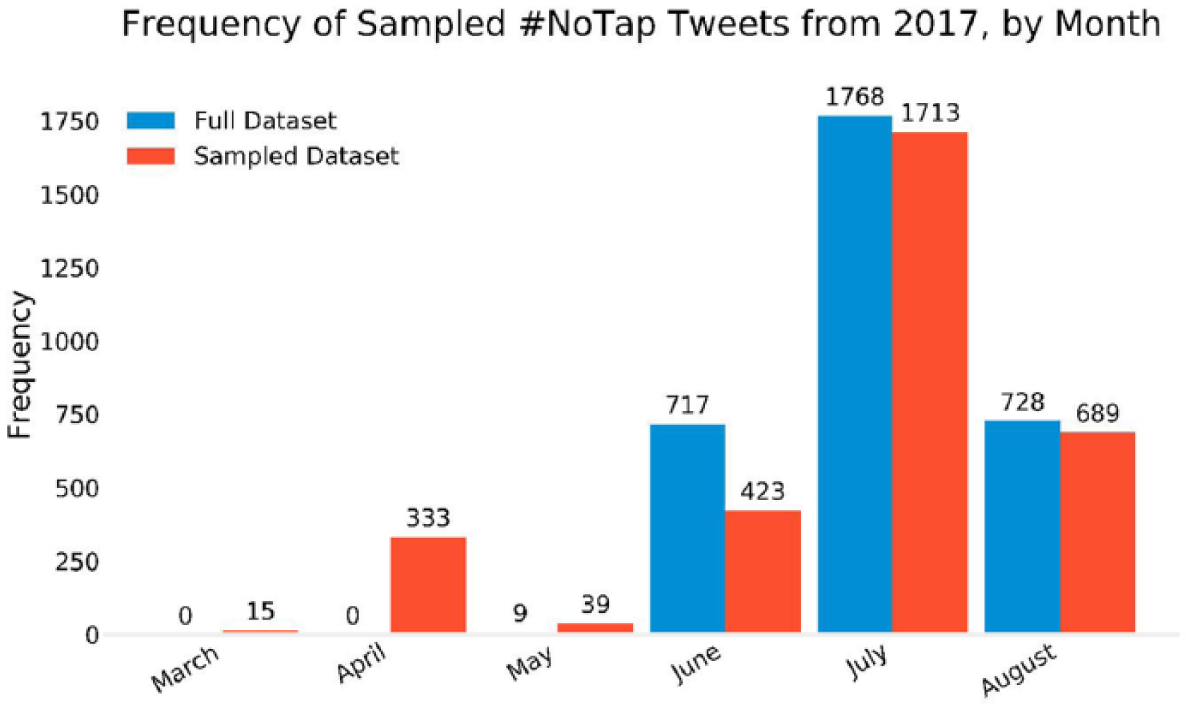
Frequency of sampled #NoTap tweets from 2017, by month.
Data analysis
The Twitter posts collected through the Listener have been analyzed using NVivo. The analysis was not limited to the text of the Twitter post but was extended to the visual (e.g. pictures, videos) and textual (e.g. newspaper articles, transcribed video interviews and documentaries) material that was included, or referred to, in the posts (additional materials linked to the material referred to in the tweets have been included only up to one additional click). Attached video interviews, short documentaries, songs, speeches etc. were all transcribed and content analyzed (Altheide, 1987, 1996) through NVivo. Relevant passages in the text and visual material (Konecki, 2011; Pauwels, 2015) were categorized according to five main codes or categories (Conspiracy, Harm, Protest, Repression and Dissenting Opinions), which were developed on the ground through ‘open coding’ (Strauss and Corbin, 1998). The codes were used to assist the qualitative part of the analysis, with results as described below.
To protect the anonymity of Twitter users, we decided – following the Lab Online Guide to Social Media Research Ethics (Social Data Science Lab, n.d.) – not to quote the content of the Twitter posts (and of the Facebook posts, when referred to in the tweets), including the posted pictures, unless having sought and obtained the author’s informed consent (this has happened in two cases; see Giardinieri Sovversivi Romani (2017) and note 17). 10 In a few instances, however, we make reference to newspaper articles that visually represent the content of some of the tweets (see e.g. On Stage, 2017). Since these specific tweets are publicly available and accessible on online newspapers’ websites, we decided not to seek the permission of the author(s). Pictures attached to the tweets have been included in this article only when they have also been posted by a (national, regional, local or online) newspaper or by a publicly accessible website.
Results
Conspiracy
The TAP pipeline is mostly described in posts as a product of a ‘conspiracy’ between different actors: successive Italian governments (which since the approval of the TAP project in 2013 have been led by the centre-left political party known as PD); shady joint ventures facing allegations of money laundering; autocratic regimes that repress opposition and violate human rights (e.g. Azerbaijan); 11 and Italian organized crime groups (‘mafia’), particularly the ‘ndrangheta, a very powerful and international organized crime group based in the Calabria region (for more insights into the criminal activities of ‘ndrangheta affecting the environment, see Sergi and South, 2016).
Many of the Twitter posts, which speak about a conspiracy between governments, multinationals and mafia groups, include the picture (or a link to an article showing the picture) of the exit point of an underground pipeline (as shown in Figure 2). These images are very powerful, as they tend to remind the reader about the physicality of the relevant infrastructure resulting from such a conspiracy (the pipeline), and about its material effects and impact on the land.
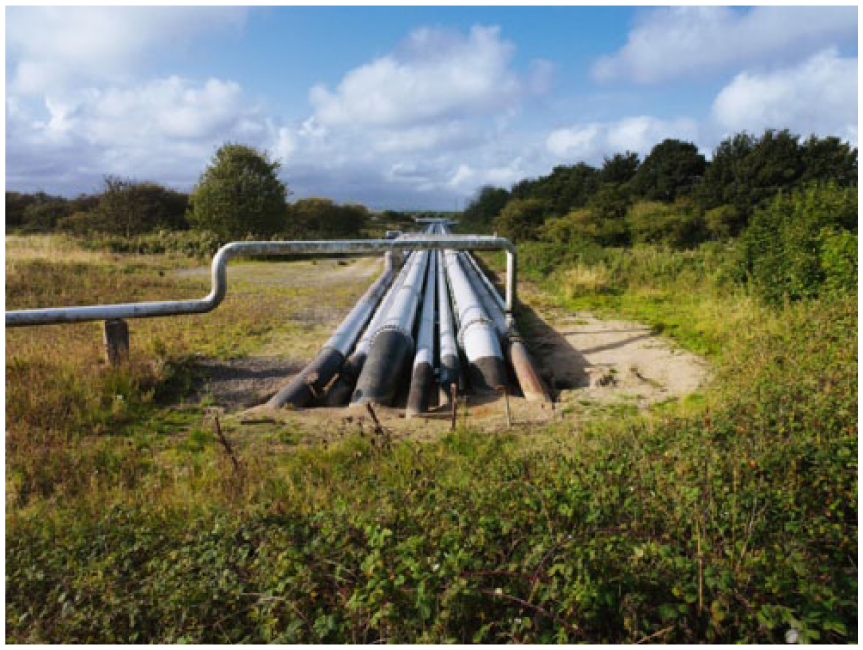
A very recurrent picture of the TAP pipeline used in the tweets that speak about the existence of a conspiracy between governments, multinationals and mafia groups.
Many of these posts, moreover, also make reference to press articles and short documentary reports by investigative news outlets: mostly the daily newspaper Il Fatto Quotidiano, the weekly magazine L’Espresso and the TV programme Report (see e.g. Rai Play, 2016). In particular, many of the tweets refer to an article published on 3 April 2017 by the Italian weekly news magazine L’Espresso (2017b). 12 The article is based on a series of confidential documents of the European Commission, which revealed the crucial role of a company, Egl Produzione Italia, which is part of the Swiss group Axpo and (through Axpo and together with a number of multinational leaders in the energy sector, such as Snam, Bp, SOCAR, Fluxys and Enagas; see Trans Atlantic Pipeline, n.d.c) the TAP Ag. Despite the non-EU status of the leading company (Axpo), EU funding (issued by the EIB) was obtained by Egl Produzione Italia in 2004 and 2005 and was used to assess the feasibility of the TAP project in its preliminary phases. The article in L’Espresso also reports that the Swiss CEO of Egl Italia, Raffaele Tognacca, has been accused in Italy of laundering illicit money, derived from the drug-related profits of an ‘ndrangheta group through one of his administered companies (Viva Transfer).
The L’Espresso article also elaborates on the role played by Russia in the TAP project. Allegedly, the European Union approved and financed the Southern Gas Corridor (and, therefore, the TAP project) in 2013 with the intent of reducing EU gas dependence on Russia. However, according to L’Espresso (2017b), one of the joint ventures that owns the field of Shah Deniz 2 in Azerbaijan, where the TAP pipeline starts, has been joined by the Russian company Lukoil, thus challenging the anti-Russian discourse used so far by EU institutions. In addition, the article also mentions the possibility (allegedly confirmed by police phone tapping in Italy) that other Russian companies, owned by ‘oligarchs faithful to Vladimir Putin’, may be involved in the project. In addition, one of the most important CEOs of the Swiss TAP Ag, Zaur Gahramanov, who is also a member of the Board of Directors of many TAP-related companies, was apparently named in the Panama Papers and laundered money through off-shore companies.
The article concludes by suggesting that Azerbaijan does not have sufficient gas for its own consumption (as it has recently negotiated the import of gas from Russia) – and therefore seems unlikely to be able to satisfy the demand for gas from EU member states.
The TAP company (and the fossil fuel industry in general – a business that ‘wants to stay in control using the myth that gas is a clean, transition fuel’; Shoraka, 2017) – is also referred to in tweets as a criminal enterprise. Most notably, the TAP company is often referred to as ‘mafia’ and the TAP project as a mafia-pipeline (‘mafiodotto’). Critics accuse the TAP company of being associated with mafia investors and of basing their development plans on claims that are untrue or unsubstantiated (e.g. that olive trees need to be removed and treated against Xylella, a bacterial disease said in some tweets to have been ‘invented’ by the TAP company), and on incomplete and incorrect assessments. 13 In addition to misleading people, the ‘criminal’ company is also accused of devastating the landscape for its own profit – not for the benefit of the local communities. The company, therefore – with the support of the Italian state, the ‘ndrangheta and other authoritarian regimes – is seen as forcing an unwanted infrastructure on the local population, without being concerned about local opinion, and only for its own private gains. An example of this narrative is provided by the posts that commented on the decision to uproot and remove olives trees at the end of March 2017, in which Twitter users accuse the company of pursuing its own interests, and those of the ‘‘ndrangheta and dictators’. In the tweets following the removal of olive trees in breach of the agreed period of suspension in early July 2017, the company’s managers and employees are also described as ‘thieves’ and ‘offenders’.
Twitter users also challenge the three Italian governments that have approved and supported the project, which have all been led by one centre-left Italian political party: the Partito Democratico or PD. Particularly, the posts speak about PD raping and disfiguring the territory and about the necessity for soon-to-be-held elections (as exemplified by the recurrent hashtag #votosubito (‘elections now’)). Twitter posts – also posted by the local members of the Five Star Movement (5SM), an Italian populist political party – are also critical of individual (regional and local) politicians. For example, tweets are highly critical of the suggestions of the governor of the Apulia region (Michele Emiliano, PD) of having an alternative TAP landing point (in Brindisi, a city situated 60 km north of Melendugno) and an alternative floating pipeline (and no longer an underground pipeline, as TAP is supposed to be), which will allegedly be less expensive and ‘more respectful of the Apulian environment’ (La Gazzetta del Mezzogiorno, 2017).
Harms
The TAP project is mainly challenged by people via Twitter in light of the special meaning born by the land, where the pipeline will run, and of the olive trees situated on that land, which are to be removed by the company. Both the land and the olive trees are humanized in the tweets. For example, the land is given human features in a song (‘Simmo tutte Sioux’ (‘We are all Sioux’)) by a southern Italian music band (Terroni Uniti, a collaboration of 30 independent artists mostly from Naples), which was released on 7 July 2017 and went viral on Twitter:
Nature speaks and breathes its life, she told me you were coming […] I believe in Mother Earth, if you respect her, she speaks […] There are not only the Dakota people, we are all Sioux […] ally of nature […]. (Terroni Uniti, 2017)
In this song, many references are made to the case of the Standing Rock Sioux Tribe, who, like the NOTAP activists, defend their land against an unwanted (yet authorized by the state) pipeline (Samson and Ravna, 2016). References to the opposition of the Sioux tribe (also marked with the hashtags #waterissacred, #Standingrock, #NODAPL and #indigenousrights) and of other eco-justice groups, including the NOTAV activists, who oppose the construction of a High-Speed Rail route in the north east of Italy (#NOTAV), are recurrent in many other tweets, which emphasize the unity of these individual battles: e.g. ‘It’s only one battle. […] We are fighting for the same things. For Mother Earth. We are fighting for the transition to clean and renewable energy’ (Zero in Condotta, 2017).
Typical in the Twitter posts is also the description of the land as ‘home’ and of residents as ‘sons’ of the (Mother) land, ‘born’ in that land – a circumstance that gives them the right (and perhaps also a perceived duty) to protect their land. An example is offered by another song of a local artist (‘NO TAP’ of Treble Lu Professore), which was released in 2014 and has recently been (re)tweeted:
No, Salento doesn’t want TAP. You [the Tap company] want our home [and pretend that] those who live [here] won’t ever rebel. But […] the sons of this land […] have the right to defend it, to make it free, not slave nor servant [anymore]. (Treble Lu Professore, 2014) 14
Tweets speak about violence, rape to the land (e.g. ‘an extraordinary meeting to decide [..] how to defend ourselves “from those […] who want to rape our land”’, Greco, 2017b) and of massacre (e.g. see the comments of the NOTAP Committee as reported in Greco, 2017a). In many of these tweets, users have attached the picture of soon-to-be-removed olive trees (see Figures 3 and 4). In a few cases, they have posted a picture of a beautiful marine Apulian landscape.
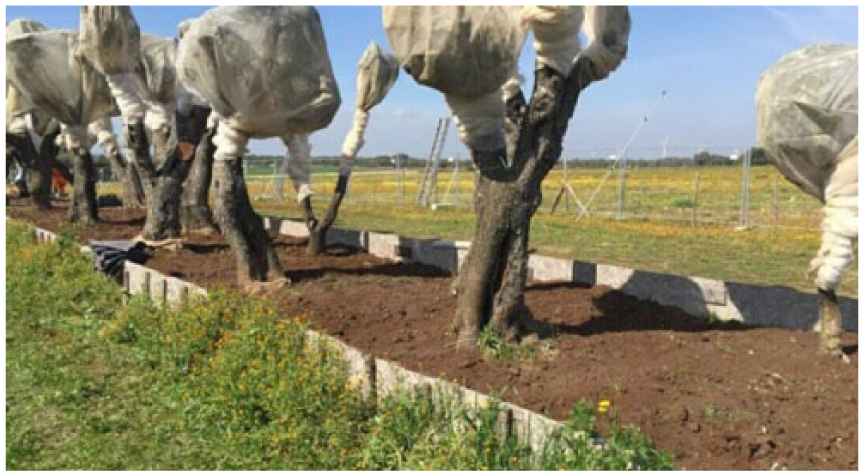
Olive trees in San Foca, ready to be uprooted and removed.
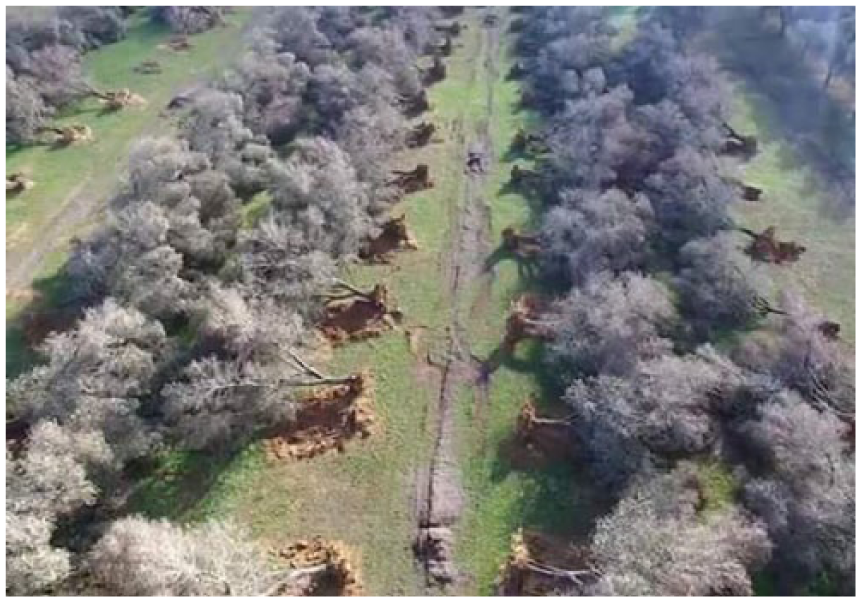
Uprooted olive trees in San Foca.
Many of the tweets refer to the uprooting of olive trees. In the posts, olive trees are referred to as the symbol of the province of Salento, of its economy. In addition, in a tweet posted of a famous Italian music band (Negramaro), olive trees are also given a name (see e.g. Figure 5) (On Stage (2017)). The naming of olive trees has been justified by the band in the following way: ‘the only way to deal with nature is the absolute human one’, and ‘[t]hey are trees with a name, […] with a life, land with a big soul, infinite!’ (On Stage (2017)).
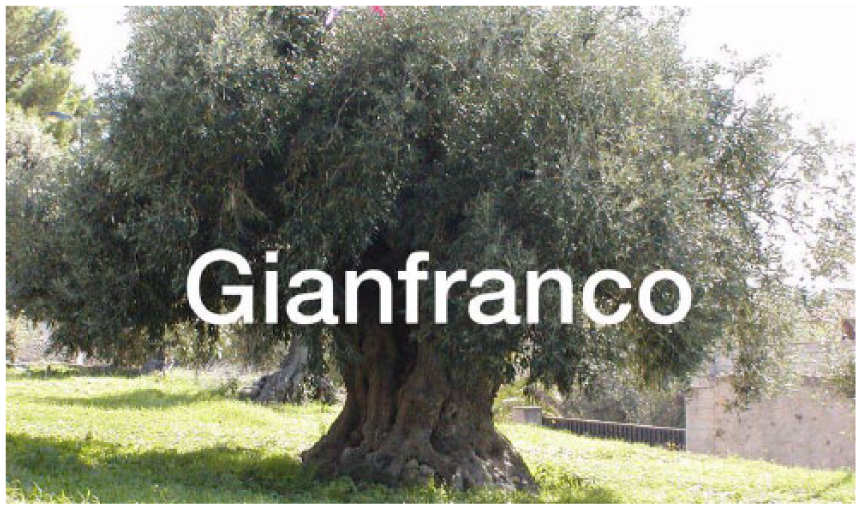
A century-old olive tree, which has been named ‘Gianfranco’ by the Italian music band Negramaro.
Conflicts around the uprooting of olive trees, which have caused the indignation of the local communities and sparked their protests, are linked to the symbolic meaning that these trees have for the Apulian people (e.g. ‘they are a symbol to which people are very much attached’; Basilicata24, 2017). Agriculture and, particularly, the cultivation of olive trees is among the main sources of income in the region, which is one of the poorest regions of Italy. As one young woman suggests in a linked video interview:
as we all know there is no work in the south [of Italy]. Therefore we adapted to be farmers, we have always lived like this. Therefore, no-one has ever paid attention to us, we are mocked by all [northern] Italians, [we are] the terroni
15
… But when they need our resources, they come, do what they want, and take all the very little that we have built alone … Because these trees, these fields, have been grown thanks to the arms and the work of our grandparents, our fathers. They take away all the beauty we have and pretend that we keep silent, quiet, that we let the tanks pass over it, without getting anything in return … This, in addition to the pain, also hurts at the emotional level, of seeing this massacre, no? … (Notav Info, 2017)
In addition, democracy is perceived to be harmed by the TAP project. For example, as an Italian music band (Negrita) articulates:
[t]he problem is the uprooting of democracy! Democracy, [is] not known anymore. People don’t count anymore. All is decided at the top. They don’t listen. They command! They send an army of riot police officers and they dispersed men, women, elders and children. [Who are all] [h]elpless. (Inchiostro Verde, 2017)
People, on the contrary, ‘want to be allowed to decide what to do with [their] land’ (M5sParlamento, 2017).
Twitter posts also speak about harm to the health of people. They do so especially by attaching articles that, by referring to results of scientific studies or to statements of medical associations, argue that there is a causal relationship between the presence of power plants, pipelines etc. and deaths caused by cancer (see e.g. Ansa.it, 2017c). Much reference is also made in this context to the case of the Ilva steel company (also through the use of the hashtag #NOILVA) in nearby Taranto, whose managers and administrators have been condemned for not having made adequate efforts to prevent the deaths of many employees through its excessive pollutant emissions (see note 4). The fatalities caused by the Ilva steel company in the region also help to explain why the Apulian land is described as ‘
Harm is also said to be caused to fishing and tourism. In particular, harm to tourism is partly attributed to the seizure and conversion into a construction site of part of a marina (San Foca), which otherwise would be attended by tourists, especially in the summer. Harm to tourism is also partly linked to the (perceived high) likelihood that incidents will happen in San Foca, thus negatively affecting the health of tourists and the image of the marine area (Basilicata24, 2017). Reference to the former argument was especially made after the clashes of 3 and 4 July 2017, when the TAP company uprooted and removed olive trees in San Foca during the night in breach of the agreed period of suspension. Tweets particularly refer to the closure and militarization of the area (to carry out an action seen as illicit), and describe it as highly prejudicial to tourism (Greco, 2017d).
Protest
The many protests organized against the TAP project are described in the Twitter posts as peaceful and very inclusive, as they involve the participation of the community and, particularly, of old people, families and children. This broad participation is well exemplified by two pictures that are considered as representative of the #NOTAP protest (see Figures 6 and 7): they show children pushing a TAP truck carrying olive trees away from San Foca.
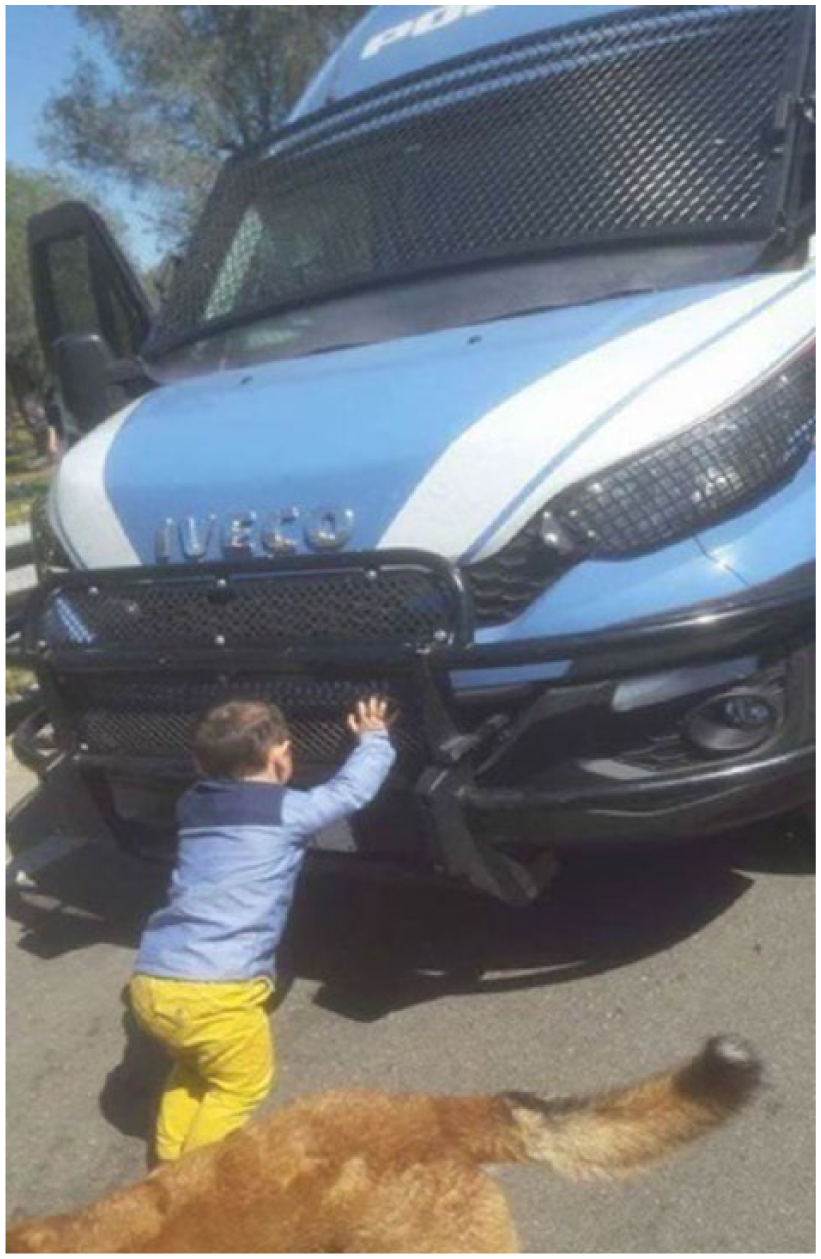
A picture of a kid pushing a police car, often used to represent the peaceful nature of the NOTAP protest.
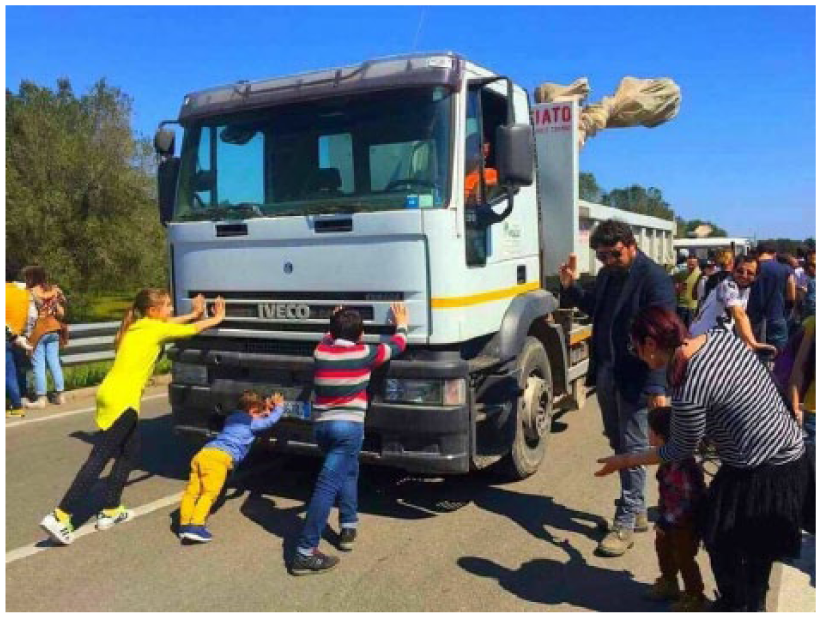
Children pushing a TAP truck, carrying uprooted olive trees away from San Foca.
The banner of the protest is ‘#NoTAP, not here or anywhere else’ (‘#NoTAP ne’ qui ne’ altrove’). Another typical and popular protest banner, which is represented in the tweets, is ‘no to the mafia-pipeline’ (‘no al mafiodotto’). The Twitter posts speak about peaceful protests involving discussion meetings, buskers’ performances and concerts, mostly organized in San Foca (right outside the construction site) and Melendugno. 16 The #NOTAP protest also features in tweets about concerts of international bands (e.g. Manu Chao at Gallipoli on 18 July 2017), in football stadia and at the G7 organized in Taormina (Sicily) between 26 and 27 May 2017. In addition, it has also involved less organized and more spontaneous grassroots mobilization across the Apulian region.
When the tweets report on the organized peaceful demonstrations, they refer to them as part of the ‘resistance’ to the TAP project. The idea of resistance also features one of the most popular street chants during the protest: ‘against TAP and its violence, now and always resistance!’ (‘contro la TAP e la sua violenza, ora e sempre resistenza!’). At times, Twitter users also refer to protestors as ‘comrades’ (this is especially so when the posts are authored by the Sinistra Italiana, a left-wing political party). Many of the reported protests have been attended or supported by other activist groups, including the NoTav movement (see above).
Many tweets also include reference to open letters and petitions against the TAP pipeline. Particularly, one petition, which went viral on Twitter, urged ‘the EU Commission to re-assess its support for the pipeline, and call[ed] on the EIB and [the European Bank for Reconstruction and Development] EBRD not to invest public funds in this unnecessary, unjust and financially reckless project’ (350, n.d.a). The petition, which has been promoted by 350.org (a global grassroots movement; see https://350.org/about/) is available in English, Spanish, Italian, French and German, and has been tweeted and retweeted in all these languages. Figure 8 is a picture of the NOTAP protest, which shows ready-to-be-removed olive trees and the police facilitating their removal; it has become one of the pictures used to circulate the abovementioned petition on Twitter. See 350 (n.d.b).

A picture of ready-to-be-removed olive trees, which has been used to circulate one of the #NoTap petitions on Twitter.
A petition, often recurring in the tweets, has also been initiated by many mayors of the region, who have urged the current Italian government (with Paolo Gentiloni as prime minister) to suspend the TAP project (see Progressi, n.d.).
Although the protest is described in the majority of the tweets as peaceful, in some of the tweets, especially published after the clashes with the police on 3 and 4 July 2017 (following the company’s breach of the period of suspension), it has been referred to as a ‘fight’ and ‘war’. The protest, however, was again labelled as peaceful a few days later, when activists and fisherpeople organized another protest against the project.
Repression
Despite the peaceful nature of the protests, many tweets suggest that there have been attempts by the TAP company, the government and complicit media to ‘discredit and criminalize’ it (see e.g. Cavalli, 2017, and, more recently, Spagnolo, 2017a). In one article of the daily national press outlet Corriere della Sera (Vulpio, 2017), NOTAP activists were accused of having intimidated TAP and the police by placing a firecracker outside the hotel where police officers were staying. In fact, this moderately violent act was firmly condemned by activists, who regarded it as an ‘attempt to discredit the content and forms of the protest by the multinational [which is] supported by some national media’ and journalists, and as an example of the ‘rhetoric of repression’ (Giardinieri Sovversivi Romani, 2017). According to the Committee, it is the peaceful nature of the gathering of people that has allowed the local community to monitor the activities of the company at the construction site. In addition, many Twitter posts speak of state repression and police violence and attach links to videos and images, which – as a sousveillance tactic – make visible and challenge police violence and abuses (Bradshaw, 2013). These tend to represent law enforcers in riot gear blocking the (disarmed) protestors from accessing the construction site, and escorting the TAP trucks carrying olive trees away from the area (see Figures 9 and 10).

Law enforcers in riot gear blocking the protestors from accessing the construction site, and escorting the TAP trucks carrying olive trees away from the area.
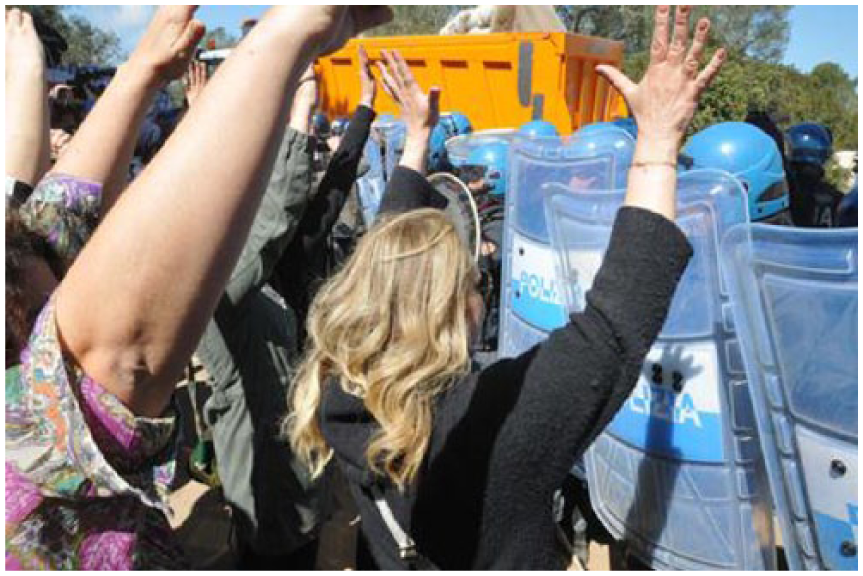
Law enforcers in riot gear escorting the TAP trucks away from the area.
Posts about violent police repression are most recurrent after the protests of 3 and 4 July 2017, when TAP decided to remove 43 olive trees from San Foca at night. Tweets in this case mostly tend to contrast the peaceful nature of the protest (which only involved street blockades and the fixed gathering outside the construction site) with the excessive and violent reaction of law enforcers (a contingent of police officers, carabinieri, officers of Guardia di Finanza and fire fighters) in riot gear, who – as documented by many of the attached pictures (for one example, see Figure 11 below) and linked YouTube videos (see Larini, 2017; Re:Common, 2017b) – pushed people away while escorting the company’s trucks out of the construction site, eventually hurting some of the activists. The NOTAP movement, which has reported on the protest by describing the acts of violence of the police, has defined this event as a ‘long night of state violence and repression’ (Movimento No Tap, 2017).

A very recurrent picture of the protests of 3 July 2017. This picture, which went viral on Twitter, was used by the national broadsheet La Repubblica Bari (Spagnolo, 2017c).
Many tweets talk about state repression (e.g. DinamoPress, 2017) and the use of the army against citizens rather than against criminals like mafia members (see Paragone, 2017a). They also speak about the greenwashing campaign of TAP, through which the company affirms the legitimacy of the removal of the trees (which had to be moved to allow the company to ‘adequately look after and protect’ them), dismisses any accusations of interfering with tourism and (belatedly) opens the doors to dialogue with the local community (e.g. Greco, 2017d; Paragone, 2017b).
After the clashes of 3 and 4 July 2017, protestors have also been fined by the police (questura) of Lecce with administrative sanctions up to approximately €10,000. In response to these fines, a local politician (Cristian Casili, 5SM) published a very provocative Facebook post, where he publicly declared his involvement in the protests and invited the questura to sanction him as well. In the post, which has also been published by the regional edition of the national newspaper La Repubblica Bari (Spagnolo, 2017d) and posted on Twitter, he challenged the fines and described them as a way to ‘intimidate the people […] who have … always peacefully and democratically protested against a project that no one wants’. Twitter posts, moreover, tend to compare the current regime, which violently represses people who peacefully exercise their constitutional rights, with a fascist regime. 17
As shown by the tweets representing the repression of protest, articles from the two most popular Italian broadsheets, La Repubblica and Corriere della Sera, 18 are under-represented in the sample of tweets. This is because they are seen as engaging in under- and mis-representation. For example, when Twitter users mention the articles of Corriere della Sera (such as the article by Vulpio (2017), mentioned above) it is often to challenge portrayals of the protest as violent and subversive, rather than peaceful. A cursory analysis of the articles published by Corriere della Sera in 2017 through the keyword ‘Tap’ (see http://sitesearch.corriere.it/forward.jsp?q=notap#) also revealed an institutional, pro-government and pro-TAP company position on the conflict. When articles of the most widely-read Italian broadsheet, La Repubblica, are commented on, or attached to, the tweets, they tend to refer to its regional edition of Bari (the capital of the Apulia region). A cursory keyword search (using the keyword ‘NOTAP’) through the online database of La Repubblica (http://ricerca.repubblica.it/) from 1 January 2017 until 16 August 2017 has revealed that out of the 187 articles published in the national broadsheet La Repubblica, half of the articles have actually been published in the regional edition of Bari (91), thus giving a mostly ‘local’ characterization to the ‘TAP problem’. In addition, the screening of the articles published in the national edition of La Repubblica has revealed that these articles mostly consist of short columns, and of links to videos (mainly the ones that went viral on Twitter), rather than of commentaries or editorials.
Dissenting opinions
Some tweets are critical of the NOTAP protests. In particular, NOTAP activists are regarded simply as contrarians, who take an oppositional stance in virtually any public debate (e.g. on vaccines, sea drills, the High-Speed Rail (TAV), the Euro currency etc.), and therefore undermine progress. They are variously described as troublemakers, extremists and fascists. In these tweets, the NOTAP protest is described as a pretext for activists to protest against other projects they consider anti-environment, even though they may be socially useful (e.g. the High-Speed Rail or TAV in the north-west of Italy), and as a subtle political tool used by some political parties (mostly the 5SM, which very much supports the NOTAP protest) to gather political consensus and electoral support.
Discussion and concluding thoughts
This article has aimed to explore the great potential that the digital space offered by social media such as Twitter – in combination with other (digital and non-digital) platforms and methodologies – provides for the project of green cultural criminology, bridging green and visual criminologies (Brisman, 2017; Natali, 2013, 2016; Natali and McClanahan, 2017). The study has illuminated the green harms perceived and/or suffered by Twitter users after the approval and (at least, partial) execution of the TAP project at San Foca (Melendugno), which has been represented by Twitter users through images and visual material. Among the various perceived harms, there are harms affecting the local community (their health and economy), the environment (the ‘land’ and olive trees, which bear a symbolic meaning and have been given human features) and democracy (the right of the local communities to have a say on matters that directly affect them). The TAP pipeline is also seen as a project that represents the interests of a ‘criminal’ corporation colluded with by the government, external authoritarian regimes and organized crime groups – and that does not bring any benefit to the local community.
The natural space (the ‘land’), particularly the coastal area of San Foca where olive trees have grown profusely - which is the pipeline’s landing point in Italy - has been turned by the NOTAP activists (and via social media like Twitter) into a space of resistance, especially after the uprooting of olive trees by the TAP company. Olive trees have, indeed, a strong symbolic significance for the people in the area. This symbolic value also contributes to explaining why their removal has outraged and inflamed protesters (and often been equated in the tweets to violence against a person).
Including people’s perceptions, as reflected in social media, in the study of green harms is particularly important in the face of greenwashing messages and campaigns of private companies, and of the under- (or mis-) representation of environmental and ecological harms (perceived to be) affecting local populations as a result of state-authorized projects. The case of the TAP pipeline presented here illustrates this. In many Twitter posts, the TAP company is accused of presenting – often through complicit media, such as the newspaper Corriere della Sera – a distorted image of the NOTAP protest, and of framing illegitimate actions as legitimate (such as the removal of olive trees from San Foca in breach of the agreed summer period of suspension). In addition, the commentary articles on the TAP pipeline, which have been cited in the tweets, have mainly been published by investigative reporting news outlets (primarily Il Fatto Quotidiano and L’Espresso) and by the regional edition, produced in Bari, of the most widely read and circulated Italian broadsheet La Repubblica, which has a reduced circulation rate and, possibly, a more limited chance of shaping public discourse (and policy).
During the data analysis, we have explored representations of resistance and of state repression and violence on Twitter, which have so far been relatively under-studied in green cultural criminology. More accurately, the results illustrate the importance of listening to the voices of activists, protesters and affected communities, even if only in the necessarily limited (and, often, partisan) content posted by them on social media, as this is crucial to the understanding of their reasons for protesting. Their posts also provide a record of the monitoring of instances of abuse and repression by the state – which may well be under- or mis-represented by the national mainstream media. NOTAP activists, for example, speak in the tweets of violent police repression, of intimidation and deterrence through onerous administrative fines and of the attempts by the company and the media to re-construct the (peaceful) protest as a violent and subversive opposition against the state.
Studying how people perceive and represent state repression (and the harm caused by it) on social media could be particularly beneficial for the newly emerging (and cultural criminology-inspired) ‘wave of socio-spatial criminology’, which ‘blends together participant observation and other qualitative methods with quantitative geographic information system (QGIS) to help develop new, politically nuanced “alternative crime maps”’ (Hayward, 2016: 213). There is, as Hayward indicates, a need to develop a more politically-informed and nuanced approach to mapping and analyzing the intersection of public space (including crime mapping in this space 19 ) and digital space (and social media within this). In a world where popular disquiet and protest about environmental harms and crimes (fracking, pollution and over-fishing, among others) is increasingly disregarded and misrepresented by corporate and government decision makers, both real and virtual protests will find digital space important as a channel for placing their (counter)representations of state and state-corporate crimes and harms in the public sphere(s).
Footnotes
Funding
The author(s) received no financial support for the research, authorship, and/or publication of this article.
