



Abstract
Informed by the growing literature on narrative and embodied approaches to the study of leadership, this article explores Theodore Roosevelt’s conservation leadership as mediated by photographs, cartoon images, and his own writings and speeches. It argues that Roosevelt embodied his story about the natural world and the place of “man” in it through five different but related roles or personas: as proponent of “the strenuous life,” as cowboy, as Rough Rider, as hunter, and naturalist. It presents a critical analysis of Roosevelt’s conservation leadership that draws upon historical research, feminist and eco-feminist critique, and concepts from the field of organizational leadership including the “Virtual Leader Construct.” As such, the article makes a contribution to our historical understanding of Roosevelt, contemporary theorizing about leadership as a narrated and embodied practice, visual and esthetic approaches to the study of leadership, and to the emerging field of environmental leadership.
Introduction
Theodore Roosevelt, 26th President of the United States, was one of the most influential environmental leaders in American history. Along with setting aside hundreds of millions of acres of forest and establishing bird refuges, national parks, and national monuments such as the Grand Canyon (later to become a national park), Roosevelt helped to reframe Americans’ understandings of the natural world and their place in it. When he came into office in 1901, American natural resources were in steep decline. While in office Roosevelt championed environmental conservation as the patriotic duty of all Americans, while pragmatically working to ensure that his vision of a harmonious relationship between “man” and “nature” be established (Brinkley, 2009; Cutright, 1985).
Besides providing for basic human wants and needs, nature was the theater in which human moral development and character building took place, in Roosevelt’s view. At the same time, he believed that the American landscape and “natural wonders” were the American equivalent of European cathedrals and other works of western civilization (including great literary works) and should be preserved as fundamental features of American identity and civilization. A gregarious naturalist, strident moralist, and in many respects a teacher when it came to nature, Roosevelt may be seen as an example of Burns’ “transforming leader” who helps followers to achieve higher levels of morality and purpose (1978: 425–426; Redekop, 2012). As stated by his Chief Forester Gifford Pinchot, The greatest work that Theodore Roosevelt did for the US, the great fact which will give his influence vitality and power long after we shall all have gone to our reward is … that he changed the attitude of the American people toward conserving the natural resources. (quoted in Cutright, 1985: 233)
Yet, despite these achievements, Roosevelt’s highly masculinized vision of the relationship between “man” and “nature” seems out of step with modern environmentalism in general, and “ecofeminism” in particular; as we shall see, he is an easy target of eco-feminist critique, while also in some respects problematizing it. His jingoistic attitude toward other nations, and his acceptance of the displacement of Native Americans—and the American Bison—from their ancestral lands by white Europeans, went hand-in-hand with a utilitarian attitude toward the natural world that resulted in the damming of rivers and the mass settlement of the American West. Roosevelt’s love of nature was further tempered by a love of stalking and killing some of its grandest specimens, as for example when he took part in big-game hunting in Africa after leaving office, despite the admonitions of naturalist friends like John Muir. Roosevelt’s conservation successes are thus shadowed by a darker side of his character and leadership. The intention of this study is thus not heroize Roosevelt so much as to understand the features of his conservation leadership as a product of its time and place, and of a protean and complex personality.
In examining the contours of Roosevelt’s leadership, there are a variety of approaches that can be taken. One is to explore the historical and biographical details of his life and leadership. Roosevelt was a tireless champion of nature who read widely, talked incessantly, published voluminously, politicked constantly, and corresponded with many (Brinkley, 2009; Cutright, 1985; Morris, 2001). Among scholars of leadership, the most common approach to understanding his leadership in general has been via studies of presidential charisma (Deluga, 1997, 1998; Fiol et al., 1999; O’Connor et al., 1995; Seyranian and Bligh, 2008; Simonton, 1988). However, as with the designation of “transforming leader,” saying that Roosevelt was a charismatic leader may tell us something about him as a historical actor but does not advance our understanding of his leadership on environmental issues very far. Pertinent questions here include: Why was Roosevelt influential in conserving natural resources and changing American attitudes toward nature? How was he able to advance his conservationist vision in a compelling way? And what was the role of an emerging American mass media in this process?
This article addresses these and other questions by adding a new dimension to our understanding of Roosevelt’s conservation leadership: that of leadership storytelling and embodiment. No previous research has examined Roosevelt as a storyteller adept at embodying his environmental story in ways that were understandable and accessible to the American public, and mediated through a variety of means including newspaper and magazine cartoons. As such, this study makes a contribution to our understanding of Roosevelt’s conservation leadership (Brinkley, 2009; Cutright, 1985; Redekop, 2012), as well as to the emerging scholarship on environmental leadership (Gallagher, 2012; Redekop, 2010) and the growing literature on narrative approaches to leadership (e.g. Boyce, 1996; Brown et al., 2004; Denning, 2005, 2007; Gardner, 1995; Quong et al., 1999; Shamir et al., 2005; Simmons, 2006). It also contributes to an emerging literature on the visual and esthetic features of leadership (e.g. Griffey and Jackson, 2010; Grint, 2001; Guthey and Jackson, 2005; Ladkin, 2006), particularly as mediated by political cartoons (e.g. Coupe, 1969; Keller, 2013; Kemnitz, 1973; Moss, 2007; Streicher, 1967; Vultee, 2007; Wiid et al., 2011). This study thus answers the call for “investigations into leadership representation and consumption which … fulfill … the enticing promise of a truly aesthetically-informed leadership studies field” (Griffey and Jackson, 2010: 134).
Leaders as storytellers
According to Howard Gardner (1995), leaders are in essence storytellers who “achieve their effectiveness chiefly through the stories they relate” (p.9), primarily because stories appeal to both reason and emotion. Gardner’s view has come to be widely shared; much has been written in recent years on the role of narrative and storytelling in leadership, in the wake of a broader recognition of the importance of narrative and storytelling in communication, influence, and the social production of meaning. The titles of several recent books are instructive: Storytelling in Organizations: Why Storytelling is Transforming 21st Century Organizations and Management (Brown et al., 2004); The Story Factor: Inspiration, Influence, and Persuasion Through the Art of Storytelling (Simmons, 2006); The Secret Language of Leadership: How Leaders Inspire Action Through Narrative (Denning, 2007).
These and other works stress the important role played by stories and other forms of narrative in the leadership process; and it is not leaders alone who produce influential stories, but organizations themselves are fertile ground for stories that get told and re-told by a variety of actors within them (Brown et al., 2009). “Organizations … possess a living folklore … [whose] vitality, breadth, and character, can give us valuable insights into the nature of organizations, the power relations within them, and the experiences of their members” (Gabriel, 2000: 22). This folklore is a chief force in the fantasy world of the “unmanaged organization” and includes, according to Gabriel, “jokes, gossip, nicknames, graffiti, cartoons, and above all, stories” (2000: 112). The fantasies expressed through folkloric elements “reveal a great deal about the nature and dynamics of leader-follower relations, as well as the emotional needs of subordinates fulfilled or frustrated by leaders”(p.192). Drawn from organization studies, such insights apply equally well to politics and can help inform our understanding of the influence processes of political leaders like Roosevelt, who occupied a central place in American political culture and imagination.
Gardner presents an elaborate typology of stories that leaders tell and suggests that “stories of identity” are especially powerful leadership tools. Such narratives “help individuals think about and feel who they are, where they come from, and where they are headed” (1995: 43). Identity stories tend to bridge the leader’s own identity with that of his or her larger constituency; leaders first work out who they are and what they stand for, and then present or relate this identity as a template for others to follow. Shamir et al. (2005) similarly suggest that “the leader’s life story provides the leader with a self-concept from which he or she can lead, and that telling the biography is an important leadership behavior”(p.13).
As Gardner further suggests, an important mode of “relating” or “telling” such stories is to embody them: Leaders “convey their stories by the kinds of lives they themselves lead, and, through example, seek to inspire in their followers” (1995: 9–10). According to Gardner, such embodiments convey a “vision of life” that complements the more propositional accounts communicated directly by the leader (p.42). It is important that leaders’ embodiments of their story do not contradict their more propositional “messages”; no one likes a hypocrite (for recent research on this topic as it relates to leadership, see Martin et al., 2013; Moorman et al., 2013; Palanski and Yammarino, 2009).
This focus on leadership as an embodied practice is of growing interest in the field of leadership studies: Too often … in both academic literature and mainstream media, leaders are treated as disembodied, their leadership qualities referred to in ways that not only suggest leadership involves only cerebral functions but fail to recognize that cerebral functions originate and are actualized in the body. (Melina et al., 2013: xiii. See also Ladkin, 2008; Ladkin and Taylor, 2010; Sinclair, 2005; van Knippenberg, 2011) Human beings … have bodies which must be developed and nurtured. These bodies, in turn, are embedded in a natural environment. Social theories that do not take account of this essential feature of human existence are starting from the false premise that human actors are disembodied and disembedded. (Mellor, 1997: vii)
The present study helps to correct this perspectival imbalance by contributing a case study of the embodiment of environmental leadership. If “embodying the story” is truly an important element of leadership storytelling, one would expect to find significant examples of it throughout history, and it is my contention that Roosevelt provides a vivid example. 1
One of the primary ways that the various embodiments of Roosevelt’s story were communicated was through the periodical press, which underwent a period of rapid expansion during his political career (Juergens, 1981: 5–6). Roosevelt was masterful at using the press to advance his agenda and craft an image of himself that excited the popular imagination and garnered support for his policies (Greenberg, 2011; Juergens, 1981; Ponder, 1998). While President, Roosevelt succeeded in dominating the front pages of newspapers as well as being the subject of countless photos, cartoons, and illustrations in a variety of books and periodicals that disseminated of a plethora of images communicating his leadership story to the semi-literate masses (see, for example, Marschall, 2011). Pictures had an impact greater than words on the population at large … More than keeping Roosevelt in the public eye, the generally favorable cartoon treatment he received served to humanize him. He became somebody all Americans knew because they looked at his likeness each day in their newspapers. (Juergens, 1981: 35–36) Far from just neutrally mirroring the actions of the protagonists, pictorial press coverage worked to enhance the stature of the chief executive officer at the expense of congress. In fact, by fictively transforming the judiciously writing into the dramatically performing presidents the illustrated papers did not just alter public perceptions and enrich the nation’s political imaginary but furnished blueprints for key developments in the future which were to amount over time to an incisive reorganization of the political system. (p.28)
Methodology
As a historian working in the interdisciplinary field of leadership studies, my approach is to draw on a wide variety of sources, including historical accounts of Roosevelt and his conservationism, his own writings, and two major databases containing digitized illustrations and cartoon images of Theodore Roosevelt dating from the 1880s through the 1910s: the Theodore Roosevelt Center (TRC) and the Library of Congress (LoC). These images were taken from a wide variety of local and national newspapers, magazines, calendars, and other ephemera. At the time that research into images took place (May and December 2013), the TRC archive listed 343 cartoon illustrations, while the LoC listed 451. Of the 343 images listed by the TRC, 287 are cartoons/illustrations that depicted images of Roosevelt (in one form or another), while of the 451 LoC images, 349 depicted Roosevelt. Many of the non-relevant images that are listed as “cartoons” are either digital images of letters or other documents, or they do not actually feature a representation of Roosevelt. One-half of the relevant LoC images (175) also appear in the TRC database. Although both archival collections will continue to grow, as a sample of randomly collected images of Roosevelt, they provide a reliable empirical basis for identifying common tropes or themes that were used by cartoonists and illustrators in depicting Roosevelt both before and during his presidency.
The databases were first reviewed for general themes that spoke to his unique biography, interests, and public personae, including themes relevant to his conservation leadership. What emerged from multiple reviews of the databases, done in concert with extensive research into relevant primary and secondary sources including his own autobiography as well as recent major biographies (Brinkley, 2009; Morris, 2001; Roosevelt, 1920), were five themes or “strands” that, woven together, provide a many-sided yet coherent image of Roosevelt’s identity as reflected in his writings, actions, and the popular press: Roosevelt as proponent of “the strenuous life”; as cowboy; as Rough-Rider; as hunter; and as naturalist. Images of Roosevelt carrying a “big stick” were also common and were included in the database as a comparative category.
In keeping with the protocols of content analysis (Rose, 2007: 64–68), images were coded based on unambiguous features of the images: for inclusion in the Rough Rider category, Roosevelt needed to be dressed in Rough Rider garb; the same went for coding as a cowboy. To be coded as hunter, Roosevelt needed to be depicted with a rifle and engaged in hunting activities. Images that depict Roosevelt engaged in forceful activities associated with vigor, masculinity, and physicality were classified as belonging to the “strenuous life” theme (e.g. boxing, wrestling, chopping wood, engaging in sports, or other strenuous bodily activities). Finally, to be included in the “naturalist” strand, Roosevelt needed to be clearly depicted in lush natural surroundings, whether hunting, camping, fishing, observing, or some other activity.
Frequency of cartoon themes by database.
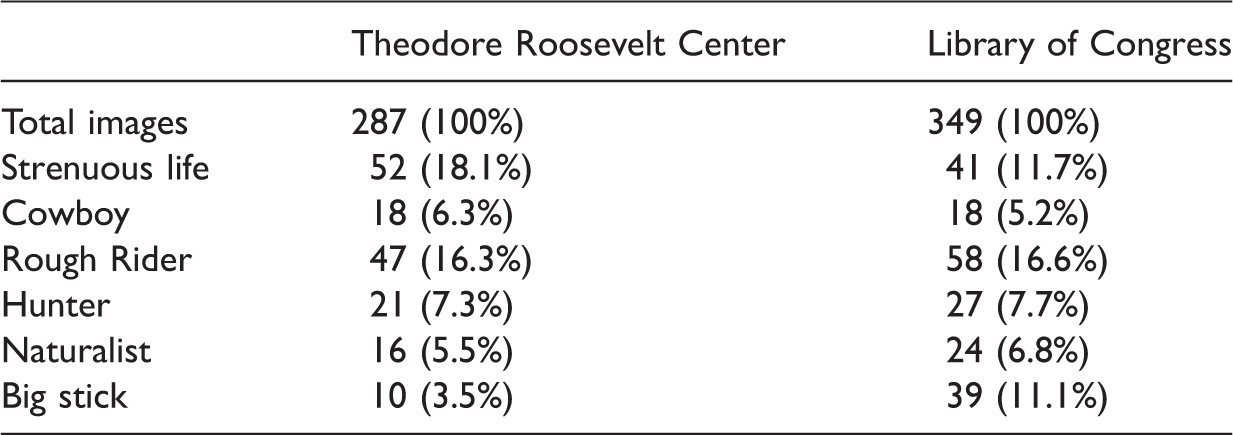
As is evident, depictions of Roosevelt as Rough Rider are common in both databases (around 16% of each database), as are depictions of him engaged in strenuous activity (18% of the TRC database, and 12% of the LoC collecton). Depictions of Roosevelt as hunter, naturalist, and cowboy are somewhat less common but consistently present. Surprisingly, there was not a consistently high percentage of images depicting Roosevelt with a “big stick”: 3.5% of the TRC database as compared to 11% of the LoC database. Whatever the reason for this discrepancy, these numbers indicate that all five strands identified for this study were at least as frequently depicted as Roosevelt carrying a “big stick,” which was clearly not the only image—or even the most important image—associated with Roosevelt at the time. Many of the images that did not fall into one or more of these categories are either more typical renderings of Roosevelt as politician, or in a unique format (e.g. Roosevelt as a martyr being burned at the stake). Given that content analysis is at every stage an interpretive process driven by the research questions being investigated (Rose, 2007: 71), I do not claim that these categories are comprehensive. As indicated above, however, they are based not only on careful analysis of the images themselves but also on careful attention to the historical record and Roosevelt’s own words.
It is worth noting that there is also evidence from images published at the time for the categorizations presented here: a 1907 Puck cartoon illustration with the caption “Future occupations for Roosevelt” (after he was to leave office in 1909) shows a vignette cartoon with Theodore Roosevelt, at center, as a rugged “guide for city sportsmen” encumbered with camping, fishing, hunting, and other outdoor gear, with surrounding scenes showing Roosevelt as a “Pedagogue of Natural History,” an “Instructor in the manly art” of boxing, a coach for athletic sports, and as a physician. 2 In another cartoon, published upon Roosevelt’s death in 1919, an “angel of history” is seen crossing off a series of descriptors under Roosevelt’s name, including President, Statesman, Soldier, Historian, Explorer, Naturalist, and Orator; underlining at the bottom “American” as a summary identity. 3 While “cowboy” and “wielder of a big stick” did not make either list, they were both clearly evident in the databases and there would be little reason to list them as fundamental identities of a retired or deceased president.
Strand 1: Roosevelt as proponent of “the strenuous life”
Theodore Roosevelt famously wrote that I wish to preach not the doctrine of ignoble ease but the doctrine of the strenuous life; to preach that highest form of success which comes not to the man who desires mere easy peace but to the man who does not shrink from danger, from hardship, or from bitter toil, and who out of these wins the splendid ultimate triumph. (Roosevelt, 1920: 166) “Vacation.”
4

Roosevelt’s doctrine and embodiment of the strenuous life expressed the energy and ambition of the United States as it emerged on the stage as a world power; just as Roosevelt had overcome a sickly, asthmatic constitution as a young child to become an exponent of an active, vigorous life, the country as a whole could imagine itself as rising from a weak and divided former colony to international power. As stated by Watts (2006), “No man more convincingly inscribed politics with fears about his own body or offered that body as an example of what a regenerated male could do for the nation [than Roosevelt]” (p.79).
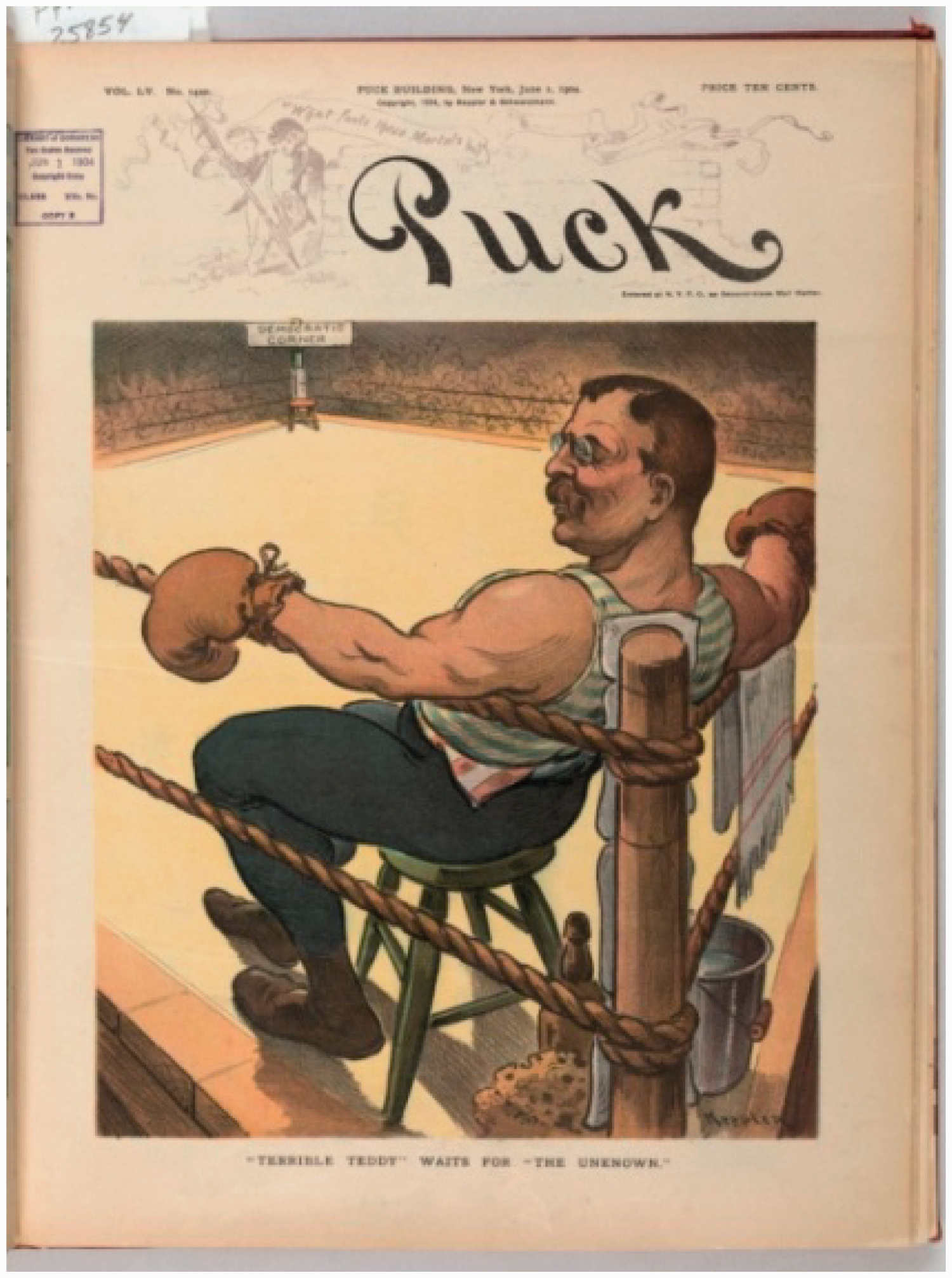
Roosevelt’s love of boxing—exemplified by the fact that he boxed in the White House—embodied his vision of the strenuous life and was linked to his Darwinian belief that struggle ennobles and purifies the individual and by extension the nation. This was a common belief of his time; Roosevelt made it a leitmotif of his general philosophical perspective (Watts, 2006). As illustrated in Figure 2, Roosevelt’s penchant for boxing was widely known and served as a concrete example of his “strenuous” vision, along with his pugnacity and strength as a leader.
“Terrible Teddy waits for the unknown.”
5
As such, it was a highly masculinized vision of American identity. Sarah Watts has argued that “As president, Roosevelt positioned his own body as a symbol of [an] imagined fraternity in the nation’s political culture … In Roosevelt’s hands, politics, soldiering, and cowboying furnished grand national arenas for a pugilistic form of masculine self-fashioning” that repressed “effeminacy” and justified American expansionism (2006: 8, 19. See also Daniels, 1996).
Watts advances an illuminating argument. What is of particular importance for the present study is that Roosevelt’s “strenuous” masculine self-fashioning, and by extension his embodiment of a certain story about American identity, very often took place in natural settings, and it is hard to imagine it without reference to the rugged challenges posed by the natural world, which he loved both as an object of intellectual fascination and emotional experience. Roosevelt regarded the outdoors as a primary theater of human endeavor: he loved, for example, to take White House guests on grueling hikes in Rock-Creek Park, and he spent his whole life in nature whenever he could, whether hunting, hiking, exploring, bird-watching or camping (for extensive documentation of Roosevelt’s naturalism, see Brinkley, 2009).
Roosevelt’s highly masculinized vision of “the strenuous life” was thus wedded to nature and, ultimately, his conservationism. As such, it can be critiqued (anachronistically, to be sure) from an eco-feminist perspective. If on the one hand it helped to link conservationism with rising American power and the “defence” of American manhood against the “rising feminization of modern culture” (Watts, 2006: 79)—thereby securing the support of a dominant patriarchal culture for environmental conservation—it also arguably contributed to an exploitative and dominating approach to women, minorities, animals, and the natural world itself (for discussions of eco-feminist perspectives, see, for example, Alaimo, 2000; Gaard, 1993; Mellor, 1997; Sturgeon, 2009). From this vantage point, one might highlight the degree to which Roosevelt’s conservationism was tied to the settlement of the American west (not least through grand irrigation projects that relied on the conservation of forested watersheds), cementing a utilitarian view of nature as a resource to be exploited rather than as an intrinsic good.
On the other hand, the fact that Roosevelt did in fact lead a movement to conserve and protect the natural world (including forests, “national monuments” like the Grand Canyon, and many species of birds) against the worst excesses of modern capitalism, from a highly masculinist perspective, problematizes to some extent the eco-feminist critique of western patriarchy as inherently dominating and destructive of the natural environment. Roosevelt’s embodiment of the masculine hunter-naturalist served to mobilize existing modes and pockets of conservationism into a national movement, and he continues to inspire hunters and other conservationists to this day (see, for example, Thomas, 2009). This is not to say that an eco-feminist critique does not hold merit, only to acknowledge the historical reality: Roosevelt did much in his lifetime, both before and during his presidency, to conserve as well as preserve the natural world, advancing the idea that nature holds deep significance for human beings and is something to be cherished, from a masculinist perspective.
Strand 2: Roosevelt as cowboy
Roosevelt’s cowboy persona was fundamental to his self-understanding and image. It was entirely self-created—he was an eastern blueblood by birth—but no less authentic for that. The fact that Roosevelt presented an image of himself as a hardened rancher and outdoorsman who had put down roots in the west lent credibility to his protection of vast areas of the American wilderness, much of it in the west. Roosevelt’s first wife Alice, and his mother, both died on Valentine’s Day in 1884. In the summer of that year, he began a two-year sojourn, punctuated by regular trips back east, as a cattle rancher in the Dakota Territory. While there he engaged in the strenuous life of cattleman and cowboy and wrote about it extensively. Although he was initially ridiculed for his efforts by both Easterners and Westerners (Watts, 2006: 130), Roosevelt’s stories cemented his image as a salt-of-the-earth westerner, as for example his tale, published in Century magazine, of when he tracked boat thieves for 80 miles on the Little Missouri river before capturing them (Brinkley, 2009: 191–193; Miller, 1992: 176–179). Roosevelt actively participated in “roundups” and the everyday activities of ranch life on his two ranches—the Elkhorn and Maltese Cross—and wrote about them extensively in Hunting Trips of a Ranchman (1885) and The Wilderness Hunter (1893).
In these books, Roosevelt projected an image of a cowboy-rancher-hunter (see Figure 3) who was becoming increasingly aware of the wholesale destruction of native species, including, for example, the American Bison, writing that “The extermination of the buffalo has been a veritable tragedy of the animal world.” Yet, he also saw it as a Darwinian fact of life that humans were displacing the buffalo; although the decimation of the buffalo was to be regretted, “its destruction was the condition precedent upon the advance of white civilization in the West” (Roosevelt, 1885 [1910]: 262, 269). This duality was evident throughout Roosevelt’s life: love of nature on the one hand, balanced by a “Eurocentric” view of human purpose and destiny above all else. Again, the eco-feminist critique is pertinent; as stated by Sturgeon (2009), “Ecofeminism claims that the oppression, inequality, and exploitation of certain groups (people of color, women, poor people … animals) are theoretically and structurally related to the degradation and overexploitation of the environment” (p.9). Roosevelt clearly links the “advance” of “white civilization” to the decimation of the buffalo and, by extension, to a way of life shared by aboriginal peoples living on the Great Plains, who were also being physically displaced by white settlers at the time; settlers that were colonizing and radically altering what had once been relatively stable biotic communities. On the other hand, no one could accuse Roosevelt of placing “nature” before “man,” and this fact clearly provided cover for his preservationist activities in years to come. To say this is not to in any way justify Roosevelt’s attitude—the eco-feminist critique is indeed relevant here—only to help explain why he was able to be as influential as he was as an environmental leader, given the attitudes and constraints of the time, which included little sense that the natural world deserved to be preserved as an inherent good in itself regardless of its utility to “man.” As will be discussed further below, as a naturalist Roosevelt himself loved and appreciated the natural world for its own sake; but he was also very pragmatic when it came to achieving his conservation goals (Redekop, 2012).
Frontispiece from Hunting Trips of a Ranchman (1885).
Roosevelt wrote in 1885 that “The first thing that a Western plainsman has to learn is the capacity for self-help, but at the same time he must not forget that occasions may arise when the help of others will be most grateful” (Roosevelt, 1885 [1910]: 49). In embodying both the rugged individual as well as the cooperative rancher (he was Chairman of the Little Missouri River Stockman’s Association at the time), Roosevelt thus laid the groundwork for thinking of the wilderness, and the West generally, as the preserve not only of individual cowboys, ranchers, miners, and foresters, but as a community of the American people as a whole.
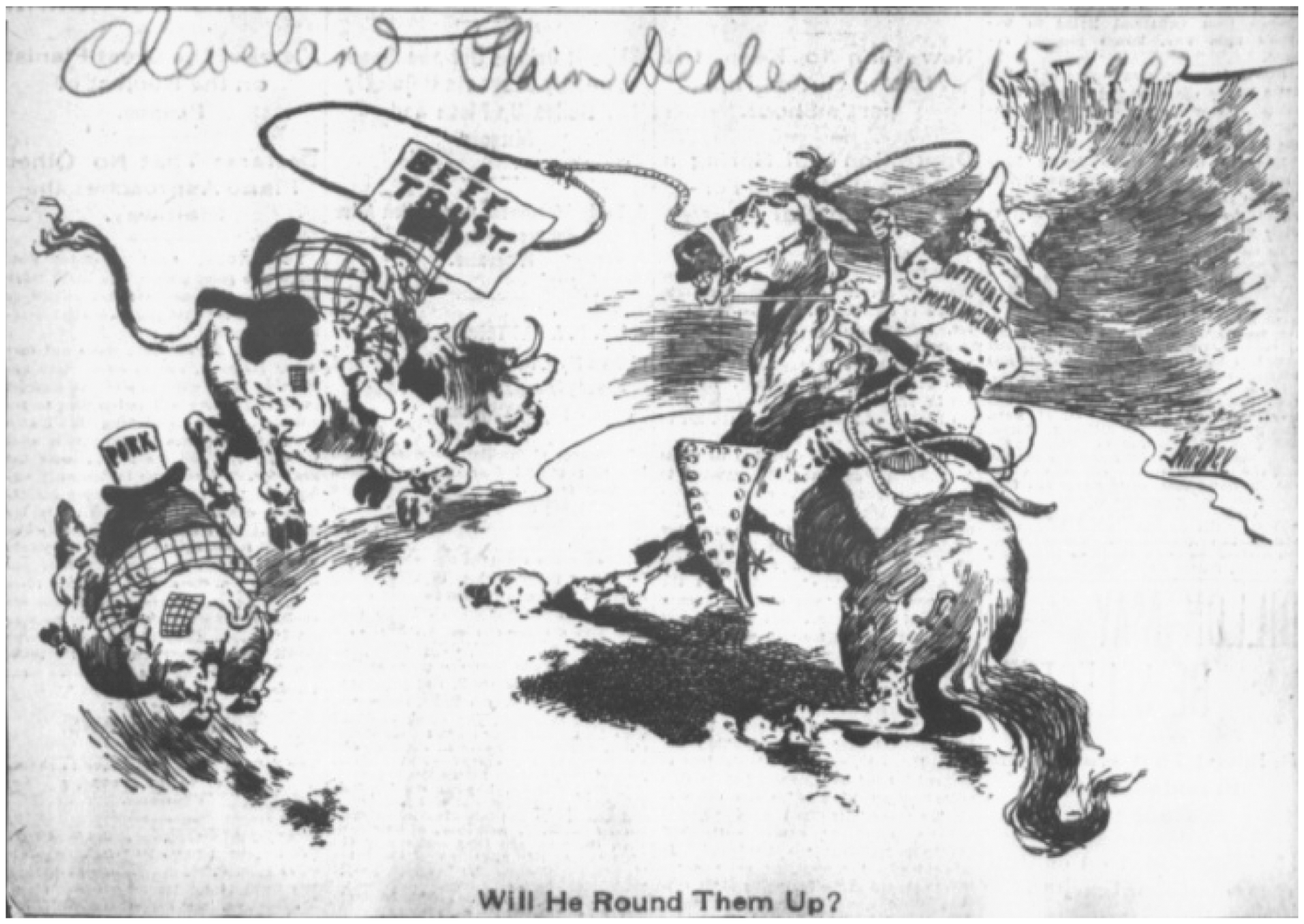
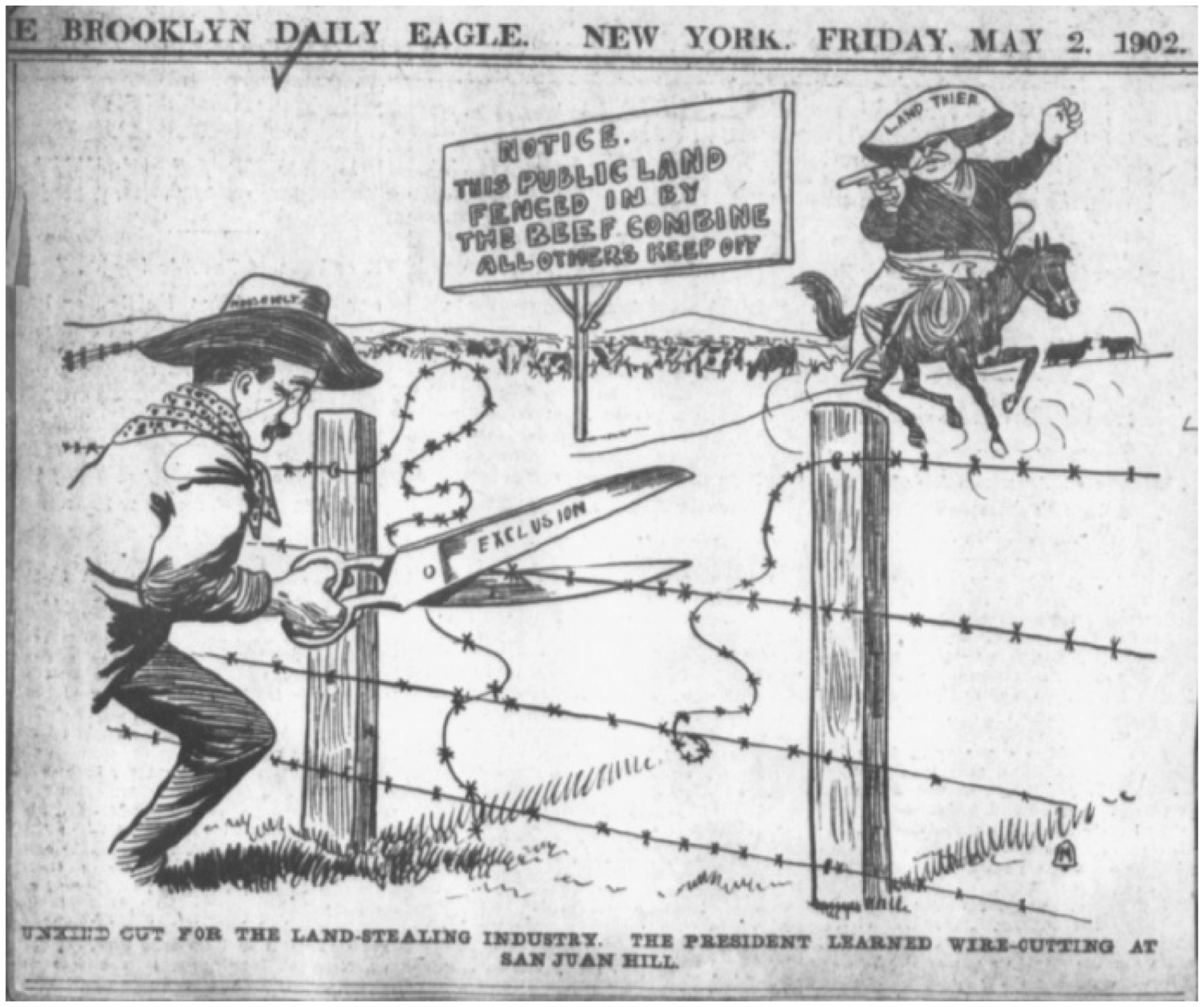
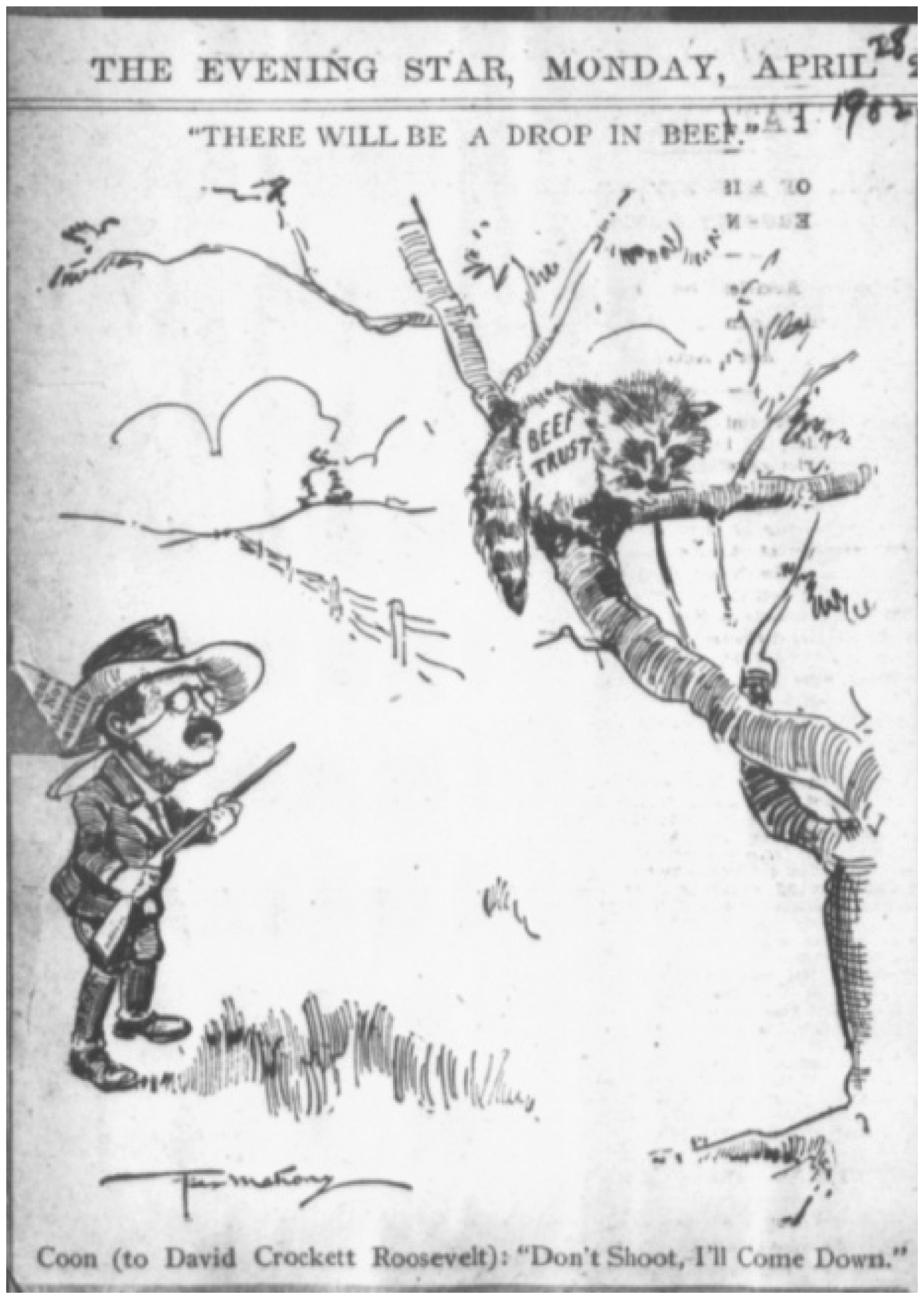
Roosevelt’s carefully cultivated cowboy image was widely circulated and caricatured, and fed into his identity as a tough man of action who was prepared to combat the depredations of a wide variety of “greedy” and “selfish” individuals, including beef trusts (Figure 4) and “land-thieves” (Figure 5).
“Will he round them up?”
6
“Unkind cut for the land-stealing industry. The President learned wire-cutting at San Juan Hill.”
7
As stated by Watts (2006), Roosevelt’s fictional western cowboy lived in an imagined landscape of epic magnificence and elemental savagry where never-ending struggle against outlaws, Indians, brutal weather, and impossible terrain summoned equally elemental responses. The bleak and merciless qualities of the sky and the landscape made the cowboy the way he was: silent, unfeeling, unquestioning, uncomplaining. (p.159)
Here, Boje and Rhodes’ (2005) Virtual Leader Construct (VLC) seems pertinent. A VLC is “a leader who is virtual, first in terms of being virtuous in relation to culturally accepted archetypes of leadership excellence, and second in terms of not being an actual embodied human being” (p.407). The authors argue that when a message or idea moves from one media to another, “the change can also be expected to alter the meaning of the message or idea itself, rather than just re-present it in a different format” (p.409). Drawing on the work of Jean Baudrillard, they argue that there are three fundamental “levels” of leader virtualization, ranging from imitation to mass production to simulated hyperreality (“simulacra”). While “all three orders of VLC can perform leadership functions, it is at the third level – that of the hyperreal simulacrum – that transformational leadership is most potent” (p.421). While Boje and Rhodes apply this model to present-day corporate fast-food “leaders” (Dave Thomas, Colonel Sanders, and Ronald McDonald), it is just as applicable to the transforming leadership of political leaders like Roosevelt whose image was playfully caricatured, developed, and mass produced via cartoons and other illustrations. It is not difficult to see a “virtualized” leader in the many cartoon caricatures of Theodore Roosevelt, endlessly recycled by cartoonists and illustrators and circulated among a growing populace that was only partially literate. From this perspective, Roosevelt’s leadership influence—including on environmental issues—was substantially enhanced both by the “hyperreality” of these images as well as by their ubiquity.
Strand 3: Roosevelt as Rough Rider
As the caption to Figure 5 indicates, Roosevelt’s identity as a cowboy overlapped in some respects with his identity as war-hero and “Rough Rider.” As is well known, Roosevelt led his own regiment with valor during the Spanish–American War in 1898. Ever after, his carefully cultivated Rough Rider image fused his physicality, courage, cowboy persona, and patriotism into a single powerful image. Former Rough Riders would often show up at political events around the United States, including those with a conservationist message, reinforcing the image of Roosevelt as a patriot and beloved military leader (Brinkley, 2009: 374, 526–534, 581). The ubiquitous Rough Rider image served to stamp Roosevelt in the American mind as a self-made man of action—after all, the Rough Riders constituted his own hand-picked regiment—who was out to serve American interests in every sphere.
There were also clear gender dynamics at work in the Rough Rider image. As stated by Watts (2006), “Roosevelt cultivated a political constituency among men who longed for a sense of agency and purpose or sacrifice or martyrdom in their lives, among men who saw enemies everywhere and wished to be rid of them”(p.19). As shown in Figure 6, Roosevelt the Rough Rider showed there was nothing to fear from anarchists (an anarchist had assassinated McKinley, propelling Roosevelt into the presidency) and other such “enemies” of the established order.
“And still they say he needs protection.”
8
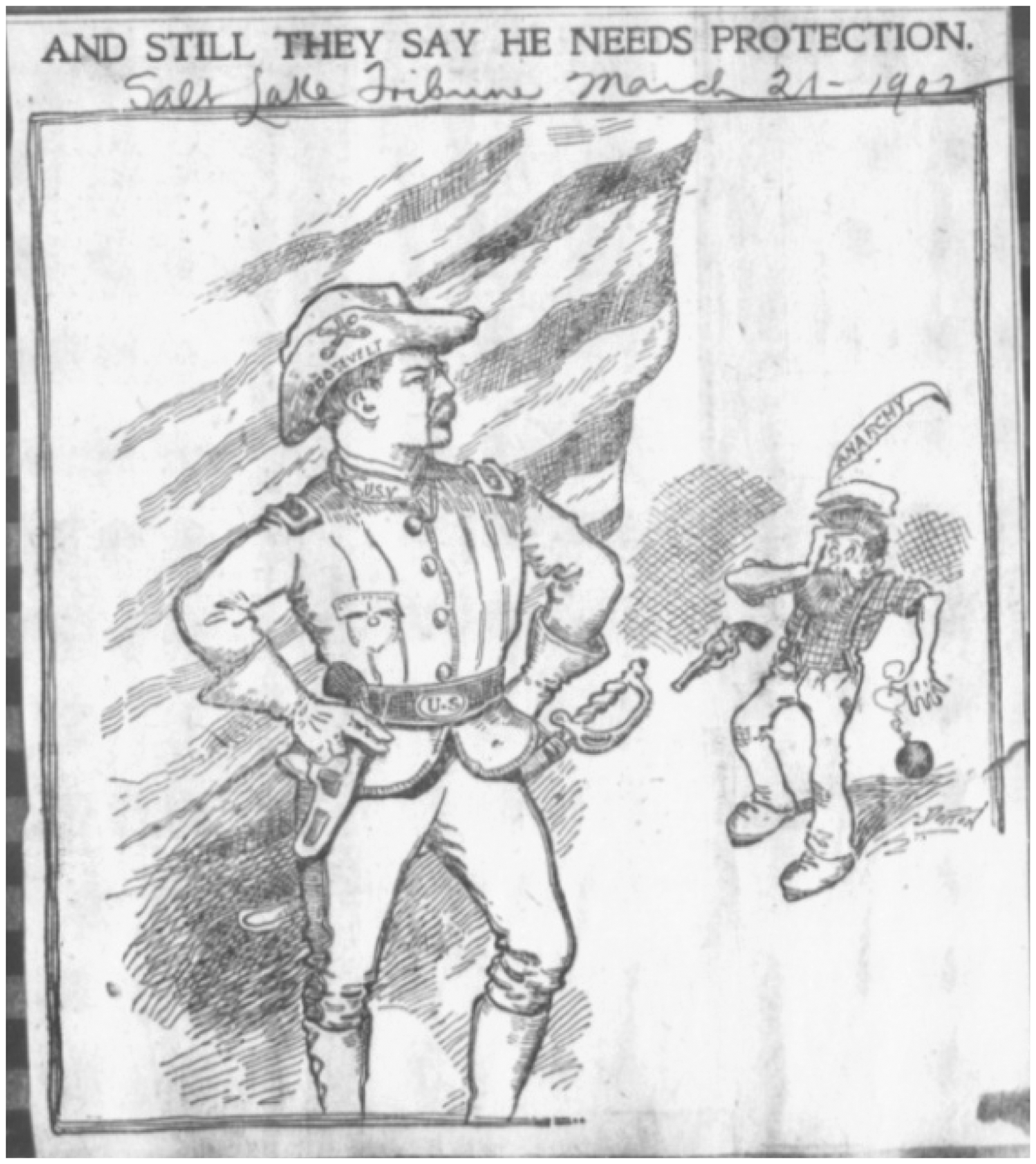
Figure 7 illustrates Roosevelt’s pugilistic attitude toward his political enemies, and Figure 8 expresses the imperialistic dimensions of Roosevelt’s leadership, in this case involving the fomenting of revolution in Panama in order to hasten the construction of a canal that would further American interests around the world. The message was clear: the same man who led troops on the charge up San Juan (actually Kettle) Hill in Cuba led Americans into Panama and, indeed, into their own back yard (as for example on his Great Loop Tour of 1903, discussed further below), always with the stated aim of furthering American interests and, at some level, building American character.
“The charge on Capitol Hill.”
9
“Roosevelt’s Rough Diggers.”
10


Viewed in this light, Roosevelt’s “seizure” of Panama was not much different than his setting aside of public lands for posterity; both involved the image of an intrepid cowboy/roughrider charging ahead into the 20th century, securing American interests—including, importantly, American public interests—as he went. How could one credibly defend private interests in the Grand Canyon against a Rough-Rider President who was unafraid to charge up foreign hills and into foreign jungles to secure “American” interests? Roosevelt’s intuitive sense of the importance of image-making for leadership is thus perhaps most apparent in this ability to dramatize his cowboy/rough-rider persona in such a way that the periodical press was only too happy to apply to all manner of issues, and propagate to the American public at large, thus magnifying his leadership through the “VLC”—quite literally a cartoon character—of Rough Rider Teddy.
Strand 4: Roosevelt as hunter
Roosevelt wrote many books and articles about his exploits in the wild, and these writings were important media whereby he embodied his uniquely American identity story. In Hunting Trips of a Ranchman, for example, he wrote about a winter hunting trip in the mountains: “Hunting the big-horn [sheep] is always a toilsome and laborious task … No other kind of hunting does as much to bring out the good qualities, both moral and physical, of the sportsmen who follow it” (Figure 9) (Roosevelt, 1885 [1910]: 259).

A few years later, he wrote: In hunting, the finding and killing of the game is after all but a part of the whole. The free, self-reliant, adventurous life, with its rugged and stalwart democracy; the wild surroundings, the grand beauty of the scenery, the chance to study the ways and habits of the woodland creatures – all these unite to give to the career of the wilderness hunter its peculiar charm. The chase is among the best of all national pastimes; it cultivates that vigorous manliness for the lack of which in a nation, as in an individual, the possession of no other qualities can possibly atone. (Roosevelt, 1893 [1910]: 7–8) No one, who has but partaken thereof, can understand the keen delight of hunting in lonely lands. For him is the joy of the horse well ridden and the rifle well held; for him the long days of toil and hardship, resolutely endured, and crowned at the end with triumph. In after years there shall come ever to his mind the memory of endless prairies shimmering in the bright sun; of vast snow-clad wastes lying desolate under gray skies; of the melancholy marshes; of the rush of mighty rivers; of the breath of the evergreen forest in summer … of all the innumerable sights and sounds of the wilderness. (Roosevelt, 1893 [1910]: 8) “There will be a drop in beef.”
12
In November 1902, after mediating a settlement to the Anthracite coal strike, Roosevelt headed south to Mississippi to hunt black bear; during the trip, he spoke out against lynching and was guided on the hunt by Holt Collier, a legendary African American guide. On the hunt, Roosevelt famously refused to shoot an emaciated bear that Collier had tied to a tree, deeming it unsportsmanlike to do so. The story took on a life of its own, setting off the “teddy bear” craze; a cartoon by Clifford Berryman published in the Washington Post (Figure 11, “Drawing the Line in Mississippi”) became iconic; the cartoon and caption are understood by scholars to refer both to Roosevelt’s mercy toward the bear and his opposition to lynching (Brinkley, 2009: 441).
“Drawing the line in Mississippi.”
13
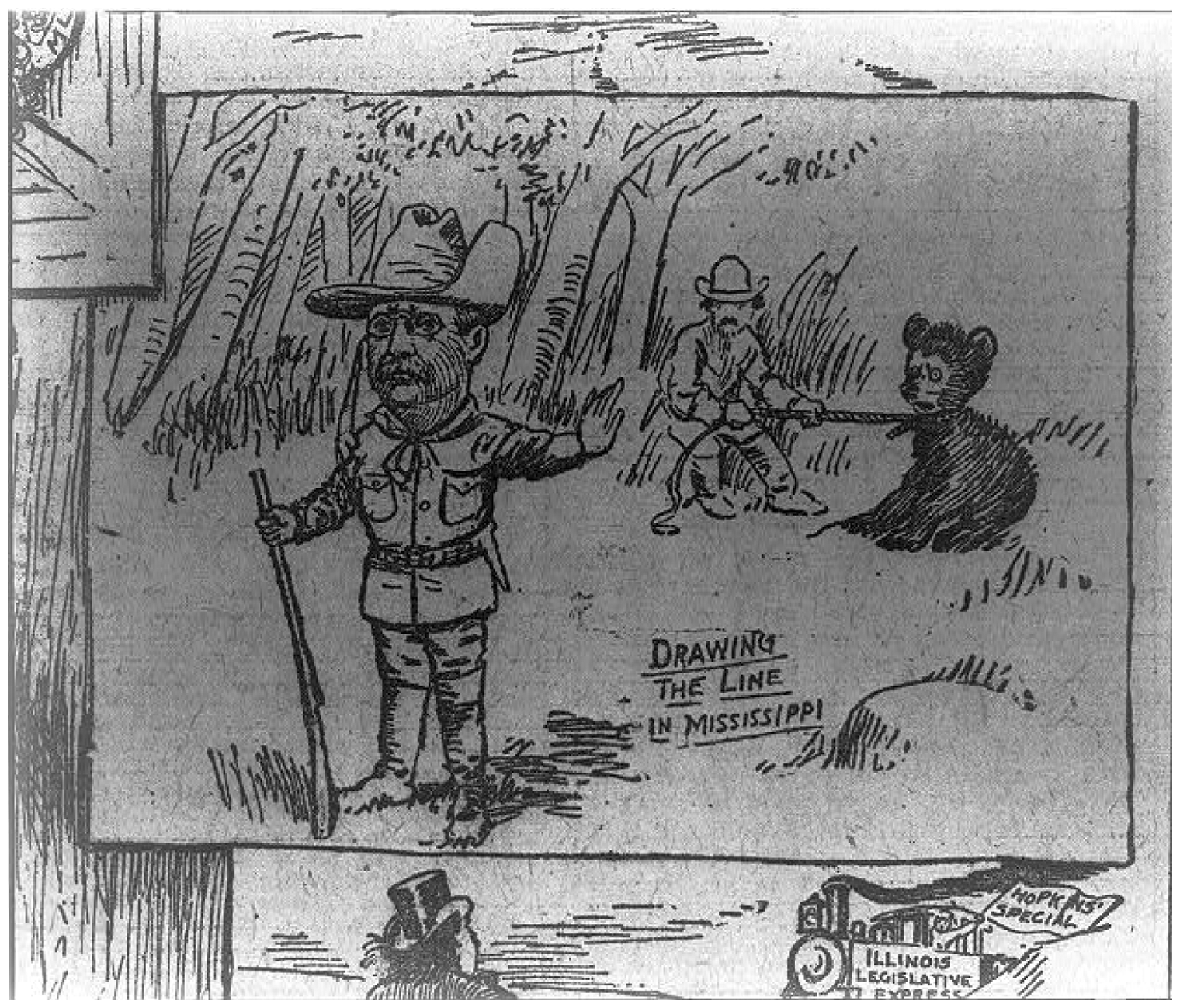
The episode highlighted the fact that Roosevelt “stood for”—one might say “embodied”—a code of ethics when it came to both humans and nature. As to the latter, there was a moral line to be drawn between “wise use” and wanton destruction of the natural world, which held value and fascination apart from human wants and needs. Roosevelt’s interest in nature was not only, or merely, utilitarian, and this facet of his character and leadership was well known, if at times submerged under the strenuous cowboy/Rough Rider persona. This leads us to our fifth and final strand of Roosevelt’s embodied identity story.
Strand 5: Roosevelt as naturalist
Theodore Roosevelt was not only a cowboy, rough-rider, and hunter intent on strenuous living; he was also a naturalist sensitive to the wonder and complexity of the natural world, as Brinkley (2009) has documented at length. Hardly a day went by without Roosevelt observing, remarking, reading, or writing about a wide variety of flora and fauna, including, for example, birds, whose calls and habits he knew better than anyone. He had been infatuated with all manner of living beings ever since he was a boy, and by the time, he went to Harvard he “was devoted to out-of-doors natural history, and my ambition was to be a scientific man of the Audubon, or Wilson, or Baird, or Cones type” (Roosevelt, 1920: 23). Roosevelt’s love of hunting, born of an era in which game hunting was a “given” for the masculine psyche, was in part a product of his self-understanding as a natural being enmeshed in a fundamental existential relationship with other living beings; the goal was to live the “strenuous life” sustainably in concert with them and all other natural elements. All hunters should be nature-lovers. It is to be hoped that the days of mere wasteful, boastful slaughter are past, and that from now on the hunter will stand foremost in working for the preservation and perpetuation of the wild life, whether big or little. (Roosevelt, 1905 [1908]: 378) “A thanksgiving truce.”
14
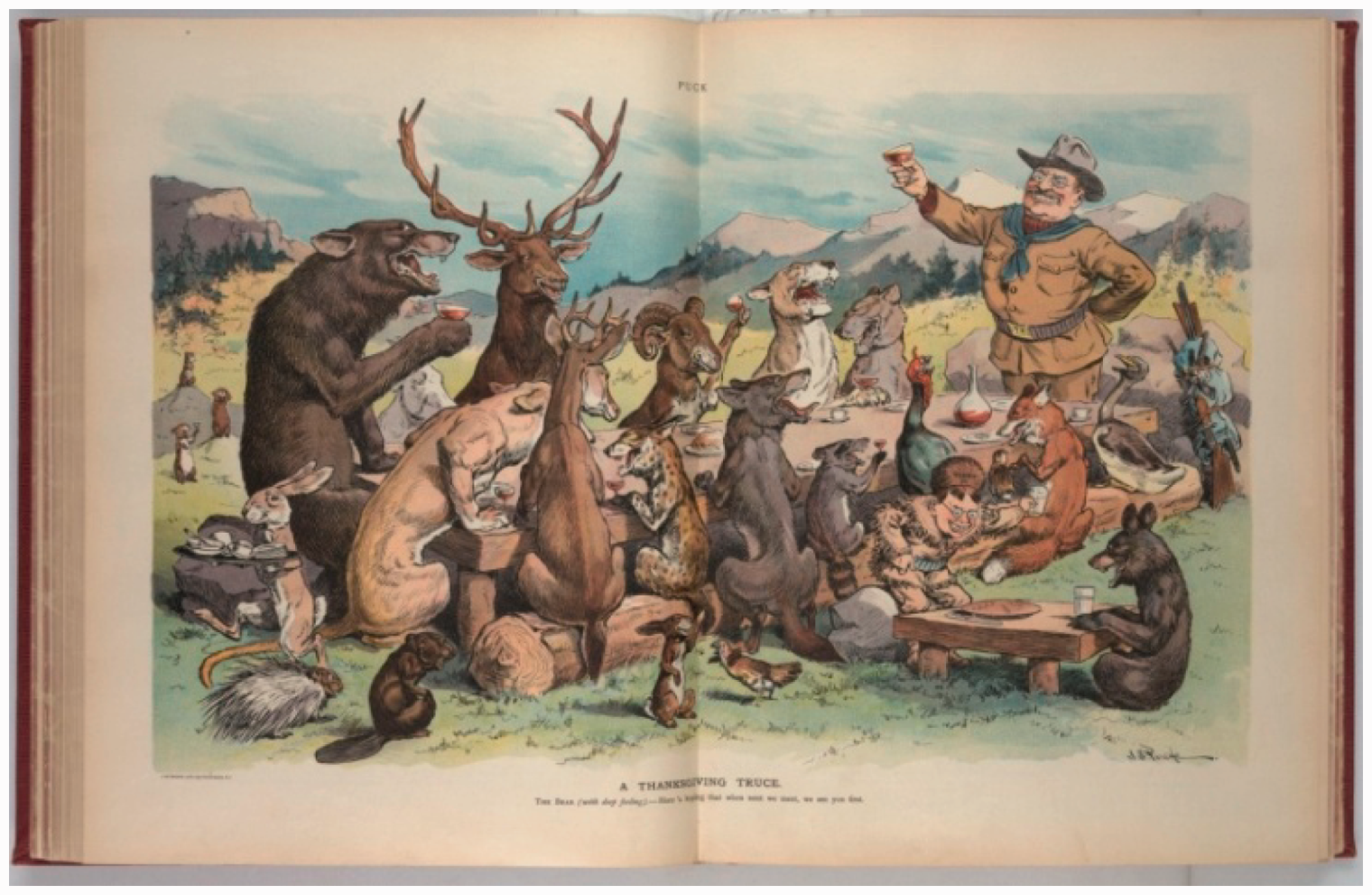
As President, Roosevelt embodied his naturalism in a variety of ways, including through his self-image conveyed in his writings, as we have seen. However, probably the most important single act of embodying his story about the place of nature in American life was Roosevelt’s “Great Loop Tour” that took place in April and May of 1903: a 14,000 mile journey through the Midwest and West, combining political speeches with camping trips—no hunting on this trip—in Yellowstone and Yosemite, with the naturalist John Burroughs by his side the whole way. A cover illustration from Puck has the mother bear saying “Don’t be alarmed, children, this is not a shooting trip!” (Figure 13).
“A harmless tour.”
15

During the tour, Roosevelt camped for two weeks in Yellowstone with Burroughs and for three days in Yosemite with John Muir (Figure 14). These were two of the pre-eminent naturalists of the day, and Burroughs was a close friend; by taking this tour with naturalists, and taking a stand for the preservation of American wilderness, as he did on this tour, Roosevelt clearly embodied his “naturalist” persona for all to see; yet to come were many of his greatest conservation achievements as President.
With John Muir at Yosemite.
16
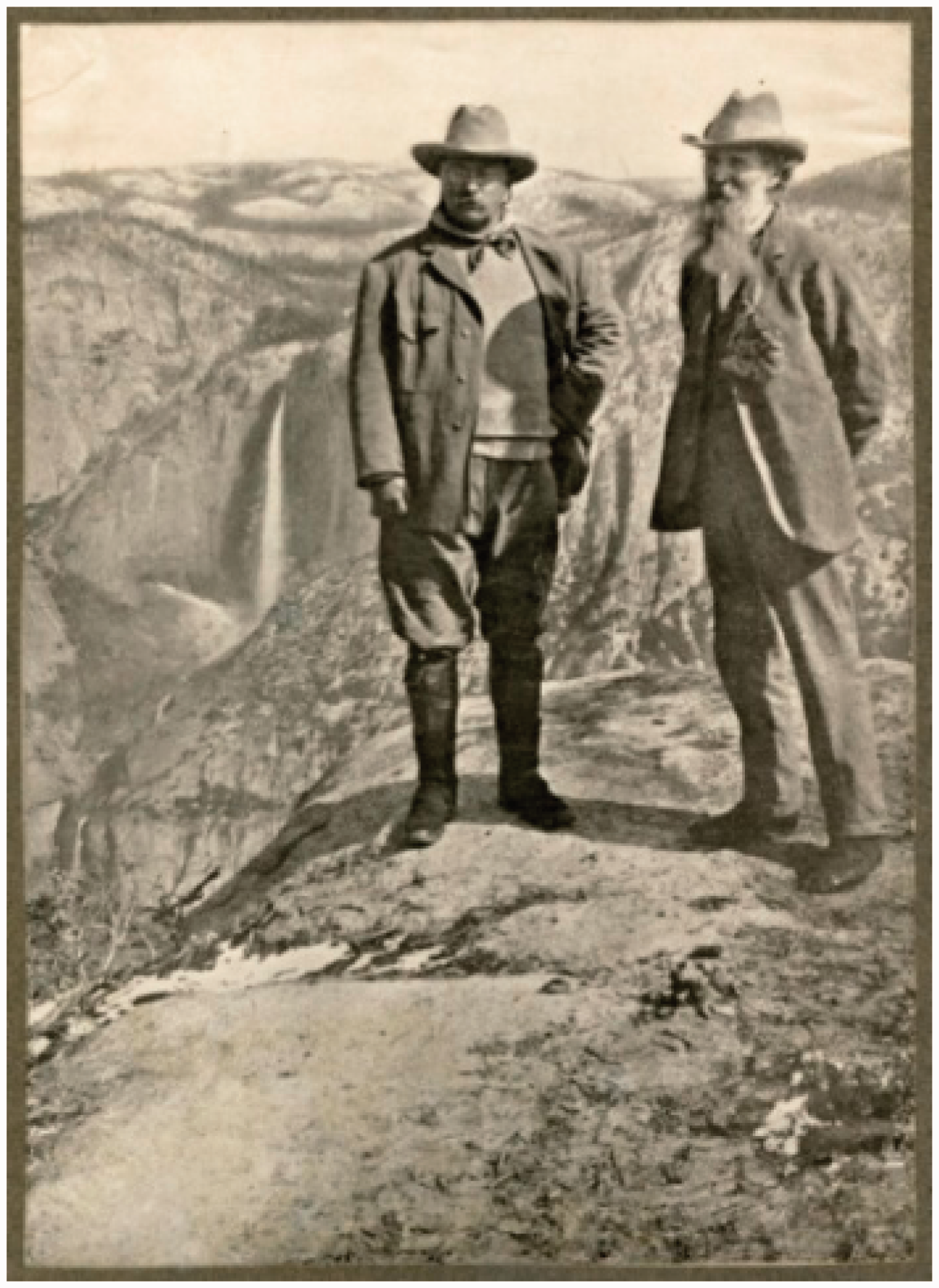
In Yosemite, Roosevelt reveled in camping in a snow-storm. As stated by Brinkley, Always intent on self-mythologizing, Roosevelt had created a “lost in the wild” scenario for himself … There was something very romantic, indeed, about the president of the United States sleeping outside in a snowstorm, high in the Sierras, with the weather-worn John Muir as his companion. (2009: 546) Lying out at night under the giant sequoias had been like lying in a temple built by no hand of man, a temple grander than any human architect could by any possibility build, and I hope for the preservation of the groves of giant trees simply because it would be a shame to our civilization to let them disappear … They are monuments in themselves … In California I am impressed by how great the State is, but I am even more impressed by the immensely greater greatness that lies in the future, and I ask that your marvelous natural resources be handed on unimpaired to your posterity. We are not building this country of ours for a day. It is to last through the ages. (quoted in Brinkley, 2009: 547) In your own interest and the interest of all the country keep this great wonder of nature as it now is … The ages have been at work on it, and man can only mar it. Keep it for your children and your children’s children and all who come after you as one of the great sights for Americans to see. (quoted in Brinkley, 2009: 527)
Discussion and conclusion
We are now in a position to address the questions posed at the beginning of this article, along with the implications of this research for our understanding of environmental, narrative, esthetic, and embodied approaches to the study of leadership. The questions posed were: Why was Roosevelt so influential in conserving natural resources and changing American attitudes toward nature? How was he able to advance his conservationist vision in a compelling way? And what was the role of an emerging American mass media in this process?
Taking the last question first, modern scholars contend that Roosevelt was the first “celebrity president” (Ponder, 1998: 30) who actively and intentionally cultivated a media image that helped further his policies (Greenberg, 2011; Juergens, 1981). He understood “that the avid interest in him as a personality could itself be a source strength. It opens the way for a president to dramatize himself, to become a symbol of state as well as a political leader” (Juergens, 1981: 9), a process aided by a rapidly growing popular press and the rise of photography and political cartooning (Juergens, 1981: 34), as well as his own books and articles. Roosevelt’s self-mythologizing and sense of drama—coupled with his inherent penchant for strenuous outdoor activity—helped to produce a highly entertaining “VLC” that advanced his story in myriad ways via frequent repetition and variation in the popular press as well as his own widely circulated writings. Roosevelt’s image was virtualized into an unstoppable “action hero” who could overcome any obstacle, and who required an intact natural landscape to flourish. As such, the rising mass media served as a vehicle for not only the telling but also the embodiment of Roosevelt’s story about the natural world, as it magnified the “real” Roosevelt into an appealing “hyperreal” icon accessible to the average person. This conclusion thus validates the “VLC” as a useful conceptual tool in the field of leadership studies, beyond the original context in which it was developed.
Roosevelt’s popularity was broad and visceral (Morris, 2001) and was tightly linked to his persona and embodiment of a uniquely American identity story that helps to answer the “how” question. I would suggest the story can be very briefly summarized thus: We are a free people of a new and wonderful land; our virtues spring from struggle, toil, and life on that land as a pre-eminent natural being among many; we thus owe that land and its creatures our care and stewardship. The great natural wonders of our land, and particularly of the American west, are our cathedrals; to destroy these wonders would be akin to Europeans destroying all their great monuments, and we will be a poorer civilization for it.
Roosevelt’s story demonstrated that all of us at some level “use” nature for our own ends, the practice of hunting being only one very vivid example. But this “use” can and should be framed as part of a larger story of sustained interaction between all life on earth; the hunter must also be a naturalist, the cowboy a protector of the lands he (or she) loves, the Rough-Rider also a patriot when it comes to “national treasures” like the Grand Canyon or California Redwoods, and the all-powerful President one who loves and appreciates even the most delicate and vulnerable creatures (in Roosevelt’s case, birds). This was the “vision of life” (Gardner, 1995: 42), as it relates to nature, that Roosevelt projected through his words and actions, and was mediated by countless cartoons and other images published during his lifetime. There can be little doubt that it helped to reorient American attitudes toward nature at a critical moment in American environmental history. Despite its flaws and limitations, Roosevelt’s embodied environmental leadership story set the stage for a national discourse about the role and place of the natural world in American life and identity.
One beneficial result of understanding the important role played by embodiment in leadership stories is that it shines a spotlight on the need for stories to fully reflect the actions and images of the leader (and vice-versa), in order to enhance credibility and authenticity. According to Ladkin and Taylor (2010), “It is the leader's body, and the way he or she uses it to express their ‘true self’, which is the seemingly invisible mechanism through which authenticity is conveyed to others” (p.65). At the same time, leaders who ignore the body run the risk of “making decisions based only on intellectual processes – things like the bottom line, corporate expansion, or increasing stock value – rather than what is best for ourselves, the community, and the environment” (Lindsay, 2013: 17). The body is a “natural” entity enmeshed in a biotic community; attention to the body directs attention to the fundamental contextual and biological parameters and constraints of our “being in the world.” Leadership scholars would do well to pay more attention to it. Doing so can help to bring concern and responsibility for the natural environment more firmly into the orbit of leadership studies, as scholars now contend that concern for the biosphere is an inherent feature of what counts as “leadership” in a world of growing environmental degradation and constraints (Redekop, 2010).
The ability to embody prototypical aspects of group identity can thus aid in leader effectiveness and authenticity (van Knippenberg, 2011), and this dynamic is clearly evident in Roosevelt’s leadership, and addresses the “why” question. He was influential on conservationism, at least in part, because he told a story about nature and our place in it that both resonated with his own character and actions, and appealed to a population that itself had begun to experience the wonders as well as limitations of American natural resources. His story tied the American story of westward expansion and manifest destiny to nature and conservationism. It is a somewhat different story about the human-nature relationship than is now commonly told, and taken wholesale and transported into the present would probably not be as effective—or as suitable to modern sensibilities—as it was then.
But the fact remains that Roosevelt told and embodied a coherent and compelling story about the natural environment and humans’ place in it that resonated with the times, and is suggestive of the possibilities of embodied environmental leadership. For example, in contrast to the present-day “celebrity-activist” model of environmental leadership, which has various problematic features including a disconnect between environmental concern and the lifestyles of the rich and famous (Birmingham and LeQuire, 2010), leaders like Roosevelt who truly “live the story” in ways that resonate with followers are more likely to be influential. Examining the ways that successful environmental leaders embodied their story in the past can help to map out the possibilities for action and provide insights into present-day challenges. Certainly Roosevelt’s ability to mobilize the mass media—and enlist the efforts of countless political cartoonists—to tell his story in virtualized form is worth pondering for those intent on appealing to a mass audience. For good or ill, “images of great leadership figures … feed and expand our appetites for leadership products, appealing not only to our collective commitments to the concept [of leadership] but fixating us in particular on the personas and characteristics of the leaders themselves” (Chen and Meindl, 1991: 522). Given this reality, it behooves leaders—and leadership scholars—to pay close attention to the images leaders project and the stories they embody. Attention to the role and importance of embodiment in the leadership process, as has been done in the present study, advances our understanding of some of the fundamental mechanics of mass influence, and is thereby suggestive of the potential dividends that can be gained from it in the analysis of major social, political, and business leaders.
Attention to the embodiment of a leader’s story in images can help us understand not only some of the mechanisms at work in the construction of leader authenticity, but the ways in which leader images may also work to undermine the authenticity of the organization which they represent, in what has been called the “authenticity paradox” (Guthey and Jackson, 2005). While on the surface it is difficult to discern such a paradox in Roosevelt’s case, there is room for further investigation of the idea that the very attempt to “represent” large entities like corporations—or nations—can actually serve to undermine the perceived authenticity of those entities. Roosevelt certainly had his critics, and the virtualization and mass production of his image would bear further scrutiny from the perspective of those who, for example, criticized Roosevelt as a “damned cowboy” who was unworthy of the office of the presidency (Morris, 2001: 30).
Whatever the outcome of such an investigation, the present study supports the notion that “like other narratives, stories are vital elements of culture, creating and supporting virtually any kind of reality that social actors embrace” (Brown et al., 2009: 328), and that leaders adept at storytelling are well placed to shape this reality, for good or ill: as Gabriel (2008) suggests, “Stories can be vehicles of contestation and opposition but also of oppression, easily slipping into hegemonic discourses” (p.154). As we have seen, Roosevelt’s command of narrative, and the story he told, arguably had both positive and negative elements. If on the one hand he told and embodied a story that contributed to a new orientation toward nature, embedded in that narrative were disturbing and even contradictory elements, including the fact that his story paradoxically contributed to the ongoing settlement and exploitation of the natural world, even as it championed nature as the fundamental theater for human experience and the development of moral character. Roosevelt’s example thus supports the idea that as researchers we must not let the easy authority of stories and storytelling, based on the hallowed ground of “identity” and “experience,” “dull our critical intelligence as researchers” (Gabriel, 2008: 156). It is all too easy to become mesmerized by colorful storytellers, particularly when they are successful change-agents, and thus we need to be especially vigilant not to ignore the hegemonic and oppressive elements of the stories they tell. Such elements were indeed present in Roosevelt’s story, and there is doubtless room for further exploration of these issues.
Finally, this study provides an example of the operation of what Sims et al. (2009) call the “emplotment of self” that often occurs in leadership storytelling (p.378). That is to say, storytellers dramatize themselves not only to instruct and entertain but also, importantly, to signal their intentions. This phenomenon was clearly evident in Roosevelt’s story, particularly as embodied in political cartoons, which almost by definition represent (and often parody) leader intentions. In his case, however, Roosevelt’s “emplotment of self” was magnified by its reverberation and reproduction in a variety of images and media, rather than only via monological control of the story as often occurs in books or staged presentations. Cartoons and other related illustrations constituted one form of usable “snippets” of Roosevelt’s stories that could be easily related to wider audiences in a way that captured attention and served to help understand who he was, what he “stood for,” and what he intended (Sims et al., 2009; see also Shamir et al., 2005). Rather than being passive recipients of Roosevelt’s story, audiences—including cartoonists—appropriated, re-told, re-configured, and re-imagined those parts of it that were memorable and served their own ends, as well as his. In this sense, his conservation “victories” belonged as much as to his followers as they did to Roosevelt.