



Abstract
This study explores the effectiveness of online and blended teaching methods in developing cross-curricular skills crucial for an ideal engineering profile among undergraduate students. Involving 587 online and 635 blended students across 11 Latin American universities, the research incorporates Likert tests for student perceptions and Mann-Whitney statistical tests for hypothesis scrutiny. Challenges emerged due to diverse academic contexts and the subjective nature of self-reported perceptions. Despite these hurdles, findings highlight the blended method’s superior effectiveness in fostering key engineering skills. The study not only contributes to teaching method exploration but also addresses challenges in cross-cultural research settings, enhancing our understanding of the complexities and adaptations required for cross-curricular skill development in engineering education.
Introduction
Studies on the efficacy of teaching strategies in developing nations have concentrated on determining how to enhance students’ cross-curricular skills in various socioeconomic and cultural contexts. Globally and regionally, the pandemic revealed both current and emerging needs. Professionals who can handle unknown situations, manage solutions, and plan are needed.
The global digital transformation has led to professional skills 4.0 being considered both in the workplace and in educational offers. Pérez-Oxté and Cordero (2022) establish that the number of undergraduate graduates in STEM (careers that refer to the areas of Science, Technology, Engineering, Arts, and Mathematics) in developing countries is lower than in developed nations by 15% from 2017 to 2020, which harms the availability of professionals to fill such specialized profiles.
This issue is more relevant in countries with a shortage of such professions that limit the multidisciplinary nature of future undergraduate and postgraduate students. This is the case of professional engineering. The importance of practical engineering is to help the technicians learn how to use tools and build machines, especially those that are used in everyday life.
With the remarkable pace of technological advancement and the new demands for professionals, particularly in engineering, it is essential to strengthening close ties with organizations and industries that need engineers who can quickly adapt to changing environments and work toward the growth and advancement of society.
The world has witnessed substantial growth in engineering-based industries since continuous improvements are being made in the knowledge, methods, and techniques of applied sciences as well as in their applications. However, despite this rapid progress, there are still many developing countries that do not possess adequate engineering education (Gutierrez-Bucheli et al., 2022). It is a major obstacle for developing these countries and hence their economic growth. It is also important to mention that most of these countries still lack major infrastructures like laboratories and workshops which can enhance basic research activities on engineering problems (Alam et al., 2022).
Various authors establish that students’ scarcity of access to material and physical resources to apply theoretical concepts to practice is more evident in rural areas where there is not as much public and private investment as in urban areas with high population density (De la Puente Pacheco et al., 2022; Djeki et al., 2022). However, other authors establish that students’ housing location has almost no impact on developing cross-curricular skills when there is an availability of resources to apply theoretical concepts to reality under the supervision of professors in charge (Mathrani et al., 2022).
However, many students from rural and urban areas, who can pass theoretical examinations but fail practical tests, seem to have a fundamental lack of understanding about the engineering profession. This seems to be changed through an increased exposure to practical tasks and a more realistic context for learning and teaching of mathematics, as well as from visits to universities and industrial plants (Al Mamun et al., 2022).
It is necessary to strengthen the application of theoretical concepts learned in class that allow more effective performance in the productive sector where engineering professionals operate. The new requirements for engineering demand constant innovation for inclusion, with more proactive policies and innovative academic programs that are flexible and adaptable and in line with societal expectations for professional training. The ability to apply formal knowledge to new situations is fundamental to the engineering profession. This ability can be developed through academic training in research methods and problem solving, both of which are necessary for cross-curricular skills and employability.
This study address criticism from various industries claiming that field experiences are necessary for students to acquire abilities that go beyond the classroom. These objections are more pronounced in economically underdeveloped areas of developing nations that have not yet achieved higher education for all citizens. Broo et al. (2022), Flening et al. (2022), Munir (2022), and Jiang and Chen (2022) agree that the optimal development of an engineering profile requires the enhancement of the following cross-curricular skills: deductive reasoning, inductive reasoning, leadership, teamwork, meticulousness, and multidisciplinarity.
According to the authors, engineering education is an experience that aims to develop critical, analytical, and cooperative thinking. Engineering students need to learn the skills of making informed decisions using inductive and deductive reasoning. Teamwork also plays an important role in completing tasks associated with engineering education. In addition, multidisciplinarity has been emphasized in curriculum development as one way for students to acquire knowledge about multiple disciplines without being confused by several different starting points or perspectives on those concepts. While engineering students are expected to apply the core concepts of each learning area, they rarely develop a deeper understanding of these concepts through only theoretical course-specific activities.
This study analyzes the effectiveness of the online versus blended method in teaching undergraduate courses to engineering students from the seventh to tenth semester in developing the following cross-curricular skills that determine an ideal engineering profile: deductive reasoning, inductive reasoning, leadership, teamwork, meticulousness, and multidisciplinarity. 587 Students who took the selected courses in the online method and 635 who took it in blended method from 11 universities (four Colombian, five Peruvian and four Ecuadorian) were surveyed.
In addition, a Likert test was applied to 38 professor who taught classes via online and 43 in via blended between the seventh and tenth semester to contrast the students’ perceptions. It also analyzes whether there are differences between living in rural and urban areas in developing the observed cross-curricular skills. A Likert-type perception survey was applied to both groups after receiving their classes by the online or blended method.
Using the SPSS program, a normality test, and homogenous variances of surveys of students and professors were conducted to determine the proper statistical test. Both a normal distribution and homogenous variances were absent from the samples. A Mann-Whitney statistical test was used, which has a 95% significance level and is appropriate for examining unpaired non-normal distributions. The main objective of this study is to delve into the suitability of the online method compared to the blended one in developing cross-curricular skills in three Latin American countries, considering the differences in housing location of observed students.
The specific objectives are to determine which of the methods contributes the most to the development of the studied cross-curricular skills and to know if the housing location limits the development of the engineering profile. The necessity to contribute to appropriate approaches for the essential development of engineering profiles from a diagnosis that includes students and educators who are protagonists of the teaching and learning processes justifies this research. This study is limited to analyzing the perception of students and professors both at the level of surveys and in the application of focus groups, as well as students’ academic performance, so it only applies to the group examined and cannot be extrapolated to the entire engineering student population of the selected countries.
Literature review
Online and blended teaching methods in developing cross-curricular skills
The Internet. It is a cutting-edge method of teaching and learning that aims to transfer the dynamics of a conventional face-to-face class to an online environment. The earliest online teaching methods emerged in industrialized nations, typically in regions where low population densities made traditional schooling challenging (Vikas and Mathur, 2021).
Both public and private institutions decided to supply the academic material to be studied and the instructions, thus teaching computer science for practical application as a tool for the workplace, along with instruction in its usage and academic explanation without the actual presence of an instructor. The use of creative learning dynamics for learning beyond memorizing concepts, such as flipped classroom practices and other online learning schemes in schools, colleges, and businesses, is essential in online teaching (Rudhumbu et al., 2021). The student is the one who sets his own pace of work, acquiring the knowledge exposed in the contents, doing exercises, consulting and resolving doubts with the rest of the course participants, carrying out the tasks and activities that are requested, and the professor is the one who guides them during learning processes.
This implies a high degree of student responsibility. Online teaching is an effective way to reach students from a distance and provide them with quality education (Bao, 2020; Cavanaugh et al., 2022). It allows professors to support learners with learning disabilities and providing opportunities for job growth that previously would’ve been rare in remote regions. The online classrooms are a teaching-learning tool that allows professors and students to visualize, and debate topics in real time or in demand through digital settings. The use of technology within educational processes is becoming increasingly relevant within higher education institutions (Marciniak, 2018; Vlachopoulos and Makri, 2021).
The online modality not only covers the incorporation of technology, but also, the social aspect, in which three main variables stand out: time, interaction, and communication. The use of time, space, and the layout of the contents are all decisions made by professors in a virtual learning environment, including the development, choice, and disposal of materials, material organization and categorization, and control of communications and information in the area (Zhou, 2022; Zou et al., 2021).
Being the student is the center of the teaching-learning process, which studies course content, examines it, and incorporates it into projects to increase the learning outcomes. For the benefit of the whole group, the student must contribute to all of this (Dyatlov et al., 2022). Various authors point out the use of platforms aimed at building collaborative learning such as forums, and multimedia services to strengthen the learning of course content cooperatively and develop cross-curricular skills. Since both educators and students were able to effectively go on with their academic duties mainly to virtual education, it has emerged as a crucial instrument with the end of the epidemic.
The integration of online teaching has emerged as a highly viable avenue for enhancing communication, fostering learning, and facilitating various educational processes among managers, professors, and students alike (Hewett and Bourelle, 2017; Kibaru, 2018). Despite its effectiveness, this method poses several challenges that warrant a thorough exploration, particularly in the realms of adapting to the diverse technological tools encompassing both hardware and software. Successful implementation hinges upon the ability of educational stakeholders to navigate and engage with these tools seamlessly (Schirmer and Lockman, 2022; Slusareva and Dontsov, 2020).
Moreover, the effectiveness of online teaching is intricately intertwined with the cultural dynamics of the educational organization delivering the instruction (Zhang and Qu, 2021). The unique ethos and values of each educational institution play a pivotal role in shaping the online learning experience. It becomes imperative to delve into the cultural nuances that impact the effectiveness of online teaching and identify strategies to align these with the overarching educational goals.
Furthermore, a critical aspect that demands extensive discussion pertains to the scope and accessibility of technological tools for students. To ensure that students actively participate as agents in their learning processes, it is essential to evaluate the inclusivity and availability of these tools (Sun and Chen, 2016). The literature underscores the importance of fostering an environment where students can harness technological resources to not only consume but also contribute to the educational discourse, thereby empowering them in their learning journey.
However, online teaching poses many difficulties for educators. Students can’t see a professor’s facial expression and body language, which can make them nervous or uncomfortable. Students can also miss out on rich visual stimuli that facilitate learning, such as the slides in a textbook or handouts in a classroom (Ran et al., 2021). As they take notes on these materials, they might not understand what they are writing down because of difficulties with effective verbal communication associated with the distance between professor and student.
Additionally, according to a recent report issued by the American Association of Colleges and Universities (AACU) (2022), fewer than 42% of colleges and universities have enough qualified faculty to teach online full time. The resulting controversy forces schools to rethink their strategies for online learning and delivery to better serve students. Students who have been using online teaching, such as online classes or online lectures for long periods of time can feel disconnected from the teacher and instructor. Therefore, it is essential to make sure that instructors are always at an appropriate level of knowledge on his/her subject so that students will not be governed by his/her beliefs and understanding.
The application of this method in developing countries is even more challenging. The existence of digital gaps and economic income between urban and rural areas is reflected in the fact that rural schools do not have the physical and digital infrastructure for online teaching. This means that students from homes with high incomes take better advantage of such modality (Jetti et al., 2023). In addition, not all rural and urban institutions are prepared to offer this type of teaching method, either due to almost inexistent educator training in applying innovative teaching and learning techniques adapted to the demands that online learning requires, or due to difficulties in internet connections. These factors worsen the quality of teaching.
Other authors analyze the effectiveness of the application of the blended teaching model as the one that dominates classroom environments in person and online, simultaneously and taking advantage of both, implying that it must generate an organic environment and cooperation between them. In blended learning, professors’ responsibilities extend beyond the use of technology in online classrooms; they should also enable the students to learn how to control socioemotional emotions, including commitment, empathy, proactivity, interdependence, and collaboration (Banyen et al., 2016; Bi and Shi, 2019; Ghani and Taylor, 2021).
Blended teaching is one of the most popular alternative ways to meet the sustainability demand that is emerging in education. Blended educators have a holistic approach to teaching, which includes presenting traditional material as well as online resources in a variety of formats intended for different learning styles (Hastie et al., 2010; Muchtar et al., 2021).
By offering these blended materials and experiences, they hope to promote active learning and encourage students to become active agents in their educational process. It combines classroom-based learning exercises with independent work and evaluation of student work in the library. Blended teaching also allows for a complete understanding of what does and does not work in classrooms. Students can take their lessons from an instructor or from peers who are familiar with the subject matter at hand. Students can evaluate whether what they learned from these sources applies to its intended use (Scagnoli et al., 2019; Wirth et al., 2021).
However, within the realm of blended teaching, the emphasis lies in the adaptability of methods and lessons rather than favoring one particular approach over another. A notable drawback of this approach is that students may not attain complete mastery of a singular instructional style, limiting their ability to develop comprehensive skills across various areas (Wiryantama and Prakoso, 2021).
According to several authors, blended teaching is often perceived as a significant disadvantage when compared to immersion instruction because it typically necessitates students to seek information beyond the confines of the instructor.
In more industrialized societies, the availability of diverse sources, such as print media and online resources, may readily fulfill this requirement. However, in remote or developing regions where access to electricity and computer literacy is limited or nonexistent, such external resources may be altogether unavailable. Consequently, blended teaching practitioners in these contexts resort to traditional methods, supplementing their instruction with printed texts or presentations to bridge the accessibility gap and ensure that students receive a well-rounded educational experience (Rico et al., 2023).
While this may be effective for some students learning math portions of their required courses against an objective test or online quizzes, it may not be effective for students who need direct instruction in language arts skills that can only be fully achieved through immersion language learning (Cheung and Hew, 2011). The following literature review summarizes the most relevant results on the effectiveness of both methods in developing the selected cross-curricular skills (deductive reasoning, inductive reasoning, leadership, teamwork, meticulousness, and multidisciplinarity) in differentiated contexts facing the object of the study presented in this paper. Deductive reasoning is the process of drawing logical conclusions based on a set of given statements. In a classroom setting, for example, students need to be able to deduce specific rules from evidence. The process begins with a series of statements and ends with a conclusion that may or may not match those original statements.
The task design of math and science teachers in online learning during the COVID-19 emergency education was examined by Daher et al. (2022a). The study’s participants included 14 teachers. The interview served as the data collecting instrument, and deductive reasoning content analysis was used for data analysis, with the deductive analysis based on the didactic scenario framework. The study’s findings showed that the participating professors use software technology to create assignments that inspire pupils to take initiative in their activities. Additionally, effective communication between the participants in the didactic scenario was made possible by utilizing the capabilities of the distant learning platforms. Apparently, the online teaching method enables deductive reasoning due to its logical simplicity in associating taught concepts.
The investigation conducted by Daher et al. (2022b) examined the task design practices of math and science teachers engaged in online learning during the COVID-19 emergency education. 14 teachers participated in the study, with interviews serving as the primary data collection method. Deductive reasoning content analysis was employed, following the didactic scenario framework.
The findings of the study revealed practical advantages associated with the adoption of online teaching methods in the context of emergency education. Teachers demonstrated a tendency to use software technology for creating assignments that encouraged students to take initiative in their educational activities. This shift towards student-driven learning is considered a positive outcome.
Effective communication within the didactic scenario was facilitated through the utilization of features provided by distant learning platforms. These platforms bridged the physical gap between educators and students, fostering a conducive environment for collaborative learning. The study underscored the role of both synchronous and asynchronous communication tools in enriching the overall educational experience. One notable outcome was the perceived improvement in deductive reasoning skills facilitated by the logical simplicity of associating taught concepts in the online learning environment. This suggests a positive impact on students’ ability to deduce conclusions from presented information, contributing to a deeper understanding of the subject matter.
Mastrogiacomi (2021) investigated the mindset shift in the experiential approach, generally used in facilitating engaging face-to-face Design Thinking workshops and debriefing interactive creative sessions, which digital platforms can challenge to recreate empathy and engagement in blended and unpredictable learning environments. A sweep of previous studies on how the blended method impacts the scope of deductive reasoning was applied to 140 undergraduate students in basic sciences over 2 years. It was found that deductive reasoning does not necessarily develop more due to face-to-face interaction with other students and professors since disciplinary case studies during class sessions (independently of the method) are needed where students have free thought spaces to work on their answers.
As for the skill inductive reasoning, in an inductive reasoning assignment, Zhang et al. (2022) create and validate an empirical approach of situation awareness (SA) evaluation for describing mental models. Participants in our experiment viewed videos of two detective stories while playing a straightforward shooting game. In addition to idea mapping and knowledge assessments on the stories, post-trial measures included participant SA measurements. Independent of an existing assessment technique, the results offered empirical proof of the value of SA measures for predicting knowledge of an inductive reasoning problem and inferring forms of mental models (concept mapping).
Qamar et al. (2021) examine how medical professors and students perceived with e-learning during the COVID-19 pandemic. Following participant interviews, a tailored questionnaire with qualitative and quantitative components was developed. A total of 318 students and six faculty members participated. Despite limitations like a communication gap, faculty who are digital refugees teaching students who are digital natives, a lack of technical support, the digital divide, and ad hoc curricular delivery, online teaching was found to be advantageous in terms of scheduling flexibility, increasing students’ self-efficacy, and lowering costs. Additionally, it gave room for the creation of blended e-curricula.
Bizami et al. (2022) employed a systematic literature review technique to investigate the relationship between three Education 4.0 innovative pedagogies—heutagogy, pedagogy, and cybergoth—and the capabilities of three technological learning tools—Facebook (FB), Learning Management System (LMS), and Blog. The research adhered to the Preferred Reporting Items for Systematic Reviews and Meta-Analyses (PRISMA) standards and employed Gough’s Weight of Evidence criterion to select relevant literature, resulting in the inclusion of 59 articles.
The findings of the study suggest a notable association between one of the educational principles and the functions of technology learning aids, particularly inductive reasoning. According to the research, educators engage in strategic planning of learning and teaching activities by choosing technology learning materials aligned with the principles of Education 4.0, employing mapping as a guiding framework.
Studies on leadership development in online teaching show mixed results. Utilizing a post-lecture assessment technique, Shek et al. (2022) reported on an evaluation study of a leadership course taught in Hong Kong using HyFlex teaching. It was discussed law-abiding leadership among university students, including adherence to the Hong Kong National Security Law, in one of the lectures. The post-lecture evaluation revealed that most students had favorable opinions of HyFlex instruction and believed the topic increased their psychosocial competence, which is a measure of well-being (Khalil et al., 2020). The students who attended the lecture on law-abiding leadership concurred that it improved their psychosocial competence, personal growth, understanding of law-abiding behavior and national security (including the Hong Kong National Security Law), and readiness to act as socially responsible leaders. Positive opinions of the lecture’s design, the lecturers’ performance, the lecture’s topic, and the leadership of law-abiding were mentioned, enhancing such practice in developing the leadership skill.
Likewise, Townsend (2015) analyzed the development of students’ leadership within educational settings through the blended method.
The author observed the growth of the student’s confidence when carrying out activities in face-to-face and online classes. The author concludes that the presence of instructors and classmates positively impacts leadership development by allowing more direct interaction with their peers by exalting the ability to influence, motivate and carry out actions to meet academic commitments. Bolden et al. (2008) also studied the effectiveness of leadership development under the blended class modality. From an observation in 230 undergraduate and postgraduate students, it was found that the weighting of face-to-face and virtuality impacts the development of this skill.
The authors recommend a higher face-to-face in group activities or presentations of academic work and virtuality for the autonomous learning of theoretical concepts and tests of application of said concepts online, implying that the blended mode must be in accordance with the expected learning results, more than just economic and financial viability. Bolden and Petrov (2014) strengthen the findings of Bolden et al. (2008) through the employers’ perception analysis of graduate students under the blended way of teaching. They find that employees consider it necessary to give higher weight to face-to-face courses in classes that place what they have learned into practice, especially in undergraduate engineering, business administration, and economics.
A thorough examination of the teamwork skill in many socioeconomic and cultural circumstances has produced contradictory findings.
Results on the efficiency of online and blended teaching in fostering teamwork in various geographical contexts have been ambiguous in different geographical contexts since each case responded to particular objectives. Public undergraduate education in developing nations has mainly prioritized expanding enrollment, thus limiting the strategic planning in providing better planning, implementation, and evaluation in improving the teamwork skill.
Alberto De la Puente Pacheco et al. (2022) conducted a study focusing on migrant populations facing socioeconomic disadvantages. Their findings suggest that the development of teamwork skills in business and economics students is closely linked to increased interaction with professors. This heightened interaction stems from the fact that students often grapple with practical aspects of learned concepts, and these issues are not always addressed individually but rather in a collaborative, team-oriented context. The propensity for collaborative solutions becomes more pronounced in this setting.
Research on the impact of online and blended learning on meticulousness skills is limited, primarily due to uncertainties surrounding the effectiveness of these methods in fostering carefulness in both curricular and extracurricular activities. Several authors point out the challenge of attributing results to a specific teaching method, despite the ability to ascertain whether students demonstrated care in preparing and presenting tasks.
Khalil et al. (2020) contributed to this discourse through a study involving 147 undergraduate students in the final 2 years of their degree programs. According to their findings, online education can promote meticulousness, particularly when students exhibit self-control and a heightened awareness of their active role in the learning process. The emphasis here is on the student’s intrinsic motivation and responsibility for their own learning, suggesting that these factors play a crucial role in the meticulousness cultivated in an online educational environment.
They adopt a position of care and verification in the performed activities.
According to the authors, when homework is done in groups, students tend to worry less in their performance as they think another member will correct them. Furthermore, if pupils lack background knowledge in planning, writing, and critical reading, they will have difficulty developing their meticulousness skills. To give students the same opportunities to enhance this skill, professors must modify their teaching strategies, whether they use online or blended delivery. However, this earlier planning must be followed by a previous student’s perspective that meticulousness needs consideration of how a project should be developed while staying open to suggestions from their peers.
Studies on the effectiveness of online and blended teaching in developing multidisciplinarity or combining or involving more than one discipline or field of study yield mixed results. Rico et al. (2013) analyzed the teaching strategies, tasks, and practices to develop multidisciplinarity by integrating engineering concepts for 251 third-year undergraduate student populations for 2 years. The authors found that the online method did not have a good student and professor perception in the teaching of materials science, and physical use of materials, in addition to limiting the didactic applications to previously taught theoretical concepts. The students stated that the method was effective in providing sources of information to understand concepts, processes, and theories but not very useful to know their applications in practice since it is impossible to verify knowledge in the field.
Meijer (2007) examined the online evaluation of multidisciplinarity abilities and the concept of learning to learn in high school and first-year undergraduate students. First, a theoretical content analysis looks at the relationship between cross-curricular skills and the learning to learn approach. Second, a statistical examination of the relationship between cross-curricular skills and IQ, academic success, and social-affective indicators was used to investigate the nature of cross-curricular abilities. Third, a statistical analysis compared the levels of cross-curricular skill mastery between two cohorts of secondary school students in the Netherlands and compared it to first year undergraduate students. Although the correlation between the learning-to-learn notion and cross-curricular skills may be modest, the theoretical content analysis reveals commonalities between both. Multidisciplinarity is associated with academic success, indicating that they are educable related to social-affective characteristics.
McClune et al. (2012) examined how to promote cross-curricular learning while developing the multidisciplinarity competence in critical reading of science-based media sources through the blended teaching method. The objective of this empirical study was to investigate the aptitude and capacity of 90 science and English undergraduates for the critical reading of news articles with a scientific focus. The character of the replies was influenced by both the degree of classroom experience as well as the culture of the specialty field. The research exposed reading comprehension characteristics that were typical of the participants’ subject-related backgrounds. It included suggestions for initial teacher and student education, as well as continuous professional development to enhance the application of the blended teaching method that would benefit students from many disciplines and encourage a critical view of the media pertaining to science among students.
Online and blended education in rural and urban areas of developing countries
Online teaching in rural areas of developing countries presents numerous challenges that significantly impede the effectiveness of this educational approach. Factors such as geographical isolation and environmental conditions have been highlighted as key obstacles (De la Puente Pacheco et al., 2021; Drescher et al., 2022). The lack of connectivity, encompassing both technological infrastructure and human resources, gives rise to practical difficulties in tasks as basic as file storage, remote collaboration, and synchronization. Furthermore, communication links with other departments and institutions beyond the university are generally subpar in rural regions (Feng et al., 2021).
Despite the evident impediments, prevalent misconceptions persist regarding the effectiveness of online learning in rural areas, contributing to the perception that it holds limited potential for improving access to education. Many students and parents maintain the belief that online teaching is ineffective in economically disadvantaged rural settings. This skepticism arises from the absence of face-to-face interactions with students, limited access to textbooks, and the scarcity of in-person lectures. As a result, individuals in these areas often possess limited experience with group interaction, which is widely perceived as more effective than solitary study with a computer (Dash et al., 2021). This skepticism further hinders the acceptance and adoption of online teaching methods in rural communities, perpetuating the notion that traditional, face-to-face education is more reliable and beneficial.
Various authors establish that low levels of household technological equipment in rural areas impact the enhancement of deductive reasoning, inductive reasoning, leadership, teamwork, meticulousness, and multidisciplinarity, so students cannot become active agents in their learning process, especially in undergraduate programs with a high level of applicability (Essel et al., 2021). The provision of technological equipment and learning to use it, adding to parental supervision, contributes significantly to developing deductive and inductive reasoning skills (Devkota, 2021; Eberle and Hobrecht, 2021).
Other authors point out that the physical and digital connection between rural and urban areas also impacts the development of meticulousness and teamwork skills with the blended teaching method (Adarkawah, 2021; Pozo-García et al., 2020). The authors establish that although online teaching develops students’ autonomy in strategic planning of time, in-person connection with other students and tutors of the subjects taught is necessary to strengthen its practicality. It is especially relevant in the academic and practical training of engineers who interact with their peers in laboratories and carry out their tests of the engineering studied (Landa et al., 2021; Maity et al., 2021) It even applies to financial engineering since they can verify the behavior of investment, consumption, debt, and savings in different population ranges through social experiments. In contexts where there is the availability of technological equipment both in homes and in universities, prior preparation of professors on the application of the online and blended teaching method, a physical and digital connection between rural and urban areas, the development of the cross-curricular skills observed differs in the limitations in face-to-face interaction that the online method has compared to the blended one (De la Puente Pacheco et al., 2019; Gismalla et al., 2021).
Engineering is a technical discipline that needs to develop highly precise deductive reasoning and inductive reasoning skills. It also needs leadership, teamwork, meticulousness, and multidisciplinarity. However, many undergraduates fail to acquire these skills due to inadequate teaching methods and ineffective study materials for engineering subjects.
The following working hypotheses were verified in the study:
Materials and method
Participants and procedure
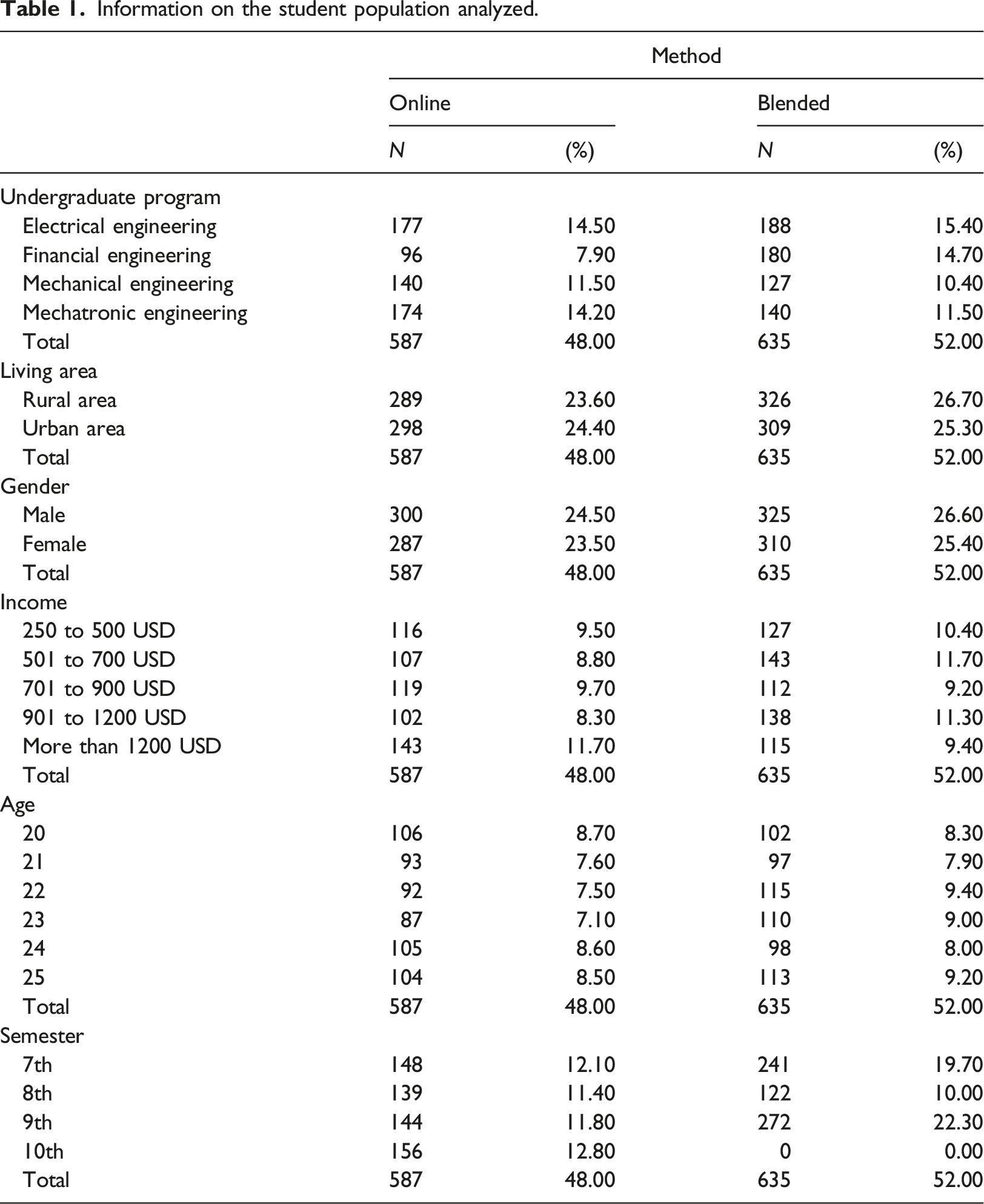
A survey was applied to undergraduate students from the seventh to tenth semester of the selected undergraduate programs (Mechanical engineering (IM), Electrical engineering (IE), Mecatronic engineering (IMEC), Financial engineering (IF)) about their perception of effectiveness of online and blended methods in developing cross-curricular skills (deductive reasoning, inductive reasoning, leadership, teamwork, meticulousness, and multidisciplinarity) that contribute to develop an engineering profile during a 3-year period (2020–2022).
The supply of information was given by the consultant Education For All Online. The effectiveness perception survey of both methods was carried out after the students received their courses either online or blended. The universities selected for this study were the following: Colombia: Universidad Los Libertadores, Universidad de Cooperacion, Universidad Autonoma, and Universidad Piloto. The Universities analyzed in Peru were the National College of Engineering, San Agustin National University, Technological University, and National University. In Ecuador, the universities selected were the Escuela Superior de Ecuador, Universidad Internacional de Ecuador, Universidad Tecnica Mubi, and the Universidad Politécnica Nacional. A total of 1222 students were between 20 and 25 years of age, with an average age of 23 in rural and urban areas and the final semesters of their respective programs.
Information on the student population analyzed.
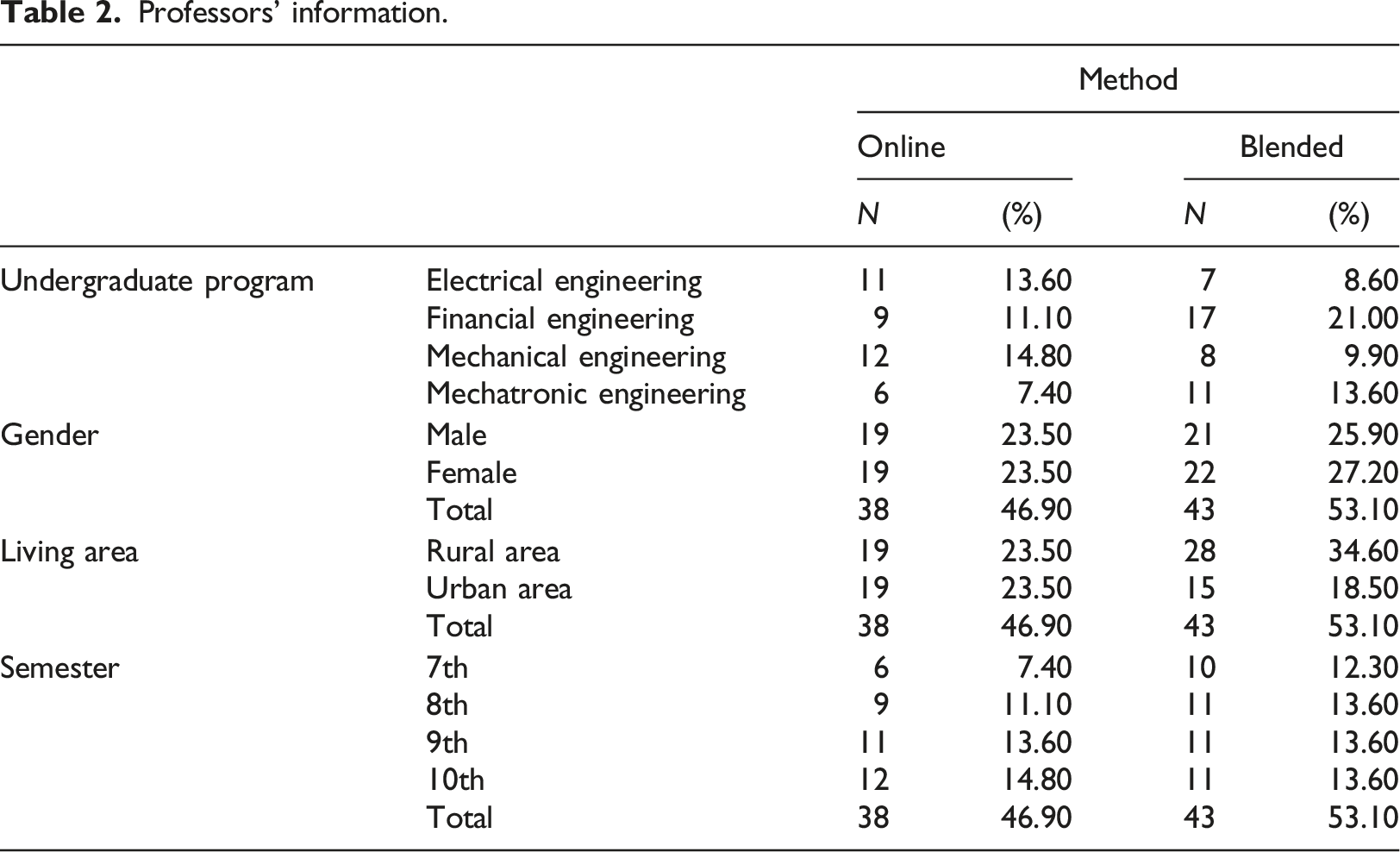
Professors’ information.
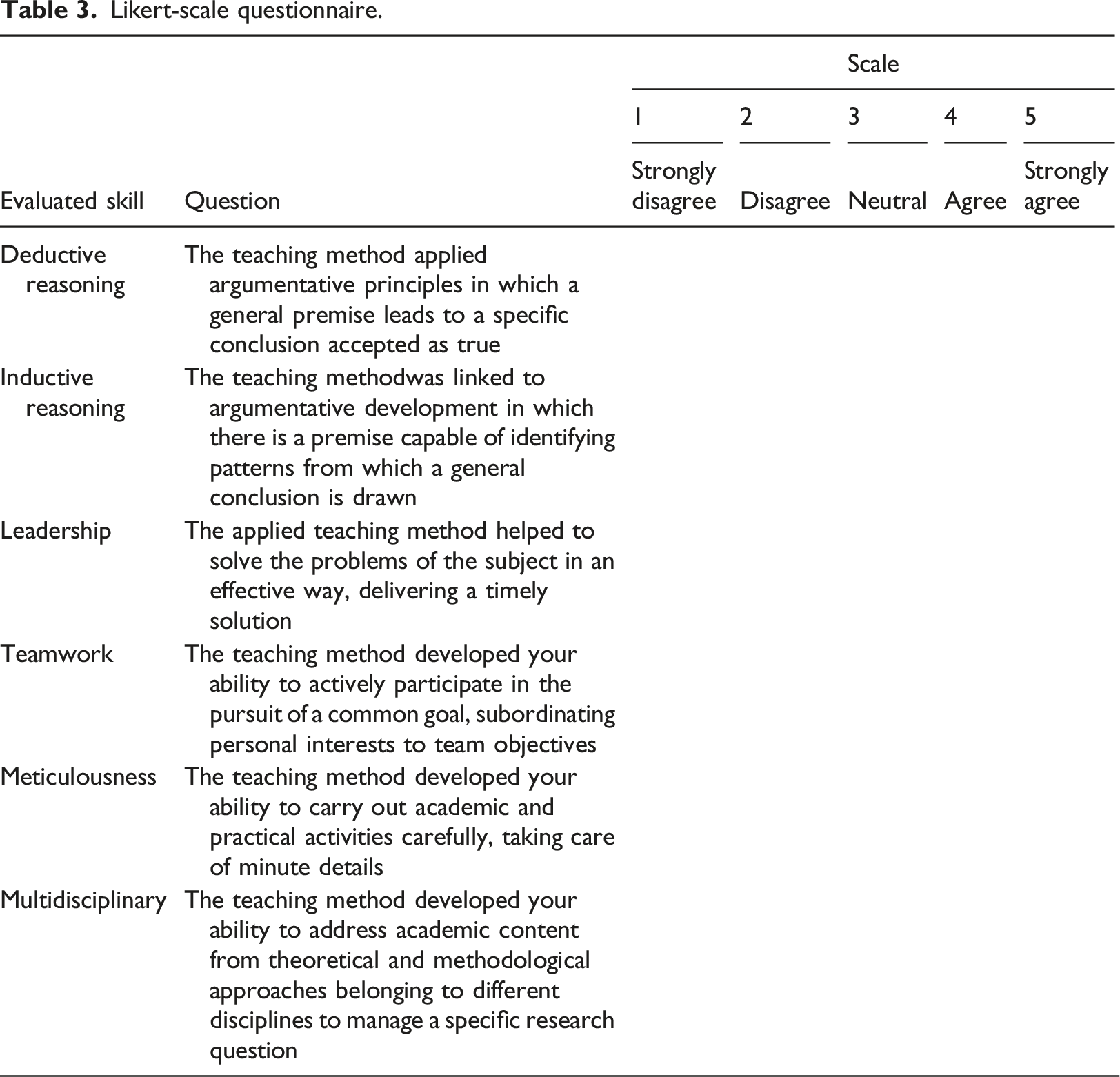
Likert-scale questionnaire.
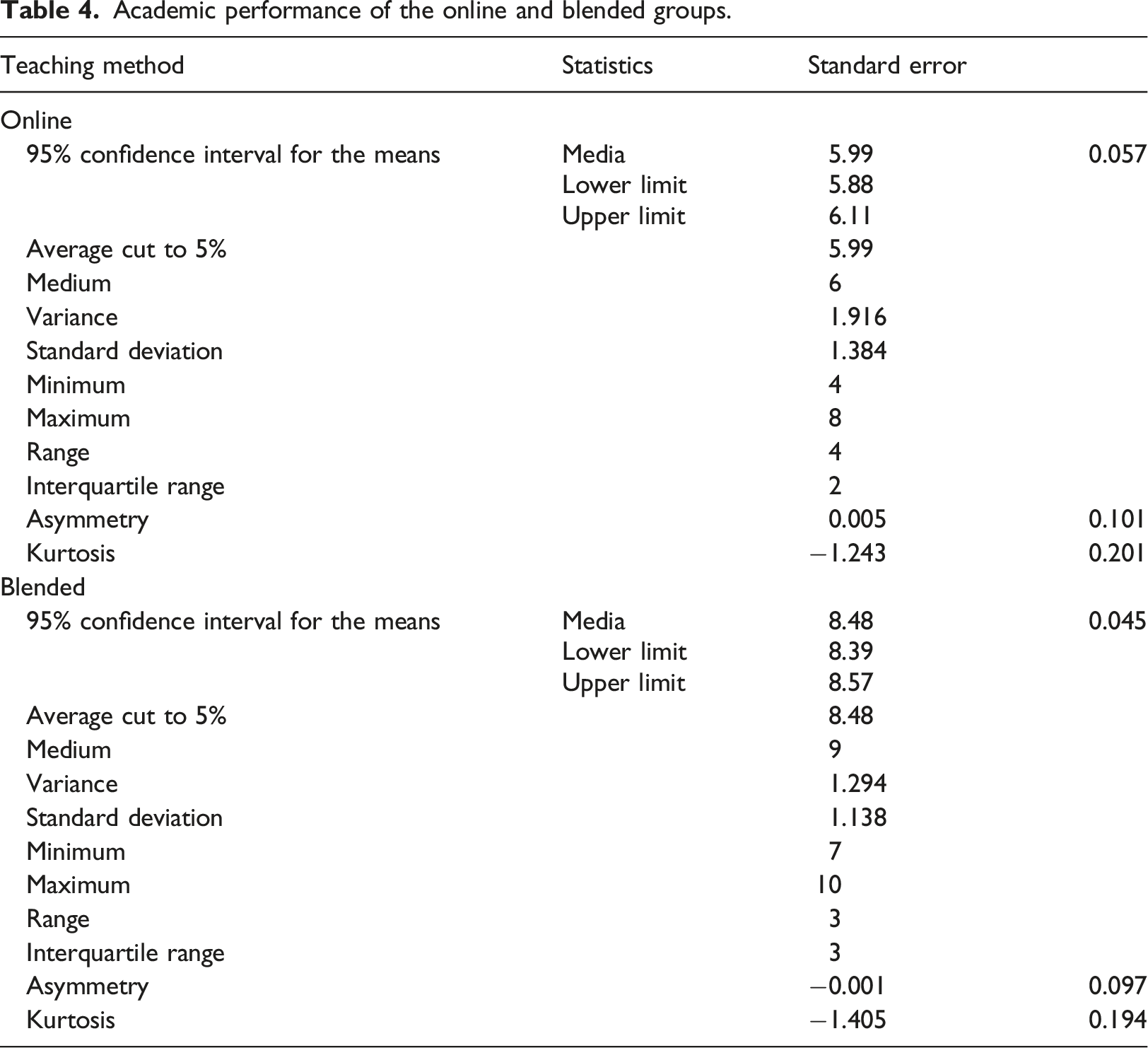
Academic performance of the online and blended groups.
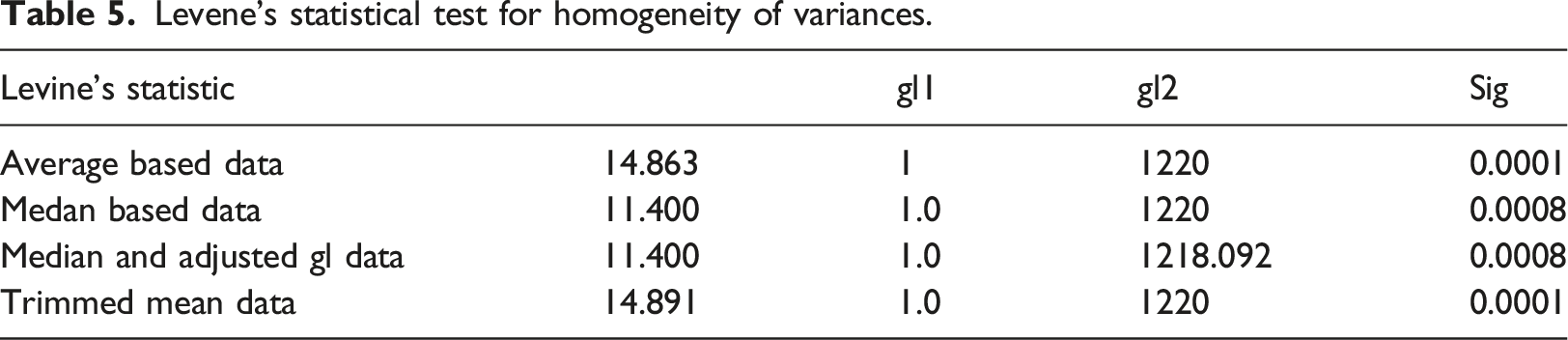
Levene’s statistical test for homogeneity of variances.
Most of the undergraduate engineering (Figure 1) programs applied one of the teaching methods due to circumstances related to the COVID-19 pandemic. Although the observation period was 3 years (2020 to 2022), the online group was selected in 2020, while the blended group in 2021 and early 2022. In 2020 there were mobility restrictions due to the sanitary confinements, while in 2021 and early 2022 these measures were relaxed, which led to the application of the blended teaching method. The engineering programs analyzed implemented the online teaching method with an average of 4 hours of classes per week, three of which students and professors interacted, and 1 hour asynchronous for student tasks to be carried out independently. The application of the blended method had an average of 2 hours of face-to-face classes and an hour and a half of online teaching with the interaction between students and teachers. Students who received classes via online and blended.
During a random selection of students in the last semesters of the observed engineering undergraduate programs, scholars who lived in urban and rural areas were identified based on an anonymous profile questionnaire.
All students in the seventh semester of the observed undergraduate programs received classes in courses related to models of dynamic systems. Eighth-semester students took courses related to instrumentation and quality control. Ninth-semester participants took courses related to industrial practices and asset management. Tenth-semester students received professors’ advice for completing a final degree project on an engineering topic of their interest. Students in rural and urban areas were randomly selected based on information provided by the Education For All Online entity on the availability of students for help to conduct this research.
The students who took the subjects online obtained an academic average of 5.99/10, while the students who received their classes in a blended way had a performance of 8.48/10. Not all universities have the same scale of academic grades, so an equivalence from 0 to 10 was constructed, where 0 denotes null performance, while five means that the subject is approved, and 10 is an excellent academic performance. In addition, 38 professors who taught courses online and blended were surveyed both in rural and urban areas of the localities analyzed.
Students were asked if they (Figure 2) previously received classes online or blended before 2020, of which only 14.2% responded affirmatively. The fact that few previously experienced learning with these methods limits their critical analysis of its effectiveness in developing the selected cross-curricular skills. At the end of their courses, students were asked the following questions regarding whether the online or blended method developed the selected cross-curricular skills. Below is the Likert-type questionnaire asked to students: Professors surveyed according to the method and undergraduate program.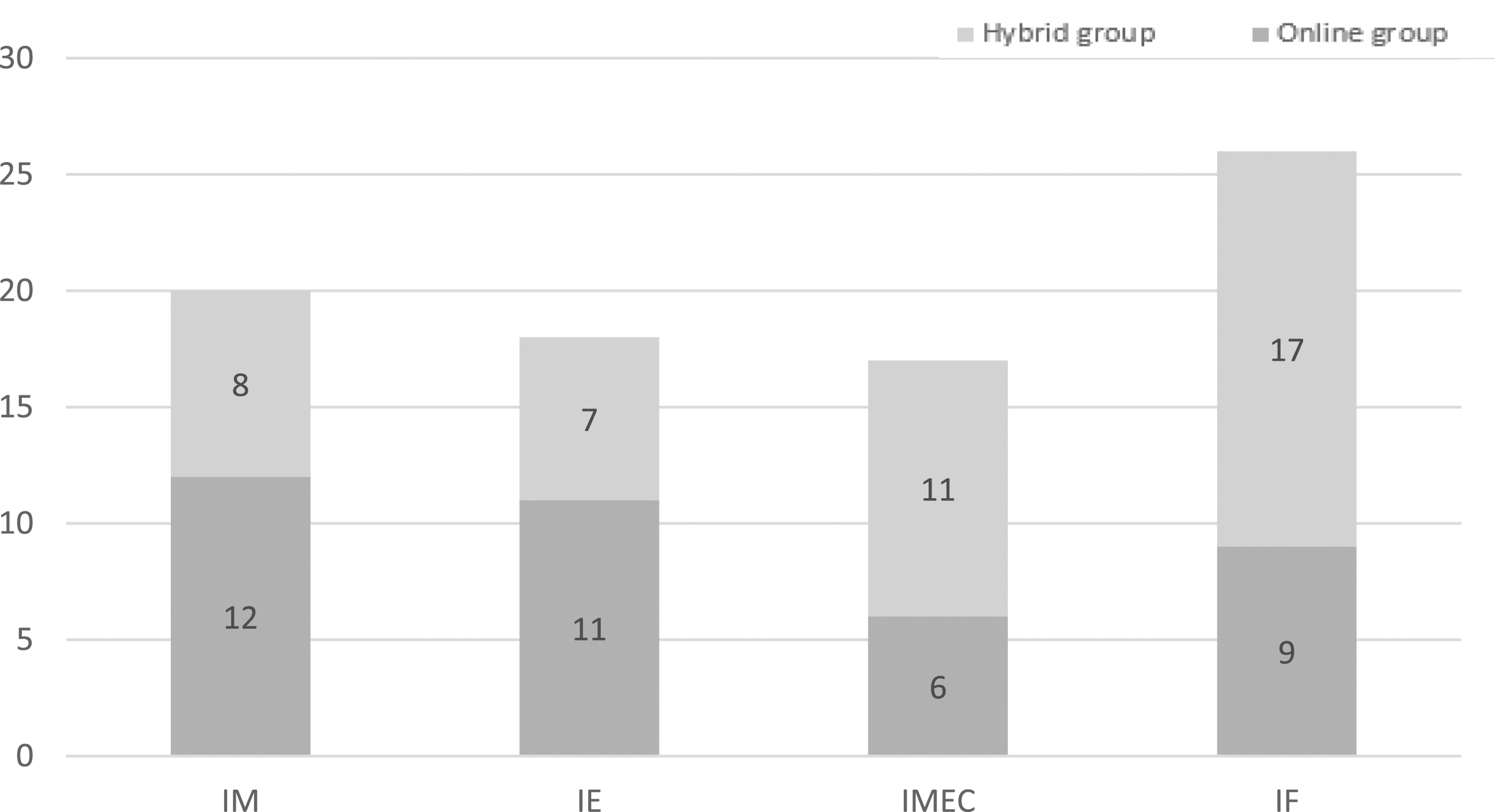
Each questionnaire form was finished during class time. They were told that participating in the surveys would not have any impact on their academic performance and that the responses would remain confidential. The questionnaire was validated by the organization Education For All Online, which funded this research. The students’ questionnaires were adjusted to know the perception of the professors who collaborated in the present research about which method is more effective in developing the skills studied. The professors surveyed stated that they had an average experience of 4 years in teaching both methods, identifying the advantages and limitations of both methods in developing a suitable professional profile in engineering.
Results
Various statistical tests were performed to verify if the hypotheses were met with a significance level of 95% using a SPSS software. It was verified if the data collected on students and professors followed a normal distribution with homogeneous variances without being paired and parametric. The following table shows the students’ academic performance depending on the applied teaching method.
The academic performance of the blended group was higher than the online group. The average academic grades of the online group were 8, while the blended group was 10. Regarding the variance, in both methods it was not greater than 2. However, in the blended group all the students showed high academic performance.
The distribution of the online group is asymmetric to the right, with a positive index, while for the blended group, it is negative, showing an asymmetry to the left. Through the Kurtosis test, it is found that both groups have a platykurtic distribution with a lower concentration of data compared to the mean due to the existence of a negative coefficient. A Levene’s test is applied to verify if both groups have homogeneous variances.
As shown above, the data does not have homoscedasticity, and none of the degrees of significance is higher than 5% (p < .05). The Kolmogórov-Smirnov test seeks to identify the data distribution.
Kolmogórov-Smirnov normality distribution test.
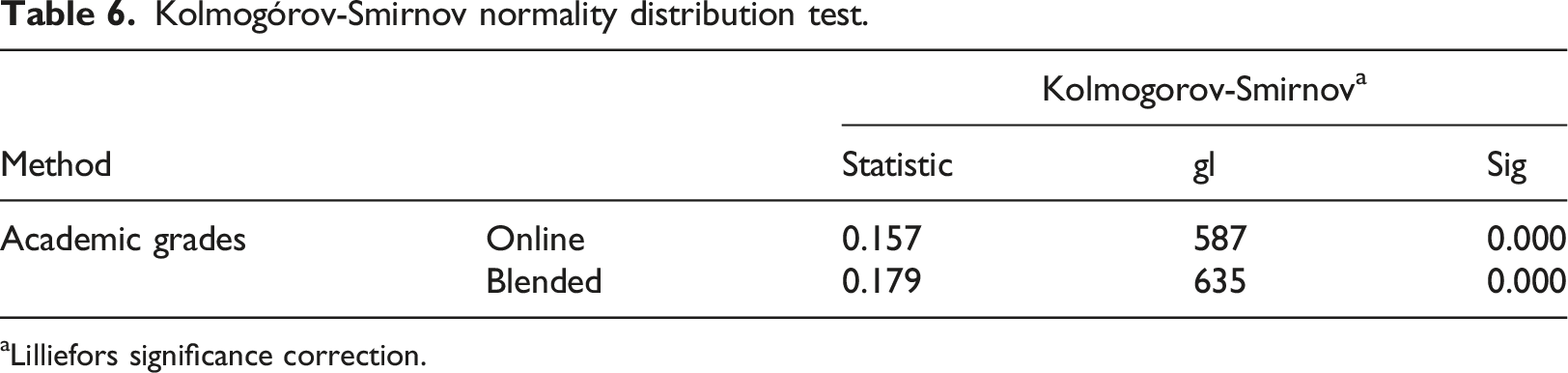
aLilliefors significance correction.
To verify the hypotheses, it is necessary to use a statistical test for non-parametric and non-paired data, since the assumptions of homoscedasticity or normal distribution are not met.
The test that fits the nature of the data analyzed is the Mann-Whitney statistical test, which compares the means of the two groups.
Mann-Whitney test to verify
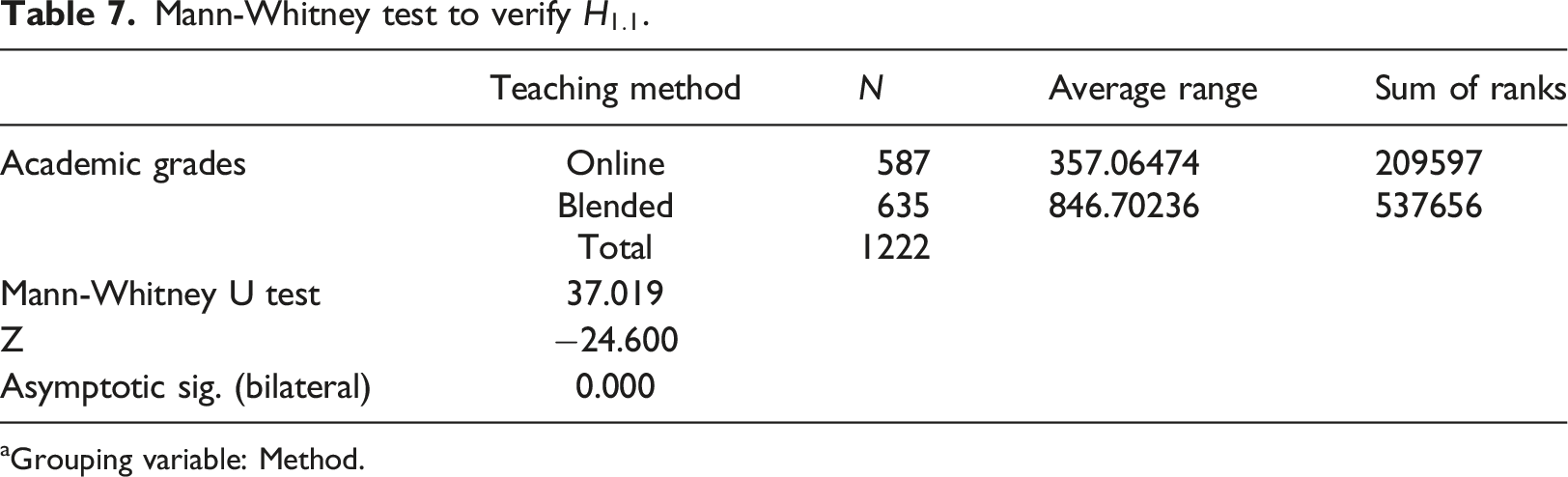
aGrouping variable: Method.
Mann-Whitney test to verify

aGrouping variable: Method.
The blended group achieved better academic results compared to the online group (p < .05), evidenced in its mean, variance, and standard deviation than the online group.
Mann-Whitney test to verify
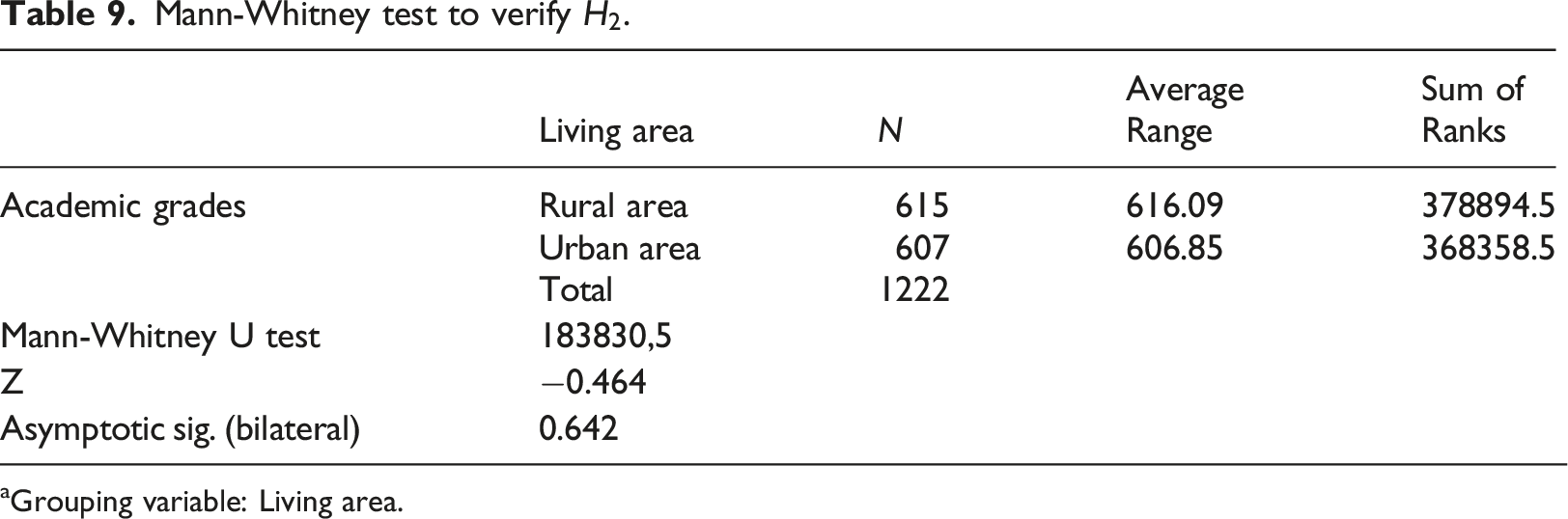
aGrouping variable: Living area.
Descriptive analysis of the cross-curricular engineering skills observed depending on the teaching method and verification test of
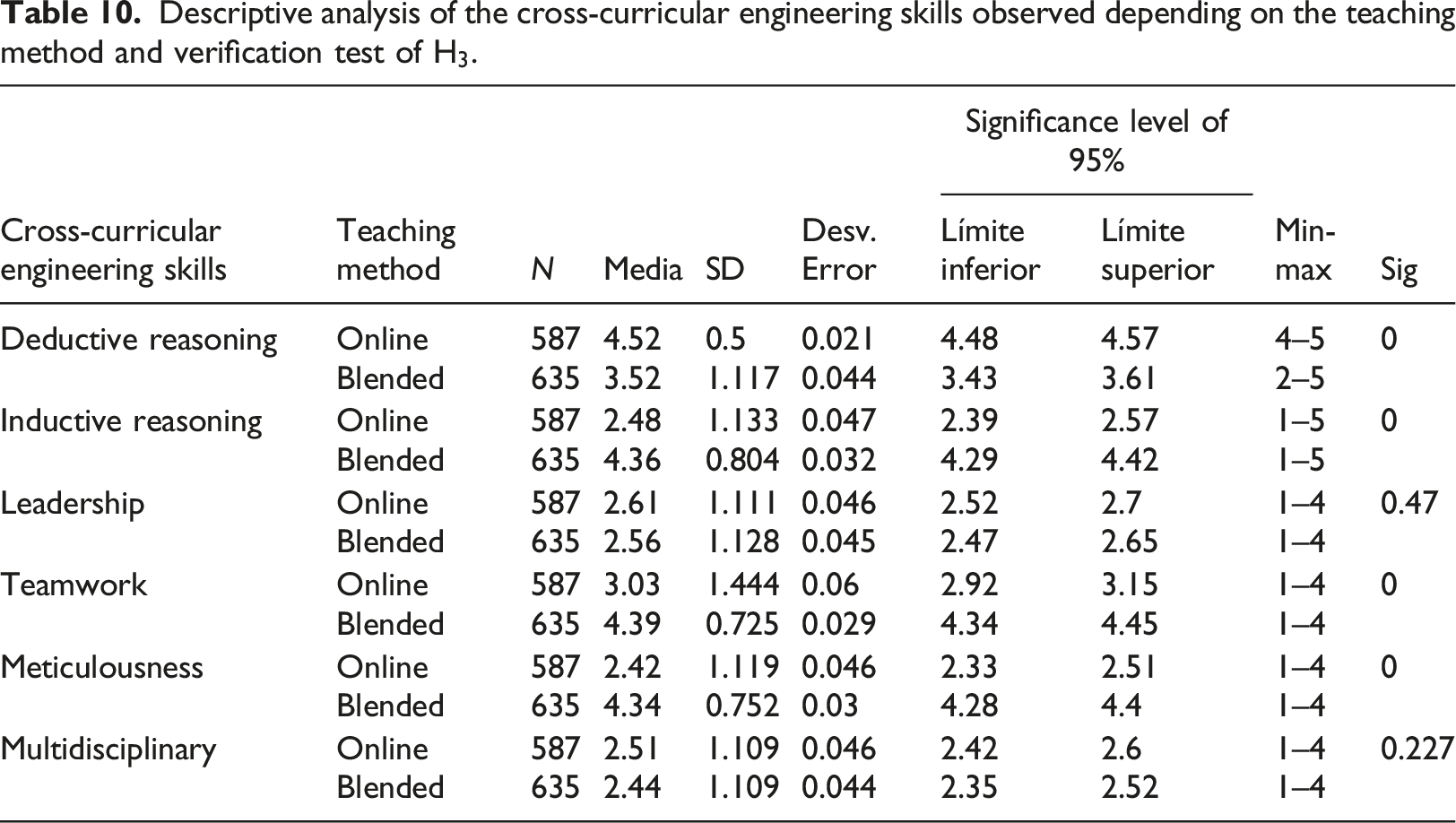
Table 10 and Figure 3 show the students’ perception of the observed cross-curricular skills. Leadership and multidisciplinarity have a confidence level of 95% (p = .470) and (p = .227). Both were developed in the same way in both teaching methodologies, but deductive and inductive reasoning, teamwork, and meticulousness were not developed in the same way. Figure 3 shows the blended concept as a hybrid since this is how the method is recognized in the selected student populations. The frequency of the answers provided by the students about the observed cross-curricular engineering skills (hybrid:blended).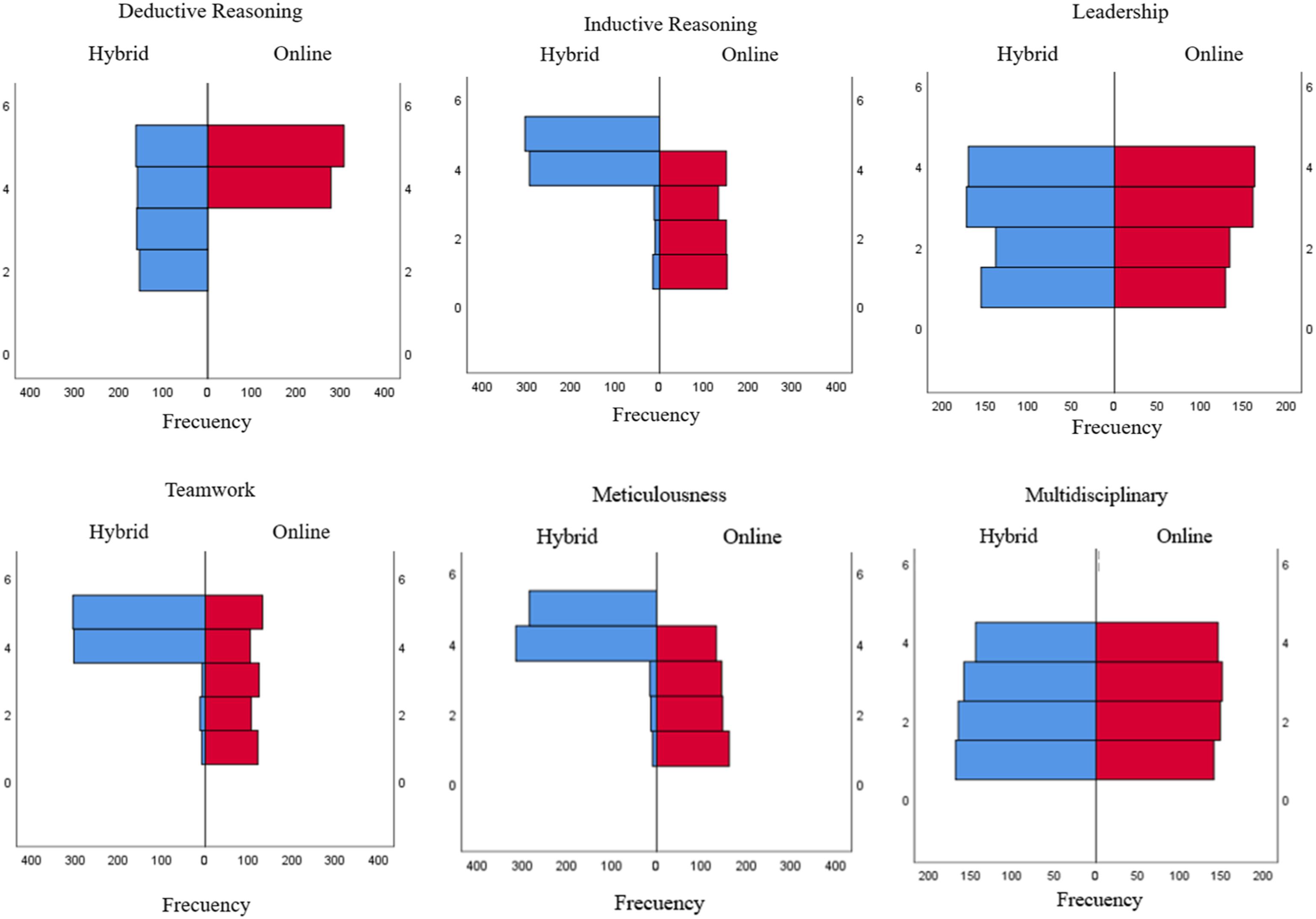
The higher development of inductive reasoning, teamwork and meticulousness in the blended method is shown, while deductive reasoning is more developed in the online method.
The results show that H_3 is rejected since the blended methodology does not have higher effectiveness in all the observed cross-curricular skills associated with an engineering profile compared to the online method. The statistical tests validate the hypotheses
The results of the focus group exposed below show that the availability of technological and physical tools, as well as physical and digital connection with urban areas contributes to balance the development of the skills studied.
Focus group results
In addition to conducting questionnaires to students and professors on the effectiveness of the teaching methods analyzed on the cross-curricular skills that develop a suitable engineering profile, two focus groups were applied (one with students and the other with professors) that complements the statistical results. The first focus group was done virtually with 42 students who received classes online and blended (22 online and 20 blended). The students’ focus group protocol began with the presentation of the study to participants, explaining the purpose of knowing the most shared ideas about their perceptions of the effectiveness of both methods in developing the evaluated cross-curricular skills.
In the first part of the student focus group, the participants introduced themselves by mentioning the undergraduate programs they studied and the semesters they belonged to when the study was carried out. Of the 22 students who received online classes, 12 were from the eighth semester of the undergraduate degree in financial engineering, four from the ninth semester of mechanical engineering, three from the tenth semester of mechatronic engineering, and three from the seventh semester of electrical engineering. In the blended group, nine eighth-semester electrical engineering students, six seventh-semester financial engineering students, and five ninth-semester mechanical engineering students participated.
In the second part of the focus group, the students shared their experiences receiving classes with each method. The online group mentions that at the beginning of the online classes they felt that there was no follow-up from the professor in charge of their academic performance since, apparently, the professor lacked expertise in maintaining student motivation during long periods of classes. They also mention that although their internet connections were good, the courses in which they received online classes had limited training on the use of technological platforms used beyond periodic activities related to class work and written evaluations. The students felt that they did not take advantage of the digital class platforms sufficiently due to the maintenance of the conventional teaching method where students are passive subjects in their learning processes. This limited the interaction between students and a more active role during class sessions.
However, the online group also highlights that the dynamics of online classes led them to worry more about obtaining information autonomously to complete class tasks, which facilitated the development of deductive reasoning, although not necessarily the other skills studied. The students mention that for developing the four remaining skills, more physical interaction with their classmates and teachers is needed since it encourages them to adopt more critical positions towards the tasks requested by the professors.
The students of the blended group mentioned that the combination of online sessions with face-to-face classes contributed to clarifying academic concepts taught in virtual sessions. In addition, the ease of transfer from rural to urban areas where various of the studied universities were located meant that there were no delays in the learning processes. They also mention that the physical attendance to classes encouraged them to increase their participation since they felt that they could ask about a studied subject during the class sessions.
In the third part of the student focus group, each group was asked to give their opinion on whether the studied cross-curricular skills were fully developed using both methods. The online group expressed that the method is effective only in skills in which a professor is not essential. This is the case of deductive reasoning. However, they mention that the other ones need class dynamics that enhances critical thinking.
By using non-conventional learning methods such as problem-based learning, simulation-based learning or learning based on critical dialogues, the teamwork, inductive reasoning, and meticulousness skills might be fully developed. The blended group highlights that the method allows students to have autonomous spaces for developing their academic tasks, as well as promoting interactions between students and professors in physical classrooms, which contributes to improving skills such as meticulousness, teamwork, and leadership. When interacting with other individuals, students’ behavior must be adjusted to understand the needs of others and actively cooperate in developing academic tasks.
The focus group of professors followed the same protocol as the students. All had previous experience in teaching undergraduate classes online or blended. Seven professors participated, of which 2 taught mechanics in the ninth semester, three in the tenth semester of electrical engineering, one in the eighth semester of mechatronic engineering, and one in the eighth semester of financial engineering. In the first part of the focus group, professors mentioned their previous knowledge in teaching both studied methods with an average experience of 4 years. In the second part of the focus group, the professors expressed their teaching experiences with the online and blended methods to the selected students. They highlighted that the main advantage of online teaching was the convenience of giving academic instructions without leaving their homes, which was also positively valued by the students.
They also mention that this method optimizes the time and savings of other resources associated with physical displacement to teach classes. On the one hand, professors expressed flexibility as a valued factor, regardless of whether the live sessions had a fixed schedule or were recorded for students’ convenient attendance. Beyond this consideration, online education favored students to complete their assignments, adapting to the schedule that was most comfortable for them. On the other hand, the professors also stated that the impact of physical distancing might exceed the benefit of receiving instruction without leaving home since studying alone is not only an individual challenge but also often causes discouragement in students. Regarding the disadvantages of blended teaching, the professors mention that providing a good internet connection that limits technical problems and students’ commitment to their learning process are aspects that were not always achieved in blended courses.
In the third part of the focus group, the professors gave their opinion on which of the two teaching methods were more effective in developing the selected the cross-curricular skills necessary for an ideal engineering profile. All professors stated that the blended learning method is better since it encourages students to physically interact with others, limiting the isolation that comes from studying only with the online method. They also mention that the meticulousness skill develops more when students work autonomously because they have more time to review concepts taught in class and check if the tasks done at home have no errors. However, the online method makes leadership difficult since there is little or no physical interaction between students and professors, so students do not have spaces to be assertive with others.
Discussion
The findings from the questionnaires administered to both students and professors underscore a nuanced perspective on cross-curricular skill development through different teaching methods. It’s apparent that no single teaching approach exclusively fosters all essential skills. Jointly, the perceptions of students and professors reveal a consensus that the online method excels in enhancing deductive reasoning skills. Simultaneously, they recognize the blended method as superior in nurturing inductive reasoning skills, attributing this advantage to face-to-face interactions integral to this approach.
The correlation of these results with existing literature strengthens the idea that neither method holds absolute superiority in cultivating the assessed cross-curricular skills. However, a consistent trend emerges, indicating the blended method consistently outperforms the online method in skill development, regardless of geographical contexts.
This difference is ascribed to the collaborative nature of the blended method, motivating students to engage with peers and professors. Within this framework, students adjust their academic interests to align with the group, fostering an environment for sharing opinions and collaborative task completion. Such collaborative dynamics are less likely within the online method, where students often choose to limit participation, especially in familiar or private environments like their homes. This observation aligns with the findings of Shek et al. (2022) and Townsend (2015), highlighting the impact of the learning environment on student engagement and participation.
The outcomes from the focus group involving professors shed light on the drawbacks associated with online learning, particularly concerning the constrained exchange of ideas between students and educators. A notable limitation arises from the complexity of addressing queries outside of designated online academic hours, as it necessitates the coordination of schedules to accommodate both students and instructors. The potential bottleneck becomes apparent when considering the scenario where every student seeks to clarify doubts during virtual classes, which could impede the seamless progression of the sessions.
In contrast, the blended method demonstrates a more favorable environment for resolving student queries. There exists a heightened likelihood for the clarification of doubts among classmates or through engagement in curricular activities. This observation aligns with the findings of Devkota (2021) and Eberle and Hobrecht (2021), underscoring a commonality in the advantages associated with the blended method regarding the resolution of student queries.
Despite the positive outcomes, the study identified certain limitations associated with the teaching methods. The online approach faced challenges related to student motivation, limited interaction, and a perceived lack of follow-up from professors, potentially hindering the development of critical skills such as teamwork and meticulousness. Moreover, both methods exhibited variations in skill development, emphasizing the need for a nuanced approach. Notably, the study’s reliance on self-reported perceptions and the diverse academic contexts across Latin American universities introduce potential biases and limit the generalizability of the findings. Further research with a more extensive and diverse participant pool could address these limitations.
In addition, the results on students’ focus groups show that a good internet connection is essential in receiving an appropriate online class. This can be a problem in some rural areas or areas with poor signal coverage. Although students from rural areas did not mention having difficulties with internet access to receive their classes, several expressed inconveniences to view videos, especially when they did not have computers with large monitors. This limits fluid learning. On the one hand, the application of the online method limits the implementation of many engineering programs. There are certain activities that require attendance. Practical implementation is essential in any activity. But even more in fields such as engineering. The importance of building bridges between theory and practice in learning makes the blended method have a better student, and professors’ perception in developing various evaluated cross-curricular skills. This is consistent with Meijer (2007) and McClune et al. (2012).
On the other hand, blended education is an example of how the blended method increase the depth and impact of curriculum delivery. In this method, students are exposed to forms of instruction that include online and in-person activities that maintain flexibility in the way knowledge is developed while preserving spaces for the exchange of ideas between students and educators. This is especially relevant in Latin American countries where the methodological focus of the universities continues to be the coverage of thematic content and not necessarily the development of transversal competences.
Educational innovations are expected to enhance learning outcomes, especially for students with lower cognitive abilities, and streamline the time required for program completion. However, the current scenario in Latin American countries suggests a disconnect, as positive outcomes from educational innovations remain elusive. This can be attributed to the persisting belief that the adoption of non-conventional teaching methods automatically cultivates transversal competences.
In the context of the presented case study, the application of online and blended methods doesn’t necessarily yield a positive impact on the development of a suitable engineering profile. Practical engineering demands skills such as logical thinking, clear communication, and independent judgment. Moreover, engineers must possess the ability to extend their focus beyond their disciplinary boundaries, collaborating with sectors like business, management, and other diverse disciplines.
To delve deeper into these observations, an extensive exploration in the discussion section is imperative. It’s essential to dissect the existing perceptions that hinder the positive outcomes expected from educational innovations. Further, a nuanced examination of how online and blended methods specifically impact the cultivation of a robust engineering profile is warranted. Understanding the intricacies of skill development and interdisciplinary collaboration within engineering education can provide invaluable insights into the effectiveness and potential improvements of educational innovations in Latin America.
Conclusions
This study conducted a thorough examination of the effectiveness of two teaching methods, online and blended, within undergraduate engineering courses spanning the seventh to tenth semester. The primary focus was on assessing the development of essential cross-curricular skills crucial for shaping an ideal engineering profile. These skills encompassed deductive reasoning, inductive reasoning, leadership, teamwork, meticulousness, and multidisciplinarity.
The findings suggest that a one-size-fits-all approach may not be suitable for engineering education, necessitating a careful consideration of the specific skills targeted by different teaching methods. Future research could delve deeper into the impact of contextual factors, pedagogical approaches, and technological support on the effectiveness of online and blended learning. Additionally, ongoing advancements in educational technology and instructional design offer opportunities to refine and tailor these teaching methods further.
The findings unveiled distinct strengths associated with each teaching method. The online approach demonstrated effectiveness in fostering deductive reasoning and multidisciplinarity skills. This effectiveness was attributed to the encouragement of students to leverage technological tools and engage in independent information analysis to meet course requirements.
Conversely, the blended method exhibited success in cultivating deductive reasoning, inductive reasoning, teamwork, and meticulousness. The sustained face-to-face interaction inherent in the blended approach played a pivotal role in enhancing transversal skills, notably leadership and creativity, which were observed to be diminished in the online method. These outcomes underscore the importance of considering diverse metrics and tools when assessing teaching strategies. Moreover, the study emphasized the significance of incorporating student perspectives into the evaluation process. Engaged participants expressed the view that unconventional approaches, particularly within varied geographical contexts, played a pivotal role in developing cross-curricular skills.
By shedding light on the nuances of the teaching process across different contexts, the study draws attention to local singularities that impact how students actively engage in their learning process. This insight is invaluable for educators and institutions seeking to tailor their approaches to the unique needs and dynamics of specific regions, fostering a more responsive and effective educational environment.
Supplemental Material
Supplemental Material - Effectiveness of the online and blended teaching methods in developing professional engineering cross-curricular skills: A study for Latin America
Supplemental Material for Effectiveness of the online and blended teaching methods in developing professional engineering cross-curricular skills: A study for Latin America by Mario Alberto de la Puente Pacheco, Juan Diego Rios Mahecha, Mauro Maury Campo, Jose Torres in Research in Comparative and International Education.
Footnotes
Acknowledgements
This research was funded by Education For All Online EU. We thank our participants for their generous contribution to this work.
Declaration of conflicting interests
The author(s) declared no potential conflicts of interest with respect to the research, authorship, and/or publication of this article.
Funding
The author(s) disclosed receipt of the following financial support for the research, authorship, and/or publication of this article: This work was supported by the Education For All Online EU under grant [Number 2023-01-10].
Supplemental Material
Supplemental material for this article is available online.
Author biographies
References
Supplementary Material
Please find the following supplemental material available below.
For Open Access articles published under a Creative Commons License, all supplemental material carries the same license as the article it is associated with.
For non-Open Access articles published, all supplemental material carries a non-exclusive license, and permission requests for re-use of supplemental material or any part of supplemental material shall be sent directly to the copyright owner as specified in the copyright notice associated with the article.
