



Abstract
During the past decade, the focus of the pharmabiotechnology industry has shifted toward developing personalized therapeutics. Consequentially, supporting initiatives around genome sequencing and high throughput analytical technologies have lead to an irreconcilable data deluge. As a result, the sector is challenged by the lack of suitable solutions to optimize business costs through collaborative innovation across the value chain. The concept of Infrastructure as a Service or Cloud Computing demonstrates significant potential to address the twin challenges of the life sciences sector. While cloud computing has been adopted across several industries, its application in the life sciences sector remains nascent. This paper reviews the role of cloud computing in the life sciences industry and explores its potential to create disruptive opportunities for innovation and efficiency across the value chain. Further the article suggests a qualitative cloud deployment framework that could help life sciences companies maximize the potential benefits offered by the cloud.
Introduction
During the early part of this decade, biologists across the world were excited about sequencing the Human Genome and its implications. The global project estimated to cost over US$3 billion, was largely driven by the possibility of developing treatments for a wide range of diseases through an understanding of biological interactions at the molecular level. However, progressive efforts on the Human Genome Project were accompanied by a pressing concern: humungous sequence data that ran into over 300 terabytes for the 300 Mb genome, roughly 10 times the size of the fruit fly genome at 30 Mb. 1
Greater than 70% of the core sequence data generated from the multiple sequencing projects in progress today is raw. The raw data is subject to much analysis before preliminary sequence stretches and useful biological information can be gleaned. Consider the following scenario – companies and institutions leveraging mass spectrometry for protein sequencing; generate over 250 terabytes of data per sequencing machine, while some companies generate as much as 20 terabytes of data per day. 2 The sudden transformation of biomolecular research into a data-intensive enterprise has brought to fore a host of concerns for high throughput biology. These include the management of genomic and proteomic sequence data and its downstream applications in silico to generate meaningful insights for drug development. Large pharmaceutical firms such as Roche, Pfizer and Eli Lilly are increasingly employing predictive simulation models in collaboration with companies such as Entelos, to understand the implications of biomolecular interactions at a systems level. Typically, such efforts tend to consume several megawatts of power and monetary resources, which impact the cost of downstream commercialization activities. 3 Fortunately, information technology offers a suitable solution in Cloud Computing, that helps optimize data management and streamlines its impact across critical research and commercialization activities.
The scope of this paper is to review the concept of cloud computing and explore its implications for the life sciences community. The paper begins with a brief review of cloud computing and employs examples from the life sciences sector to address the potential of cloud across diverse aspects of the life sciences value chain. Reflecting upon the challenges and future directions for the application of cloud computing in life sciences, the article concludes by providing a qualitative framework for life sciences organizations to assess the need for cloud based infrastructures.
Cloud computing and its implications for the life sciences ecosystem
The concept of cloud computing and its adoption has been relatively nascent within the life sciences community. Traditional computational infrastructures involve huge investments on dedicated equipments such as servers and networking solutions. On the contrary, cloud computing offers a virtual environment for users to store or share infinite packets of information with their peers, by renting hardware and storage systems for a defined time period. 4 Organizations can exploit the capability of a virtual environment wherein it becomes possible to scale up from 10 servers to several hundreds to perform complex tasks and return to baseline levels, once the task is completed.2,5
Incidentally, unlike most information technology assets, the cloud concept is unusually attractive owing to diversity and flexibility in the delivery modalities. Fundamentally, the cloud concept embraces the broad umbrella of Information Technology as a Service. From an implementation standpoint, cloud can be deployed in various formats including, software as a service (SaaS), Platform as a Service (PaaS) and Infrastructure as a Services (IaaS).
6
SaaS: The applications (e.g., EHRs) are hosted by a cloud service provider and made available to customers over a network, typically the Internet.
6
PaaS: The development tools (e.g., operation systems) are hosted in the cloud and accessed through a browser. With PaaS, developers can build Web applications without installing any tools on their computer, and then deploy those applications without any specialized administrative skills.
6
IaaS: The cloud user outsources the equipment used to support operations, including storage, hardware, servers and networking components. The provider owns the equipment and is responsible for housing, running and maintaining it. The user typically pays on a per-use basis.
6
Per, the US National Institute of Standards and Technology (NIST), the Cloud can be deployed as four models:
Public cloud: A cloud service provider makes resources (applications and storage) available to the general public over the Internet on a pay-as-you-go basis. For example, the Amazon Elastic Compute Cloud (EC2) allows users to rent virtual computers on which to run their own applications. EC2 runs within Amazon’s network infrastructure and data centers and allows customers to pay only for what they use with no minimum fee.4,6 Private cloud: A cloud infrastructure is operated solely for a single organization. In other words, the proprietary network or the data center supplies hosted services to a certain group of people. For example, Microsoft Azure enables customers to build the foundation for a private cloud infrastructure using Windows Server and System Center family of products with the Dynamic Data Center Toolkit.4,6 Community cloud: The cloud infrastructure is shared by several organizations with common concerns (e.g., mission, security requirements, policy and compliance). For example, the Google GovCloud provides the Los Angeles City Council with a segregated data environment to store its applications and data that are accessible only to the city’s agencies.4,6 Hybrid cloud: The cloud infrastructure comprises two or more clouds (private, public or community). In this infrastructure, an organization provides and manages some resources within its own data center and has others provided externally. For example, IBM collaborates with Juniper Networks to provide a hybrid cloud infrastructure to enterprises and seamlessly extends their private clouds to remote servers in a secure public cloud.4,6
A brief history of cloud computing in the life sciences sector
The first semblance of a regulated information sharing and collaborative data management solution for the life sciences sector was developed in 2002 in the wake of the completed Human Genome Project. Christened I3C, the now defunct Interoperable Infrastructure Consortium was founded by a group of leading corporate and academic institutions including IBM, Accelrys, National Cancer Institute, Los Alamos Laboratory and the Whitehead Institute. Their focus was to establish standardized information sharing protocols across informatics rich research, development and clinical genomics to accelerate collaborative research and development.7,8 However, lack of subscription by large pharmaceuticals, failed to bring around the impact of what could have been the first industry endorsed cloud based discovery model. 8 Yet, with the continuous churn of high throughput data, life sciences research institutions in particular had begun to realize the benefits of collaboration and cross disciplinary skill sets.
For instance, two global grid computing projects, WISDOM and DIANE, focused on identifying inhibitors and drug targets for Plasmodium falciparum and the avian flu (H1N1 virus) in 2005.9,10 However, cost benefit analysis of the grid infrastructures revealed that overall grid efficiency did not extend beyond 50% owing to server outages and workload management failures. 11 Unlike most industries where the needs of cloud computing are defined by challenges of cost efficiencies, the implementation of cloud in the life sciences ecosystem is best understood from lens of the biologist and his research needs, that are by far unique to the data-intensive nature of life sciences research.
From the perspective of a biologist, the key reasons that motivate the pursuit of research in a cloud enabled environment are threefold:
However, as we shall observe in the forthcoming examples, the aspects of collaboration, streamlined workflows and data standardization are important capabilities that are beneficial to an entire spectrum of business activities beyond research and development in the life sciences industry.
Cloud computing offers a plethora of opportunities for the life sciences sector
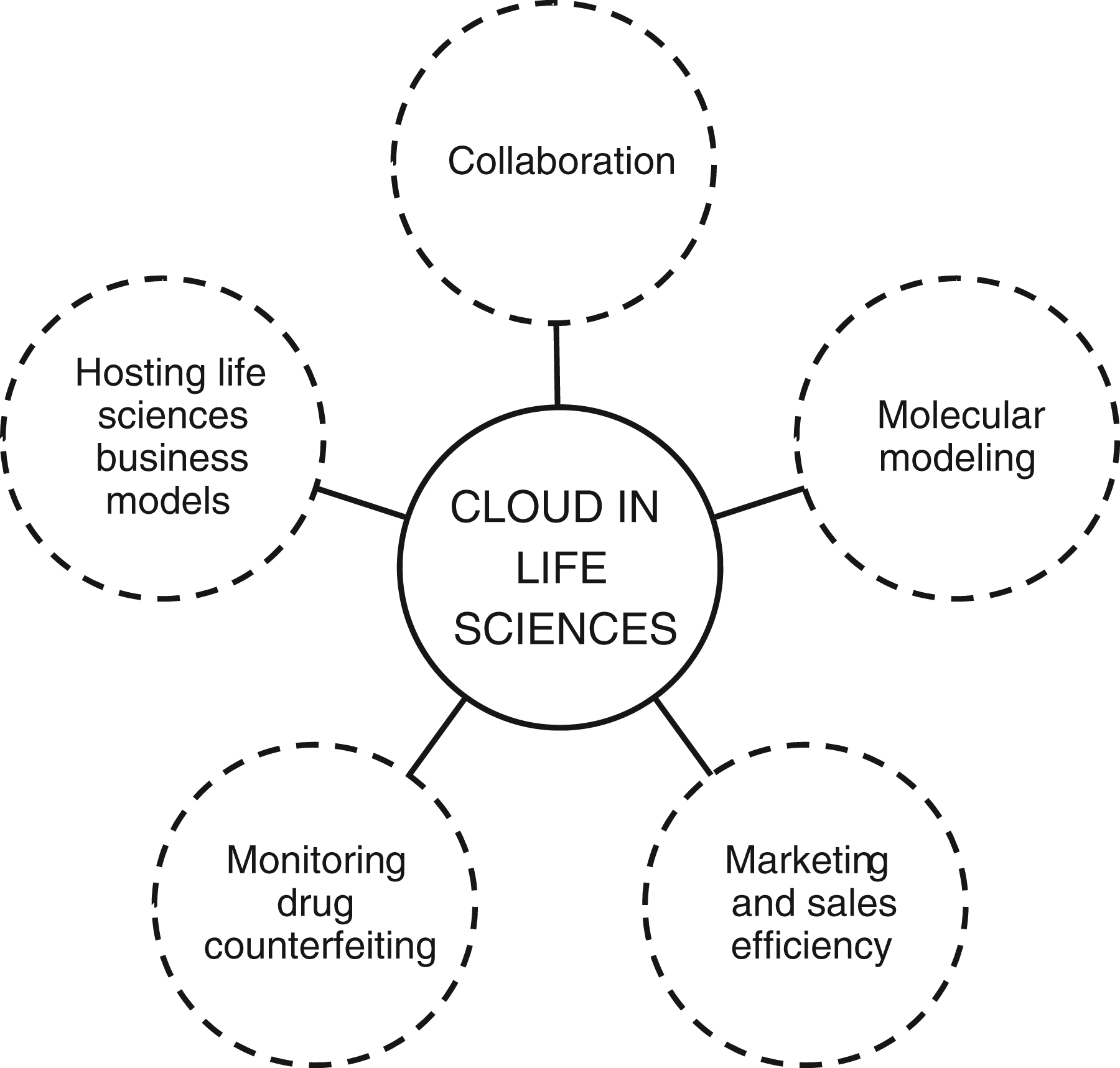
The cloud infrastructure offers a host of capabilities (refer Figure 1) that range from collaborative discovery to business model transformation (Table 1).
Cloud as a facilitator of collaborative research and discovery and marketing: Collaborative research and discovery is among the most popular application of cloud based infrastructure and services, in the life sciences industry. While the influence of cloud on research and development is growing, two major pharmaceutical companies – Eli Lilly and Glaxo Smith Kline (GSK) are recognized as pioneers in adopting cloud computing. Eli Lilly deployed cloud infrastructure solely to facilitate improved research and development. On the contrary, GSK has exploited capabilities of the cloud to address diverse elements of the pharmaceutical and life sciences value chain including research and development and global marketing.
16
Cloud as a disruptive force of innovation across the life sciences value chain Applications of cloud computing in the life sciences industry.

Eli Lilly
Eli Lilly adopted cloud infrastructures in 2007, when SaaS had just found application as a viable infrastructure investment across several industries. Eli Lilly was faced with the challenge of optimizing its R&D collaboration efficiency that at one time demanded its research and development workforce to establish collaborative programs at the cost of deploying high-end servers that took over 50–100 days. In order to reduce the time frame of data availability and accelerate collaborative efforts, Eli Lilly hosted its services on the extendable cloud platform the EC2 by Amazon Web Services. This enabled Eli Lilly to host its resident Linux data clusters in a span 3 min leading to substantial time savings in terms of data collaboration. Eli Lilly continues to apply cloud infrastructure as part of its Collaborative Drug Discovery Program – a technology licensing and collaborative network. The program enables users outside Eli Lilly to submit details of their innovations for consideration by Eli Lilly’s collaborative discovery research initiative, for licensing. 16
GSK
GSK adopted a cloud-enabled infrastructure to improve its licensing and collaborative efforts with large specialist biotechnology companies, such as Alynlam, to develop next generation therapeutics based on the RNA interference technology. However, the company has expanded application of the cloud across collaborative technology development, work on M&A deals, and strategic liaisons with Marketing Organizations to promote its products. The 360 degree approach facilitated by cloud infrastructure has enabled GSK to generate collaborative output in a cost-effective manner.16,17
Current efforts in understanding the role of cloud computing have focused on critical research activities. These include gene mapping, sequence analysis,
18
SNP analyses,
19
in silico organ modeling,
20
translational bioinformatics
2
and healthcare delivery.
6
While individual studies vary in their approach to understanding the impact cloud computing on diverse facets, they unanimously observe that in the long run the benefits of investment in a cloud computing architecture far exceed the costs from the stand point of research output and analysis.2,4,18–
20
Cloud as a facilitator of new business models in the life sciences space An increasing number of small pharmabiotechnology service organizations are crafting new business models that take advantage of cloud computing. For instance, DNA Nexus, a startup based out of Mountain View, California, has established a cloud-based business model to provide high throughput sequencing services. The business hosted on the cloud enables scientists focus on the sequence data and establish collaborative networks through DNA Nexus that serves as an intermediary to scale up, store and share sequence data among registered customers and users in a secure format. This eliminates costs of maintaining huge server farms and sequencing machines in house. The cloud architecture deployed by DNA Nexus helps its customers focus on core competencies in sequence management. The model enables DNA Nexus and its customers maintain significant competitive advantage through reduced infrastructure costs.
21
Cloud as a facilitator of streamlined technical and business workflows
As much is said about the benefits of collaborative research in the life sciences environment, the industry and academia lose significant capital trying to improve operational efficiency. While large pharmaceutical companies have particularly considered the cloud as an enabler of collaboration, increasing instances of cloud as a facilitator of streamlined workflows have emerged during the past 5 years. A classic example of cloud as a workflow enabler in the life sciences sector is the transformation of the marketing and sales analytics capability at Genentech, a major biotechnology company. Despite being a leader in the development of new age biotherapeutics, Genentech does not employ a typical sales force to drive its products. The company’s medical representatives work with clinicians to stimulate demand by getting them to prescribe the products. Consequentially, the sales force at Genentech is expected to demonstrate great knowledge about the product portfolios and possess skill sets to obtain information on products in real time. Historically, Genentech sales force scouted for internal expertise through a Facebook like application called “Peeps” to provide immediate resolution on specific queries. This practice consumed significant time, thereby affecting product adoption. In order to maximize product adoption through a consultative selling approach, Genentech, combined mobile communications with cloud computing. The cloud-based networking of Genentech allowed the sales force access in house subject matter expertise in real time, while simultaneously engaging in product discussions with doctors.
22
At the upstream end of the spectrum, cloud computing has witnessed increasing application in the field of molecular modeling. In a recent program launched by Pfizer to identify new molecular interaction targets, the company leveraged cloud computing to deploy the Rosetta molecular docking program to analyze antibody interactions to accelerate drug development.
22
While conventional R&D portfolios have leveraged the capabilities of companies with core competencies on the cloud, the inclusion of cloud capabilities to promote internal workflows and as a competitive product offering remains strong in the life sciences sector. For instance, Perkin Elmer, a molecular diagnostic instrumentation company, primarily acquired Geospiza to improve its laboratory workflow and analyses capability in a cloud environment. However, the organization is also looking to extend GeoSpiza’s cloud capability to provide genome diagnostic services.23,24 This would enable Perkin Elmer translate the application of tools designed to improve internal workflows to create a real-time genomic analysis and visualization software product.
Cloud as a deterrent of drug counterfeiting: Companies in the life sciences sector are increasingly looking to leverage the benefits of a cloud-based infrastructure to drive efficiencies in supply chain management, particularly reducing incidences of drug counterfeiting. Tracking technologies such as RFID and CRM systems deployed by pharmaceutical companies across the point-of-sale (POS) distribution networks, are highly information dependent. Hence, it is possible to deploy real-time assessment of drug counterfeiting through data sharing and assessment on a cloud-based architecture. For example, Hewlett Packard (HP) combined the capabilities of cloud computing with classical tracking systems such as RFID technology, to launch a Global Authentication Service. The cloud-based platform helps pharmaceutical and healthcare establishments across Ghana, Nigeria and India, track infiltration of spurious drugs.
25
The diverse applications of cloud computing as recounted by examples of companies across the industry affirm the possibility of cloud as a dominant enabler of innovation across the life sciences value chain.
Future directions and challenges for cloud computing in the life sciences
As the life sciences community enters the era of personalized and systems medicine, cloud computing would increasingly assume the role of a disruptor of innovation in healthcare and life sciences.
Evolution of dedicated life sciences cloud platforms sustained by communities of practice to facilitate open innovation: Establishment of open innovation models within the life sciences industry will drive investments across various cloud formats. These innovation clouds would foster interaction across life sciences communities, thereby creating a virtual collaboration environment for research and development. The development of a collaborative cloud environment would offset infrastructure and development costs, by leveraging skill sets across communities of practice. Recent initiatives such as Collaborative Drug Discovery, CSDD, the 1000 Genomes Project, BIONIMBUS, RACKSPACE and SCIENCECLOUDS, leverage the diverse talent pool in the life sciences with the needs for collaboration to deliver cost-effective innovation environments for the life sciences ecosystem.
5
Evidence-based medicine through real-time collaboration: With advances in cloud computing and life sciences molecular diagnostic technologies, institutions such as the National Institute of Health have provided funds to develop collaborative evidence-based medicine platforms on the cloud.
26
Similar initiatives, would lead to development of standardized inter exchangeable data formats. This would enable collaborations between clinics, regulatory bodies and life sciences companies. An appreciable outcome of this effort would be reduced time frames of drug approvals and accelerated availability of therapeutics worldwide. Analytics driven collaborative business processes: The emergence of analytics as a core functionality of strategic decision making, creates possibilities to apply cloud infrastructures in supply chain management, and marketing activities. Increasing complexity of the pharmabiotechnology and healthcare supply chain in terms of intermediary players, distribution networks and sensitivity of formulations demands continuous tracking of shipments and cost management, through identification of the shortest and economical means of distribution. Cloud-based supply chains would facilitate real-time interactions of pharmaceutical manufacturers with suppliers based on analytics. Further, it would enable healthcare establishments and pharmaceutical organizations track the supply of medications and consumables through analysis of intermediary players and determining related cost efficiencies. Leading toward that objective, McKesson, a leading healthcare and information technology company launched the first cloud-based supply chain management solution for the healthcare industry.
27
In similar fashion, dedicated cloud infrastructures would enable pharmabiotechnology companies identify markets, determine investments and collaborate with brand management teams to reduce the time to market.
Principal challenges in implementing the cloud across the life sciences business environment
The diffusion of cloud computing in the life sciences business environment brings with it a host of challenges that are tied with classical pain-points of the pharmaceutical and life sciences industry.
Deploying a cost effective collaboration environment: Realizing cost benefits through cloud enabled collaborative environments is a core challenge for the life sciences industry. Most pharmaceutical and biotechnology majors spend approximately 5% of their annual revenues on information technology and services, while 11% of the annual revenues is allocated to research and development and a staggering 35% in manufacturing, marketing and sales.28,29 The siloed investments in information technology strongly suggest that the life sciences sector has been conservative in leveraging information technology integration as a basis of innovation. Consequentially, pharmabiotechnology companies tend to look at deploying an integrated environment such as Cloud through the simplistic lenses of integrating all existing IT infrastructure under a common umbrella. This myopic approach fails to consider IT as an important asset, which could link critical business activities and facilitate collaboration.
For instance, a recent study, published in Genome Medicine, observed that conducting research on the cloud costs three times more than conducting research on a single server.
2
The study clearly suggests that the benefits of the cloud override the costs. However, recent examples of successful cloud implementation across downstream business processes related earlier in this article, indicate that cost optimization of cloud services is dependent upon alignment with the strategic objectives of the pharmabiotechnology organization.
Enabling security in a collaborative environment Typical cloud environments and stand-alone systems are deployed with multiple levels of encryption capability. But the ability to extend the security across information-sensitive activities such as research and development, customer segmentation and manufacturing in a collaborative environment is a critical challenge.18,30
During the past few years, a host of life sciences research initiatives funded by the National Science Foundation in the United States and the European Union have been actively pursued on the cloud. For instance, platforms such as Future Grid and Magellan serve as private cloud hubs for pursuit of data-intensive life sciences research. 26 A similar model is employed by Eli Lilly and Genentech to ensure data security. The private cloud infrastructure integrates data security with internal checks and balances within the organizations, to drive core activities across the business value chain.16,22 A clear exception to the rule around security implications is HIPAA, which, runs its program on a secure resident cloud network. 18
While the challenge around security remains, it could be effectively countered by merging organizational data management and security best practices with the advantages provided by cloud computing technologies.
Defining the business rationale for cloud computing in the life sciences organization – a qualitative framework
The life sciences industry is largely research intensive. It has transformed from a unidirectional revenue generation model to an open innovation culture that fosters collaborative engagement across a wide array of stakeholders. Yet, the investment of the life sciences industry in the cloud computing space remains negligible, considering that the average IT investment for core research and development activities accounts for less than 15% of the investment in drug discovery research alone. 13 Companies that have made significant investments in the cloud computing space across the life sciences industry are those that have achieved great economies of scale, diversified into global markets and demonstrate an integrated value chain capability that delivers therapeutics from bench to bedside, as a core competence. Arguably thus, the decision to consider the cloud as a facilitator of innovation in life sciences organizations relies on a successful understanding and evaluation of core business requirements and competencies within the organization.
The core business needs and capabilities could be evaluated by measuring the organization against three parameters:
Resource allocation costs and positioning across the pharmaceutical value chain
Given the high implementation costs of the cloud environment, life sciences organizations must evaluate their respective roles and positioning across the value chain. The rationale of the cloud-based environment is to enable its users handle humungous amounts of data and manage the breadth and scale of activities that encompass the organization.
Research and development: Companies engaged in core research and development as is the case with many startup biotechnology companies that demonstrate limited staffing opportunities, stand to lose more than to gain by investing on the cloud. Typically employed to address organizational needs wherein research and development resources are dispersed across the globe and to drive real-time collaboration between scientists, the cloud would typically be a prohibitive investment for companies that are thin on product lines and demonstrate need for low staffing on their research and development teams. On the contrary, companies such as Novartis, GSK and the like, by virtue of their scale and size tend to invest greater than 30% of their revenue on research and development. During the past decade, the research and development expenditure of major pharmaceutical companies has spiraled by 50%.
26
This has caused a majority of them to invest in effective data management capabilities including the cloud. While a direct correlation does not exist around the impact of information technology investment, particularly cloud, in driving cost savings across pharmaceutical organizations, observations around cloud-based investments by leading pharmaceutical companies clearly indicate that it is important for pharmaceutical companies to demonstrate significant positive working capital, market leadership and product diversity to benefit from cloud. Supply chain management: An important cause of concern for most pharmaceutical and biotechnology companies is the complexity of supply chain management. Commonly enabled as an integrated and internally managed function across large organizations, the possibility of effective delivery of the therapeutic to customers is only marred by the biggest challenges around drug counterfeiting that accounts for greater than 10% of the global medicines delivered across developing nations. Evidence around implementation of cloud-based supply chain management systems by McKesson and HP across large-scale healthcare and pharmaceutical establishments, seem to suggest the importance of wide stakeholder networks. The evaluation of critical supply chain management activities such as supplier and distributor selection, inventory management and logistics support is crucial in determining investments in dedicated cloud services. These cloud services could be tailored to specific elements of the supply chain, such as transportation and delivery or in combination with analytics to determine and collaborate with the right stakeholders for supply and distribution of therapeutics and medical devices. Sales and marketing: Traditional marketing and sales parameters including demand forecasts, customer satisfaction, product profitability, strength of sales staff, market segmentation, new product introductions and training costs must be compared to determine the need for a collaborative workflow management platform. Consequentially, a supportive cloud-based environment would enable optimization of critical sales and marketing costs by creating several opportunities for collaboration across critical global marketing activities of the life sciences organization. Specific opportunities for collaboration within sales and marketing divisions of pharmabiotechnology firms could include real-time knowledge sharing among internal subject matter experts and sales force, customer and pipeline analytics collaborations between marketing and business intelligence teams and post-marketing surveillance customer group collaborations to obtain real-time data on performance and penetration of existing and newly launched therapeutics. This would in-turn drive increased revenue realization while potentially creating opportunities for stakeholders such as doctors and hospitals in driving market penetration and brand recall of pharmabiotechnology companies.
The scope and breadth of activities across the organizational value chain
It is imperative that life sciences organizations and collaborative institutional clusters demonstrate significant breadth across specific core activities in the value chain. For instance, cancer research groups at the National Cancer Institute have invested in a private cloud initiative called CaBIG, to enable collaborative discovery research on cancer by way of sharing resources and data. Similarly, companies such as Astra Zeneca, GSK and Roche are exploiting the capability of cloud infrastructures to streamline and link activities across diverse global departments within the organizations. It is thus essential that life sciences organizations evaluate the cost and scale of activities conducted across their value chains so as to determine the utility of a cloud-based infrastructure in reducing the total cost of operations. Further, it would also be useful for the organization to determine the possibilities of future expansion of business by way of alliances, acquisitions or capital investments that would potentially justify enabling the business environment on the cloud.
The structure and scope of partnerships and alliances across the organizational value chain
Conventionally, larger companies tend to engage in long-term global partnerships with a host of organizations and universities on account of strategic alignment of divisional objectives toward innovation and product development. Therefore, a pharmaceutical organization considering a potential investment in the cloud must ascertain the worth of partnerships by way of product category development, technological IP transfer capabilities and potential to cross leverage manufacturing facilities in order to invest in private, hybrid or community clouds. However, these performance parameters must be assessed in comparison with the average industry performance (refer Table 2). Framework for cloud infrastructure investment in life sciences
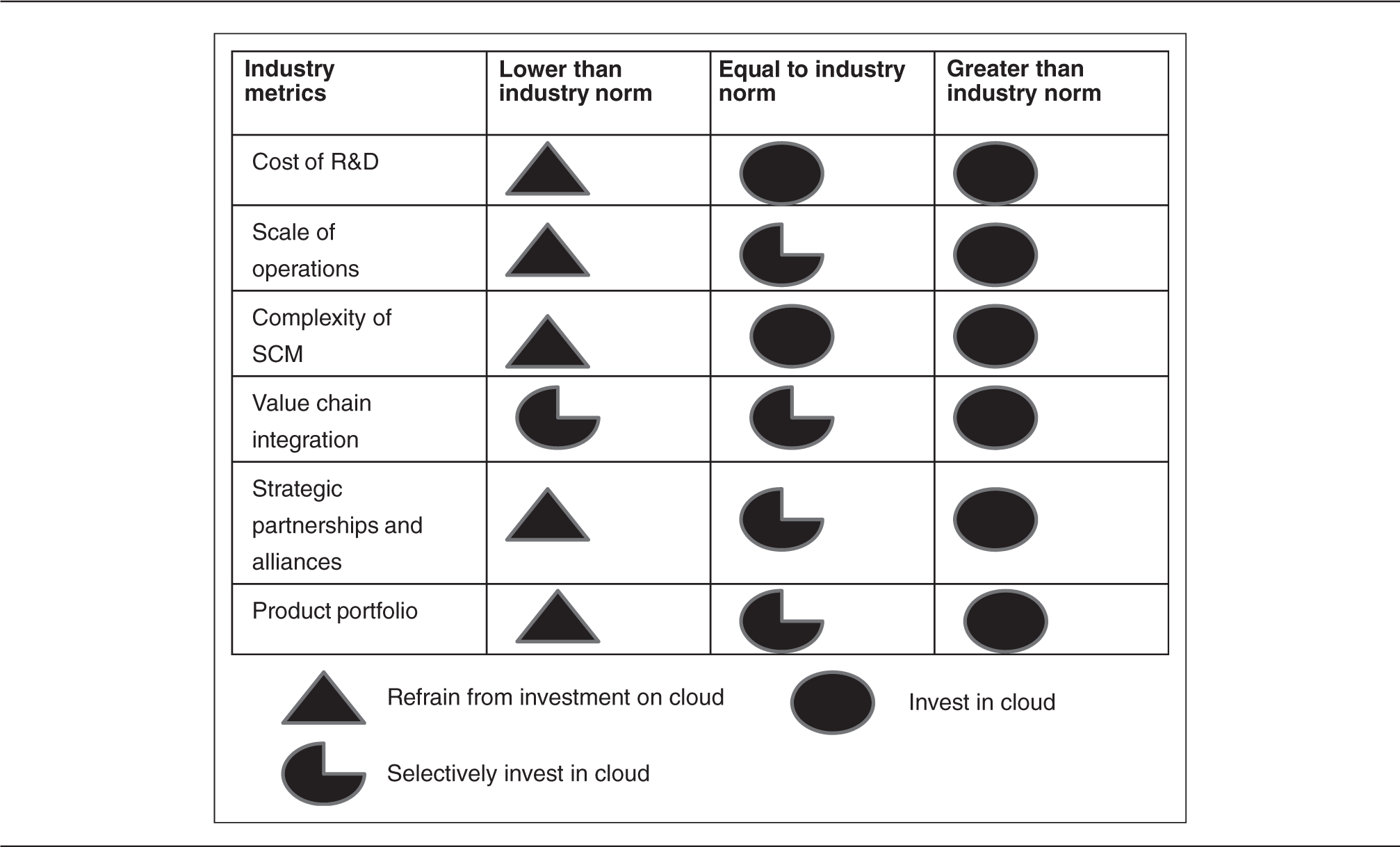
Pharmabiotechnology companies with significant revenue and critical costs higher than industry average would be strongly advised to invest in cloud computing. In this particular context, a cloud-based environment would optimize costs of business processes through facilitating collaboration among stakeholders, as observed in the case of Eli Lilly, Genentech and GSK. Particularly with the investment of corporations in this segment, on personalized medicine, a cloud-based environment would help companies align common competencies across various departments to develop a unified strategy that is aligned to addressing medical needs.
However, in cases, wherein the cost of operations, research and development and supply chain management are equal to industry norms, it pays to selectively invest in cloud infrastructure. Selective investment would prepare life sciences companies, especially midsized organizations, to optimize resources and generate significant differentiation when engaging with partners who may be equipped with collaborative environments.
From the arguments presented earlier, it becomes evident that investment in the right kind of cloud infrastructure is dependent upon two important factors, for the life sciences industry – organizational size and value chain integration (refer Figure 2).
Selection of cloud typologies based on organizational scale and value chain integration.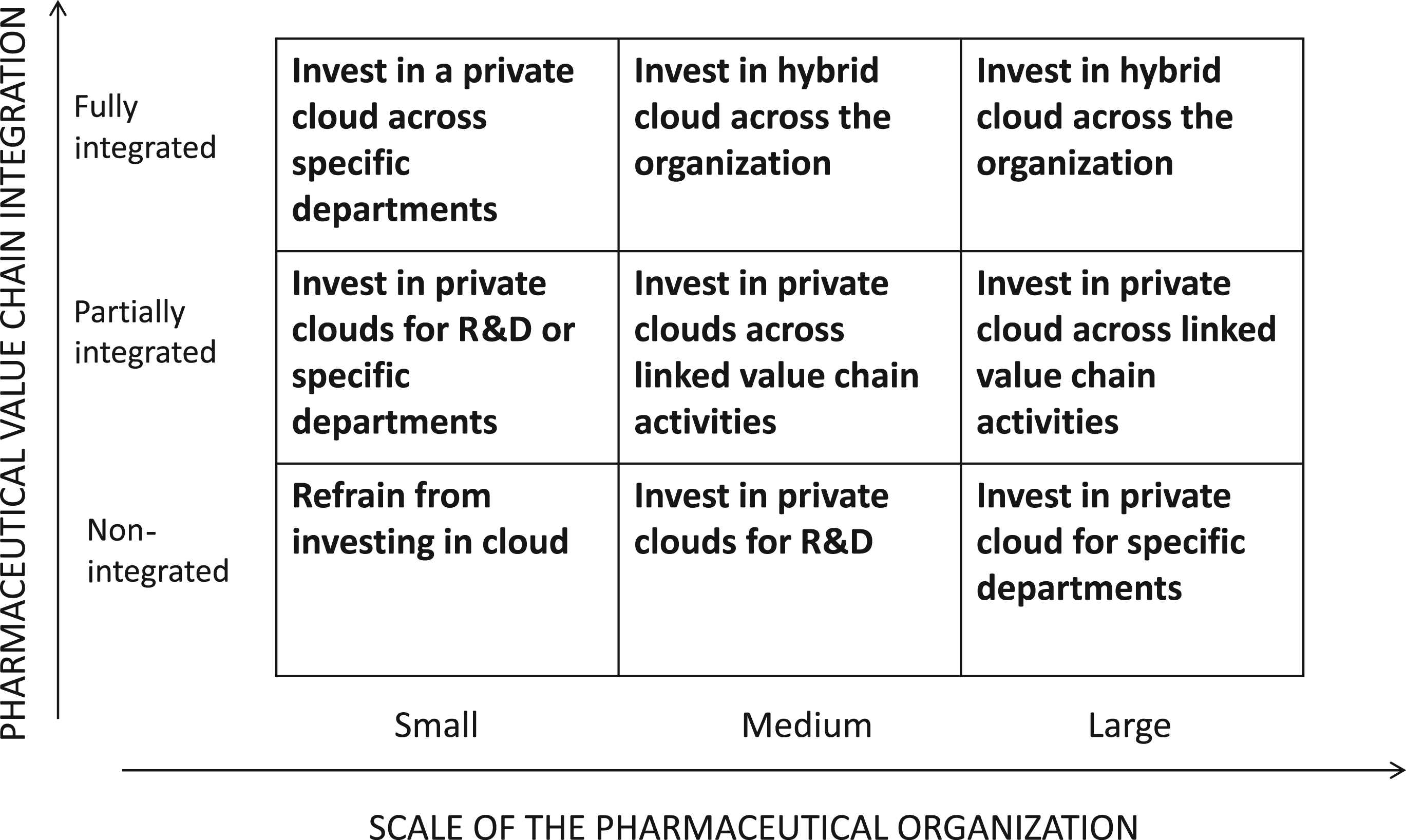
Based on the extent of pharmaceutical value integration and the scale of the pharmaceutical organization, certain common patterns of selective pressures toward cloud infrastructures emerge from the perspective of principal business objectives:
Small pharmaceutical organizations: Small-scale pharmaceutical organizations typically earn less than US$ 100 million in revenue. A large cohort of these firms are characterized by low working capital, venture capital or university spin offs, single product lines and an employee headcount that does not stretch beyond 100 personnel. Consequently these organizations demonstrate a focused approach toward research and development, largely across a single product line and demonstrate limited collaborative partnerships that take the shape of technology support or technology licensing. Value chain integration: disintegrated or partially integrated – The lack of a simplified value chain in small pharmaceutical organizations, potentially implies that these organizations would be economical or frugal in fundamental resources including scale, manpower, products, partnerships and capital. Effectively, thus these organizations should refrain from investing in cloud-based infrastructures. However, a certain pool of research organizations that are strategically aligned around a specific disease group like cancer or toward a specific technology competence such as gene sequencing would be typically engaged in collaborative research and high-level data transfers. Such collaboration initiatives would particularly rely on competencies of participating groups as witnessed across groups such as CaBIG and CSDD. It may be economical for such institutional clusters, focused on open innovation, to invest in private clouds. It must be recognized that on account of superior competence in specific business functions of research clusters, the investment in a private cloud initiative potentially reduces the cost of maintenance and amplifies the outcomes derived from an IaaS cloud format. Medium-scale pharmaceutical organizations: Medium-scale pharmaceutical organizations typically pull in annual revenue less than US$ 1 billion and account for a major chunk of existing pharmabiotechnology companies. While a certain fraction of these companies develop blockbuster therapeutics, a large portion of these companies develop prescription products and demonstrate a fairly integrated value chain. Value chain integration: partially integrated to fully integrated – The pharmaceutical companies in this segment are partially integrated or in certain cases fully integrated across the value chain. Consequently such organizations would benefit largely by integrating one of the specific core functions such as research and development, supply chain management or sales and marketing on a private cloud. However, in the wake of specific partnerships that tend to leverage research and development capabilities and supply chain competencies, companies in this sector could consider the benefits offered by the hybrid or community cloud. The hybrid or community cloud infrastructures would provide the security of a private cloud and also allow certain functions to operate synchronously across partnering organizations. Large-scale pharmaceutical organizations: The large-scale pharmaceutical organizations or ‘Big Pharma’ are the greatest revenue generators in the life sciences industry. Fully integrated with significant economies of scale, scope and capital, the large-scale pharmaceutical organizations possess the capability to acquire assets and resources to expand product lines and geographical presence. Value chain integration: fully integrated – The fully integrated value chain of the big pharma confers a significant differentiation and leadership against competitors on global and local markets. However, big pharmaceuticals seek to optimize their operating and capital expenditures to generate profitable revenues over a substantial time frame. This goal coupled with pressures of patent expiry requires investment in critical activities that can confer competitive advantage. These include scanning industry and market trends, mapping product portfolio performance and developing innovative diagnostic and therapeutic technologies. To achieve these objectives, big pharma must leverage the benefits of community and hybrid clouds. Fundamentally, the hybrid cloud would selectively enable secure collaborative measures and filters to configure classification of activities on the private cloud and on community clouds. Further, as studies mentioned earlier in this paper have demonstrated, the incremental benefits of investment in the cloud override the cost of investment. This is achieved, by virtue of hybrid cloud features, which complement the economies of scale and scope mastered by large pharmaceutical organizations.
Conclusion
With increasingly complex scenarios plaguing the global healthcare and life sciences industry it is evident that cloud infrastructures will have an important role. In order to maximize value from the cloud, it is essential that life sciences organizations seek avenues for process improvements and cost optimization across all critical value chain activities. However, with transformation of the life sciences industry into newer innovation models, rationalization of investments in cloud infrastructure will be defined by the ability to serve product and process innovation needs of individual pharmabiotechnology corporations.
To that end, the qualitative review and analysis presented in this article identifies potential disruptive applications of the cloud on the life sciences business and offers a broad framework for cloud implementation. However, future studies on the impact of cloud services on industry profitability and business processes could further validate the case for cloud infrastructures in the pharmabiotechnology industry.
Footnotes
Funding
This research received no specific grant from any funding agency in the public, commercial or not-for-profit sectors.
Conflict of interest
The author declares that there is no conflict of interest.
Bhuvaneashwar Subramanian is a business analyst with the Healthcare and Life Sciences Industry Research team of the Global Analytics-Strategy and Alliances Business Group at Hewlett-Packard. In this role, he is actively involved in formulating life sciences strategy and solutions for the life sciences industry vertical. Bhuvaneashwar holds a masters in Molecular & Human Genetics from Banaras Hindu University, India and an MBA in International Business from Edith Cowan University, Australia. Prior to his tenure at Hewlett-Packard, Bhuvaneashwar worked with Frost & Sullivan, a consulting firm, wherein he has advised pharmaceutical and biotechnology companies on commercialization and growth strategies. He has been recognized as a thought leader within the life sciences and nanotechnology industry circles and has been quoted in industry journals of national and international repute.