




Abstract
Although previous studies have uncovered various factors to understand sport coaches’ life, the role of positive emotions toward coaching experience and their impacts on behavioral and psychological outcomes remain unknown. As such, the purpose of this study was to examine the influence of sport coaches’ positive emotions on their work satisfaction and task performance and further measure the factors that would facilitate the understanding of sport coaches’ well-being. A total of 519 responses were collected from sport coaches in Singapore. Results showed that all the hypothesized relationships were significant, highlighting work satisfaction to play a mediating role in the relationship between positive emotions and task performance and between positive emotions and well-being. The findings of this study contribute to the advancement of the theoretical knowledge on the role of positive emotions in the context of sport management and provide valuable practical implications for sport organizations.
Introduction
The dynamic nature of sport exposes coaches to emotional charged events (e.g., upset loss/win, rivalry games). 1 As a result, coaches are involved in the process of emotional labor (i.e., managing their emotions to fulfill the requirements of their profession) that not only impacts them but those around them. For instance, if coaches experience anxiety and agitation, these emotions can be transferred to the coaches’ athletes through facial expression, body language, and tone of voice, causing negative results (e.g., athletes becoming anxious and agitated). 2 Therefore, sport coaches need to adopt an effective way to regulate their emotions and learn how to control and communicate appropriate responses for the betterment of their life and work performance.
The importance of emotions has been highlighted in various academic fields.3–7 Likewise, in the field of sport, researchers found that sport coaches’ emotional responses affected their well-being, 8 which could be explained based on Fredrickson’s broaden-and-build theory. 9 According to Fredrickson, 9 when the moments in an individual’s life are filled with positive emotions, it is reflective of a life not plagued by negative emotions. Furthermore, Kok et al. 7 noted that individuals who experience more positive emotions have a longer life span and live healthier.
Given the importance of emotions, there has been a steady growth of research focusing on the relationship between emotions and well-being.5–7 Researchers noted that positive emotions were undoubtedly important indicators of individuals’ well-being 4 and also had the potential to steer their behavioral outcomes. 10 However, the role of positive emotions in sport coaches’ behavioral and psychological outcomes has not heretofore been studied; thus, with the knowledge of the outcomes of experiencing positive emotions, it is necessary to explore its role in the sport coaching context.
More specifically, previous research has examined diverse factors to understand sport coaches’ performance and well-being, such as stress,11–13 emotional intelligence, 14 and coaching skills and knowledge. 15 For example, Norris et al. 16 showed how a coach’s performance could be negatively impacted by stress. Moreover, McNeill et al. 17 found that burnout negatively influenced coaches’ well-being, due to the experience of negative emotions, such as anxiety or anger, which further affects their coaching practices. There is an increase in the number of studies on sport coaches’ performance and well-being, playing a critical role in understanding their lives.14,16 However, there is an apparent lack of research investigating the role of positive emotions and their impacts on sport coaches’ well-being and performance, while past research has shown that positive emotions are critical to enhancing individuals’ psychological and behavioral responses.17,18 Therefore, the purpose of this study was to examine the influence of sport coaches’ positive emotions on their task performance and well-being based on the broaden-and-build theory of positive emotions.9,18 In addition, previous research identified that work satisfaction was a critical consequence of positive emotions19,20 and antecedent of work performance 21 and well-being. 22 As such, work satisfaction was used as a mediator in the research model. The study contributes to the understanding of sport coaches’ performance and well-being by identifying the role of positive emotions. The findings of this study can be used to develop strategies to achieve sport organizational goals and enhance their employees’ well-being.
Theoretical framework
Broaden-and-build theory of positive emotions
According to the broaden-and-build theory of positive emotions,9,18 the experience of positive emotions broadens an individual’s momentary thought-action repertoire. In other words, when individuals experience positive emotions, they can process a broader range of stimuli, which then broadens their thought processes and attention. 23 Based on the idea that positive emotions broaden an individual’s attention and cognitive processes, Fredrickson and Joiner 24 further noted that positive emotions in the present would increase the possibility of experiencing positive emotions in the future through the broaden-and-build processes. It indicates that the experience of positive emotions tends to accumulate and compound overtime; this accumulation aids in strengthening individuals’ coping skills toward adversity, which reduces the challenges faced by an individual. 25 Hence, this becomes a cycle that continues and builds individuals’ psychological resilience and promotes their well-being and healthy behaviors.24,26
Research model
Based on the broaden-and-build theory of positive emotions,9,18 the present study explains the relationships among sport coaches’ positive emotions, work satisfaction, task performance, and well-being. More specifically, given positive emotions are related to positive experiences, 27 the positive emotions that sport coaches feel can make them pay attention to a more extensive range of stimuli, which leads them to produce different variations of their actions when they are exposed to different work challenges. Hence, this broadening effect builds on their resources, such as the social skills applied in different work situations. This build-up of resources may allow them to handle future challenges at work. In the process, individuals can feel work satisfaction, which is an emotional state linked to the cognitive assessment of their job experiences. 28 It can also help them improve their task performance, 24 which is an indication of employees’ actions or behaviors carried out to achieve the organizational goals. 29 Furthermore, according to the broaden-and-build theory of positive emotions,9,18 sport coaches’ experience of positive emotions can have an impact on cognitive processes that influences their well-being. Over time, with the resources gained due to the onset of positive emotions, it enables sport coaches to tackle problems that arise unexpectedly. Consequently, the ability to take on issues at work would be beneficial to their mental health, enhancing their well-being. Therefore, based on the findings of previous studies, this study developed the following hypothesized model:
Hypotheses development
Positive emotions
The tendency to experience positive emotions was found to be linked to the successes experienced in an individual’s daily life. 27 Particularly, in the context of the workplace, there is a growing literature that is focused on understanding the relationship between positive emotions and different work-related factors, including work engagement and job satisfaction.30–33 In general, past studies found an association between positive emotions and their ability to promote job satisfaction. 19 For example, it was found that employees who experienced positive emotions showed a higher level of job satisfaction. 20 Brackett et al. 34 further explained these phenomena based on Fredrickson’s9,18 broaden-and-build theory by highlighting that the experience of positive emotions reduces negative emotions, promotes resilience, enhances well-being, and builds long-lasting personal resources. In other words, the experience of positive emotions at work not only reflects the emotional state of the employees, but it also leads to psychological benefits that result in employees being satisfied with their work.
It is evident that the relationship between positive emotions and work satisfaction is an important topic in organizational psychology. However, this relationship has not been properly explored in the less conventional profession, such as sport coaches, which has unique job features compared to a desk-bound job. Specifically, sport coaching is a profession that requires long hours, extensive traveling, and dedication when fulfilling responsibilities that go beyond shaping a winning team. 35 In the media, sport coaches are typically shown screaming their instructions to the team during a game and displaying anxiety and anger. The ubiquity of the negative emotions expressed by sport coaches may be suggestive of pressure on them to produce certain outcomes, like winning games.
In the field of sport management, researchers explored the relationship between negative emotions and negative consequences, such as burnout or emotional exhaustion, and stressed the importance of instilling positive affective states by managing individuals’ emotions.10,36 In addition, understanding job satisfaction of sport coaches is important; thus, it has been investigated alongside various factors, such as social status, media and community support, recognition, compensation, job security, player-coach relationships, and administrative work35,37; however, its association with positive affect has not been sufficiently addressed. According to Todorova et al.,
33
it is important to identify the role of positive emotions in handling challenges and increasing employees’ satisfaction toward their job. Therefore, based on the broaden-and-build theory of positive emotions,9,18 the present study explores how the experience of positive emotions increases work satisfaction by suggesting the following hypothesis: H1: Sport coaches’ positive emotions toward coaching experience positively affect work satisfaction.
Work satisfaction
Work satisfaction is defined as employees’ evaluation of the amount of pleasure felt in their job. 28 In a similar fashion, Balzer et al. 38 explained that work satisfaction is a positive emotional state expressed after assessing an individual’s overall job experience based on past experiences, current situation, and expectations for the future. It has been highlighted to be associated with several consequences at an organizational or personal level. 39
First, on an organization level, work satisfaction has been found to influence many factors, such as productivity,40,41 absenteeism,
42
and turnover.
43
Also, past studies have identified work satisfaction to play an important role in impacting an employee’s performance.
21
This is in line with Greene’s
44
fundamental proposition that a happy worker is a productive worker and that the level of satisfaction experienced by employees toward their job is a strong determinant of their performance. Many previous studies noted that work satisfaction is a critical factor in enhancing employees’ work performance.45–47 It suggests that increasing sport coaches’ work satisfaction would enhance their task performance – just like other professions. That is, when a sport coach feels a sense of satisfaction toward their work, they would be more energized and confident in carrying out the tasks assigned to them, which would increase the quality and quantity of their work. As such, based on the findings of previous studies, this study proposes the following hypothesis: H2: Work satisfaction positively affects task performance. H3: Work satisfaction positively affect sport coaches’ well-being.
Task performance and well-being
Task performance reflects the in-role behavior of an employee in accordance to their core responsibilities and its specific outcome in terms of quality and quantity. 51 Task performance is important as it indicates a direct connection to the organization’s core function by either delivering on the technical process involved in fulfilling the function or maintaining it. 52 A sport coach’s core responsibility is to increase athletes’ value, autonomy, and skills by showing leadership and respect; 53 task performance is an essential outcome in sport organizations, as it will determine the organization’s capacity to shape and produce quality athletes.
The relationship between the performance and the emotions of sport coaches has been shown to be significant.
10
In particular, a positive mood has been recognized as an important antecedent in determining task performance.54–56 Within-group managerial settings, Barsade
57
also found that employees’ positive emotions generated benefits for their team, such as improved cooperation and reduced tension between team members, which, in turn, positively influenced task performance. Similarly, Tsai et al.
56
employed a longitudinal study on sales employees and found that the experience of positive emotions increased their task performance and attributed it to two processes: motivational and interpersonal processes. It indicates that the experience of positive emotional states has the potential to enhance task-specific performance, such as task proficiency, task proactivity, and task persistence.
58
Therefore, based on the findings of previous studies, the present study established the following hypothesis: H4: Sport coaches’ positive emotions toward coaching experience positively affect task performance H5: Sport coaches’ positive emotions toward coaching experience positively affect well-being
Method
Procedure and participants
Before the outbreak of the COVID-19 pandemic, data were collected from sport coaches in Singapore, and the mode of data collection was an online survey. Before developing the online survey, this study approached Sport Singapore (Sport SG), a statutory board that falls under the Ministry of Culture, Community and Youth, to get approval. After getting the approval, the online survey was developed using Qualtrics.com, and Sport SG assisted in disseminating the link of the online survey twice using email as the platform. The recipients of this email were informed that the participation in the survey was on a voluntary basis, and they would not be penalized if they decided to withdraw from the study at any point in time. A S$20 (about US$14.4) cash voucher was provided to every 5th participant who completed the survey. During the first round of email dissemination, a total of 931 responses were obtained, while the second round of email disseminated gathered a total of 241 responses. However, out of the total responses, 653 responses were excluded as those responses were considered incomplete (i.e., less than 50% of the survey answered), and the remaining 519 responses were used for data analysis. The respondents are composed of more males (78%) than females (22%); the average age was 49 years old (SD = 12.3). In addition, the majority of the responses came from individuals of Chinese ethnicity (76.1%), followed by Malay (9.8%), Indian (6.4%), and Eurasian (1.9%). A total of 92.9% of respondents identified themselves as Singaporeans, while 4.2% were Singapore Permanent Resident, and the remaining 2.9% were foreigners.
Measures
Positive emotions
This study borrowed and adopted a positive affect scale from the Positive and Negative Affect Schedule (PANAS) scales 62 to measure sport coaches' emotions toward their coaching experience. This scale comprises 10 items (i.e., attentive, interested, alert, excited, enthusiastic, inspired, proud, determined, strong, and active). This study provided the stem question (‘When I imagine my coaching experience, …’), and respondents answered on a 5-point Likert scale, ranging from 1 (I do not feel this emotion at all) to 5 (I feel this emotion strongly). This scale was revealed by Tuccitto et al. 63 to have acceptable validity and reliability.
Work satisfaction
We modified and used Ho and Au’s 64 satisfaction scale to examine sport coaches’ work satisfaction. The scale has five items (e.g., “So far I have gotten the important things I want to be a coach”). The items were measured with a 5-point Likert scale, ranging from 1 (strongly disagree) to 5 (strongly agree). Previous research showed that the scale had acceptable construct validity and Cronbach’s alpha of .92. 65
Task performance
This study borrowed a task performance subscale from the work performance questionnaire. 66 The scale consists of five items (e.g., “In the past three months, I managed to plan my work so that it was done on time”), which were measured using a 5-point Likert scale, ranging from 1 (seldom) to 5 (always). Previous literature revealed that the scale had an acceptable Cronbach’s alpha of .80. 67
Well-being
This study used the flourishing scale 68 to examine sport coaches’ well-being. This scale has eight items (e.g., “I am engaged and interested in my daily activities”). Respondents answered the items on a 5-point Likert scale, ranging from 1 (strongly disagree) to 5 (strongly agree). Previous research showed the acceptable validity and reliability of this scale. 69
Data analysis
Data screening was conducted to treat missing values using the Expectation-Maximization (EM) algorithm and to delete extreme outliers based on Mahalanobis distance values. To test the normality of data, this study used Mardia’s multivariate kurtosis coefficient. 70 Based on the results, this study deleted six multivariate outliers, and 513 responses were used to analyze the data. Furthermore, we found that Mardia’s multivariate kurtosis coefficient was 73.80, indicating the non-normal distribution of data. Thus, Satorra-Bentler scaled chi-square (S-B χ2) and robust standard errors were employed. 71 Next, this study performed a two-step approach suggested by Anderson and Gerbing. 72 Specifically, the results of confirmatory factor analysis (CFA) were assessed to verify model fit indices, reliability, and validity of the measurement model. Next, to test the hypotheses, this study conducted structural equation modeling (SEM) analysis depicted in Figure 1. To assess model fit indices, this study used comparative fit index (CFI > .9), non-normed fit index (NNFI > .9), root mean square error of approximation (RMSEA < .06), and standardized root mean square residual (SRMR < .08). 73
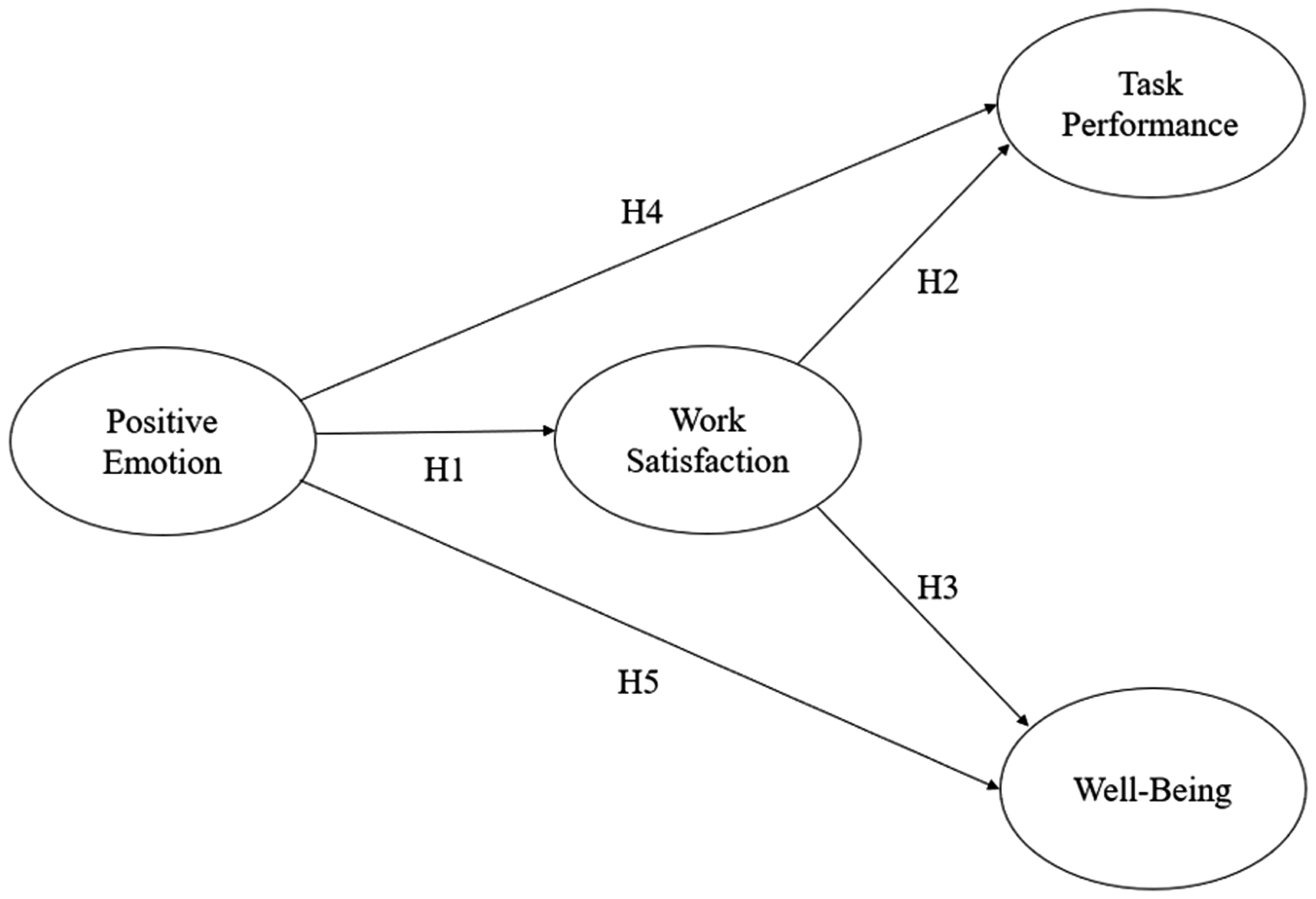
A hypothesized model.
Results
Measurement model
The results showed that the initial CFA was acceptable: S-B χ2(df) = 705.04(344), CFI = .949, NNFI = .944, RMSEA = .048, and SRMR = .046. However, one item from work satisfaction was deleted as it showed low reliability (< .50), which can be detrimental to convergent validity. The revised model showed improved model fit indices: S-B χ2(df) = 670.25(318), CFI = .950, NNFI = .945, RMSEA = .049, and SRMR = .046. This study assessed the reliability of the measures. The results showed that Rho coefficients ranged from .816 for work satisfaction to .938 for positive emotion, indicating good internal consistency for all scales (α > .70). Next, the convergent validity of each scale was assessed using the average variance extracted (AVE) values. The AVEs ranged from .529 for work satisfaction to .620 for well-being, indicating acceptable convergent validity (AVE > .50) (see Table 1). Last, we tested discriminant validity by comparing correlations between constructs and the square root of AVEs. The result revealed that the correlations were less than the square root of each AVE, indicating acceptable discriminant validity (see Table 2).
Factor loading (λ), Rho, and AVE values for the improved model.

Values of correlation and squared root of AVE among all factors.
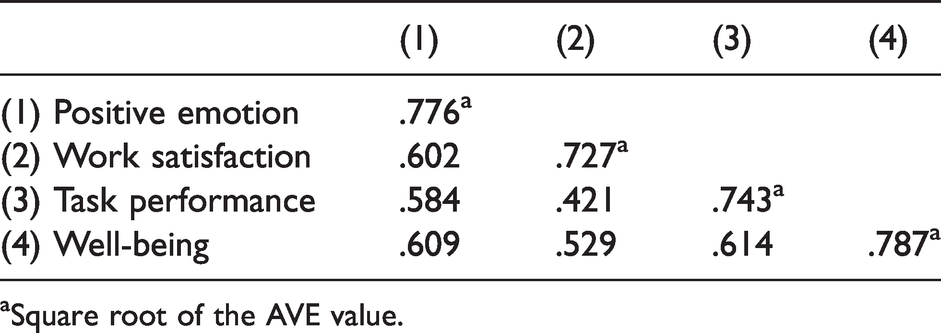
aSquare root of the AVE value.
Structural model
This study measured the relationship among sport coaches’ positive emotion, work satisfaction, task performance, and well-being. The results showed acceptable fit: S-B χ2(df) = 709.10(319), CFI = .945, NNFI = .939, RMSEA = .052, and SRMR = .064. Using the z statistic, we tested the hypotheses. The results showed that sport coaches’ positive emotions positively affected work satisfaction (H1: β = .640, SE = .064, z = 9.34, p < .001), task performance (H4: β = .518, SE = .078, z = 7.84, p < .001), and well-being (H5: β = .462, SE = .071, z = 7.90, p < .001). Work satisfaction also positively predicted task performance (H2: β = .127, SE = .073, z = 2.06, p < .05) and well-being (H3: β = .259, SE = .072, z = 4.44, p < .001). In addition, according to the results of the mediation analysis, positive emotions had indirect effects on task performance (β = .077, SE = .044, z = 2.06, p < .05) and well-being (β = .156, SE = .044, z = 4.31, p < .05) (Table 3). Predictors explained 36.3% of variance in work satisfaction, 36.4% in task performance, and 42.5% in well-being as shown in Figure 2.
Results of the hypothesized model.

*p < .05, ***p < .001.
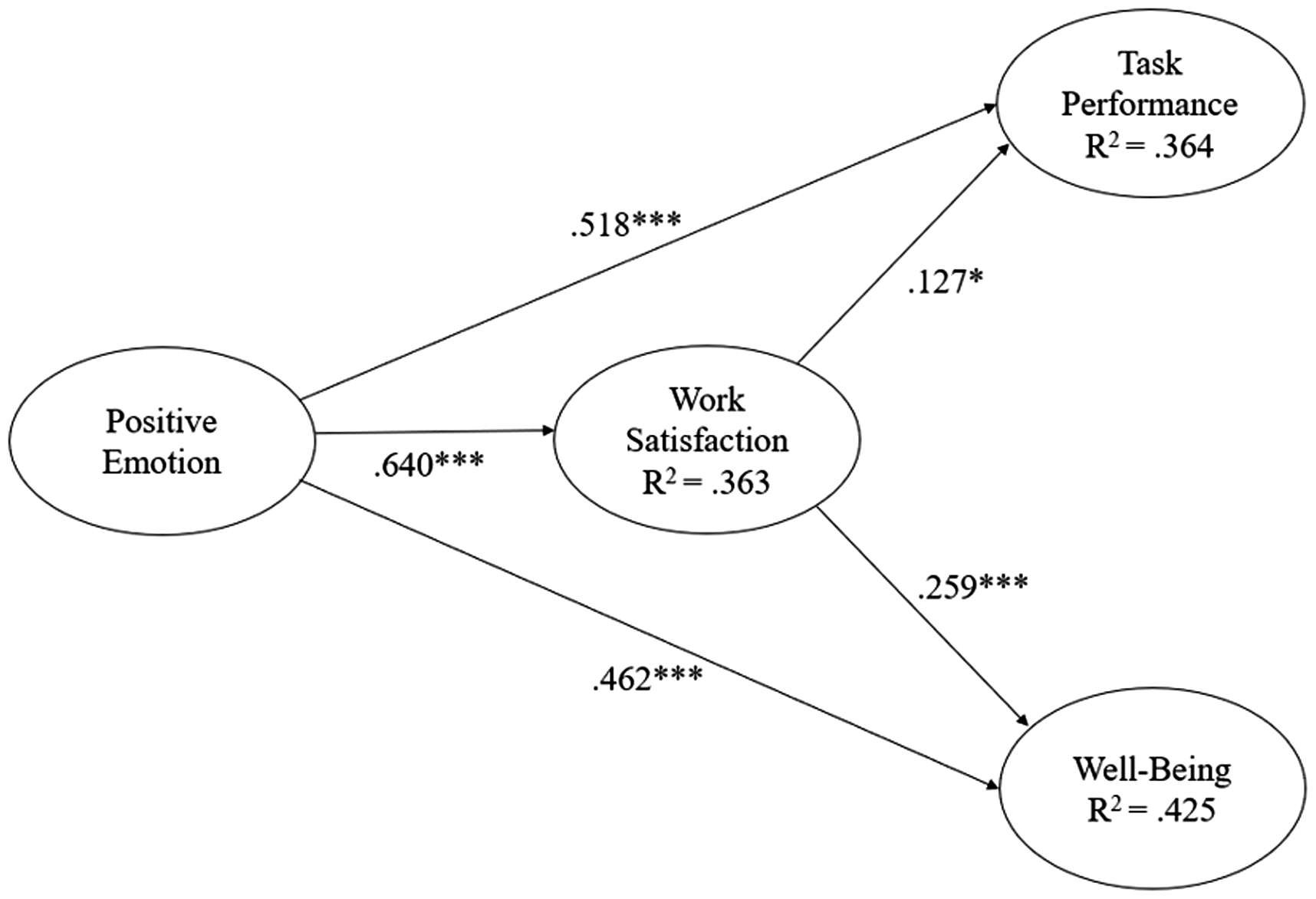
Standardized coefficients of the structural equation model.
Discussion
The main purpose of this study was to investigate the influence of sport coaches’ positive emotions on their task performance and well-being through work satisfaction. Based on the broaden-and-build theory,9,18 a conceptual model was developed using the four constructs to better explain the interrelationships. The empirical evidence gathered in this study advanced the theoretical knowledge on the role of positive emotions in occupational psychology. This study also provides valuable and practical implications for organizations by allowing them to observe their employees and work on targeted areas that not only improve their personal health but contribute to the company’s productivity and meeting the organizational goals.
All hypothesized relationships were found to have significant direct effects. First, positive emotions of sport coaches were found to positively influence work satisfaction. This finding acknowledges the importance of one of the benefits gained when sport coaches experience positive emotions. Past findings have also shown that positive emotions were vital in influencing different work-related aspects,30–33 particularly job satisfaction. 19 This finding can be further expounded using Fredrickson’s9,18 broaden-and-build theory, which asserts that when individuals feel positive emotions, it broadens their cognitive processes by allowing them to take in a wider range of stimuli, causing variations in their behavioral response. This, in turn, builds their personal resource, as the behavioral variations allow them to experience different outcomes that can result in the strengthening of their resilience.9,18 Consistent with this, the current finding asserted that the experience of positive emotions among sport coaches broadens and builds their personal resources, such as resilience toward challenges posed at work. Since they have adequate resources, such as problem-solving skills, they can be more open to tackling issues that arise at work without feeling stressed. Therefore, this will boost their self-confidence and competence, allowing them to feel more satisfied with their work.
Besides work satisfaction, an important area of concern for organizations is task performance. Consistent with the finding of this study, early studies found that positive emotions had an impact on task performance.74–78 Tsai et al. 56 also established the association between positive emotions and task performance through the impact of interpersonal processes, such as rendering help to their colleagues. In a similar vein, Joseph and Newman 79 explored the importance of regulating emotions on the basis that when positive emotions are produced and sustained, it influences individuals’ motivation and helping behavior, affecting their task performance. Recognizing that the experiences of positive emotions can produce cycles of positive behaviors, Salanova et al. 80 prompted future research to investigate the relationships between positive emotional states and their effects on the gain spiral of behaviors, specifically task performance. The positive relationship between positive emotions and task performance in this study suggests that sport coaches who experience positive emotions expressed their motivation that promotes task performance. In other words, it creates an enthusiasm toward the tasks assigned to them, as it allows them to create boundaries from non-work issues, creating an optimal situation for improved task performance.
Another direct effect of positive emotions on well-being was found in this study. The broaden-and-build theory can explain the role of positive emotions in achieving well-being.9,18 Similar to the concept applied to understanding how positive emotions affect work-related areas, the benefits generated should create an impact on individuals’ other life domains. That is, in the process of building enduring resources for individuals and reversing the effects of negative emotions on physiological and psychological states, positive emotions have the potential to up-regulate positive emotions that promote resilience and self-efficacy and enhance well-being in the long-term. 6 This notion is supported by Lyubomirsky et al.’s 27 study, which found that happiness has an impact on an individual’s success in terms of personal and social aspects. Likewise, Livingstone and Srivastava 81 found that the regulation of positive emotions can have either a short or long-term impact on well-being. The finding of this study affirmed this relationship for sport coaches, despite the job exhibiting unconventional characteristics, such as irregular working hours, excessive traveling, and requiring a tremendous amount of dedication – both mentally and emotionally. In accordance with previous findings, this study illustrated sport coaches’ well-being was affected by their experiences of positive emotions.
Apart from establishing significant direct relationships, this study also found that work satisfaction played a mediating role between positive emotions and psychological and behavioral outcomes. Of the two relationships identified in relation to work satisfaction, there was a significant effect of work satisfaction on task performance. Consistent with this finding, Shaikh et al. 82 noted that task performance was an essential determinant of the dimensions of work satisfaction. Rich et al. 83 also explored several antecedents of job performance and highlighted the importance of job satisfaction, which refers to the favorable perception of employees formed through evaluating their job. Further, job satisfaction prompts willingness to exhibit positive behaviors that are task-related to contribute to an organization’s effectiveness.84,85 Based on the same understanding, other findings explained the relationship between work satisfaction and task performance by highlighting that when employees feel a sense of work satisfaction, they tend to respond with a positive work behavior that contributes to an organization’s goals.86,87 In the same manner, sport coaches’ work satisfaction creates an inclination to carrying out task-related behaviors that strive to enhance the organization’s production, thus promoting task performance among them.
Last, work satisfaction was found to have a positive association with well-being. An early meta-analysis study by Cass et al. 88 found that work satisfaction influenced the physiological and psychological health of employees. A more recent finding by Faragher et al. 22 further elaborated that employees spend a huge portion of their day at work, and when they feel that their job does not meet their personal expectations, a sense of dissatisfaction develops. This dissatisfaction dampens their emotional state, which then leads them to exhibit mild levels of negative psychological conditions, such as depression or anxiety. When this occurs for a long period of time, the negative effects on their mood accumulate and may even spill over into other aspects of their life, decreasing their well-being. Another finding by Nielsen et al. 49 also identified job satisfaction to be a large contributor to employees’ well-being.
Theoretical and practical implications
The findings of this study provide theoretical advancements in the sport coaching profession and expand the role of positive emotions in the context of occupational psychology. By focusing on positive emotions, this study contributes to the literature regarding sport coaches’ work-related areas and well-being. Specifically, positive emotions have been identified to be an essential factor in contributing to positive consequences, such as sport coaches’ work satisfaction, task performance, and well-being. While researchers have attempted to establish these aspects individually in work settings, all these constructs have not been studied together to understand the full effects of each construct. The current study illustrated how work satisfaction is affected by positive emotions and how it ultimately influences sport coaches’ task performance and well-being.
In addition, the present study extended the broaden-and-build theory9,18 by applying it in the context of sport coaching. The framework of the broaden-and-build theory9,18 guided the present study to examine positive emotions as a positive influence on work satisfaction and task performance through the broadening and building effect of positive emotions. Based on the same understanding, the framework of the upward spiral theory of lifestyle change 24 helped to support the relationship between positive emotions and well-being among sport coaches as it is based on the idea that the accumulation of resources from experiencing positive emotions overtime can have a positive effect on individuals’ well-being.
Besides its theoretical implications, the results of this study come with practical implications as well. The most prominent finding from this study is that positive emotions are essential to influencing work-related behaviors on organizational and personal levels. Organizations could make use of these findings to maximize their advantage, especially in meeting their organizational goals by attempting to induce positive emotions among their employees. Such positive emotions can then increase the employees’ work satisfaction, task performance, and ultimately their well-being. This can be done through various forms; one such example is to provide sport coaches with frequent feedback sessions with their colleagues, superiors, and even their athletes. These feedback sessions should be a platform to highlight the positive impact of their coaching, bringing to light their strengths. When sport coaches realize that they are competent at what they do, they may experience positive emotions, such as happiness, contentment, or even enjoyment, and this might create a sense of satisfaction toward their work and enhance their task performance.
Another takeaway from this study is that – based on the broaden-and-build theory9,18 – it is important to build sport coaches’ personal resources that can enable them to face future challenges and enhance their well-being through the experience of positive emotions. Hence, workshops can be conducted for sport coaches that address the possible issues faced by them, as this may allow them to be more prepared in the event that a stressful situation arises. Through this preparation, the likelihood of experiencing negative emotions, such as anxiety or stress, is lesser, and the experience of positive emotions can be maintained as the workshops would have equipped them with the necessary skills to handle some of the potentially stressful situations. In addition, the building of such resources allows sport coaches to be more focused on their tasks as they do not need to use additional effort and time in solving challenges, consequently keeping them in a positive emotional state and promoting task performance.
Limitations and future research
As with every research, this study comes along with limitations. First, the responses gathered from females comprised only 22% (n = 104) of the sample, which was not even half of the total responses. Similarly, most of the responses came from individuals of Chinese ethnicity. According to Klassen and Chiu, 89 females in the teaching profession dealt with greater stress than males did. Ethnicity has also been shown to influence satisfaction at work and even health. 90 Therefore, future research should consider diverse demographic variables to comprehensively understand sport coaches’ work and life. Another drawback is that this study generalized sport coaches without highlighting different work-related factors, such as types of sport, coaching experience, and working conditions. Therefore, it is important for future studies to consider the types of sports and attempt to identify their impact on the constructs used in this study. In addition, based on the broaden-and-build theory,9,18 future research can measure how coaches’ emotional responses influence athletes’ behavioral outcomes to understand coach-athlete compatibility. Next, according to Cho and his colleagues, the concept of nostalgia, which is derived from positive experiences in the past and can be defined as the longing for the past,91–94 is a significant antecedent of individuals’ future behavior95–98 and well-being.99–101 Hence, this study suggests that future research develops a nostalgia scale for sport coaches by following Menor and Roth’s 102 scale development procedure.
Footnotes
Declaration of Conflicting Interests
The author(s) declared no potential conflicts of interest with respect to the research, authorship, and/or publication of this article.
Funding
The author(s) disclosed receipt of the following financial support for the research, authorship, and/or publication of this article: This work was supported by the National Institute of Education, Nanyang Technological University and Sport Singapore under Grant Ind Study SS Coaching.
