




Abstract
Periodization in sports training (PST) is a fundamental area in Sports Performance, and is focused on the state, change, or maintenance of an athlete's level as a function of the results and indicators of the athlete's physical performance (mainly strength, speed, and resistance). The view on periodization of training has changed along with sports. The models analyzed in the present article are Rationalization (1894–1919), Pre-scientific Stage (1920–1945), Traditional Periodization (1946–1972), Scientific Periodization (1973–1992), and Contemporary Periodization (1993–2020). The evolution of PST is addressed in two parts, to establish a thematic thread about the scientific works and the social-political culture from Olympism to professional sports, from the twentieth Century until the present, to finally reach the conclusion, as determined by the aim and means of PST. The history of PST is one of the keys to understanding the evolution of modern sport.
Introduction
Every sports system that aims to achieve success in High Performance Sports (HPS), requires a strategic, potent, and well-structured plan, that includes all the agents, both public and private, associated with the sport. Verlee De Bosscher organized these agents into three levels: macro, meso, and micro. 1 The macro and meso levels refer to the broader socioeconomic, cultural, political, and organisational factors that shape the athlete's development within a given sport system. At the training level, this implies managing the sport project, its funding, the competition system, the time-structuring of the training process, and the subsequent programming of training stimuli within that structure.
Sports periodization is understood as the temporal organisation of the training process across multi-year, annual, seasonal, or shorter planning horizons, whereas programming refers to the practical manipulation of training variables within that temporal structure, including volume, intensity, frequency, exercise selection, and recovery.2–8 Although both concepts are interrelated, they operate at different levels of decision-making and should not be used interchangeably. This distinction is essential because confusion between periodization and programming remains common in the literature and may lead to conceptual ambiguity when training models are described, compared, or applied.5,7,8
From an applied coaching perspective, periodization is guided by two basic principles: sequencing and timing. Sequencing refers to the rational ordering of training phases and contents, considering the residual effects of training stimuli, their interconnection, the search for synergies, and the reduction of interference. Timing refers to the placement of training strategies within the period required to elicit the desired adaptive response in the athlete or group of athletes. Together, these principles allow coaches to organise preparation, competition, peaking, recovery, and transition phases according to the demands of the sport and the athlete's evolving response.9,10 At the same time, empirical research on periodization presents important conceptual and methodological limitations, and there is still limited objective evidence demonstrating the superiority of one periodization approach over another.11,12
For conceptual clarity, the term “periodization” is used here in a broad historical, historiographical, and applied sense. Expressions such as “linear” and “nonlinear” periodization are retained as established labels within the scientific and coaching literature, while acknowledging that their conceptual limits require careful qualification. Accordingly, several approaches discussed below may be interpreted more precisely as programming strategies or training-organisation frameworks rather than as strict models of periodization.
This article analyses the evolution of Periodization in Sports Training (PST) across modern sport, drawing on original sources, key authors, and expert synthesis, and connects this trajectory with the way coaches design, sequence, and adjust training over time. The working hypothesis is that the progression of the proposed stages, together with the social and economic evolution of sport, may help explain current trends in PST.
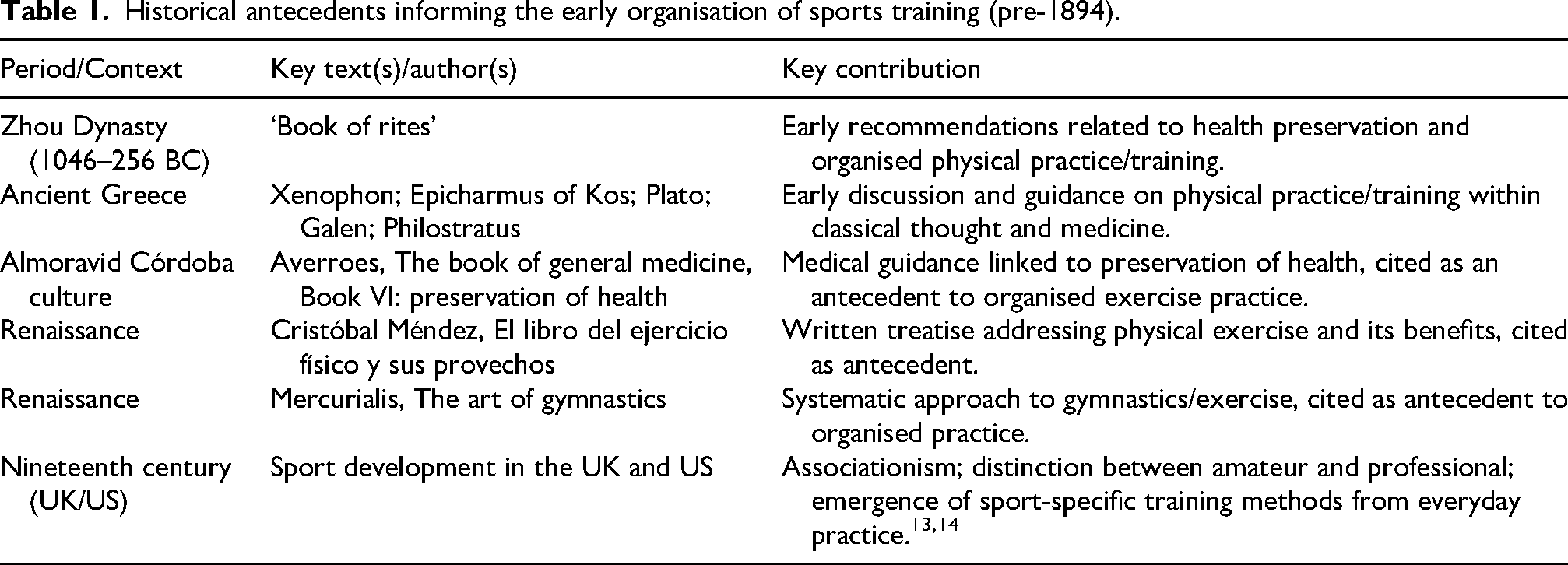
Before the emergence of modern sport, several cultures and intellectual traditions contributed to the organization of physical preparation and exercise. These historical antecedents are summarized in Table 1.
Historical antecedents informing the early organisation of sports training (pre-1894).
Since the appearance of modern sports, with the creation of the International Olympic Committee (June 16th, 1894), the theory of training, more specifically sports periodization, has evolved along with sports, society, and scientific and technological advances. 15 Starting with the premise that sports and the elements that constitute them (training, competitions, records, etc.), shape complex systems of chaotic behavior taken to the limit of their abilities, it is possible to accept that these systems are adapted to the concept of Self-Organized Criticality (SOC) developed by Per Bak, Chao Tang, and Kurt Wiesenfeld, based on the computer model ‘Sandpile Model’ or ‘Bak–Tang–Wiesenfeld Model’ (BTW). 16 Its dynamics result in the surge of complex structures, with properties at their critical points, from which new structures emerge that, even though similar, have their own characteristics that are different from the previous ones. In agreement with these criteria, we understand that the evolutionary process of the organization of training throughout history can be divided into five stages: 1st Start of Rationalization (1894 to 1919), 2nd Pre-Scientific (1920 to 1945), 3rd Traditional Periodization (1946 to 1972), 4th Scientific Periodization (1973 to 1992) and 5th Contemporary Periodization (1993 to 2020) (Figure 1).

Proposed five-stage evolution of periodization in sports training (PST) across modern sport (1894–2020). PST = Periodization of Sports Training.
1st origins: start of rationalization (1894–1919)
During the first stage, the organisation of sports training began to move from predominantly informal, experience-based practices toward more deliberate attempts to structure work over time. This period is characterised by early proposals regarding training cycles and the initial differentiation of broad phases of preparation, within the emerging context of modern sport and competition. Key figures and early proposals associated with the start of rationalisation are summarised in Table 2.
First stage (1894–1919): start of rationalization — key figures and contributions.
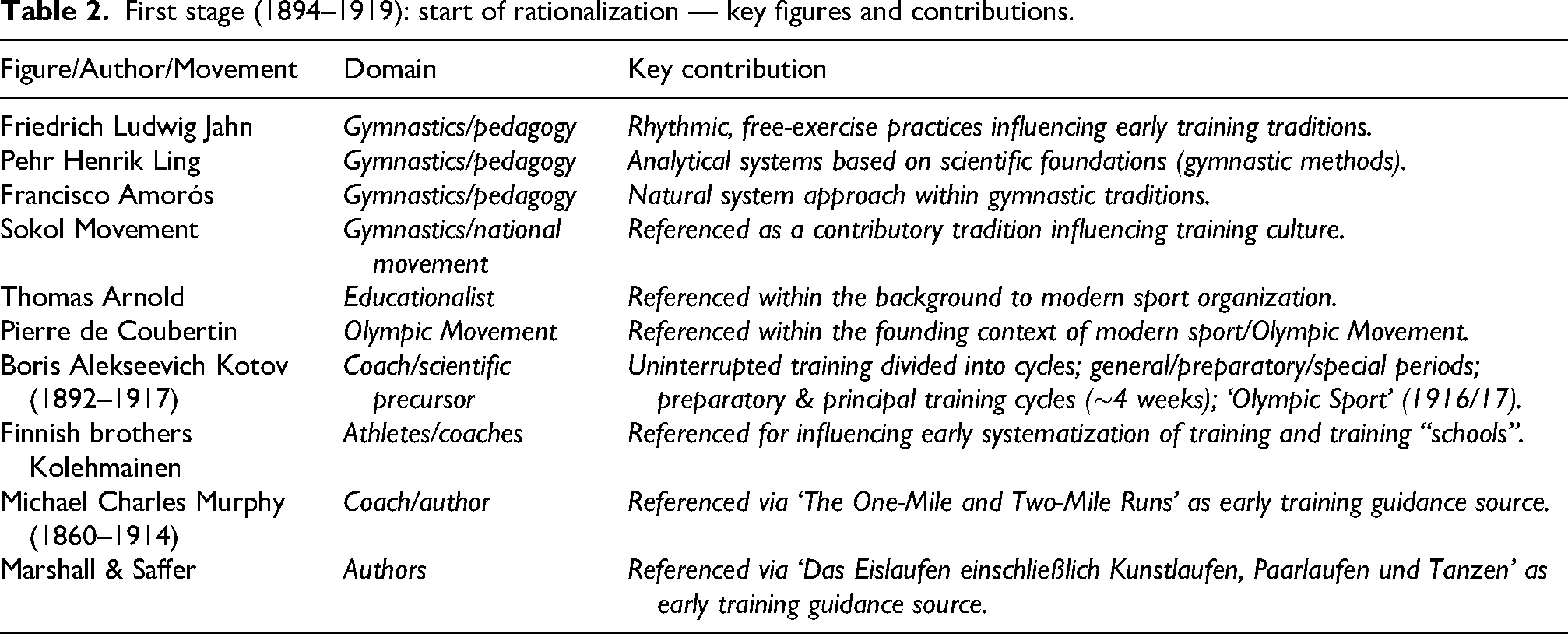
Following these early influences, the first stage can be characterised as the initial rationalisation of training organisation in modern sport, where the emphasis begins to shift from purely informal practice toward structuring work over time. In practical terms, this stage is associated with early cyclic thinking and the initial differentiation of broad phases of preparation, which later become central to formal periodized structures.
This period broadly spans the consolidation of modern sport up to the end of World War I (1919), with relatively infrequent high-level competitions and a largely amateur context, which favoured experience-led approaches to organising training and experimenting with simple training cycles. 13 These conditions created the foundation for the subsequent stage, in which institutionalised research and physiological concepts increasingly shaped the organisation of training.,
2ª Pre-scientific stage (1920–1945)
During the second stage, the organisation of training evolves from short, competition-centred preparation blocks toward longer and more continuous training periods. Until 1920, many athletes prepared for a competition for two to three months; during the 1920s, the specific training phase commonly extended to five to six months; and, from the 1930s, regular training across most of the year became increasingly common. In parallel, the dominant paradigm becomes biophysical, supported by Human Physiology and the emerging Movement Biomechanics, which progressively shapes how training effects are interpreted and justified. The main concepts and scientific constructs incorporated during this first moment of the stage are summarized in Table 3.
Second stage (1920–early 1930s): expansion of training periods and consolidation of a biophysical paradigm.
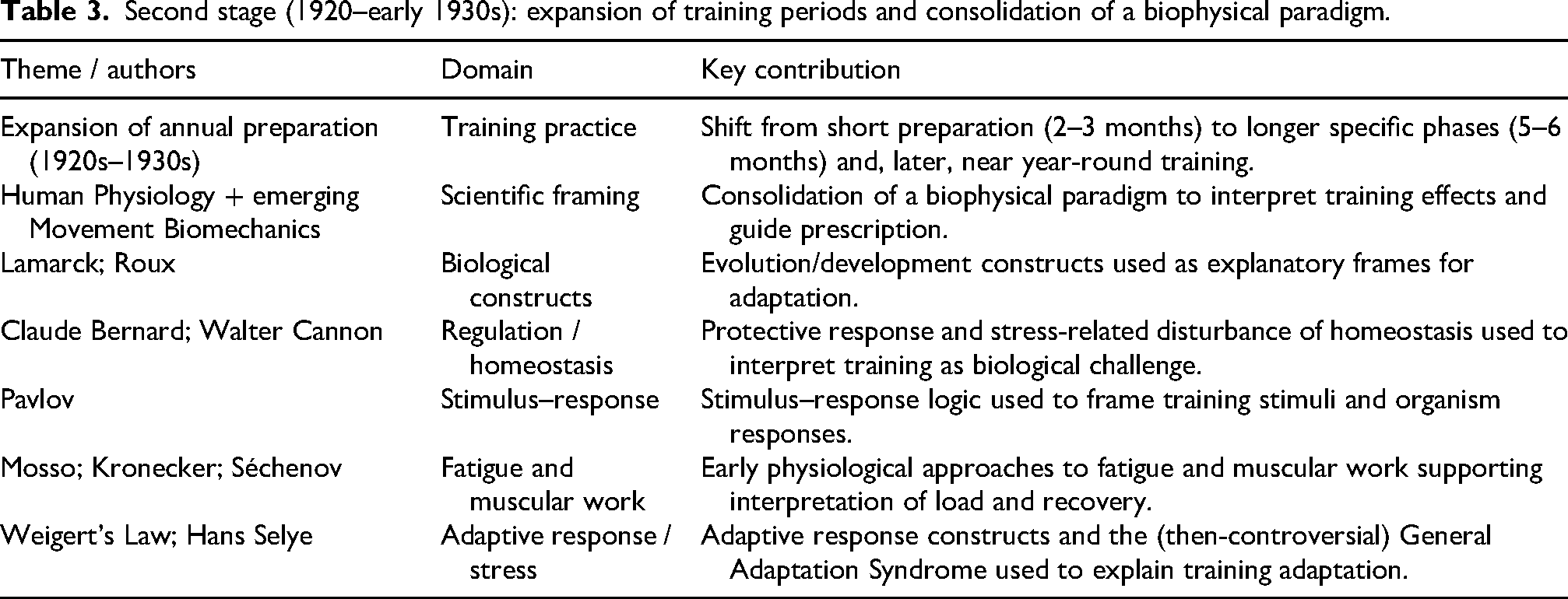
While these constructs strengthened the biophysical rationale for explaining training responses, the same period also shows that the organisation of sport science was not shaped by scientific development alone. In Europe, the ideological polarisation of the 1920s–1940s contributed to the emergence of radicalised totalitarian regimes, influencing institutional priorities and the acceptable boundaries of scientific discourse. The USSR provides a particularly clear example of this dual dynamic: scientific activity related to training could be accelerated through institutional investment yet simultaneously constrained through strong ideological control. The key actors and institutional developments associated with this socio-political and institutional shift are summarised in Table 4.
Second stage (1922–1945): socio-political context and early institutionalisation of sport science in the USSR.
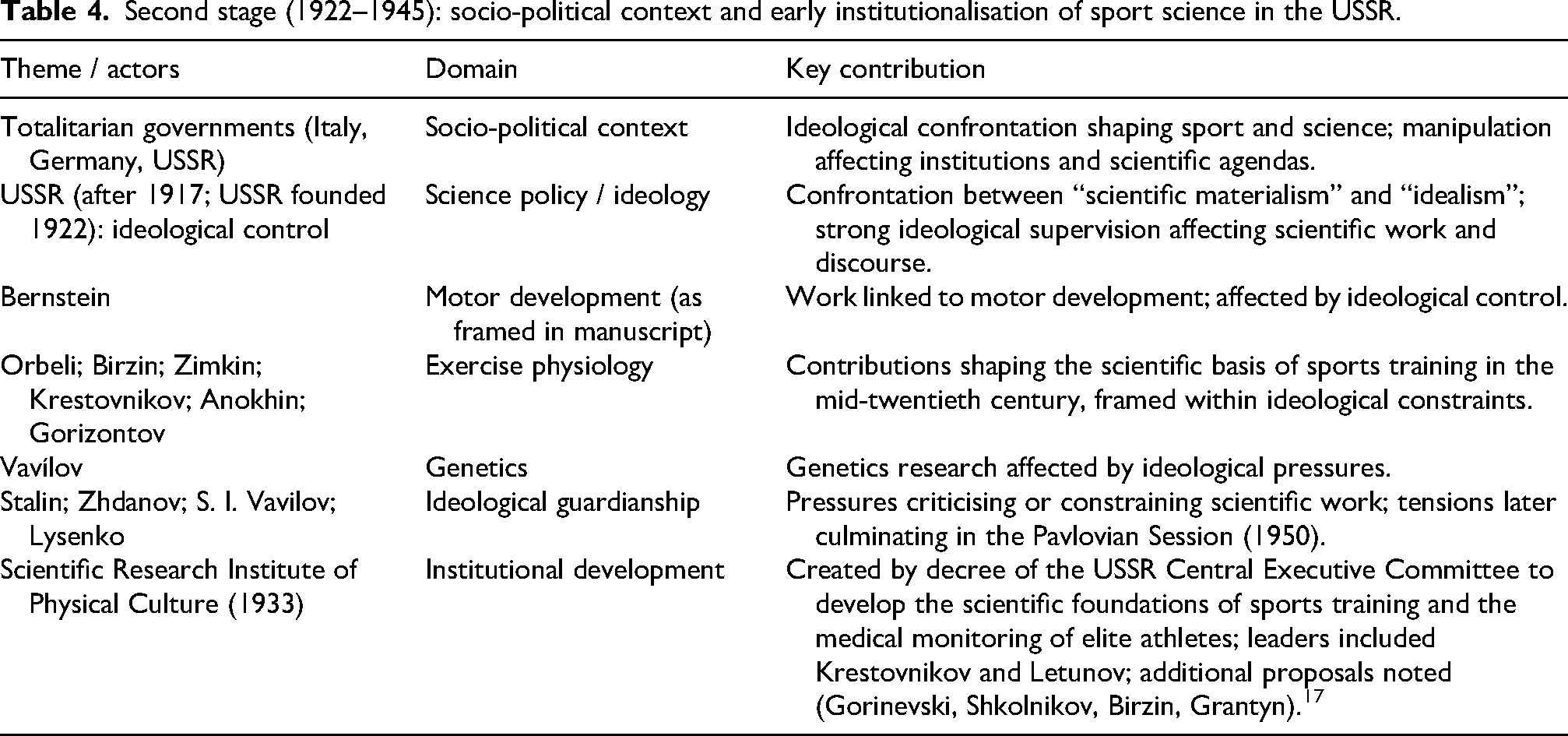
Overall, this stage is characterised by two convergent developments: first, the extension of training across longer time horizons and the increasing reliance on biological explanations of adaptation, fatigue, and regulation; and second, the emergence of institutional structures—particularly visible in the USSR—that formalised the relationship between training practice, scientific justification, and medical monitoring. At the same time, the socio-political environment illustrates how the growth of sport science could be shaped by ideological control, influencing both the direction and the interpretation of research. These dynamics set the conditions for the subsequent stage, in which more formal frameworks of training organisation are consolidated and disseminated.
3ª traditional periodization (1946–1972)
During the third stage, the progressive maturation of sport sciences after World War II creates the conditions for a more formal codification of how training should be structured over time. Massengale and Swanson describe the period between World War I and the 1960s as an embryonic stage of sport sciences, in which exercise physiology and sport biomechanics increasingly consolidated as distinct disciplines within the biological sciences. 18 In this context, advances related to the understanding, assessment, and design of training loads (fatigue, recovery, and adaptive responses) become central for explaining performance changes and for supporting more systematic time-structuring of training. The main actors, concepts, and institutional conditions that shaped the consolidation of Traditional Periodization in this stage are summarised in Table 5.
3rd stage (1946–1972): traditional periodization—scientific consolidation and codification of a central planning model.
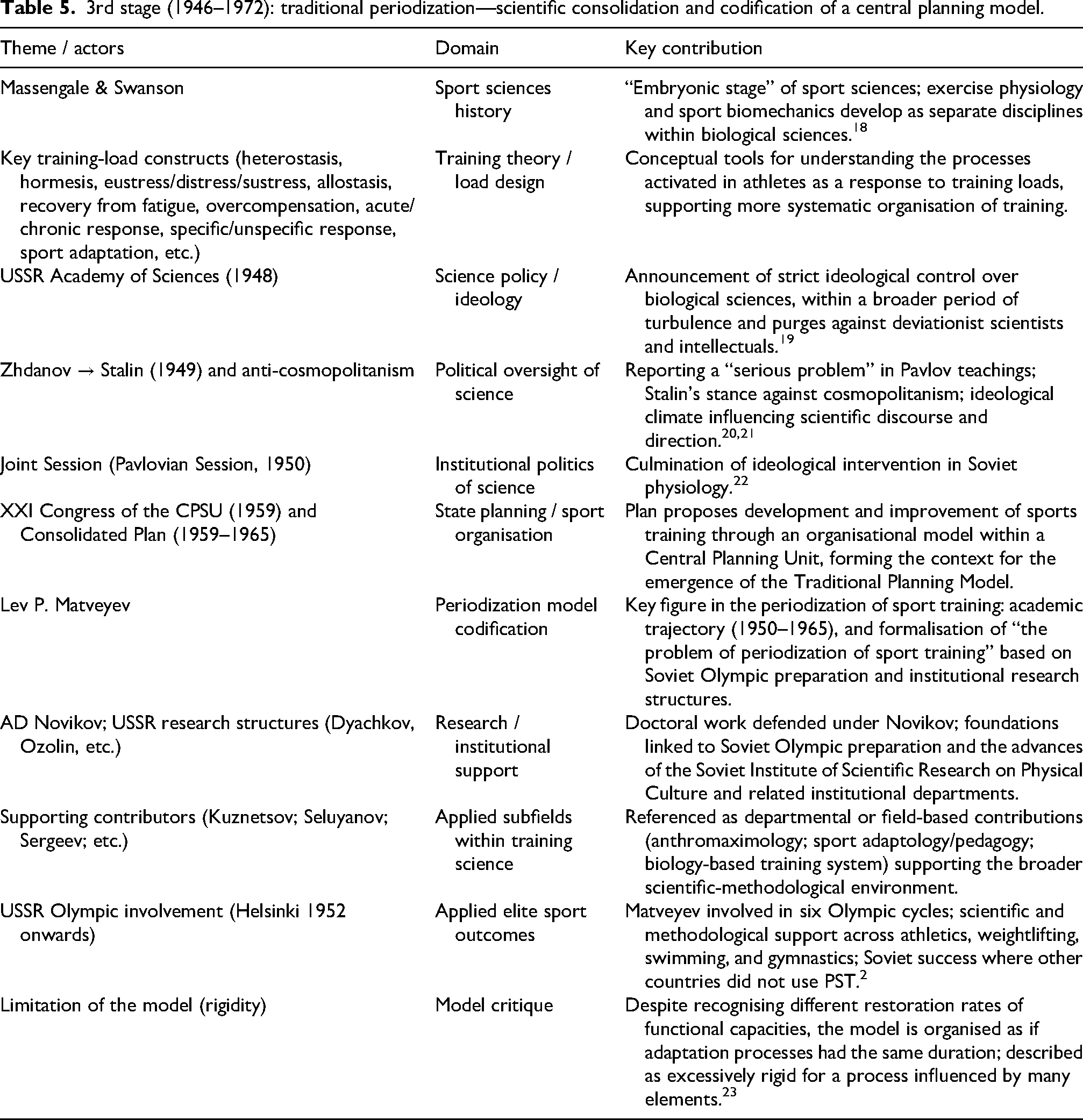
Taken together, these elements explain why this period is commonly identified as a stage of Traditional Periodization: training organisation becomes increasingly systematic because the field accumulates conceptual and institutional foundations that support the rational structuring of work over time. The growing explanatory use of biological constructs related to fatigue, recovery, and adaptation reinforces the idea that training effects can be managed through planned sequences of preparation and restoration, enabling performance to be projected toward specific competitive moments within a season or cycle.
Within this broader consolidation, the Soviet context is particularly influential: sport science and applied support to elite preparation expand under central planning, while biological sciences are also exposed to strong ideological control that shapes what is debated and legitimised. In that environment, Matveyev's contribution becomes central for codifying a dominant approach to structuring sport training over time, closely linked to Olympic preparation and institutional research. At the same time, an important limitation emerges although different rates of restoration of functional capacities were acknowledged, the organisational template treated adaptation processes as if they shared the same duration, resulting in a rigidity that later became a major point of critique, even as the model spread internationally and remains in use. 23
This combination of consolidation and constraint sets the conditions for the subsequent stage. As high-performance sport expanded and competitive calendars became more demanding, the limits of rigid organisational templates became increasingly visible, encouraging further scientific debate and opening the way for approaches that sought to align training structure more closely with the dynamics of performance, recovery, and competition.
4ª scientific periodization (1973–1992)
In the second half of the twentieth Century, high-performance sport entered a new horizon characterised by the simultaneous expansion of competition, professionalisation, scientific knowledge, information access, technological support, and anti-doping regulation. These concurrent drivers are summarised in Figure 2.
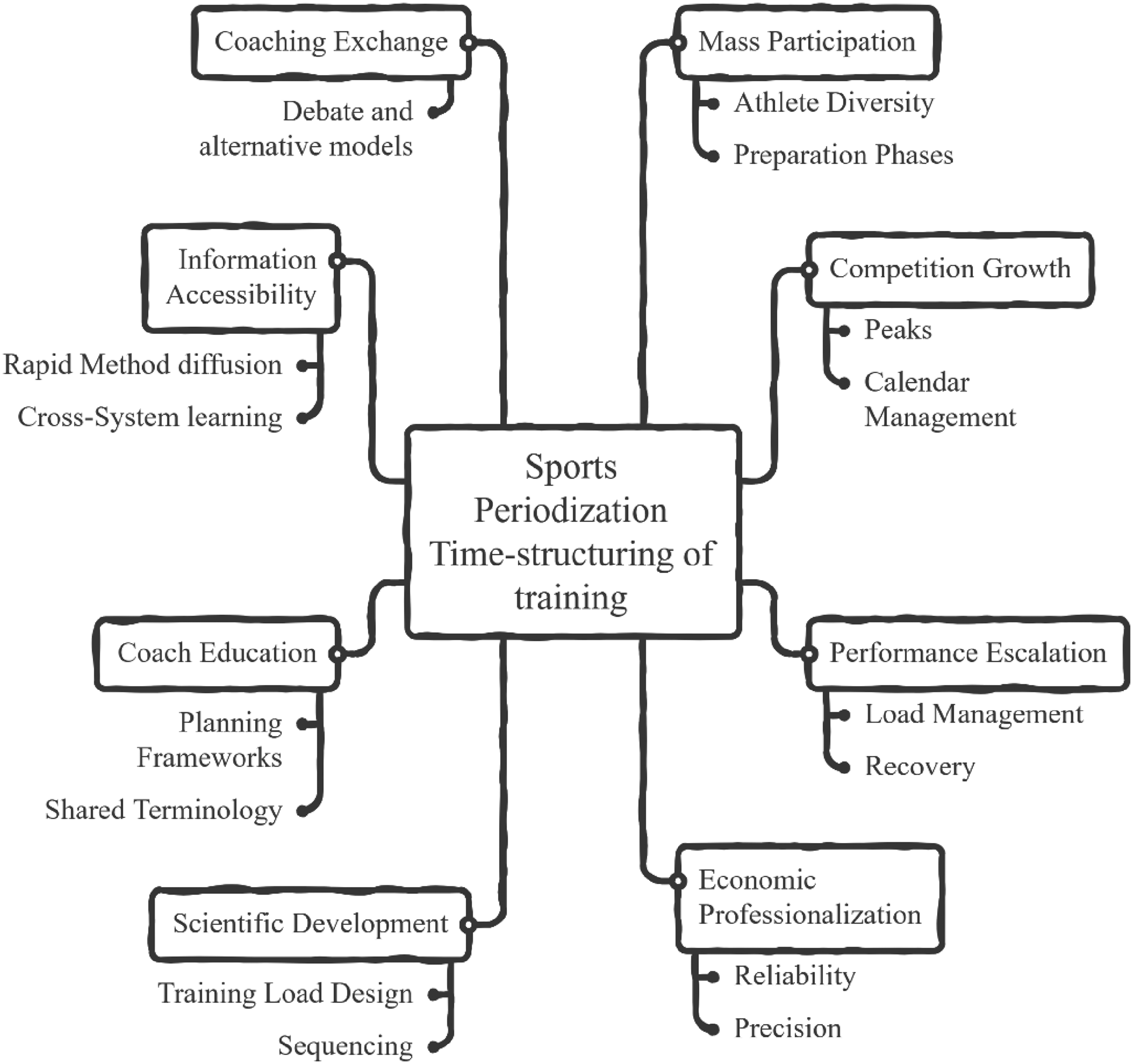
Key drivers shaping the late-twentieth-century high-performance context and their implications for the time-structuring of training (sports periodization).
During this period, the consolidation of the biological paradigm became a key reference for the design and organization of training loads reinforcing the rationale for structuring preparation and recovery over time. At the beginning of the 1970s, several influential texts helped to crystallize this perspective within applied sport science, including Science and Sport (1971), by Vaughan Thomas; Textbook of Work Physiology (1970), by Per-Olof Åstrand and Karre Rodahl ; and, The Physiological Basis of Physical Education and Athletics (1971), by Donald K. Mathews and Edward L. Fox.
Within this climate of expansion and scientific consolidation, theoretical debate intensified regarding the most appropriate way to structure long-term preparation. Particularly relevant were the discussions associated with the Central Institute of Physical Culture of the USSR State Committee of Sports, under the leadership of Vadim V. Menshikov, which provided a context for early confrontations between Verkhoshansky and Matveyev. In parallel, new including proposals associated with Seluyanov, who advanced planning laws of for training loads based on mathematical simulation models, using computer programs to imitate short- and medium-term adaptive processes (morphological, biochemical, physiological, and mechanical), in response to training stimuli. These approaches contributed to what became known as sports adaptology and supported the development of more specific models presented as alternatives to traditional periodization.
Criticism of Matveyev's model also emerged early. The physiologist Nikolai N. Yakovlev argued that training should be understood primarily as an adaptation process grounded in biological principles, and he challenged the periodization strategy proposed by the traditional model. 24 When this approach gained popularity in the USSR, Yakovlev maintained that successful management of an athlete required knowledge of the biological mechanisms underpinning adaptation, a condition he considered insufficiently addressed within Matveyev's organisational template. 24
Building on this line of reasoning, Yury Verkhoshanskiy and Atko Viru proposed that adaptation to intense muscular work was fundamental to sustaining long-term performance development in highly qualified athletes. 25 From their perspective, adaptive capacity and adaptive response were central to advancing both the theory of sports training and the practical solution of problems related to programming and the organisation of training.
They also argued that simultaneously pursuing multiple objectives, as implied in Matveyev's approach, could limit the use of stimuli sufficiently intense to drive positive adaptations. 25
Against this backdrop, the perceived limitations of the traditional model—together with the substantial transformation of elite sport in the decades following its dissemination—helped to trigger a rethinking of how training should be structured over time. A critical distinction that becomes increasingly relevant as models diversify is whether the sport context is dominated by a single major performance target (single-goal sports) or by the need to manage multiple concurrent targets across extended periods (multi-goal contexts, including many team sports). This distinction frames the practical problem these approaches attempt to solve and clarifies why their applicability differs across sport types. The main families of alternative approaches that gained visibility during this period are summarised in Figure 3.
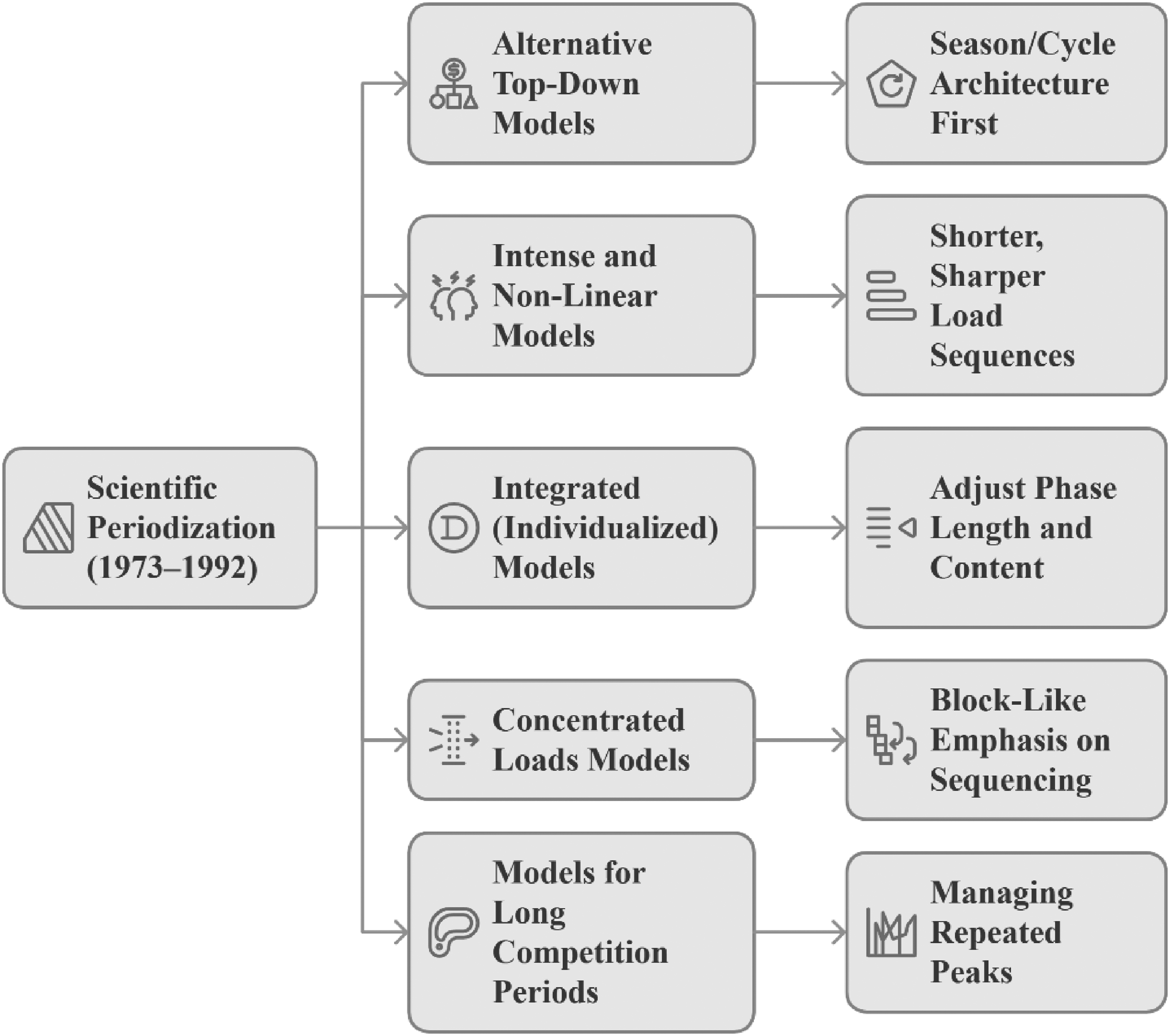
Scientific Periodization (1973–1992): alternative approaches and their defining emphasis for the time-structuring of training.
Alternative top-down models
In these approaches, decision-making begins with global variables that define the overall structure of the season and then progressively descends toward more specific choices, retaining the logic of traditional periodization in which the state of the whole system (the athlete) is treated as a primary causal reference. In this sense, the Matveyev model exemplifies a top-down architecture that evolves over time from general preparation toward special preparation as the main competitions approach. Complementary proposals also reflect this organisational logic, including the Pendulum Model (Dmitry A. Arosyev), the Structural Bells Model (Armando Forteza de la Rosa), and the Vertical Integration System (High–Low Weekly Organization) (Charlie Francis). The Pendulum Model structures the year through successive, relatively independent cycles whose duration is adapted to the competition schedule; within each cycle, training follows a repeated session rhythm (often 1.5–2 months) and is subsequently modified according to the level achieved and the section of the annual period, using the notion of a “microcycle pendulum” to express the degree of similarity between training content and sport-specific competitive actions. 26 In the Structural Bells Model, the season is divided into phases (“bells”) organised through two sequences of work—Conditioning Directions of Performance (CDP, general) and Determinant Directions of Performance (DDP, special)—and the Intensity of the Mesocycles Index (IMI) is proposed as a control indicator (IMI = DDP – CDP/number of microcycles). Finally, the Vertical Integration System (High–Low Weekly Organization) maintains all key training contents across phases and stages, varying their magnitude while preserving a structure closely aligned with the pendulum logic.
Intensive models
These approaches emerged largely from strength-oriented training cultures, with influential contributions associated with Soviet weightlifting (Arkady N. Vorobyov and Robert A. Roman), Bulgarian weightlifting (Ivan N. Abadjiev and Angel T. Spassov), throwing events in athletics (Peter Tschiene), bodybuilding (Charles Poliquin), and powerlifting (Frederick Hatfield). 27 In coaching practice and in part of the scientific literature, several of these proposals have been grouped under labels such as “non-linear” or “wave-like” periodization because of their repeated cyclical fluctuations in load, intensity, density, rest, volume, or frequency. However, from a stricter conceptual standpoint, these labels should be interpreted with caution when the main variation occurs in programming variables rather than in the overall periodized structure itself. Therefore, in this section, such terms are used as conventional labels to describe historically established approaches to load organization, not as conceptually unproblematic categories of periodization.
In the Vorobyov–Roman proposal, the core logic is high intensity with comparatively low volume, maintaining relatively stable content and specificity across periods while adjusting intensity and volume to the targeted competitive level; compared with traditional templates, a key distinction is that intensity and volume tend to change in parallel and special loads remain predominant throughout the year, supported by pronounced variability and abrupt, contrasting shifts in stimulus volume and intensity. In the Bulgarian approach attributed to Abadjiev and Spassov, the emphasis is on high neuromuscular adaptation through very heavy loads approaching maximal values, combining high-intensity days (>90% 1RM) prioritising highly specific exercises and squats with lighter days (≈80% 1RM), alongside short sessions repeated multiple times per day (30 min; 1–3 sessions/day), frequent competitions and assessment-type sessions (including public observation), and a strong focus on attention, motivation, and competitive readiness even within daily training. These intensive logics also connect with oscillatory or wave-like approaches associated with Tschiene and Poliquin, characterised by repeated cyclical fluctuations in load across the season through alternation of qualitative variables (intensity, density, rest) and quantitative variables (volume, frequency), aiming to sustain high performance across extended periods; within the macrocycle, intensity and volume oscillations are described as being within ∼20%, with session loads not dropping below 80% 1RM, and the rationale is linked to directed conjugation or conjugated influence (emphasising specific work via dynamic and motor correspondence) and to Bondarchuk's comprehensive proposal.28,29 Within this broader wave-like loading framework, Poliquin advanced the idea of alternative loading patterns for bodybuilding, highlighting daily and weekly wave-like behaviour: initially two weekly strength sessions with different emphases (maximum strength vs. strength endurance/hypertrophy), later evolving toward three weekly sessions (hypertrophy, maximum strength, power) tailored to athlete needs, with training zones rotated across successive sessions (varying repetitions per set and strength objectives). The simplest pattern described uses three zones (4–5 RM, 8–10 RM, 12–15 RM) across three sessions per week, while other variants retain a given zone for one or two weeks before changing volume and intensity, yielding weekly or two-week undulating programming plans.
Integrated model (individualized)
The Integrated (Individualized) Model has been associated with Anatoli Pavlovych Bondarchuk, who proposed an alternative periodization strategy for explosive strength sports grounded in the individualization of adaptive response, a greater concentration of loads, and the simultaneous integration of conditioning and technical work across multiple organisational levels, including within sessions. The approach is presented as a practical answer to how sport form evolves in response to training loads, emphasising that the time required to reach sport form differs across athletes and may range from two to seven months depending on training status, age, and accumulated training years. This evolution may occur through concurrent development of general and specific elements or through alternating emphases, and is also conditioned by how training means are implemented (conditional and technical; preparatory and competitive). Within this logic, the model proposes up to forty-three possible variants of sport-form evolution when planning the training season.28,29
Concentrated loads model
The first proposals of block-oriented preparation appeared in the 1980s. Although not initially formalised as a scientific concept, a “block” was assumed to correspond to a cycle of highly concentrated specialised training loads. This approach was built around the search for an optimal residual effect of training and the persistence of changes induced by systematic stimuli after the block ends, a mechanism linked to the process of detraining understood as the loss of sport form once training loads are withdrawn. From this logic, different proposals emerged with varying levels of demand and practical application.
Within this framework, Verkhoshansky advanced an organisational strategy in which each stage was termed a block (explicitly avoiding the concept of “period”), structured around a concentrated volume of loading in the main block. The rationale is that the greater the energetic demand imposed by the workload, the greater the compensatory reaction of the organism. In practical terms, the block is described as comprising two phases: a first phase with a large volume of specific preparation oriented toward adaptations that increase strength, and a second phase with lower volume but increasing intensity of specific loads aimed at meeting the energetic requirements of the activity. Compared with traditional approaches, volume is described as rising and falling rapidly, producing a marked increase in training load. The model also avoids sharp conflict between training and competition contents by combining them to support functional adaptation and subsequently activate physiological adaptation processes using loads that are not excessively intense. In sequencing terms, special conditional preparation is presented as preceding deeper technical and speed-oriented work of the sport action; within the block structure, this preparation is developed through exercises equal or very similar to competitive actions, supporting accelerated recovery of specific functional indices and providing a gradual step toward executing the competitive exercise at the desired speed. The final block represents the competition load and the completion of the macrocycle.12,25
While both Verkhoshansky and Issurin employed a sequential concentration of training stimuli, Verkhoshansky's model was primarily grounded in the biological timing of adaptation, whereas Issurin's approach emphasized the methodological organization and compatibility of training means within competitive constraints.12,25,30
A related and widely disseminated formulation is Issurin's Accumulation–Transformation–Realization (ATR) concept, which argues for a block-logic structure through the sequencing of specialised cycles that employ highly concentrated workloads directed toward a limited number of specific targets. This approach is presented within a multi-peak scheme intended to facilitate successful participation in a greater number of competitions within a season. In this structure, blocks are selected so that they predominantly deliver one of three effects: accumulation of basic motor and technical capacities, transformation of these capacities toward the demands of the competitive task, and realization, where preparation is optimised to maximise readiness for competition. 30 Within this logic, the annual cycle is organised as a function of the number of main competitions planned.12,30
Because highly concentrated loading can be demanding, the text also notes the development of less aggressive or attenuated approaches, presented as variants intended to retain the organisational benefits of block logic while reducing overall stress, through alternative macrocycle structures and successive orientation strategies.
Taken together, these approaches indicate that, in applied settings—particularly in high-performance and university sport systems—current training processes are rarely implemented as pure models, but rather as hybrid structures combining elements derived from multiple theoretical approaches.
Models for long competition periods
One of the most frequent criticisms of the earlier periodization proposals is their limited applicability to sports characterised by extended competitive calendars, where competition operates through league-based systems sustained over many months. In such contexts, teams may compete several times per week and travel frequently, which constrains the feasibility of highly fatiguing training sessions and shifts the organisational emphasis toward micro-level time-structuring embedded within the competitive rhythm.
These alternative approaches—often grouped as models of periodization by microstructures—emerged first in professional leagues such as the NBA and NFL, and were later adopted broadly by European and South American football at the end of the twentieth century, generating several influential methodological proposals.
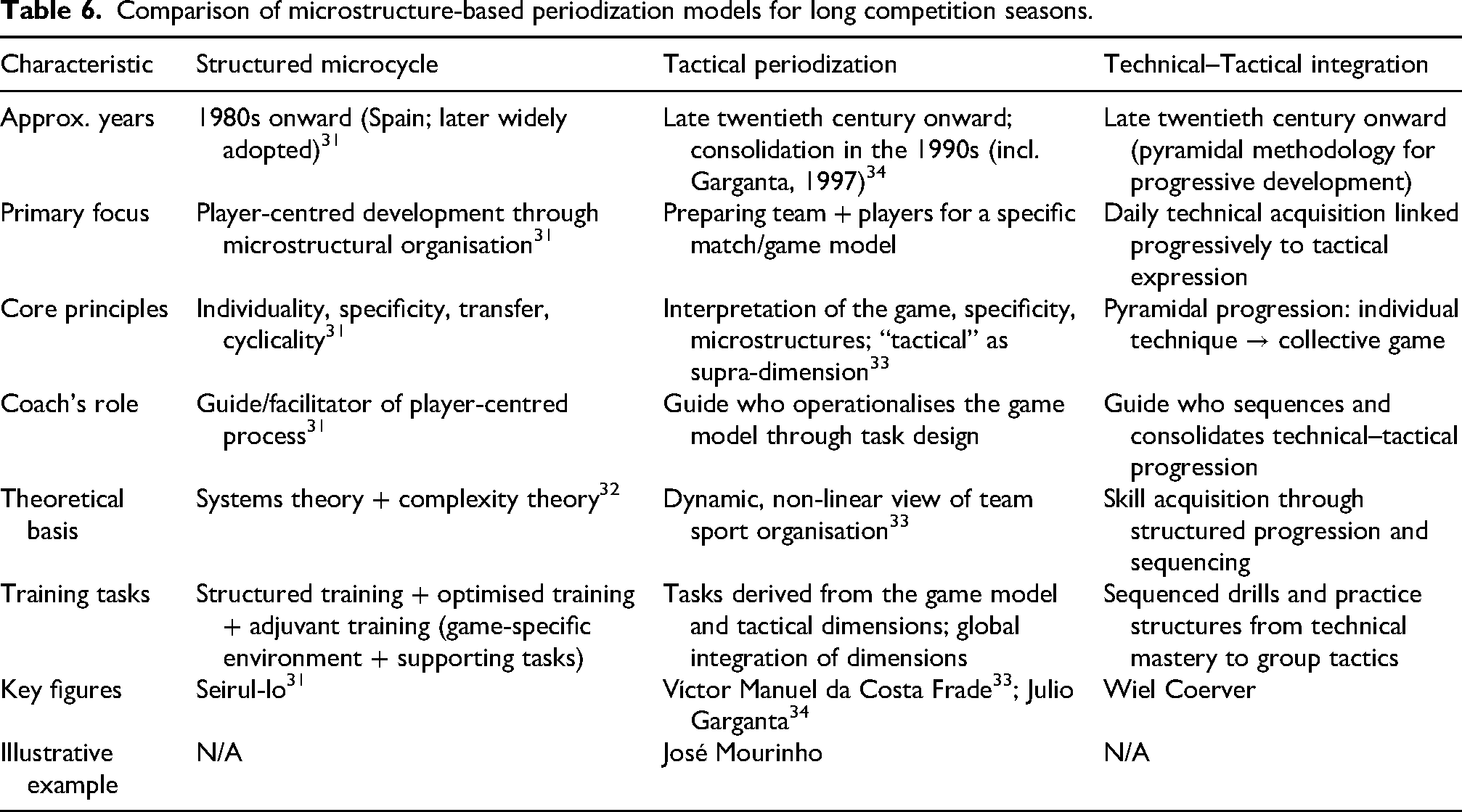
Structured Microcycle (Microstructuration). Although microstructured organisation was common in professional basketball and American football, the first methodologically articulated contributions in Spain appeared in the 1980s through Seirul-lo, who proposed a framework for opposition and cooperation–opposition sports grounded in individuality, specificity, transfer, and cyclicality, placing the player at the centre of the process while positioning the coach as a guide. 31 This proposal is explicitly supported by systems theory and complexity theory, arguing that complex performance cannot be meaningfully developed through purely analytical training models and instead requires interaction within a unified environment where multiple performance-relevant structures co-adapt. 32 In practical terms, it combines structured training (a specific dynamic pattern performed with variability and continuity in relation to game episodes) with optimised training (tasks performed in an environment and with elements specific to the game), complemented by adjuvant training to promote the structures and systems required by each specialty.
Tactical Periodization. This approach shares the microstructural logic of the above, but task design is explicitly oriented toward preparing the team—and each player—for the specific game model the coach intends to implement in each match. It was developed by Professor Víctor Manuel da Costa Frade, who conceptualises team sports as dynamic and non-linear systems, with organisation built from the interpretation of the game, specificity, and microstructures. 33 The tactical dimension functions as a supra-dimension integrating collaboration–opposition interactions and their recognition by players and the team across contexts, through recursive individual and collective intentions that give coherent meaning to motor action. In line with this conceptualisation, Garganta's 1997 doctoral thesis further advanced this systemic view by modelling football's tactical organisation, reinforcing the training implications of a game-model-driven approach. 34
Technical–Tactical Integration. Created by the Dutch coach and manager Wiel Coerver, this proposal is grounded in the idea that technique can be acquired and refined daily. It is structured through a pyramidal methodology progressing from individual technique to collective game, using sequenced practice schemes across different stages of athlete development. In this logic, the player advances from mastery of technical elements with the ball toward tactical and controlled group movement, maintaining a continuous link between technical execution and its tactical expression.
Taken together, these microstructure-based models can be interpreted as context-sensitive solutions to the same organizational constraint: how to structure training over time when competition density and travel load force preparation, recovery, and readiness management to occur within the week-to-week rhythm of matches, rather than through long uninterrupted preparatory blocks (Table 6).
Comparison of microstructure-based periodization models for long competition seasons.
5th contemporary periodization (1993 to 2020)
In contemporary sport, periodization has evolved within a broader transition from industrial to post-industrial and digital societies, marked by accelerated technological change and its uneven capacity to include—or exclude—individuals and systems that cannot adapt at the same pace.35,36 This acceleration is no longer an abstract backdrop: advances in artificial intelligence, machine learning, automation, robotics, and data-driven infrastructures are reshaping economic and organizational foundations and, by extension, the conditions under which high-performance sport is managed. 37 The prospect of “smart” systems able to learn, interact, and scale decision-making has been described as a driver of unprecedented productivity and structural transformation. 38 In elite sport, coaches and athletes increasingly operate in environments defined by dense competitive calendars, immediate access to information, continuous monitoring, and expanding technological support. Under such conditions, persisting with unchanged organizational assumptions becomes increasingly difficult to justify; as commonly attributed to Einstein, repeating the same approaches while expecting different outcomes is irrational. 9
At the beginning of the twenty-first century, new approaches to training organization and planning began to emerge. Importantly, despite the proliferation of alternative models, there remains limited objective and comparative evidence demonstrating the superiority of one periodization approach over another. These approaches include a range of conceptual and methodological proposals developed in response to the growing complexity of contemporary sport.
Accordingly, an increasing number of specialists argue that sports periodization must be re-examined, re-adjusted, and, where necessary, re-conceptualized to match the distinct profiles and constraints of modern sport.10,39 This implies, first, recognizing that universally “ideal” organizational templates are improbable across athletes and contexts; second, avoiding rigid implementations that confuse planning with control, since overly elaborate models often fail in practice. 40 Third, it requires verifying whether existing approaches match contemporary competitive realities, where disciplines, rules, schedules, and performance demands continue to evolve. In this view, contemporary periodization is best framed as a time-structuring strategy grounded in: individualized knowledge of adaptive responses; a precise understanding of the sport and its competition ecology; continuous evaluation and re-adaptation guided by pedagogical and biological principles; systematic use of monitoring technologies; applied data sciences, including Big Data and artificial intelligence; and explicit acceptance of uncertainty and variability as intrinsic features of sport performance. In this context, several proposals have sought to reframe how training is structured over time under conditions of uncertainty, dense competition, and continuous information flow; the following section outlines these emerging models and the organizing logics that underpin them.
From a parsimonious perspective, many contemporary proposals may represent extensions or reinterpretations of existing principles rather than fundamentally distinct paradigms.
New alternative sports periodization proposals: emerging models
In this contemporary context, “emerging models” should not be read as a rejection of earlier periodization principles, but as attempts to operationalize them under conditions that have changed substantially: denser competitive calendars, faster feedback loops between training and performance, and wider access to monitoring technologies and data infrastructures. As a result, contemporary proposals increasingly shift the focus from fixed seasonal scripts toward adaptive decision processes that regulate training through continuous information, context-sensitive interpretation, and timely re-adjustment of loads and contents. At the same time, these approaches vary in their underlying assumptions and practical targets—ranging from feedback-control logics to strategic adaptation cycles, multi-component integration, and predictive/preventive emphases—so they should be interpreted as families of solutions to distinct organizational problems rather than as universally validated templates. Importantly, many of these frameworks have been advanced primarily on theoretical and practice-led grounds; therefore, their application should be treated as context-dependent and constrained by the quality of monitoring and decision-making, especially when transferred across sports with different competitive ecologies.
Cybernetic models of sports periodization
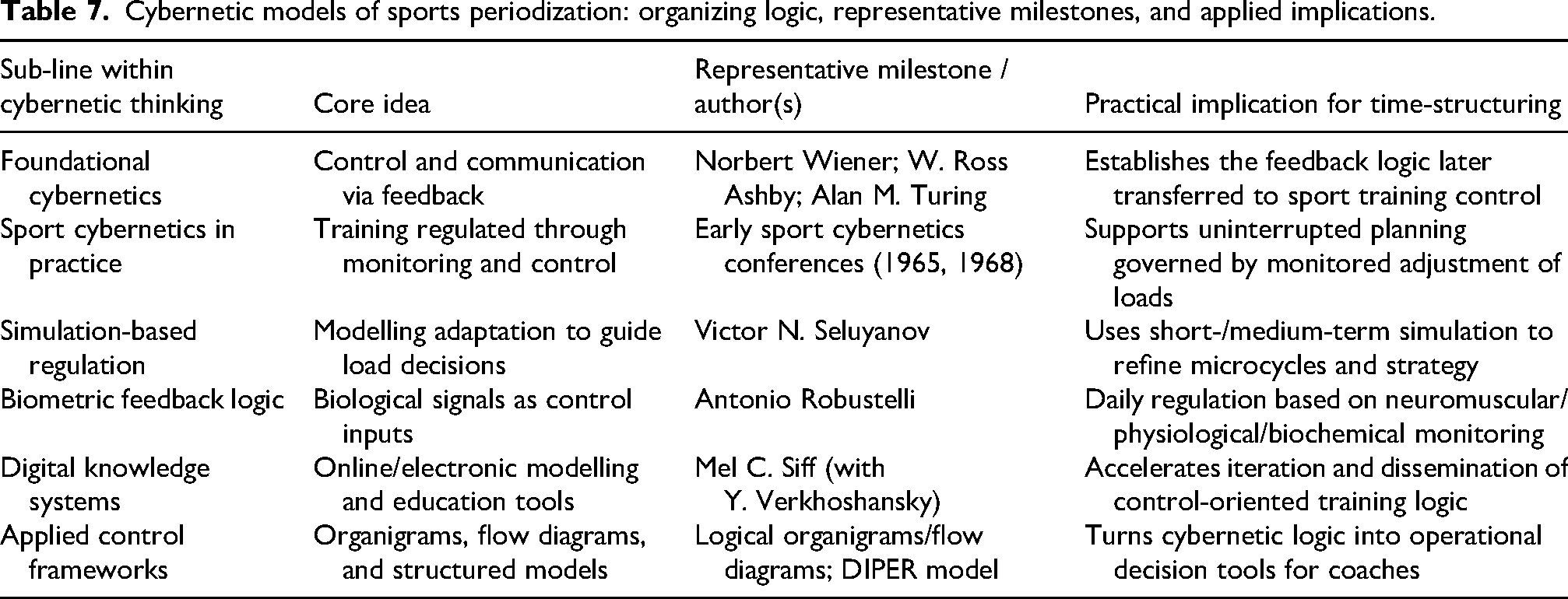
In cybernetic approaches, periodization is framed as a feedback-controlled process in which performance and readiness are continuously monitored, deviations are interpreted against target states, and training loads are adjusted through explicit control rules. In practical terms, this logic shifts the time-structuring of training away from fixed calendar scripts toward iterative cycles of observation, interpretation, decision, and intervention, increasingly supported by computational tools. Cybernetics therefore provides a conceptual bridge between the biological paradigm of adaptation and contemporary decision-making environments characterized by dense schedules, rapid information flow, and the need for timely re-adjustment.41–48 (Table 7).
Cybernetic models of sports periodization: organizing logic, representative milestones, and applied implications.
Models of strategic periodization, emergent periodization, or through continuous adaptation
Strategic and emergent approaches to periodization frame training organization as a continuous decision process rather than as a fixed seasonal script. This perspective is often linked to strategic planning concepts originally developed in business and economics, where intervention plans are iteratively designed, implemented, audited, and refined to reach defined objectives.49,50 In contemporary high-performance settings—characterized by dense competition calendars and pervasive monitoring technologies—this logic becomes especially relevant for how training is structured over time. In sport, this logic translates into repeated cycles of monitoring, interpretation, option generation, selection, implementation, and feedforward adjustment, with the cycle increasingly supported by systematic data collection and contextual reasoning (Figure 4). 50
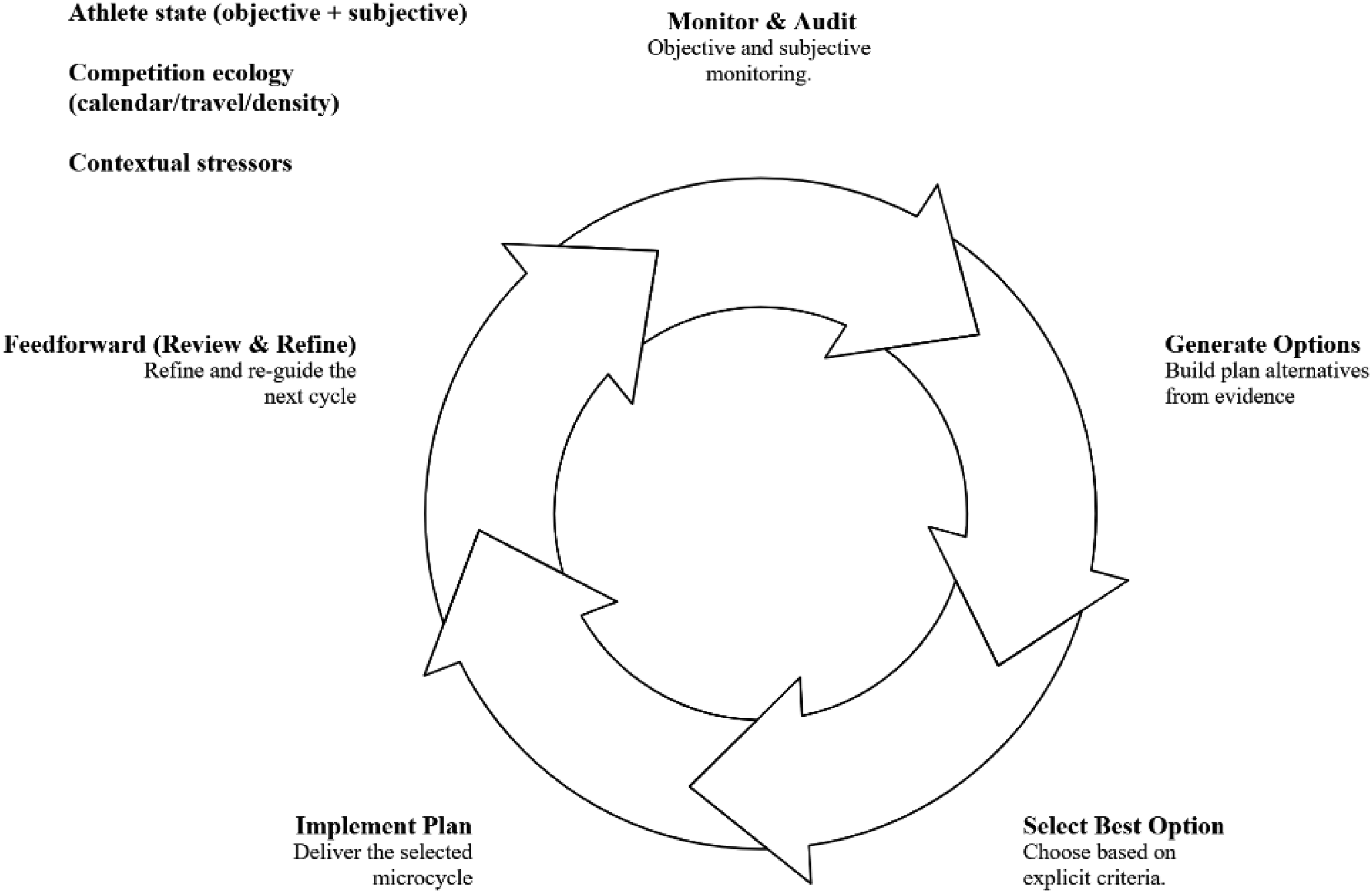
Strategic/emergent periodization as a continuous decision cycle.
Within applied sport settings, proposals aligned with this logic typically emphasise deliberate manipulation of training content, volume, and intensity across short planning horizons to optimise readiness for near-term competition demands. 51 From this standpoint, John Kiely has argued an individualised approach in which training decisions are shaped by the athlete's current profile (e.g., training history, psycho-emotional state, fatigue, lifestyle factors, and external stressors) and by the quality of decision-making derived from continuous monitoring of both objective and subjective indicators.52–57 The practical implication is not that a single template is replaced by another, but that the planning route remains intentionally revisable, so that re-adjustment is actively enabled when emerging information indicates that the previously designed path may no longer be the most appropriate option.
Because strategic and emergent approaches rely heavily on observation, interpretation, and contextual judgement, they also require awareness of how perception, environment, and cognitive framing influence decision-making. To optimize the process, it is necessary to observe precisely what is to be addressed or improved, interpret that information carefully, and approach the observed reality from different perspectives.58,59 This is particularly relevant because environments condition the way practitioners think, perceive, and interpret reality; in this sense, Ortega y Gasset's idea that “I am I and my circumstance” provides a useful philosophical frame for understanding coaching decisions within context. 60
This decision-cycle perspective is also echoed by conceptual models that prioritise short iterative planning cycles and continuous refinement, such as The Agile Manifesto, which highlights adaptation, collaboration, and repeated review as central to project governance. 61 In sport applications, this logic has been operationalised through monitoring-led methods that structure decision criteria (rubrics and indicators) to guide day-to-day adjustment of stimuli, as illustrated by the Agile methodology of MICOVI. 62 (Table 8).
Strategic/emergent approaches to periodization: core logic and applied emphasis.

Multiple component models
Also known as comprehensive or holistic periodization, these approaches conceptualize the athlete as an organism in constant change, influenced by multiple interconnected domains. Traditional models have primarily emphasized physical preparation, often overlooking other critical dimensions of athletic development. In response, integrated periodization has been proposed, especially for team sports, as a strategy that aligns the planning of training with the coordination of diverse components contributing to performance and well-being.
Accordingly, a complete periodization strategy should consider several interrelated dimensions rather than treating physical preparation as an isolated component. These dimensions include training stimuli, understood as the development of physical capacities such as strength, endurance, speed, and mobility; technical skill development, including the coordinative abilities required for sport-specific execution; pedagogical structuring, encompassing daily routines, invisible training, and complementary recovery practices; nutrition, including caloric intake, hydration, diet planning, and supplementation 63 ; psychological and volitional preparation, involving emotional regulation, stress resistance, motivation, perseverance, and risk tolerance; and cognitive functioning, including concentration, decision-making, tactical intelligence, and learning processes. From this perspective, the multidimensional model is not additive but systemic: the training process emerges from the interaction of these components and therefore requires coordination and adaptability across time.
Modeling for the improvement of the performance and integrity of the athlete
Given the inherently phased nature of sports training and its cumulative physical demands a rational and individualized periodization strategy should be grounded in two practical requirements: first, anticipating each athlete's tolerance to training stress at a given moment; and second, designing and implementing recovery tactics that allow fatigue to be managed effectively rather than treated as an afterthought. When training loads are prescribed without this dual consideration—tolerance and recovery—the likelihood of maladaptation increases, including non-desired overreaching/overtraining and stress-related injury, especially when load sequencing across the competitive calendar is poorly organized.10,64,65 In this context, a growing body of work has focused on detecting excessive effort and overtraining risk in athletes—particularly at the elite level—supporting the need to revisit fatigue theory and to determine the most appropriate ways to manage fatigue without provoking adverse outcomes.66,67
Practical implications for coaches and training planning
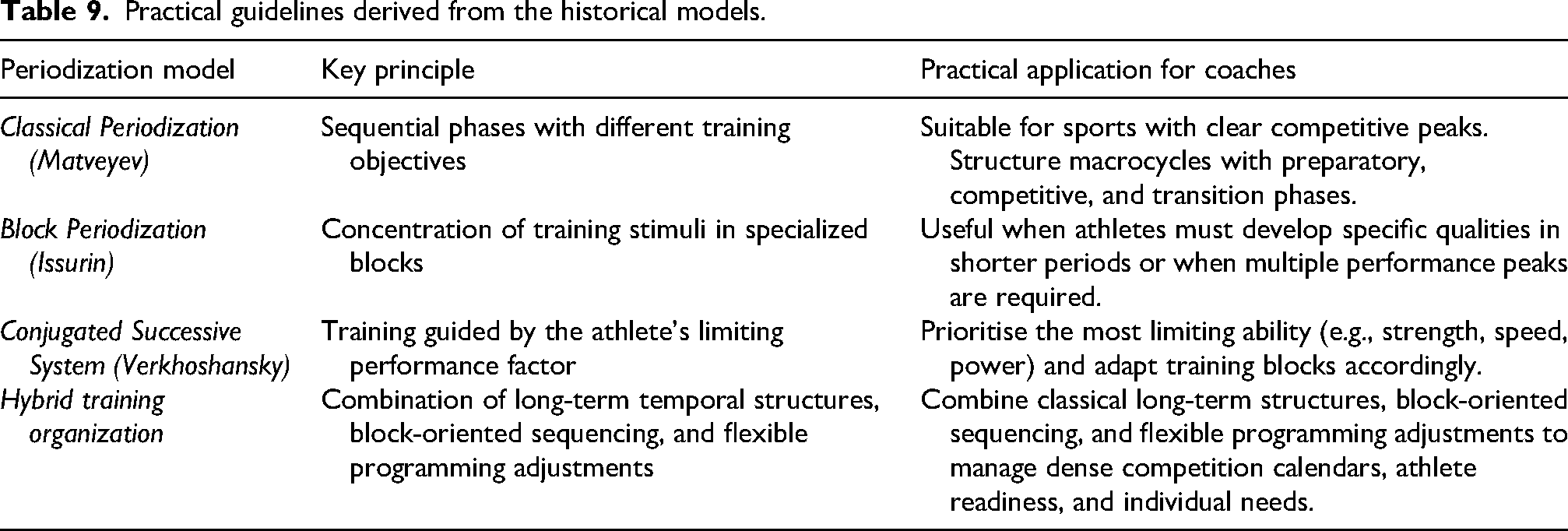
Although this article primarily examines the historical evolution of sports training periodization, several practical insights can be derived for coaches and practitioners responsible for designing training programmes. Modern coaching practice rarely follows a single theoretical model. Instead, effective training planning often integrates principles from classical periodization, block-oriented approaches, and flexible programming strategies depending on the sport, athlete level, and competition calendar. 68
The following table summarizes practical guidelines derived from the historical models analysed in this study and translates them into applied recommendations for coaches.
In contemporary practice, most periodization processes do not follow a single theoretical model. Instead, they are typically based on hybrid approaches that combine elements from traditional periodization (Matveyev) and block periodization (Verkhoshansky, Issurin). This hybridization is particularly evident in applied settings such as collegiate and professional sport in the United States, where the complexity of competition calendars and organizational constraints requires flexible and integrative planning strategies.2,12,25,30
Although individualization is frequently emphasized in theoretical models of periodization, its practical application is often constrained by contextual factors. In team sport environments, particularly in collegiate systems with large rosters and limited staff, fully individualized periodization schemes are often impractical and unnecessary. Instead, athletes typically follow a shared periodization structure, while individual differences are addressed through adjustments in training programming variables (e.g., load, exercise selection, recovery strategies). In practical terms, especially in team sport and collegiate environments, individualization is therefore more often operationalized through programming adjustments than through entirely separate periodization structures. This distinction is important for understanding how individualization is implemented in applied settings (Table 9).
Practical guidelines derived from the historical models.
From a practical standpoint, periodization should therefore be understood not as a rigid template but as a conceptual framework that helps coaches organize training stimuli across time. Effective training planning requires continuous monitoring, athlete feedback, and adjustments based on performance responses.
Limitations
The scope of this article is primarily historical-conceptual and applied synthesis. Its purpose is not to experimentally compare the effectiveness of different periodization approaches, but to examine how the concept of periodization has evolved across the development of modern sport. In doing so, the manuscript also acknowledges that some contemporary proposals may be interpreted more appropriately as organizational or programming frameworks, which underlines the importance of conceptual precision in this field. The diversity of terminology and the uneven empirical development of some recent approaches suggest that further theoretical clarification and applied research would be beneficial. Accordingly, the present manuscript should be interpreted as a conceptual and historical synthesis, rather than as empirical validation of any single periodization model.
Footnotes
Acknowledgements
The authors acknowledge the institutional and academic support provided by the Olympic Studies Centre of UCAM Universidad Católica de Murcia and the Olympic Studies Centre of the Universidade da Coruña. This support consisted of academic time, institutional context, and scholarly collaboration during the development of the manuscript, without direct financial funding.

Ethical considerations
Not applicable. This article is a historical-conceptual and narrative review and did not involve human participants, human data, human tissue, or animal subjects. Therefore, ethical approval was not required.
Consent to participate
Not applicable. This article did not involve human participants.
Consent for publication
Not applicable. This article does not contain individual person's data, images, videos, or other identifying information.
Funding
The authors disclosed receipt of the following financial support for the research, authorship, and/or publication of this article: This work was supported by the Centro de Estudios e Investigación Olímpica UCAM, Centro de Estudios e Investigación Olímpica UDC,
Declaration of conflicting interests
The authors declared no potential conflicts of interest with respect to the research, authorship, and/or publication of this article.
Data availability
Data sharing is not applicable to this article as no datasets were generated or analysed during the current study.